Combining Scalp Micropigmentation with a Hair Transplant: Achieving Denser Visual Results in 2026
Homepage

Blog
Combining Scalp Micropigmentation with a Hair Transplant: Achieving Denser Visual Results in 2026

Medical Reviewed By Dr. Tompi, M.D – Plastic & Aesthetic Surgeon
Written By Nazmi G, Trichologist

For many individuals experiencing hair loss, a hair transplant offers a transformative solution, restoring natural hair growth to thinning or bald areas. However, even with successful graft implantation and robust growth, some patients may desire an even greater sense of visual density, particularly if their hair loss was extensive or their donor hair supply was somewhat limited. This pursuit of maximum aesthetic fullness often leads to exploring complementary treatments.
This is precisely where Scalp Micropigmentation (SMP) emerges as a powerful adjunct to a hair transplant. By meticulously replicating the appearance of natural hair follicles on the scalp, SMP can significantly enhance the visual impact of a transplant, creating a seamless, denser look that might not be achievable through transplantation alone. Understanding how these two advanced procedures work in harmony can unlock a more comprehensive and satisfying outcome for your hair restoration journey.
Understanding the Synergy: Why Combine SMP with a Hair Transplant?
A hair transplant, utilising techniques like FUE (Follicular Unit Extraction) or DHI (Direct Hair Implantation), involves transplanting healthy hair follicles from a donor area (typically the back or sides of the head) to recipient areas where hair is thinning or absent. The primary goal is to restore natural hair growth, providing actual, growing hair. While highly effective, the density achieved is inherently limited by the number of available donor grafts and the natural spacing between transplanted follicles.
Scalp Micropigmentation, on the other hand, is a non-surgical cosmetic procedure that involves tattooing the scalp with thousands of tiny dots of pigment, meticulously matched to your natural hair colour. These dots mimic the appearance of shaven hair follicles, creating the illusion of a fuller head of hair or a closely buzzed style. When combined, the transplant provides the real hair, and SMP provides the underlying visual density, effectively filling in the spaces between existing or transplanted hairs and creating a consistently fuller appearance. This dual approach addresses both the presence of hair and the perception of density.
Scalp Micropigmentation: What It Is and How It Works
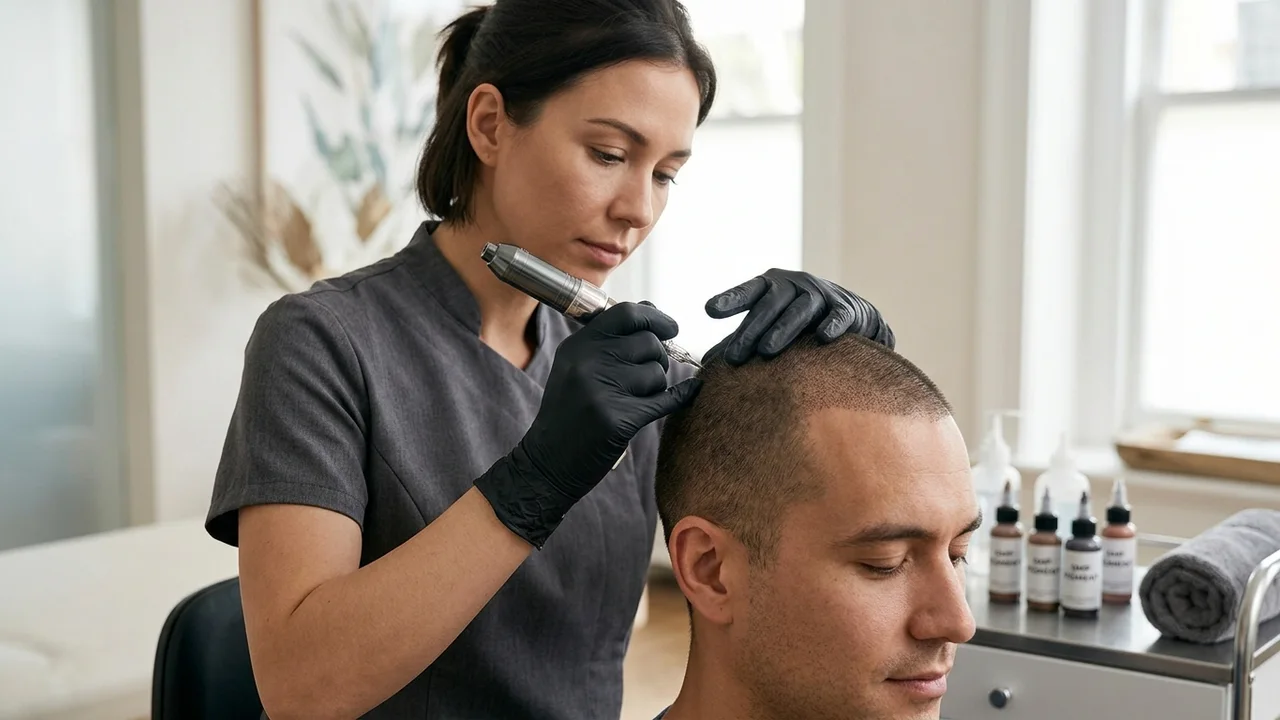
Scalp Micropigmentation is a sophisticated form of cosmetic tattooing that uses specialised equipment and techniques to deposit pigment into the superficial layers of the scalp. Unlike traditional tattoos, SMP pigments are specifically formulated to avoid colour changes over time (such as turning blue or green), and the application method is designed to create tiny, individual dots that replicate the natural look of hair follicles.
The process typically involves several sessions to build up density and ensure a natural transition. A skilled practitioner will carefully select pigment shades to match your existing hair and skin tone, creating a realistic, three-dimensional effect. The goal is not to draw individual hairs but to create a uniform shade and texture across the scalp, giving the impression of a dense, closely-shaved head of hair or a fuller head of longer hair where existing strands are present. This technique is particularly effective at creating the appearance of a stronger hairline and reducing the contrast between the scalp and existing hair.
The Strategic Timing: When to Integrate SMP into Your Hair Restoration Journey
The timing of combining SMP with a hair transplant is crucial for achieving optimal results. Generally, it is recommended to undergo SMP *after* your hair transplant has fully matured and the transplanted hair has grown in.
- Post-Hair Transplant (Recommended): Most experts advise waiting at least 12 to 18 months after a hair transplant before considering SMP. This waiting period allows the transplanted grafts to fully grow, mature, and stabilise. Once the final density and growth pattern of the transplanted hair are established, the SMP practitioner can then strategically apply pigments to complement the natural hair, filling in any areas of lower density and creating a seamless blend. This approach ensures that the SMP enhances the existing hair rather than being applied to an area that may still undergo significant changes.
- Pre-Hair Transplant (Less Common, Specific Cases): In some specific cases, SMP might be considered before a hair transplant. For instance, if a patient has significant scarring from previous procedures (e.g., an old FUT scar) that they wish to camouflage before a new FUE transplant, SMP could address this initial concern. However, careful planning is essential, as the SMP pattern might need adjustment once new hair growth occurs. Consultations at Turkey Hair Center will always consider your individual hair loss pattern and restoration goals to determine the most appropriate sequence for your treatments.
Enhancing Visual Density Post-Transplant
One of the primary reasons patients choose to combine SMP with a hair transplant is to achieve a significantly denser visual result than a transplant alone might provide. Even a highly successful hair transplant, with excellent graft survival, has a finite limit to the density it can create due to the spacing required between transplanted follicles and the limited donor supply.
SMP effectively addresses this by:
- Filling in Gaps: After a transplant, there can still be visible scalp skin between the newly grown hairs, especially if the original hair loss was extensive or if a lower number of grafts were used. SMP fills these tiny spaces with pigment dots, reducing the contrast between the hair and scalp and making the hair appear much thicker and fuller.
- Creating a Uniform Look: For individuals with diffuse thinning, where hair is present but sparse, SMP can create a uniform, darker base layer beneath the existing hair. This darkens the scalp, making the hair appear denser and healthier, even without adding more hair strands.
- Strengthening the Hairline: SMP can be used to refine and strengthen the appearance of a transplanted hairline, making it appear crisper and more defined, which contributes significantly to the overall aesthetic outcome.
This combined approach offers a powerful solution for those seeking the maximum possible aesthetic improvement, moving beyond merely restoring hair to achieving a profoundly dense and natural-looking appearance.
Camouflaging Scars: Addressing Donor Area Concerns
While FUE hair transplants are known for minimal scarring, some patients may still have subtle linear scars from previous FUT procedures or even tiny, pinpoint scars from FUE extractions that become more noticeable if they opt for a very short hairstyle. SMP offers an excellent solution for concealing these scars, seamlessly blending them into the surrounding scalp.
The process involves precisely tattooing pigments directly into the scar tissue, matching the colour and texture of the surrounding hair follicles. This effectively disguises the scar, making it far less visible. For individuals who wish to keep their hair very short (e.g., a buzzed haircut), SMP can create a uniform appearance across the entire scalp, including the donor area, ensuring that any past scarring is virtually undetectable. This can significantly boost a patient's confidence and give them greater freedom in their chosen hairstyle.
Who is an Ideal Candidate for Combined Hair Restoration?
The decision to combine Scalp Micropigmentation with a hair transplant is highly personal and depends on individual circumstances and aesthetic goals. However, certain profiles tend to be ideal candidates for this comprehensive approach:
- Individuals with Extensive Hair Loss: Patients who have experienced significant balding (e.g., Norwood Scale 5-7) may struggle to achieve desired density with a transplant alone due to limited donor hair. SMP can bridge this gap.
- Those with Limited Donor Hair: When the donor area cannot provide enough grafts to achieve full density across all recipient areas, SMP can be used to augment the visual thickness in less dense regions.
- Patients Seeking Maximum Visual Density: Some individuals simply desire the densest possible look, beyond what a hair transplant can provide. SMP delivers this enhanced cosmetic fullness.
- Existing FUE or FUT Scars: Anyone with visible scarring from previous hair transplant procedures who wishes to camouflage them effectively.
- Preference for a Short or Buzzed Hairstyle: For patients who prefer to wear their hair very short, SMP can create the most natural and uniform appearance, making it look like they simply have a full head of closely shaved hair.
- Diffuse Thinning: Patients with widespread thinning where existing hair is sparse but not entirely gone can benefit greatly from SMP to create a darker, fuller backdrop.
A thorough consultation with the experts at Turkey Hair Center is essential to determine if this combined approach aligns with your specific needs and expectations.

The Procedure and Aftercare for SMP (Post-Transplant)
Undergoing Scalp Micropigmentation after a hair transplant involves a distinct process and aftercare, tailored to ensure the best outcome without impacting the transplanted grafts.
The SMP Procedure:
SMP is performed by a trained specialist using a micro-needle device to implant natural pigments into the epidermal layer of the scalp. Unlike traditional tattoo machines, SMP devices are designed for precise, small dots. The process typically involves:
- Consultation and Design: The practitioner will discuss your desired outcome, hairline design, and pigment colour matching based on your existing hair and skin tone.
- Numbing Cream Application: A topical anaesthetic is applied to minimise discomfort during the procedure.
- Pigment Application: The specialist meticulously applies thousands of tiny pigment dots across the scalp. This is usually done over 2-3 sessions, spaced a few weeks apart, to gradually build density and allow for pigment settling. Each session can last several hours, depending on the area being treated.
SMP Aftercare:
Proper aftercare is crucial for the longevity and appearance of your SMP. Immediately after each session:
- Avoid Washing: Do not wash your scalp for at least 3-4 days to allow the pigment to settle.
- Avoid Sweating and Sun Exposure: Minimise strenuous activity, saunas, and direct sunlight for about a week to prevent fading and infection.
- Moisturise: After the initial no-wash period, use a recommended moisturiser to keep the scalp hydrated.
- Sun Protection: Long-term, protect your SMP from direct sun exposure with sunscreen or a hat to prevent fading.
While the initial aftercare for SMP is less restrictive than a hair transplant, adhering to these guidelines will ensure the best possible aesthetic result and durability of the pigments.
Expected Outcomes and Long-Term Considerations
When performed by experienced practitioners, combining SMP with a hair transplant yields remarkably natural-looking and satisfying results. Patients can expect a significantly enhanced visual density, a more defined hairline, and effective camouflage of any scarring.
It's important to set realistic expectations: SMP provides the *illusion* of hair follicles and density; it does not grow new hair. The results typically last between 3 to 5 years before a touch-up session may be required. Over time, the pigments will naturally fade, necessitating maintenance to retain their initial vibrancy and definition. Factors such as sun exposure, individual metabolism, and skin type can influence the rate of fading. Regular follow-ups with your SMP practitioner can ensure your results remain optimal for years to come.
| Feature | Hair Transplant | Scalp Micropigmentation (SMP) |
|---|---|---|
| Primary Goal | Restore natural hair growth (real hair) | Create the illusion of density/follicles (cosmetic) |
| Method | Surgical implantation of living hair follicles | Non-surgical tattooing with specialised pigments |
| Permanence | Permanent hair growth (transplanted follicles typically last a lifetime) | Semi-permanent (lasts 3-5 years, requires touch-ups) |
| Recovery | Typically 10-14 days initial, 12-18 months for full growth | Minimal downtime (few days post-session) |
| Addresses | Actual hair loss, receding hairlines, bald spots | Visual density, scalp show-through, scarring |
| Best For | Adding new, growing hair | Enhancing existing density, camouflaging, buzzed look |
Medical disclaimer: This article is for informational purposes only and is not medical advice. Individual results vary from person to person. Always consult a qualified doctor before any hair transplant procedure.
Get a Free Hair Analysis from Our Experts
Use our free online help tool to communicate your hair loss concerns – it only takes a few minutes. We’ll provide you with a personalized, non-binding quote.
Let’s Call You!

Popular Blogs
Hair Transplant Recovery Timeline: Day-by-Day, Week-by-Week and Month-by-Month Guide
Hair Transplant Recovery Timeline: Day-by-Day, Week-by-Week and Month-by-Month Guide Free Hair Analysis Homepage Blog Wayne…
Justin Bieber Hair Transplant: Hairline Analysis, Before & After Photos, Rumors & Expert Opinion
Justin Bieber Hair Transplant: Hairline Analysis, Before & After Photos, Rumors & Expert Opinion Free…
Wayne Rooney Hair Transplant: Before & After
Wayne Rooney Hair Transplant: Before & After Free Hair Analysis Homepage Blog Wayne Rooney Hair…

Conor McGregor Hair Transplant: Before & After
Conor McGregor Hair Transplant: Before & After Free Hair Analysis Homepage Blog Conor McGregor Hair…
Turkey Visa Requirements for Hair Transplant in Turkey
Turkey Visa Requirements for Hair Transplant in Turkey Free Hair Analysis Homepage Blog Turkey Visa…

David Silva Hair Transplant: Before & After
David Silva Hair Transplant: Before & After Free Hair Analysis Homepage Blog Discover David Silva…
Ready To
Book Your Appointment?
Reach out to us or complete our simple online form
and we’ll contact you to schedule a time that works perfectly for you.



Frequently Asked Questions