Can Birth Control Cause Hair Loss? Causes, Regrowth & Treatments
Homepage

Blog
Can Birth Control Cause Hair Loss? Causes, Regrowth & Treatments

Medical Reviewed By Dr. Tompi, M.D – Plastic & Aesthetic Surgeon
Written By Nazmi G, Trichologist

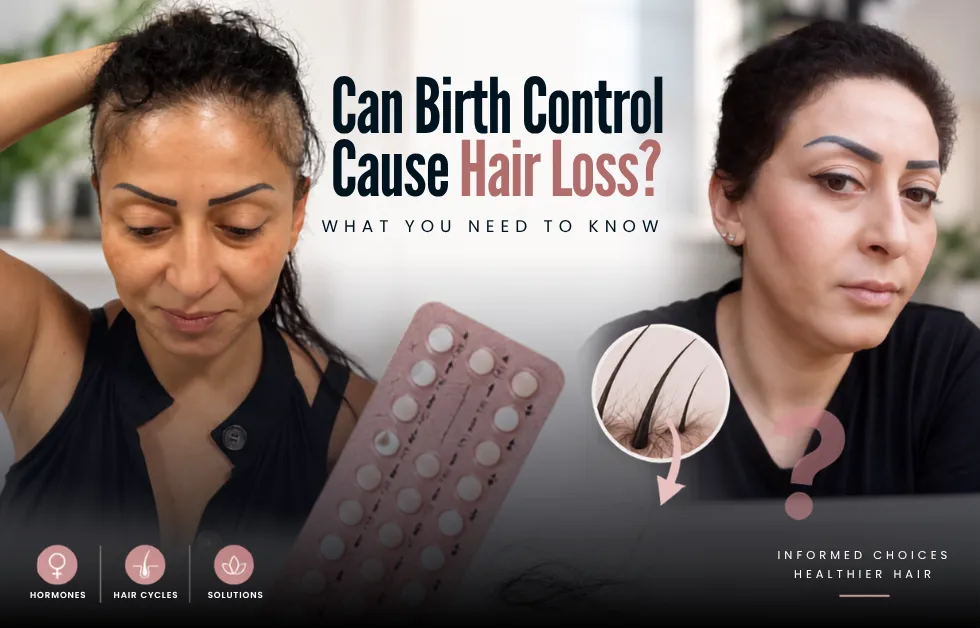
Yes, certain hormonal birth control methods trigger temporary hair shedding or thinning for some women. Especially right after you start, stop, or switch brands. The chances of this happening usually depends on the type of synthetic hormone (progestin) used in your contraception, your personal genetics, and underlying health factors like PCOS. Figuring out the best path forward requires a personalized assessment with your doctor to match the right method to your body.
Quick Answer: Can Birth Control Cause Hair Loss?
Hormones essentially pull the strings behind your hair’s natural growth cycle. When those hormone levels suddenly shift, active hair follicles can get pushed into a resting phase all at once. The result? Noticeable shedding when you brush or wash your hair.
Can Birth Control Cause Hair Loss or Hair Growth?
Oddly enough, it can do both. Hormonal contraceptives completely alter your body's baseline of estrogen and testosterone. For some, this abrupt shift shocks the hair follicles and sparks sudden shedding. But for others—especially women dealing with PCOS or hormonal thinning—certain anti-androgenic pills actually help protect and maintain hair density.
Why Some People Are More Sensitive
Your genetics hold a lot of the cards here. If your family has androgenetic alopecia (pattern baldness), your hair follicles are likely much more sensitive to hormonal changes. When you start taking a birth control pill with a high "androgenic" effect, you might accidentally accelerate this natural thinning process.
When Hair Loss May Be Temporary
Not all hair loss means you're going bald. Many women see an uptick in shedding right after starting or ditching the pill. It's just your body reacting to a new hormonal normal. Once your system levels out, this temporary shedding usually stops and the hair begins to fill in again over time.
How Do Birth Control Pills Affect Hormones and Hair?
To figure out why your hair is falling out, we need to look at what the pill is actually doing inside your body. Essentially, these medications override your natural ovulation and dictate your hormone levels.
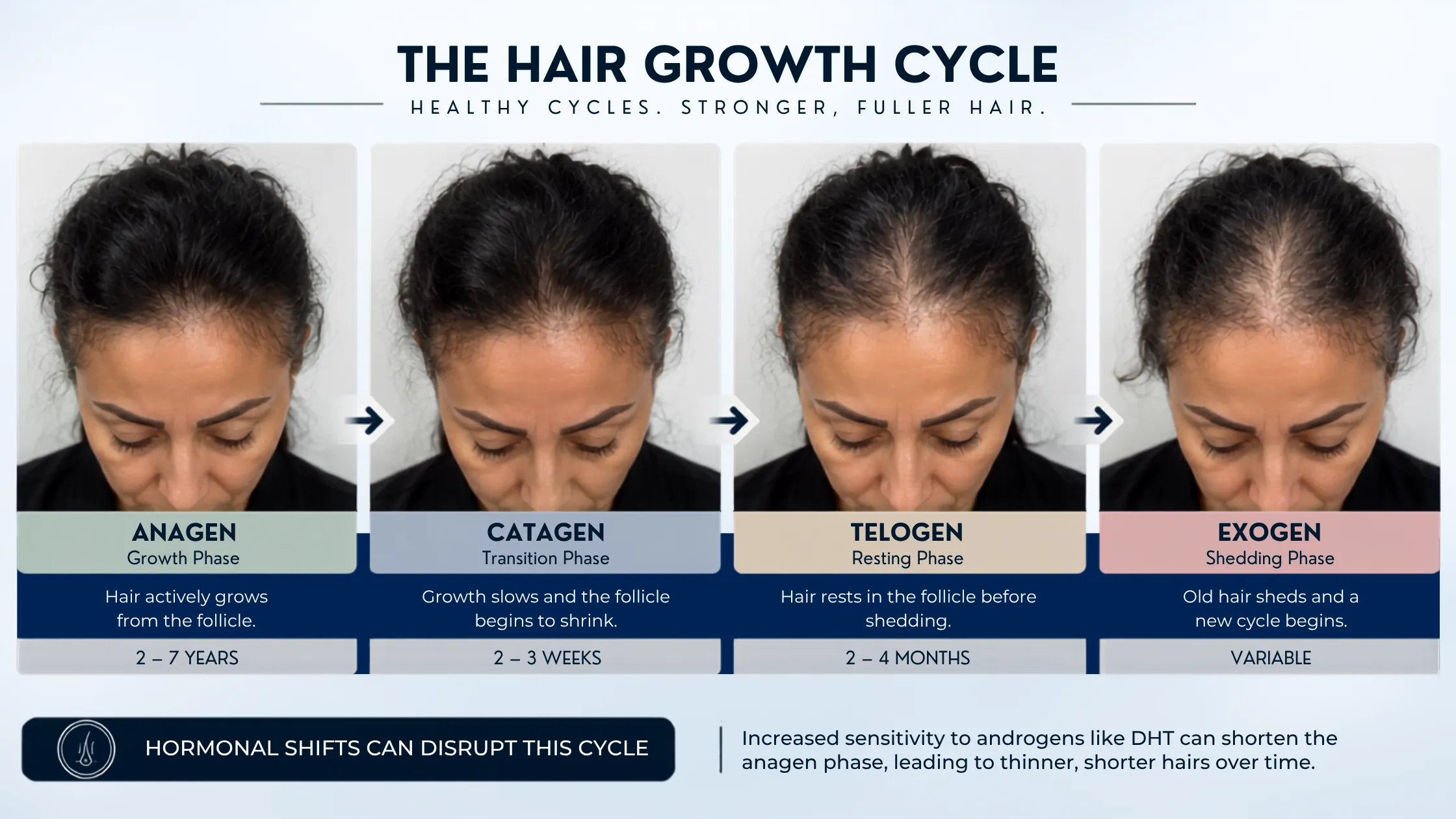
Estrogen, Progestin and the Hair Growth Cycle
Estrogen is basically your hair's best friend. It keeps your hair in the active growth phase for longer. Most birth control pills combine a synthetic estrogen with a progestin. Messing with this delicate ratio can easily disrupt your hair's normal rhythm.
Androgen Index: Why It Matters
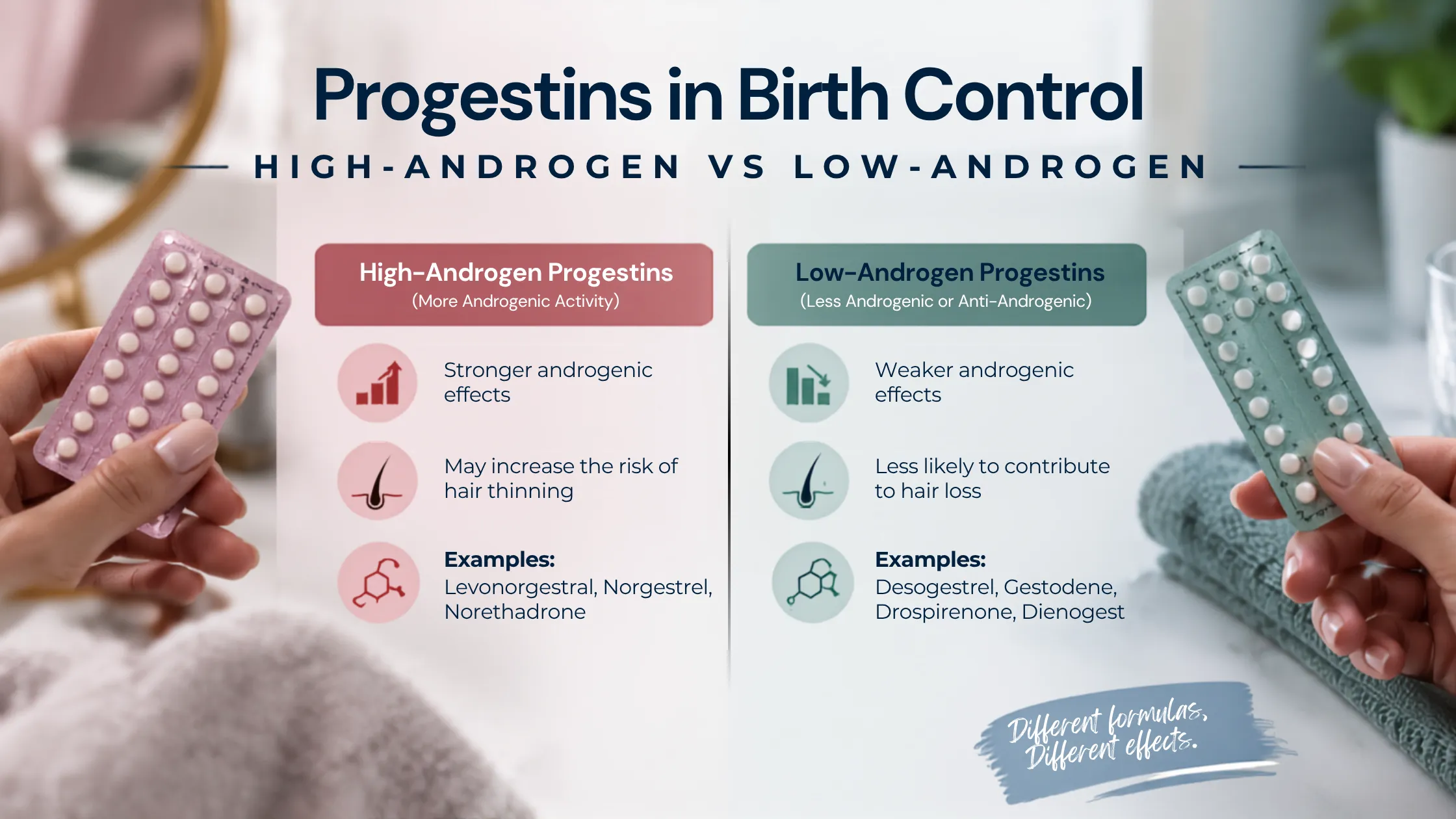
Not all progestins are created equal. Some have a high "androgen index," acting exactly like testosterone in your system. This is where biology gets interesting. Estrogen naturally boosts production of Sex Hormone Binding Globulin (SHBG) in your liver. Think of SHBG as a magnet. It seeks out circulating free testosterone and DHT, binding to them tightly. This locks the androgens away. It prevents them from attacking your hair follicles. Dermatologists exploit this exact mechanism, prescribing combined pills to fight acne and hormonal thinning. But there is a catch. If the specific progestin in your pill is highly androgenic, that protective barrier fails. It backfires completely.
Birth Control and DHT Sensitivity
Some people just have hair follicles that overreact to androgens. If you're one of them, taking an androgen-heavy pill is like pouring fuel on a fire. This explains why some people have thick, glowing hair on the exact same pill that makes your hair fall out.
How Can Birth Control Pills Cause Hair Loss?
Hair doesn't just fall out randomly. There’s always a specific biological trigger behind it.
Telogen Effluvium from Hormonal Change
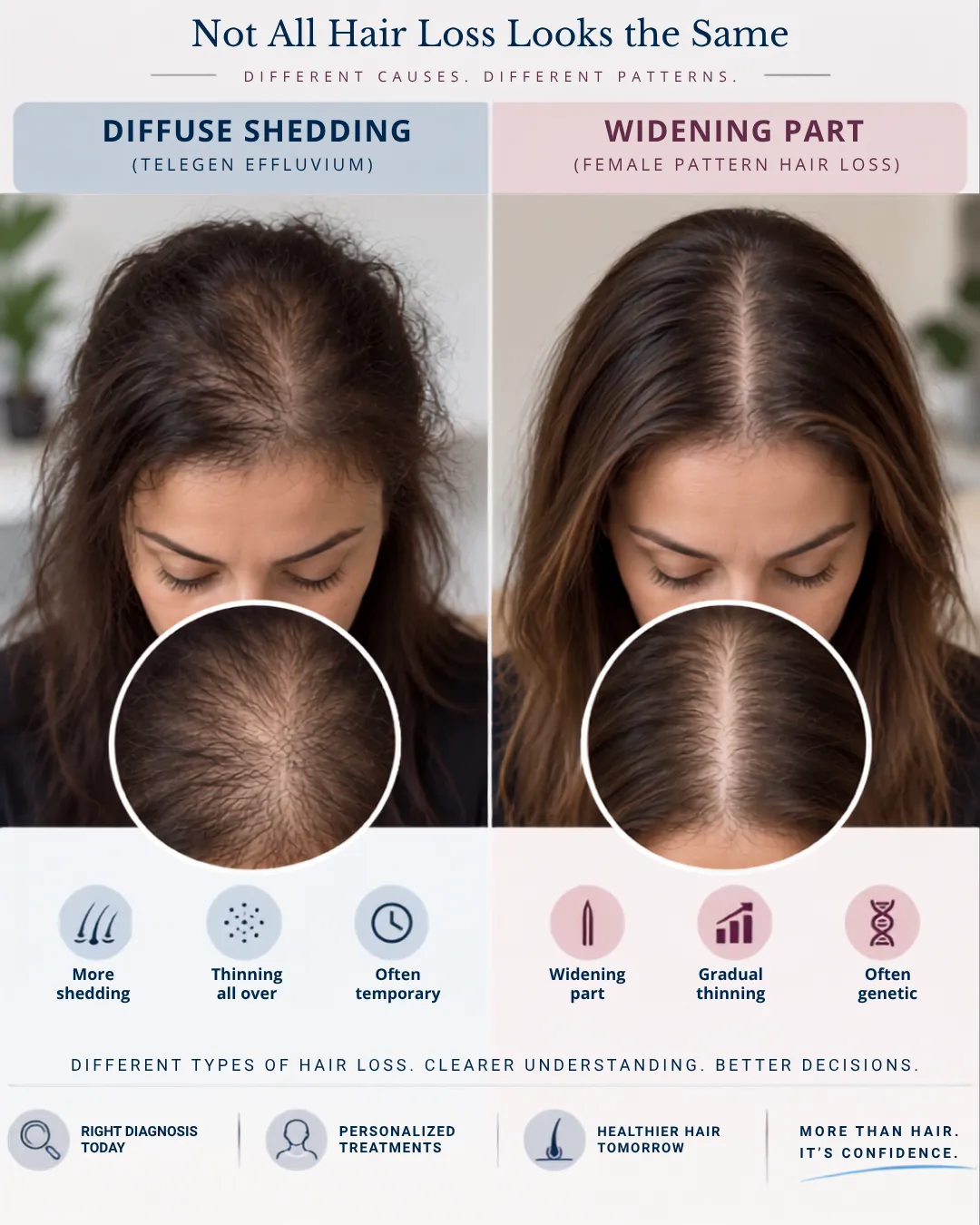
Any massive hormonal shift—whether it's having a baby, extreme stress, or switching your birth control—can shock your system. This leads to a condition called telogen effluvium. Instead of thinning in one specific spot, you'll likely notice diffuse shedding all over your scalp.
Androgenic Progestins and Hair Thinning
As mentioned earlier, androgenic progestins can slowly shrink your hair follicles. It’s a sneaky process. You probably won't even notice the extra hair in your drain until two to four months after you've started the medication.
Unmasking Female Pattern Hair Loss
Sometimes the pill isn't to blame. It's just the trigger that brings an existing issue to the surface. If you were already genetically wired for female pattern hair loss, hormonal contraceptives can simply make it visible years earlier than it would have appeared naturally.
What Does Hormonal Hair Loss Look Like?
You have to know what kind of hair loss you're dealing with before you can treat it. The way your hair sheds tells a clear story.
Diffuse Shedding
With telogen effluvium, the hair falls out from everywhere. Your tied up hair might feel noticeably thinner. Or you'll pull alarming amounts of hair out of your brush. It is a common problem among women.
Widening Part and Thinning Crown
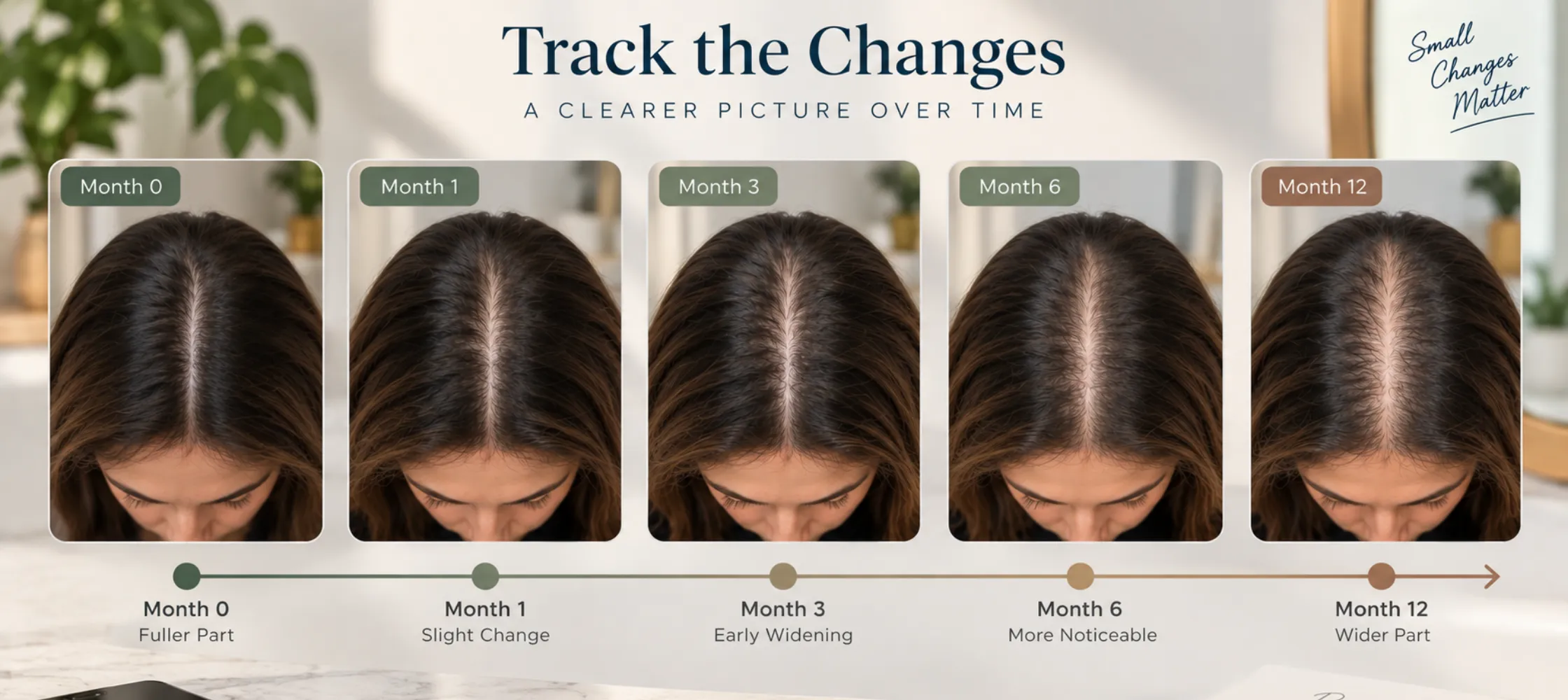
Female pattern hair loss is much more specific. You'll usually notice that your center part is getting wider, or the hair at the crown of your head is losing volume and showing more scalp. Overall density takes a major hit here.
Hairline Changes vs Overall Volume Loss
Are you noticing that the hair around your temples seems to be pulling back? That receding pattern is a classic sign of androgenic hair loss. On the other hand, if you're suddenly discovering completely smooth, round bald patches, you're likely looking at an entirely different condition, such as alopecia areata. If that happens, don't wait—book an appointment with a doctor right away to get to the bottom of it.
Hair Loss After Stopping Birth Control: How Long Does It Last?
Quitting the pill forces your body to remember how to produce its own hormones again. It’s a massive transition.
Why Shedding Can Happen After Stopping the Pill
When you stop taking synthetic hormones, your levels plummet. This sudden drop is all it takes to force your follicles into a shedding phase. Because of how the natural hair growth cycle works, the physical shedding usually doesn't start until a few months after you've thrown the pills away.
Will My Hair Get Thicker If I Stop Birth Control?
That depends entirely on your baseline. Stopping a highly androgenic pill removes the chemical trigger. Over time, density usually improves. However, the reverse applies to women managing PCOS or genetic thinning. Quitting an anti-androgenic medication removes your protective barrier. Shedding often accelerates. Never drop your prescription abruptly. Consult your doctor to map out a safe exit strategy.
When Regrowth Usually Starts
Biological timelines vary. Hair typically resumes normal cycling once systemic hormones finally stabilize. Patience is required. But if several months pass with zero visible improvement? Do not wait. Book a dermatologist appointment to physically examine your follicles.
Which Birth Control Options Are More Likely to Affect Hair?
The delivery method—whether a patch, pill, or implant—matters far less than the actual chemical compound coursing through your bloodstream.
High-Androgen vs Low-Androgen Progestins
The specific hormone profile interacts directly with your DNA. High-androgen progestins frequently trigger thinning. If your density drops, physicians immediately evaluate the androgenic index of your current contraceptive.
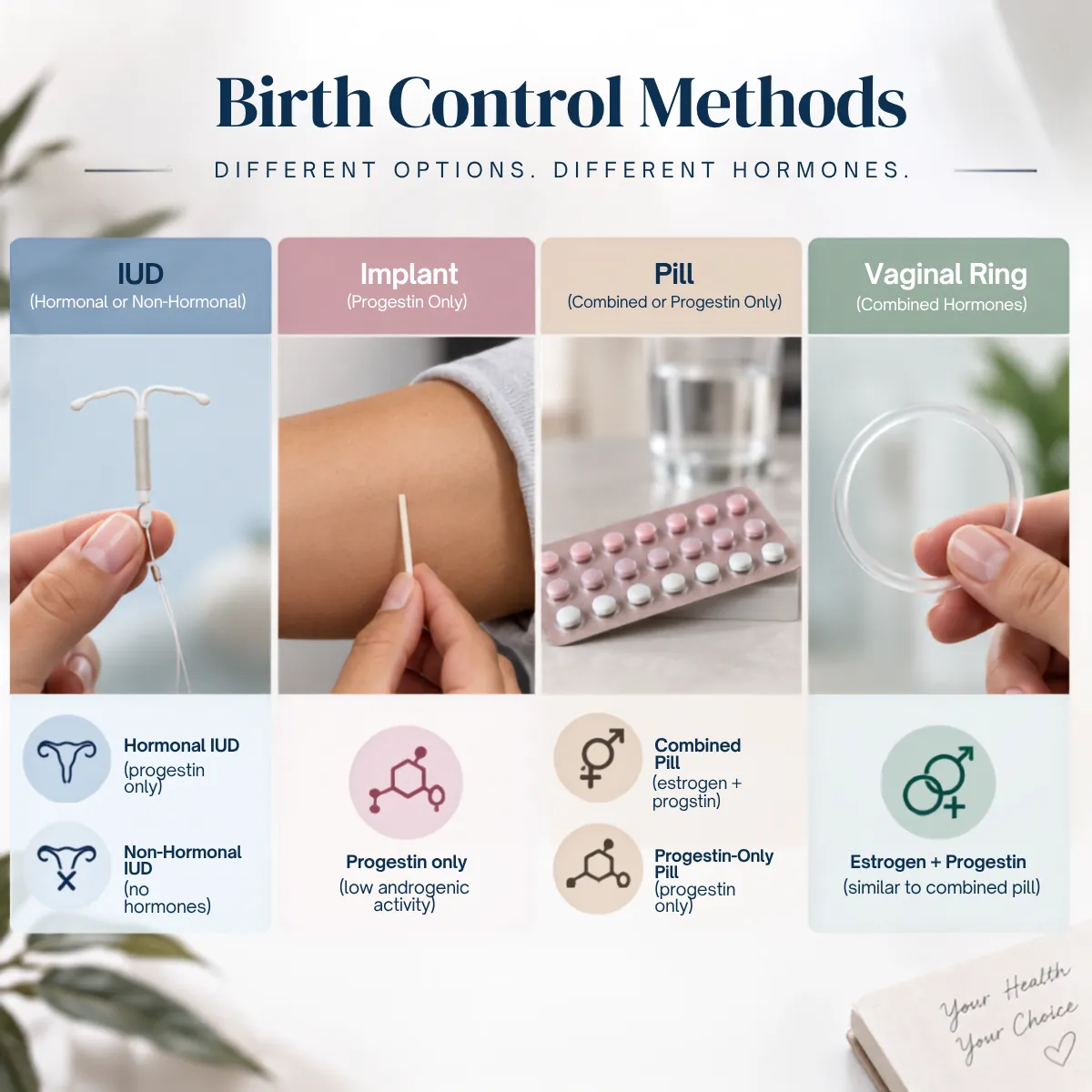
Pills, Implants, Injections, IUDs, Patch and Ring
Systemic reactions to various contraceptive formats are highly individualized. Copper IUDs, however, lack hormones entirely. They do not directly disrupt the follicular cycle. Shedding while using one? Look elsewhere. Severe stress or depleted iron stores are the most probable culprits.
Which Birth Control Is Least Likely to Cause Hair Loss?
There is no magic, universal "safe" option. It all comes down to your medical history and unique biology.
Progestin Generations and Brand Specifics
Medical science divides progestins into generations. Knowing your pill's generation predicts your hairline's future. Different brand names rely on completely different progestins. Your unique sensitivity dictates the reaction. For example, Depo-Provera (the injection) uses a highly androgenic progestin. It carries a notoriously high risk for triggering hair loss.
What about NuvaRing? It releases hormones systemically, so its impact depends purely on your personal sensitivity to etonogestrel. Then you have hormonal IUDs like Mirena, Kyleena, or Liletta. Yes, they release hormones locally in the uterus. However, those hormones still enter the bloodstream. Sensitive users absolutely can experience telogen effluvium from them.
Progestin Generation | Active Ingredients | Androgenic Effect | Hair Loss Risk | Common Brands |
1st & 2nd Gen | Levonorgestrel, Norethindrone, Norgestrel | High | HIGH | Microgynon, Alesse, Levlen, Loestrin |
3rd Gen | Desogestrel, Norgestimate | Low | LOW | Marvelon, Cilest, Ortho-Tri-Cyclen |
4th Gen | Drospirenone, Dienogest | Anti-Androgenic | VERY LOW | Yasmin, Yaz, Beyaz, Natazia |
Progestin-Only (Depo) | Medroxyprogesterone Acetate | High | HIGH | Depo-Provera |
Low-Androgen Birth Control Options
If you're worried about losing your hair, low-androgen or anti-androgenic methods are usually safer options. Brands like Yasmin, Yaz, Beyaz, Nextstellis, or Slynd frequently pop up in these conversations. Just remember, these are prescription medications that require a solid medical evaluation first.
Anti-Androgen Birth Control Pills for Hair Loss
For women battling PCOS, hormonal acne, or excess facial hair, anti-androgenic pills aren't just contraceptives. They are active treatments that help keep those frustrating symptoms in check.
Best Birth Control for Hair Growth: What That Really Means
Let's be clear: nobody makes a birth control pill specifically to grow hair. The "best" choice is simply the one that keeps your hormones balanced without angering your hair follicles. It's a puzzle you should solve alongside your gynecologist and dermatologist.
Birth Control, PCOS and Hormonal Hair Loss
Polycystic Ovary Syndrome (PCOS) can affect your hormonal balance, which may make contraceptive choice more important when hair loss is also a concern.
A Note About Birth Control and PCOS Hair Loss
PCOS naturally drives up your androgen levels. That means more acne, more facial hair, and unfortunately, thinner scalp hair. The right combination birth control can actually suppress those excess androgens. Because pattern hair loss can stem from multiple different triggers, getting a professional diagnosis is crucial.
Does Birth Control Stop Hair Growth on Face?
It can, particularly when androgen-related symptoms are part of the picture. Anti-androgenic birth control can significantly slow down unwanted facial hair (hirsutism).
When Birth Control May Help Hair Symptoms
Here's the tricky part. Just because a pill clears up your facial hair doesn't automatically mean it will regrow the hair on your head. Scalp hair behaves a little differently. If you suspect PCOS, you need a full hormonal workup.
Is Hair Loss from Birth Control Permanent?
Take a deep breath. Most shedding caused by shifting hormones is temporary. But you still need to keep a close eye on it.
Will Hair Loss from Birth Control Grow Back?
If the culprit is telogen effluvium, yes, it’s almost always temporary. But don't just assume that throwing out your pills will instantly fix the problem. You need a solid medical strategy.
When Shedding Is Temporary
If your hair is just reacting to the introduction of a new medication, it will usually settle down and return to a normal growth phase once your body gets used to the new hormone levels.
When Female Pattern Hair Loss May Need Long-Term Treatment
If the pill unmasked actual female pattern hair loss, you're looking at a longer journey. You'll likely need ongoing medical treatment. Plan for blood tests, clinical photos to track progress, and a follow-up with your dermatologist every 3 to 6 months.
How to Treat Hair Loss from Birth Control
You have to fix the root cause. Throwing random, unverified gummy supplements at the problem won't cut it.
VIDEO 1 - Expert trichologist discussing the step-by-step process of evaluating and treating hormonal hair loss in women.
Talk to the Prescribing Doctor First
Please, don't just quit your medication out of panic. Call your prescribing doctor. Discussing a pivot to a different method should always be your first move.
Dermatology Evaluation and Blood Tests
A dermatologist will look far deeper. They won't just check if your blood work is "normal." They look for optimal clinical targets required to actively stimulate the hair's growth phase. Here is what they evaluate:
Serum Ferritin: The lab report might say 15 ng/mL is fine. It isn't. To stop active shedding and trigger regrowth, your ferritin must hit a clinical target of at least 50–70 ng/mL.
25-Hydroxy Vitamin D: Your follicle cycle needs this between 40–60 ng/mL.
Free & Total Testosterone / DHEA-S: These measure your actual circulating androgen load to confirm if the pill is helping or hurting.
TSH and Free T4: An underactive or overactive thyroid perfectly mimics contraceptive-induced shedding. They must rule it out.
Minoxidil, Spironolactone and Other Options
For some women, topical minoxidil may help support hair growth with pattern hair loss. Spironolactone is another treatment option. Doctors often prescribe it off-label to block androgens and fight pattern hair loss. Spironolactone is strictly off-limits if you are pregnant. And like any medical treatment, it requires careful monitoring by professionals.
Nutrition, Ferritin, Thyroid and Stress Support
Beyond medications, therapies like PRP (Platelet-Rich Plasma) or low-level lasers may affect your hair growth. But honestly, no clinical treatment will work well if nutritional deficiencies, low iron levels, or significant stress are contributing to the shedding. You have to find solutions for these issues first.
What to Do If You Notice Hair Thinning While Taking Birth Control
Don't ignore it. Documenting the changes early on is the best way to help your doctors figure out what's going wrong.
Track Timing and Symptoms
When did the shedding actually start? Is your part line getting wider, or is the hair thinning everywhere? Write it down. Be sure to note any other recent life events—illness, a major weight drop, intense stress, or iron issues.
Do Not Stop Suddenly Without a Plan
Stopping hormonal contraception suddenly is not a good idea. It can lead to changes in hormone levels. Because of this sudden shift, some people may notice temporary hair loss.
When to Switch Birth Control
If you decide to switch your birth control method, you have to see your doctor. Work with your doctor to create a smooth transition plan. If the hair loss feels severe or aggressive, you need to see a dermatologist. Immediately.
Expert Tips for Supporting Hair Health
Doctors handle the hormones. Your job is to protect the hair you still have.
Gentle Hair Care
You should change your styling habits. Avoid tight buns or ponytails. These tight styling habits yank on the roots. You should put away the hot tools and take a break from harsh chemical dyes for a while. Gentle handling buys you time while you get a correct diagnosis.
Nutrition and Deficiency Screening
Make sure you aren't silently dealing with an iron, protein, zinc, or vitamin D deficiency. But don't just guess—get tested before loading up on heavy supplements.
Stress, Sleep and Scalp Health
Chronic stress and poor sleep can contribute to hair shedding in some people. Prioritize resting. Sometimes topical treatments help with this. For any medication, let your doctor guide that choice.
When Should You See a Doctor?
Early evaluation can help identify the cause and give you way more treatment options before you lose significant density.
Heavy Shedding for More Than 3 Months
If you've been losing fistfuls of hair for more than 12 weeks, don't wait it out. Go see a professional.
Patchy Hair Loss or Scalp Symptoms
Hair falling out in distinct patches? Scalp burning, itching, or turning red? That’s not normal pill shedding. Get medical attention quickly.
Hormonal Symptoms, PCOS or Menstrual Changes
Watch your body carefully. If you start exp
eriencing irregular periods, sudden adult acne, unwanted facial hair, or rapid weight changes, your hormones are waving a red flag. This is where your gynecologist and dermatologist need to team up.
Final Verdict: Should You Change Birth Control Because of Hair Loss?
Birth control absolutely has the power to cause hair thinning in some women, just as certain anti-androgenic pills have the power to protect hair density for others. Your experience will ultimately depend on your genetics, whether or not you have PCOS, nutritional health, and the specific "androgen index" of the progestin you are taking.
If you're noticing an alarming amount of hair in the shower drain, don't panic and throw your pills in the trash. That sudden crash can actually make things worse. Instead, book an appointment with your prescribing doctor to map out a safe transition. Catching the issue early with a dermatologist can help you figure out if you're dealing with a temporary bout of telogen effluvium or long-term pattern hair loss—and get you on the right treatment path immediately.
Expert Note on Hair Transplants and Permanent Damage
Most shedding linked to hormonal shifts is just temporary telogen effluvium. But there is an exception. Highly androgenic pills can prematurely trigger permanent Female Pattern Hair Loss (Androgenetic Alopecia) in genetically susceptible women. What happens if medical therapies like minoxidil or spironolactone fail? If a permanently widened part or visible scalp clearance remains after hormone levels balance out, surgical restoration becomes a viable option. Procedures like Female DHI / FUE Hair Transplantation, alongside Stem Cell or PRP therapies, can be evaluated to successfully restore lost density.
About the Author
Nazmi G. specializes in breaking down complex, evidence-based medical research into clear, actionable guides for hair transplant candidacy and comprehensive hair loss protocols.
Medical Review Note
This article is for educational purposes and shouldn't replace a personalized diagnosis from your doctor. Truly addressing hair loss requires a close look at your contraceptive history, timeline of shedding, family genetics, blood panels, and an in-person clinical exam.
Editorial Policy & Trust
References and Medical Sources
Graves KY, Smith BJ, Nuccio BC: Alopecia due to high androgen index contraceptives, JAAPA, 2018 (https://pubmed.ncbi.nlm.nih.gov/29979329/)
Singal A, Driscoll MS, Grant-Kels JM, et al.: Hormonal Contraceptives: Part I—Formulations and Physiological Effects on the Skin, Journal of the American Academy of Dermatology, 2026 (https://pubmed.ncbi.nlm.nih.gov/41791516/)
Singal A, Zhou MH, Driscoll MS, et al.: Hormonal Contraceptives: Part II—Use and Relevance in Clinical Dermatology, Journal of the American Academy of Dermatology, 2026 (https://pubmed.ncbi.nlm.nih.gov/41791530/)
Asghar F, Shamim N, Farooque U, Sheikh H, Aqeel R: Telogen Effluvium: A Review of the Literature, Cureus, 2020 (https://pubmed.ncbi.nlm.nih.gov/32607303/)
Bertoli MJ, Sadoughifar R, Schwartz RA, Lotti TM, Janniger CK: Female Pattern Hair Loss: A Comprehensive Review, Dermatologic Therapy, 2020 (https://pubmed.ncbi.nlm.nih.gov/32700775/)
Carmina E, Azziz R, Bergfeld W, et al.: Female Pattern Hair Loss and Androgen Excess: A Report From the Multidisciplinary Androgen Excess and PCOS Committee, The Journal of Clinical Endocrinology & Metabolism, 2019 (https://pubmed.ncbi.nlm.nih.gov/30785992/)
James JF, Jamerson TA, Aguh C: Efficacy and Safety Profile of Oral Spironolactone Use for Androgenic Alopecia: A Systematic Review, Journal of the American Academy of Dermatology, 2022 (https://pubmed.ncbi.nlm.nih.gov/37719557/)
Medical disclaimer: This article is for informational purposes only and is not medical advice. Individual results vary from person to person. Always consult a qualified doctor before any hair transplant procedure.
Get a Free Hair Analysis from Our Experts
Use our free online help tool to communicate your hair loss concerns – it only takes a few minutes. We’ll provide you with a personalized, non-binding quote.
Let’s Call You!

Popular Blogs
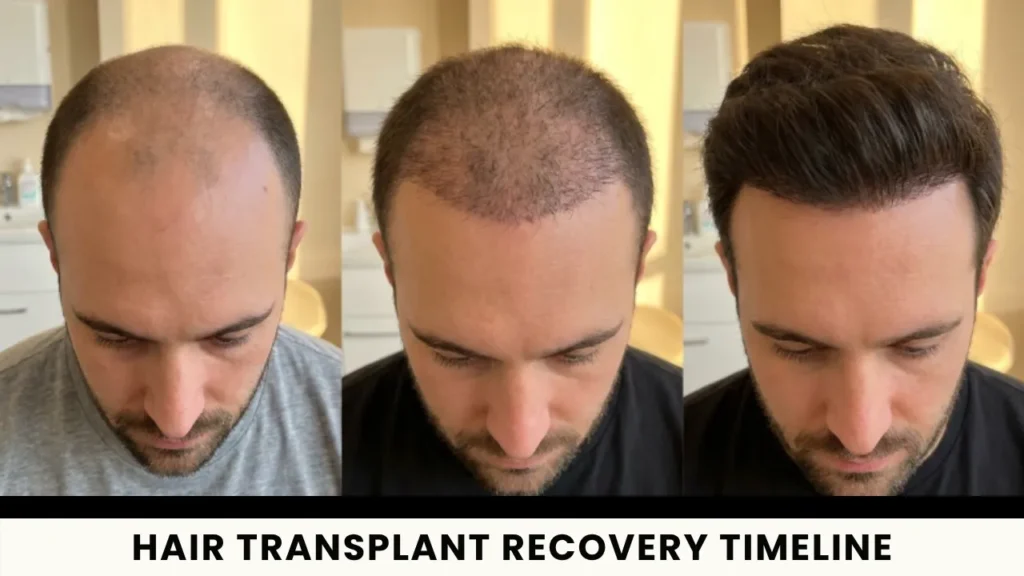
Hair Transplant Recovery Timeline: Day-by-Day, Week-by-Week and Month-by-Month Guide
Hair Transplant Recovery Timeline: Day-by-Day, Week-by-Week and Month-by-Month Guide Free Hair Analysis Homepage Blog Wayne…
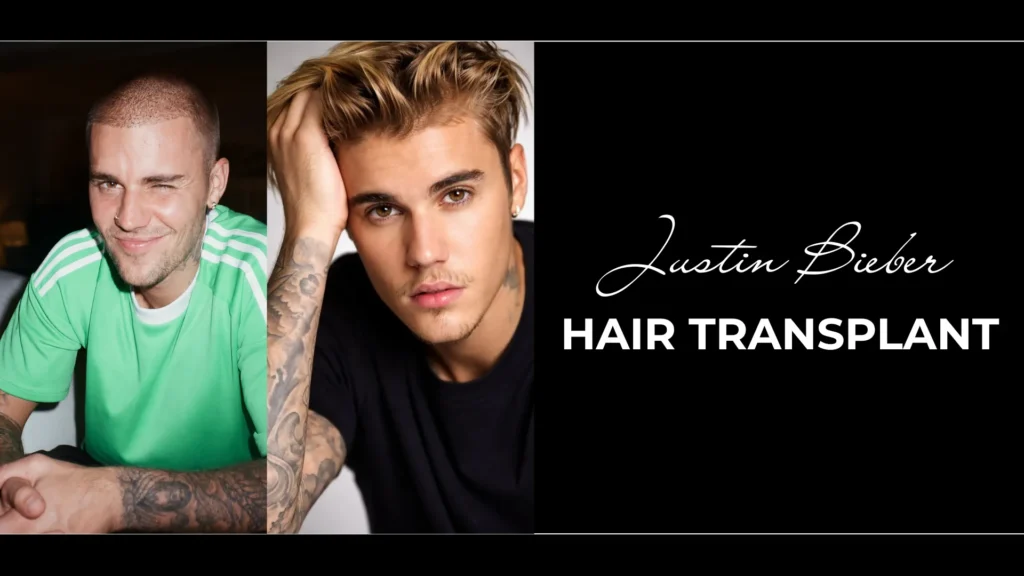
Justin Bieber Hair Transplant: Hairline Analysis, Before & After Photos, Rumors & Expert Opinion
Justin Bieber Hair Transplant: Hairline Analysis, Before & After Photos, Rumors & Expert Opinion Free…
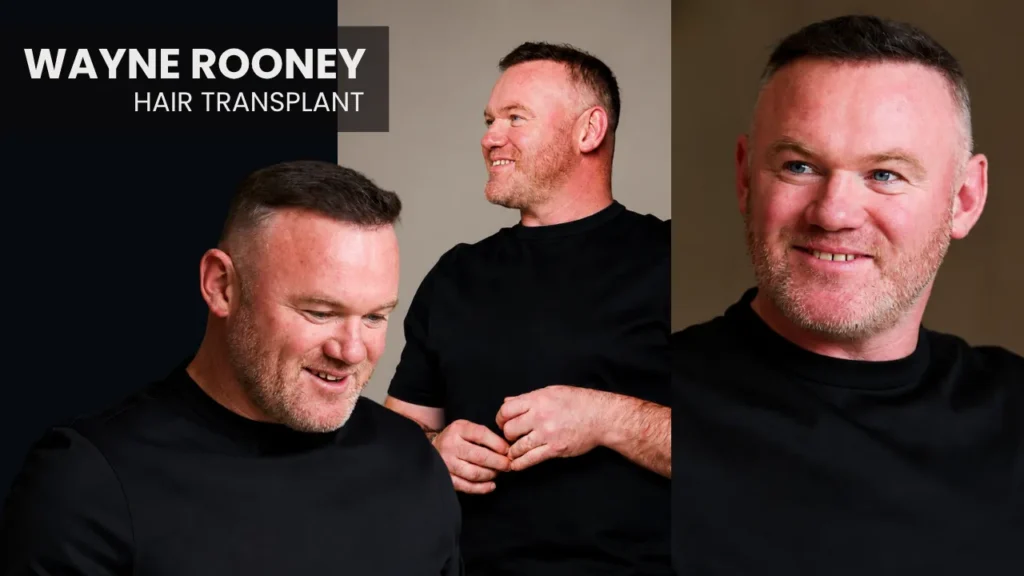
Wayne Rooney Hair Transplant: Before & After
Wayne Rooney Hair Transplant: Before & After Free Hair Analysis Homepage Blog Wayne Rooney Hair…

Conor McGregor Hair Transplant: Before & After
Conor McGregor Hair Transplant: Before & After Free Hair Analysis Homepage Blog Conor McGregor Hair…
Turkey Visa Requirements for Hair Transplant in Turkey
Turkey Visa Requirements for Hair Transplant in Turkey Free Hair Analysis Homepage Blog Turkey Visa…

David Silva Hair Transplant: Before & After
David Silva Hair Transplant: Before & After Free Hair Analysis Homepage Blog Discover David Silva…
Ready To
Book Your Appointment?
Reach out to us or complete our simple online form
and we’ll contact you to schedule a time that works perfectly for you.



Frequently Asked Questions