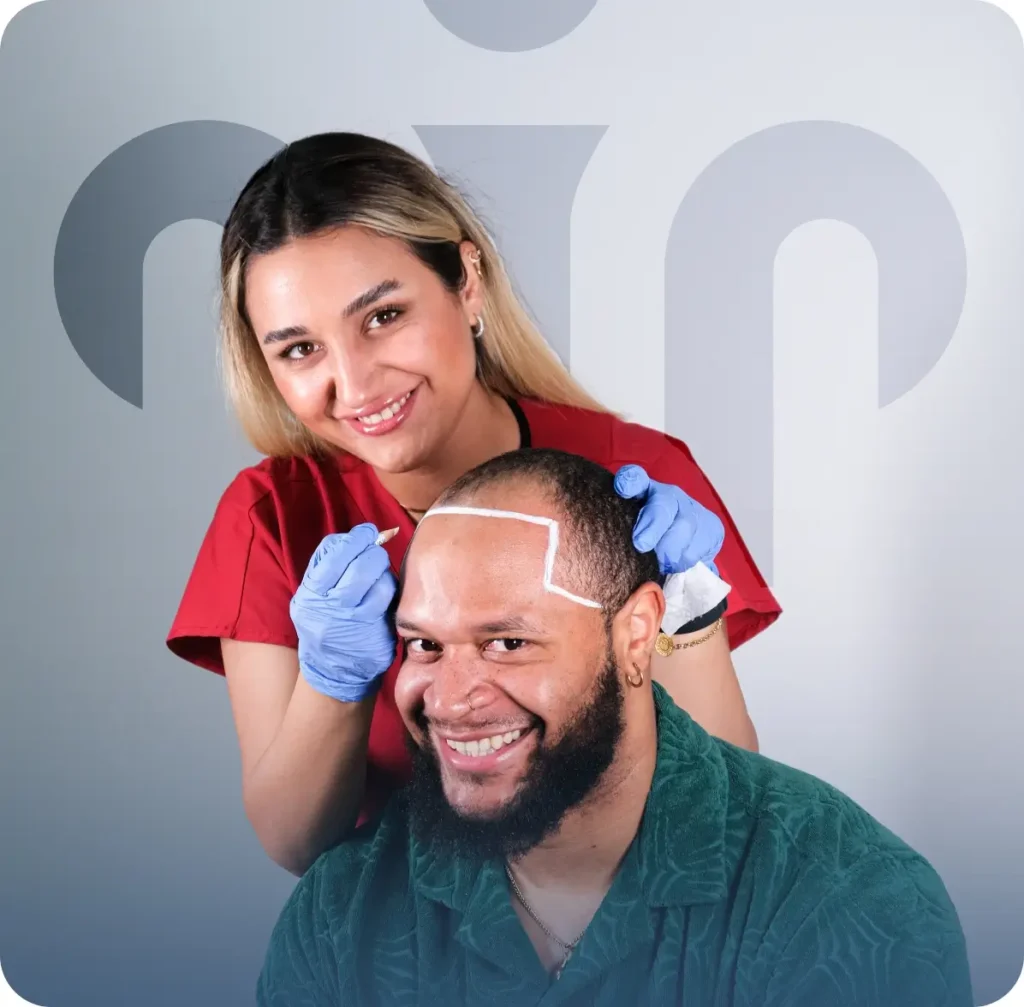
Crown Hair Transplant: Should You Treat It Before the Hairline?
Homepage

Blog
Crown Hair Transplant: Should You Treat It Before the Hairline?

Medical Reviewed By Dr. Tompi, M.D – Plastic & Aesthetic Surgeon
Written By Nazmi G, Trichologist

When donor hair is a finite resource, surgeons must make a strategic choice: rebuild the hairline or add density to the crown. The hairline frames the face, offering the most significant aesthetic change, while the crown contributes to overall volume. The correct priority is not a matter of preference but a clinical decision based on a patient's specific hair loss pattern, donor hair reserves, and realistic long-term objectives.
A thorough evaluation is essential to determine whether to address one area, both simultaneously, or in separate, planned stages. The decision involves a careful assessment of your hair loss pattern, donor hair availability, age, and long-term aesthetic goals. At Turkey Hair Center, our consultations provide patients with the comprehensive information needed to make an informed choice.
This guide explains the clinical nuances of hairline and crown hair transplants to help you understand the most effective approach for your restoration.
Understanding Hair Loss Patterns: Hairline vs. Crown
Androgenetic alopecia, or male pattern baldness, progresses along predictable pathways, most commonly affecting the frontal hairline and the vertex, also known as the crown. These two areas present distinct clinical challenges and impact appearance differently.
- The Hairline: This area frames the face and its recession is often the first visible sign of hair loss. It typically begins with a recession at the temples, creating an 'M' shape that can evolve into a more advanced 'U' shape, significantly altering facial proportions.
- The Crown: The crown, or vertex, is the highest point at the back of the scalp. Hair loss here usually starts as a small, thinning circle that expands over time. While less apparent to the individual, a thinning crown is highly visible to others and is a clear indicator of advancing baldness.
Classifying your hair loss using the Norwood Scale is a critical first step in surgical planning. You can learn more about your hair loss stage by visiting our dedicated pages on the Norwood Scale Explained.

The Hairline: Your Frame of Confidence
The hairline dictates the proportions of the face. Its restoration is therefore a procedure of high aesthetic impact, directly influencing how youthful a person appears.
Reconstructing a hairline is a task of surgical artistry. The surgeon must create a soft, irregular line that looks entirely natural, not a harsh, artificial edge. This is achieved by meticulously placing single-follicular unit grafts at the very front, followed by two- and three-hair grafts to build density behind them. The angle and direction of each transplanted follicle must mimic natural growth patterns for an undetectable result. You can explore the intricacies of this process on our Hairline Design page.
While a well-designed hairline provides a significant psychological lift, any plan must account for the finite donor supply and the potential for future hair loss elsewhere on the scalp.
The Crown: The Often-Overlooked Density Zone
While the hairline provides the facial frame, the crown provides the impression of overall density. A bald vertex can negate the positive effect of a restored hairline, creating an unbalanced look.
The crown presents specific surgical challenges:
- Large Surface Area and Graft Demand: The crown is a large, convex area that requires a substantial number of grafts—often 2,000 or more—to achieve satisfactory density.
- Progressive Hair Loss: The crown is often an area of active, progressive thinning. Transplanting into this zone without medical stabilisation can result in a 'doughnut' effect, where the transplanted hair remains surrounded by a widening ring of baldness as native hair continues to fall.
- Complex Hair Angles: Hair on the crown grows in a spiral pattern, or whorl. Replicating this complex, multi-directional pattern requires precise graft placement to look natural.
A strategic approach to the crown must preserve enough donor hair for potential future procedures, should the hair loss continue to advance.
Factors Influencing Your Decision: Hairline or Crown First?
The decision to prioritise the hairline, the crown, or to address both is based on a careful clinical assessment. The following factors are critical:
- Age and Hair Loss Progression: For younger patients (under 30), hair loss is often unstable. A conservative hairline restoration may be advisable, preserving donor grafts for the crown later. For older patients with a stabilised pattern, a more comprehensive plan can be made.
- Donor Hair Availability: This is the single most limiting factor. The donor area contains a finite number of lifetime grafts. A surgeon must calculate this capacity to ensure enough grafts are available for both current needs and potential future sessions without causing visible thinning in the donor zone itself. Learn more about the critical role of the Donor Area.
- Current Hair Loss Stage: A patient at Norwood stage 3 may only need hairline work. A patient at Norwood stage 5 or 6 will require a multi-stage plan that prioritises one area first, typically the hairline, to achieve the most impactful change.
- Patient Expectations and Aesthetic Goals: A frank discussion is needed. Is the primary goal to look better in photographs and face-to-face, favouring the hairline? Or is the thinning on top the main source of concern? The surgical plan must align with the patient's primary objective.
- Budget and Number of Sessions: Significant restoration of both the hairline and crown often requires a high number of grafts (e.g., 4,000-6,000+), which may necessitate two separate procedures. This has implications for both cost and time commitment. You can find general information on graft counts on pages like 1000 Grafts, 3000 Grafts, or 5000 Grafts.
Strategic Planning: The Phased Approach to Hair Restoration
For patients with extensive hair loss affecting both the hairline and crown, a phased surgical plan is the standard of care. This approach ensures the best use of a limited donor supply and leads to more natural-looking long-term results.
Typically, the first session focuses on establishing a strong, conservative hairline. This provides the greatest aesthetic improvement and a significant boost to the patient's confidence. It also allows the surgeon and patient to assess the results and for the donor area to recover fully.
A second session to address the crown can then be planned for 12 to 18 months later. In select cases with limited hair loss and excellent donor density, a single procedure may be able to provide conservative coverage to both zones. The final strategy is determined during the surgical consultation.
| Feature | Hairline Transplant | Crown Transplant |
|---|---|---|
| Primary Aesthetic Impact | Frames the face, defines facial proportions | Creates top-down density and coverage |
| Graft Placement Difficulty | High (requires artistic skill for soft, irregular border) | High (requires replication of natural hair whorl) |
| Visibility to Others | High (frontal view) | High (from above and behind) |
| Common Priority | Usually addressed first for maximum aesthetic impact | Often addressed in a second session or with remaining grafts |
| Risk of Future Loss Around Transplant | Lower in a stabilised pattern | Higher, as surrounding native hair may continue to thin |

The Role of Expert Consultation at Turkey Hair Center
The decision between hairline and crown restoration cannot be made without a detailed clinical evaluation. A consultation at Turkey Hair Center involves a thorough assessment by one of our partner surgeons to analyse your hair loss pattern, donor hair density and calibre, scalp laxity, and medical history.
We use this information to develop a precise surgical plan. During your consultation, we will establish:
- Your primary aesthetic objectives.
- Your current Norwood stage and the likely future progression of your hair loss.
- The total lifetime capacity of your donor area.
- The most appropriate surgical technique for your case, such as Follicular Unit Excision (FUE) or Direct Hair Implantation (DHI), which you can compare on our FUE vs DHI page).
- A clear, personalised treatment plan outlining the recommended number of grafts and sessions for your hairline and crown.
Our commitment is to provide a realistic, medically sound plan that aligns with your goals and respects the limitations of your donor supply.
What to Expect: Recovery and Results
The post-operative recovery process is consistent whether the hairline or crown is treated. The initial healing phase lasts for about 10-14 days. Transplanted hairs will then enter a shedding phase, with new growth typically beginning 3-4 months after the procedure. The final cosmetic result will be apparent at 12 to 18 months.
For a detailed breakdown of what to expect, please refer to our Hair Transplant Recovery Timeline. While transplanted follicles are permanent, their longevity is well-established. Find out more on our How Long Do Hair Transplant Results Last page.
It is also important to discuss ongoing medical therapies. Medications such as Minoxidil and Finasteride can be crucial for stabilising hair loss in non-transplanted areas and maintaining the overall result long-term.
Medical disclaimer: This article is for informational purposes only and is not medical advice. Individual results vary from person to person. Always consult a qualified doctor before any hair transplant procedure.
Get a Free Hair Analysis from Our Experts
Use our free online help tool to communicate your hair loss concerns – it only takes a few minutes. We’ll provide you with a personalized, non-binding quote.
Let’s Call You!

Popular Blogs
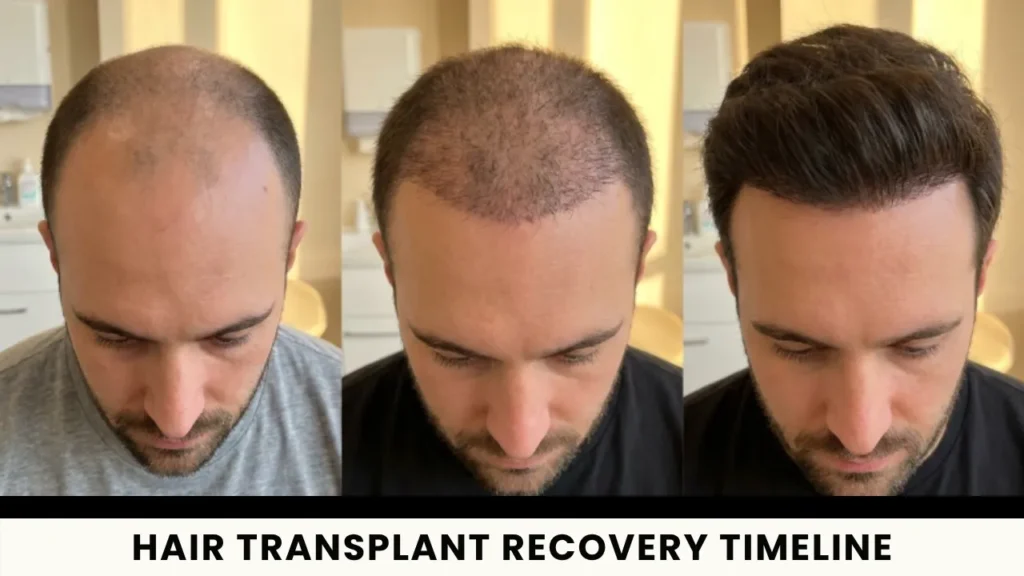
Hair Transplant Recovery Timeline: Day-by-Day, Week-by-Week and Month-by-Month Guide
Hair Transplant Recovery Timeline: Day-by-Day, Week-by-Week and Month-by-Month Guide Free Hair Analysis Homepage Blog Wayne…
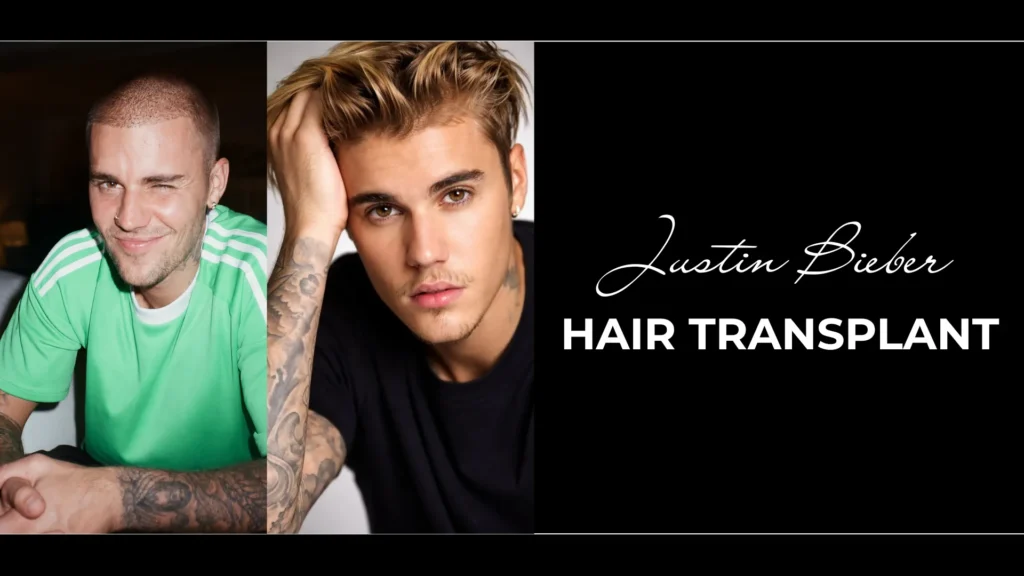
Justin Bieber Hair Transplant: Hairline Analysis, Before & After Photos, Rumors & Expert Opinion
Justin Bieber Hair Transplant: Hairline Analysis, Before & After Photos, Rumors & Expert Opinion Free…
Wayne Rooney Hair Transplant: Before & After
Wayne Rooney Hair Transplant: Before & After Free Hair Analysis Homepage Blog Wayne Rooney Hair…

Conor McGregor Hair Transplant: Before & After
Conor McGregor Hair Transplant: Before & After Free Hair Analysis Homepage Blog Conor McGregor Hair…
Turkey Visa Requirements for Hair Transplant in Turkey
Turkey Visa Requirements for Hair Transplant in Turkey Free Hair Analysis Homepage Blog Turkey Visa…
David Silva Hair Transplant: Before & After
David Silva Hair Transplant: Before & After Free Hair Analysis Homepage Blog Discover David Silva…
Ready To
Book Your Appointment?
Reach out to us or complete our simple online form
and we’ll contact you to schedule a time that works perfectly for you.



Frequently Asked Questions