

Hair Transplant Cost & Pricing List
Hair transplant price and cost vary depending on grafts, technique, and clinic, offering affordable options with high-quality results in Uganda
Official Partner Clinic in Uganda
Kampala Hair & Aesthetics Clinic
Kampala, Uganda
Your hair transplant is performed by Turkey Hair Center specialists at our official partner clinic in Kampala — the same standards, consultation and aftercare close to home.
Homepage

Patient Guide
Hair Transplant Price
Hair Transplant Packages in Uganda
Transparent, all-inclusive packages with Turkey Hair Center, performed at our partner Kampala Hair & Aesthetics Clinic, Kampala. No hidden costs.
- Maximum Graft Hair Transplant
- Local Anesthesia
- Blood Tests
- Doctor Consultation
- Required Medications
- Post-Op Products (Shampoo + Foam)
- 1-Year Follow-Up Consultation
- Maximum Graft Hair Transplant
- Local Anesthesia
- Blood Tests
- Doctor Consultation
- Required Medications
- Post-Op Products (Shampoo + Foam)
- 1-Year Follow-Up Consultation
- Exosome Treatment (Strengthens Hair Follicles)
- 6-Month Hair Care Set (Vitamins, Shampoos & Serums)


Hair Transplant Price and Cost in Uganda
Hair transplant price and cost in Uganda are affordable, offering high-quality procedures, experienced specialists, and natural-looking results.
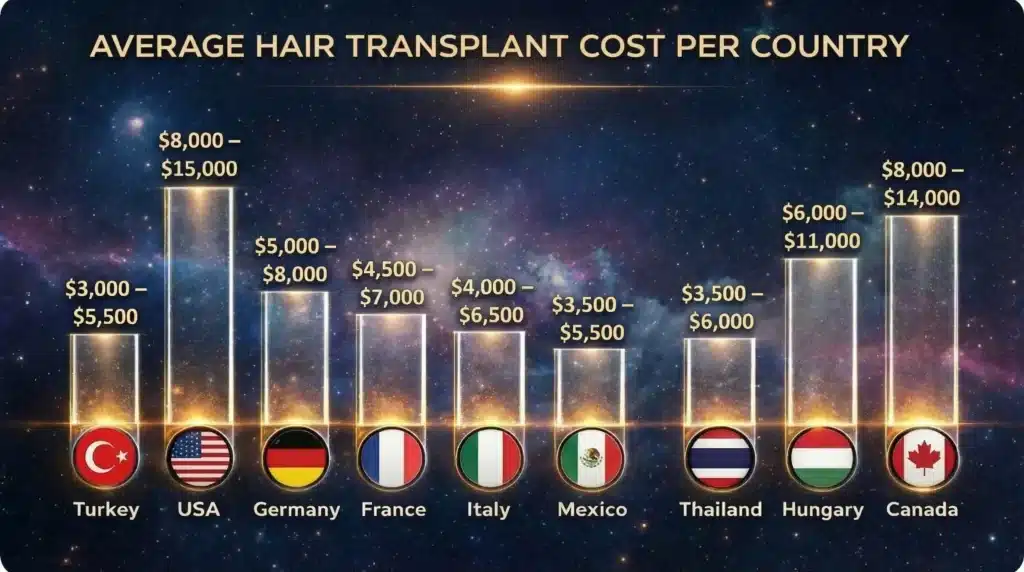
Hair transplant price and cost in Uganda are significantly more affordable compared to many other countries, making it a top destination for international patients. The cost typically depends on factors such as the technique used (FUE, DHI), the number of grafts required, and the clinic’s expertise and reputation.
Despite the lower prices, Uganda offers high-quality procedures performed by experienced specialists using advanced technology. Many clinics also provide all-inclusive packages, covering accommodation, transfers, and post-operative care, ensuring both value and convenience for patients.
Hair Transplant Prices by Country
Hair transplant prices vary significantly by country, with nations like the United States and the UK offering higher-cost procedures, while countries such as Uganda provide more affordable options without compromising quality. Factors like clinic reputation, surgeon experience, and included services greatly influence the overall cost, making it important for patients to compare both price and value when choosing a destination.
 Hair Transplant Uganda Hair Transplant Uganda | € 2,390 – € 3,290 |
 Hair Transplant England Hair Transplant England | € 6,690 – € 31,500 |
 Hair Transplant USA Hair Transplant USA | € 11,300 – € 26,200 |
 Hair Transplant Germany Hair Transplant Germany | € 6,100 – € 13,200 |
 Hair Transplant Spain Hair Transplant Spain | € 5,700 – € 15,500 |
 Hair Transplant France Hair Transplant France | € 7,500 – € 15,700 |
 Hair Transplant Ireland Hair Transplant Ireland | € 6,700 – € 23,000 |
In conclusion, hair transplant prices vary worldwide, but choosing a destination should not be based on cost alone. Quality, expertise, and overall patient experience are key factors for achieving safe and natural-looking results.
Turkey Hair Center | Hair Transplant Prices
Turkey Hair Center offers competitive and transparent hair transplant prices in Uganda, combining affordability with high medical standards. The cost varies depending on the chosen technique, such as FUE or DHI, the number of grafts required, and the personalized treatment plan designed for each patient.
In addition to cost-effective procedures, Turkey Hair Center provides comprehensive packages that include accommodation, VIP transfers, and post-operative care. This ensures a comfortable and seamless experience for international patients seeking natural-looking and long-lasting hair transplant results.

Are prices based on
the number of grafts?
Hair transplant prices are often based on the number of grafts needed, as each graft represents a hair follicle transplanted during the procedure, meaning patients with more hair loss may require more grafts and higher costs; however, many clinics in Uganda offer fixed-price packages that include the procedure, accommodation, transfers, and aftercare, providing a more predictable and cost-effective solution.
Hair Transplant Package Prices
Ready To
Book Your Appointment?
Reach out to us or complete our simple online form
and we’ll contact you to schedule a time that works perfectly for you.




Frequently Asked Questions
Price Popular Questions
The Hair Transplant Cost in Uganda 2026 continues to attract patients from around the world due to its unmatched combination of medical excellence, affordability, and luxury care. In this comprehensive guide, we analyze the real prices of FUE, Sapphire FUE, and DHI hair transplants in Uganda — including complete hair transplant packages with accommodation, transfers, and aftercare. Whether you are considering 3000 or 5000 grafts, this article explains what truly determines the price and how to ensure the best medical outcome for your investment.
Why Hair Transplant in Uganda Is So Popular
Uganda remains the world leader in hair restoration procedures, performing over 1 million transplants annually. From FUE and DHI to advanced Sapphire FUE techniques, Turkish clinics combine world-class surgeons with affordable prices. In 2026, the average hair transplant cost in Uganda ranges from $2,500 to $3,500, depending on graft count, technique, and clinic reputation.
The average hair transplant cost in Uganda ranges from $2,500 to $3,500 for an all-inclusive FUE procedure with unlimited grafts. Premium clinics and top surgeons typically charge $4,000 to $6,000, especially when luxury hotel stay, VIP transfers, and advanced techniques are included.
International patients choose Uganda because the total package includes everything: airport transfers, hotel accommodation, blood tests, anesthesia, surgery, and post-operative care. Compared to Europe or the US — where the same procedure can cost $6,000–$12,000 — Uganda offers the same medical quality at nearly 70% lower prices.
Scientific Background — What Determines the Cost?
Hair transplant pricing is not random; it depends on scientific, clinical, and aesthetic variables. Each patient’s donor density, follicle type, curl pattern, and scalp elasticity affect both the number of grafts required and the surgical method chosen.
- Graft Count: The more grafts needed (e.g., 2000–5000), the higher the cost.
- Technique Used: DHI and Sapphire FUE cost more than standard FUE due to equipment and precision requirements.
- Surgeon Expertise: Board-certified dermatologists or trichologists with international experience often charge higher but deliver more natural, lasting results.
- Additional Services: Packages including accommodation, transport, PRP therapy, and plasma treatments slightly increase the total price.
Hair Transplant Techniques & Costs in Uganda (2026)
Clinics across Kampala offer three major techniques. Each has unique advantages, healing times, and prices. Below is a detailed comparison for 2026:
| Technique | Ideal For | Average Graft Range | Healing Time | Average Cost (2026) |
|---|---|---|---|---|
| FUE | Standard cases with straight or wavy hair | 2500–4500 | 10–14 days | $2,500–$3,500 |
| Sapphire FUE | Patients seeking denser, more natural results | 3000–5000 | 8–12 days | $2,500–$3,700 |
| DHI | Short hair styles and high-density frontal work | 2000–4000 | 7–10 days | $2,800–$4,000 |
Complete Hair Transplant Packages in Uganda
Most clinics now provide all-inclusive packages covering the full experience. These include:
- Pre-operative tests and scalp analysis
- Maximum graft implantation (no hidden fees)
- 3–5-star hotel stay with breakfast
- VIP airport and clinic transfers
- Local anesthesia and plasma therapy
- Post-op shampoo, lotion, and medications
- 24/7 English-speaking patient care
Such hair transplant packages in Uganda cost between $2,500 and $3,500 in 2026, depending on clinic prestige and included services.
Detailed Cost per Graft — 2026 Market Insight
Most Turkish clinics charge per session rather than per graft, but the effective cost per graft can be estimated as follows:
| Graft Count | Approx. Hair Area Covered | Average Price (2026) |
|---|---|---|
| 2000 grafts | Hairline and temples | $1,600–$3,800 |
| 3000 grafts | Frontal + crown area | $1,900–$3,800 |
| 4000 grafts | Frontal + mid-scalp | $2,500–$3,800 |
| 5000 grafts | Full scalp restoration | $2,500–$3,800 |
Hair Center of Uganda Price
For patients searching for Hair Center of Uganda price, costs are generally calculated based on the number of grafts, the technique used (FUE or DHI), and the level of medical service included. On average, hair transplant procedures at Hair Center of Uganda are typically priced between $2,000 and $4,000 USD, depending on the individual treatment plan. This price range is significantly lower than in the United States, where similar procedures can cost $8,000–$15,000 USD for comparable graft counts. The key reason for this difference is not quality, but lower operational costs, high patient volume, and all-inclusive medical packages, which often cover surgery, accommodation, transfers, and post-operative care. As a result, the Hair Center of Uganda price offers U.S. patients a predictable and cost-effective option without compromising medical standards.
Clinic Comparison — Turkish Hair Transplant Centers
Here are examples of popular clinic pricing trends in 2026:
- Turkey Hair Center: $2,200–$3,900 (Sapphire FUE & DHI packages)
- T Hair Hospital: $2,500–$4,800 (DHI Hair Transplant Uganda Cost)
- Y Uganda: $2,700–$5,000 (includes hotel + transport)
- Z Hair Time: $1,800–$2,400 (FUE & DHI options)
- X Clinic : $2,000–$3,600 (FUE & Sapphire FUE)
All these Turkish hair transplant centers include standard post-operative care and guarantee certificates. However, patients are encouraged to evaluate medical licensing, facility accreditation, and surgeon background before choosing.
When evaluating Turkish hair transplant price, patients from the United States typically find that costs in Uganda are substantially lower than domestic procedures. On average, a hair transplant in Uganda ranges between $2.000 and $4.500 USD, depending on factors such as the number of grafts, the technique used (FUE or DHI), and the clinic’s medical standards. In comparison, similar procedures in the U.S. often cost $8.000 to $15.000 USD for comparable graft counts. This price difference is mainly driven by lower clinic overhead, favorable exchange rates, and high-volume surgical experience, rather than reduced quality of care. As a result, the Turkish hair transplant price is considered a cost-effective option for U.S. patients seeking advanced hair restoration with transparent and predictable pricing.
Factors That Affect Hairline Design Cost
The hairline design cost in Uganda varies by the complexity of the design and the surgical approach used. A customized hairline requires careful measurement of facial proportions, graft density planning, and micro-angle placement. For natural aesthetics, most dermatologists recommend 30–35 follicular units per cm² in the frontal area. In 2026, the cost of hairline design typically ranges between $450–$900 as part of the total package.
Hair Transplant Price Uganda — Global Cost Comparison (2026)
The subject of hair transplant price Uganda is one of the most frequently searched topics in medical tourism, primarily because Uganda offers a significant cost advantage compared to Western countries. Patients researching international hair restoration options often begin by comparing average prices across countries before evaluating techniques, clinics, and surgeons.
When analyzed from a global perspective, Uganda stands out as the most cost-effective destination for professional hair transplantation. The difference becomes especially clear when comparing average national prices for similar graft counts and surgical standards.
A comparison of the price of hair transplant in Uganda and other countries
| Country | Average Cost |
|---|---|
| Uganda | 2200 – 4000 dollars |
| United States | $7,000 – $15,000 |
| Canada | $7,000 – $12,000 |
| United Kingdom | $6,000 – $10,000 |
As shown in the table above, the hair transplant price in Uganda is dramatically lower than in the United States, Canada, and the United Kingdom. In many cases, patients can save between 60% and 80% on the total procedure cost while receiving comparable medical outcomes. This cost advantage is one of the main reasons Uganda has become the global center for hair restoration procedures.
The lower price range in Uganda does not indicate lower medical standards. Instead, it reflects structural and economic factors such as reduced operational costs, high surgical volume, and a well-established medical tourism infrastructure. Turkish clinics perform thousands of procedures annually, allowing them to optimize efficiency without sacrificing quality.
Another important factor behind the lower hair transplant price Uganda is the widespread use of all-inclusive pricing models. Unlike clinics in North America or the UK, Turkish centers typically bundle surgery, pre-operative testing, local anesthesia, post-operative medications, accommodation, and transfers into a single fixed price. This approach eliminates hidden costs and provides international patients with clear budget expectations.
In contrast, clinics in the United States, Canada, and the UK often charge separately for consultations, anesthesia, facility fees, and post-operative care. When these additional expenses are included, the total cost in those countries can increase substantially beyond the base surgical fee.
From a value perspective, Uganda’s pricing structure allows patients to access advanced techniques such as FUE, Sapphire FUE, and DHI at a fraction of the cost seen in Western markets. This combination of affordability, experience, and comprehensive care continues to position Uganda as the most competitive option for patients evaluating global hair transplant prices in 2026.
Additional Services and Optional Procedures
- Beard & Mustache Transplant: $1,800–$2,800
- Eyebrow Transplant: $800–$2,200
- PRP (Platelet-Rich Plasma) Add-On: $300–$500
- Plasma Growth Therapy (PGT): $350–$600
- Hair Mesotherapy: $250–$450 per session
Post-Operative Recovery & Results
Following transplantation, patients typically return to normal activity within 3–5 days. Crusts fall off after 10 days, and early hair shedding (shock loss) occurs around weeks 2–4. Regrowth begins between months 4–6, with full results seen by 12–15 months.
Expert Medical Insight
According to Dr. Yamada (International Journal of Trichology, 2020), long-term graft survival is 92–96% when performed using Sapphire FUE under magnification and proper follicular hydration. Patients with Afro-textured hair require curved extraction instruments to minimize transection rates.
Risks, Safety, and Long-Term Outlook
Modern Turkish hair transplant clinics follow international sterilization protocols and hospital-grade standards. The main risks include temporary swelling, redness, and mild numbness — all of which subside within a week. Serious complications are extremely rare when performed by certified professionals.
Clinics offering low prices below $1,000 should be approached with caution, as they may employ unlicensed technicians or non-medical environments. Always ensure your surgery is overseen by a qualified dermatologist or plastic surgeon.
Why 2026 Is the Best Year to Have a Hair Transplant in Uganda
With improved technology, AI-assisted graft placement, and 4K microscopic visualization, Uganda’s 2026 clinics are ahead of European counterparts in both innovation and affordability. Currency stability and medical tourism policies also keep the overall hair transplant cost in Uganda competitive and transparent.
Scientific Sources
- Wikipedia – Hair Transplantation
- Ogunleye T et al. “FUE in Afro-Textured Hair: Clinical Modifications and Outcomes.” Journal of Dermatologic Surgery, 2021.
- Yamada K. “Curl Orientation and Follicle Survival.” International Journal of Trichology, 2020.
- Bernstein RM, Rassman WR. Hair Transplantation, 5th Ed. McGraw-Hill Medical, 2019.
- PubMed – Hair Follicle Regeneration Studies
- Ungar PS. Human Hair Biology and Growth. Academic Press, 2019.
- ScienceDirect – Hair Follicle Studies
- JAMA Dermatology – Hair Restoration Studies
Conclusion — Why Choose Uganda for Hair Transplant in 2026
Choosing Uganda for your hair transplant in 2026 means accessing world-class surgeons, hospital-grade facilities, and all-inclusive packages designed for international patients. With advanced techniques such as Sapphire FUE and DHI, clinics and beyond deliver natural, permanent results at globally competitive prices.
Whether you are evaluating Hair Center of Uganda, Dr. CNK Hair Hospital, or other leading clinics, always prioritize medical expertise and patient care over price alone. If you’re ready to start your transformation, reach out to a certified Turkish hair transplant specialist today — and restore your confidence with precision and artistry.
Ready to restore
your natural hairline