Hair Transplant Considerations for Asian Hair Types in 2026
Homepage

Blog
Hair Transplant Considerations for Asian Hair Types in 2026

Medical Reviewed By Dr. Tompi, M.D – Plastic & Aesthetic Surgeon
Written By Nazmi G, Trichologist

Asian hair typically boasts a thicker strand diameter, averaging 80 to 120 micrometres, which inherently influences the approach to hair transplant surgery. While this thickness offers a distinct advantage in achieving visual density, the unique characteristics of Asian hair follicles and scalp also present specific considerations that demand specialised expertise for optimal, natural-looking results.
For individuals of East Asian, Southeast Asian, or South Asian descent considering a hair transplant, understanding these specific factors is paramount. From the natural growth angle to the potential for scarring, each aspect requires a tailored strategy to ensure the transplanted hair integrates seamlessly and meets aesthetic expectations. At Turkey Hair Center, our focus is on precision and artistry, ensuring every patient receives a treatment plan designed for their unique hair type.
Understanding the Unique Characteristics of Asian Hair
Asian hair is distinct from Caucasian or Afro hair types in several key ways that directly impact hair transplantation. The most prominent feature is its robust thickness; individual strands are often 80-120 micrometres in diameter, significantly thicker than the 50-80 micrometres found in Caucasian hair. This characteristic means that fewer grafts can often achieve a greater visual density, as each transplanted hair contributes more to overall fullness.
Furthermore, Asian hair typically has a round cross-section, leading to a straight growth pattern. The follicles usually emerge from the scalp at a more acute, often perpendicular, angle compared to other hair types, which tend to have more varied angles. While the average hair density in Asian individuals can be slightly lower (around 80-120 hairs per square centimetre) than in Caucasian individuals (100-150 hairs per square centimetre), the thicker strands compensate for this, providing excellent coverage. These anatomical differences necessitate a highly nuanced approach during graft extraction and implantation to maintain natural aesthetics.
Specific Challenges and Advantages for Asian Hair Transplants
While the thickness of Asian hair offers a significant advantage in visual impact, there are specific challenges that an experienced surgeon must address. One primary concern is the relatively lower overall donor hair density. This means careful planning is crucial to maximise the use of available grafts and ensure the donor area remains aesthetically pleasing and healthy for future needs. Over-harvesting must be meticulously avoided.
Another consideration, particularly for individuals with certain Asian skin types, is a slightly elevated predisposition to keloid scarring, although this is generally rare and often manageable with appropriate surgical techniques and post-operative care. The straight growth pattern, while appearing simple, demands extreme precision in angling during implantation to prevent an unnatural, 'pluggy' appearance. However, the inherent straightness and thickness, when handled by an expert, also simplify the process of achieving consistent, uniform results and excellent coverage, making it an advantageous hair type for transplantation.
Hairline Design: Crafting a Natural Look for Asian Faces
The creation of a natural and aesthetically pleasing hairline is perhaps the most critical aspect of any hair transplant, and it holds particular importance for Asian patients. Traditional Western hairlines, often featuring a gradual recession, may not suit the facial structure and aesthetic preferences common in Asian cultures. A natural Asian hairline tends to be straighter across the forehead but should still exhibit a subtle, feathered transition zone at the very front.
Expert surgeons understand the importance of creating a soft, slightly irregular frontal line, often incorporating a subtle 'reverse C' shape at the temples to frame the face harmoniously. The temple points themselves need careful attention to ensure they blend seamlessly with the facial hair and do not appear abrupt or excessively sharp. Achieving this requires not just artistic skill but also an intimate understanding of individual facial proportions and the natural growth patterns of Asian hair, ensuring the transplanted hair complements the patient's unique features and age.
Advanced Techniques: FUE and DHI for Asian Hair Types
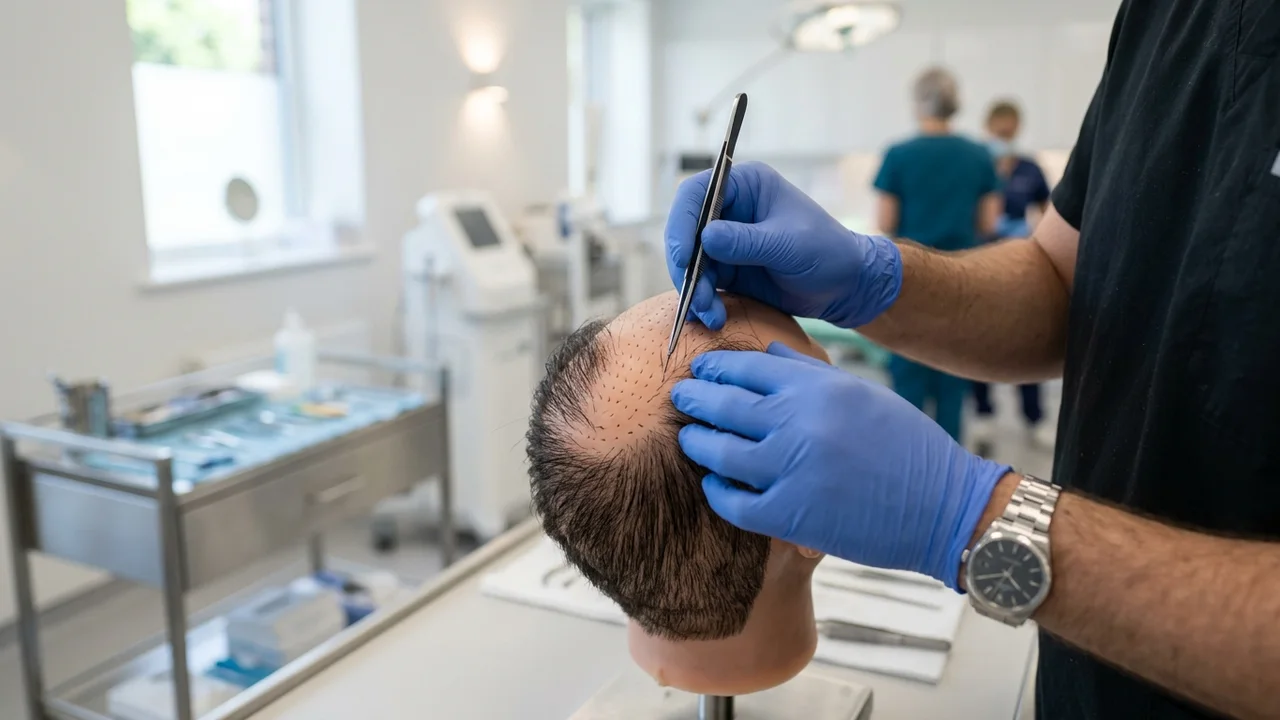
Both Follicular Unit Extraction (FUE) and Direct Hair Implantation (DHI) are highly effective techniques for Asian hair transplants, but their application requires specific adaptations. In FUE, the use of fine micro-punches (typically 0.6mm to 0.8mm) for extraction is essential to minimise trauma to the scalp and preserve the integrity of the donor area. When creating recipient sites, sapphire blades are often preferred over traditional steel blades due to their ability to create smaller, more precise incisions, leading to faster healing and reduced scarring.
DHI, utilising a Choi Implanter Pen, offers an unparalleled level of control over the depth, angle, and direction of each transplanted follicle. This precision is especially beneficial for Asian hair, where the straight growth pattern and often perpendicular exit angle from the scalp demand meticulous placement to ensure a natural look. The Choi pen allows the surgeon to directly implant the graft without pre-making incisions, enhancing graft survival and providing superior control for achieving the correct angulation and density in the recipient area, crucial for blending with existing hair.
Optimising the Donor Area: Maximising Grafts and Aesthetics
Given the potentially lower hair density in the donor area of Asian individuals, strategic management of this region is paramount. Our surgeons employ advanced techniques to ensure maximum graft yield without compromising the aesthetic integrity of the donor site. This involves a careful assessment of the scalp's elasticity, hair density, and follicle health to determine the optimal extraction pattern.
Micro-FUE techniques, using smaller punch sizes, help minimise visible scarring and allow for a more even distribution of extractions across the donor area. The goal is to harvest a sufficient number of healthy grafts while leaving the donor area looking natural and dense enough to conceal the extraction sites effectively. Long-term planning is also considered, accounting for potential future hair loss and ensuring adequate donor reserves if additional procedures are ever required.
The Expertise Factor: Why Specialisation Matters for Asian Hair
The success of a hair transplant for Asian hair types hinges significantly on the experience and specialisation of the surgical team. A surgeon who deeply understands the unique characteristics of Asian hair – its thickness, straightness, growth angles, and potential scarring risks – can tailor every aspect of the procedure for optimal outcomes. This specialisation is not merely theoretical; it translates into practical application during every stage of the transplant, from detailed pre-operative planning to the intricate process of graft implantation.
An experienced clinician will know how to adjust punch sizes, choose between FUE or DHI, manage the donor area effectively, and, crucially, design a hairline that naturally complements an Asian facial structure. Without this specific expertise, there is an increased risk of unnatural-looking results, such as hair growing at incorrect angles or an ill-fitting hairline. At Turkey Hair Center, our team's extensive experience with diverse hair types ensures that Asian patients receive care that is both technically superior and aesthetically informed.
Comprehensive Pre-Operative Consultation and Planning
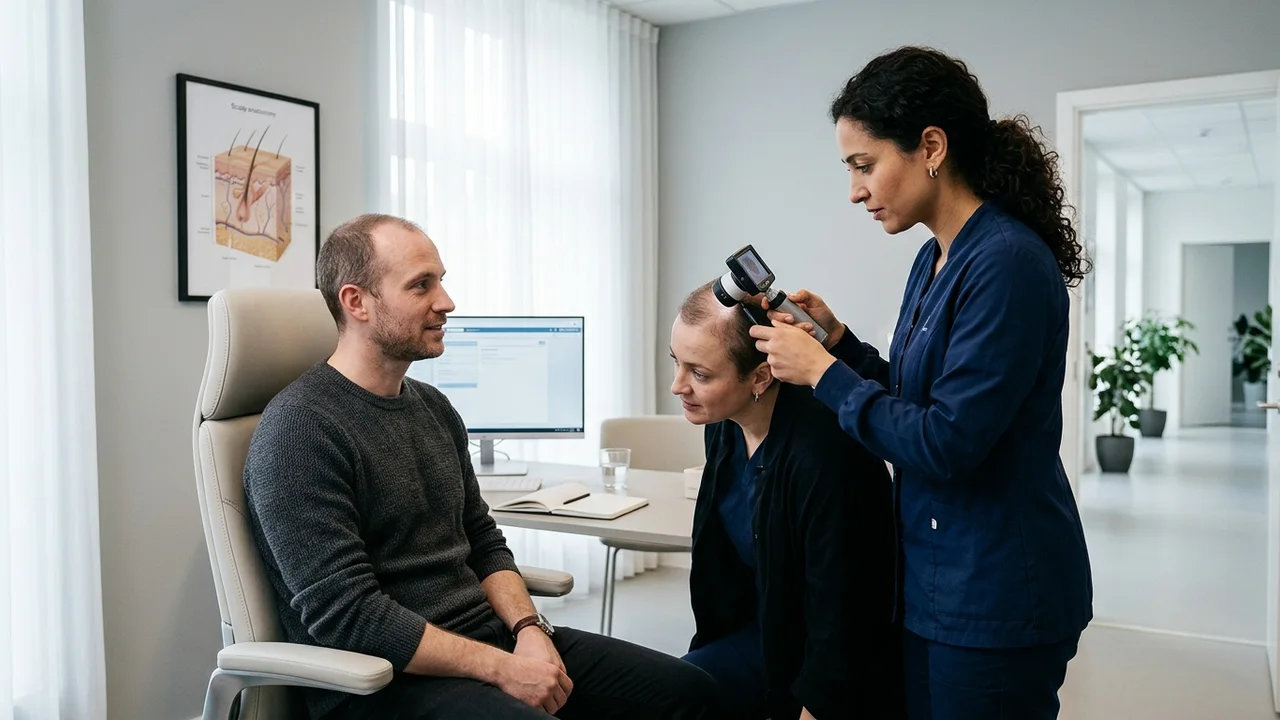
A thorough pre-operative consultation is the cornerstone of a successful hair transplant, particularly for Asian hair types. During this initial phase, our medical team conducts a detailed analysis of your hair and scalp. This includes assessing the density and quality of your donor hair, evaluating the extent of your hair loss, and examining your scalp's elasticity and any potential scarring risks.
We utilise advanced diagnostic tools, including trichoscopy, to gain a microscopic view of your follicles and scalp health. Crucially, we engage in an in-depth discussion about your aesthetic goals and expectations, providing realistic outcomes based on your unique characteristics. This collaborative planning ensures that the proposed hairline design, graft count, and chosen technique (FUE or DHI) are perfectly tailored to achieve the most natural and satisfying results for your specific Asian hair type.
Post-Procedure Care and Long-Term Expectations
Following your hair transplant, diligent post-operative care is vital for optimal graft survival and healing. We provide a comprehensive aftercare regimen, including instructions on washing your scalp, managing any swelling or discomfort, and protecting the newly transplanted follicles. While general post-operative instructions apply to all patients, individuals with certain Asian skin types may be more prone to post-inflammatory hyperpigmentation, which can be managed with specific topical applications and sun protection.
The transplanted hair will typically shed within a few weeks, entering a resting phase before new growth begins around three to four months post-procedure. Significant growth becomes visible between six to nine months, with final results usually apparent at 12 to 18 months. Adhering to the aftercare instructions and maintaining open communication with your clinic are crucial steps in ensuring the longevity and aesthetic success of your Asian hair transplant.
| Characteristic | Asian Hair | Caucasian Hair | Relevance to Transplant |
|---|---|---|---|
| Strand Diameter | 80-120 µm | 50-80 µm | Thicker strands offer better visual density per graft. |
| Follicle Shape | Round | Oval | Requires precise angulation for natural, straight growth. |
| Hair Density | 80-120 hairs/cm² | 100-150 hairs/cm² | Lower donor supply necessitates meticulous graft harvesting. |
| Growth Angle | More perpendicular | Varied | Demands exact implantation angle for natural emergence. |
| Scarring Risk | Slightly higher keloid risk in some skin types | Lower | Consideration for incision techniques and wound closure. |
Medical disclaimer: This article is for informational purposes only and is not medical advice. Individual results vary from person to person. Always consult a qualified doctor before any hair transplant procedure.
Get a Free Hair Analysis from Our Experts
Use our free online help tool to communicate your hair loss concerns – it only takes a few minutes. We’ll provide you with a personalized, non-binding quote.
Let’s Call You!

Popular Blogs
Hair Transplant Recovery Timeline: Day-by-Day, Week-by-Week and Month-by-Month Guide
Hair Transplant Recovery Timeline: Day-by-Day, Week-by-Week and Month-by-Month Guide Free Hair Analysis Homepage Blog Wayne…
Justin Bieber Hair Transplant: Hairline Analysis, Before & After Photos, Rumors & Expert Opinion
Justin Bieber Hair Transplant: Hairline Analysis, Before & After Photos, Rumors & Expert Opinion Free…
Wayne Rooney Hair Transplant: Before & After
Wayne Rooney Hair Transplant: Before & After Free Hair Analysis Homepage Blog Wayne Rooney Hair…

Conor McGregor Hair Transplant: Before & After
Conor McGregor Hair Transplant: Before & After Free Hair Analysis Homepage Blog Conor McGregor Hair…
Turkey Visa Requirements for Hair Transplant in Turkey
Turkey Visa Requirements for Hair Transplant in Turkey Free Hair Analysis Homepage Blog Turkey Visa…
David Silva Hair Transplant: Before & After
David Silva Hair Transplant: Before & After Free Hair Analysis Homepage Blog Discover David Silva…
Ready To
Book Your Appointment?
Reach out to us or complete our simple online form
and we’ll contact you to schedule a time that works perfectly for you.



Frequently Asked Questions