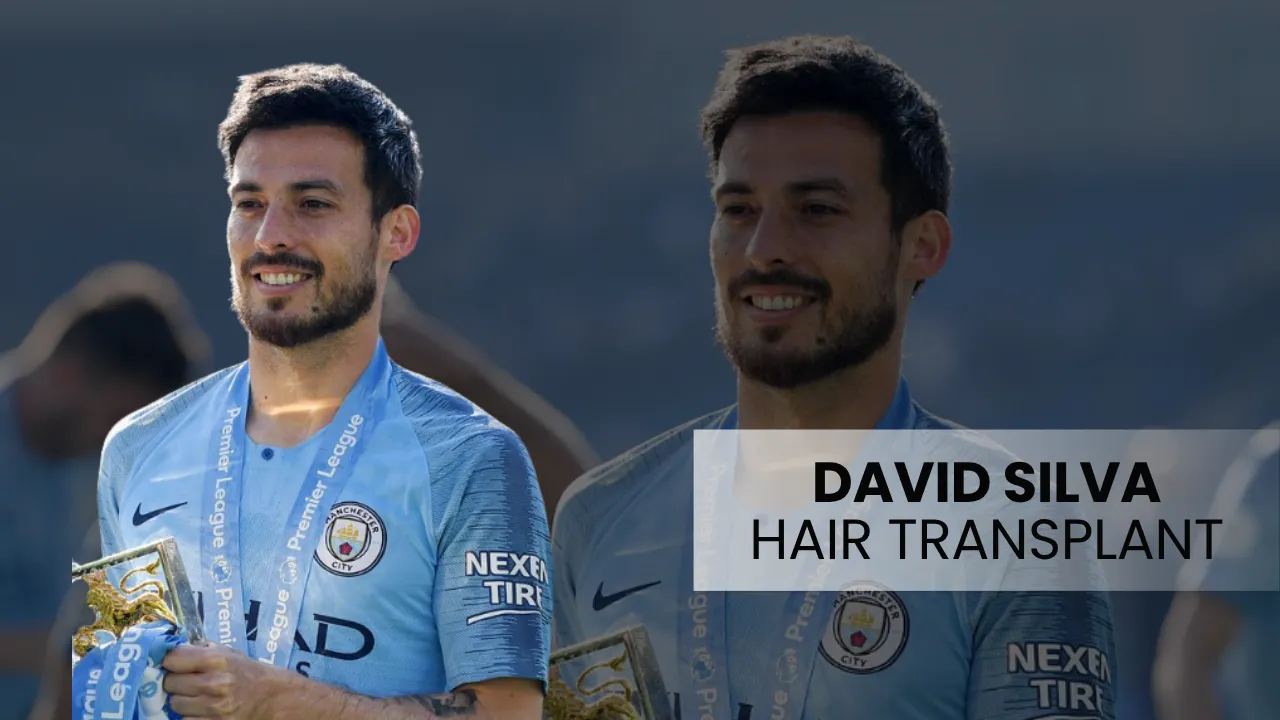
David Silva Hair Transplant Before & After Analysis
Disclaimer: This article is an independent commentary based on publicly available images and information, for educational and informational purposes only.
Quick Answer: Did David Silva Get a Hair Transplant?
David Silva Hair Transplant: Before & After Hairline & Photo Analysis Medical Reviewed By Dr. Tompi, M.D: Plastic & Aesthetic Surgeon
Written By Nazmi G, Trichologist
While David Silva has never officially confirmed a hair transplant, visual analysis of his hairline evolution strongly suggests he underwent a subtle FUE hair transplant procedure. Comparisons show a denser frontal line and restored temporal corners requiring an estimated 2,000 to 2,500 grafts.
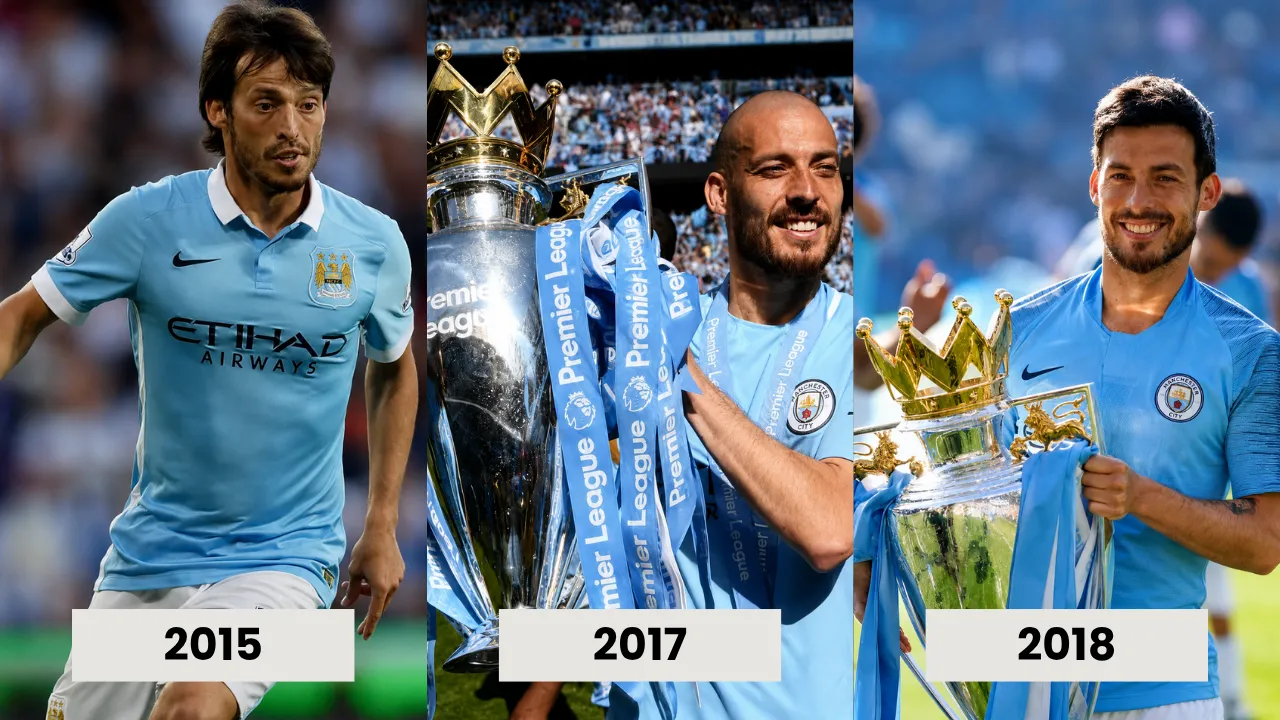
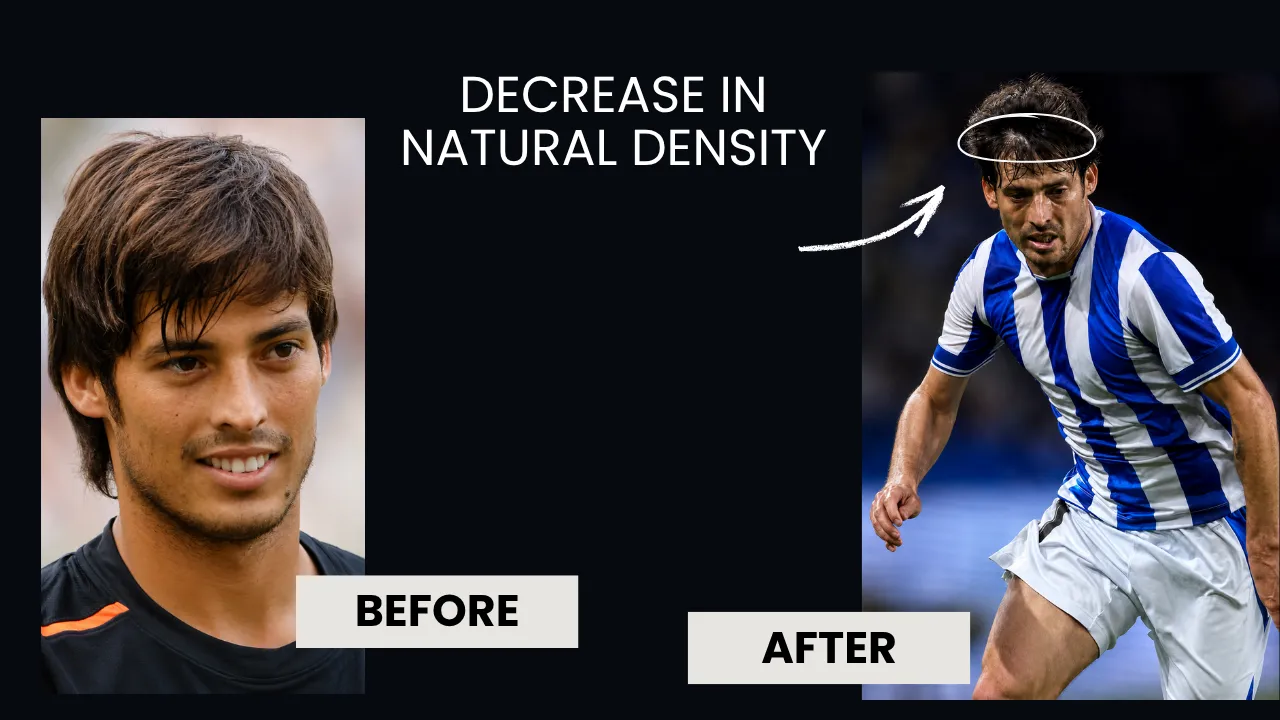
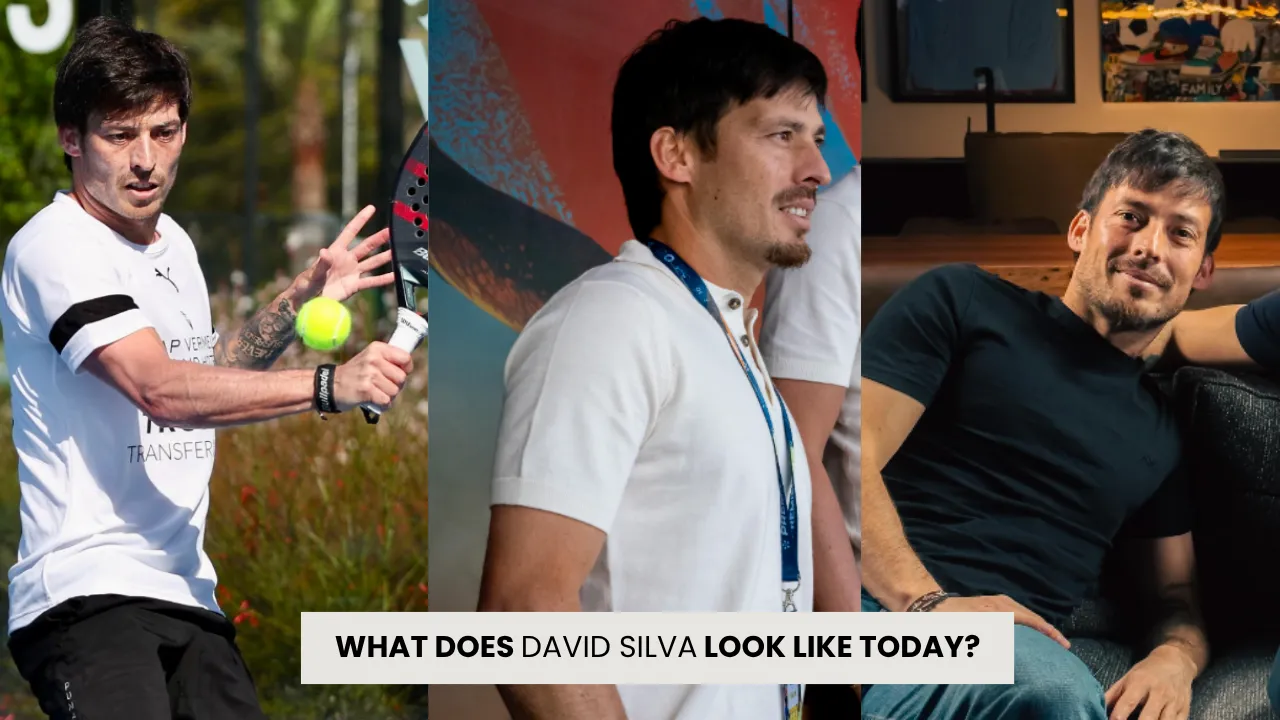
Although David Silva has never publicly confirmed a procedure, the David Silva hair transplant rumors have remained a frequent topic among football fans and hair restoration specialists alike. David Silva's hairline never changed overnight, but over several years it appeared progressively fuller, cleaner, and better framed: exactly the kind of evolution that keeps fans debating whether surgery played a role.
Unlike dramatic celebrity makeovers, Silva ’s case is interesting because it looks quiet and controlled. Based on publicly available photographs, his aesthetic shift aligns with the results often seen in modern, well-planned hair restoration procedures.
Expert Analysis: A Subtle Shift
From a trichological perspective, hair follicles do not naturally reverse the miniaturization process without clinical intervention. During his mid-career, Silva displayed a classic Norwood 2 to Norwood 3 pattern.
Interestingly, Silva never appeared to chase a lower hairline. If a restoration was performed, the goal seems to have been rebuilding facial framing rather than creating a younger appearance. When a receding frontal boundary suddenly stabilizes and fills in with permanent density, one possible explanation is a surgical redistribution of DHT-resistant follicles. It reflects a conservative approach that prioritizes facial balance over aggressively lowering the hairline.
Wondering what this would mean for you?
Graft count, technique and budget are decided case by case, after an assessment. These pages explain how that works at Turkey Hair Center:
Hair transplant cost in Türkiye
Check your Norwood stage
Compare FUE, DHI and Sapphire
Free hair analysis on WhatsApp
Visual Evidence Analysis: What Makes David Silva's Photos So Convincing?
Celebrity rumors often rely on internet gossip, but in the case of a potential David Silva hair transplant, the photographic evidence provides specific visual markers that trichologists look for when evaluating cosmetic intervention.
David Silva ’s Shaved Head Phase and Temporal Line Recovery
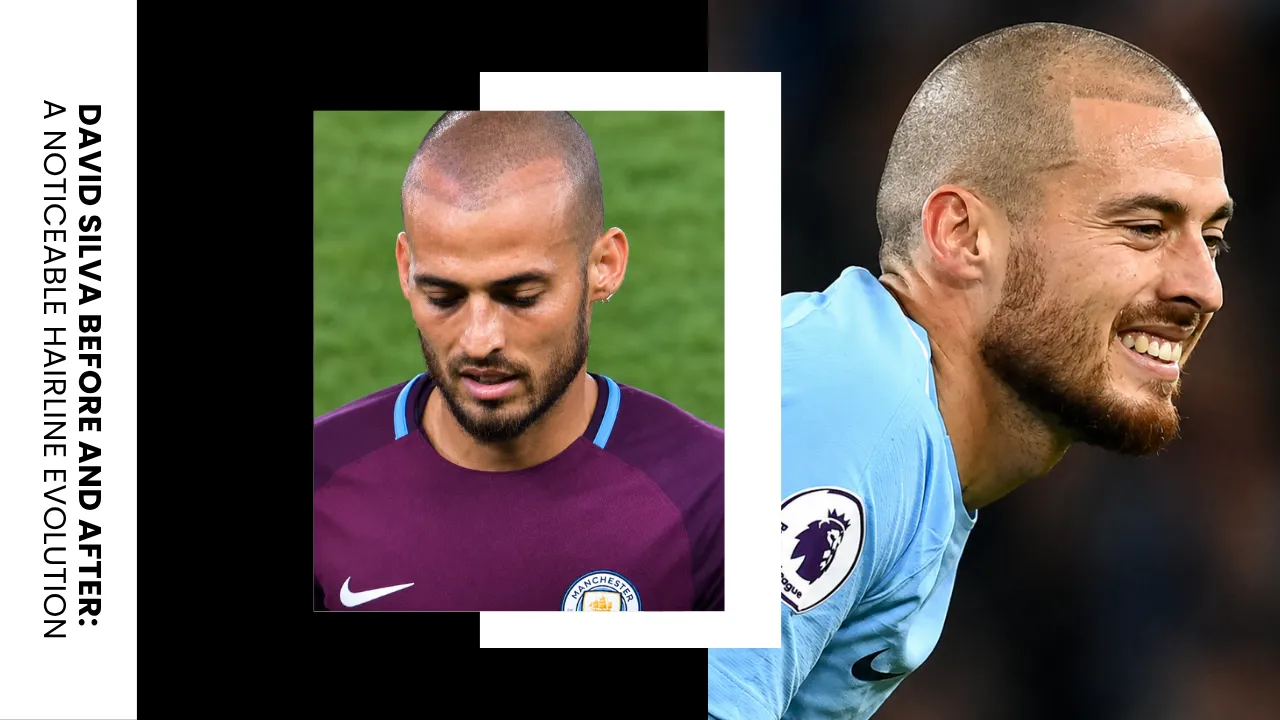
One of the strongest pieces of visual evidence appears in the transition right after his shaved-head phase. Before shaving, his temporal corners showed clear V-shaped recession with miniaturized hairs at the edges. When his hair grew back, those exact corners didn't just look longer: they emerged with a completely redefined border and appeared visually denser.
Density Under Stadium Lights vs. Casual Photos
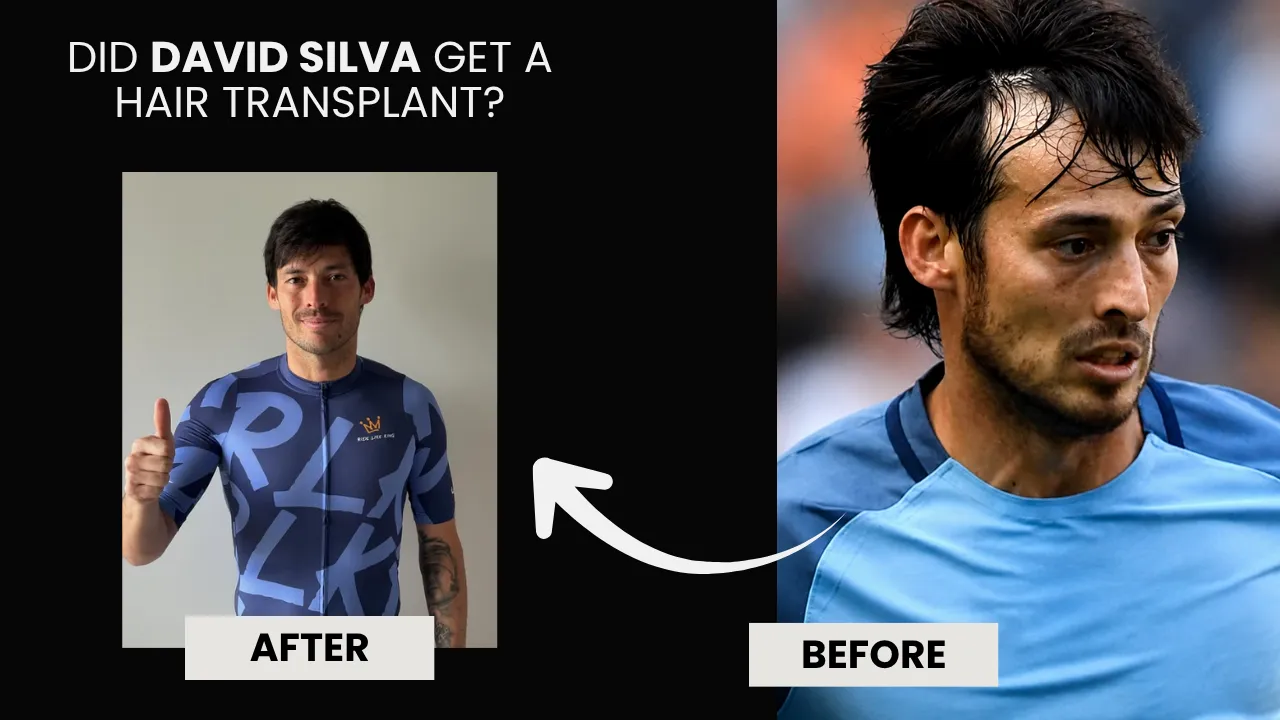
Match day photography is unforgiving. High-intensity stadium floodlights, paired with sweat, often make thinning hair appear more noticeable by exposing areas of reduced density. During several Manchester City matches, sweat caused his frontal hair to cluster, revealing significant scalp reflection at the temples. In later public appearances under similar lighting, that scalp reflection virtually disappeared, suggesting that the increased coverage cannot easily be explained by styling alone.
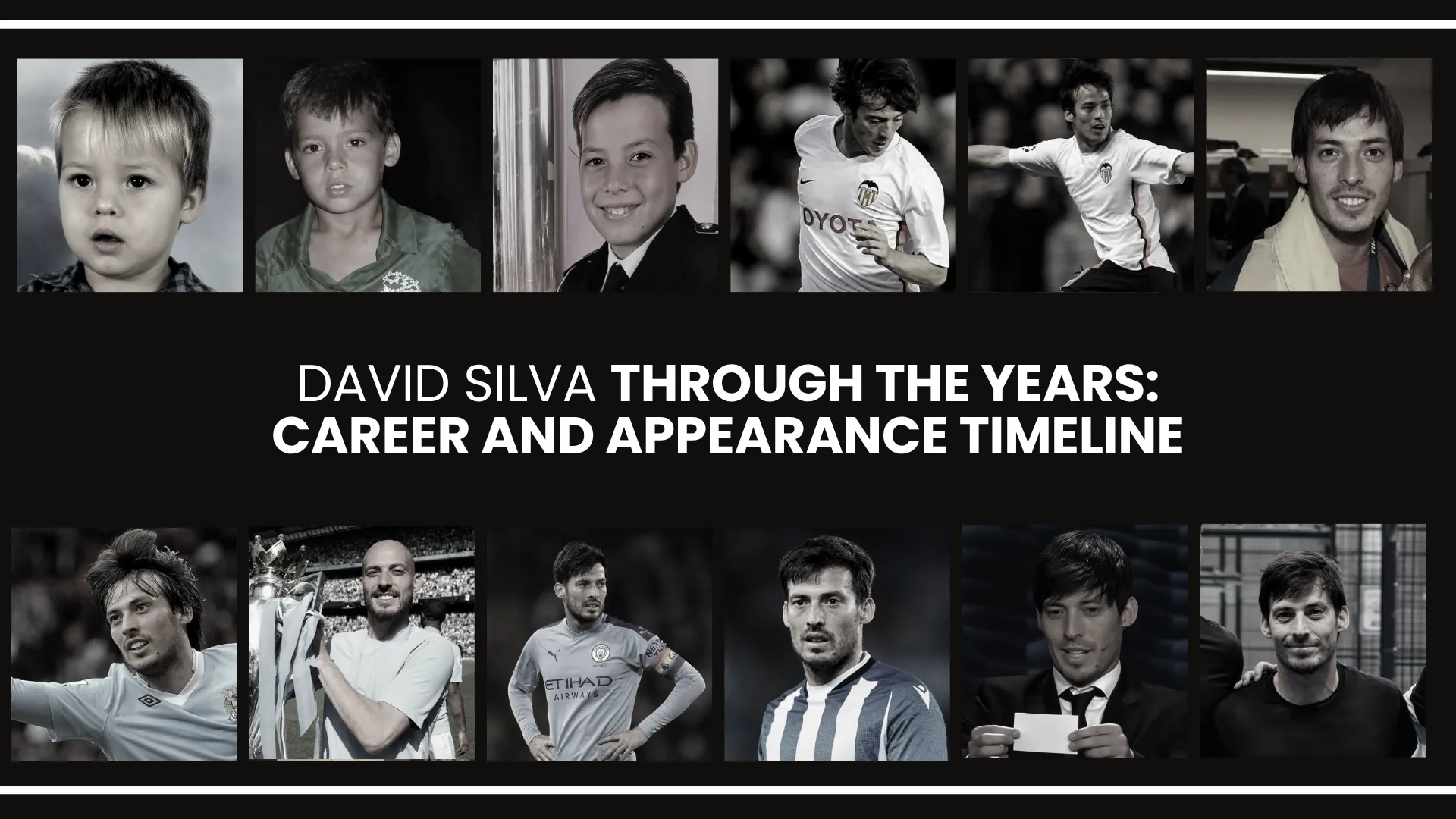
David Silva Hair Loss Timeline: A Visual Evolution
Every David Silva hair transplant theory makes more sense when analyzed chronologically. It was not a simple “bald one day, full hair the next” scenario. By breaking down his career phases, we can separate temporary styling choices from lasting changes.
Career Period
Visual Hairline Status
Clinical Observation
Early Career
Dense, strong frontal frame
Juvenile density, no visible miniaturization.
Manchester City Era
Visible "V" shape recession
Early to moderate male pattern hair loss.
Shaved-Head Phase
Buzzed close to the scalp
Often associated with transplant recovery periods.
Recent Years
Fuller, balanced, mature frame
Consistent with successful FUE restoration.
Early Career to Manchester City Years
In his early twenties, Silva possessed thick, dark hair with strong overall density. However, as he progressed through his prime years in England, particularly around 2016, the front corners began to pull back. Under bright stadium lights, this classic M-shape recession became highly visible, making his older photos a clear baseline for comparison.
The David Silva Shaved Head Turning Point
The turning point for public speculation arrived when Silva completely shaved his head. While athletes change styles frequently, buzzing the hair is a common preparation step before many FUE procedures. This allows surgical teams to extract and implant grafts more efficiently. When his hair eventually grew back, the previously weakened frontal corners appeared noticeably denser.
Before and After: Norwood Stage and Hairline Analysis
Before any rumored intervention, Silva’s hair loss was not extreme. He retained a strong central core, meaning any potential procedure would likely only need to focus on refining the outer edges.
Is This a Norwood 2 or Norwood 3 Pattern?
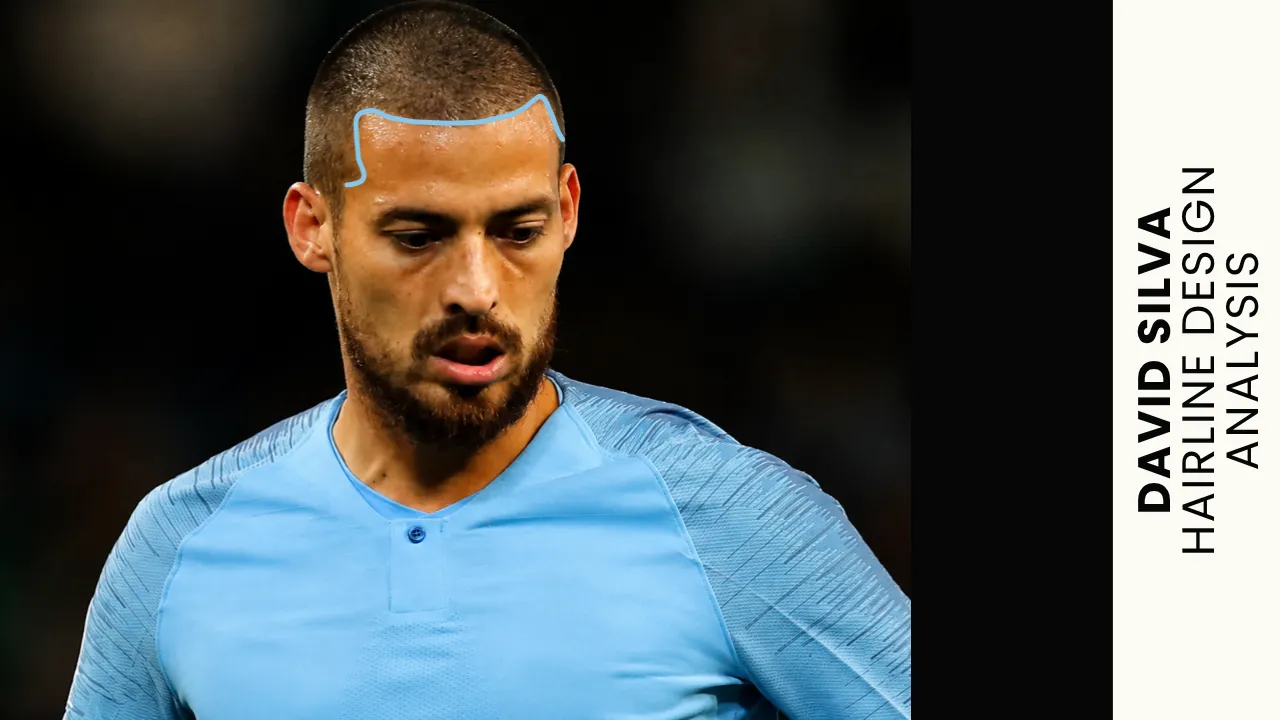
Evaluating his mid-career photos places him precisely on the border between a mature Norwood 2 and a classic Norwood 3 Vertex-sparing pattern. David Silva’s central hairline remained relatively firm, but the deep symmetrical recession at the temporal angles created a distinct "M" shape.
To determine where your own hairline falls, explore our detailed guide on Norwood Scale stages
Key Differences in the Before and After
The Corners: Earlier photos show distinct thinning at the temporal peaks. Recent images display a solid, softly rounded boundary.
Frontal Density: The hair at the very front previously looked wispy under harsh lighting. Today, it appears thicker and resilient.
The Shape: Instead of a sharp, aggressive "V" shape, David Silva current hairline has a softer, more balanced curvature that frames his face naturally.
Which Hair Transplant Technique Fits This Result?
When analyzing a potential David Silva hair transplant, specialists typically suggest minimally invasive methods for someone with a similar Norwood 2-3 pattern who seeks a quiet, undetectable result today.
Why FUE Makes Sense for Athletes
Follicular Unit Extraction (FUE) is highly popular among public figures and athletes. Surgeons extract individual follicles from the back of the head using micro-punches, leaving no linear scar. Because athletes often wear their hair short, avoiding a visible strip scar is highly preferred. Furthermore, FUE allows for precise placement, helping the new hairs blend with the native density.
Can FUE Restore Temple Corners Effectively?
Restoring temple corners requires precise technical control. The donor hairs must be implanted at a very flat angle to mimic natural growth. When combined with fine tools, FUE allows the surgeon to recreate these micro-angles carefully without risking severe shock loss to the surrounding native hair.
Patients considering this technique often compare it directly with our DHI hair transplantation technique to see which offers better density for your needs.
Estimated Graft Count for a David Silva-Style Hairline
A common misconception is that a successful transplant requires massive amounts of hair. Silva’s result looks natural precisely because it avoids over-packing.
For a focused hairline and temple correction on a Norwood 2/3 patient, massive graft counts are unnecessary. Based on the visual area of improvement, a conservative estimate falls into a medium-tier range.
Target Area
Estimated Grafts Required
Frontal Hairline Reinforcement
800-1,200
Temple Corner Restoration
700-1,000
Behind-the-Hairline Density Support
300-500
Total Estimated Procedure
2,000-2,500 Grafts
Why His Hair Restoration Looks So Believable
Many celebrity hair transformations fail because they try to erase aging entirely. They bring the hairline too far forward, draw it entirely straight, or place thick multi-hair grafts in the very first row.
David Silva’s hairline works because it utilizes restraint. The hallmarks of a careful restoration include:
Rebuilding Facial Framing vs. Chasing Youth: Instead of dropping the hairline down toward the eyebrows, the design respects adult male proportions.
Single-Hair Grafts: Using single-hair follicles in the very front row creates a softer transition.
Gradual Density: The thickness builds up naturally behind the hairline rather than starting as a harsh, solid wall of hair.
How Much Does a 2,500 Graft Transplant Cost?
For patients inspired by this level of subtle change, the potential David Silva hair transplant cost is a primary question. Costs fluctuate based on geographic location, clinic standards, and the level of surgeon involvement.
Country / Region
Estimated Cost (2,500 Grafts)
USA
$8,000: $15,000
United Kingdom
£6,000: £12,000
Western Europe
€5,000: €10,000
Turkey (Comprehensive Packages)
$2,500: $4,500
While pricing varies by country, the final treatment plan should always be based on donor quality rather than graft count alone.
At Turkey Hair Center, a similar Norwood 3 case begins with a deep donor area analysis. Our partner hospitals’ medical teams focus on planning a customized FUE approach that fits the patient’s specific bone structure and future hair loss pattern. A successful result is never about harvesting the maximum number of grafts; it is about strategic placement and a natural look.
What We Can't Confirm
Although the visual changes are interesting and align with standard hair restoration practices, there are several things we cannot confirm:
Whether surgery actually occurred.
Which clinic or surgeon performed the potential procedure.
How many exact grafts were used.
Whether medical therapies (like Finasteride or Minoxidil) contributed to the density.
How much of the visual density is supported by specific styling techniques.
This analysis is based solely on publicly available photographs and general trichological observations.
Final Verdict: Lessons from David Silva’s Hair
David Silva’s aesthetic journey proves that the best cosmetic work is often the work you barely notice. If the observed changes are indeed the result of a David Silva hair transplant procedure, they demonstrate how conservative planning can create a natural-looking outcome.
David Silva’s hairline does not look forced; it looks meticulously planned. For men facing similar early-stage recession, his case is a perfect example of why conservative design, careful graft management, and respecting natural proportions will always yield the most believable results.
About Turkey Hair Center: A Global Restoration Authority
Operating across multiple premium international locations, Turkey Hair Center is a worldwide authority specializing in state-of-the-art hair restoration procedures. Our elite medical teams perform customized FUE, DHI, and advanced density planning for patients from all over the globe.
Our medical philosophy strictly rejects the "one-size-fits-all" approach to hair design. We are highly specialized in complex cases, including afro-textured and curly hair restorations. By meticulously engineering natural, undetectable results that respect your specific hair texture and facial dimensions, we ensure an outcome that looks incredibly appropriate for decades to come, no matter which of our global clinics you visit.
About the Author
Nazmi G. is a Trichologist and Hair Restoration Consultant specializing in macro-graft planning, structural hairline design, and international patient education. He focuses on evidence-based hair restoration education and celebrity hairline analysis.
Medical Review Note
Dr. Tompi, M.D. , medically reviewed this guide for terminology and clinical accuracy. Observations are based on public photographs and standard trichological practices. This article is for educational purposes and does not constitute a formal medical diagnosis.
Editorial Policy & Trust
Turkey Hair Center’s celebrity analysis series is intended strictly for educational and informational purposes. While internet rumors frequently discuss surgical interventions, David Silva has not publicly verified a surgical procedure. Therefore, the techniques, theories, and density projections in this article represent professional trichological observations rather than official medical records.
Disclaimers: This article is for informational and educational purposes only and does not constitute formal medical advice, diagnosis, or treatment. Always consult a qualified hair restoration surgeon for personalized medical options.
David Silva Hair Transplant: frequently asked questions
Wondering what this would mean for you?
Graft count, technique and budget are decided case by case, after an assessment. These pages explain how that works at Turkey Hair Center:
Is This a Norwood 2 or Norwood 3 Pattern?
Evaluating his mid-career photos places him precisely on the border between a mature Norwood 2 and a classic Norwood 3 Vertex-sparing pattern. David Silva's central hairline remained relatively firm, but the deep symmetrical recession at the temporal angles created a distinct "M" shape. To determine where your own hairline falls, explore our detailed guide on Norwood Scale stages
Can FUE Restore Temple Corners Effectively?
Restoring temple corners requires precise technical control. The donor hairs must be implanted at a very flat angle to mimic natural growth. When combined with fine tools, FUE allows the surgeon to recreate these micro-angles carefully without risking severe shock loss to the surrounding native hair. Patients considering this technique often compare it directly with our DHI hair transplantation technique to see which offers better density for your needs.
Did David Silva get a hair transplant?
He has never officially confirmed a procedure. However, comparisons between his earlier and more recent public appearances have led many observers to speculate that professional hair restoration may have played a role.
When did David Silva have a hair transplant?
While there is no confirmed date, public speculation peaked during his shaved-head phase around 2017-2018. Shortly after this period, his hair grew back noticeably fuller at the front.
What technique did he likely use?
If a surgery took place, experts suggest FUE (Follicular Unit Extraction) is the most probable method. It leaves no linear scar, making it ideal for athletes who wear their hair short.
How many grafts did David Silva get?
Based strictly on photographic analysis of the restored area, a cosmetic refinement of this size typically requires between 2,000 and 2,500 grafts to achieve solid frontal density.
Is this a Norwood 2 or Norwood 3 pattern?
Before his apparent transformation, his photos aligned with a Norwood 2 to Norwood 3 pattern, characterized by deep temporal corner recession while preserving a strong central core.
Can hair fibers or styling products explain the change?
Cosmetic fibers can add temporary volume, but they wash out with water and sweat. Silva's density improvement remained consistent during intense matches under heavy rain, making topical concealers alone a less likely explanation.
Did David Silva use hair loss medication like Finasteride?
While unconfirmed, most hair restoration specialists recommend combining surgery with commonly prescribed hair loss medications to prevent ongoing miniaturization of native hair.
Can FUE restore temple corners effectively?
Yes. When performed by an experienced team that implants single-hair grafts at very flat angles, FUE is highly effective at rebuilding sparse or receded temple corners.
How long does temple restoration take to grow?
New grafts typically undergo a temporary shedding phase during the first 1 to 3 months. Visible growth begins around month 4, with full density maturing between 12 to 15 months.
Does shaving your head improve hair growth?
No, that is a common myth. Shaving cuts the hair shaft at the surface; it does not alter the underlying follicle density. In hair transplants, shaving is done purely to give the surgical team clear access.
Was David Silva bald before the transplant?
No. He was never fully bald. He experienced localized frontotemporal recession, which is a common form of early male pattern hair loss.
How much would a similar procedure cost?
A 2,500-graft procedure ranges from $8,000 to $15,000 in the US/UK, while accredited international packages in Turkey offer the same technical methods for $2,500 to $4,500.
Can I get the same hairline as David Silva?
You can aim for a similarly balanced density, but your hairline design must be customized to your specific facial bone structure, donor capacity, and age.
Sources and medical review
The clinical statements on this page draw on the following published literature and professional body guidance:
Epstein GK (2020). Follicular Unit Excision: Current Practice and Future Developments. Facial Plastic Surgery Clinics of North America.
Harris JA (2013). Follicular unit extraction. Facial Plastic Surgery Clinics of North America.
Romera de Blas C (2026). Complications in follicular unit excision hair transplantation: current evidence and practical approaches. Frontiers in Medicine.
Mohmand MH (2020). Transection rate at different areas of scalp during follicular unit extraction/excision (FUE). Journal of Cosmetic Dermatology.
International Society of Hair Restoration Surgery (ISHRS) professional standards and practice census.
Send three photos: front, top and sides. You get a technique recommendation, a graft range and a straight answer about what is achievable, before anyone talks about price.
Your details are with the team
A patient coordinator will get back to you shortly. If you would like to send your photos now, WhatsApp is the fastest way to do it.
We respond quickly, day or night, in your language.
Multilingual team, no obligation
Data protectedKVKK and GDPR compliant, 100% confidential
Authorized Health Tourism Intermediary
Turkey Hair Center is the hair-restoration brand of Healthy Way Tourism, an authorized international health-tourism intermediary. All medical procedures are performed by licensed medical professionals at authorized healthcare facilities in Turkiye, in accordance with the regulations of the Ministry of Health.