After hair transplant, proper care and aftercare support ensure healthy healing and natural, long-lasting results.
Performed at authorized partner hospitals Turkey Hair Center is a Ministry of Health authorized health-tourism intermediary, not a clinic.
Leaving the clinic doesn’t mean that hair transplant is successfully done! What you do after the operation directly affects the final result. In this blog, you will be informed about recovery stages from the first 24 hours to the full 12- month and all transformation process.
First 24 Hours
Stability is the key for the first 24 hours! You need to follow these steps to protect newly implanted grafts and ensure a healthy healing process. Hands Off: Don’t touch or scratch or pick to prevent dislodging new grafts. 45-Degree Rule: Sleep with head elevated to minimize initial forehead swelling Rest Up: Avoid any strenuous activities or low heart rate which lead to minor bleeding
Relaxation
After an operation the body needs energy to heal. For the first few days, you need to avoid activities that raise blood pressure like the gym, heavy lifting, and a stressful work environment. Moreover, you should keep the environment at a comfortable temperature to prevent sweating because it can irritate the scalp.
Head Position
You must sleep with your head elevated at a 45-degree angle for the first 3-5 nights. At this point, a travel neck pillow will be the best to keep your head stable and prevent turning over during sleep time. Don’t bend your head forward! It can cause fluid to move toward eyes and face especially while reading or using the phone.
Bandaging Process
Typically, only the donor area will be bandaged to absorb minor leakage and protect the extraction sites. Within 24-48 hours, many clinics can remove the bandage during the first professional wash. You cannot apply your own bandages or tight hats over the recipient area. It suffocates the follicles and pulls out the new grafts.
First 7 Day
The first 7 days will be a bridge between the procedure and the new hair’s process. Timeline is as follow: Days 1-3, Swelling and Redness: Swelling might be picked around day 3. It can potentially move down toward the forehead and eyes but it’s temporary. Cold compresses can be good but not on the grats but on the forehead. The First Wash: Use pH balanced shampoo and a special lotion prescribed by the clinic. Days 4-7, The Scabbing Phase: Around the graft sites, small crusts will be observed. You mustn’t pick them because they are the sign of healthy healing. Also, you can feel an itch while the skin is healing. You need to use a saline spray to soothe the scalp. Besides, it is better to avoid dusty environments, direct and intense sunlight.
1-3 Months
The first 3 months can be called the “Ugly Duckling” phase. You can experience temporary shedding and acne-like bumps. The implanted hair might fall out but the follicles stay healthy and dormant under the skin. Additionally, small red bumps can be visible when new hair tries to break the surface.
6-12 Months
By the 6th month, you will go through the final results. Therefore, about %50-70% of the transplanted hair grows visibly. At first, it will be thin but then it will be thicker and darker. 9-12 months is critical for hair quality since the texture begins to blend smoothly with original hair. By the end of the year, full density and volume will be visible. However, full results of the crown area might take up to 18 months.
Important Warnings
Don’t scratch
Scratching the scalp after a hair transplant can damage newly implanted grafts and interfere with proper healing. Patients should avoid touching or irritating the treated area to protect follicles and support healthy hair growth during recovery.
Avoid the sun
Direct sunlight can irritate the scalp, increase sensitivity, and negatively affect healing after a hair transplant. Protecting the scalp from sun exposure helps reduce complications and supports better graft survival.
What to Expect Immediately After a Hair Transplant (First 24-48 Hours)
The first two days are very important.
Immediate Post-Op Checklist
Keep head elevated
Avoid touching grafts
Use prescribed medications
Prevent sweating
Stay hydrated
Avoid smoking/alcohol
You need to protect new implanted grafts and manage early side effects such as redness and swelling.
Normal Symptoms vs Warning Signs
Normal Symptoms
Warning Signs
Mild redness
Severe pain
Small scabs
Heavy bleeding
Temporary swelling
Infection symptoms
Itching
Fever
Mild discomfort
Persistent inflammation
Within the first weeks, it is very normal to experience redness, discomfort, tiny scabs and swelling.
However, if you experience such severe effects like signs of infection, bleeding or severe pain, you must inform your doctor.
During the last few days, redness can be still observed based on your skin type and sensitivity.
First Night Care: Sleeping Position and Protection
Sleep with your head elevated at a 30-45° angle and avoid touching the grafts.
Use a travel pillow to prevent accidental contact.
The First 7 Days After Hair Transplant: Critical Healing Phase
Critical healing phase is primarily covers these important steps:
Gentle care
Proper washing
Caring the scalp without disturbing the grafts
How to Wash Your Hair Safely (Step-by-Step)
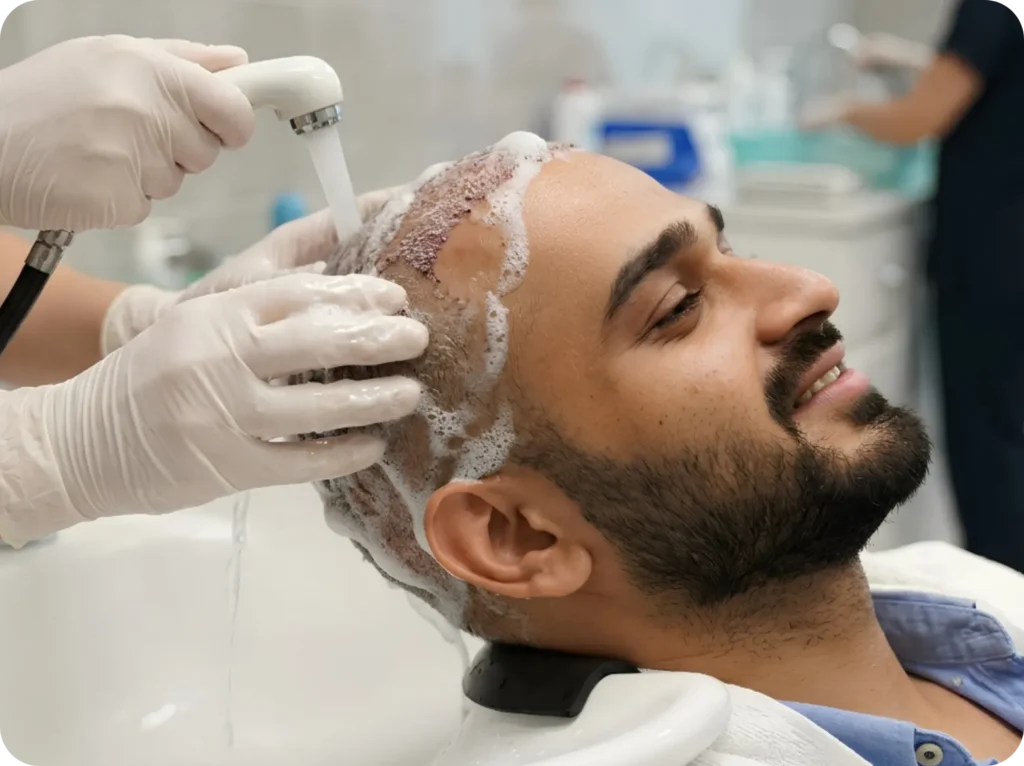
You should start washing as instructed, especially during the first 3 days.
Use a gentle lotion to soften scabs, rinse with lukewarm water, and avoid direct pressure.
Scabs and Crust Formation: What Is Normal?
Scabs form naturally around each graft and should fall off within 7-10 days.
Do not pick them.
Itching and Sensitivity: How to Manage It
Itching is part of healing. Use prescribed sprays or thermal water. Never scratch.
Medications and Aftercare Products
Follow your clinic’s plan.
Use prescribed antibiotics, painkillers, and special shampoos or foams.
Weeks 2-4: Shedding Phase (Shock Loss Explained)
During this phase, transplanted hairs shed naturally, having a place for stronger, permanent growth.
Why Transplanted Hair Falls Out
Transplanted hairs shed to make way for new growth. This is expected and temporary.
Difference Between Shock Loss and Permanent Loss
Shock loss is temporary shedding, while permanent loss affects non-transplanted hair and is less common.
When to Expect New Growth
New hair usually starts appearing around month 3-4.
Month 1-3: Early Recovery and Dormant Phase
Although visible growth is minimal, important healing and follicle development continue beneath the skin.
What Happens Under the Skin
Hair follicles enter a resting phase while establishing blood supply and adapting to the scalp.
Why Growth Seems Slow
Because the follicles are inactive above the surface: growth is happening internally.
When to Be Concerned
If there’s no visible change after 4 months, consult your doctor for evaluation.
Month 3-6: Visible Hair Growth Begins
This is when patients start noticing real progress as new hair begins to grow and fill in the treated areas.
Early Growth Patterns
Hair starts growing thin and soft, sometimes unevenly.
Uneven Growth: Is It Normal?
Yes, different follicles grow at different speeds.
When Patients Start Seeing Real Changes
By month 5-6, density improves and results become noticeable.
Month 6-12: Final Results Timeline
Hair gradually thickens and reaches its final density, revealing the full outcome of the transplant.
Density Development
Hair gradually becomes fuller and more consistent.
Hair Thickening Process
Strands thicken over time, gaining strength and texture.
Time Period
Expected Progress
First Week
Healing and scab formation
Weeks 2-4
Shock loss
Months 3-4
Early regrowth
Months 5-6
Visible density improvement
Months 9-12
Full natural results
Final Hairline Appearance
The hairline becomes natural and well-defined by month 9-12.
Essential Do’s and Don’ts After Hair Transplant
Following the right habits: and avoiding harmful ones: directly impacts how successful your results will be.
Key Aftercare Rules”
Do:
Follow washing instructions
Protect scalp from sun
Sleep carefully
Don’t:
Scratch scalp
Exercise heavily
Smoke
Drink alcohol
Sleeping, Showering, and Daily Routine
You need to be gentle with your scalp and follow all aftercare instructions carefully.
Exercise and Physical Activity Restrictions
You should avoid heavy exercise for at least 10-14 days.
Smoking and Alcohol Impact
Both can slow healing and reduce graft survival: avoid them for at least a week.
Sun Exposure and Travel Considerations
Protect your scalp from direct sun and avoid sweating excessively in the early phase.
Aftercare for International Patients Returning Home
Even after leaving the clinic, proper guidance and remote follow-up ensure a smooth recovery process.
Traveling After Hair Transplant: When Is It Safe?
Most patients can travel within 1-3 days after the procedure.
Airport and Flight Precautions
You shouldn’t make head contact. You should wear loose clothing, and stay hydrated.
Managing Recovery Without Visiting the Clinic
Follow written instructions and maintain hygiene carefully.
Remote Follow-Up and Online Consultations
Clinics usually offer online check-ins via photos or video calls.
When to Contact Your Doctor from Abroad
If you notice unusual pain, infection signs, or delayed healing, you have to contact your surgeon. For lumps that are not linked to the new grafts, see what a bump on the scalp can be.
Common Complications and How to Handle Them
Understanding possible risks helps you act quickly and prevent minor issues from becoming serious problems.
Infection Signs and Prevention
It is better to keep the area clean and follow medication guidelines strictly.
Excessive Swelling or Pain
Mild swelling is normal; severe or prolonged discomfort should be checked.
Poor Growth or Patchy Results
This may require evaluation after several months.
Folliculitis (Pimples After Transplant)
Small pimples can occur as hair grows; they are usually harmless and temporary.
Long-Term Hair Care After Transplant
Maintaining healthy hair after the procedure is key to preserving and enhancing your results over time.
Hair Washing Routine After 1 Month
You can return to a normal washing routine using mild shampoos.
Haircuts and Styling Timeline
Scissors can be used after 1 month; machines after 2-3 months.
Use of Minoxidil or Finasteride
These may be recommended to support hair growth and prevent further loss.
Nutrition and Supplements for Hair Growth
A balanced diet with vitamins like biotin and zinc supports healthy hair.
Expert Insights: Why Proper Aftercare Determines Your Final Result
Consistent and correct aftercare is one of the most important factors in achieving natural and long-lasting results.
Role of Patient Compliance
Following instructions is just as important as the procedure itself.
Importance of Following Medical Instructions
Even small mistakes can affect graft survival.
How Aftercare Impacts Graft Survival
Proper care ensures maximum retention and optimal results.
Frequently Asked Questions
How many days after a hair transplant can I wash my hair?
Usually after 2-3 days, following your clinic’s instructions.
Is it normal for transplanted hair to fall out after 2-3 weeks?
Yes, this is a normal part of the shock loss phase.
When can I return to work after a hair transplant?
Most people return within 3-7 days.
Can I travel by plane after a hair transplant?
Yes, typically within a few days.
How should I sleep after a hair transplant?
With your head elevated and no contact with the grafts.
When can I exercise or go to the gym again?
Light activity after 10 days, intense workouts after 2-3 weeks.
Is swelling after a hair transplant normal?
Yes, especially in the first few days.
How long does it take to see full results?
It takes around 9-12 months.
Can I wear a hat after a hair transplant?
Yes, after a few days if it’s loose and doesn’t touch grafts.
What should I avoid after a hair transplant?
Smoking, alcohol, sun exposure, and heavy activity early on.
Is itching normal after a hair transplant?
Yes, it’s a natural part of healing.
When can I cut or shave my hair?
Scissors after 1 month, shaving after 2-3 months.
What happens if I don’t follow aftercare instructions?
It can reduce graft survival and affect results.
Can I drink alcohol after a hair transplant?
It’s best to avoid it for at least a week.
How do I know if my hair transplant failed?
If you feel a lack of growth after 6-9 months, it may require evaluation.
What is shock loss and is it permanent?
Temporary shedding, not permanent.
Do I need medication after a hair transplant?
Often yes, depending on your doctor’s plan.
Can I return to my country immediately after the procedure?
Yes, usually within a few days.
How do international patients manage follow-up care?
Through online consultations and photo updates.
When should I contact my clinic after returning home?
If you notice unusual symptoms or delayed healing.
A Trusted Approach to Aftercare
Clinics are known for combining medical expertise with detailed aftercare protocols, offering both in-person and remote support for international patients.
Send three photos: front, top and sides. You get a technique recommendation, a graft range and a straight answer about what is achievable, before anyone talks about price.
Your details are with the team
A patient coordinator will get back to you shortly. If you would like to send your photos now, WhatsApp is the fastest way to do it.
We respond quickly, day or night, in your language.
Multilingual team, no obligation
Data protectedKVKK and GDPR compliant, 100% confidential
Authorized Health Tourism Intermediary
Turkey Hair Center is the hair-restoration brand of Healthy Way Tourism, an authorized international health-tourism intermediary. All medical procedures are performed by licensed medical professionals at authorized healthcare facilities in Turkiye, in accordance with the regulations of the Ministry of Health.