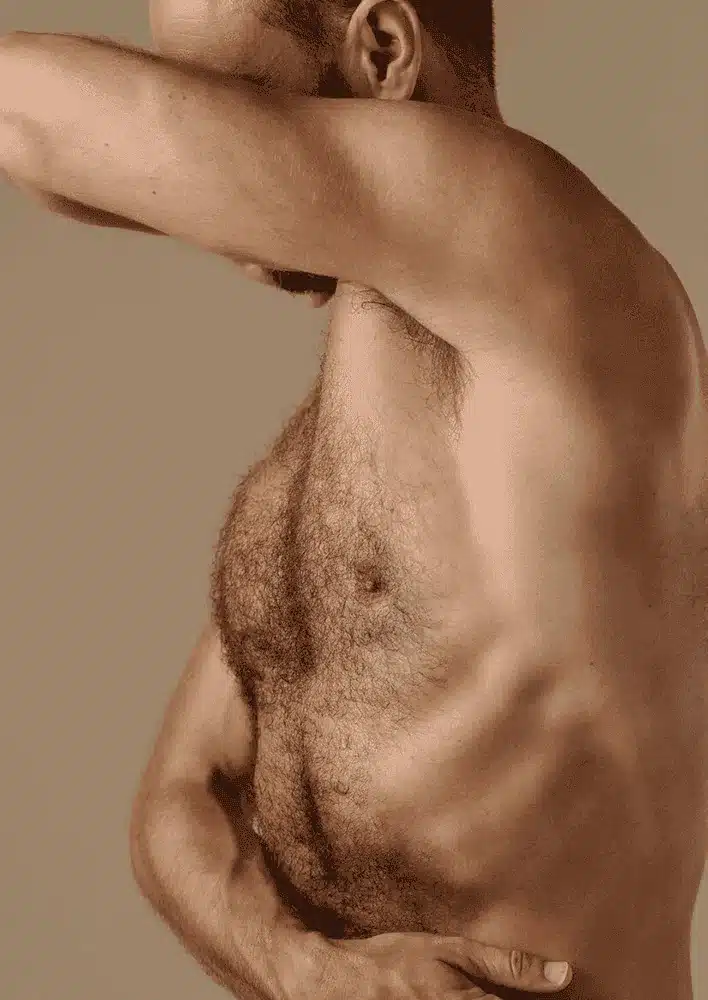
Body hair transplant in Turkey offers an alternative donor solution with affordable cost, advanced procedure, and natural-looking before and after results.
Performed at authorized partner hospitals Turkey Hair Center is a Ministry of Health authorized health-tourism intermediary, not a clinic.
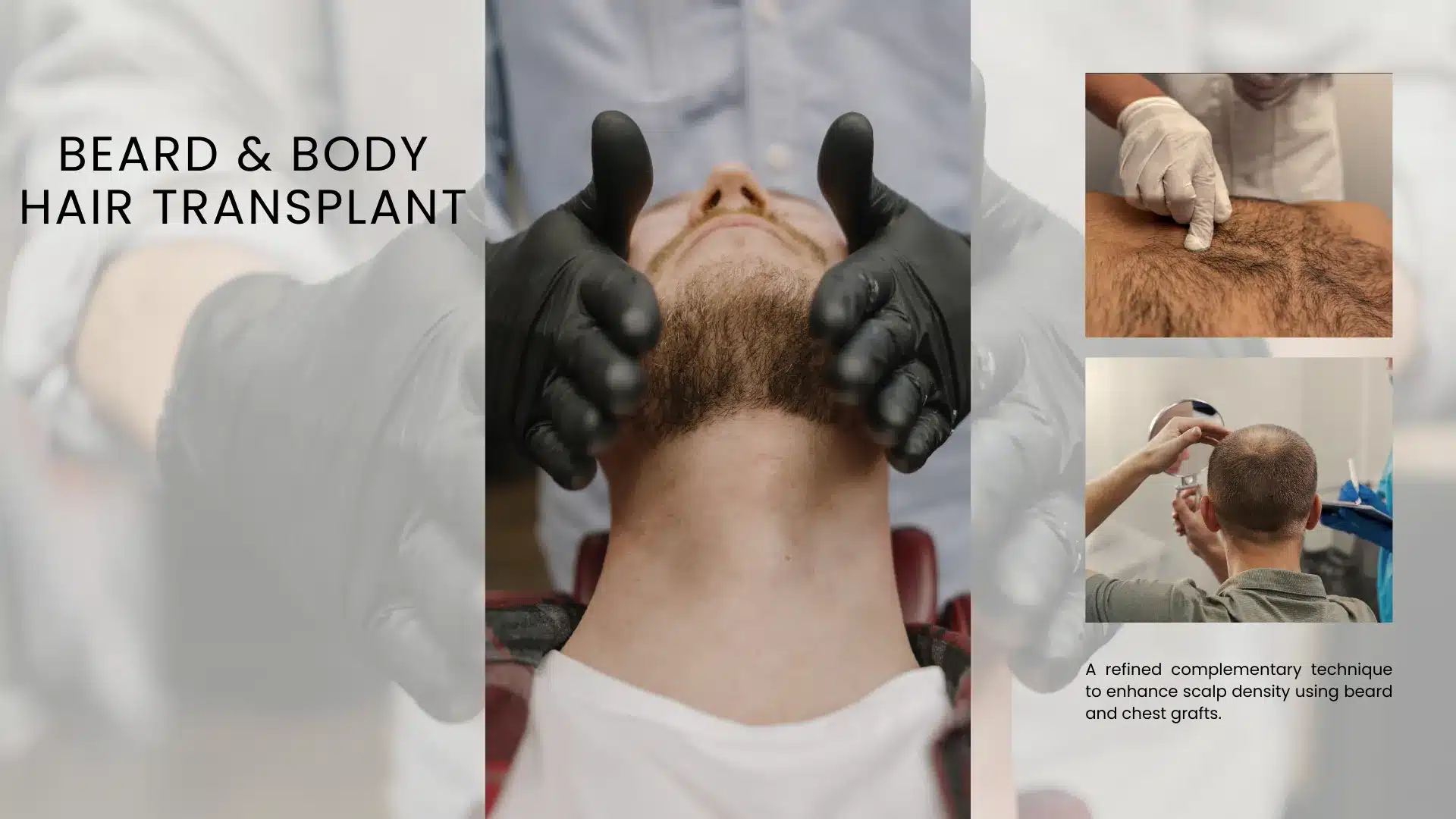
Body hair transplant in Turkey is the solution for patients with limited scalp donor hair. It is used as a complementary technique to increase density and improve coverage. If it is needed in some cases- typically Norwood scale 5,6,7- grafts can be taken from the beard area or chest. Therefore, the density and overall coverage will be boosted.
Short answer
A body hair transplant uses beard or chest hair as an extra donor source when the scalp donor area cannot cover the bald area alone, typically at Norwood 5 to 7. Body grafts are combined with scalp grafts in one session under local anesthesia, within all-inclusive packages from $2,550 to $4,500.
One session, scalp and body donor combined, local anesthesia
Included stay
2 hotel nights, VIP transfers, next-day check-up
Main donor areas
Beard first, then chest; back, arms or legs occasionally
Visible growth
From about month 3
Final result
About 12 months
Often chosen for
Norwood 5-7 or a depleted scalp donor area
Body Hair Transplant Results Timeline
The gallery shows our own patients. In body hair transplant before and after or chest hair transplant before and after photos, ask which grafts came from the body and judge density at about 12 months.
Body Hair Transplant Growth Timeline
Body hair transplant growth timeline
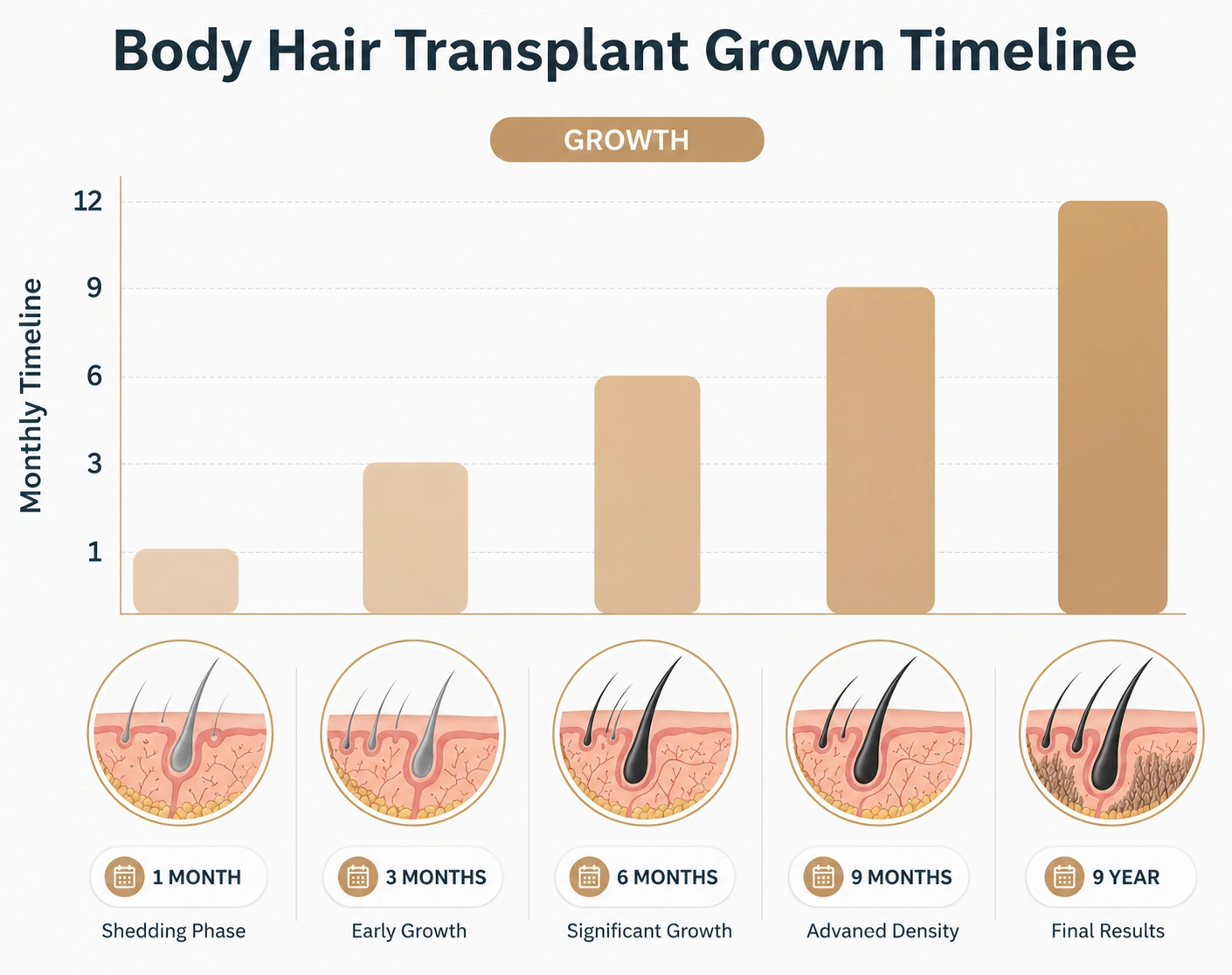
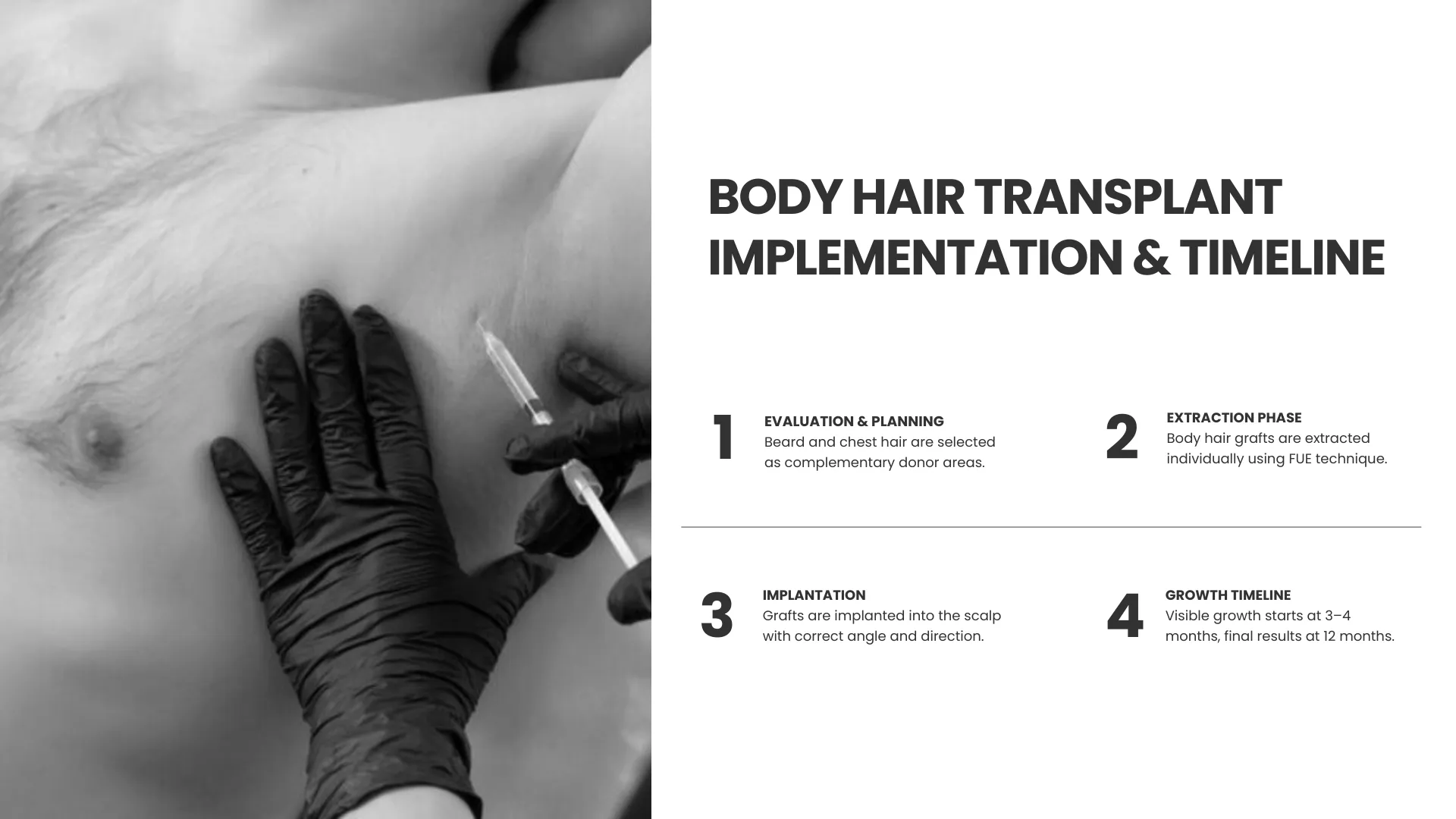
Transplanted hairs usually shed in month 1 and early growth starts around month 3. Growth is significant by month 6, density is advanced by month 9 and the final result arrives at about 1 year. Each stage is explained in our hair transplant recovery timeline.
Survival Rates by Donor Area
There is no single body hair transplant success rate. Body graft survival is usually slightly lower than scalp-to-scalp, and beard grafts tend to do better than chest or leg grafts. Judge chest hair transplant results and body hair transplant to head results pictures at about 12 months: more patient results.
What Is Body Hair Transplant?
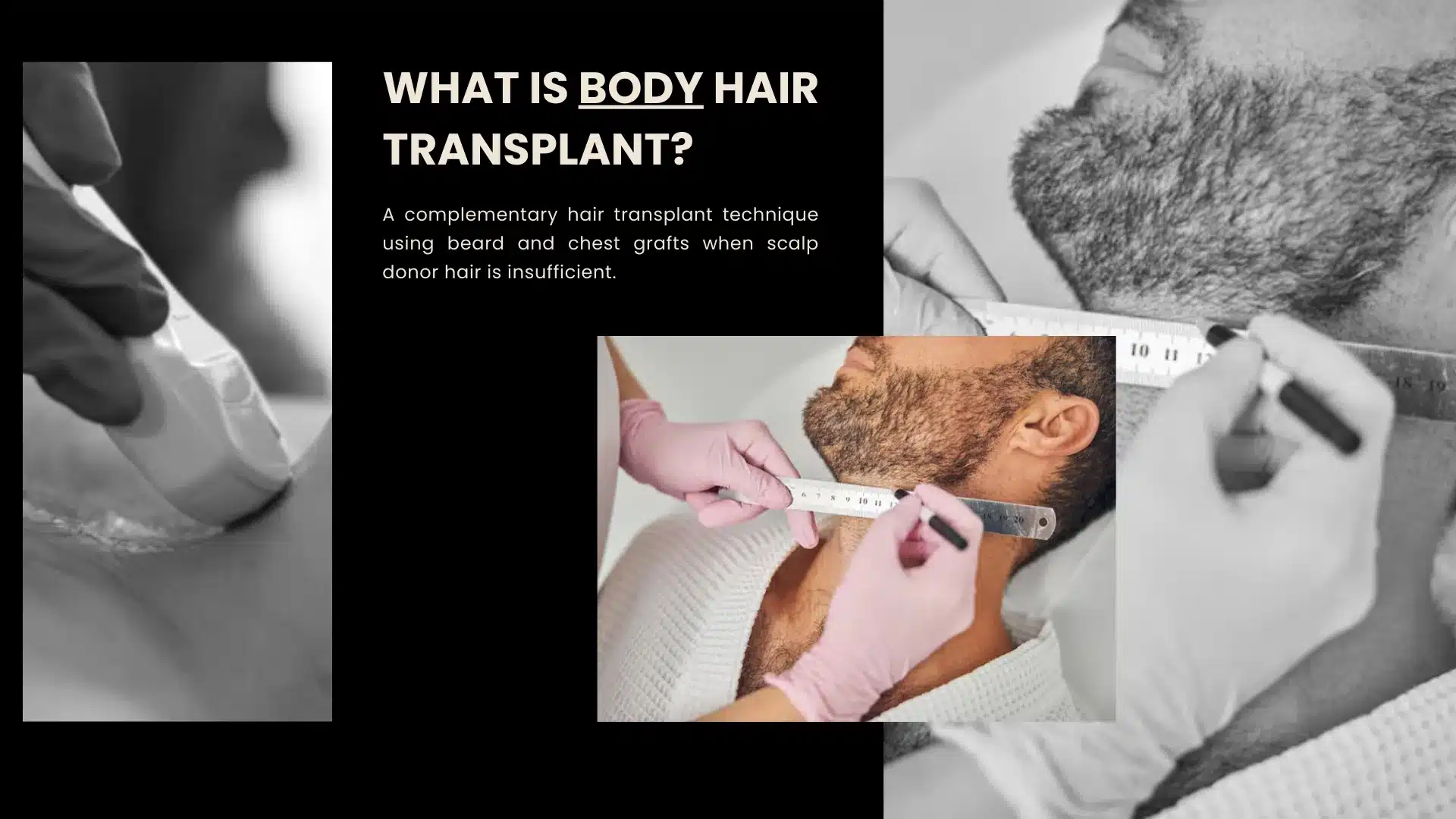
A body hair transplant, sometimes searched as body to hair transplant, is a FUE hair transplant that also takes grafts from the beard or chest. It is a complementary technique: body grafts add coverage where the scalp donor area cannot supply enough grafts alone.
What is body hair transplant
Who Is a Good Candidate for Body Hair Transplant?
Body hair is considered when the scalp donor area cannot cover the bald area alone. Not sure of your stage? The free Norwood test takes about a minute.
Advanced Hair Loss (Norwood Stage 5, 6, 7)
Body hair provides the extra volume needed for those with extensive baldness that scalp donor areas cannot cover alone.
Can Women Undergo Body Hair Transplant?
Technically yes, but rarely useful: most women lack thick terminal body hair. A female hair transplant usually relies on the scalp donor area.
Advantages vs Disadvantages
The advantage is extra grafts in the same session when the scalp donor runs short. The disadvantages: a shorter growth cycle, different thickness or curl and lower density per area (see risks and limits).
Which Body Hair Sources Are Most Suitable?
Beard hair is usually the most suitable source because it is thick and strong; chest hair comes next. Surgeons also check how many hairs in an area are in the active growth phase.
Body Hair as a Donor Area for Hair Transplant
In a body to scalp plan, body grafts are added only where the scalp donor count falls short. Both are usually combined in one session, and the hairline is normally built with scalp hair.
Beard and body hair transplant
Commonly Used Areas
The beard is the primary body donor area because its hair is thick. The chest and back come next; arms and legs are used occasionally because their hair is thinner. A chest hair transplant Turkey plan adds chest grafts to scalp grafts.
Supplemental Donor Source in Advanced Baldness
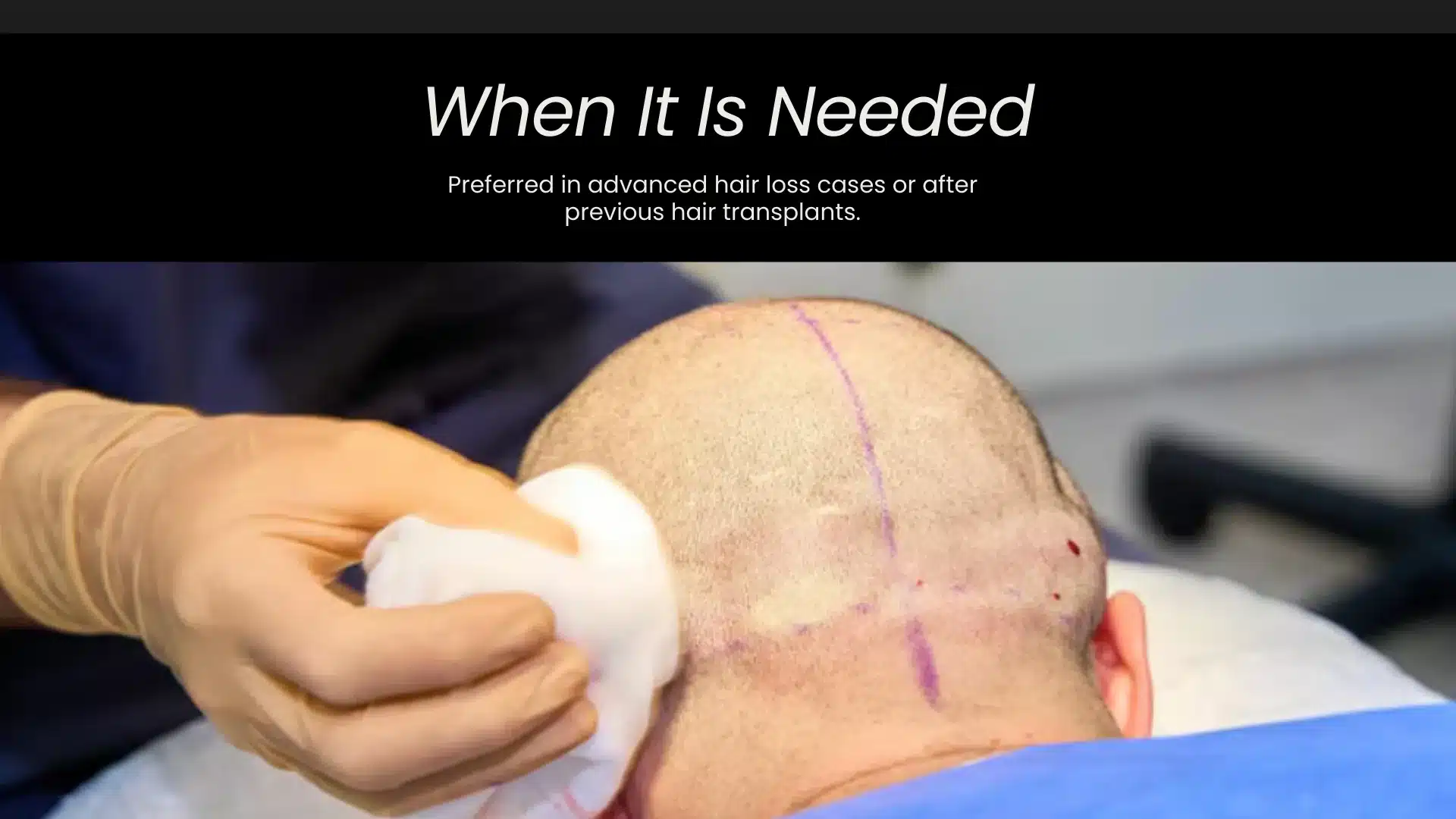
At Norwood 6 or 7, or in plans near 6,000 grafts, the scalp alone may not be enough. Body grafts then supplement it, mostly in the mid-scalp and crown. Expect better coverage, not a thick head of hair.
When body hair is used as a donorBody hair transplant procedure, steps 1 to 3
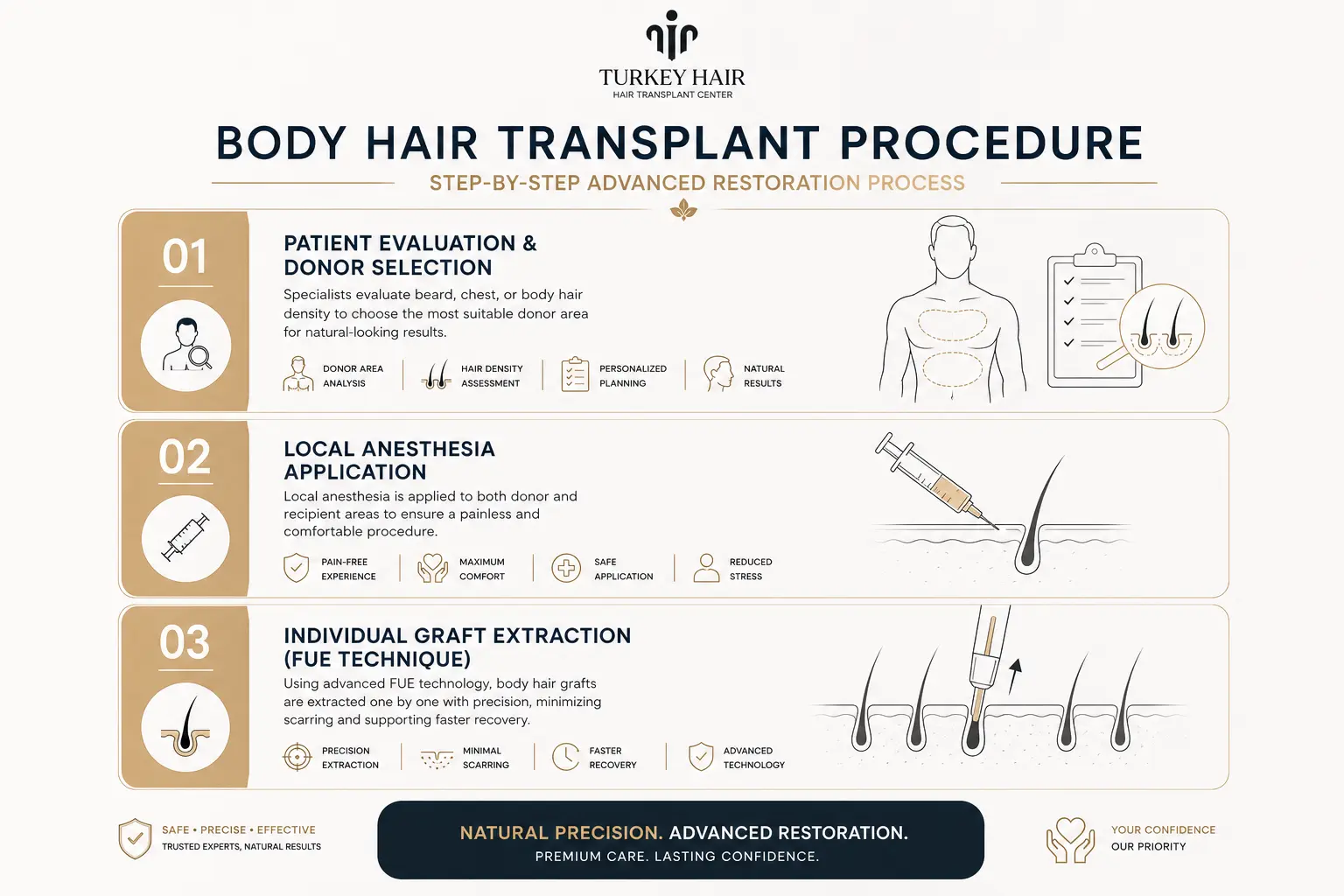
How Body Hair Transplant Works: Step by Step
Evaluation: the team checks hair density and quality in the beard, chest and scalp
Anesthesia: local anesthesia in the donor and recipient areas
Extraction: grafts are taken one by one with FUE and kept in a cooling solution
Implantation: each graft is placed at the natural angle and direction of your hair
Aftercare: washing, medication and activity instructions before you leave
Body hair transplant steps and timeline
Body Hair Transplant Cost
The cost of a body hair transplant in Turkey typically changes between $2,550 to $4,500 depending on the technique (FUE or DHI) and graft count.
Body hair transplant cost Turkey patients pay with us follows the same packages: chest hair transplant cost or body hair transplant to head cost depends on the graft count the medical team plans. For about 3,000 grafts:
Body hair transplant is a reliable technique. However, it might have some disadvantages like different growth cycles, orientation issues, thickness and curl mismatch, scarring risk in the donor area and limited density. That is why the procedure must be planned by an expert team.
Body donor spots can leave small point scars or temporary discoloration and may heal a little more slowly than the nape. More: hair transplant side effects.
Body Hair Transplant Reviews
Read reviews on platforms the clinic does not control: our patients review us on Google, Trustpilot, Bookimed and ProvenExpert. We do not pay for reviews.
Patient Selection and Surgeon Expertise
There is no single best body hair transplant surgeon for everyone; careful patient selection matters more. Turkey Hair Center is a Ministry of Health authorized health-tourism intermediary, and procedures are carried out by licensed medical professionals at authorized partner hospitals (how our role works).
TrustScore 4.1 out of 5 on Trustpilot, based on 5 reviews (checked 11.10.2026).
★★★★★
Turkey hair center was an amazing experience. They took care of me from the moment I landed all the way until my flight back home. They do top tier work and I would highly recommend them to anyone looking for this service!
★★★★★
I had my hair transplant about a month ago and so far the progress/recovery is going super well and ahead of schedule. The doctor and nurses from the clinic were super friendly and knowledgeable. They made me feel comfortable and confident i made the right decision to go with them. Also the food that they serve me half way through the procedure was amazinggggg.
★★★★★
This experience was great the Doctor and Staff were very professional and the BEST! Highly recommend if you want to goto the best hair transplant center to get your hair transplant! This is me after little before 3 months!
★★★★★
my experience at turkey hair transplant centre was really good and the doctors made me feel vert welcome, i am happy with my results at the moment and would definitely recommend it to others
Body Hair Transplant FAQ
Can You Use Body Hair for Transplant?
Yes. Beard and chest hair can be extracted with FUE and placed on the scalp as a complementary source, usually at Norwood 5 to 7 or after an earlier transplant has used much of the scalp donor area.
Can You Transplant Chest Hair to Head?
Yes. Chest hair grows shorter and can be curlier than scalp hair, so it is usually placed in the mid-scalp or crown, mixed with scalp grafts, rather than at the hairline.
Can Body Hair Be Used for Hair Transplant?
It can, if the hair is thick enough and enough of it is in the active growth phase. Thin arm or leg hair usually adds little; the team checks this from your photos.
Can Body Hair Transplant to Head?
Yes. In most plans body grafts are combined with scalp grafts in one session: scalp grafts shape the hairline, body grafts add density behind it.
Can Your Body Reject Hair Transplant?
Rejection is not expected, because the grafts are your own tissue. When grafts fail to grow, the usual causes are poor handling during surgery or trauma to the grafts after it.
Is Body Hair Transplant Successful?
It can be, within limits. Body graft survival is usually slightly lower than with scalp grafts, and beard hair tends to do best. The final result shows at about 12 months; the realistic goal is better coverage.
Free Body Hair Transplant Assessment
Every body hair transplant Turkey plan with us starts with a free photo review. Send three photos of your front, top and sides; the medical team will tell you, free and with no obligation, whether body grafts make sense for you: get your free hair analysis or ask us on WhatsApp.
Sources and medical review
The clinical statements on this page draw on the following published literature and professional body guidance:
Send three photos: front, top and sides. You get a technique recommendation, a graft range and a straight answer about what is achievable, before anyone talks about price.
Your details are with the team
A patient coordinator will get back to you shortly. If you would like to send your photos now, WhatsApp is the fastest way to do it.
We respond quickly, day or night, in your language.
Multilingual team, no obligation
Data protectedKVKK and GDPR compliant, 100% confidential
Authorized Health Tourism Intermediary
Turkey Hair Center is the hair-restoration brand of Healthy Way Tourism, an authorized international health-tourism intermediary. All medical procedures are performed by licensed medical professionals at authorized healthcare facilities in Turkiye, in accordance with the regulations of the Ministry of Health.