Afro Hair Transplant Cost in 2026: Real Prices, Graft Numbers & Results
Explore Afro hair transplant costs, techniques, recovery, and natural results for curly and coily hair.
Homepage
Treatments
Afro Hair Transplant Cost
Afro Hair Transplant Cost in 2026: Real Prices, Graft Numbers & Results
A Path to Confidence and Renewal

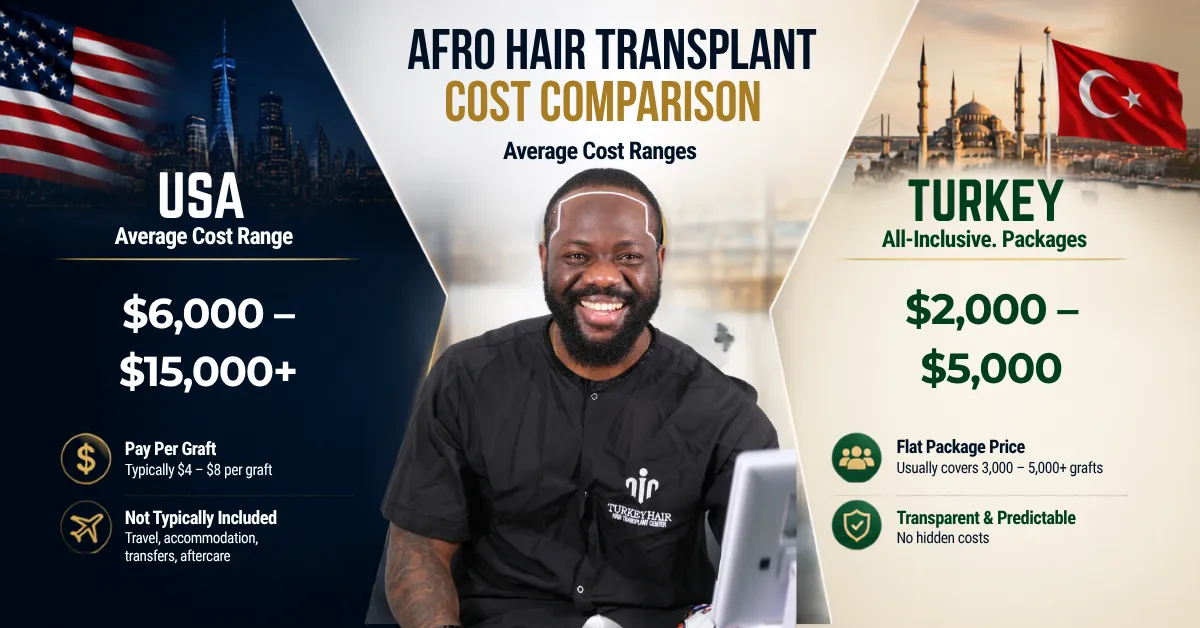
In 2026, an Afro hair transplant generally costs between $4,000 and $15,000 in the USA, while comprehensive international packages in Turkey may range from $2,500 to $5,000. Your required graft count determines the final cost, the surgical extraction method, and the clinic's specific expertise with coily hair follicles.
Quick Answer: How Much Does an Afro Hair Transplant Cost?
IMAGE 1 - An infographic comparing the average cost ranges of an Afro hair transplant in the USA versus typical all-inclusive packages in Turkey.
Pricing in hair restoration is rarely a one-size-fits-all number. Because Afro-textured hair requires highly specialized surgical approaches, the cost varies with the time and technical skill needed to protect the grafts. Let's break down the specific variables that will ultimately dictate your final bill.
Average Price Factors
Your quote is built on several moving parts. The most significant factor is your total graft count. Moving 1,500 grafts simply takes less operating time than safely extracting 3,000. Beyond that, the specific technique—such as FUE versus DHI—and the geographic location of the surgical facility will heavily influence the baseline price.
Quick Facts About Afro Hair Transplant Cost
| Factor | Typical Range |
| Average Global Cost | $2,500 – $15,000+ |
| Typical Grafts | 1,000 – 3,000 |
| Recovery Period | 7 – 14 Days |
| Initial Growth | Around Month 3 |
| Visible Improvement | Around Month 6 |
| Final Results | 12 – 18 Months |
| Suitable Candidates | Men and Women |

Why Afro Hair Can Cost More Than Standard Cases
You might notice some clinics applying a slight premium for Afro-textured hair. This is entirely tied to clinical safety. Because coily hair curves beneath the skin, the surgical team must often slow down the extraction pace to avoid cutting the follicle in half. Paying for a surgical team that respects this anatomical difference is a vital investment in your donor area's long-term health.,
Specialized Technique & Expertise
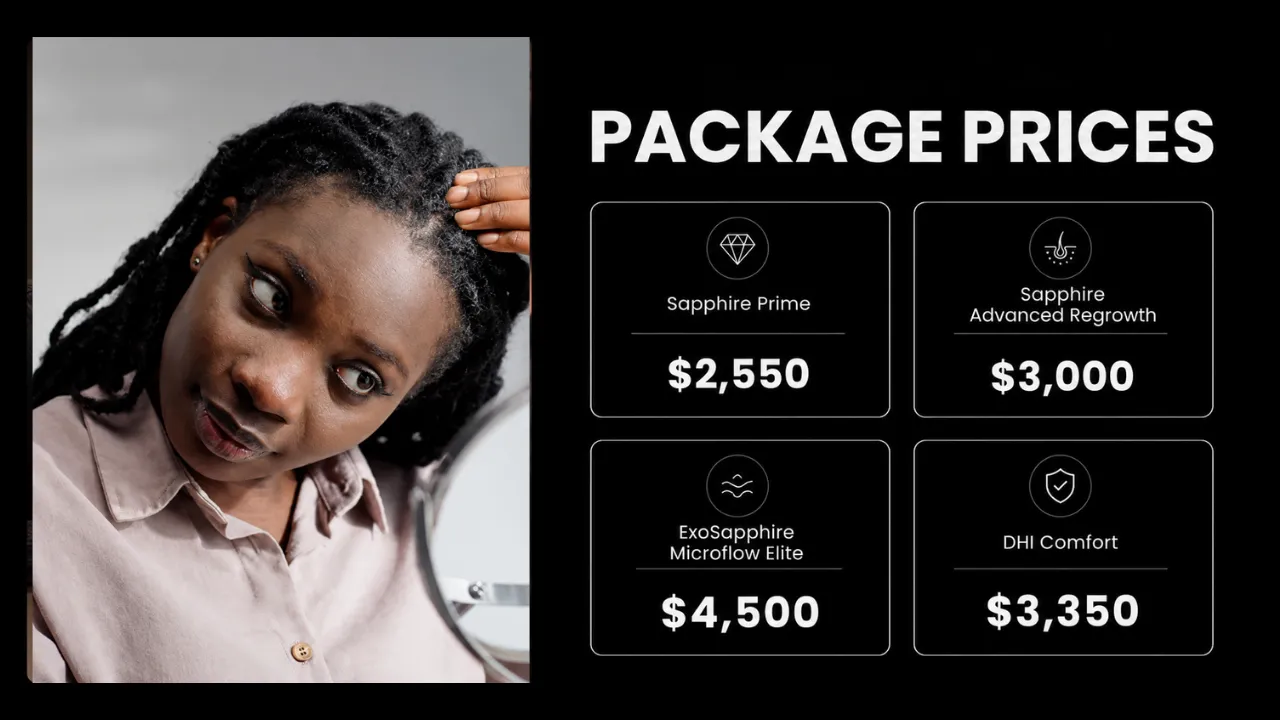
Afro Hair Transplant Package Prices
Frequently Asked Questions
How do I know if I am a good candidate for an Afro hair transplant?
You may be a good candidate for an Afro hair transplant if you have visible hair loss, a stable donor area, and realistic expectations about the final result. Because Afro-textured hair grows in a curved pattern under the skin, the doctor must evaluate your curl type, donor density, hairline design, and medical history before confirming eligibility.
How many grafts do I need for Afro hair restoration?
The number of grafts depends on the size of the thinning area, your desired density, and the quality of your donor area. Some patients may need fewer grafts because Afro hair often provides strong visual coverage due to its natural curl and volume. A personalized hair analysis is required to determine the exact graft number.
Why is Afro hair transplant more complex than straight hair transplant?
Afro hair transplant is more complex because the hair follicles are usually curved beneath the skin. This makes extraction and implantation more delicate compared to straight hair. The surgeon must work carefully to protect the follicle structure and place each graft at the correct angle for a natural-looking result.
Do I need to shave my hair before an Afro hair transplant?
In many cases, partial shaving may be recommended to allow safer graft extraction and implantation. However, the shaving plan depends on your hair length, donor area, technique, and treatment goal. Some patients may be suitable for a more discreet shaving approach after doctor evaluation.
What should I avoid before traveling to Turkey for my hair transplant?
Before traveling for your Afro hair transplant, you should avoid alcohol, smoking, blood-thinning medications, and unnecessary supplements unless approved by your doctor. You should also inform the clinic about any medical conditions, allergies, or regular medications before the procedure. Contact Us Today!
How much does an Afro hair transplant cost in Turkey?
Afro hair transplant cost in Turkey varies depending on the number of grafts, the technique used, the doctor’s experience, and what is included in the package. Since Afro hair requires more precision during extraction and implantation, pricing may differ from standard hair transplant procedures. A personalized consultation is the best way to receive an accurate cost estimate.
Is FUE or DHI better for Afro hair transplant?
Both FUE and DHI can be used for Afro hair transplant, but the best method depends on your hair type, donor area, and restoration goal. FUE is commonly used for extracting grafts carefully, while DHI may offer more control during implantation. The doctor will recommend the most suitable technique after analyzing your scalp and hair structure.
How long does an Afro hair transplant operation take?
An Afro hair transplant operation usually takes several hours, depending on the number of grafts and the complexity of the case. Because Afro hair follicles require careful handling, the procedure may take longer than a standard hair transplant. The goal is to protect the grafts and achieve a natural result.
Are Afro hair follicles harder to extract during surgery?
Yes. Afro hair follicles can be harder to extract because they often have a curved shape under the skin. This requires experience, precision, and the correct extraction angle. A skilled medical team can reduce graft damage and improve the success of the procedure.
What is included in an Afro hair transplant package in Turkey?
An Afro hair transplant package in Turkey may include doctor consultation, hair analysis, the transplant procedure, local anesthesia, post-operative care products, hotel accommodation, VIP transfers, and follow-up support. Package details can vary by clinic, so patients should always confirm what is included before booking. Contact Us Today!
How long does it take to recover after an Afro hair transplant?
Initial recovery usually takes around 7 to 10 days. During this period, redness, mild swelling, and scabbing may occur. Most patients can return to light daily activities within a few days, but full healing and visible hair growth take longer. Following aftercare instructions is essential for healthy recovery.
When will I see the final results after an Afro hair transplant?
Final results usually become visible within 12 to 18 months after the procedure. In the first few weeks, transplanted hair may shed as part of the natural recovery cycle. New growth usually begins gradually after a few months, with density improving over time.
Is shock loss normal after Afro hair transplant surgery?
Yes. Shock loss is a normal and temporary phase after hair transplant surgery. The transplanted hairs may shed within the first weeks, but the follicles remain under the skin. New hair growth usually starts gradually after the resting phase.
How should I wash my hair after an Afro hair transplant?
After an Afro hair transplant, you should wash your hair only according to the clinic’s instructions. The first wash is usually done gently, using recommended products and avoiding pressure on the grafts. Scratching, rubbing, or using harsh shampoos should be avoided during the early healing period.
Can transplanted Afro hair grow naturally with its original curl pattern?
Yes. Transplanted Afro hair usually keeps its natural curl pattern because the grafts are taken from your own donor area. Once the transplanted follicles adapt and start growing, the hair should continue to grow with its original texture and curl characteristics. Contact Us Today! Afro & Textured Hair Transplant Guide Afro and textured hair requires specialist FUE technique. Explore the full guide: Afro Hair Transplant in Turkey Afro Hair Transplant Before & After Afro-Textured Follicle Specialisation Afro-Textured Specialist Expertise
What Patients Should Look For?
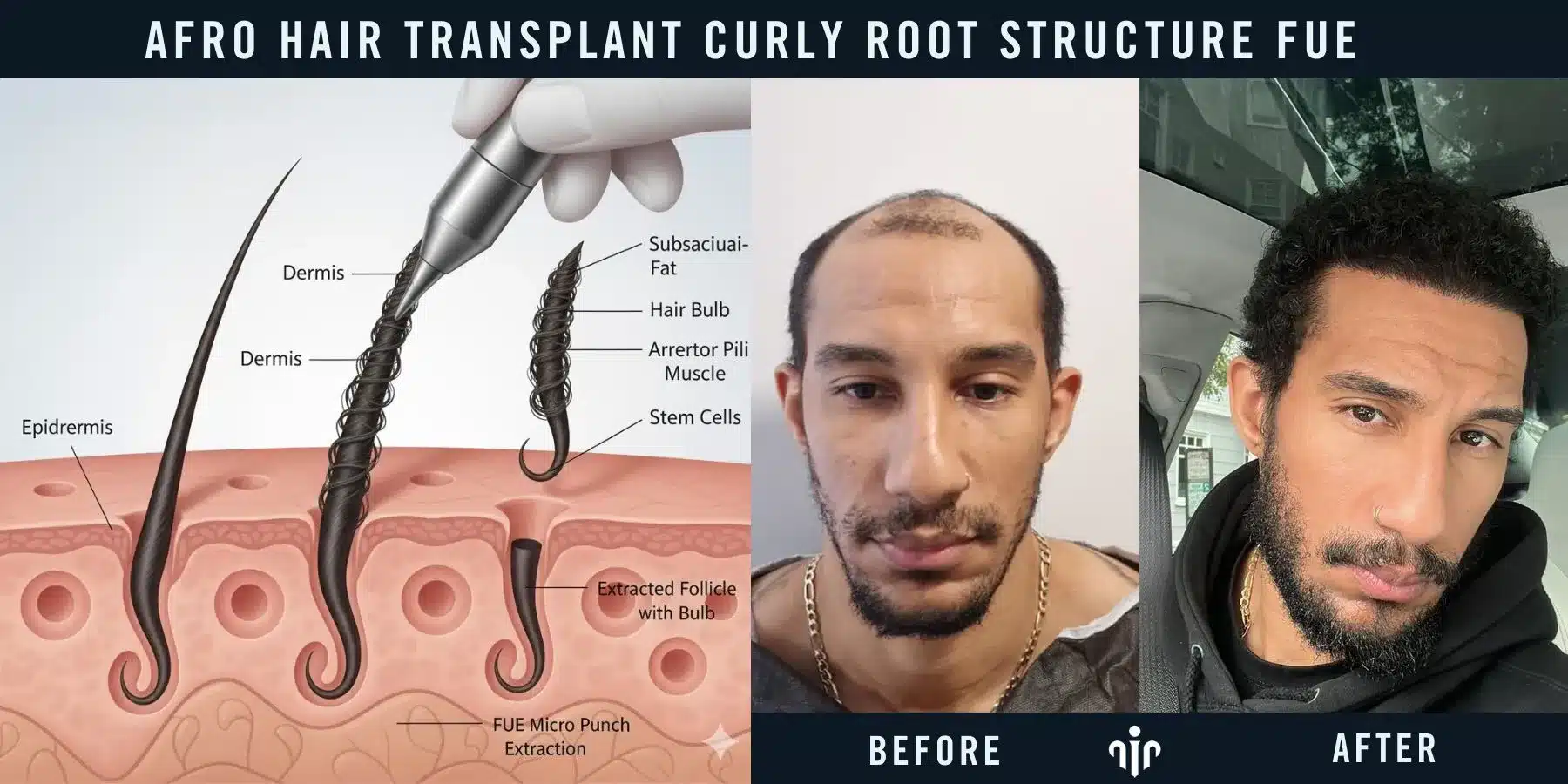
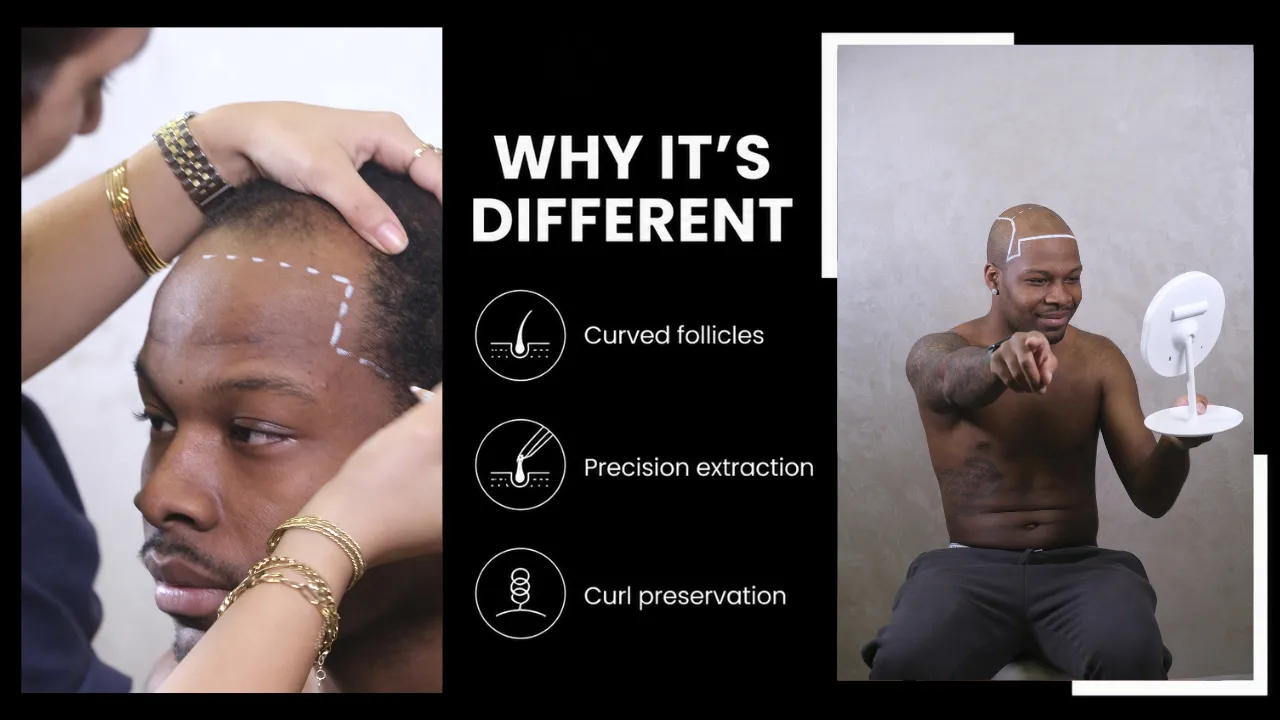
Instead of focusing only on the final number, ask what is actually included. A package that appears more expensive at first glance may provide significantly more value when accommodation, transportation, medications, and aftercare are taken into account. For international patients, logistical support can be almost as important as the procedure itself. Clear communication, airport transfers, accommodation arrangements, and ongoing follow-up often make the overall experience much smoother. What Makes Afro Hair Transplants Different? Many people focus on the curl pattern they see above the scalp. The real challenge, however, often lies beneath the skin. Afro-textured hair frequently grows from follicles that follow a curved path through the scalp. This means the surgeon and medical team must carefully consider extraction angles, punch selection, graft handling, and implantation techniques throughout the procedure. The visible curl is only part of the story. The structure of the follicle itself is what makes Afro hair restoration unique.
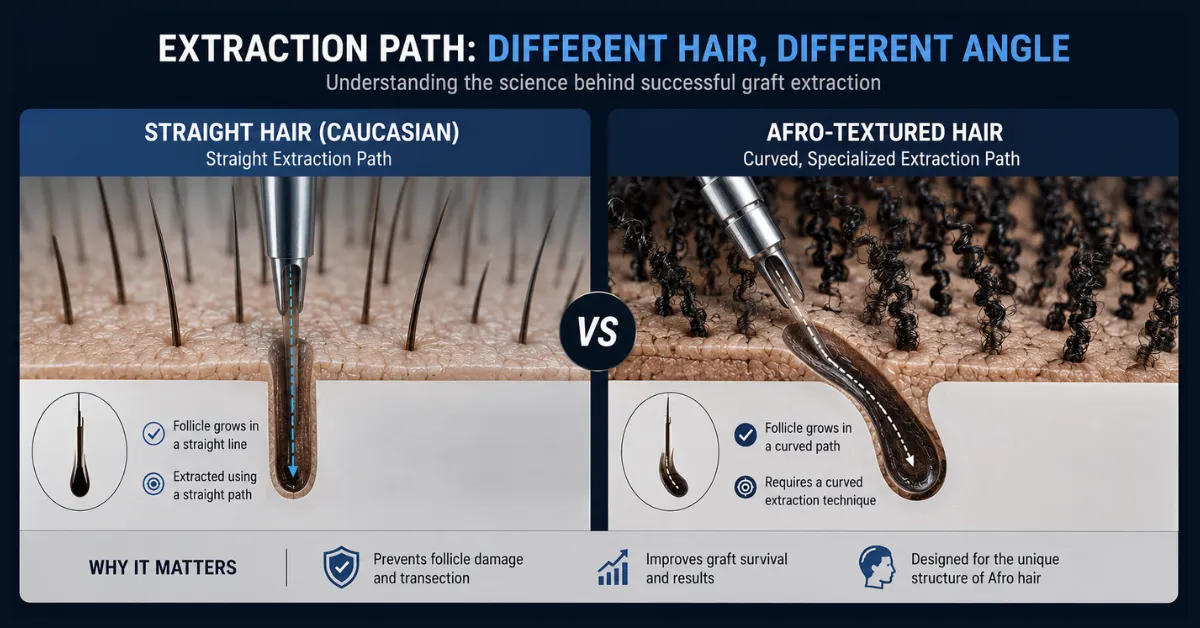
Understanding Curved Afro Hair Follicles?
In straight hair, the follicle often follows a relatively direct path beneath the scalp. Afro-textured hair is different. The follicle may curve beneath the skin before the hair shaft emerges at the surface. This characteristic can increase the risk of follicular transection during extraction if the procedure is not carefully planned. Transection occurs when a follicular unit is partially damaged during removal, potentially affecting graft quality and survival. Because of this, successful Afro hair restoration often requires a more deliberate extraction approach and a thorough understanding of follicular anatomy.
Why Extraction Requires More Precision?
Every graft removed from the donor area represents a valuable resource. Once a graft is damaged during extraction, it cannot simply be replaced. For patients with Afro-textured hair, extraction angles must often be adjusted based on the natural direction of the follicle beneath the scalp. The objective is to preserve the integrity of each follicular unit while minimizing unnecessary trauma to surrounding tissue. Experienced teams typically spend more time evaluating donor characteristics before extraction begins, helping reduce transection rates and improve graft survival.
Why Implantation Angles Matter?
Successful Afro hair restoration does not depend solely on extracting healthy grafts. Once those grafts are placed into the recipient area, every implantation angle contributes to the final appearance. Natural hairlines are created through subtle changes in direction, density, and angulation. Afro-textured hair introduces another layer of complexity because the visible curl pattern can magnify even small placement errors. If grafts are implanted at incorrect angles, the result may appear unnatural regardless of graft survival rates. This is particularly noticeable along the frontal hairline and temple regions. Afro Hair Transplant Cost In 2026: Real Prices, Graft Numbers & Results 13
Why Experience Matters More Than Technique Names?
Patients frequently ask whether FUE, DHI, Sapphire FUE, or another technique is best for Afro hair. In reality, the name of the technique is rarely the deciding factor. A well-executed procedure performed by an experienced team generally produces better outcomes than a poorly executed procedure using the latest technology or marketing terminology. The most important variables often include: Afro Hair Transplant Cost In 2026: Real Prices, Graft Numbers & Results 14 Understanding Afro follicular anatomy Managing transection risk Preserving donor density Designing natural hairlines Planning for future hair loss Proper graft handling and storage Accurate implantation angles This is one reason why some clinics actively promote Afro hair restoration while others choose not to offer it at all. The learning curve is steeper, and mistakes can be more difficult to correct later. How Many Grafts Are Needed for an Afro Hair Transplant? One of the most common misconceptions about hair restoration is that every patient requires the same number of grafts. The reality is very different. A patient seeking minor temple restoration may need fewer than 1,000 grafts, while another patient rebuilding a receded hairline and frontal region may require more than 3,000 grafts. The appropriate graft count depends on several factors: Current level of hair loss Desired hairline position Donor area density Hair shaft characteristics Curl pattern Long-term hair loss expectations Because Afro hair often creates excellent visual coverage, some patients can achieve impressive cosmetic improvements without requiring extremely high graft counts.
Typical Graft Requirements?
Treatment Area Typical Graft Range Minor Temple Restoration 800 – 1,200 Hairline Restoration 1,200 – 2,000 Hairline + Temples 2,000 – 3,000 Advanced Frontal Restoration 3,000 – 4,000+
What These Numbers Actually Mean?
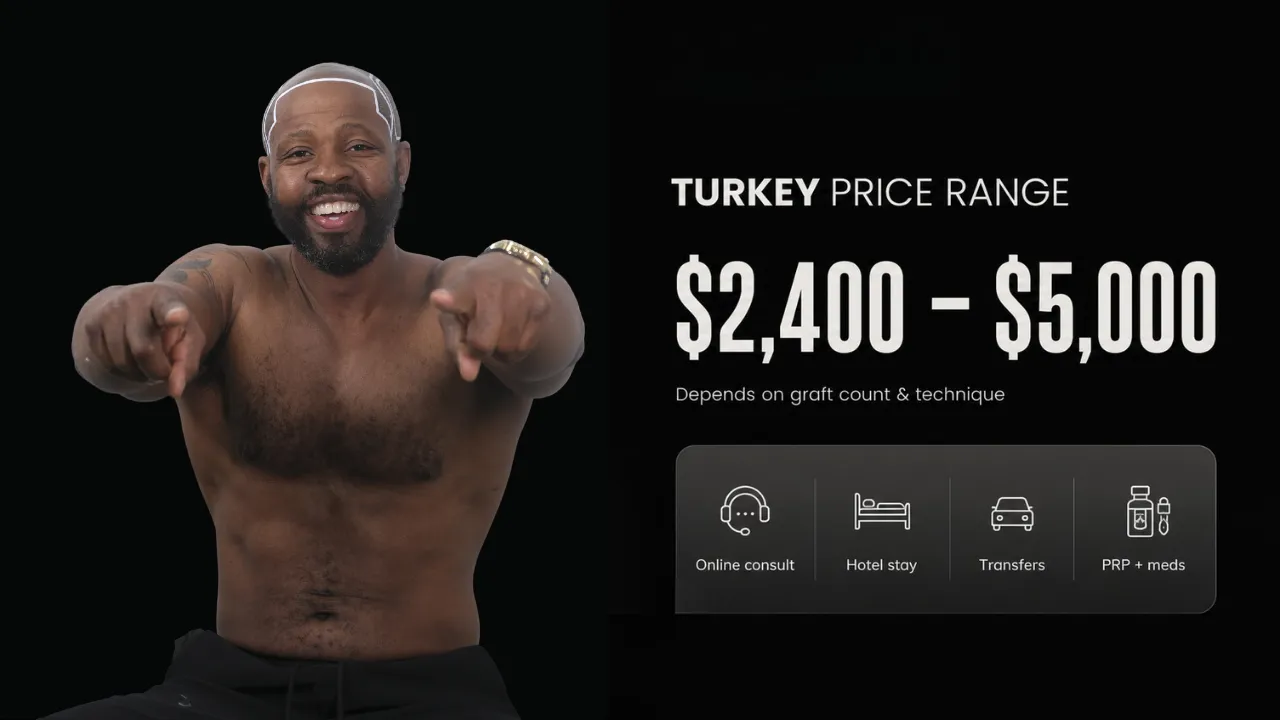
These figures are not treatment recommendations. They are simply broad ranges commonly used in hair restoration planning. A patient with coarse, tightly curled hair may achieve excellent visual density with fewer grafts than someone with finer hair characteristics. This is one reason why graft numbers should never be compared in isolation. Smaller cases often focus on temple refinement or early hairline changes. Mid-range cases are more commonly used for frontal hairline restoration. Larger sessions may be required when the frontal zone and temple regions both need treatment. In advanced cases, donor area management becomes particularly important. The focus should not simply be on maximizing graft numbers but on preserving donor resources for future needs. Afro Hair Transplant Cost by Graft Count Although some clinics use package pricing, graft count remains one of the most influential factors affecting cost. Larger procedures generally require more operating time, additional planning, increased staffing requirements, and greater post-operative management. The following table provides general pricing estimates rather than fixed treatment fees. Turkey Afro Hair Transplant Prices Range From $2,400 To $5,000.
Average Cost by Graft Count?
Graft Count Typical Treatment Area Average Cost in Turkey Average Cost in USA 1,000 Temple Restoration $2,500 – $3,500 $4,000 – $8,000 1,500 Hairline Restoration $2,500 – $4,000 $6,000 – $10,000 2,000 Hairline + Temples $3,000 – $4,500 $8,000 – $12,000 3,000 Frontal Restoration $4,000 – $5,500 $10,000 – $16,000 4,000+ Advanced Cases $5,000 – $7,000+ $12,000 – $22,000+
What These Graft Numbers Mean for Cost?
The relationship between graft count and pricing is not always linear. A 3,000-graft procedure does not necessarily cost exactly twice as much as a 1,500-graft procedure. Surgical complexity, donor characteristics, clinic standards, and medical team involvement all contribute to pricing decisions. This is why two patients receiving the same number of grafts may still receive different treatment quotes. One of the biggest misconceptions in hair restoration is the belief that more grafts automatically equal greater value. The true value of a procedure depends on how efficiently those grafts are used. Afro Hair Transplant Cost by Country One of the first things many patients notice when researching Afro hair transplantation is the enormous difference in pricing from one country to another. A treatment plan quoted at $12,000 in one country may be offered for less than half that amount elsewhere. At first glance, this can be confusing. Some patients assume lower prices mean lower quality, while others assume higher prices guarantee better results. In reality, neither assumption is always correct. The cost of an Afro hair transplant is influenced by much more than the procedure itself. Local operating expenses, labor costs, healthcare regulations, facility overhead, taxation, currency differences, and market competition all contribute to the final price. This is why two clinics offering similar treatment plans may charge dramatically different amounts.
Afro Hair Transplant Cost by Country?
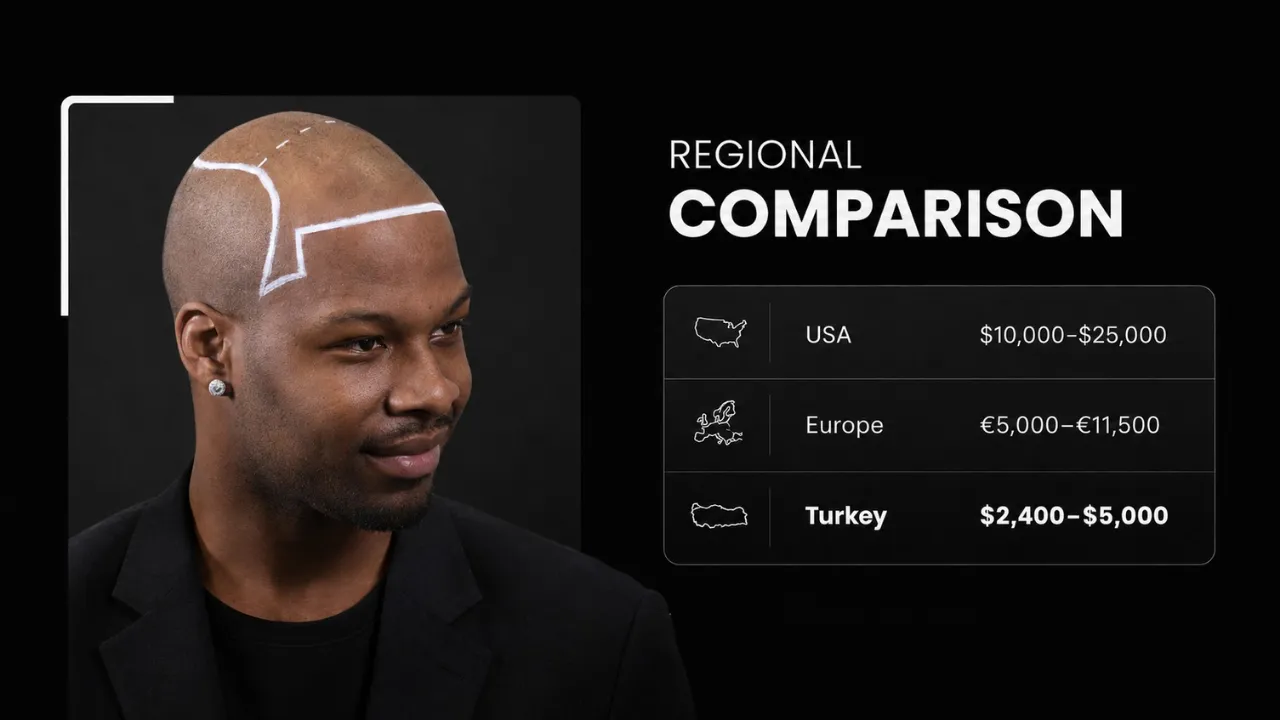
Country Typical Cost Range Travel Required Waiting Time United States $6,000 – $15,000+ No Low United Kingdom £4,000 – £10,000+ No Medium Canada $5,000 – $12,000 No Medium Germany €4,000 – €10,000 Yes Medium Turkey $2,500 – $5,500 Yes Low Mexico $3,000 – $8,000 Yes Low The cost advantage in Turkey is driven by local market dynamics, currency conversion, and lower operational costs rather than a compromise on medical quality or clinical expertise.
What These Numbers Mean?
These figures should be viewed as broad market averages rather than fixed treatment fees. The same clinic may quote two patients very different prices because hair restoration planning is highly individualized. Factors such as donor density, graft requirements, hairline goals, previous procedures, and overall treatment complexity all influence the final recommendation. Comparing prices without comparing treatment plans can easily lead to incorrect conclusions. Compare Afro Hair Transplant Costs In Turkey, Europe, And The Usa To Understand Pricing Differences.
United States?
The United States remains one of the most expensive markets for hair restoration. Higher operating expenses, staffing costs, facility requirements, insurance expenses, and medical regulations all contribute to pricing. For many patients, the primary advantage is convenience. Follow-up appointments are easier, travel requirements are minimal, and communication can often be more straightforward. However, patients should still evaluate the clinic’s experience with Afro-textured hair rather than assuming every provider performs these procedures regularly.
United Kingdom?
The United Kingdom offers a well-established hair restoration market with many experienced providers. Prices generally remain lower than those seen in the United States but significantly higher than many medical tourism destinations. Patients often choose UK clinics because of accessibility, convenience, and established medical standards.
Canada?
Canadian pricing is often comparable to the upper end of European markets. Patients benefit from strong healthcare standards and local follow-up opportunities, although treatment costs remain considerably higher than those found in lower-cost international destinations.
Germany?
Germany has built a reputation for strict healthcare standards and strong medical infrastructure. Although prices remain lower than some North American markets, procedures still typically cost more than those offered in major medical tourism destinations.
Turkey?
Turkey has become one of the most recognized destinations for hair restoration worldwide. The country attracts international patients because of its combination of affordability, high procedural volume, experienced teams, and established medical tourism infrastructure. For many patients, Turkey offers an opportunity to access experienced providers while maintaining lower overall treatment costs.
Which Country Offers the Best Value?
There is no universal answer. The best choice depends on what matters most to the individual patient. Some patients prioritize convenience and local access. Others focus on experience, treatment quality, aftercare support, or overall cost. The smartest approach is to compare treatment plans rather than simply comparing prices. Why Afro Hair Often Creates Better Visual Coverage One of the most misunderstood aspects of Afro-textured hair is how effectively it can create the appearance of fullness. Many patients assume that higher density always requires a larger number of grafts. In reality, the relationship between graft count and visual density is far more complex. Hair restoration is not simply a numbers game. The natural characteristics of Afro hair often allow patients to achieve impressive cosmetic coverage without requiring the same graft counts commonly recommended for straighter hair types.
Curl Pattern and Density Perception?
Afro hair naturally curls, coils, and expands away from the scalp. Because each hair shaft occupies more visual space, the hair can create a fuller appearance even when actual follicular density is similar to other hair types. This characteristic frequently works in the patient’s favor during hair restoration planning.
Visual Density vs Actual Density?
Actual density refers to the number of follicular units present within a specific area. Visual density refers to how full the hair appears. These concepts are related but not identical. Two patients may have similar follicular density measurements while displaying dramatically different cosmetic coverage because of differences in hair shaft diameter, curl pattern, and texture. This distinction helps explain why graft counts alone rarely tell the complete story.
Why More Grafts Do Not Always Mean Better Results?
Patients often assume that larger graft numbers automatically produce better outcomes. This is not always true. A carefully designed treatment plan that distributes grafts intelligently can often create a stronger cosmetic result than a larger procedure that prioritizes graft quantity over strategic placement. In many cases, preserving donor resources for future needs can be more beneficial than attempting to maximize density in a single session.
Hair Type and Visual Coverage?
Hair Type Visual Coverage Potential Straight Hair Moderate Wavy Hair Good Curly Hair Very Good Afro Hair Excellent Afro Hair Transplant Cost In 2026: Real Prices, Graft Numbers & Results 15 What Makes an Afro Hairline Look Natural? When people look at a successful hair transplant result, they rarely know how many grafts were used. What they notice immediately is whether the hairline looks believable. A natural hairline should appear as though it has always belonged to the patient. It should complement facial proportions, suit age, and blend seamlessly with existing hair. This is one reason why hairline planning often has a greater impact on patient satisfaction than graft count alone.
Hairline Shape?
No two natural hairlines are identical. Some are slightly rounded, some are flatter, and others contain subtle irregularities that make them appear completely natural. The goal of hairline design is not to create perfection. In fact, perfect symmetry often appears artificial. Instead, the objective is creating a shape that matches the patient’s facial proportions, age, hair characteristics, and long-term goals.
Temple Design?
Temple regions are frequently underestimated during treatment planning. However, they play a major role in facial framing. Strong temple design can improve harmony between the forehead, hairline, and facial structure. Poorly planned temples, on the other hand, can make even a technically successful procedure appear unnatural.
Density Distribution?
Natural hairlines do not contain identical density throughout every zone. Instead, density transitions gradually from one region to another. This variation helps create softness and realism. Patients often focus exclusively on the frontal edge, but the way density is distributed behind the hairline is equally important.
Age-Appropriate Hairlines?
One of the most important principles of successful hair restoration is designing for the future rather than focusing exclusively on the present. A hairline that appears attractive at age twenty-five may not remain appropriate at age forty-five or fifty-five. This is why experienced planners consider future hair loss patterns before finalizing a design.
Common Afro Hairline Mistakes?
Some of the most common planning mistakes include: Hairlines positioned too low Perfectly straight frontal edges Excessively dense front rows Poor temple planning Failure to account for future hair loss These mistakes may not be obvious immediately after surgery, but they often become increasingly noticeable over time. Who Is a Good Candidate for an Afro Hair Transplant? Not every patient experiencing hair loss is automatically a candidate for surgery. One of the biggest misconceptions in hair restoration is the belief that transplantation is always the first solution. In reality, successful outcomes begin long before the procedure itself. Proper candidate selection often has a greater impact on long-term results than the technical details of the surgery. A good candidate is not simply someone who wants more hair. A good candidate is someone whose hair loss pattern, donor area, expectations, and long-term goals align with what modern hair restoration can realistically achieve.
Signs You May Be a Good Candidate?
Patients often make suitable candidates when they have: Stable hair loss Sufficient donor density Healthy scalp characteristics Realistic expectations A willingness to think long-term The donor area is particularly important because every transplant relies on the availability of healthy follicles that can be relocated safely. Patients with strong donor reserves typically have greater flexibility when planning hairline restoration, temple reconstruction, or frontal density improvements. Book A Free Afro Hair Transplant Consultation And Receive A Personalized Treatment Plan And Cost Estimate.
Why a Consultation Matters?
A consultation should never be viewed as a simple pricing appointment. An effective consultation helps determine: Whether surgery is appropriate How many grafts may be required Whether the donor area can support the planned restoration What type of hairline design is realistic Whether additional treatments should be considered This evaluation helps prevent poor decisions and creates a foundation for long-term planning. When an Afro Hair Transplant May Not Be Recommended Hair transplantation can be an excellent solution for the right patient. However, there are situations where postponing surgery—or avoiding it altogether—may be the more responsible recommendation. Knowing when not to operate is an important part of ethical patient care.
Active Scalp Conditions?
No, an Afro hair transplant is usually not recommended when the scalp is not healthy enough for surgery. Active inflammation, severe dermatitis, untreated infections, or certain scalp disorders may affect healing and overall outcomes. In these situations, addressing the underlying condition should take priority over transplantation.
Unstable Hair Loss?
No, patients experiencing rapidly progressing hair loss may not be immediate candidates for surgery. They may benefit from observation or additional treatment before surgery. Hair transplantation should be planned around long-term stability rather than short-term appearance.
Medical Considerations?
Yes, some patients require additional medical evaluation before treatment. Examples may include: Certain autoimmune conditions Active scarring alopecias Previous scalp surgery Significant wound-healing concerns Every situation should be evaluated individually.
Unrealistic Expectations?
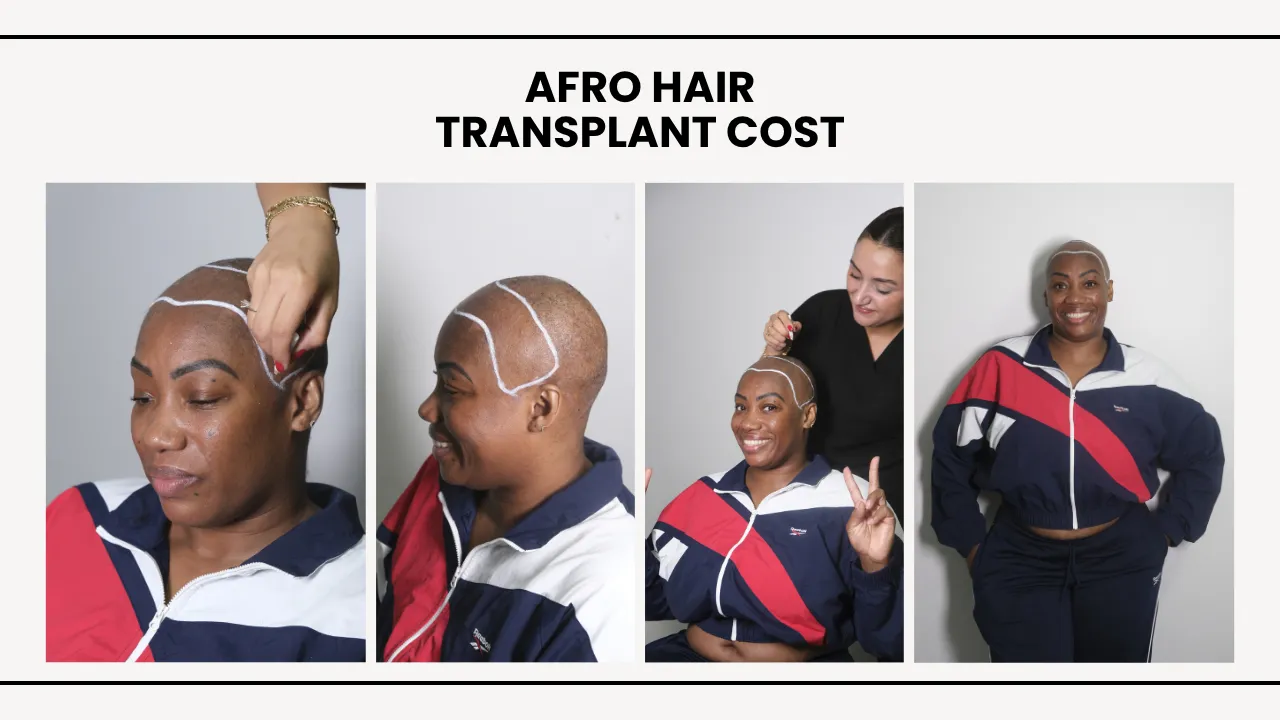
No, a hair transplant cannot recreate the exact density a patient may have had during adolescence. Patients seeking perfection rather than improvement are often disappointed regardless of technical success. Afro Hair Transplant for Women See How Afro Hair Transplant Costs Vary Based On Graft Count, Technique, And Treatment Goals. Hair restoration is often associated with male pattern hair loss, but many women with Afro-textured hair seek treatment for hairline changes, temple recession, traction alopecia, and forehead concerns. Female hair restoration requires a different planning philosophy. The goal is usually not dramatic transformation. Instead, the focus is restoring balance, rebuilding areas of loss, and maintaining a natural feminine appearance.
Female Hairline Restoration?
Yes, women with Afro-textured hair can have hairline restoration when the donor area and scalp condition are suitable. Female hairlines generally differ from male hairlines in both shape and density distribution. Most women benefit from softer transitions, rounded contours, and careful attention to facial proportions. Small refinements often produce surprisingly meaningful aesthetic improvements.
Temple Restoration?
Yes, temple restoration can be suitable for women with temple recession or thinning. Temple recession can significantly affect facial framing. Many women report that thinning temples make hairstyles more difficult to wear and create the impression of a wider forehead. Carefully planned temple restoration can help restore symmetry and balance.
High Forehead Correction?
Yes, some women seek treatment because of a naturally high forehead rather than progressive hair loss. Strategic hairline advancement can improve facial proportions while maintaining a natural appearance. The objective should never be creating the lowest possible hairline. The objective should be improving overall harmony.
Traction Alopecia?
Yes, traction alopecia can sometimes be treated with a hair transplant if the scalp is healthy and stable. Traction alopecia is one of the most common reasons Afro-textured hair patients seek restoration. The condition develops when prolonged tension gradually damages follicles. Common contributing factors include: Tight braids Cornrows Weaves Certain wig attachment methods Repetitive high-tension hairstyles Once follicular damage becomes permanent, transplantation may be considered if the scalp is healthy and stable.
Female Afro Hair Restoration Examples?
Concern Typical Objective Temple Recession Improve facial framing High Forehead Enhance proportions Hairline Thinning Restore definition Traction Alopecia Rebuild damaged areas FUE vs DHI for Afro Hair One of the most common questions patients ask is whether FUE or DHI is the better choice for Afro hair. The honest answer is that neither technique is universally superior. The quality of planning, graft handling, and execution typically has a greater influence on outcomes than the technique name itself.
Cost Comparison?
Yes, DHI procedures can sometimes carry higher costs because of differences in workflow and implantation methods. However, pricing varies considerably between clinics and should not be used as the sole basis for decision-making.
Recovery Comparison?
Yes, recovery timelines are often similar. Most patients can expect initial healing during the first week, temporary shedding during the first month, early growth beginning around month three, significant improvement by month six, and ongoing maturation through months twelve to eighteen.
Natural Results?
Yes, both FUE and DHI can produce natural results when planning and execution are strong. Naturalness is determined by planning and execution rather than by whether FUE or DHI was selected. Hairline design, density distribution, graft placement, and angle control all play major roles.
Which Option Is Better?
No, there is no single technique that is automatically better for every Afro hair patient. Some patients may be excellent candidates for FUE, while others may benefit from DHI-based approaches. The most appropriate method depends on hair characteristics, treatment goals, graft requirements, donor area considerations, and clinical experience.
FUE vs DHI for Afro Hair?
Factor FUE DHI Suitable for Afro Hair Yes Yes Natural Results Depends on execution Depends on execution Recovery Similar Similar Cost Often lower Sometimes higher Hairline Precision Excellent Excellent Does an Afro Hair Transplant Look Natural? Yes, an Afro hair transplant can look natural when the procedure is properly planned and performed by an experienced team. One of the biggest concerns patients have before surgery is whether the final result will actually look natural. This concern is understandable. Most people are not worried about whether they can grow more hair. They are worried about whether the transplanted hair will blend seamlessly with their existing appearance. The good news is that a properly planned Afro hair transplant can look extremely natural. The challenge is that naturalness depends on much more than simply moving follicles from one area to another. A successful result requires careful attention to hairline design, density distribution, implantation angles, curl direction, and long-term planning.
Hairline Irregularity Creates Naturalness?
Yes, hairline irregularity can help create a more natural-looking result. Natural hairlines are not perfectly straight. In fact, perfectly straight hairlines often appear artificial because very few people naturally possess them. Successful hairline design incorporates subtle irregularities that help recreate the appearance of naturally occurring hair growth.
Angle Control Matters?
Yes, angle control matters significantly in Afro hair restoration. Every transplanted graft has a direction. If grafts are implanted at unnatural angles, the result may appear unusual even if growth rates are excellent. This is especially important in Afro hair restoration because the natural curl pattern can amplify small placement errors.
Density Transitions Are Often Overlooked?
Yes, density transitions are often overlooked, even though they are essential for natural results. Many patients focus exclusively on the frontal edge of the hairline. However, natural hairlines contain gradual density transitions rather than abrupt changes. The way density increases behind the leading edge often determines whether a result appears natural or artificial.
Curl Direction Must Be Respected?
Yes, curl direction must be respected during planning and implantation. Afro-textured hair has unique growth characteristics. Ignoring curl direction can negatively affect styling flexibility and overall appearance. Common Afro Hair Transplant Mistakes Hair transplantation can produce outstanding results when planned properly. Unfortunately, mistakes made during the planning stage can be difficult to correct later. Many of the most common problems seen in repair cases originate long before surgery begins.
Hairlines Positioned Too Low?
No, a lower hairline is not always a better hairline. Many patients initially believe that lowering the hairline as much as possible will create a more youthful appearance. However, aggressive designs often consume excessive donor resources and may appear unnatural as the patient ages.
Perfectly Straight Hairlines?
No, perfectly straight hairlines usually do not look natural. Nature rarely creates perfect straight lines. When hairlines are designed with excessive symmetry, they often look artificial even when density is high.
Incorrect Implantation Angles?
Yes, incorrect implantation angles can negatively affect the final appearance. Natural hair follows specific growth patterns. When grafts are implanted at inappropriate angles, styling can become difficult and the final result may appear unnatural.
Overharvesting the Donor Area?
Yes, overharvesting can damage the appearance of the donor area and limit future options. The donor area represents a limited resource. Removing too many grafts from a concentrated area can create visible thinning and compromise future restoration options.
Ignoring Future Hair Loss?
Yes, ignoring future hair loss can create long-term planning problems. A hairline that looks appropriate today may become difficult to maintain if surrounding native hair continues to thin over time.
Common Mistakes and Their Consequences?
Mistake Potential Consequence Hairline Too Low Unnatural appearance over time Straight Hairline Artificial look Incorrect Angles Poor growth direction Overharvesting Visible donor thinning Poor Long-Term Planning Future imbalance Can Transplanted Afro Hair Lose Its Curl? No, transplanted Afro hair usually does not permanently lose its natural curl pattern after a hair transplant. This is one of the most common questions patients ask before surgery. The concern is understandable. Many patients worry that transplanted hair may grow differently or lose the characteristics that make Afro-textured hair unique. In most cases, transplanted follicles continue to produce hair with characteristics similar to those of the donor area because the follicle itself determines many aspects of hair growth.
Understanding Donor Dominance?
Yes, donor dominance helps explain why transplanted Afro hair usually keeps its natural characteristics. Hair follicles generally retain many of their original characteristics after relocation. This is why donor hair often continues to behave similarly after transplantation.
Why Hair Texture May Appear Different Initially?
Yes, hair texture may appear different during the early growth period. During the first several months after surgery, some patients notice temporary changes in texture. This can occur as follicles recover and re-enter the growth cycle. The appearance of the hair often continues to mature during the months that follow.
What Patients Can Realistically Expect?
Yes, patients can usually expect transplanted Afro hair to maintain its natural characteristics over time. While individual variation exists, transplanted Afro hair generally maintains its natural characteristics. Final maturation can take many months, and early growth phases do not always represent the final appearance. Afro Hair Transplant Before and After Results Real Afro Hair Transplant Transformation Showcasing Natural Hairline Design And Restored Density. Before-and-after photographs are often the first thing patients look for when researching hair restoration. While these images can provide useful insight, they should be interpreted carefully. A photograph captures a single moment. It does not reveal the planning process, graft count, donor characteristics, long-term strategy, or the timeline required to achieve the final result. For this reason, before-and-after photos should be viewed as part of a broader evaluation rather than the sole basis for choosing a clinic.
Hairline Restoration Cases?
Yes, hairline restoration is one of the most common goals in Afro hair transplantation. When evaluating results, patients should pay attention to hairline shape, density transitions, temple integration, facial harmony, and natural irregularity. The most successful hairlines often attract the least attention because they appear completely natural.
Female Hair Restoration Cases?
Yes, female results should be assessed differently from male results. The objective is often subtle refinement rather than dramatic transformation. Small improvements in temple density, forehead proportions, or hairline definition can produce substantial cosmetic benefits.
Temple Restoration Cases?
Yes, temple restoration can be an important part of Afro hairline planning. Temple design plays an important role in facial framing and can dramatically influence overall appearance.
Repair Cases?
Yes, previous Afro hair transplant cases can sometimes be repaired. Repair procedures often demonstrate the importance of proper planning. Many correction cases involve artificial hairlines, poor density distribution, incorrect implantation angles, or donor area damage. Afro Hair Growth Timeline One of the most important aspects of patient education is understanding that hair transplantation is a process rather than an instant transformation. Growth occurs gradually. Patients who understand the normal timeline are often more comfortable during recovery because they know what to expect.
Afro Hair Transplant Growth Timeline?
Timeline What Usually Happens Week 1 Healing and scab formation Month 1 Temporary shedding phase Month 3 Early visible growth Month 6 Significant improvement Month 12 Most results visible Month 18 Final maturation continues
Week 1?
Yes, the first week focuses primarily on healing. Patients may experience redness, minor swelling, and scab formation as the scalp recovers.
Month 1?
Yes, temporary shedding is common. This phase often causes unnecessary anxiety, but it is generally considered a normal part of the growth cycle.
Month 3?
Yes, early growth usually begins around month three. Although density remains limited at this stage, patients usually begin noticing visible progress.
Month 6?
Yes, many patients experience substantial improvement by the sixth month. Hairlines become more defined and overall coverage improves significantly.
Month 12 to Month 18?
Yes, most results become visible within the first year, with maturation continuing afterward. Maturation may continue beyond twelve months as texture, density perception, and overall appearance continue to improve. Planning for Future Hair Loss Successful hair restoration is not only about replacing lost hair. It is also about preparing for what may happen in the future. A hairline that looks attractive today should continue looking natural years later.
Donor Preservation?
Yes, donor preservation is essential in every Afro hair transplant plan. The donor area is a finite resource. Every graft used today is a graft that cannot be used again in the future. Responsible planning involves balancing current goals with potential future needs.
Family History?
Yes, family history can provide useful clues for long-term planning. While genetics cannot predict every outcome, they can help guide planning decisions.
Long-Term Planning?
Yes, long-term planning helps reduce the risk of unnatural outcomes later. Patients frequently focus on their current appearance. Experienced planners often focus on what the patient may look like ten or fifteen years from now.
Why Some Hairlines Age Better Than Others?
Yes, some hairlines age better because they are designed with restraint. Conservative, age-appropriate designs often continue looking natural even as surrounding hair changes over time. The best hairline is not necessarily the lowest hairline. The best hairline is the one that continues to look appropriate as the patient ages. Questions to Ask Before Choosing a Clinic Patients often spend a great deal of time comparing prices. A more valuable exercise is comparing answers. The questions below can provide important insight into a clinic’s experience and planning philosophy. Afro Hair Transplants Require Specialized Techniques To Preserve Natural Curl Patterns And Achieve Natural-Looking Results.
How Many Afro Hair Cases Have You Performed?
Yes, this is one of the most important questions to ask before choosing a clinic. Experience with Afro-textured hair matters. Patients should feel comfortable asking about previous case experience.
Who Designs the Hairline?
Yes, patients should know who is responsible for designing the hairline. Hairline planning plays a major role in long-term satisfaction. Understanding who is responsible for design decisions can be extremely valuable.
Can I See Similar Cases?
Yes, patients should ask to see similar before-and-after cases. Before-and-after examples involving similar hair characteristics can provide useful context.
How Is the Donor Area Managed?
Yes, donor management should always be part of the consultation. Patients should understand how graft extraction is planned and distributed. Expert Insights From Nazmi G. Over the years, one pattern has appeared repeatedly. Patients often spend months researching techniques, devices, and graft counts while paying surprisingly little attention to planning. Yet planning is where many successful outcomes begin. The most satisfied patients are rarely those who received the highest graft counts. They are usually the patients whose expectations align with a realistic and sustainable treatment plan. Another common misconception is that hair transplantation is simply about creating density. In reality, successful restoration often depends on balance. Hairline position, temple design, density transitions, donor preservation, and future hair loss all influence the final outcome. Perhaps the most important lesson is that natural results rarely come from aggressive decisions. The strongest outcomes are often achieved through thoughtful planning, realistic expectations, and respect for long-term facial harmony. Final Thoughts Afro hair transplantation involves far more than relocating follicles from one area of the scalp to another. Cost, graft count, donor characteristics, hairline design, curl pattern, and long-term planning all contribute to the final result. Patients who focus exclusively on price often overlook the factors that ultimately determine satisfaction. A successful transplant should not simply provide more hair. It should create a natural appearance, preserve donor resources, and continue looking appropriate for years to come. When evaluating options, patients should look beyond marketing claims and focus on experience, planning philosophy, and long-term strategy. Those factors often have a greater impact on outcomes than any specific technique or pricing model.
What Should I Ask Before Choosing a Clinic?
Patients should ask about Afro hair experience, hairline planning, donor management, before-and-after examples, and long-term treatment philosophy. About the Author Nazmi G. is a Trichologist & Hair Restoration Consultant with extensive experience in international hair restoration planning and patient education. His work focuses on hairline design, patient assessment, Afro hair restoration planning, donor area management, and long-term treatment strategy. Through years of involvement in hair restoration projects across multiple countries, he has worked closely with patients seeking natural, sustainable solutions for hair loss while emphasizing realistic expectations and evidence-based decision making. Medical Review This article has been medically reviewed by Dr. Tompi, M.D. The review process focuses on clinical accuracy, patient safety, current hair restoration principles, and evidence-based information. Medical review helps ensure that educational content remains aligned with contemporary standards while supporting informed patient decision making. Editorial Policy This article was written by Nazmi G. and medically reviewed by Dr. Tompi, M.D. Content is developed using peer-reviewed literature, established hair restoration principles, and patient education best practices. Articles are periodically reviewed and updated to reflect current knowledge, evolving techniques, and new scientific evidence References — Afro Hair Transplant Cost & Outcomes Wikipedia – Hair Transplantation . Comprehensive overview of techniques, donor dominance, and procedural history. Bernstein RM, Rassman WR. Hair Transplantation , 5th Edition. McGraw-Hill Medical, 2019. Standard reference detailing FUE, FUT, and economic variables across markets. Ogunleye T, Etokidem NI, Nwachukwu I. “FUE in Afro-Textured Hair: Clinical Modifications and Cost-Effectiveness.” Journal of Dermatologic Surgery , Vol. 47, No. 6, 2021, pp. 832–839. Demonstrates surgical adaptations and pricing differentials for Afro hair types. Yamada K., “Curl Orientation and Follicular Survival: Implications for Hair Transplantation in Curly Hair.” International Journal of Trichology , 2020. Analyzes graft integrity and survival rate in high-curl patterns affecting procedural pricing. PubMed Database – Hair Follicle and Graft Survival Studies. Contains peer-reviewed data on graft viability, ischemia time, and cost impact of surgical duration. ScienceDirect – Hair Follicle Biology and Regeneration . Explains the biological constraints influencing surgical technique choice and cost per graft. JAMA Dermatology Editorial Board. “Advances in Hair Restoration 2024: Global Cost and Accessibility Trends.” JAMA Dermatology , 2024;160(3):e2421. Reviews cost disparities between the U.S., Turkey, and Middle East centers. Healthline – Hair Transplant Cost Breakdown. Consumer-oriented resource outlining average cost per graft and global range analysis. Medical News Today – Hair Transplant Cost Analysis (2025 Edition). Summarizes average regional pricing and factors affecting Afro hair transplant costs. JAMA Dermatology – Hair Restoration Research Portal . Academic index for surgical innovation, cost, and patient outcome benchmarking. Written By Nazmi G. Trichologist & Hair Restoration Consultant Medically Reviewed By Dr. Tompi, M.D. Ready to restore your natural hairline Book An Appointment