Hair Cloning & Stem Cell Research: Future Possibilities for Hair Restoration in 2026
Homepage

Blog
Hair Cloning & Stem Cell Research: Future Possibilities for Hair Restoration in 2026

Medical Reviewed By Dr. Tompi, M.D – Plastic & Aesthetic Surgeon
Written By Nazmi G, Trichologist

Approximately 85% of men experience significant hair thinning by age 50, with women also facing substantial hair loss challenges that can profoundly impact self-esteem. While current hair transplant techniques like Follicular Unit Excision (FUE) and Direct Hair Implantation (DHI) offer excellent, lasting results by relocating existing donor follicles, their effectiveness is inherently limited by the finite supply of these healthy grafts from the patient's own scalp.
This fundamental limitation drives intensive scientific exploration into regenerative medicine, specifically hair cloning and stem cell therapies. These cutting-edge approaches promise to revolutionise hair restoration by creating a potentially unlimited supply of new hair, moving beyond the constraints of traditional methods and offering hope for individuals with extensive hair loss.
The Foundations: Current Hair Transplant Techniques and Their Limits
Modern hair transplantation, primarily through FUE and DHI methods, has achieved remarkable success in restoring natural-looking hair. These procedures involve carefully extracting individual hair follicles from a dense 'donor area' – typically the back or sides of the head – and implanting them into 'recipient areas' experiencing thinning or baldness. The precision of tools like sapphire blades in FUE and Choi pens in DHI ensures minimal scarring and optimal graft survival, often exceeding 90%.
However, the efficacy of these established techniques is directly tied to the availability of a robust donor supply. Patients with advanced baldness patterns or diffuse thinning may not possess enough healthy follicles to achieve their desired density, especially if they require a high number of grafts, such as 4000 or 5000 grafts. Once the donor area is depleted, further transplants are not feasible, highlighting the critical need for solutions that can generate new hair follicles rather than simply redistributing existing ones.
Hair Cloning: Multiplying What You Already Have
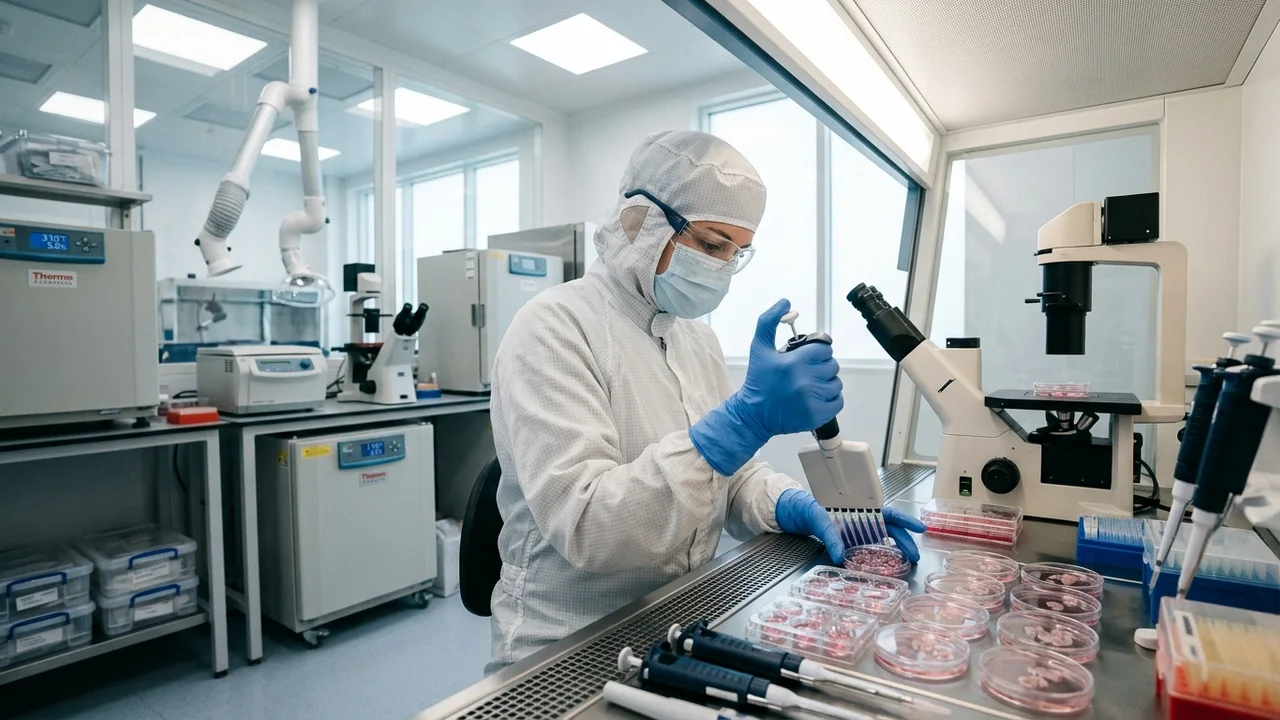
Hair cloning, often referred to as hair multiplication, is a regenerative approach that aims to overcome the donor hair limitation entirely. The core concept involves taking a small number of hair follicle cells from a patient's healthy donor area, typically the dermal papilla cells, which are crucial for hair growth. These cells are then cultured and multiplied exponentially in a laboratory setting.
Once a sufficient quantity of these multiplied cells has been grown, they are either injected directly into the recipient areas of the scalp or used to create entirely new hair follicles that can be implanted. The goal is for these laboratory-grown cells to induce the formation of new, fully functional hair follicles that produce hair genetically identical to the patient's original hair. This technique holds the promise of an essentially infinite supply of new hair for restoration, regardless of the initial donor area's density.
Stem Cell Therapy: Harnessing the Body's Regenerative Power
Stem cell therapy for hair restoration leverages the body's inherent capacity for self-repair and regeneration. Stem cells are unique because they have the ability to differentiate into various cell types and to self-renew. In the context of hair loss, researchers are primarily focused on two types:
- Adipose-Derived Stem Cells (ADSCs): These are stem cells harvested from a patient's own fat tissue through a minimally invasive liposuction procedure.
- Mesenchymal Stem Cells (MSCs): These can be derived from various tissues, including bone marrow or umbilical cord blood.
The application of stem cells for hair growth typically involves extracting these cells, processing them to concentrate their regenerative properties, and then injecting them into the scalp. The theory is that these stem cells can stimulate dormant hair follicles, promote the growth of existing thin hairs, or even differentiate into new hair follicle cells, thereby regenerating hair. Unlike cloning, which focuses on multiplication, stem cell therapy often aims to revitalise the scalp's natural hair-producing environment.
Pioneering Research and Promising Clinical Trials
The field of regenerative hair medicine is a dynamic area of scientific inquiry, with numerous institutions globally conducting rigorous research and initiating clinical trials. Early-stage Phase I and Phase II clinical trials are crucial for evaluating the safety and preliminary efficacy of these novel treatments. Researchers are meticulously studying various aspects, including the optimal cell types, the best methods for cell culture and expansion, and the most effective delivery techniques to the scalp.
Significant progress has been made in understanding the complex molecular signals that govern hair follicle development and regeneration. For instance, studies are exploring specific growth factors and biomaterials that can enhance the survival and activity of transplanted or injected cells. While no hair cloning or stem cell therapy is widely available for commercial use in 2026, the ongoing research in these controlled clinical environments is steadily advancing our understanding and moving these therapies closer to reality.
Navigating the Hurdles: Challenges for Widespread Adoption
Despite the immense promise, several significant challenges must be addressed before hair cloning and stem cell therapies become mainstream. One primary hurdle is achieving consistent and predictable hair growth patterns, including the correct angle, direction, and texture of the newly grown hair, to ensure a natural aesthetic outcome. Ensuring the long-term viability and stability of the regenerated follicles is also paramount.
Safety considerations are another critical factor. Researchers must rule out any potential risks such as uncontrolled cell growth or immunogenicity (the body's immune response to the injected cells). Furthermore, the regulatory approval process for these advanced biological therapies is complex and stringent, requiring extensive data on safety and efficacy. Lastly, the cost-effectiveness and scalability of producing these cellular therapies for a broad patient population remain significant considerations.

The Vision: A Future Without Donor Limitations
The successful development of hair cloning and stem cell therapies would mark a monumental shift in hair restoration. For individuals currently deemed unsuitable for traditional hair transplants due to insufficient donor hair, these regenerative treatments could offer a genuine solution. Imagine a future where extensive baldness, even severe cases of androgenetic alopecia, can be fully addressed without the constraints of donor area limitations.
Such advancements could also provide more comprehensive treatment for diffuse thinning across the entire scalp, rather than just targeted areas. The potential to create an unlimited supply of healthy, genetically identical hair follicles could fundamentally change the landscape of hair restoration, making full, dense hair a possibility for virtually anyone experiencing hair loss, regardless of their current condition.
The Timeline: When Can We Expect These Breakthroughs?
While the pace of scientific discovery is rapid, bringing complex biological therapies from the laboratory to widespread clinical availability is a lengthy process. As of 2026, hair cloning and stem cell treatments are still firmly within the realm of research and development, undergoing rigorous testing in controlled clinical trials.
It is important to manage expectations; these therapies are not expected to be commercially available in Turkey or elsewhere in the next few years. Most experts in the field anticipate that it will likely take another 5 to 15 years, or possibly even longer, before these advanced regenerative treatments are fully approved, refined, and made widely accessible to the public. However, the continuous progress in research provides a strong basis for optimism about the future of hair restoration.
| Feature | Current Hair Transplants (FUE/DHI) | Future Regenerative Therapies (Cloning/Stem Cells) |
|---|---|---|
| Donor Hair | Limited supply from existing healthy areas | Potentially unlimited through cell multiplication |
| Mechanism | Relocation of existing hair follicles | Regeneration of new hair follicles |
| Availability | Widely available and clinically proven | Currently in research and clinical trial phases |
| Scalp Trauma | Minimal, localised surgical procedure | Potentially less invasive, injection-based |
| Cost (Current) | Varies by graft count and clinic | Expected to be high initially, then decrease |
Medical disclaimer: This article is for informational purposes only and is not medical advice. Individual results vary from person to person. Always consult a qualified doctor before any hair transplant procedure.
Get a Free Hair Analysis from Our Experts
Use our free online help tool to communicate your hair loss concerns – it only takes a few minutes. We’ll provide you with a personalized, non-binding quote.
Let’s Call You!

Popular Blogs
Hair Transplant Recovery Timeline: Day-by-Day, Week-by-Week and Month-by-Month Guide
Hair Transplant Recovery Timeline: Day-by-Day, Week-by-Week and Month-by-Month Guide Free Hair Analysis Homepage Blog Wayne…
Justin Bieber Hair Transplant: Hairline Analysis, Before & After Photos, Rumors & Expert Opinion
Justin Bieber Hair Transplant: Hairline Analysis, Before & After Photos, Rumors & Expert Opinion Free…
Wayne Rooney Hair Transplant: Before & After
Wayne Rooney Hair Transplant: Before & After Free Hair Analysis Homepage Blog Wayne Rooney Hair…

Conor McGregor Hair Transplant: Before & After
Conor McGregor Hair Transplant: Before & After Free Hair Analysis Homepage Blog Conor McGregor Hair…
Turkey Visa Requirements for Hair Transplant in Turkey
Turkey Visa Requirements for Hair Transplant in Turkey Free Hair Analysis Homepage Blog Turkey Visa…
David Silva Hair Transplant: Before & After
David Silva Hair Transplant: Before & After Free Hair Analysis Homepage Blog Discover David Silva…
Ready To
Book Your Appointment?
Reach out to us or complete our simple online form
and we’ll contact you to schedule a time that works perfectly for you.



Frequently Asked Questions