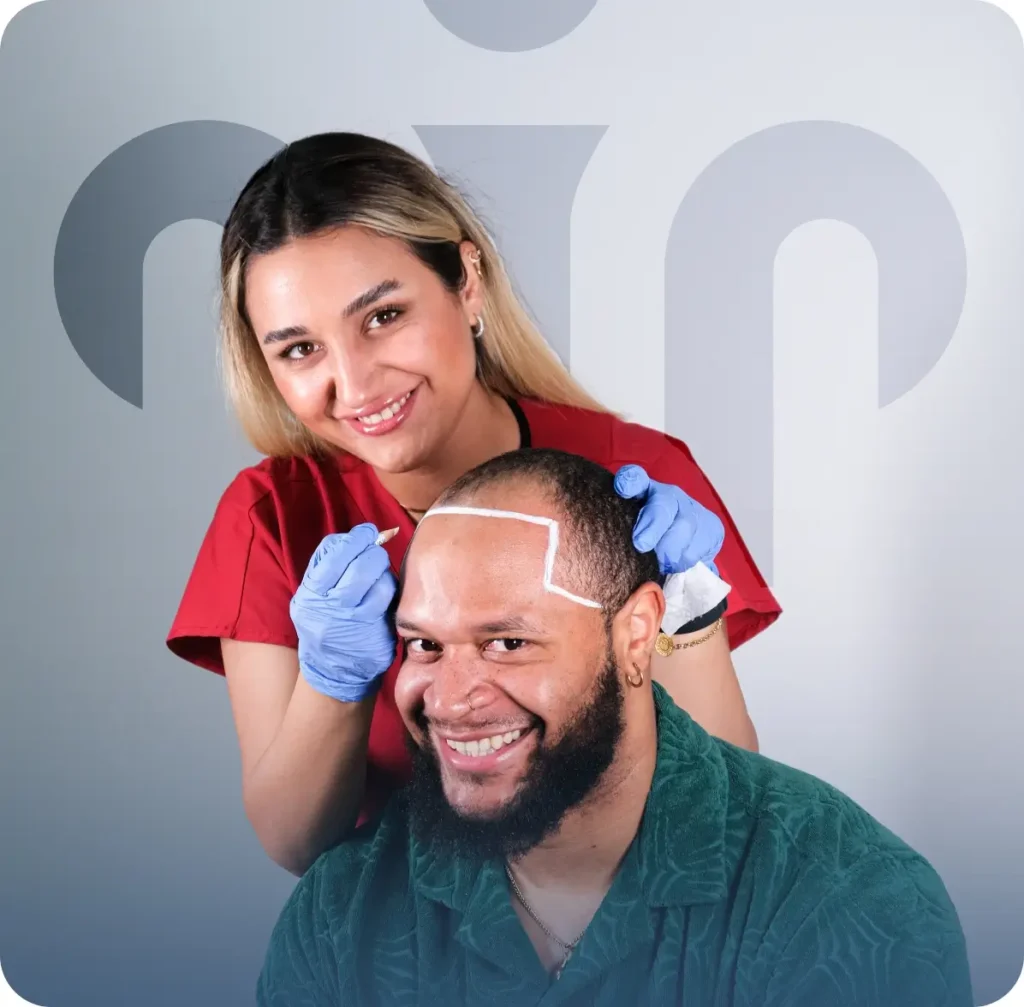
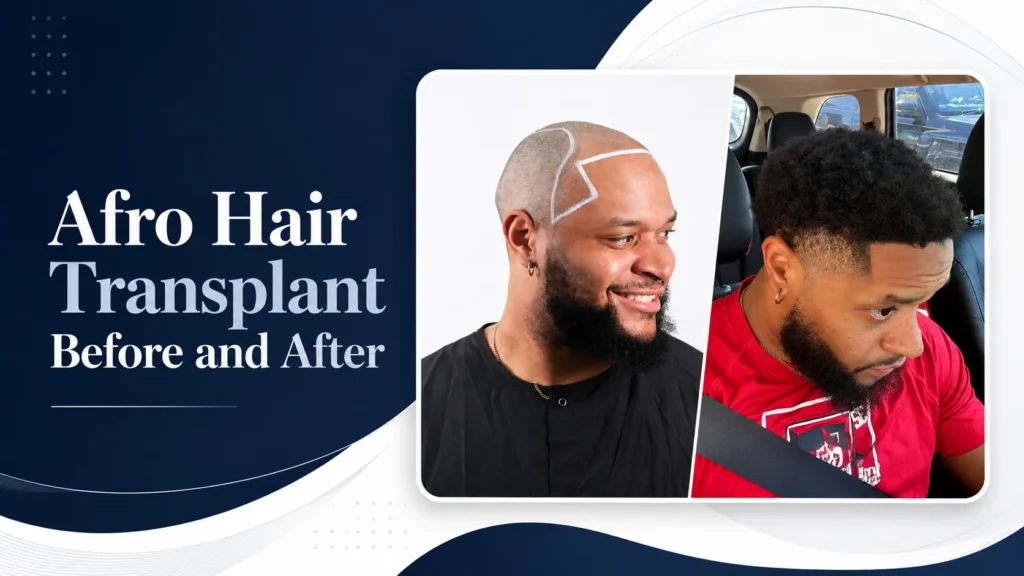
Afro Hair Transplant Before and After: 17 Real 12-Month Results & Expert Analysis
Homapage

Blog
Afro Hair Transplant Before and After
This article has been medically reviewed to support accuracy in patient education, hair restoration planning, recovery expectations and treatment considerations. It does not replace a personal medical consultation.
Nazmi Güldeş is a Hair Restoration Consultant working with specialized surgical teams experienced in treating Afro-textured hair patients from different regions, including the United States, Nigeria, South Africa, Ghana, the United Kingdom and the Caribbean. His work focuses on donor area planning, graft estimation, hairline design and long-term outcome analysis.
Afro Hair Transplant Before and After at a Glance
Afro hair transplant results should be evaluated with more than just graft numbers. A strong result depends on how naturally the hairline fits the face, how well the grafts survive, how carefully the donor area is preserved and how easily the final hair can be styled.
Key Takeaways
- Afro hair follicles often curve beneath the scalp, making extraction more complex.
- Specialized tools and low-speed extraction are often needed to reduce graft damage.
- Donor area protection is critical because donor hair is limited.
- Afro-textured hair can create strong visual density because curls occupy more space.
- Natural hairline design should include soft irregularities, not a harsh straight line.
- Final results are usually evaluated around 12 months, although maturation can continue longer.
- Female Afro hair transplant patients often seek treatment for traction alopecia and edge loss.
Quick Facts
| Topic | Information |
|---|---|
| Procedure Type | Specialized Afro Hair Transplant |
| Common Techniques | FUE, Sapphire FUE, DHI |
| Main Focus Areas | Hairline, temples, frontal zone, crown |
| Common Female Concern | Traction alopecia and edge recession |
| Final Evaluation | Around 12 months |
| Key Challenge | Curved follicle extraction |
| Main Success Factor | Healthy graft survival and natural design |
What Is an Afro Hair Transplant?
An Afro hair transplant is a hair restoration procedure adapted for Afro-textured, curly or tightly coiled hair. It involves moving healthy follicles from the donor area, usually the back and sides of the scalp, into areas affected by hair loss.
The main difference is not only the curl visible above the skin. The real surgical challenge lies beneath the scalp. Afro follicles often follow a curved or spiral-shaped path under the skin. This means the visible hair direction does not always show the true path of the follicle root.
If a clinic uses the same extraction approach used for straight hair, the curved follicle may be damaged during removal. This is called follicle transection. A damaged graft may fail to grow or produce weak hair. For this reason, Afro hair transplant requires experience, careful planning and adapted surgical tools.
How Afro Hair Transplant Differs From Straight Hair Procedures
Patients often assume Afro hair transplant is just a normal hair transplant performed on curly hair. That is not accurate. The procedure must be adapted at almost every stage.
Afro hair differs in several important ways:
- The follicle may curve beneath the scalp.
- The curl pattern creates more visual volume.
- Hair shaft thickness can vary greatly between patients.
- Donor area density may look high visually but still be limited biologically.
- Implantation angles must match the natural growth pattern.
- Poorly planned hairlines can look too sharp, too straight or artificial.
One of the biggest advantages of Afro-textured hair is visual coverage. Because the curls expand outward, fewer grafts may create a fuller appearance compared with straight hair. However, this does not mean the donor area is unlimited. A responsible clinic should still protect the donor area carefully.
Why Afro Hair Is More Challenging to Transplant
The technical difficulty of Afro hair transplant is often underestimated. The main challenge is the curved structure of the follicle under the skin.
Curved Follicle Anatomy
Straight hair follicles usually follow a more predictable path beneath the scalp. Afro follicles often curve before reaching the root bulb. If the punch tool follows only the visible hair shaft, it can cut through the follicle instead of safely removing it.
This is why the surgical team must understand the hidden direction of the follicle. Successful extraction requires patience, tactile control and correct punch selection.
Why Follicle Transection Can Occur
Follicle transection means the graft is accidentally cut or damaged during extraction. In Afro hair, this can happen because of:
- Incorrect punch size
- High-speed extraction
- Poor understanding of curl direction
- Aggressive pulling
- Inadequate donor analysis
- Using standard tools for highly curved follicles
Lower transection rates usually lead to better growth. A successful Afro hair transplant should never be treated as a race to remove as many grafts as possible. The goal is to remove healthy grafts that can survive.
Why Specialized Experience Matters
Afro hair is not a single hair type. A patient from Nigeria, Ghana, South Africa, the Caribbean, the United States or the United Kingdom may have very different curl patterns, donor density, scalp characteristics and styling goals.
Some patients need frontal hairline restoration. Others need temple rebuilding, crown coverage or traction alopecia treatment. The best plan is always personalized.
Real Afro Hair Transplant Before and After Results
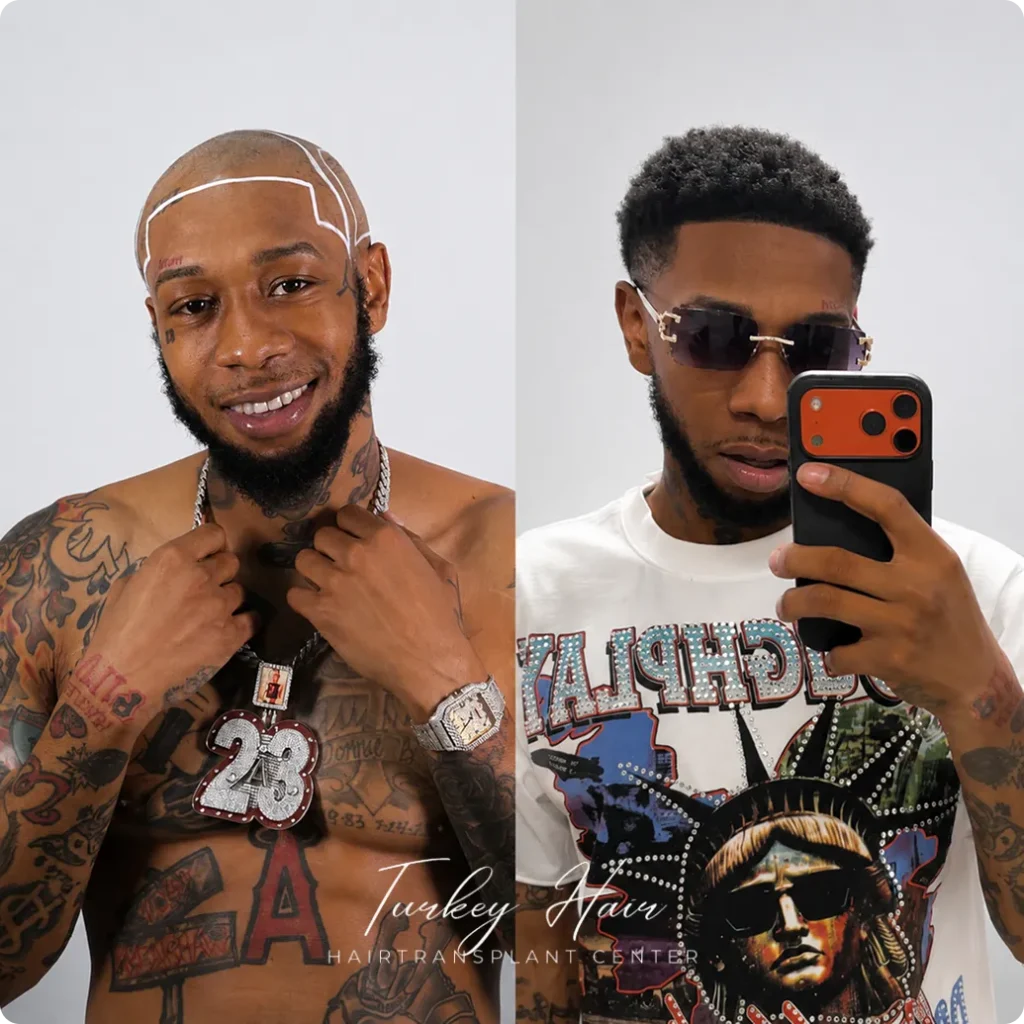
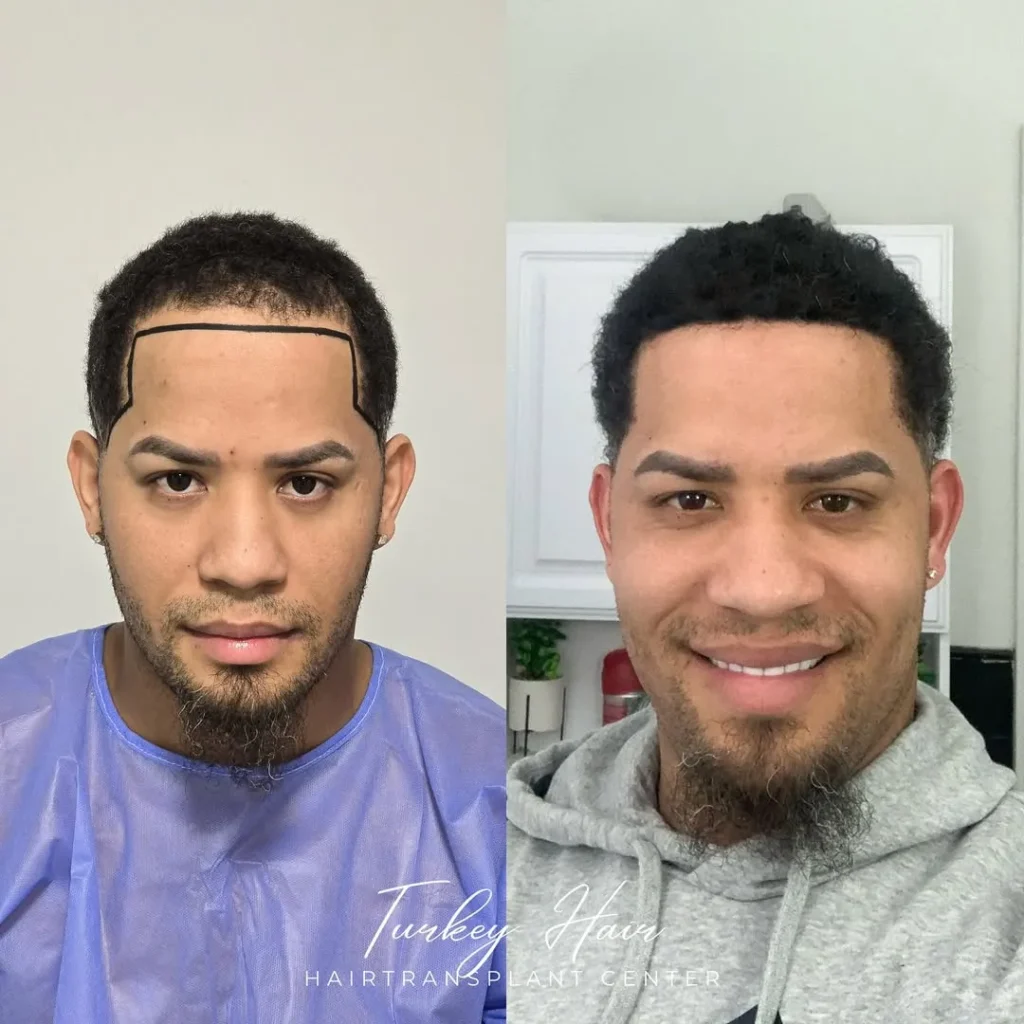
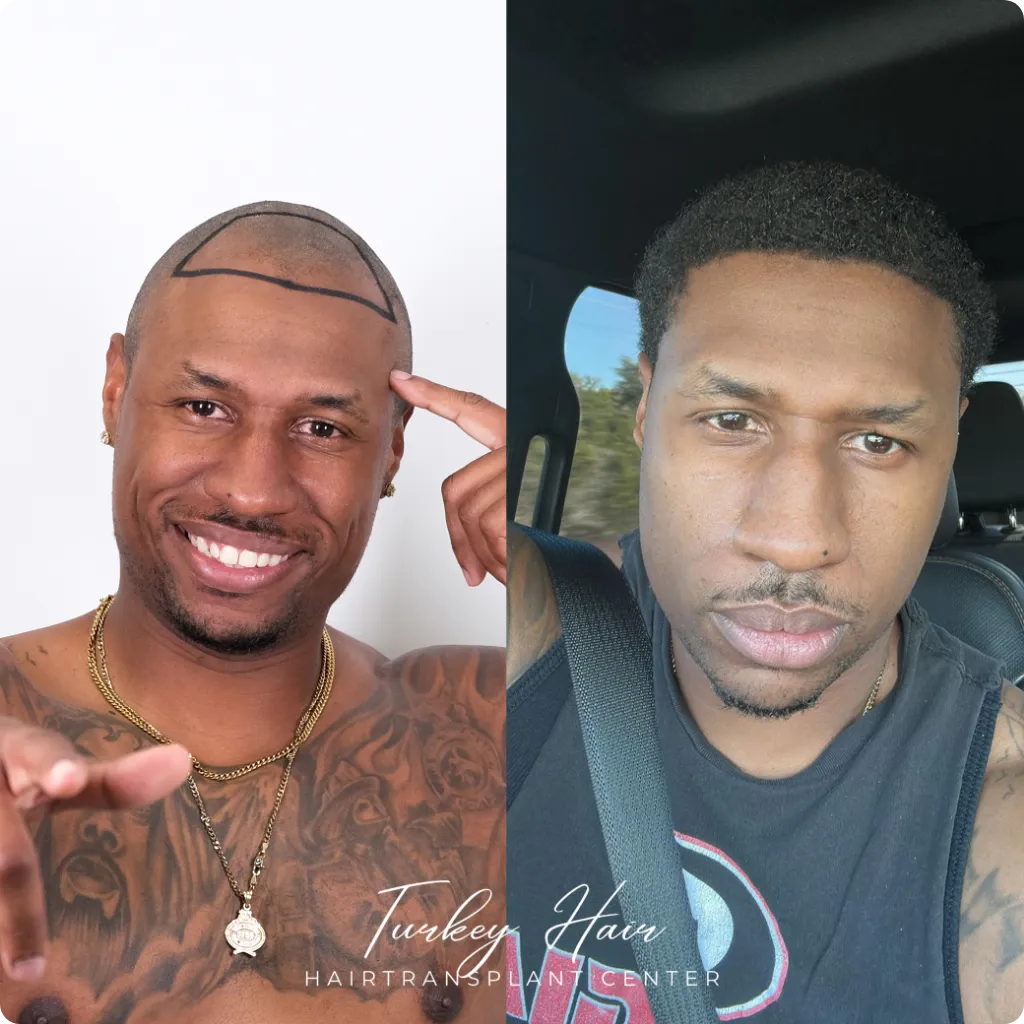
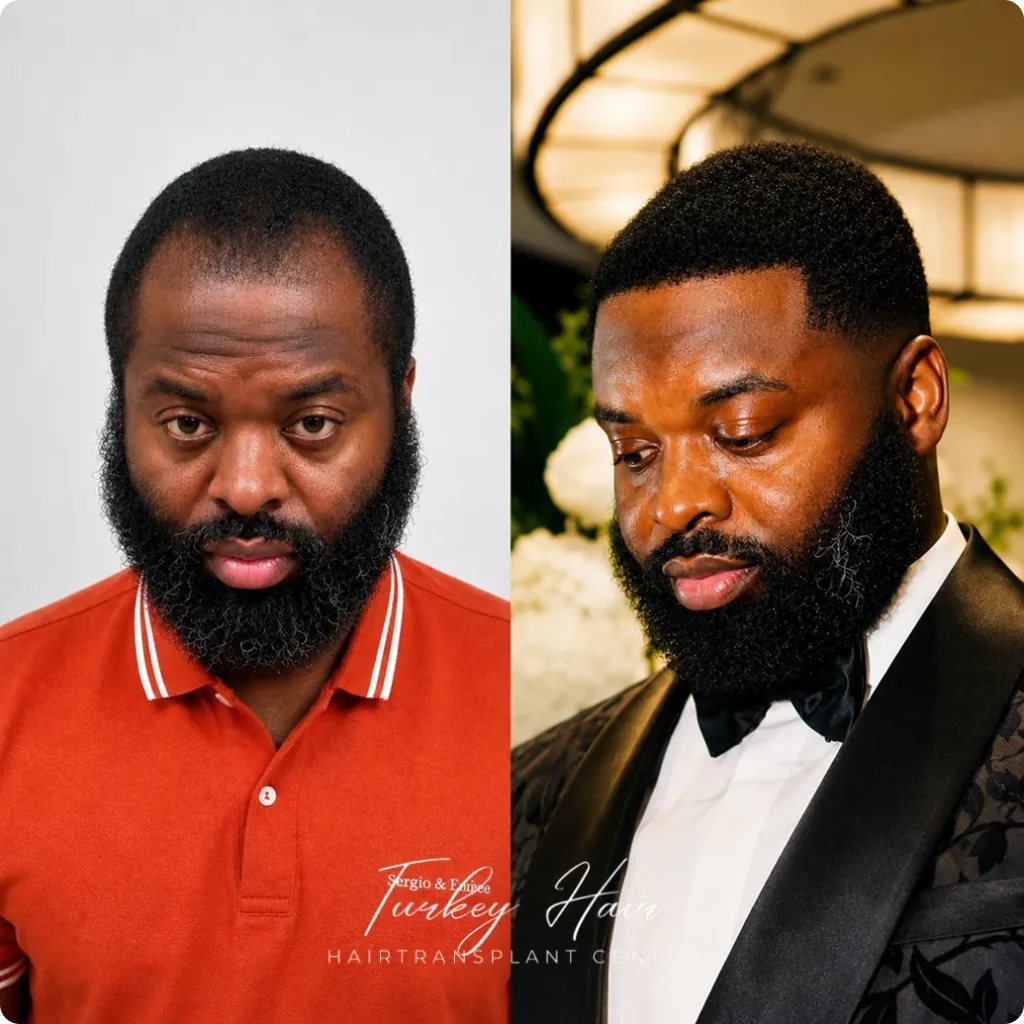
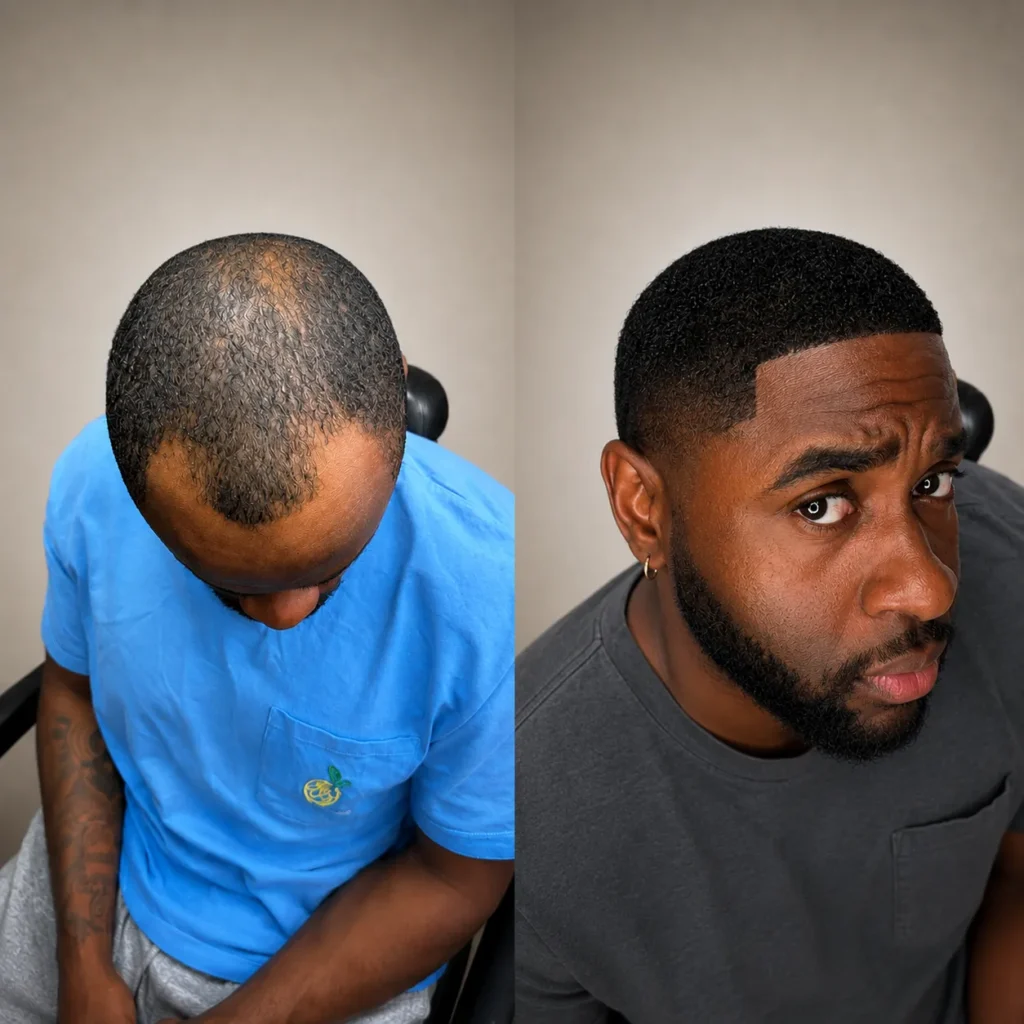
Before-and-after photos are one of the clearest ways to evaluate Afro hair transplant quality. A good result should show natural coverage, a believable hairline, healthy donor management and harmony with the patient’s facial structure.
Below are common result types seen in Afro hair restoration.
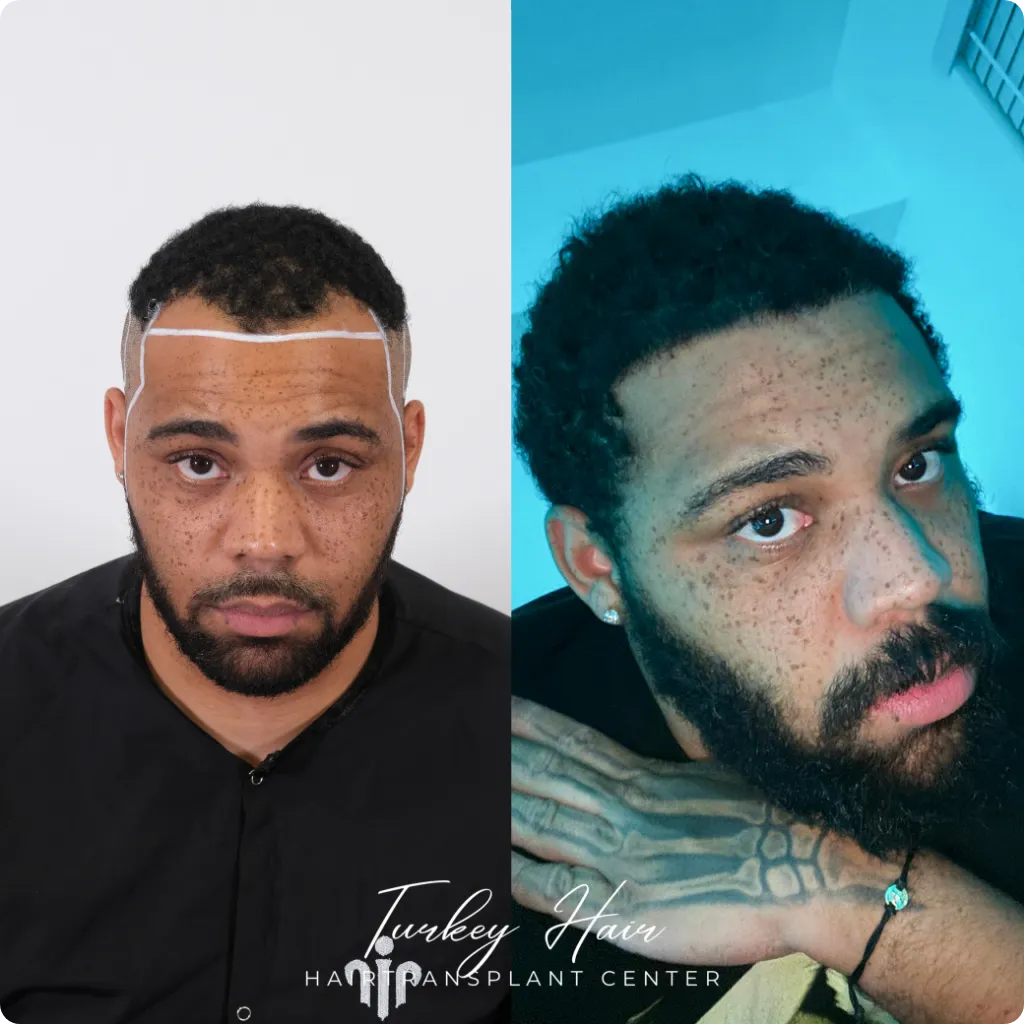
Case 1: Afro Hairline Restoration
Focus Area: Frontal hairline
Result Evaluation: 12 months
Hair Type: Tightly coiled Afro-textured hair
This type of case usually involves rebuilding a receded frontal hairline while keeping the result natural and age-appropriate. The goal is not to create an overly low or artificial line. A successful result should restore facial framing while still looking believable.
Case 2: Frontal Zone Density Improvement
Focus Area: Frontal third
Result Evaluation: 12 months
Hair Type: Afro-textured hair
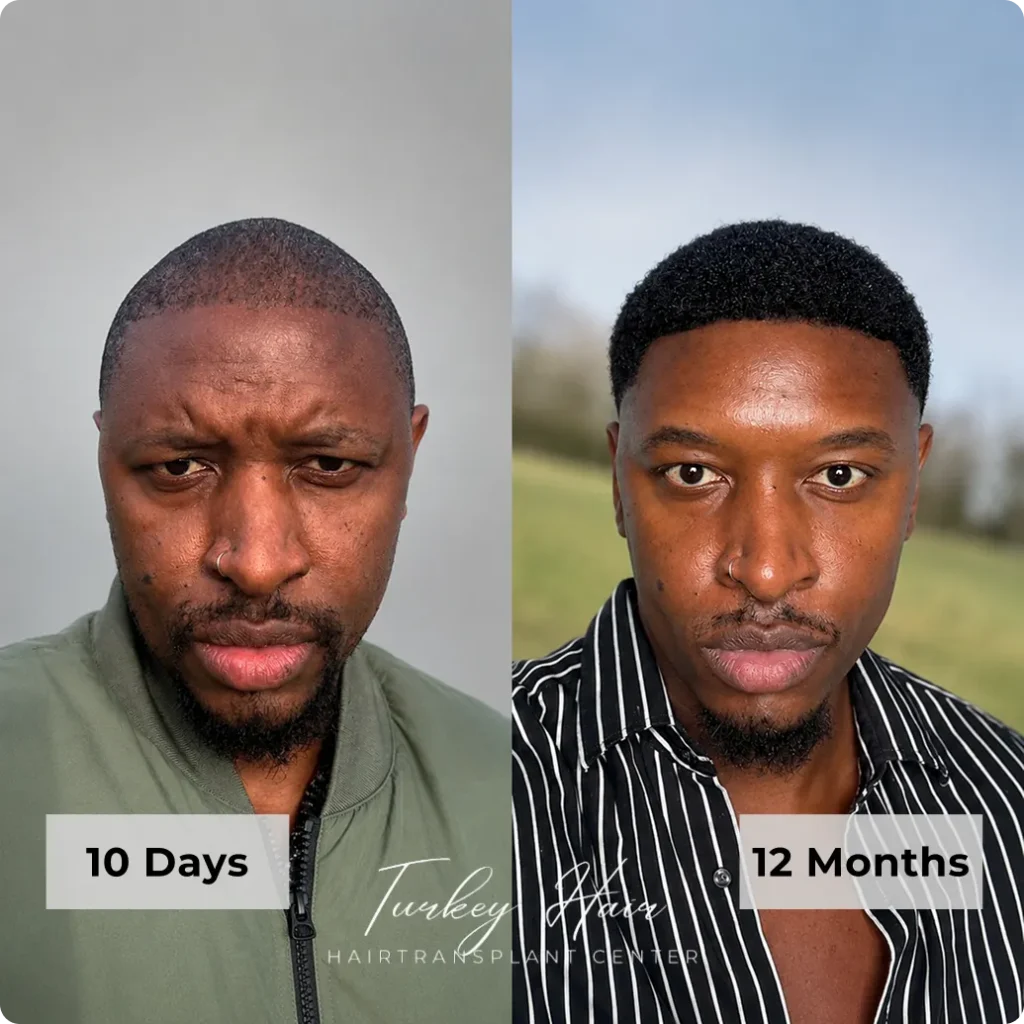
Some patients do not only lose the hairline. They also lose density behind the front row. In these cases, the plan should reinforce the frontal zone while protecting the donor area. Strategic placement often creates a stronger visual improvement than simply increasing graft numbers.
Case 3: Advanced Afro Hair Loss
Focus Area: Hairline and frontal zone
Result Evaluation: 12 months
Hair Type: Advanced Afro hair loss pattern
Advanced cases require careful donor management. The treatment area may be large, but the donor area is limited. A good plan prioritizes the most visible areas first, usually the frontal frame, then spreads remaining grafts conservatively.
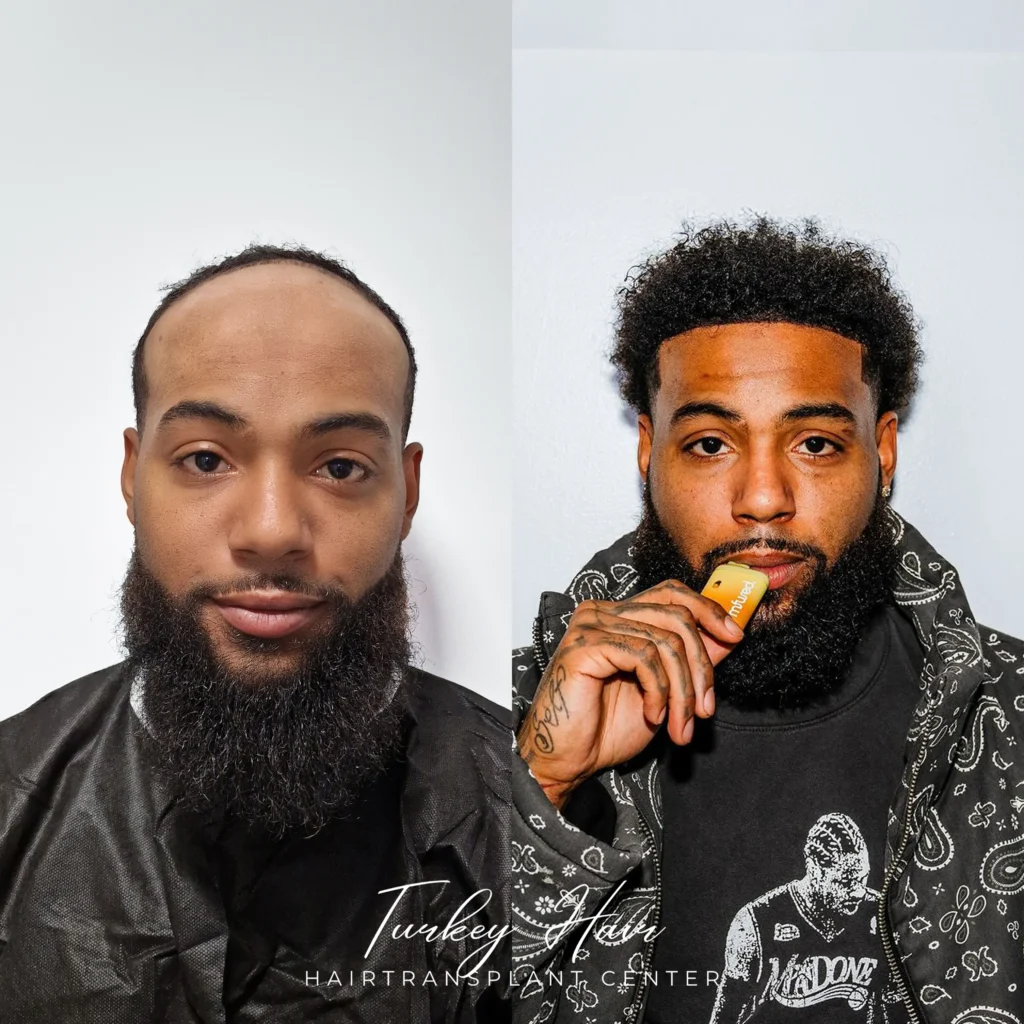
Case 4: Temple and Hairline Restoration
Focus Area: Temples and frontal hairline
Result Evaluation: 12 months
Hair Type: Afro-textured hair
Temple restoration is extremely important in Afro hair transplant. If the center of the hairline is restored but the temples remain receded, the face may still look unbalanced. A natural result should connect the frontal hairline and temple points smoothly.
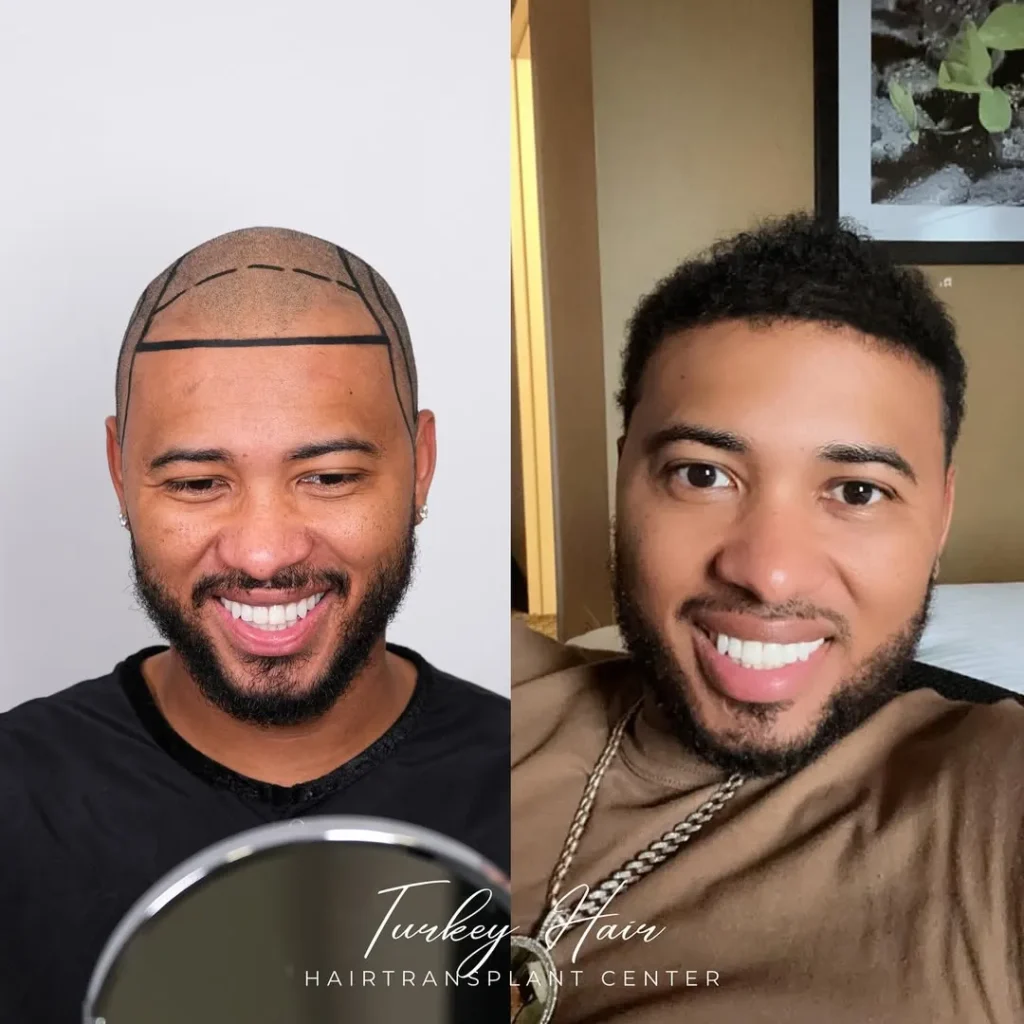
Case 5: Natural Afro Hairline Design
Focus Area: Micro-irregular hairline
Result Evaluation: 12 months
Hair Type: Coiled Afro hair
The best hairlines are not perfectly straight. Natural hairlines include small irregularities, soft transitions and single-hair grafts in the front row. This helps the result avoid a harsh or drawn-on appearance.
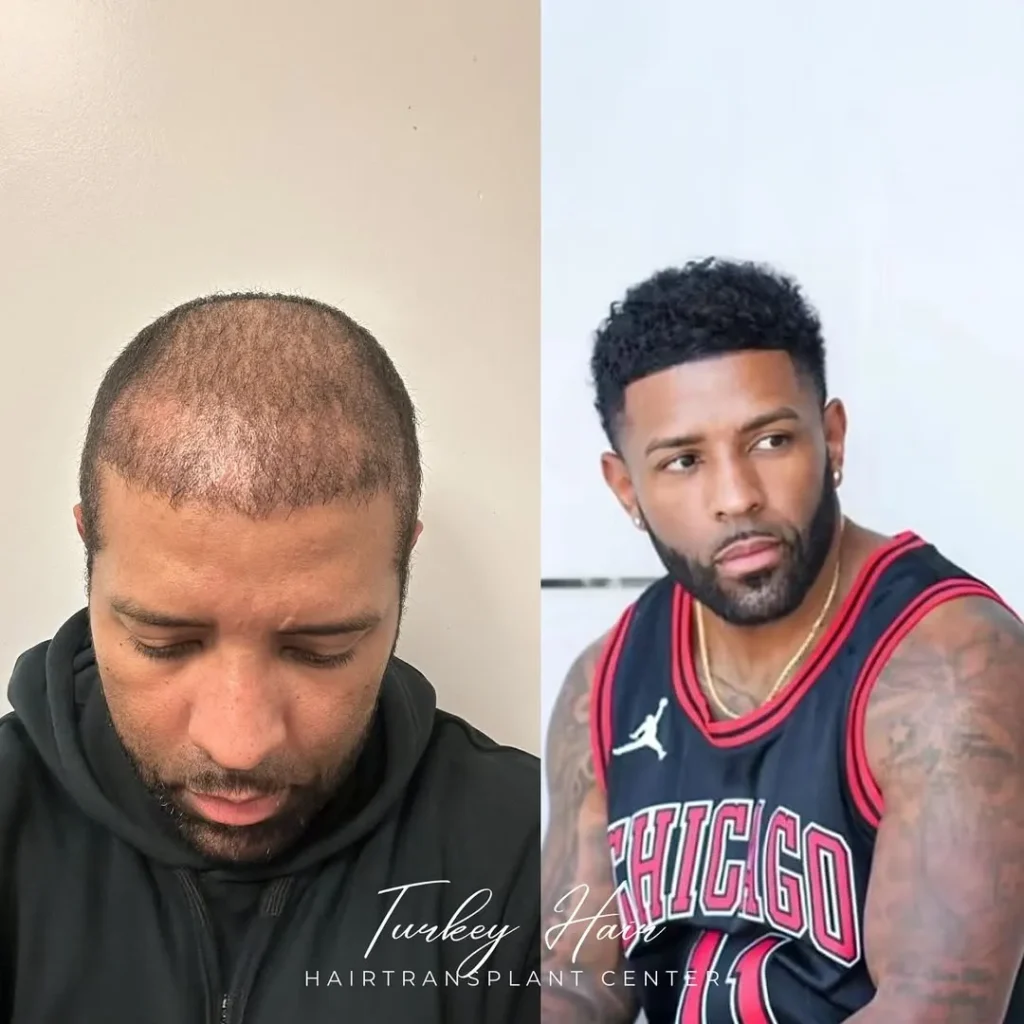
Case 6: Crown and Frontal Afro Restoration
Focus Area: Crown and frontal zone
Result Evaluation: 12 months
Hair Type: Coiled Afro hair
When both the crown and frontal area need treatment, graft distribution becomes especially important. The front usually gives the biggest cosmetic impact, while the crown often requires more patience because it can grow more slowly.
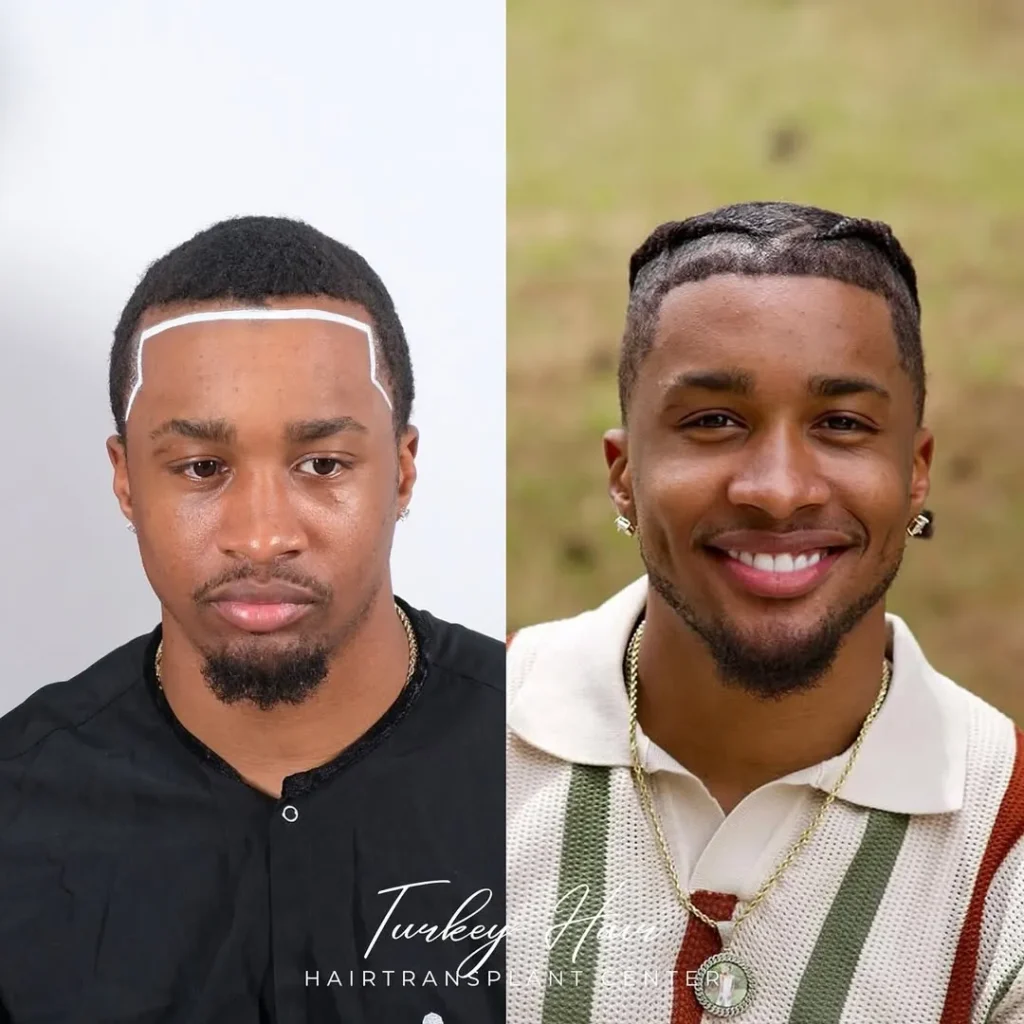
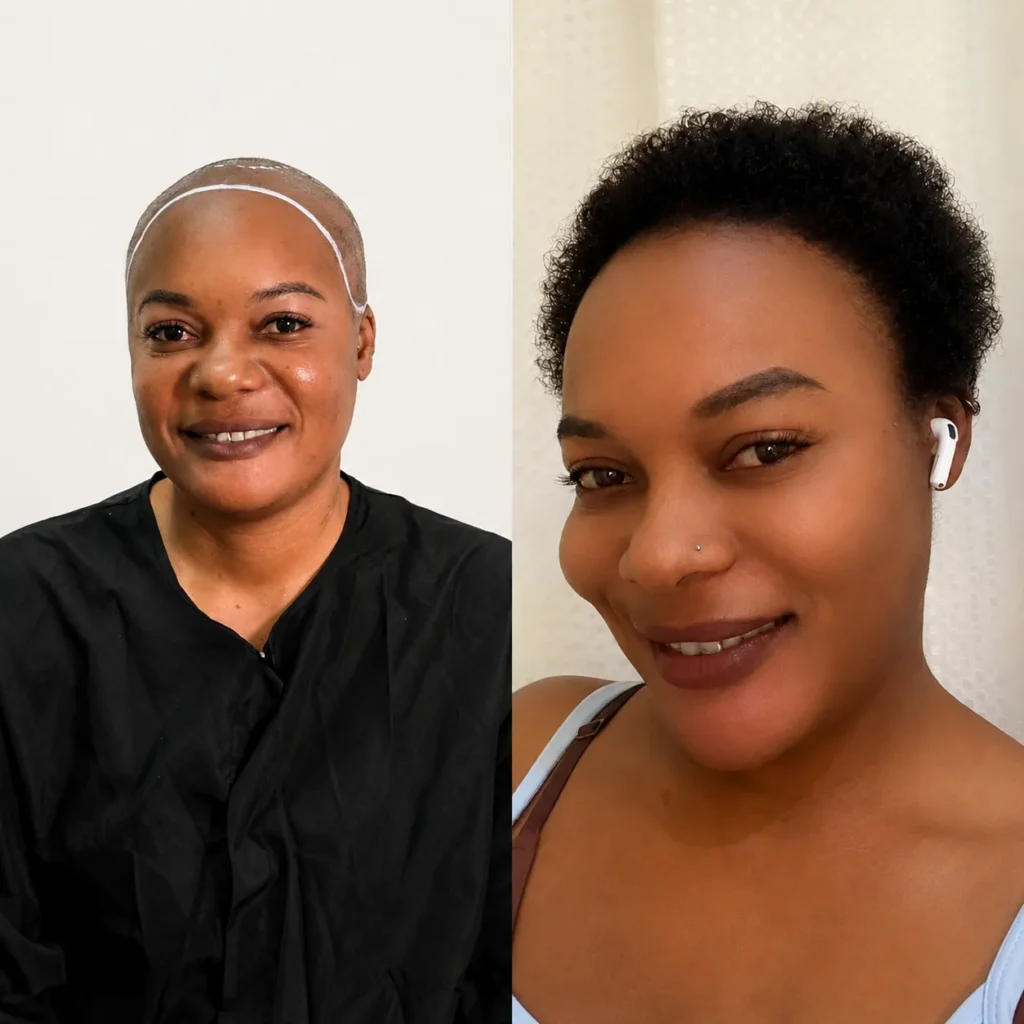
Female Afro Hair Transplant and Traction Alopecia
Female Afro hair transplant is often performed for traction alopecia. This condition develops when tight hairstyles repeatedly pull on the hair follicles over time. It commonly affects the edges, frontal hairline and temples.
Common causes may include:
- Tight braids
- Cornrows
- Heavy extensions
- Tight ponytails
- Weaves with strong tension
- Repeated styling stress around the edges
A female Afro hairline should be soft, natural and feminine. The goal is not to create a hard or overly sharp line. When healthy donor hair is available, transplantation can restore the edges and improve facial framing.
Donor Area Assessment in Afro Hair Transplantation
A successful Afro hair transplant begins with the donor area. Patients often focus on the bald or thinning area, but experienced teams first evaluate what can be safely harvested.
The donor area is limited. Once grafts are removed, they do not grow back in that location. Overharvesting can leave the back of the scalp looking thin, patchy or uneven.
What Is Evaluated During Donor Assessment?
A proper donor assessment may include:
- True follicular density
- Hair shaft thickness
- Curl pattern beneath the scalp
- Scalp elasticity
- Donor area size
- Future hair loss risk
- Existing scars or previous procedures
- Styling habits and haircut preferences
Dense-looking Afro hair does not always mean unlimited donor supply. The curls may create a full appearance above the skin, while the actual follicular unit density may still be limited.
Why Graft Quality Matters More Than Graft Quantity
Many patients compare graft numbers online. However, in Afro hair transplant, graft quality is more important than raw quantity.
A healthy graft has a better chance of surviving, growing and producing strong hair. A damaged graft may not grow at all. This is why a smaller number of carefully harvested grafts can produce a better result than a larger number of damaged grafts.
Healthy Grafts vs More Grafts
A high graft count sounds attractive, but it can be risky if the donor area is pushed too aggressively. The real question is not, “How many grafts can be taken?” It is, “How many healthy grafts can be safely removed without damaging the donor area?”
A strong Afro hair transplant result depends on:
- Low transection rate
- Gentle graft handling
- Correct storage conditions
- Proper implantation angle
- Balanced density planning
- Donor preservation
Why Extraction Technique Matters in Afro Hair
Extraction is one of the most important stages of Afro hair transplantation. Because the follicle may curve under the skin, the punch tool must be selected and controlled carefully.
Punch Selection
Punch size and shape matter. If the punch is too small or too straight, it can cut the curved follicle. Specialized clinics may use different punch sizes depending on the patient’s skin thickness, follicle diameter and curl pattern.
Manual vs Micromotor Extraction
Both manual and micromotor extraction can work when performed by experienced teams. The device is not the main issue. The skill of the operator matters more.
For Afro hair, low-speed extraction is often preferred because aggressive high-speed movement can damage curved follicles. A slower, more controlled approach helps protect graft survival.
Why Natural Channel Direction Matters
Implantation is not just about placing grafts into the scalp. The direction, angle and depth of each channel affect the final appearance.
Natural hair does not grow straight up. It follows specific angles and patterns. If the transplanted grafts are placed at the wrong angle, the hair may grow in a stiff or unnatural direction.
Correct channel direction helps the new hair:
- Blend with native hair
- Sit naturally on the scalp
- Allow normal styling
- Avoid a pluggy appearance
- Maintain a realistic hairline shape
This is especially important for Afro hair because curl direction influences how the hair expands and frames the face.
Understanding Afro Hair Density
Afro hair often creates strong visual density because of its curl pattern. The hair expands outward and covers more scalp surface than straight hair. This can make results appear fuller even with fewer grafts.
However, this advantage should not lead to aggressive planning. The donor area still needs protection. A good surgeon uses Afro hair’s natural volume strategically instead of overharvesting.
| Characteristic | Afro-Textured Hair | Straight Hair |
|---|---|---|
| Visual Coverage | High | Moderate |
| Curl Pattern | Strong | Low or none |
| Follicle Shape | Curved | Straighter |
| Extraction Difficulty | Higher | Lower |
| Density Effect | Strong visual fullness | More graft-dependent |
Afro Hairline Design: What Most Patients Do Not Realize
Hairline design is the most visible part of the result. A technically successful transplant can still look unnatural if the hairline is designed poorly.
A natural Afro hairline should consider:
- Age
- Forehead height
- Temple points
- Facial shape
- Hair direction
- Density transition
- Future hair loss
- Styling preferences
A hairline that is too low or too straight may look artificial over time. The best design should look natural now and continue to look natural as the patient ages.
Temple Restoration and Facial Framing
Temple points are important for facial balance. Many patients focus only on the center of the hairline, but the temples shape the face from the front and profile view.
A good plan often restores both the frontal line and temple points together.
FUE vs DHI for Afro Hair Transplant
Neither FUE nor DHI is automatically better for Afro hair. Both can produce excellent results when performed correctly.
The success depends on:
- Donor area planning
- Curved follicle extraction
- Low-speed technique
- Graft handling
- Channel direction
- Implantation angle
- Surgical team experience
DHI may help in selected cases where precise placement is needed. FUE or Sapphire FUE may also work very well when the extraction and channel creation are carefully adapted to Afro follicles.
Patients should avoid choosing a technique only because of marketing. The team’s experience with Afro-textured hair matters more than the name of the method.
Afro Hair Transplant Timeline
Afro hair transplant results take time. The final result is usually judged around 12 months, although maturation can continue beyond that.
Month 1: Healing and Shedding
The first month focuses on healing. Scabs disappear, redness improves and the grafts begin adapting to their new location. Some shedding is normal and should not be mistaken for failure.
Month 2–3: Waiting Phase
Visible growth is usually limited. Many patients become concerned during this stage, but the follicles are active beneath the skin. Patience is essential.
Month 4–6: Early Growth
New growth begins to appear. The hair may look thin, uneven or softer than expected. This is not the final result.
Month 8–10: Visible Improvement
Density becomes more noticeable. The hairline begins to look stronger and the transplanted hair starts blending better with native hair.
Month 12: Final Evaluation
By month 12, most patients can evaluate the main result. The hair is usually thicker, softer and easier to style. Afro hair may continue maturing after one year as the curl pattern settles.
Hair Bumps and Folliculitis After Afro Hair Transplant
Some Afro hair patients may develop temporary bumps or folliculitis during early growth. This can happen because the new curly hair may loop beneath the skin before breaking through the surface.
This does not automatically mean the transplant failed. Mild cases are often temporary. Patients should follow clinic instructions and avoid heavy oils, thick pomades or products that block pores during early recovery.
Why Post-Transplant Hair Care Matters
The surgery is only one part of the result. Aftercare plays a major role in graft survival and long-term appearance.
Important recovery habits include:
- Following washing instructions
- Avoiding scratching or picking
- Protecting the scalp from trauma
- Avoiding tight hairstyles during healing
- Staying hydrated
- Avoiding smoking
- Attending follow-up appointments
- Using recommended scalp care products only
For women treated for traction alopecia, avoiding tight braids, heavy extensions and high-tension styles is especially important. Returning to the same styling habits can damage both native and transplanted hairs.
Afro Hair Transplant in Lagos, Nigeria
Afro hair transplantation is a global field. Patients from Nigeria, Ghana, South Africa, the United States, the United Kingdom and the Caribbean often share similar concerns, but their hair characteristics can vary widely.
Turkey Hair Center also has experience with Afro-textured hair patients and international cases. Treatment planning should always consider curl pattern, donor capacity, styling goals and long-term hair loss risk.
Wondering If Your Donor Area Is Suitable?
Every Afro hair transplant case is different. Your true donor density, follicle curvature, hair shaft thickness and future hair loss risk all affect what can realistically be achieved.
A proper assessment should not simply guess graft numbers. It should evaluate your donor area, hairline goal, curl pattern and long-term expectations.
Start with a professional photo evaluation to understand whether your donor area is suitable for Afro hair transplant.
Conclusion: What Determines a Successful Afro Hair Transplant?
A successful Afro hair transplant is not defined by graft numbers alone. It depends on donor preservation, healthy graft extraction, correct channel direction, natural hairline design, careful implantation and long-term planning.
Afro-textured hair offers a major advantage in visual density, but it also requires a more specialized surgical approach because of curved follicles. The best results come from teams that understand this anatomy and respect the limits of the donor area.
For patients researching Afro hair transplant before and after results, the most important lesson is simple: look beyond big graft numbers. Focus on surgical planning, Afro hair experience, donor protection and long-term natural outcomes.
References & Medical Sources
International Journal of Trichology.
https://journals.lww.com/ijot/pages/default.aspx
Goldin J, Zito PM. Hair Transplantation. StatPearls Publishing.
https://www.ncbi.nlm.nih.gov/books/NBK547740/
International Society of Hair Restoration Surgery (ISHRS).
https://ishrs.org/
Journal of Cutaneous and Aesthetic Surgery.
https://journals.lww.com/jcas/pages/default.aspx
StatPearls. Traction Alopecia: Diagnosis and Management.
https://www.ncbi.nlm.nih.gov/books/NBK470434/
Get a Free Hair Analysis from Our Experts
Use our free online help tool to communicate your hair loss concerns – it only takes a few minutes. We’ll provide you with a personalized, non-binding quote.

You May Be Interested In
- Afro Hair Transplant Before and After: 17 Real 12-Month Results & Expert Analysis
- How Much Is a Hairline Transplant? Cost Guide
- Hair Transplant Recovery Timeline: Day-by-Day, Week-by-Week and Month-by-Month Guide
- Justin Bieber Hair Transplant: Hairline Analysis, Before & After Photos, Rumors & Expert Opinion
- Wayne Rooney Hair Transplant: Before & After
Let’s Call You!

Popular Blogs
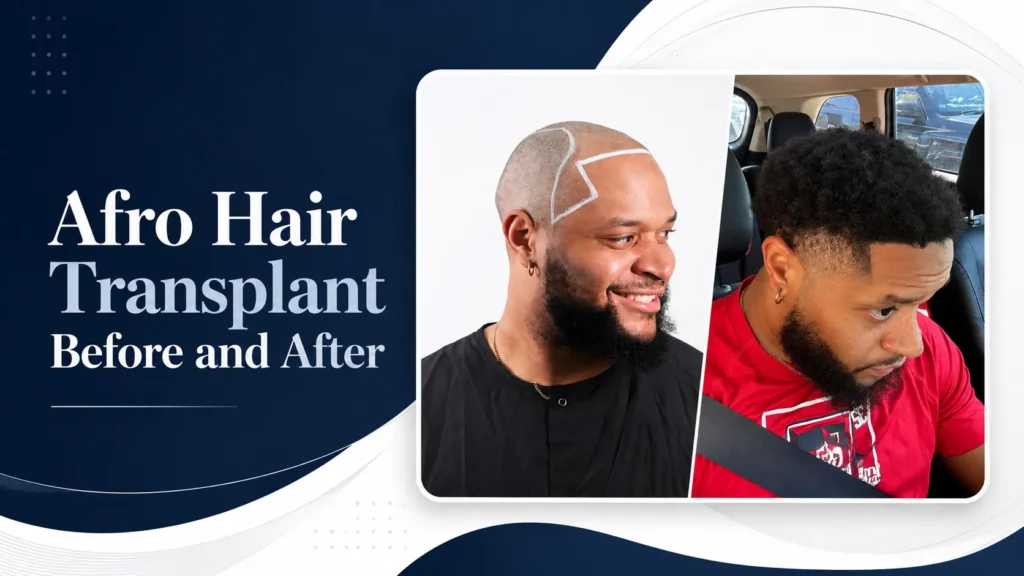
Afro Hair Transplant Before and After: 17 Real 12-Month Results & Expert Analysis
Afro Hair Transplant Before and After: 17 Real 12-Month Results & Expert Analysis Free Hair…
How Much Is a Hairline Transplant? Cost Guide
How Much Is a Hairline Transplant? Cost Guide Free Hair Analysis Homapage Blog Wayne Rooney…
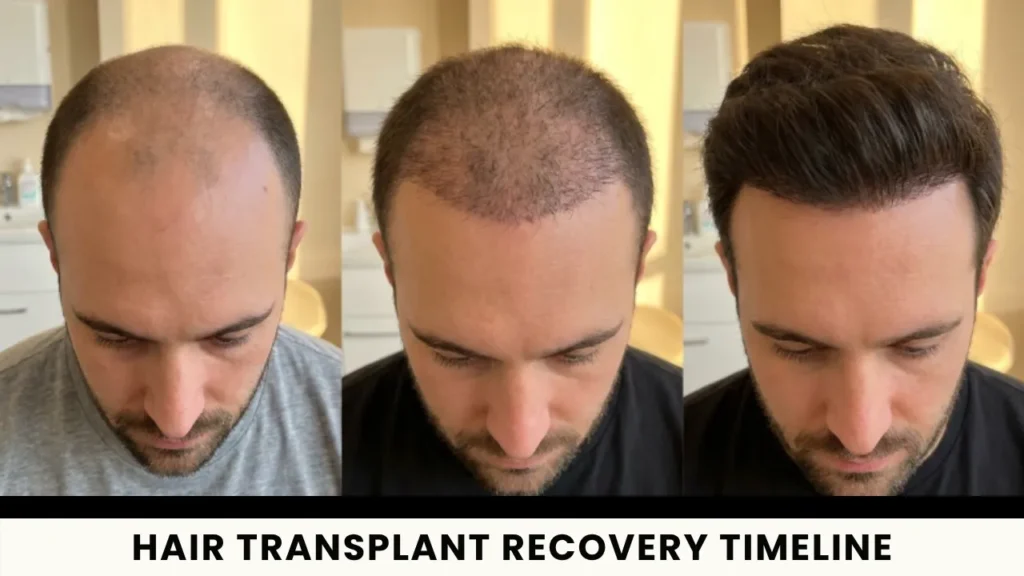
Hair Transplant Recovery Timeline: Day-by-Day, Week-by-Week and Month-by-Month Guide
Hair Transplant Recovery Timeline: Day-by-Day, Week-by-Week and Month-by-Month Guide Free Hair Analysis Homapage Blog Wayne…
Justin Bieber Hair Transplant: Hairline Analysis, Before & After Photos, Rumors & Expert Opinion
Justin Bieber Hair Transplant: Hairline Analysis, Before & After Photos, Rumors & Expert Opinion Free…
Wayne Rooney Hair Transplant: Before & After
Wayne Rooney Hair Transplant: Before & After Free Hair Analysis Homapage Blog Wayne Rooney Hair…

Conor McGregor Hair Transplant: Before & After
Conor McGregor Hair Transplant: Before & After Free Hair Analysis Homapage Blog Conor McGregor Hair…
Ready To
Book Your Appointment?
Reach out to us or complete our simple online form
and we’ll contact you to schedule a time that works perfectly for you.



People Also Ask About Afro Hair Transplants