Mustache Transplant in Turkey: Cost: Before And After
Mustache transplant in Turkey offers affordable cost options with natural-looking before and after results, providing fuller and well-defined facial hair.
Performed at authorized partner hospitals Turkey Hair Center is a Ministry of Health authorized health-tourism intermediary, not a clinic.
A mustache transplant is a very specific restoration surgery. It is done for cosmetic reasons, to define the face, or because of congenital thinning.
In this surgery, healthy follicles are moved, commonly via FUE, to the upper lip to make the hair thicker, more even, or cover up scars.
Turkey is a popular choice since it has skilled surgeon-led teams, cutting-edge methods, and affordable medical packages.
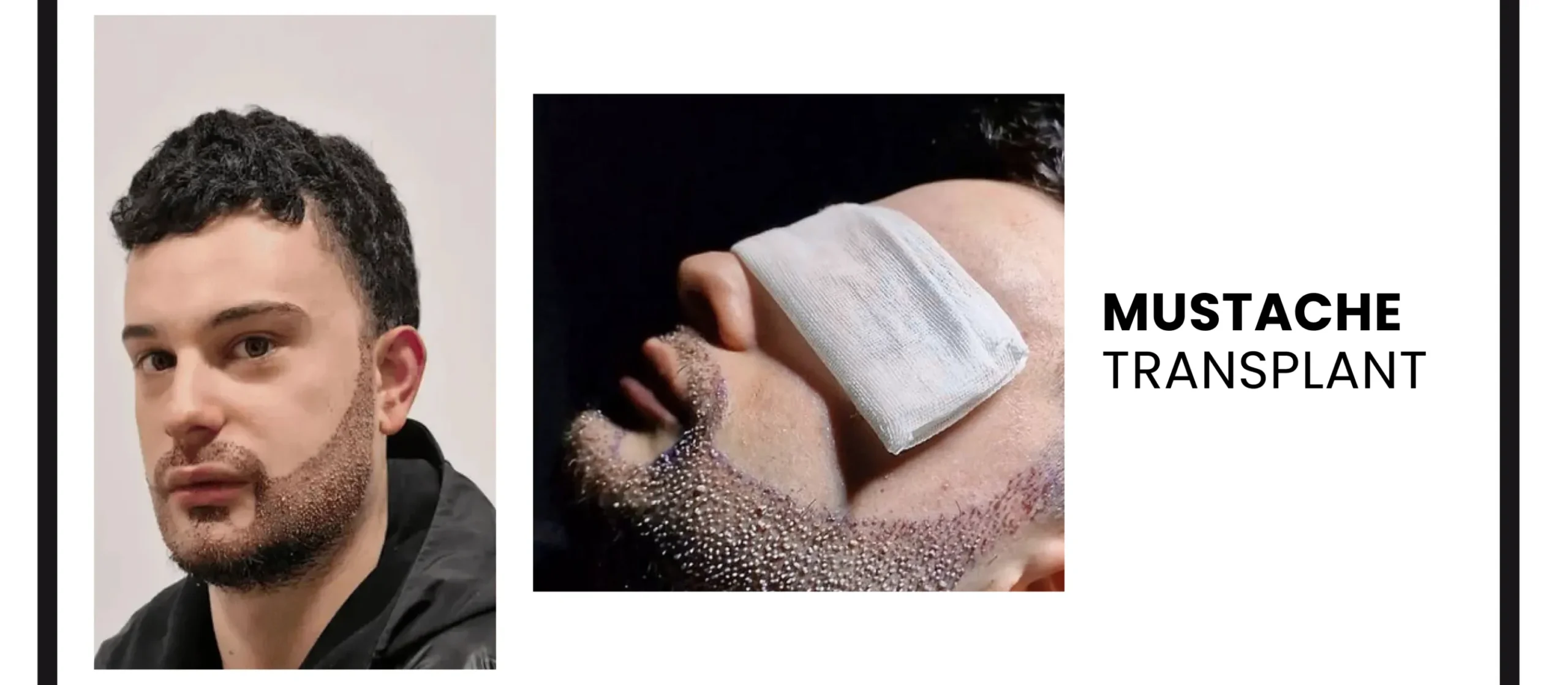
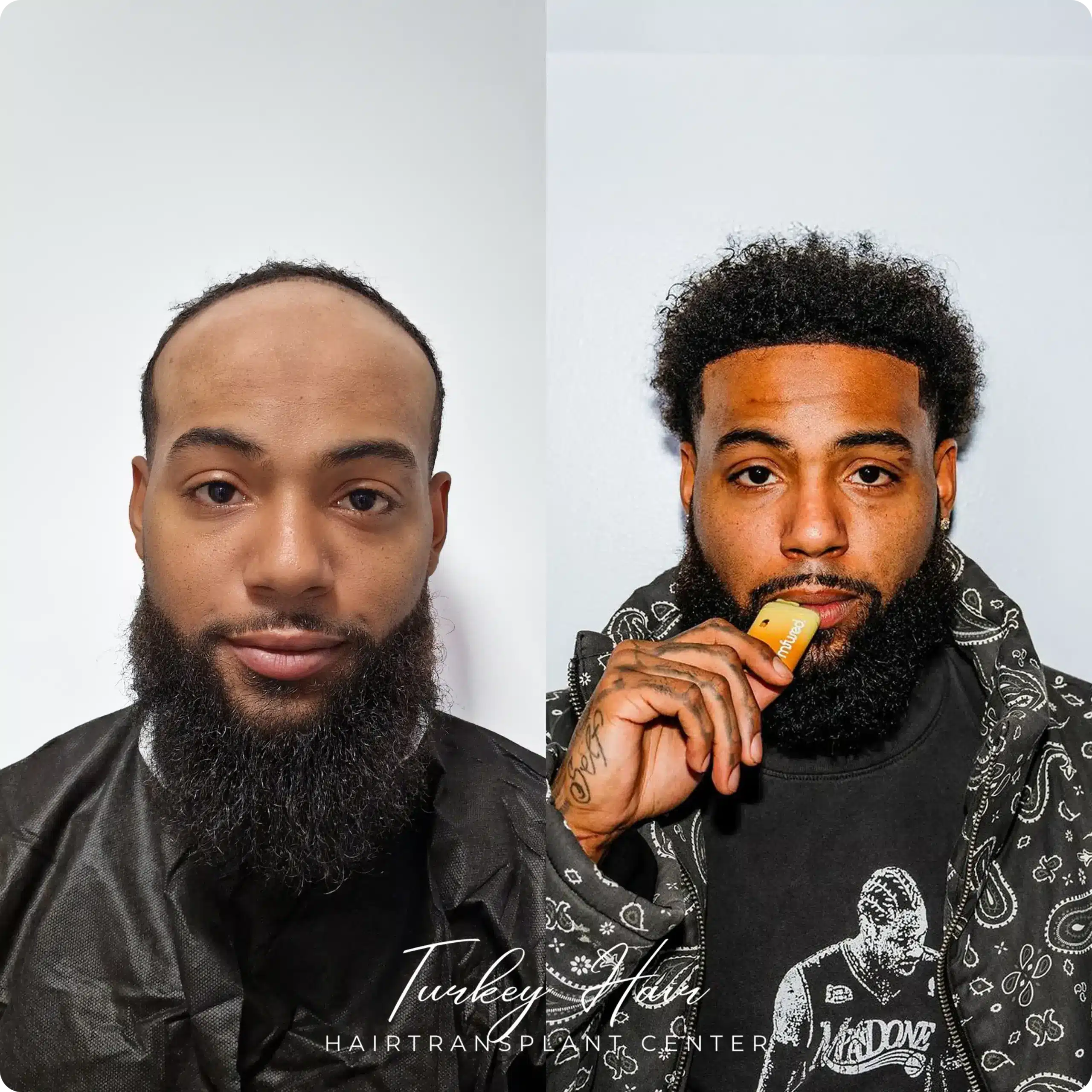
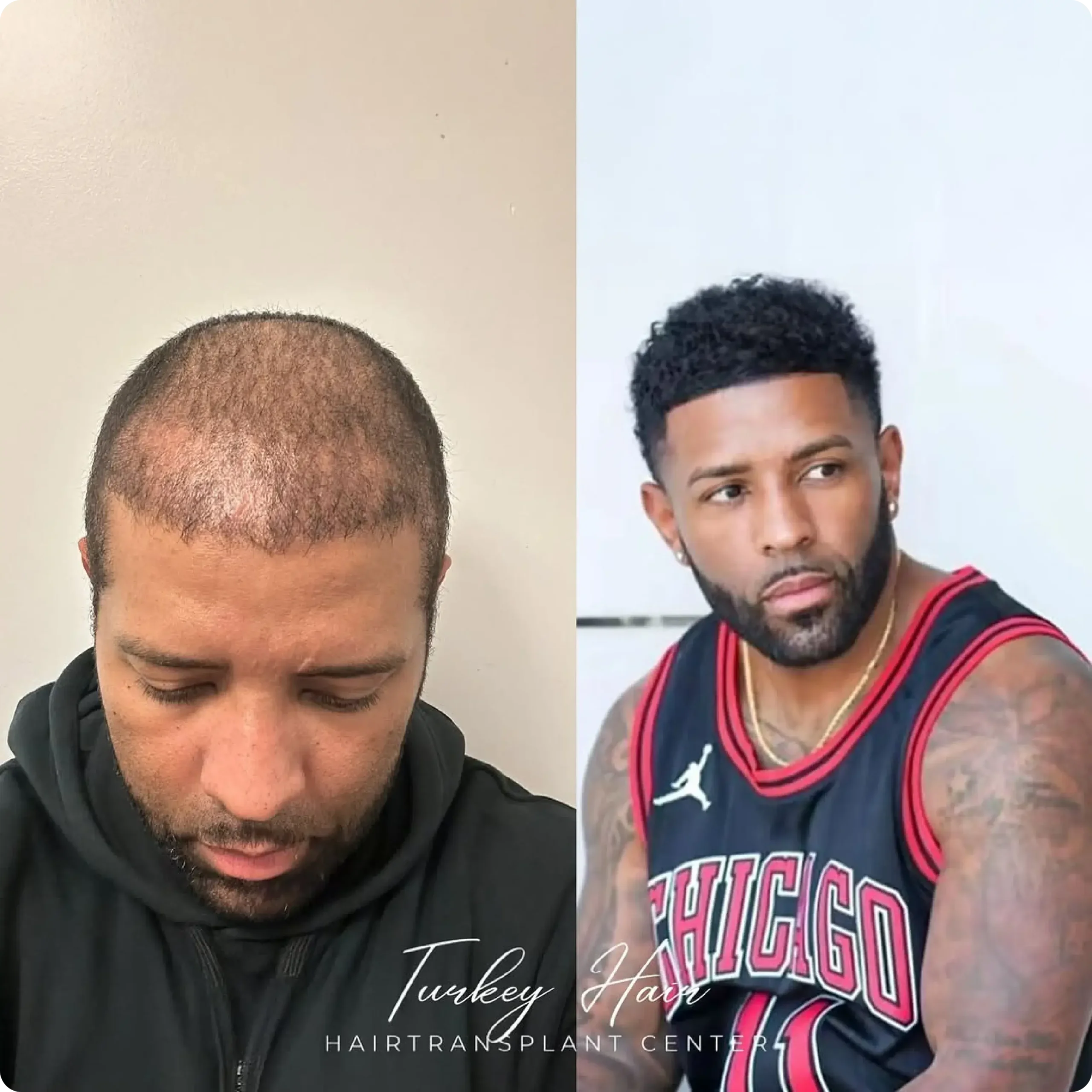
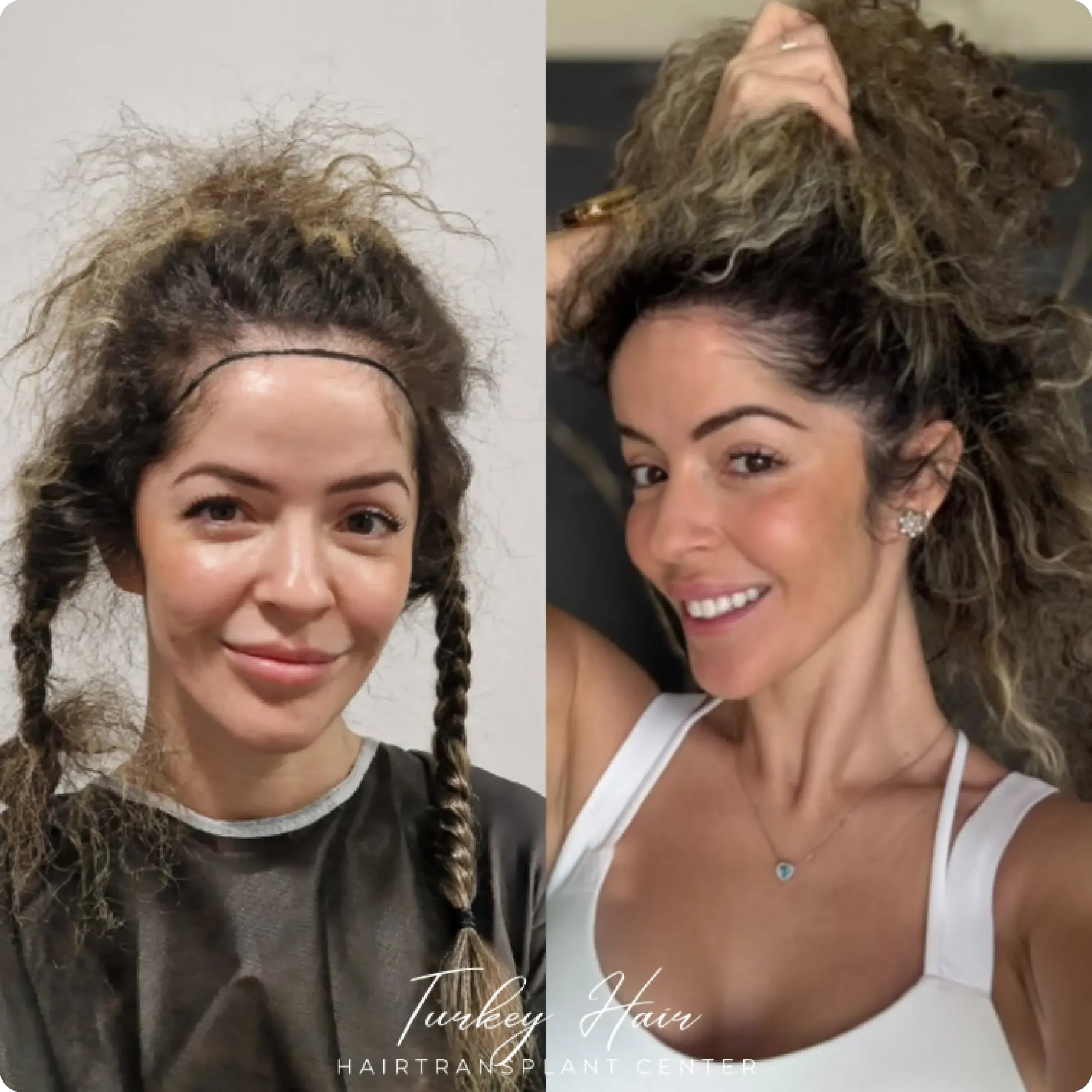
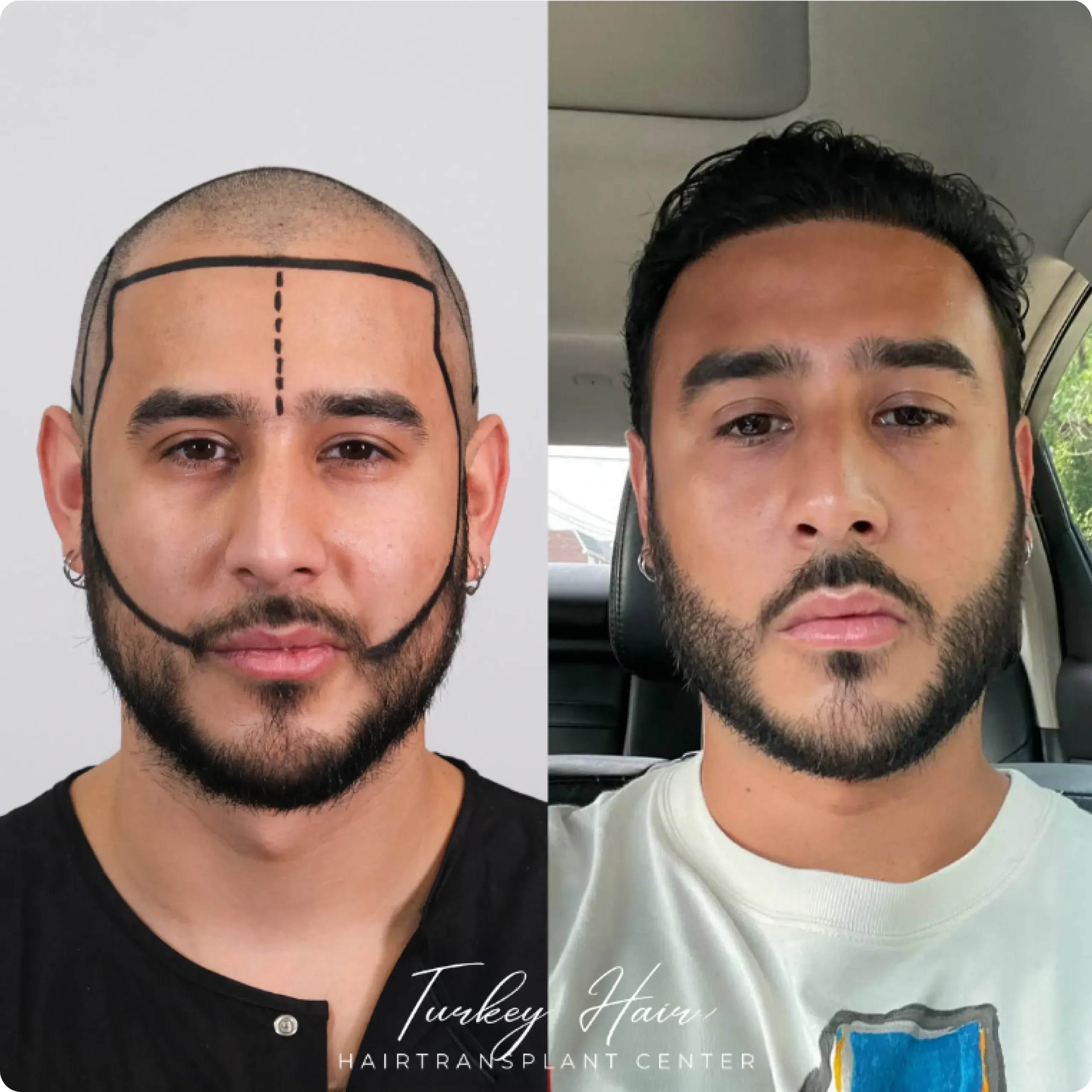
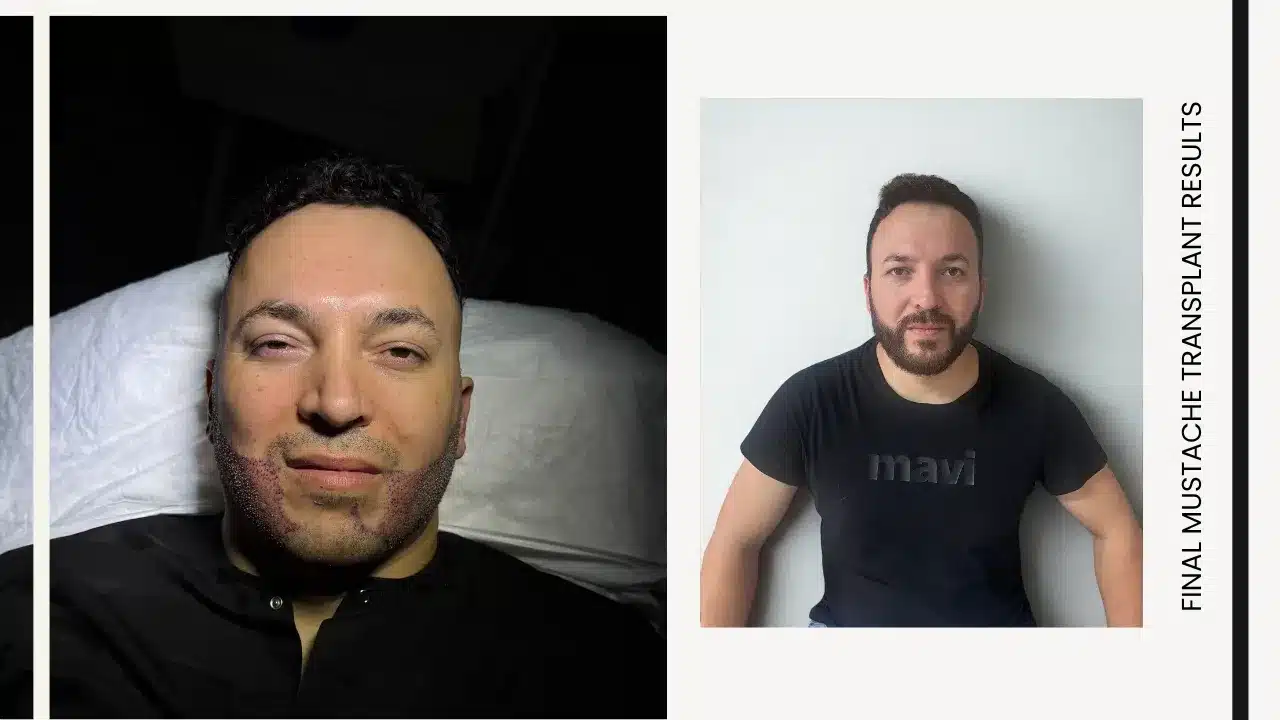
Mustache Transplant Before and After Results
What makes mustache transplanting look natural is not just the number of grafts but also micro-level surgical planning. To be sure how well transplanted hairs will mix with the hair on your face over time some parameters are important: the thickness of the graft, and the density of the graft.
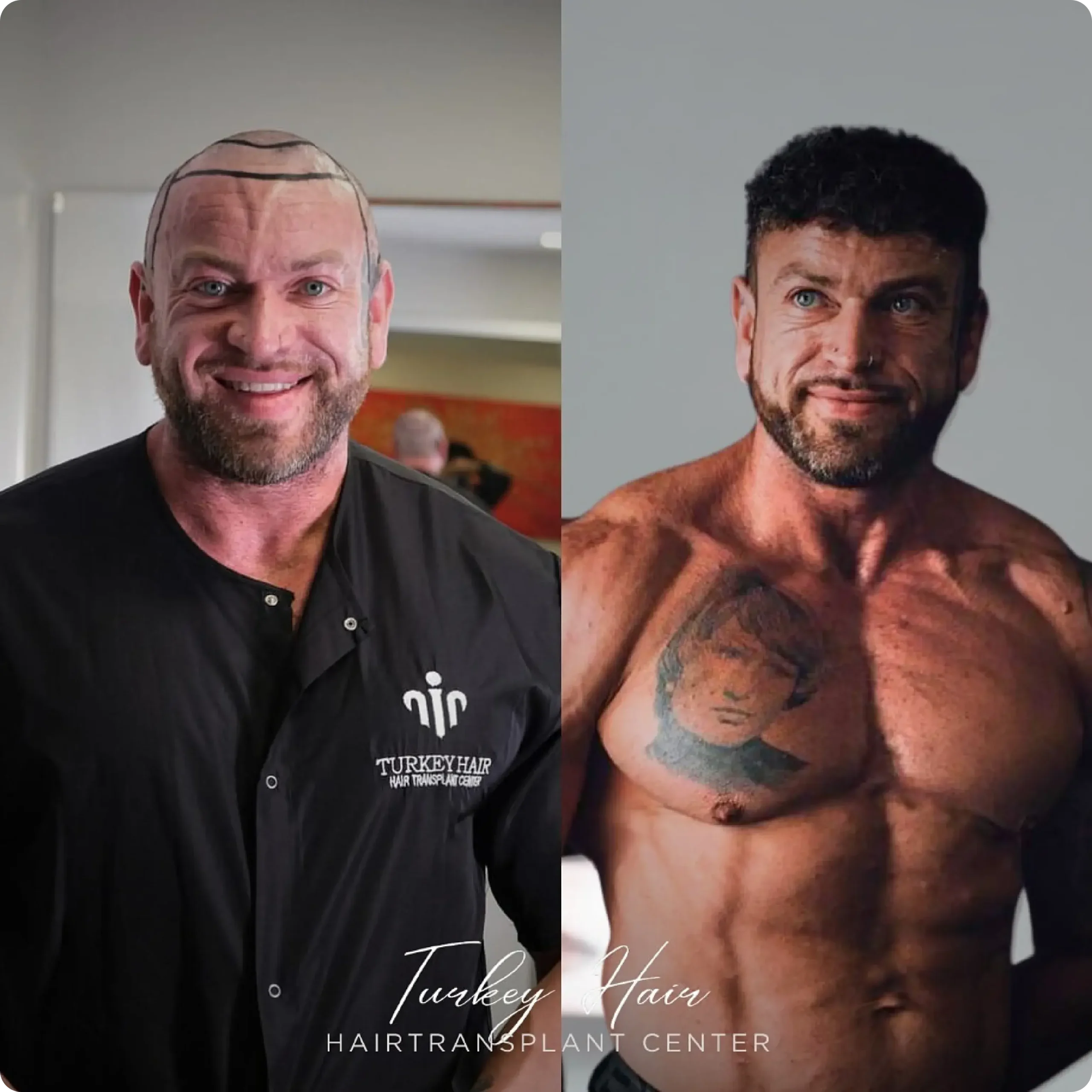
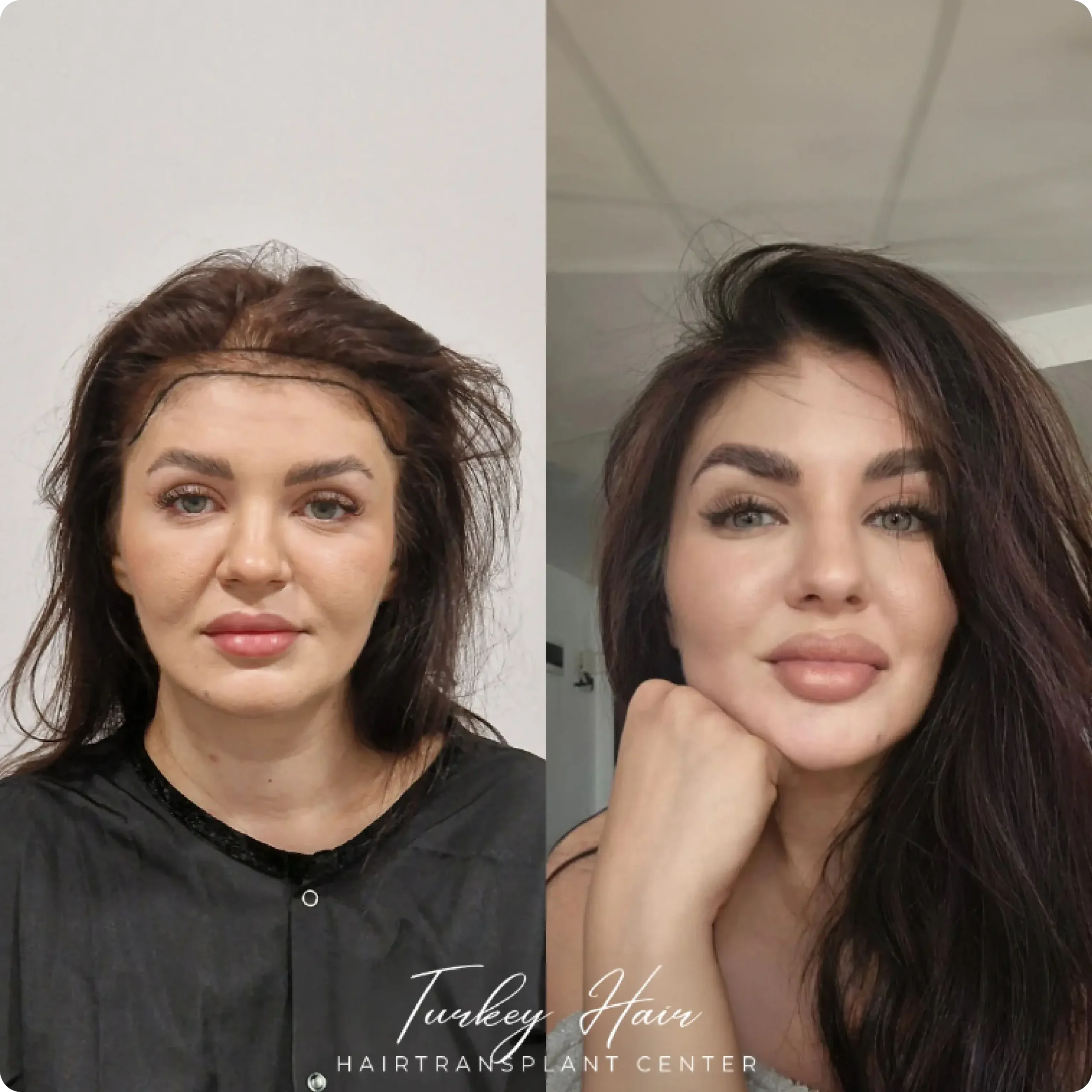
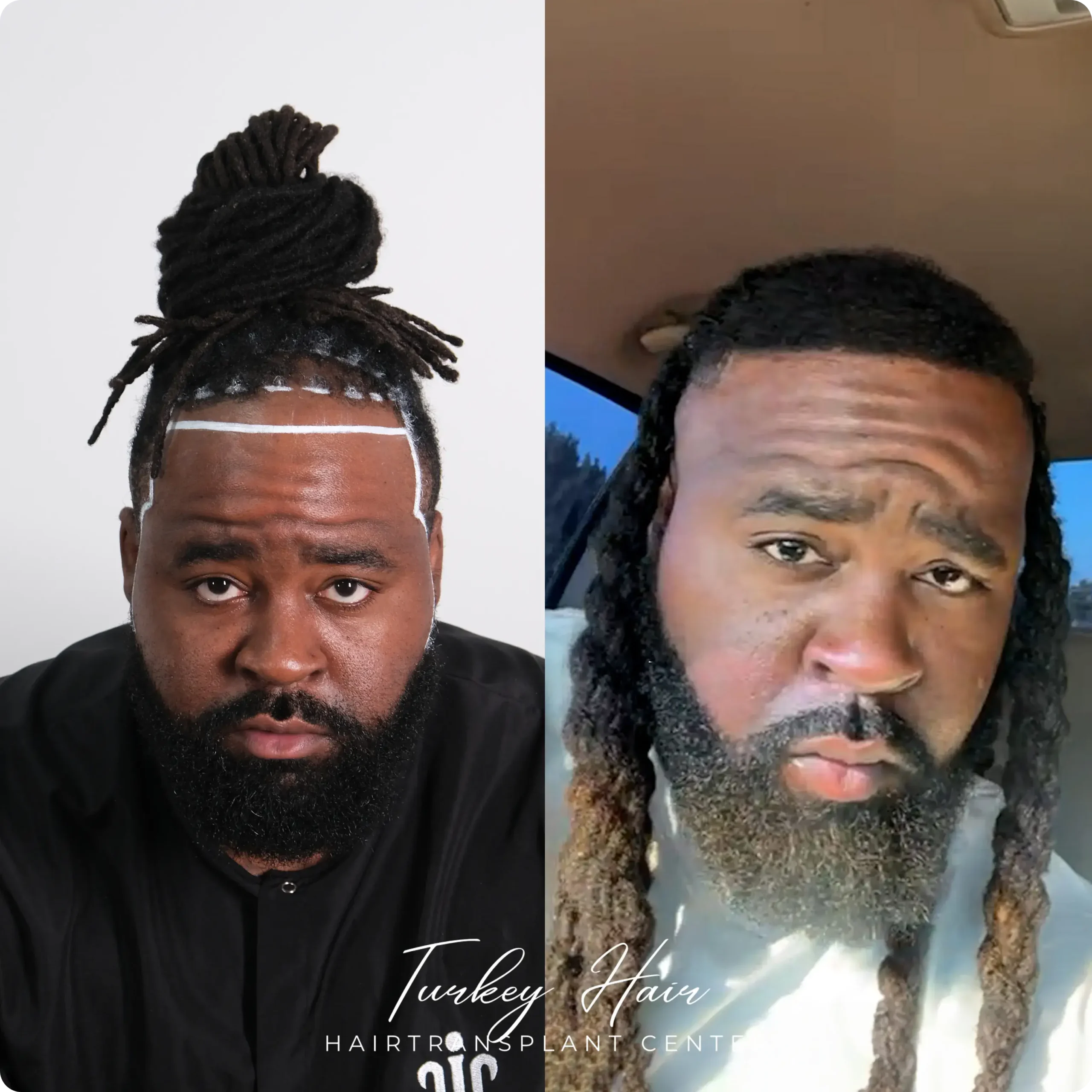
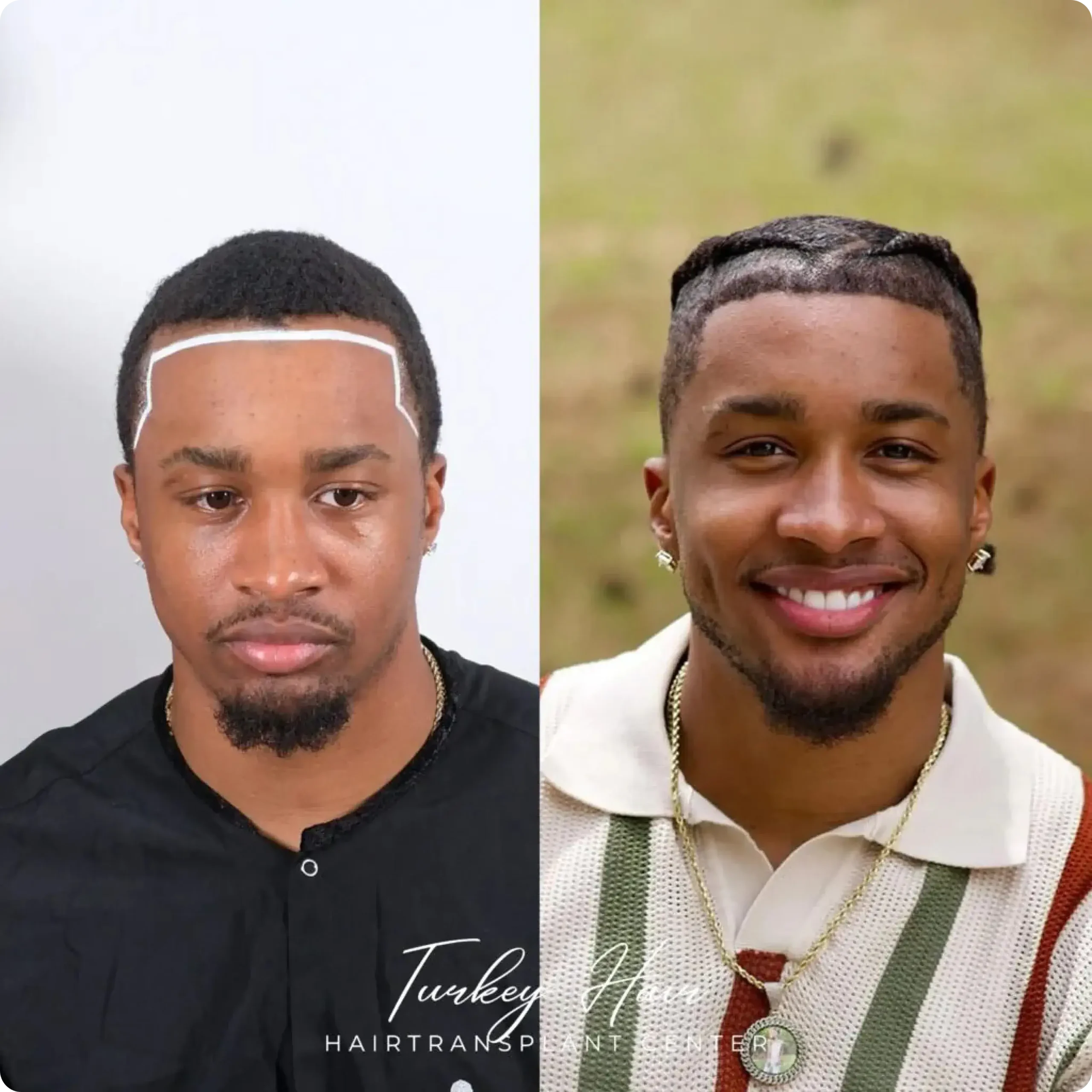
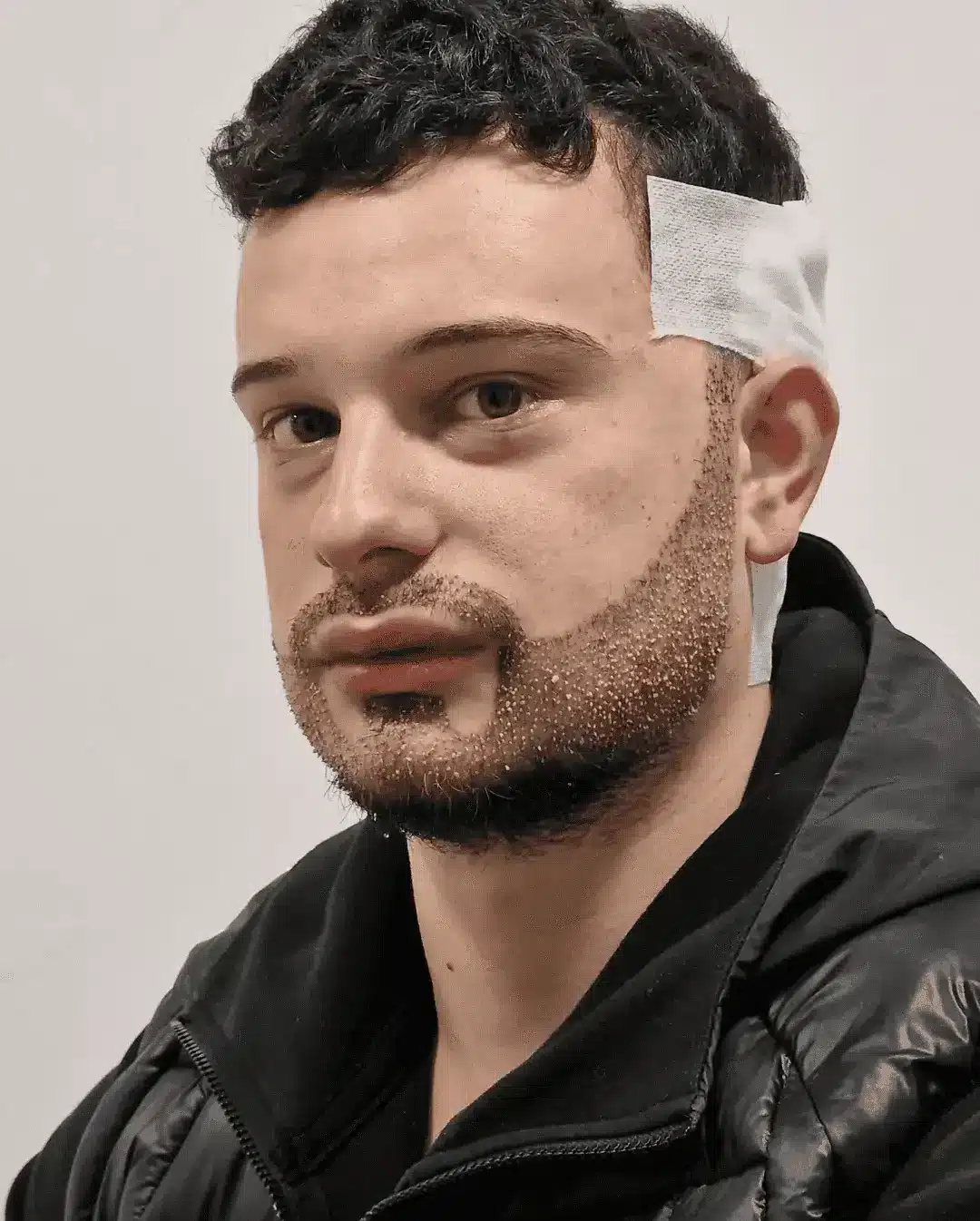
Comparisons of the before and after images typically reveal that the density has gradually improved, the symmetry has become more distinct, and the contours of the upper lip have become more defined.
Who Is a Good Candidate for Mustache Transplant?
A good candidate for a mustache transplant is someone who has patchy, thin, or uneven facial hair and wants a fuller, well-defined mustache. It is also suitable for individuals with hair loss due to genetics, scars, or previous over-plucking. Candidates should have a healthy donor area, typically at the back of the scalp, to provide strong and viable hair follicles.
Additionally, ideal candidates are in good overall health and have realistic expectations about the results. A mustache transplant can significantly enhance facial appearance, but proper planning, hair direction, and density design are essential to achieve a natural-looking outcome.
Mustache Loss Patterns
The ways that people of African descent lose their hair can be very different depending on their genes, lifestyle, and hair care habits. Alopecia can show up in different ways. Some people lose hair in the front, others lose hair at the temples, and still others lose hair all over. Finding the exact pattern is important for preparing for the transfer well.
Once surgeons know these patterns, they can place grafts in a way that gives the best possible cosmetic effects. This targeted method gets the most benefits while keeping the health of the donor site.
Mustache Transplant Package Prices
Best choice for first-time hair transplant
SAPPHIRE PRIME PACKAGE
$2,950$2,550
Sapphire FUE with Sedation Support (Maximum Graft Planning)
Is there a safe maximum number of grafts for the mustache area?
There is a safe limit due to blood supply in the upper lip area. Overloading the area with too many grafts may affect healing and graft survival.
Does hair type or ethnicity affect mustache transplant results?
Yes, hair thickness, curl pattern, and skin type all influence planning and technique. Curly or coarse hair requires more precise placement.
Can a mustache transplant cover scars from trauma or cleft lip surgery?
Yes, transplanted follicles can often conceal scars, but proper evaluation is necessary to ensure sufficient blood circulation in the area.
What is Moustache Transplant?
Mustache transplantation is a hair transplantation method generally used with plastic surgery. This procedure is performed to correct or completely recreate regional sparseness, thinning or missing hairs in the mustache. Mustache transplantation is a type of hair transplantation technique and is usually done using cutting procedures such as FUE (Follicular Unit Extraction) or FUT (Follicular Unit Transplantation).
Transplantation-Technique
Mustache transplantation is generally similar to hair transplantation. Hair products are usually transplanted from the nape area. While the FUE method involves removing single hair follicles, the FUT method involves removing tissue in the form of a strip. The removed hair extensions are then transplanted as mustaches and placed in the section to obtain a natural look.
Aesthetic preservation such as mustache transplantation, correction of mustache lines, completion of intermittent or missing mustaches, correction of scars or permanent deformations may be preferred. Our highly qualified and professional team, Turkey Hair Center family, is waiting for you for those who want such procedures.
Beard-Mustache Transplant
Cost of Mustache Transplant in Turkey
The cost of surgery can vary depending on how many grafts you need, how good the donor is, and how complicated the mustache design is.
The price of a mustache transplant with 500 grafts in Turkey is usually between $1,500 and $1,800. If the number of grafts is 1,000 the cost can be between $2,000 - $3,000.
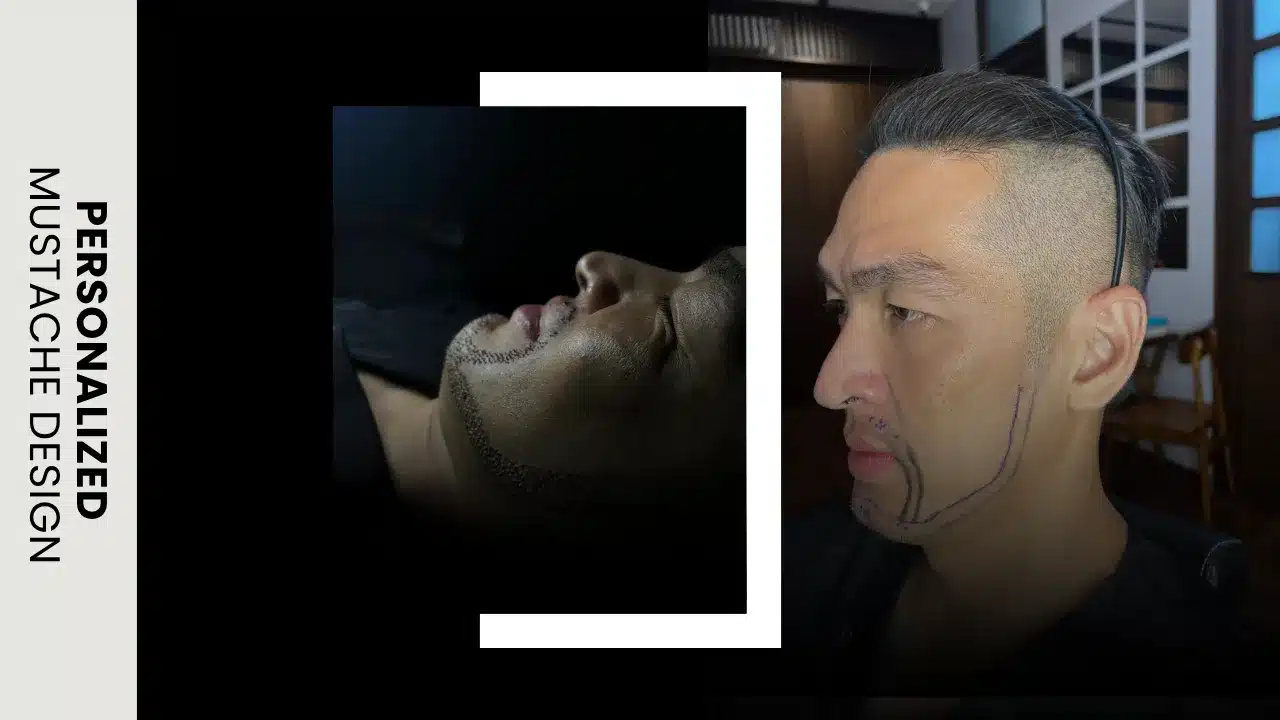
Mustache Design
Cost of Mustache Transplant in USA vs Turkey
The cost of mustache hair transplant can change according to the number of grafts required, the donor areas’ quality, and the complexity of the design.
Graft Count
Turkey Cost
USA Cost
Cost Difference
500 grafts
$1,500 - $1,800
$4,000 - $7,000
USA is around 2-4x higher
1,000 grafts
$2,000 - $3,000
$6,000 - $10,000
USA is around 3x higher
In the USA, a 500-grafts hair procedure can differ between $4,000 and $7,000 while 1000 grafts approximately cost between $6,000 to $10,000.
These prices are typically based on strict health regulations and higher medical labor costs.
In Turkey, on the other hand, similar medical standards can be offered at more affordable rates because of lower operational costs and all-inclusive packages.
A 500 grafts procedure is generally between $1,500 and $1,800, and 1000 grafts is usually between $2,000 and $3,000.
Cost of Mustache Transplant in UK vs Turkey
In the UK, prices are generally high because of high expenses of operations and a limited number of surgeons specializing in mustache transplants.
Graft Count
UK Cost
Turkey Cost
Notes
500 grafts
£3,000 - £5,000
$1,500 - $1,800
Turkey is more affordable
1,000 grafts
£5,000 - £8,000
$2,000 - $3,000
UK pricing is significantly higher
On the contrary, Turkey offers lower prices with advanced clinical standards and experienced physician-led teams.
500 Grafts: This surgery can vary between £3,000 - £5,000 in the UK whereas it can be between $1,500 - $1,800 in Turkey.
1000 Grafts: The procedure is generally between £5,000 - £8,000 in the UK; it is approximately between $2,000 - $3,000 in Turkey.
Cost of Mustache Transplant in Europe vs Turkey
In Europe, mustache transplants can cost a lot due to several reasons like high taxation and expensive medical insurance. However, prices in Turkey are more affordable because clinics mostly offer all-inclusive services.
500 Grafts: In Europe, it is available for between €3,000 - €6,000. Yet, in Turkey, it typically ranges between $1,500 - $1,800.
1000 Grafts: Clinics in Europe costs between €6,000 - €9,000 but in Turkey, the prices can vary $2,000 - $3,000.
Who is Eligible for Mustache Transplant
If you have spotty, sparse, or uneven mustache development because of genetics, hormones, trauma, or scarring in the upper lip area you can get a mustache transplant.
The best candidates have a healthy donor area and are generally in good health. If you don’t have enough donor hair or who have active skin disorders may not be good candidates until these problems are treated and controlled.
Mustache Transplant Before & After
Mustache Transplant Before & And After
What Is a Mustache Transplant and How Does It Work?
A mustache transplant can restore facial hair by transferring healthy hair follicles from the scalp to the area above the upper lip.
It is important to note that mustache transplantation is more complex than scalp hair transplantation since the angles and directions of the hair are considerably more critical.
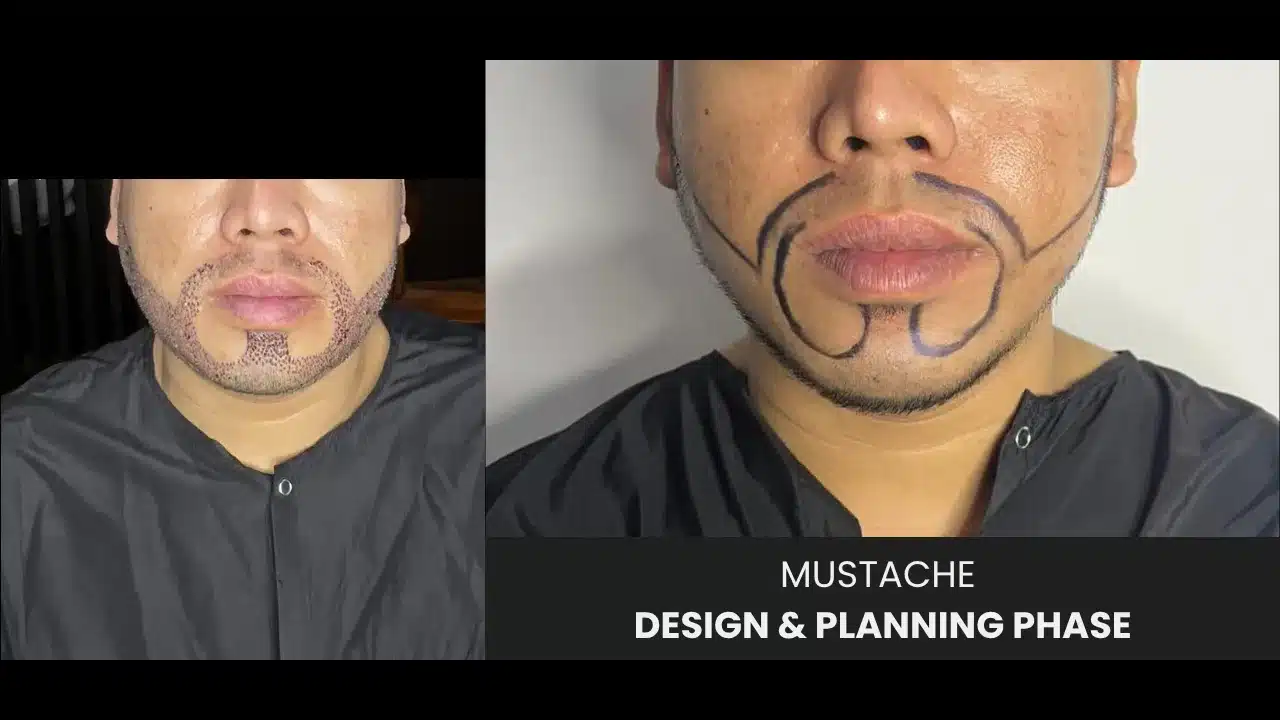
Mustache Design Planning
Step 1: Consultation and Mustache Design
At the very first step, the surgeon examines the face to create the mustache’s shape, density distribution, and symmetry so that they fit the dimensions of the face.
Step 2: Donor Hair Extraction with FUE
The FUE technique is a very careful way to take out individual hair follicles from the donor area, which is usually the back of the scalp.
The goal is to take out healthy grafts in a way that doesn’t leave scars and makes the donor area look normal.
Step 3: Graft Preparation and Angle Planning
After the grafts are taken out, they are looked at under a microscope to sort them into groups based on their structure and thickness. Because of this, the surgical team can guess the normal angles of departure and place each follicle in the right spot on the mustache.
Step 4: Implantation to the Mustache Zone
This method involves inserting one follicle at a time into the upper lip in a way that resembles how beard hair grows. It is important to get the lines and spacing just right so it does not look fake or stiff.
Mustache Transplant Methods and Recommended Use Levels
It is important to control the graft angle, density, and direction to have a more realistic mustache appearance.
Method
Recommendation Level
Best Use Case
Main Limitation
FUE
Highly Recommended
Natural facial hair restoration
Requires expert angle control
DHI
Conditionally Recommended
Small touch-ups or density enhancement
Less flexibility for very shallow angles
FUT
Not Recommended
Rarely suitable for mustache restoration
Linear scar and larger graft groupings
So, here are mustache transplant methods and recommended use levels.
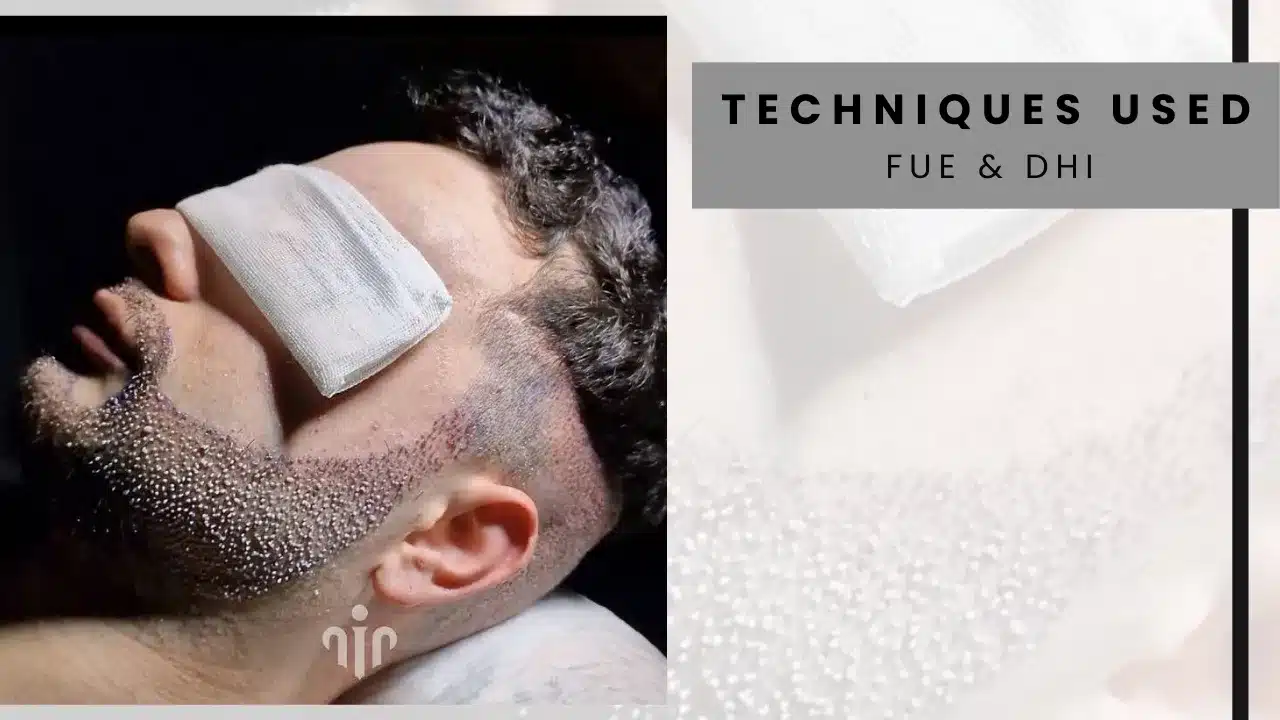
FUE (Follicular Unit Extraction) : It is highly recommended.
FUE lets you finetune the angle, direction, and spacing of the hair, which is necessary to get a soft, natural look.
It uses fine single follicles and does not leave straight donor scars, which makes it the best method for restoring facial hair.
DHI (Direct Hair Conditionally) : This technique is conditionally recommended.
It is possible that DHI could be beneficial in certain circumstances, particularly when it comes to touch-ups or enhancements with a small area.
The implanter-based insertion, on the other hand, can decrease the flexibility in controlling the exact exit angle within the upper-lip region.
How Many Grafts Are Needed for a Mustache?
For a successful mustache hair transplant, there need to be 350 to 800 grafts.
Nevertheless, the situation of the recipient talks about the needs, so you should see an expert to decide on what you need.
Recovery and healing take time and here are the steps.
Days 1-5: Redness, Swelling & Scabbing
In the first few days after the transplant, the area may be slightly red, swollen, and have little scabs.
These symptoms slowly go away when the skin starts to heal on its own, as long as you take care of yourself and keep your skin clean.
Weeks 2-4: Shock Loss & Shedding Phase
During this stage, transplanted hairs fall out momentarily. This is a normal biological response called shock loss. This stage does not change how well the transplant will work in the long run because the follicles stay healthy under the skin.
Months 2-4: Early Mustache Hair Growth
As follicles start to sprout again, new hairs gently start to grow. At first, strands may look weak, fragile, or uneven. This is just a momentary change until stronger, thicker growth starts.
Months 6-9: Density Improvement Phase
During the months 6-9, the hair gets stronger and the overall density becomes more evident and also as the growth cycles stabilize and the coverage gets better, the mustache starts to be fuller and seem more natural.
Month 12: Final Mustache Transplant Results
The full and permanent results are usually clear by the twelfth month. The mustache gets a natural texture, a constant density, and long-term growth that matches the hair on the rest of the face.
Surgeon-Level Realities Not Explained to Patients
There are some realities rarely documented on patient consent forms but define every successful operation.
Hair exit angle is more critical than density
The hairs on a mustache develop at very shallow angles, usually between 5 and 10 degrees. Even a small misalignment can make hairs stick out in an odd way, thus expert surgeons must be able to control angles very precisely.
Graft selection must match hair caliber
Surgeons use finer grafts for facial implantation since the hair thickness is different in different scalp donor zones. Using grafts that are too thick can make the mustache look like a brush, which is not natural.
Blood supply limits implantation speed
Putting too many grafts in the upper lip at once can slow down blood flow in the area and raise the chance of graft loss. Skilled surgeons carefully balance the distance between the vessels, the safety of the vessels, and the speed of the procedure.
Direction changes across the mustache
The mustache grows in different ways in the central, lateral, and border areas. Even though patients usually cannot see this technical planning, accurate micro-mapping of these vectors is important for realism.
5 Important Things You Must Do After a Mustache Transplant
Taking too many or too few grafts from the donor area could permanently damage the scalp’s reserves. This could limit future alternatives for hair, beard, or corrective transplants; thus, it is very vital to maintain the donor well in the long term.
Keep the Transplanted Area Completely Dry for the First 48 Hours
For the first 48 hours, keep the area where the transplant was done completely dry.
For the first two days, do not wash, splash water, or steam the top lip. Keeping the region dry helps grafts stay in place and lowers the danger of them moving.
Sleep on Your Back with Your Head Slightly Elevated
Sleep on your back with an extra pillow for the first five to seven nights. When you elevate your head, you keep the swelling down and avoid putting pressure or friction on newly transplanted follicles by accident.
Follow the Washing Protocol Exactly as Instructed
If you have a meeting in the next 48 to 72 hours, your clinic will tell you when you can start bathing. To clean your mustache, use lukewarm water and pat it dry. While it is healing, do not rub or touch the area.
Avoid Smoking, Alcohol, and Intense Physical Activity
Alcohol and nicotine can slow down blood flow, which could make it less possible for grafts to live. To help your body heal, stay away from them and work out hard for at least 7 to 10 days.
Do Not Shave, Trim, or Touch the Mustache Area Too Early
If your doctor does not say it is okay, do not shave or cut. If you pick at or scratch scabs, you can damage the grafts permanently and make the effects worse.
Send three photos: front, top and sides. You get a technique recommendation, a graft range and a straight answer about what is achievable, before anyone talks about price.
Your details are with the team
A patient coordinator will get back to you shortly. If you would like to send your photos now, WhatsApp is the fastest way to do it.
We respond quickly, day or night, in your language.
Multilingual team, no obligation
Data protectedKVKK and GDPR compliant, 100% confidential
Authorized Health Tourism Intermediary
Turkey Hair Center is the hair-restoration brand of Healthy Way Tourism, an authorized international health-tourism intermediary. All medical procedures are performed by licensed medical professionals at authorized healthcare facilities in Turkiye, in accordance with the regulations of the Ministry of Health.