

Afro Hair Transplant for Curly & Coily Hair
Afro hair transplant for international patients. Learn techniques, recovery, graft planning, costs, and natural results for curly hair.
Homepage

Treatments
Afro Hair Transplant


Afro Hair Transplant in Turkey, Cost, Before & After
A Path to Confidence and Renewal
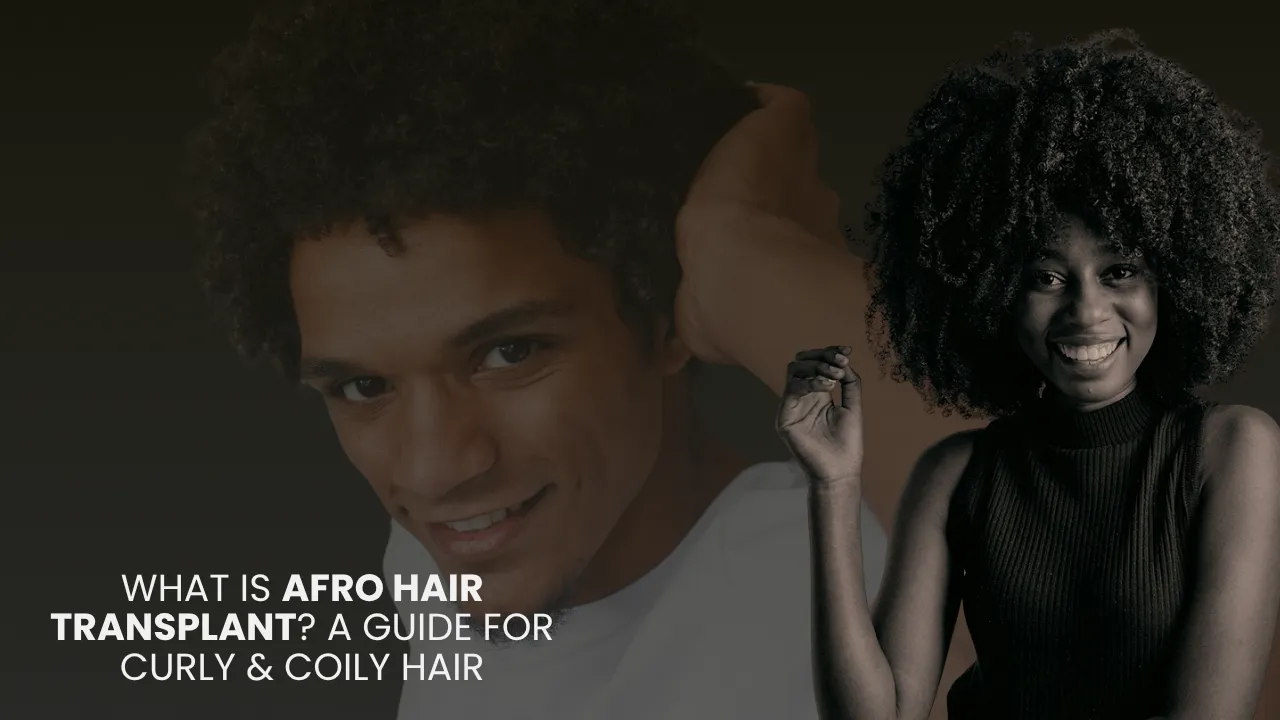
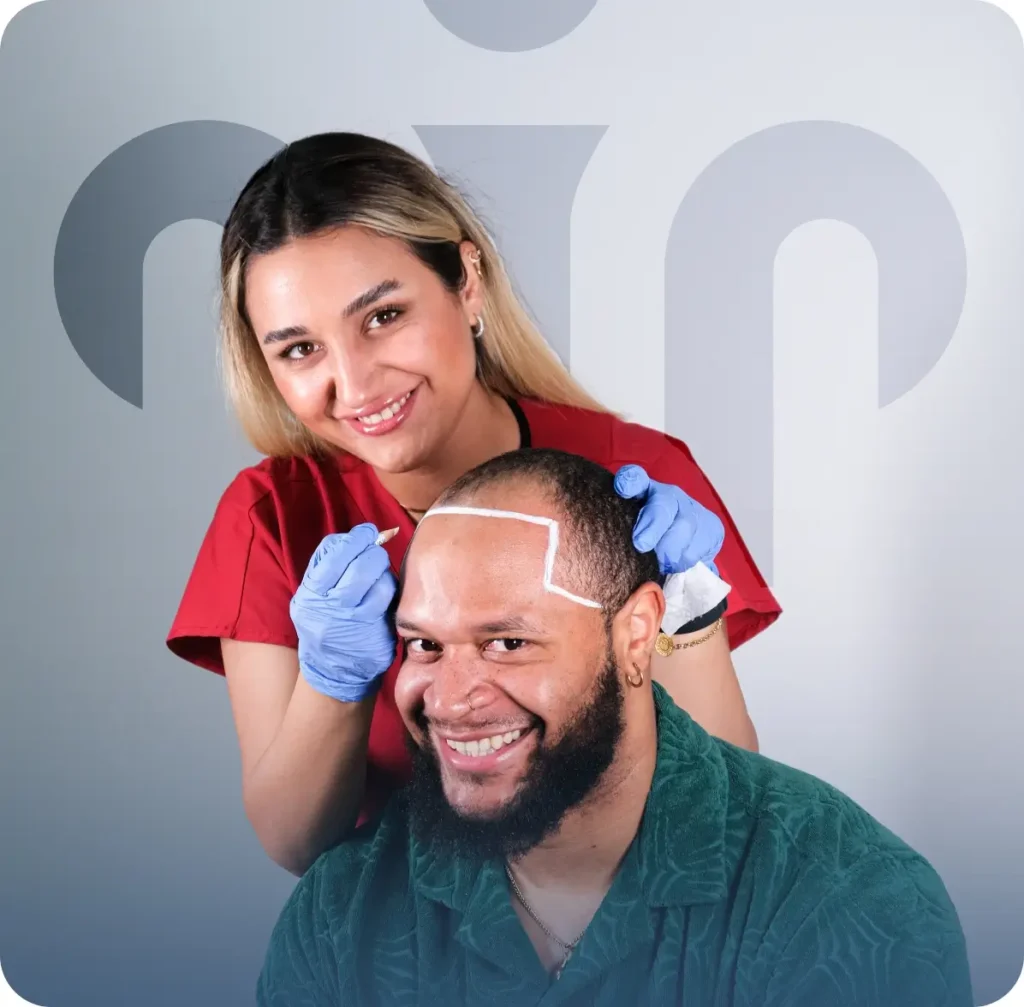
Afro hair transplant is a specialized hair restoration treatment. This procedure is designed for tightly curled, coily, or kinky hair follicles. An Afro hair transplant is more challenging than a usual hair transplant. Because afro hair has a specialized ‘C’ shape beneath the scalp. Surgeons have to be more attentive during the extraction and implantation phases. This procedure requires more precision than standard hair transplant cases.
For patients with Afro-textured hair, the goal is not simply to add grafts. The real goal is to protect the curl pattern, reduce follicle damage, create a natural hairline, and achieve density that blends with the patient’s own hair.
At Turkey Hair Center, Afro hair transplant planning is built around curly-follicle anatomy, donor-area safety, natural hairline design, and long-term growth.
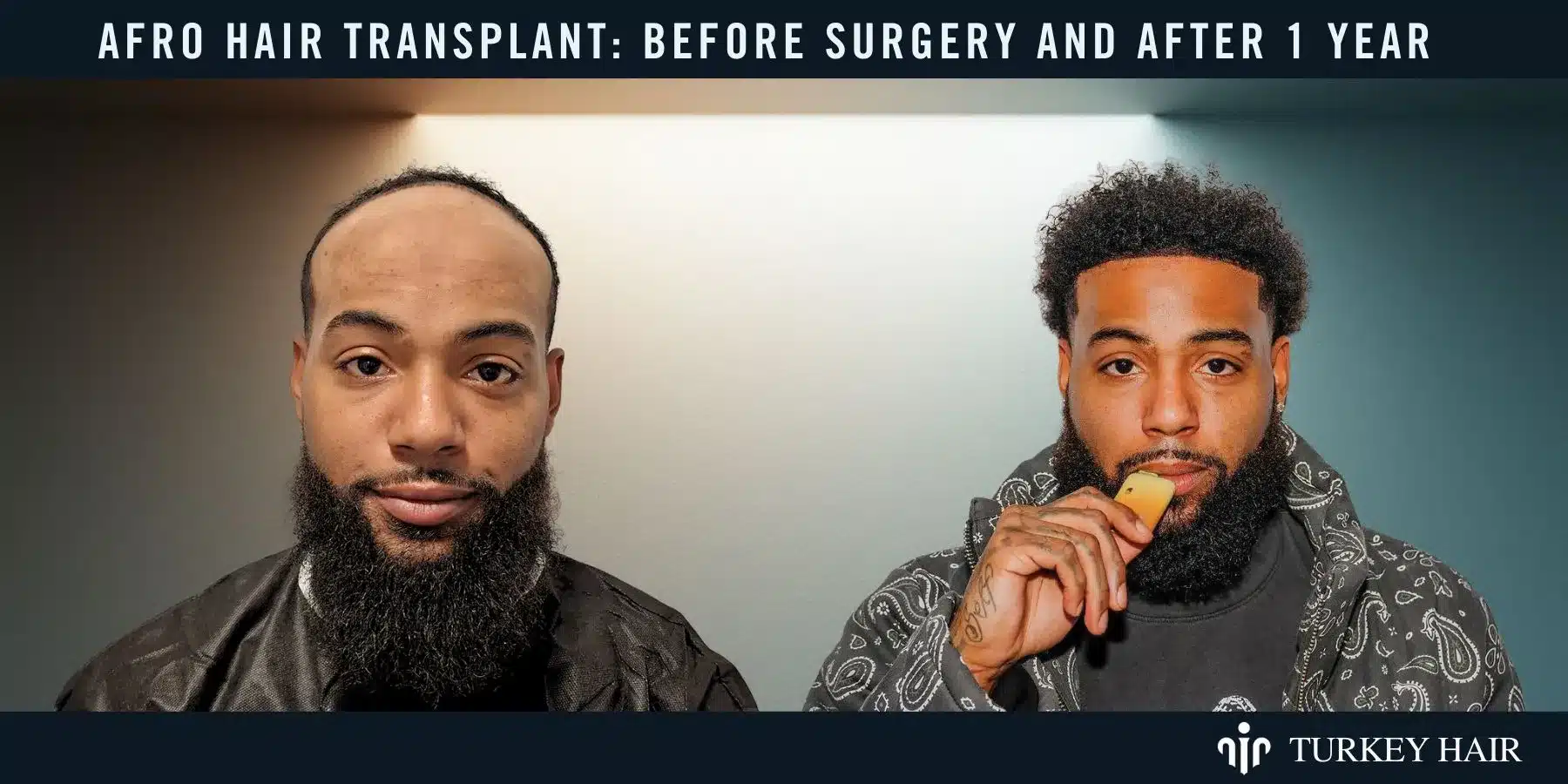
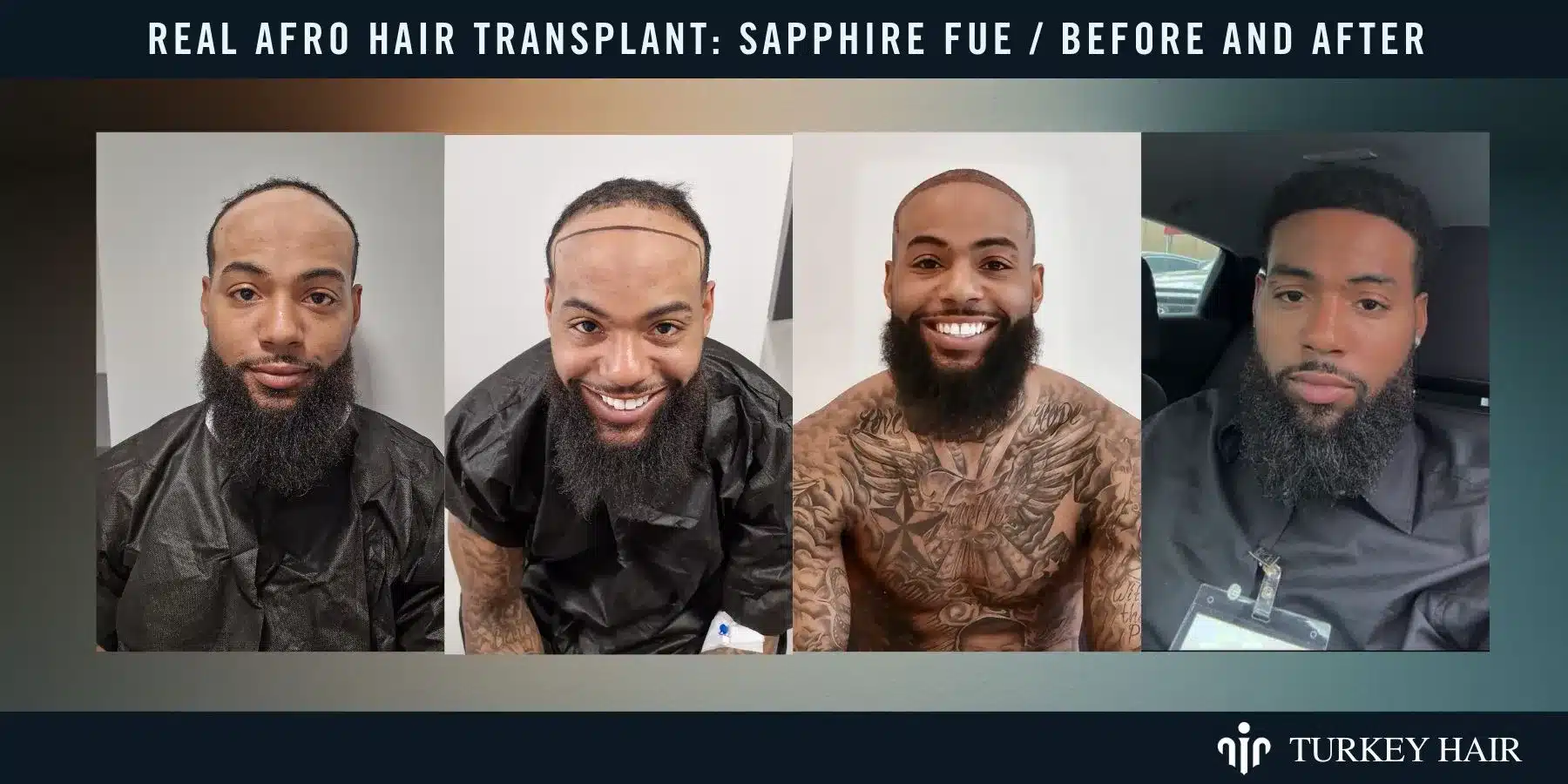
Afro Hair Transplant Before and After Results
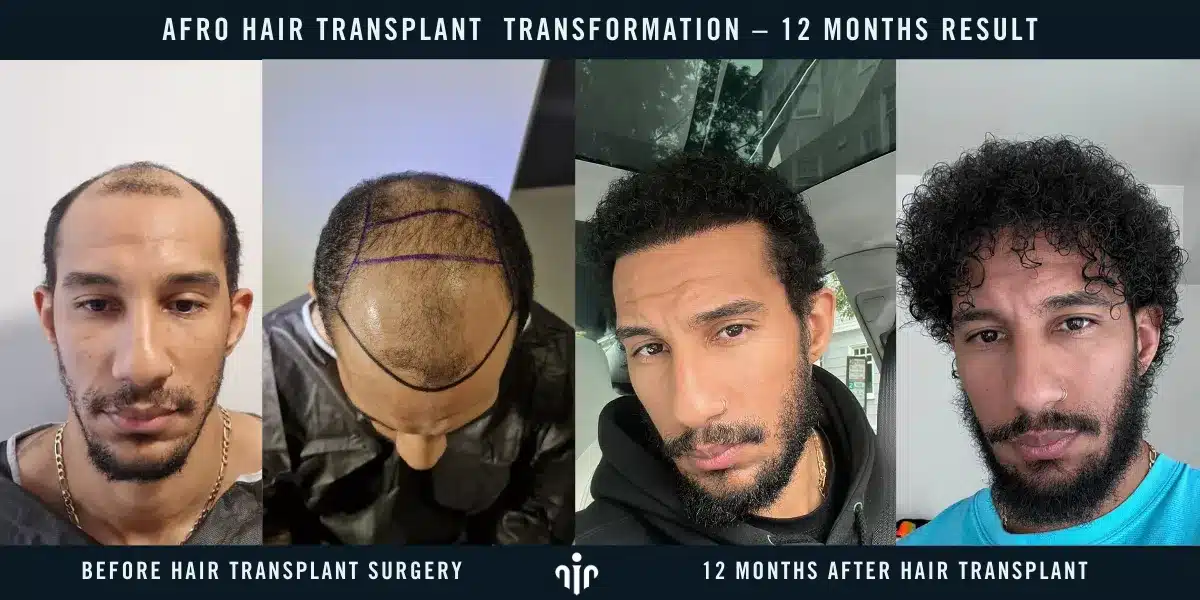
After the procedure, the patient’s hair must look natural, balanced, and match the patient’s original curl pattern. A successful afro hair transplant result doesn’t look like flattening or changing the texture of native hair.
This procedure helps to protect the natural character of afro-textured hair. And it restores hair density. With this procedure, many patients notice visible changes, especially in these areas: the frontal hairline, temples, mid-scalp, and crown.
With the right plan, your surgeon creates the biggest flexes. But all of this depends on the hair loss pattern, donor area strength, curl type, and the number of grafts that can be safely extracted.
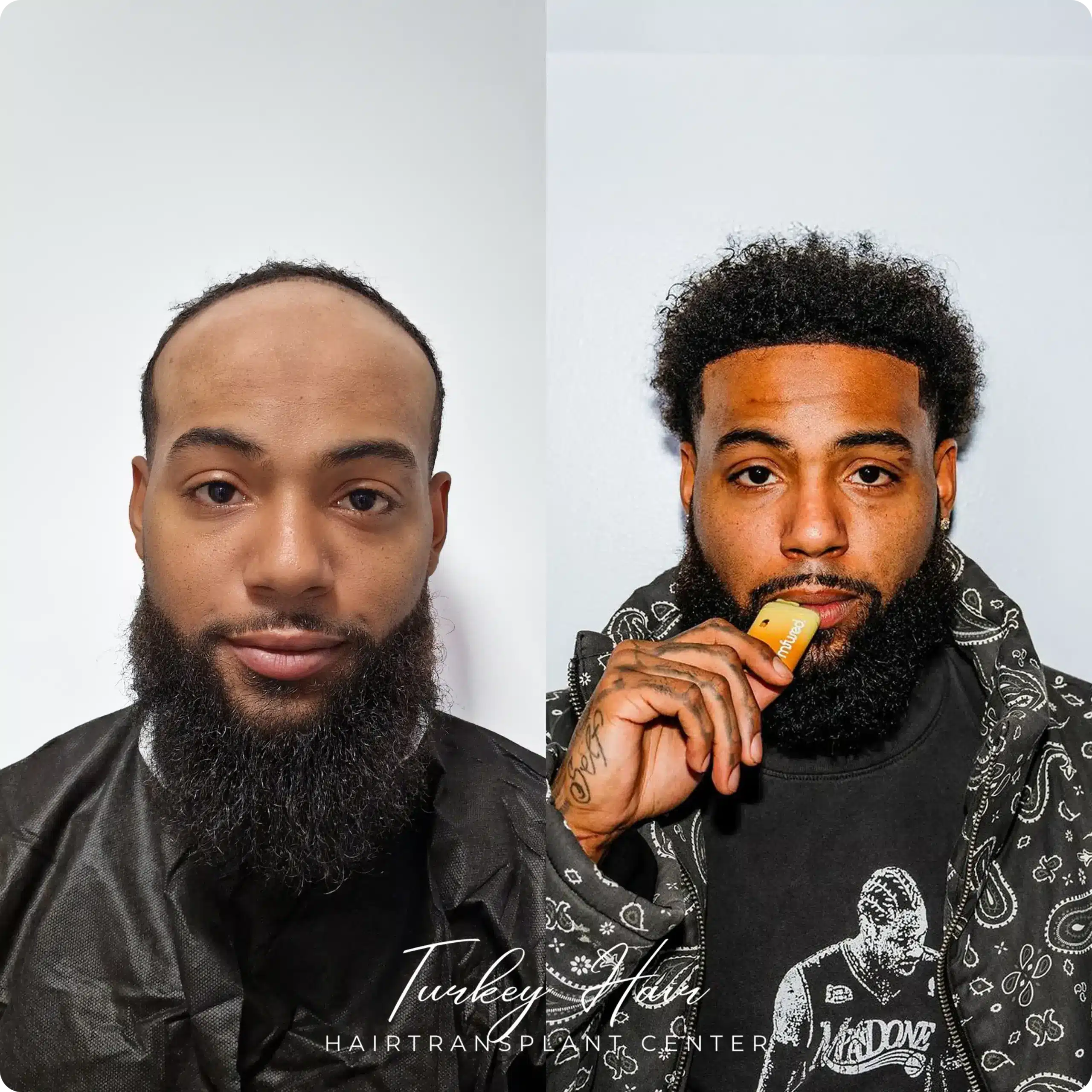
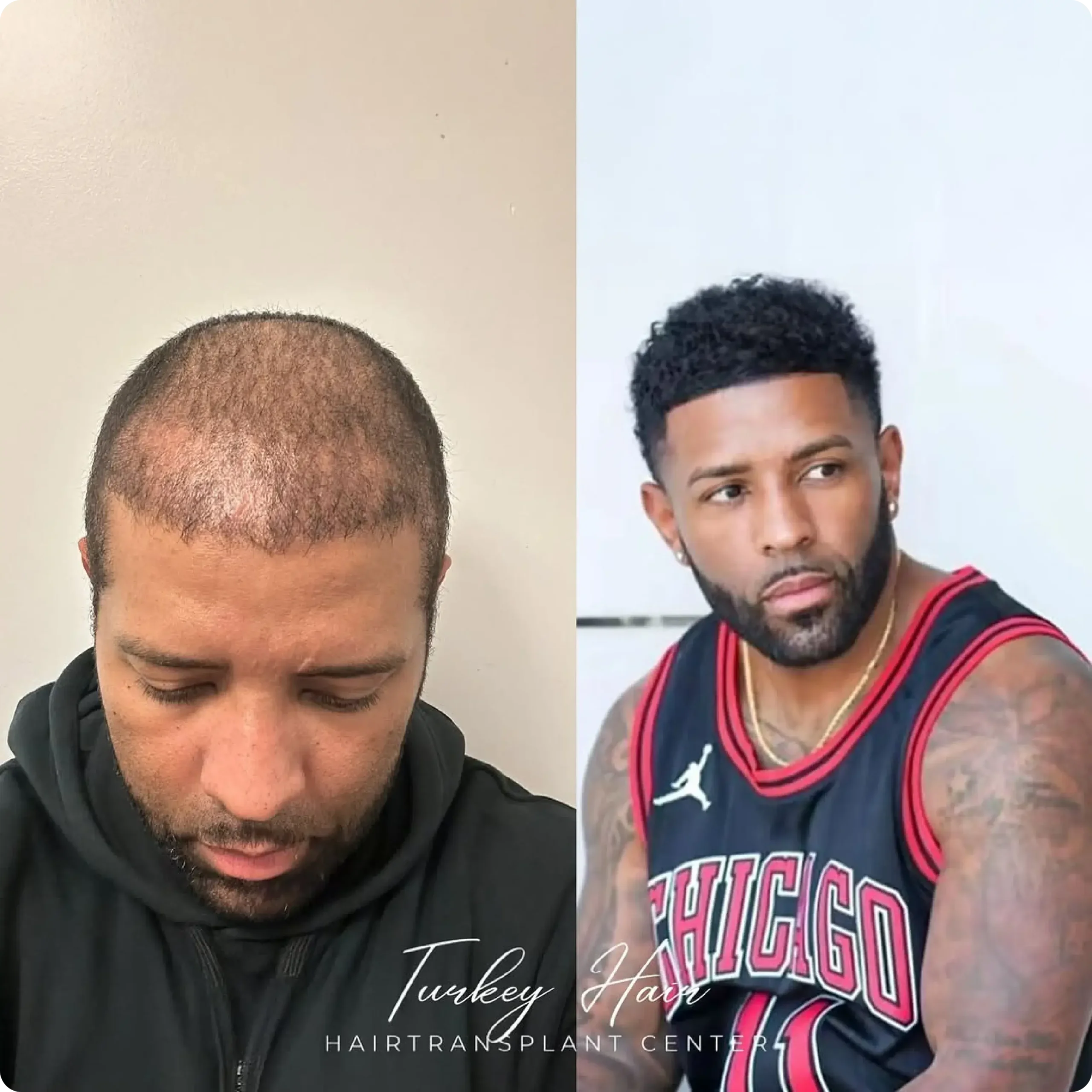
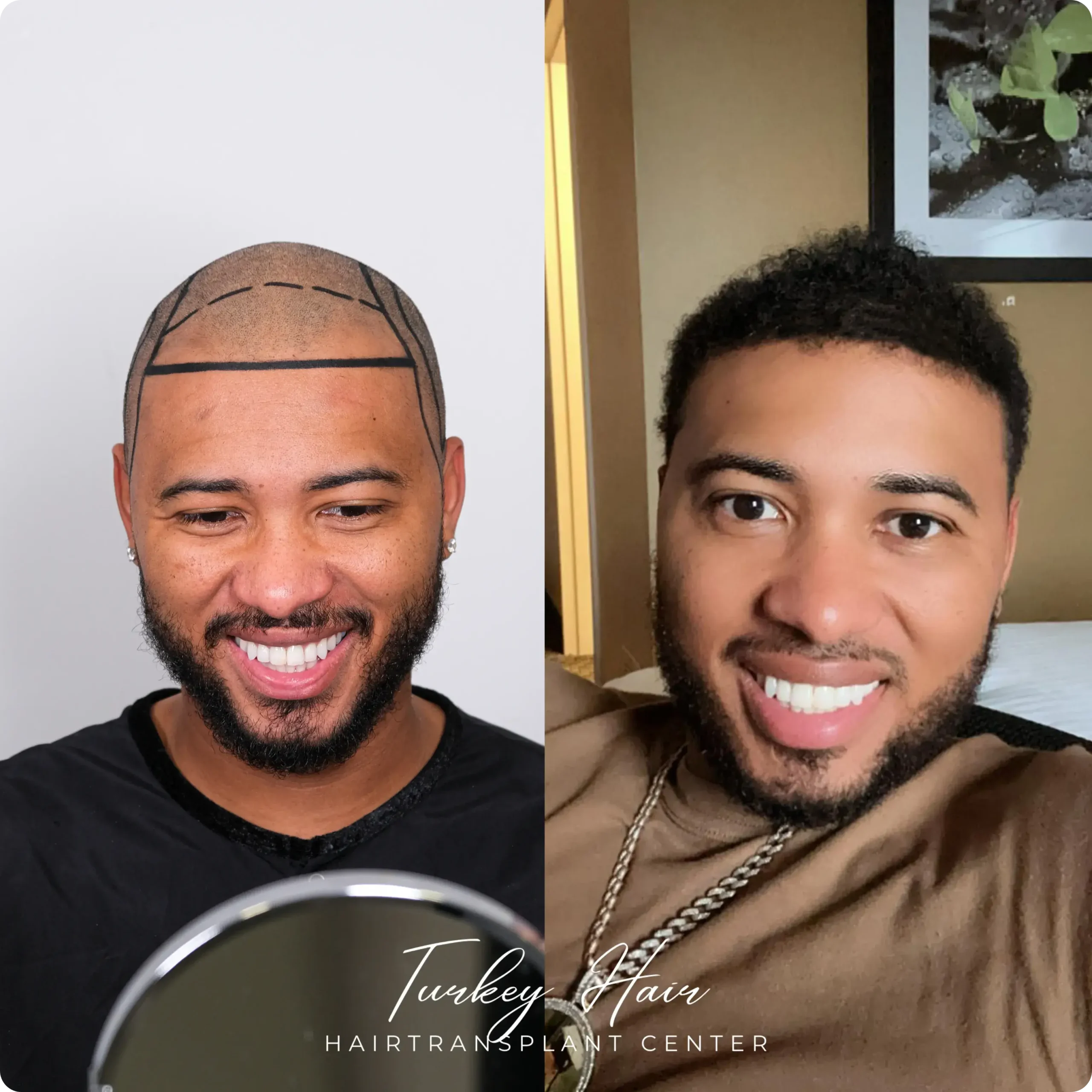
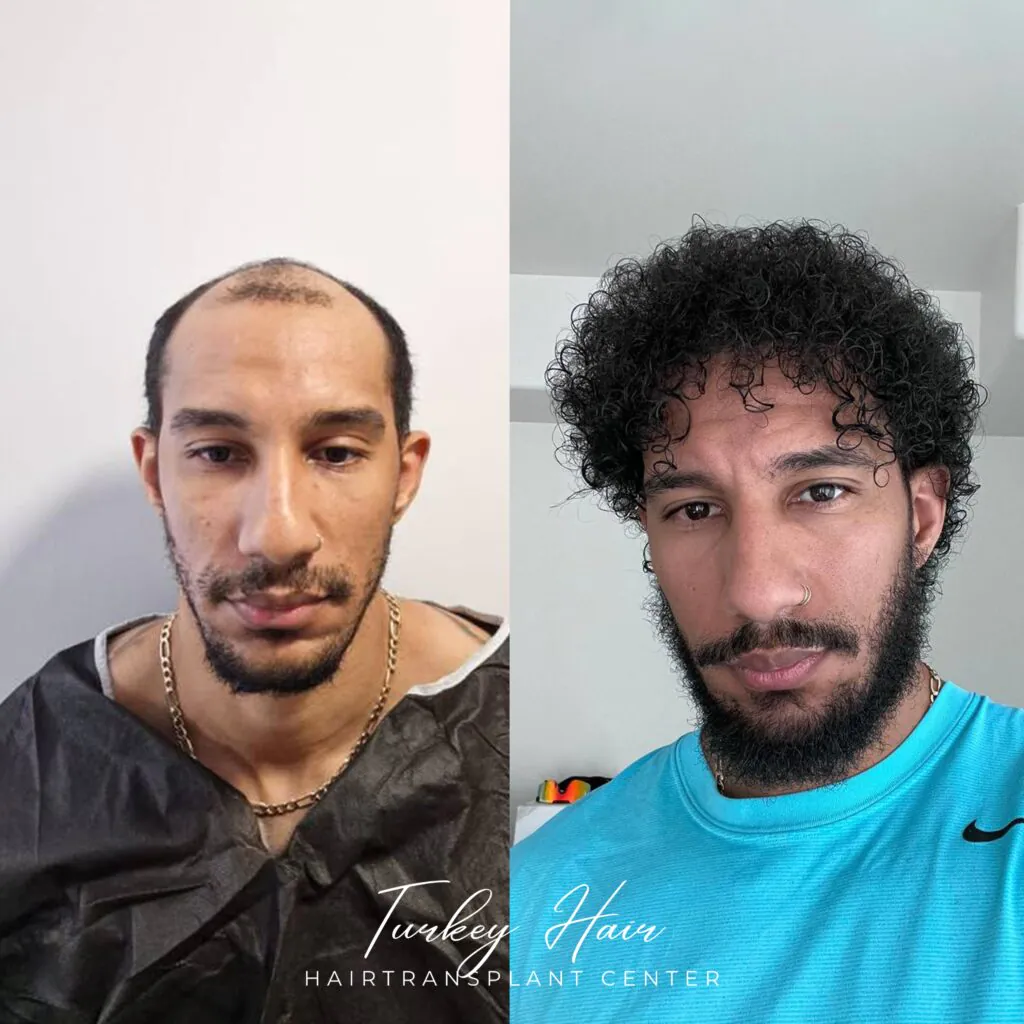
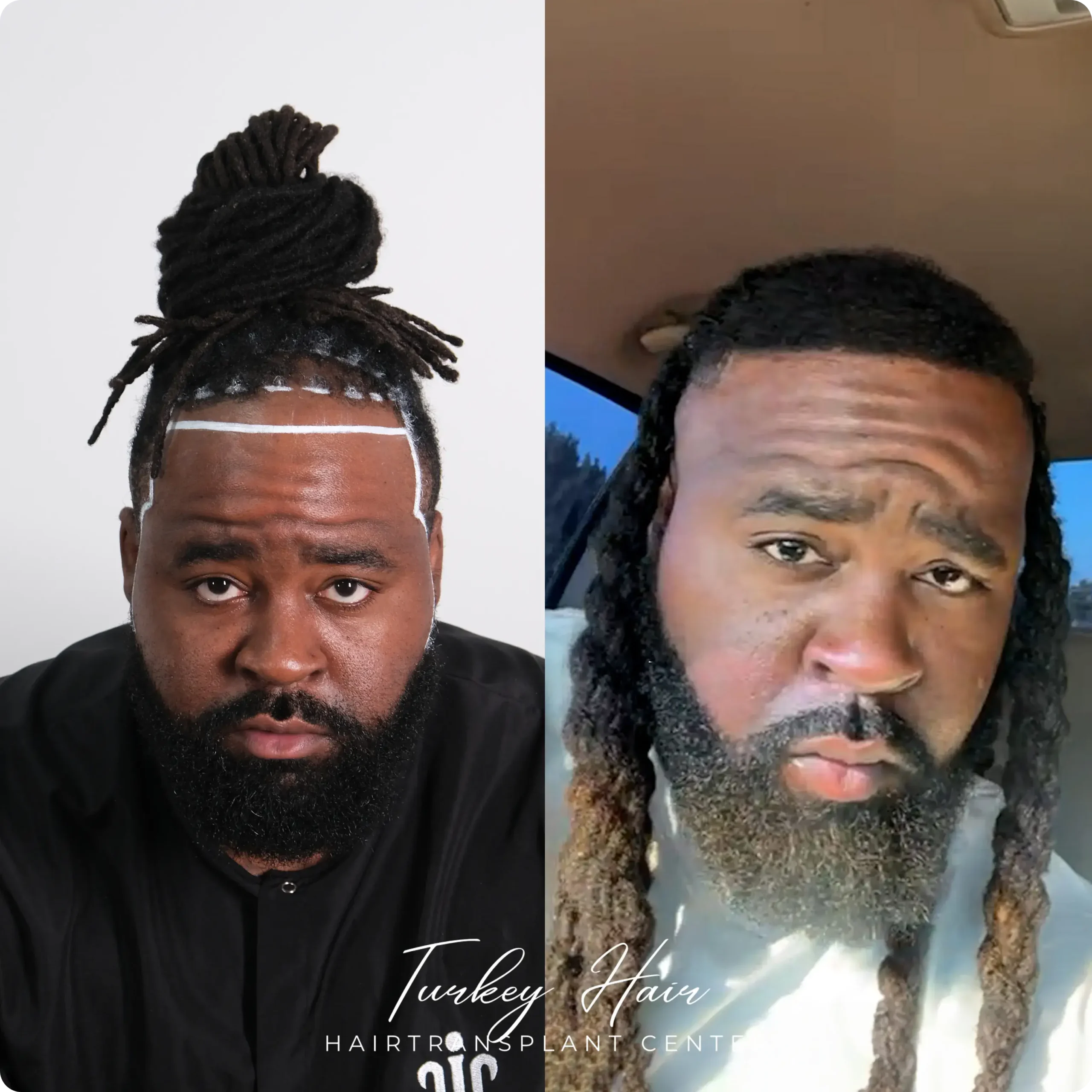
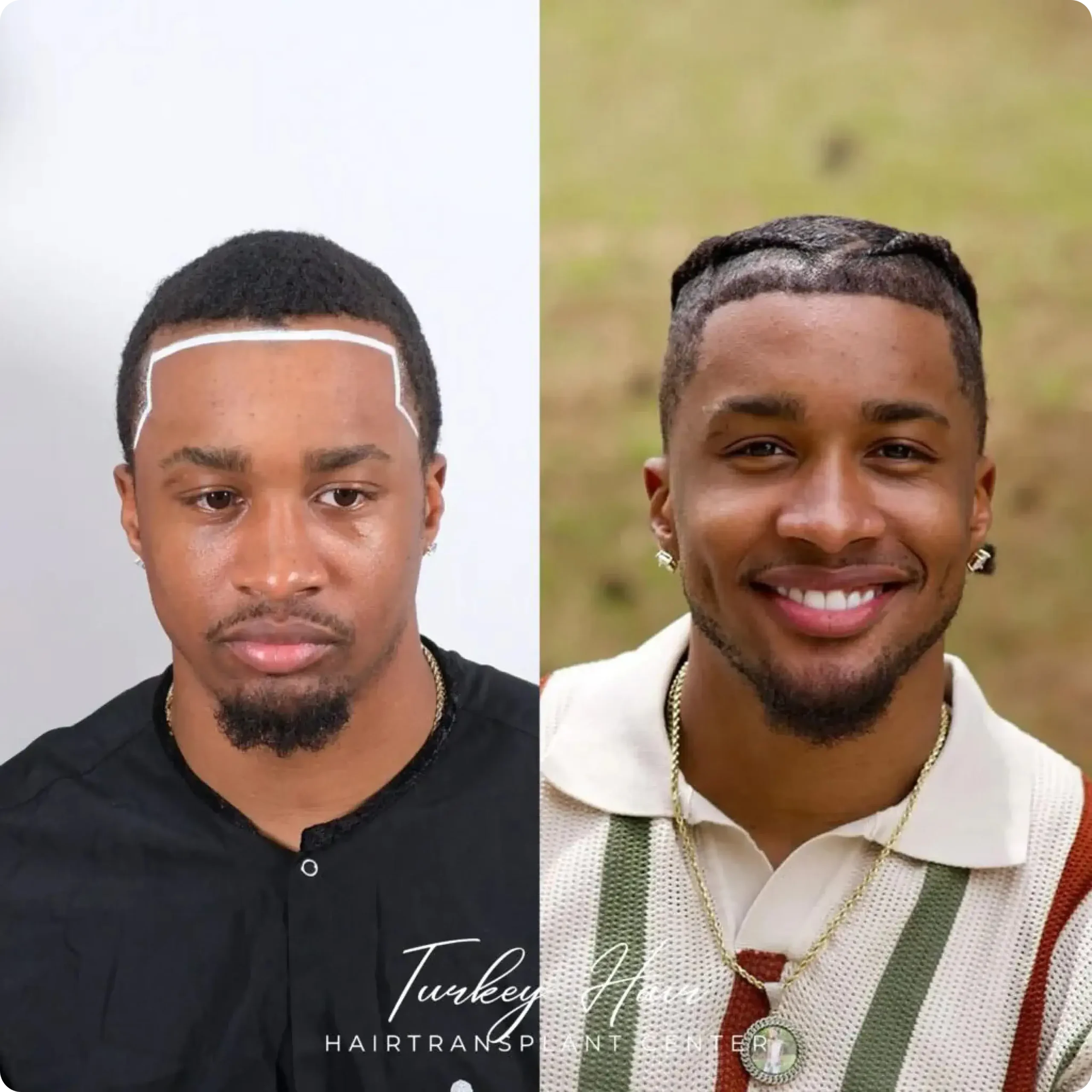
Afro Hair Transplant: A Path to Confidence and Renewal
Afro hair transplant restores natural curls while maintaining the unique texture of Afro-textured hair. Using advanced FUE hair transplant or DHI techniques, skilled surgeons carefully extract and implant curly follicles for a seamless, natural look.
Hair loss is a personal conclusion. For patients with afro-textured hair, it may feel more frustrating. Because if the clinic is not an expert in Afro hair transplant, patients' results don't look natural. The patient's surgeon has to understand the follicle structure, curl direction, or density illusion that curly hair creates. And has to be a specialist in Afro transplant.
With an afro hair transplant, patients can restore thinning areas while keeping the natural curl pattern. Whatever the techniques used, FUE, Sapphire FUE, or DHI, all of these surgeons carefully extract the follicles. Right after, they implant hair to consider the natural angle, depth, and growth direction of the hair.
At Turkey Hair Center, each procedure is planned individually. Before the procedure, our medical team examines the patient's hair and evaluates the donor area, hair loss stage, curl structure, skin sensitivity, and expected density. After this evaluation, they recommended a technique to achieve the best results for the patients.
Our aim is simple: create natural-looking growth, safe extraction, and a result that still feels like your native hair.

Specialized Technique & Expertise

Specialized Technique & Expertise

Specialized Technique & Expertise

Specialized Technique & Expertise
Why Afro Hair Transplants Require a Specialized Approach
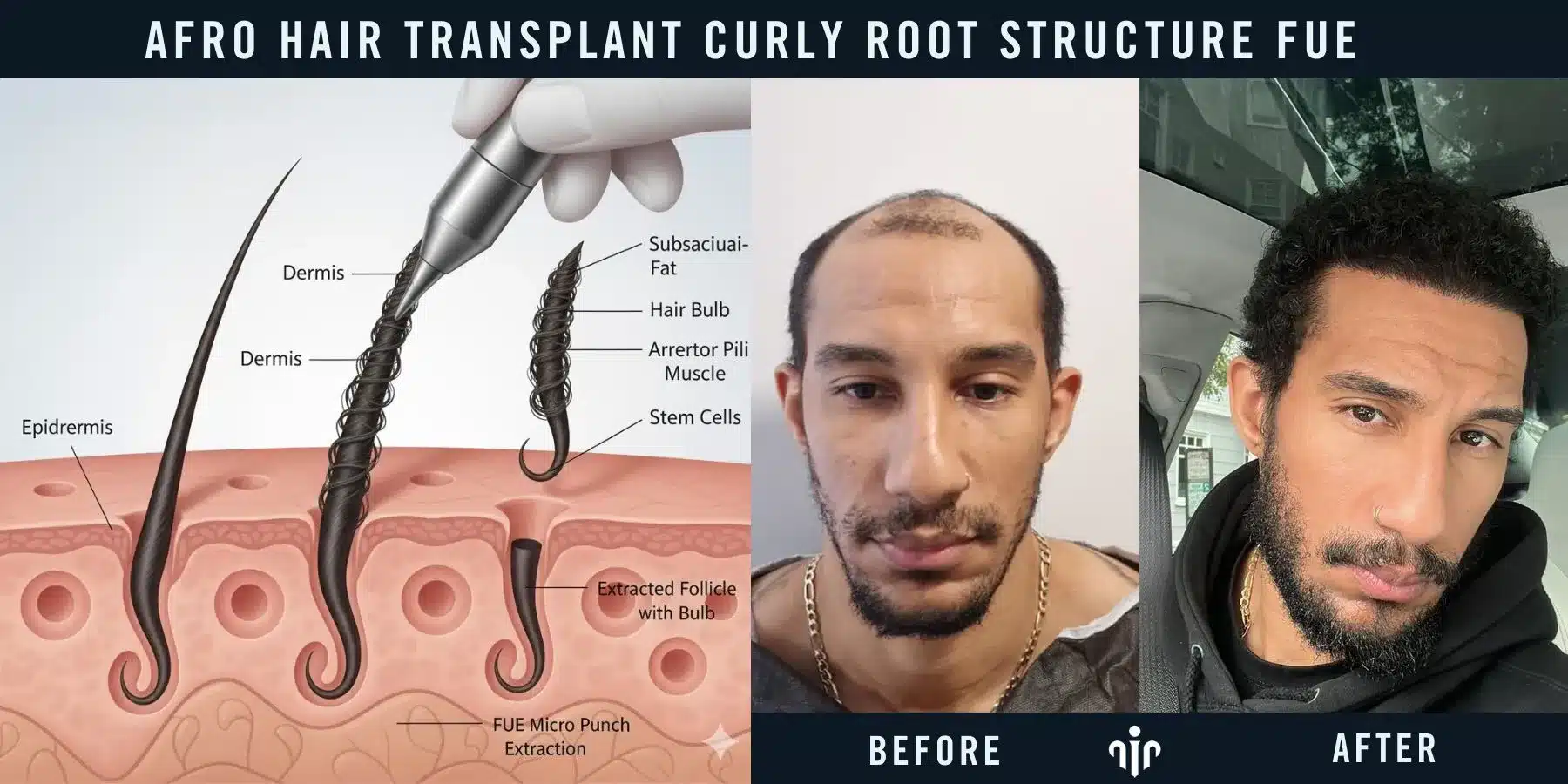
An Afro hair transplant is more complex than a straight hair transplant because the follicle is often curved under the skin. What looks like a simple curl above the scalp may have a C-shaped or hooked root beneath it.
That hidden curve changes everything. If the surgeon extracts the graft without understanding the root direction, the follicle can be damaged. This is known as transection. A high transection rate can reduce graft survival and affect the final density.
That's why you need an experienced medical team for curly and coily hair restoration procedures. The surgeon must follow the follicle's natural path. During the procedure, the surgeon needs to use the appropriate punch size and carefully control the angle. While surgeon doing this has to avoid unnecessary trauma to the donor area.
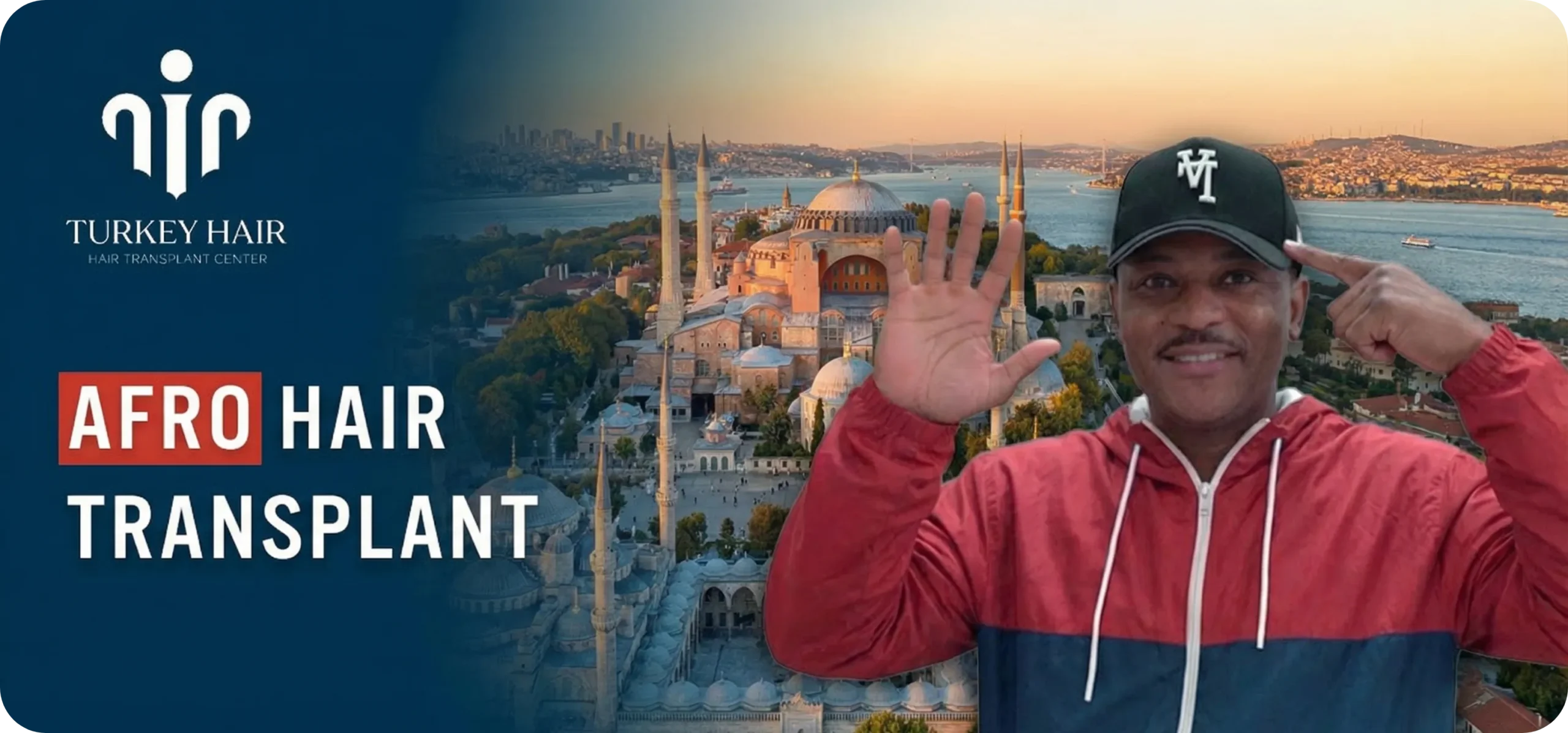
Afro Hair Transplant Package Prices
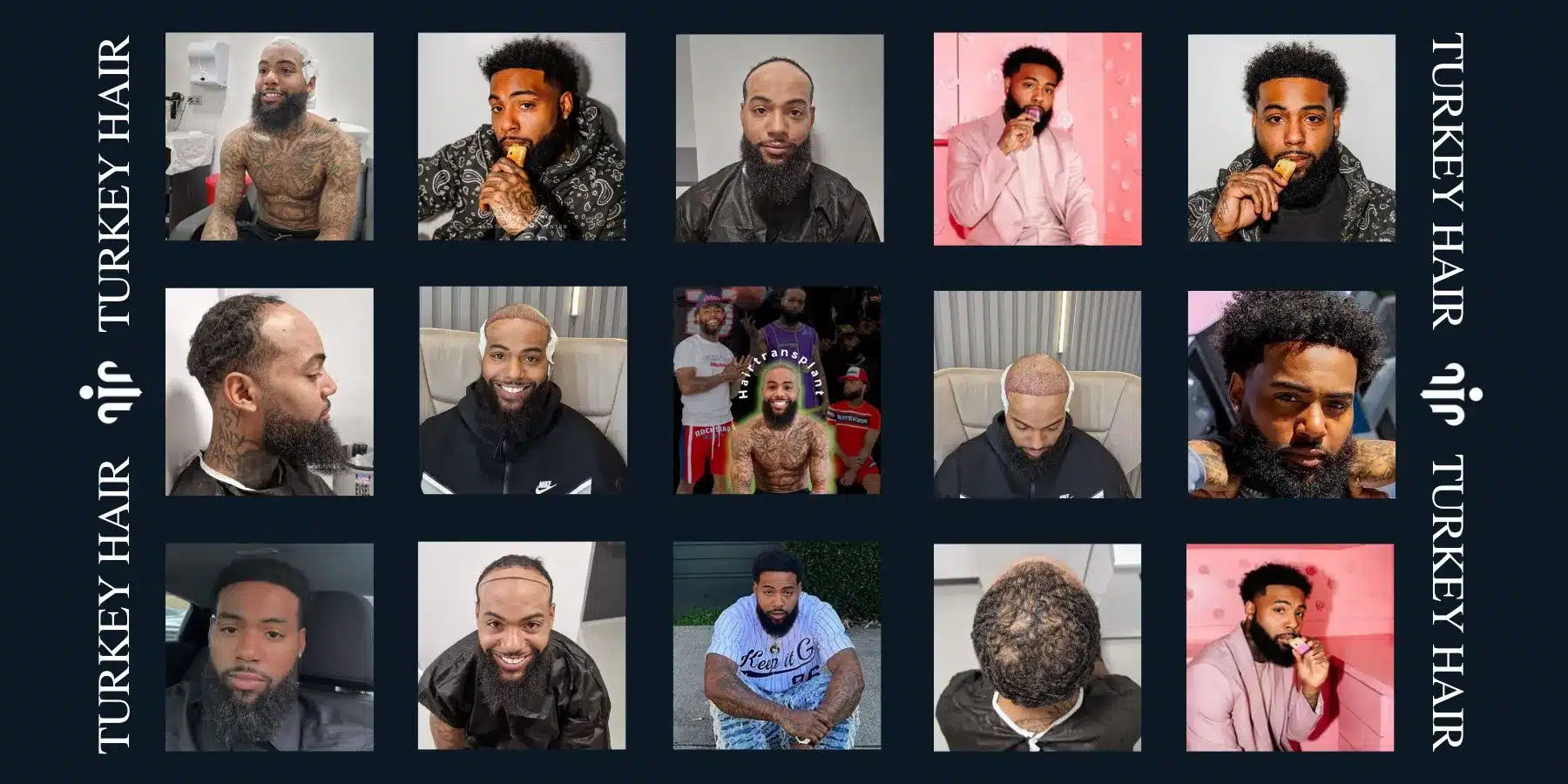
Happy Afro Patient Testimonial Videos
See real Afro hair transplant results at Turkey Hair Center.
Our patient testimonials demonstrate natural hairlines, high graft sessions, and expert techniques developed specifically for Afro-textured hair.
Ready To
Book Your Appointment?
Reach out to us or complete our simple online form
and we’ll contact you to schedule a time that works perfectly for you.



Why Choose Turkey Hair Center: 5 Compelling Reasons
Learn what makes Turkey Hair Center a trusted choice for patients worldwide. Our commitment to medical excellence,
safety, and refined results defines every treatment we provide.
International Standards of Hair Transplantation
Afro Hair Transplant FAQ
The Unique Structure of Curly Hair Follicles
Curly and coily hair does not grow in a straight line beneath the skin. The visible hair shaft may point in one direction, while the root curves in another direction below the surface.
This makes extraction more delicate.
Before removing grafts, the surgeon must evaluate the hair angle, curl direction, skin thickness, and donor density. The goal is to remove each graft as safely as possible without cutting the root.
The good news is that Afro-textured hair can create strong visual density when transplanted correctly. Because hair naturally curls and expands, fewer grafts may sometimes provide better coverage than with straight hair. But only when the grafts survive.
Challenges and Solutions for Successful Graft Extraction
The main challenge in Afro hair transplant is protecting the curved follicle during extraction. If the follicle is cut, it may not grow properly after implantation.
For this reason, the extraction process may be slower and more controlled than in straight hair cases. The team may use manual or carefully adjusted motorized tools depending on the patient’s follicle structure and donor area.
Common challenges include:
- Curved C-shaped follicles
- Higher risk of transection
- Thicker skin in some patients
- Keloid tendency in sensitive skin types
- Need for careful angle and depth control
- Density planning without overharvesting
The solution is not rushing the procedure. Afro hair transplant requires patience, technical control, and a realistic graft plan.
How Turkey Solved the Challenges of Afro-Textured Follicles
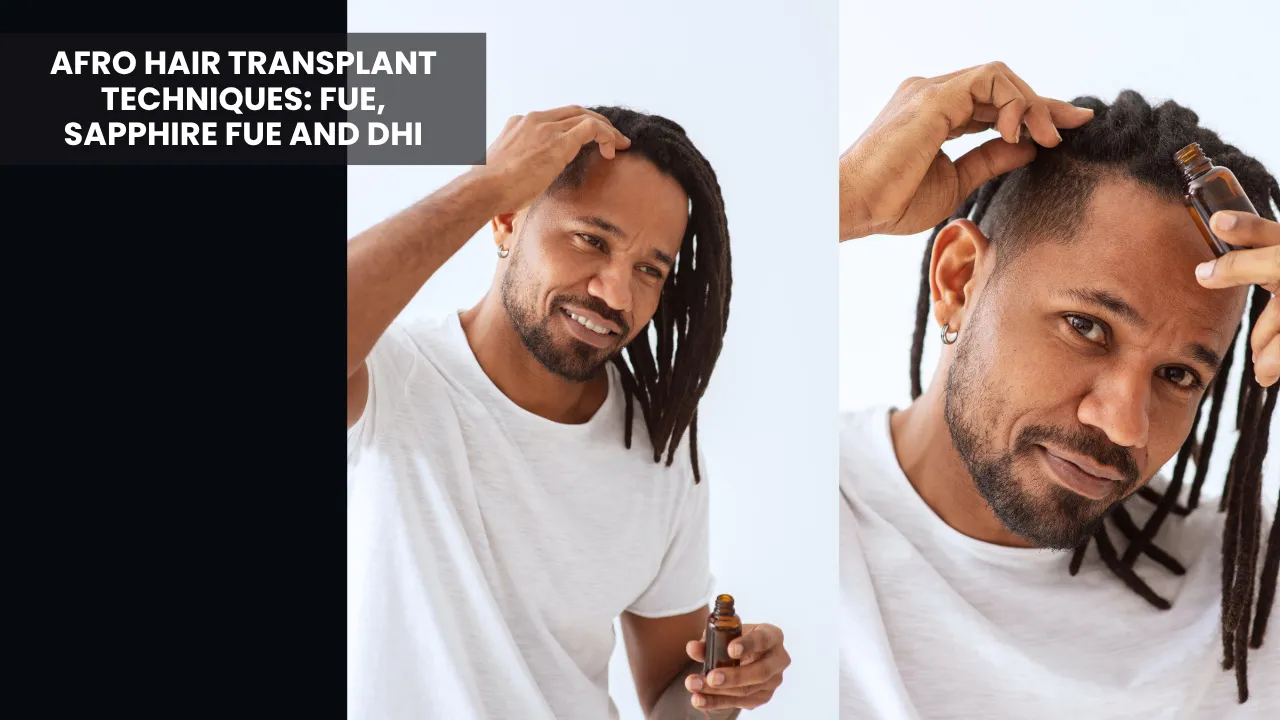
Afro Hair Transplant Techniques: FUE, Sapphire FUE, and DHI
Different techniques may be used for Afro-textured hair depending on the patient’s needs. The best method is chosen after medical evaluation, not just based on preference.
FUE Hair Transplant for Afro Hair
FUE involves removing individual follicular units from the donor area and placing them into thinning or bald areas. For Afro hair, the extraction angle must be extremely precise because of the curved root shape.
FUE can be a strong option for patients who need wider coverage, especially in the frontal hairline, mid-scalp, or crown.
Sapphire FUE for Afro Hair
Sapphire FUE uses sapphire blades during the channel-opening stage. These blades can help create precise micro-channels for graft placement.
For Afro-textured hair, channel direction matters. The new grafts must be placed to respect the patient’s natural curl pattern. If the angle is wrong, the result may look unnatural even if the grafts grow well.
DHI Hair Transplant for Afro Hair
DHI uses an implant pen to place grafts directly into the recipient area. This method can be useful for patients who need dense placement or more controlled implantation.
DHI may be recommended for certain Afro hair cases, but it depends on graft quality, curl structure, recipient area condition, and the density goal.
There is no single perfect technique for every patient. The right method is the one that protects the grafts and creates the most natural result for that specific hair type.
Treatment Planning for Afro Hair Transplant Patients
An Afro hair transplant should always begin with a personalized treatment plan. Two patients may have the same type of curl, but completely different donor areas, hair loss patterns, scalp sensitivity, and density goals. That is why planning matters before any graft is extracted.
At Turkey Hair Center, the process starts with understanding the patient’s hair type, medical history, donor capacity, and expectations. The goal is not to offer the same plan to every patient. The goal is to build a safe, realistic plan based on the patient’s own hair structure.
A complete Afro hair transplant plan may include:
- Online consultation
- Medical history review
- Donor area analysis
- Hair loss stage evaluation
- Curl pattern assessment
- Graft number estimation
- Technique selection
- Hairline design
- Recovery planning
- Aftercare guidance
- Long-term follow-up recommendations
For the afro-textured hair, the most important stage is this planning. First, the medical team evaluates the patients. After that, decide how many grafts can be safely taken, which technique is available for the patient's hair, and how the new hairline should be designed. With this plan, the medical team must also consider the risk of overharvesting in the donor area.
In a good plan, the medical team's aim is not to collect higher graft follicles. The first aim is to focus on safe extraction. In the procedure, the goal is to achieve a natural density while preserving the donor area to maintain long-term results.
Afro Hair Transplant Recovery Process
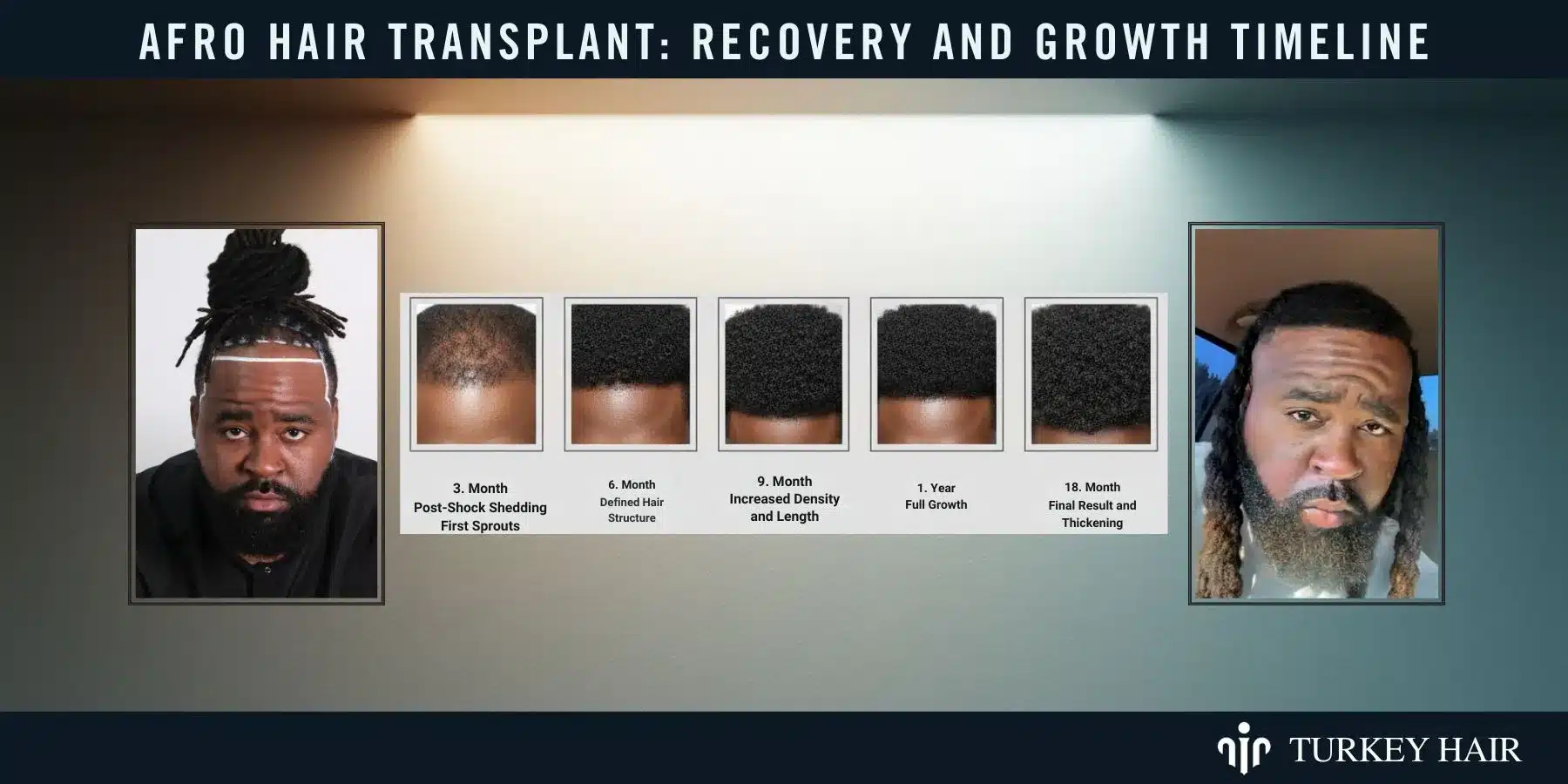
The recovery process follows a similar timeline to other hair transplant procedures. But with an afro hair transplant aftercare, patients must respect the texture, scalp sensitivity, and curl pattern.
Within the first few days, patients can experience swelling, redness, tightness, or scabbing. All of this is expected to result from the transplant. Patient needs to protect newly transplanted grafts, especially during washing and sleeping.
A general recovery timeline may look like this:
- First 3–4 days: initial healing, swelling control, graft protection
- Days 7–10: scabs begin to clear
- Weeks 2–8: transplanted hairs may shed temporarily
- Months 3–4: early new growth begins
- Months 6–9: density becomes more visible
- Months 12–18: final texture and density continue to mature
Shock loss can happen after the procedure. This does not mean the transplant failed—many transplanted hairs shed before entering a new growth cycle.
For Afro-textured hair, patience is important. Because curls grow in a coiled pattern, the visual result may appear gradually as the hair gains length and volume.
Afro Hair Transplant for Non-Native Hair Loss Types
An Afro hair transplant may be used to treat several types of hair loss. The treatment plan depends on the cause of thinning and the condition of the donor area.
Male Pattern Baldness
DHT primarily causes male pattern baldness. And this is known as ‘Androgenic Alopecia’. This kind of hair loss is hereditary. Patients who suffer from male pattern baldness can experience: receding hairline, thinning on top, or crown loss. For patients with afro-textured hair, the curl pattern can sometimes hide thinning in the early stages. But when the density drops across the hair, patients' loss becomes more visible than before.
Traction Alopecia
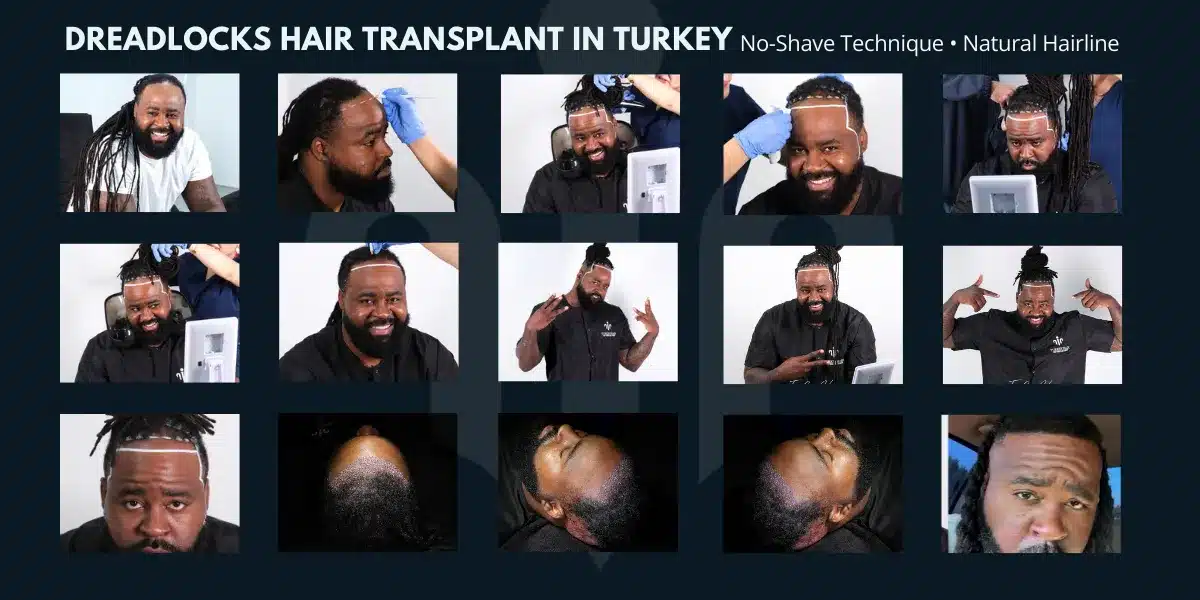
The most common hair loss pattern in Afro-textured hair is the traction alopecia. This is the main reason why people consider hair transplantation. Traction alopecia comes from years of tension in the same area of the patient's scalp. Tight braids, locs, weaves, extensions, ponytails, and protective styles can all cause traction alopecia.
For many patients, it starts quietly. A little thinning around the edges. A temple that does not grow back the way it used to. A frontal hairline that slowly becomes weaker. At first, it may not feel serious. But when the hair is exposed to repeated tension over the years, damage to the patients can be permanent.
So, all of this is the answer to ''Why traction alopecia needs careful examination before the surgery. If the patient's scalp is still irritated, inflamed, or actively shearing, transplant surgery may not be the first thing to do. Before all of this, the medical team has to examine the scalp. After that, determine whether hair loss has stabilized or if the donor area is enough for transplantation.
When transplantation has no obstacles, surgeons can help rebuild hair edges and can soften the receding hairlines. Your new hairstyle should not look like an artificial or sharp edges. The design has to follow the patient's natural hairline shape, curl direction, and face frame.
Female Afro Hair Transplant
Female Afro hair transplants have their own rhythm. This procedure not just a smaller version of male hair transplant. For many women, restoration of the edges, temples, and frontal hairline is the top priority. For a woman, hair transplant surgery is deeply connected to identity and confidence.
Women with Afro-textured hair may experience hair density loss for different reasons. Same as men, traction alopecia is common. But it's not the only cause. Hormonal changes, genetic thinning, postpartum shedding, relaxer damage, heat styling, and years of tight hairstyles can all affect the hairline.
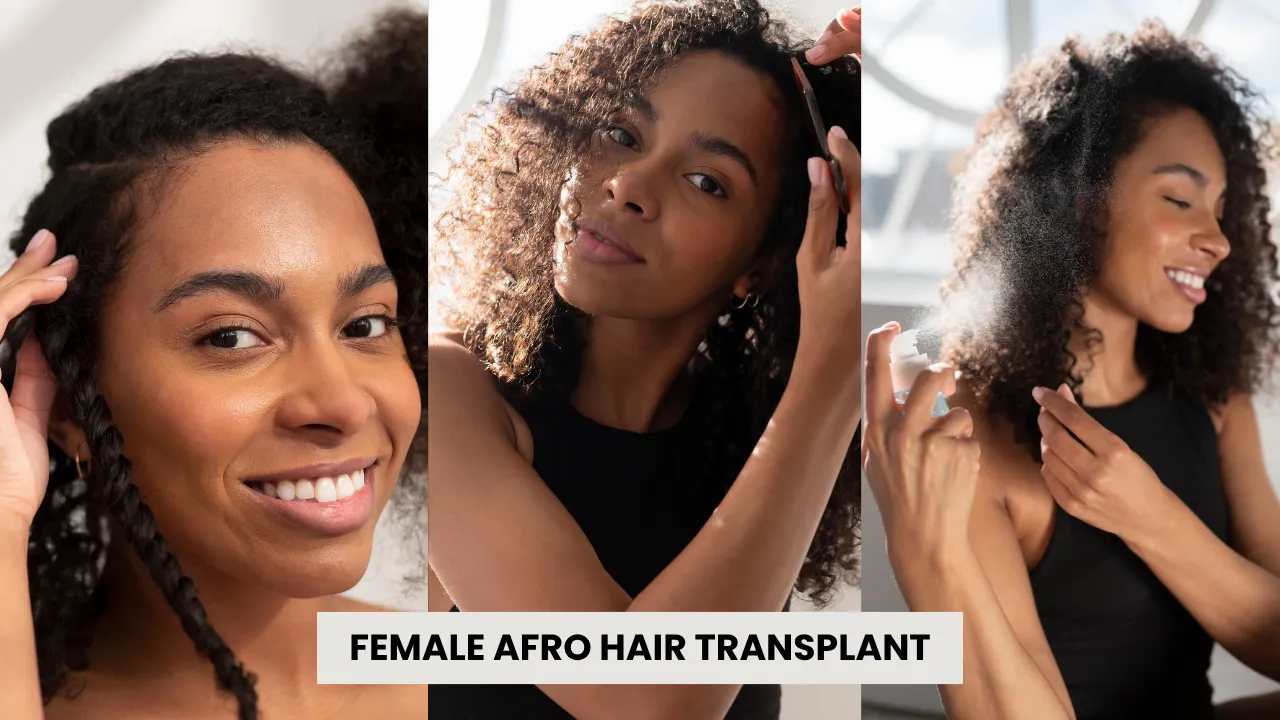
This is why the patient's hair restoration plan must be tailored to the patient. Some women need edge restoration. Some need temple filling. Others need soft density support across the front or thinning patches. A good result should not look drawn on. It should look like the hairline has slowly recovered.
In a female Afro hair transplant, the surgeon has to be especially careful with the shape. The hairline should stay soft. The angles should match the natural curl. The donor area should be used conservatively, because long-term styling needs matter too.
After the procedure, habits also matter. Tight styles may need to be paused for a while. The scalp may need a gentler wash routine. Moisture balance becomes important. Surgery can restore the area, but recovery and future styling choices help protect the result.
Crown and Mid-Scalp Thinning
Not every Afro hair transplant focuses on the hairline. Some patients have thinning through the mid-scalp or crown, where the loss is less obvious at first but becomes more visible under light.
The crown is a tricky area. Hair grows in a circular pattern there, so the grafts have to follow the natural direction. If they are placed without respecting that pattern, the result may look uneven when the curls grow out.
The mid-scalp needs a different kind of planning. It has to connect the front and the crown without looking patchy. The surgeon is not simply filling empty spaces. They are trying to create a natural flow from one area to another.
Afro-textured hair has one advantage here: curls can create a strong illusion of density. But that advantage only works when the grafts are handled carefully. A rushed extraction or poor placement can reduce survival and weaken the final look.
In many cases, smart distribution is better than chasing the highest graft number.
Why International Patients Choose Turkey Hair Center for Afro Hair Transplant
International patients usually come with two concerns. First, they want to know whether the clinic truly understands Afro-textured hair. Second, they want the whole process to feel clear before they travel.
That is fair. An Afro hair transplant is not a standard case. The follicles may curve under the skin. The extraction can take longer. The hairline needs to respect the patient’s curl pattern. And the donor area must be protected carefully, because once it is overharvested, there is no easy way back.
At Turkey Hair Center, the focus is on planning the procedure around the patient, not fitting every patient into the same template. This matters even more for people traveling from abroad. They need to know what will happen before arrival, during the procedure, and after they return home.
A good international patient journey should not feel confusing. The patient should understand the technique, the expected graft range, the recovery process, and the aftercare before making a decision.
Personalized Planning for Curly and Coily Hair
Two patients can both have coily hair and still need completely different plans. One may have strong donor density but a weak frontal hairline. Another may have traction alopecia around the edges. Someone else may need crown support but cannot safely give a very high number of grafts.
That is why consultation matters.
The medical team needs to consider more than just the visible thinning. Donor strength, curl tightness, scalp sensitivity, skin-healing history, and future hair-loss risk all affect the plan. Even the way the patient usually styles their hair can matter.
For an Afro hair transplant, the question is not only “How many grafts do you need?” It is also “How many grafts can be taken safely?” and “Where will those grafts make the biggest visual difference?” That is where a natural result begins.
Support Before, During, and After the Procedure
For patients traveling from another country, the medical side is only one part of the experience. There are also practical questions. How many days should I plan? Who will explain the process? What happens after the first wash? What if I have questions after I go home?
These details matter. A structured process may include online consultation, donor area review, graft planning, travel coordination, interpreter support, treatment-day guidance, and follow-up after the procedure. The point is to make the patient feel informed instead of lost.
Aftercare is especially important for Afro-textured hair. The scalp may feel dry. The curls may need gentle handling. Patients need clear advice on washing, moisturizing, wearing hats and wraps, exercising, and when to return to protective styles.
The surgery starts the result. The recovery protects it.
Natural Results That Respect Your Hair Texture
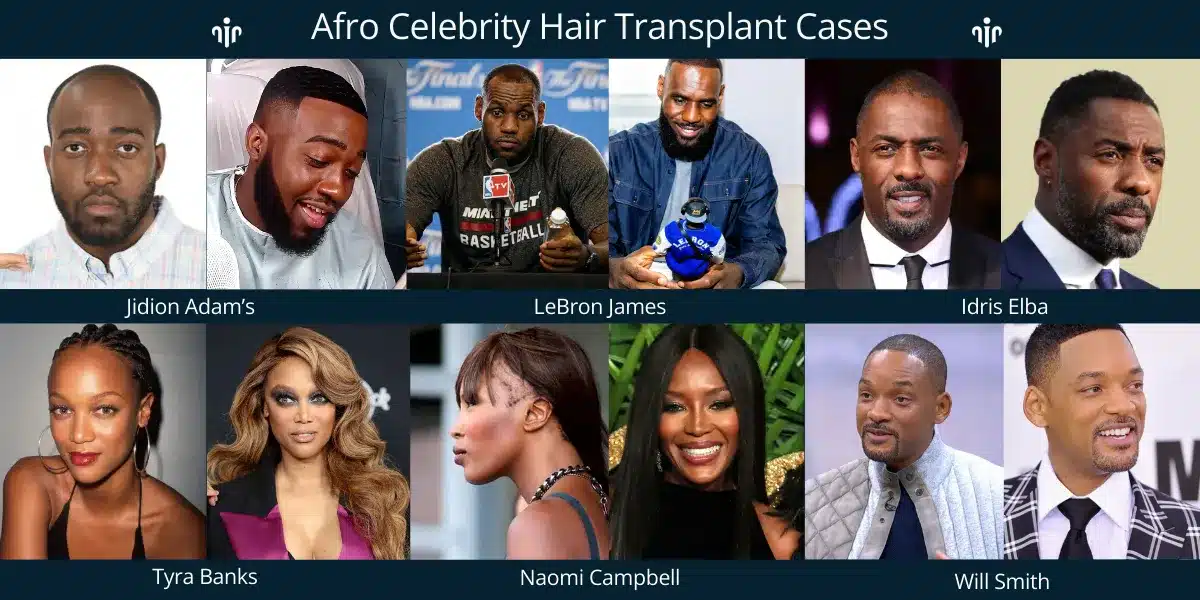
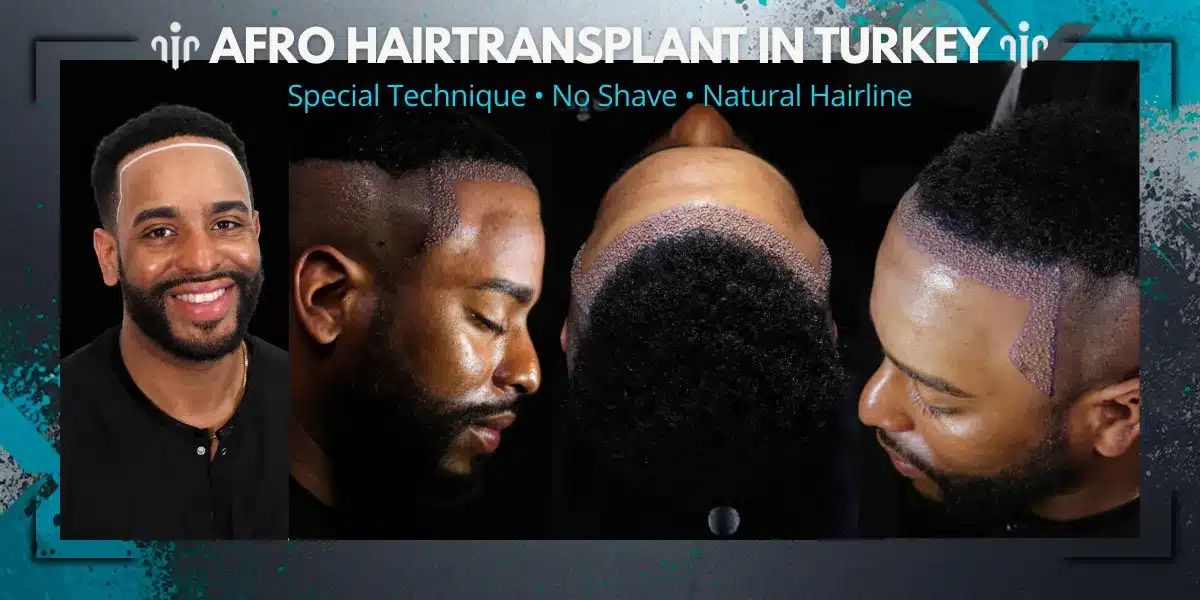
A natural Afro hair transplant should not make the patient look like someone else. It should bring back density in a way that still feels familiar.
That means the new hairline should not be too straight. The grafts should not ignore the curl direction. The density should not look heavy in one area and empty in another. Everything has to blend.
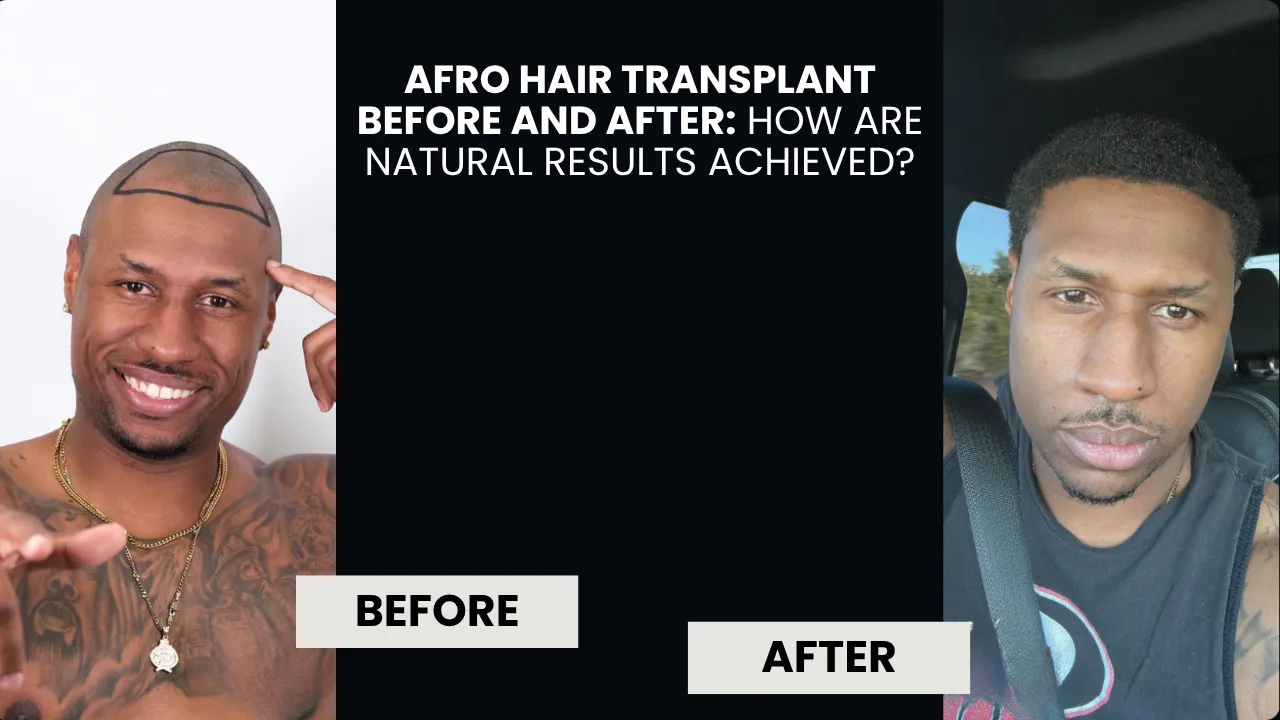
For many patients, this is the biggest fear. They do not want a generic transplant. They want their own hairline back, or at least something close to it.
The best result grows quietly. Month by month, the hair starts to fill in. The curls begin to take shape. The transplanted area starts to look less like a procedure and more like the patient’s own hair returning.
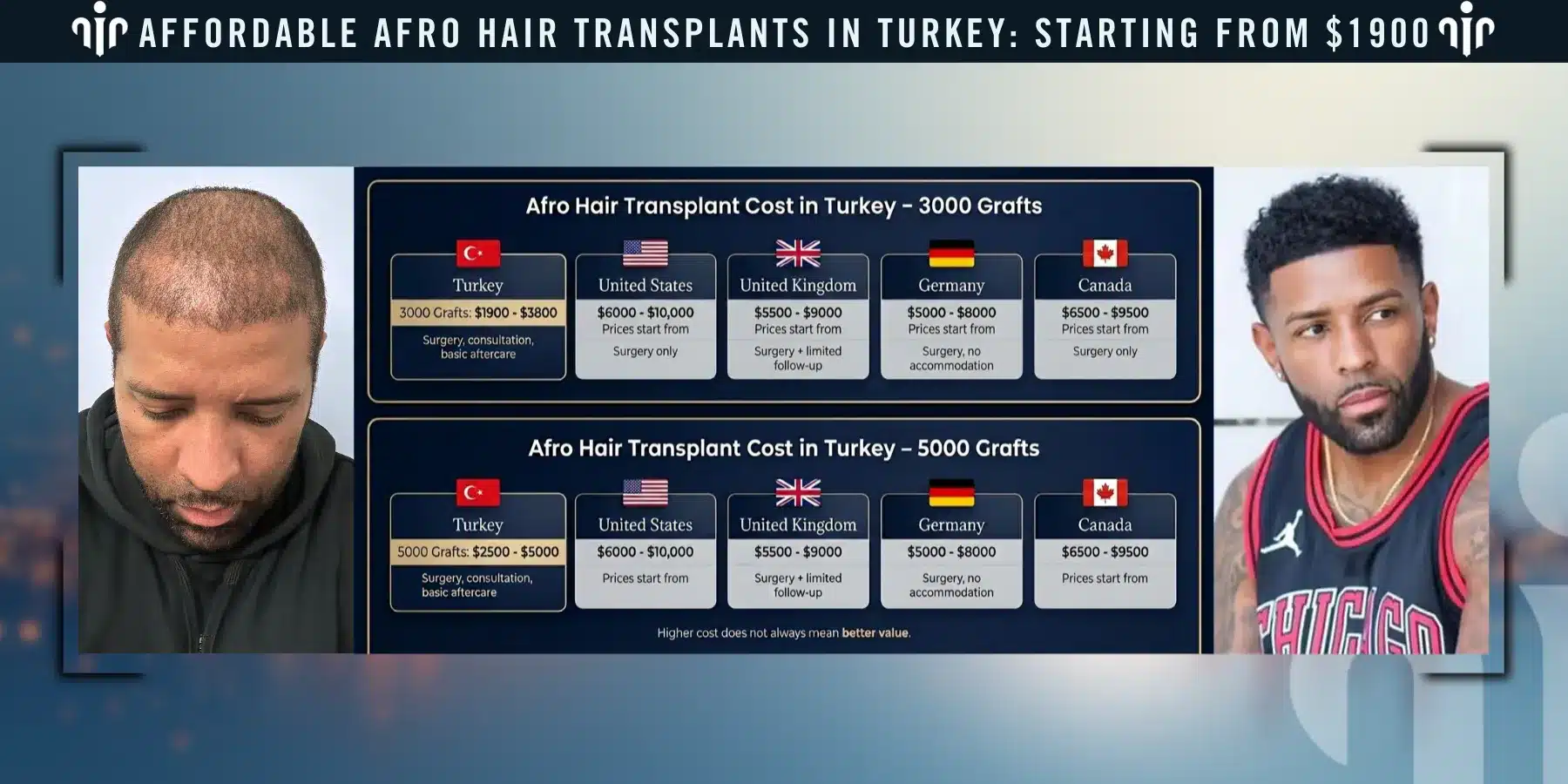
Afro Hair Transplant Cost by Graft Range
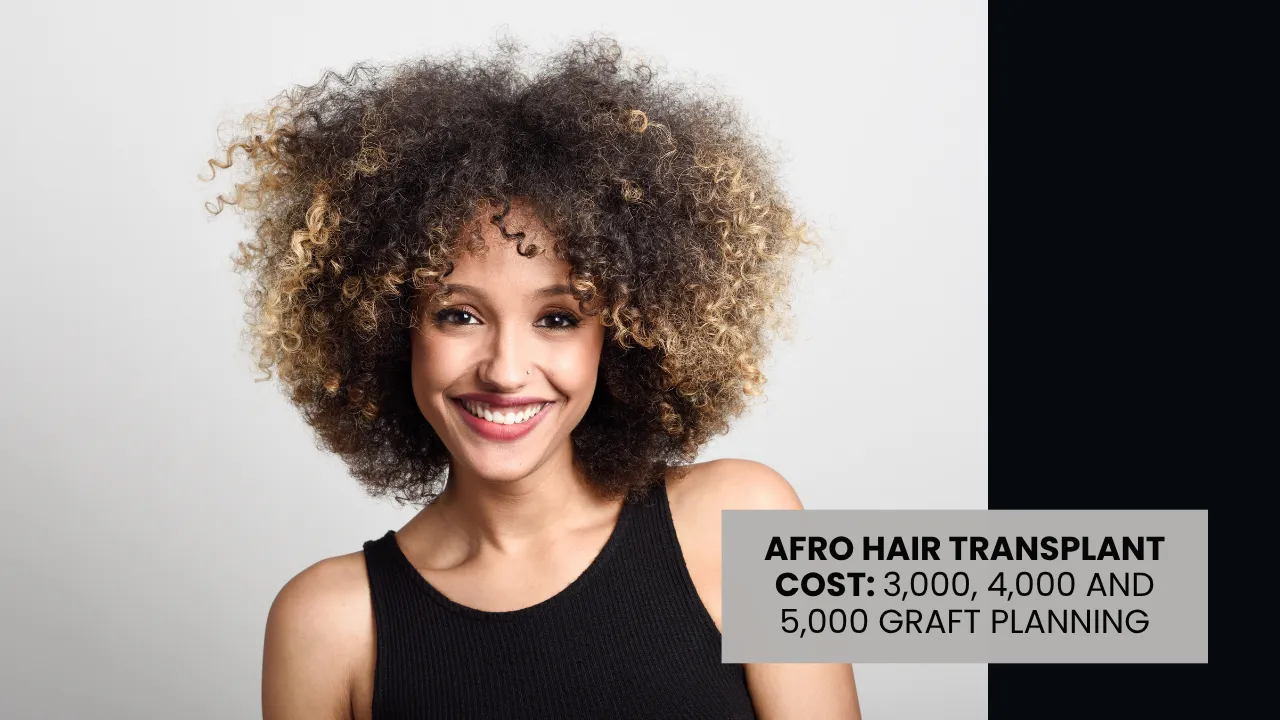
The cost of an Afro hair transplant depends on several factors. The number of grafts, the technique, donor quality, and the complexity of the extraction affect the cost. Some patients may need 3,000 to 5,000 grafts for a natural result. But a bigger number of grafts is not always better for afro-textured hair.
The surgeon who works with afro-textured hair knows the curved follicles have to be extracted more carefully during the procedure. This caution is more important than speed. A high number of grafts helps ensure that only the grafts survive, and after the procedure, the patient's donor area remains healthy.
So in the procedure our first aim is not a maximum graft count. It's about safe coverage on the patient's scalp. A good plan uses the available grafts where they will create the most natural improvement.
3,000 Grafts
A 3,000-graft plan may be enough for patients with frontal hairline recession, temple thinning, moderate mid-scalp loss, or traction alopecia around the edges.
This range can make a visible difference when the donor area is healthy, and the hairline design is realistic. For some Afro-textured hair patients, 3,000 well-placed grafts may look stronger than a higher number placed without a clear plan.
4,000 Grafts
A 4,000-graft session may be considered when the patient needs broader coverage across the front, temples, and mid-scalp. It may also help in wider traction alopecia cases where the edges need more support.
Still, this should not be treated as a simple numbers game. The surgeon has to protect the donor area and place the grafts in a way that works with the curl pattern. Smart distribution matters more than packing every area heavily.
5,000 Grafts
A 5,000-graft session may be discussed for advanced hair loss or wider coverage goals. But not every patient is a safe candidate for a session that large.
Before planning a high-graft procedure, the team needs to assess donor density, scalp condition, follicle shape, healing tendency, and long-term hair-loss risk. For Afro hair, this is especially important. Overharvesting can leave visible thinning in the donor area, and that is not worth it to chase a large number.
Final Thoughts: Afro Hair Transplant Requires the Right Hands
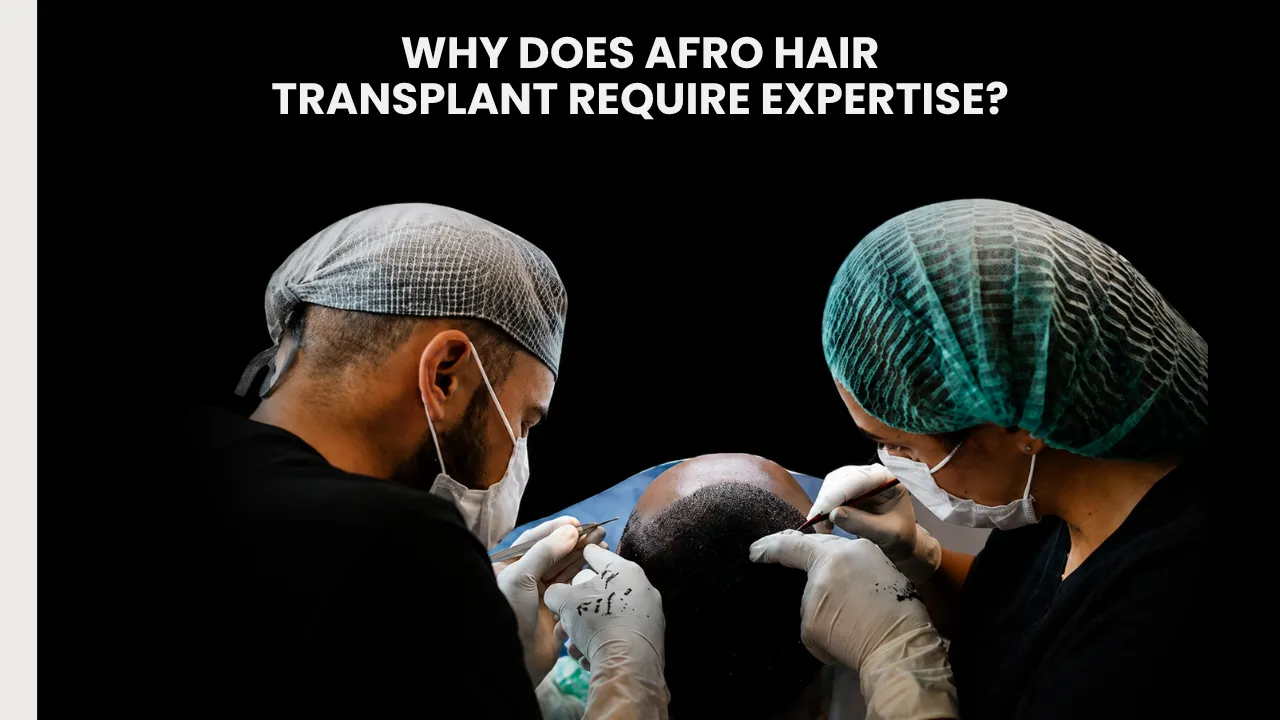
Afro hair transplant is one of those procedures where the technique really shows. The follicles are different. The curl pattern is different. The way density appears is different, too.
That is why the right clinic should offer more than a package. Patients need honest graft planning, safe extraction, natural hairline design, and aftercare that actually makes sense for their hair type.
The best result is not the one with the biggest graft number. It is the one that grows well, protects the donor area, and still looks like the patient’s own hair.
At Turkey Hair Center, Afro hair transplant planning is tailored to the patient’s hair texture, face shape, donor capacity, and long-term expectations. The result should not look copied. It should look natural, personal, and confident.
Ready to restore
your natural hairline