The Best Age for a Hair Transplant: Why Timing Matters
Homepage

Blog
The Best Age for a Hair Transplant: Why Timing Matters

Medical Reviewed By Dr. Tompi, M.D – Plastic & Aesthetic Surgeon
Written By Nazmi G, Trichologist

There is no single best age for a hair transplant. The legal minimum is 18, but the ideal window is generally from the mid-20s onward, once hair loss has been stable for at least 1–2 years. Because hair loss is often active and unpredictable in younger men, surgeons must first assess your Norwood stage and the finite nature of your donor supply before creating a long-term surgical plan.
The timing of a hair transplant is a critical surgical decision. It directly influences the naturalness and longevity of the result. A successful outcome depends on strategic planning that accounts for the progressive nature of androgenetic alopecia. At Turkey Hair Center, our partner hospital’s clinical approach prioritises a comprehensive evaluation where age is considered alongside hair loss stability, donor area quality, and the patient's long-term aesthetic goals.
Understanding Hair Loss Progression: Why Age Matters
Androgenetic alopecia, or pattern baldness, is a progressive condition that miniaturises hair follicles over time. The pattern and speed of this progression vary significantly between individuals. Performing a transplant too early, before the final pattern has become clear, can result in an unnatural appearance later. For example, transplanting a dense, low hairline on a young patient whose crown continues to thin can create an isolated island of hair, a tell-tale sign of poorly planned surgery. Our specialists map your current hair loss and project its likely future course to design a transplant that will look natural for decades, not just for a few years.

The Younger Patient: When is "Too Early"?
Surgeons are generally cautious about performing hair transplants on patients under the age of 25. While the desire to address early hair loss is understandable, several clinical factors justify this prudence:
- Unstable Hair Loss: In younger men, the pattern of balding is often not fully established. The rate of loss can be rapid and unpredictable, making it difficult to design a hairline and density plan that will stand the test of time.
- Designing for Maturity: A low, dense hairline that suits a 21-year-old can appear unnatural on a 40-year-old. A surgeon must design a hairline that will look appropriate as the patient's facial features mature.
- Finite Donor Supply: Your donor area contains a limited number of grafts that can be harvested in your lifetime. Using a large number of these grafts on a young patient is an irreversible step that may limit options for addressing more advanced hair loss later in life.
For most younger patients, the initial recommendation is to stabilise hair loss with medical treatments like Minoxidil and Finasteride. This allows the physician to assess the condition's progression before committing to a surgical solution. You can learn more on our Minoxidil and Finasteride After Hair Transplant page.
The Ideal Window: Mid-20s to Late 40s
The period from the mid-20s to the late 40s is often an optimal time for hair transplantation because several key variables align favourably:
- Established Hair Loss Pattern: By this age, the pattern of hair loss has typically declared itself and stabilised, allowing the surgeon to create a predictable, long-term surgical plan.
- Sufficient Donor Reserves: The donor area at the back and sides of the scalp is usually still dense and healthy, providing a high-quality supply of grafts for transplantation using techniques like FUE or DHI.
- Mature Expectations: Patients in this demographic typically have a clear understanding of their hair loss and hold realistic expectations for what surgery can achieve in terms of density and coverage.
This allows for a balanced surgical strategy, achieving a significant aesthetic improvement while prudently managing the donor supply for any potential future requirements.
Hair Transplants in Later Life: Is "Too Late" a Myth?
There is no upper age limit for a hair transplant, provided the patient has sufficient donor hair and is in good general health. Patients in their 50s, 60s, and 70s can be excellent candidates. The considerations for this group are specific:
- Highly Stable Hair Loss: At this stage, the hair loss pattern is almost always fully stabilised. This simplifies surgical planning, as the risk of further significant balding is low.
- Age-Appropriate Design: The surgical goal is not to recreate the hairline of a 20-year-old, but to establish a natural, conservative frame for the face that is entirely appropriate for the patient's age.
- Medical Fitness: A patient's overall health is a primary consideration. A thorough medical evaluation is conducted to ensure they are fit for the procedure and a smooth recovery.
- Donor Area Evaluation: The quality and density of the donor area must be carefully assessed. Even with stable loss, age can affect donor hair characteristics. You can read more about this on our The Donor Area: Why It's Crucial for Your Hair Transplant page.
Factors Beyond Age: What Else Influences Timing?
Age is an important variable, but it is not the only one. The decision to proceed with surgery is based on a multifactorial assessment:
- Stability of Hair Loss: This is the most critical factor. A patient must demonstrate that their hair loss has been stable, with minimal change, for at least one to two years, regardless of their age. Active, aggressive hair loss is a contraindication for surgery. Our 5 Signs You're Ready for a Hair Transplant page offers further insights.
- Donor Hair Characteristics: The density, calibre, and texture of the hair in the donor zone are vital. A robust donor supply is essential for achieving meaningful coverage in the recipient areas.
- Type and Cause of Hair Loss: Hair transplantation is primarily a solution for androgenetic alopecia. Other conditions, such as alopecia areata or certain scarring alopecias, are not typically treated with surgery.
- Realistic Patient Goals: A successful outcome requires a shared understanding between surgeon and patient about what can realistically be achieved in terms of hairline position and density.
- Overall Health: A patient must be in good health to undergo any elective surgical procedure safely.
The Norwood Scale and Age: Mapping Your Hair Loss Journey
The Norwood Scale is the clinical classification system used by surgeons worldwide to standardise the stages of male pattern baldness. It provides an objective framework for assessing the extent of a patient's current hair loss, from Stage I (no loss) to Stage VII (most severe loss). As a patient ages, they may progress through these stages. By identifying a patient's Norwood classification, our specialists can better predict the future trajectory of their hair loss and design a transplant that accounts for this potential progression. This strategic mapping, detailed on our Hair Loss Stage Test (Norwood), is fundamental to avoiding an unnatural result in the future.
Your Personalised Age Assessment at Turkey Hair Center
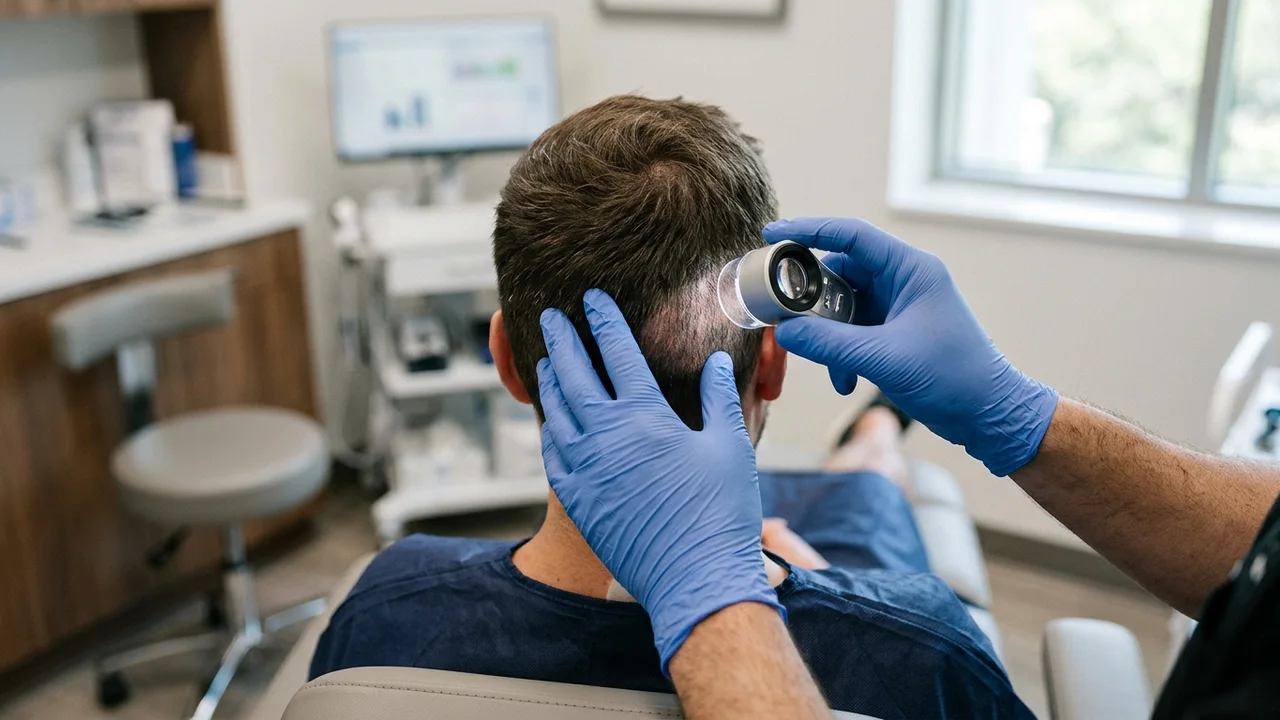
Every patient's pattern and timeline of hair loss is unique. A personalised consultation is therefore the essential first step. This is a medical evaluation, not a sales meeting. Our specialists will conduct a thorough assessment, which includes:
- Detailed analysis of your scalp and hair loss pattern, often using trichoscopy.
- Measurement of your donor hair density and quality.
- A review of your medical and family history.
- A clear discussion of your aesthetic goals to establish realistic surgical objectives.
- An evaluation of your age in the context of your hair loss stability and long-term plan.
This comprehensive diagnostic approach ensures that any recommended treatment plan is medically sound, surgically viable, and tailored to produce a sustainable, natural-looking result.
Why Strategic Timing Matters for Lasting Results
The decision of when to have a hair transplant directly impacts the long-term aesthetic success of the procedure. A hair transplant is a permanent redistribution of a finite resource—your donor hair. Strategic timing is crucial for several reasons:
- Maintains Naturalness: It prevents the creation of an isolated 'island' of transplanted hair if the surrounding native hair recedes further.
- Conserves Donor Grafts: It ensures the limited supply of donor hair is used judiciously, preserving grafts for potential future procedures if required.
- Reduces Need for Revisions: A well-timed initial procedure, planned with future loss in mind, minimises the likelihood of needing corrective surgery later on.
- Improves Patient Satisfaction: Thoughtful planning leads to results that age gracefully with the patient, ensuring satisfaction for years to come.
By working with our partner hospital’s clinical experts to determine the optimal timing, you are investing in a carefully planned procedure designed for enduring success.
| Age Group | Hair Loss Stability | Donor Hair Condition | Key Considerations |
|---|---|---|---|
| Under 25 | Typically unstable and progressive | Generally excellent | High risk of unpredictable future loss. Medical stabilisation (e.g., Finasteride) is the primary recommendation. |
| 25-45 | Often stabilised or predictable | Good to excellent | Considered the optimal window for many. Allows for a long-term surgical plan with high-quality grafts. |
| Over 45 | Usually highly stable | Variable; requires careful assessment | Excellent candidates if donor area is sufficient. Focus is on creating a natural, age-appropriate result. |
Medical disclaimer: This article is for informational purposes only and is not medical advice. Individual results vary from person to person. Always consult a qualified doctor before any hair transplant procedure.
Get a Free Hair Analysis from Our Experts
Use our free online help tool to communicate your hair loss concerns – it only takes a few minutes. We’ll provide you with a personalized, non-binding quote.
Let’s Call You!

Popular Blogs
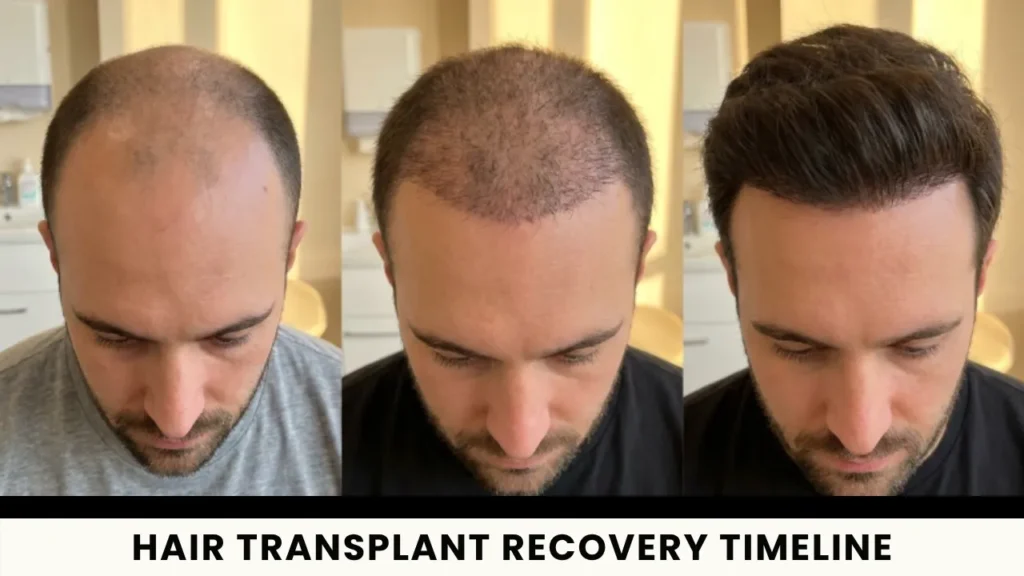
Hair Transplant Recovery Timeline: Day-by-Day, Week-by-Week and Month-by-Month Guide
Hair Transplant Recovery Timeline: Day-by-Day, Week-by-Week and Month-by-Month Guide Free Hair Analysis Homepage Blog Wayne…

Justin Bieber Hair Transplant: Hairline Analysis, Before & After Photos, Rumors & Expert Opinion
Justin Bieber Hair Transplant: Hairline Analysis, Before & After Photos, Rumors & Expert Opinion Free…
Wayne Rooney Hair Transplant: Before & After
Wayne Rooney Hair Transplant: Before & After Free Hair Analysis Homepage Blog Wayne Rooney Hair…

Conor McGregor Hair Transplant: Before & After
Conor McGregor Hair Transplant: Before & After Free Hair Analysis Homepage Blog Conor McGregor Hair…
Turkey Visa Requirements for Hair Transplant in Turkey
Turkey Visa Requirements for Hair Transplant in Turkey Free Hair Analysis Homepage Blog Turkey Visa…
David Silva Hair Transplant: Before & After
David Silva Hair Transplant: Before & After Free Hair Analysis Homepage Blog Discover David Silva…
Ready To
Book Your Appointment?
Reach out to us or complete our simple online form
and we’ll contact you to schedule a time that works perfectly for you.



Frequently Asked Questions