Wayne Rooney Hair Transplant Before & After Analysis
Disclaimer: This article is an independent commentary based on publicly available images and information, for educational and informational purposes only.
Wayne Rooney Hair Transplant: Before & After Medical Reviewed By Dr. Tompi, M.D: Plastic & Aesthetic Surgeon
Written By Nazmi G, Trichologist
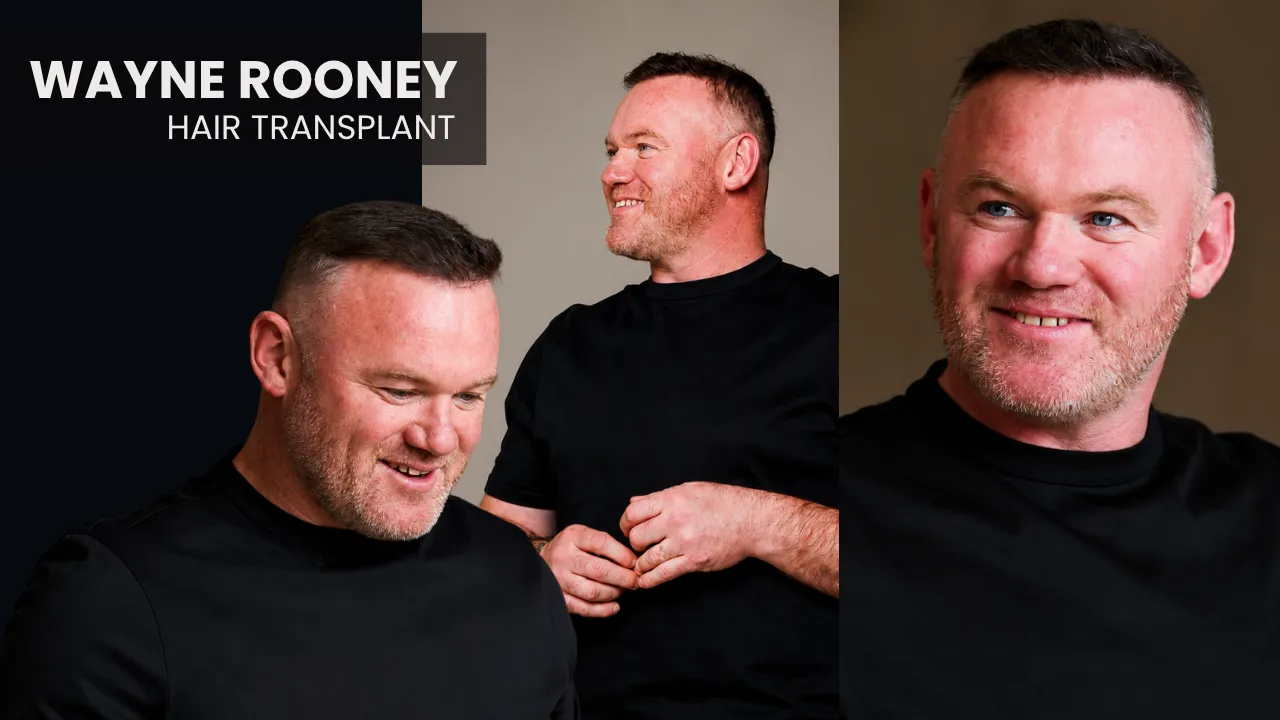
Wayne Rooney is a global football star. And he became one of the most openly talk about his hair transplant process. Rooney suffered from visible male pattern baldness in his 20s. After that, he confirmed in 2011 that he had undergone a hair transplant surgery. And his transformation is one of the historic celebrity hair restoration stories in the world.
And that is what makes the Wayne Rooney transformation different. Because he admired it, not hiding. He raises his voice under celebrity pressure.
Most celebrities choose to hide their cosmetic procedures. Rooney did the opposite. He admitted he had been experiencing hair thinning and loss. He chose to do something about his condition. At that time, that kind of honesty in celebrities was rare. People were still treated for hair loss as an embarrassing secret. Rooney stepped into that conversation and took the helm.
His case was not only about a new hairline. His journey became a turning point in the discussion about hair loss.
Wayne Rooney is a football legend. He is a Manchester United icon and one of the most recognized English players of his generation. Ronney became famous as a teenager. He plays with a kind of raw energy when he is on the field. That’s what made people watch him before he had even fully developed his play.
But fame came early. Very early.
By the time Rooney was in his 20s, the cameras had already captured him for years. Every goal, every celebration, every close-up after a match… And all of it was public. That also meant his changing appearance was public.
His hair loss became part of the conversation because it happened while he was still young. He was not an older retired player slowly thinning in private. He was a Manchester United star, playing under stadium lights, watched by millions.
Wondering what this would mean for you?
Graft count, technique and budget are decided case by case, after an assessment. These pages explain how that works at Turkey Hair Center:
Hair transplant cost in Türkiye
Check your Norwood stage
Compare FUE, DHI and Sapphire
Free hair analysis on WhatsApp
Is the Wayne Rooney Hair Transplant a Success?
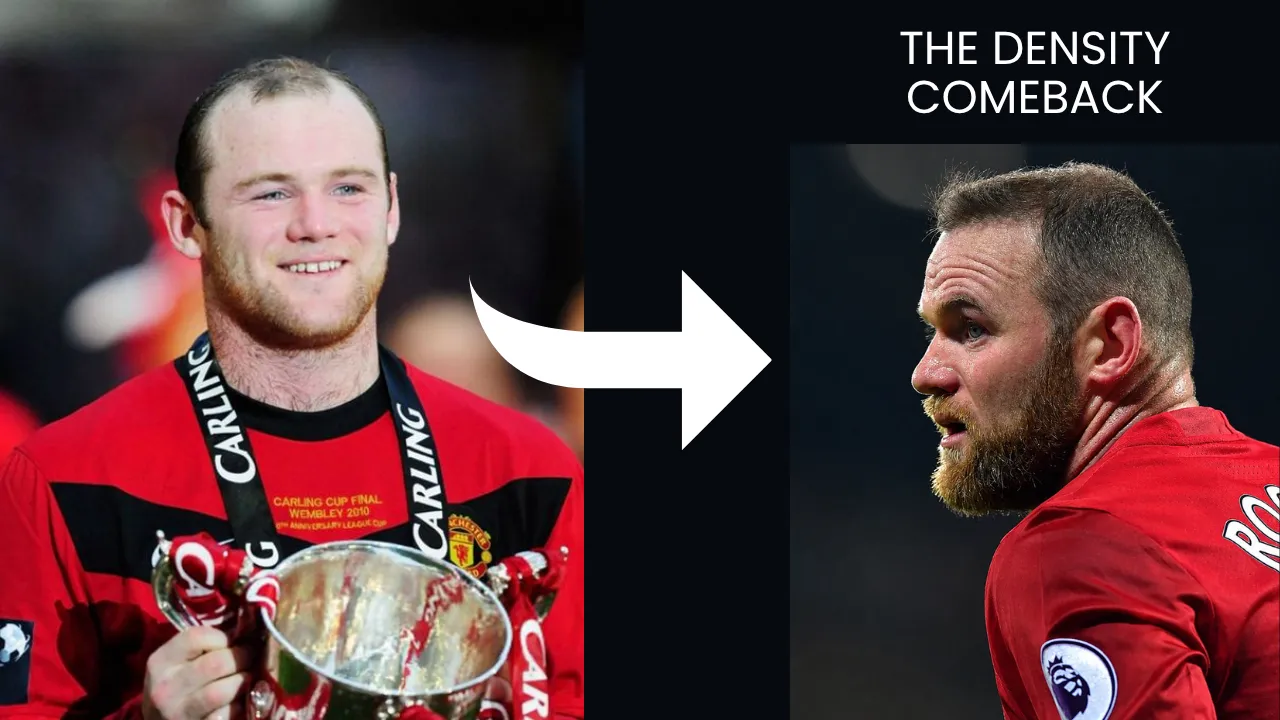
Wayne Rooney’s hair transplant process is considered successful. We can all see that his frontal hairline has improved, visible density has increased, and his face is framed successfully. For more than ten years, his hair transformation has remained one of the most recognizable processes of celebrity hair restoration.
But success does not mean his hair looked perfect every single year. His results have gone through phases. Some years looked stronger. Some photos showed thinning again. But these phases are normal for a man with aggressive hereditary hair loss. With a hair transplantation, surgeons can restore lost areas. But it cannot automatically prevent future thinning and loss occurred of the native hair.
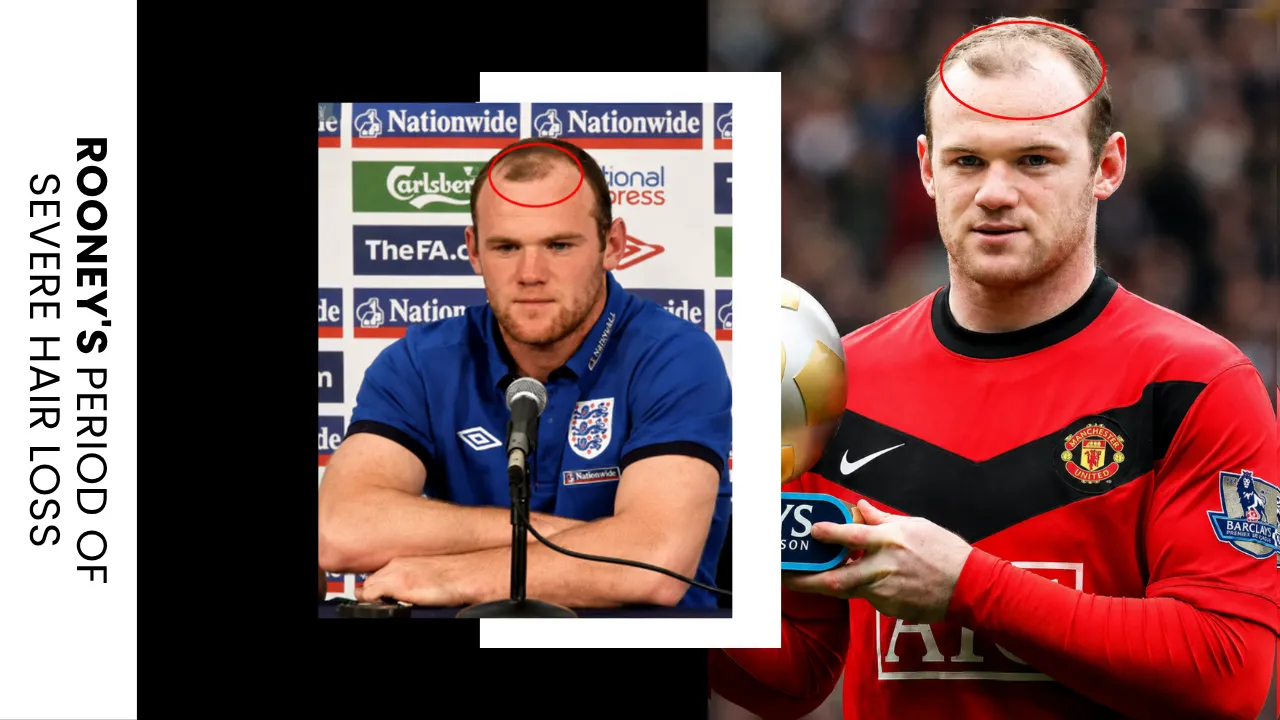
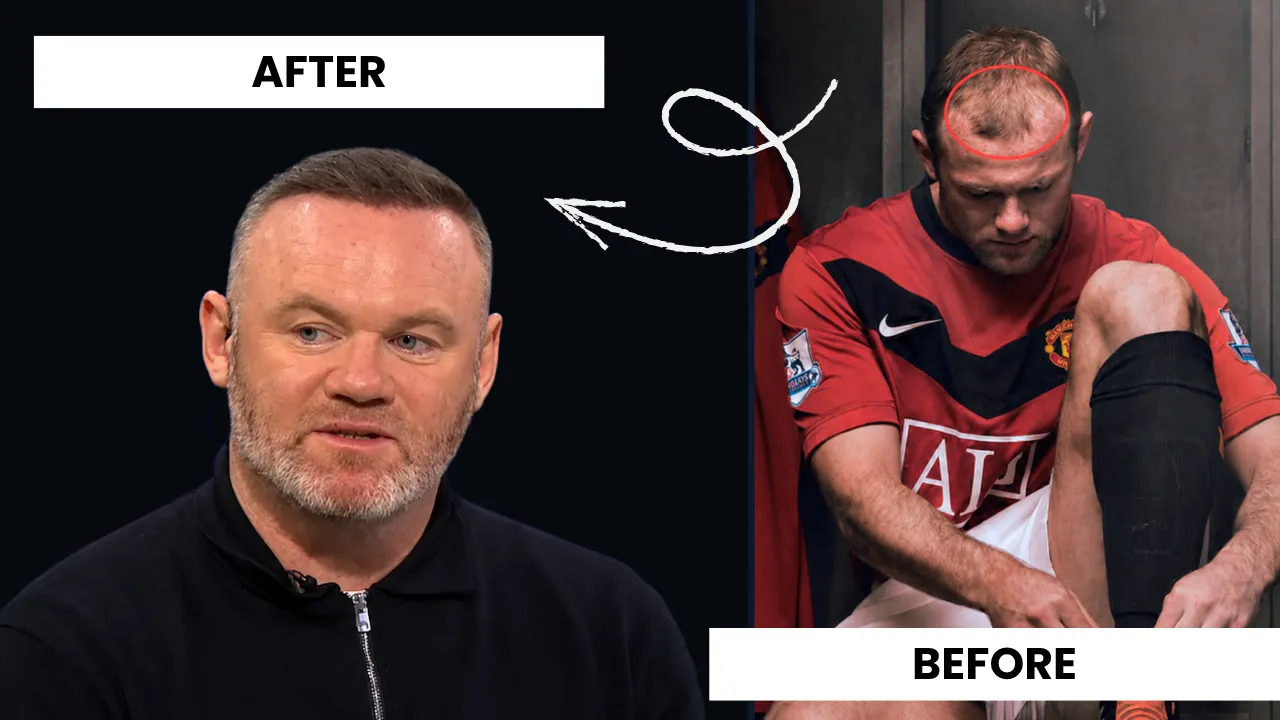
Still, his visible change is clear. Before the restoration procedure, Rooney had a visibly receding hairline and thinning around the crown area. And he looked older than he was. After the transplant, his hairline looked fuller, his frontal frame became stronger, and his public image changed.
The Iconic 2011 Tweet That Changed the Stigma of Male Baldness
When we flashback to 2011, Rooney did something unusual for a male celebrity. He confirmed his hair transplant process by himself!
He did not hide behind the rumors. He publicly admitted he had been going bald at 25 and said he was happy with the result. That moment mattered.
For many men, hair loss is not just a cosmetic issue. It affects confidence, age perception, and identity. Rooney’s openness helped make hair restoration feel less secretive and less shameful. A world-famous footballer had hair loss, got treatment, and moved on.
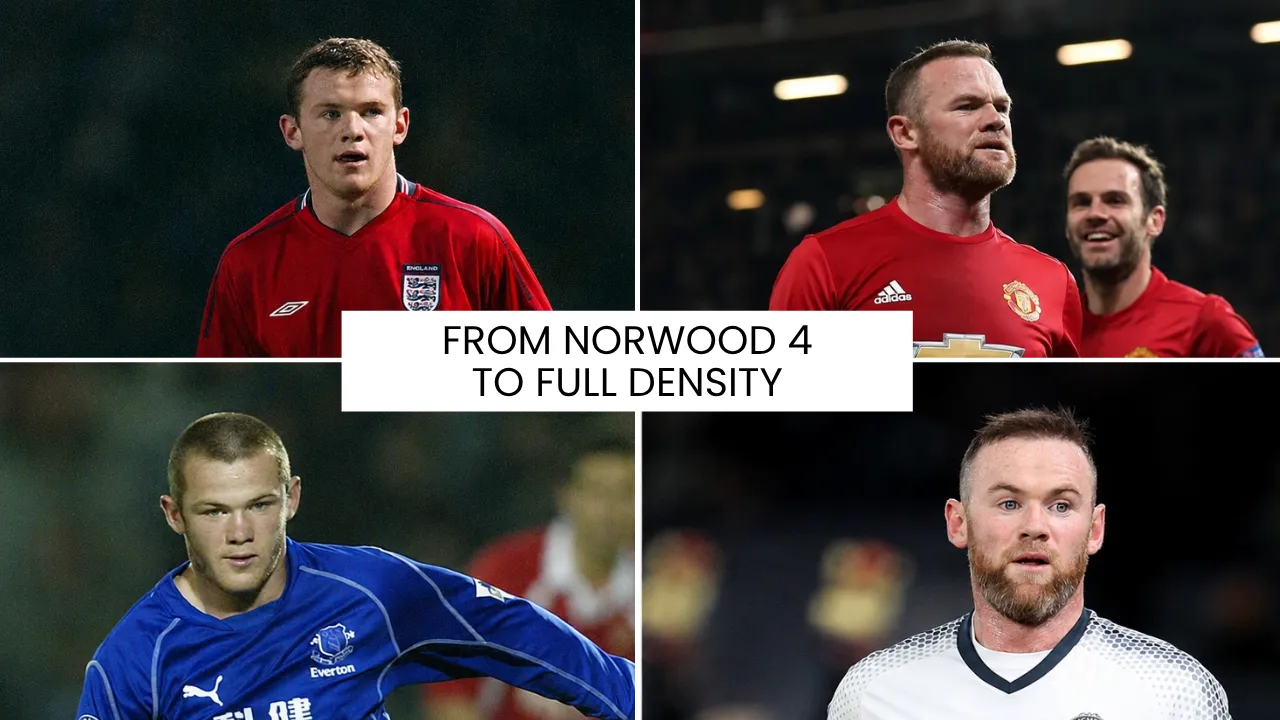
From Norwood 4 to Full Volume: Analyzing the Legend’s Scalp Evolution
Before his procedures, Rooney’s hair loss was not mild. In early 2010s photos, his frontal hairline had clearly receded, and the top of his scalp showed visible thinning. The crown also appeared weaker in certain images, especially under bright lighting.
Based on public photos, Rooney may have been around Norwood 4 before his first transplant. That stage usually involves deeper frontal recession, thinning through the mid-scalp, and early or visible crown involvement.
Period
Hairline Condition
Estimated Stage
Early career
Dense but beginning to recede
Early male pattern hair loss
Late 2000s
Noticeable frontal recession
Around Norwood 3
2010-2011
Receding hairline and thinning on top
Around Norwood 4
Post-transplant years
Fuller front and improved density
Restored frontal frame
His transformation was dramatic because the loss was already visible. This was not a tiny temple touch-up. Rooney needed real hairline reconstruction, density planning, and long-term maintenance.
The Science of the Switch: Why Rooney Chose FUE Over FUT?
Rooney’s hair transplant has long been associated with the FUE hair transplant method. FUE, or follicular unit excision, removes individual follicular units from the donor area and implants them into thinning or bald areas. For a footballer, that choice makes sense.
FUT, also known as strip surgery, can leave a linear scar at the back of the scalp. That scar may be hidden under longer hair. But athletes often prefer to wear shorter cuts. Rooney also spent years under harsh stadium lighting and close-up media coverage. A visible scar would have been a problem.
FUE offers several advantages for celebrity patients:
Minimal visible scarring
Short hairstyle compatibility
Natural-looking density
Faster visual recovery compared with older strip methods
Flexibility for future touch-ups
How 4,000 Grafts Were Strategically Placed for a Natural Look
Rooney is often reported to have received around 3,000 to 4,000 grafts across his procedures. That number makes sense when looking at the areas involved: frontal hairline, forelock, mid-scalp density, and crown support.
A case like Rooney’s would not be solved by simply drawing a new hairline and filling it in. The surgeon would need to think about balance.
Area
Estimated Grafts
Frontal Hairline
1,500-2,000
Crown Area
1,000-1,500
Density Support
500-1,000
Total Estimate
3,000-4,000
The front needs softness. The forelock needs strength. The mid-scalp needs enough density to connect the front and crown. The donor area must be protected because hereditary hair loss can continue for years.
That is where graft placement matters more than the number of grafts. A natural hairline needs softer single-hair grafts at the front, with stronger density behind it.
The frontal forelock area is one of the most important areas for the hair restoration process. It sits at the center of the hairline. So this area controls how the face is framed.
For Rooney, this area mattered because his recession was highly visible. A weak frontal forelock area can make a face look older than it is, even if the patient has some hair coverage elsewhere on the scalp.
By just rebuilding the frontal area, surgeons can create a great visual change without covering every thinning area at once.
After the hair transplant surgery, the first six months can be confusing. Right after the procedure, the hairline may look fuller because grafts have been placed recently. Then, many transplanted hairs fall out temporarily before new growth begins. This is called shock loss or post-transplant shedding.
It can feel like the procedure failed. In most cases, it has not.
New growth usually begins after a few months. Surgeons expect density to increase around six months. And the final result often came clear for 12 to 18 months.
Could Medication, Styling, or Lighting Affect Rooney’s Hair Appearance?
Yes. Rooney’s hair appearance cannot be explained by transplant surgery alone. Lighting, sweat, hair length, styling products, hair fibers, and camera angles can all change how dense hair looks. Wet hair can expose the scalp. A darker styling product can make hair look thicker. When he is on the field, stadium lighting can make his thinning look worse than it is.
And we all know, supportive medication may also play a role. Men with hereditary hair loss frequently choose medications like minoxidil or finasteride. With a hair transplant, surgeons replace the resistant follicles in thinning areas. But this procedure cannot prevent native hair miniaturization over time.
And that is why Rooney’s hair seems different every year. Some photos show stronger density. Others show thinner areas. That does not automatically mean failure. It may simply reflect progressive male pattern baldness, styling, lighting, and long-term maintenance.
The cost of Rooney’s hair restoration has never been officially clarified. However, many reports and clinic discussions suggest that a celebrity’s Harley Street procedure must cost around £30,000 to £40,000. This cost includes multiple sessions, privacy, high graft numbers, and premium surgeon involvement. So, that price is not only about the hair.
It is about privacy. Planning. Surgeon’s reputation. Discretion. Recovery support. And the press, the global media.
For someone like Rooney, an obvious or poorly designed transplant would have become headline material.
Breaking Down the £30k: £40k Price Tag in London’s Most Elite Clinics
Harley Street has long been associated with private medical care, celebrity patients, and premium pricing. A hair transplant performed in that environment is often more expensive than a standard clinic procedure.
Several factors can push the price higher:
Surgeon reputation
Private scheduling
Celebrity confidentiality
High graft count
Multi-session planning
Advanced hairline design
Long-term follow-up
For Rooney, the cost would also reflect the complexity of his case. He was young, visibly thinning, and still likely to experience future hair loss. That means the plan had to look good immediately while also leaving room for future maintenance.
Celebrity hair transplants are expensive because the margin for error is tiny.
A normal patient wants a good result. A celebrity needs a result that survives cameras, flash photography, harsh lighting, and public comparison. The goal is not just density. It is an undetectable hairline.
That requires careful graft selection, soft frontal design, and surgeon experience.
Rooney’s reported price reflects a premium celebrity route. But today, patients have more options. Modern medical tourism has made advanced FUE and DHI procedures more accessible, especially for patients comparing international clinics.
Still, the comparison should be fair. A lower price does not automatically mean lower quality. It can reflect differences in operating costs, clinic volume, healthcare systems, and package structure. At the same time, a procedure is not always safe.
Country / Region
Estimated Celebrity-Level Hair Transplant Cost
USA
$18,000: $45,000
UK / Harley Street, London
£15,000: £35,000
Western Europe
€8,000: €20,000
UAE / Dubai
$10,000: $25,000
Turkey
$2,500: $7,000
For patients considering a Rooney-style transformation, the real question is not “Where is the cheapest place?” It is “Which clinic can design a natural hairline and protect my donor area for the future?”
At Turkey Hair Center, a similar case would begin with a personalized consultation, donor area assessment, graft planning, and technique selection. The goal would not be to copy Rooney, but to involve designing exactly. It would be to design a rt that fits hair-loss clients’ own faces, hair-loss stage, and long-term needs.
Before & After: A Decade of Highs, Lows, and Touch-Ups
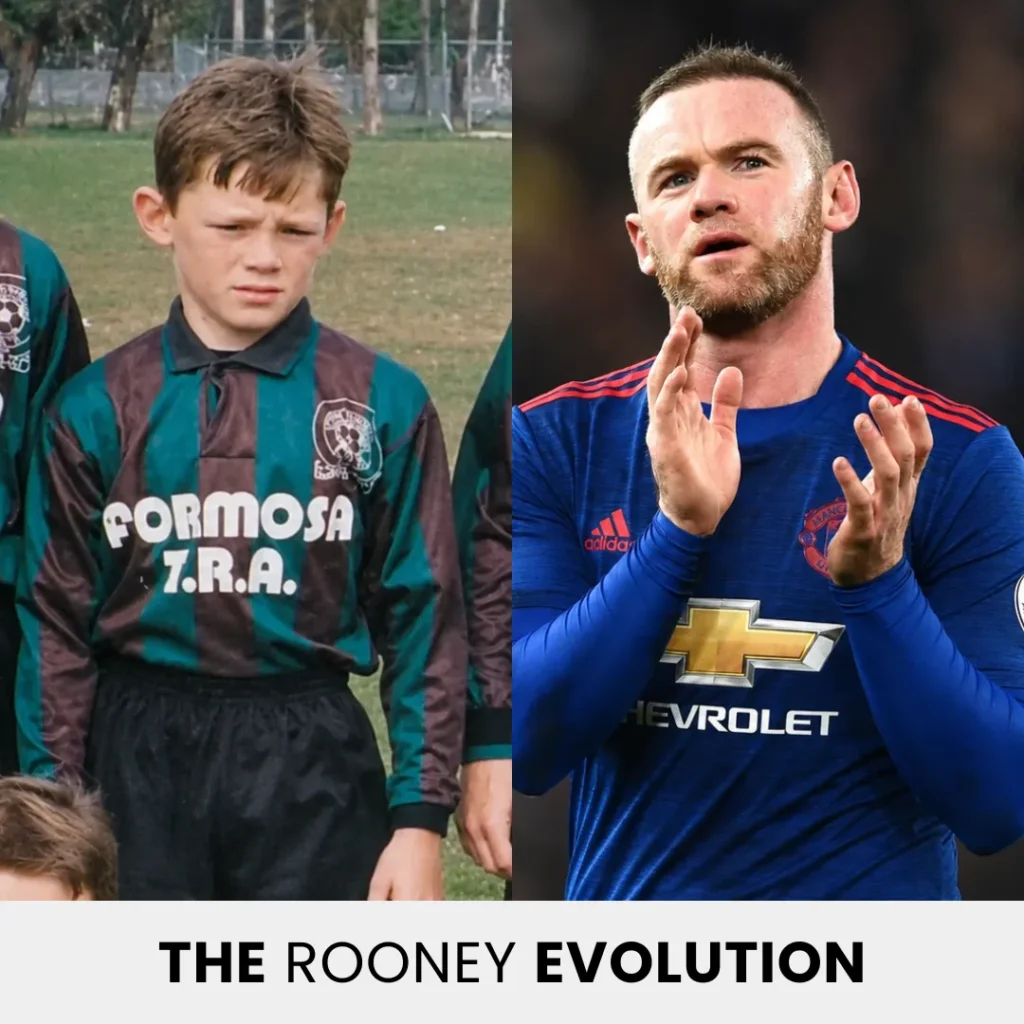
Rooney’s before-and-after journey has lasted more than a decade. That is why his case is so useful to analyze.
Some celebrity transformations look impressive for one year and then disappear. Rooney’s case is different because we have seen the highs, the weaker periods, the reported touch-ups, and the long-term maintenance challenge.
Before the transplant, his hairline was visibly receding, and the top of his head looked thin. After the first procedure, the frontal frame improved. Later, as natural hair loss continued, he reportedly returned for another procedure to support density.
That is common. Hair transplantation is not always a one-time story, especially for men who begin losing hair young.
Why One Hair Transplant Wasn’t Enough for the Manchester United Star
Rooney reportedly needed more than one hair transplant because male pattern baldness is progressive. A transplant restores selected areas, but it does not stop untreated native hair from thinning later.
His first procedure rebuilt the hairline. But as time passed, other areas: especially the crown and mid-scalp: may have needed additional density.
That does not make the first operation a failure. It means the hair loss pattern continued.
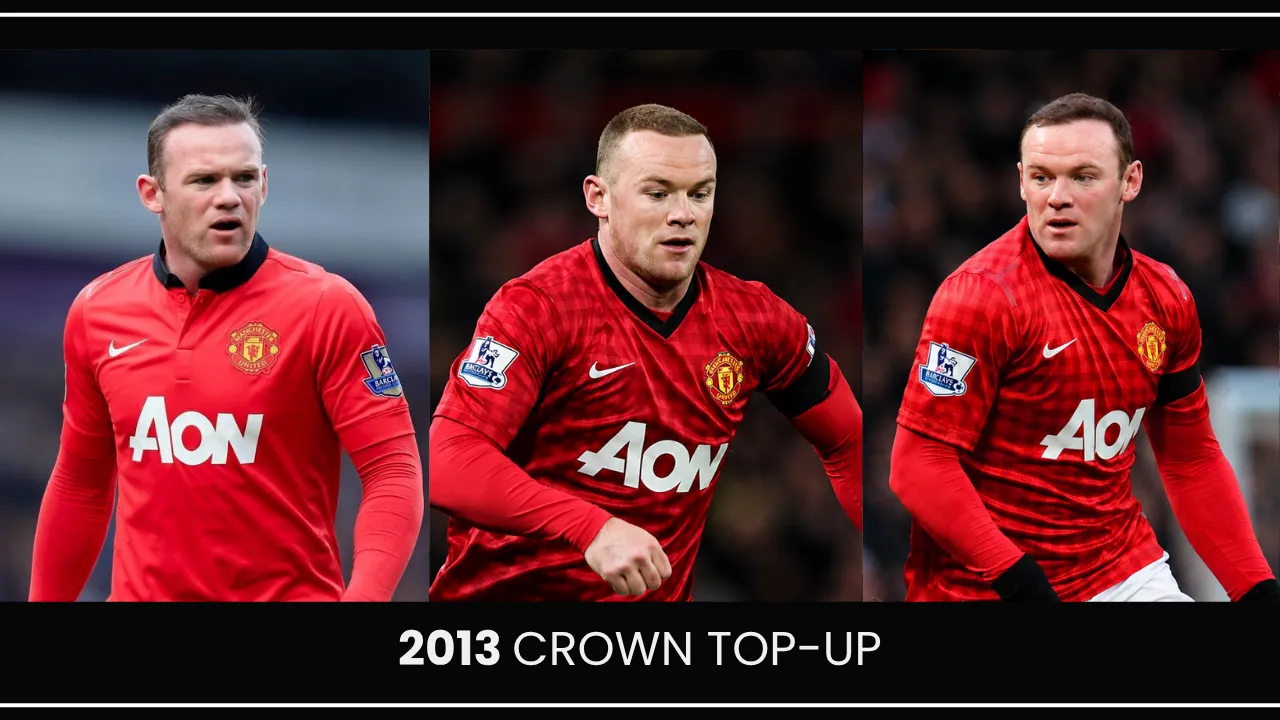
Rooney was widely reported to have had a second procedure around 2013. This “top-up” was believed to address ongoing thinning and support the result of his first transplant.
The crown is especially difficult because it can consume a large number of grafts. It also tends to continue thinning over time. That is why many surgeons prioritize the frontal hairline first, then return to the crown later if the donor area allows.
Some observers believe Rooney may have had later touch-ups, but this has not been confirmed. Because his hair loss started young and appeared aggressive, additional maintenance would not be surprising.
But we should be careful here. A different haircut, darker styling product, hair fibers, weight changes, lighting, and camera angle can all make the hair look different. Not every improved photo means another surgery. Not every thinner photo means failure.
The more realistic view is this: Rooney’s hair restoration journey has likely required long-term maintenance, whether through procedures, styling, medical support, or a combination of all three.
Why Early Hairline Restoration Often Looks More Natural
Early hairline restoration often looks natural because the surgeon still has existing hair to work with. The transplant does not have to rebuild the entire scalp from zero. It can reinforce weak areas and blend in with natural hair.
For Norwood 3 or Norwood 4 patients, the balance is delicate. The surgeon must create enough improvement to change the face, but not so much that the hairline looks too low or artificial.
Conservative hairline placement
Donor preservation
Natural density
Facial harmony
Long-term maintenance
Age-appropriate design
Rooney’s result worked because it restored the front without trying to make him look like a teenager again. That is exactly what makes a transplant believable.
What Men Can Learn from Wayne Rooney’s Hair Restoration Journey
The biggest lesson from Wayne Rooney’s hair transplant journey is that hair loss should be treated as a long-term condition, not a one-day fix.
Rooney acted young, but he did not pretend the problem did not exist. He chose treatment. He talked about it. And he helped make the subject less embarrassing for other men.
For patients considering a similar procedure, the key lessons are simple:
Do not wait until hair loss becomes severe
Get a proper diagnosis before surgery
Understand your Norwood stage
Choose a mature, natural hairline
Protect the donor area
Plan for future hair loss
Consider medical maintenance if appropriate
A Rooney-style result is not just about graft count. It is about strategy.
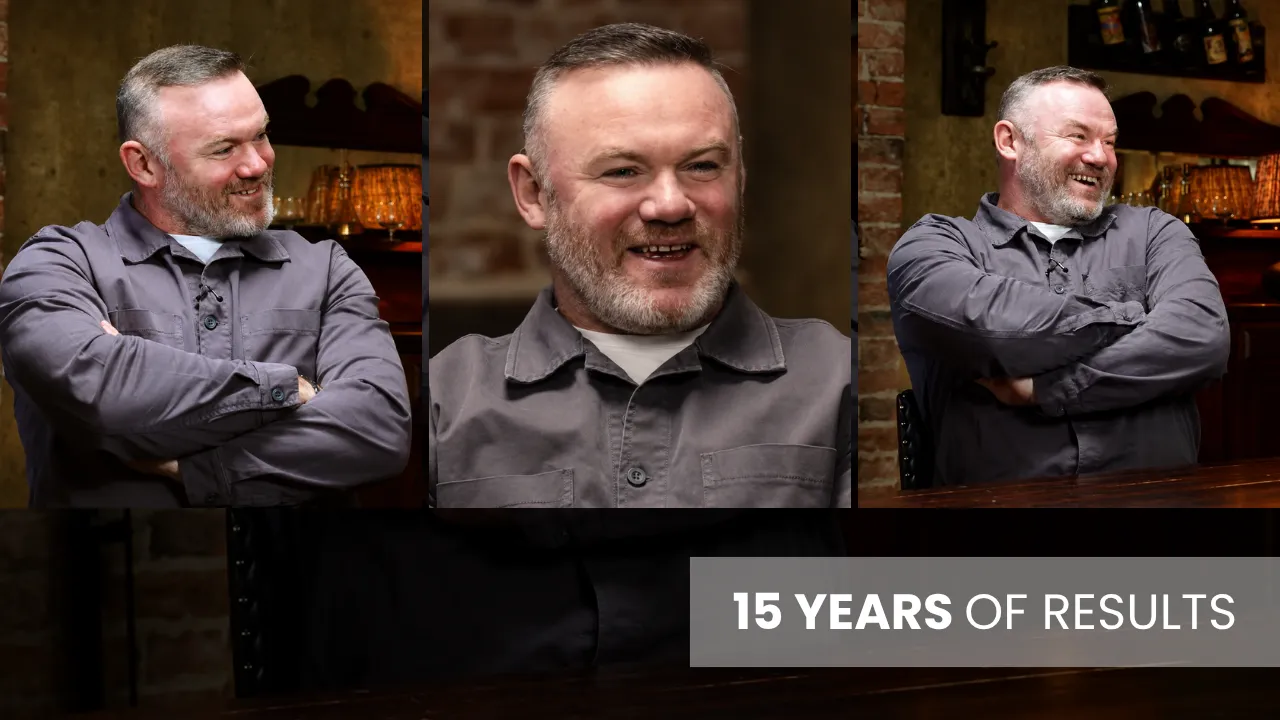
The “Rooney Effect”: How He Maintained His Results for 15+ Years
The “Rooney Effect” refers to the impact his openness had on men considering hair restoration. After Rooney confirmed his transplant, the topic became easier to discuss. That mattered.
Rooney helped normalize hair transplants for men. He showed that only actors or TV stars chose hair transplantation. This medical treatment for athletes, professionals, fathers, and everyday men who want to feel more confident than before.
As a result, the answer is probably not a single thing. Long-term hair restoration usually requires smart surgical planning, possible touch-ups, good aftercare, and sometimes medical support.
Rooney’s hair has changed over the years, but the overall transformation remains powerful. His case proves one thing clearly: when hair restoration is planned well, it’s not just about changing a hairline. It can change the way a man carries himself.
Wayne Rooney Hair Transplant: frequently asked questions
Wondering what this would mean for you?
Graft count, technique and budget are decided case by case, after an assessment. These pages explain how that works at Turkey Hair Center:
Recent Updates: Did Rooney Have a Third Secret Procedure?
Some observers believe Rooney may have had later touch-ups, but this has not been confirmed. Because his hair loss started young and appeared aggressive, additional maintenance would not be surprising. But we should be careful here. A different haircut, darker styling product, hair fibers, weight changes, lighting, and camera angle can all make the hair look different. Not every improved photo means another surgery. Not every thinner photo means failure. The more realistic view is this: Rooney's hair restoration journey has likely required long-term maintenance, whether through procedures, styling, medical support, or a combination of all three.
How many hair transplants did Wayne Rooney have?
Wayne Rooney confirmed his first hair transplant in 2011. He was later reported to have had another procedure around 2013. This second surgery is most likely to support thinning areas that continued after the first surgery. There have also been rumors about smaller touch-ups in later years, but those claims have never been officially confirmed.
What Norwood stage was Wayne Rooney?
Looking at public photos, Rooney appeared to be around Norwood 4 before his first transplant. His hairline had clearly moved back, and the top of his scalp looked thinner, especially around the crown. Still, this is only a visual estimate. A real Norwood assessment would need an in-person scalp examination.
Did Wayne Rooney choose FUE or FUT?
Rooney's hair transplant is widely linked with the FUE technique. That would make sense for a public figure, because FUT can leave a long linear scar at the back of the scalp. FUE removes follicles one by one, so it is usually easier to hide and works better for men who wear shorter hairstyles.
How many grafts did Wayne Rooney get?
Most estimates place Rooney's total graft count at around 3,000 to 4,000 grafts across his procedures. That number would be enough to rebuild the frontal hairline, strengthen the forelock, improve overall density, and give extra support to thinning areas around the crown.
How much did Wayne Rooney's hair transplant cost?
Rooney never shared the exact cost of his hair transplant. However, celebrity-level procedures on London's Harley Street are often priced between £30,000 and £40,000. The price likely reflects the graft count, surgeon reputation, privacy needs, clinic location, and long-term planning.
Can you achieve similar results today?
Yes, a similar improvement is possible for the right candidate. But it depends on the patient's donor area, hair loss stage, hair type, technique, and hairline design. A Rooney-style result is not about copying his hairline exactly. It is about creating a natural plan that fits the patient's face and future hair-loss pattern.
Did Wayne Rooney Use Finasteride?
Wayne Rooney has never publicly confirmed that he used Finasteride as part of his hair loss treatment. However, many hair restoration specialists suggest that medications such as Finasteride are commonly recommended after a hair transplant to help preserve existing hair and slow the progression of male pattern baldness. Without direct confirmation from Rooney, any use of Finasteride remains speculative.
Could Rooney Have Had SMP?
Scalp Micropigmentation (SMP) is a cosmetic procedure that creates the appearance of thicker hair by applying pigment to the scalp. While some observers have speculated that Wayne Rooney may have used SMP to enhance the visual density of his hair, there is no public evidence confirming this. The improvements seen in his appearance can largely be explained by his reported hair transplant procedures and grooming choices.
What Would Rooney's Procedure Cost in Turkey?
If a patient with a hair loss pattern similar to Wayne Rooney's underwent treatment in Turkey today, the estimated cost would typically range between $2,500 and $6,000, depending on the clinic, surgeon experience, technique used (FUE, DHI, or Sapphire FUE), and the number of grafts required. A procedure involving approximately 2,500-4,000 grafts, similar to Rooney's reported restorations, would generally fall within this price range while including accommodation and transportation in many all-inclusive packages.
Sources and medical review
The clinical statements on this page draw on the following published literature and professional body guidance:
Epstein GK (2020). Follicular Unit Excision: Current Practice and Future Developments. Facial Plastic Surgery Clinics of North America.
Harris JA (2013). Follicular unit extraction. Facial Plastic Surgery Clinics of North America.
Romera de Blas C (2026). Complications in follicular unit excision hair transplantation: current evidence and practical approaches. Frontiers in Medicine.
Mohmand MH (2020). Transection rate at different areas of scalp during follicular unit extraction/excision (FUE). Journal of Cosmetic Dermatology.
Send three photos: front, top and sides. You get a technique recommendation, a graft range and a straight answer about what is achievable, before anyone talks about price.
Your details are with the team
A patient coordinator will get back to you shortly. If you would like to send your photos now, WhatsApp is the fastest way to do it.
We respond quickly, day or night, in your language.
Multilingual team, no obligation
Data protectedKVKK and GDPR compliant, 100% confidential
Authorized Health Tourism Intermediary
Turkey Hair Center is the hair-restoration brand of Healthy Way Tourism, an authorized international health-tourism intermediary. All medical procedures are performed by licensed medical professionals at authorized healthcare facilities in Turkiye, in accordance with the regulations of the Ministry of Health.