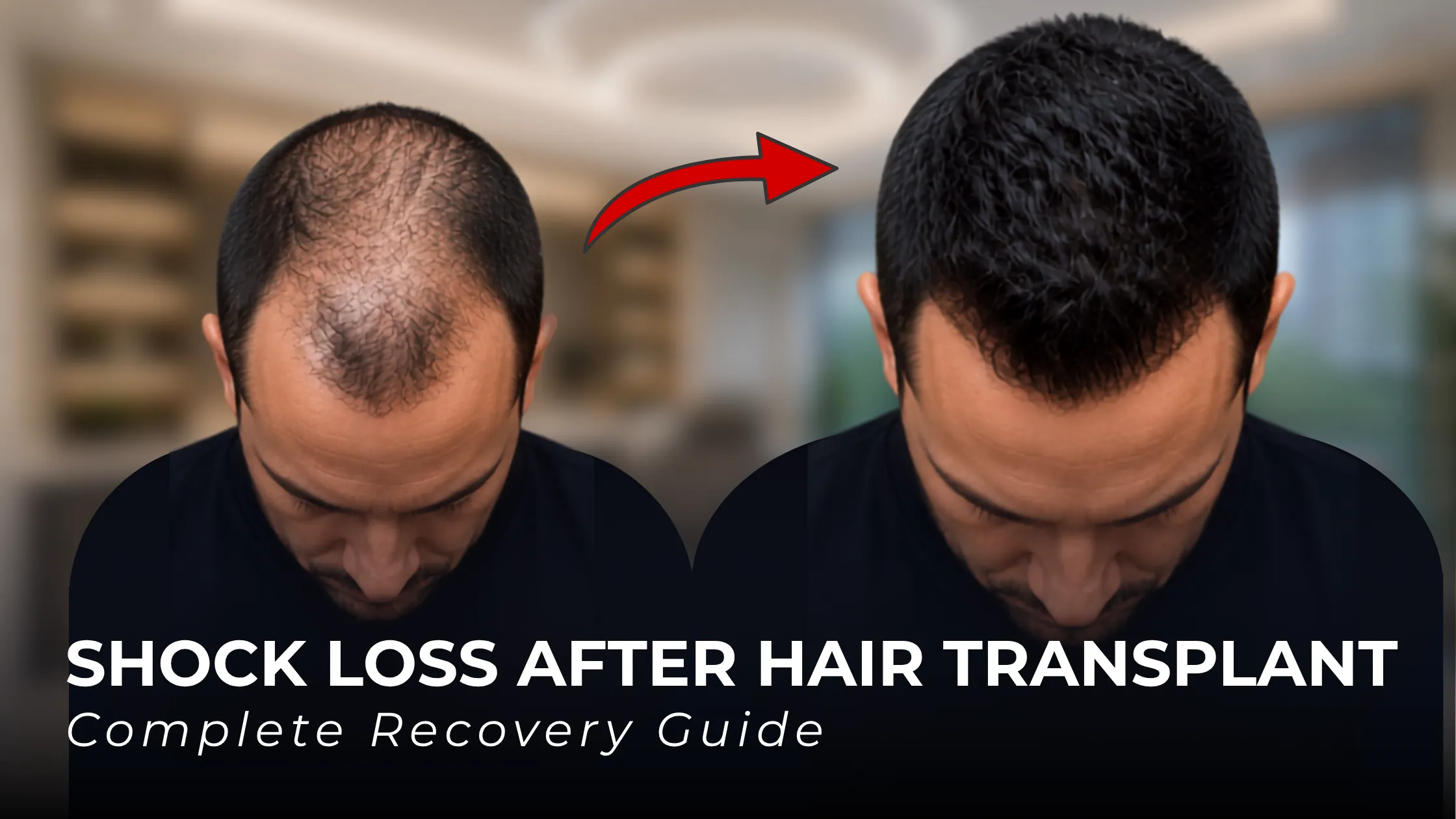
What Is Shock Loss and How Does It Occur After Hair Transplant?
Shock Loss After Hair Transplant: Complete Recovery Guide Medical Reviewed By Dr. Tompi, M.D: Plastic & Aesthetic Surgeon
Written By Nazmi G, Trichologist
Shock Loss at a Glance (Quick Facts)
Starts: 2-4 weeks post-op
Peak Shedding: 2-3 months
Early Recovery: 4-6 months
Final Results: 9-18 months
Permanent? No, it is a temporary physiological phase.
Can it be prevented? No, but clinical severity can be reduced with proper care.
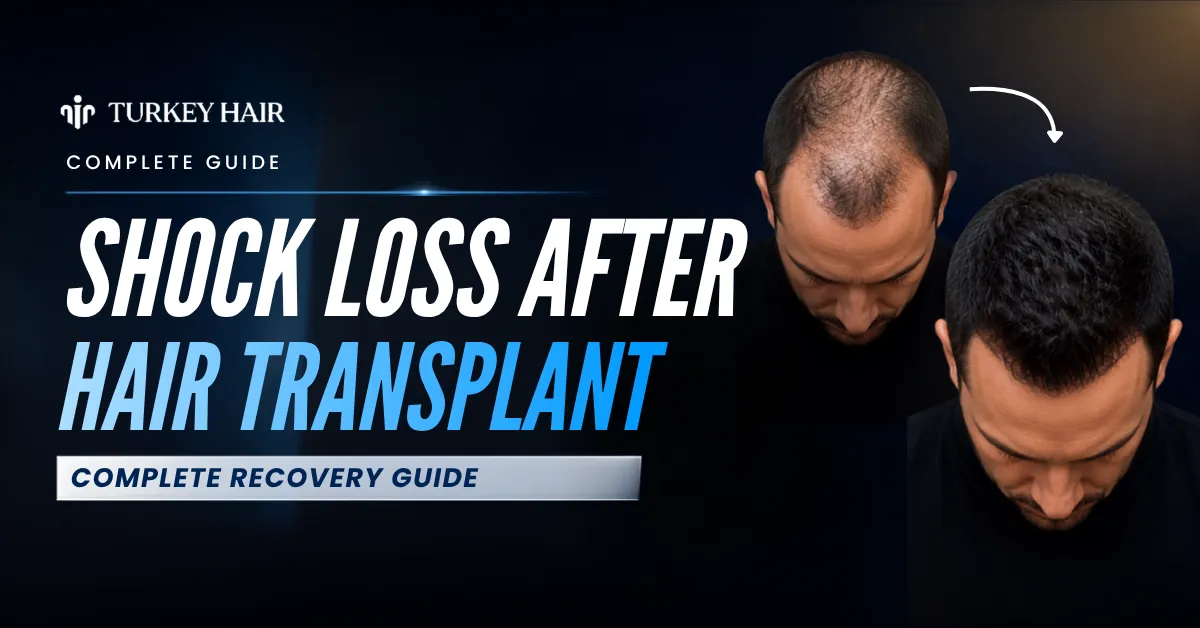
Shock loss after a FUE hair transplant is a temporary shedding phase triggered by surgical stress to the scalp. Typically starting 2 to 4 weeks after the procedure, the localized trauma pushes hair roots into a resting state, causing the hair shafts to fall out. However, the follicles remain healthy beneath the skin, and new growth naturally resumes within 4 to 6 months.
Observing your newly implanted hair fall out is undeniably stressful, but from a clinical perspective, this is a standard biological reaction. To truly understand this shedding process, we must examine how surgical trauma alters your natural growth rhythm beneath the epidermis. Let’s break down the science of why your scalp reacts this way and summarize how your new grafts interact with your existing native hair.
The Hair Growth Cycle and Surgical Stress
Before you panic over a sink full of hair, you need to understand the basic biology happening under your scalp. Your hair lives in three main phases: growing, transitioning, and resting. When a surgeon starts making thousands of micro-incisions, it sends a massive shockwave of trauma across your head. That sudden stress cuts off normal blood flow and forcefully ejects active follicles straight into the resting phase. In the clinic, we call this telogen effluvium. In the bathroom mirror, it just looks terrifying.
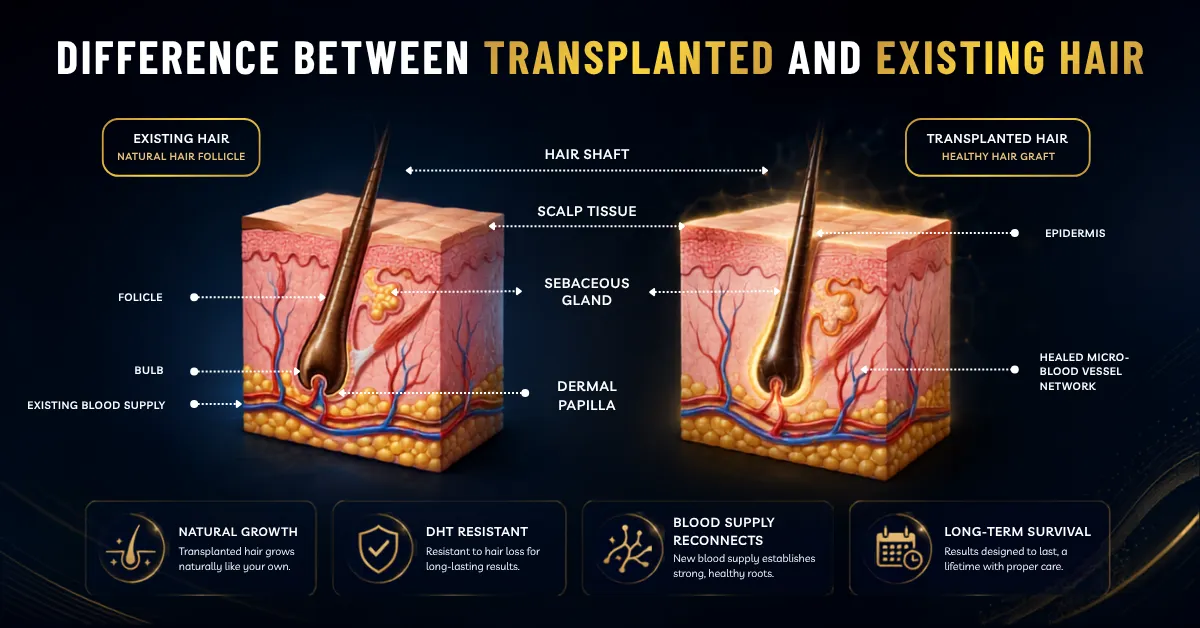
Differences Between Transplanted and Existing Hair
Your scalp doesn't treat every hair equally after an operation. Those brand-new transplanted grafts? They are actually incredibly resilient. Even though the dead hair shaft snaps off and falls out, the freshly planted root is locked in tight beneath the skin. The real victims here are often your native hairs. The surgical stress happening right next door can easily shock your original hair into a temporary, diffuse shedding phase.
Why Does Shock Loss Happen?
A transplant is a controlled trauma. You are purposefully putting your scalp through a severe physical ordeal. The moment those surgical punches hit the skin, your local blood supply is instantly compromised. Add in the heavy numbing fluids and the inevitable post-op swelling, and your body goes into full survival mode. As a physiological defense mechanism, the surrounding follicles shut down their growth engines to conserve energy. They drop their current hair shafts and go to sleep until the warzone above them heals.
Shock Loss vs Normal Hair Shedding
Patients frequently confuse surgical shock shedding with everyday hair loss. It is completely normal to lose 50 to 100 hairs a day due to the natural hair cycle. However, post-operative shedding is a concentrated, accelerated event.
Within a few weeks of surgery, you may notice a sudden, higher volume of fine hairs shedding simultaneously, localized primarily around the recipient area and the donor zone. Unlike normal daily shedding, which is random and spread across the entire scalp, this concentrated fallout is directly linked to the recent surgical inflammation and tissue healing.
Difference Between Shock Loss and Graft Failure
The most prominent fear patients express is confusing temporary shedding with a failed procedure. Understanding the visual and physical differences between a resting follicle and a lost transplanted graft is critical for maintaining peace of mind during your recovery.
Feature
Temporary Shock Loss
Permanent Graft Failure (Dislodgement)
Timing
Typically occurs weeks 2 to 4 post-op.
Usually happens within the first 1 to 5 days post-op.
Appearance
Hair shafts fall out, often with a tiny, dry bulb at the end.
The entire follicular unit is removed, accompanied by fresh tissue.
Bleeding
No active bleeding; the scalp is healing.
Sudden burst of blood at the recipient site.
Pain
Painless shedding during routine washing.
Sharp, localized pain when the graft is forcefully pulled out.
Once the initial scabbing phase is over (around day 10), it is medically highly unlikely to dislodge a graft simply by washing or touching your hair.
When Does Shock Loss Typically Begin? The Timeline
Managing patient expectations requires establishing a clear, realistic timeline. It is crucial to emphasize that early shedding is an absolutely normal part of the physiological healing journey.
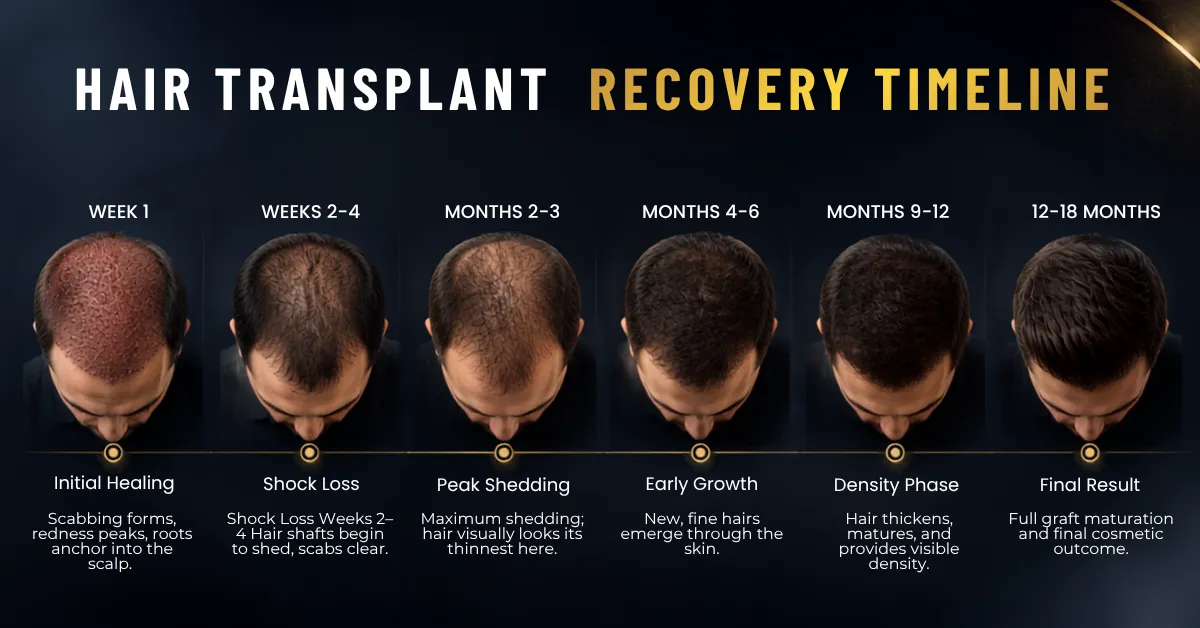
Post-Op Recovery Timeline
Phase
Timeline
What Happens
Initial Healing
Week 1
Scabbing forms, redness peaks, roots anchor into the scalp.
Shock Loss
Weeks 2-4
Hair shafts begin to shed, scabs clear.
Peak Shedding
Months 2-3
Maximum shedding; hair visually looks its thinnest here.
Early Growth
Months 4-6
New, fine hairs emerge through the skin.
Density Phase
Months 9-12
Hair thickens, matures, and provides visible density.
Final Result
12-18 Months
Full graft maturation and final cosmetic outcome.
Early Shedding Stage: Weeks After Surgery
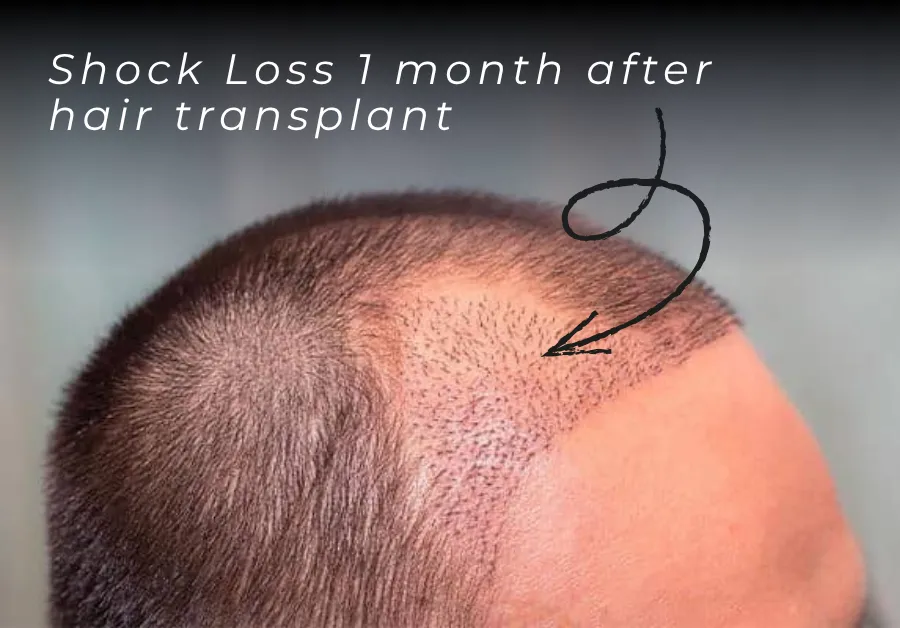
Around 3 to 4 weeks after your surgery, you will likely enter the early shedding stage. During this window, you will start to notice fine hairs falling out when you shower or check your pillow. We consistently remind our patients that this early fallout is expected; it simply indicates that the new follicle is entering its resting phase.
Peak Shedding Phase: Understanding the Timeline
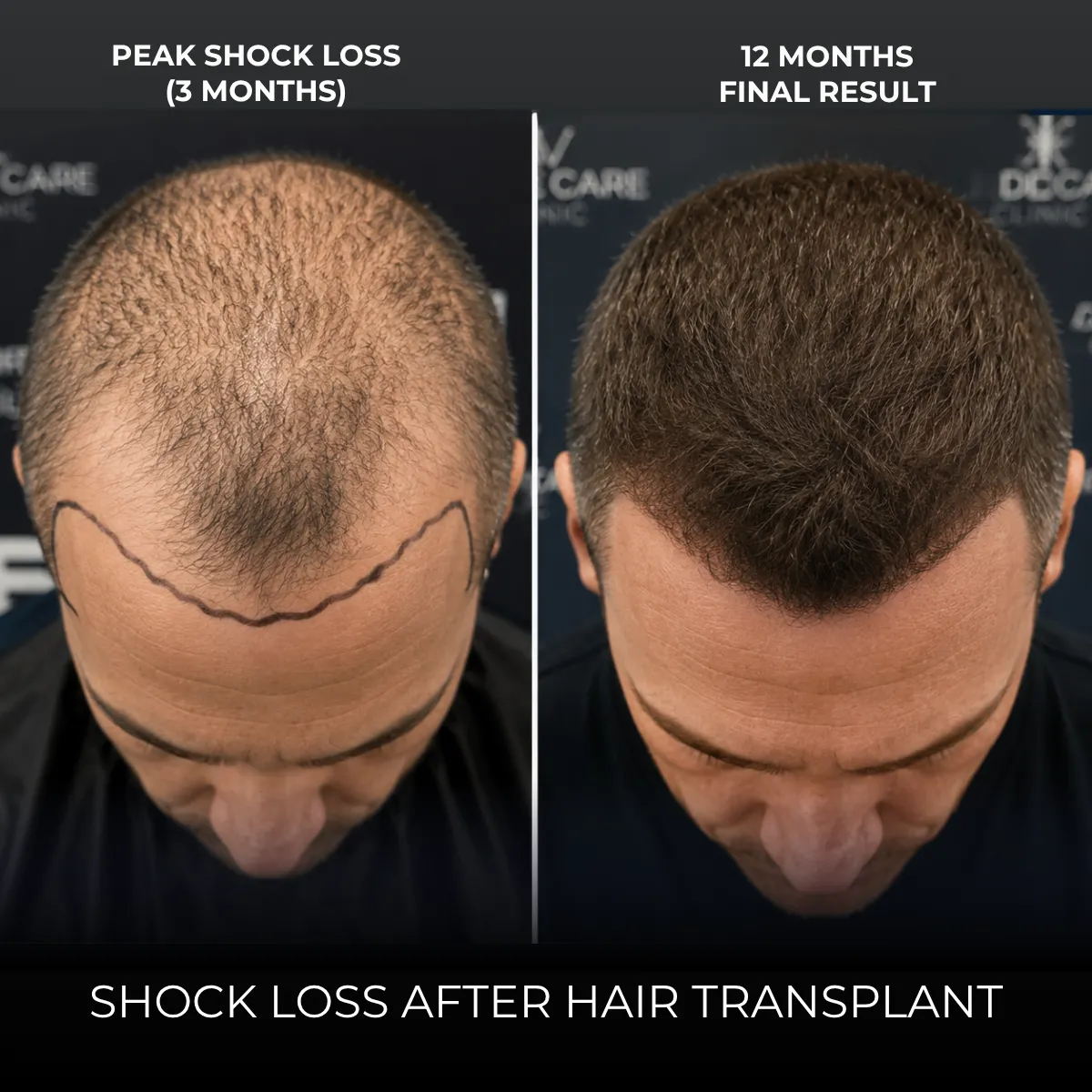
The most intense period of hair shedding usually hits between the second and third months. This is the peak shedding phase, which can look quite dramatic cosmetically. However, it is essential to remember that while the visible hair shafts are dropping, the actual roots remain intact, metabolizing beneath the surface.
Recovery Phase: New Hair Emergence
New hair typically begins to emerge around month four, although growth rates vary between patients. From this point onward, brand new hairs slowly break through the epidermis, gradually replacing what was lost. Over the next several months, progressive graft maturation occurs, significantly improving your overall hair density.
Does Everyone Experience Shock Loss?
A common clinical question is whether this fallout phase is entirely avoidable. While shock shedding is incredibly common, it is not a universally identical experience for every patient. The severity and duration fluctuate based on unique biological factors and the specific surgical approach utilized.
Frequency of Shock Loss in Patients
If you are worried about your shedding, clinical data provides reassurance. Studies and clinical guidelines suggest temporary shock loss is a common postoperative response following hair transplant recovery timeline, while permanent loss is highly uncommon when the procedure is performed correctly by an experienced surgeon. It is simply the body's natural response to localized trauma.
Factors That Influence Severity
Why do some patients lose a significant amount of hair while others barely notice a difference? The severity of your shedding depends on several key clinical factors:
Age and Genetics: Younger patients or those with aggressive, unmanaged native hair loss patterns may experience different shedding rates.
Hair Density: Operating in areas with a high density of existing native hairs increases the risk of surgical trauma to those neighboring roots.
Surgical Method: The precise tools and extraction techniques your surgeon uses dictate the amount of trauma your scalp endure.
Donor Area Shedding: Temporary or Lasting?
While most attention is focused on the top of the head, temporary shedding in the donor area (the back and sides of the scalp) is also perfectly normal. Proper donor management by an experienced surgeon ensures that this thinning is brief. Lasting thinning in the donor zone is exceptionally rare and typically only occurs in cases of extreme over-harvesting.
Can Existing Hair Be Permanently Lost?
This is a major concern, particularly for patients undergoing a procedure to add density among their existing native hairs. If your native hair is already highly miniaturized and nearing the end of its life cycle due to aggressive androgenetic alopecia, the trauma of surgery could potentially push those specific, weakened hairs out permanently. However, healthy native hairs subjected to surgical stress will almost always regrow once the resting phase concludes. This underscores why a thorough clinical evaluation before surgery is critical.
Strategies to Reduce Shock Loss
You cannot rewrite your genetics or eliminate surgical stress, but you can optimize your scalp's recovery environment. While some degree of shedding is inevitable, you can actively reduce the clinical severity of the fallout through proper medical guidance and care.
Choosing Less Traumatic Surgical Methods
The tools your surgeon uses: and the hands holding them: absolutely dictate how much you will shed. Brute-force extractions guarantee massive trauma. A expert specialists, however, rely on ultra-fine micro-punches and precisely engineered blade angles designed to slip between your existing hairs without damaging the surrounding area.
Medical Support After Surgery
Riding it out with zero medical support is a rookie mistake. If you want to defend your existing hair aggressively, you need to bring in heavy artillery like Finasteride or Minoxidil. These aren't just suggestions; they are clinical lifelines used to jumpstart the roots, keep the grafts alive, and force those sleeping follicles back into the growth phase much faster.
Regenerative Therapies
Want to speed up the healing phase? Talk to your doctor about PRP. Taking your own blood and spinning it down to obtain your Platelet-Rich Plasma is basically creating liquid gold for a traumatized scalp. Instead of just waiting around for your body to slowly recover on its own, you are actively flooding the surgical zone with pure growth factors. The tissue heals faster. The newly planted roots get a massive nutritional boost. Think of it as the ultimate biological insurance policy for your new grafts.
Post-Op Care Tips to Protect Hair
Want to speed up the healing phase? Talk to your doctor about PRP. Taking your own blood and spinning it down to obtain your Platelet-Rich Plasma is basically creating liquid gold for a traumatized scalp. Instead of just waiting around for your body to recover on its own slowly, you are actively flooding the surgical zone with pure growth factors. The tissue heals faster. The newly planted roots get a massive nutritional boost. Think of it as the ultimate biological insurance policy for your new grafts.
Does Shock Loss Affect Final Results?
One of the most frequently asked questions is whether heavy shedding implies a poor final cosmetic outcome. Medically, the severity of your shock loss has no direct correlation with your ultimate graft survival rate. Whether you lose 10% of the surrounding hair or a significant majority during the shedding phase, those healthy, anchored follicular units will emerge and produce strong, permanent hair shafts once the resting cycle concludes.
When Should You Be Concerned? Signs You Should Contact Your Surgeon
While shedding is an expected part of the healing process, infections or severe complications are not. You should immediately contact your clinic if you experience any of the following symptoms during your recovery:
Severe, unmanageable pain at the surgical sites.
Pus or yellow discharge around the grafts.
A persistent high fever.
Active bleeding that does not stop with light pressure.
A foul odor coming from the scalp.
Common Questions About Shock Loss (H2)
To help reduce patient anxiety and provide accurate, evidence-based information, we have compiled the most frequently asked questions regarding this phase of recovery.
Myth vs Fact Box
Myth: Heavy shock loss means the transplant failed and the grafts are dead.
Fact: The follicles remain alive and healthy beneath the scalp; only the lifeless hair shaft sheds.
Shock Loss After Hair Transplant: frequently asked questions
Donor Area Shedding: Temporary or Lasting?
While most attention is focused on the top of the head, temporary shedding in the donor area (the back and sides of the scalp) is also perfectly normal. Proper donor management by an experienced surgeon ensures that this thinning is brief. Lasting thinning in the donor zone is exceptionally rare and typically only occurs in cases of extreme over-harvesting.
Myth vs Fact Box?
Myth: Heavy shock loss means the transplant failed and the grafts are dead. Fact: The follicles remain alive and healthy beneath the scalp; only the lifeless hair shaft sheds.
Will Shock Loss Last Forever?
Not at all. It feels catastrophic when it happens, but this is a completely temporary glitch in the matrix. The root itself is perfectly healthy, just hibernating under the skin and gearing up for a massive regrowth cycle.
Do All Transplanted Hairs Fall Out?
This is a massive internet myth. You rarely lose every single graft. A lucky percentage of those newly planted hairs are just exceptionally stubborn. They will completely bypass the resting phase and just keep right on growing from day one.
Can Shock Loss Happen After a Second Procedure?
Absolutely. Your scalp doesn't build up an immunity to surgical trauma. If you go back for a crown fill or a density boost a year later, that fresh round of scalp incisions will trigger the exact same biological stress response all over again.
Are There Natural Ways to Reduce Shedding?
Let's be brutally honest. Eating a clean diet and trying to "manage your stress" is great for your general health, but it will not stop surgical fallout. When you are dealing with intense physical scalp trauma, relying on natural remedies is like bringing a knife to a gunfight. You need actual clinical intervention.
Can Stress Worsen Shock Loss?
100%. If you are constantly agonizing over the shedding, you are spiking your cortisol levels. High cortisol chemically forces even more of your follicles into the telogen (resting) phase, which actively prolongs the exact shedding you are stressing over.
Can Women Experience Shock Loss?
Absolutely. In fact, female hair transplant patients are sometimes more prone to noticeable shock loss. Because women often undergo procedures to increase density among existing, diffuse thinning hair, the surrounding native hairs are highly susceptible to surgical trauma.
Is Donor Area Shock Loss Permanent?
No. Donor area shock loss is a temporary reaction to the extraction process. Unless the surgeon utilized improper techniques leading to severe over-harvesting, the hair in the donor zone will recover and grow back normally.
Can Smoking Make Shock Loss Worse?
Nicotine is an absolute follicle killer. It instantly constricts your blood vessels, choking off the vital oxygen and nutrients your scalp desperately needs to heal. Lighting up during recovery doesn't just worsen the shock loss; it can literally suffocate and kill your newly transplanted grafts.
Can Washing Hair Increase Shock Loss?
Once you hit the two-week mark and the scabs are gone, your shower routine is not the enemy. Seeing hairs circle the drain can be terrifying, but those shafts were already disconnected from the root days ago. Proper, regular washing actually keeps the scalp clean, prevents nasty inflammation, and speeds up the overall recovery.
Sources and medical review
The clinical statements on this page draw on the following published literature and professional body guidance:
Epstein GK (2020). Follicular Unit Excision: Current Practice and Future Developments. Facial Plastic Surgery Clinics of North America.
Harris JA (2013). Follicular unit extraction. Facial Plastic Surgery Clinics of North America.
Romera de Blas C (2026). Complications in follicular unit excision hair transplantation: current evidence and practical approaches. Frontiers in Medicine.
Mohmand MH (2020). Transection rate at different areas of scalp during follicular unit extraction/excision (FUE). Journal of Cosmetic Dermatology.
Send three photos: front, top and sides. You get a technique recommendation, a graft range and a straight answer about what is achievable, before anyone talks about price.
Your details are with the team
A patient coordinator will get back to you shortly. If you would like to send your photos now, WhatsApp is the fastest way to do it.
We respond quickly, day or night, in your language.
Multilingual team, no obligation
Data protectedKVKK and GDPR compliant, 100% confidential
Authorized Health Tourism Intermediary
Turkey Hair Center is the hair-restoration brand of Healthy Way Tourism, an authorized international health-tourism intermediary. All medical procedures are performed by licensed medical professionals at authorized healthcare facilities in Turkiye, in accordance with the regulations of the Ministry of Health.