Afro Hair Transplant in Turkey: Cost, Techniques, Results & Recovery
Afro hair transplant for international patients. Learn techniques, recovery, graft planning, costs, and natural results for curly hair.
A Path to Confidence and Renewal
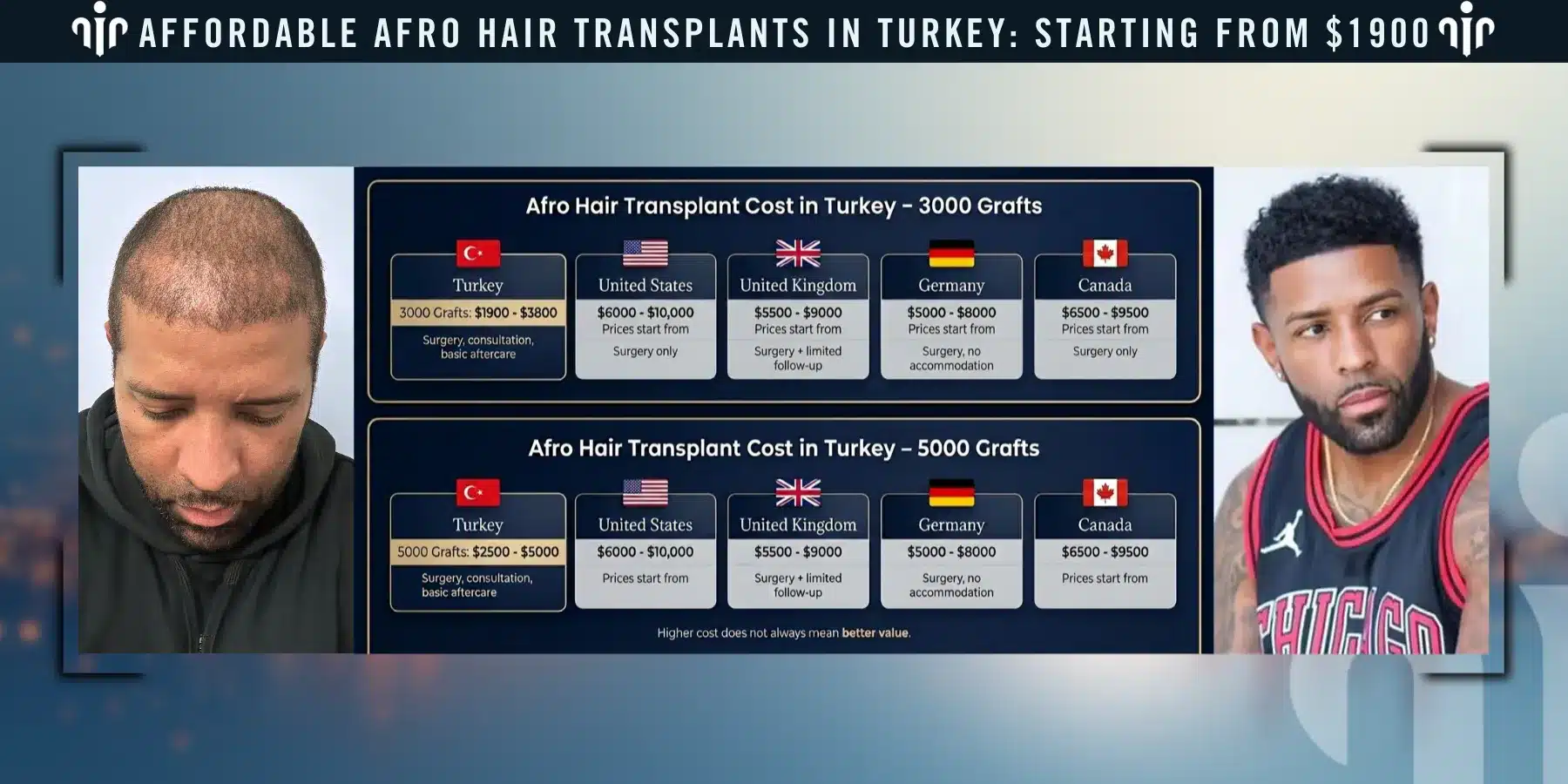
Published Turkish clinic prices for Afro-textured hair transplant procedures can start at around $2,500, although the final cost depends on graft count, technique, surgeon expertise, and the patient's individual treatment plan. Because curly hair roots curve beneath the scalp, precision techniques like Manual FUE hair transplant are often utilized to help reduce the risk of graft damage during extraction.
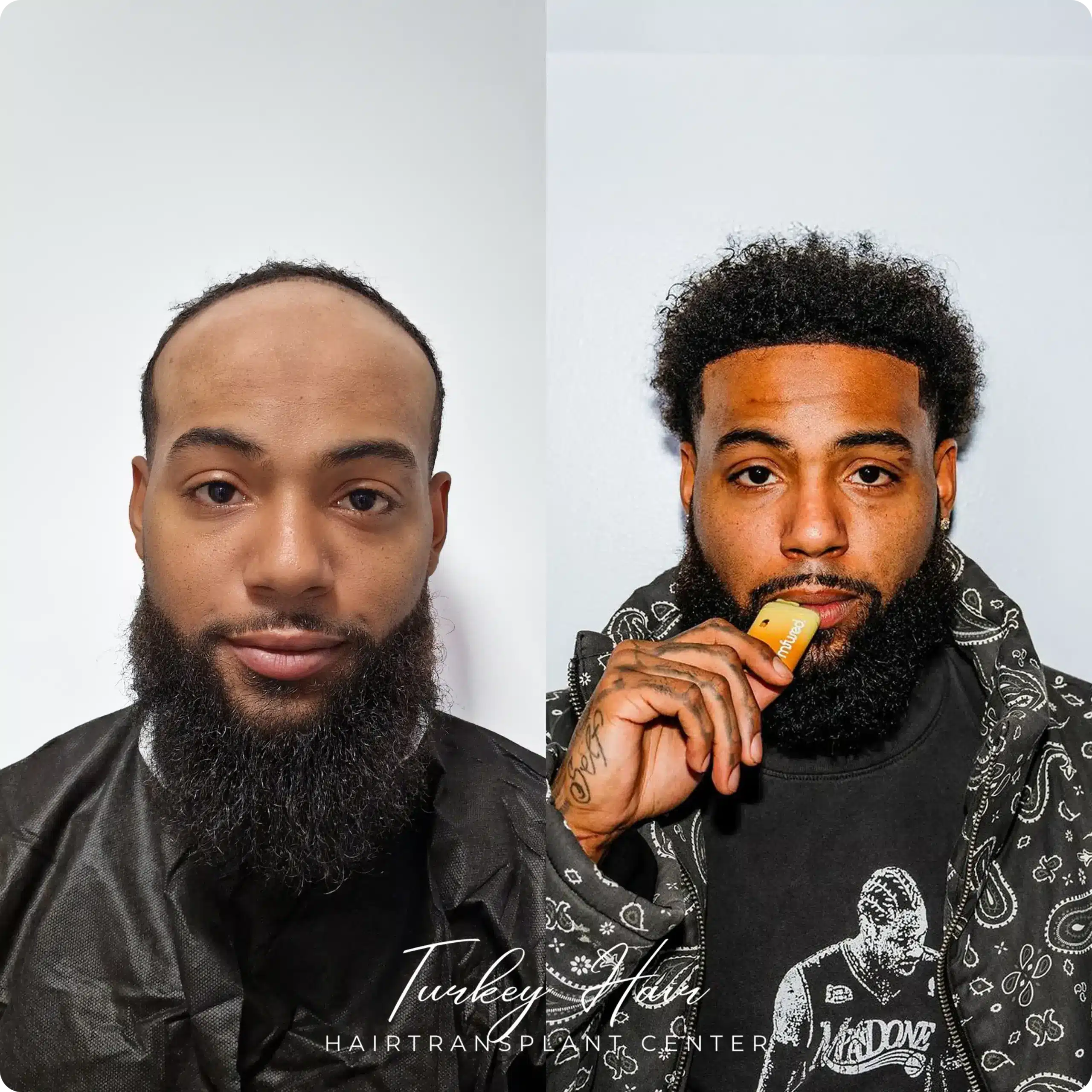
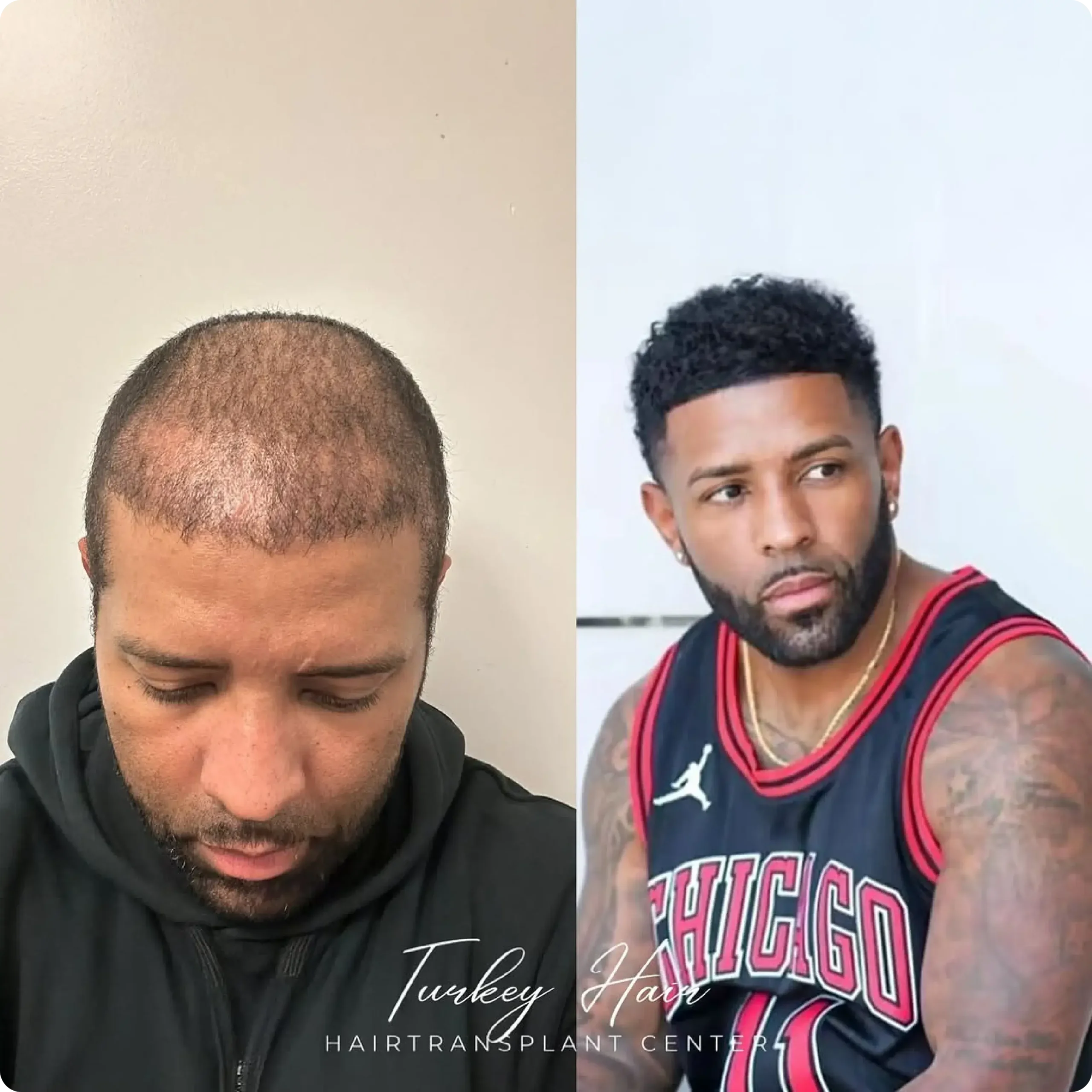
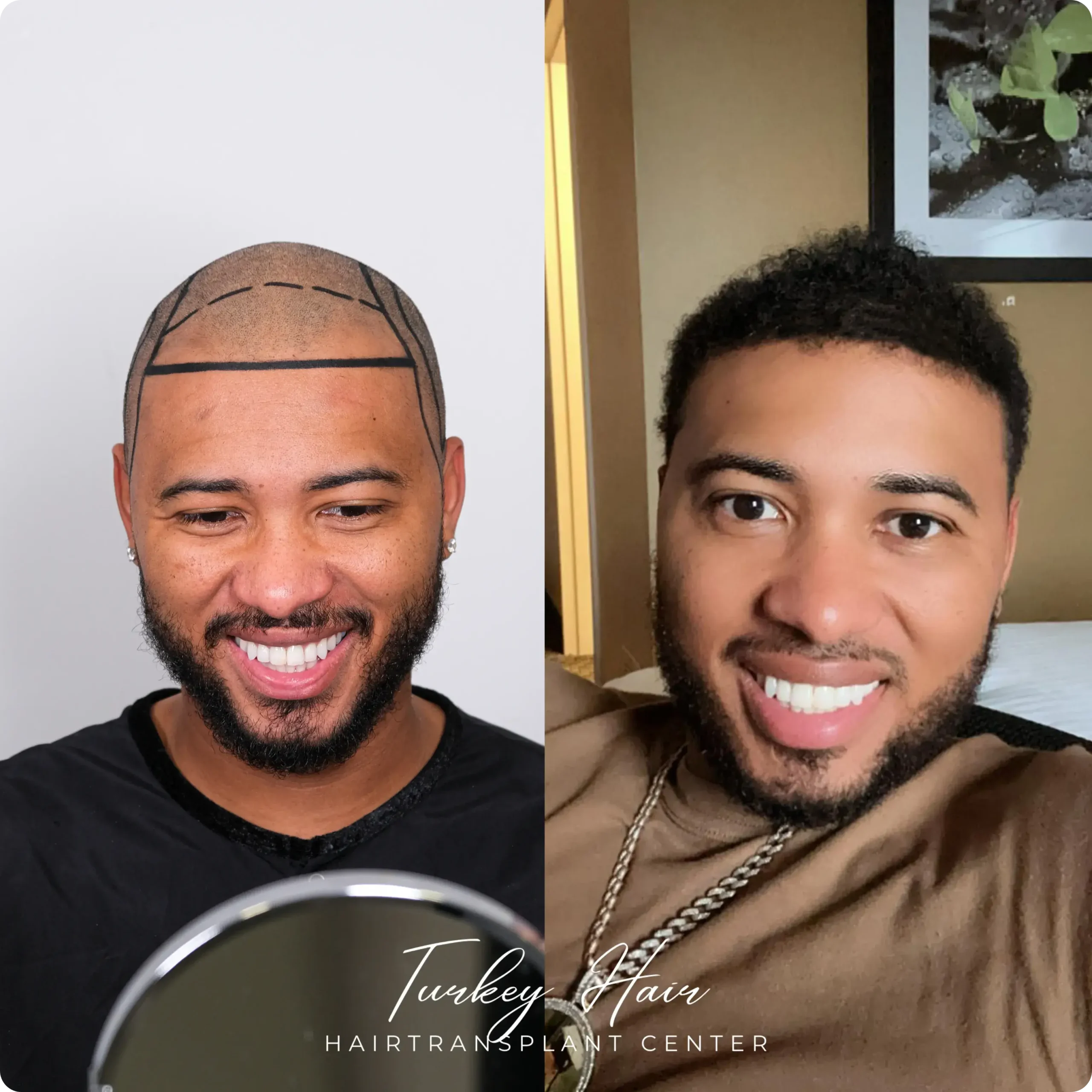
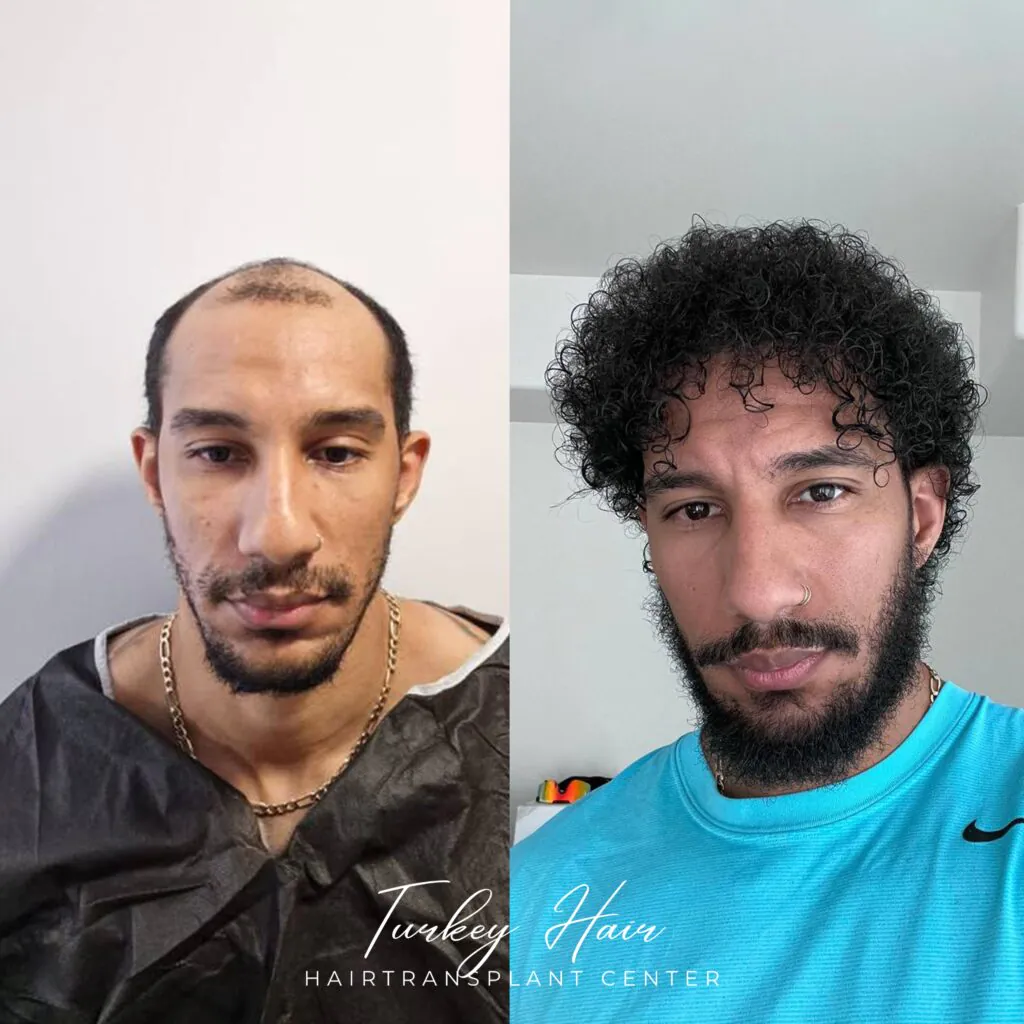
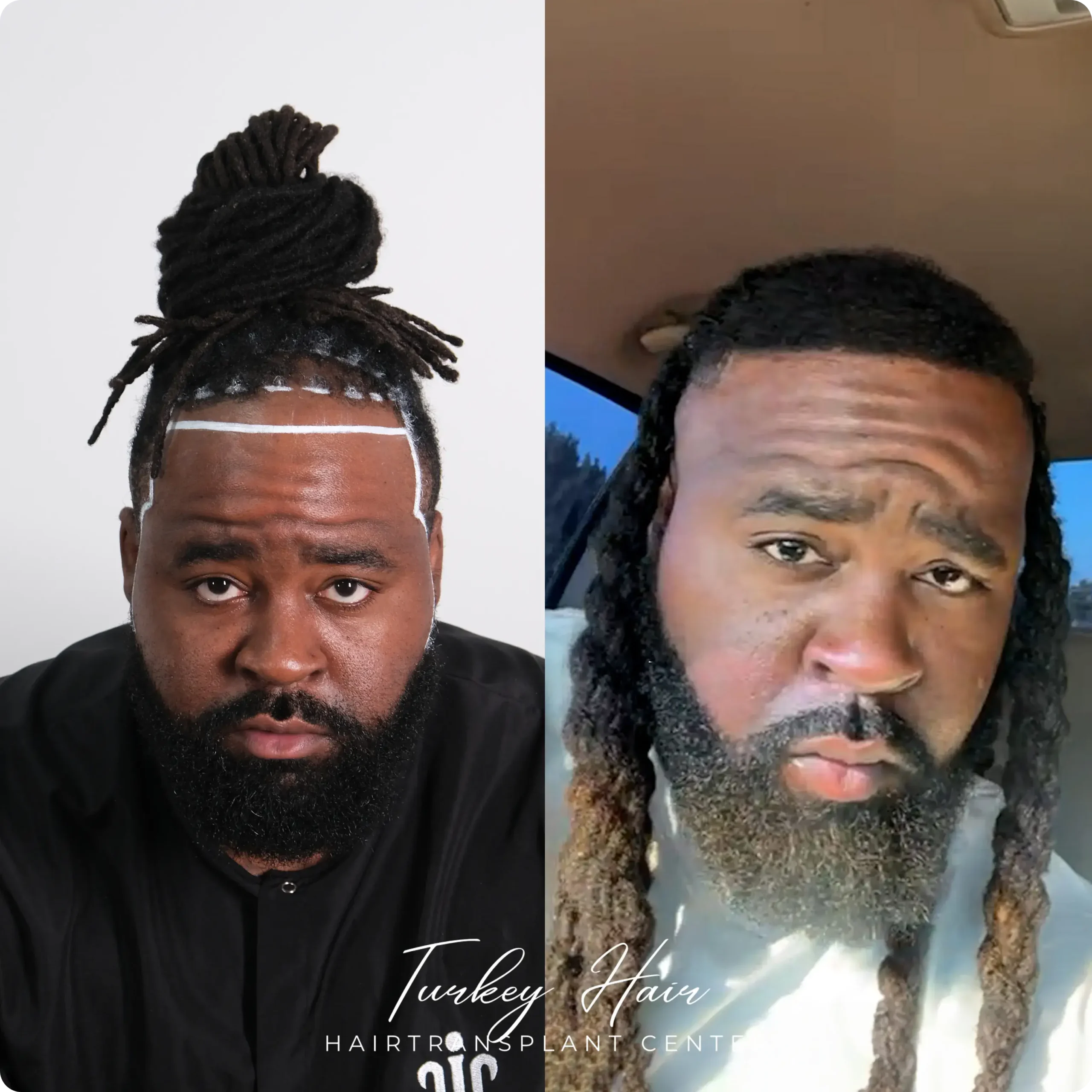
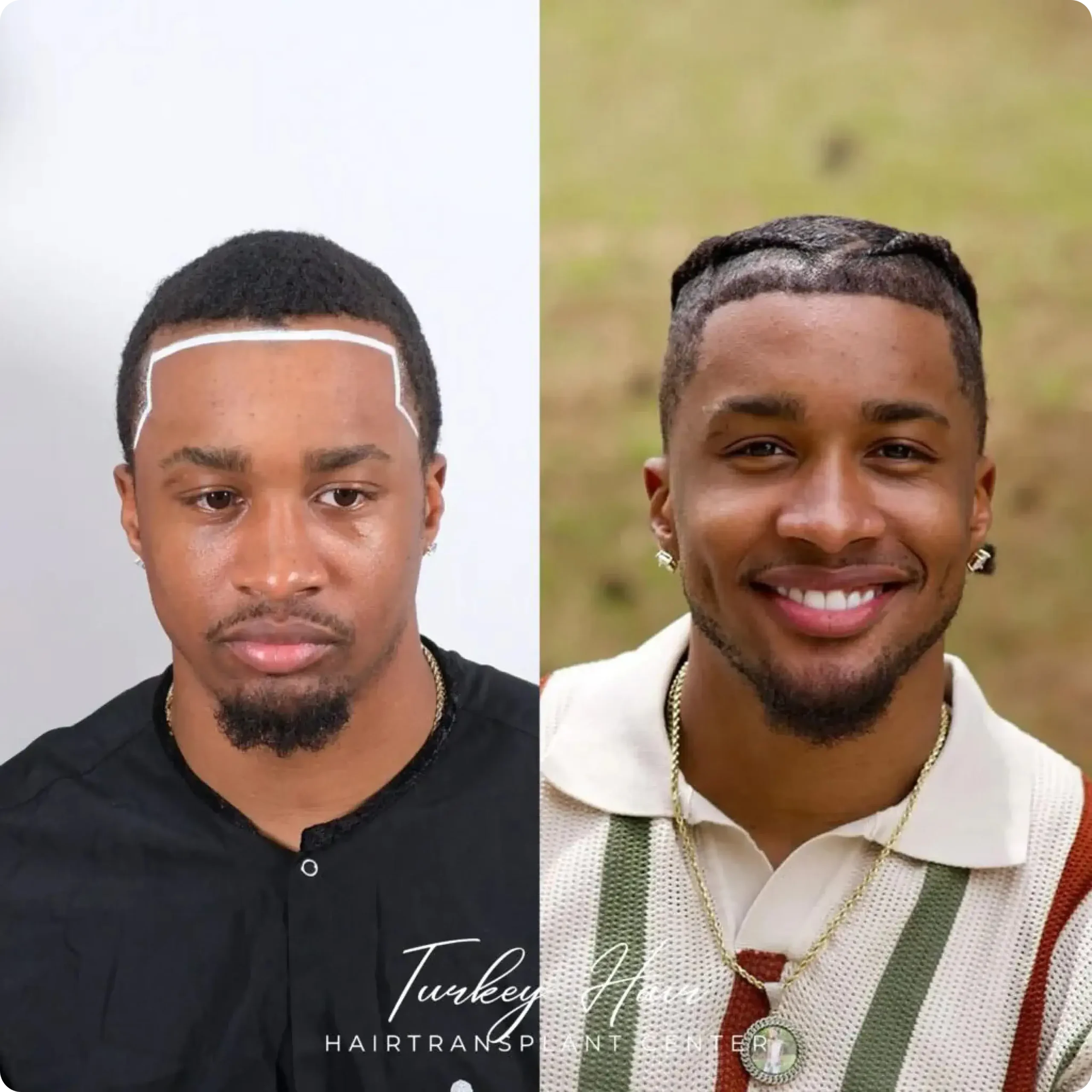
Afro Hair Transplant Before and After Results
After the procedure, the patient’s hair must look natural, balanced, and match the patient’s original curl pattern. A successful afro hair transplant result doesn’t look like flattening or changing the texture of native hair.
This procedure helps to protect the natural character of afro-textured hair. And it restores hair density. With this procedure, many patients notice visible changes, especially in these areas: the frontal hairline, temples, mid-scalp, and crown.
With the right plan, your surgeon creates the biggest flexes. But all of this depends on the hair loss pattern, donor area strength, curl type, and the number of grafts that can be safely extracted.
What Is an Afro Hair Transplant?
An Afro hair transplant is a surgical restoration designed to address the specific follicular characteristics associated with tightly curled or coily hair.
It is not a standard, one-size-fits-all procedure. Type 4A, 4B, and 4C hair follicles frequently possess a distinct curved structure. This curvature isn't just visible on the surface. It continues downward into the dermis. This sub-dermal curve requires highly specialized extraction methods to avoid cutting the root. Managing this curvature during extraction is critical to performing the surgery safely and effectively.
Specialized Technique & Expertise
Specialized Technique & Expertise
Specialized Technique & Expertise
Specialized Technique & Expertise
Why Does Afro Hair Loss Happen?
Am I a good candidate if my donor area is thinning?
Does the procedure work for women with traction alopecia?
Yes. Traction alopecia: often caused by years of tight braids, weaves, or extensions: is one of the most treatable forms of hair loss with transplantation, because the donor area at the back of the scalp is usually spared. The key condition is that the tension has stopped and the loss has stabilised; your surgeon will first assess whether the affected follicles are permanently scarred before confirming that you are a suitable candidate.
Will the transplanted hair look natural with my existing curls?
Does the “Shock Loss” phase affect Afro hair differently?
What is the average cost of an Afro hair transplant?
Can DHI (Direct Hair Implantation) be used for tightly coiled hair?
How do I manage keloid scarring risks during the healing process?
Are there specific post-op shampoos for Afro-textured transplants?
When can I resume wearing hats or hair wraps after surgery?
Is a second session usually required for high-density results?
When Can I Wash My Hair?
The first hair wash is usually performed 48-72 hours after the procedure, following your clinic's instructions. Gentle washing techniques help protect newly implanted grafts and support healthy healing.
What Should I Avoid After Surgery?
When Are the Grafts Secure?
Most grafts become significantly more secure within 7-10 days after surgery. However, complete healing continues over the following weeks, so patients should continue following aftercare guidelines during the recovery period.
Is Shock Loss Normal?
When Will I See Final Results?
Initial growth usually starts around 3-4 months after the procedure. Noticeable improvements appear between 6-9 months, while final results are typically visible after 12-18 months.
Traction Alopecia
Central Centrifugal Cicatricial Alopecia (CCCA)
Chemical Relaxers & Heat Damage
Androgenetic Alopecia
Nutritional & Hormonal Contributors
Afro Hair Transplant Package Prices
Sapphire FUE with Sedation Support (Maximum Graft Planning)
Custom Hairline Design
Micro-channel Opening with Sapphire Blades
Blood Tests & Full Medical Analysis
Platelet-Rich Plasma (PRP) Treatment
Medical Hair Care Kit
Next-Day Dressing & Medical Check-Up
Hotel Accommodation (2 Nights)
Personal Medical Assistant & Interpreter
VIP Welcome: Hotel, Clinic & Airport Transfers
2 Years of Aftercare Consultation
SAPPHIRE ADVANCED REGROWTH PACKAGE
Sapphire FUE with Sedation Support (Maximum Graft + Density Optimization (MicroFlow))
Custom Hairline Design
Micro-channel Opening with Sapphire Blades
Blood Tests & Full Medical Analysis
Density Planning Based on the MicroFlow Method
Platelet-Rich Plasma (PRP) Treatment
Real Exosome Therapy
Advanced Aftercare Kit (Serum + Vitamin & Mineral Supplements)
Next-Day Dressing & Medical Check-Up
Hotel Accommodation (2 Nights)
Personal Medical Assistant & Interpreter
VIP Welcome: Hotel, Clinic & Airport Transfers
2 Years of Aftercare Consultation
EXOSAPPHIRE MICROFLOW ELITE PACKAGE
Sapphire FUE with Sedation Support (Maximum Graft + Density Optimization (MicroFlow))
Custom Hairline Design
Micro-channel Opening with Sapphire Blades
Blood Tests & Full Medical Analysis
MicroFlow Mapping (Vascular Planning)
Combined PRP + Exosome Regenerative Protocol
LLLT Laser Session (1 Activation Session)
Premium Aftercare Kit (Serum + Vitamin & Mineral Supplements)
Dense Transplantation Without Harming Existing Hair
Combined PRP + Exosome Regenerative Protocol
Advanced Aftercare Kit (Serum + Vitamin & Mineral Supplements)
Next-Day Dressing & Medical Check-Up
Hotel Accommodation (2 Nights)
Personal Medical Assistant & Interpreter
VIP Welcome: Hotel, Clinic & Airport Transfers
2 Years of Aftercare Consultation
Afro Hair Transplant FAQ
Am I a good candidate if my donor area is thinning?
No, when performed by a specialist who understands C-shaped follicles, the success rate is equally high as straight hair.
Does the procedure work for women with traction alopecia?
Yes. Traction alopecia: often caused by years of tight braids, weaves, or extensions: is one of the most treatable forms of hair loss with transplantation, because the donor area at the back of the scalp is usually spared. The key condition is that the tension has stopped and the loss has stabilised; your surgeon will first assess whether the affected follicles are permanently scarred before confirming that you are a suitable candidate.
Will the transplanted hair look natural with my existing curls?
Yes, by following your natural hair angles and growth patterns, the new hair will blend seamlessly with your existing curls.
Does the “Shock Loss” phase affect Afro hair differently?
The timing is the same, but the shedding may appear more noticeable due to the thick texture before permanent growth begins.
What is the average cost of an Afro hair transplant?
An Afro hair transplant is priced as an all-inclusive package, and the final figure depends mainly on how many grafts you need and whether Manual FUE or DHI is used. Because tightly coiled, C-shaped follicles must be extracted more slowly and carefully, afro cases can sit slightly above straight-hair procedures. You receive an exact, itemised quote in writing after a free consultation reviews your donor area and graft requirement: with no hidden costs. See our hair transplant pricing for current package ranges.
Can DHI (Direct Hair Implantation) be used for tightly coiled hair?
Yes, DHI is highly effective for tightly coiled hair as the Choi Implanter Pen allows for precise angle and depth control.
How do I manage keloid scarring risks during the healing process?
Clinics use minimally invasive tools like Sapphire blades and provide anti-inflammatory protocols to prevent keloid formation in sensitive skin.
Are there specific post-op shampoos for Afro-textured transplants?
Yes, clinics provide sulfate-free, pH-balanced shampoos that moisturize the scalp without damaging the delicate new grafts.
When can I resume wearing hats or hair wraps after surgery?
You should wait at least 10 to 14 days before wearing loose-fitting hats or silk wraps to avoid shifting the grafts.
Is a second session usually required for high-density results?
While most achieve great density in one session, a second “touch-up” may be recommended for extremely high-volume goals.
When Can I Wash My Hair?
The first hair wash is usually performed 48-72 hours after the procedure, following your clinic's instructions. Gentle washing techniques help protect newly implanted grafts and support healthy healing.
What Should I Avoid After Surgery?
For the first few weeks, avoid strenuous exercise, direct sun exposure, swimming, smoking, alcohol consumption, and touching or scratching the transplanted area. Following post-operative instructions is essential for optimal graft survival.
When Are the Grafts Secure?
Most grafts become significantly more secure within 7-10 days after surgery. However, complete healing continues over the following weeks, so patients should continue following aftercare guidelines during the recovery period.
Is Shock Loss Normal?
Yes. Shock loss is a normal part of the hair transplant recovery process. Transplanted hairs may shed within the first few weeks before new growth begins. This temporary phase is expected and does not affect the final outcome.
When Will I See Final Results?
Initial growth usually starts around 3-4 months after the procedure. Noticeable improvements appear between 6-9 months, while final results are typically visible after 12-18 months.
Traction Alopecia
Decades of wearing tight braids, weaves, or extensions put severe physical tension on the hair root. Over time, this constant pulling can damage the follicle permanently. Traction alopecia is highly prevalent in women of African descent and primarily affects the hairline and temporal edges.
Why this matters for transplantation: Hair transplantation can be an effective option for women with traction alopecia, but only when the donor area is healthy and the mechanical pulling has completely stopped.
Central Centrifugal Cicatricial Alopecia (CCCA)
CCCA is a scarring condition that usually starts at the crown and spreads outward. Clinical literature links it to genetic predispositions in Black women. Active CCCA causes severe inflammation that destroys hair follicles and replaces them with scar tissue.
Why this matters for transplantation: Hair transplantation is generally avoided while CCCA is clinically active. Ongoing inflammation and scarring may severely compromise graft survival and recipient-site healing.
Chemical Relaxers & Heat Damage
Harsh chemical straighteners break the disulfide bonds in the hair shaft to alter its structure. Repeated or improper use of chemical relaxers can irritate or injure the scalp. In severe cases, this contributes to local scarring and permanent hair loss.
Why this matters for transplantation: The scalp tissue must be thoroughly evaluated for chemical burn scars, which can have reduced blood supply and affect graft viability.
Androgenetic Alopecia
This is male and female pattern baldness. It is genetic. DHT (dihydrotestosterone) shrinks the hair follicles over time. In Black men, this typically presents as a receding hairline and a thinning crown.
Why this matters for transplantation: The donor area must be carefully mapped to ensure follicles are extracted from safe zones resistant to DHT.
Nutritional & Hormonal Contributors
Deficiencies in vitamin D or ferritin (iron), along with thyroid imbalances, often play a major role in hair shedding.
Why this matters for transplantation: Depending on the patient's symptoms and medical history, a clinician may recommend laboratory testing to investigate nutritional or endocrine issues before approving surgery.
Send us your scalp photos for a free preliminary assessment →
How Much Does an Afro Hair Transplant Cost in Turkey?
Looking at published clinic estimates, Afro hair transplant packages in Turkey usually fall between $2,500 and $5,500 depending on the complexity of the case and the number of grafts required[6].
The final price is determined by the total number of grafts needed, the specific technique applied, the surgeon’s expertise, and the required density. Many clinics in Turkey serving international patients use package-based pricing. Clinics in the US and parts of Western Europe may more commonly price procedures on a strict per-graft basis.
What is Included in the Afro Hair Transplant Package?
At Turkey Hair Center, international patient packages may include accommodation, transfers, and post-operative aftercare to simplify the travel experience. A typical package usually covers:
VIP airport, hotel, and clinic transfers.
2 to 3 nights of accommodation in a 4-star or 5-star hotel.
Native-speaking translation services.
Pre-operative blood tests and dermatological analysis.
Post-operative medications, special shampoos, and lotions.
12-month online medical follow-up.
Cost Comparison: Turkey vs. USA, UK, and Germany
Country
Typical Published Price Range (3000-5000 Grafts)
Typical Billing Model
Primary Technique
Turkey
$2,500 - $5,500
All-Inclusive Packages
Manual / Sapphire FUE
United States
$6,000 - $15,000+
Per-Graft Pricing
Standard FUE / FUT
United Kingdom
$5,500 - $12,000
Per-Graft or Session
Standard FUE
Germany
$5,000 - $10,000
Per-Graft Pricing
FUE
Typical Graft Planning for Afro-Textured Hair
Patients naturally want to know how much hair they need before choosing a technique. Many frontal restoration cases fall within a broad range of 2,500 to 3,200 grafts.
However, the appropriate number can only be determined after assessing the extent of hair loss, donor density, hair characteristics, and desired coverage. Controlled Manual FUE aims to maximize graft integrity during extraction and implantation.
Transplanting Afro-textured hair presents unique technical challenges. The main issue? Follicular curvature.
Many of these follicles have a pronounced bend beneath the skin.
That hidden sub-dermal curve changes the entire extraction approach. If a clinic uses standard, straight extraction punches without modifying their depth or angle, this may increase the risk of follicular transection (cutting the graft). A severely damaged follicle may have reduced viability after transplantation.
For tightly curved follicles, some surgeons prefer manual extraction. It allows them to manually adjust the punch angle and depth according to the follicle's specific direction. The appropriate extraction approach always depends on the patient's unique anatomy and the surgeon's hands-on experience.
Hair Transplant Techniques for Afro-Textured Hair
The most effective techniques depend heavily on scalp laxity, curl type, and the medical team's diagnostic findings.
Manual FUE
Manual extraction can give the surgeon greater control over punch angle and extraction speed. It allows the medical team to adjust in real-time to the specific rotational needs of the coiled follicle. It is slower and labor-intensive, but it helps protect the root integrity.
Sapphire FUE
In Sapphire FUE, sapphire blades may be used to create recipient-site incisions. The choice of blade and incision design depends on the surgeon's technique, the patient's anatomy, and the desired density.
Unshaven FUE
Unshaven FUE allows patients to undergo surgery without fully shaving their head. It preserves existing hair length and offers a more discreet recovery. However, it is technically demanding. Fewer grafts may be practical to extract in a single session, and it is not suitable for every patient profile.
Combination Method
For patients needing higher graft counts or undergoing a repair surgery, clinics sometimes blend techniques. A combination approach aims to balance extraction across different donor zones, which helps preserve the long-term integrity of the scalp.
DHI and Afro-Textured Hair
DHI may be appropriate in selected patients, but the implanting method should be chosen according to follicular anatomy, graft characteristics, recipient-site requirements, and surgeon experience. Choi implanter pens were historically built for straighter hair. Therefore, loading and implanting a tightly coiled graft requires specific clinical expertise to avoid bending the follicle or traumatizing the bulb.
What Our Surgical Team Evaluates Before an Afro Hair Transplant
At Turkey Hair Center, Afro-textured hair cases are assessed individually because follicular curvature, curl pattern, donor density, and previous scalp trauma can vary significantly between patients. Our pre-surgical evaluation includes:
Curl Pattern & Follicular Angle: To determine the correct punch diameter.
Donor Density: To ensure extraction won't cause visible thinning.
Previous Traction or Scarring: To assess blood supply in the recipient area.
CCCA Activity: To rule out active inflammation.
Hairline Design: To match natural facial symmetry.
Graft Requirements: To plan a safe, sustainable extraction limit.
Afro Hair Transplant for Women
Female hair loss is structurally different. Women rarely present with a traditional receding hairline. Instead, they often experience diffuse thinning across the scalp or localized loss at the edges due to traction alopecia.
Restoring female edges requires a softer, rounded hairline design.
The Traction Alopecia Treatment Path
Restoring hair lost to traction alopecia requires a careful, phased approach. Before any surgery is planned, a doctor must confirm that the mechanical pulling has completely stopped and the hair loss is stable. Rushing into a transplant too early can compromise the final results.
Confirm the medical diagnosis.
Stop all ongoing mechanical traction (braids, tight weaves).
Assess whether the hair loss has completely stabilized.
Evaluate donor density at the back of the head.
Assess scar tissue and blood flow in the recipient area.
Consider transplantation only when clinically appropriate.
Who Is (and Isn't) a Good Candidate?
Not everyone qualifies for surgery. Medical safety and long-term viability must dictate the treatment plan.
You may be a good candidate if:
You have stabilized genetic hair loss or inactive traction alopecia.
Your donor area (back of the head) has adequate density.
You are in good general health without active autoimmune conditions.
Hair transplantation is generally not recommended when:
You have active CCCA or another scarring alopecia.
You have a severely depleted donor area.
You have unrealistic expectations about density or coverage.
Hair growth requires patience. Your newly implanted hair will go through several distinct physiological phases.
Period
Expected Development
Weeks 2-4
Temporary shedding (shock loss) may occur. The hair shafts shed while follicles remain securely beneath the scalp.
Months 3-4
Early growth phase begins. Fine, curly hairs start to emerge.
Months 6-8
Increasing density and thickness become more visible as the curls form their natural pattern.
Months 12-15
Final maturation is assessed; individual results vary between patients.
Pre-Op & Aftercare Guidelines for Afro Hair
Patients receive individualized postoperative instructions based on their specific procedure and clinical assessment. General guidelines often include:
7 Days Before Surgery: Stop smoking and consuming alcohol to support optimal blood circulation. Let your hair grow out slightly so the medical team can accurately assess your natural curl angle.
First 14 Days: Sleep with your head elevated and avoid direct sun exposure.
First 30 Days: Follow your surgeon's strict instructions regarding when to resume oils and other hair products.
Months 1-6: During the early healing period, patients should follow their clinic's instructions regarding heat styling, chemical treatments, and hair products. Chemical relaxers and aggressive scalp treatments should generally be avoided until the scalp has adequately healed.
Risks and What Can Go Wrong If Not Done Correctly
Surgery always carries inherent risks.
If a clinic attempts an Afro hair transplant using generic straight-hair protocols, the risk of graft injury, transection, donor scarring, or unnatural growth direction may increase. Patients should verify the surgeon's credentials,
How Should Black Patients Evaluate a Turkish Hair Transplant Clinic?
Turkey is a major destination for international hair-transplant patients. However, patients considering treatment should evaluate clinics based on medical credentials, facility standards, communication, and experience with Afro-textured hair rather than destination alone.
When vetting a clinic, consider asking these specific questions:
Has the surgical team treated Afro-textured hair frequently?
Can they explain how they handle follicular curvature?
Are clear, unedited before/after cases available?
Is a medical diagnosis performed before surgery is confirmed?
Who actually performs the extraction and implantation?
What happens if CCCA or an underlying condition is suspected?
What is explicitly included in the financial package?
What kind of digital follow-up is provided once you return home?
Afro Celebrities Who Chose Turkey for Hair Transplants
Grammy-winning artist Akon has publicly discussed undergoing a hair transplant in Turkey. His public statements remain a notable example of the country's growing visibility in international medical tourism for Afro-textured hair restoration.
Book Your Afro Hair Transplant Consultation
Restoring Afro-textured hair requires more than standard hair transplant protocols. It demands an anatomical understanding of follicle curvature and precise clinical execution.
Take the guesswork out of your planning. Send us clear photos of your scalp. Within 24 hours, our medical team will review your case to provide a preliminary assessment and graft estimate.
Nazmi G. works directly with patients as the Senior Trichologist and Hair Restoration Consultant at Turkey Hair Center. His clinical focus is straightforward: accurate graft planning and natural hairline design.
He spends hours every week consulting with international patients. Figuring out the logistics of traveling abroad for surgery can be stressful. Nazmi steps in to break down the actual medical facts and financial details. His goal is simply to make sure every patient has a clear, evidence-based treatment plan before they ever book a flight.
Medical Review Note
Dr. Tompi, M.D. , a board-certified surgeon, evaluated this guide for clinical accuracy. His review specifically verified the medical statements regarding FUE and DHI extraction methods, realistic recovery timelines, and long-term donor preservation.
Medical Disclaimer: This guide is strictly for educational purposes and cannot replace a real medical consultation. You cannot get an exact price, confirm your surgical candidacy, or determine a safe graft count without a direct physical or verified digital evaluation by a licensed physician.
Editorial Policy & Trust
Turkey Hair Center prioritizes medical transparency and patient safety. We actively stand against deceptive marketing and unverified guarantees.
Final price depends on graft count and technique; it is confirmed after the medical assessment.
Afro Hair Transplant: frequently asked questions
Am I a good candidate if my donor area is thinning?
No, when performed by a specialist who understands C-shaped follicles, the success rate is equally high as straight hair.
Does the procedure work for women with traction alopecia?
Yes. Traction alopecia, often caused by years of tight braids, weaves, or extensions, is one of the most treatable forms of hair loss with transplantation, because the donor area at the back of the scalp is usually spared. The key condition is that the tension has stopped and the loss has stabilised; your surgeon will first assess whether the affected follicles are permanently scarred before confirming that you are a suitable candidate.
Will the transplanted hair look natural with my existing curls?
Yes, by following your natural hair angles and growth patterns, the new hair will blend seamlessly with your existing curls.
Does the "Shock Loss" phase affect Afro hair differently?
The timing is the same, but the shedding may appear more noticeable due to the thick texture before permanent growth begins.
What is the average cost of an Afro hair transplant?
An Afro hair transplant is priced as an all-inclusive package, and the final figure depends mainly on how many grafts you need and whether Manual FUE or DHI is used. Because tightly coiled, C-shaped follicles must be extracted more slowly and carefully, afro cases can sit slightly above straight-hair procedures. You receive an exact, itemised quote in writing after a free consultation reviews your donor area and graft requirement, with no hidden costs. See our hair transplant pricing for current package ranges.
Can DHI (Direct Hair Implantation) be used for tightly coiled hair?
Yes, DHI is highly effective for tightly coiled hair as the Choi Implanter Pen allows for precise angle and depth control.
How do I manage keloid scarring risks during the healing process?
Clinics use minimally invasive tools like Sapphire blades and provide anti-inflammatory protocols to prevent keloid formation in sensitive skin.
Are there specific post-op shampoos for Afro-textured transplants?
Yes, clinics provide sulfate-free, pH-balanced shampoos that moisturize the scalp without damaging the delicate new grafts.
When can I resume wearing hats or hair wraps after surgery?
You should wait at least 10 to 14 days before wearing loose-fitting hats or silk wraps to avoid shifting the grafts.
Is a second session usually required for high-density results?
While most achieve great density in one session, a second "touch-up" may be recommended for extremely high-volume goals.
When Can I Wash My Hair?
The first hair wash is usually performed 48-72 hours after the procedure, following your clinic's instructions. Gentle washing techniques help protect newly implanted grafts and support healthy healing.
What Should I Avoid After Surgery?
For the first few weeks, avoid strenuous exercise, direct sun exposure, swimming, smoking, alcohol consumption, and touching or scratching the transplanted area. Following post-operative instructions is essential for optimal graft survival.
When Are the Grafts Secure?
Most grafts become significantly more secure within 7-10 days after surgery. However, complete healing continues over the following weeks, so patients should continue following aftercare guidelines during the recovery period.
Is Shock Loss Normal?
Yes. Shock loss is a normal part of the hair transplant recovery process. Transplanted hairs may shed within the first few weeks before new growth begins. This temporary phase is expected and does not affect the final outcome.
When Will I See Final Results?
Initial growth usually starts around 3-4 months after the procedure. Noticeable improvements appear between 6-9 months, while final results are typically visible after 12-18 months.
Traction Alopecia?
Decades of wearing tight braids, weaves, or extensions put severe physical tension on the hair root. Over time, this constant pulling can damage the follicle permanently. Traction alopecia is highly prevalent in women of African descent and primarily affects the hairline and temporal edges. Why this matters for transplantation: Hair transplantation can be an effective option for women with traction alopecia, but only when the donor area is healthy and the mechanical pulling has completely stopped.
Central Centrifugal Cicatricial Alopecia (CCCA)?
CCCA is a scarring condition that usually starts at the crown and spreads outward. Clinical literature links it to genetic predispositions in Black women. Active CCCA causes severe inflammation that destroys hair follicles and replaces them with scar tissue.
Chemical Relaxers & Heat Damage?
Harsh chemical straighteners break the disulfide bonds in the hair shaft to alter its structure. Repeated or improper use of chemical relaxers can irritate or injure the scalp. In severe cases, this contributes to local scarring and permanent hair loss. Why this matters for transplantation: The scalp tissue must be thoroughly evaluated for chemical burn scars, which can have reduced blood supply and affect graft viability.
Androgenetic Alopecia?
This is male and female pattern baldness. It is genetic. DHT (dihydrotestosterone) shrinks the hair follicles over time. In Black men, this typically presents as a receding hairline and a thinning crown. Why this matters for transplantation: The donor area must be carefully mapped to ensure follicles are extracted from safe zones resistant to DHT.
Nutritional & Hormonal Contributors?
Deficiencies in vitamin D or ferritin (iron), along with thyroid imbalances, often play a major role in hair shedding. Why this matters for transplantation: Depending on the patient's symptoms and medical history, a clinician may recommend laboratory testing to investigate nutritional or endocrine issues before approving surgery. Send us your scalp photos for a free preliminary assessment →
What is Included in the Afro Hair Transplant Package?
At Turkey Hair Center, international patient packages may include accommodation, transfers, and post-operative aftercare to simplify the travel experience. A typical package usually covers:
Sources and medical review
The clinical statements on this page draw on the following published literature and professional body guidance:
Umar, S. (2016). Body Hair Transplant by Follicular Unit Extraction: My Experience With 122 Patients. Aesthetic Surgery Journal, 36(10), 1101-1110. DOI: 10.1093/asj/sjw089
Send three photos: front, top and sides. You get a technique recommendation, a graft range and a straight answer about what is achievable, before anyone talks about price.
Your details are with the team
A patient coordinator will get back to you shortly. If you would like to send your photos now, WhatsApp is the fastest way to do it.
We respond quickly, day or night, in your language.
Multilingual team, no obligation
Data protectedKVKK and GDPR compliant, 100% confidential
Authorized Health Tourism Intermediary
Turkey Hair Center is the hair-restoration brand of Healthy Way Tourism, an authorized international health-tourism intermediary. All medical procedures are performed by licensed medical professionals at authorized healthcare facilities in Turkiye, in accordance with the regulations of the Ministry of Health.