
Afro Hair Transplant in Turkey, Cost, Before & After
Learn everything about Afro hair transplant in Turkey, including costs, techniques, before and after results, recovery, and why specialized clinics matter.
Afro hair transplants are specialized hair restoration procedures tailored for the unique characteristics of tightly coiled or kinked African-American hair. They involve careful handling of the hair’s curl pattern and follicle shape to ensure successful transplantation and natural-looking results.
At Turkey Hair Center, we ensure personalized treatments for the best results. Our experienced team specializes in Afro hair restoration, providing long-lasting, natural density and a perfectly blended hairline.
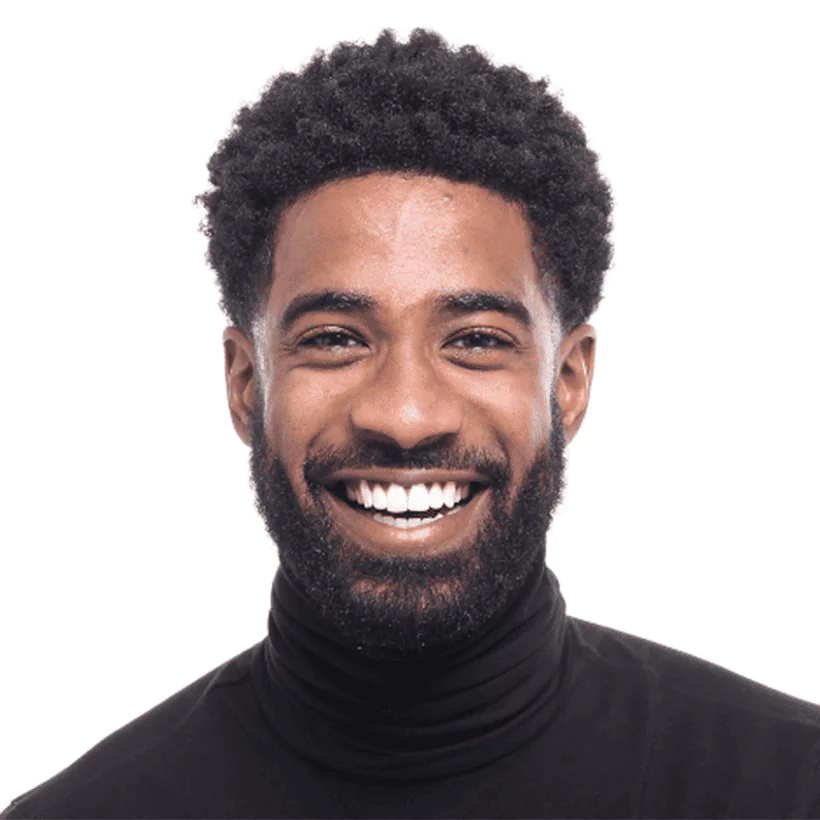 After
After
 Before
Afro Hair Transplant: Before & After
See the incredible transformation with our specialized Afro hair transplant techniques. Our before & after results showcase natural hairline restoration and enhanced density while maintaining the unique curl pattern.
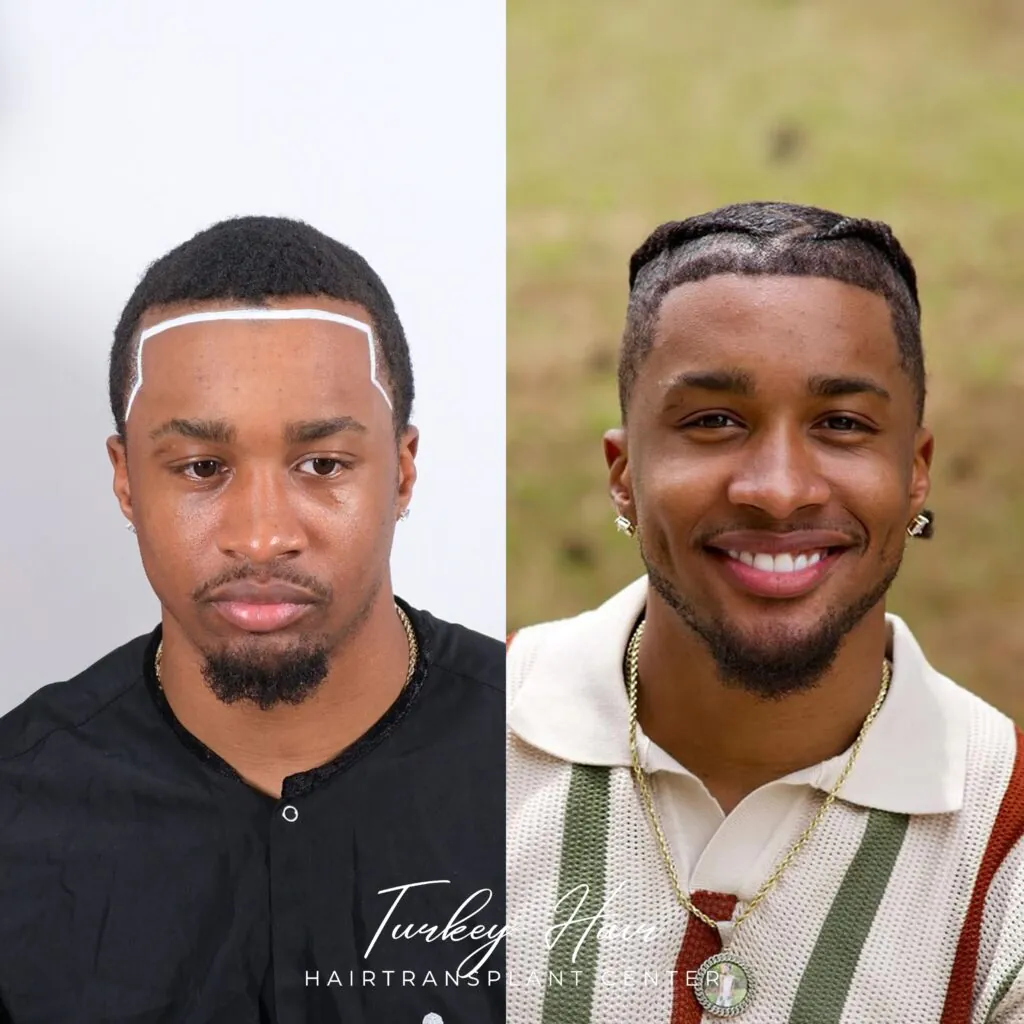
Tarik G.
United States
Dhi Technique
Graft 5587

Jordan
United States
Fue Technique
Graft 4798
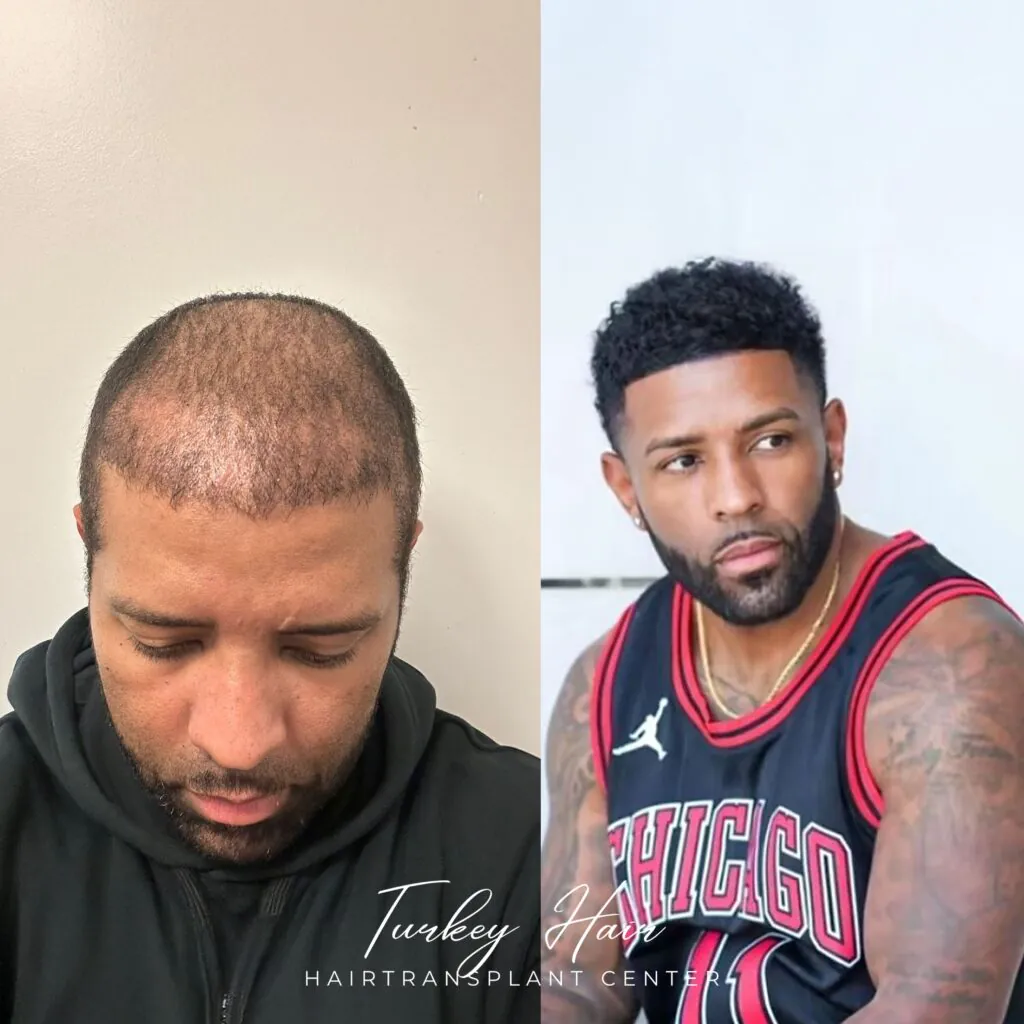
Herevaldo
United States
FUE Technique
Graft 5398

Ezra N.
United States
Dhi Technique
Graft 5028

Dakonta H.
United States
Fue Technique
Graft 5250
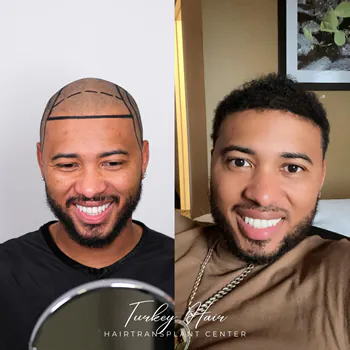
Jumaari
United States
Dhi Technique
Graft 5500
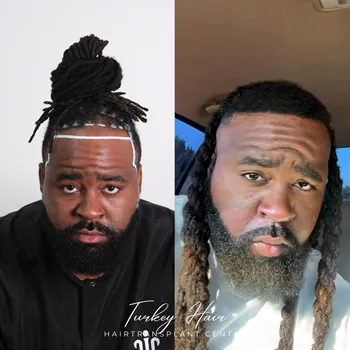
Trevor H.
United States
Fue Technique
Graft 3500
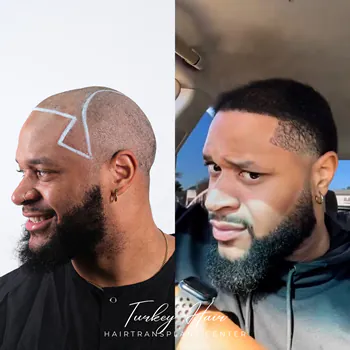
Tarik M.
United States
DHI Technique
Graft 5000
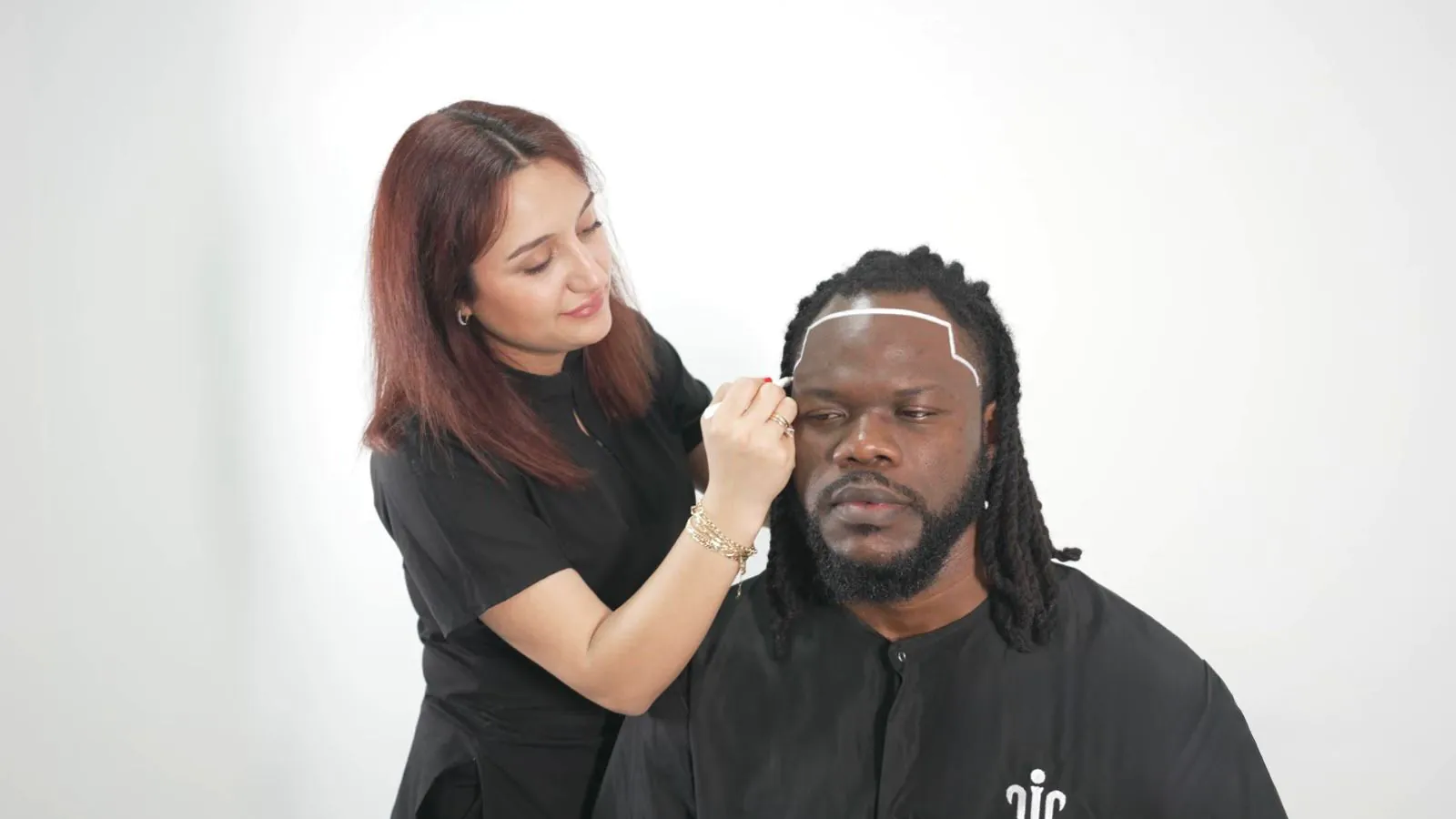
Afro Hair Transplant: A Path to Confidence and Renewal
Afro hair transplant restores natural curls while maintaining the unique texture of Afro-textured hair. Using advanced FUE hair transplant or DHI techniques, skilled surgeons carefully extract and implant curly follicles for a seamless, natural look.
At Turkey Hair Center, we tailor each procedure to match the patient’s natural hair pattern. Our expert team ensures high graft survival rates, treating genetic hair loss, traction alopecia, and thinning areas with precision.
This transformative procedure enhances both appearance and confidence. With cutting-edge techniques and personalized care, we help patients regain thick, healthy curls for a natural and long-lasting result.
Results with Turkey Hair Center
Turkey Hair Center offers top-notch services in hair transplantation, combining advanced techniques with personalized care. Our experienced team ensures exceptional results tailored to your needs, making us a trusted choice for patients worldwide.
Choose Turkey Hair Center for state-of-the-art facilities, skilled professionals, and a patient-first approach that guarantees satisfaction. Experience the difference in hair restoration with us!
| Advantages | Turkey Hair Center | Others Company |
|---|---|---|
| Hotel + Transfer | ✔ | ✔ |
| 1 Free PRP | ✔ | ✔ |
| Blood test on site | ✔ | ✔ |
| Care Products | ✔ | ✔ |
| Largest hair clinic in the world | ✔ | ✘ |
| 68 Elite-Hotel rooms in the clinic | ✔ | ✘ |
| Sleep-Deep Method: 0% pain | ✔ | ✘ |
| Pre-Test System | ✔ | ✘ |
| Exclusive NEO FUE® Technique | ✔ | ✘ |
| Biggest DHI team in the world | ✔ | ✘ |
| Exclusive Elite Skala hair loss scale | ✔ | ✘ |
Discover the Truth: 500+ Genuine Patient Reviews Speak for Themselves
See what our patients have to say about their transformative journey and outstanding results with our expert care.

I was skeptical at first, but the results exceeded my expectations! My hairline looks completely natural, and the curls blend perfectly. The team at Turkey Hair Center truly understands Afro hair.


The procedure was smooth, and the results are incredible. My hair density has improved significantly, and the natural curl pattern was preserved. I feel more confident than ever!

I struggled with traction alopecia for years, but this transplant gave me my hair back. The care and attention to detail were amazing. I highly recommend Turkey Hair Center!

From consultation to aftercare, everything was top-notch. My Afro-textured hair was handled with expertise, and now I have fuller, healthier curls. Best decision ever!
Afro Hair Transplant Cost in Turkey
In Turkey, Afro hair transplant cost vary depending on the clinic, hotel chosen, and the number of grafts. Generally starting prices for 3000 grafts start from $1900 USD, while prices for 5000 grafts start from $2500 USD.
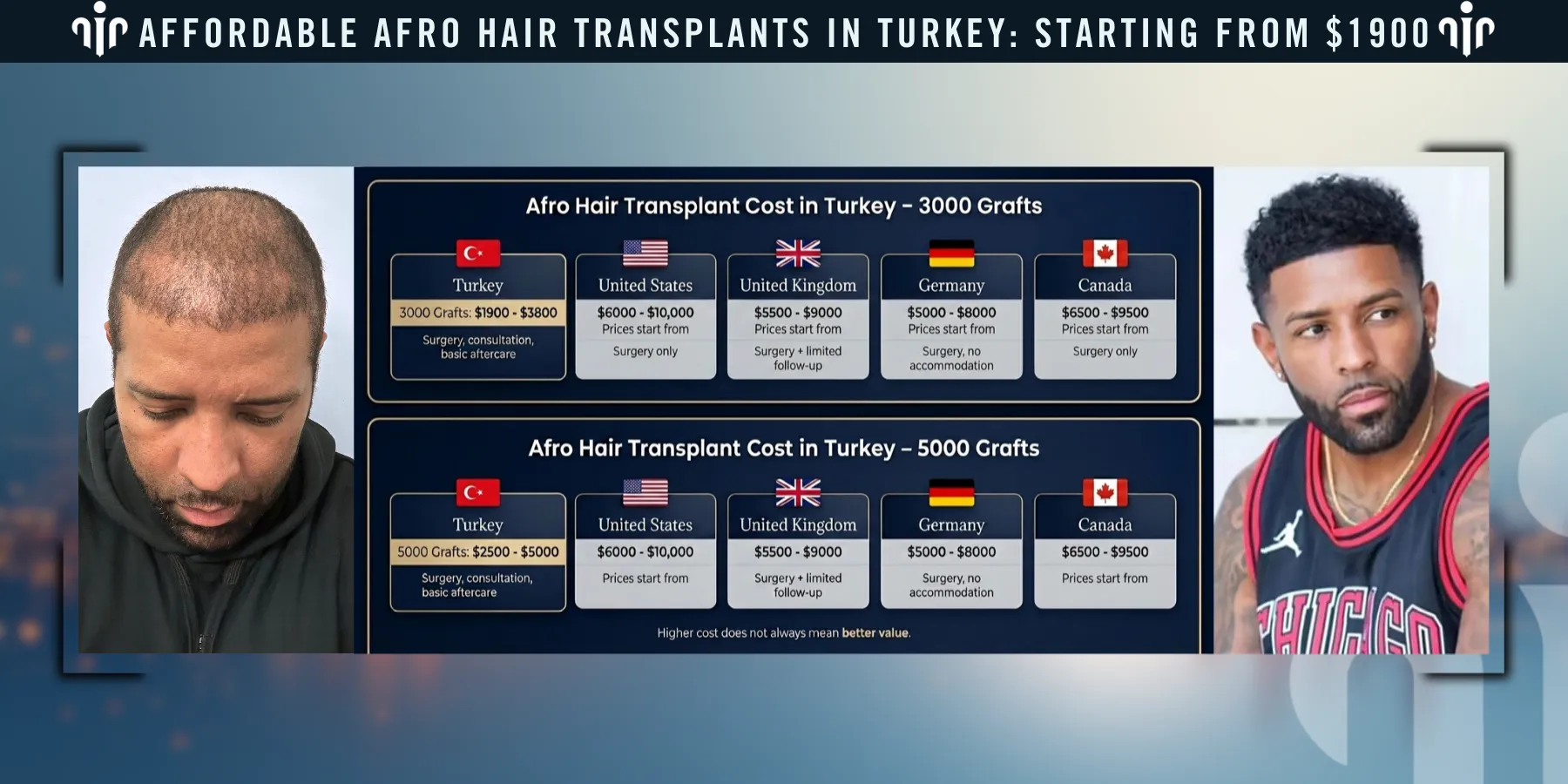
Many people from outside of Turkey who are looking for hair loss clinics there want to know how much an Afro hair transplant generally costs. It is still possible to get very high-tech treatments from very skilled doctors for a lot less money than in the US and Europe. Because so many grafts are needed and because working with Afro-textured hair is hard and needs to be planned out carefully, the price goes up. People with curly or wavy hair should go to Turkey because the stylists there are very good and the prices are low.
The well-developed infrastructure of Turkey is one reason why medical tourism there is so cheap. Medical centers can take patients from anywhere in the world because they don’t have to pay much to run. As a general rule, Afro hair transplant treatments include consultations, individual planning, and professional aftercare. Patients should not only look at price when making a choice, because they need to know what they’re doing in order to get real, long-lasting results.
Afro Hair Transplant Cost 2026 – Country-by-Country Comparison
Below is the updated global cost comparison for Afro hair transplantation in 2026, showing average treatment prices across leading countries worldwide.
| Country | Average Price (2026) | Flag |
|---|---|---|
| Turkey | $2,500 – $5,000 | 🇹🇷 |
| United States | $6,000 – $15,000 | 🇺🇸 |
| United Kingdom | £5,500 – £9,000 | 🇬🇧 |
| France | €5,000 – €12,000 | 🇫🇷 |
| UAE | $7,500 – $18,000 | 🇦🇪 |
Turkey remains the #1 destination for Afro hair transplant due to its affordable pricing, highly experienced medical teams, and advanced hair transplant technology. Clinics such as Turkey Hair Center are trusted by international patients for delivering safe procedures and natural results specifically designed for Afro-textured hair.
Average Price Range for Afro Hair Transplant in Turkey
The most requested graft count is between 3000 and 5000, so the price range for 3000 afro hair transplants is $1900 – $3800, and the average price for 5000 afro hair transplants ranges from $2,500 to $5,000.
The average price of an Afro hair transplant in Turkey could be very different based on how complicated the surgery is and what your needs are. Many factors that affect the price are the number of grafts needed, and the methods used to safely handle coily and curly hair. Due to the need for more accuracy in Afro-textured hair procedures compared to straight hair procedures, the final cost may change a little.
Still, even with all this extra work, Turkey is cheaper than many Western countries. A lot of the time, patients’ individual treatment plans depend on their ability to get cutting-edge surgical care that is also reasonable. People won’t have to borrow money to get good Afro hair repair with this set, like they would elsewhere.
Cost Differences by Graft Count
How much an Afro hair transplant costs depends on how many grafts are used. Some methods that only work on the hairline are less expensive, but surgeries that use more grafts take longer and require more technical skill. Because Afro hair follicles are curved, they need more care when they are extracted and implanted. This could cause the price to change as the number of grafts increases.
| Graft Count | Estimated Price Range (USD) | Procedure Time (Approx.) |
|---|---|---|
| 1000 Grafts | $1,500 – $2,000 | 3-4 Hours |
| 2000 Grafts | $1,700 – $2,400 | 4-5 Hours |
| 3000 Grafts | $1,900 – $3,800 | 5-6 Hours |
| 4000 Grafts | $2,200 – $4,200 | 6-7 Hours |
| 5000 Grafts | $2,500 – $5,000 | 7-8 Hours |
| 6000 Grafts | $3,000 – $5,500+ | 2 Sessions (Recommended) |
| 7000 Grafts | $3,500 – $6,000+ | 2 Sessions (Required) |
What Factors Influence Afro Hair Transplant Pricing
Prices for Afro hair transplants rely on more than just the number of grafts used. Because of the way it is structured, Afro-textured hair is hard to style without skill, knowledge, and special tools. Ethnic hair transplant centers charge more because consultations and designs take longer, but the results are better.
To what extent you are able to alter the way the process is carried out is another essential aspect to take into consideration. Before undergoing an Afro hair transplant, it is a good idea to give some thought to the kinds of curls and head styles you would like to achieve. Prices should be determined not by how much you sell but by how much you know about the product or service. This is because the additional stages offer natural outcomes and enjoyment over the long term.
Technique Selection (FUE vs DHI)
The manner in which an Afro hair transplant is performed has a significant impact on the total cost of the procedure. While FUE provides you with more alternatives when dealing with bent follicles, DHI provides you with more control over the implantation process. Given the increased level of precision that is required for DHI operations, it is possible that prices will increase. Some of them require specialized implanter pens, and others require longer operating hours. This is the reason for this.
Surgeon Expertise and Clinic Standards
How much an Afro hair transplant will cost is going to be determined by the level of expertise of the surgeon. When it comes to preventing transplants from breaking and increasing the survival rate, surgeons who have experience working with coily and wavy hair structures can be of great assistance. If they ensure that their patients receive quality care, have equipment that is up to date, and adhere to stringent medical regulations, clinics have the ability to charge higher fees than the norm.
Included Services and Packages
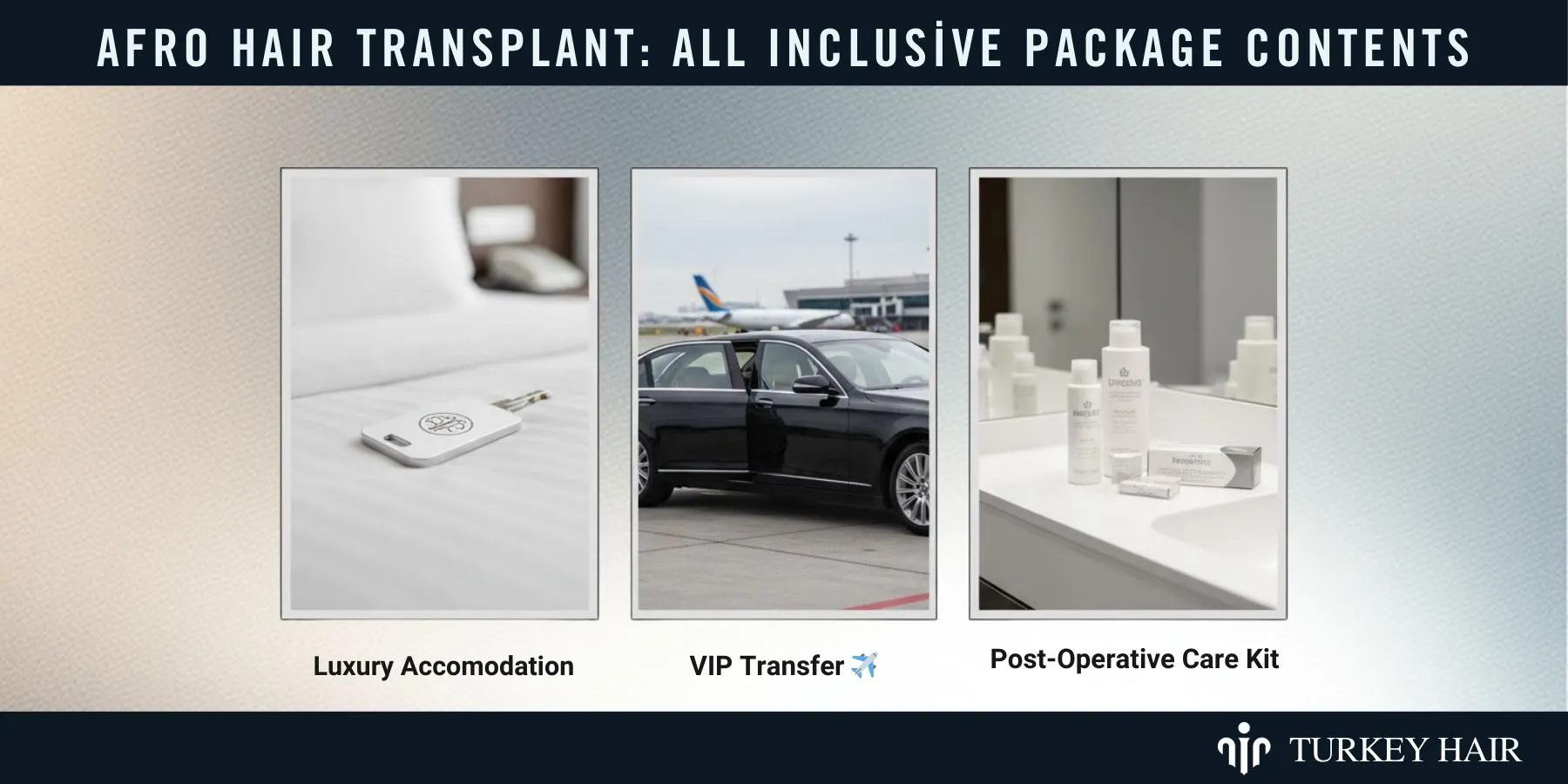
There are a number of factors that can influence the final price of an Afro hair transplant in Turkey, including the services that are included or not included. A great number of medical facilities provide all-inclusive packages that cover everything from the initial visit and the operation to overnight stays, transportation, and even rehabilitation services following the surgical procedure. Due to the fact that they are straightforward regarding all of the prices and are simple to comprehend and arrange for, these bundles of services are exceedingly popular with patients who come from different countries.
Cost Comparison: Turkey vs Other Countries
Turkey has much cheaper prices for Afro hair transplants than other European and American countries. The cost of Afro hair surgeries is higher in many Western countries than in other places. This is because of higher labor costs and a lack of doctors who know how Afro hair structures work. Turkey has better technical help for less money, without lowering the quality.
Another good thing about therapy in Turkey is that it takes a method that includes everyone. In some countries, patients may be paid separately for consultations, follow-ups, and aftercare. In Turkey, however, these services are often bundled together. Patients can better plan for all of their costs and avoid unpleasant shocks if they use this method.
| Region | Estimated Cost (3000-5000 Grafts) | Includes Accommodation/Transfer? |
|---|---|---|
| Turkey | $2,500 – $5,000 | Yes (Typically All-Inclusive) |
| USA | $10,000 – $20,000+ | No |
| UK | £8,000 – £18,000 | No |
| Europe (Germany/France) | €6,000 – €12,000 | No |
Afro Hair Transplant Before & After Results in Turkey
People who are thinking about getting an Afro hair transplant in Turkey can watch a lot of before-and-after movies online. When these changes are made, the hair often gets denser, the border gets restored, and patterns stay the same. Because Afro-textured hair acts differently than straight hair, natural curl flow is used to judge the results instead of flat density alone.
Afro hair clinics’ main goal is to make sure that transplanted hair fits in with natural hair as naturally as possible. A natural look is guaranteed before, during, and after the healing process, when the curls start to grow. This long-term view is very important for setting realistic goals.
What Realistic Afro Hair Transplant Results Look Like
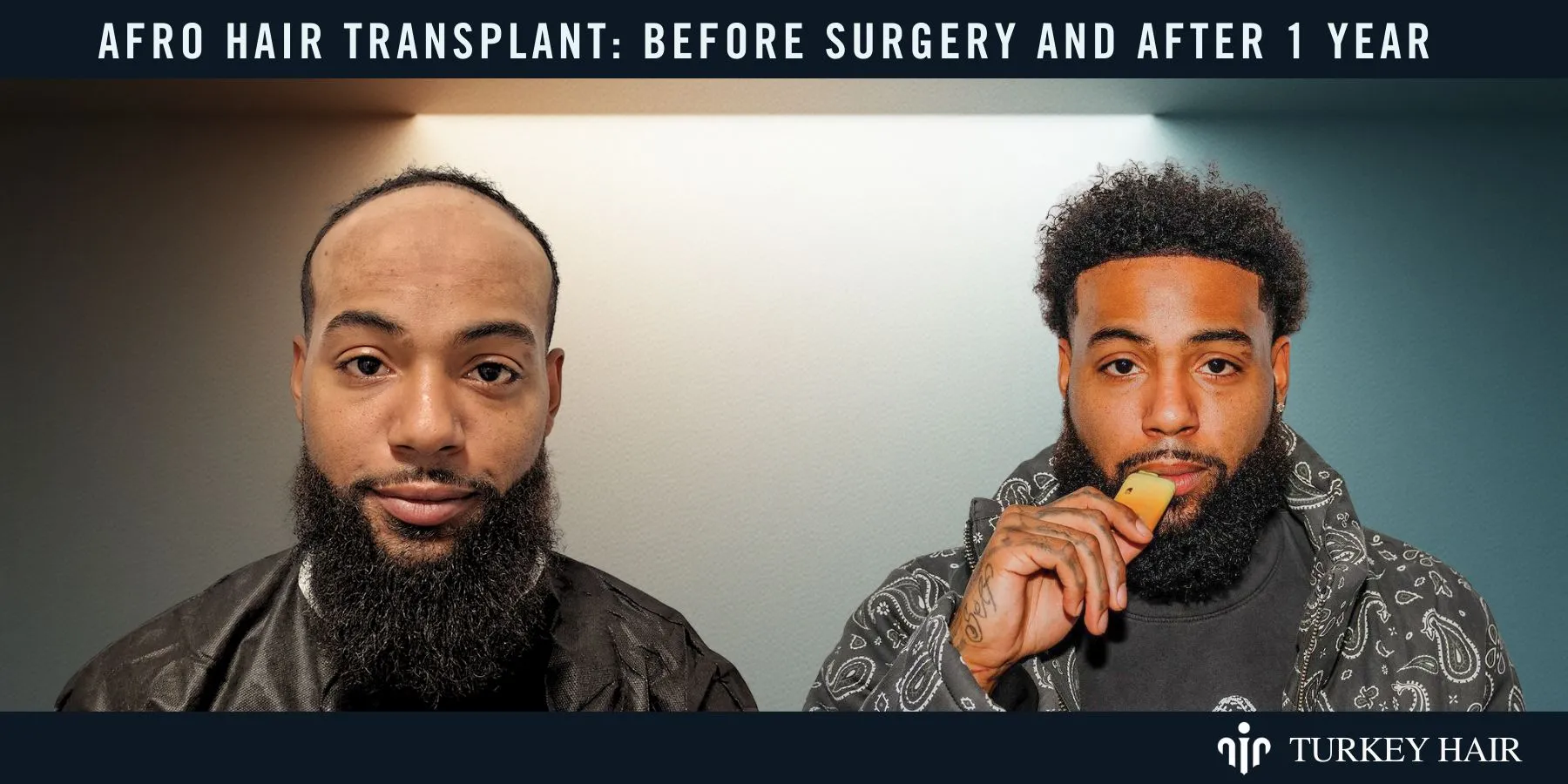
Instead of too much fullness, the goals of an Afro hair transplant should be balance and a natural look. Because Afro hair is naturally curly, it usually only needs a few grafts to make it look like it covers more area. Patients usually notice a better general shape and a more defined hairline more than they notice obvious thickness.
Things happen over time as well. Before they fully mature and fit in with the rest of your hair, curls often grow in uneven ways. Patients can better understand how things change over a few months when they know how long something will last.
Curl Pattern Preservation
Among other things, the goal of Afro hair transplantation is to keep the original curl pattern. For curls to grow organically, surgeons have to place grafts at exact angles. Where you put them can change the direction of the curls and how they look in the end.
For twisted hair shafts to stay curly, they need special care and treatments. When transferred hair is done right, it looks, feels, and manages a lot like natural hair, so patients can move and style it in any way they want.
Natural Density and Hairline Blending
For an Afro hair transplant to look realistic, the grafts need to be carefully placed, not a lot of them. The goal of transplant surgery is to make the fake hair look like the patient’s real hair so that it can’t be seen. This method makes things more realistic and symmetrical.
When designing a hairline, the wearer’s age and race are also taken into account. If you plan ahead for the hairline, the results will still look good as the patient ages, which is important for long-term looks.
Verified Patient Transformations
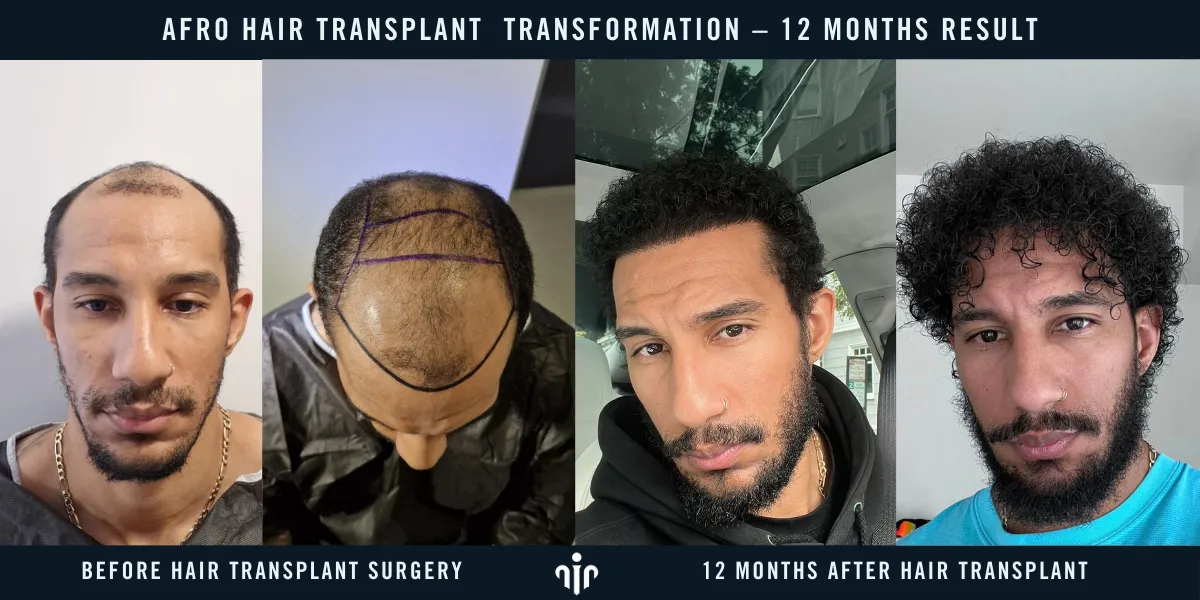
We might be able to get a better idea of how Afro hair transplant results really look by looking at how real patients have changed. Real before-and-after pictures show a change that happened slowly but clearly. Patients may find these cases useful for setting reasonable goals.
When patient records are shown in reputable medical centers, they always follow standard guidelines for lighting and angle. Being honest about the findings shows that you know about Afro-textured hair and helps people trust you.
American Afro Hair Types and Hair Loss Issues
Because their follicles are twisted and their textures are tightly coiled, American Afro hair types are extremely hard to style. These traits have an effect on both the pattern of hair loss and the planning for transplants. Your restoration attempts will fail if you can’t find and explain these differences.
Thin hair may happen to African Americans because of their genes, their surroundings, or the way they act. To solve these problems, personalized treatments work well without changing the hair’s natural traits.
Curl Pattern and Follicle Structure in American Afro Hair
There are tight curls that go under the head that are made by American Afro hair follicles. Because of the way it is structured, putting in and taking out this kind of hair takes more work than with straight hair. When doctors take out follicles, they have to be careful not to damage them by the way they are curved.
As long as the transfer goes well, these follicles might look like they naturally have curls. It is very important to understand how Afro hair works in order to get healthy, steady growth.
Common Hair Loss Causes in African American Patients
Hair loss in African American people is common and can be caused by genetics, traction alopecia, or stress. If your hairstyle hurts your skin, hair loss could get worse over time. Before coming up with a good treatment plan, it’s important to find the root reason.
A medical exam can help figure out if more treatments are needed or if transplanting is a good idea. Taking care of these issues will help hair transplants work better and promote hair health in the long run.
Donor Area Challenges and Transplant Planning
Controlling the donor area is very important for American Afro hair transplants. Curved follicles need to be carefully extracted so that they are not damaged or harvested too much. Surgeons must be careful not to hurt donors when they take out grafts.
The donor area stays safe and looks nice because of the careful planning that went into it. With this method, more treatments can be done if needed, and the general look of the scalp is protected.
European Afro Hair Types and Hair Loss Issues
Because their roots are mixed, European Afro hair types can show off a wider range of styles. Curls on the head can look very different in terms of density, strand thickness, and appearance, but they are still there. These differences have an effect on both how hair loss looks and how to go about getting a replacement. When doctors know a lot about the different types of European Afro hair, they can better accommodate each person’s curl structure and personal style.
European Afro patients may lose their hair more slowly and in a more noticeable way than people of other races. Most of the uneven thinning can be seen around the temples and along the forehead hairline. Because people are different, assessments need to be customized. Clinics that specialize in ethnic hair restoration are better able to spot potential problems, place grafts in a way that makes the results look natural, and plan for future treatments.
Texture Variations in European Afro Hair
Even in the same person, European Afro hair can have both free curls and tight coils. Because of this difference, the way you think about density changes after a donation. For looser curls, you may need a slightly higher graft density. On the other hand, for better coverage with fewer grafts, tighter coils are best.
Before deciding how to place, surgeons should carefully look at how curls behave. The best way to avoid uneven results and tough changes is to match the placement of the graft to the natural texture. To get perfect results, you need to know how to use texture well.
Genetic and Lifestyle-Related Hair Loss Factors
Afro-European patients can lose or thin their hair for a number of reasons, some of which are genetic and some of which are environmental. Stress, bad food habits, and not taking care of your hair often can all speed up the thinning process. Genetics can also affect the pattern of thinning. It is normal for different parts to work together instead of on their own.
By holding an in-depth meeting, the real problems can be seen more clearly. Taking care of your lifestyle is just as important as the transplant itself if you want your hair transplant to last and look normal.
Graft Survival and Density Expectations
European Afro hair transplants have a very high graft success rate when they are done right. When recovering curved follicles, even after they have been implanted correctly, it is important to be careful because they adapt well to the recipient area. The way and level of care used have a big impact on the chances of life.
It is important to keep density standards fair. One thing about curls that usually gets better with age is their visual fullness. Within a few months of surgery, most patients notice an increase in coverage.
Asian Afro Hair Types and Hair Loss Issues
Even though Asian Afro hair types are rare, they are easy to tell apart because of the way their structures are built. People with this condition often have hair that is tightly wound and problems with the thickness and depth of their head and follicles. Individualized tests must be done before each transplant surgery because of these differences.
Asian Afro people may lose their hair in a different way than white people or men. Surgeons must change how they do things to account for this unique trait in order to protect grafts and make sure that curls behave properly. It is very important to know about the different types of ethnic hair in this area.
Unique Afro-Textured Hair Characteristics in Asian Patients
One thing that makes Asian Afro hair stand out is its thick coils, which hold their curls very well. The follicles under the head may have an odd shape, which would make it harder to get the hair out. To keep follicular integrity in this setting, you need high-tech tools and skilled method.
If you take good care of your transferred hair, it will keep its natural curls. Expert design lets grafts match the appearance of natural hair so well that they can’t be seen.
Hair Loss Patterns Seen in Asian Afro Hair
For Asians with Afro hair, hair loss may be less noticeable than a receding forehead. Patchy hair loss can sometimes be caused by a sensitive head or pulling on the hair. For surgery to be considered for these patterns, a full evaluation must be made first.
It is important to know the type and cause of hair loss in order to decide if hair transplantation is enough. There is a chance that a mix of treatment ways will work better.
Surgical Considerations for Afro Hair Transplant
Protecting the hair follicles and aligning the curls are the two most important parts of Asian Afro hair transplant surgery. When working with bent follicles, the risk of transection goes up because the wrong tools could be used. Surgeons can make small changes to the angles of extraction and the depth of insertion.
To make sure the graft lives and spontaneous regrowth happens, every step must be done exactly as planned. All of these things show that traditional transplant ways aren’t good enough and need specialized knowledge.
Why Afro Hair Transplant Requires a Specialized Approach
Because of the way it looks and how it works biologically, an Afro hair transplant needs a specific method. When working on wavy hair, tight curls, and hair of different thicknesses, you need to plan ahead, unlike when working on straight hair. These complexities may be missed by traditional methods.
Purpose-built ways are meant to give hair curls and natural flow. Customized Afro hair care products work in a healthy way, look real, and last a long time. The amount of care has a direct effect on how happy patients are and how quickly they can get better.
Unique Characteristics of Afro-Textured Hair
African-American hair starts to grow under the head in spirals and thick coils. It changes both the implantation and extraction processes because of the shape. If the process is not done correctly, the follicles could be hurt or lost.
By learning about these traits, doctors can change how they do their work. To guess how transplanted hair will behave after it has fixed, you need to be a professional.
Curved Follicle Structure Beneath the Scalp
Instead of growing straight down, Afro hair follicles twist under the head. If this curve isn’t planned for, it can hurt the hair root during extraction. For this reason, adjusting the position and having the right punch tools is helpful.
How long the follicles last depends on how well the process of removing them keeps their integrity. Handle with care to promote healthy development and long-term success.
Tight Curl and Coil Growth Patterns
Hairstyles with tight coils and curls can change the way hair grows out of the head. To keep the implants from looking fake, their curves should match the direction of the natural curl. It’s possible for small changes to have a big effect in the end.
With waves that are lined up, transplanted hair looks natural. This level of reality lets you choose styles all the time and make the density look real.
Why Standard Hair Transplant Methods Are Not Suitable
Most people agree that hair that is either slightly curly or mostly straight is best for a hair transplant. With these methods, hair follicle curvature and coil activity might not be seen. So, using old methods could hurt the transplant or lead to effects that were not expected.
An African hair transplant needs special tools, methods, and care before the surgery. Talk to a place that has worked with ethnic hair before to make sure the treatments are safe and will look good.
Techniques Used for Afro Hair Transplant in Turkey
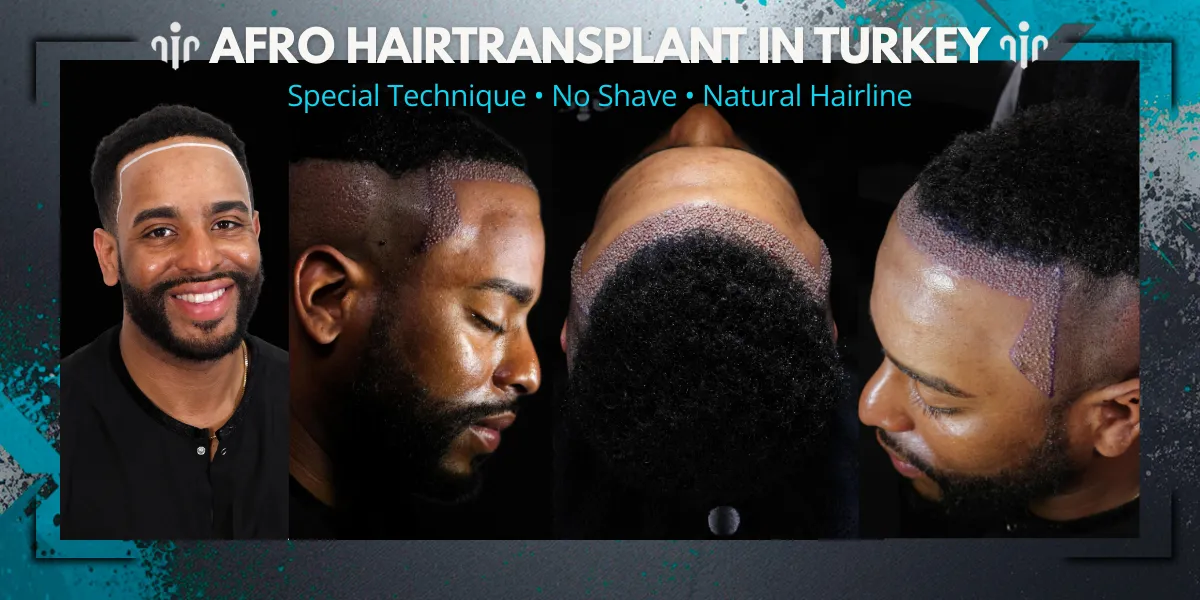
In Turkey, Afro hair transplant techniques are tailored to each patient’s body, taking into account hair shafts that are curly or coily. Because afro-textured hair comes from follicles that are bent under the head, it is important to use a variety of methods when taking it out and putting it back in. This makes sure the right thing takes place. Turkey has ethnic hair restoration schools that use cutting edge technology and specialized surgical methods to keep hair follicles healthy and curls natural.
The fact that these techniques can be used with a variety of methods makes them stand out. It is the curl pattern of each patient that helps surgeons decide how deep to punch, how to extract, and which way to implant. The number of people getting Afro hair transplants in Turkey has grown because the process is very successful and the results look natural when a personalized plan is used.
Sapphire FUE for Afro Hair
Because it is precise and easy on the tissue, Sapphire FUE is a choice among Afro hair transplant patients in Turkey. With the sapphire blade, the surgeon can make cleaner recipient pathways, which lets hair follicles with a curly texture be implanted very precisely. This method speeds up the healing process and lessens the damage to the skin caused by the treatment.
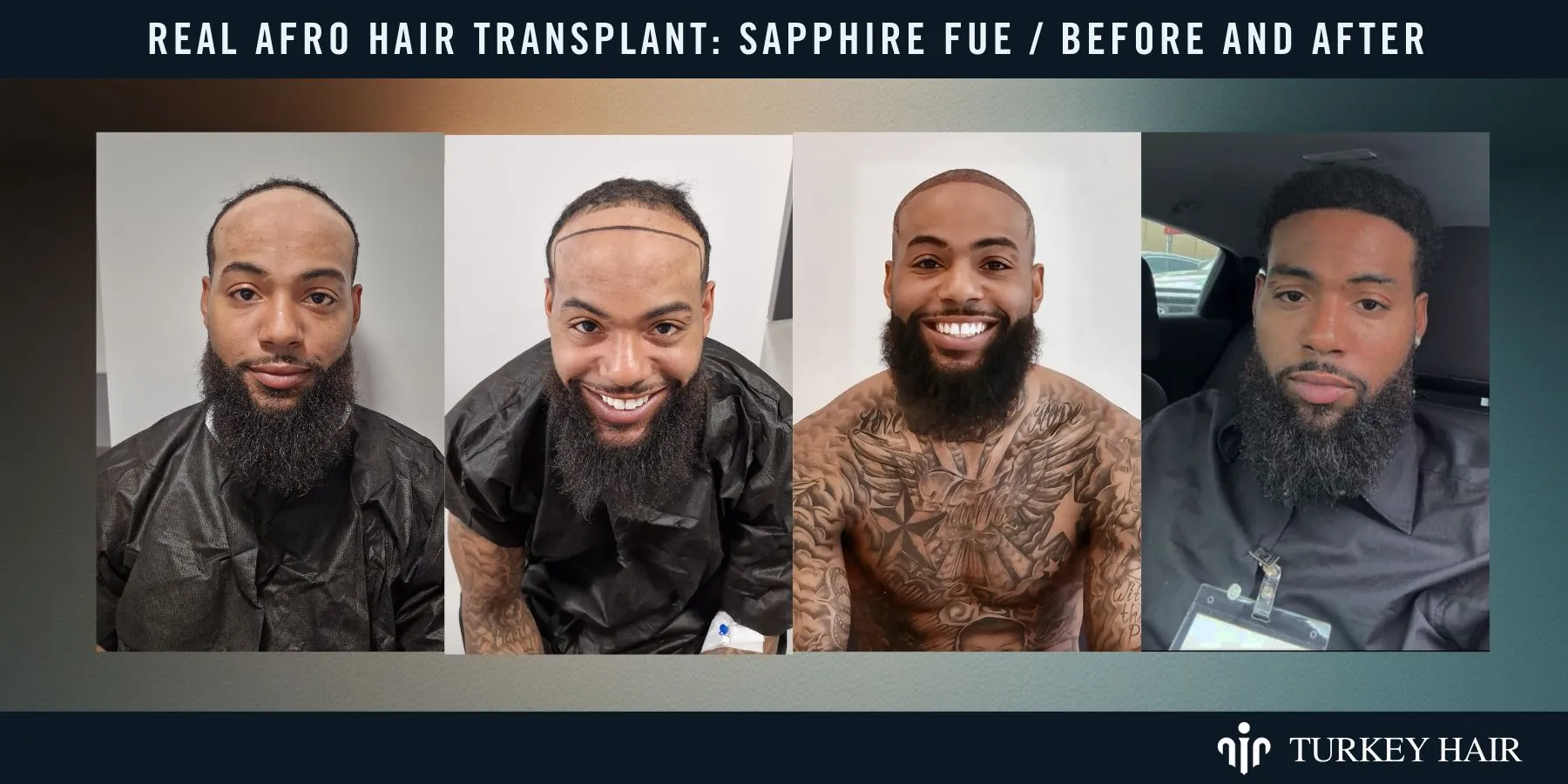
One more benefit of Sapphire FUE is that it might make the graft more stable after it is put in. So that surgeons can better control the direction and angle of each transplant, they need to make very small cuts. It takes this much accuracy for Afro hair transplants to keep the hair’s natural curl pattern and get a healthy density.
Curved Micro-Punch Technology
Afro hair follicles are naturally curved, which is why the curved micro-punch method was made to work with them. When straight punches are used on curved follicles, the chance of transection and subsequent graft damage goes up. Curved micro-punch tools lower this risk by better aligning with the growth path of the follicle. This makes the donor area safer and increases the survival rate of transplants.
DHI Technique for Curly and Coily Hair
In addition to being available in Turkey, the DHI procedure is effective for Afro hair transplants. This method is very helpful for people who want to restore their hairline precisely. Because specialized implanter pens eliminate the requirement for pre-made routes, direct graft insertion is now feasible. You have more control when using the straight insertion method on coily or curly hair.
It’s important to be precise where the forehead hairline and temples are, and DHI does a great job there. Surgeons can make transplanted curls look natural and fit in with natural hair by changing the depth, angle, and direction all at the same time.
Precision Control with Implanter Pens
When surgeons use implanter pens, they can precisely control where grafts are placed during DHI treatments. Important for all hair types, but especially Afro hair, where even small changes in angle can make curls look and lay very differently. The pens make it easier to work with grafts without damaging them too much. This increases the chance of survival and helps the curls fall in place naturally.
Afro Hairline Design and Curl Direction Planning
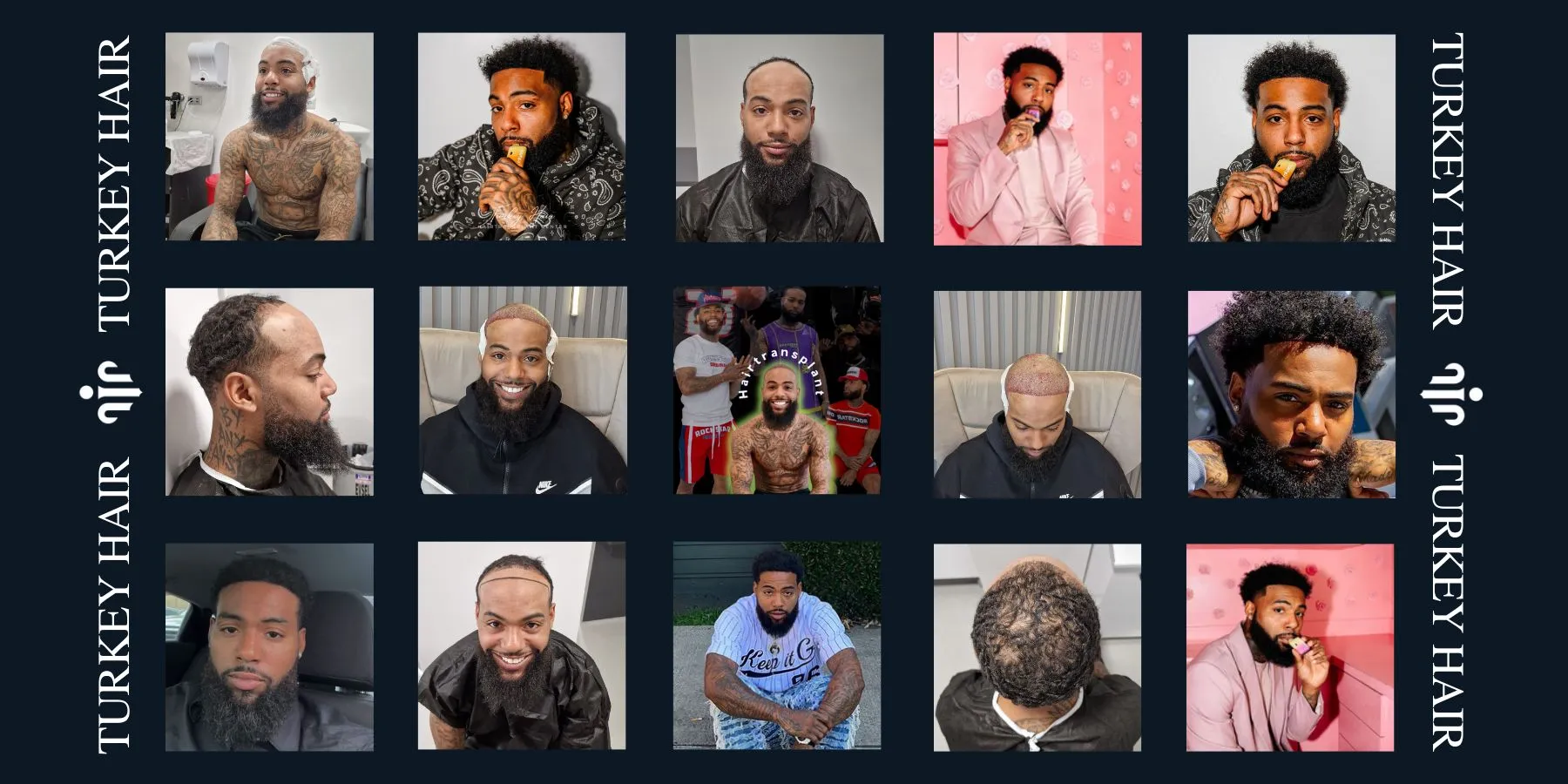
When making an Afro forehead, you need to think about your natural beauty, your culture, and how you’ll look in the future. Afro hairlines are less likely to be sharp and straight. Instead, they are more likely to be rounder and less linear, with a slow change. Afro hair restoration centers in Turkey make sure that the hairline fits naturally and looks good with the face.
You should also think carefully about how the curl is oriented. To keep growth patterns from going off track, it is important to place each graft in the direction of its natural curl. So long as you plan ahead, the hairline can look natural as soon as the cut heals and will continue to look natural even after the hair comes back.
Ethnic Hairline Design Principles
Ethnic hairline design is based on highlighting the good things about African American facial traits and hair textures. Most of the time, an Afro’s hairline curves slightly instead of being sharp or straight. You may be able to improve your natural beauty and keep that look for a longer time by using this method.
Thoughts on how hair loss might change in the future are also used in the planning process. If you are careful and plan your hairline well, the results will last longer and look more natural, so you won’t have to redo it as often.
Natural Forehead Proportions
One thing that sets Afro hairline designs apart is that they follow the natural shape of the face. Before deciding where to put the hairline, doctors look at things like the patient’s hairstyle, the height of the forehead, and the balance of the face. By sticking to proper measures, you can avoid having hairlines that are too short and keep your face balanced.
Age-Appropriate Hairline Placement
If the head isn’t placed in a way that looks good for your age, an Afro hair transplant won’t last forever. Younger patients may want a hairline that is a little lower, while older patients may do better with a more conservative cut. This method promises that the transplanted hair will keep its good looks as the patient ages and their hair changes naturally.
Aligning Grafts with Natural Curl Orientation
For an Afro hair transplant to work, the grafts must be placed so that they look like natural curls. To get and keep uniform curl behavior, it is important to implant each follicle at an angle that fits the direction of its natural growth. Texture differences or strange looks could happen if the parts aren’t lined up right.
As they plan the surgery, skilled surgeons carefully look at curl patterns. With this level of detail, you can style your hair in more natural ways, and it’s easier for transplanted hair to fit in with your natural curls.
Who Is a Good Candidate for Afro Hair Transplant?
An Afro hair transplant is a great choice for people who have been losing their hair regularly and are healthy enough to have grafts taken out. As a result, candidates should be honest and know that Afro-textured hair is unique and needs special care. To make sure that the treatment will work with the person’s hair type, texture, and desired style, a full review is needed.
Afro hair transplantation works for both men and women who have noticeable bald spots. A detailed consultation can lead to safer and more predictable results by helping to decide what treatments are needed and which ones are not.
Afro-Descendant Hair Loss Patterns
The ways that people of African descent lose their hair can be very different depending on their genes, lifestyle, and hair care habits. Alopecia can show up in different ways. Some people lose hair in the front, others lose hair at the temples, and still others lose hair all over. Finding the exact pattern is important for preparing for the transfer well.
Once surgeons know these patterns, they can place grafts in a way that gives the best possible cosmetic effects. This targeted method gets the most benefits while keeping the health of the donor site.
Genetic Hair Loss
People of African descent often lose their hair in an expected way because of their genes. You can’t say enough about how important early discovery is when choosing whether to go through more medical treatments or a transplant. Genetic concerns that are acknowledged can help with long-term planning and stable results.
Traction Alopecia
Tic alopecia can happen if you wear hairstyles like bands or ponytails that pull on the hair shaft for too long. When you have traction, you might lose hair around your temples and hairline. If this keeps up, it could be permanent. After the scalp has settled and harmful styling has stopped, it is possible to have a successful transplant.
Thinning Hairlines and Temples
There are some people who are afraid that their hairlines will shrink and their temples will thin after getting an Afro hair transplant. Because these areas stand out, they need careful graft placement. A small number of carefully put grafts can make a huge difference in the shape of your face.
Donor Area Management for Curly and Coily Hair
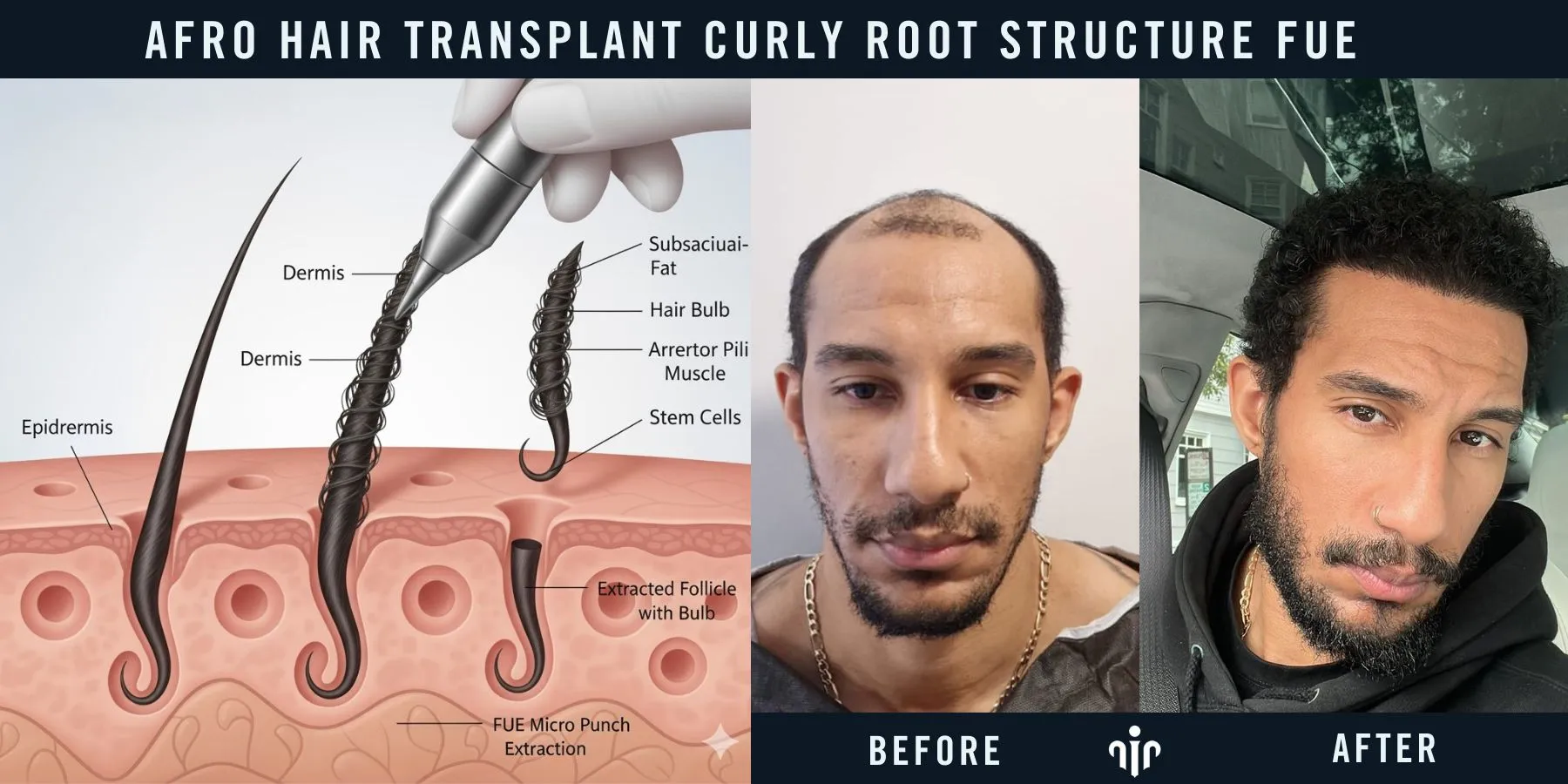
Taking care of the donor area is very important for Afro hair transplants on hair that is curly or wavy. Because they grow in a strange, curved way under the head, donor sites need extra care when they are checked for Afro-textured hair follicles. Regular care is meant to make sure that high-quality grafts are used, fight noticeable thinning, and improve the health of the donor area so that it can be used again in the future.
As part of donor area care, it is important to keep the eyes balanced after extraction. Although wavy hair can cover more, a patchy look can still happen if the hair is cut unevenly or too much. If the surgeons take the time to prepare ahead of time, they can carefully remove grafts without hurting the skin or its natural density.
Selecting a Safe Donor Area
It’s important to know where your hair is genetically less likely to thin before choosing a donor spot because they can be dangerous. The mid-occipital zone is often used for Afro hair transplants because it regularly shows follicle characteristics. Surgeons can choose healthy hair cells to remove while doing little damage to the hair around them thanks to exact mapping.
The rate of future hair loss is also taken into account when choosing a donor spot. Surgeons look at long-term trends so they don’t waste money on resources that will be needed in the future. When this process is done, both the immediate effects and the overall look of the scalp are protected.
Preventing Overharvesting (Sub-section)
If you have coily or curled hair, you need to be extra careful not to pull it out too much because you could damage the bent follicles. Surgeons carefully plan how to remove grafts from the source area and limit the number of extractions that can be done at once. This method helps the hair keep its natural length and lowers the chance that it will look thinner after it heals. Recovery time is cut down by carefully spacing out extraction sites. By not being overharvested, the donor area stays looking healthy and natural for a long time after treatment.
Long-Term Donor Area Preservation
A long-term donor area preservation approach tries to keep the scalp healthy and the amount of hair that can be seen as high as possible after a transplant. Skeptical surgeons plan the extractions in a way that hides the cuts they make. As long as everything is carefully balanced, the donor zone can keep its look.
When the donor area can be kept, there are more treatment choices for the future. You can get consistent results and make your patients happy in the long run if you manage the donor area well.
Afro Hair Transplant for Men and Women in Turkey
In Turkey, Afro hair transplants are carefully planned for both men and women based on how they lose hair and what they want to look like. Men want to fix their hairlines and fill in their temples, while women want to add fullness without changing their natural hairline. Clinics in Turkey change how they do things to meet these needs.
Because ethnic hair restoration has been done for a long time in Turkey, centers there can make treatment plans that fit the needs of each patient. The results are balanced and look natural on both men and women because we pay attention to the direction of the hair, the pattern of the curls, and the shape of the face.
Afro Hair Transplant for Men
Some obvious problems that Afro hair transplants for men try to fix are hair loss in the front, receding hairlines, and thin hair on the temples. Surgeons make hairlines that look natural and manly by looking at the patient’s age and face shape. Instead of trying to get too much density, the goal of graft placement should be to restore frame and balance.
Most of the time, men would gain more from targeted transplant procedures than from covering their whole scalp. This approach makes a big difference in how things look while keeping donor money safe.
Masculine Hairline Planning
The goal of male hairline planning is to get a hairline that looks natural, fits the person’s age, and lines up with their face. Surgeons don’t use sharp or too straight lines. Instead, they make thin recession patterns that look like men’s hair growing naturally. This method keeps the hairline from looking fake, so it will keep looking realistic as the person ages.
Afro Hair Transplant for Women
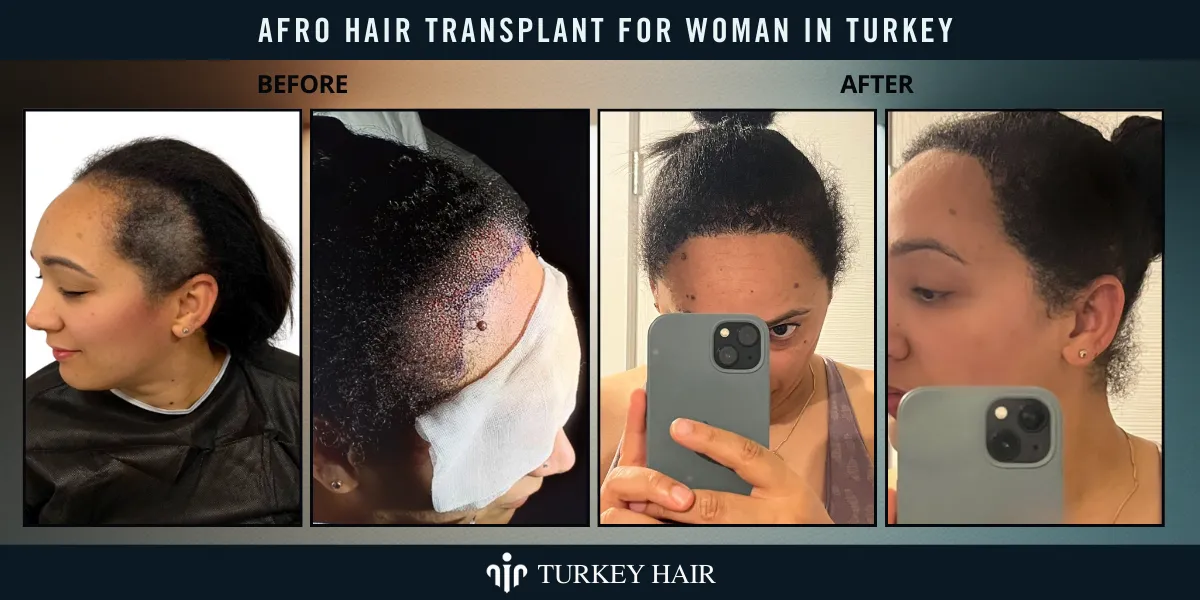
The density is what most women who get Afro hair transplants want to get back, not the front hairline. Many women lose hair because of worry, changes in hormones, or pulling on their hair, so it’s important to be ready. By changing the way surgery is done, fullness and balance can be improved while the hair that is already there is kept.
There is no time when patient information should not be kept secret. Most women choose non-invasive ways because they don’t leave scars or razor marks. Individualized planning can help people get organic results with little trouble to their daily lives and social lives.
Non-Shaven and DHI Options
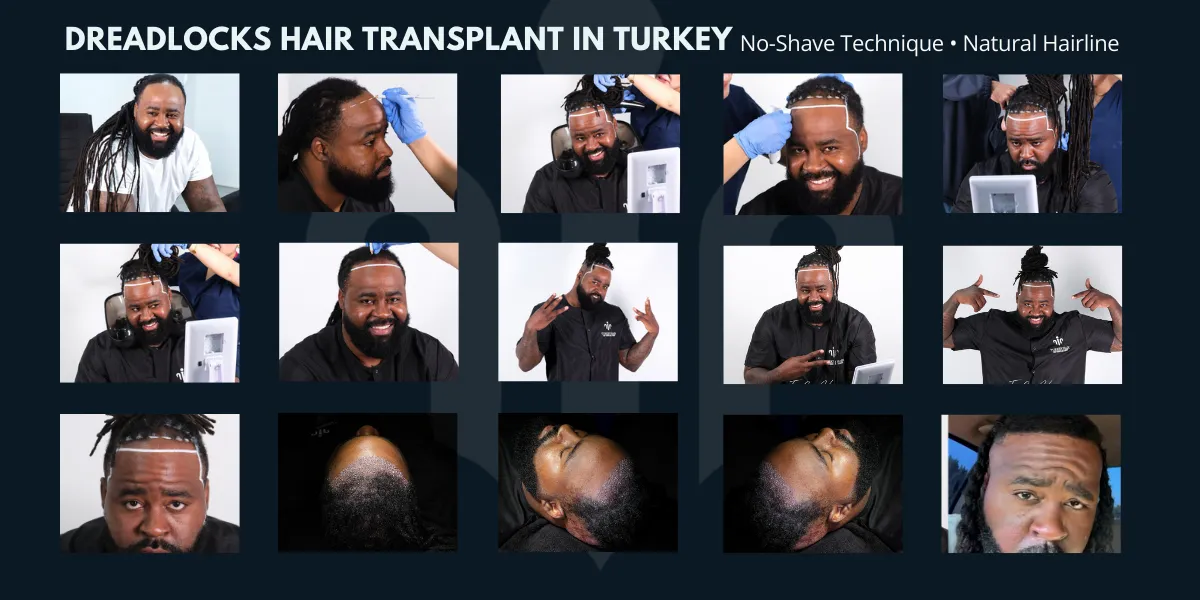
There are a lot of women who choose the DHI (non-shaven) method for their Afro hair transplants. These methods keep you from losing a lot of hair, which makes graft implantation possible. The result is a more natural look that lasts for a long time after the operation is over. One of the most important things about DHI for curly hair textures is that it lets you exactly control the angle and depth.
These choices help keep people’s emotions in check during healing by letting them keep their current hairstyle. They help you get back to your normal routine more quickly after surgery while still keeping the natural shape of your curls.
Recovery Timeline and Hair Growth Stages
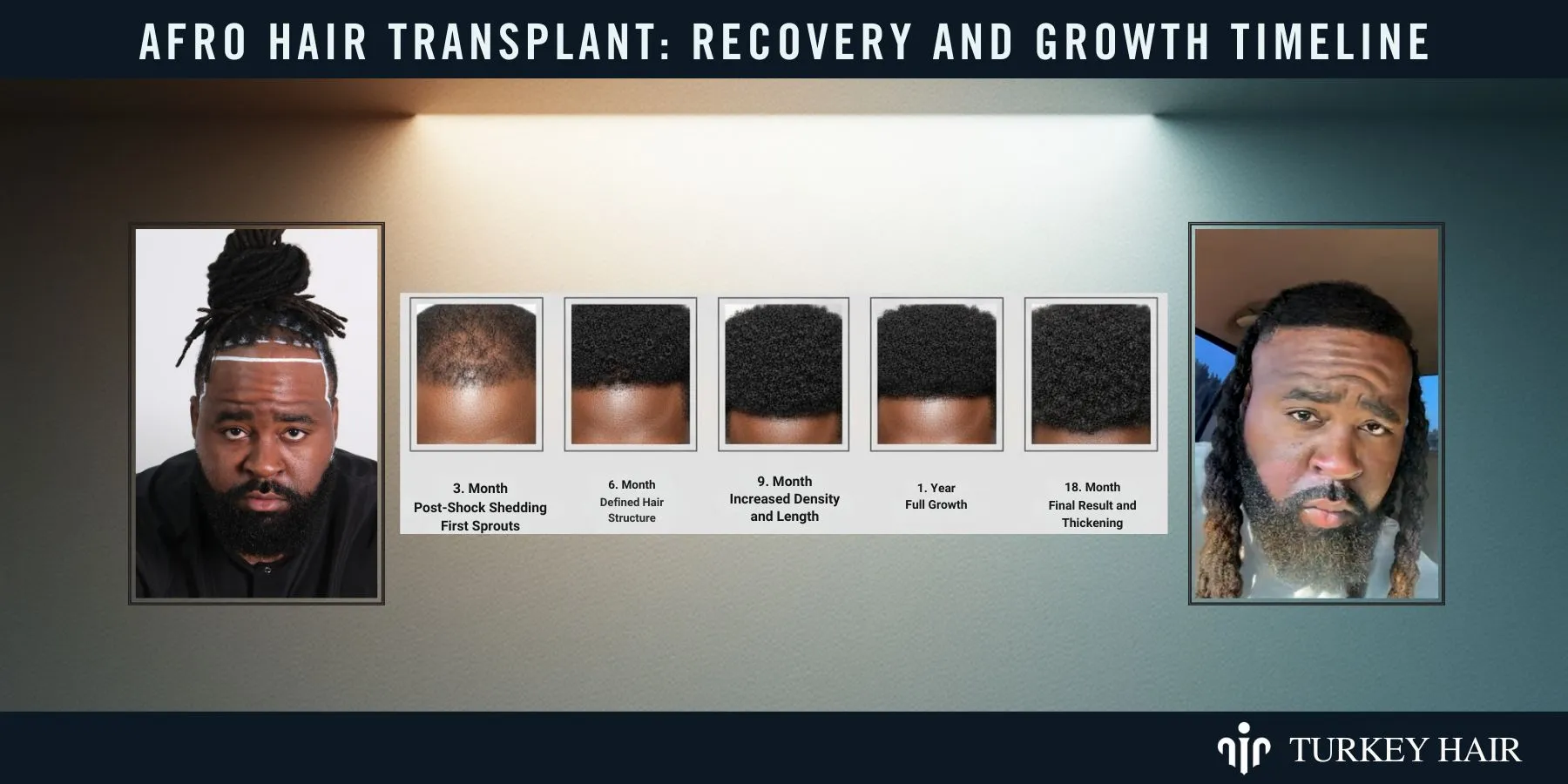
There are several steps that must be carefully taken in the right order to fully heal after an Afro hair transplant. After the first part of healing, which focuses on the scalp, hair falls out for a short time and then starts to grow back slowly. When patients know about these stages, they can better manage their expectations and understand how most people respond to healing.
It takes transferred hair follicles many months to get used to their new home before new hair starts to grow. The final results depend on how well you heal, how well you follow the aftercare instructions, and how well your curls mature. So, healing is essential for future success.
First Days After Afro Hair Transplant
It takes extra care for the body to heal in the days following an Afro hair transplant. You might feel some pain as your skin gets used to the new grafts. The success of the grafts depends on you carefully following the doctor’s advice about how to stay clean and how to sleep.
Patients should try to calm down and not work out too hard while this process is going on. If you want your hair to heal faster, don’t drink or smoke and stay out of the sun. How well things turn out in the long run will depend on how well you take care of them in the beginning.
Swelling, Redness, and Crusting
Some short-term side effects that might happen after an Afro hair transplant are swelling, redness, and crusting. A few days should be enough time for minor edema to go away, especially around the eyes and face. You shouldn’t pull the crusts out by force because they are a sign that the grafts are taking root.
This process is easier to handle with mild washing and the care items that are suggested. Stopping yourself from scratching your head can greatly lower your chances of getting an infection. If you get the right treatment, these signs will go away in just a few days.
Shock Shedding and Early Growth Phase
Shock loss is a short-term problem that a lot of people who get Afro hair transplants have. It’s normal to lose some hair in the weeks after getting a hair transplant, but this doesn’t mean that the grafts are going away. The follicles, which are just under the skin’s surface, get ready to grow new hair.
Time is of the essence right now. When the hair follicles are not working, the skin heals itself. Like most plants, the first signs of growth should show up around the third or fourth month.
Final Density and Curl Maturation
The best parts of the Afro hair transplant process are when the density and curls have fully come in. Hair that has been transplanted finally gets back to its natural thickness and texture. Most of the time, this process takes nine to twelve months.
As for making the curls look most natural, you just need to wait. Follow a routine and do what your doctor tells you. Your hair will grow faster and stronger. So, in the end, the product works perfectly with the hair’s natural structure.
Is Afro Hair Transplant Permanent and Safe?
When done by trained doctors, afro hair transplants can be a safe and long-lasting choice to other types of plastic surgery. Hair cells taken from a donor site don’t fall out on their own, so if they are transplanted, they could grow hair forever. This adds to the proof that the procedure will be helpful in the long run.
Today, medical facilities make sure their patients are safe by following strict guidelines for sterilization and global health standards. Complications are less likely to happen if you carefully choose patients and prepare well. Because of these things, Afro hair transplants have a high success rate and are generally safe.
Long-Term Graft Survival Expectations
Afro hair transplant treatments can have high long-term graft survival rates if they are planned well and the right technique is chosen. The curly ovary structure needs to be carefully removed and put back in place so that it doesn’t break and the blood supply stays healthy. When these things are taken care of properly, the transferred grafts become accustomed to their new home and keep growing.
The patient’s post-operative care and scalp health are also important for long-term results. Grafts last longer if you follow the post-operative directions, keep your scalp clean, and go to your follow-up appointments. Survival rates for this type of hair have stayed about the same over the years with the right clinical technique.
Safety Standards and Medical Protocols
Because curly and spiral follicles have a complicated structure, safety rules are very important in Afro hair transplant processes. To keep risks to a minimum, clinics follow strict rules for cleaning, anesthesia, and infection control. Evaluations done before surgery make sure that the patient is medically fit for the process.
Careful examination of the donor area and controlled implantation methods are also part of medical protocols. These steps lower the chance of problems happening and protect the tissues around the surgery. Following international medical standards makes sure that the procedure is safe and can be planned for.
Why Turkey Is a Leading Destination for Afro Hair Transplant
Turkey has become one of the best places for Afro hair transplants because it has a lot of experience, good technology, and low costs. Clinics are very good at ethnic hair transplantation because they treat a lot of foreign patients with different hair types. Surgeons can keep improving methods that work best for Afro hair structure because they have so much experience.
Another important reason is Turkey’s extensive health care system. Results that you can count on come from modern medical facilities, clear treatment plans, and customer service that puts the patient first. People who want to find the best combination of value and quality will find that Turkey is a great choice.
Surgeon Experience with Ethnic Hair
How well an Afro hair transplant works depends a lot on how skilled the surgeon is who is doing it. Due to their many years of experience working with hair from different ethnic groups, Turkish doctors know a lot about how curly hair works. This makes it less likely that the graft will fall apart and gives the idea that things are happening more naturally.
Surgeons who work with Afro hair on a regular basis can adjust the angles of extraction and the depth of placement to fit each patient. So, the hair will continue to grow in a curly pattern. Surgeons with a lot of experience are better at putting in grafts and making them look better.
Advanced Technology and International Standards
Because of advances in technology, Turkey has become a world leader in Afro hair transplants. Clinics can now better treat bent follicles with the help of new FUE and DHI tools. With these tools, grafts are now less painful and more accurate.
Putting in place global standards is another important way to make healthcare better. A lot of healthcare facilities use cutting edge tools and adhere to international standards when treating patients. It is important for innovation and law to work together so that patients from all over the world always get good results.
Afro Hair Transplant in Istanbul: Clinics and Expertise
Because there are so many centers and doctors who specialize in Afro-textured hair, Istanbul is a popular place for people who want to get an Afro hair transplant. Because of how it is structured under the scalp, curly hair is different from straight or wavy hair and needs a different set of methods for extraction and implantation. To meet these specific clinical needs, clinics in Istanbul are spending more and more on specialized teams, cutting-edge tools, and unique ways of doing things.
One more thing that makes Istanbul stand out is that it combines medical knowledge with services for patients from other countries. Turkey Hair Center is one of the most well-known centers that offer structured treatment plans to people from other countries. Most of the time, these routes include both pre- and post-surgery talks. This integrated process performs with consistency, safety, and predictable results, so people who want to get an Afro hair transplant can rest easy.
Why Istanbul Is Preferred by International Patients
Foreign patients love going to Istanbul because there are so many highly skilled, low-cost doctors there. Because of the large number of operations, doctors are able to improve ways that work better with Afro hair. A lot of people also like being able to go to clinics that know how to treat different kinds of hair and follow foreign medical standards. The general goal of lowering uncertainty is another part of the patient journey. You can help your patients get ready for their meeting by offering online consultations, making the schedule clear, and organizing the logistics well.
Along with its low prices and experienced staff, Istanbul’s patient-centered communication culture is another great thing that makes the city stand out. Clinics usually give patients thorough explanations of the process, the time it will take to heal, and the results they can expect. This helps them keep realistic expectations. African patients getting hair transplants really value how honest the doctor is. The success of the procedure depends a lot on how well the patient is prepared.
One big selling point is that you can get to the city from anywhere in the world. In addition to being easy to get to from anywhere in the world, clinics that accept patients from different places often build trust and familiarity. Because of this, Istanbul is becoming a hot spot for treatments that are hard to do properly, like Afro hair transplantation, because patients say they feel safer there.
Accreditation and Multilingual Support
What you can learn about Afro hair transplants in Istanbul from reading about other people’s experiences is priceless. Besides the statements expressed in the ads, first-hand accounts often mention how quickly the clinic responded after the procedure, how competent the physician was, and how clear their communication was. Reviews covering the product’s durability over time are vital because the full benefits of Afro hair growth patterns cannot be seen for months.
What Patients Value Most
Patients say that fair expectations, open conversation, and trust are important at every stage of the Afro hair transplant process. They value clinics that are honest about what they can do, how long it will take to heal, and what the long-term results might be. Patients benefit from clear directions before a trip and while they are recovering. This helps them be better prepared and feel less stressed during the months-long process of regrowth after surgery.
Even more important than medical understanding is making sure that patients always get help after therapy. Positive reviews often point out how easy it is to get medical advice, how clear the schedules are, and how constant the follow-up is. People who have had an Afro hair transplant are happier and more confident in the results in the long term when their doctors pay close attention to them while they heal.
Natural Results
If a natural look is what the Afro hair transplant patient wants, they should put that first. The first thing they should do is find a hairline that looks good with the patient’s age and face shape. If the curls are the right size, angle, and direction, transplanted hair will fit in with natural hair and keep its natural, acceptable look for the best long-term results.
Transparent Pricing
How open and honest a foreign Afro hair transplant clinic is about their prices is a big part of how confident patients might be in them. It is very important for people to know what to expect from their treatment plan. Patients need accurate cost breakdowns with no hidden fees in order to make an informed choice before surgery, whether it’s in the United States or another country.
Comfort and Aftercare
A big part of how well an Afro hair transplant surgery goes is how the patient feels during and after the process. Patients usually appreciate it when they are told how to wash, care for, and minimize swelling in the donor. Patients recover faster, feel safer, and have more faith in the clinic’s post-operative knowledge when they can continue to be monitored by doctors.
How to Choose the Right Afro Hair Transplant Clinic in Turkey
You need to look at more than just price and location to find the best Afro hair transplant center in Turkey. Afro-textured hair needs special medical skills because of the way its follicles are shaped and how dense they are. Instead of letting urban hair clinics brag about how long they’ve been in business, people with Afro hair should demand proof of consistent results, clear planning, and directions on how to style their hair in a way that works for Afro hair.
It is very important to use objective criteria when researching Turkey Hair Center or any other similar center. This includes the surgeon’s participation, the plan for the donor area, the organization of aftercare, and clear communication. Instead of making empty promises, a trustworthy medical center would show they are skilled and care about their patients by putting their long-term health first.
Questions to Ask Before Booking
People who want to get an Afro hair transplant in Turkey should make sure they know how the center handles Afro-textured hair before making an appointment. To avoid having too high of hopes, it’s important to know what each team member’s job is, what needs to be done to make sure the graft will last, and what the limits are. More people will believe a clinic if they are honest and consistent in how they answer questions.
Support after surgery is another important topic to look into. To help people get better, it’s a good idea to find out how they can be reached after they return and what kind of help they can expect. Responses about aftercare schedules and how easy it is to get medical help outside of business hours show how dedicated a facility is.
Experience with Afro Hair Cases
Afro hair case knowledge is a very important part of choosing patients. Taking out and putting in Afro hair is harder because the hair follicles grow in curved shapes under the scalp. Clinics that work with Afro hair know how to keep grafts whole, control the angle direction, and make density that looks natural with different types of hair.
Before–After Portfolio Review
Patients can figure out how reliable and good their results are by comparing their accounts from before and after treatment. Photos taken right after surgery don’t do a portfolio justice. Instead, they should include well-lit, varied pictures that show the long-term effects. People who are thinking about getting an Afro hair transplant should look for case studies that show natural hairlines, steady density, and curl direction during regrowth.
Afro Celebrity Hair Transplant Cases
People are talking more about hair restoration for Afro-textured hair because of how well people think of Afro star hair transplants. When celebrities make a fashion statement, it often makes other people look for alternatives that look good with their natural curls and hair types. Afro celebrity hair transplant cases below shows that delicate effects that look natural can also be achieved with complex technology that is carefully planned and carried out.
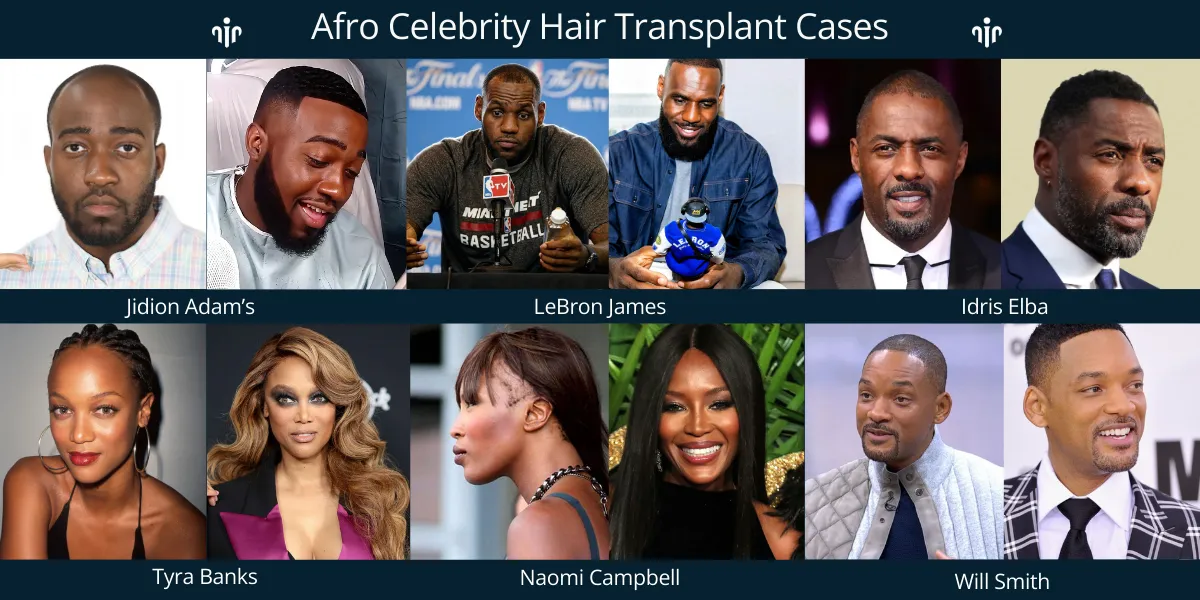
Many people follows Celebrities and the hair transplant cases and want them to look like them after the hair transplant process and growth. Know that you can’t generalize about a patient’s situation based on what you see in the media; each case is different.
To see Afro Celebrities hair transplant before and after in detail here are some resources may give you a great idea:
JiDion Hair Transplant
People usually talk about JiDion’s hair transplant in terms of how his head and density have changed. People have noticed that their jawline is more defined, which is in line with what is normal in hair replacement these days. If you have Afro hair, the key to beautiful curls is not adding extra texture but knowing how the curls naturally lay and how far apart they are.
People often use this example in the classroom to show how slow progress can look normal on camera and on social media. It’s important to be ready for changes that you can see, like plastic surgery or a new hairstyle. The patients should also know that it takes time, not just a moment, to start to notice a change.
LeBron James Hair Transplant
Because of the changes that have happened to his hair over the course of his career, LeBron James always talks about hair regrowth. Hairlines have changed over the years in terms of how thick they are and what shape they have. Most of the time, these comments lead to more in-depth talks about how to care for Afro-textured hair, how to keep it consistent, and what the future holds for it.
Another common use of this story is to show that fixing hair is an ongoing process that doesn’t happen overnight. For Afro hair to last, it needs to be maintained regularly, touched up when needed, and the right texture standards must be met. A more real, age-appropriate style is more important than being perfectly beautiful.
Idris Elba Hair Transplant
There are many famous people like Idris Elba who have adult hairlines that bring out the best in their faces. Instead of talking about big changes, he’d rather talk about small things that have to do with hair growth. This method follows the rules of Afro hair transplants, which are harmony, keeping the hair’s texture, and adding a little density.
Patients can learn from this case study that they don’t have to make big changes to their lives in order to get better. A more understated way to bring out your best features is to polish your hair while paying attention to how it naturally looks. These kinds of examples help take the attention off of obvious forms of cosmetic enhancement by referring to more subtle forms of improvement and reality.
Naomi Campbell Hair Transplant
Naomi Campbell is a name that comes up a lot when people talk about possible ways to stop hair loss from pulling. People have noticed that the fullness of the hairline changes over time, and many women have problems with their hair. People who have Afro-textured hair often talk about how to take good care of it, different ways to fix it, and how to avoid getting it in the first place.
A lot of people use this story to show that women should also think about getting their hair back. That’s even more reason to figure out why your hair is falling out in the first place. Careful reminders should be given to patients that a personalized checkup and long-term scalp care are the keys to long-term success.
Tyra Banks Hair Transplant
Because Tyra Banks is open about her hair loss problems, she has become a major topic of conversation. Most people who talk about her hair regrowth are being completely honest and open, instead of making assumptions. This openness helps get rid of shame and encourages smart conversations about hair health.
Anyone can have thinning hair, no matter how much money they have or how beautiful they are. She is an example for people with Afro hair loss. It also stresses how important it is to get advice from experts early on and make answers fit specific needs. Because of these events, people with Afro-textured hair are more likely to get professional help when they have problems with it.
View All Celebrity Cases
People can learn how different tactics can lead to different results by looking at a wider range of well-known cases. People of different ages, hair types, styles, and hopes may get different results. If we step back and look at the big picture, we can escape drawing wrong conclusions from a single event.
Potential patients can look at these cases to get ideas, but not as care standards. Self-evaluation, donor characteristics, and competent execution are the three main parts of a good result. Patients will be able to make better choices about Afro hair transplants once they fully understand this difference.
Is Afro Hair Transplant in Turkey Worth It?
If you want a cheap and good hair transplant, you might want to think about getting an Afro hair transplant in Turkey. These Turkish centers handle a lot of Afro-textured hair, so they know how to be careful with it, even though the hair follicles are bent. In Turkey, people from all over the world who want to treat hair loss love going because the highly trained staff can do the density treatment in a way that fits the patient’s head and looks natural.
One factor that might be significant is the accessibility of Afro hair transplants in Turkey. Online consultations, thorough planning, and coordinated care following the treatment are just a few examples of the pre-planning that is common in many clinics. With this procedure, patients are better prepared to leave the operating room, which in turn speeds up their recovery time. With the assistance of experts and this entire procedure, people can achieve far greater clarity, satisfaction, and affordability.
It’s not just where you live in Turkey that changes the price of an Afro hair transplant. It’s very important which center you pick. It depends on the doctor how much experience they have with Afro hair. The results depend on how well the donors are cared for after surgery and the type of surgery that was done. Patients should look for results that have been proven, ask a lot of questions, and learn as much as they can about clinics to make sure, they get results that are good for their health and looks.
FAQs
Here are some of the most common questions people have about Afro hair transplants and how to answer them. Patients should read these answers carefully before picking a clinic or treatment plan so that their questions are answered, they know what to expect, and they can make an informed choice.
How much does Afro hair transplant cost based on graft numbers?
The cost of an Afro hair transplant depends on a number of things, such as the process used, the amount of grafts, and the quality of the donors. When setting prices, clinics look at the patient’s density, curl structure, and how much coverage they want for their head.
Can Afro hair transplant results look natural in the hairline area?
If the doctor is careful with the angle, direction, and spacing, the Afro hair transplant might look realistic. It’s important that your curls face the right way if you want your head to look like your real hair.
Are before and after photos reliable indicators of clinic quality?
Before and after pictures can be very helpful if they show the changes over time, have even lighting, and show things from different angles. But you should also look at their qualifications, reviews, and how open they are about their medical history.
Does Afro hair require more grafts than straight hair types?
As a result of its curly structure, Afro hair may not need as many grafts, giving the idea of more coverage. But when planning a transplant, things like the amount of hair density, color of the head, and thickness of the hair must be thought about.
Can pricing change after the in-person consultation?
The price may change after the in-person consultation if the donor ability, graft count, or condition of the scalp are different from what was seen in the photos. Health care providers with a good reputation let their people know about these changes ahead of time.
How long do before and after results take to fully appear?
Most of the time, it takes at least a year for an Afro hair transplant to fully show its effects. At the start of a cycle, hair generally starts to fall out. As the cycle goes on, hair grows back thicker and softer.
Is DHI more expensive than FUE for Afro hair?
DHI is generally more expensive than FUE because the surgeries take longer and special tools are needed for the implants. The amount of involvement of the surgeon and the layout of the clinic are two other things that affect the cost.
Can women with Afro hair achieve the same density as men?
For women with Afro hair, density is possible, but it relies on the donors and the type of hair loss. If you want to keep your skin and hair healthy, you should plan ahead.
Are package prices different for international patients?
It is normal to find cheap packages that include transportation, hotel stays, and follow-up care for patients from other countries. People still need to know exactly what they’re getting, even if it’s easy.
How can I avoid hidden costs in Afro hair transplant procedures?
So that you are not taken off guard, you should get a written treatment plan that lists all the costs. Check that everything is correct, ask if there will be any changes, and find out if there will be any extra costs for medication or more care.
Referances
Umar S. (2016) – Curved Punch Technique for Tightly Curled Afro-Textured Hair (FUE)
ISHRS Hair Transplant Forum (2021) – Follicle Curvature & Surgical Approach in Curly / Afro Hair
ISHRS – Ethnic & Gender Considerations in Hair Transplantation (Hair Shape & Texture Impact)

Celebrities’ Choice
Trusted by renowned figures worldwide, discover why Turkey Hair Center is the top choice for celebrities.
Cynthia Erivo Hair Journey
29 January 2026Rumors About JiDion Hair Transplant Before and After
2 October 2025LeBron James Hair Transplant Journey: From Hair Loss to Full Comeback
20 March 2025Elon Musk Hair Transplant Success Story: Before and After
19 March 2025