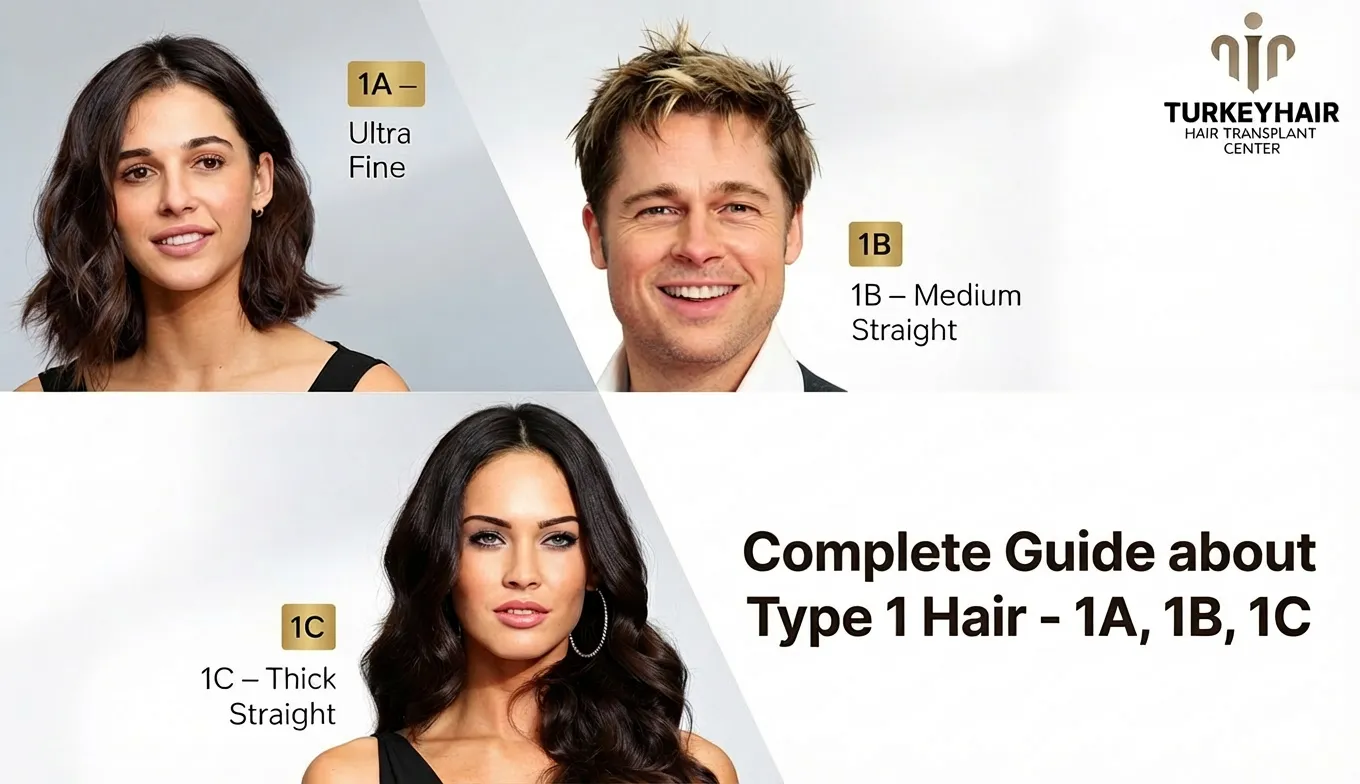
Learn everything you need to know about Type 1 hair, which is also known as straight 1A, 1B, or 1C hair.
What Is Type 1 Hair?
If someone is born with type 1 hair, it stays straight and never waves or curls. You can tell if it’s air-dried or shaped because its shape stays the same. The shiny and smooth look of this hair texture comes from the way it reflects light. Type 1 hair is common in many groups of people, and it doesn’t usually frizz up when it’s hot.
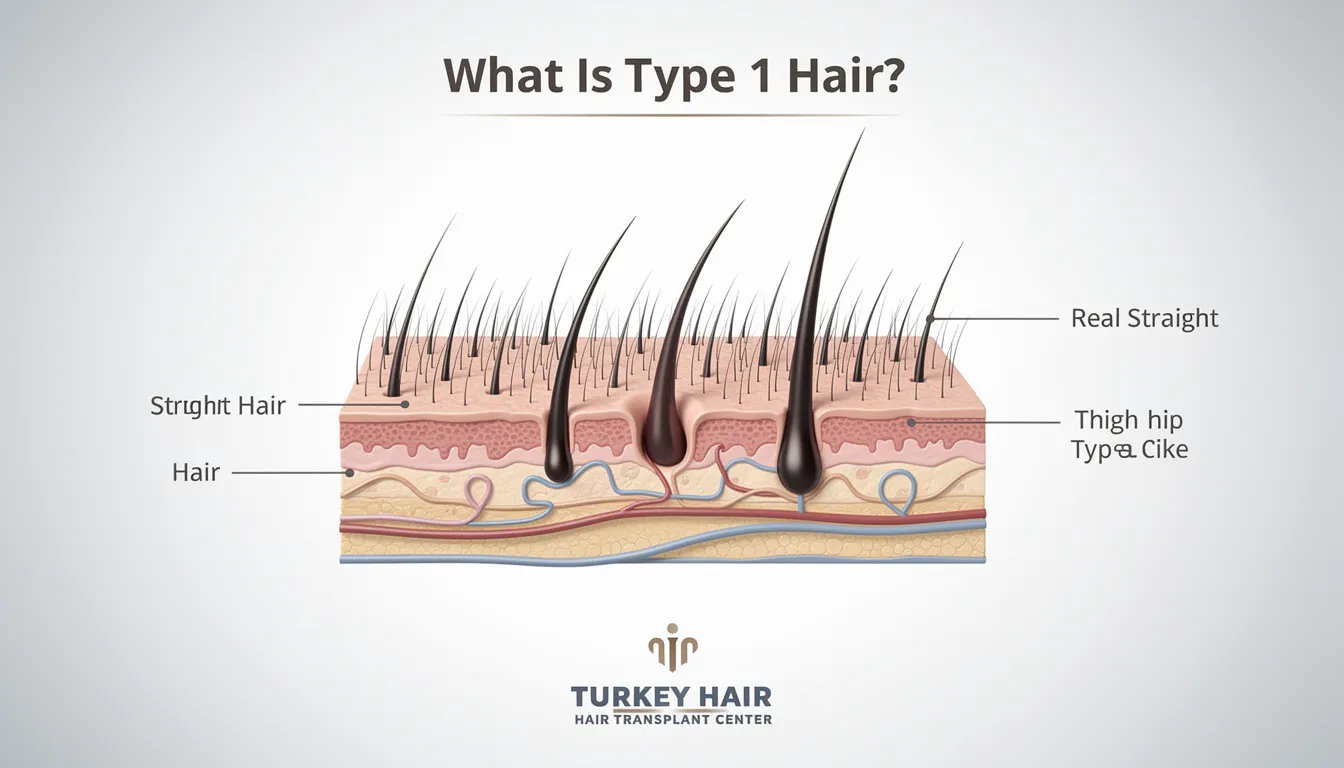
No matter how it looks, living with type 1 hair can be hard on its own. Most of the time, roots that look oily are caused by oil moving quickly from the head to the ends of the hair. Because the hair is flat, it’s not always easy to keep the volume. A good understanding of these traits will help you pick the best ways to care for and style your hair.
Definition of Type 1 (Straight) Hair
People with type 1 hair can tell it apart because it grows straight from the head and doesn’t curl or wave. Because the hair shaft grows smoothly along its length, the hair will look the same whether it is styled or left to dry naturally. Type 1 hair has a smooth shape that is easy to spot in a variety of settings because of its regular structure.
From a biological point of view, Type 1 hair usually comes from round hair follicles, which helps keep it straight. This structure makes it easier for light to bounce, which makes the finish smooth and shiny. It doesn’t frizz up when it gets hot, but because it grows flat, changes in density or thinning can be seen more clearly than with textured hair.
Main Characteristics of Type 1 Hair
One thing that makes type 1 hair stand out is that it is naturally smooth. When the cuticles are flattened, the hair looks smooth even when it hasn’t been treated with any products. This trait usually smooths out hair that is out of control but limits how full it is. That means it’s possible for hair that’s normally thick to look thinner.
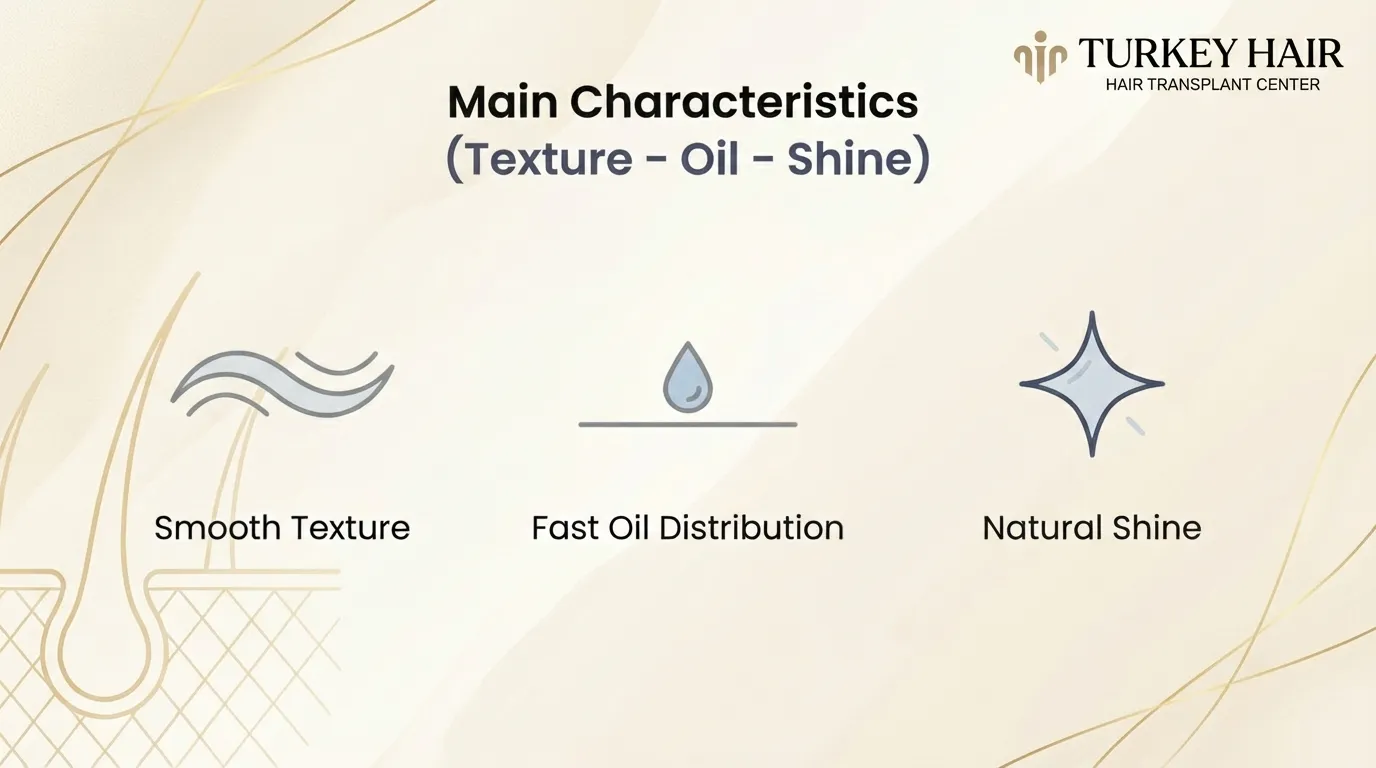
In the same way, type 1 hair quickly builds up oil. Due to the fact that it slides through straight hair more easily, sebum builds up faster around the head. It doesn’t matter how often most people wash their hair; too much washing can throw off the scalp’s delicate balance. If you don’t want to look flat, use items that aren’t too heavy.
Texture, Thickness, and Natural Shine
In many cases, the texture of a person’s Type 1 hair can range from extremely fine to extremely coarse, depending on whether they have Type 1A, 1B, or 1C hair. As opposed to thick strands, which give the hair more structure, thin strands create the impression that the hair is smoother than it actually is. Because of the way light reflects off of straight hair, the natural shine of the hair is accentuated to even greater degree.
Oil Distribution and Scalp Behavior
The roots of many people with Type 1 hair are straight, which enables the hair to distribute oil more rapidly and evenly. It is easy for sebum to flow from the head to the ends of the hair, which results in oil accumulation at the roots of the hair. For your skin and hair to remain in good health, you will need to use a shampoo that is well-balanced and wash your hair in the appropriate manner.
Subtypes of Type 1 Hair Explained
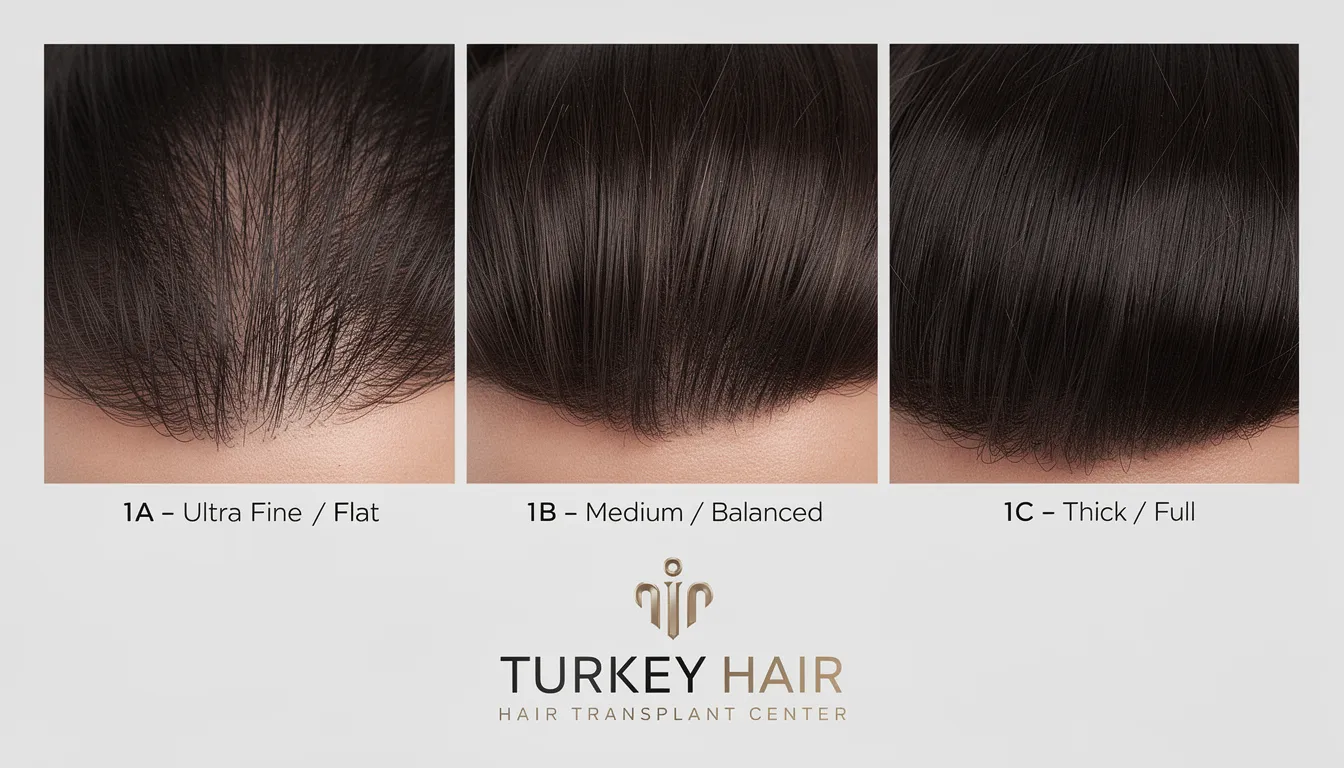
There are multiple subtypes of type 1 hair, which are distinguished from one another by the thickness, density, and behavior of the hair on the head. Type 1 hair is not a single type of hair. Some straight hair appears to be quite flat, while other straight hair maintains its shape a little bit better. These subgroups help explain why differences in appearance exist. To select the appropriate care routine and to establish reasonable style goals, it is essential to have a thorough understanding of these distinctions.
| Type 1 Hair Subtype | Texture & Structure | Thickness | Volume & Movement | Common Characteristics | Hair Transplant Considerations |
|---|---|---|---|---|---|
| Type 1A | Ultra straight, pin-straight | Very fine | Very low volume, lies flat | Highly reflective under light, gets oily easily, shows scalp quickly | Requires higher graft density due to scalp visibility |
| Type 1B | Straight with slight body | Medium | Moderate natural volume | Holds styles better than 1A, less scalp shine | Balanced graft placement usually sufficient |
| Type 1C | Straight but coarse | Thick | Naturally voluminous | Strong hair shafts, may appear slightly bent but not wavy | Excellent coverage with fewer grafts compared to 1A |
Among these types of straight hair, type 1A is the type that is considered to be the most delicate and refined. It behaves differently than 1B and 1C in terms of volume, oil absorption, and styling reaction according to its unique characteristics. If you are able to determine where your hair falls on the Type 1 spectrum, you will be able to care for it more successfully and avoid using an excessive amount of products.
Type 1A Hair Characteristics
The structure of type 1A hair is very straight, and its very fine strands lie flat against the head. It doesn’t naturally wave or bend, even when it’s dried in the air, and it feels silky most of the time. This type of hair naturally looks shiny because it has a very thin thickness and reflects light very well.
Type 1A hair looks smooth, but it can be weak and break easily if it is over-processed. Also, it’s not very good at keeping curls or volume for long amounts of time. Heavy products and heat styling tend to weigh hair down quickly. For healthy-looking hair, it’s especially important to take care of it gently and not touch it too much.
Hair Strand Thickness and Density in Type 1A
Because Type 1A hair is so close to the scalp, the strands are usually very thin, and the hair may look less dense generally. When the light is bright, this mix can help make the head stand out more. Even if the hair is growing in well, its fine texture can make it look like it has less thickness than hair of other types.
Common Styling Challenges for Type 1A Hair
Keeping the thickness and shape of Type 1A hair all day is the hardest thing about styling it. Hairstyles often fall flat soon after being styled, and oily roots can show up fast. To keep your balance and movement, it’s important to choose light products and stay away from heavy cleansers.
Type 1B Hair Characteristics
Within the range of very fine straight hair and thicker straight hair, type 1B hair falls somewhere in the middle. On its own, it maintains its straight position, but in comparison to Type 1A, it is more robust and has greater body. Typically, the strands are around the same thickness as the average, which allows the hair to handle styles a little bit better while still maintaining its smooth and shining appearance.
The maintenance of this type of hair is typically less difficult due to the fact that it is better able to match shine and volume. Type 1B hair does not become greasy as rapidly as fine, straight hair does, despite the fact that oil can still flow quickly from the roots to the ends of the hair. The appropriate kind of practice can help it maintain its shape and allow it to move around throughout the day.
Volume and Natural Movement of Type 1B Hair
When compared to Type 1A hair, Type 1B hair has a higher level of lift at the roots and a more pleasant natural flow. It does not adhere to the head in an excessive manner, which results in the appearance of fuller hair. This indicates that it is more able to endure cutting in numerous directions and light styling without appearing flat.
How Type 1B Differs from 1A and 1C
Type 1B is distinct from Type 1A in that it is straighter and has a greater volume than Type 1A, while also lasting for a longer period of time. By contrast with Type 1C, it does not have a harsh or thick texture. This type of material is easy to work with and has a naturally smooth surface. It falls somewhere in the middle of the Type 1 range.
Type 1C Hair Characteristics
The thickest subtype of hair that falls under the Type 1 category is known as type 1C hair. Despite the fact that it is theoretically straight, it has greater body and a surface that is slightly gritty. The hair is able to keep styles more easily than other varieties of straight hair because the strands are more robust and less slippery than those of other straight hair types.
This style of hair frequently gives the impression of being fuller and denser, particularly at the head. However, it may be more prone to dryness at the ends, despite the fact that it is more resistant to oil buildup. Structured cuts and controlled style procedures are effective in achieving the desired results with type 1C hair.
Thickness, Body, and Slight Texture in Type 1C Hair
A firm, substantial strand structure is characteristic of type 1C hair, which contributes to the hair’s natural volume and presence. Despite the fact that it is still straight, it may exhibit slight bends or roughness, particularly when the conditions are humid. Because of this additional roughness, it is able to keep its shape throughout the day.
Why Type 1C Is Often Mistaken for Wavy Hair
Type 1C hair is easily confused with modest wave patterns due to its thickness and occasional bends. This is because of all of these characteristics. The “S” forms that are formed by true wavy hair are not consistent with this type of hair. Rather than a curl pattern in and of itself, the movement is caused by density and texture differences.
Key Differences Between Type 1A, 1B, and 1C Hair
Even though all three types of hair are straight, Types 1A, 1B, and 1C hair are physically and aesthetically very different. Type 1C is the biggest and most body-like, while Type 1A is the thinnest and flattest. These differences affect how the hair looks, feels, and responds to normal care.
Know the difference between these terms before you can use the right tools and styling methods. When the same method is used on different types of straight hair, problems like flat roots, too much oil, and dryness are common. When you know your exact subtype, you can better control your volume, keep your scalp healthy, and get more regular results with your style.
Comparison by Thickness and Density
The main difference between Types 1A, 1B, and 1C is the thickness of the hair strands. Because it has very few strands and is very thin, type 1A hair looks like it is both smooth and flat. Type 1B is pretty thick, which is a good balance between thin and thick.
Type 1C straight hair has the densities and strand widths that no other hair type has. The extra weight makes its structure stronger and improves the way it looks. The three types are all straight, but the thickness tells you how much hair there is, how heavy it is, and how it acts in general.
Comparison by Styling Flexibility
You have more styling options when you switch between Type 1A and Type 1C hair. Because Type 1A hair is so fragile, it’s hard for it to keep its curls or thickness. Sometimes the results of heat styling don’t last for a long time.
If you have type 1B hair, the best ways to keep styles in place are to layer your hair lightly and blow dry it. Type 1C hair is the most flexible because its thickness lets it keep its shape, structure, and movement, which makes it easier to style without losing its shape.
Comparison by Oiliness and Maintenance Needs
Oils from the head can get to the ends of Type 1A hair much faster because it is so thin and straight. This makes the roots sticky right after washing, so they need to be washed more often. Type 1B hair isn’t too oily and is easier to style all day. Straight hair needs to be treated regularly, but different types of Type 1C hair need different treatments. This is because Type 1C hair sometimes has less obvious oil buildup and may need extra moisture at the ends.
Type 1 Hair in Men
Guys with type 1 hair tend to look better put together, but they also have some problems that are unique to them. When you have straight hair, especially when you’re in bright light or have short hair, you can see more of your scalp. This makes the hairline shape, oil production, and texture stand out more.
Men with Type 1 hair usually need special care to keep it from being flat and shiny. With the right haircut, cleaning frequency, and light products, you can keep your hair looking clean and structured all day without making it look oily or lifeless.
Common Hair Traits in Men with Type 1 Hair
Most of the time, guys with Type 1 hair grows in a straight line next to their scalp. Hair that is this way stands out more than hair that is straight or wavy. Since there is no natural roughness, any fading or thinning is easier to see. It’s hard to add volume with this shape, which is especially clear with short or long hair. It is important to use little product and get regular trims so that your hair doesn’t look flat or too shiny.
Scalp Oil Production and Hairline Visibility
The amount of oil that men with Type 1 hair make on their scalps is one of the most obvious things about them. If you don’t take care of your straight hair, it can quickly and evenly spread oil, making your head and hairline stand out. This stands out more if you have fine or low-density hair. Use gentle treatments and wash your hair often to get rid of oil without hurting the head. When you take good care of your skin, you can get rid of tangles at the hairline and keep your straight hair from looking greasy.
Best Hairstyles for Men with Type 1 Hair
Men with Type 1 hair are more likely to look good with cuts that make their hair look less flat and more structured. You can make straight hair look bigger and more defined by styling it with clean lines, controlled lengths, and little mass. By choosing styles that work with natural growth patterns, you can improve the general shape and your ability to keep it up over time.
As a result of Type 1 hair being close to the head, hairstyles should avoid being too long and use layers. Styles that have been carefully thought out make it look like the hair is denser while also reducing oil and shine. By getting the right haircut, you can make straight hair look a lot better around your face.
Short, Medium, and Long Haircut Options
People with Type 1 hair should wear their hair in short styles like wavy crops and classic side parts. These styles avoid showing oil and help keep the hair’s structure. For cuts in the middle range of lengths, light layering is a good way to keep them from becoming flat. To keep long hairstyles from looking limp and to make sure the weight is spread out properly, they need to be cut regularly and in the right shape.
Type 1 Hair in Women
Type 1 hair in women has a sleek, smooth look and a natural shine. The straight structure makes it easy for light to reflect, giving it a clean look that doesn’t need much style. People with this type of hair often think it looks healthy, even though it may not have much thickness, especially at the crown and roots.
Even though Type 1 hair looks beautiful, it needs to be cared for carefully by using the right products. Formulations that are light are important so that the hair doesn’t get weighed down. As long as you take good care of your straight hair, it will keep its movement, brightness, and overall refined look.
Because oil goes straight from the head to the ends of Type 1 hair, women often notice that a lot of oil builds up very quickly. Because of this, it is important to keep up with regular cleaning and balancing routines. Knowing how this hair type acts will help you come up with a style that looks good and lasts a long time.
Natural Appearance of Type 1 Hair in Women
Since women with type 1 hair usually have hair that falls straight from the root to the tip, their hair looks smooth and even. Without any waves or curls, the hair has a sharp shape that makes the face and length of the hair stand out.
People with this type of hair often look shiny and put-together even when they haven’t styled it. On the other hand, because it is smooth, it can look like the hair is smaller, especially when it comes to fine strands. You can keep your bigger look with the help of smart styling.
Volume Challenges and Flat Hair Concerns
The fact that ladies with Type 1 hair do not have that much thickness in their hair is one of the most challenging aspects of their hair. The flat roots are brought to the forefront by the straight strands since they are located in close proximity to the skull. Lifting the hair without altering its smooth structure can be accomplished with the use of volumizing methods and lightweight treatments.
Popular Hairstyles for Women with Type 1 Hair
The majority of women who have Type 1 hair pick haircuts that allow the hair to move and do not make it appear flat. This is a common practice. They are all quite popular because they maintain the hair smooth while yet giving it form. Short blunt bobs, long straight cuts, and soft layers are all examples of their popularity.
When you want to break up the monotony, haircuts that slightly shape around the face can help. If you know how to do it right, you can cut straight hair so that it moves naturally while still looking full and balanced.
Layering Techniques for Added Movement
Layering is one of the best ways to give Type 1 hair movement. Long, thin layers can help keep things from feeling too heavy and can also help them move naturally. Layering can make hair more interesting without changing the smooth, straight appearance that is typical of Type 1 hair if it is done right.
Celebrities with Type 1 Hair
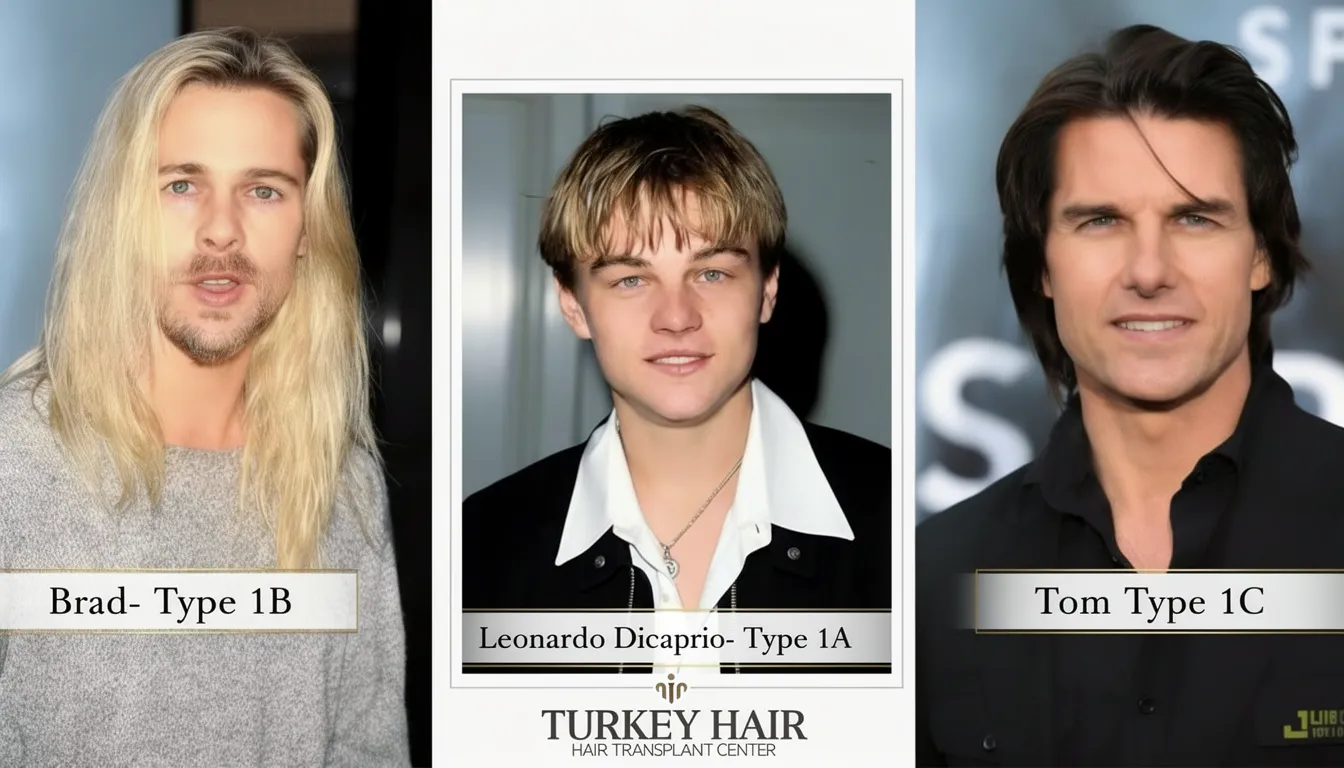
A lot of famous guys are thought to have type 1 hair, which is also called straight hair. This is what most people think. The things that make this type of hair stand out are its smooth structure, natural shine, and straight fall from the roots to the tips. This is a classic Type 1 haircut that has stood the test of time on both Leonardo DiCaprio and Brad Pitt, two of the most powerful stars in Hollywood.
They like hairstyles that are about shoulder-length and don’t have waves. People think that stars with long hair, like Keanu Reeves and Jared Leto, are great examples because their hair is rarely wavy and doesn’t have much texture. That it is possible to have smooth, shape-retaining Type 1 hair is shown by the famous singer and fashion star Zayn Malik.
People in both sports and pop culture have talked about David Beckham’s hair, which is naturally straight but has been styled in a certain way. Stars like Johnny Depp and Tom Cruise have shown that type 1 hair can work with classic, low-frizz hairstyles that rely on precise cuts instead of heavy treatment. So now you know why it’s common for male celebrities with Type 1 hair to have smooth, uniform hairstyles that don’t change much over the course of their lives.
Male Celebrities Known for Type 1 Hair
A lot of people think that Brad Pitt, Tom Cruise, and Leonardo DiCaprio are perfect models of famous men with Type 1 (straight) hair. In different decades, on the red carpet, and in movies, their hair has always fallen straight from the roots to the ends, never curly or waved naturally. One of the most defining traits of Type 1 hair is that it stays in the same shape and position no matter how long it is.
When it comes to discussing different types of hair, the fact that these celebrities’ hair has exhibited the same characteristics for a considerable amount of time makes them particularly informative. No matter how short, medium, or long they wear their hair, it maintains a flat to slightly raised appearance and possesses a natural sheen rather than a texture that is driven by volume. Instead of using heavy styling products, their styles demonstrate that the ideal way to achieve a chic look with Type 1 hair is to use clean lines, precise cutting, and light layers. The fact that their hairstyles in high-definition media demonstrate why Type 1 hair is typically associated with a polished, regulated, and classic appearance rather than patterns that emphasize density or dramatic movement is demonstrated by the images.
Female Celebrities with Naturally Straight Type 1 Hair
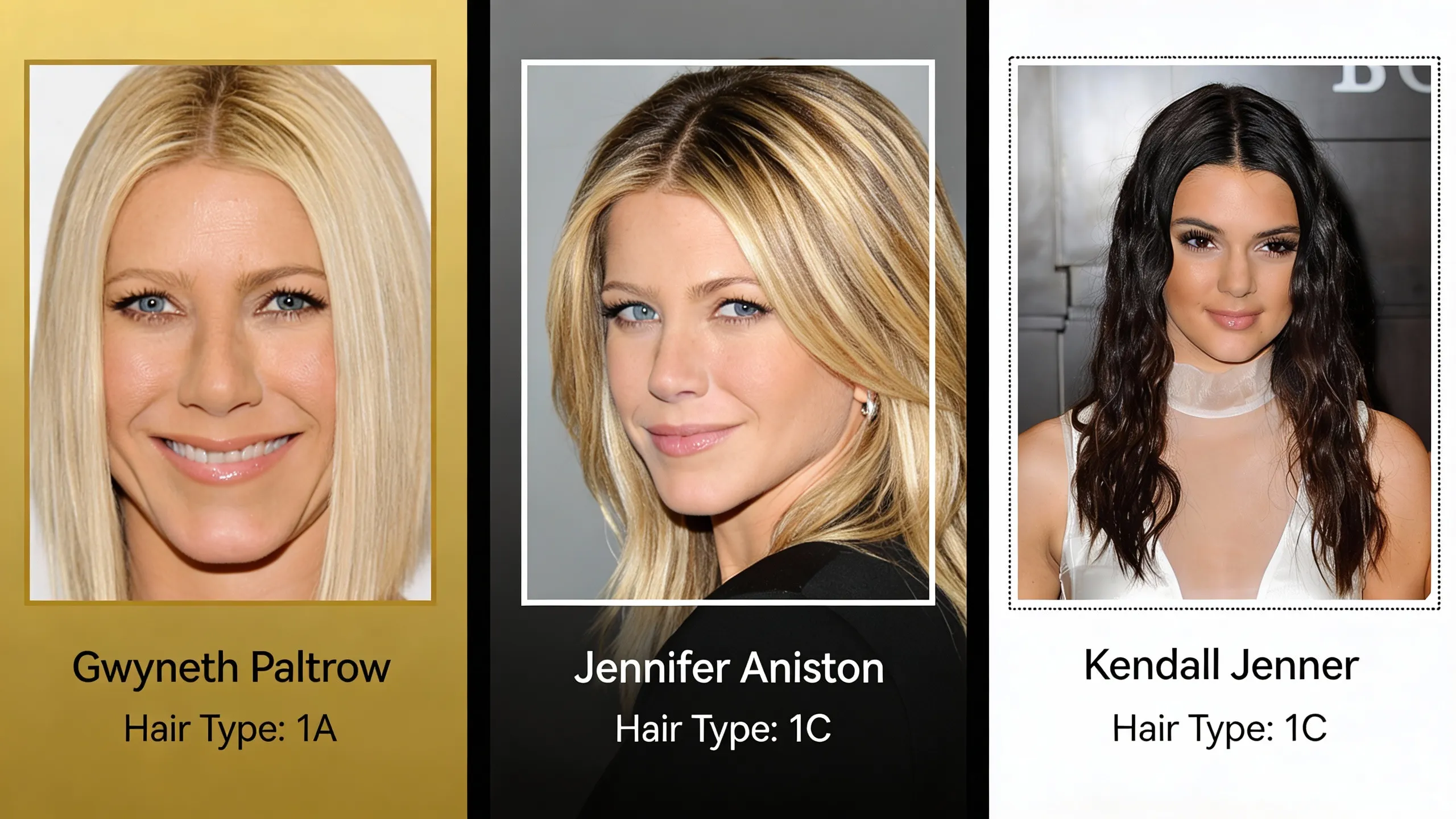
Gwyneth Paltrow, Jennifer Aniston, and Kendall Jenner are three famous women who are often said to have Type 1 hair. Their hair is silky smooth and evenly reflects light. It also has very little frizz and stays straight even after air drying. The natural alignment of the hair creates this sleek shape, which draws attention to the wearer’s length, symmetry, and face features rather than the volume or curl definition of their hair.
This group of women shows the good and bad things about having type 1 hair. The pictures make it look smooth and put-together, but if you don’t cut or style it right, the hair can look flat and lose volume at the roots. In order to get their unique style, they usually stay away from rough texturizing methods and instead use careful blow drying, light layering, and clean sections in the middle. They don’t rely on the natural structure of the hair to get the best results. Instead, they use proportion and shape to give Type 1 hair movement in their public appearances.
How Celebrities Style Type 1 Hair for Volume
Famous people who have Type 1 hair often use techniques rather than hefty hair products to achieve the illusion of thicker locks. Blowing dry the hair with a spherical brush, slightly raising the roots, and strategically splitting the hair are some frequent techniques. If you want your hair to retain its natural luster and bounce, use a light volumizing spray that won’t weigh it down.
Daily Care Routine for Type 1 Hair
Finding the right combination of cleansing, shine, and light moisture is essential for type 1 hair care on a daily basis. Because sebum from the scalp may travel farther and faster through straight hair, it can seem greasy sooner than with other hair types. A regimented routine aids in maintaining the appearance of newly washed hair without damaging it or flattening it.
| Step | Care Action | Recommended Products | How Often | Key Tips for Type 1 Hair |
|---|---|---|---|---|
| 1 | Gentle cleansing | Lightweight, sulfate-free shampoo | Daily or every other day | Prevent oil buildup without weighing hair down |
| 2 | Light conditioning | Silicone-free, lightweight conditioner | Daily | Apply only to mid-lengths and ends |
| 3 | Scalp care | Mild scalp tonic or serum | Once daily | Helps balance oil and improve scalp health |
| 4 | Drying technique | Low-heat blow-dry or air-dry | Daily | Always dry in hair growth direction |
| 5 | Styling | Light styling cream or spray | As needed | Avoid heavy waxes or pomades |
| 6 | Protection | Heat protectant spray | Before styling | Essential to prevent flatness and damage |
| 7 | Night care | Silk or satin pillowcase | Every night | Reduces oil spread and hair breakage |
When caring for Type 1 hair, it’s also vital to avoid using too many products. The close proximity of the hair strands, caused by heavy creams or oils, might give the impression of limp hair. Achieving clean, smooth hair while preserving its natural structure and health is possible with concentrated, little care.
How Often Should Type 1 Hair Be Washed?
When compared to those with curly hair, those with Type 1 typically report feeling better after washing their hair more frequently. The rapid buildup of oil on straight hair can be managed if you wash your hair daily or alternate days. Cleaning your scalp on a regular basis can prevent it from seeming greasy and will also maintain your hair looking light and fresh.
However, exfoliating too vigorously could disrupt your skin’s natural pH balance. You may maintain healthy hair without drying it out by using gentle shampoos and adjusting the frequency of your washes according to your exercise level and oil production. Pay close attention to the requirements of the head in order to provide long-term care.
Best Shampoo and Conditioner Types for Type 1 Hair
Volumizing, balancing, or oily scalp shampoos are ideal for type 1 hair. No sticky residue is left behind by these products, which makes washing your hair a breeze. Apply a gentle conditioner to the hair’s ends and midlengths, avoiding the scalp.
Too thick or smooth of a product will flatten even the straightest hair. The hair’s natural sheen and pliability can be preserved with transparent, silicone-light solutions that also make styling a breeze.
Ingredients to Look for and Avoid
Some nutrients that can help Type 1 hair stay strong without feeling heavy are panthenol, niacinamide, green tea extract, and lightweight proteins. In addition to balancing the head, these aid in making hair shine. Stay away from waxes, heavy oils, and thick silicones because they can quickly build up and flatten out straight hair.
At-Home Care Tips for Type 1 Hair
Assist with light housework The control of oil, the maintenance of shine, and the maintenance of the hair’s light structure are the three most crucial aspects for men with type 1 hair. When someone has straight hair, which makes it easier for sebum to migrate swiftly from the head to the ends of the hair, everyday activities have a significant impact on how they look. This is especially true for people who have straight hair. If you want to prevent your clothes from becoming flat and building up, all you need to do is adjust the way you wash, dry, and utilize products.
Make sure to keep things straightforward when you are taking care of your Type 1 hair at home. If you use fewer, higher-quality products, your hair will be smoother and will have less product buildup after you use them. In order to preserve the naturally smooth texture of your hair, it is important to maintain a balanced regimen and to treat it with gentleness.
How to Prevent Greasy Roots
In order to prevent your roots from becoming greasy, you can begin by washing your hair and also taking good care of it. Every day, use a shampoo that is soft on the hair to prevent oil from accumulating on the root of the hair. In order to prevent the roots of your hair from becoming excessively heavy, you should only condition the ends of your hair.
Do not touch your head an excessive amount throughout the course of the day. This will cause your hair to appear oily in a shorter amount of time. Your brushes should be cleaned and light shaping products should be used if you want your roots to look wonderful for a longer period of time.
Maintaining Shine Without Weighing Hair Down
A mild dampness, not a heavy wetness, is what type 1 hair requires in order to maintain its shine. The use of shine sprays or clear serums can improve the way light is reflected from the hair without covering the individual strands. It is possible to maintain the shine of your hair without making it appear limp by using a very small amount of product.
In order to prevent the product from accumulating, it is essential to thoroughly rinse the area. You may achieve a natural shine in your hair without sacrificing its mobility or thickness if you clean it thoroughly and remove any residue. This is because it has a higher capacity to reflect light.
Lightweight Oils and Serums for Type 1 Hair
Serums that contain squalane or light oils such as argan or grapeseed are the most effective formulas for treating Type 1 hair. If they are utilized appropriately, they can impart a glossy and smooth appearance to the ends without making them appear more bulky. Staying away from thick oils is the best course of action because even a small amount will rapidly cause straight hair to become lackluster.
Styling Tips for Type 1 Hair
When it comes to style Type 1 hair, it is essential to emphasize the structure of the hair without compromising the naturally smooth texture of the hair. When the hair is straight, it is possible to style it well without the use of excessive heat or product. If you give careful consideration to your hairstyle, you may make it look more intriguing without compromising its health or making it more difficult to manage.
Because damage manifests itself more rapidly, hair of type 1 needs to be styled using the appropriate techniques. The luster and sturdiness of something can be maintained with the assistance of protective products and gentle working tools.
Heat Styling and Type 1 Hair Health
Although heat treatment is safe for type 1 hair, excessive heat treatment might cause the hair to become dry and lifeless. Heat protectants should be applied to your hair before you smooth it or blow-dry it. This will prevent your hair from becoming damaged and will help it to maintain its natural shine. Considering that the hair is naturally straight, the majority of the time, it is sufficient to use lower heat settings in order to style it.
Reduce the frequency with which you use heat tools on your hair so that it has more time to recover and maintain its strength. If you have the opportunity, let your hair air dry. Over the course of time, it will be more beneficial and will have less frizz.
How to Add Volume to Straight Hair Naturally
As an alternative to applying heavy makeup, there are some natural methods that can be utilized to give straight hair more volume. Changing the part lines, using light volumizing sprays, and lifting the roots while blow drying your hair are all ways to achieve fuller hair. The use of layers in a strategic manner enhances the experience of movement and depth.
When it comes to your hair, you should avoid using thick lotions and waxes because they will cause it to go flat very soon. In order to maintain the hair’s lightness and flexibility, we employ mild procedures that give the hair lift.
Blow-Drying Techniques for Type 1 Hair
In the process of blow-drying your hair, It is recommended that you use an upside-down or round brush to brush your Type 1 hair from the roots up if you are looking for a more subtle lift. It is possible to get a higher level of loudness without sacrificing smoothness by directing the airflow upward rather than downward. It is helpful to end with chilly air since it helps to set the style and brings out the shine.
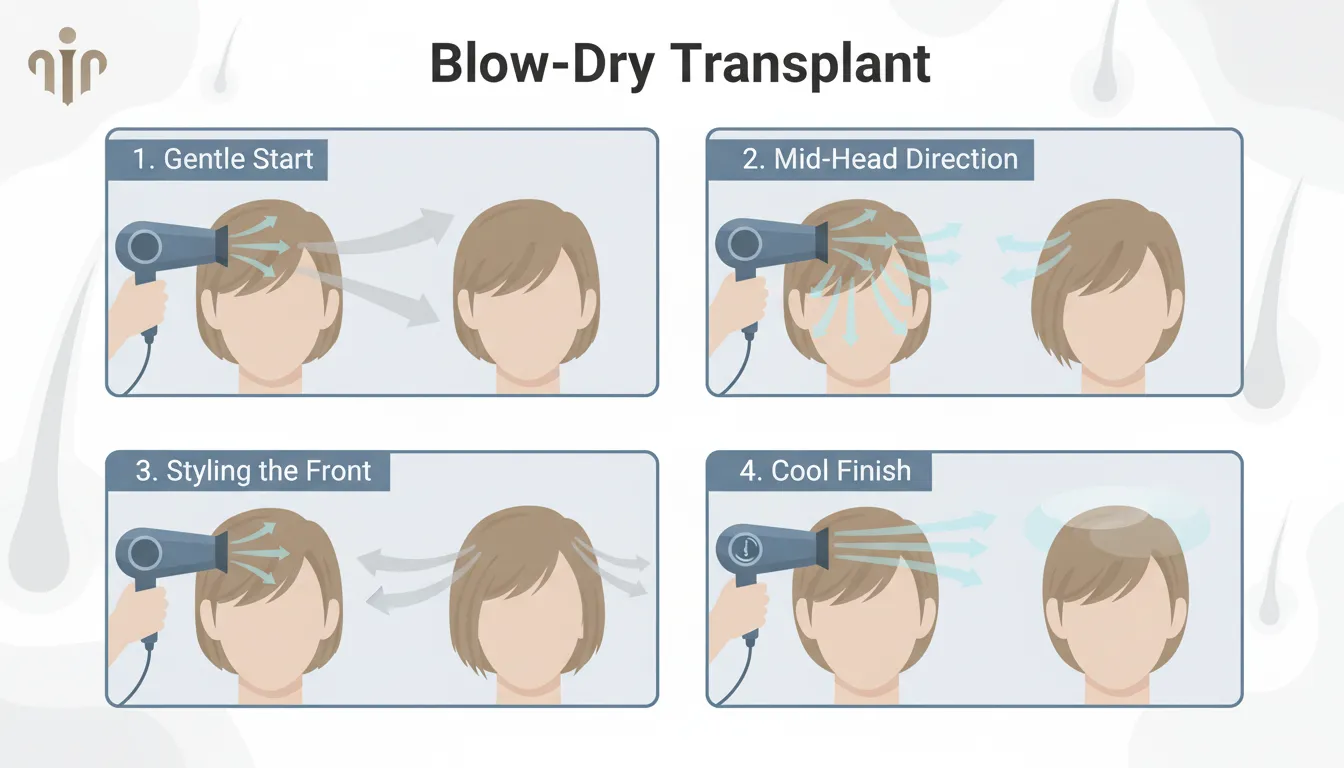
Dos and Don’ts for Type 1 Hair
To maintain the silky smoothness and luster of type 1 hair, meticulous daily maintenance is required. Damage, buildup, and oil are more noticeable in straight hair, so every decision feels more significant. To maintain order, prevent flat hair, and enhance the scalp’s and hair’s long-term health, you should not do these simple things.
Recognizing the positive aspects Understanding how to manage type 1 hair is just as crucial as being aware of what to avoid. Make sure not to apply too much product and to use a light, delicate touch for the greatest results. If you want your straight hair to appear and feel different, all it takes is a little adjustment to your daily routine.
Dos for Keeping Type 1 Hair Healthy
Type 1 hair requires special attention to maintaining a balanced and clean scalp. You may prevent oil from penetrating your hair shafts by washing your hair frequently with mild shampoos. To preserve the bounce and sheen, use mild treatments sparingly and apply them solely to the tips of your hair.
Brushing hair lightly and then drying it is another crucial step. To minimize damage, use a gentle heat setting, microfiber cloths, and soft bristles. Your hair will stay straight and appear healthy, lustrous, and silky smooth if you follow these steps.
Daily Habits That Improve Hair Appearance
Brush your hair only when it’s dry, change your pillowcases periodically, and avoid touching your head too much if you have Type 1 hair. These everyday routines will improve the appearance of your hair. A good rinsing and minimal product application are all that’s needed to prevent buildup and maintain hair that is fresh, light, and naturally shining.
Don’ts That Damage Type 1 Hair
Applying heavy-duty hair products to straight hair is not acceptable. Waxing, oiling, or creaming Type 1 hair can rapidly turn it into an oily mess. Another poor practice is using heat styling tools on one’s hair without a cap. A lack of regular haircuts might have a negative impact on your hair’s health over time. Care for straight hair on a regular basis to keep it appearing clean and smooth because split ends move faster through it.
Common Mistakes That Cause Flat or Oily Hair
Common blunders include massaging conditioner into hair, using overly harsh shampoos, and using heavy serums at the roots. The accumulation of oil on hair makes it appear lifeless and brittle. If you’re constantly touching your hair during the day and neglect to wash your brushes, this will happen more quickly.
Common Problems Associated with Type 1 Hair
For the most part, Type 1 hair is known for being very smooth, but it does have some problems. Since straight hair is close to the head, it makes problems with flatness and oil visibility worse. These issues are not caused by unhealthy hair; rather, they are caused by the way light, oil, and product buildup affects straight hair.
| Problem | Why It Happens | Visible Signs | Prevention & Solutions | Hair Transplant Relevance |
|---|---|---|---|---|
| Excess oil (greasy look) | Sebum spreads easily on straight hair | Oily roots, flat appearance | Use lightweight shampoo, avoid heavy products | Clean scalp improves graft survival |
| Lack of volume | Hair lies flat on the scalp | Flat crown and front | Blow-dry with direction, volumizing spray | Dense graft placement recommended |
| Scalp visibility under light | Straight strands reflect light | Shiny scalp, visible thinning | Matte-finish products, correct density planning | Requires higher graft density |
| Hair gets dirty quickly | No curls to trap oil | Frequent washing needed | Gentle daily cleansing | Healthy scalp supports growth |
| Poor style retention | Smooth hair shaft | Style drops quickly | Light texture sprays | Helps frame transplanted hairline |
| Static & flyaways | Fine, smooth cuticle | Frizz despite straight hair | Anti-static serum (very light) | Protects new grafts |
| Heat damage sensitivity | Fine to medium strands | Dry ends, breakage | Low heat + heat protectant | Prevents shock loss |
Most people also worry about how often they should do maintenance. When the weather, how you wash your hair, or the items you use on it change, type 1 hair responds quickly. If you don’t stick to a routine, even healthy hair can look limp, oily, or dull.
Flat Hair and Lack of Volume
Loose hair is one of the main complaints about Type 1 hair. When the straight structure pulls the hair in toward the head, it makes the roots look thin. It’s harder to keep the thickness up, especially if you have fine or medium-density hair. If your hairstyle isn’t right or there aren’t enough layers, it could make your hair fall out faster. To get volume that lasts all day, use light volumizing products and cut in a smart way.
Excess Oil and Scalp Buildup
The ease with which sebum can move from the scalp to the ends makes it more possible for Type 1 hair to quickly build up too much oil. This can make hair look oily right after washing, even if the scalp is healthy. Also, product residue can make this reaction stronger. When you use strong conditioners and don’t wash properly, the collection generally gets worse. Rinse your hair well and use a light cleanser to get rid of oil. Avoid getting it on the roots.
Is Type 1 Hair Prone to Hair Loss or Thinning?
Type 1 hair doesn’t always mean that a person is more likely to lose their hair, but thinning may be more obvious in those people. Because the strands are smooth and straight, any loss of mass is easy to see. So, the amount of hair loss you may be experiencing may seem worse than it really is.
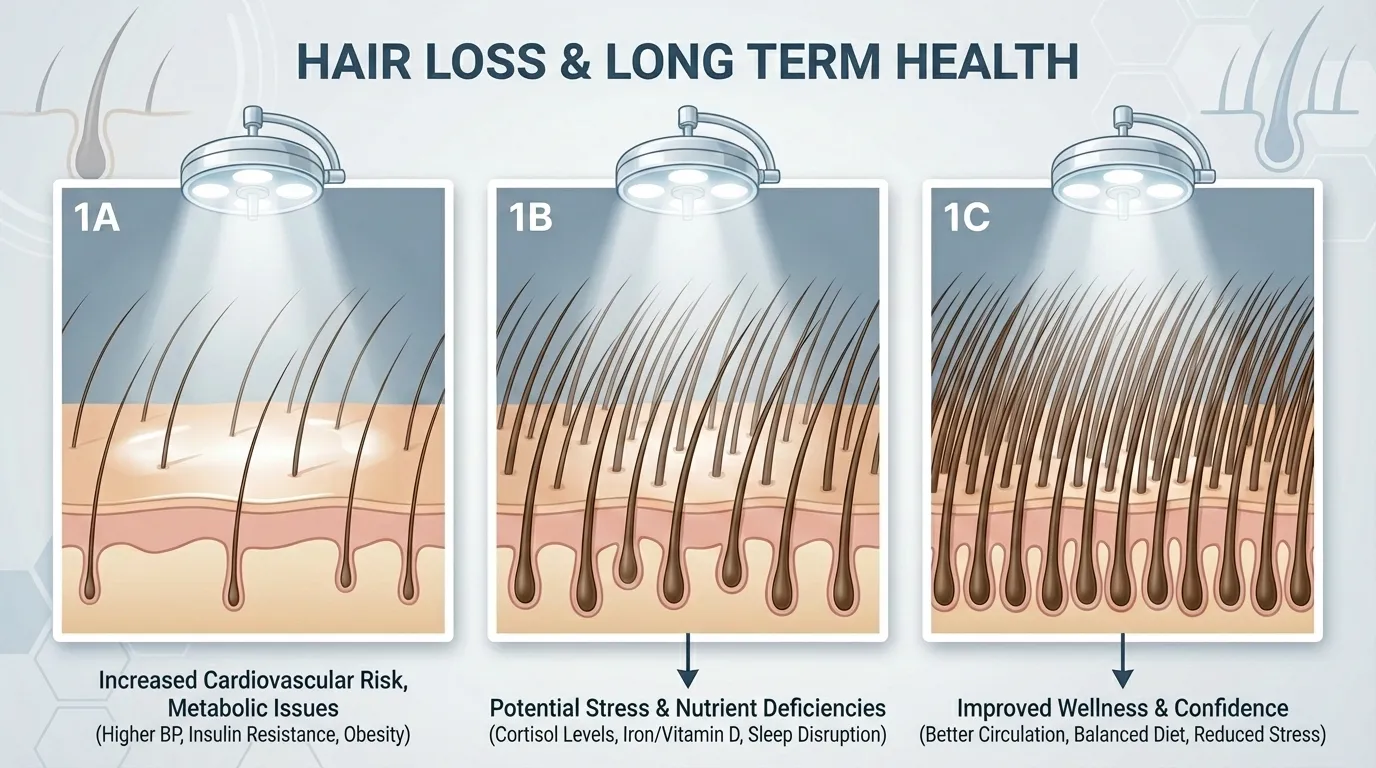
Another thing to think about is how light reflections affect straight hair. As hair loss gets worse, the head shows more, especially in the frontal and occipital areas. This visual illusion might make the amount of early thinning look worse than it really is.
Visibility of Hair Loss in Straight Hair Types
People with straight hair tend to lose their hair faster because the scalp can be seen more clearly at that length. Because there aren’t as many crossed hair strands in straight hair, it doesn’t cover as much naturally as wavy or curly hair. This makes it easy to see the small changes in density.
Most people can tell their hair is getting thinner in the top, along the hairlines, and along the part lines. Because of this, people with Type 1 hair may lose more hair than people with other hair types, but the total amount of hair lost may be the same.
Why Thinning Appears More Noticeable in Type 1 Hair
It’s easier to see that type 1 hair is falling out because straight hairs fall out more often and reflect light right onto the skin. Because there are no curls or waves to hide the reduced density, it is easier to see, especially in bright light or up close.
Type 1 Hair and Long-Term Hair Health
When it comes to maintaining the health of Type 1 hair over time, consistency is more likely to be successful than intense treatment. Because it is simple for straight hair to lose its strength and shine, the things that you do on a daily basis constitute a significant factor. Keeping the hair healthy over time requires a combination of gentle feeding, balanced washing, and avoiding putting additional stress on the individual strands of hair.
As a result of the fact that Type 1 hair readily reflects light, healthy strands of hair tend to appear thicker and more shiny when they are properly cared for. Keeping your scalp healthy over time by avoiding excessive oil buildup, limiting your exposure to heat, and using treatments designed for straight hair can help slow down the noticeable thinning or weakness that occurs over time.
How to Maintain Thickness Over Time
In order to maintain the thickness of type 1 hair, the first step is to carefully care for the head. Regularly cleaning your hair without washing it too much helps to maintain the clarity of the strands as well as the natural oils that are contained within them. The use of lightweight conditioners that are simply applied to the mid-lengths and ends of the hair helps to prevent the hair from breaking without making it become heavy.
When it comes to long-term strength, it is also essential to maintain the lowest possible level of mechanical stress. Brushing your hair softly, styling it with less heat, and sleeping with your hair in a protective style are all activities that can significantly slow down the rate of hair loss that is caused by daily friction and stress.
When to Seek Professional Hair Advice
In the event that you observe a decrease in hair thickness or an increase in hair loss, as well as any persistent issues related to your scalp, it is advisable to consult a medical professional. Because of how rapidly things change with Type 1 hair, it’s best to get assistance as soon as possible so that you can begin to counteract the loss of density before it becomes more noticeable.
Dermatologists and hair experts can look at these things to figure out how your genes affect your skin health and how your lifestyle affects it. Instead of reacting after a lot of thinning has already happened, it is often better to get help earlier and deal with the root causes of the thinning.
References
American Academy of Dermatology – Hair Types and Structure
Healthline – Types of Hair and How to Care for Them
NCBI – Hair Shaft Structure and Biology