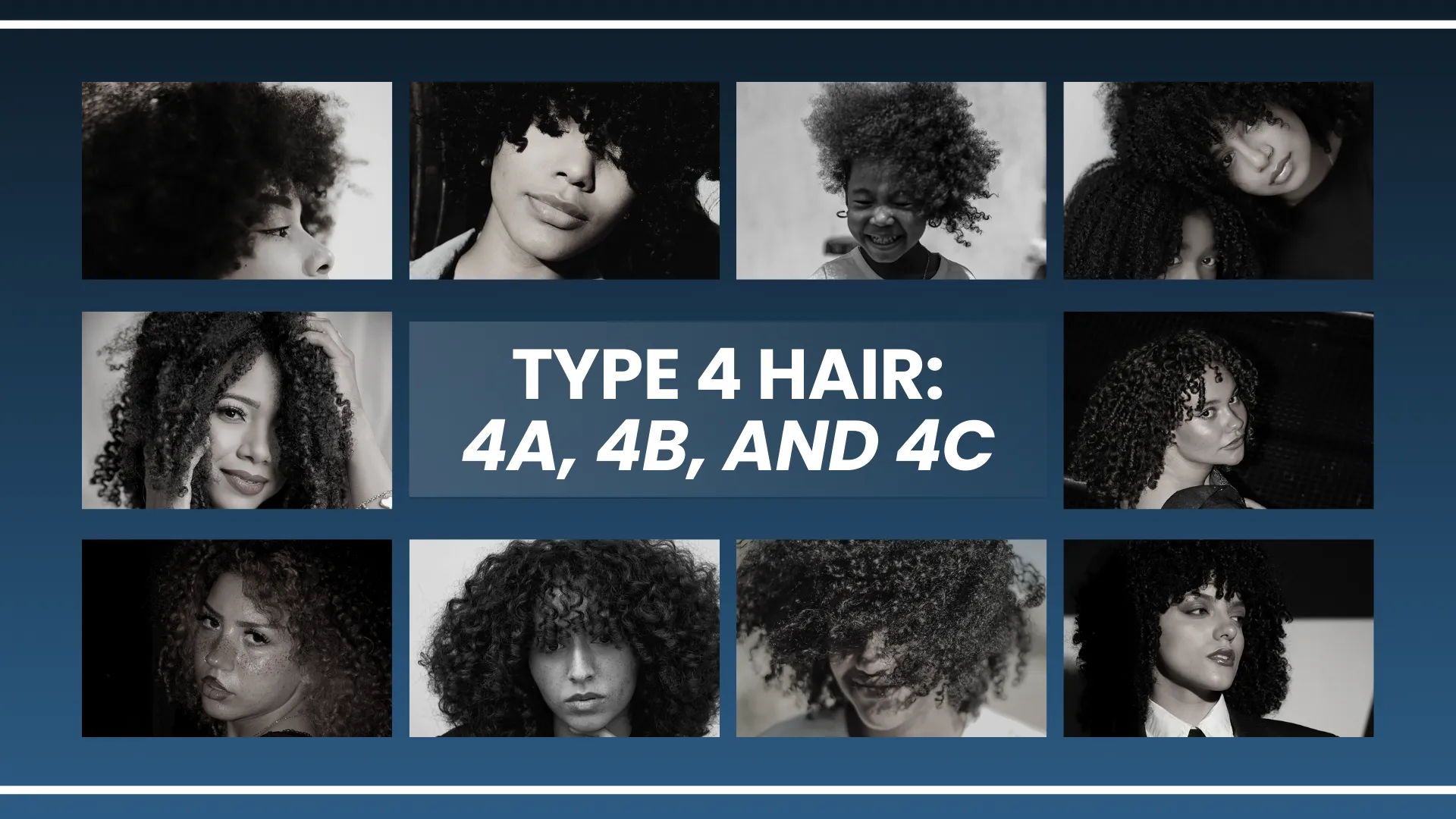
Understanding Type 4 Hair
Type 4 natural hair is the most tightly coiled and organized of the different types. It has lots of volume and curls that look like springs. A lot of people use the words “coily” or “kinky” to describe the small, noticeable curls that start close to the head. Maintaining its moist, pliable, and healthy takes special care, even though it is very adaptable and looks nice.
| Type | Curl pattern | Definition visibility | Shrinkage | Moisture need |
|---|---|---|---|---|
| 4A | Small “S” coils | High | High | High |
| 4B | “Z” bends/coils | Medium | Very high | Very high |
| 4C | Tight coils/zig-zag | Low (needs styling) | Extreme | Maximumdiffer |
The first thing you need to do to understand Type 4 hair is to realize how different it is. Each strand is different, whether it is thick and wiry or thin and twisted. It has a beautiful natural pattern, but the tight curls keep natural oils from getting into the shaft, which makes it dry out and shrink. But if you take good care of it and keep it moist, type 4 hair grows in thick and clear like never before.
What Defines Type 4 Coily and Kinky Hair
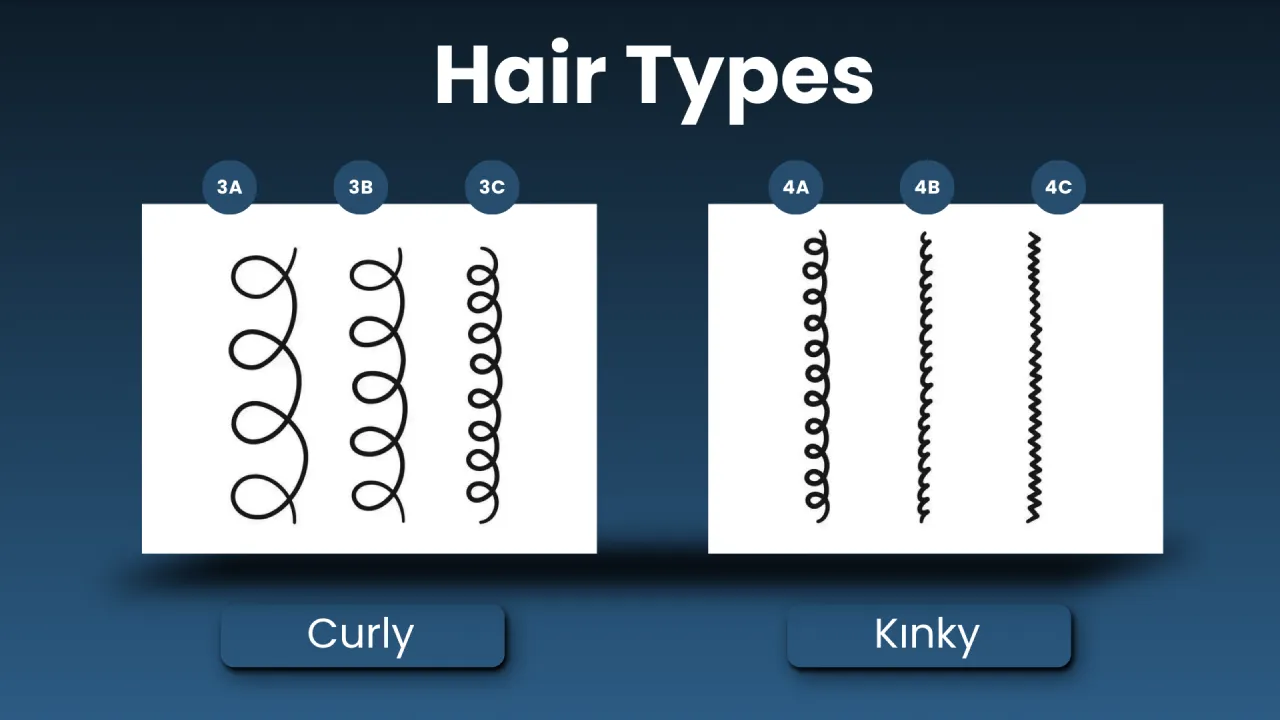
Type 4 hairstyles have coils that look like S or Z shapes and are tightly twisted. Many people call this hair loss “shrinkage.” It can make these strands look up to 75% shorter. This is always the case with thick, full hair: it has a dense, coiled structure. This structure could have beautiful textures or be rough and stiff.
In contrast to varieties of hair that have looser curls, type 4 hair requires sensitive care and the maintenance of its moisture. When it comes to this type of hair, the most effective products are those that offer moisture, leave-in conditioners, and styles that protect the hair. Due to the fact that the structure of the strand is so delicate, it is essential to employ techniques that involve minimal manipulation and to maintain proper moisture levels at all times. This is a declaration of love for the way that beauty naturally expresses itself via shape and color, and having hair like this is symbolic of that love.
Common Characteristics of Type 4 Hair
People with Type 4 hair have tightly curled locks that shrink a lot and a naturally light and fluffy structure. It looks fuller and plumper than other types because it has a denser look. The strands look strong, but they are actually very flimsy and will break as soon as they get dry or neglected.
Because type 4 hair loses and regain moisture at such a rapid rate, the first thing you should do when you wash your hair is to hydrate it. This is because type 4 hair is prone to dryness and drierness. In order to preserve its luster and ability to bend, it is essential to condition it on a regular basis, to seal it with oil, and to untangle it in a gentle manner. If you take the necessary precautions to maintain it, you will be able to make use of its natural texture as both a strength and an advantage that you can use. You will be able to create a broad range of styles with this, including protective braids, intricate twist-outs, and soft afros, amongst others.
How Type 4 Hair Differs from Curly and Wavy Hair
Type 4 hair is different from wavy and curly hair mainly because it needs more moisture, has a different structure, and its curls are wider. People with Type 2 (wavy) and Type 3 (curly) hair have curl patterns that are more open. Type 4 coils are smaller, tighter, and more compact. The constriction makes the hair look smaller and thicker, even when it is fully stretch out.
| Feature | Type 2 (Wavy) | Type 3 (Curly) | Type 4 (Coily/Kinky) |
|---|---|---|---|
| Pattern size | Loose S | Spirals/ringlets | Tight coils/Z bends |
| Natural shine | Higher | Medium | Lower (needs moisture) |
| Shrinkage | Low | Medium | High–Extreme |
| Breakage risk | Low | Medium | Higher (fragile when dry) |
Because the curls are so tightly packed, it is difficult for scalp oil to make its way through each and every strand of hair. As a result, the hair becomes even drier. Looser curls, on the other hand, can appear shiny and defined with less effort, but type 4 hair has to be intentionally moisturized and treated in order to maintain its softness and definition. Although this may appear to be a defect, it is actually a strength of this particular type of hair that contributes to the overall beauty of the hair.
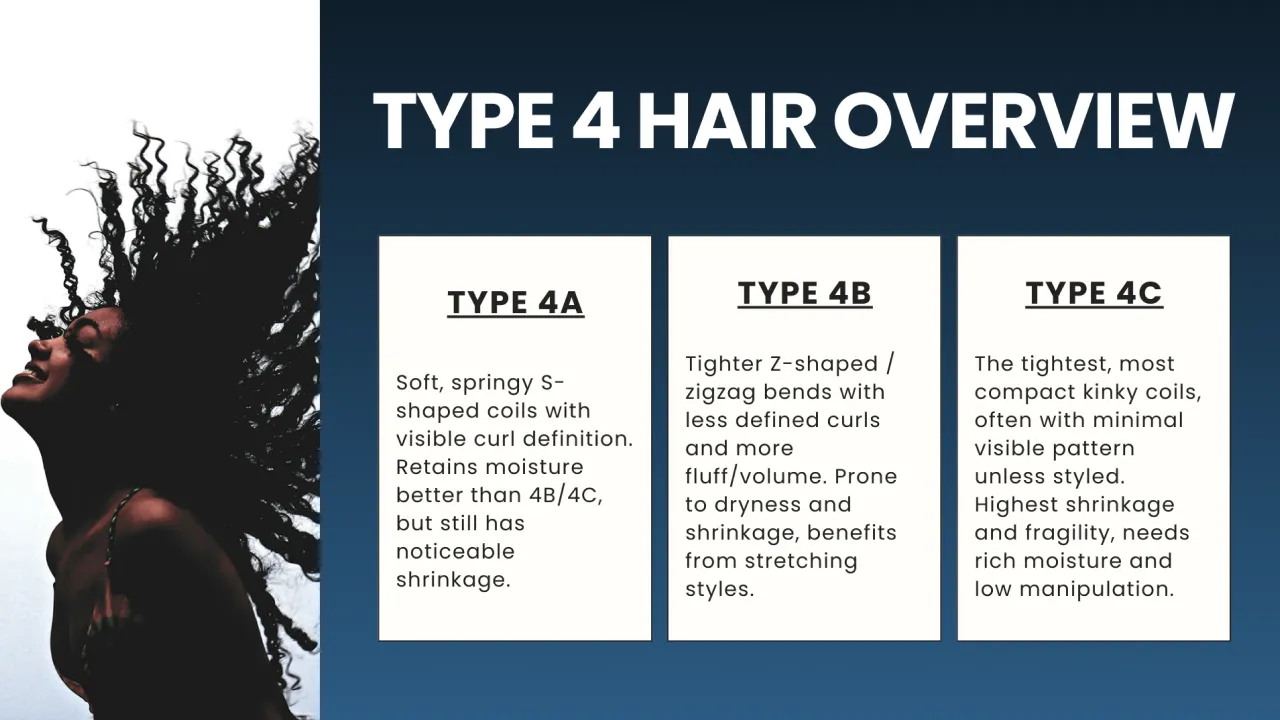
Curls of type 4A hair are characterized by their softness and springiness, and when tugged, they generate notable “S-shaped” curls. The design of this product offers the impression of curls that are considerably more defined and preserves moisture better than the 4B or 4C variants, which are more compact products. It is the closely packed strands, which range in thickness from fine to medium, that give the hair an appearance of natural fullness and volume. As a result of its compact coils, 4A hair commonly shrinks, giving the impression that it is of shorter length than it actually is.
A cotton-like feel and obvious curl definition are common descriptions of Type 4A hair when it is well hydrated, according to those who have it. Gentle, constant hydration is the key to this hair type’s flourishing. When it is healthy, it adds luster to your locks and makes them more pliable, all of which bring out their inherent curl patterns. To keep it healthy and long-lasting, it is important to use low-heat procedures, protective styles, and moisture-locking routines.
Texture and Curl Pattern of 4A Hair
In type 4A hair, the tiny, transparent “S-shaped” coils twist and knot into large, spherical curls that are roughly the size of a crochet needle. The curls that make up type 4A hair differentiate it from types 4B and 4C hair in that it has a distinct structure. The curls can still be seen in those whose hair is natural and has not been processed. When cut short, hair that is thin to medium-thick and has strands that are close together gives the appearance of being thick and full.
Even if the texture is more pliable and the ability to retain water is superior to that of types with tighter curls, it is still necessary to moisturize it frequently in order to prevent it from becoming dry and frizzy. With the appropriate care and as little style as possible, 4A hair can maintain its elasticity and curl shape to a certain extent. This cut is the ideal combination of a carefully curled hairstyle and a style that is more delicate. It works great for natural looks that highlight its coil pattern, as well as twist-outs, wash-and-go hair, and other similar styles.
Common Challenges with 4A Hair
One of the most significant challenges you will face is preserving the moisture level of your Type 4A hair. The fact that it is better at retaining moisture than textures classified 4B or 4C does not change the fact that it still requires frequent conditioning in order to avoid becoming dry. There is a possibility that natural oils will become tangled and frizzy as a result of the difficulty in circulating through tightly curled hair.
Other typical issues include swelling, which has the propensity to make 4A hair appear shorter than it actually is longer than it actually is. This is a condition that occurs quite frequently. Stretching in a variety of different methods, such as by utilizing bands or twist-outs, is one of the most common ways that people cope with this condition. It is also one of the most popular and effective approaches.
You should keep in mind that you must damp your hair and treat with usable conditioning to untangle your hair in a gentle manner in order to avoid causing any damage to your hair. When working with hair that has been treated with conditioner, it is of the utmost importance to keep this knowledge in mind. In addition, in order to preserve the distinctive appearance of 4A curls and to ensure that they remain in good shape, it is essential to adhere to a routine that is rich in moisture, requires only a limited amount of manipulation, and lays an emphasis on protective style techniques. It is absolutely necessary to carry out this action in order to maintain the characteristics that were being described previously.
Stretching Techniques for 4A Coil Definition
The application of stretching techniques results in an improvement in the definition of 4A coils as well as a reduction in shrinkage and tangling. In addition to cool-style soft blow-drying, African threading and banding are other popular methods of hair styling. By employing these methods, you will be able to extend the length of your curls without causing any harm to their natural state.
In the event that you intend to use heat on your hair, you should first ensure that it is clean and well-hydrated before extending it. With the application of light styling creams or curl-enhancing gels after stretching, the pattern can be defined more precisely. Because of the consistent application of these techniques, 4A curls are able to maintain their elasticity, length, and attractive appearance.
Type 4B Hair Overview
When someone has Type 4B hair, the spiral curls stand out more than the tight coils. There are sharp turns in the strands that make them look like they have a lot of volume and fluff. This hair type does not have the curl definition that you can see in 4A, so it looks full and strong because of the bulk. This type of fabric tends to shrink and dry out quickly, so it needs special care that is based on how much water is in it.
You can style 4B hair in many ways, even though it is very mild. There are many more, like twist-outs, updos, safe styles, and more. If you take care of this texture and keep it moist, it can appear very clear while still being strong and keeping its natural shape.
Texture and Curl Pattern of 4B Hair
Type 4B hair has a “Z-shaped” pattern, which means that the hair strands are tightly wound around each other instead of having clear ringlets. 4B curls are clearly different from 4A curls because they are denser and fluffier than 4A curls; they feel light and fluffy. This one-of-a-kind design definitely adds volume, but it could also cut the hair’s length by a lot, up to 70%, making it look like the hair is significantly shorter.
The very tight twists in each strand of 4B hair make it less likely to absorb the natural oils from the skin. This makes the hair dry and brittle. To keep their strength and flexibility, they need to hold on to water and be gentle with it. Consistent deep conditioning, safe styling, and stretching can help you keep your hair smooth, manageable, and fuller with less tangling. If you take good care of your 4B hair, its unique density, attitude, and texture will show.
Common Challenges with 4B Hair
Making sure 4B hair stays moist is the hardest part. Locs do not get enough grease because the threads are wavy, so they dry out. Long haircuts can be hard to keep up, and if your hair is falling out a lot, it can be hard to tell how long it really is.
There are two ways to find a solution to this problem: one is to wear styles that protect your hair and make it more difficult to style. Layering liquids, commonly referred to as LOC, which is an acronym that stands for liquid, oil, and cream, is another method that works to solve this issue. For the purpose of preserving the health of your hair and avoiding the formation of knots, you should trim your hair on a regular basis and use a comb that has wide teeth. If you want your 4B hair to remain in good health and stand out from the crowd, it is necessary that you maintain the moisture that is present in all of your hair.
Shrinkage Control and Shape Retention in 4B Hair
Some natural and good shrinking is a part of fashion, but that shrinking needs to happen to some extent. 4B hair is great for making styles last longer with braids, twists, or bands. There is no need to use heat to stretch the strands in these ways; they will keep their shape and thickness.
Because it is still damp and silky, 4B hair will maintain its shape if you style it while it is still wet. Your curls will be easier to maintain if you use a modest amount of curl cream or leave-in conditioner. It is possible to preserve the fullness, flexibility, and smoothness of your hair if you wear it in its natural shape and stretch it a lot.
Type 4C Hair Overview
In terms of the curls that are characteristic of Type 4 hair, it is true that Type 4C hair has the most attractive curls. Due to the fact that the coils are so tightly packed, you will need to style it in order to give it any shape. In the event that each strand is tightly wrapped or zigzag-shaped, it is feasible for it to become up to eighty percent shorter than its initial length. This is because of the fact that it is tightly wrapped.
You will only be able to keep this type of hair in good health and avoid damage and dryness from arising if you take your time and care for it on a regular basis. It is possible to bring out the exquisite structure of your 4C hair and ensure that it remains wet if you follow the necessary steps to care for it. This will result in a significant amount of volume, softness, and strength in your hair.
Texture and Curl Pattern of 4C Hair
Because the curl is so tight and coarse, 4C hair that is fine, soft, or coarse makes the most beautiful coils. It looks hazy if you do not style it because the tight curls make it hard to see any shape. It looks thicker than it is because of how dense it is, even though the strands are very thin.
You can wear this hair type in wigs, curls, braids, and other styles that keep it safe. It also looks great in skin care items. To keep your hair smooth and free of knots, deep condition it often, seal it with oil, and do not touch it too much. If you take care of 4C hair the right way, it can be very flexible and big.
Common Challenges with 4C Hair
Since 4C hair has tight curls, the four main problems that can happen are drying out, sticking, and breaking. Hair dries out quickly because coils make it harder to grease strands properly. This could happen if you detangle your hair too much or use styling products that are too rough.
You need to make a plan which stresses how important water is with an eye to deal with these common issues. If you want to keep your hair soft and healthy, you should deep condition it once a week and co-wash it. Protective patterns and satin covers for sleep are two more ways to deal with stress and wear.
Managing Extreme Shrinkage and Fragility in 4C Hair
One thing that makes 4C hair unique is that it can grow and hide a lot of its real length. Some easy ways to stretch that can help with this are twist-outs, heatless bands, and African threads. If you do these things, your curls will stay healthy while your hair grows longer.
Because 4C strands are fragile, it is very important to take good care of them. If you use a light oil, a wide-tooth comb, and gentle treatments, your hair will not break. Every day, take care of your hair. If you take good care of your 4C hair, it will stay strong and show off its beauty in its tight coils.
Hair Styling Tips for Type 4 Hair
It is possible to style hair of type 4 in a manner that highlights the natural structure, volume, and strength of the hair you have. You may reduce the danger of damage by using items that are based on moisture, being attentive, and wearing protective clothing. There are different ways to deal with each of the three subtypes (4A, 4B, and 4C), but at the same time, you can reduce the risk of damage.
First and foremost, you should make sure that your hair is well-hydrated before you attempt to style it. It is possible to maintain the flexibility and structure of your hair by applying an oil or cream after using a leave-in conditioner. By avoiding the use of strong treatments on your hair and smoothing it with your fingers or a wide-tooth comb, you may maintain the curl pattern of your hair and limit the amount of shedding that occurs.
Styling Tips for 4A Hair
It is possible to improve the natural bounce of 4A hair by applying a little coating of cream or curl enhancer to the hair beforehand. The hair will be able to maintain its vitality if it is defined and moved. It is possible to achieve a lovely look with your wash-and-go, twist-out, or braid-out hairstyle provided you can achieve the appropriate level of moisture and curl definition.
Applying the styling products to hair that is only slightly moist, as opposed to hair that is completely wet, will result in reduced shrinkage of the hair. By snagging or finger twisting your hair, you can ensure that the curls are more noticeable. For a more realistic appearance, you should let it dry on its own. When you use a small amount of water and a spray of leave-in conditioner, curls can maintain their softness and bounce even in between washes.
Enhancing Coil Definition Without Weighing Hair Down
To better define your form, you should use products that are lighter, such as body butters, rather of those that are heavier. This will help you achieve the desired shape. You should apply a leave-in conditioner to your hair before using a product or lotion that enhances the look of curls. This will help your hair retain its natural bounce. You should avoid applying heavy oils directly to your hair if you do not want it to have a flat appearance. This is because heavy oils can cause your hair to become flat.
You have the choice of using a diffuser with a low heat setting or allowing your hair to dry naturally while lifting the roots. Both of these have their advantages and disadvantages. You will be able to move closer to achieving your goal by selecting either options. In addition to ensuring that the ends maintain their shape, giving them a slight bend will prevent them from becoming excessively rigid. The use of this technique not only assists in the preservation of the structure of 4A curls, but it also makes them more malleable, lively, and attractive.
Styling Tips for 4B Hair
In order to preserve the fragile strands and zigzag pattern that are characteristic of 4B hair, it is best to style it in a manner that is protective of these features. You have the option of experimenting with twist-outs, braid-outs, or Bantu knots if you want your hair to be longer and more defined. If you want to stop moisture from escaping from your hair, the first thing you should do is apply a thick cream or butter to your hair while it is still damp.
After brushing your hair, you should avoid touching it too much in order to prevent frizz and maintain the curls. While you sleep, a satin scarf or hat will help you maintain the feel of the fabric. In order to restore the style while maintaining the hair’s softness and moisture, you can use a moisturizing spray or an oil mist.
Protective Styles for Length Retention
Cornrows, braids, twists, and wigs are all examples of styles that protect your hair and allow you to style your hair less frequently and leave it longer on its own. Using this method to trim the ends of 4B hair makes it easier for the hair to relax and grow on its own.
You should make sure that your hair is clean, silky, and well-hydrated before you begin styling it in a protected environment. Wearing your hair in a tight braid might cause your skin to become quite stressed out. Consume a great deal of water while it is operating as well. When you take care of your hair on a consistent basis, it will continue to be robust, healthy, and radiant.
Styling Tips for 4C Hair
You can bring out the natural moisture content of 4C hair by using as little styling tools as possible if you want to achieve the desired effect. Because this texture is the one that shrinks the most, techniques that rely on stretch, like as twist-outs, braid-outs, and African threading, are excellent for displaying length while maintaining the curls.
Make use of creamy lotions that are rich in emollients when you are styling your hair in order to retain the moisture in. First, you should use a leave-in conditioner, then you should use a thick cream or butter, and finally, you should finish with a light oil. If you style your hair while it is damp, you can maintain the curls while achieving a look that is silky and unstructured.
Low-Manipulation and Protective Styling Techniques
You need to pick a method that involves little manipulation if you want your 4C hair to remain healthy. You should avoid wearing your hair in a style that requires a lot of maintenance on a daily basis. A puff, flat twist, thick braid, bun, or chignon are all excellent alternatives to wearing it.
In order to protect your hair as you style it, make sure to maintain it clean and moist. For your hair to remain moist, you should use oils and sprays, and you should alter your style every two weeks in order to keep it under control. 4C hair is able to maintain its natural density, get stronger, and maintain its wetness as a result of this.
Hair Care Tips for Type 4 Hair
As a result of the fact that it requires consistent maintenance in order to maintain its strength, elasticity, and moisture, type 4 hair is not only gorgeous but also luxuriously thick and soft. It is necessary to hydrate, cover, and manage this type of hair with care on a daily basis in order to take care of it in a respectful manner.
It is possible for your type 4 hair to produce wonderful outcomes if you take proper care of it when it is in its natural state. Keep in mind how essential it is to maintain the moisture in your curls, to safeguard them from injury, and to cultivate healthy behaviors that will assist in the growth of your curls.
Washing and Conditioning Routine for Coily Hair
It is imperative that you remember to use a product that maintains the freshness of your Type 4 hair by washing it. In order to achieve greater results, you should wash your hair with products that are especially powerful or that contain sulfates. The term “co-washing” is yet another amazing option. While doing so, this helps to maintain the normal pH balance of the hair while also removing buildup.
The following step is to apply a deep conditioner to the hair in order to nourish it from the internal to the external. In order to prevent your hair from becoming damaged or tangled, you should first untangle it before applying conditioner to it. Depending on how clean your skin is and how frequently you style your hair, the frequency with which you should wash your hair should vary, but for the majority of people, washing their hair once every seven to ten days should be sufficient.
Moisture Retention and Sealing Methods
The ability of type 4 hair to retain moisture is the most crucial characteristic of this type of hair. The LOC or LCO method, which involves adding numerous layers of water, is the most effective approach to do this task. Due to the fact that they lock in moisture, these products reduce the amount of dryness and frizz in the hair.
| Method | Order | Best for | Main benefit |
|---|---|---|---|
| LOC | Liquid → Oil → Cream | 4A–4B (and some 4C) | Strong seal + softness |
| LCO | Liquid → Cream → Oil | 4B–4C | Deep moisture + less dryness |
| Tip | Keep products light | All Type 4 | Avoid buildup, keep definition |
In order to seal it, begin by using a treatment that is based on water, and then proceed to apply a natural oil such as castor, argan, or jojoba. Last but not least, add a tiny bit of butter or cream to the mixture in order to lock in the moisture. You may maintain the softness and moisture of your hair by spraying it with water in the period that passes between washes.
Detangling Techniques for Type 4 Hair
When it comes to protecting the tiny coils in your hair, the best way to ensure their safety is to untangle your hair carefully. If you have any knots in your hair, you can use your fingers or a comb with wide teeth to smooth them out before you apply the styling product. Starting at the ends is the only way to ensure that you will reach the roots of the problem.
hen you are detangling, you should not feel rushed. It is possible that you will cause more harm than good when you are in a hurry. A detangling and preparation of your hair will be of assistance to you if you want to have better control over your curls. You will also be able to maintain the shape of the curls if you use this strategy.
Heat Styling and Stretching Precautions
Whenever you are working with thermal tools, it is of the utmost need to exercise extreme caution. When you are going to flat iron or blow dry your hair, it is important to apply a heat protectant so that you can prevent heat damage and moisture loss. Keeping the heat setting on low to medium is the greatest option when working with strands that are either small or delicate.
If you want to stretch your hair without using heat, you can do so by banding, twisting, or twisting out your hair. You will not cause any harm to your hair or alter the way it feels by following these instructions, which will help your hair grow longer. Reducing the amount of heat styling products you use will allow your hair to retain its natural curl pattern, as well as its softness and reduced likelihood of breaking.
Protective Hairstyles for Type 4 Hair
Protective designs provide a number of advantages, the most important of which are that they encourage growth and reduce the frequency with which adjustments are required. Additionally, they can reduce friction, protect the ends from damage, and assist the material in retaining moisture. There is a significant need for styles that are comfortable and simple to put on.
Wigs and twists are two styles that can shield your hair from harm while also providing you with a wide range of creative options as a result of their versatility. Even when you are styling your hair and skin, you should not forget to continue to hydrate and care for them. It is not accurate to say that you can disregard it just because you are protecting them from harm.
Braids, Twists, and Cornrows
The usage of traditional protective styles such as braids, twists, and cornrows is beneficial for Type 4 hair since these styles prevent the hair from becoming damaged or tangled. Because they reduce the stress of handling and the environment, they contribute to the maintenance of the length.
Take the time to wash and pat dry your hair before you attempt to style it. When pulling on the roots, however, you should be careful not to pull too forcefully because doing so could result in tension alopecia. Utilize a gentle oil or head spray whenever the hair is growing out in order to maintain the style and maintain a healthy scalp.
Wigs and Weaves for Hair Protection
Wigs and weaves allow you to maintain the integrity of your natural hair while still allowing you to have a wide variety of hairstyles. They shield you from the harmful effects of pollutants, excessive temperatures, and other people. On the other hand, proper installation and maintenance are of utmost significance for one’s health in the long run.
You should always keep your hair in a nice knot, and you should also nourish your natural hair. You should give your skin a rest from the items that you apply to it every so often. It is common practice to clean the head in order to remove dirt and grime, which in turn gives the head an ideal environment for the growth of hair.
How Long to Keep Protective Styles Safely
If you take good care of your hair, a protected style should last between four and eight weeks for the majority of hair types. However, this time frame might vary greatly depending on how well you maintain your hair. When you leave a style in for an excessively lengthy period of time, you run the risk of experiencing a number of issues, including hair that gathers, sticks, and breaks at the roots.
To maintain the moisture level of your scalp and hair during the protective period, you should apply a moisturizer twice a week. A leave-in spray or a small amount of oil can be of great assistance to your hair if it is feeling weak. A few days should pass before you attempt to put your style back in place after you have removed it. Doing so will prevent your hair cells from experiencing an excessive amount of stress.
Celebrities with Type 4 Hair
The notion of beauty in the entertainment business has evolved throughout time, and a considerable number of influential figures who have played a role in this evolution have type 4 hair. As a result of their unwavering self-assurance, natural hair textures, and bold fashion choices, curls and coils have become increasingly popular all over the world. These well-known people have openly proved that authenticity is not only a passing trend by displaying their naturally wavy hair in photographs, on the red carpet, and on set. They have done this in order to emphasize that authenticity is important.
These important figures make use of their platforms to promote the delight of having natural hair and the attractiveness of hair with an afro-textured texture. The strong, gorgeous, and one-of-a-kind traits of coils and knots are evident in each and every one of them, regardless of the shape that they take (4A, 4B, or 4C).
Celebrities with 4A Hair
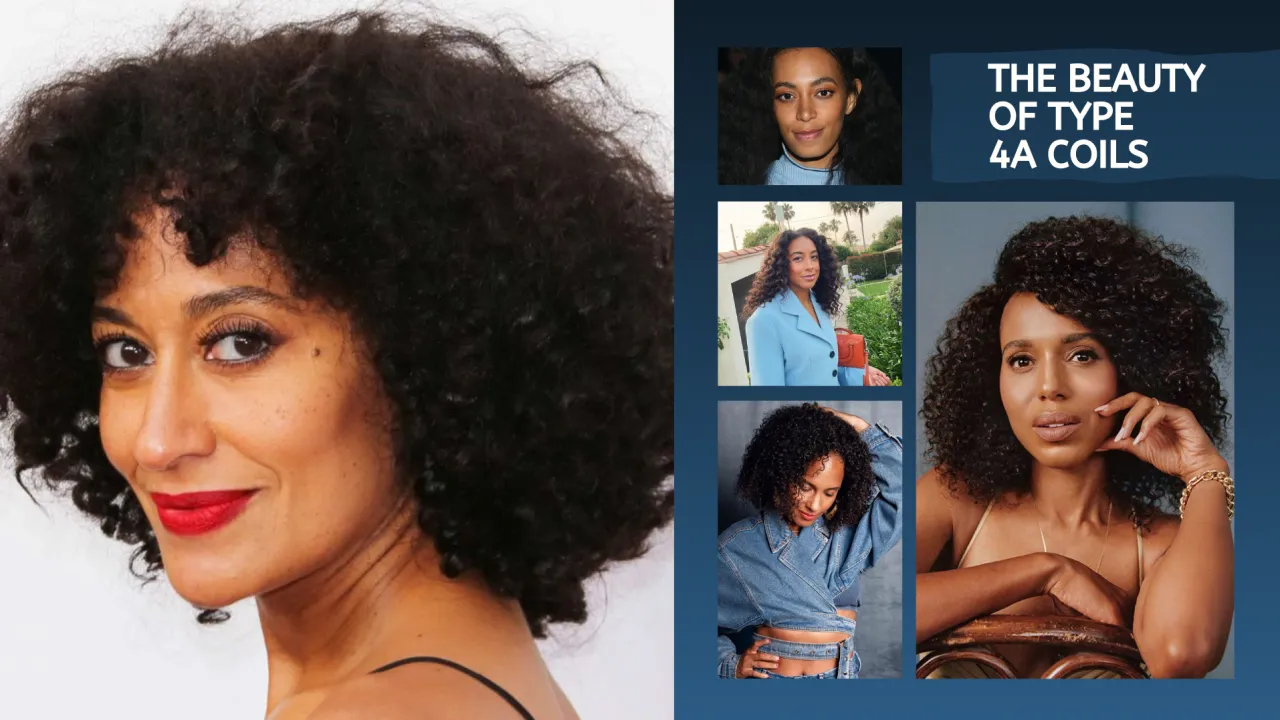
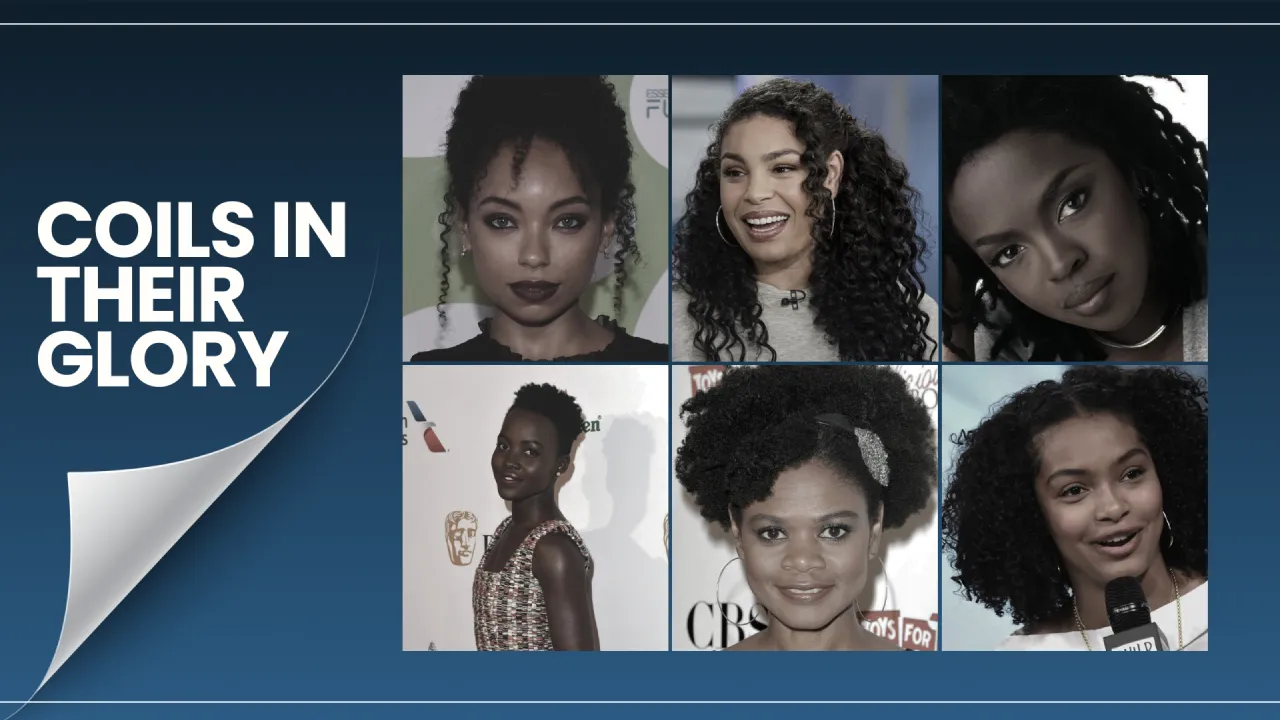
Tracee Ellis Ross has turned into a figure that is known all over the world as a consequence of her amazing 4A curls. These curls have established her as a symbol of natural hair care and authenticity. Pattern Beauty is her company, and its mission is to highlight the amazing beauty of tightly curled hair as well as the significance of taking proper care of one’s hair. The natural hairstyle that Yara Shahidi wears, which incorporates coils that are both defined and delicate, typically exemplifies the right combination of refinement and youth. To make matters even worse, it encourages a sizeable number of young women to have self-assurance in their own hair, which causes the problem to become even more dire.
The fact that Zendaya is a 4A signifies that she possesses a considerable amount of versatility. The ability to effortlessly execute defined ringlets, elongated curls, and protected styles is one of her many outstanding skills. Natural haircuts have resisted the long-standing standards of the fashion and media sectors regarding what constitutes a professional and appealing appearance. The pioneers’ efforts have led to the growing popularity of natural haircuts, which have defied these standards.
Celebrities with 4B Hair
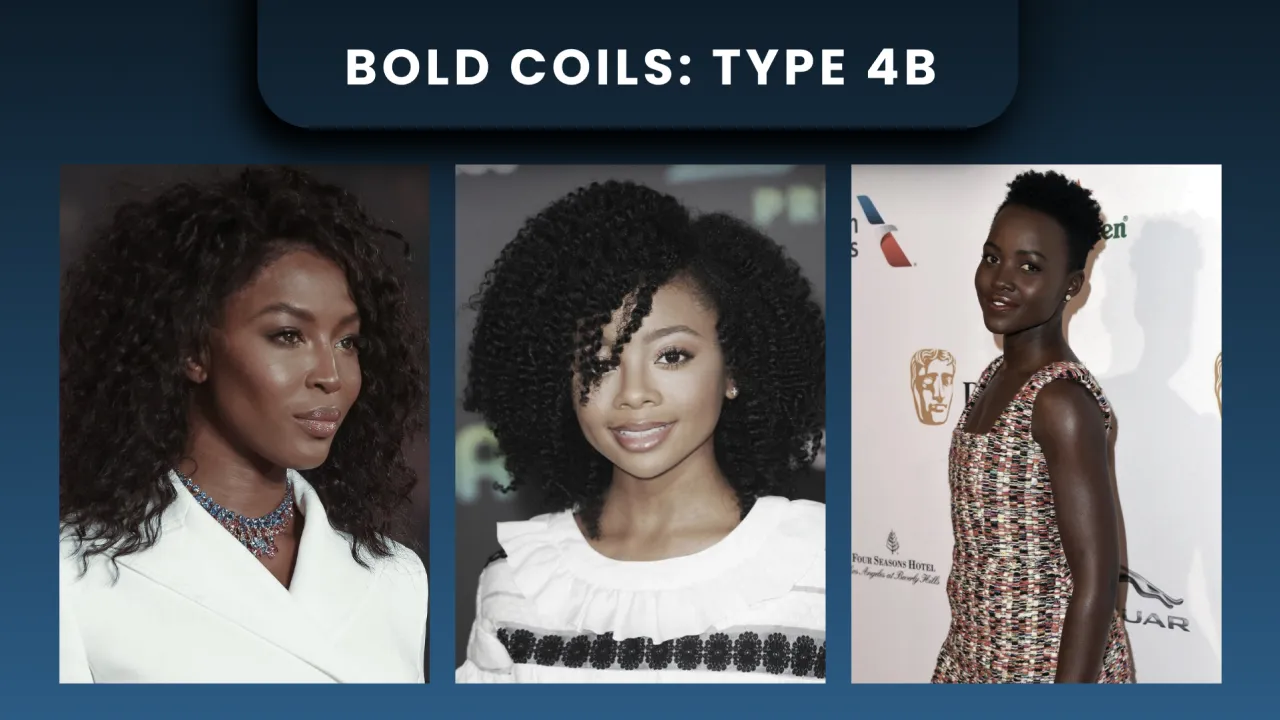
Because of the remarkable appearance of her 4B hair and the attractiveness of her work, Lupita Nyong’o has become a well-known figure in the entertainment industry. As a result of her characteristic updos, braided crowns, and sculpted curls, she has been a global ambassador for the beauty of natural hair types. There have been a great number of publications that have featured her hairstyles. A further iconic figure from the 4B, Viola Davis, made waves when she took the decision to show off her natural hair while she was appearing on television. She demonstrated that honesty can sometimes be more beautiful than the reputation that Hollywood has for being gorgeous.
Specifically, the 4B pattern that she creates is what distinguishes her as an artist. Through the use of music videos such as “Do not Touch My Hair,” she challenges the conventional notion of beauty that the majority of people have. She does this by showing her bold, afro-centric style. The fashion sense of these women is a seamless integration of aspects from both the past and the present, and they exemplify the very spirit of independence and creativity.
Celebrities with 4C Hair
Cynthia Erivo is not hesitant to show off her 4C hair in its natural state; she often looks like she is wearing a blend of short, defined curls and shaved cuts, which she styles with a sense of self-assurance. As a result of the bold steps she has taken and the stylish choices she has made, she is well-known to a big number of people. It is a testament to the fact that 4C hair can be both professional and entertaining that Janelle Monáe has experimented with structured styles and afro curls during her stage career. It will play a role in her next appearance in the future.
As an additional point of interest, Issa Rae, the creator of the television show “Insecure,” has been vocal in her support of the media’s portrayal of natural hair. Among the many variables that contributed to the rise in popularity of the 4C haircut, her support for protective and textured hairstyles was one of the most important contributors. Beyond the way it appears on these individuals, there is more to 4C hair than meets the eye. Not only does it symbolize self-acceptance, but it also symbolizes authority, which is why it is considered an icon.
Preparation Tips Before Hair Transplant for Type 4 Hair
Due to the qualities of their hair, which include tightly packed strands and a coily structure, individuals with Type 4 hair require special care prior to making the decision to have a hair transplant. It is necessary to have a comprehensive grasp of how the density, pattern of curls, and texture of your hair will influence the final result. This is in addition to the fact that you should adequately prepare yourself physically. Following a thorough evaluation, you will be able to be certain that your hair replacement will have a realistic appearance, will last for a substantial amount of time, and will grow in the same manner as your natural hair does. This will put your mind at ease.
There is a professional evaluation, a therapy to maintain the hair moist, and a comprehensive review of the scalp that takes place prior to the procedure of hair transplantation. Coily hair types require a more sophisticated process, but it is beneficial since it helps determine how strong the source area is and it prepares the follicles for removal and implantation.
Is Type 4 Hair Suitable for Hair Transplant?
In order to make Type 4 hair suitable for hair transplants, trained practitioners who work with curly and wavy hair can be of great assistance. The use of natural curls typically leads in a greater density and coverage, which in turn makes the results appear fuller with a reduced number of grafts. In order to safeguard these delicate structures, it is vital to work together with a center that is familiar with the treatment of the specific curves that are present in 4A-4C follicles.
For type 4 hair, suitability depends on the number of hairs transplanted
In some cases, the difficulty type of hair transplantation varies depending on the number of grafts required. If you have one of the 4 hair types and are planning a hair transplant, first find out how many grafts are needed, then review the following hair transplant topics according to the number of grafts required.
1000 Grafts hair Transplant Guide
2000 Grafts hair Transplant Guide
3000 Grafts hair Transplant Guide
4000 Grafts hair Transplant Guide
5000 Grafts hair Transplant Guide
6000 Grafts hair Transplant Guide
7000 Grafts hair Transplant Guide
8000 Grafts hair Transplant Guide
When determining whether or not a person is a good donor, the condition of the donor area is a significant issue to consider. Due to the fact that Type 4 hair has a tendency to grow in thick, but can have weak shafts, screening before to surgery helps determine the safest sites to transplant hair, which is helpful. When performed correctly, hair transplants for Type 4 textures have the potential to enhance a person’s self-esteem and beauty while also providing them with remarkable results that maintain their natural appearance.
Evaluating Curl Tightness and Donor Area Density
When it comes to removing and implanting grafts, it is essential to take into consideration the degree of tightness of the curls. It is more difficult to get tighter curls, such as 4C designs, without cutting the hair while working with bent follicle roots. Under a microscope, it is essential to examine the donor region in order to determine its density, the direction of the follicles, and the extent of its removal capacity.
In order to determine the degree of density and flexibility of the head prior to surgery, specialists will occasionally make use of cutting-edge imaging technology. If a person has a large number of donors, they have more options available to them to achieve greater results. It may take a significant number of rounds or strategic graft distribution in order to achieve sufficient coverage when dealing with low-density donors.
Choosing the Right Hair Transplant Technique
When it comes to those who have type 4, the surgeon is responsible for selecting the suitable approach in order to guarantee that the hair transplant will be successful. Both Follicular Unit Extraction (FUE) and Follicle Unit Transplantation (FUT) have the potential to be successful; yet, the doctor should take into consideration the patient’s goals, the flexibility of the scalp, and the structure of the hair when determining which approach to apply. It is typically the case that FUT is the superior choice when dealing with a significant number of grafts. On the other hand, FUE is typically the superior choice since it results in the least amount of scarring and the greatest amount of curl retention.
It is necessary for surgeons to make adjustments to the extraction in terms of depth, angle, and punch size in order to accommodate the curl pattern. By tailoring the procedure to the specific requirements of each individual patient, we are able to reduce the likelihood of causing damage to the follicles during the implantation process and enhance the natural flow of hairline healing.
FUT vs FUE for Coily and Kinky Hair
Because it is so exact and does not leave behind a considerable quantity of scars, Follicular Unit Extraction, more commonly referred to as FUE, is the most successful treatment for removing Type 4 hair. Surgeons use punches that have been bent in a particular manner in order to follow the natural curve of the follicle that is located beneath the skin to perform the procedure. On the other hand, this makes it more likely that the transplant will be successful while simultaneously decreasing the risk of a transection taking place. FUE also makes it easier to place grafts precisely where they need to be in order to obtain the desired effect of mimicking the natural curl of the hair. This is due to the fact that FUE allows for precise placement of the grafts.
| Topic | FUE | FUT |
|---|---|---|
| Scarring | Tiny dot scars | Linear scar |
| Follicle curve challenge (Type 4) | Higher (needs expert) | Lower (strip dissection helps) |
| Best for | Smaller–medium sessions, minimal scarring | Large graft sessions |
| Key success factor | Surgeon’s curly-hair experience | Closure skill + donor management |
It is possible for Follicular Unit Transplantation (FUT) to be successful for individuals who require a large number of grafts, even if the source sites are robust. Since the FUT procedure involves a linear incision, it is more delicate and requires more effort. During the time that their follicles are healing, patients need to be extraordinarily careful not to put an excessive amount of stress on them. Follicular unit extraction (FUE) is beneficial for the majority of people who have coily hair since it promotes faster healing and produces better results in terms of appearance.
Frequently Asked Questions About Type 4 Hair
Is Type 4 hair naturally dry?
Yes. Type 4 hair is typically dry because its tight curls stop oil from flowing easily from the scalp. To keep it soft and flexible, you need to moisturize and seal it often.
Why does Type 4 hair experience extreme shrinkage?
As the tightly wound strands dry, they make the cloth shrink. Not damage, but a sign of strong curls and a lot of stretch. You can easily make your hair look longer by using a stretching method.
How often should Type 4 hair be washed?
Seven to ten days is a common time between events. If you wash your hair too often with harsh shampoos that contain sulfates, the hair loses its natural oils. On the other hand, using gentle shampoos that moisturize your skin keeps it healthy and nourished.
Does the LOC or LCO method work best for Type 4 hair?
The LCO method is when you use liquid, cream, and oil in that order. Most 4B–4C hair types respond better to it, and it seals in deep moisture without making a buildup.
What haircuts are best for Type 4 hair growth?
Type 4 hair grows well with layered styles, tapering cuts, or rounded afros. These help promote healthy ends, add volume, and reduce breakage. Over time, healthy hair can become stronger with regular cuts and low-tension style.
How can I retain length with Type 4 hair?
It is very important to be careful with it, keep it moist, and guard it. To keep it from breaking, detangle it gently, seal the ends often, and keep the length the same. Do not use too much heat.
Can Type 4 hair be relaxed or chemically treated safely?
It is possible if you are careful. Because chemicals weaken strands and make it more likely for naturally coily textures to break, you need a professional to use the product and do full conditioning treatments.
How do I prevent breakage in Type 4 hair?
Always wear a satin hat, make sure your hair is well hydrated, do not pull it too tight, and be careful when using heat styling tools. To keep hair healthy, you need the right amount of protein and wetness, as well as gentle ways to detangle it.
Are protective styles necessary for Type 4 hair?
Certainly, this is particularly true if you wish to maintain a lengthy mane. Natural hairstyles like wigs, twists, and braids are perfect for those days when you just want to let your locks be.Contradictory styles can be a real pain to deal with.
Can Type 4 hair shift between 4A, 4B, and 4C?
In the long run, no. Even though outside factors like heat style tools or changes in hormones can make curl patterns look very different, a person’s genetic curl type stays the same.
Referances
ISHRS (International Society of Hair Restoration Surgery) – Surgical Hair Transplant Guide
Cleveland Clinic – Hair Loss (includes hair transplant overview)
American Academy of Dermatology (AAD) – Hair Loss Information (includes hair transplant section)