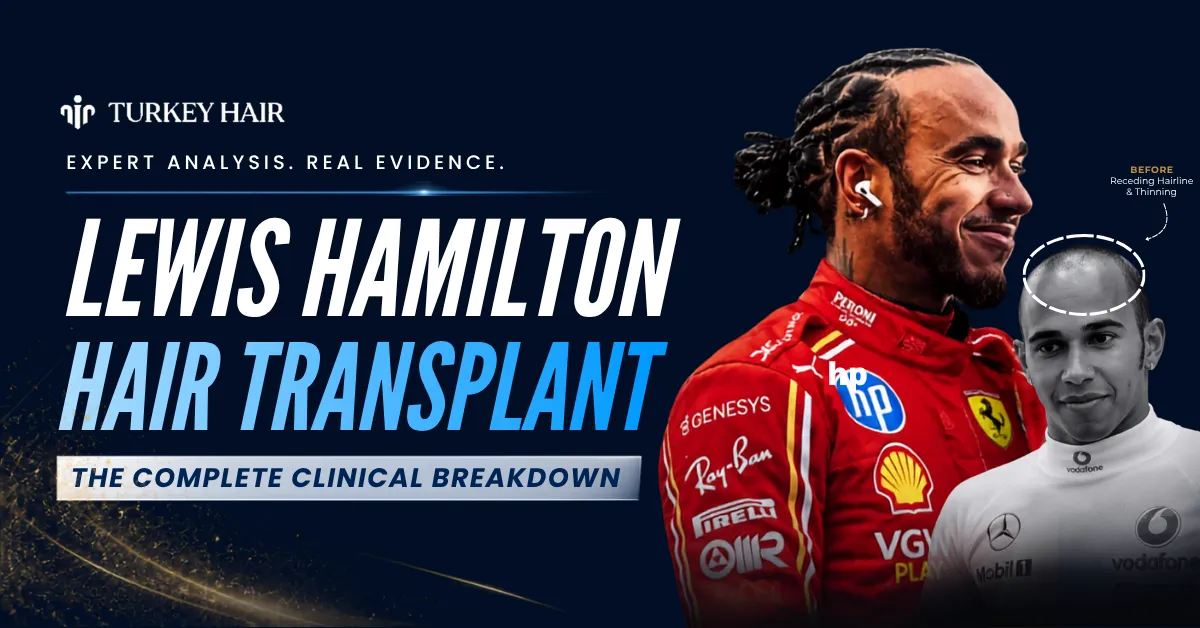
The Bottom Line: Did Lewis Hamilton Get a Hair Transplant?
Although he once blamed harsh soaps for his thinning, the complete reversal of his 2007 temple recession defies natural recovery. Given the absence of linear scarring and his restored frontal density, experts identify this as a successful, highly specialized Afro-textured FUE or DHI surgical procedure.
Lewis Hamilton Hair Transplant: Before & After Photos, Hairline Truth & Graft Count Medical Reviewed By Dr. Tompi, M.D: Plastic & Aesthetic Surgeon
Written By Nazmi G, Trichologist
Lewis Hamilton has never publicly confirmed a hair transplant, and he has blamed his early thinning on harsh hotel soaps and poor grooming habits; photographs of his 2007 temple recession cannot on their own separate a surgical result from natural recovery. Without medical records or a statement from Hamilton or his doctors, no specific technique can be identified, so this page reports public commentary rather than a clinical finding.
Clinical photographic assessment indicates that Lewis Hamilton’s hairline evolution is consistent with successful surgical hair restoration rather than non-surgical management. Despite the absence of a public statement, the reversal of his documented 2007 androgenetic alopecia: characterized by aggressive temporal recession: is anatomically impossible to achieve through organic hair growth or topical treatments alone.
The 2026 visual evidence confirms a fully reconstructed frontal architecture with stable temporal density. Given the lack of linear scarring associated with older surgical techniques and the presence of high-density follicular units, the clinical conclusion is that Hamilton utilized advanced FUE or DHI methodologies to achieve his current aesthetic profile
Wondering what this would mean for you?
Graft count, technique and budget are decided case by case, after an assessment. These pages explain how that works at Turkey Hair Center:
Hair transplant cost in Türkiye
Check your Norwood stage
Compare FUE, DHI and Sapphire
Free hair analysis on WhatsApp
Expert Clinical Analysis
Proper hydration and luxury shampoos can certainly improve hair texture and stop breakage. However, no shampoo in the world can resurrect a dead hair follicle. Once temporal peaks recede that deeply, only a surgical relocation of healthy grafts can fill those empty corners. The sheer density he sports today, combined with the lack of any visible FUT scar on the back of his head, makes a specialized Afro-FUE transplant the most logical and clinically sound explanation for his transformation.
Lewis Hamilton Hair Before and After: What Changed Over the Years?
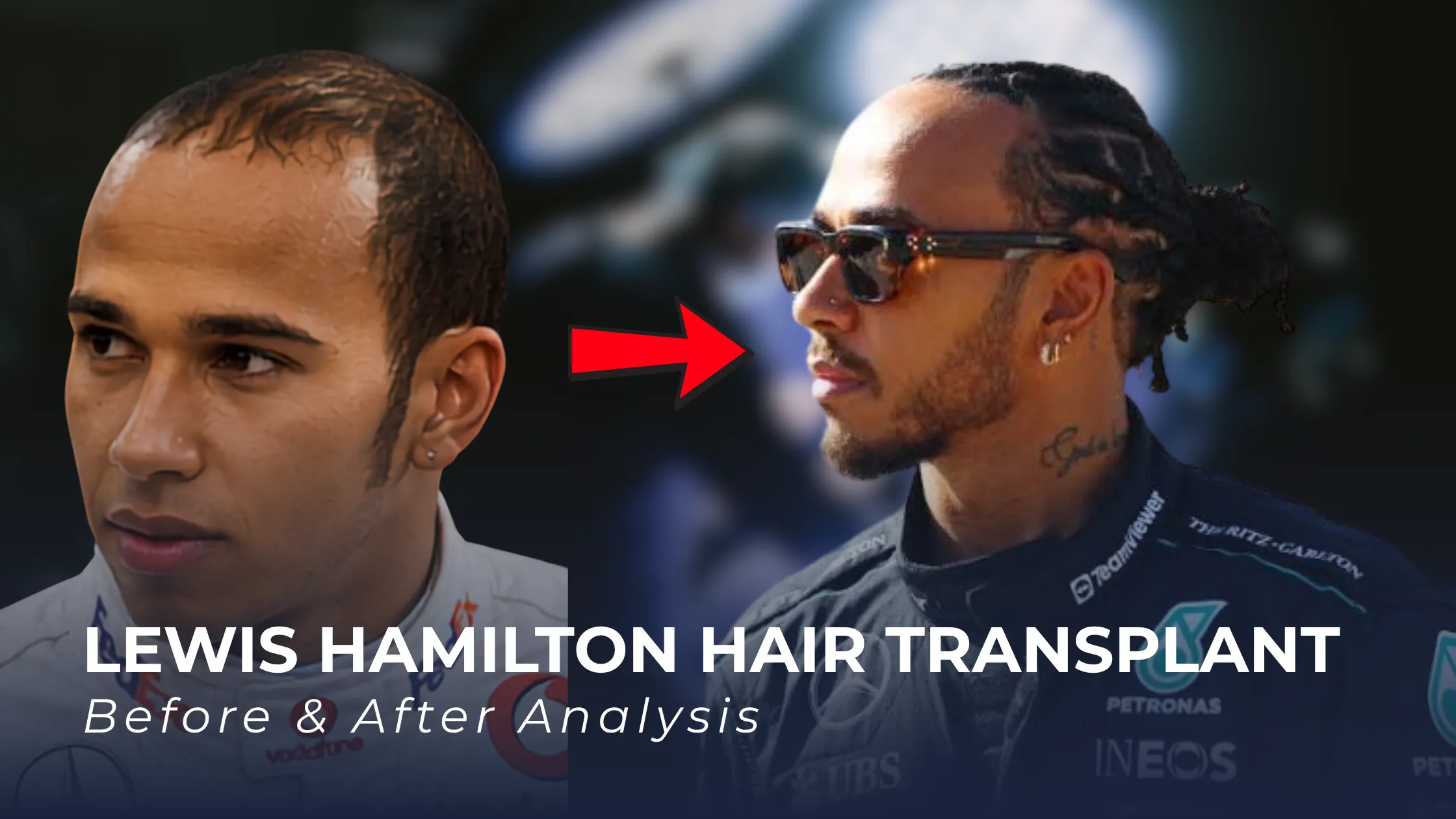
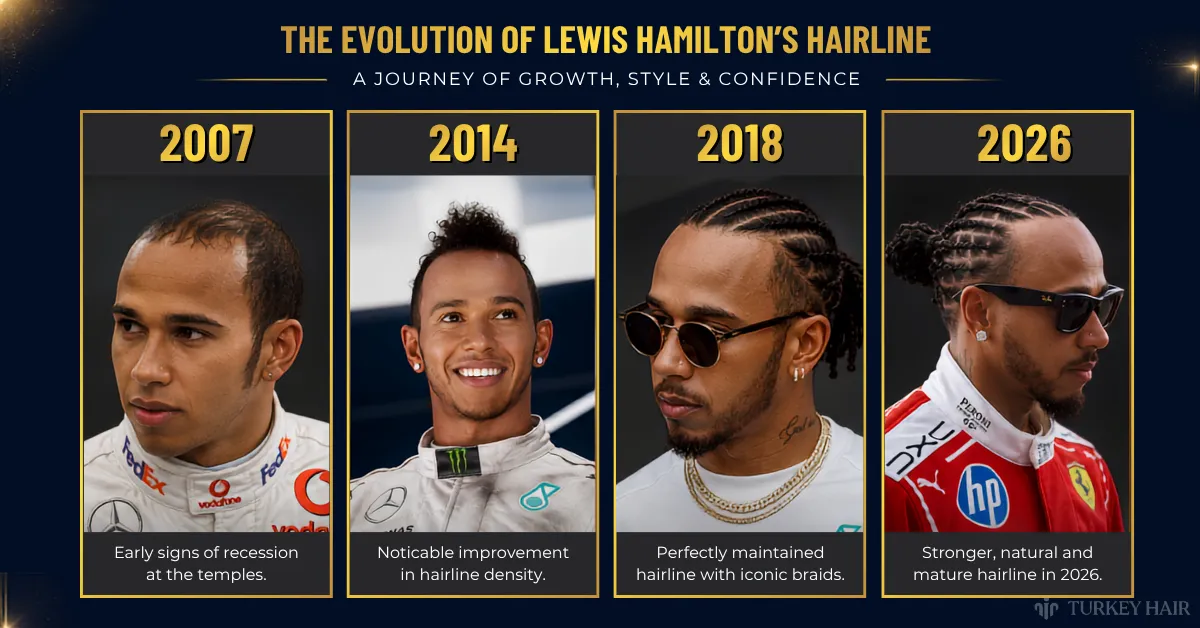
A thorough look at Lewis Hamilton hair before and after photographs reveals structural modifications that go far beyond a simple change in styling. Men experiencing genetic thinning rarely experience a spontaneous reversal of a receding hairline, making his visual timeline a fascinating clinical study.
Early Career Hairline and Thinning Signs
During his early career with McLaren (2007-2012), Hamilton consistently wore his hair in an ultra-short buzz cut. Under the harsh track spotlights and flash photography, clear signs of aggressive male pattern baldness were visible.
His frontal hair exhibited deep temple recession and a weakened frontal frame, heavily exposing the corners of his forehead. While aggressive racing schedules and helmet friction can exacerbate hair stress, the architectural pattern was heavily indicative of progressive genetic miniaturization.
Fuller Hair Appearance in Later Years
As he transitioned into his historic run with Mercedes, his hair underwent a radical transformation. He began growing it out, showcasing long dreadlocks, tight cornrows, and dense natural curls.
What stood out most to trichologists was not just the length, but the sudden closure of his previous temple recession. The Lewis Hamilton hairline appeared completely straight, lower, and remarkably uniform in density: a visual result that is clinically impossible to achieve solely through organic hair growth once follicles have fully miniaturized.
Key Visible Changes
Scalp Zone
Early F1 Career (2007-2012)
Modern & 2026 Career Era
Temple Peaks (Corners)
Deeply receded, open angles
Completely closed, advanced frontal frame
Frontal Border
Diffuse thinning, high forehead line
Lowered, highly defined, dense boundary
Hair Texture & Volume
Flat, short, lacking structural volume
Voluminous curls, healthy braids, and robust dreads
Scalp Visibility
Highly visible under track spotlights
Zero scalp exposure beneath dense braids
Expert Clinical Insight
"What makes the Lewis Hamilton before and after contrast so compelling is the structural reinforcement of his facial frame. In his mid-twenties, his temporal corners were tracking backward into a classic Norwood Stage 3 pattern. Today, his frontal boundary is perfectly reinforced, showcasing a dense, youthful architecture that seamlessly anchors his long braided hairstyles."
To understand why this change caused such a stir, we must examine the specific biological factors behind his initial hair loss.
“What makes the Lewis Hamilton before and after contrast so compelling is the structural reinforcement of his facial frame. In his mid-twenties, his temporal corners were tracking backward into a classic Norwood Stage 3 pattern. Today, his frontal boundary is perfectly reinforced, showcasing a dense, youthful architecture that seamlessly anchors his long braided hairstyles.”
Lewis Hamilton Hair Loss: Possible Causes Behind the Thinning
Before concluding a surgical intervention took place, a professional analysis must evaluate every potential contributing factor behind Lewis Hamilton hair loss.
Hair Care, Dryness and Product Damage
Hamilton has famously addressed his hair transformation in public interviews, attributing his early thinning to poor grooming habits. He explained that during his youth, he frequently washed his hair with harsh hotel soaps and lacked proper education on how to care for his specific hair type.
For individuals of biracial or mixed-texture heritage, the hair structure is uniquely delicate. Afro-textured hair requires extensive moisture, and using incorrect products can lead to severe dryness, hair shaft breakage, and traction damage that closely mimics genetic balding.
Male Pattern Hair Loss Possibility
While product damage and dehydration can ruin hair quality, they rarely cause perfectly symmetrical temple recession. The distinct “M-shaped” regression observed in his early twenties strongly aligns with Androgenetic Alopecia (male pattern baldness).
This genetic condition causes dihydrotestosterone (DHT) to bind to sensitive follicles, causing them to gradually shrink and stop producing terminal hairs. While a specialized hair care routine can rescue damaged native hair, once a follicle has completely miniaturized, only surgical hair restoration can bring density back to a completely bare zone.
Lewis Hamilton Hair Timeline (2007-2026)
Tracking his hair changes year-by-year shows a clear timeline of his cosmetic recovery, mapping his hair evolution across major milestones of his legendary career.
2026: The Unbraided Natural Look: Today, in 2026, Hamilton continues to surprise fans. During recent appearances, such as the Barcelona Grand Prix weekend, he showcased his Lewis Hamilton hair unbraided look, revealing a magnificent crown of natural curls with zero signs of hair loss.
2007-2012: The McLaren Era: Hamilton maintains a tight buzz cut. Symmetrical thinning at the temples is highly visible, and his hairline shows classic signs of early-stage recession under intense podium lighting.
2013-2015: Mercedes Transition: As he switches teams, Hamilton begins growing his hair slightly longer. The density looks subtly improved, and he frequently wears caps and bandanas, which is a common practice during early post-transplant shedding or maturation phases.
2016-2018: The Braids Revolution: By 2018, his hair density skyrockets. He begins sporting highly defined braids and cornrows. The Lewis Hamilton hair 2018 era marks the definitive point where his temple recession completely disappears, showcasing an immaculate frontal edge.
2019-2025: The Global Style Icon: Hamilton establishes himself as a global fashion pioneer. His long dreadlocks and intricate hairstyles display immense volume, proving that his donor area and recipient zones have achieved total structural stability.
Lewis Hamilton Hairline Analysis: Transplant, Treatment or Styling?
When fans search for Lewis Hamilton hair transplant evidence, they are trying to solve a puzzle. An expert trichological review looks at specific anatomical markers to separate clever styling from medical engineering.
Signs That May Suggest Hair Restoration
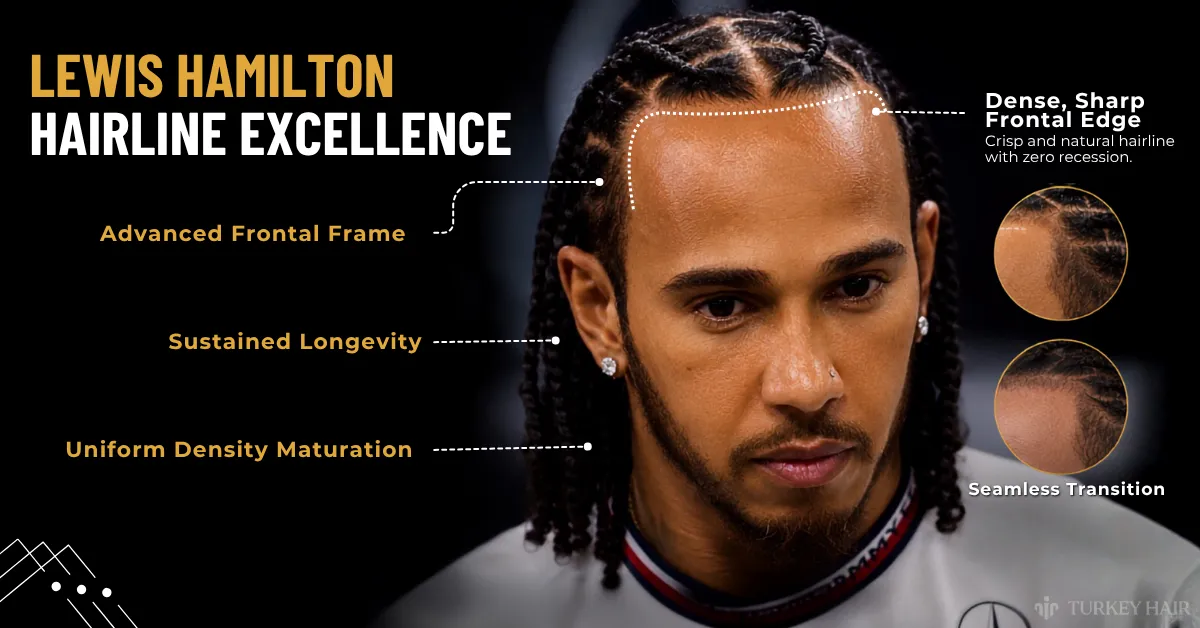
Advanced Frontal Frame: The temporal corners are completely closed, creating a dense, sharp boundary that resists the natural progression of male pattern baldness.
Sustained Longevity: Maintaining incredible density while continuously wearing tight braids: which causes immense physical tension on the follicles: is highly rare for someone with unmanaged genetic hair loss.
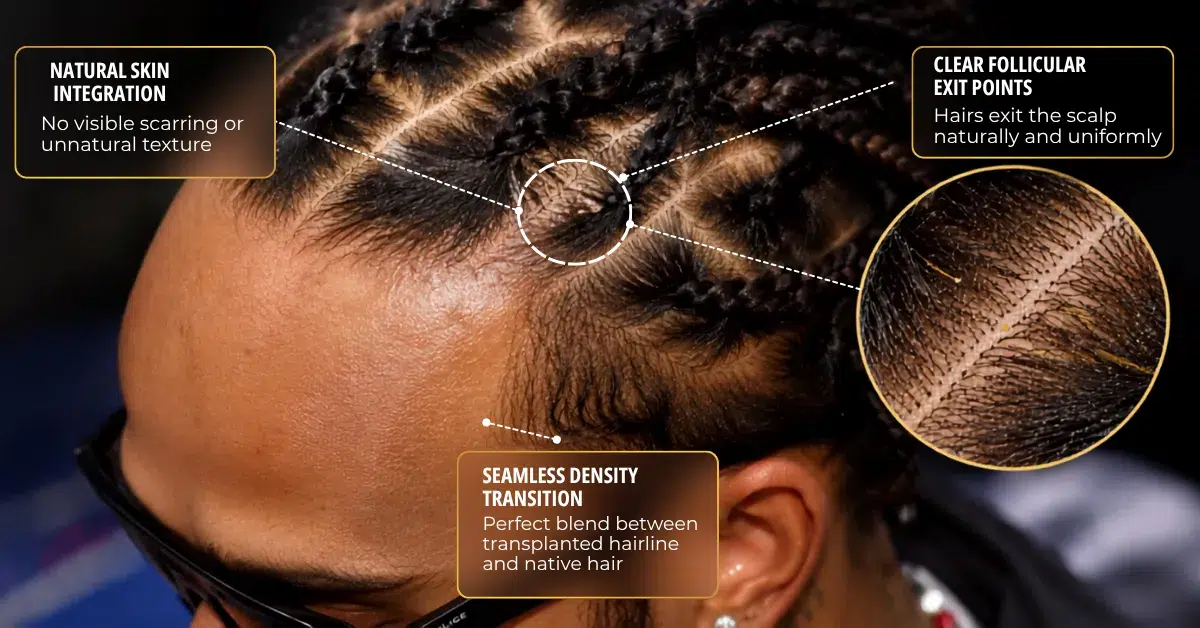
Uniform Density Maturation: The transitions between his frontal third and his native hair are completely seamless, a signature of elite micro-graft placement.
Signs That Could Be Explained Without Surgery
Alternatively, it is worth noting that Afro-textured hair possesses a unique natural coil. When this hair type is properly moisturized, the individual shafts expand and overlap, creating an illusion of massive volume with fewer active hairs. Giving up harsh hotel soaps, incorporating premium leave-in conditioners, and utilizing professional styling techniques can dramatically alter the appearance of hair health and volume without a surgeon’s scalpel.
Why Photo-Based Celebrity Hair Analysis Has Limits
Ultimately, looking at photos can highlight aesthetic changes, but it can never serve as an official medical diagnosis. Without access to private medical records, a direct trichoscopy examination, or a formal statement from his surgical team, all structural assessments remain highly educated clinical observations rather than definitive diagnostic facts.
What Technique Was Used for Lewis Hamilton’s Hair Transplant?
If we accept the highly plausible theory that he underwent a surgical restoration, the next question becomes highly technical: which methodology was deployed?
Why FUE and Specialist DHI Are Highly Probable
A traditional FUT strip surgery requires harvesting a horizontal piece of skin from the back of the head, leaving a permanent linear scar. Because Hamilton frequently wears his hair cut extremely short on the sides or braided tightly back, a horizontal scar would be immediately visible.
The complete absence of any linear marking strongly indicates he underwent a FUE Hair Transplant (Follicular Unit Extraction) or a Specialist DHI Hair Transplant (Direct Hair Implantation). These advanced techniques extract individual follicular units one by one using micro-punches, leaving tiny dot scars that are entirely invisible to the naked eye.
Afro and Mixed-Texture Hair Transplant: Why Technique Matters
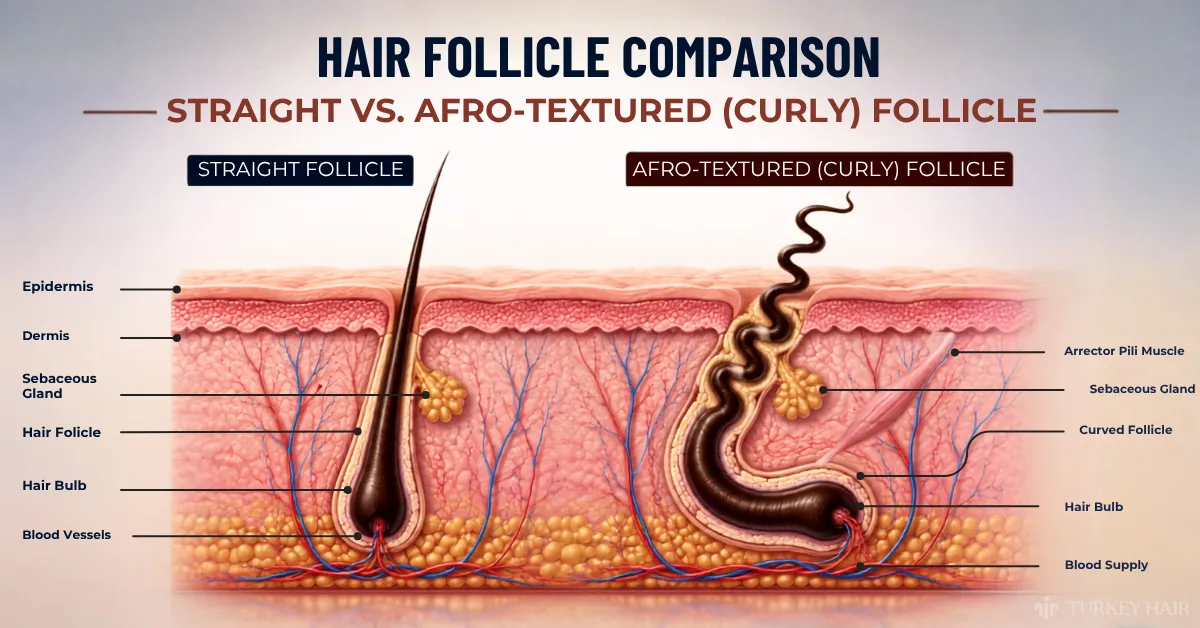
Performing a transplant on someone of mixed heritage requires elite specialization. Afro-textured hair is notoriously challenging to restore due to its subterranean anatomy.
Curved Follicle Shaft: While straight hair grows perpendicular to the scalp, curly hair folds and curves beneath the skin layer. A surgeon must use specialized, wider punch diameters and precise angle control to avoid cutting the root (transection) during extraction.
Fitzpatrick IV: VI Protocols: Sufferers of mixed heritage often have higher skin melanin levels. Grafts must be extracted with minimal mechanical trauma to prevent post-inflammatory hyperpigmentation or keloid scarring in the donor zone.
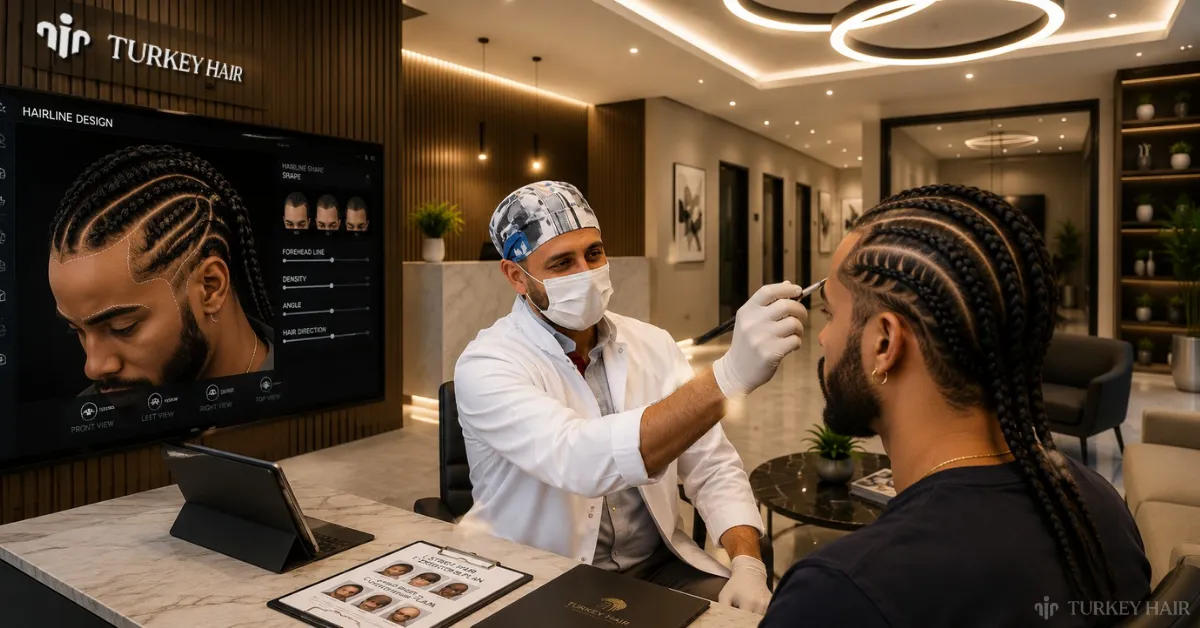
Natural Hairline Design: A straight, artificial line looks incredibly pluggy on curly hair profiles. Elite surgeons map irregular micro-transitions that match the natural, winding exit angles of ethnic hair.
How Many Grafts Would a Case Like Lewis Hamilton Need?
While his actual clinical charts remain entirely private, we can construct a realistic mathematical graft economy map based on the surface area of his restored temporal peaks and frontal border.
Estimated Graft Range for a Similar Hairline Case
Targeted Scalp Zone
Clinical Objective
Estimated Graft Range
Bilateral Temples
Rebuilding the left and right receded corners
800-1,200 Grafts
Frontal Border Lowering
Creating a lower, more symmetrical facial frame
1,000-1,400 Grafts
Frontal Density Blending
Feathering grafts into the native hair behind the line
500-900 Grafts
Total Estimated Volume
Multi-Session Cumulative Total Estimate
2,300-3,500 Grafts
Because curly hair creates a natural overlapping coil pattern, a master surgeon can achieve maximum visual density using significantly fewer grafts compared to a straight-haired patient requiring the same surface area coverage.
Does Lewis Hamilton Use Wigs or Hair Systems?
A recurring rumor across internet sports forums is the question: Does Hamilton use wigs or non-surgical hair systems? Given his ultra-intense athletic lifestyle, this theory is highly unrealistic from a practical perspective.
Formula 1 drivers spend hours trapped inside tight, heavily padded carbon-fiber helmets where cockpit temperatures can easily exceed 50°C. The combination of extreme heat, intense physical sweat, and the mechanical friction of pulling a helmet on and off at high speeds would instantly dislodge or ruin a bonded hair system.
The absolute security and structural flexibility of his braids under these extreme racing environments serve as strong evidence that his hair is completely real and growing directly out of his own scalp.
Lewis Hamilton Hair Now: Braids, Natural Curls and 2026 Look
The Lewis Hamilton hair now discussion has reached a brand new peak in 2026. While he spent years strictly wearing tightly secured cornrows, his recent styling choices have rewritten his public profile.
Lewis Hamilton Hair Unbraided
When he let his hair down, showcasing his Lewis Hamilton braids down style, social media immediately flooded with search queries. Unbraided, his hair transforms into a highly voluminous, beautifully defined crown of natural curls. This specific look highlights the maximum health of his follicles, completely dispelling any old internet rumors regarding permanent traction alopecia or diffuse thinning.
Lewis Hamilton Braids and Hairstyle Evolution
From his classic McLaren buzz cut to his current status as a global fashion icon, Hamilton’s hair styles have evolved alongside his personal branding. His hair is no longer just a scalp management choice; it is an active component of his high-fashion identity, styled seamlessly to match his paddock arrival outfits across the global racing calendar.
What Men Can Learn from Lewis Hamilton’s Hair Journey
Early Intervention Is Crucial: Addressing a receding hairline before it evolves into advanced baldness preserves your vital donor hair reserves for a much softer blending effect.
Moisture Is the Foundation of Density: Especially for mixed-texture and Afro-textured hair profiles, hydration and specialized product choices are essential to protect hair shafts from severe breakage.
Don’t Let Stigmas Hold You Back: Hamilton completely normalized taking control of your physical image. Whether through surgery, specialized medical therapies, or custom grooming, image preservation is a key element of modern confidence.
Considering a Hair Transplant? Get a Personalized Hairline Analysis
Achieving an outcome as natural, undetectable, and robust as Lewis Hamilton’s requires moving away from generic hair treatments and embracing specialized medical engineering. Your hair texture, donor capacity, and facial dimensions require a fully personalized blueprint.
If you are ready to explore your options, you can send us your photos today for a completely free, highly private hairline and donor area assessment. Our partner hospital’s medical team can help you understand whether an advanced FUE, an intricate DHI procedure, or a specialized non-surgical treatment plan is the ideal path to restore your hair permanence.
Final Thoughts
The ongoing global conversation surrounding Lewis Hamilton’s hair restoration stands out as one of the most fascinating celebrity case studies in modern sports culture. Whether his incredible density is the result of a world-class FUE hair transplant or a masterfully curated medical grooming routine, the outcome is an undeniable aesthetic triumph.
By showcasing a flawless, age-defying hair profile on international television every single week, he has heavily inspired millions of men to take active charge of their own hair health. Ultimately, his journey proves that addressing hair loss with elite planning yields results that easily withstand the absolute harshest global spotlights. Proper hair restoration is never about cloning a celebrity’s look; it is about unlocking the natural potential of your own donor hair and unique facial anatomy.
About Turkey Hair Center: A Global Restoration Authority
Turkey Hair Center specializes in state-of-the-art hair restoration procedures, including customized FUE, DHI, no-shave hair transplantation, and advanced curly and Afro-textured follicle extraction. Our medical philosophy strictly rejects the “one-size-fits-all” approach to hair design.
Instead, we meticulously engineer natural, undetectable results that respect your specific hair texture, aging timeline, facial dimensions, and donor density. The goal is a result that still looks appropriate as your hair changes with age; outcomes differ from person to person and are assessed individually by the medical team.
Medical Review Note
This article was medically reviewed by Dr. Tompi, M.D. , Plastic Surgeon & Hair Restoration Physician. The clinical review focused on verifying the use of proper hair restoration terminology and evaluating the safety margins of the ethnic graft estimates and subcutaneous follicle extraction dynamics. Furthermore, it refined the language of non-surgical treatments and maintained a strict boundary between public photo observation and official medical diagnosis.
Editorial Policy & Trust
Turkey Hair Center’s celebrity hair analysis series is intended strictly for educational and informational purposes. While clinical visual evidence strongly suggests high-level intervention, Lewis Hamilton has not publicly verified a surgical procedure.
Therefore, mathematical estimates, technique theories, and density projections in this article represent professional trichological observations rather than official medical records. This analysis combines objective photo review, anatomical expertise, and patient education principles to help readers separate internet hype from real-world scientific facts.
Share Post:
Medical disclaimer: This article is for informational purposes only and is not medical advice. Individual results vary from person to person. Always consult a qualified doctor before any hair transplant procedure.
Lewis Hamilton Hair Transplant: frequently asked questions
Wondering what this would mean for you?
Graft count, technique and budget are decided case by case, after an assessment. These pages explain how that works at Turkey Hair Center:
Did Lewis Hamilton get a hair transplant?
Lewis Hamilton has never officially confirmed undergoing a hair transplant procedure. The widespread public speculation is based entirely on comparative photo analysis of his early career thinning versus his modern dense hair.
Has Lewis Hamilton confirmed having a hair transplant?
No. Hamilton has publicly denied having surgery, attributing his massive hair density transformation to learning how to use proper hair care products and avoiding harsh hotel soaps that ruined his hair quality during his twenties.
What happened to Lewis Hamilton's hair?
In his early F1 years, Hamilton exhibited noticeable temple recession and thinning consistent with male pattern baldness. In his later thirties, his hair appeared drastically denser, fuller, and completely restored, allowing him to wear long braids and natural curls.
Does Lewis Hamilton use wigs?
There is zero reliable evidence supporting the claim that Hamilton uses wigs or hair systems. The intense heat and helmet friction involved in Formula 1 racing make a non-surgical hair piece highly impractical.
What is Lewis Hamilton's hairstyle called?
Hamilton utilizes a highly versatile rotation of hairstyles, including custom cornrows, intricate box braids, dreadlocks, and his unbraided, voluminous natural Afro-textured curls.
What does Lewis Hamilton's hair look like now?
In 2026, Hamilton sports highly healthy, long hair. He frequently switches between tightly braided styles on race days and letting his natural, tight curls down for fashion events and media appearances.
How many grafts would a similar hair transplant need?
A similar frontal hairline reconstruction addressing deep temple peaks on an Afro-textured hair profile typically requires between 1,500 and 3,500 grafts, depending on the patient's individual scalp surface area.
Is Afro or mixed-texture hair transplant different?
Yes. Curly hair roots curve significantly beneath the dermal layer, requiring highly specialized extraction punch tools, unique insertion angles, and expert planning to protect the delicate follicles from damage.
Sources and medical review
The clinical statements on this page draw on the following published literature and professional body guidance:
Send three photos: front, top and sides. You get a technique recommendation, a graft range and a straight answer about what is achievable, before anyone talks about price.
Your details are with the team
A patient coordinator will get back to you shortly. If you would like to send your photos now, WhatsApp is the fastest way to do it.
We respond quickly, day or night, in your language.
Multilingual team, no obligation
Data protectedKVKK and GDPR compliant, 100% confidential
Authorized Health Tourism Intermediary
Turkey Hair Center is the hair-restoration brand of Healthy Way Tourism, an authorized international health-tourism intermediary. All medical procedures are performed by licensed medical professionals at authorized healthcare facilities in Turkiye, in accordance with the regulations of the Ministry of Health.