Before deciding on a clinic, an increasing number of individuals in Poland who are interested in hair transplants conduct research on their many options online. As a result of the lower pricing, the higher quality of care, and the overall improvement in the patient experience, many individuals choose to travel to Turkey rather than visit a clinic in their home country. The purpose of this introduction is to provide readers with an understanding of why Turkey is commonly cited when discussing hair transplant options by providing information regarding the country’s techniques, cost, and treatment arrangements.
Average Hair Transplant Costs in Poland vs Turkey
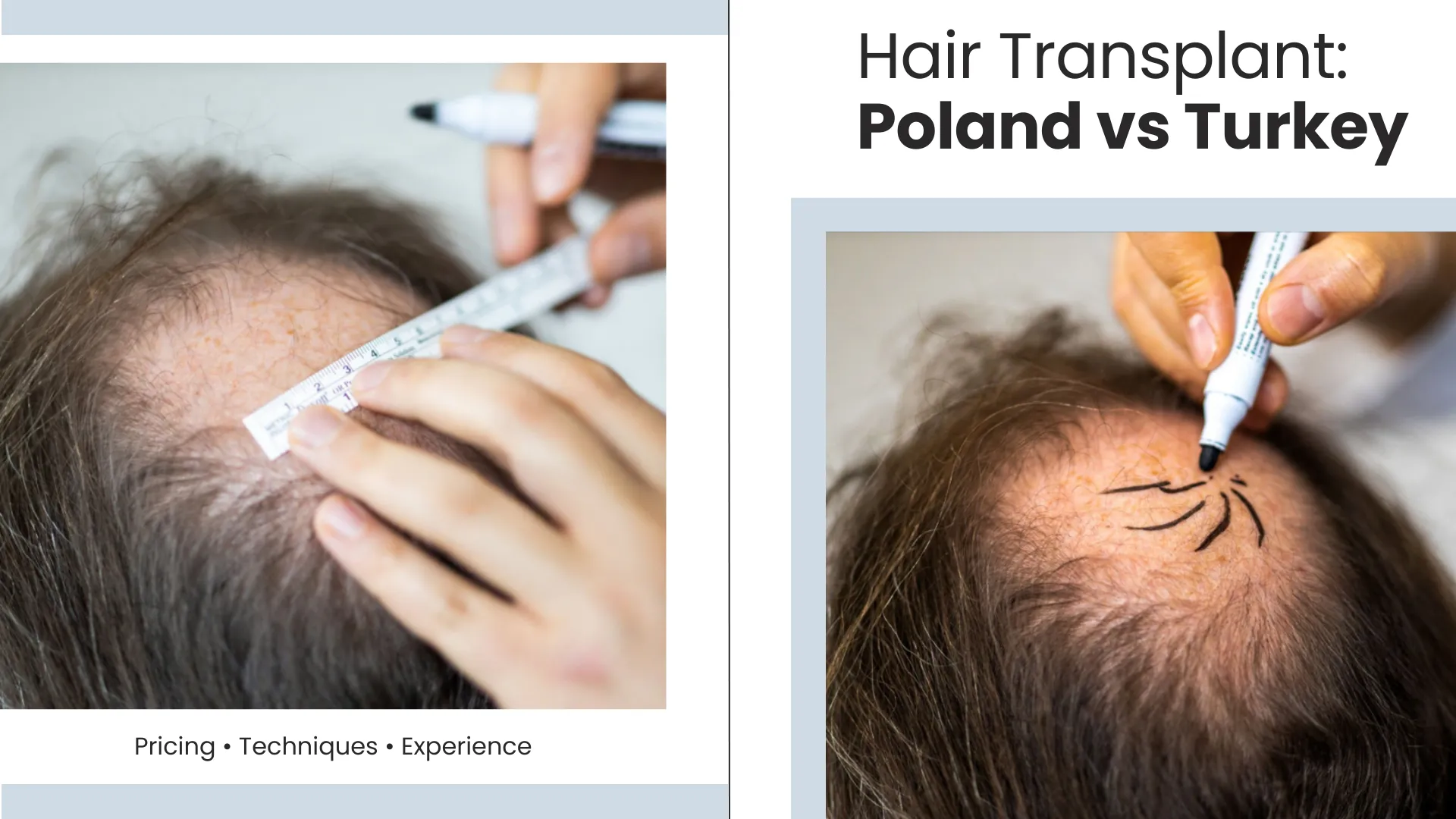
The cost of hair transplants in Poland and Turkey varies due to the fact that the two countries have different costs and approaches to the delivery of medical treatment. In Poland, the average cost of a graft is defined by the healthcare standards from the European Union (EU), the cost of operating the institution, and the expenses incurred by the government. With each additional graft that is removed, the cost of the procedure goes up dramatically for individuals who demand a great deal of coverage.
| Country | Pricing Model | Average Cost |
| Poland | Per-graft pricing | €6,000 – €15,000 |
| Turkey | Fixed / package pricing | €2,000 – €5,000 |
In Turkey, pricing is established or based on a package, rather than on the amount of grafts. This approach of thinking allows you to comprehend the big picture of costs and makes them more predictable. Many patients believe that going to Turkey for major treatments is less expensive since rates are set differently. However, the final cost can vary based on the instruments and procedures employed.
Why Hair Transplant Prices Are Higher in Poland
There are several reasons why hair transplants in Poland are more expensive. There are various factors that influence how much therapy costs overall. Some of these include taxes, labor, clinic operations, and ensuring that health care follows European standards. They can’t leverage economies of scale because they don’t see as many patients, thus their costs per patient are quite expensive.
| Cost Factor | Poland | Turkey |
| Clinic overhead | High | Low |
| Patient volume | Limited | Very high |
| Pricing flexibility | Low | High |
Similarly, Polish doctors are exceedingly careful about the number of grafts they utilize in a single treatment. As a result, the requirement for regular treatments may increase the overall cost. Because of these structural constraints, local operations are more expensive than those in regions with larger processing capacity.
Hair Transplant Procedures Commonly Used in Poland and Turkey
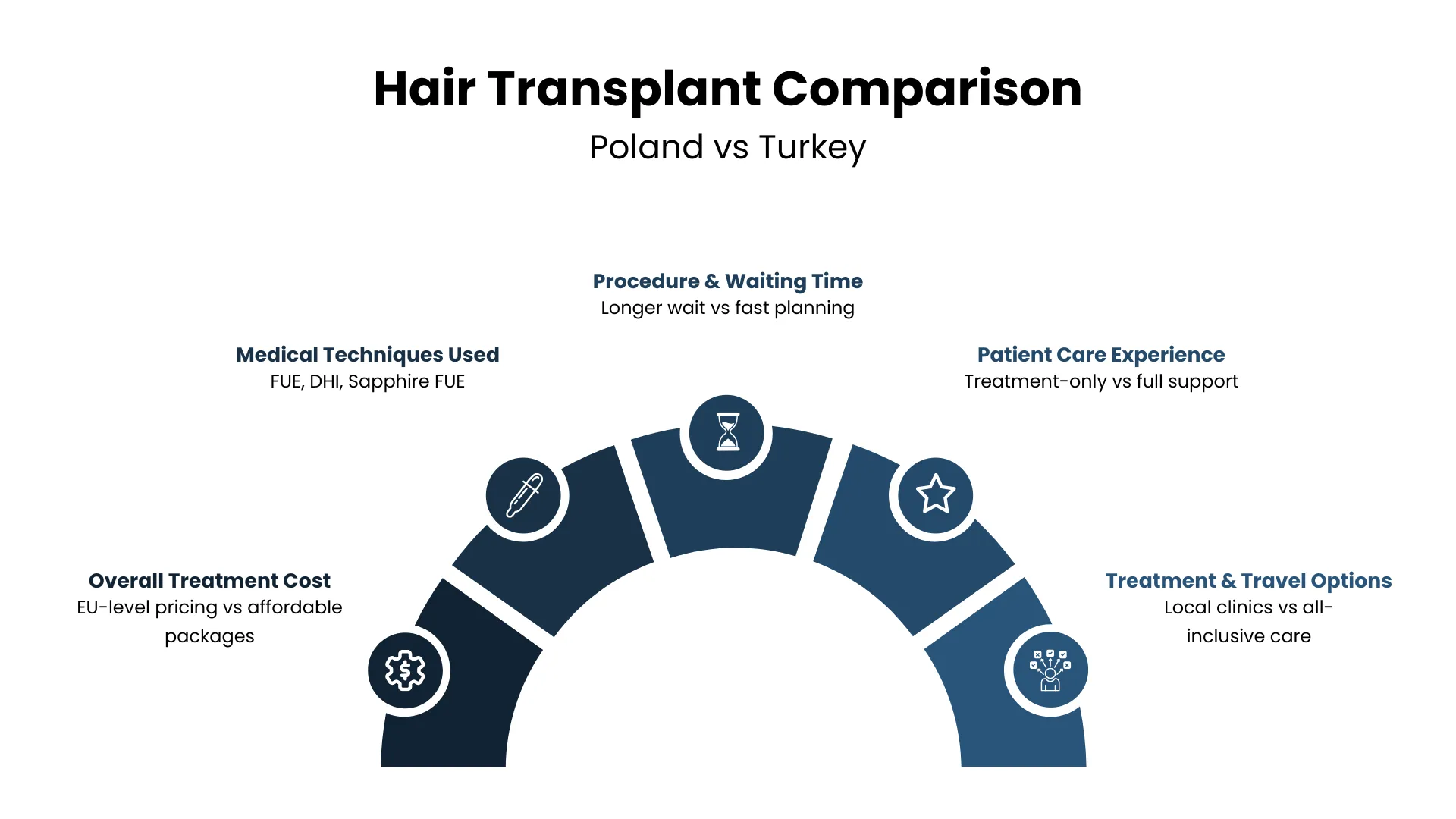
Hair transplant procedures such as FUE, DHI hair transplant, and Sapphire FUE are widely employed in Turkey and Poland. These procedures function similarly in both nations and can be used to treat a wide range of hair loss conditions. Often, the type of hair, the needs of the transplant, and the surgeon’s personal preferences all influence the choice.
What distinguishes a program is its size and functionality. Polish patients typically require only a few lessons, making them easier to manage. These treatments assist their health improve over time. When more grafts are employed, the measures that are typically conducted by collaborative surgical teams in Turkey remain same. This variation simply influences how long the process takes, how easy it is to schedule the therapy, and how the patient feels overall.
Technology and Equipment Differences Between Clinics in Both Countries
Poland and Turkey have centers that use advanced medical procedures for hair replacement. In both nations, however, these institutes employ technology in markedly distinct manners on a daily basis. Polish hospitals manage a limited number of cases; hence, novel procedures may be disseminated, despite their procurement of high-quality surgical instruments and adherence to European medical regulations. Frequently, small-scale implementations of technology yield optimal results.
In Turkey, hair restoration establishments frequently procure instruments designated for singular treatments due to the transient nature of their clientele. Many individuals utilize advanced cameras, automated extraction methods, and sapphire blades. Graft preservation units are prevalent. We consistently utilize technology, which enhances efficiency, graft viability, and consistent outcomes, particularly during extensive procedures.
Surgeon Experience and Case Volume in Poland vs Turkey
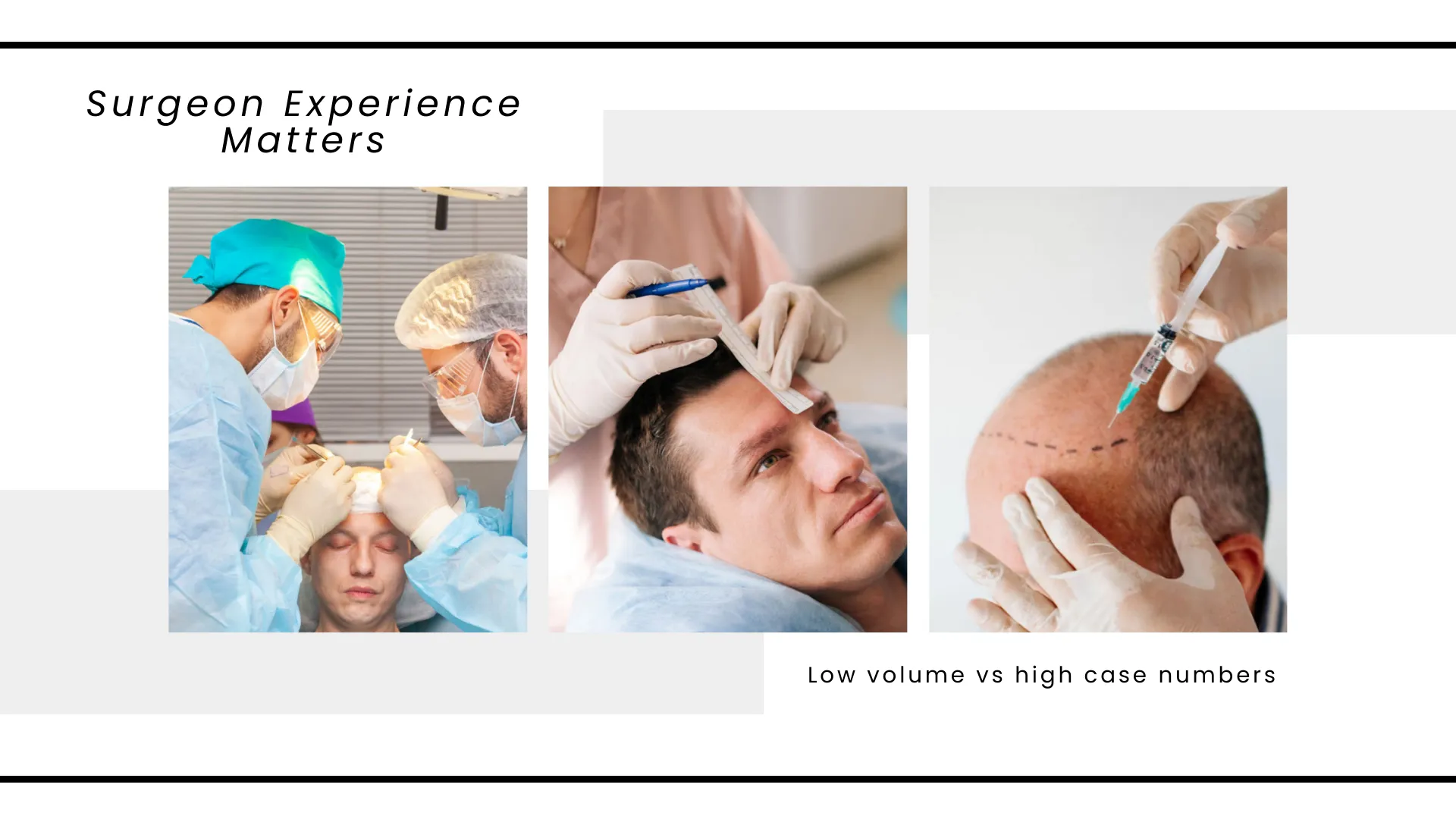
The proficiency of the surgeon significantly influences the success of the hair transplant. Hair transplant surgeons in Poland accept only a limited number of patients annually due to their dedicated focus on providing personalized care and meticulous planning for each individual. This approach can enhance accuracy; however, it may inherently diminish the number of procedures that are complex or require extensive grafting.
| Aspect | Poland | Turkey |
| Annual case volume | Low–moderate | Very high |
| Complex cases | Limited | Common |
| Team-based surgery | Rare | Standard |
For surgeons in Turkey, the number of cases they handle reflects their level of expertise and proficiency in their profession. Numerous individuals experience hair loss on a daily basis, and medical professionals and healthcare teams are required to manage these cases accordingly. This enables them to gain substantial practical knowledge about the field. Following significant or challenging transplants, this process enhances professional confidence, fosters effective collaboration, and improves decision-making skills.
Waiting Times for Hair Transplant Surgery in Poland and Turkey
There is a huge disparity between the typical waiting times in Turkey and Poland. Due to the high demand and limited number of beds, patients in Poland may experience longer than usual wait times for procedures and doctor’s consultations. When a more seasoned surgeon is present and the surgeon spends more time in the operating room, this is more likely to occur during larger procedures.
| Criteria | Poland | Turkey |
| Average waiting time | Weeks to months | Days to weeks |
| Large-session availability | Limited | High |
| International scheduling | Rare | Well-organized |
Offices in Turkey are set up to see patients from other countries at certain times, so patients don’t have to wait long. Lots of people can get surgery times in just a few weeks, which speeds up the planning of their care. Less wait time will be very helpful for people who really need help.
What Is Included in Hair Transplant Treatment in Poland
When someone gets a hair transplant in Poland, they are generally given a local anesthetic, the surgery is done, and they are told what to do afterward. Patients whose homes are close to the center will usually also have their follow-up meetings there. There may also be extra costs for things like medicine, aftercare items, or longer monitoring.
Therapies are usually tailored to people who live in the same area, so costs like travel, lodging, and other practical things are not usually paid. This means that the total cost might change based on what each person wants. When patients know exactly what is and isn’t covered, they can better compare treatments in their area to those available elsewhere.
All-Inclusive Hair Transplant Packages in Turkey
Turkey’s main way of treating foreign patients is through hair transplant packages that include everything. Most of the time, these deals include more than just surgery. They usually include a hotel, transportation to and from the airport, prescription drugs, and the first few days of care after surgery. Patients from other countries can rest easy knowing that this solution will take care of both their medical needs and their travel plans at the same time.
One more perk of all-inclusive plans is how clear the pricing is. Regardless of the number of grafts a patient needs, they are always told the complete cost in advance, up to a certain point. Because of this, treatment strategies can focus on actual medical needs rather than ancillary costs and other distractions. This streamlined method provides stability, ease, and control for individuals looking for comprehensive coverage.
Patient Safety and Medical Regulations in Poland and Turkey
Ensuring patient safety is a shared obligation of hospitals, medical workers, and governments in both nations. Reason being, health laws and regulations integrate constitutional principles. Guidelines provide forth the practices that should be followed in order to document care, address adverse events, and include individuals in decision-making. By understanding the rationale behind the rules, teams can make sure that treatments are safer, that personnel have ongoing training, and that patients’ questions about treatment quality are answered correctly and quickly.
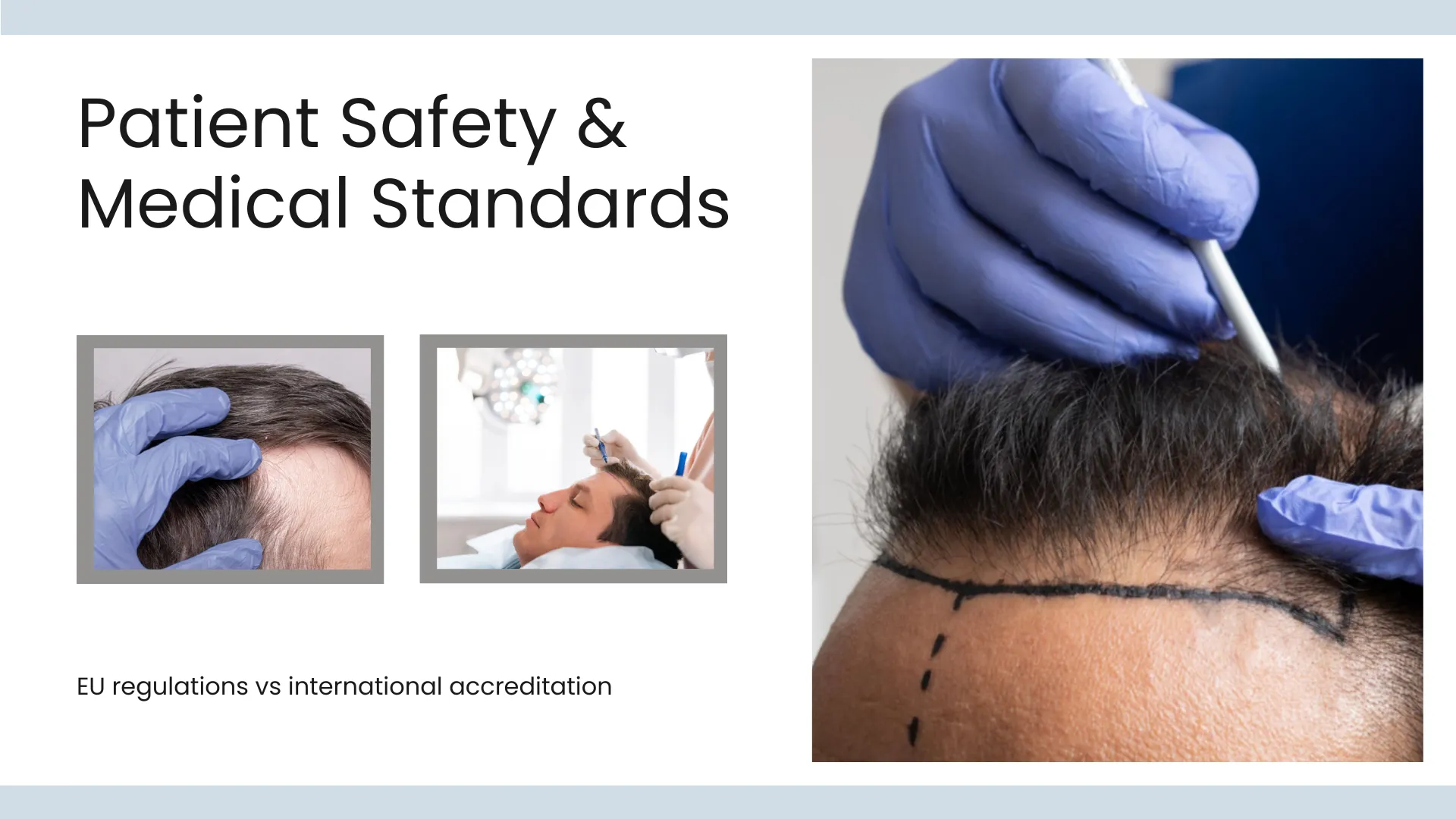
Being skilled and tech-savvy aren’t enough to keep people safe. Because of these contracts, customers and health care workers are limited in what they can and cannot do. They also tell you what to do if something goes wrong or doesn’t work out. With this idea, safety is an important part of skilled work that shouldn’t be forgotten.
When these rules are in place in Turkey and Poland, it’s important to be honest, speak clearly, and keep good records. Everyone should be able to talk about them without any worries or risks. They should also have all the information they need to make a good decision, and their privacy should always be respected. People who work in health care will know that the treatments they choose are safe and good if they always follow these rules. Also, less hurt will happen that could have been avoided.
Medical Regulations in Poland
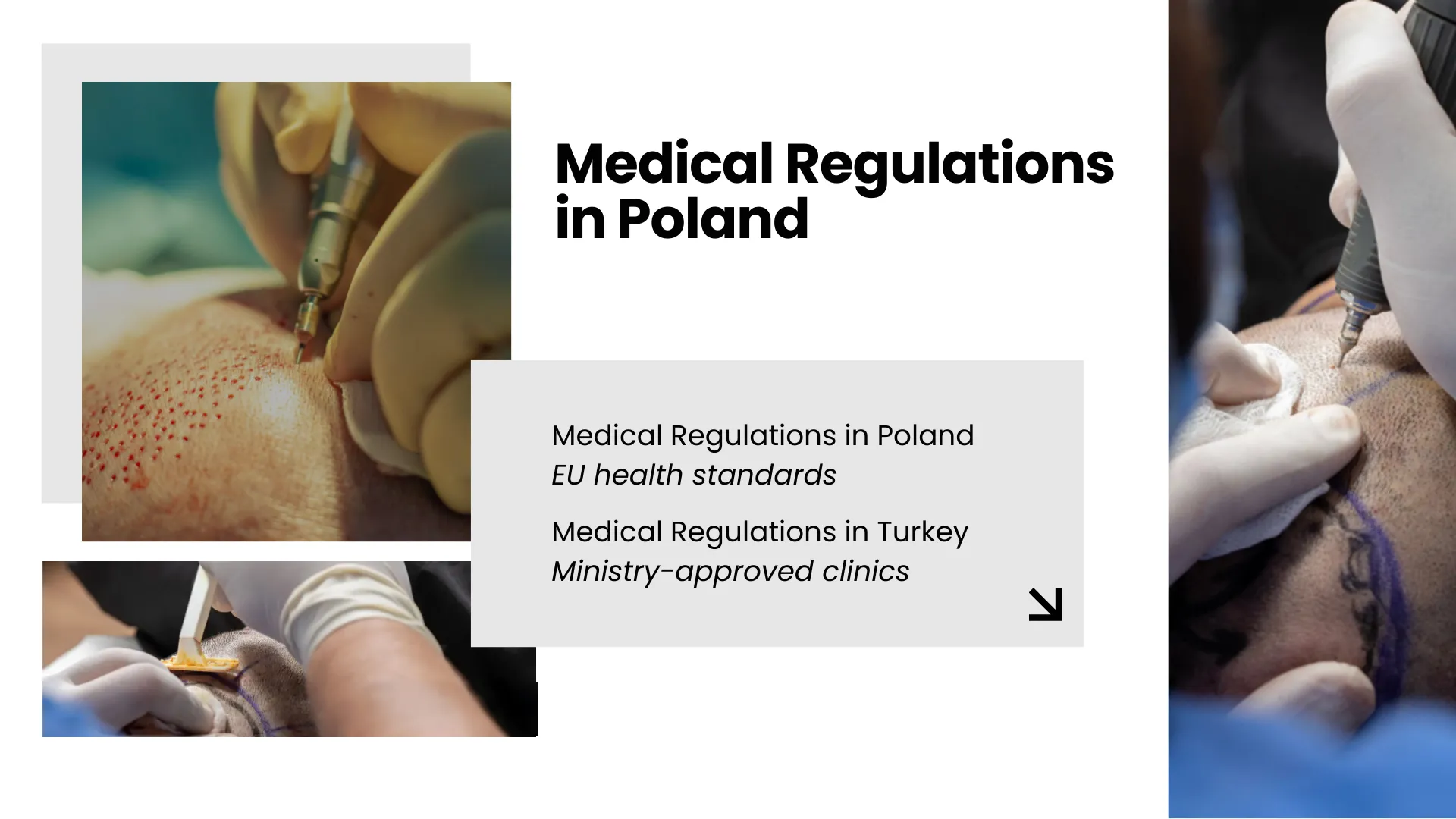
The Patient Ombudsman and Patients’ Rights Act of 2008, passed on November 6, 2008, is the fundamental law governing patient rights in Poland. It transforms public and private providers’ safety expectations into legally binding rights by enshrining essential safeguards such as access to health care, information, consent, dignity and privacy, access to medical records, and the capacity to challenge a doctor’s view.
The Patient Ombudsman is also made possible by this law. Its job is to protect these rights and fix problems with the system as a whole. In the end, the framework improves patient safety by making it clear what doctors need to record, how patients can get to those records, and the different ways that arguments about care standards can be settled.
Medical Regulations in Turkey
As a matter of moral and legal need rather than an arbitrary performance metric, patient safety takes precedence in Turkey’s medical regulations. A number of critical issues are addressed by the Patient Rights Regulation. These include privacy, informed consent, access to medical records, and the ability to decline or discontinue treatment. Real patient-centeredness in clinical decision-making can only be achieved by adhering to these principles.
In fact, the rules provide roles for both individuals and organizations. It is critical that all paperwork be thorough and easily accessible through the proper channels for complaints after any medical intervention has been performed by a registered healthcare provider. Even though following the rules is essential, it won’t be enough to keep you safe. The effectiveness of any deployment depends on institutional oversight, openness, and the commitment of healthcare providers to upholding ethical standards and regulatory requirements.
Hair Transplant Results and Patient Satisfaction Rates
There is a wide variety in the appearance and application of the parameters used to determine the effectiveness of hair transplantation. Conversely, standard practice dictates monitoring the graft’s longevity, aesthetics, and patient satisfaction. Between eighty percent and ninety percent of patients in Poland’s government-run clinics report being satisfied with their treatment. What form of therapy was utilized, the length of follow-up, and the severity of the illness all determine the exact amount. Reducing therapy options and being more selective about choosing patients to treat usually improves outcomes.
Turkey has a variety of regulations regarding clinics that are managed by physicians. Despite surgeons performing a lot more procedures, patient satisfaction is often high, hovering around 95%. In most cases, obtaining this advantage necessitates a thorough familiarity with the method, strict adherence to the regulations, and extensive pre-presentation preparation. There is still a degree of danger, despite the improved outcomes. When patients receive consistent care following surgery, have their requirements fulfilled, and provide their consent after being fully informed, the majority of patients report being satisfied with their medical experience. In the long run, these factors significantly impact people’s perceptions and emotions surrounding personal safety.
Travel from Poland to Turkey for Hair Transplant Treatment
Patients from Poland who want to get a hair transplant often fly to Turkey for treatment because of changes in prices, services available, and the number of operations done. Because Turkey is so popular as a place for medical tourism, the country’s treatment pathways for foreign patients have become very standard. These pathways often include both medical care and trip plans. In some ways, this could make things easier to get to and in others, it could cut down on wait times for medical care.
When getting medical care in a different country, people worry more about their safety and the consistency of their care. Follow-up care after surgery is often inadequate or nonexistent, and review before surgery is frequently absent. When people go back home, it might be hard for them to get the medical care and legal help they need because of language barriers, different rules, and other problems.
Choosing Between Poland and Turkey for Hair Transplant Surgery
There is a possibility that you would like to get your hair transplant in both Turkey and Poland; however, you should not let the price or the marketing hype influence your decision. When making this decision, there are a number of factors to take into consideration, including frameworks for treatment before and after procedures, practitioner credentials, professional accountability, and oversight by the government. Specifically, this is due to the fact that the benefits and drawbacks of each treatment may be more or less helpful for various patients.
Only a small percentage of the people who reside in remote areas will be suitable candidates for a hair transplant. Instead of making judgments about someone based on where they live, it is important to take into consideration their medical history, expectations, and level of risk tolerance when making a decision. It is imperative that evaluations be comprehensive and individualized for each individual patient in order to guarantee that patient safety, reasonable outcomes, and long-term happiness are all satisfied.
References
International Society of Hair Restoration Surgery (ISHRS)
Polish Patient Ombudsman – Patient Rights & Medical Regulations
Republic of Turkey Ministry of Health – Medical Tourism & Patient Safety