Postpartum Hair Loss Guide:
Causes, Recovery And Healthy Regrowth
Homapage

Blog
Postpartum Hair Loss Guide: Causes, Recovery And Healthy Regrowth

Medical Reviewed By Dr. Tompi, M.D – Plastic & Aesthetic Surgeon
Written By Nazmi G, Trichologist

What Is Postpartum Hair Loss?
When a woman gives birth, she may experience postpartum hair loss, which is characterized by a greater loss of hair than is typical. Changes in hormone levels that occur during pregnancy are the primary cause of this phenomenon the majority of the time. During pregnancy, your estrogen levels are significantly greater than they would normally be.
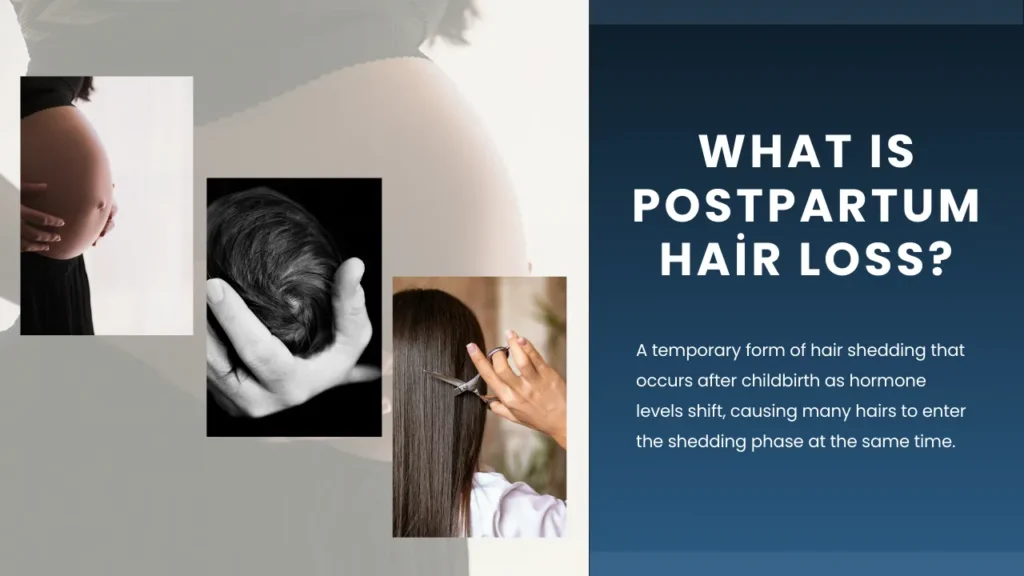
Because of this, the period during which hair grows in lengthens, while the period during which it sheds on a regular basis shortens. There is a possibility that you will experience rapid hair loss after having baby. This is because your hormones may be shifting, and hairs that were still developing when you gave birth will naturally fall out. Because of this, you may have hair loss.
| Key Point | What to Know |
| Medical term | Postpartum telogen effluvium |
| Main trigger | Estrogen drops after delivery |
| Pattern | Diffuse shedding (not patchy bald spots) |
| Prognosis | Temporary in most cases |
The term that medical professionals use to describe this condition is postpartum telogen effluvium, and they consider it to be a normal physiological response rather than a disease. It is not always the case that the cause is damage to the hair follicles or alopecia that is permanent. However, despite the fact that postpartum hair loss is merely a temporary issue with the hair development cycle and typically disappears on its own, it can still be emotionally taxing for the woman who experiences it.
Understanding the Normal Hair Growth Cycle After Pregnancy
There are three stages that are necessary for healthy hair: growing, changing, and rest in between. When you are pregnant, a significant amount of your hair is in the growth phase, which results in your hair becoming more robust. Hair loss often begins a few months after giving birth, when a number of cells simultaneously enter a dormant condition. This is the moment when hair begins to fall out.
As a matter of fact, the abrupt and coordinated loss of hair indicates that the typical and gradual thinning of hair is taking far longer than it normally would. It is possible that this will be terrifying. It is essential to take into consideration the fact that follicles continue to function not far below the surface of the head. When hormone levels return to their normal levels, hair typically begins to grow again, although it may take some time before the new hair is noticeable.
When Does Postpartum Hair Loss Start and How Long Does It Last?
The hair loss that occurs after giving birth often begins between two and four months following the delivery of the baby, rather than immediately. Ovarian cycle is characterized by the fact that it takes longer for variations in hormone levels to become apparent. The majority of the time, the amount of hair loss that you are experiencing is generally considered to be rather typical for your body, despite the fact that it may appear to be much more when you wash or brush your hair.
| Time After Birth | What’s Typical |
| 0–2 months | Usually minimal shedding |
| 2–4 months | Shedding begins |
| 3–6 months | Peak shedding period |
| 6–12 months | Gradual regrowth and recovery |
For the past three to six months, the majority of people have been losing more. The density of the hair increases as new hair grows in to fill up the spaces brought about by the thinning of the hair. A woman’s eyesight may not entirely recover from the effects of giving birth for anywhere between six months and a year after the delivery of her child. Her genes, the foods she consumes, and her overall health after giving birth all play a role in determining this condition.
Typical Timeline After Delivery
In the first two months after giving birth, it is permissible to make changes to your hairstyle. This is because the growth of your hair follicles is still in its early phases. The third and fifth months are the ones in which it sheds the most. It is possible that you will observe that your hair is becoming thinner at this time, particularly in the areas close to your temples and neckline.
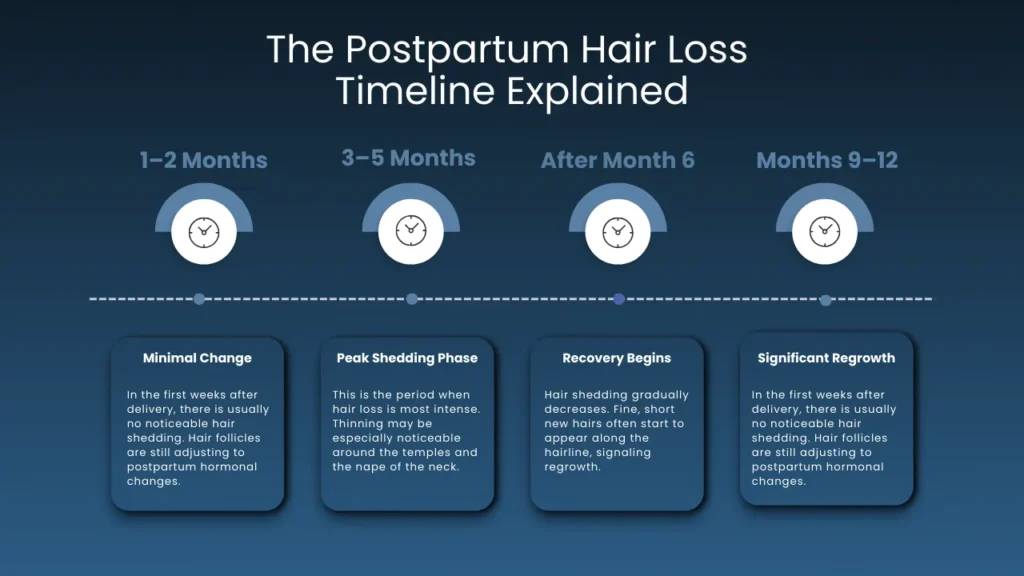
There is a possibility that there will be reduced hair loss after the first six months, and there may even be extremely fine, short new hairs. By the time they are twelve months postpartum, the majority of women report that they have totally recovered from their pregnancy. However, some women hair loss may observe a slight difference in the structure and texture of their hair in comparison to how it was before they were pregnant.
Signs That Shedding Is Within the Normal Range
The natural hair loss that occurs after giving birth appears as strands that are thin and even, rather than as bald areas that are more obvious. In addition to the fact that there is no redness, flaking, or scarring, the hair on the scalp falls in a typical pattern, giving the impression that the skin is in good condition. Certain individuals become aware of lighter areas all over their head when they are in the shower or when they are attempting to style their hair. They are experiencing hair loss as a result of this.
| Normal Postpartum Shedding | Possible Underlying Issue |
| Even thinning across scalp | Patchy hair loss / bald spots |
| No scalp pain/redness | Burning, intense itch, scaling |
| Baby hairs at hairline | No regrowth after months |
| Improves by ~12 months | Persists beyond 12 months |
An additional positive symptom is the gradual development of new hairs that are shorter and grow along the hairline or portion line. All of the symptoms indicate that the follicles are healthy and that the healing process is progressing. In spite of the fact that your hair loss is quite normal, you can find that it is more severe when you are feeling angry.
When Hair Loss May Indicate an Underlying Issue
It is imperative that you seek the advice of a trained medical professional if you notice that your hair loss begins nearly immediately after giving birth, continues for more than a year, or worsens over the course of time. Patchy scalp irritation or thinning may be the result of conditions that are not linked with postpartum hair loss. These disorders may also be the cause of symptoms like as exhaustion or fluctuations in weight.
Having a deficiency in iron, having issues with the thyroid, or having an autoimmune disease could all be sources of this condition. It is possible that these women are more at risk than they appear to be before giving birth because of the changes in hormones that occur after giving birth. In order to better grasp the distinction between a typical recovery and conditions that require specific care or monitoring, you should have a conversation with a nurse or other healthcare professional.
Hormonal Changes and Their Role in Postpartum Hair Loss
Hair loss after giving birth is a big part of the fast changes that happen after giving birth. Hormonal changes are the main cause of this. Since estrogen levels are higher during pregnancy, hair grows more slowly. This is because hair growth takes longer. A sudden drop in estrogen levels makes several follicles go through the shedding phase at the same time. This starts follicle loss a few months after giving birth.
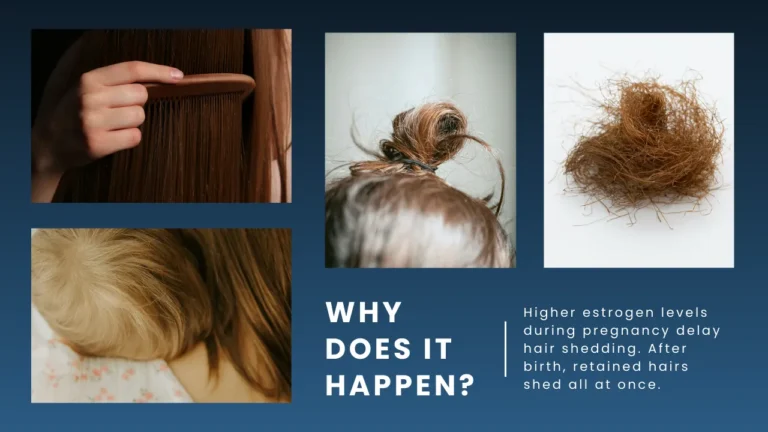
This change in hormones is just your body adjusting to new circumstances; it does not mean you are sick. There has been no loss in the hair cells’ vitality or ability to grow back. But it is a problem when the loss happens quickly and in a big way. By learning more about this hormonal process, you can better understand why most women lose their hair for a short time after giving birth. This hair loss goes away when hormone levels return to normal.
Estrogen Fluctuations During and After Pregnancy
As a result of the gradual increase in estrogen levels that occurs during pregnancy, the anagen phase, which is the growth phase of hair cells, continues for a longer period of time. This helps the hair appear fuller and prevents a significant number of people from losing hair on a daily basis. Because of this, the increase in density is probably the result of hair retention rather than an increase in the amount of hair growth.
When a woman gives birth, her body starts to lose the fluids it had during pregnancy, which causes her estrogen levels to drop sharply. Because of this change, all the follicles that were active during the growth phase can now all go into resting phase at the same time. The hair loss that happens later is a normal reaction to these changes in hormones and has nothing to do with damage to the follicles.
How Hormonal Shifts Affect Hair Follicles
Changes in hormones are more significant than the quality of the follicles when it comes to controlling the hair growth cycle. This is because hormones are essential for hair development. In situations where a large number of hair follicles enter the telogen phase at the same time, the amount of hair loss that occurs is more obvious. This is the case even when the overall volume of hair lost remains within the normal physiological limitations.
Despite the fact that the majority of women experience changes in their hormones after giving birth, their hair follicles do not shrink or stop growing. Following the establishment of stable hormone levels, follicles transition back to the growth phase. It is because of this reason postpartum hair loss is distinct from hair loss that worsens over time or that continues for a significant amount of time.
Common Factors That Can Worsen Postpartum Hair Shedding

Changes in hormones are the main cause of hair loss after giving birth, but there are other factors that can make the loss worse or last longer. During a hard time, the body goes through a lot of extra stress because of physical healing, broken sleep, and mental stress. These factors may speed up or slow down the healing process of hair loss after giving birth, but they do not directly cause it.
| Factor | How It Can Affect Shedding | Helpful Support |
| Sleep deprivation | Slower recovery/regrowth | Prioritize rest when possible |
| Low iron/nutrition | Prolongs shedding | Protein + iron-rich diet |
| High stress | Can extend telogen phase | Stress reduction + support |
| Rapid weight loss | Adds physical stress | Gradual, nutrient-dense plan |
Knowing these things will help us deal with the problem in a logical way and help the person without using force. You can not avoid shedding during this time, but taking better care of yourself might speed up the body’s normal process of renewal.
Physical Stress From Labor and Recovery
Physically hard things like labor, giving birth, and getting better afterward will temporarily make it harder for the body to store food and energy. During the early stages of healing, the body may focus on non-essential tasks like hair growth because of things like getting hormones back in balance, losing blood, and tissue regeneration.
This stress response might make more hair follicles enter the resting phase, which means that intense visible shedding might happen more often. Systemic balance returns, which usually happens without any direct medical help, and the patient’s body heals faster. This lets the hair cells cycle regularly.
Sleep Deprivation and Chronic Fatigue
After giving birth, many women do not get enough sleep and feel tired all the time, which can slow hair growth. Stress hormone levels change when you do not get enough sleep, and it may mess up normal healing processes, like the ones that keep hair cells growing and shrinking.
Not getting enough sleep does not directly cause hair loss, but being tired all the time can slow down the growth process. Once you have had a good night’s sleep, your hair shafts will be able to grow freely again.
Emotional Stress and Postpartum Adjustment
Dealing with changes in identity, taking on the role of a caregiver, and the stress of transitioning to life after giving birth may all be difficult on the emotions, which can make hair loss stand out even more. This can cause some people to shed their hair for a longer period of time than usual, as stress hormones can contribute to changes in a person’s hair cycle.
There is a significant gap between the way in which it influences the mind and the way in which it influences the body. The majority of the time, stress does not permanently alter our hair appearance; but, it might alter how we feel about the healing processes that occur in our bodies. Receiving emotional support and gradually resuming activities after giving birth might assist you in feeling better and increasing the rate at which your hair grows back.
Postpartum Hair Loss vs Other Types of Hair Loss
Although it is distinct from other types of alopecia, postpartum hair loss is characterized by a similar pattern of development and causes. During pregnancy and childbirth, hormones are the driving force behind this temporary state. In the majority of cases, hair cells are healthy and have the potential to grow back after giving birth, even if you experience a sudden loss of a significant amount of hair.
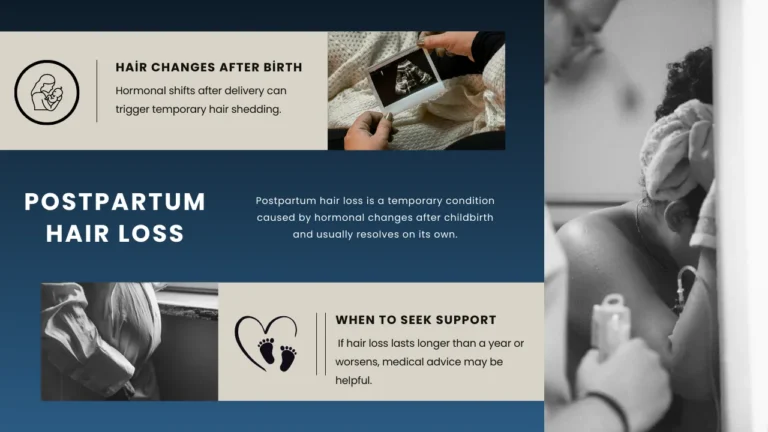
The sorts of hair loss that people encounter might vary depending on their age as well as the biological factors that are responsible for it. The presence of a genetic predisposition, an insufficient intake of nutrients, or an ongoing sensitivity to follicular fluid are some of the causes for experiencing this condition. Because some of the causes of hair loss, such as hair loss after giving birth, disappear on their own, it is essential to have a thorough understanding of the variations between the various causes of hair loss. Other causes may require specialized therapy or regular monitoring.
Differences Between Postpartum Shedding and Telogen Effluvium
There is a distinct beginning and ending course to postpartum hair loss, which is a form of telogen effluvium. As a result of the hormonal shifts that occur following delivery, it often disappears once a year has passed. Across the entirety of the head, there is a diffuse shedding.
If you have not recently given birth, you still have the potential to experience telogen effluvium. It is possible for this to occur as a result of health issues, surgical procedures, drugs, or prolonged anxiety. Processes of shedding can occur repeatedly for a variety of causes, and this can happen repeatedly. In order to avoid having to wait for hormone levels to return to normal, it is essential to get to the bottom of the issues so that treatment may start as soon as possible.
Distinguishing Postpartum Hair Loss From Female Pattern Hair Thinning
It is a hereditary condition that causes women to experience pattern hair loss, which worsens with time as a result of changes in hormone levels. It is a common occurrence for women to experience hair loss around the core or crown, in contrast to postpartum hair loss, which typically disappears on its own.
When it comes to the thinning of the female pattern, it is possible for it to become worse over time or remain the same. However, the hair typically begins to grow back a few months following the delivery of the baby. It is possible that it will be more difficult to recover if both of these happenings occur at the same time. An examination by a medical professional can assist in determining the specific cause of postpartum hair loss or whether it is a part of a larger pattern.
Breastfeeding and Its Impact on Postpartum Hair Loss
After having birth, a lot of women are concerned about whether or not breastfeeding can hasten the process of hair loss. There is little evidence that nursing causes permanent hair loss, despite the fact that it alters hormones. If feeding is the only factor that influences shedding patterns, then hormonal changes that occur after giving birth play a considerably more significant role than doing so.
In the case of certain mothers who are breastfeeding, the persistent shedding is an indication that they are prepared to breastfeed. Factors such as time, food, and overall recuperation are more significant considerations to take into account. It is possible that your hair will begin to grow back in if you stop breastfeeding for a period of time.
Hormonal Changes During Lactation
During nursing, prolactin levels remain elevated, which contributes to the production of milk. It is possible for a woman’s estrogen levels to remain persistently low for a longer period of time when she is simply breastfeeding her child. It is possible that certain individuals will experience a delay in the beginning of apparent regrowth due to hormonal abnormalities that prevent the destruction of follicles.
You should not assume that your hair cells are dormant simply because you do not have any estrogen in your body. One can only regenerate for a certain amount of time before it stops. Changes in hormone levels occur when a baby is born or when nursing is not as consistent as it once was. After this, the trends in hair growth typically return to their normal state.
Nutritional Demands for Breastfeeding Mothers
When you are breastfeeding, it is of the utmost importance to consume an adequate amount of protein, iron, and a few kinds of vitamins. Even though it might not be the primary cause of hair loss after giving birth, not receiving enough nutrients might slow down the healing process or make you sleepy, both of which can have an indirect impact on hair development.
It is possible to give the body extra time to recover and grow again if you assist with its feeding needs. On the other hand, medical professionals are the ones who are best able to determine which supplements each individual patient requires. The consumption of a nutritious food not only prevents you from experiencing hair loss after giving birth, but it also has positive effects on your overall health.
Emotional and Psychological Effects of Postpartum Hair Loss
Even though you are aware that you will have a temporary loss of hair after giving birth, the effects of this loss can still have a significant impact on your feelings. A abrupt change in your hairstyle during a vulnerable moment may cause you to feel even less in control of your life. This is because hair plays such a significant role in determining who you are and how you present yourself to the world. In reaction to the changes that take place in the body during the healing process, these sentiments are typical and healthy responses. They do not exhibit any symptoms of vanity.
What people anticipate and the circumstances of their social environment are typically the factors that determine the psychological impact. Having your hair fall out after giving birth without your knowledge or consent might be an even more distressing experience. While you are going through this brief and self-limiting period, it is beneficial to receive factual information and reassurance in order to assist normalize the experience, reduce dread, and prevent you from blaming yourself for things that you did not do.
Changes in Self-Image After Pregnancy
It is possible that a woman’s sense of self-worth will undergo even more significant transformations if she experiences hair loss during pregnancy or delivery. Many people report that they experience a decrease in their self-confidence when they become aware that their hair is becoming thinner, particularly at the head. These alterations could be discouraging if you had the goal of maintaining the body shape you had before becoming pregnant.
When it comes to getting back on your feet after giving baby, having a positive view of yourself is a really important factor. The fact that hair grows back more slowly than other changes in your body may cause you to feel dissatisfied with a change in your body for a longer period of time. It is possible for individuals to have more reasonable expectations and a more compassionate perspective on the process of healing when they are aware of this setback.
Managing Anxiety Related to Hair Shedding
The loss of hair that occurs in women after they have given birth is a common concern. A significant number of them are concerned about this. You could be concerned that you will never get your hair back if you have a significant amount of hair loss, despite the fact that new hair is developing beneath your skin. A person’s level of tension may increase as a result of this visual indication.
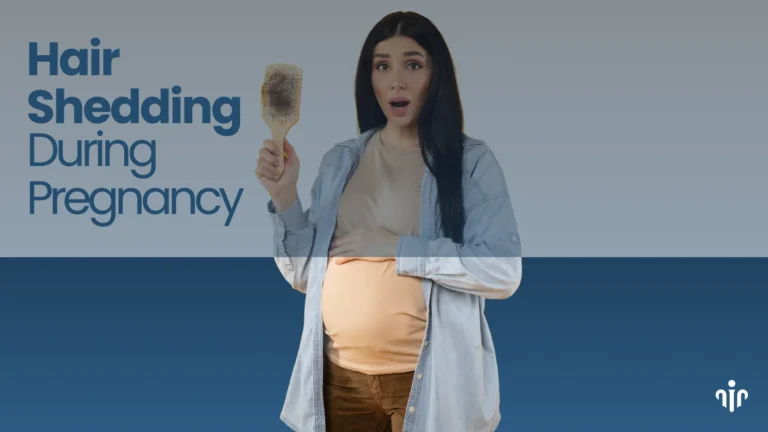
One strategy for coping with anxiety is to view the loss of hair not as a sign of damage but rather as a sign of improvement. There are a lot of things that can help lessen postpartum fixation, including locating correct medical information, reducing the amount of times you check your hair, and addressing larger sources of stress. In situations where worry begins to interfere with one’s day-to-day activities, it may be beneficial to seek out mental support.
When to Seek Medical Advice for Postpartum Hair Loss
Despite the fact that the majority of women’s hair grows back after giving birth, you should consult a medical professional if you have hair loss that does not go or that you did not anticipate. If you are concerned about your potential to recover, consulting a physician can help you feel more at rest by eliminating the possibility of other factors contributing to your condition. Consult a medical professional if you have hair loss after giving birth in a manner that is not consistent with the normal course of events.
Making a request for assistance is not an unusual thing to do. In actuality, it promotes the monitoring of patients by educated professionals and the early discovery of diseases that are not connected to one another. In order to differentiate between patterns of hair loss that are typical after having birth and those that are not normal and may require additional study or treatment that is more particular, a thorough examination might be helpful.
Warning Signs That Require Professional Evaluation
Symptoms that should serve as warning indicators include hair loss that does not improve after a year, bald areas rather than hair loss all over, and hair loss that remains the same or worsens over time. It is possible that the reason you are experiencing additional symptoms, such as redness, extreme itching, or pain in your scalp, is not because you have recently given birth.
If you are experiencing systemic symptoms, such as feeling fatigued all the time, gaining or losing weight, or having issues with your periods, professional medical attention is required. It is possible that these symptoms are the result of alterations in hormone levels or the foods that you consume. It is necessary to examine the hair as soon as possible in order to eliminate the possibility that the only cause for changes in structure is the healing process that occurs after delivery.
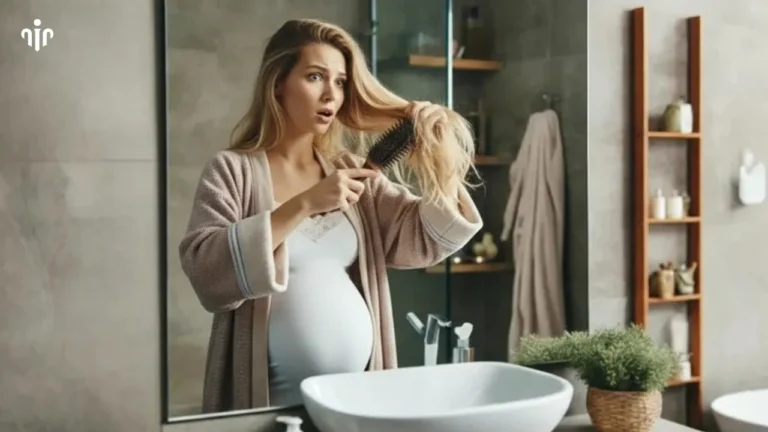
Conditions That May Mimic Postpartum Hair Loss
Getting an insufficient amount of iron, having thyroid difficulties, and experiencing autoimmune hair loss are all potential factors that could be contributing to the appearance of hair loss after giving baby. In the event that you do not treat coexisting illnesses, such as postpartum shedding, they might make the healing process more difficult and delay the regrowth process.
The hormonal shifts that occur during pregnancy may cause a woman’s natural predisposition to lose hair, which may manifest as female pattern thinning, to be more noticeable than it would otherwise be. For the purpose of distinguishing between various disorders, a medical examination is required. Before administering the appropriate medication, it is essential to properly diagnose the condition in order to avoid the mistaken belief that all changes in hair texture that occur after giving birth follow the same pattern.
FAQs
Can postpartum hair loss affect the hairline or temples more than other areas?
In the areas of the face where postpartum hair loss is most evident, the hairline and the temples are two places. Even when the general density of the scalp is within acceptable ranges, shedding is more noticeable in some locations due to shorter growth cycles and stronger visual contrast.
Is it normal to lose hair in clumps during the postpartum period?
After you have given birth, it is not unusual to find that your hair is falling out in clumps. This is something that is more obvious when you wash or brush your hair on a regular basis. It is possible that this may give the appearance that there is a more significant rise in hair loss than there actually is. This is despite the fact that this is more of a reflection of synchronized shedding than of acute harm to the follicles.
Can postpartum hair loss return again months after it has stopped?
Despite the fact that postpartum hair loss often only occurs once, it is possible for it to occur again a few months later owing to hormonal changes, changes in nutrition, or new pressures. In most cases, this secondary shedding is unrelated to the postpartum period; however, if it continues, more assessment may be necessary.
Does postpartum hair loss look different in women with curly or textured hair?
It is possible that postpartum shedding will be more evident in hair that is curly or textured. This is because hair clumping and shrinkage take place during this time. In spite of the fact that the overall volume of hair loss is roughly the same, the way it appears with regular maintenance is completely dependent on the texture of the hair.
Can postpartum hair loss occur even if there was no hair thickening during pregnancy?
Even if your hair does not appear to thicken while you are pregnant, it is still possible for you to experience hair loss after giving birth called postpartum hair loss. Hormonal changes can still have an effect on the follicular cycle, and retained hairs may still fall out after giving birth, regardless of how evident the fullness was during pregnancy.
Is postpartum hair loss more severe after a cesarean birth?
There is no relation between having a cesarean birth and having a higher risk of experiencing significant postpartum hair loss.
Can postpartum hair loss be influenced by rapid weight loss after delivery?
Because of the quick weight loss that occurs after giving birth, there is a possibility that more shedding will take place as a consequence of increased physical stress and nutrient demand.
Are hair shedding patterns different after the first pregnancy compared to later pregnancies?
The patterns of shedding are typically rather constant, despite the fact that every pregnancy is exceptional. It is possible that the experience of hair loss with a subsequent pregnancy could be different for some individuals due to hormonal changes.
Can postpartum hair loss cause changes in hair texture or curl pattern?
Hormonal changes at work on the form of hair follicles could cause transient alterations to the hair’s texture or curl pattern as it grows back.
Is it possible for postpartum hair loss to uncover previously hidden hair thinning issues?
Yes, there is a possibility that the loss of hair that occurs after giving birth could be an indication of more serious health problems, such as female pattern baldness.
References
Get a Free Hair Analysis from Our Experts
Use our free online help tool to communicate your hair loss concerns – it only takes a few minutes. We’ll provide you with a personalized, non-binding quote.
You May Be Interested In
Let’s Call You!

Popular Blogs
Discover David Silva Hair Transplant 2026
Discover David Silva Hair Transplant 2026 Free Hair Analysis Homapage Blog Discover David Silva Hair…

Unbelievably Story About David Beckham Hair Transplant 2026
Unbelievably Story About David Beckham Hair Transplant 2026 Free Hair Analysis Homapage Blog Unbelievably Story…
Join to Prince Harry Hair Transplant Journey
Join to Prince Harry Hair Transplant Journey Free Hair Analysis Homapage Blog Join to Prince…

Britain’s Number 1 Tennis Player Andy Murray’s Hair Transplant
Britain’s Number 1 Tennis Player Andy Murray’s Hair Transplant Free Hair Analysis Homapage Blog Britain’s…

Let’s Discover Succesfull Striker Danny Ings’ Hair Transplant 2026
Let’s Discover Succesfull Striker Danny Ings’ Hair Transplant 2026 Free Hair Analysis Homapage Blog Let’s…
Rob Holding Hair Transplant
Rob Holding Hair Transplant Free Hair Analysis Homapage Blog Rob Holding Hair Transplant Medical Reviewed…
Ready To
Book Your Appointment?
Reach out to us or complete our simple online form
and we’ll contact you to schedule a time that works perfectly for you.



Hair Transplant Guide