

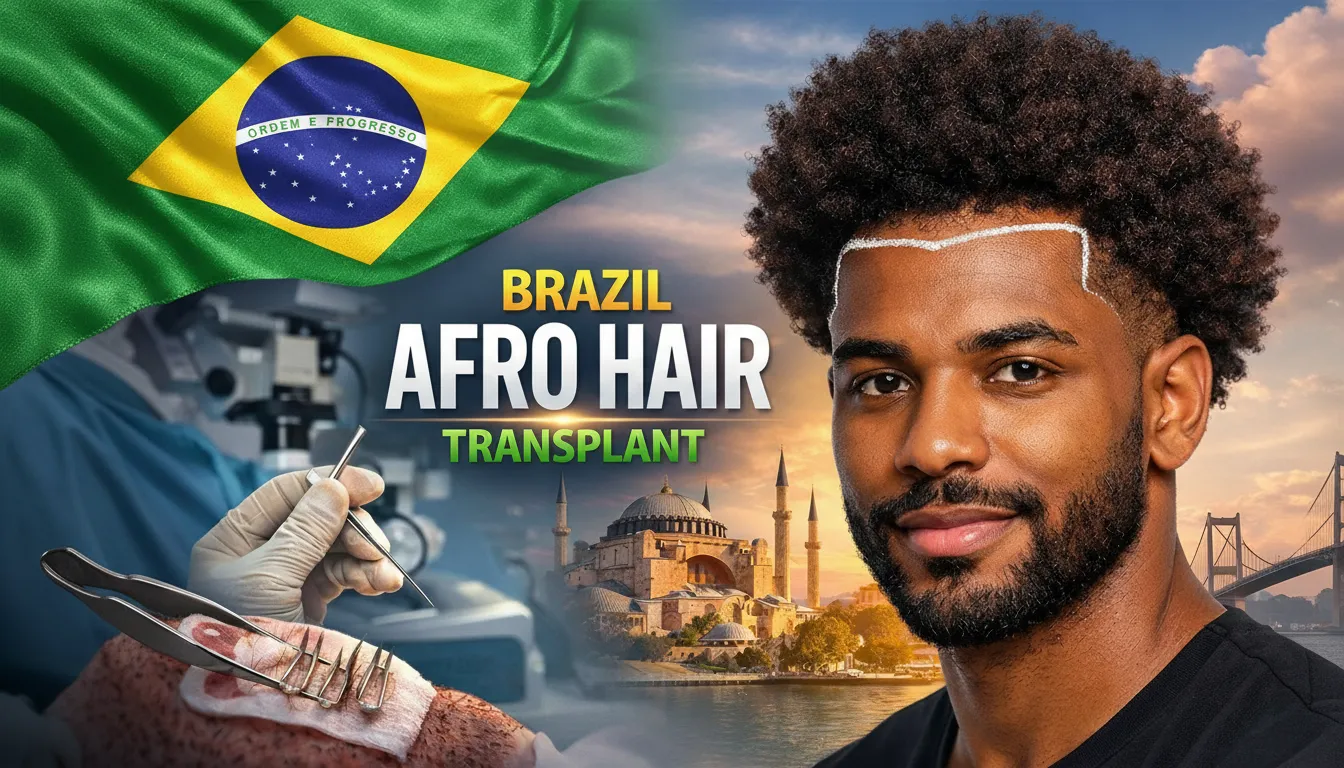
Brazil afro hair transplant procedures are gaining global attention due to Brazil’s diverse ethnic population, advanced cosmetic medicine infrastructure, and growing expertise in afro-textured hair restoration. However, afro hair transplantation is fundamentally different from straight or wavy hair procedures and requires specialized planning, surgical skill, and post-operative care.
This comprehensive guide explains every medical, technical, and practical aspect of Brazil afro hair transplant surgery, from follicle anatomy to cost comparison
and recovery expectations.
Afro Hair Basics
Afro hair refers to tightly curled or coiled hair textures commonly found among people of African, Afro-Caribbean, Afro-Latino, and mixed ethnic backgrounds.
What Is Afro Hair?
In brazil afro hair transplant planning, understanding the natural curl pattern is critical because the follicle itself is curved beneath the scalp.
Afro Hair Types (3C, 4B, 4C)
- 3A–3C: Loose to tight curls with higher elasticity
- 4A: Defined coils with spring-like pattern
- 4B: Z-shaped strands with lower moisture retention
- 4C: Extremely tight coils, highest fragility risk
Brazil afro hair transplant outcomes vary significantly depending on the curl
category, especially in graft survival and density illusion.
Structural Differences of Afro Hair Follicles
Unlike straight hair follicles, afro hair follicles grow at an angle and curve beneath the skin. This makes extraction more complex and increases the risk of transection if improper tools are used during a brazil afro hair transplant.
Curved (C-Shaped) Follicle Anatomy
The C-shaped follicle anatomy is the single most important factor distinguishing afro hair transplantation from conventional procedures. Surgeons must adjust punch depth, angle, and rotation speed accordingly.
Afro Hair vs Straight Hair: Key Differences
| Feature | Afro Hair | Straight Hair |
|---|---|---|
| Follicle shape | Curved | Straight |
| Extraction difficulty | High | Low |
| Visual density | High illusion | Depends on graft count |
Visual Density vs Actual Graft Count
One advantage of brazil afro hair transplant procedures is that fewer grafts can often create fuller visual coverage due to curl volume. However, incorrect planning may still lead to patchy or unnatural results.

Fragility and Breakage Risk in Afro Hair
Afro hair has lower tensile strength and is more prone to breakage, both pre- and post-surgery. Clinics performing brazil afro hair transplant must implement gentle handling protocols.
What Is an Afro Hair Transplant?
Definition of Afro Hair Transplant
An afro hair transplant is a specialized surgical procedure designed to relocate curly hair follicles from donor areas to bald or thinning regions while preserving natural curl pattern and growth direction.
Who Is a Good Candidate for Afro Hair Transplant?
- Stable donor area density
- Androgenetic alopecia or traction alopecia
- Realistic expectations
- Healthy scalp condition
Who Is Not Suitable for Afro Hair Transplant?
- Active scalp infections
- Severe donor depletion
- Uncontrolled autoimmune disorders
Differences Between Standard Hair Transplant and Afro Hair Transplant
Brazil afro hair transplant procedures require modified punch tools, slower extraction speeds, and advanced slit angle planning compared to standard hair transplant surgeries.
Why Afro Hair Requires Specialized Techniques
Without afro-specific expertise, clinics risk high graft loss, visible scarring, and unnatural hairline results. This is why choosing an experienced brazil afro hair transplant clinic is critical.
Challenges in Brazil Afro Hair Transplant
Curved Root Extraction Challenges
Curved roots in afro hair increase the risk of follicle damage during extraction, making manual methods generally safer than motorized systems in Brazil afro hair transplant procedures.
Follicle Transection and Donor Limitations
Inexperienced handling can lead to higher transection rates and poor growth outcomes. Although afro donor areas may appear dense, they often contain fewer usable grafts per cm².
Angle, Direction, and Density Planning
Improper angulation during implantation can distort curl patterns. Careful spacing and density planning are essential to prevent overcrowding and ensure healthy graft survival.
Common Mistakes Made by Inexperienced Clinics
- Using standard punch sizes
- Overharvesting donor zones
- Straight-hair hairline templates
Afro Hair Transplant Techniques in Brazil
FUE Technique for Afro Hair
FUE is the most commonly used method in Brazil afro hair transplant surgeries, with manual FUE preferred for its precision and reduced transection risk.What is FUE hair transplant?
DHI and Sapphire FUE
DHI can be effective but requires extreme precision due to curl memory, while sapphire FUE allows finer incisions, demanding advanced surgical expertise.
Extraction and Implantation Considerations
Manual extraction offers better tactile feedback, minimizing follicle damage. Custom punch sizes must match follicle curvature, and slit angles should follow natural curl direction to ensure a natural-looking result.
Donor Area Considerations for Brazil Afro Hair Transplant
Hairline Design for Afro Hair
Natural Afro Hairline Characteristics
In Brazil afro hair transplant procedures, the hairline should mimic natural irregularity. Afro hairlines rarely run straight and often have micro-zigzag patterns to prevent an artificial look.
Hairline Shape Differences by Ethnicity
Afro-Latino and Afro-Brazilian patients generally have softer temporal recessions than African-American patterns, requiring customized planning for natural results.
Density and Age-Appropriate Design
Lower graft density with strategic placement enhances visual fullness. Hairlines should be conservatively designed to suit age, and temple angles must follow natural curl directions to avoid upward-growing curls.
Avoiding Artificial Hairline Appearance
- Irregular micro-lines
- Lower density in the first 1 cm
- Correct curl orientation
Graft Planning and Density in Brazil Afro Hair Transplant

Brazil Afro Hair Transplant Procedure Steps
The Brazil afro hair transplant procedure involves several carefully planned steps to ensure optimal results:
- Pre-operative consultation and analysis: Digital trichoscopy and donor mapping are standard to evaluate hair and scalp conditions.
- Hair and scalp examination: Surgeons assess scalp elasticity and follicle curvature for precise planning.
- Donor area preparation: Partial shaving is often preferred for afro-textured hair to protect follicle integrity.
- Graft extraction process: Manual FUE is used to reduce transection risk and preserve follicle viability.
- Graft preservation and handling: Proper hydration and temperature control maintain graft health.
- Channel opening technique: Incisions are made following the natural curl direction to ensure natural growth patterns.
- Graft implantation phase: Slower implantation speeds prevent follicle trauma and support survival.
Overall, procedure duration for a Brazil afro hair transplant typically ranges from 6 to 9 hours, depending on graft number and patient-specific factors.
Recovery and Healing Process
In the first 24–72 hours after a Brazil afro hair transplant, mild swelling and redness are normal. Scabs typically fall off within 7–10 days.
To manage swelling and redness, cold compresses and keeping the head elevated are recommended. Itching and sensitivity can be alleviated with moisturizing sprays. Due to afro hair texture, donor area healing is often less noticeable. Most patients can resume daily activities within 5–7 days post-surgery.
Afro Hair Transplant Aftercare
After a Brazil afro hair transplant, washing should be gentle, using a tapping motion rather than rubbing. Sulfate-free medical shampoos are recommended to protect sensitive grafts, and regular moisturizing is essential for afro-textured hair survival.
During the first week, maintain a semi-upright sleeping position, and avoid direct sun exposure for at least 30 days. Hair manipulation and tight styling, including braids, should be avoided for at least 3 months to ensure proper healing and optimal results.
Long-Term Hair Care Tips
- Regular moisturizing
- Low-tension styling
- Professional follow-ups
Hair Growth Timeline After Brazil Afro Hair Transplant
After a Brazil afro hair transplant, shock loss may occur during the first month, which is a temporary shedding of transplanted and surrounding hairs. Visible growth typically begins around months 3–4, gradually restoring fullness.
The curl pattern slowly returns to its natural shape, and the texture aligns with the donor hair. Final results are usually seen between 12–15 months, with long-term retention being permanent when proper care and maintenance are followed.
Results and Expectations
For a successful Brazil afro hair transplant, patients should have realistic expectations, aiming for natural fullness rather than overly dense, teenage-like results. Before-and-after evaluations are most meaningful at 12 months post-op, when grafts have fully settled.
In afro hair, coverage often appears more impressive than raw density numbers, thanks to curl volume. Achieving a natural look depends on proper curl angle alignment and maintaining subtle hairline irregularities, ensuring the results blend seamlessly with existing hair.
Factors Affecting Final Results
- Surgeon experience
- Aftercare compliance
- Donor quality
Risks and Side Effects
Afro hair transplant risks are generally low when performed by experienced surgeons, but follicle damage can occur if extraction is improper, leading to poor growth. Infection and inflammation are rare when strict sterile protocols are followed.
A poor growth rate is usually linked to follicle transection or dehydration during surgery, while uneven density may occur and is often correctable with revision procedures. Donor area thinning typically results from overharvesting, and permanent damage is extremely rare in reputable, experienced clinics
Brazil Afro Hair Transplant Cost
Afro Hair Transplant Cost Factors
- Graft count
- Technique used
- Surgeon expertise
Average Cost by Country
| Location | Average Cost | Includes Package |
|---|---|---|
| Turkey | $3,500 – $5,500 | Yes |
| São Paulo | $5,000 – $8,000 | Partial |
| Rio de Janeiro | $4,500 – $7,500 | Partial |
Why Afro Hair Transplants Cost More
Afro hair transplant procedures require higher surgical skill and longer operation times, which naturally increases overall cost. When evaluating options, price vs quality should be carefully considered, as unusually low prices often indicate limited experience with afro-textured hair.
Patients should also be aware of hidden costs, including potential revision surgeries, medications, and accommodation expenses that may not be included in the initial quote.
In global comparisons, Turkey remains the most cost-effective option, offering advanced afro hair transplant expertise with comprehensive packages when compared to the USA and Europe.
Choosing the Right Clinic in Brazil

Afro Hair Transplant in Brazil
Why Brazil Is a Growing Hair Transplant Hub
Brazil is increasingly recognized as a growing hair transplant hub thanks to its diverse population, which has fostered strong expertise in afro-textured hair restoration. This diversity allows surgeons to gain extensive hands-on experience with different curl patterns and follicle structures, leading to more natural and reliable results.
One of the key advantages of a Brazil afro hair transplant is local accessibility, especially for patients from South America who prefer high-quality treatment without long-distance travel. When procedures are performed in specialized clinics by experienced surgeons, success rates are consistently high and meet international standards.
Many clinics also offer all-inclusive packages that may cover accommodation, airport transfers, and prescribed medications, simplifying the treatment process for international patients. In addition, medical tourism support services such as translation assistance and patient coordination are commonly available, ensuring a smooth and comfortable experience from consultation to recovery.
Localized Pain Points
- Insurance: Not covered by most providers
- Waiting times: 2–6 weeks in Brazil
- Travel packages: Reduce overall cost
- Flight time: 10–12 hours from Europe
- Weather: Mild climate supports recovery
Brazil Afro Hair Transplant FAQs
Is Afro hair transplant permanent?
Yes. Transplanted afro hair follicles are taken from genetically resistant donor areas and continue to grow permanently once they adapt to the recipient area.
Does transplanted Afro hair stay curly?
Yes. The curl pattern is determined by the follicle itself, so transplanted afro hair keeps its natural curl and texture.
How many grafts are needed?
Usually fewer grafts are needed than in straight hair transplants because curly hair provides greater visual coverage.
Is shaving required?
Partial shaving is often enough. Full shaving is only necessary in large or advanced cases.
Is the procedure painful?
No. The procedure is performed under local anesthesia, and discomfort is minimal.
How long does the procedure take?
On average, it takes 6–9 hours, depending on graft count and technique.
Can Afro hair be transplanted multiple times?
Yes. Additional sessions are possible as long as sufficient donor hair remains.
References
National Center for Biotechnology Information (NCBI)
International Society of Hair Restoration Surgery
Health Tourism Global Resources
Brazil afro hair transplant requires specialized knowledge, precise technique, and realistic planning to achieve natural and lasting results. Factors such as curved follicle anatomy, proper hairline design, and careful aftercare play a much greater role than graft numbers alone.
For the right candidate and clinic, a Brazil afro hair transplant can be a reliable option thanks to experienced professionals and strong regional expertise. When performed correctly, a Brazil afro hair transplant offers safe, natural-looking, and permanent results.
