Réalisé dans des hôpitaux partenaires agréés Turkey Hair Center est un intermédiaire de tourisme médical agréé par le Ministère de la Santé, et non une clinique.
Quelles interventions esthétiques conviennent au séjour médical, et lesquelles non
Cette page couvre les procédures adaptées au tourisme médical, la durée de séjour requise pour chacune, le moment où il est sûr de rentrer chez soi en avion, et comment vérifier les qualifications d'un chirurgien avant de s'engager.
Authorized institutionsLicensed hospitals and surgical centres Board-certified surgeonsProcedures performed by licensed specialists Coordinated aftercareNamed contact through recovery
La réponse courte : la plupart des procédures esthétiques nécessitent 7 à 10 jours en Turquie, dont un jour pour la chirurgie et le reste pour une surveillance précoce du rétablissement. Rentrer chez soi trop tôt est le risque le plus évitable en tourisme médical, et le jour sûr diffère selon la procédure ; la rhinoplastie et la liposuccion ne sont pas la même décision. Les prix des cliniques publiés en 2026 situent les procédures courantes entre 2 500 et 7 500 euros, contre des chiffres considérablement plus élevés au Royaume-Uni et aux États-Unis. Votre chiffre suit une consultation, pas une liste de prix.
Toutes les procédures ne se prêtent pas bien au voyage. La question n'est pas de savoir si un chirurgien peut la réaliser, mais si le rétablissement qu'elle exige s'inscrit dans un voyage, et si les complications, si elles surviennent, se produiraient pendant que vous êtes encore à portée de l'équipe chirurgicale.
Procedure
Surgery duration
Days in Türkiye
Earliest usual flight home
Back to desk work
Rhinoplasty
2-3 hours
7-8 days
Day 7-8, after splint removal
1-2 weeks
Liposuction / body contouring
1-3 hours
7-10 days
Day 7-10
1-2 weeks
Breast surgery
1-2 hours
7-10 days
Day 7-10
2 weeks
Tummy tuck
2-4 hours
10-14 days
Day 10-14
3-4 weeks
Facelift
3-5 hours
10-14 days
Day 10-14
3-4 weeks
Eyelid surgery
1-2 hours
7 days
Day 7, after suture removal
1 week
Gynecomastia surgery
1-2 hours
7 days
Day 7
1-2 weeks
Les délais sont des fourchettes typiques pour les cas non compliqués. Votre chirurgien fixe la date réelle à laquelle vous êtes autorisé à prendre l'avion, en fonction de votre rétablissement et non de votre billet de retour.
Les vols long-courriers après une intervention chirurgicale comportent un risque accru de thromboembolie veineuse, et les procédures abdominales ou du bas du corps augmentent encore ce risque. Réservez des billets de retour flexibles. Un patient qui prend l'avion le quatrième jour parce que son billet l'indique, contre avis médical, prend un risque qu'aucune économie de prix ne justifie.
Which aesthetic procedures suit medical travel, and which do not
Not every procedure travels well. The question is not whether a surgeon can perform it, but whether the recovery it demands fits inside a trip, and whether complications, if they occur, would occur while you are still within reach of the operating team.
Timelines are typical ranges for uncomplicated cases. Your surgeon sets the actual date you are cleared to fly, based on your recovery and not on your return ticket.
Long-haul flights after surgery carry a raised risk of venous thromboembolism, and abdominal or lower-body procedures raise it further. Book flexible return tickets. A patient who flies on day four because the ticket says so, against advice, is taking a risk no price saving justifies.
What aesthetic surgery costs in Türkiye
Published prices vary because packages vary. Some quotes cover the surgeon's fee only; others include anaesthesia, theatre time, the hospital stay, garments, medication, hotel and transfers. Comparing two numbers that describe different things is how patients end up surprised.
Source: price ranges published by Turkish clinics and international medical travel platforms, August 2026. Indicative market context, not a quotation.
Ce que coûte la chirurgie esthétique en Turquie
Les prix publiés varient car les forfaits varient. Certains devis ne couvrent que les honoraires du chirurgien ; d'autres incluent l'anesthésie, le temps de bloc opératoire, le séjour à l'hôpital, les vêtements de compression, les médicaments, l'hôtel et les transferts. Comparer deux chiffres qui décrivent des choses différentes est la raison pour laquelle les patients finissent par être surpris.
Days in Türkiye before the surgeon clears you to fly
Procedure
Türkiye (published 2026 ranges)
United Kingdom
United States
Rhinoplasty
€2,500-€4,500
£5,000-£8,000
$7,000-$15,000
Liposuction (per area)
€2,000-€4,000
£3,000-£6,000
$4,000-$8,000
Breast augmentation
€3,000-€5,000
£5,500-£8,000
$7,000-$12,000
Tummy tuck
€3,500-€6,000
£6,000-£10,000
$8,000-$15,000
Facelift
€4,500-€7,600
£9,000-£15,000
$12,000-$25,000
Indicative ranges, not a quote.
What a complete quote should name
Surgeon's fee, anaesthetist's fee and operating theatre time, itemised rather than bundled into one word
Durée du séjour à l'hôpital incluse, et le coût par nuit si vous avez besoin de plus longtemps
Pre-operative blood work and any imaging
Implants, garments, drains and post-operative medication
Nombre d'examens de suivi avant votre vol, et qui les effectue
Que se passe-t-il, et qui paie, si une révision devient nécessaire ?
La chirurgie esthétique a un taux de révision. Ce n'est pas le signe d'un mauvais chirurgien, c'est une caractéristique du domaine. Ce qui distingue les institutions, c'est si la politique de révision est écrite avant votre première opération ou discutée seulement si quelque chose tourne mal. Demandez-la par écrit au stade du devis.
Comment se déroule le processus
Remote consultation
Vous envoyez des photographies et un historique médical. Un chirurgien évalue si le résultat que vous décrivez est réalisable, et le dit clairement quand ce n'est pas le cas.
Plan and quotation
Vous recevez la technique proposée, la récupération attendue, les risques spécifiques à votre cas, et un total détaillé.
Pre-operative tests
Des analyses de sang et toute imagerie requise sont effectuées. Certains médicaments, y compris les anticoagulants et certains compléments, sont interrompus sous instruction médicale.
Arrivée et examen en personne
Le chirurgien vous examine et confirme ou révise le plan. Le consentement est recueilli avec les risques expliqués dans une langue que vous comprenez.
Intervention et convalescence surveillée
La procédure est effectuée dans une institution autorisée, suivie d'un séjour hospitalier sous observation approprié à l'opération.
Clearance and aftercare
Les examens de suivi se poursuivent jusqu'à ce que le chirurgien vous autorise à prendre l'avion. Vous repartez avec des instructions écrites, des médicaments et un contact nommé.
Remote consultation
You send photographs and a medical history. A surgeon assesses whether the result you describe is achievable, and says so plainly when it is not.
Plan and quotation
You receive the proposed technique, the expected recovery, the risks specific to your case, and an itemised total.
Pre-operative tests
Blood work and any required imaging are completed. Certain medications, including blood thinners and some supplements, are paused under medical instruction.
Arrival and in-person examination
The surgeon examines you and confirms or revises the plan. Consent is taken with the risks explained in a language you understand.
Surgery and monitored recovery
The procedure is performed at an authorized institution, followed by an observed hospital stay appropriate to the operation.
Clearance and aftercare
Follow-up examinations continue until the surgeon clears you to fly. You leave with written instructions, medication and a named contact.
Verifying a surgeon and an institution
La Turquie possède un secteur de la chirurgie esthétique vaste et compétitif. Cela produit à la fois d'excellentes pratiques et un marketing qui les dépasse. Ces vérifications séparent les deux, et chacune produit une réponse que vous pouvez vérifier plutôt qu'une assurance à laquelle vous devez faire confiance.
Obtenez le nom complet du chirurgien et son enregistrement de spécialité. La chirurgie plastique, reconstructive et esthétique est une spécialité distincte avec son propre parcours de formation. « Médecin esthétique » n'est pas la même qualification.
Vérifiez quel hôpital ou centre chirurgical détient l'autorisation, et que votre opération s'y déroule bien, et non à une adresse de consultation distincte. La société coordinatrice n'est pas l'établissement soignant, et il est légitime d'attendre une réponse claire sur qui est qui.
Demandez si un anesthésiste est présent pendant toute l'intervention et si des soins intensifs sont disponibles sur place en cas de besoin.
Demandez qui assure votre suivi. Si le chirurgien qui vous a opéré ne vous revoit pas avant votre vol de retour, demandez pourquoi.
Demandez le taux de complications pour votre intervention précise dans cet établissement. Une réponse sérieuse est un chiffre accompagné de son contexte. Une réponse évasive est elle aussi une information.
Refusez toute pression à décider vite. Les offres à durée limitée relèvent du commerce, pas de la chirurgie.
Associer plusieurs interventions : ce qui est raisonnable et ce qui ne l'est pas
Associer plusieurs opérations en une seule séance évite un déplacement et une anesthésie supplémentaires. Cela allonge aussi la durée d'anesthésie, ce qui augmente le risque, et complique la convalescence puisque deux zones cicatrisent en même temps. Les chirurgiens tranchent selon la durée opératoire totale et votre condition physique, pas selon votre calendrier de voyage. La même question se pose pour les séjours non chirurgicaux : des patients demandent souvent si une greffe de cheveux peut s'intégrer au même voyage, et cela s'évalue exactement de la même façon, sur le temps de bloc total.
Combination
Commonly considered
Main consideration
Rhinoplasty + eyelid surgery
Frequently
Both facial, moderate total operating time
Liposuction + tummy tuck
Frequently
Same region; extends recovery and garment period
Breast surgery + body contouring
Case by case
La durée totale d'anesthésie est le facteur limitant
Facelift + major body surgery
Rarely in one session
Combined operating time and blood loss usually make staging safer
Combining procedures: what is reasonable and what is not
Combining operations in one session saves a trip and one anaesthetic. It also lengthens time under anaesthesia, which raises risk, and it complicates recovery because two areas heal at once. Surgeons take this decision on total operating time and your physical condition, not on your itinerary. The same question comes up with non-surgical travel too: patients often ask whether a hair transplant can share the trip, and that is assessed on total theatre time in exactly the same way.
Who should postpone
Un chirurgien qui refuse d'opérer protège le résultat autant que le patient. Raisons courantes d'attendre :
un poids qui continue de varier de manière significative altère les résultats du remodelage corporel ;
le tabac, qui altère la cicatrisation et augmente le risque de nécrose tissulaire dans plusieurs interventions ;
une maladie chronique non équilibrée, ou un traitement médicamenteux qui n'a pas été revu en vue de l'opération ;
une grossesse, un allaitement ou un projet de grossesse dans l'année pour les interventions abdominales et mammaires ;
des attentes dont le chirurgien a expliqué qu'elles n'étaient pas réalisables. Poursuivre malgré tout ne satisfait personne ;
un voyage déjà engagé dans une opération plus lourde. La chirurgie bariatrique prend à elle seule toute la période de récupération, tandis que le traitement dentaire est généralement le plus facile à programmer en même temps que quelque chose d'autre.
La réglementation publicitaire turque encadre l'usage promotionnel des images avant-après pour les services de santé : c'est pourquoi vous ne trouverez pas de telles galeries ici. Jugez un chirurgien sur ses qualifications, sur la clarté du plan proposé et sur l'honnêteté de l'échange, et non sur des images dont vous ne pouvez vérifier ni le contexte, ni l'éclairage, ni la date.
La récupération, dans l'ordre où elle se déroule réellement
Final results take months, not days. Judging an outcome at week two is judging swelling, not surgery.
Les interventions en détail
Les guides généraux décrivent la chirurgie esthétique comme une catégorie. Or les décisions qui comptent sont propres à chaque intervention : cette section traite donc une à une les quatre opérations pour lesquelles on voyage le plus.
Rhinoplasty
La chirurgie du nez est l'intervention pour laquelle la Türkiye est la plus reconnue à l'international, et c'est aussi celle où la gestion des attentes compte le plus. Deux approches techniques dominent : la rhinoplastie fermée, réalisée entièrement par les narines et sans cicatrice externe, et la rhinoplastie ouverte, qui utilise une petite incision au niveau de la columelle et offre au chirurgien une visibilité directe. Aucune n'est supérieure dans l'absolu. Les reprises, les travaux complexes sur la pointe et les corrections structurelles importantes plaident généralement pour l'approche ouverte. L'œdème après rhinoplastie se résorbe lentement. L'attelle est retirée vers le septième jour, l'essentiel du gonflement visible s'estompe en trois mois, et la forme définitive de la pointe peut demander une année entière. Un patient qui juge le résultat à la troisième semaine regarde un œdème.
Liposuction and body contouring
La liposuccion retire des amas graisseux localisés. Ce n'est pas une opération d'amaigrissement et elle ne traite pas le relâchement cutané. Les candidats proches d'un poids stable et dotés d'une bonne élasticité cutanée obtiennent les résultats décrits dans les manuels ; ceux qui espèrent perdre beaucoup de poids par la chirurgie, non. Le vêtement de compression se porte quatre à six semaines, et le contour définitif apparaît à mesure que l'œdème se résorbe, sur trois à six mois.
Tummy tuck (abdominoplasty)
L'abdominoplastie retire l'excédent de peau et resserre la paroi abdominale : c'est donc une opération nettement plus lourde que la liposuccion, avec une convalescence plus longue. Elle laisse une cicatrice horizontale basse sur l'abdomen, placée sous la ligne des sous-vêtements lorsque l'anatomie le permet. Il est généralement conseillé aux patientes ayant un projet de grossesse d'attendre, car la grossesse défait la réparation musculaire.
Facelift
Un lifting repositionne les tissus profonds plutôt que de simplement tendre la peau : c'est pourquoi les techniques modernes donnent un résultat différent de l'aspect « tiré » associé aux méthodes anciennes. La convalescence est plus longue que la plupart des patients ne l'imaginent : des ecchymoses pendant deux à trois semaines, et un résultat stabilisé à trois à six mois. Les cicatrices suivent la ligne des cheveux et les plis naturels autour de l'oreille. Demandez au chirurgien quel résultat il juge réaliste pour vous, avant de décrire ce que vous souhaitez. Un chirurgien qui répond en tenant compte de votre anatomie, qualité de peau, épaisseur des tissus, structure sous-jacente, vous évalue. Un chirurgien qui approuve tout ce que vous proposez vend.
Les cicatrices, et comment elles évoluent réellement
Toute incision laisse une cicatrice. Le chirurgien maîtrise son emplacement et sa fermeture ; la biologie gouverne sa maturation. Une cicatrice est généralement à son aspect le plus marqué entre la quatrième et la douzième semaine, puis s'estompe sur douze à dix-huit mois.
tenez la cicatrice à l'abri du soleil direct pendant au moins un an, ou utilisez une protection à indice élevé : l'exposition aux ultraviolets fonce durablement les cicatrices immatures ;
les plaques ou gels de silicone, utilisés avec régularité dès la fermeture de la plaie, disposent du niveau de preuve le plus solide parmi les traitements locaux disponibles ;
si vous avez des antécédents de cicatrices chéloïdes ou hypertrophiques, signalez-le avant l'opération : cela modifie à la fois la technique et les attentes ;
le massage, lorsque le chirurgien le recommande, ne commence qu'une fois la plaie entièrement fermée.
Days 1-3Gonflement, ecchymoses, gêne maîtrisée, drains le cas échéant Fièvre, douleur au mollet d'un seul côté, essoufflement, saignement qui imbibe les pansements
Days 4-10Swelling peaks then begins to settle; sutures or splints removed Increasing rather than decreasing pain, spreading redness, discharge
Weeks 2-6Reprise du travail de bureau, activité légère reprise sur consigne, vêtements de compression portés comme indiqué Une asymétrie qui s'aggrave, une plaie qui s'ouvre, un engourdissement qui s'étend
Months 3-12L'œdème résiduel se résorbe ; le résultat définitif se dessine, le plus lentement en rhinoplastie Tout changement qui vous inquiète : signalez-le plutôt que d'attendre le prochain contrôle
The procedures in detail
General guides describe aesthetic surgery as a category. The decisions that matter are procedure-specific, so this section takes the four most commonly travelled-for operations one at a time.
Rhinoplasty
Nose surgery is the procedure Türkiye is best known for internationally, and it is also the one where expectation management matters most. Two technical approaches dominate: closed rhinoplasty, performed entirely through the nostrils with no external scar, and open rhinoplasty, which uses a small incision across the columella and gives the surgeon direct visibility. Neither is superior in the abstract. Revision cases, complex tip work and significant structural correction usually favour the open approach.
Swelling after rhinoplasty resolves slowly. The splint comes off around day seven, most visible swelling settles within three months, and the definitive shape of the tip can take a full year. A patient judging the result at week three is looking at oedema.
Liposuction and body contouring
Liposuction removes localised fat deposits. It is not a weight-loss operation and it does not treat loose skin. Candidates who are close to a stable weight with good skin elasticity get the results shown in textbooks; candidates hoping to lose substantial weight surgically do not. Compression garments are worn for four to six weeks, and the final contour appears as swelling resolves over three to six months.
Tummy tuck (abdominoplasty)
Abdominoplasty removes excess skin and tightens the abdominal wall, which is why it is a considerably larger operation than liposuction and carries a longer recovery. It leaves a horizontal scar low across the abdomen, placed to sit below underwear where anatomy allows. Patients planning future pregnancy are usually advised to wait, because pregnancy reverses the muscle repair.
Facelift
A facelift repositions deeper tissue rather than simply tightening skin, which is why modern techniques produce a different result from the pulled appearance associated with older methods. Recovery is longer than most patients expect: bruising for two to three weeks, and a settled result at three to six months. Scars follow the hairline and the natural creases around the ear.
Ask the surgeon what result they consider realistic for you, before you describe what you want. A surgeon who answers with your anatomy in mind, skin quality, tissue thickness, underlying structure, is assessing you. A surgeon who simply agrees with whatever you propose is selling.
Anaesthesia, and the questions worth asking about it
Anaesthesia is the part of surgery patients think about least and the part where the safety infrastructure of an institution shows most clearly.
Is a qualified anaesthetist present for the whole operation, or only at induction?
Is there an intensive care unit in the same building?
What pre-operative tests are required before anaesthesia is approved for me specifically?
Which of my current medications and supplements must stop, and how many days before?
Herbal supplements, weight-loss medication, recreational drug use, sleep apnoea and previous anaesthetic reactions all change anaesthetic planning. Patients frequently omit these out of embarrassment. Anaesthetists are not interested in judgement; they are interested in not being surprised in theatre.
Scars, and how they actually behave
Every incision leaves a scar. Surgeons control placement and closure; biology controls maturation. A scar typically looks worst between weeks four and twelve, then fades over twelve to eighteen months.
keep the scar out of direct sun for at least a year, or use high-factor protection, ultraviolet exposure darkens immature scars permanently;
silicone sheets or gel, used consistently from the point the wound is closed, have the strongest evidence base of the available topical measures;
if you have a history of keloid or hypertrophic scarring, say so before surgery, it changes both technique and expectation;
massage, when the surgeon advises it, begins only after the wound is fully closed.
Türkiye compared with other destinations
La comparaison est légitime et utile. Ce qui suit reflète des niveaux de prix publiés publiquement et les arbitrages concrets que pèsent les patients.
Destination
Rhinoplasty, published range
Practical considerations
Türkiye
€2,500-€4,500
Volume d'interventions très élevé, infrastructure de tourisme médical établie, vols directs depuis la majeure partie de l'Europe et du Moyen-Orient
Poland / Czechia
€3,000-€5,000
EU regulatory framework, shorter flights from western Europe, fewer all-inclusive structures
Mexico
$4,000-$7,000
Convenient for North American patients; quality varies widely between providers
South Korea
$5,000-$9,000
Solide réputation technique, coût plus élevé et trajet plus long pour la plupart des patients
Indicative ranges, not a quote.
Fourchettes publiées publiquement, août 2026. Le prix est le critère le moins fiable pour choisir un chirurgien.
What a surgical trip actually looks like, day by day
Une assurance voyage standard exclut normalement les soins médicaux programmés et tout ce qui en découle. Autrement dit, une complication à l'étranger peut ne pas être couverte par le contrat que vous avez en poche. Des assurances spécialisées en tourisme médical existent ; lisez leurs exclusions avant de souscrire, et ne présumez jamais qu'une assurance voyage liée à une carte bancaire s'applique.
Day 1
Arrival, transfer, rest
No procedures.
Day 2Consultation en présentiel, bilan sanguin, consultation d'anesthésie, recueil du consentement avec explication des risques
Day 3Surgery, followed by observed recovery in hospital
Day 4
First dressing change and examination
Mobilisation encouraged.
Days 5-6
Repos à l'hôtel avec contrôles programmés
Swelling typically peaks around this point.
Day 7-8
Sutures or splint removed where applicable
Surgeon assesses fitness to fly.
Day 8-10Final review, written aftercare, medication, and departure once cleared
Start with an honest assessment
Send photographs and a short description of what you would like addressed. A surgeon reviews the case and tells you what is achievable, what is not, and what it would involve, before any date is discussed.
Turkey Hair Center coordinates access to aesthetic procedures performed by licensed specialist surgeons at authorized healthcare institutions in Türkiye. This page provides general information about treatment options and does not constitute a diagnosis, a treatment recommendation or a guarantee of outcome. All surgery carries risk. Every plan follows an individual clinical assessment and results vary from person to person. Price ranges shown are publicly published market figures for orientation and are not an offer.
Voyager depuis la Côte d'Ivoire
Formalités : vérifiez les conditions d'entrée en Turquie pour votre passeport sur les portails officiels visa.gov.tr et evisa.gov.tr avant de réserver.
Décalage horaire : Istanbul est à UTC+3 toute l'année, soit 3 heures de plus qu'à Abidjan.
Prix : les prix de cette page sont indiqués en dollars américains.
Aesthetic Surgery : questions fréquentes
Combien de jours dois-je rester en Türkiye ?
Entre 7 et 14 jours pour la plupart des interventions. La rhinoplastie et la chirurgie des paupières se situent dans le bas de la fourchette, l'abdominoplastie et le lifting dans le haut. Ce séjour n'est pas un remplissage : il permet à l'équipe chirurgicale de vous suivre pendant la période où d'éventuelles complications apparaîtraient.
When can I fly home?
C'est votre chirurgien qui décide, en fonction de votre cicatrisation. L'autorisation est généralement donnée entre le 7e et le 14e jour selon l'intervention. Réservez un billet de retour modifiable, afin qu'un report médical ne devienne pas une décision financière.
Pourquoi la chirurgie esthétique coûte-t-elle moins cher en Türkiye ?
Des coûts de personnel et de structure plus faibles, un change favorable et un volume élevé de patients internationaux qui permet une planification efficace. Les implants, les fils de suture et les équipements de surveillance proviennent des mêmes fournisseurs internationaux qu'ailleurs.
Is general anaesthesia safe?
L'anesthésie générale comporte des risques partout, et ces risques se maîtrisent partout de la même manière : bilan préopératoire, présence d'un anesthésiste qualifié pendant toute l'intervention et surveillance adaptée. Vérifiez qu'un anesthésiste assiste à votre opération et que des soins critiques sont disponibles sur place.
Puis-je associer plusieurs interventions au cours d'un même séjour ?
Parfois. La limite tient à la durée totale d'anesthésie et à votre état général : c'est un jugement chirurgical, pas une préférence d'organisation. Voir le tableau des associations ci-dessus pour la manière dont ces décisions sont habituellement prises.
What if I need a revision?
Demandez la politique de reprise par écrit avant votre première opération : ce qui est couvert, pendant combien de temps et qui prend en charge les frais de voyage. Des taux de reprise existent partout en chirurgie esthétique ; une politique écrite et claire est la marque d'un établissement sérieux.
Will there be visible scars?
Toute intervention comportant une incision laisse une cicatrice. Les chirurgiens placent les incisions dans des zones dissimulées lorsque la technique le permet. La maturation d'une cicatrice dépend de votre peau, de votre génétique et des soins que vous lui apportez : c'est pourquoi les chirurgiens honnêtes parlent de l'emplacement des cicatrices plutôt que de promettre l'invisibilité.
Est-ce Turkey Hair Center qui réalise l'opération ?
Non. Turkey Hair Center coordonne l'évaluation, la planification, la prise de rendez-vous, le voyage et la communication de suivi. Les interventions sont réalisées par des chirurgiens spécialistes agréés au sein d'établissements de santé autorisés en Türkiye.
Que dois-je organiser avant de partir ?
Effectuez le bilan sanguin demandé, déclarez tous vos médicaments et compléments, arrêtez de fumer pendant la durée indiquée par votre chirurgien, prévoyez un accompagnant lorsque l'intervention l'exige, et souscrivez une assurance voyage qui n'exclut pas les soins médicaux programmés.
Puis-je associer une greffe de cheveux à une intervention esthétique ?
Parfois, et la question revient souvent car de nombreux patients se déplacent pour les deux. Cela dépend des interventions, de la durée opératoire totale et de vos capacités de récupération. C'est évalué au cas par cas, jamais présumé.
Où se déroule votre traitement
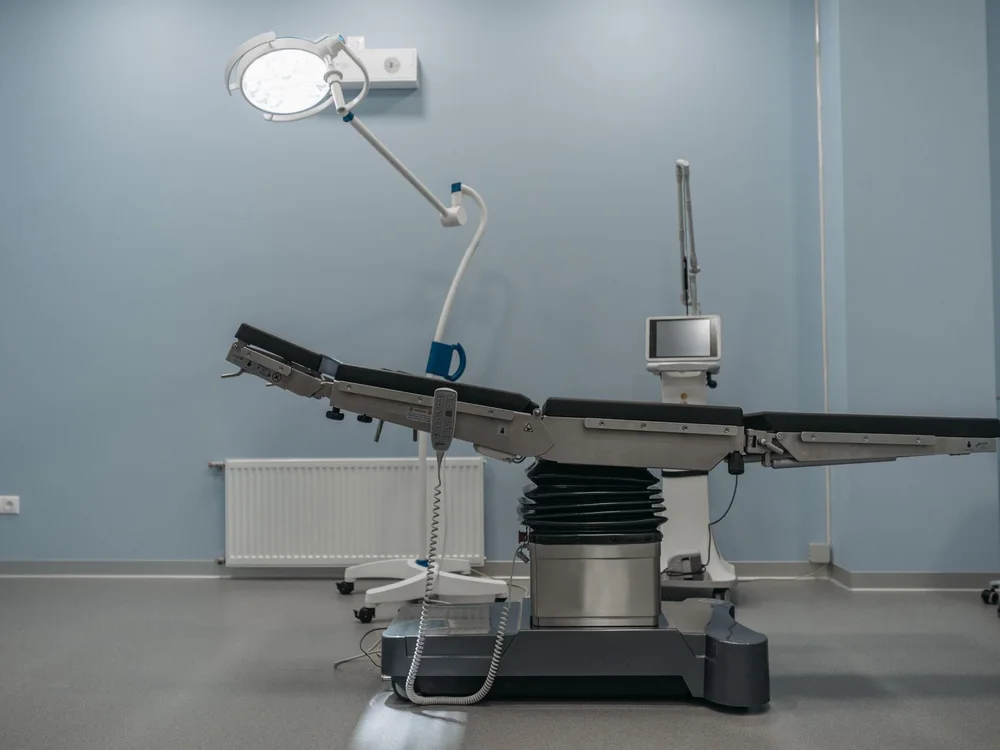
Votre intervention est réalisée dans un hôpital partenaire agréé à Istanbul par une équipe médicale habilitée.
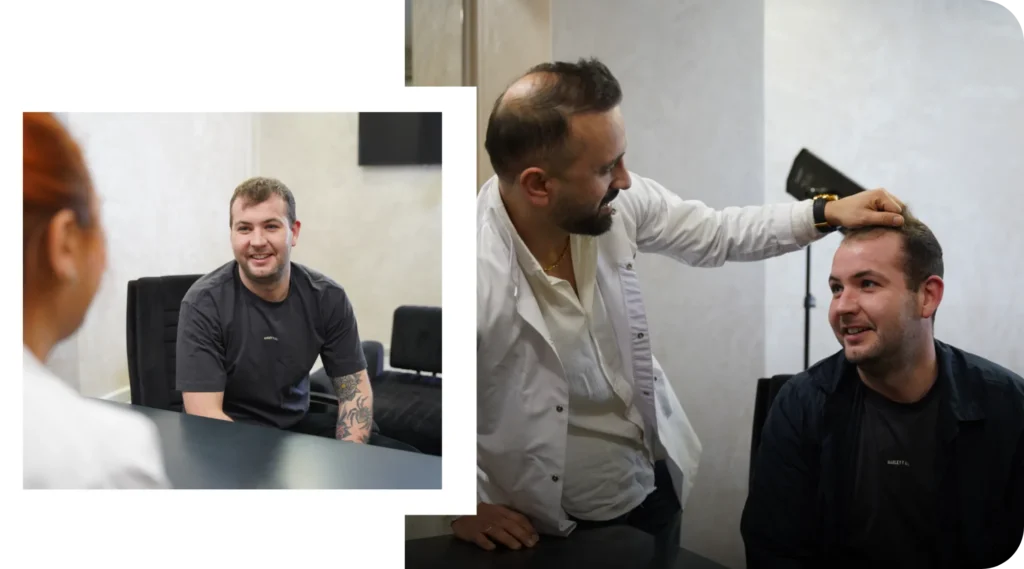
Consultation avant l'intervention
Un patient rencontrant l'équipe médicale à l'hôpital partenaire d'Istanbul
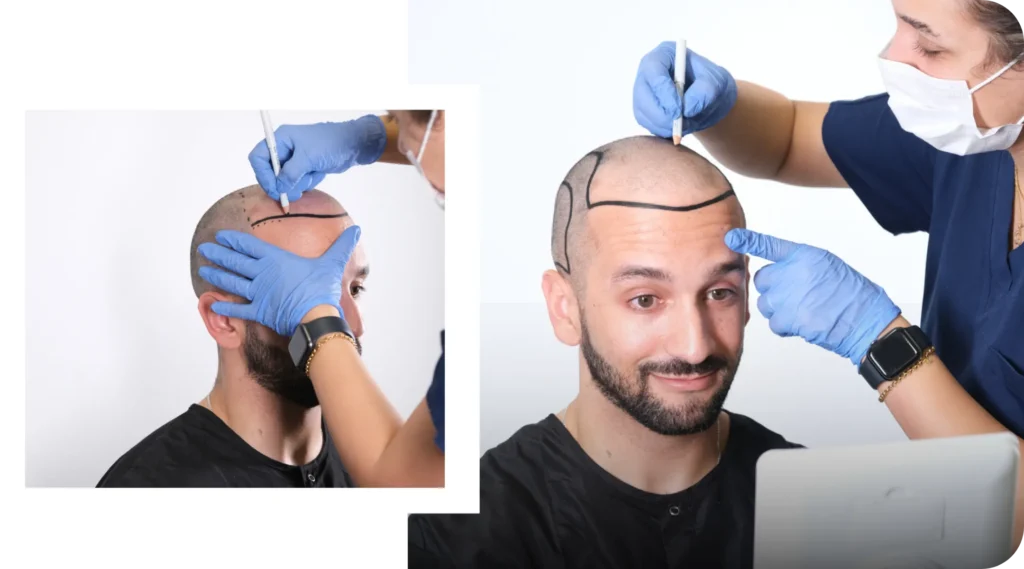
Design and planning
La ligne est tracée et validée avec vous avant tout commencement
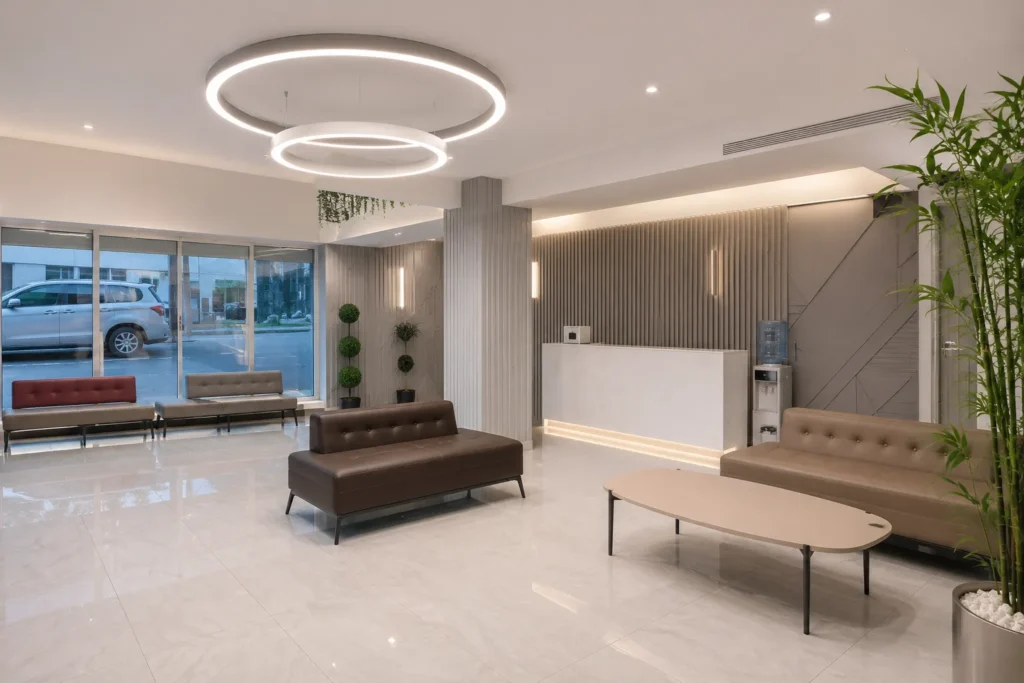
La clinique à Istanbul
Reception at the authorised partner facility
Sources et revue médicale
Les affirmations cliniques de cette page s'appuient sur la littérature publiée et les recommandations professionnelles suivantes :
Contenu de la page vérifié par l'équipe de coordination médicale de Turkey Hair Center. Dernière vérification : 14.09.2026. Cette page est informative et ne remplace pas une consultation médicale en personne.
Découvrez nos autres traitements de restauration capillaire
Chirurgie esthétique est une option parmi d'autres. Selon votre schéma de chute, votre réserve donneuse et vos objectifs, une autre technique peut vous convenir davantage.
Envoyez trois photos : de face, du dessus et de côté. Vous recevez une recommandation de technique, une fourchette de greffons et une réponse claire sur ce qui est réalisable, avant toute discussion de prix.
Vos informations sont transmises à l'équipe
Un coordinateur patient vous recontactera sous peu. Si vous souhaitez envoyer vos photos maintenant, WhatsApp est le moyen le plus rapide.
Nous répondons rapidement, jour et nuit, dans votre langue.
Équipe multilingue, sans engagement
Données protégéesConforme au RGPD et à la loi KVKK, 100% confidentiel
Intermédiaire de tourisme médical agréé
Turkey Hair Center est la marque de restauration capillaire de Healthy Way Tourism, intermédiaire international de tourisme de santé agréé. Tous les actes médicaux sont réalisés par des professionnels de santé agréés au sein d'établissements de santé autorisés en Türkiye, conformément à la réglementation du ministère de la Santé.