Hair Transplant Side Effects: Common Risks, Warning Signs and How to Avoid Them
Learn about common hair transplant side effects, from temporary swelling and shock loss to rare complications like infection. Discover how to avoid risks.
Performed at authorized partner hospitals Turkey Hair Center is a Ministry of Health authorized health-tourism intermediary, not a clinic.
What Are the Most Common Hair Transplant Side Effects?
The most frequent hair transplant side effects are generally mild and temporary.
Common temporary effects include:
Swelling and redness
Itching and scabbing
Mild pain or scalp tightness
Temporary numbness
Shock loss (temporary shedding)
Less common but serious complications include:
Infections or severe folliculitis
Poor graft growth
Wound healing issues or necrosis
If you experience escalating pain, pus, or fever, contact your clinic for a prompt medical assessment.
A hair transplant is, at its core, a surgery. Because it feels so accessible and minimally invasive, it is easy to forget that real medical risks still exist.
Yes, most side effects simply mean your body is healing. But ignoring the bad ones can lead to serious complications. Your actual risk level isn't random. It hinges entirely on the clinic you pick, the surgeon's skill, your baseline health, and how strictly you stick to the aftercare rules. Let's look at exactly what your scalp will go through in the coming weeks. We'll separate the harmless symptoms from the red flags you never want to ignore.
How Hair Transplants Work and Why Side Effects Happen
Side effects don't happen in a vacuum. They are a direct response to physical trauma.
Grafts, Incisions and Healing
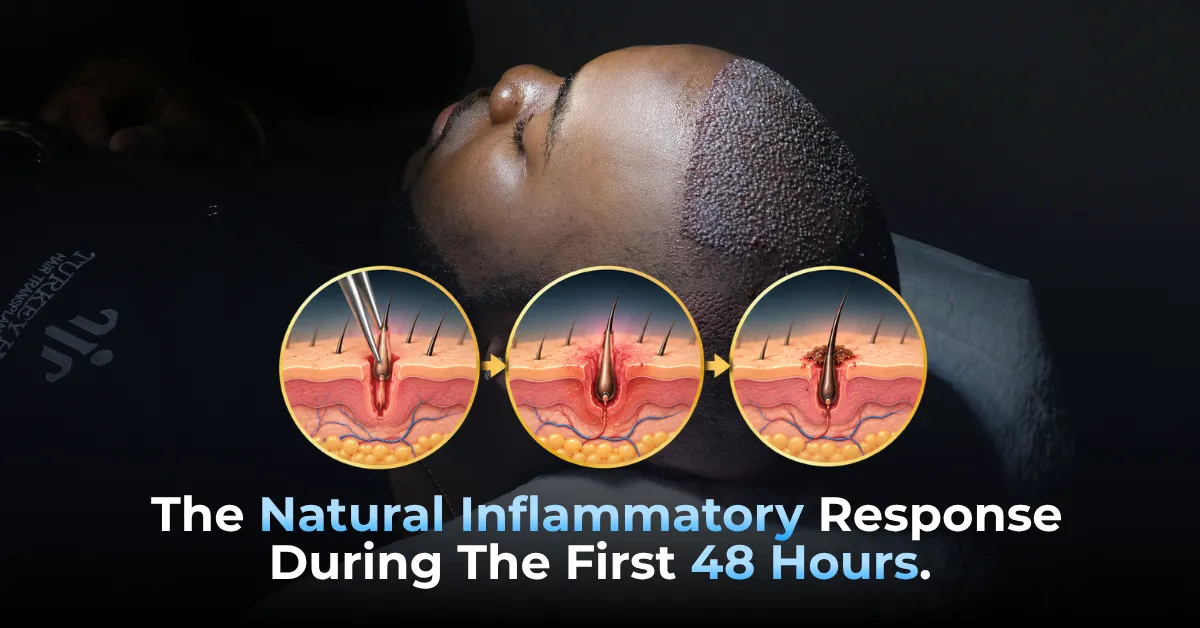
During the procedure, surgeons extract thousands of follicles and punch tiny holes into your bald spots to place them. Think of every single puncture as a micro-wound. Your immune system immediately kicks in. The result? Inflammation, fluid buildup, and scabs rushing in to seal the open skin.
Donor Area vs Recipient Area
After a hair transplant procedure, your scalp separates into two different healing zones. The donor area, which is where the hair was taken, often feels tight, itchy, or slightly sore. The other zone, your recipient area, which is where the hair was planted, is typically swollen, red, and covered in scab dots. They require distinct care protocols.
What Is Normal vs Concerning?
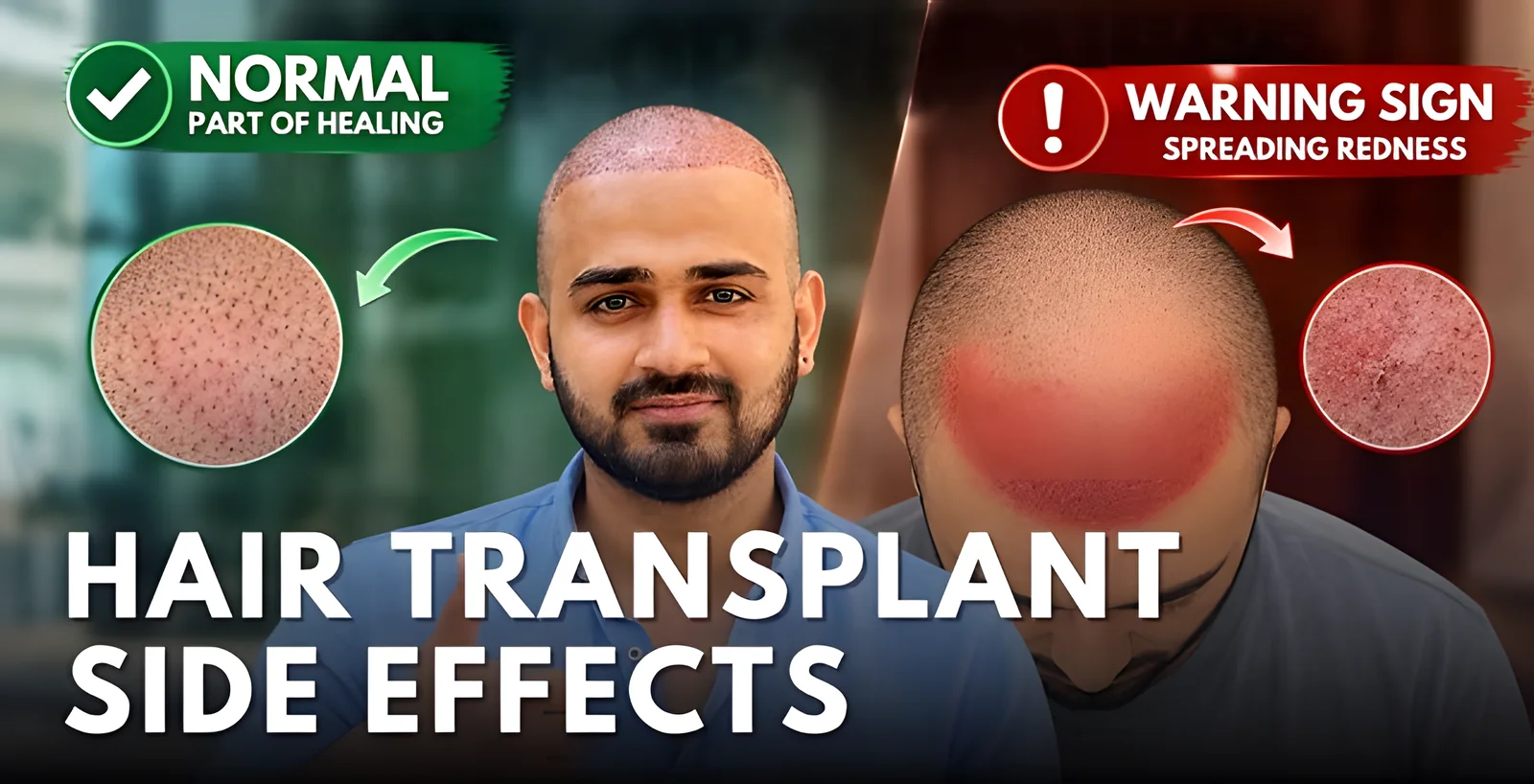
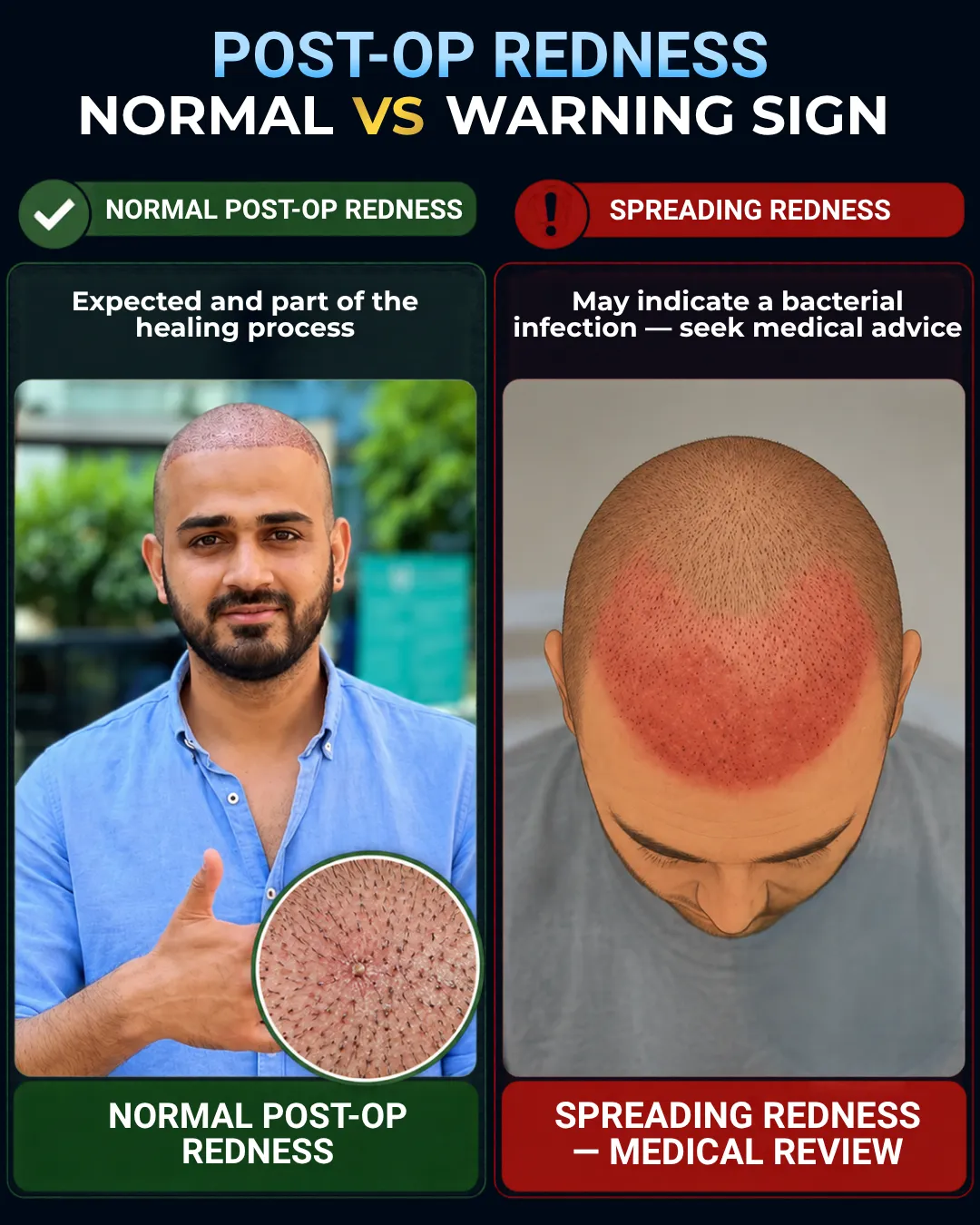
Knowing what is normal eliminates your stress after the procedure. Mild redness, scabbing, and slight swelling are normal findings. But if you experience a sudden spike in pain, yellow pus on your scalp, a foul smell, or a fever, seek medical help. Those are big red flags. Knowing the difference ensures you act fast if something is actually wrong.
Quick Reference: Normal Healing vs. Warning Signs
Symptom Category
Normal Healing (Expected)
Warning Sign (Contact Clinic)
Swelling & Pain
Forehead swelling, mild scalp tightness
Severe, unmanageable pain
Bleeding
Minor oozing in the first 48 hours
Active, continuous bleeding
Fluids & Scabs
Clear fluid, dry brown crusts
Yellow/green pus, foul odor
Skin Appearance
Pinkish scalp fading over weeks
Grey or black patches (necrosis)
Temperature
Normal body temperature
Persistent fever, scalp feels unusually hot
Short-Term Hair Transplant Side Effects: First Days to Weeks
The first two weeks are usually when most visible symptoms appear. You will experience a few predictable reactions as your scalp begins to heal.
Hair Transplant Side Effects Day 3: Swelling and Pain
Swelling (edema) happens to almost everyone. Fluid builds up in your scalp and inevitably drains down toward your forehead, sometimes even puffing up your eyes. When tracking your recovery timeline, hair transplant side effects day 3 usually involve this peak swelling before it begins to fade. A tight, mildly sore feeling in the back of your head is also standard and easy to manage with basic painkillers.
Hair Transplant Week 2: Scab Management and Healing
Don't panic if you see a bit of blood or clear fluid during the first 48 hours. The tiny incisions need to drain. Eventually, this fluid dries into protective crusts. Dealing with hair transplant week 2 scabs is a standard part of the timeline, and they will naturally wash away after 10 to 14 days.
Itching, Redness and Irritation
Healing skin itches. It's that simple. Your donor area will likely feel the most irritated, and the redness (erythema) can stick around for a few weeks. Whatever you do, do not scratch. You risk pulling out the new grafts.
Numbness and Tingling
The extraction and implantation process inevitably disturbs superficial nerve endings. You might feel a strange tingling or complete numbness across your scalp. Sensation usually creeps back slowly as those nerves repair themselves over the following weeks or months.
Hiccups After Hair Transplant
After the procedure, some patients experience persistent hiccups. Even though it sounds strange, it's a documented reaction. These hiccups are often tied to the medications, physical stress, or minor nerve irritation during the procedure. They typically fade in a few days.
Infection, Folliculitis and Pimples After Hair Transplant
Bacteria are naturally present on our skin barrier. They are mostly harmless. However, when we breach the barrier, we create an entry point for bacteria. This increases the risk of infection following the procedure. Maintaining scalp hygiene is crucial for both your health and your investment.
Signs of Infection
If you suspect an infection, please contact your clinic and seek medical attention immediately. Foul-smelling, greenish-yellow pus, redness, tenderness, and fever may occur following an infection-these are some of the warning signs we previously mentioned. All of them indicate the need for emergency medical assistance.
Sterile vs Bacterial Folliculitis
Weeks down the line, as new hairs force their way through the skin, small pimples often pop up. This is usually just "sterile" folliculitis-annoying, but harmless inflammation from trapped hairs. Bacterial folliculitis, however, is an active infection that might demand a round of antibiotics.
What Not to Do with Pimples
Leave the pimples alone. Squeezing them drives the inflammation deeper, risking the follicle and spreading bacteria to healthy areas. Let your clinic guide you on using warm compresses instead.
Shock Loss After Hair Transplant: Is It Normal?
Seeing your newly transplanted hair fall out can be stressful, but it can be a normal part of recovery.
Recipient Area Shock Loss
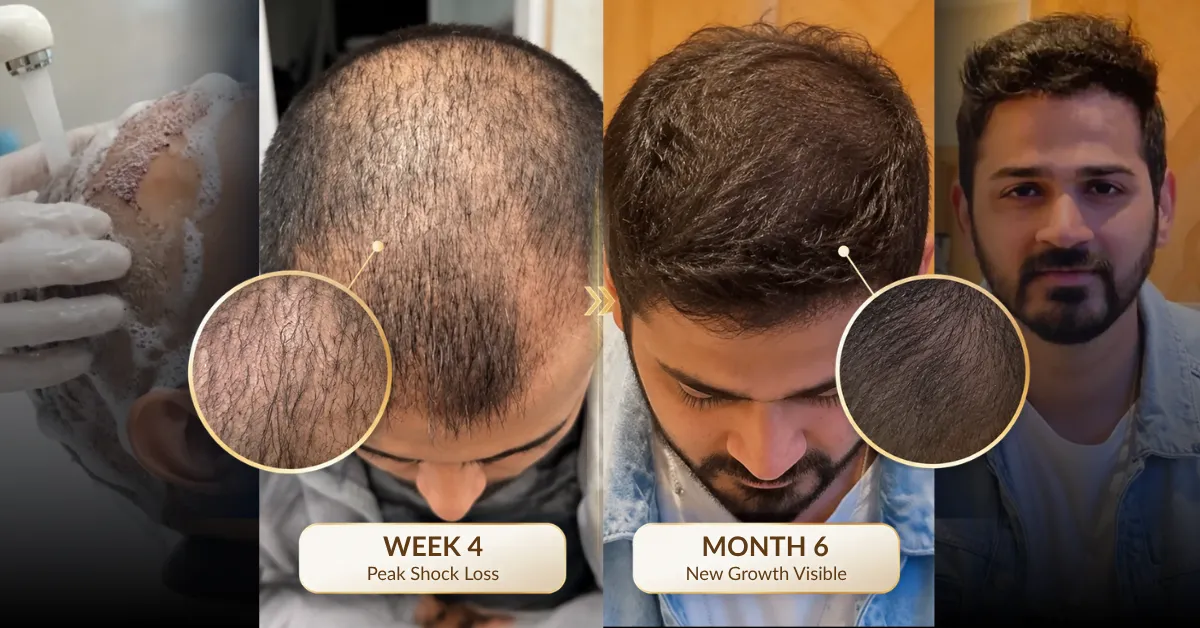
Between weeks two and eight, many transplanted hair shafts will shed. This is widely known as shock loss. The trauma of the surgery forces the follicles into a resting phase. The hair drops out, but the follicle itself often remains secure beneath the skin.
Donor Hair Effluvium
In some cases, the native hair around your donor area or existing hair in the recipient area may also shed due to surgical stress (postoperative effluvium). This creates a temporarily thinner appearance.
When Shedding Becomes Concerning
Shock loss is a temporary phase, and new growth usually begins around month three or four. Persistent bare areas or very low density at 9 to 12 months may warrant an assessment of graft growth by your treating surgeon.
Medium- and Long-Term Hair Transplant Side Effects
Sometimes, issues are not immediate medical concerns but rather aesthetic challenges or chronic annoyances that become apparent months later.
Poor Growth and Patchy Density
Graft survival rates can vary. If grafts are handled improperly, left out of the body too long, or packed incorrectly, survival can decrease. This may result in patchy, weak, or unexpectedly thin growth.
Unnatural Hairline
If multi-hair grafts are placed in the very front row, or if the hairline design does not match your natural facial structure, the result may look unnatural. Correcting a poorly designed hairline often requires repair surgery.
Persistent Numbness or Tingling
While temporary numbness is standard, some patients may experience altered sensation or chronic tingling for longer periods due to deeper nerve impact.
Cysts, Ingrown Hairs and Chronic Follicle Inflammation
If the surgical team places grafts too deeply, hairs can get trapped beneath the surface. This creates a breeding ground for epidermoid cysts, painful ingrowns, or chronic inflammation that a doctor might need to physically drain.
Scarring, Donor Area Problems and Overharvesting
Even minimally invasive techniques can leave some degree of scarring, although its visibility varies significantly between patients and surgical methods.
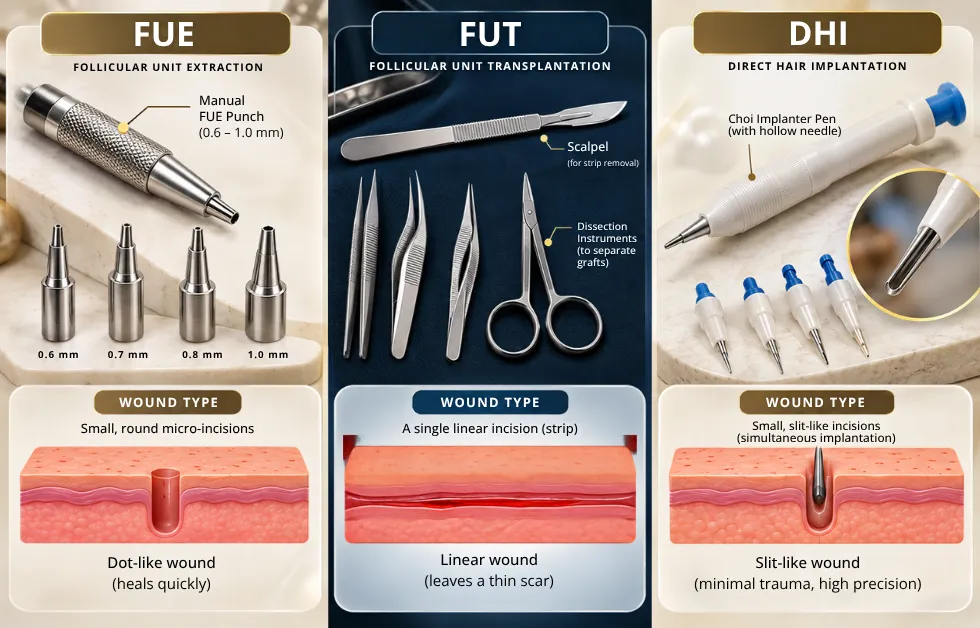
FUE Donor Scarring
FUE isn't truly "scarless." The punch tools leave behind hundreds of tiny, white dots. However, if the surgeon spaces the extractions well and uses the right punch size, these dots become virtually invisible once your hair grows out even a little.
FUT Scar Widening
FUT relies on removing a continuous strip of skin, which inevitably leaves a linear scar. If your scalp heals poorly or there is too much tension on the stitches, that line can stretch and become quite prominent over time.
Hypertrophic Scars and Keloids
Got a history of thick, raised scars (keloids or hypertrophic scarring)? You need to tell your doctor beforehand. Any surgical incision can trigger them.
Donor Depletion and Texture Changes
Taking too many grafts in one go is a massive red flag. Overharvesting leaves the back of your head looking patchy, thin, and sometimes "moth-eaten". You cannot easily fix a wrecked donor area, making conservative extraction vital.
Serious but Rare Hair Transplant Complications
These complications are quite uncommon. However, a comprehensive safety review in the NCBI notes that while mild edema and pain are standard, more severe vascular or tissue issues can occur in rare instances.
Recipient Area Necrosis
Necrosis refers to tissue death. If factors such as overly dense packing or impaired blood flow compromise tissue health, the skin can be severely damaged. This may leave a permanent scar.
Wound Dehiscence
This primarily relates to FUT procedures. If the scalp is closed under too much tension, or if early recovery guidelines are not followed, the surgical wound can potentially separate (dehiscence).
Severe Bleeding or Vascular Complications
A little spotting is fine. Heavy, arterial bleeding is a major problem. In very rare cases, abnormal vessel connections (arteriovenous fistulas) form and require specialist intervention.
Allergic Reactions
Reactions to anesthesia, surgical washes, or antibiotics can happen. Most just cause a rash, but severe anaphylaxis remains a rare, life-threatening emergency.
FUE vs FUT vs DHI: How Technique Affects Side Effects
Every technique has its own baggage. Knowing the differences helps you choose wisely.
FUE Side Effects
FUE involves individual punches. Its primary risks center around donor area overharvesting, pinpoint scarring, and potential graft transection (cutting the root) depending on the surgeon's skill.
FUT Side Effects
Because FUT involves removing a strip of tissue, it may carry a different risk profile for persistent nerve discomfort, wound dehiscence, or linear scar widening compared to FUE. However, some surgeons still select it based on the patient's specific donor area characteristics and graft requirements.
DHI Side Effects
Direct Hair Implantation (DHI) uses a pen-like tool that modifies how incisions are made. While it can offer precision, incorrect handling of the implanter pen can still impact the graft root or cause localized swelling.
Which Technique Has the Lowest Risk?
Risk depends heavily on the patient's characteristics, the chosen technique, surgical planning, and the experience of the medical team. The best approach is highly personalized.
Pre-Op Steps That Reduce Hair Transplant Risks
Preparation is a significant part of a safe surgery. You can help minimize risks before you even arrive at the clinic.
Candidacy and Correct Diagnosis
Not all hair loss is suited for a transplant. If your hair loss is due to an autoimmune condition or a thyroid issue, a transplant may not be successful. A proper medical evaluation is vital.
Medical History and Medication Review
Don't hide your health history. Conditions like diabetes directly impact how fast you heal and how easily you might get an infection.
Smoking, Alcohol and Bleeding Risk
Nicotine chokes off blood flow. This kills grafts and stalls healing. You also need to flag every supplement or medication you take, as many thin the blood and increase bleeding risks during surgery. Clinics generally advise stopping these in advance.
Setting Realistic Expectations
Pushing for a remarkably low hairline or demanding 5,000 grafts in a single session is dangerous. It spikes your complication rate and risks destroying your donor zone. Trust your doctor's clinical limits.
Aftercare That Helps Prevent Side Effects
Whatever you read online, your specific surgeon's post-operative instructions always take priority.
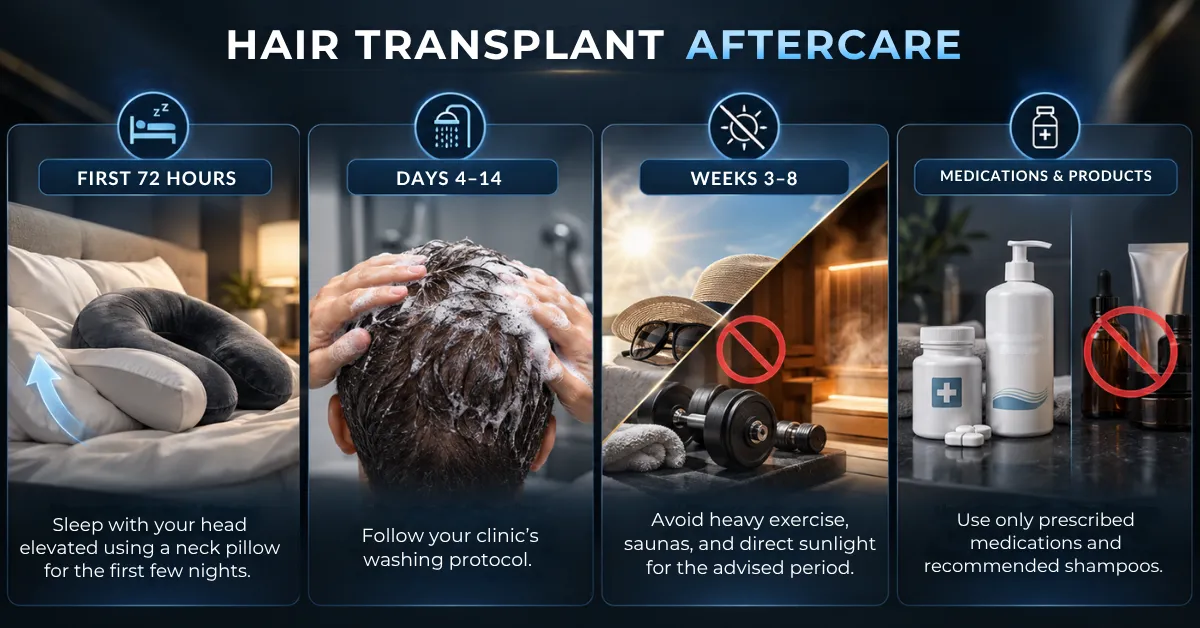
First 72 Hours: How to Sleep After Hair Transplant to Avoid Swelling
Patients frequently ask how to sleep after hair transplant to avoid swelling. The simplest trick is keeping your head elevated with a neck pillow for the first few nights. Avoid touching the grafts, as physical impact during these early days can easily dislodge them.
Days 4-14: Scab Management and Safe Grooming
Follow your clinic's washing protocol to help soften scabs so they wash away gently. Using your fingernails to scratch or pick crusts is strongly discouraged.
Weeks 3-8: Exercise, Sun Exposure and Styling
Heavy sweating and sun exposure can irritate healing skin, while intense exercise can affect blood pressure. Most clinics advise avoiding heavy gyms, saunas, and direct sunlight for a specified period.
Medications and Products: What Helps and What to Avoid
After your surgery, only use prescribed medications and recommended shampoos. Normal shampoos, unverified natural solutions, harsh chemicals, or hair dyes can cause irritation and put your newly transplanted grafts at risk. Treat your scalp like a baby and touch it only gently.
When Should You Contact Your Clinic? Warning Signs After Hair Transplant
Knowing when to reach out for professional advice keeps minor issues from becoming major problems.
Symptoms That Need Medical Review
If you notice that your forehead swelling is rapidly worsening after a few days, or if a specific area of your scalp feels unusually hot to the touch, it is a good idea to contact your clinic.
When Side Effects Last Too Long
Numbness is common for a few weeks, but if you still have significant altered sensation after several months, an evaluation may be helpful. The same applies to chronic, lingering redness.
Emergency Red Flags
Prompt medical assessment is recommended if you experience:
Sudden, severe pain that standard medication does not relieve.
Yellow or green pus oozing from the scalp.
A foul odor coming from the surgical sites.
A persistent high fever.
Patches of scalp skin turning noticeably dark or grey.
Uncontrollable bleeding.
But the serious risks-infections, dead tissue, depleted donor zones-are very real. You cut these risks dramatically by vetting your surgeon, communicating your medical history, and babying your grafts during recovery. Bottom line: if you ever feel escalating pain, spike a fever, or see pus, don't guess. Have a professional look at it right away.
Frequently Asked Questions
What are the most common hair transplant side effects?
Generally, patients experience temporary swelling, itching, redness, scabbing, and mild pain in the first few days. Most of these mild reactions resolve within a week or two with proper aftercare. Some patients feel numbness around the surgical area, and this can last a little bit longer.
How long do hair transplant side effects last?
Mild pain? Only a few days. Scabbing and swelling are almost gone in two weeks. Redness may stay longer. But if you experience numbness, it can take a few months to fully fade because the superficial nerves recover slowly. All of these are expected.
Is itching normal 10 days after hair transplant?
Yes, absolutely. It is normal for healing tissues to itch. With a hair transplant, surgeons leave tiny incisions. As they close and your scalp is healing, itching is inevitable. This annoying itch often peaks during the first two weeks. So after 10 days, it's completely normal. Just remember to avoid scratching. If this feeling is impossible to deal with, gently pat the area.
Are hair transplant side effects permanent?
Usually, no. The expected side effects like swelling and scabs disappear quickly. However, poorly performed surgeries can lead to permanent consequences. These may include widened scars, depleted donor areas, or dead tissue (necrosis). To avoid these severe side effects, it is essential to choose your clinic and doctor carefully. You should avoid substandard, "underground" procedures that offer nothing more than the promise of a low price.
Is shock loss after a hair transplant normal?
Absolutely. The trauma of the incisions shocks the newly implanted follicles into a resting state. You will likely see the actual hair shafts shed between the second and eighth week. Don't panic; the roots are safe underneath, preparing for a new growth cycle.
Can hair transplants cause permanent damage?
Yes, if done poorly. Overzealous harvesting ruins the donor area forever. Unmanaged infections or placing grafts at the wrong depth can also permanently scar the scalp.
What are the signs of infection after hair transplant?
Watch out for throbbing pain that keeps getting worse, a hot sensation on the scalp, spreading redness, foul smells, and any yellowish-green discharge. If these hit, you need a doctor immediately.
Is folliculitis after hair transplant dangerous?
Not always. When new hairs break through the skin, they often cause tiny, sterile pimples that clear up easily. But if the bumps are caused by bacteria, it is an infection that needs medical care. Never pop them yourself.
Can scabs damage grafts after hair transplant?
Scabs themselves protect the healing area. However, if you forcefully scratch them off before they are ready, you risk pulling out the grafts with them.
Does FUE leave scars?
Yes, but they are micro-scars. The extraction punches leave tiny dots on the back of your head. If you keep your hair at a standard length, they blend in perfectly. If you shave down to the skin, they will be visible.
Is FUT more likely to leave a scar?
FUT guarantees a linear scar because the surgeon cuts out a strip of scalp. How noticeable it is depends entirely on your skin's healing ability and the surgeon's suturing skills. Sometimes, these lines stretch and widen as months pass.
Can a hair transplant fail?
Unfortunately, yes. If the grafts are left out too long, mishandled, or if the patient ignores aftercare rules, the hair simply won't grow. Underlying undiagnosed health issues can also cause a transplant to fail.
Can a hair transplant fail years later?
The transplanted hairs themselves are generally permanent and resistant to hair loss. However, if you continue to lose your native, non-transplanted hair behind the new hairline, the overall result can look patchy or "failed" years down the line. Managing ongoing hair loss with your doctor is key.
What are the signs of a failed hair transplant?
Seeing scabs or hairs fall out early on is a normal part of recovery. However, persistent bare areas or very low density at 9 to 12 months may warrant an assessment of graft growth and the overall result by your treating surgeon.
How can I avoid hair transplant side effects?
Do your homework before picking a clinic. Be brutally honest about your medical background. Once the surgery is done, treat your doctor's aftercare instructions regarding sleep, washing, and activity like gospel.
Is hair transplant surgery safe?
Hair transplant surgery is highly safe when handled by a skilled medical team in a proper clinical environment. But fundamentally, this is a surgical procedure. Treating it with the respect it deserves is the key to a complication-free recovery.
How Serious Are Hair Transplant Side Effects?
For most people, the aftermath is just annoying rather than dangerous. Swelling, itching, scabs, and that infamous temporary shedding phase are all just stepping stones to a healed scalp.
But the serious risks-infections, dead tissue, depleted donor zones-are very real. You cut these risks dramatically by vetting your surgeon, communicating your medical history, and babying your grafts during recovery. Bottom line: if you ever feel escalating pain, spike a fever, or see pus, don't guess. Have a professional look at it right away.
About the Author
Nazmi G. is a Senior Trichologist and Hair Restoration Consultant with extensive experience guiding patients through post-operative recovery, graft security protocols, and donor area management. He specializes in patient education regarding FUE, DHI, and FUT surgical outcomes.
Medical Review Note
This guide has been rigorously reviewed for medical accuracy by Dr. Tompi, M.D., focusing on patient safety and complication management. However, reading an article is not a substitute for a professional diagnosis. Hair transplant complications vary drastically based on your skin type, medical history, and post-op care. If something feels wrong during your recovery, your first step should always be contacting your operating surgeon.
Editorial Policy & Trust
We aim to explain side effects objectively-without inducing unnecessary panic, but without minimizing real medical risks. We strictly avoid unproven claims such as "completely risk-free" or "100% guaranteed success." In the event of suspected complications, we strongly advise direct communication with your performing clinic or a qualified dermatologist.
References and Medical Sources
International Society of Hair Restoration Surgery (ISHRS). Patient safety resources and post-operative guidance. (ishrs.org)
Romera de Blas C, et al. (2026). Complications in follicular unit excision hair transplantation: current evidence and practical approaches. Front. Med. (PubMed Central (NIH))
American Academy of Dermatology (AAD). Resources on folliculitis, bacterial infections, and scarring tendencies. (aad.org)
National Health Service (NHS). Hair transplant guidance, procedure overview, and associated risks. (nhs.uk)
Zito PM, et al. StatPearls. Hair Transplantation overview, surgical techniques, and anatomical healing processes. (ncbi.gov)
Send three photos: front, top and sides. You get a technique recommendation, a graft range and a straight answer about what is achievable, before anyone talks about price.
Your details are with the team
A patient coordinator will get back to you shortly. If you would like to send your photos now, WhatsApp is the fastest way to do it.
We respond quickly, day or night, in your language.
Multilingual team, no obligation
Data protectedKVKK and GDPR compliant, 100% confidential
Authorized Health Tourism Intermediary
Turkey Hair Center is the hair-restoration brand of Healthy Way Tourism, an authorized international health-tourism intermediary. All medical procedures are performed by licensed medical professionals at authorized healthcare facilities in Turkiye, in accordance with the regulations of the Ministry of Health.