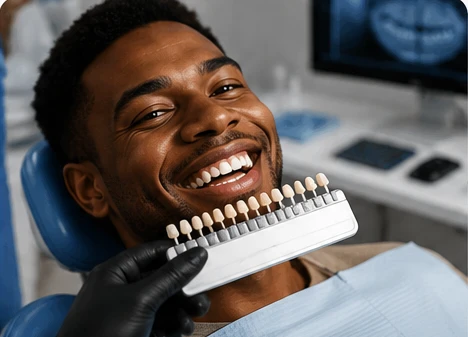
Réalisé dans des hôpitaux partenaires agréés Turkey Hair Center est un intermédiaire de tourisme médical agréé par le Ministère de la Santé, et non une clinique.
Ce que comprennent réellement les soins dentaires en Türkiye
Cette page explique comment le traitement est planifié, ce qui détermine le prix qui vous est proposé, combien de jours chaque soin nécessite et quelles questions poser avant de réserver quoi que ce soit.
Établissements agréésCliniques dentaires agréées à Istanbul Traitement par des dentistesPlanification et traitement par des praticiens agréés Coordination anglophoneUn seul interlocuteur du début à la fin
La réponse courte : la plupart des patients internationaux réalisent leur traitement implantaire en Türkiye en deux séjours, environ 3 à 5 jours pour la chirurgie et 5 à 7 jours pour la restauration définitive, séparés par une période de cicatrisation de 3 à 6 mois. Les couronnes et facettes se terminent généralement en un seul séjour de 5 à 7 jours. Les tarifs publiés par les cliniques pour un implant unitaire en Türkiye en 2026 se situent globalement entre 400 et 900 dollars américains, contre environ 3 000 à 5 000 dollars aux États-Unis. Votre chiffre dépend d'une évaluation clinique, pas d'un prix catalogue.
Les soins dentaires à l'étranger ne forment pas un produit unique. Ce que les patients appellent « se faire refaire les dents en Turquie » recouvre plusieurs parcours cliniques très différents, chacun avec son calendrier, son profil de risque et son coût. Savoir précisément lequel vous concerne est la première chose qui distingue un plan solide d'une mauvaise surprise coûteuse.
Treatment
What it addresses
Days in Türkiye
Number of visits
Single dental implant
One missing tooth, root replaced with a titanium fixture
3-5 days, then 5-7 days
Two, 3-6 months apart
All-on-4 / All-on-6
A full arch supported by four or six implants
5-7 days, then 7 days
Two, 3-6 months apart
Zirconia crowns
Damaged, discoloured or worn teeth
5-7 days
One
Laminate veneers
Front-tooth appearance, minimal tooth reduction
5-7 days
One
Bone graft or sinus lift
Insufficient bone volume for an implant
Adds 3-4 days
Usually merged with implant visit
Root canal, extraction, cleaning
Preparatory work before restoration
1-3 days
Intégré au séjour principal
Les implants exigent une ostéointégration, c'est-à-dire la croissance de l'os autour de la vis, avant qu'une couronne définitive puisse être posée. Cela prend des mois, pas des jours. Un plan qui promet implants et couronnes définitives en une seule semaine applique soit une mise en charge immédiate dans un cas qui le permet réellement, soit un raccourci. Demandez de quoi il s'agit et pourquoi votre cas y est éligible.
Ce que coûtent les soins dentaires en Türkiye, et ce qui fait réellement bouger
Le prix est la première question que presque tout le monde pose, et c'est aussi celle à laquelle on répond le plus mal. Les chiffres publiés varient beaucoup parce qu'ils décrivent des choses différentes : certains ne citent que l'implant, d'autres l'implant avec le pilier et la couronne, d'autres encore un forfait tout compris avec hôtel et transferts.
Le tableau ci-dessous présente les fourchettes publiées en 2026 par les cliniques et les plateformes de tourisme médical, en regard des chiffres couramment cités pour les États-Unis et le Royaume-Uni. Considérez-les comme un repère de marché, pas comme un devis. Un chiffre réel n'apparaît qu'après examen de vos radiographies et de votre situation clinique. La même logique vaut pour tout traitement tarifé ainsi : le guide des prix de la greffe de cheveux montre comment un devis se construit à partir de constats cliniques plutôt que d'une grille tarifaire.
Treatment
Türkiye (published 2026 ranges)
United States
United Kingdom
Single implant with crown
400-900 USD
3,000-5,000 USD
£2,000-£2,800
All-on-4, per arch
3,000-7,000 USD
20,000-30,000 USD
£10,000-£15,000
Zirconia crown
150-300 USD
1,000-1,800 USD
£500-£900
Laminate veneer
180-350 USD
900-2,500 USD
£500-£1,000
Indicative ranges, not a quote.
Source : fourchettes de prix publiées par des cliniques turques et des plateformes internationales de tourisme médical, août 2026. Les taux de change évoluent ; la comparaison est indicative.
Les quatre variables qui font réellement varier votre devis
Marque et origine de l'implant. Les systèmes suisses, allemands, coréens et turcs diffèrent par leur prix, par l'ampleur des données publiées à long terme et par la facilité avec laquelle un dentiste de votre pays pourra intervenir dessus par la suite. Ce dernier point est systématiquement négligé, et il compte davantage que la marque.
Matériau de restauration. Zircone monolithique, zircone stratifiée, e.max et céramo-métallique se distinguent par leur résistance, leur translucidité et leur coût. Une molaire postérieure et une incisive n'appellent pas le même matériau.
Travaux préparatoires. Greffes osseuses, élévations de sinus, extractions et traitement des gencives ne sont pas des suppléments facultatifs inventés pour gonfler la facture. Si votre volume osseux est insuffisant, un implant posé sans greffe est un échec programmé.
Nombre d'éléments. Le prix unitaire baisse à mesure que le nombre augmente : c'est pourquoi un devis pour une arcade complète n'équivaut jamais au prix d'une dent multiplié par le nombre de dents.
Un devis très inférieur à tous les autres diffère généralement par son contenu, non par son tarif. Demandez la liste des prestations par écrit : implant, pilier, couronne, provisoire, imagerie, consultation, suivi. Si l'un de ces éléments est hors devis, le montant annoncé n'est pas le prix.
Comment se déroule le processus, du premier message à la couronne définitive
Voici comment se déroule normalement un traitement coordonné. Rien n'est réservé avant qu'un avis clinique n'existe.
Assessment
Vous envoyez une radiographie panoramique, ou celle-ci est organisée près de chez vous, accompagnée de photographies et d'un bref historique médical. Un dentiste examine le dossier et indique ce qui est cliniquement possible.
Written plan
Vous recevez un plan de traitement nommant chaque acte, le matériau, le nombre de séjours et le montant total. Vos questions trouvent réponse avant toute programmation.
Travel arrangements
Les dates, l'hébergement et les transferts s'organisent autour du calendrier clinique, et non l'inverse.
Examination on arrival
Un scanner 3D et un examen en présentiel confirment le plan. Si les constats diffèrent de l'évaluation à distance, le plan est révisé et réexpliqué avant le début du traitement.
Treatment
La chirurgie ou la préparation est réalisée par le dentiste traitant au sein d'un établissement autorisé, selon un séquencement adapté à votre cas.
Follow-up
Vous repartez avec des consignes de soins écrites, un dossier destiné à votre dentiste habituel et le nom d'un interlocuteur pour vos questions une fois rentré.
Comment vérifier qu'une clinique dentaire en Türkiye est bien ce qu'elle prétend être
La Türkiye encadre l'exercice dentaire, et les cliniques légitimes opèrent sous autorisation du ministère de la Santé. La manière dont le traitement est coordonné avec ces établissements est présentée séparément, car la société coordinatrice et la clinique soignante ne sont pas la même entité. La difficulté, pour un patient à l'étranger, n'est pas que la vérification soit impossible : c'est que peu de gens savent quelles questions produisent une réponse vérifiable. Les voici.
Demandez le nom du dentiste traitant, pas celui de la clinique. Un nom de clinique ne vous dit rien sur la personne qui tiendra l'instrument. Un praticien nommément désigné peut être vérifié.
Demandez quel établissement détient l'autorisation sanitaire et vérifiez que l'adresse des soins y correspond.
Demandez ce qui se passe si une couronne s'ébrèche ou si un implant échoue après votre retour. Une réponse sérieuse décrit une garantie définie : ce qu'elle couvre, ce qu'elle exclut et qui prend en charge le vol de retour. Une réponse vague est déjà une réponse.
Demandez la marque de l'implant et la documentation de lot. Vous devez repartir avec un passeport implantaire. Sans lui, un dentiste dans votre pays ne pourra pas retrouver les composants compatibles.
Demandez combien de jours sont prévus pour votre traitement précis. Si le calendrier est plus court que les normes cliniques du tableau ci-dessus, demandez ce qui est comprimé.
Demandez à qui vous vous adresserez après le vol de retour. Un suivi qui s'arrête à l'aéroport n'est pas un suivi.
Apportez votre dossier de traitement à votre dentiste habituel avant de partir, pas après. Un praticien local qui a vu le plan à l'avance acceptera bien plus volontiers d'assurer le suivi de routine. Rentrer avec un système implantaire inconnu et sans documents est la première raison pour laquelle les patients peinent à trouver un suivi près de chez eux.
What is actually included in dental treatment in Türkiye
Dental treatment abroad is not a single product. What patients call "getting my teeth done in Turkey" covers several very different clinical pathways, each with its own timeline, risk profile and cost. Being clear about which one applies to you is the first thing that separates a sound plan from an expensive surprise.
Implants need osseointegration, the bone grows onto the fixture, before a permanent crown can be loaded. That takes months, not days. A plan that promises implants and final crowns inside a single week is either using immediate-loading in a case that genuinely allows it, or it is cutting a corner. Ask which one it is, and ask why your case qualifies.
What dental treatment in Türkiye costs, and what actually moves the price
Price is the first question almost everyone asks, and it is also the question most likely to be answered badly. Published figures vary widely because they describe different things: some quote the fixture only, some the fixture plus abutment plus crown, some an all-inclusive package with hotel and transfers.
The table below shows the ranges publicly listed by clinics and medical travel platforms in 2026, alongside commonly cited figures for the United States and United Kingdom. Treat them as market context for orientation, not as a quotation. A real figure comes only after an assessment of your x-rays and clinical situation. The same logic governs every treatment priced this way: the hair transplant cost guide shows how a quote is assembled from clinical findings rather than read off a list.
Source: price ranges published by Turkish clinics and international medical travel platforms, August 2026. Currency values shift; the comparison is indicative.
The four variables that actually change your number
Implant brand and origin. Swiss, German, Korean and Turkish systems differ in price, in the depth of published long-term data, and in how easily a dentist in your own country can service them later. This last point is routinely ignored and it matters more than the brand name.
Restoration material. Monolithic zirconia, layered zirconia, e-max and metal-ceramic behave differently in strength, translucency and cost. A back molar and a front incisor do not need the same material.
Preparatory work. Bone grafts, sinus lifts, extractions and gum treatment are not optional extras invented to raise the bill. If your bone volume is insufficient, an implant placed without grafting is a fixture waiting to fail.
Number of units. Per-unit prices fall as the count rises, which is why a full-arch quote never equals the single-tooth price multiplied out.
A quote that is far below every other quote usually differs in what it contains, not in what it charges. Ask for the inclusion list in writing: fixture, abutment, crown, temporary, scans, consultation, follow-up. If any of those sit outside the quoted number, the number is not the price.
How the process works, from first message to final crown
The sequence below is how coordinated treatment normally runs. Nothing is booked before a clinical opinion exists.
Assessment
You send a panoramic x-ray, or one is arranged locally, along with photographs and a short medical history. A dentist reviews the case and states what is clinically possible.
Written plan
You receive a treatment plan naming each procedure, the material, the number of visits and the total. Questions are answered before anything is scheduled.
Travel arrangements
Dates, accommodation and airport transfers are arranged around the clinical timetable, not the other way round.
Examination on arrival
A 3D scan and in-person examination confirm the plan. If findings differ from the remote assessment, the plan is revised and re-explained before treatment begins.
Treatment
Surgery or preparation is carried out by the treating dentist at an authorized institution, in stages appropriate to your case.
Follow-up
You leave with written aftercare instructions, records for your own dentist, and a named contact for questions after you get home.
How to check that a dental clinic in Türkiye is what it claims to be
Türkiye regulates dental practice, and legitimate clinics operate under Ministry of Health authorization. How treatment is coordinated with those institutions is set out separately, because the coordinating company and the treating clinic are not the same entity. The difficulty for a patient abroad is not that verification is impossible, it is that most people do not know which questions produce a checkable answer. These do.
Ask for the name of the treating dentist, not the clinic. A clinic name tells you nothing about who will hold the handpiece. A named practitioner can be looked up.
Ask which institution holds the health facility authorization and confirm the treatment address matches it.
Ask what happens if a crown chips or an implant fails after you return. A serious answer describes a defined warranty, what it covers, what it excludes, and who pays for the return flight. A vague answer is itself the answer.
Ask for the implant brand and the batch documentation. You should leave with an implant passport. Without it, a dentist at home cannot match components later.
Ask how many days are allocated to your specific treatment. If the schedule is shorter than the clinical norms in the table above, ask what is being compressed.
Ask who you speak to after the flight home. Aftercare that ends at the airport is not aftercare.
Bring your treatment records to your own dentist before you travel, not after. A local dentist who has seen the plan in advance is far more willing to handle routine follow-up later. Arriving home with an unfamiliar implant system and no paperwork is the single most common reason patients struggle to find local aftercare.
Who is a good candidate, and who should wait
Being honest about this is not a marketing weakness. Patients treated when they should have waited generate the complications that give medical travel its reputation.
Qui est un bon candidat, et qui devrait attendre
Être honnête sur ce point n'est pas une faiblesse commerciale. Les patients traités alors qu'ils auraient dû attendre génèrent les complications qui font la réputation du tourisme médical.
Treatment is usually straightforward when
la santé gingivale est stable et toute infection active a été traitée ;
le volume osseux est suffisant, ou une greffe est prévue et acceptée dans le calendrier ;
l'état de santé général est stable et toute maladie chronique est équilibrée, à la connaissance d'un médecin ;
vous pouvez vous engager sur deux séjours distincts pour un traitement implantaire, plutôt que d'espérer tout comprimer en un seul.
gum health is stable and any active infection has been treated;
bone volume is adequate, or grafting is planned and accepted as part of the timeline;
general health is stable and any chronic condition is under control with a physician's knowledge;
you can commit to two separate trips for implant work, rather than hoping to compress it into one.
Postponing is usually the better decision when
there is untreated periodontal disease, implants placed into inflamed tissue fail more often;
you smoke heavily and are unwilling to stop around the surgical period, which measurably affects healing;
diabetes or another systemic condition is poorly controlled at the time of travel;
you are being asked to decide quickly. Nothing about dental treatment improves under time pressure.
Reporter est généralement la meilleure décision lorsque
une maladie parodontale n'est pas traitée : les implants posés dans un tissu enflammé échouent plus souvent ;
vous fumez beaucoup et ne souhaitez pas arrêter autour de la période chirurgicale, ce qui altère mesurablement la cicatrisation ;
un diabète ou une autre maladie systémique est mal équilibré au moment du voyage ;
on vous demande de décider vite. Rien, en matière de soins dentaires, ne s'améliore sous la pression du temps.
Aftercare, warranties and what happens when you are home
The part of the journey that gets least attention in most guides is the part that lasts longest. Implants and crowns are maintained, not installed and forgotten.
Warranty terms differ between institutions and are worth reading rather than assuming. In practice a warranty typically covers the restoration itself against defined failure, and typically does not cover travel, accommodation, or damage from neglected hygiene. Neither of those is unusual, but knowing it in advance is the difference between a managed situation and a dispute.
Implant systems: the choice that follows you home
Most guides list implant brands as a price tier and move on. The more useful question is what happens in five years when a component needs replacing and you are sitting in a dentist's chair two thousand miles from Istanbul.
"If I need this abutment replaced in five years, can a dentist in my own country order the part?" A clinic that answers confidently and names the system is giving you something checkable. This single question separates a considered plan from a price list.
Suivi, garanties et ce qui se passe une fois rentré
La partie du parcours la moins traitée dans les guides est celle qui dure le plus longtemps. Implants et couronnes s'entretiennent ; ils ne se posent pas pour être oubliés.
Les conditions de garantie diffèrent d'un établissement à l'autre et méritent d'être lues plutôt que supposées. En pratique, une garantie couvre généralement la restauration elle-même contre des défaillances définies, et ne couvre généralement ni le voyage, ni l'hébergement, ni les dommages liés à une hygiène négligée. Rien d'inhabituel là-dedans, mais le savoir à l'avance fait la différence entre une situation maîtrisée et un litige.
First 72 hoursGonflement, légères ecchymoses, gêne soulagée par les médicaments prescrits Un saignement abondant qui ne se tarit pas, de la fièvre, un gonflement qui s'étend
First 2 weeksAlimentation molle, nettoyage précautionneux autour du site, reprise progressive des habitudes Une douleur qui augmente au lieu de diminuer après le troisième jour
Healing monthsRestauration provisoire en place, hygiène habituelle, aucune sensation inhabituelle Un implant qui semble mobile, ou un provisoire qui se descelle à répétition
After final restorationContrôles semestriels chez votre dentiste, détartrage professionnel Des gencives qui saignent autour d'un implant, une couronne qui ne s'ajuste plus à l'occlusion
Systèmes implantaires : le choix qui vous suit jusque chez vous
La plupart des guides classent les marques d'implants par niveau de prix et passent à autre chose. La question vraiment utile est de savoir ce qui se passera dans cinq ans, quand un composant devra être remplacé et que vous serez assis dans un fauteuil dentaire à deux mille kilomètres d'Istanbul.
System group
Typical position
Long-term published data
Component availability outside Türkiye
Swiss and Swedish systems
Premium tier
Decades of published follow-up studies
Widely stocked; most dentists can source parts
German systems
Premium to mid tier
Extensive European clinical data
Widely available across Europe and North America
Korean systems
Mid tier
Growing body of data, shorter track record
Available, though not stocked by every practice
Turkish and regional systems
Economy tier
Limited long-term published follow-up
Harder to source abroad; may require ordering
« Si ce pilier doit être remplacé dans cinq ans, un dentiste de mon pays pourra-t-il commander la pièce ? » Une clinique qui répond avec assurance et nomme le système vous donne un élément vérifiable. Cette seule question distingue un plan réfléchi d'une grille tarifaire.
Restoration materials, and where each one belongs
Le choix du matériau n'est pas qu'une préférence esthétique. Une incisive et une molaire postérieure subissent des forces totalement différentes et ne sont pas scrutées de la même façon : le matériau approprié diffère en conséquence.
Material
Strength
Appearance
Best suited to
Trade-off
Monolithic zirconia
Very high
Good, less translucent
Molars, bruxism, full-arch work
Less lifelike at the front
Layered zirconia
High
Very good
Front teeth needing strength
Layering can chip under heavy load
E-max (lithium disilicate)
Moderate
Excellent translucency
Single front crowns and veneers
Not first choice for heavy grinders
Metal-ceramic
High
Adequate, can show a grey margin over time
Budget-constrained posterior work
Gum line greying as tissue recedes
Les signes qu'un matériau a été choisi pour son coût plutôt que pour sa pertinence clinique
le même matériau est proposé pour toutes les dents, sans tenir compte de leur position ni de l'occlusion ;
personne ne vous demande si vous grincez des dents la nuit ;
des facettes sont proposées sur des dents structurellement abîmées, là où une couronne serait la restauration correcte ;
la teinte est choisie sur photographie plutôt qu'avec un teintier à la lumière du jour.
Une facette recouvre la face avant et retire très peu de tissu dentaire. Une couronne recouvre toute la dent et en retire nettement plus. Des dents saines réduites à des moignons pour recevoir des couronnes ne peuvent pas être restituées. Si un plan propose des couronnes sur des dents que vous jugez saines, demandez précisément pourquoi et prenez un second avis avant de partir.
Signs a material has been chosen for cost rather than clinical fit
the same material is proposed for every tooth regardless of position or bite;
no one asks whether you grind your teeth at night;
veneers are proposed for teeth that are structurally damaged, where a crown is the correct restoration;
shade is chosen from a photograph rather than a shade guide in daylight.
A veneer covers the front surface and removes minimal tooth structure. A crown covers the whole tooth and removes considerably more. Healthy teeth reduced to stumps to fit crowns cannot be undone. If a plan proposes crowns on teeth you consider healthy, ask precisely why, and get a second opinion before you fly.
What a treatment week actually looks like
Patients often plan around the flights and discover the schedule is tighter than they imagined. This is a realistic single-visit crown or veneer week.
Implant surgery visits follow a different rhythm: surgery on day two or three, then two to three days of monitored healing before the flight home.
À quoi ressemble vraiment une semaine de soins
Les patients organisent souvent leur séjour autour des vols, puis découvrent que le calendrier est plus serré qu'ils ne l'imaginaient. Voici à quoi ressemble réellement une semaine de couronnes ou de facettes en un seul séjour.
Les séjours de chirurgie implantaire suivent un autre rythme : intervention au deuxième ou troisième jour, puis deux à trois jours de cicatrisation surveillée avant le vol de retour.
Day 1Arrival, transfer, rest Free afternoon
Day 2Examen, scanner 3D, choix de la teinte, plan confirmé Une demi-journée à la clinique
Day 3Préparation des dents, empreintes numériques, pose des provisoires La majeure partie de la journée
Day 4Laboratory production; no appointment Free day
Day 5Essayage des restaurations, ajustements de l'adaptation et de la teinte Une demi-journée
Day 6Final cementation, bite check, aftercare briefing Half day
Day 7Final review, records and implant passport handed over Short appointment, then departure
Türkiye compared with other dental travel destinations
La Türkiye n'est pas la seule option, et prétendre le contraire n'aide personne. La comparaison ci-dessous reflète des niveaux de prix publiés publiquement et les considérations pratiques que pèsent les patients.
Destination
Single implant, published range
Practical considerations
Türkiye
$400-$900
Volume élevé de patients, vols directs depuis la majeure partie de l'Europe, anglais largement pratiqué dans les cliniques internationales
Hungary
$700-$1,200
Secteur du tourisme dentaire bien établi au sein de l'UE ; prix plus élevés, vols plus courts depuis l'Europe de l'Ouest
Mexico
$750-$1,500
Pratique pour les patients nord-américains ; qualité très variable entre les cliniques frontalières et les centres établis
Poland
$600-$1,100
Cadre réglementaire européen ; moins de forfaits tout compris
Indicative ranges, not a quote.
Fourchettes publiées publiquement, août 2026. Le prix seul est un mauvais critère de choix ; la vérification de la clinique et la clarté du plan comptent davantage.
Pourquoi un traitement à l'étranger échoue, quand cela arrive
Les échecs qui font les gros titres viennent rarement de causes exotiques. Ils découlent d'une courte liste de décisions évitables, et chacune d'elles est visible avant le départ.
What went wrong
Root cause
How it was avoidable
Implant failed within a year
Placed into untreated gum disease or insufficient bone
Periodontal treatment and grafting completed first
Crowns fitted badly, bite wrong
Calendrier trop comprimé pour un essayage et des ajustements corrects
Suffisamment de jours prévus pour un véritable rendez-vous d'essayage
Healthy teeth crowned unnecessarily
A full-mouth plan sold as a package rather than derived from findings
Un second avis sur tout plan qui traite des dents que vous jugez saines
No local dentist would take over
Unknown implant system, no records, no implant passport
Records and batch documentation collected before departure
Dispute over a failed restoration
Warranty terms never provided in writing
Written warranty obtained at quotation stage
Aspects pratiques : visas, vols et budget au-delà des soins
Conditions d'entrée. De nombreuses nationalités entrent en Türkiye sans visa ou avec un visa électronique obtenu en ligne. Vérifiez les exigences propres à votre passeport avant de réserver vos vols, pas après.
Vols. Istanbul est reliée directement à la majeure partie de l'Europe, du Moyen-Orient, de l'Amérique du Nord et de l'Afrique. Réservez des retours modifiables pour les séjours implantaires, où une complication de cicatrisation peut prolonger le séjour.
Au-delà du forfait. Prévoyez les repas, les déplacements locaux hors transferts programmés et une marge pour deux ou trois nuits supplémentaires.
Assurance voyage. Les contrats standards excluent généralement les soins médicaux programmés. Lisez les exclusions et souscrivez une police qui couvre réellement ce que vous entreprenez.
Accompagnant. Non indispensable pour la plupart des soins dentaires, mais les cas sous sédation et la chirurgie d'arcade complète se passent mieux avec quelqu'un à vos côtés.
Plusieurs traitements. Les soins dentaires sont souvent associés à une autre intervention sur la même période. La chirurgie esthétique impose sa propre durée de récupération avant l'autorisation de voler, et la chirurgie bariatrique exige à elle seule l'intégralité du séjour.
Gardez tout par écrit : le plan, la liste des prestations, les matériaux, la garantie, le calendrier. Les accords verbaux conclus à travers une barrière linguistique et un décalage horaire sont à l'origine de presque tous les litiges du tourisme médical, et un fil de discussion écrit ne coûte rien à conserver.
Why treatment abroad goes wrong, when it does
The failures that make headlines rarely come from exotic causes. They come from a short list of avoidable decisions, and every one of them is visible before the flight.
Practical matters: visas, flights and what to budget beyond treatment
Entry requirements. Many nationalities enter Türkiye visa-free or with an electronic visa obtained online. Check your own passport's requirement before booking flights, not after.
Flights. Istanbul has direct connections from most of Europe, the Middle East, North America and Africa. Book flexible return dates for implant visits, where a healing complication can extend the stay.
Beyond the package. Budget for meals, local transport outside scheduled transfers, and a contingency for an extra two or three nights.
Travel insurance. Standard travel policies commonly exclude planned medical treatment. Read the exclusions; buy a policy that covers what you are actually doing.
Companion. Not required for most dental work, but sedation cases and full-arch surgery are easier with someone present.
More than one treatment. Dental work is often combined with another procedure in the same period. Aesthetic surgery carries its own recovery window before you are cleared to fly, and bariatric surgery demands the whole trip on its own.
Keep everything in writing. The plan, the inclusion list, the materials, the warranty, the schedule. Verbal agreements made across a language barrier and a time zone are the origin of nearly every dispute in medical travel, and a written thread costs nothing to maintain.
Get a clinical opinion before you plan anything
Send your x-ray and a short description of what you want addressed. A dentist reviews the case and you receive a written plan with the treatment, materials, number of visits and total. No obligation attached.
Turkey Hair Center coordinates access to dental treatment provided by licensed practitioners at authorized healthcare institutions in Türkiye. This page is general information about treatment options and does not constitute a diagnosis, a treatment recommendation or a guarantee of outcome. Every treatment plan follows an individual clinical assessment, and results vary from person to person. Price ranges shown are publicly published market figures for orientation and are not an offer.
Voyager depuis la Côte d'Ivoire
Formalités : vérifiez les conditions d'entrée en Turquie pour votre passeport sur les portails officiels visa.gov.tr et evisa.gov.tr avant de réserver.
Décalage horaire : Istanbul est à UTC+3 toute l'année, soit 3 heures de plus qu'à Abidjan.
Prix : les prix de cette page sont indiqués en dollars américains.
Dental Treatment : questions fréquentes
Combien de jours faut-il prévoir en Türkiye pour des implants dentaires ?
Un traitement implantaire se déroule normalement en deux séjours. Le séjour chirurgical dure environ 3 à 5 jours pour un implant unitaire et 5 à 7 jours pour une arcade complète. Après une cicatrisation de 3 à 6 mois environ, vous revenez 5 à 7 jours pour la restauration définitive. Les couronnes et facettes sans implants se terminent généralement en un seul séjour de 5 à 7 jours.
Pourquoi les soins dentaires sont-ils moins chers en Türkiye qu'aux États-Unis ou au Royaume-Uni ?
L'écart est structurel, pas clinique. Les coûts de personnel, les frais de structure, le travail de laboratoire et le niveau de change sont tous plus bas, et le volume de patients internationaux permet aux cliniques de fonctionner efficacement. Les matériaux eux-mêmes, systèmes implantaires, zircone, équipements de numérisation, proviennent des mêmes fabricants mondiaux qu'ailleurs.
Est-il sûr de se faire soigner les dents à l'étranger ?
Les actes cliniques sont les mêmes que partout dans le monde. Les variables qui pèsent sur la sécurité sont le statut d'autorisation de l'établissement, les qualifications du dentiste traitant, l'adéquation du plan à votre situation clinique réelle et la définition du suivi avant votre départ. Tout cela se vérifie à l'avance : c'est pourquoi la liste de contrôle ci-dessus compte davantage que n'importe quelle assurance générale.
What happens if a crown breaks or an implant fails after I go home?
Posez la question avant le traitement, par écrit. Les établissements proposent généralement une garantie sur la restauration, assortie de conditions définies. Ce qui varie, c'est l'étendue de la couverture, sa durée et la prise en charge des frais de déplacement pour une reprise. Conserver votre passeport implantaire et votre dossier de traitement facilite grandement l'intervention d'un dentiste de votre pays entre-temps.
Tout peut-il être terminé en un seul séjour ?
Pour les couronnes et les facettes, généralement oui. Pour les implants, généralement non. L'intégration osseuse prend des mois et aucun calendrier ne peut la raccourcir. La mise en charge immédiate existe et convient à certains cas, mais c'est une décision clinique fondée sur la qualité de votre os, pas une option de confort que l'on réclame.
Will my treatment records be accepted by my dentist at home?
Normalement oui, à condition de les avoir. Vous devez recevoir vos radiographies, le plan de traitement, la marque et le numéro de lot de l'implant ainsi que les matériaux utilisés. Remettez-les à votre dentiste habituel afin que les contrôles de routine se poursuivent sans interruption.
Do I need to speak Turkish?
Non. La coordination et les explications cliniques se font en anglais, et un service d'interprétariat est organisé pour la consultation et le traitement lui-même.
Est-ce Turkey Hair Center qui réalise les soins dentaires ?
Non. Turkey Hair Center coordonne le processus : évaluation, planification, prise de rendez-vous, logistique du voyage et communication de suivi. Les soins sont réalisés par des dentistes agréés au sein d'établissements de santé autorisés en Türkiye.
Combien de temps à l'avance faut-il s'organiser ?
Comptez deux à quatre semaines entre la première évaluation et le départ pour un cas simple. Les arcades complètes et les cas nécessitant une greffe gagnent à disposer de plus de temps, car le plan connaît généralement plusieurs révisions une fois les examens analysés.
Que faut-il emporter ?
Toute radiographie dentaire récente, la liste de vos médicaments en cours, le détail de vos maladies chroniques et les coordonnées de votre dentiste habituel. Si vous prenez des anticoagulants, il faut le signaler bien avant le départ, pas à l'arrivée.
Où se déroule votre traitement
Votre intervention est réalisée dans un hôpital partenaire agréé à Istanbul par une équipe médicale habilitée.
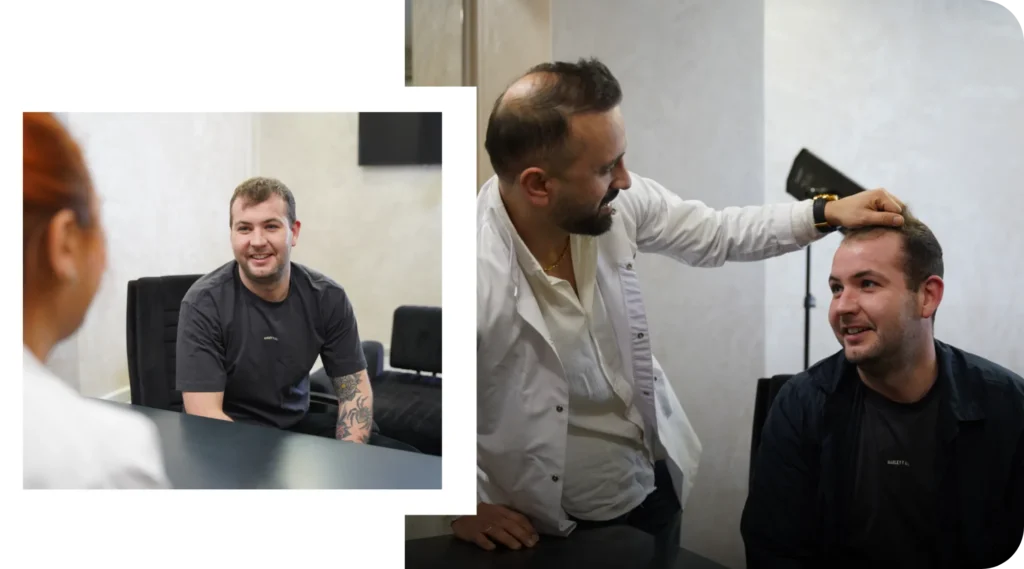
Consultation avant l'intervention
Un patient rencontrant l'équipe médicale à l'hôpital partenaire d'Istanbul
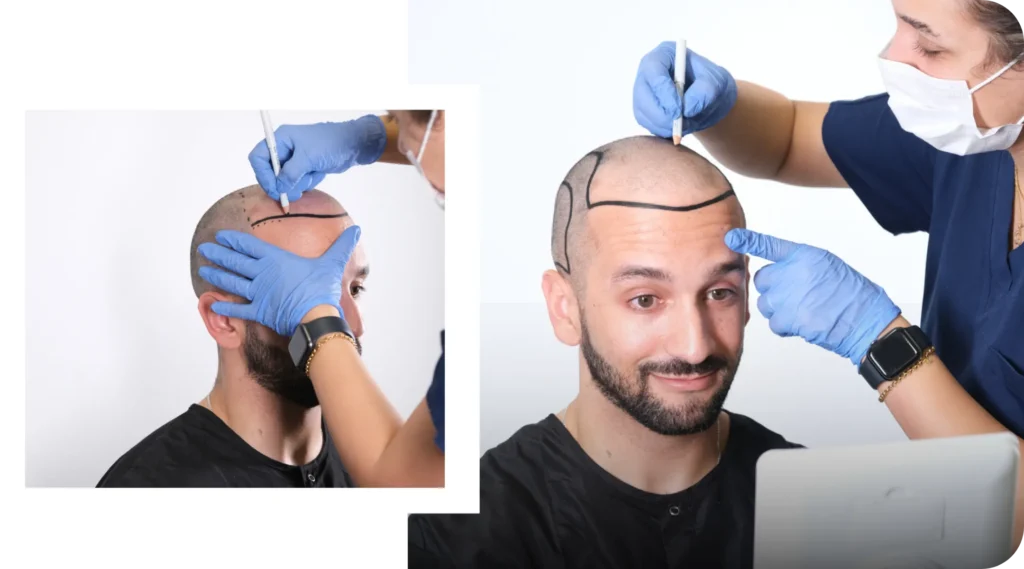
Design and planning
La ligne est tracée et validée avec vous avant tout commencement
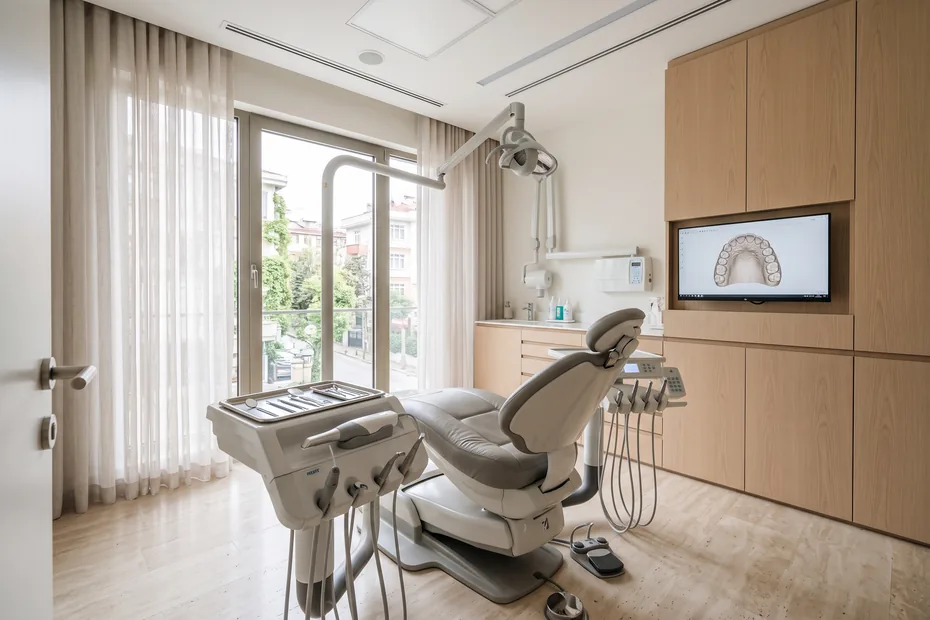
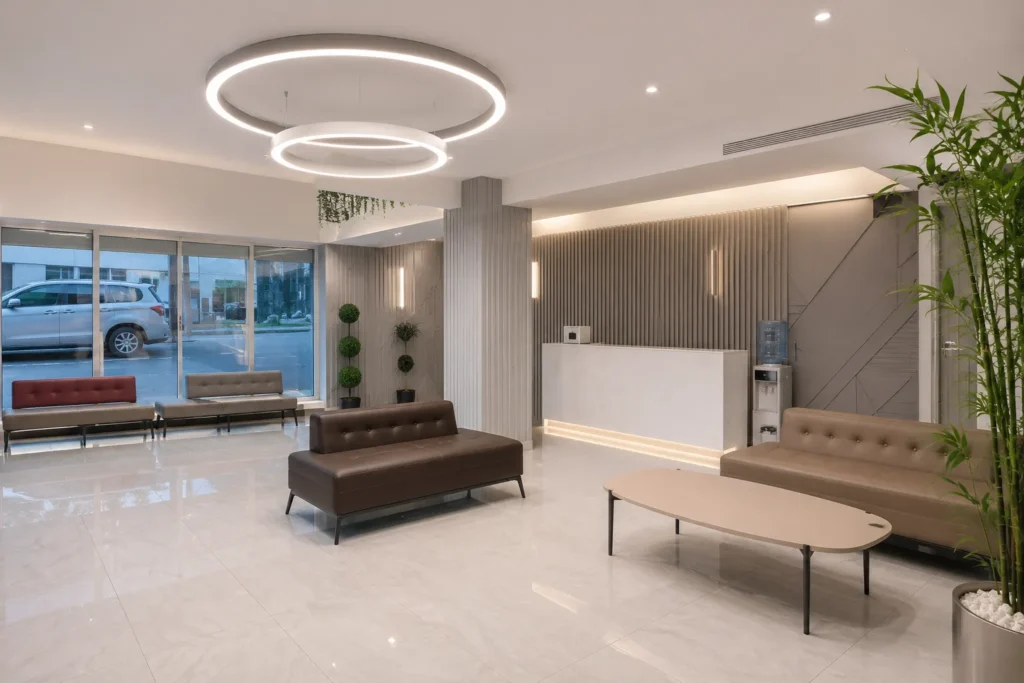
La clinique à Istanbul
Reception at the authorised partner facility
Sources et revue médicale
Les affirmations cliniques de cette page s'appuient sur la littérature publiée et les recommandations professionnelles suivantes :
Contenu de la page vérifié par l'équipe de coordination médicale de Turkey Hair Center. Dernière vérification : 14.09.2026. Cette page est informative et ne remplace pas une consultation médicale en personne.
Découvrez nos autres traitements de restauration capillaire
Soins dentaires est une option parmi d'autres. Selon votre schéma de chute, votre réserve donneuse et vos objectifs, une autre technique peut vous convenir davantage.
Envoyez trois photos : de face, du dessus et de côté. Vous recevez une recommandation de technique, une fourchette de greffons et une réponse claire sur ce qui est réalisable, avant toute discussion de prix.
Vos informations sont transmises à l'équipe
Un coordinateur patient vous recontactera sous peu. Si vous souhaitez envoyer vos photos maintenant, WhatsApp est le moyen le plus rapide.
Nous répondons rapidement, jour et nuit, dans votre langue.
Équipe multilingue, sans engagement
Données protégéesConforme au RGPD et à la loi KVKK, 100% confidentiel
Intermédiaire de tourisme médical agréé
Turkey Hair Center est la marque de restauration capillaire de Healthy Way Tourism, intermédiaire international de tourisme de santé agréé. Tous les actes médicaux sont réalisés par des professionnels de santé agréés au sein d'établissements de santé autorisés en Türkiye, conformément à la réglementation du ministère de la Santé.