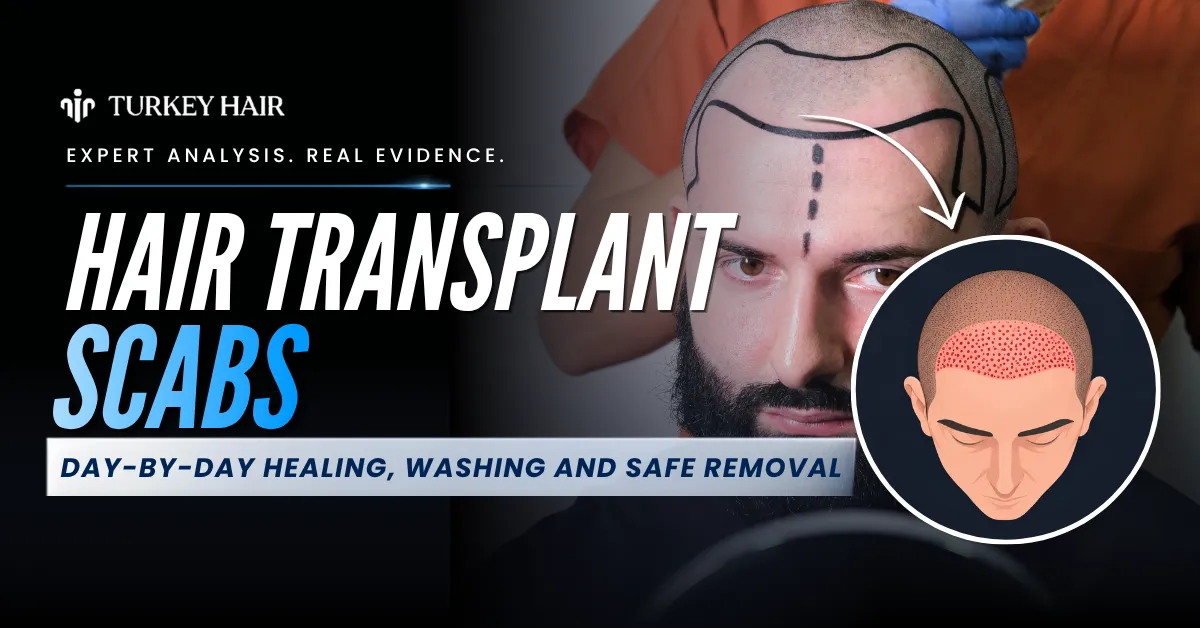
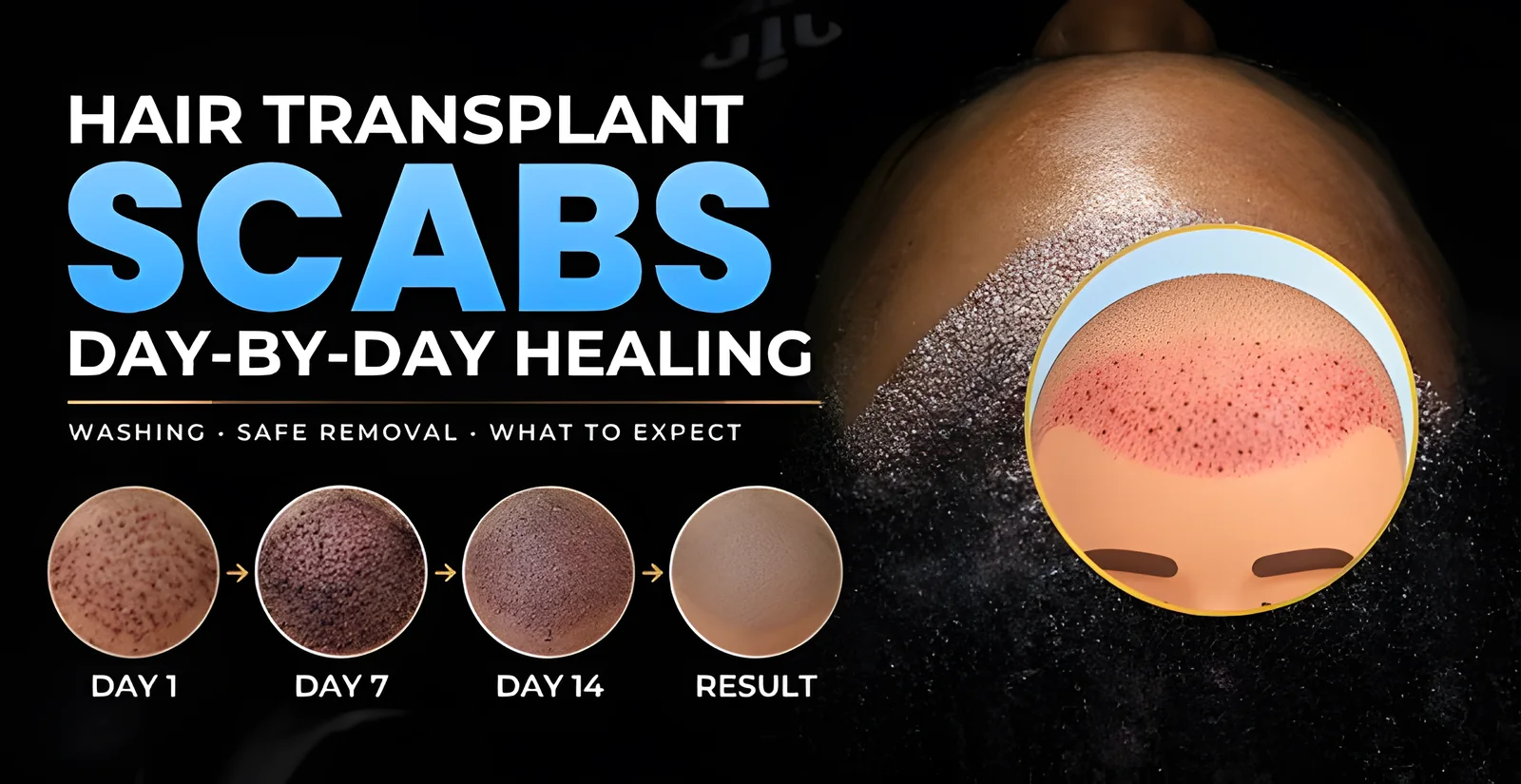
Hair Transplant Scabs: Day-by-Day Healing, Washing and Safe Removal
Hair transplant scabs are a normal part of recovery. Discover the day-by-day healing timeline, safe washing techniques, and exactly when they should fall off.
Performed at authorized partner hospitals Turkey Hair Center is a Ministry of Health authorized health-tourism intermediary, not a clinic.
How long do hair transplant scabs last?
How long do hair transplant scabs last? You will typically notice small crusts forming over the tiny incisions within the first few days. Expect the heaviest shedding to happen between days 7 and 10. By day 14, your scalp should look much cleaner.
Wash gently using clinic-approved products to soften the crusts.
Keep your fingernails away from the scalp to protect your new grafts.
Let the scabs wash away naturally during your daily shower routine.
Introduction: Why Scabs Form After a Hair Transplant
Those little crusts are simply a sign that your tiny treatment sites are healing. During early recovery, your main focus is washing properly so these scabs soften and fall away on their own. Never pull them off. Those first 7 to 10 days matter immensely for graft protection. Below, we walk through what to expect over the first two weeks, how to wash safely, and which warning signs actually warrant a call to your doctor.
Quick Answer: How Long Do Hair Transplant Scabs Last?
Expect scabs to show up within the first 48 hours. They usually drop off naturally between days 7 and 10, leaving your scalp mostly clear by the two-week mark. The golden rule? Do not pick them. Just stick to your daily washing routine to safely loosen the crusts.
When Do Scabs Usually Appear?
You will spot them almost immediately. Within a couple of days after surgery, tiny crusts will dot both your donor and recipient areas.
When Do Scabs Usually Fall Off?
The main scab-shedding phase commonly occurs around days 7 to 10. While most clinical authorities define this 7-10 day period as the primary shedding period, some clinical sources state that grafts are generally safer and scabs have largely decreased by day 10. If heavy crusts remain after 14 days, consulting your clinic is recommended.
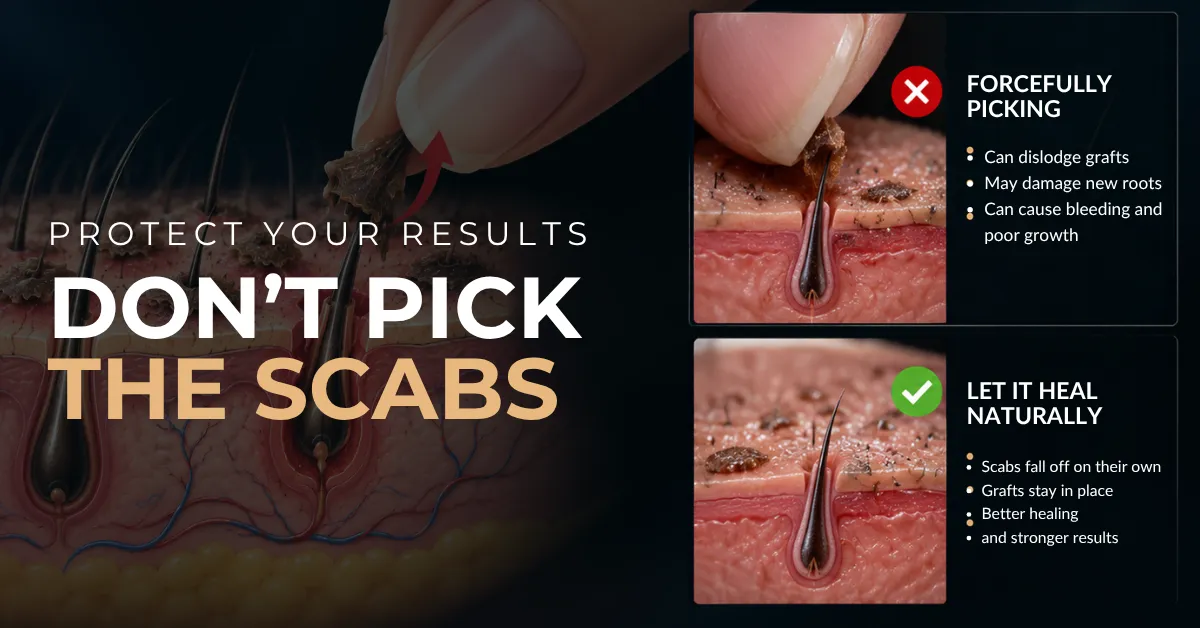
Why You Should Not Pick Them Early
Scratching off crusts with your nails is a fast way to damage grafts and invite infection. Your new hair roots need time to anchor firmly into the tissue. Most clinics consider day 10 a safe turning point, though everyone heals at their own pace.
What Are Hair Transplant Scabs and Why Do They Form?
Seeing a dark crust on your new hairline can be alarming, but it actually serves a biological purpose.
What a Scab Really Is After a Transplant
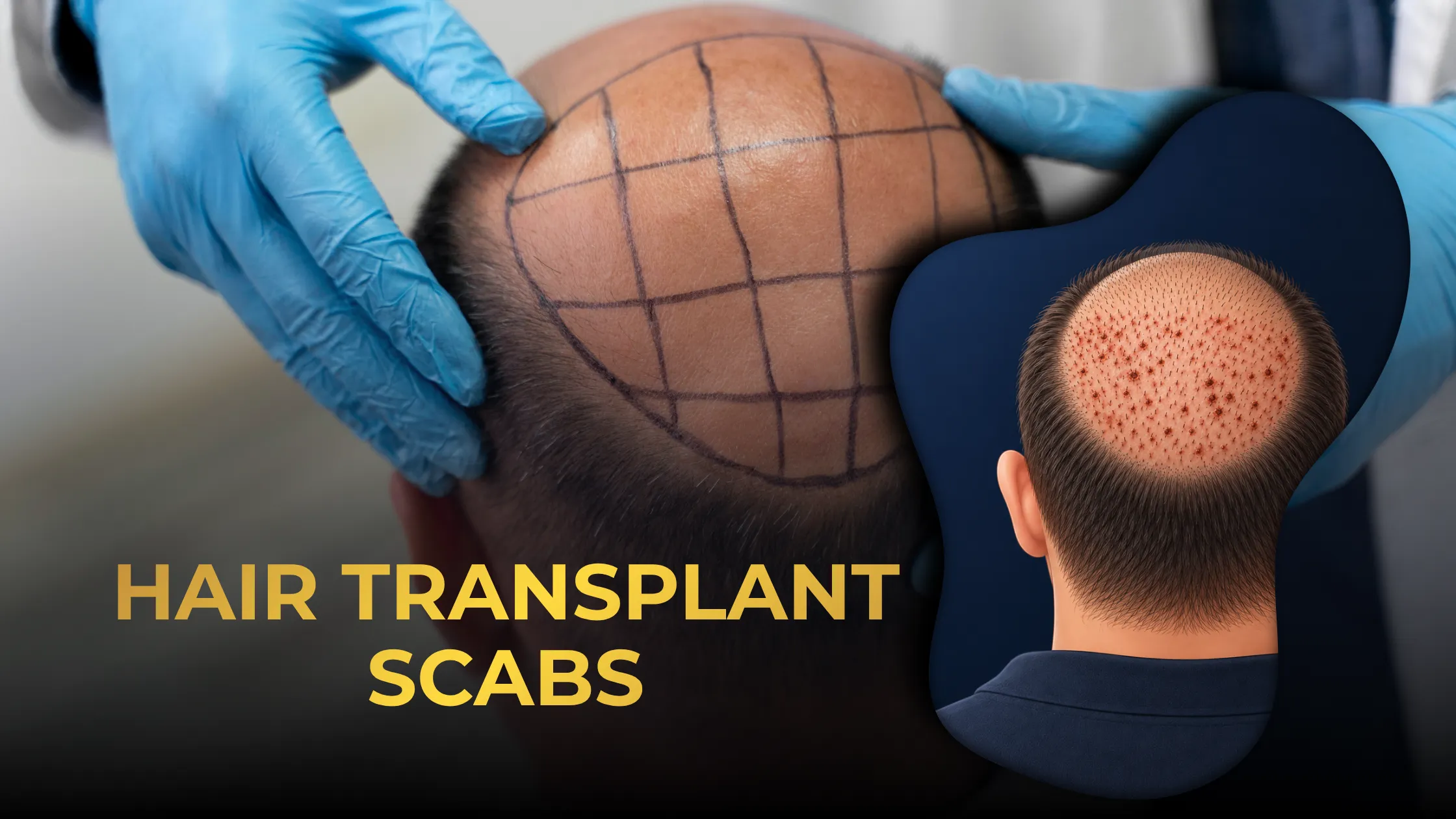
During extraction and implantation, small incisions are made in the scalp. Blood, clear serum, and tissue fluids seep out of these channels and dry upon hitting the air2. That dried fluid forms the crust.
Are Scabs Protecting the Grafts?
Seeing a hair shaft attached to a scab does not necessarily mean that the follicular graft has been lost. However, aggressive pulling that causes bleeding can indicate actual trauma to the implanted area.
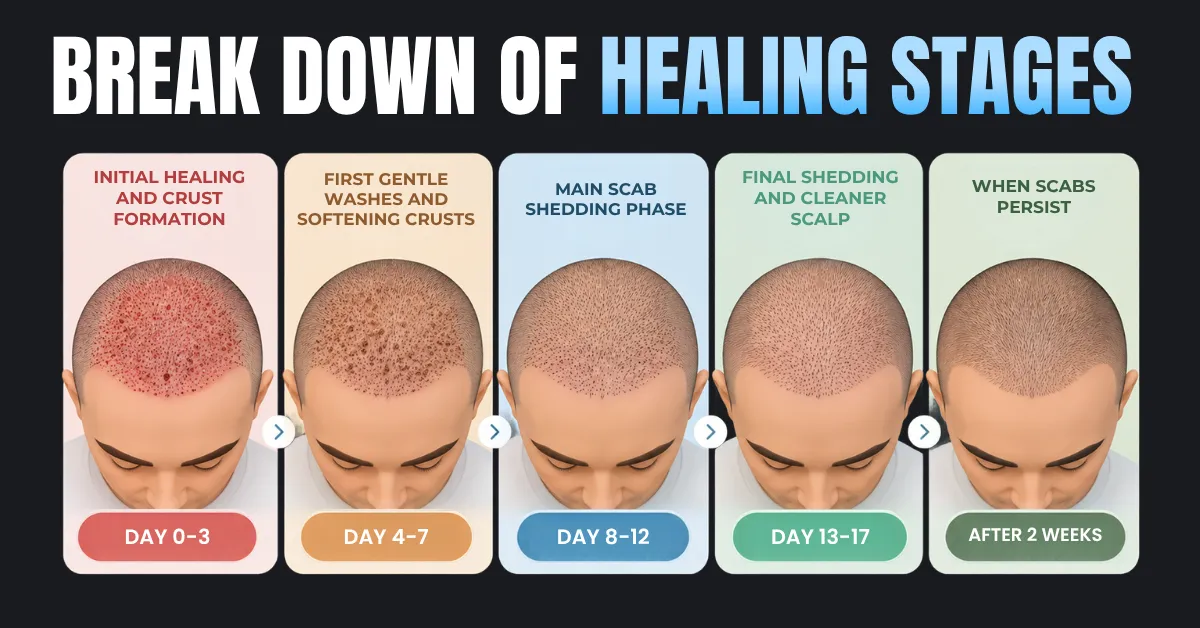
Hair Transplant Scabs Timeline: Days 0-14
Most patients notice gradual changes over the first two weeks. Your personal skin type, the surgical technique used, and your daily washing habits all influence this timeline.
Summary Timeline: What to Expect and Do
Days
What you may see
What to do
What to avoid
0-2
Early crust formation
Minimal touching
Picking or scratching
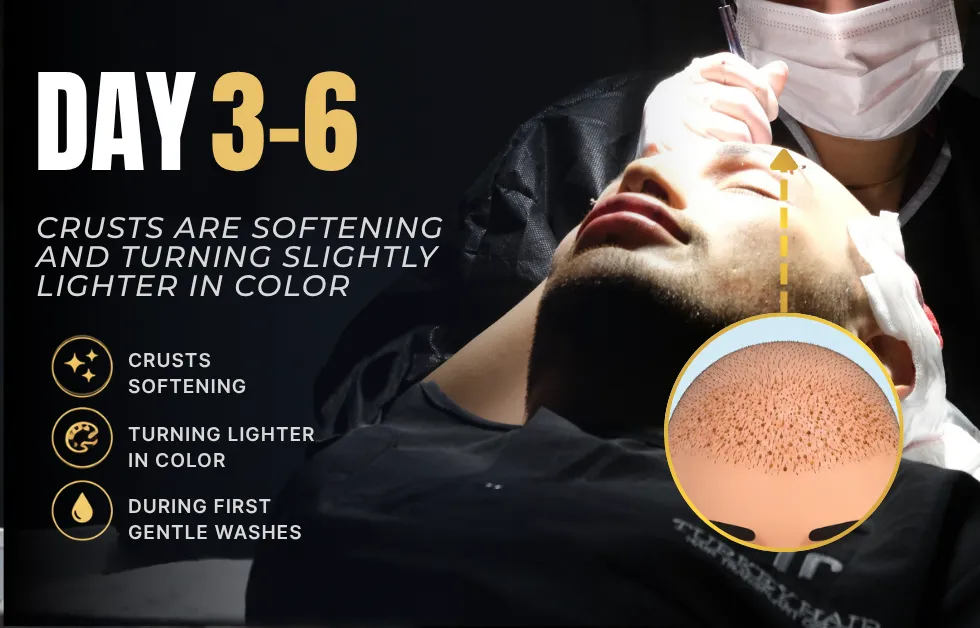
3-6
Crusts begin softening
Clinic-approved washing
High water pressure
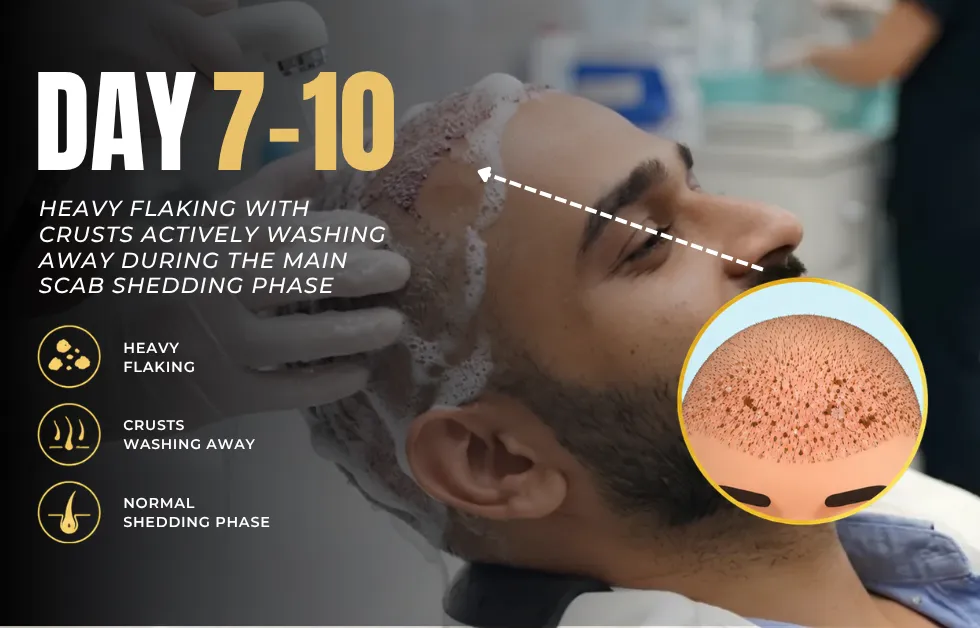
7-10
Main scab shedding
Gentle washing
Forceful removal
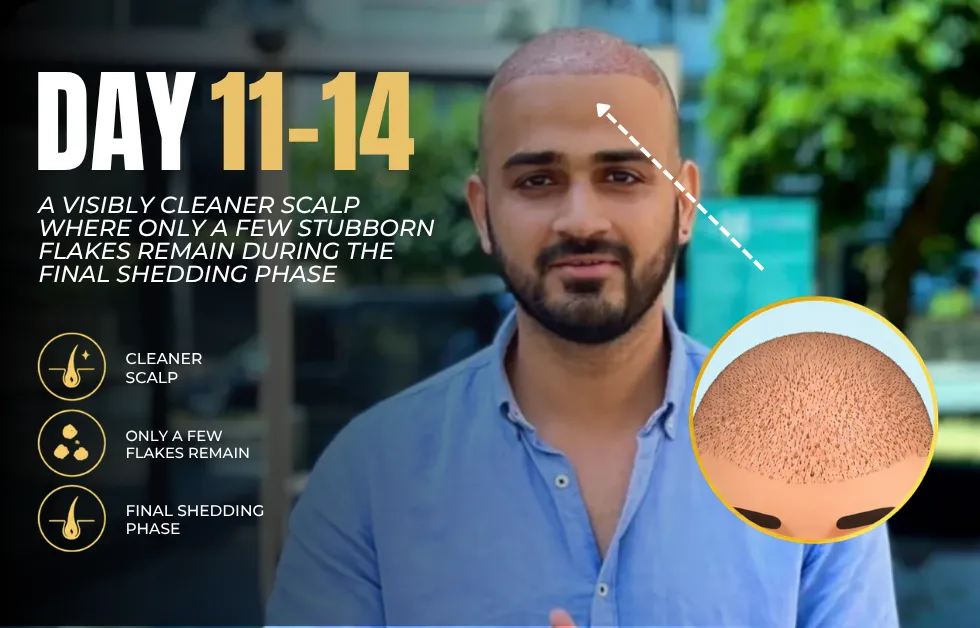
11-14
Scabs decrease
Continue aftercare
Aggressive rubbing
14+
Persistent crusts
Contact clinic if heavy
Scraping
Some important clinical sources indicate that the 10th day is a significant turning point when the appearance of the scalp settles and scabbing diminishes.
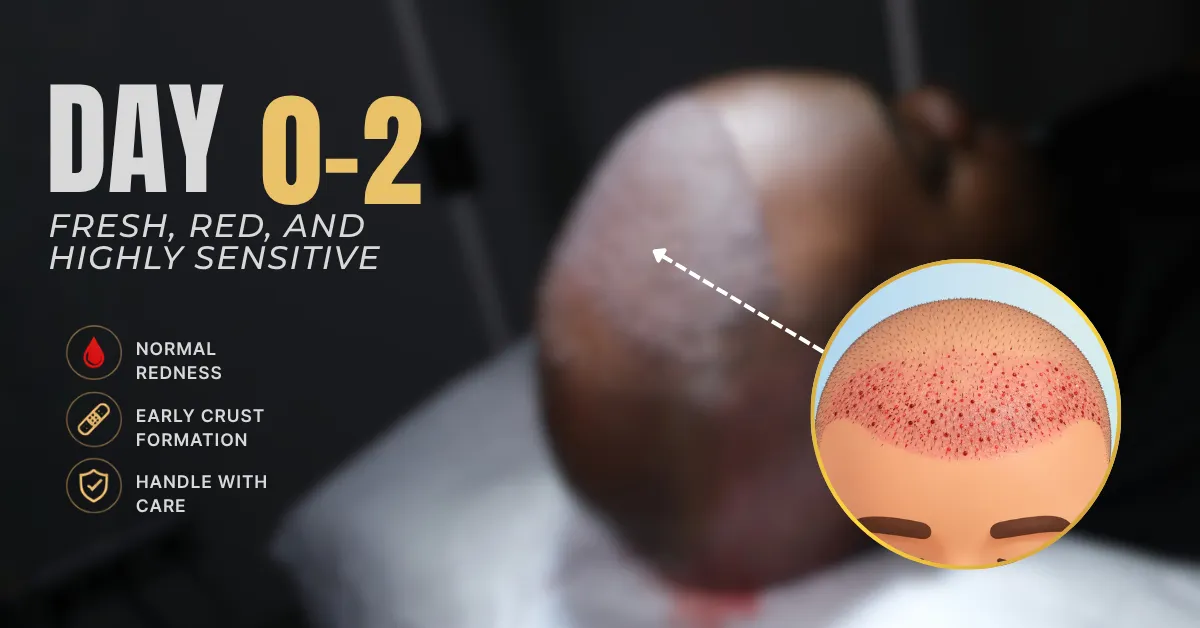
Day 0-2: Initial Healing and Crust Formation: Small crusts begin to form. Physical touch should remain minimal during this highly sensitive phase.
Day 3-6: First Gentle Washes and Softening Crusts: Gentle washing usually begins based on your clinic's protocol to soften the area.
Day 7-10: Main Scab Shedding Phase: The primary detachment phase occurs as crusts loosen and wash away.
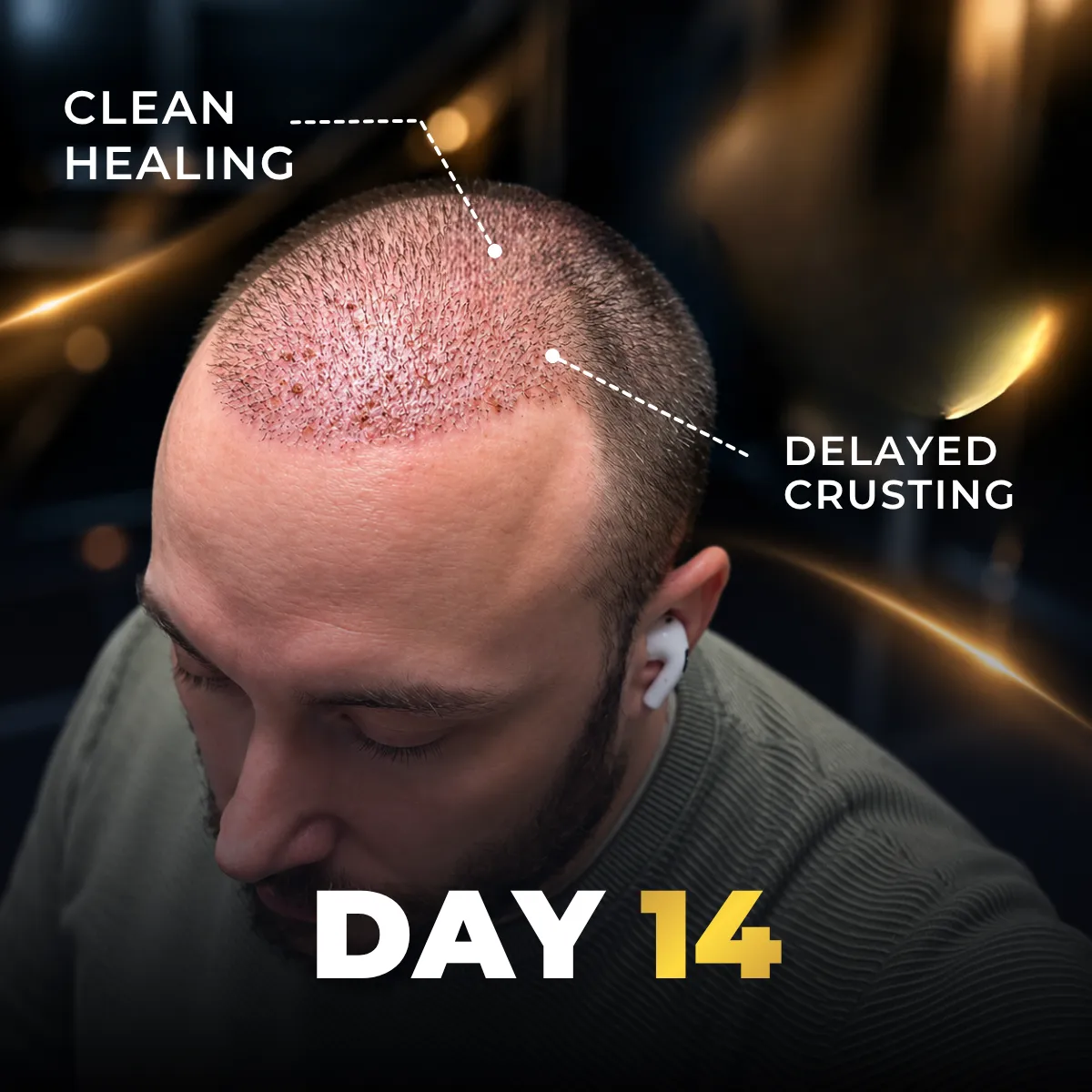
Day 11-14: Final Shedding and Cleaner Scalp: Remaining crusts diminish, leaving a visibly cleaner appearance.
Beyond Day 14: When Scabs Persist: Thick, adhered scabs should not be forced. Medical advice is recommended if dense crusting persists.
Let's break down these healing stages in detail.
How to Wash Hair After Transplant
This crucial washing phase typically begins around days 3 to 6. Washing your head for the first time requires care, but it is entirely necessary for recovery.
Why Washing Is Important
Delaying washing may contribute to heavier crust buildup, depending on your aftercare protocol.
Step-by-Step Guide: How to wash off hair transplant scabs safely
Step 1: Apply the softening lotion. Generously apply the clinic-provided lotion or foam directly onto the scabbing areas.
Step 2: Wait for 30 to 45 minutes. Let the product sit undisturbed to fully hydrate and soften the crusts.
Step 3: Rinse with lukewarm water. Never use a direct, heavy showerhead; pour water gently using a cup.
Step 4: Massage with light fingertip touches. Move your fingers in very gentle, small circles without using your nails. Donor and recipient zones may have different sensitivities.
Step 5: Pat dry gently. Use a paper towel to lightly absorb the moisture. Avoid rubbing with rough bath towels.
Main Hair Transplant Scab Removal Phase
As you enter days 7 to 10, the crusts loosen up significantly.
Washing Technique in This Phase
Warm water, clinic-provided shampoo, and very light fingertip motions help loosen the crusts safely.
What to Expect When Scabs Fall
Hair shedding alongside scabs is frequently part of the expected shock loss phase. If sharp pain or active bleeding occurs, stop washing and seek guidance from your clinic.
Can You Dislodge Grafts After 10 Days?
Most clinical authorities state that spontaneous graft loss due to normal contact is rare after the 10th day and that this period is the critical window for careful crust shedding. Vigorous scratching is still strictly discouraged.
Final Scab Shedding and Return to Normal Washing
Between days 11 and 14, the scalp begins to resemble its normal state.
What to Expect
Your scalp looks visibly cleaner. Minor remaining crusts typically wash away easily with continued care.
When Can You Wash Normally?
Returning to standard shampoo and shower pressure requires explicit approval from your clinic.
Signs to Watch After Two Weeks
Dense, sticky, yellow, oozing, or painful scabs persisting past two weeks warrant attention. They could indicate extreme dryness, inadequate washing, or infection.
What If Hair Transplant Scabs Are Not Falling Off?
Sometimes, the 14-day mark passes and your scalp retains crusts.
Common Reasons for Delayed Scab Shedding
Poor washing technique, dry scalp, incorrect products, or unique skin healing speeds can delay the process. FUT donor areas also heal differently and may carry distinct timelines.
What to Do If Scabs Remain
Continue the prescribed softening routine rather than scraping them with your nails.
When to Contact Your Clinic
Send clear photos to your medical team for assessment if dense scabbing persists. Are you unsure about the condition of your scalp? Take clear, well-lit photos of your scabs and send them to our medical team today for a free, professional healing analysis.
Can You Pick or Pull Hair Transplant Scabs?
It can be really tempting to scratch, but doing so carries serious risks.
EMERGENCY CHECKLIST: Picked a Scab?
Stop touching: Keep your hands away from your scalp immediately.
Apply gentle pressure: If it bleeds, press a clean sterile gauze lightly without rubbing.
Contact your clinic: Send a clear, well-lit photo to your medical team for assessment.
Why Picking Scabs Can Be Risky
A 2026 medical review on FUE complications emphasizes that gentle scalp care, patient education, and avoiding scratching reduce the risks of secondary infections and graft dislodgement.
Scab with Hair Attached: Did I Lose a Graft?
Patients often panic trying to distinguish a scab with hair root attached vs hair shaft. Here is the biological reality: during shock loss, the dead hair shaft falls out, but the actual root (the follicle bulb) remains securely embedded deep inside the tissue. Seeing a hair strand on a scab is just normal shedding, not a lost graft.
Bleeding After Scab Removal
If you accidentally picked scab after hair transplant / bleeding occurs, do not panic, but take it seriously. Active bleeding after a scab detaches suggests potential trauma to the implanted area. Avoid aggressive massaging and hard pulling.
FUE, DHI and FUT Scabs: Do They Heal Differently?
The technique used can influence how the donor and recipient areas heal and how crusting appears.
FUE Donor Area Scabs
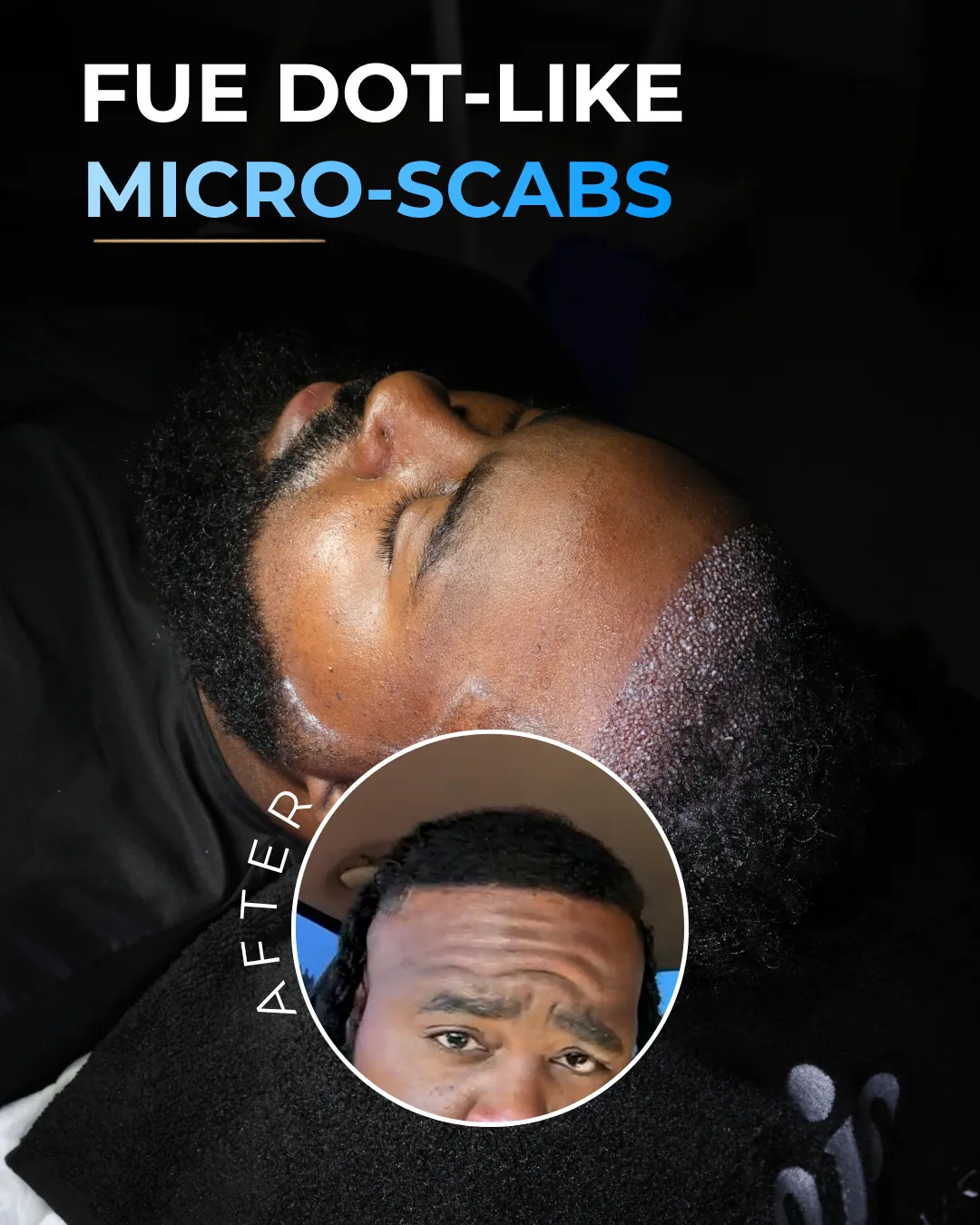
Follicular Unit Extraction leaves dot-like micro-scabs on the back of the head.
DHI Recipient Area Scabs
With Direct Hair Implantation, recipient area crusting varies based on implantation density and the specific channels created.
FUT Donor Area Scabs and Sutures
The linear incision closed with sutures or staples requires different wound care. Donor area crusts generally differ in risk compared to the newly implanted grafts.
Can Scabs Mean Something Is Wrong With Your Hair Transplant?
It is totally normal to worry about every little bump after surgery, but you have to know what actually requires a doctor's attention.
What Normal Scabs Look Like
They are small, dry, brown or dark red crusts accompanied by mild redness and itching.
Ordinary Scab or Infection?
The 2026 FUE complication review identifies infection markers such as pustules, honey-colored scabs, purulent discharge, spreading redness, increasing pain, intense swelling, and tender lymph nodes.
What Are the Signs of a Failed Hair Transplant?
Early crusting does not determine final success. True issues like patchy growth or low density are evaluated months later. Suspicious early symptoms should be reviewed by your clinic.
Technique Tips and Product Choices for Scab Care
The products recommended by your clinic can affect how comfortable the washing process feels.
Choosing the Right Shampoo
Use only the products provided or recommended by your clinic, as they align with your skin sensitivity and surgical technique.
Lotion, Foam or Saline Spray
Saline sprays are sometimes included in protocols to provide extra moisture support.
What Products to Avoid
Avoid alcohol-based, harsh, or heavily perfumed products, as well as unverified natural remedies.
Frequently Asked Questions
How long do scabs typically last after a hair transplant?
Count on them sticking around for about 10 to 14 days. Obviously, this isn't set in stone. Your skin type, the way you wash your head, and the specific rules your surgeon gave you will all tweak that timeline a bit.
When should I start removing them?
Most places will have you start the actual scab-removal washes around day 7 or 10. But listen-never force them. Scratching or picking is the ultimate bad idea, no matter what day it is.
Can I remove scabs 7 days after the surgery?
Day 7 is kind of a milestone. That's when the shedding phase usually kicks in. You can start doing those gentle fingertip massages in the shower to help them fall off. If a scab doesn't want to budge, though? Leave it. It's just not ready yet.
Can you dislodge grafts after 10 days?
Most clinical authorities state that spontaneous graft loss due to normal contact is rare after the 10th day, making hair transplant scab removal day 10 a critical and safe window for crust shedding. Vigorous scratching is still strictly discouraged. You aren't going to lose one just by touching your head normally. Still, you don't want to go crazy scratching the area or accidentally bump your head against a car door.
How to get rid of crusts without harming grafts?
It's all about softening them up first. Put on that lotion your clinic gave you and leave it alone for a bit. Then, jump in the shower with low-pressure, lukewarm water. Do little circles with your fingertips. When you're done, pat the area dry with a kağıt havlu (paper towel). No rubbing.
What if scabs are not falling off?
Whatever you do, don't pick at them. If they seem super glued on, your scalp might just be dry, or maybe you're being a little too timid with the washing. Just text your clinic. Getting their eyes on it is the smartest move.
Is it normal to have scabs 14 days post-op?
A few lingering tiny ones? Yeah, completely normal. But if your head is still covered in thick, heavy crusts at the two-week mark, that's not typical. You'll want to have your doctor take a look to make sure nothing else is going on.
Why are my scabs not gone after 2 weeks?
Usually, it means one of three things: the washes aren't thorough enough, your skin is prone to extreme dryness, or you've been using a product you shouldn't be. Snap a few clear photos and send them to your surgeon. That's the quickest way to figure out the exact problem.
Final Verdict: How Should You Handle Hair Transplant Scabs?
Hair transplant scabs are a standard part of the expected healing timeline. The primary objective is to soften them with gentle washing, allowing natural detachment rather than forceful picking. The heaviest shedding typically occurs between days 7 and 10, leading to a much cleaner appearance by day 14.
Protect the newly implanted area by avoiding harsh towels, fingernails, and high water pressure. If dense, painful, or oozing crusts persist past two weeks, contacting your clinic directly is the safest course of action.
About the Author
Nazmi G. is a Senior Trichologist & Hair Restoration Consultant. With deep expertise in FUE, DHI, and FUT recovery processes, Nazmi focuses on patient education, safe aftercare protocols, and international medical aesthetic guidance.
Medical Review Note
Medically reviewed by: Dr. Tompi, M.D., Plastic & Aesthetic Surgeon. Keep in mind that this content is strictly for informational purposes and shouldn't replace direct medical advice. Properly evaluating post-op scalp healing, delayed scab shedding, or potential infections requires a physical exam and personalized guidance from your operating surgeon.
Editorial Policy & Trust
We emphasize that healing varies and clinic protocols are the ultimate authority. We strictly advise against forceful scab removal due to the real risks of graft trauma, and we always recommend professional medical support for warning signs.
References and Medical Sources
International Society of Hair Restoration Surgery (ISHRS). Post-Operative Care. (ishrs.org)
American Academy of Dermatology (AAD). Proper wound care: How to minimize a scar. (aad.org)
Romera de Blas C, Vega Díez D, Ricart Vayá JM and Gómez Zubiaur A (2026). Complications in follicular unit excision hair transplantation: current evidence and practical approaches. Front. Med. (pmc.ncbi.nlm.nih.gov)
Cleveland Clinic. Folliculitis: Symptoms and Treatment. (my.org)
Mayo Clinic. Hair loss diagnosis and treatment. (mayoclinic.org)
Send three photos: front, top and sides. You get a technique recommendation, a graft range and a straight answer about what is achievable, before anyone talks about price.
Your details are with the team
A patient coordinator will get back to you shortly. If you would like to send your photos now, WhatsApp is the fastest way to do it.
We respond quickly, day or night, in your language.
Multilingual team, no obligation
Data protectedKVKK and GDPR compliant, 100% confidential
Authorized Health Tourism Intermediary
Turkey Hair Center is the hair-restoration brand of Healthy Way Tourism, an authorized international health-tourism intermediary. All medical procedures are performed by licensed medical professionals at authorized healthcare facilities in Turkiye, in accordance with the regulations of the Ministry of Health.