

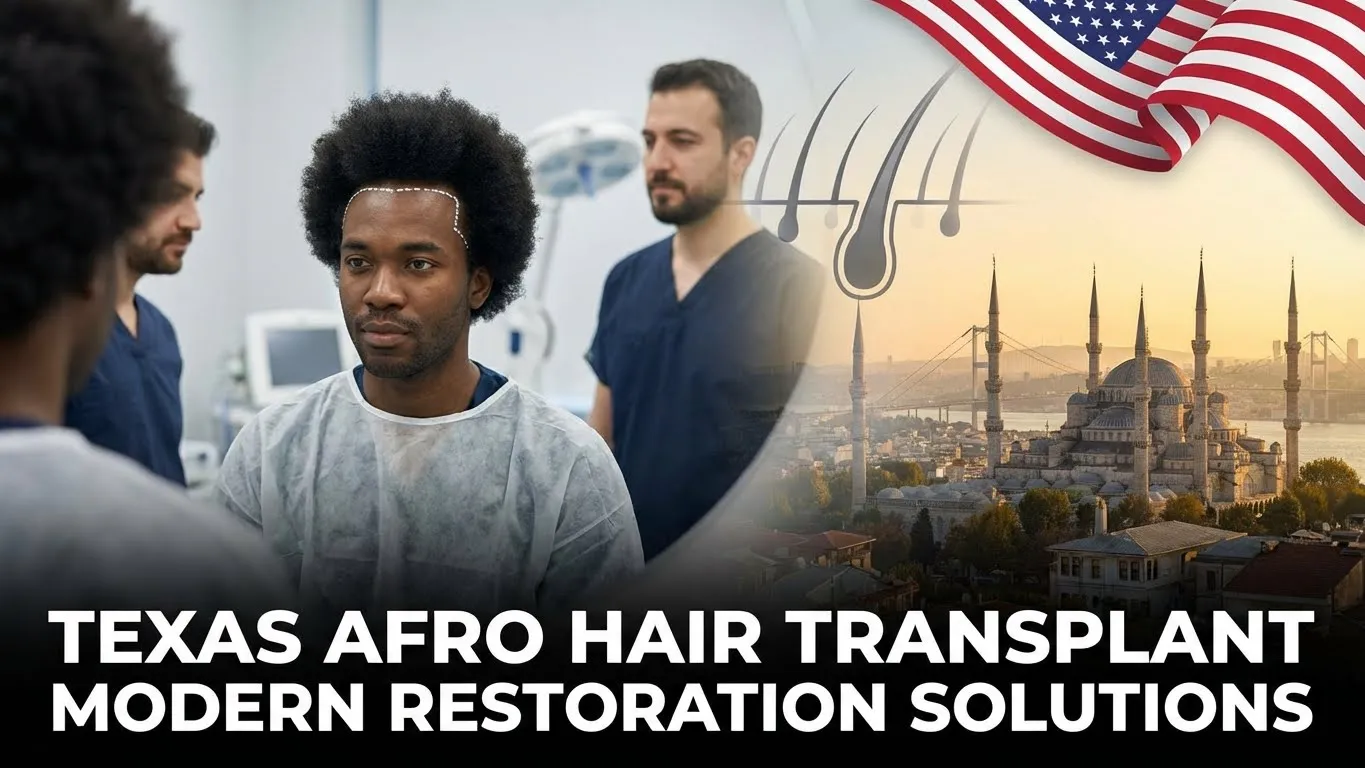
Afro Hair Loss in Texas
Hair loss is a growing concern among Afro-American men and women in Texas, influenced by genetics, hairstyling habits, and lifestyle factors. For those seeking effective restoration, understanding the options available is crucial. Many patients now research Texas afro hair transplant solutions to achieve safe, natural, and long-lasting results tailored specifically for Afro-textured hair.
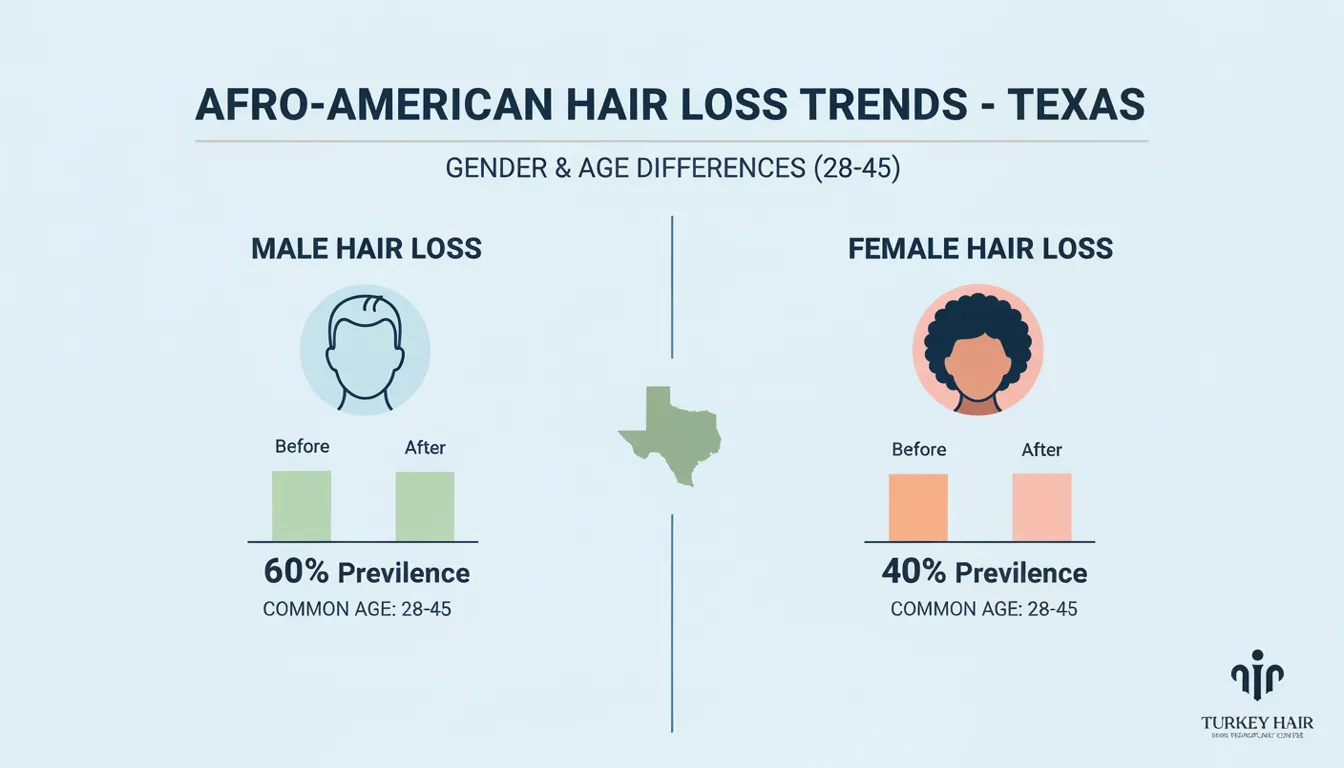
Afro Hair Loss Trends in Texas
The Afro-American population in Texas faces significant hair loss issues. Both male and female patients experience thinning, but patterns differ: men often show crown thinning and receding hairlines, while women frequently present with traction alopecia due to styling habits.
- Popular cities: Houston, Dallas, Austin, San Antonio
- Common age ranges: 28–45 years seeking hair restoration
- Growing awareness of Afro-specific hair transplant options
Why Afro-Textured Hair Requires a Specialized Approach
Afro hair follicles are uniquely curved or spiral under the scalp. Standard straight-hair methods often fail, resulting in graft transection, poor survival, or unnatural hairlines. For Texans, specialized procedures like manual FUE and DHI are essential.
People Also Ask:
- Why is Afro hair transplant more difficult than regular hair transplant?
- Is Afro hair transplant safe for Texans?
What Is an Afro Hair Transplant?
An Afro hair transplant is a specialized surgical procedure designed for individuals with tightly curled or coiled hair, typically classified as 3C–4C hair types. Unlike standard hair transplants, this procedure requires modified extraction angles, specialized punches, and precise implantation techniques to preserve natural curl patterns and achieve optimal density.
Texas Afro Hair Transplant patients benefit from methods tailored to the unique follicle structure of Afro-textured hair, ensuring safer graft handling, higher survival rates, and natural-looking results.
Definition of Afro Hair Transplant
An Afro hair transplant is a surgical procedure specifically tailored for tightly curled 3C–4C hair. Unlike standard procedures, it requires careful extraction angles, special punches, and implantation respecting curl orientation.
Afro Hair Types (3C–4C) Explained
- 3C: Defined curls with moderate follicle curvature
- 4A: Tight coils with visible curl pattern
- 4B: Z-shaped coils, reduced elasticity
- 4C: Extremely tight coils, minimal visible curl
Proper surgical planning ensures curl preservation and high graft survival rates.
People Also Ask:
- Can Afro hair be transplanted successfully?
- Is Afro hair transplant permanent?
Afro Hair vs Straight / Wavy Hair – Key Surgical Differences
Afro Hair vs Straight / Wavy Hair – Key Surgical Differences
Afro-textured hair differs significantly from straight or wavy hair, which directly affects hair transplant techniques. In a Texas Afro Hair Transplant, understanding these differences is crucial for achieving natural results.
Curved Follicle Anatomy Beneath the Scalp
Afro hair follicles grow in C-shaped or spiral paths beneath the scalp. This curvature makes extraction more delicate and increases the risk of graft transection if standard straight-hair techniques are used.
Density Perception in Afro Hair
Although Afro hair may have fewer individual strands, its curl pattern provides greater visual density. Proper implantation angles enhance this effect, giving the appearance of fuller coverage with fewer grafts.
Transection Risk in Afro Hair
Incorrect punch angles or high-speed extraction can damage follicles. Low-speed, careful extraction is essential to maintain graft integrity and preserve natural curl patterns.
Curved Follicle Anatomy Beneath the Scalp
Afro follicles grow in C-shaped or spiral subcutaneous paths, making extraction and implantation technically demanding.
Density Perception in Afro Hair
Afro hair’s curl structure creates visual density. Proper implantation angles enhance aesthetic fullness, even with fewer grafts.
Transection Risk in Afro Hair
- Incorrect punch angle causes graft damage
- Low-speed manual extraction reduces risk and preserves curl pattern
Why Many Texas Clinics Struggle with Afro Hair Transplants
Why Many Texas Clinics Struggle with Afro Hair Transplants
Performing a successful Texas Afro Hair Transplant requires specialized skills and experience with 3C–4C hair textures. Unfortunately, many clinics in Texas face limitations that can affect outcomes.
Limited Afro Hair Specialization in Texas
Most hair transplant training programs focus on straight or wavy hair, leaving surgeons with limited exposure to tightly curled follicles. Low case volume of Afro-textured hair means fewer opportunities to refine extraction and implantation techniques.
Common Problems in Texas Afro Hair Transplants
Patients who undergo procedures at clinics without Afro-specific expertise may experience:
-
Poor curl alignment leading to unnatural hairlines
-
Low graft survival due to transection
-
Uneven density despite sufficient graft numbers
People Also Ask
-
Can every clinic perform Afro hair transplant?
-
Why do some Afro hair transplants fail?
These challenges are not due to negligence but reflect systemic training gaps. Many patients now seek clinics abroad, such as in Turkey, where Afro-specific expertise is routinely applied.
Limited Afro Hair Specialization in Texas
Most clinics in Texas are trained on straight-hair models and rarely handle 3C–4C cases, limiting results for Afro patients.
Common Problems in Texas Afro Hair Transplants
- Poor curl alignment
- Unnatural hairlines
- Low graft survival
People Also Ask:
- Can every clinic perform Afro hair transplant?
- Why do some Afro hair transplants fail?
Causes of Afro Hair Loss in Texas
Genetic Hair Loss (Androgenetic Alopecia)
Both male and female pattern baldness occurs in Afro patients, sometimes masked by dense curls.
Traction Alopecia (Very Common in Texas)
Chronic tension from braids, cornrows, locs, and tight styles leads to traction alopecia.
- Early-stage: Potentially reversible
- Late-stage: Permanent follicular loss, surgical intervention required
Hormonal & Medical Causes
- Postpartum shedding
- Thyroid disorders
- PCOS (Polycystic Ovary Syndrome)
Lifestyle Factors in Texas
- Stress and poor nutrition
- Vitamin D & iron deficiency
- Impact on hair loss severity
People Also Ask:
- Is traction alopecia reversible?
- Does Afro hair grow back after hair loss?
Afro Hair Transplant Techniques for Texas Patients
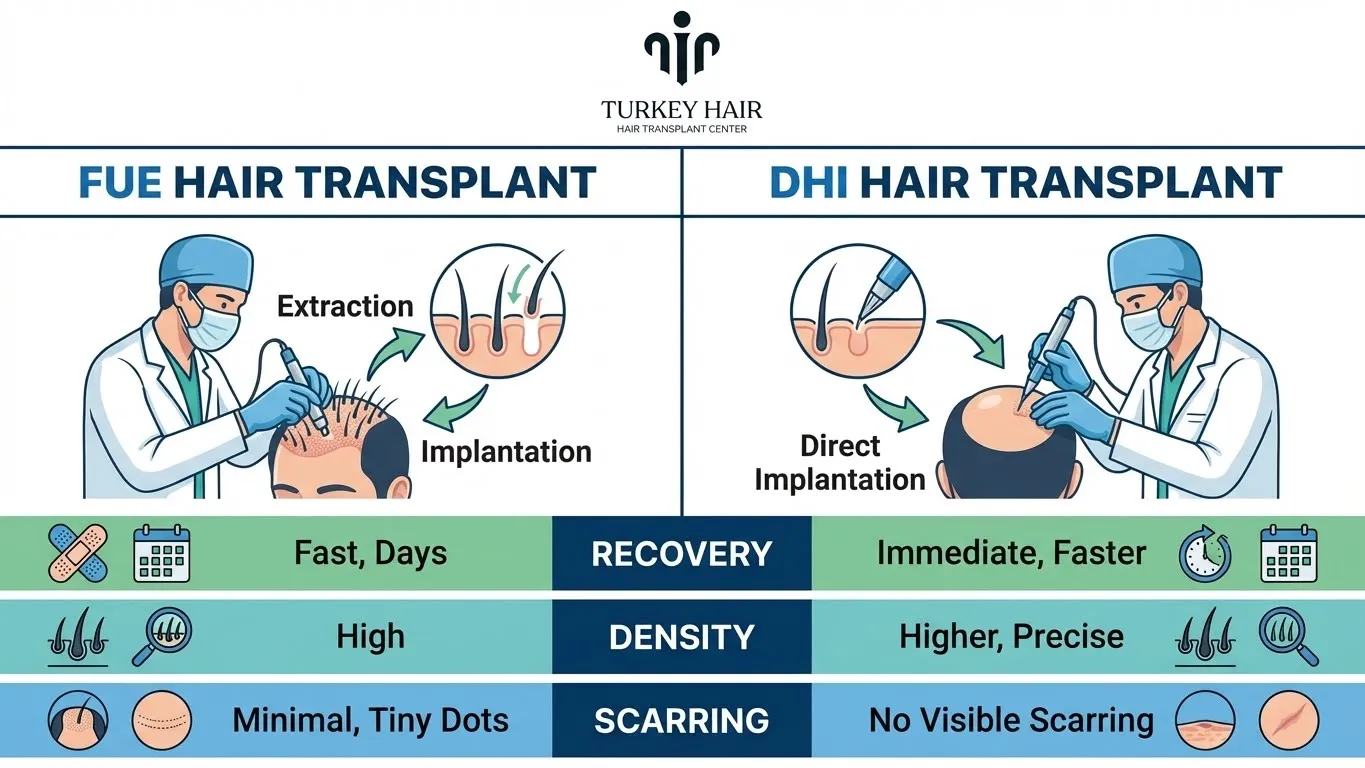
Manual FUE for Afro Hair
- Curved punch extraction following follicle path
- Low RPM technique for minimal transection
- Ideal for large areas and crown thinning
DHI (Direct Hair Implantation)
- Choi pen allows direct implantation with precise curl orientation
- Ideal for hairline and temple restoration
- Minimal scalp trauma, higher density control
Comparison – FUE vs DHI for Afro Hair
| Criteria | FUE | DHI |
|---|---|---|
| Curl Preservation | High | Very High |
| Density Control | Moderate–High | Excellent |
| Recovery Time | 7–14 days | 5–10 days |
| Scarring Risk | Minimal | Minimal |
| Ideal Candidate | Large areas, crown | Hairline, temples |
Why Texas Patients Choose Turkey for Afro Hair Transplant
Afro Hair Expertise & High Case Volume
Turkey has become a global leader in Afro hair transplantation, performing thousands of 3C–4C hair cases annually. Surgeons’ extensive experience ensures consistent, natural results for Texans seeking Afro hair transplant abroad.
Advanced Afro-Specific Technology
- Curved punches for spiral follicles
- Custom implantation angles for natural curl pattern
- Microscopic graft handling for high survival rates
Predictable & Natural Results
Patients consistently achieve natural Afro hairlines, preserved curl patterns, and long-term graft survival in Turkey.
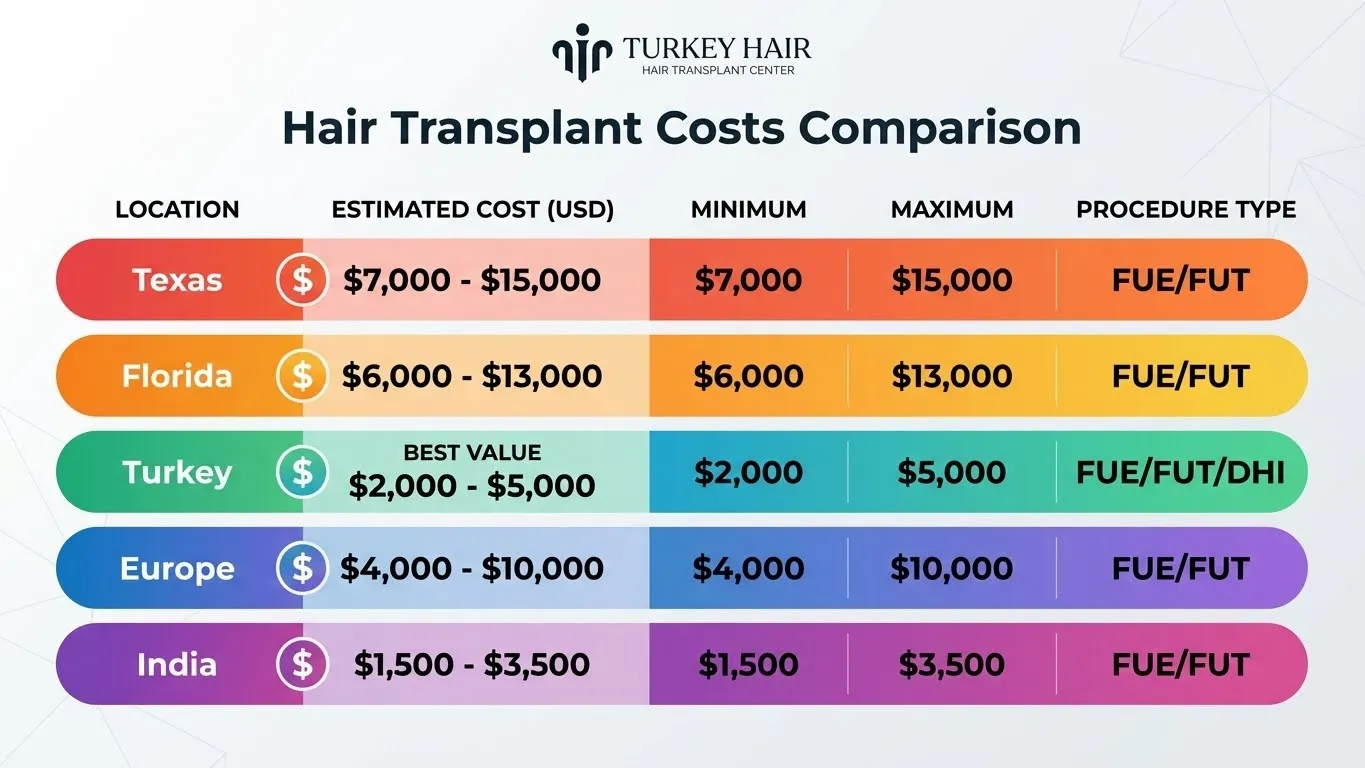
Texas vs Turkey – Afro Hair Transplant Cost Comparison
Average Afro Hair Transplant Cost in Texas vs Turkey
| Location | Average Cost | Inclusions |
|---|---|---|
| Texas | $12,000–$18,000 | Surgery only |
| Florida | $10,000–$16,000 | Surgery only |
| Turkey | $3,000–$5,500 | All-inclusive: hotel, transfers, meds, follow-up |
International Cost Comparison
| Location | Average Cost |
|---|---|
| Turkey | $3,000–$5,500 |
| USA | $10,000–$18,000 |
| Europe | $8,000–$15,000 |
| India | $2,500–$5,000 |
Afro Hair Transplant Journey from Texas to Turkey
For many patients seeking a Texas afro hair transplant, traveling to Turkey offers access to specialized surgeons, advanced techniques, and cost-effective packages. From online consultation to post-operative follow-up, the journey is designed for safety, comfort, and optimal results.
Online Consultation & Hair Analysis
- Photo/video evaluation of hair loss pattern
- Graft estimation and customized plan
Travel & Arrival
- Flights from Houston, Dallas, Austin
- VIP airport transfers and 4–5 star hotel accommodation
Surgery Day
- Performed under local anesthesia
- Extraction via FUE, implantation via DHI (curl alignment focus)
- 6–8 hour procedure for average 2,000–4,000 grafts
Recovery & Remote Follow-Up
- First wash supervised at clinic
- Online check-ups after returning to Texas
- Post-op medication and care instructions included
Afro Hair Transplant Recovery & Growth Timeline
| Timeline | What to Expect |
|---|---|
| 1–3 Months | Shedding phase (shock loss) |
| 4–6 Months | Early curl regrowth |
| 9–12 Months | Full density & natural curl pattern |
Risks & Considerations for Afro Hair Transplant
- Keloid Formation Risk: Darker skin may form small keloids; proper technique minimizes risk.
- Transection Risk: Surgeon experience crucial for curved follicles.
- Expectation Management: Afro hairline aesthetics require realistic planning.
Who Is a Good Candidate for Texas Afro Hair Transplant in Turkey?
- Men & women with stable hair loss
- Traction alopecia patients
- Hairline or crown thinning
- Postpartum hair loss (after stabilization)
Before & After Results – What Texas Patients Can Expect
- Natural Afro hairlines
- Minimal scarring
- Long-term graft survival
- Placeholder for before/after images
Travel, Safety & Comfort for Texas Patients
- Flight duration: 10–12 hours
- Time difference: +7–9 hours
- English-speaking coordinators available
- Compliant with international medical tourism regulations
- VIP transfers and hotel included in packages
Single Consolidated FAQ
Can Afro hair be transplanted successfully?
Yes, Afro hair can be transplanted successfully with a Texas afro hair transplant when performed by experienced surgeons using techniques tailored to the curl pattern. Procedures like manual FUE and DHI allow proper follicle orientation, reducing transection risk and ensuring natural density and hairline appearance.
Is Turkey safe for hair transplant surgery?
Yes, Turkey is considered safe for a Texas afro hair transplant when patients choose accredited clinics with certified surgeons. Clinics catering to international patients provide modern facilities, strict hygiene standards, and English-speaking coordinators to ensure comfort and safety.
How many grafts are typically required?
The number of grafts for a Texas afro hair transplant depends on the area of hair loss and desired density. On average, 2,000–4,000 grafts are used for typical Afro hairline restoration or crown thinning, but exact requirements are determined during a personalized consultation.
Will curl pattern remain natural?
Yes, in a Texas afro hair transplant, the natural curl pattern is preserved when Afro-specific techniques are used. Proper extraction and implantation angles ensure that each graft maintains its original curvature, providing a natural look.
How soon can patients return to work?
Most patients can resume non-strenuous work within 5–7 days after a Texas afro hair transplant. Full recovery and visible hair growth progress over 3–6 months, depending on the technique used and individual healing.
Is traction alopecia permanent?
Early-stage traction alopecia can sometimes be reversed without intervention, but chronic or advanced cases require a Texas afro hair transplant for permanent restoration. Discontinuing tension hairstyles and supporting hair health improves outcomes when combined with surgery.
References
- National Center for Biotechnology Information (NCBI)
- American Academy of Dermatology
- International Society of Hair Restoration Surgery (ISHRS)
Why Turkey Is the Smart Choice for Texas Afro Hair Transplant
- Expertise over proximity
- Natural results over shortcuts
- Long-term satisfaction over quick fixes
