

Afro Hair Loss in the USA
Hair loss is a multifactorial medical condition affecting millions of individuals in the United States. Among Afro-American men and women, hair loss presents unique diagnostic and therapeutic challenges due to the distinct biological characteristics of Afro-textured hair. In recent years, the demand for USA Afro Hair Transplant procedures has increased significantly as awareness grows around both genetic and traction-related alopecia within this population.
Epidemiological data indicate that Afro-textured hair is more susceptible to specific forms of hair loss, particularly traction alopecia and central centrifugal cicatricial alopecia (CCCA). While conventional hair transplant techniques may yield acceptable results for straight or wavy hair types, these same methods often lead to suboptimal outcomes in USA Afro Hair Transplant cases when applied without Afro-specific adaptations in extraction and implantation.
This growing gap between patient needs and available clinical expertise in the United States has driven many individuals to explore specialized treatment options abroad. As a result, USA Afro Hair Transplant patients increasingly turn to Turkey, which has become a global reference point thanks to its high surgical case volume, focused experience with 3C–4C hair types, and advanced manual techniques specifically developed for curved Afro hair follicles.
- Increasing prevalence of Afro hair loss conditions in the USA
- Limited number of Afro hair specialists in domestic clinics
- Rising medical tourism for complex hair restoration cases
What Is an Afro Hair Transplant?
Definition of Afro Hair Transplant
An Afro hair transplant is a surgical hair restoration procedure specifically designed for individuals with tightly curled or coiled hair textures, commonly classified as hair types 3C to 4C. The defining feature of a USA Afro Hair Transplant lies not in the donor area itself, but in the unique subcutaneous anatomy of Afro hair follicles.
Unlike straight hair follicles that grow in a relatively vertical orientation beneath the scalp, Afro hair follicles follow a curved, C-shaped, or spiral path. This anatomical difference significantly alters the extraction and implantation dynamics of the procedure, requiring specialized surgical planning, modified instruments, and surgeon expertise.
From a medical standpoint, Afro hair transplantation cannot be approached as a cosmetic variation of standard hair transplant surgery. It represents a distinct clinical subset that demands advanced understanding of follicular biomechanics and skin response.
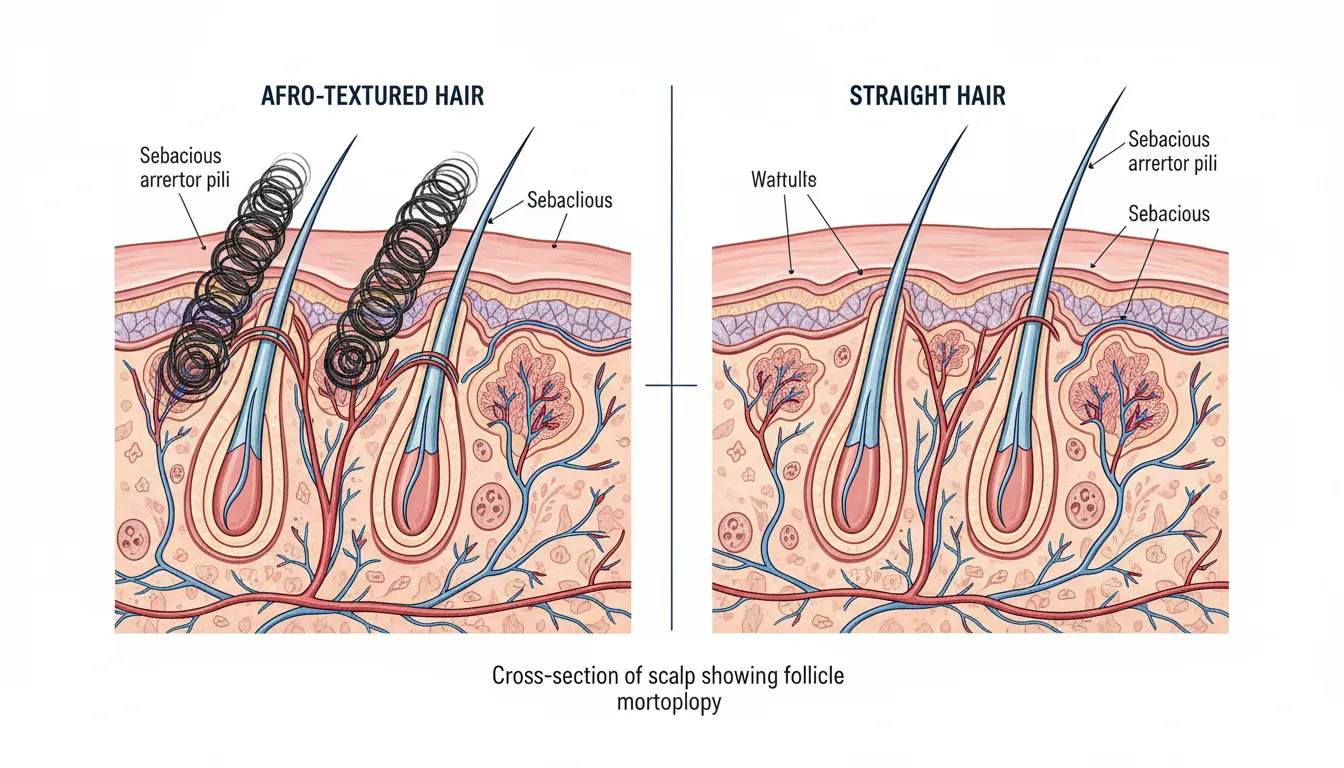
Afro Hair vs Straight / Wavy Hair
- Afro hair follicles curve beneath the epidermis rather than growing straight down
- The hair shaft exits the scalp at sharper angles
- Spiral growth patterns complicate punch alignment during extraction
- Visual density is achieved through curl structure, not graft quantity
Clinically, this means that Afro hair transplant success depends more on precision and technique than on the number of grafts implanted. Inexperienced handling often results in follicular transection, leading to poor graft survival and compromised aesthetic outcomes.
Characteristics of Afro-Textured Hair (3C–4C)
Curved & C-Shaped Follicles
One of the most critical anatomical features influencing the USA Afro Hair Transplant process is the curved follicle trajectory beneath the scalp. Histological studies demonstrate that Afro hair follicles rarely follow a straight path, instead forming pronounced arcs that increase the difficulty of safe extraction.
For Usa afro hair transplant surgeons, this curvature necessitates precise punch angulation and depth control. Failure to align the punch with the natural follicle curve significantly increases transection rates, rendering the graft non-viable.
Fragility & Transection Risk
- Higher transection risk compared to straight hair follicles
- Increased damage with automated or robotic systems
- Greater need for manual, low-RPM extraction methods
For this reason, many experienced surgeons advocate for manual FUE techniques when performing Afro hair transplants, allowing for controlled movement and real-time adjustment based on follicle behavior.
Density Perception in Afro Hair
Another clinically important consideration is density perception. Afro hair provides greater visual coverage due to its curl diameter and texture. As a result, fewer grafts are often required to achieve cosmetically satisfactory results compared to straight hair.
However, this advantage can only be realized when implantation angles respect the natural curl orientation. Improper placement disrupts curl pattern continuity and diminishes perceived density.
Why Standard USA Clinics Often Struggle with Afro Hair
Lack of Afro Hair Specialization
As a result, many clinics approach Afro hair transplant cases using modified versions of standard techniques rather than purpose-built methods. This adaptation gap is a primary reason for inconsistent outcomes reported by Afro-American patients undergoing domestic procedures.
Common Problems Seen in USA Afro Hair Transplants
From a clinical review perspective, the most frequently observed complications in poorly executed Afro hair transplants include:
- High follicular transection rates
- Irregular or unnatural hairline design
- Incorrect curl direction post-implantation
- Low overall graft survival
These issues are not necessarily the result of negligence but rather reflect systemic limitations in training exposure and case volume. Surgeons who perform Afro hair transplants infrequently lack the procedural repetition required for mastery.
Causes of Afro Hair Loss in the USA
Genetic Hair Loss (Androgenetic Alopecia)
Androgenetic alopecia affects Afro-American men and women similarly to other populations, though its presentation may differ. Thinning often appears less dramatic initially due to curl volume, delaying diagnosis and treatment.
Once follicular miniaturization progresses beyond a certain point, surgical intervention through a USA Afro Hair Transplant becomes the most effective restorative option.
Traction Alopecia
Traction alopecia is disproportionately prevalent among individuals with Afro-textured hair. Chronic tension from hairstyles such as braids, cornrows, locs, and tight extensions leads to progressive follicular damage.
- Early-stage traction alopecia may be reversible
- Late-stage cases often involve permanent follicle loss
- Hairline and temporal regions are most commonly affected
Hormonal & Medical Factors
Several systemic conditions contribute to hair loss in Afro-American patients:
- Postpartum hormonal shedding
- Thyroid dysfunction
- Polycystic ovary syndrome (PCOS)
- Chronic psychological stress
Accurate diagnosis is essential, as surgical intervention is only recommended once underlying medical conditions are stabilized.
Lifestyle & Environmental Factors in the USA
Modern lifestyle factors, including high stress levels, nutritional imbalances, and vitamin deficiencies, further exacerbate hair loss risk. Vitamin D and iron deficiencies are particularly common contributors that must be addressed prior to transplantation.
Why USA Patients Choose Turkey for Afro Hair Transplant
As awareness increases regarding the technical complexity of Afro-textured hair restoration, a growing number of patients are reassessing their treatment options. The decision to travel abroad for a USA Afro Hair Transplant is not driven solely by cost, but by the pursuit of specialized expertise, predictable outcomes, and procedural safety.
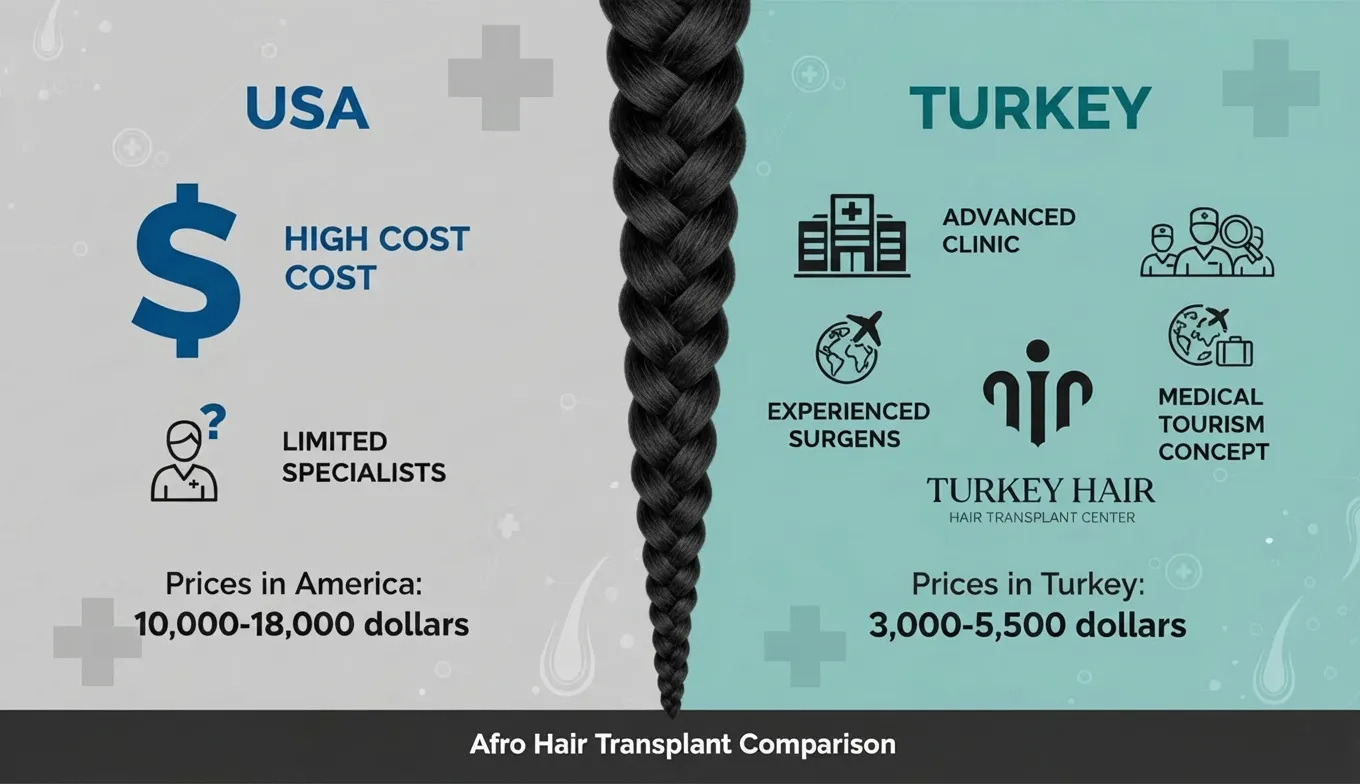
Afro Hair Expertise & High Case Volume
One of the most significant advantages of Turkey-based hair transplant centers is procedural volume. Clinics specializing in Afro hair restoration routinely perform thousands of cases annually, a factor that has made Turkey a preferred destination for USA Afro Hair Transplant patients seeking consistent and predictable outcomes. This repetition allows surgeons to refine extraction angles, punch depth control, and curl-oriented implantation strategies that are rarely encountered in lower-volume environments common to many USA Afro Hair Transplant providers.
From a clinical proficiency standpoint, frequent exposure to 3C–4C follicles improves intraoperative decision-making and significantly reduces complication rates. High-volume practice directly correlates with lower transection rates and improved graft survival, which are critical success metrics in advanced USA Afro Hair Transplant procedures.
Advanced Technology & Custom Surgical Tools
Modern Afro hair transplantation relies heavily on customized surgical instruments. Standard straight punches are inadequate for curved follicles. Clinics in Turkey employ:
- Curved and hybrid punches designed for Afro follicle trajectories
- Manual extraction systems allowing tactile feedback
- Afro-specific implantation angle protocols
These adaptations are critical for preserving follicular integrity and maintaining natural curl direction post-transplant.
Cost Advantage Without Quality Compromise
USA vs Turkey – Afro Hair Transplant Cost Comparison
| Location | Average Cost | What Is Included |
|---|---|---|
| Florida | $12,000 – $15,000 | Surgery only, limited aftercare |
| New York City | $14,000 – $18,000 | Surgery, minimal follow-up |
| Turkey | $3,500 – $5,000 | Hotel, VIP transfers, medications, aftercare, follow-up |
This financial accessibility enables patients to prioritize surgeon expertise rather than geographic proximity.
Afro Hair Transplant Journey from the USA to Turkey
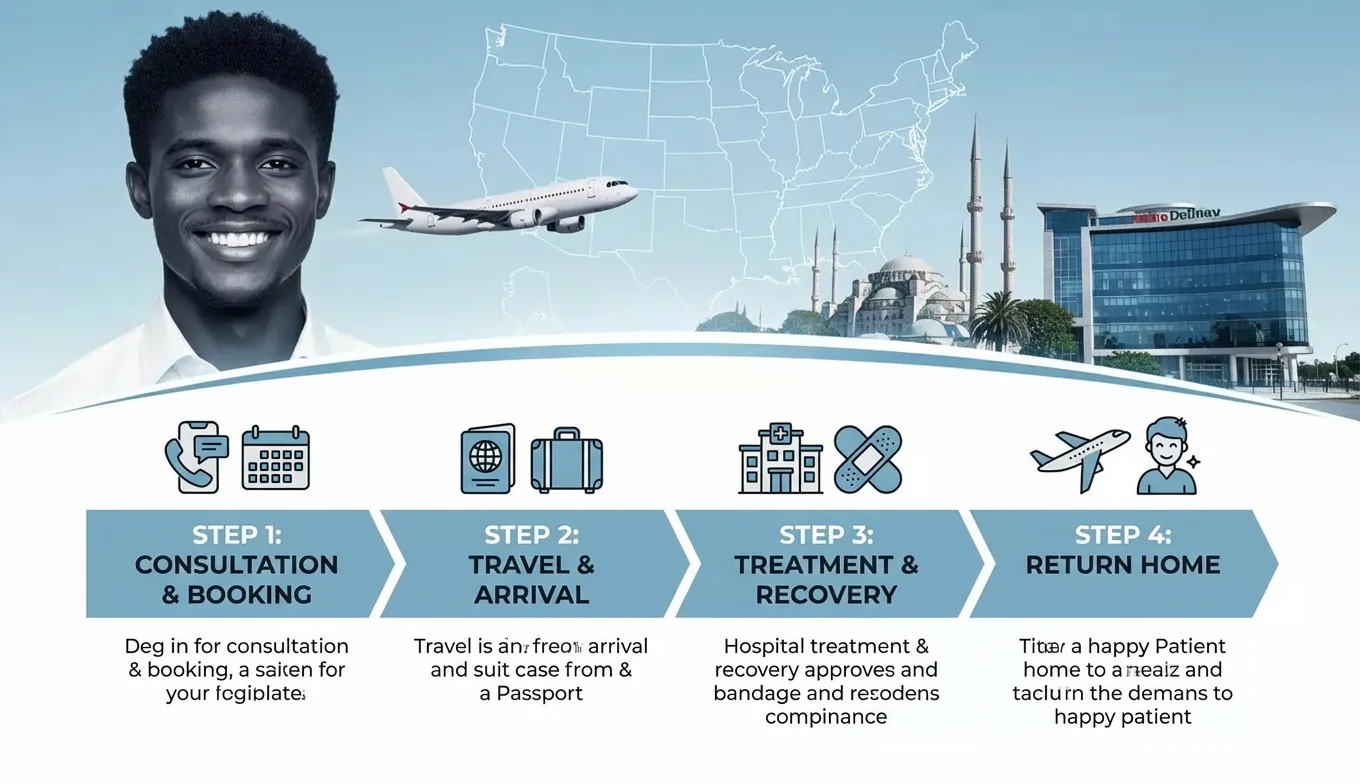
Online Consultation & Hair Analysis
The process begins with a remote medical evaluation. Patients submit high-resolution photos or videos, allowing surgeons to assess:
- Hair loss pattern and severity
- Donor area density
- Hair type classification (3C–4C)
- Estimated graft requirements
This stage ensures appropriate candidate selection and realistic expectation management.
Travel & Arrival Process
Once approved, travel logistics are coordinated through patient support teams. Clinics assist with:
- Flight scheduling from major US cities
- Airport-to-hotel VIP transfers
- Hotel accommodation near the clinic
- English-speaking medical coordinators
Surgery Day
The surgical procedure is performed under local anesthesia. The operative phases include:
- Donor area preparation
- Manual or DHI-based follicular extraction
- Curl-aligned implantation following natural growth direction
Special attention is given to hairline design, particularly for Afro aesthetics, where straight or overly sharp lines appear unnatural.
Recovery & Follow-Up
Afro Hair Transplant Recovery & Growth Timeline
| Phase | Clinical Progress |
|---|---|
| 1–3 Months | Shedding phase, follicle stabilization |
| 4–6 Months | Initial regrowth, early curl formation |
| 9–12 Months | Full density, mature Afro curl pattern |
Patients are counseled that temporary shedding is a normal physiological response and does not indicate graft failure.
Risks & Considerations for Afro Hair Transplant
Keloid Formation Risk
Individuals with darker skin tones have a statistically higher risk of keloid scarring. Preventive strategies include:
- Minimally invasive extraction techniques
- Reduced punch diameter
- Careful wound management
Transection Risk
Transection remains the primary technical risk in Afro hair transplantation. Surgeon experience and manual extraction significantly reduce this risk.
Expectation Management
Hairline planning must respect Afro hair aesthetics. Unrealistic expectations regarding straight or juvenile hairlines often lead to dissatisfaction if not addressed preoperatively.
Who Is a Good Candidate for USA Afro Hair Transplant in Turkey?
- Men and women with stabilized traction alopecia
- Patients with androgenetic alopecia
- Individuals with thinning crowns
- Postpartum hair loss patients after hormonal normalization
Before & After Results – What USA Patients Can Expect
Clinically successful outcomes are characterized by:
- Natural-looking Afro hairlines
- Preserved curl direction
- Minimal donor area scarring
- Long-term graft survival
Travel Safety, Logistics & Comfort
Turkey operates under government-regulated medical tourism standards. Most clinics maintain international accreditation and adhere to strict sterilization and patient safety protocols.
- Average flight time: 10–12 hours
- Time difference: 7–10 hours
- 24/7 patient coordination
Single Consolidated FAQ
- What is a USA Afro Hair Transplant?
- Can Afro hair be transplanted successfully?
- Is Turkey safe for hair transplant surgery?
- How many grafts are typically required?
- Will curl pattern remain natural?
- How soon can patients return to work?
References
- International Society of Hair Restoration Surgery
- World Health Organization
- Healthcare in Turkey – Medical Tourism
Why Turkey Is the Smart Choice for USA Afro Hair Transplant
The success of a USA Afro Hair Transplant depends on specialized expertise rather than geographic convenience. Turkey’s high case volume, Afro-specific surgical techniques, and comprehensive patient care have positioned it as a global leader in Afro hair restoration.
For patients seeking predictable, natural, and long-lasting results, choosing a destination with proven experience offers both medical and aesthetic advantages.
