Performed at authorized partner hospitals Turkey Hair Center is a Ministry of Health authorized health-tourism intermediary, not a clinic.
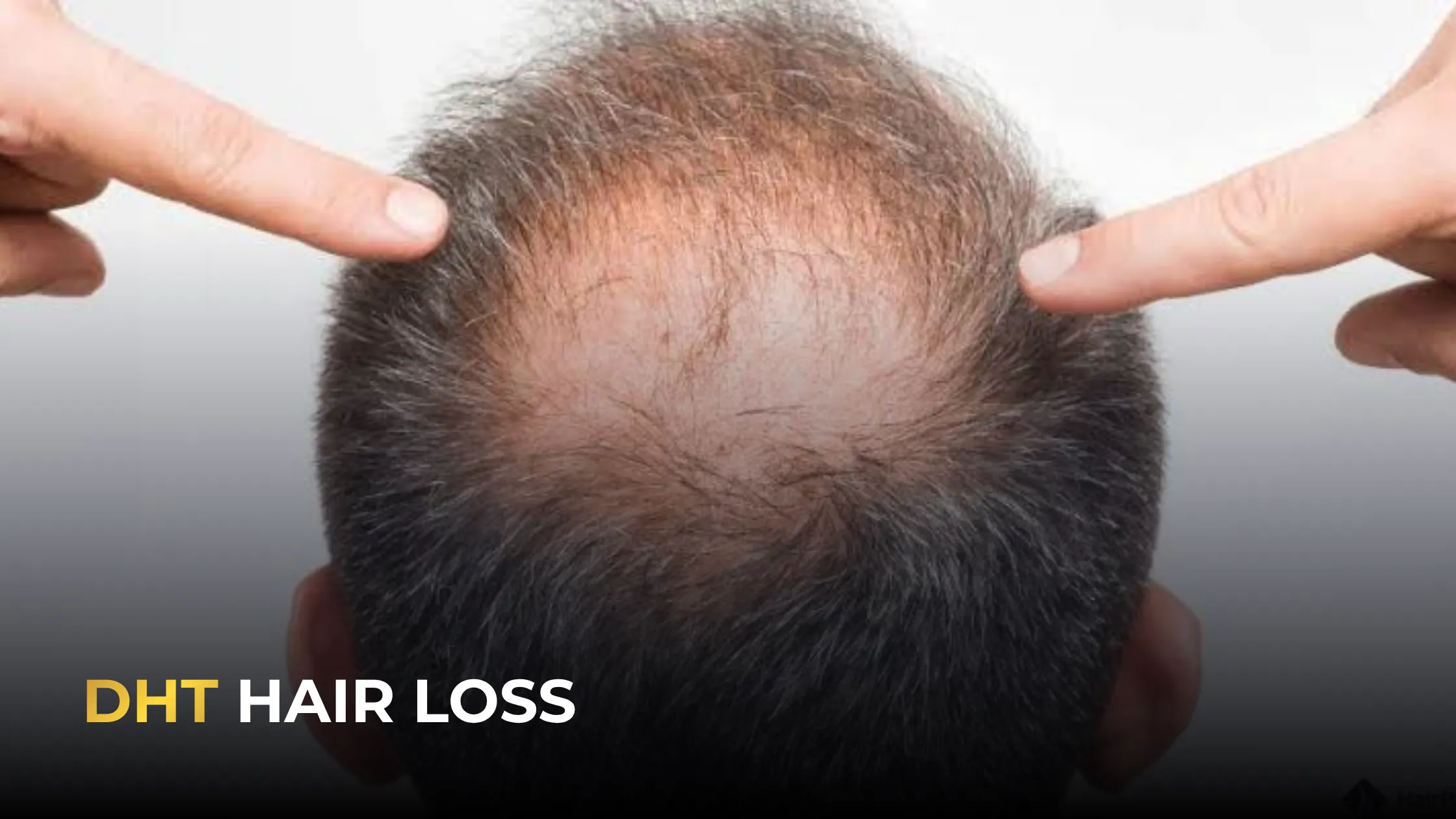
DHT hair loss, clinically called androgenetic alopecia, happens when your hair follicles shrink because they're overly sensitive to hormones. As time goes on, these hairs grow back thinner and shorter until they eventually stop growing altogether. Catching it early can slow this down, but once the hair is permanently gone, surgery is often the only fix.
Quick Answer: What Is DHT Hair Loss?
DHT hair loss is basically the slow shrinking of your hair follicles, triggered by long-term exposure to a hormone called dihydrotestosterone (DHT). If you're genetically wired to be sensitive to it, this hormone tells your follicles to miniaturize. With every new growth cycle, the hair comes back shorter and weaker until your scalp starts showing through.
Interestingly, having high DHT levels in your blood doesn't automatically mean you'll go bald. It all comes down to how sensitive your specific hair follicles are. Knowing this helps you understand what treatments can and can't do.
Patients usually say "DHT hair loss." Doctors call it androgenetic alopecia. They mean the exact same thing.
Two men can share identical hormone panels. One may develop substantial hair loss, while the other retains much of his hair for decades. Genetics play a major role in that difference. Your genetics decide if your hair follicles overreact to normal circulating androgens. Early recognition can make a meaningful difference in treatment options. Medical treatments protect the hair you still have and can thicken weakening strands. But biology has limits. Once a follicle completely dies, pills will not bring it back.
What Is DHT?
Before trying to block something, you need to understand its purpose. This hormone actually handles heavy lifting for your body.
DHT vs Testosterone
Dihydrotestosterone (DHT) is an exceptionally potent androgen. Your body creates it directly from testosterone using an enzyme known as 5-alpha reductase.
What Does DHT Do in the Body?
It drives critical changes during fetal development and puberty. It fuels facial hair growth, thickens body hair, and maintains prostate tissue health.
The hormone itself isn't toxic. It manages vital daily functions. The baldness issue is strictly a localized problem with how your scalp processes it.
Why Does DHT Affect Some Hair Follicles More Than Others?
Genetics are highly localized. Follicles on the front, temples, and crown are generally more sensitive to androgen signaling, while those on the back and sides of the scalp tend to be more resistant. This creates the classic horseshoe pattern of baldness.
There is a biological irony here. The exact same hormone that shrinks scalp follicles actively stimulates beard and chest hair. Your body reacts to one androgen in completely opposite ways based solely on where the hair lives.
At What Age Does DHT Hair Loss Usually Start?
There is no universal timeline. Men with strong genetic predispositions often notice temple recession in their late teens or early twenties. Others see no changes until their forties. For women, diffuse thinning frequently aligns with the hormonal shifts of perimenopause and menopause, though early-onset cases certainly happen.
How Does DHT Cause Hair Loss?
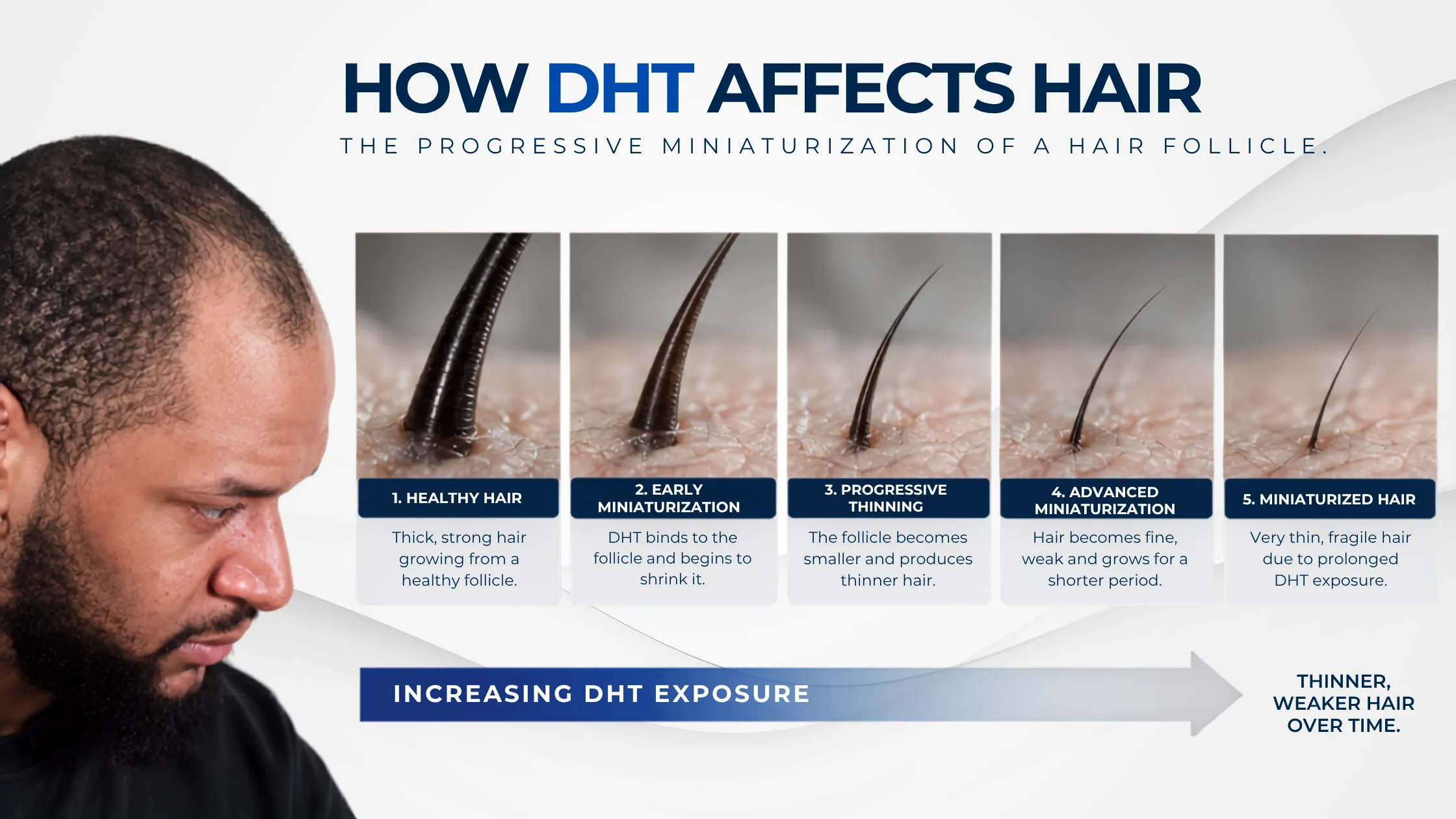
Androgenetic alopecia typically develops gradually as susceptible follicles undergo progressive miniaturization over successive growth cycles.
Hair Follicle Miniaturization
Androgens influence susceptible scalp areas through specific receptor signaling. In genetically predisposed skin, this triggers progressive miniaturization. The hairs become shorter and finer with every cycle.
Shorter Growth Phase
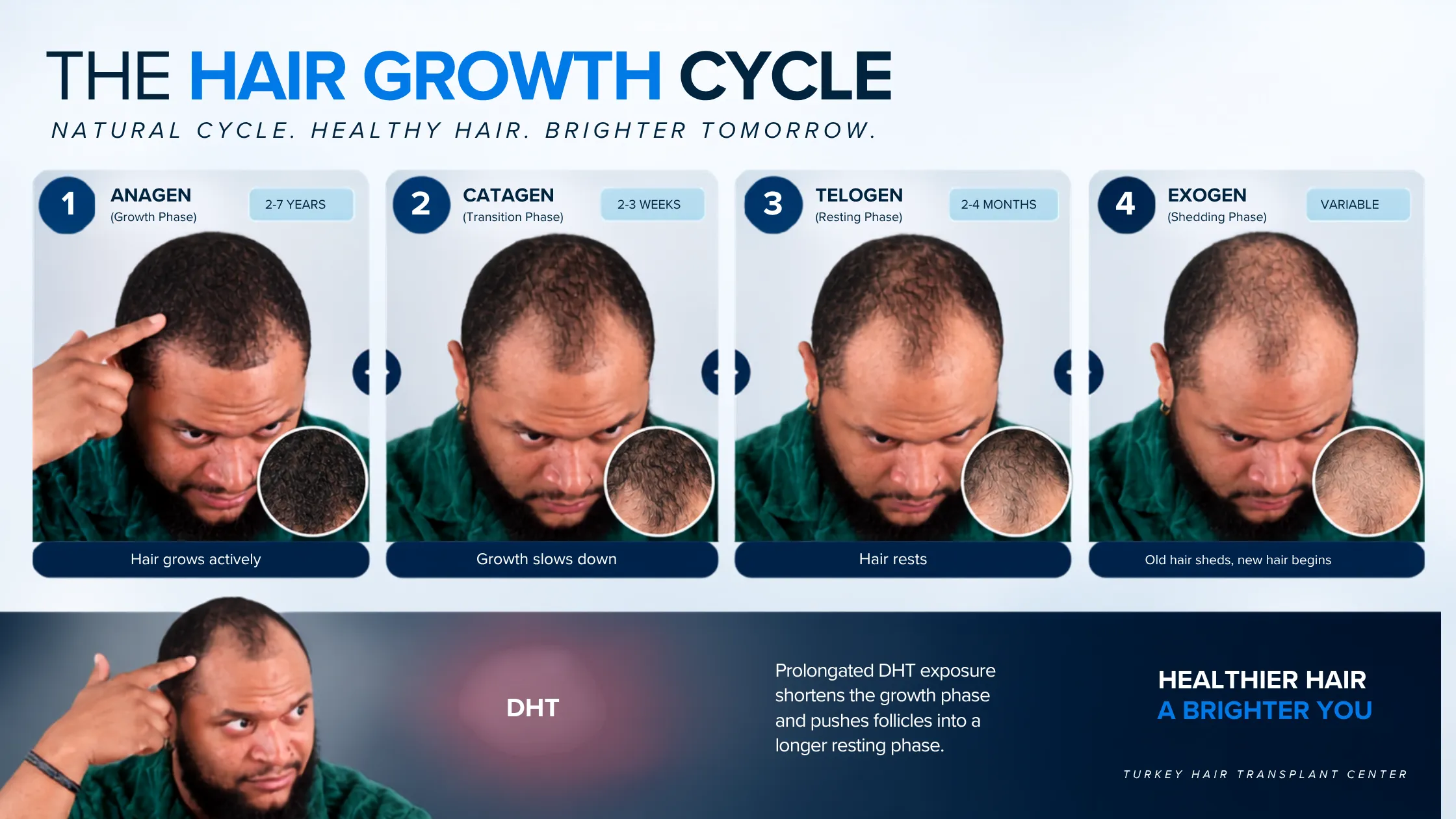
Prolonged exposure forces the active growth phase: anagen: to drastically shorten. Hairs fall out faster. The replacements look thinner.
DHT Sensitivity and Genetics: Why Some People Lose Hair Faster
Family history can provide an important indication of a person's susceptibility to androgenetic alopecia. Doctors rarely diagnose hair loss just by checking hormone levels. Follicles simply inherit a hyperactive response to completely normal androgens.
Signs of High Androgen Activity vs. DHT-Related Hair Loss
People see their hair falling out and immediately blame a massive hormone imbalance. That isn't always the case.
Yes, high androgens leave visible clues. Severe adult acne. Highly oily skin. Sudden increases in body hair. But here is the reality: you can have aggressive hair loss while your blood panels look completely normal. The issue usually lies in your scalp's genetic receptors rather than an actual overproduction of testosterone.
For female patients experiencing scalp thinning alongside irregular periods or excess facial hair, doctors must investigate Polycystic Ovary Syndrome (PCOS). Fixing the endocrine problem takes priority.
Can a Blood Test Diagnose DHT Hair Loss?
A blood test accurately measures what is circulating in your system. It cannot measure your follicle's genetic sensitivity. High or low blood levels alone will never confirm androgenetic alopecia without a physical scalp check.
How Hair Specialists Distinguish DHT Hair Loss From Other Causes
Proper diagnosis requires looking closer than the naked eye allows. Specialists use specific clinical markers to rule out other problems.
Dermoscopy and Miniaturization
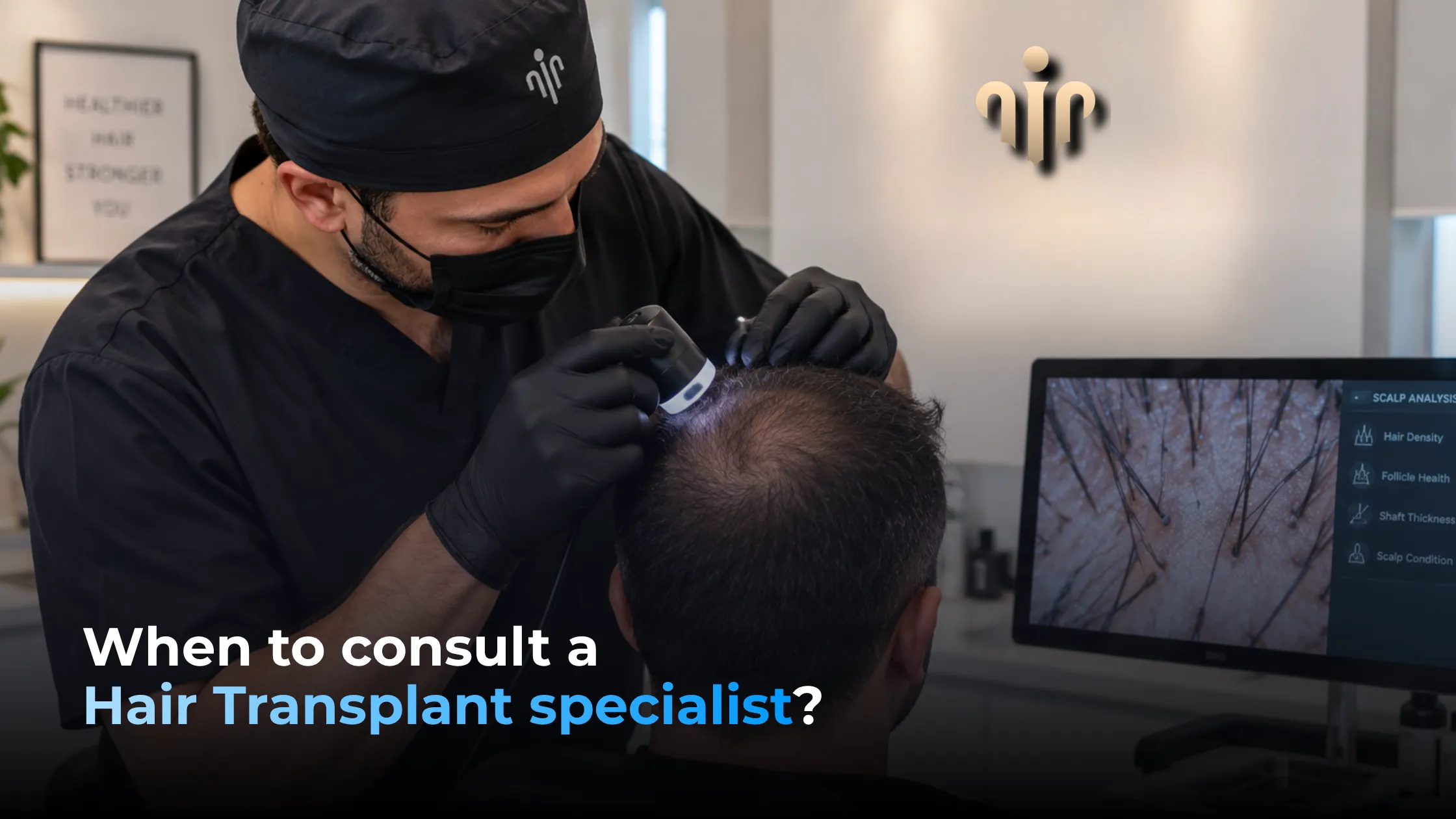
Doctors use a dermatoscope to magnify the scalp. They search for distinct variations in hair shaft thickness. A mix of thick, healthy hairs sitting right next to tiny, miniaturized hairs is a classic sign of androgenetic alopecia.
Patterned vs. Diffuse Shedding
Sudden, diffuse shedding can occur with telogen effluvium, which may be triggered by factors such as significant stress, illness, weight loss, or nutritional changes.
DHT Hair Loss in Men
Male pattern hair loss often follows a recognizable pattern.
Receding Hairline and Temple Loss
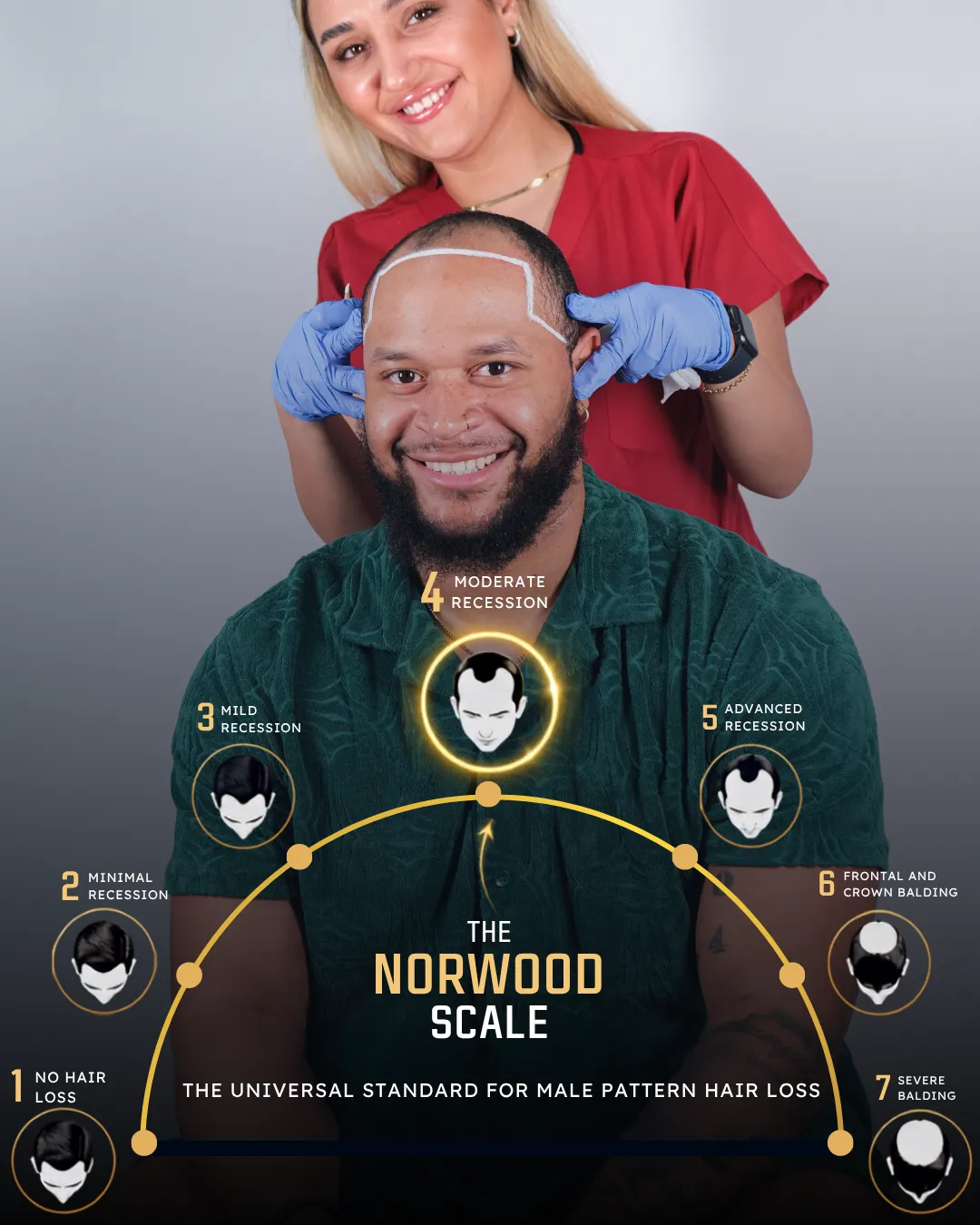
Early male pattern hair loss often appears as gradual recession at the temples and frontal hairline.
Crown Thinning
The vertex: or crown: thins out next. In late stages, the receding front meets the balding crown, leaving a large exposed area.
DHT Hair Loss in Women
Female pattern hair loss rarely looks like male recession. The diagnostic approach has to change.
Women usually experience a diffuse thinning across the mid-scalp. The part line widens. They rarely go completely bald at the crown.
Hormonal shifts during and immediately after menopause significantly change hair density and shedding rates.
If a widening part happens alongside hirsutism, cystic acne, or skipped periods, doctors immediately investigate PCOS or other androgen excess conditions.
Treatment Options for Women
Finasteride carries FDA approval exclusively for men. Dermatologists do sometimes explore off-label antiandrogen therapies for female patients. However, this is never a casual prescription. Severe pregnancy-related risks exist, making strict specialist oversight absolutely mandatory.
Is DHT Hair Loss Reversible?
Starting medical treatment early often stabilizes the thinning process and can even thicken hairs that recently started shrinking. But reversing years of advanced depletion? Pills and serums rarely achieve that. Once a follicle completely miniaturizes and dies, surgery remains the only viable way to physically restore coverage.
How Long Does DHT Hair Loss Treatment Take to Work?
Patience is a medical necessity. Modifying a biological cycle takes months.
0-3 Months: You will likely not see new growth. Initiating minoxidil often causes temporary shedding as old hairs push out.
3-6 Months: Shedding stabilizes. Early, fine hairs begin to emerge.
6-12 Months: True cosmetic differences become measurable. The hair shafts begin to thicken.
Quitting at month three is a common mistake. A 6-12 month period is commonly used to assess whether a treatment is producing a meaningful response.
DHT Hair Loss Treatment Options
Modern medicine provides proven, heavily researched options to manage progression.
Finasteride
This specific 5-alpha reductase inhibitor directly limits how much testosterone converts into DHT. It requires a doctor's prescription and remains fully FDA-approved for treating male pattern baldness .
Dutasteride
Dutasteride inhibits both type 1 and type 2 enzymes. This creates a much broader suppression of DHT than finasteride. Clinical studies show its efficacy in male androgenetic alopecia, though its hair loss usage remains off-label in many countries.
Minoxidil
Minoxidil pushes resting follicles into the active growth phase. It then holds them there. The exact biological mechanism remains slightly unclear, making the old "it just increases blood flow" explanation technically inaccurate.
Treatment Comparison Matrix
Navigating medical options can be confusing. The table below outlines the primary interventions.
Treatment
How It Works
Evidence Level
DHT Blocker?
Medical Supervision
Finasteride (Oral)
Inhibits Type II 5-alpha reductase
High (FDA Approved)
Yes
Required
Dutasteride (Oral)
Inhibits Type I & II 5-alpha reductase
High (Off-label)
Yes
Required
Minoxidil (Topical)
Prolongs anagen growth phase
High (FDA Approved)
No
Recommended
The Role of Microneedling
Rolling a device with 1.0 to 1.5 mm needles across your scalp intentionally creates controlled micro-injuries. Why do this? Clinical evidence points to better local absorption when you apply topical minoxidil right after. View it as a helpful add-on therapy, not a magical standalone cure.
Clinical Note: Treatment-Induced Shedding
It's completely normal to see more hair falling out during your first two to eight weeks of treatment. This initial shedding can be alarming, but it may be temporary.
Topical Treatments and Combination Therapy
Topical finasteride continues to gain traction among patients avoiding oral medications. While applying it directly to the scalp aims to lower systemic exposure, some absorption still happens. You absolutely still need medical guidance to use it safely.
PRP, Laser Therapy and Hair Transplant
Therapies like PRP or low-level light caps serve as background support. They never replace established daily medications. More importantly, they cannot revive dead follicles. If a section of your scalp is completely smooth, transferring healthy donor hair through a transplant becomes your only realistic restoration method.
Ketoconazole Shampoos
Doctors occasionally add ketoconazole shampoos into off-label hair loss routines. Some early clinical evidence suggests it offers mild anti-androgenic properties directly on the scalp tissue. Treat it as a supportive hygiene step. Never a replacement for your core prescriptions.
DHT Blockers: How They Work
Pharmaceutical interventions do not just mask the problem. They directly target the specific enzymes manufacturing the hormone.
How 5-Alpha Reductase Inhibitors Work
Prescription medications like finasteride actively block the enzyme responsible for converting testosterone into DHT. Dropping that systemic hormone level is crucial. It effectively hits the brakes on follicular miniaturization for the majority of patients.
DHT Blocker Side Effects
Altering your hormone profile carries inherent risks. A small percentage of men report side effects impacting sexual function, energy levels, or mood. Proper physician monitoring ensures you navigate these treatments safely.
Natural DHT Blockers: What May Help and What Is Overhyped
The supplement industry makes massive claims about hair regrowth. The clinical data rarely backs them up.
Over-the-counter options like saw palmetto frequently pop up as natural 5-alpha reductase inhibitors. A handful of preliminary studies do point to mild benefits. However, they simply cannot compete with the proven efficacy of regulated pharmacological treatments.
Food / Extract
Active Component
Clinical Evidence Level
Saw Palmetto
Fatty acids/sterols
Preliminary / Limited
Pumpkin Seed Oil
Phytosterols
Preliminary / Limited
Green Tea Extract
EGCG
Not definitively established
A poor diet does not directly cause androgenetic alopecia. However, severe nutritional gaps: such as low iron or vitamin D deficiencies: can easily trigger stress shedding (telogen effluvium). This secondary shedding makes genetic thinning appear significantly worse.
Lifestyle Factors That Influence Hair Shedding
Your daily habits aren't going to rewrite your genetics. However, living unhealthily will absolutely make your shedding look and feel a lot worse.
Diet and Nutrient Deficiencies
To be clear, bad lifestyle choices don't "cause" male or female pattern baldness. But if you crash diet or run low on iron, B12, and vitamin D, you can easily trigger a stress-shedding condition called telogen effluvium. This makes your genetic thinning look far more severe than it actually is.
Stress, Sleep and Exercise
Living in a state of constant stress takes a physical toll on your hair cycle. Prolonged stress can contribute to telogen effluvium by disrupting the normal hair-growth cycle.
GLP-1, Weight Loss and Hair Shedding
With the rise of GLP-1 weight loss drugs, a lot of people are noticing hair thinning. From what we're seeing in recent data, this is mostly linked to the rapid weight loss and sudden drop in calories: which triggers telogen effluvium: rather than a direct DHT issue.
Why Transplanted Hair Is More Resistant to DHT
When medical treatments are no longer enough, hair transplantation is evaluated. The success of this surgery relies entirely on a biological concept called "donor dominance."
Hair follicles from the donor area at the back and sides of the scalp are generally more resistant to androgen-related miniaturization. When a surgeon extracts these healthy follicles and implants them into a bald area on the front or crown, the follicles retain their original genetic resistance. They do not suddenly become sensitive just because they changed locations.
However, a transplant does not cure your scalp of DHT.While the newly implanted hairs are generally more resistant, your surrounding native hair remains vulnerable. Continuing medical therapies after surgery protects the native hair sitting behind the transplant.
When Should You See a Doctor?
Getting professional advice early on gives you actual treatment choices while you still have enough hair to save.
Rapid Shedding or Patchy Hair Loss
Notice your hair falling out in massive handfuls? Finding perfectly smooth, circular bald patches? Get to a dermatologist quickly. Autoimmune conditions like alopecia areata look entirely different from genetic thinning and require completely different treatments.
Women With Hormonal Symptoms
Adult acne. Skipped periods. Unwanted facial hair. When these symptoms occur alongside hair loss, female patients must undergo a thorough endocrine evaluation. Getting this checked becomes especially critical if pregnancy is in your near future.
Before Starting DHT Blockers
Please don't try to self-medicate by ordering pills online. A doctor needs to look at your baseline health and blood work before handing over a prescription for things like finasteride or dutasteride.
Creating a DHT Hair Loss Action Plan
Having a clear, step-by-step strategy is the best way to stop yourself from wasting money on miracle serums that don't work
Step 1 - Confirm the Diagnosis: First things first, have a professional look at your scalp to make sure it's actually androgenetic alopecia and not just stress shedding.
Step 2 - Stop Progression Early: If the doctor gives you the green light, start your targeted medical therapies as soon as possible. The goal here is to protect the density you still have.
Step 3 - Support Growth: Once the shedding is under control, bring in growth stimulants like minoxidil. Also, make sure to fix any vitamin or iron deficiencies showing up in your blood tests.
Sometimes. If caught early, medical treatments can stabilize the shedding and thicken hairs that have just begun to miniaturize. However, once a follicle is completely depleted and the skin becomes smooth, medication cannot revive it.
How do I fix my DHT levels?
Systemic DHT can be actively reduced with prescription 5-alpha reductase inhibitors like finasteride. You cannot guess your dosage. A qualified physician must evaluate your medical history to determine if this therapy is safe for you.
How do I tell if my DHT is high?
A blood test measures the actual circulating hormone levels in your system. But there is a catch. A blood test cannot measure your follicle's genetic sensitivity. You can have completely normal blood DHT levels and still experience severe genetic balding.
What happens if I stop taking DHT blockers?
Medications act as a shield. They do not cure the underlying genetic sensitivity. If you stop treatment, your hormone levels return to baseline. Hair loss may gradually resume after treatment is stopped.
Is blocking DHT a good thing?
For adults experiencing aggressive hair loss or prostate issues, reducing DHT under medical supervision is standard clinical practice. Altering hormones always carries potential risks, which is why physician oversight is strictly required.
Final Verdict: Can DHT Hair Loss Be Controlled?
If you recognize what's happening early on, androgenetic alopecia is highly manageable. The core issue usually isn't just having "high hormones": it's that your follicles are genetically sensitive to them.
Medications like finasteride and minoxidil do the heavy lifting by protecting the hair you still have. Natural supplements may provide limited support, but they should not be considered a substitute for evidence-based treatment.
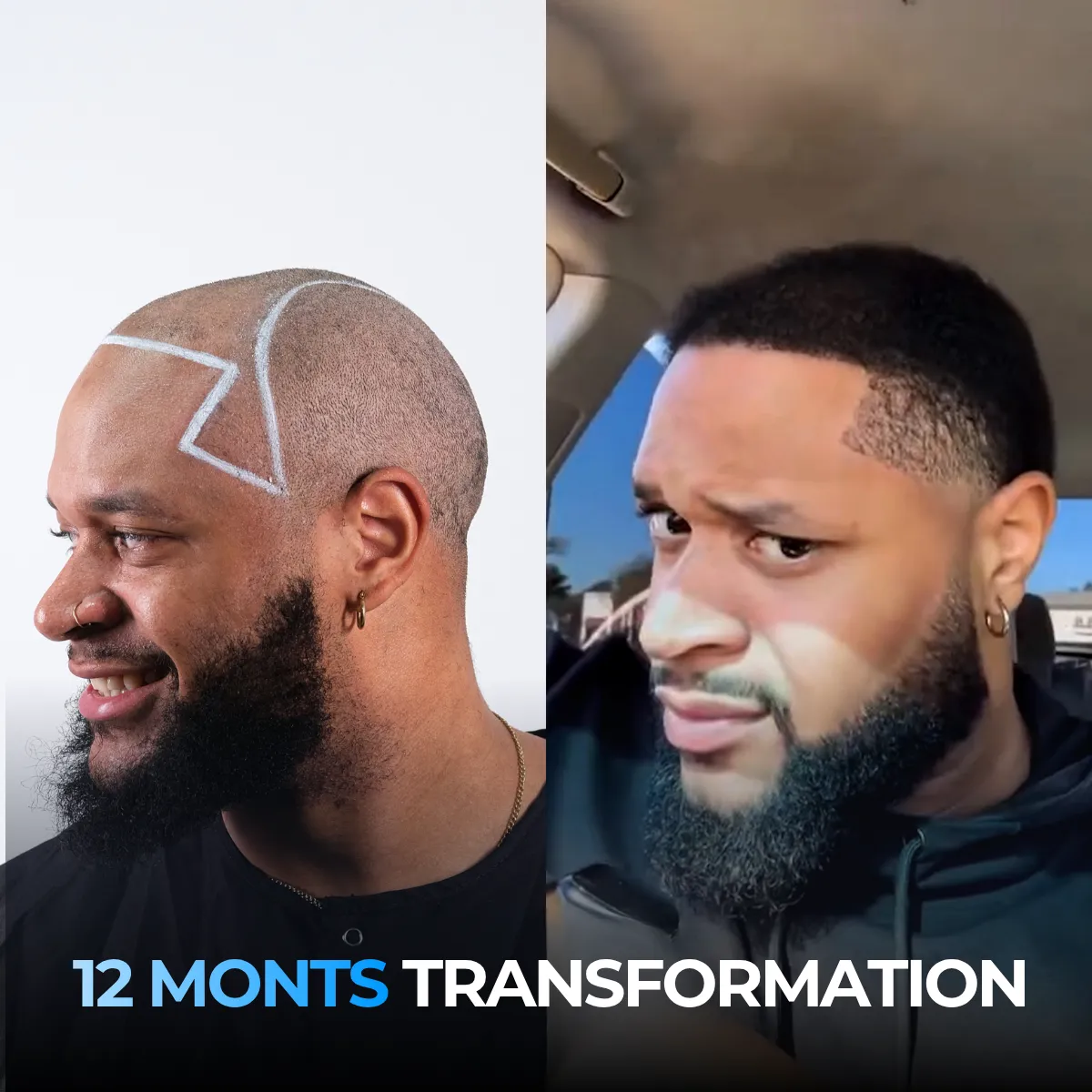
If a part of your scalp is already totally bald, a hair transplant before-after is the only real way to get that coverage back. Whatever route you choose, setting up a safe plan always starts with a direct evaluation from a specialized hair restoration physician or dermatologist.
About the Author
Written by: Nazmi G., Senior Trichologist & Hair Restoration Consultant. With over 10 years of hands-on clinical experience, Nazmi G. focuses on patient education around androgenetic alopecia, evaluating miniaturization through dermoscopy, and assessing candidates for medical treatments and hair transplants.
Medical Review Note
Medically reviewed by: Dr. Tompi, M.D., Plastic & Aesthetic Surgeon. Keep in mind that this content is strictly for informational purposes and shouldn't replace a personal medical diagnosis. Truly diagnosing androgenetic alopecia requires a physical exam, a dermoscopy, and a thorough review of your medical history by a doctor.
Editorial Policy & Trust
We strictly prioritize evidence-based medical reporting. DHT is a crucial hormone for your body's daily functions, and remember that not all hair loss is caused by hormones. Using any 5-alpha reductase inhibitor or hormone-altering drug comes with risks and always requires proper doctor supervision.
Medical disclaimer: This article is for informational purposes only and is not medical advice. Individual results vary from person to person. Always consult a qualified doctor before any hair transplant procedure.
Send three photos: front, top and sides. You get a technique recommendation, a graft range and a straight answer about what is achievable, before anyone talks about price.
Your details are with the team
A patient coordinator will get back to you shortly. If you would like to send your photos now, WhatsApp is the fastest way to do it.
We respond quickly, day or night, in your language.
Multilingual team, no obligation
Data protectedKVKK and GDPR compliant, 100% confidential
Authorized Health Tourism Intermediary
Turkey Hair Center is the hair-restoration brand of Healthy Way Tourism, an authorized international health-tourism intermediary. All medical procedures are performed by licensed medical professionals at authorized healthcare facilities in Turkiye, in accordance with the regulations of the Ministry of Health.