Performed at authorized partner hospitals Turkey Hair Center is a Ministry of Health authorized health-tourism intermediary, not a clinic.
Quick Answer: Did John Cena Get a Hair Transplant?
He addressed severe crown thinning with an initial surgery in November 2024, followed by a second strategic operation. Experts view this multi-session approach as the gold standard, allowing his medical team to maximize graft survival and achieve full, high-density coverage across the vertex.
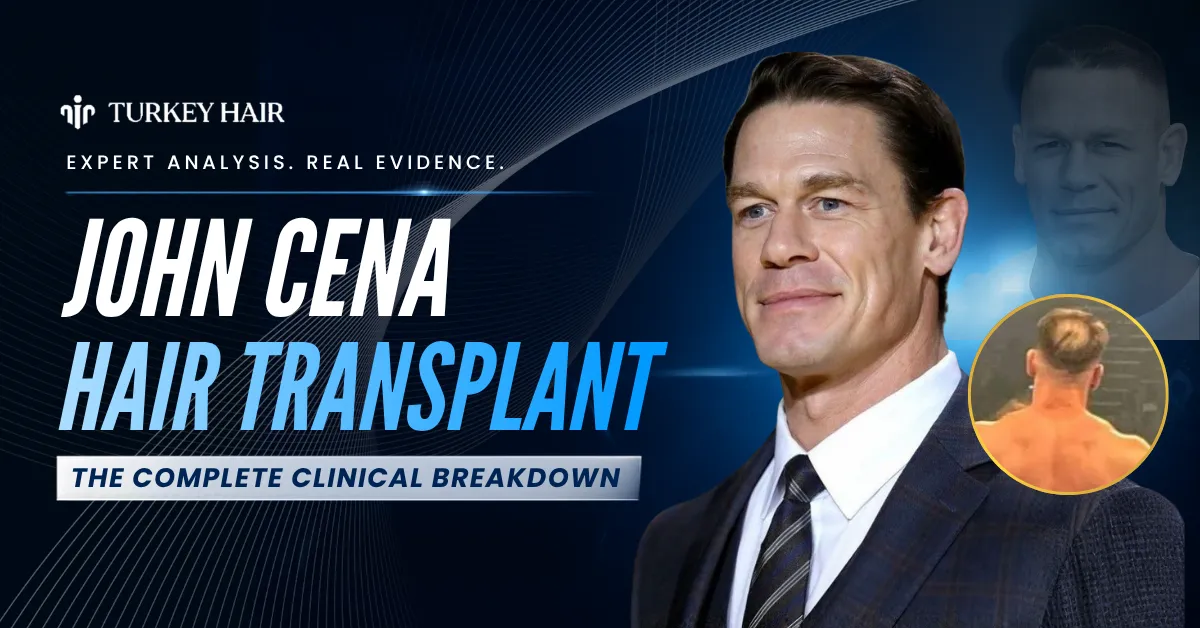
Yes. John Cena completely rejected the usual Hollywood secrecy and openly confirmed his hair restoration journey. He didn't just get one hair transplant; he recently completed his second procedure. For years, the global superstar suffered from advanced, highly visible crown thinning. Instead of hiding under hats or relying on temporary concealers, he took decisive clinical action. He underwent his initial surgery in November 2024 at the Anderson Center for Hair in Atlanta, focusing heavily on rebuilding the complex vertex whorl. Recently, Cena went back for a second operation to perfect his density.
This staged approach is how experienced medical teams often handle extensive hair loss.
Expert Clinical Analysis
John Cena's decision to undergo a second procedure highlights a crucial reality in clinical hair restoration. Severe crown thinning requires massive graft numbers. Attempting to pack 4,000 grafts into a single session often risks depleting the donor area or lowering blood supply to the new follicles. By breaking his restoration into two distinct sessions, his surgical team prioritized scalp health. It is a textbook example of responsible long-term planning that aims to protect the donor area and plan density over the long term.
Quick Answers: Key Facts at a Glance
To provide immediate clarity, here is a breakdown of the officially confirmed clinical details surrounding his highly publicized multi-session procedure.
Topic
Verified Clinical Information (2026 Updated)
Hair Transplant Confirmed?
Yes (Publicly verified by John Cena)
Procedure Dates
Late Nov 2024 (Session 1) & 2026 (Session 2)
Operating Surgeon
Dr. Ken Anderson, M.D., FISHRS
Clinic Location
Anderson Center for Hair (Atlanta, Georgia)
Primary Area Treated
Crown / Vertex Zone
Surgical Technique
Long-Hair / Unshaven FUE & DHI Hybrid
Confirmed Maintenance
Minoxidil, Low-Level Laser Therapy (LLLT)
Key Takeaways
Definitive Confirmation: John Cena completely bypassed Hollywood secrecy, openly validating both of his surgical hair restorations.
The Multi-Session Strategy: Rather than forcing a massive single surgery, he opted for a two-part procedure (2024 and 2026) to safely maximize his crown density.
Elite Surgical Backing: The reconstruction was curated by world-renowned FUE pioneer Dr. Ken Anderson.
Targeted Topography: The operation focused exclusively on the vertex swirl, leaving his naturally stable frontal hairline intact.
Before diving into the medical charts and photo timelines, it is essential to understand the sheer scale of the man behind the headline. John Cena’s hair isn't just a topic of discussion because of aesthetic changes; his entire image has been meticulously analyzed by millions globally.
The Viral Bald Spot Conversation
What John Cena Actually Said About His Hair Transplant
One reason the John Cena hair transplant became such a heavily searched global topic is that his specific pattern of hair loss was unusually visible. For years, his frontal hairline remained exceptionally strong while the vertex region became progressively thinner. This distinction is highly important because crown restoration requires a completely different surgical strategy, micro-angulation plan, and graft distribution than traditional hairline-focused procedures.
Unlike many celebrities who dodge medical questions or attribute their sudden hair growth to "good sleep and vitamins," Cena tackled the rumors with absolute, refreshing honesty.
His Current Hair Maintenance Routine
John Cena and Dr. Ken Anderson
Elite high-profile celebrities require two non-negotiable elements when choosing a clinic: flawless surgical artistry and absolute discretion. John Cena found both in Atlanta.
From Anonymous Surgeon to Public Acknowledgement
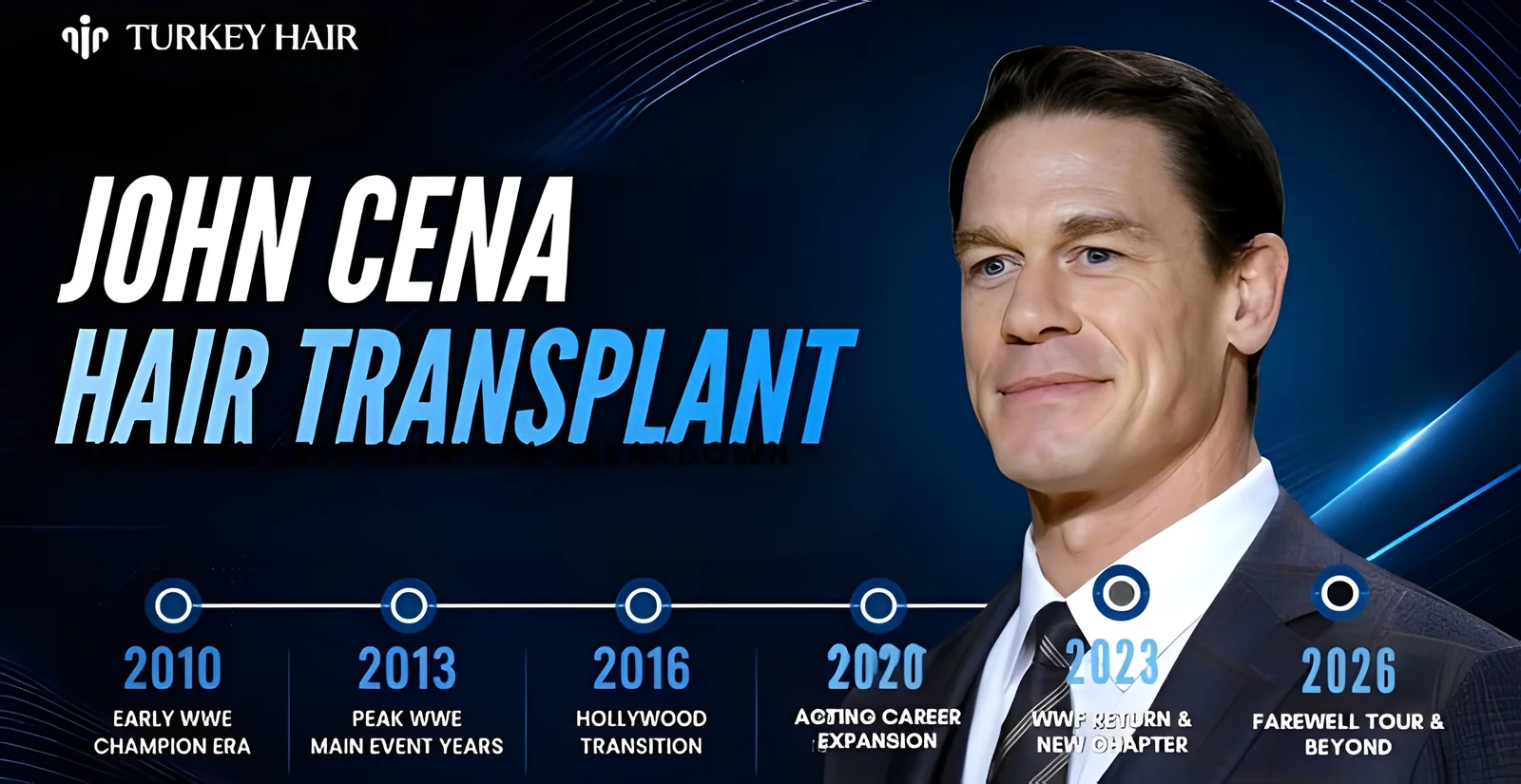
John Cena Hair Loss Timeline (2010-2026)
To understand the long-term success of John Cena’s hair restoration, we must analyze the progressive nature of his androgenetic alopecia over a 15-year window. Hair loss is a slow biological decline, and his journey maps this transition perfectly.
Beyond the surgical intervention itself, Cena confirmed the consistent use of Minoxidil, Red Light Therapy, and vitamin supplementation as part of his ongoing maintenance routine. This detail is crucial, as successful long-term outcomes are rarely dependent on surgery alone. Maintaining existing native hair plays a significant role in preserving overall density and appearance over time.
While Cena discussed his procedure on major talk shows, the official confirmation of his operating surgeon came directly from social media. Dr. Ken Anderson published a high-profile photograph alongside John Cena at the clinic, formally validating that the Anderson Center for Hair was the birthplace of Cena’s newly restored density.
Cena praised Dr. Anderson’s exceptional approach, noting that the pre-surgical consultation felt like an advanced masterclass in scalp anatomy. Cena openly shared that: "Doc Anderson is not only an amazing surgeon, he's a great friend and changed my life!".
November 2024 (session 1); second session reported publicly, date not confirmed
2010: Strong Hairline and No Significant Crown Loss
When reviewing photographs from the early 2010s, there is very little evidence of clinically significant hair loss. John Cena’s frontal hairline appears completely stable, and the crown region shows no obvious scalp visibility. His trademark ultra-short buzz cut successfully masked any early follicular miniaturization, keeping his hair density completely uniform.
2015: Early Signs of Crown Thinning
By the middle of the decade, subtle changes began to appear as Cena allowed his hair to grow slightly longer for Hollywood roles. The frontal hairline still looks exceptionally strong, but the crown begins to show early signs of reduced density. The problem is usually revealed only under strong overhead studio lighting or high-definition photography at this stage.
2020: Crown Visibility Becomes More Noticeable
Several public appearances from this period show increasing scalp visibility within the vertex region. Most of the visible density loss remained highly concentrated around the crown, while the frontal third and mid-scalp maintained reasonable coverage. This hyper-localized pattern is highly consistent with a textbook Norwood 3 Vertex progression.
2023-2024: The Viral Bald Spot and Surgery
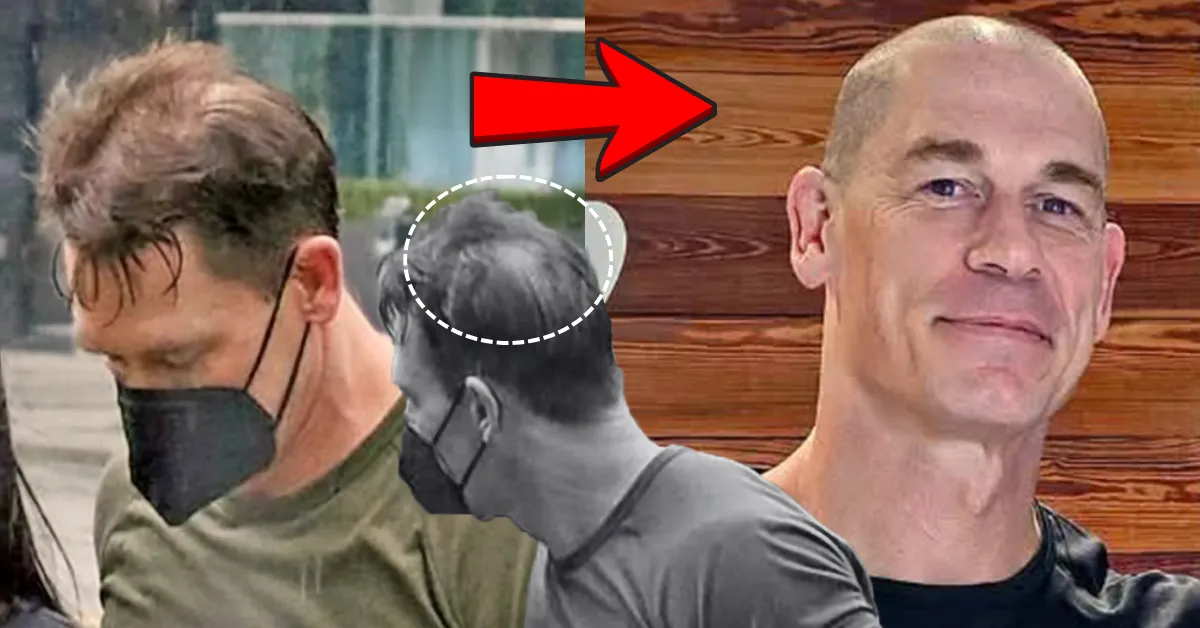
By 2023, the conversation surrounding Cena's hair became impossible to ignore, as images under intense wrestling arena spotlights revealed significant scalp visibility. This viral exposure ultimately led him to seek professional treatment. In November 2024, Cena underwent his hair transplant procedure with Dr. Ken Anderson, shifting the focus from progressive thinning to active vertex reconstruction.
2025-2026: Recovery to Full Maturation
Five months after surgery, Cena returned to the spotlight at WrestleMania and discussed his early "fuzzies" on The Pat McAfee Show. By August 2025, his People Magazine cover story revealed a drastically darker, denser crown. Today, in June 2026, the vertex grafts have achieved 100% full biological maturation, displaying maximum hair shaft diameter and volume.
Why John Cena Chose Anderson Center for Hair
John Cena chose Dr. Anderson because of his clinical reputation for reconstructing highly natural crown areas. Furthermore, Dr. Anderson’s clinic offers high-net-worth individuals private access points, secure clinical environments, and fully customized, single-patient surgical days to protect patient privacy.
Why He Finally Decided to Have the Procedure
For years, fans speculated about John Cena’s hair, and eventually, the online discussion became impossible to ignore. Rather than avoiding the subject or retreating behind public denial, Cena chose to address it directly. He openly acknowledged the comments, jokes, and social media discussions surrounding his crown thinning, explaining that intense public attention played a major role in his decision to seek specialist treatment.
“You Guys Ripped Me To Shreds”
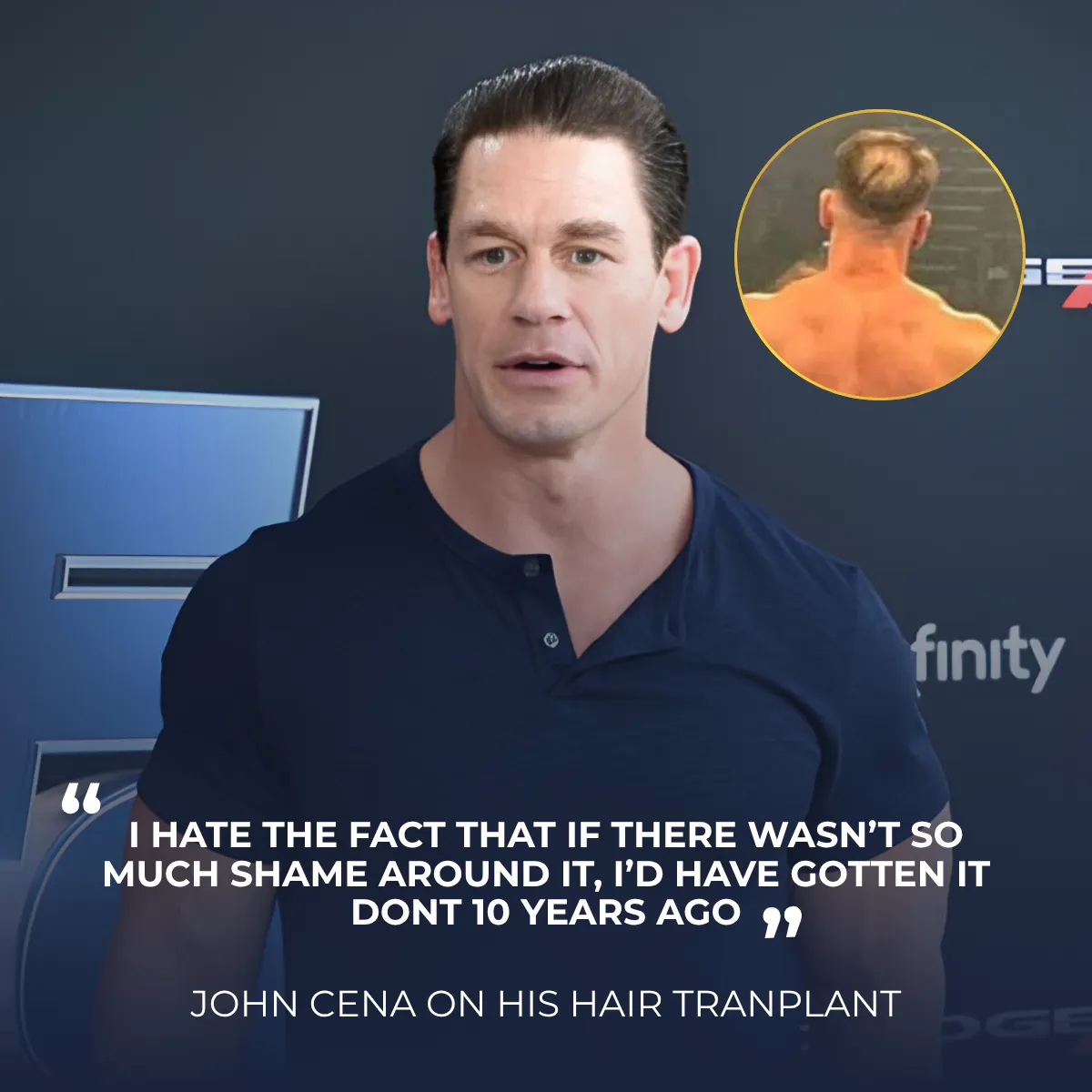
One of the most memorable comments Cena made about his hair loss came when he jokingly told fans on The Pat McAfee Show: "Thank you for bullying me into getting a surgical hair replacement ... You guys ripped me to shreds for a genetic problem that I can't control.". This remark was delivered with his characteristic humor, but it revealed that even highly successful public figures notice these conversations.
How Public Attention Influenced His Decision
When thousands of people repeatedly point out the same physical change, it naturally becomes more difficult to ignore. For someone appearing weekly on international television and constantly photographed from every conceivable angle, crown thinning is impossible to hide. He completely rejected the cultural stigma attached to the procedure, explaining his hair transplant using a brilliant real-world analogy: "You have to take the ones from the side and plant them in on the top. You take the lawn over here and you put it on the dry spot. It just takes a while for it to come in.".
His Recovery Experience & Life After Restoration
Cena later discussed aspects of his recovery process publicly, acknowledging that the road to full density requires deep patience. Like most transplant patients, he experienced a temporary period where the final outcome was not immediately visible. He playfully urged his fans during the early growth phases to look closely, shouting, "Come on, fuzzies!" as his crown began its initial transition.
He never attempted to create an alternative explanation or use artificial hairpieces; he simply acknowledged what he had done and moved forward. That honesty helped normalize conversations surrounding hair transplantation and male hair loss on a global scale.
WWE Legend, Hollywood Actor and Global Celebrity
Few individuals have commanded global entertainment mediums as successfully as John Cena. Over a prolific career, Cena stood as the absolute face of World Wrestling Entertainment (WWE), capturing 16 world championships and establishing himself as a pop-culture juggernaut. Transitioning seamlessly into mainstream Hollywood, he unlocked elite box-office status, anchoring major global franchises including The Suicide Squad, Fast & Furious, and Peacemaker.
This exceptional level of global visibility fundamentally changes the nature of personal aging. When your physical image is projected onto IMAX screens and broadcast live in high-definition 4K resolution, every minor anatomical shift becomes a matter of international public commentary. Every appearance is photographed, and every physical change instantly becomes a trending topic of global discussion.
Why His Hair Loss Became a Public Discussion
John Cena Hair Transplant: Before & After FUE Results Explained
Unlike the vast majority of public figures whose hair loss remains relatively private, hidden behind clever styling or non-disclosure agreements, John Cena’s crown thinning developed directly in front of millions of viewers. Interestingly, the central focus of the public conversation was never his hairline; his frontal third remained remarkably dense and structurally sound throughout his career. Instead, the focus was entirely on the crown.
Television cameras frequently captured the top of his scalp during WWE broadcasts, and direct arena lighting made the thinning area appear even more noticeable during physical matches. As the years passed, fans began sharing close-up screenshots online, causing the topic to gradually evolve from a casual observation into a recurring public discussion.
Understanding John Cena’s Hair Loss Pattern
Expert Clinical Insights
How We Would Plan This: "We would perform a strict graft sorting protocol under high-powered microscopes, saving the single-hair grafts for the outermost edges of the crown to create a soft transition, while grouping the high-volume 3-hair and 4-hair grafts tightly at the epicenter."
Why Surface Area Matters: "To deliver a dense, Hollywood-ready finish on a larger head circumference, our partner hospital’s clinical planning would confidently scale the graft pool upward toward 3,200 to 3,500 grafts to securely close the vertex world."
Hair loss is not a random biological event; it follows specific, predictable patterns that entirely dictate the required surgical approach.
Why Crown Hair Transplants Are More Difficult Than Hairline Procedures
Rebuilding a hairline is fundamentally different from reconstructing a crown, which presents incredibly unique biological and geometrical challenges.
Understanding the Crown Whorl Pattern
The crown is universally recognized as one of the most technically demanding areas in hair restoration. Hair does not grow forward or backward in a straight line within this zone; it follows a complex, circular growth pattern known as the crown whorl. Every single graft implanted must precisely respect that natural multi-directional spiral, otherwise, the result will appear completely unnatural.
Why Hair Direction and Angulation Matters
The crown rotates, spirals, and changes direction continuously across a 360-degree axis, requiring the surgeon to mathematically shift the angle of the recipient incision with every single graft placement. Furthermore, crown hairs emerge from the scalp at very flat, acute angles. Even a minor error: such as cutting the incisions too vertically: will cause the transplanted hair to stand straight up like a brush, exposing the scalp to light.
Why Crown Results Take Longer to Mature
The subcutaneous blood supply in the vertex area is significantly lower than the highly vascular frontal third of the scalp. Consequently, transplanted follicles in the crown experience a prolonged dormant phase, and visual density often continues improving long after frontal hairline results have fully matured, peaking between months 12 and 18.
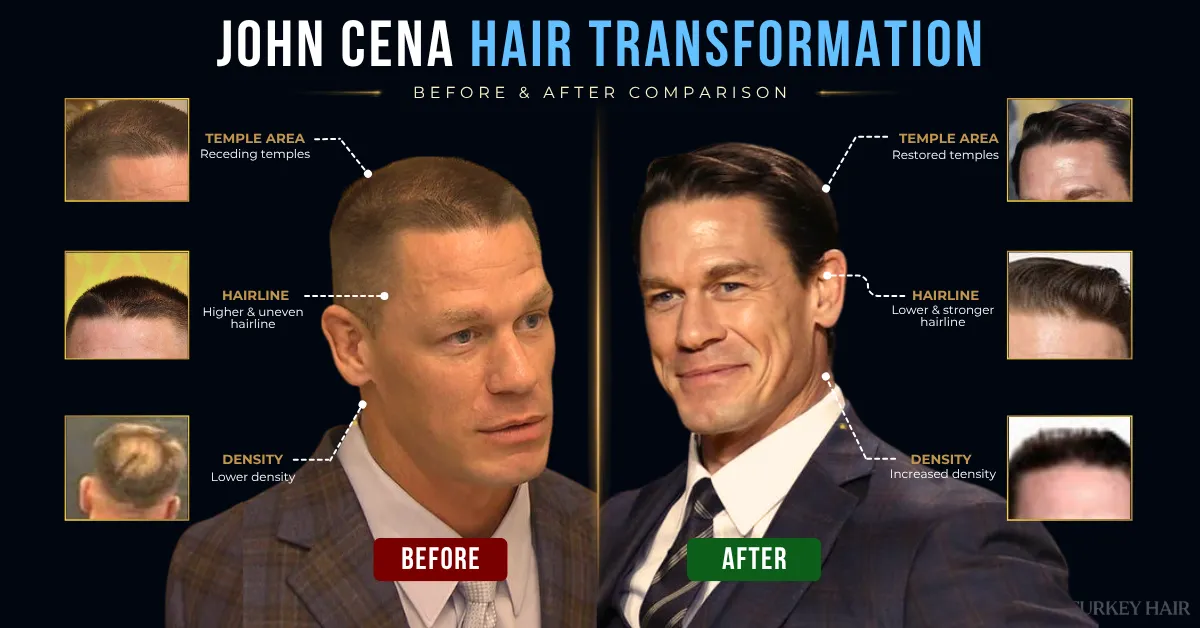
John Cena Before and After Hair Transplant Photos
Visual Metric
Pre-Operative Phase (2023 Viral Era)
Post-Operative Phase (2026 Matured Result)
Crown Coverage
Significant, sharp scalp exposure under light
Uniformly distributed hair density
Whorl Alignment
Disrupted due to advanced miniaturization
Meticulously mirrored 360-degree spiral
Light Reflection
High scalp visibility under overhead spots
Complete light interception by thick hair shafts
Profile Harmony
Vertex thinning created an isolated "island" effect
Seamless blending with neighboring native hair
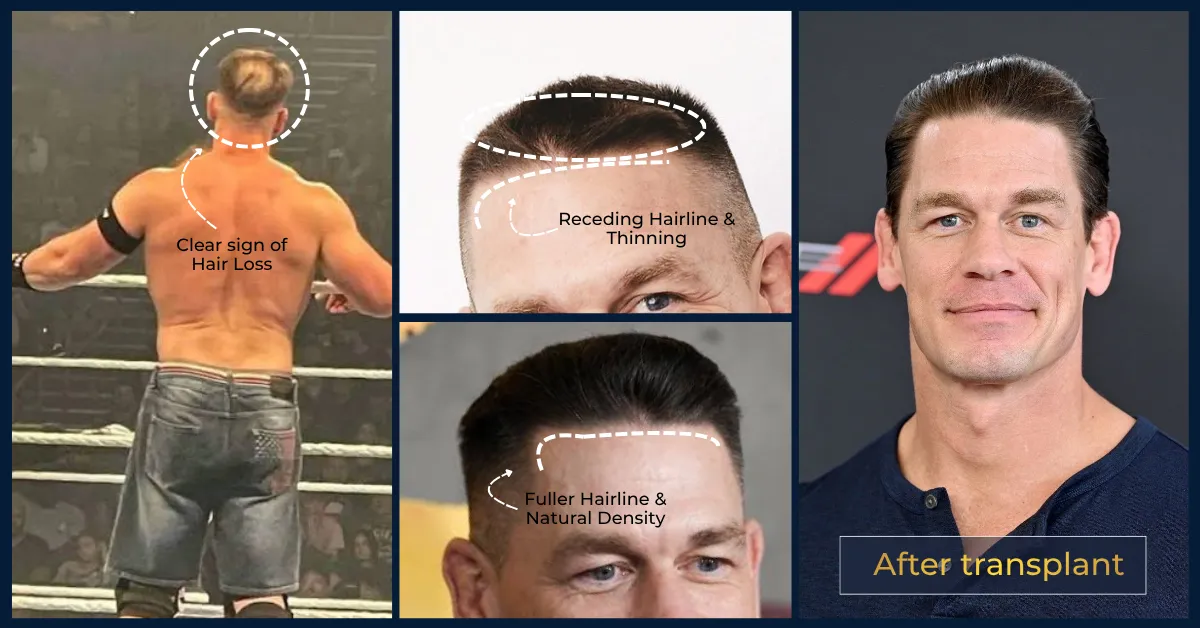
The most objective way to evaluate a surgical hair restoration is through direct, high-definition visual evidence. Rather than judging the transformation through a single viral screenshot, comparing his documented crown thinning with his matured 2026 profile reveals the true impact of strategic micro-graft engineering.
What Treatments Did John Cena Use Besides Hair Transplant?
Surgery creates the permanent structural foundation, but consistent medical maintenance is what actively protects the clinical investment.
Minoxidil and Red Light Therapy
John Cena has publicly verified that he integrated Minoxidil into his daily hair care routine, acting as a vasodilator to increase nutrient delivery to native hairs. He has also explicitly referenced utilizing Red Light Therapy (LLLT) to stimulate mitochondrial ATP production, extending the hair growth cycle and assisting newly transplanted grafts.
Vitamins and Scalp Maintenance
Public interviews also highlight his commitment to specialized vitamin and micronutrient supplementation to support keratin synthesis. Cena's exceptional consistency in these long-term maintenance protocols is a primary reason his results look so robust and complete in 2026.
John Cena’s Hair in 2026: Has the Result Fully Matured?
The biological timeline of a vertex hair transplant extends far beyond the initial anagen growth phase.
Growth vs Maturation: Understanding the Difference
Growth refers simply to the early timeline when the newly transplanted hair shaft breaks through the scalp surface. Maturation refers to the subsequent months where that same hair follicle thickens and upgrades its overall shaft diameter to match the surrounding terminal hair. Because of lower oxygenation levels, vertex follicles require more cycles to recover from the trauma of relocation.
Final Density and Coverage Assessment
By mid-2026, John Cena’s crown appeared significantly stronger, richer, and more complete than it did at any point prior to his surgery. At the 18-month post-operative mark, the hair shafts have achieved their maximum genetic caliber, and the result has reached total biological stability.
What Patients Can Learn From John Cena’s Hair Restoration Journey
Hairline Is Not Always the Main Problem:
John Cena’s journey demonstrates perfectly that the crown can often represent the more significant cosmetic issue on camera and in daily life.
Early Intervention Yields Better Outcomes:
Seeking professional treatment before an area transitions into complete baldness allows the surgeon to create a beautiful blending effect with existing native hair.
Natural Results Are Subtle:
The highest tier of hair transplantation never looks aggressive or obvious; it simply makes the patient look healthier and completely refreshed.
Long-Term Maintenance Matters:
Aesthetic success depends heavily on a patient's commitment to preserving their remaining native hair through therapies like Minoxidil and DHT inhibitors.
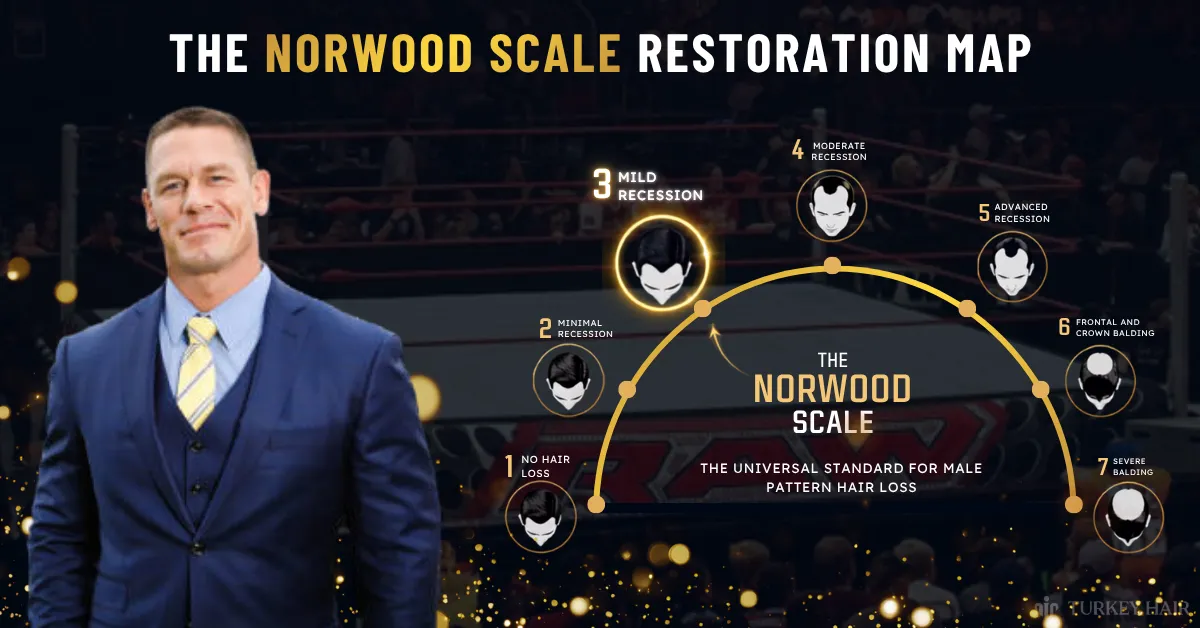
Norwood 3 Vertex Analysis
Based on high-definition photographic evidence, John Cena most closely resembles a textbook Norwood Stage 3 Vertex (3V) configuration. This specific category describes patients who maintain a relatively stable frontal hairline with almost zero temple recession, while experiencing noticeable, isolated thinning concentrated within the crown.
Why the Crown Was the Primary Concern
One of the biggest misconceptions surrounding Cena’s hair loss is that people focused entirely on the sheer amount of scalp they could see. The structural pattern clearly suggested that the crown was losing density at an accelerated rate compared to the frontal scalp. Because his on-camera duties involved multiple overhead camera sweeps, restoring the vertex was the correct priority to create the greatest cosmetic improvement.
Important Disclaimer: No Official Graft Count Exists
No official graft count has ever been publicly released by John Cena or Dr. Ken Anderson. For that reason, any fixed number discussed online should be viewed strictly as a professional estimate rather than a confirmed fact.
Expert Estimate Based on Publicly Available Photos
Several online sources suggest approximately 2,000 to 2,500 grafts. While that estimate is a reasonable starting baseline, it overlooks the fact that a crown procedure requires feathering density into surrounding native hair regions to create a natural transition.
Crown Surface Area vs Graft Requirements
Not every scalp is the same size, and John Cena possesses a highly pronounced, athletic skeletal framework, which correlates with a macrocephalic (larger-than-average) cranial surface area. A standard scalp requires ~2,500 grafts, while a macrocephalic scalp surface requires closer to ~3,500 grafts to achieve the exact same visual density. Density should always be discussed in terms of follicular units per square centimeter (FU/cm²) rather than raw graft numbers.
For anyone considering their own hair restoration, Cena’s clinical case offers several highly valuable, real-world lessons:
Final Thoughts
His pristine, matured hair profile in 2026 is a masterclass in strategic surgical planning combined with diligent, long-term medical maintenance. By actively discussing his procedure, he significantly helped dismantle the social stigma surrounding male pattern baldness. Ultimately, his journey proves that addressing hair loss head-on: without shame or secrecy: can yield life-changing cosmetic results. Proper hair restoration is never about cloning a celebrity's look; it is about unlocking the natural potential of your own donor hair and unique scalp anatomy.
Frequently Asked Questions
Who Is Dr. Ken Anderson?
The surgical mastermind behind John Cena’s hair restoration is Dr. Ken Anderson, M.D., FISHRS. Dr. Anderson is a world-renowned, double-board-certified facial plastic surgeon who has dedicated his entire career exclusively to the art and science of hair restoration. As the founder of the elite Anderson Center for Hair in Atlanta, Georgia, he is widely recognized as a global pioneer in follicular unit extraction (FUE) and long-hair transplant dynamics.
Does John Cena Have Male Pattern Baldness?
Based on publicly available photographs and professional trichological criteria, the answer is yes. The pattern of his hair loss is highly consistent with Androgenetic Alopecia (AGA), commonly known as male pattern baldness. This condition is triggered by a genetic predisposition where hair follicles are sensitive to the hormone Dihydrotestosterone (DHT), causing them to gradually shrink.
What Changed Most After the Procedure?
The single biggest improvement on Cena's scalp was not the hairline: which remained naturally strong throughout his life: but the architectural restoration of his crown. Scalp visibility decreased significantly, coverage became entirely consistent, and his overall facial profile achieved complete aesthetic balance from every angle. Interestingly, the result looks exponentially better in 2026 than it did during his initial public interviews in mid-2025. This is because hair growth is a separate biological process from hair maturation; over the last twelve months, the individual transplanted hair shafts underwent extensive tissue remodeling and diameter thickening, effectively doubling the visual volume across his vertex whorl.
Ready To Book Your Appointment?
Reach out to us or complete our simple online form and we’ll contact you to schedule a time that works perfectly for you.
Did John Cena Confirm His Hair Transplant?
Yes. John Cena completely bypassed traditional celebrity secrecy and openly confirmed his procedure during his live appearance on The Pat McAfee Show in April 2025.
Who Performed John Cena’s Hair Transplant?
The procedure was performed by the world-renowned hair restoration surgeon Dr. Ken Anderson, M.D., FISHRS, at the Anderson Center for Hair in Atlanta.
What Type of Hair Loss Did John Cena Have?
John Cena experienced classic genetic Androgenetic Alopecia, specifically classified as a Norwood Stage 3 Vertex (3V) pattern.
How Many Grafts Might Have Been Used?
While no official chart has been released, professional estimates based on his macro-cranial surface area suggest a minimum of 3,200 to 3,500 grafts were required.
Did John Cena Use Minoxidil?
Yes. John Cena explicitly confirmed that he integrates daily applications of Minoxidil into his maintenance routine. Final Thoughts The conversation surrounding John Cena’s hair restoration stands out as one of the most refreshing celebrity case studies in modern history precisely because of his absolute transparency. Unlike public figures who hide behind clever styling, hairpieces, or flat-out deny obvious transformations, Cena openly embraced his journey from advanced crown thinning to a fully restored vertex. His pristine, matured hair profile in 2026 is a masterclass in strategic surgical planning combined with diligent, long-term medical maintenance. By actively discussing his procedure, he significantly helped dismantle the social stigma surrounding male pattern baldness. Ultimately, his journey proves that addressing hair loss head-on: without shame or secrecy: can yield life-changing cosmetic results. Proper hair restoration is never about cloning a celebrity's look; it is about unlocking the natural potential of your own donor hair and unique scalp anatomy. About Turkey Hair Center Turkey Hair Center specializes in state-of-the-art hair restoration procedures, including customized FUE, DHI, no-shave hair transplantation, and advanced crown reconstruction planning. Our medical philosophy strictly rejects the "one-size-fits-all" approach to hair design. Instead, we meticulously engineer natural, undetectable results that respect your aging timeline, facial dimensions, whorl geometry, and donor density. This approach ensures an outcome that looks incredibly appropriate not just today, but for decades to come. About the Author Nazmi G. is a veteran Trichologist and Hair Restoration Consultant with extensive experience in structural hairline assessment, crown density mapping, and patient education. His expertise heavily involves macro-graft planning and guiding patients through long-term, high-performance hair preservation strategies. Editorial Policy & Trust Turkey Hair Center’s celebrity hair analysis series is intended strictly for educational and informational purposes. While John Cena has publicly verified his surgical procedure and operating clinic, specific medical metrics such as exact graft counts remain private. Therefore, mathematical estimates and density projections in this article represent professional trichological observations rather than official medical records. This analysis combines objective photo review, anatomical expertise, and patient education principles to help readers separate internet hype from real-world scientific facts.
How Many Grafts Might John Cena Have Needed?
When people search for celebrity hair transplants, they inevitably want the exact number of grafts. In Cena's case, we must rely on advanced clinical mathematics.
About Turkey Hair Center
Instead, we meticulously engineer natural, undetectable results that respect your aging timeline, facial dimensions, whorl geometry, and donor density. This approach ensures an outcome that looks incredibly appropriate not just today, but for decades to come.
About the Author
Nazmi G. is a veteran Trichologist and Hair Restoration Consultant with extensive experience in structural hairline assessment, crown density mapping, and patient education. His expertise heavily involves macro-graft planning and guiding patients through long-term, high-performance hair preservation strategies.
Editorial Policy & Trust
Therefore, mathematical estimates and density projections in this article represent professional trichological observations rather than official medical records. This analysis combines objective photo review, anatomical expertise, and patient education principles to help readers separate internet hype from real-world scientific facts.
Sources and medical review
The clinical statements on this page draw on the following published literature and professional body guidance:
Written by Nazmi Güldeş— Certified Trichologist·Last reviewed:
This page is informational and does not replace an in-person medical assessment.
Medical disclaimer: This article is for informational purposes only and is not medical advice. Individual results vary from person to person. Always consult a qualified doctor before any hair transplant procedure.
Send three photos: front, top and sides. You get a technique recommendation, a graft range and a straight answer about what is achievable, before anyone talks about price.
Your details are with the team
A patient coordinator will get back to you shortly. If you would like to send your photos now, WhatsApp is the fastest way to do it.
We respond quickly, day or night, in your language.
Multilingual team, no obligation
Data protectedKVKK and GDPR compliant, 100% confidential
Authorized Health Tourism Intermediary
Turkey Hair Center is the hair-restoration brand of Healthy Way Tourism, an authorized international health-tourism intermediary. All medical procedures are performed by licensed medical professionals at authorized healthcare facilities in Turkiye, in accordance with the regulations of the Ministry of Health.