Performed at authorized partner hospitals Turkey Hair Center is a Ministry of Health authorized health-tourism intermediary, not a clinic.
An Afro beard transplant addresses patchy facial hair by transferring healthy donor follicles directly to the face. Tightly coiled hair curves beneath the skin. This means the surgeon must use highly specialized depth and angle techniques to extract the grafts without destroying them. Before booking, a personalized clinical assessment is mandatory to map natural growth angles, rule out hyperpigmentation risks, and ensure you have enough donor hair.
Short answer
An afro beard transplant moves your own hair follicles, usually from the back of the head, into patchy or thin areas of the beard, with extraction adapted to roots that curve under the skin. With us it is an all-inclusive package from $2,550 to $4,500, done in a single session of about 6-8 hours under local anesthesia.
An Afro beard transplant is a specialized surgical procedure designed to restore facial hair density by relocating healthy donor follicles directly to sparse or patchy areas of the face.
The biological structure of Afro-textured hair dictates the surgical workflow. Inappropriate punch selection, depth, or extraction angle can increase the risk of follicular transection or graft damage. For those with Afro-textured hair, understanding the nuances of an Afro hair transplant is crucial for successful outcomes.
An afro beard transplant Turkey plan follows the same FUE steps as any beard transplant; it is also searched as a black beard transplant or African American beard transplant. For black men, beard transplant planning focuses on single-hair grafts and healing of the skin.
Who Is a Good Candidate for Afro Beard Transplant?
Does Hair Transplant Work for African American Hair?
Yes, it can. Surgical hair restoration can work well for Afro-textured beards, provided the patient is an ideal candidate. The catch? The surgeon needs real hands-on experience with coily textures. They have to account for the unique curve of every follicle and closely follow your natural facial hair direction.
Who Should Consider It?
Men frustrated by a patchy beard, a weak jawline, or random gaps in the cheek area usually seek out this surgery. Just remember that nobody can guarantee a flawless visual result. How it ultimately looks comes down to graft survival, skin healing, exact insertion angles, and strict aftercare.
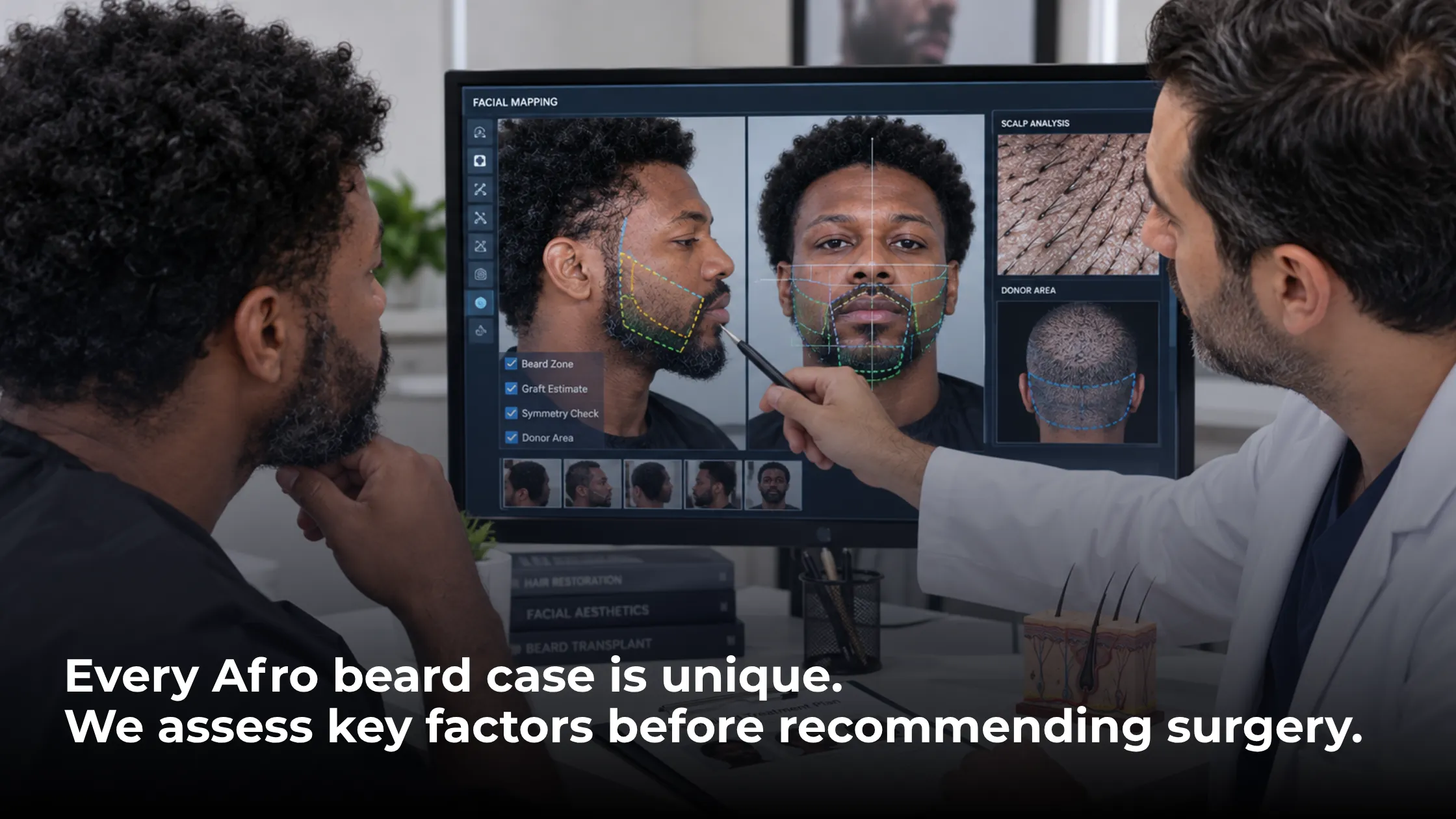
At Turkey Hair Center, we do not apply a generic template to Afro beard cases. Several distinct variables must be analyzed before recommending surgery.
Our Clinical Assessment Criteria
Curl Pattern and Subcutaneous Angle: how tightly the follicle coils beneath the skin, which guides the punch choice.
Donor Density and Caliber: whether the back of the scalp has enough hair to spare.
Natural Beard Direction: the whorls and growth angles of your existing facial hair.
Desired Density vs. Safe Limits: your goals balanced against the limits of the donor supply.
Darker Skin Considerations
Matching your skin biology with the right procedure is a strict medical necessity. Darker skin tones require specific dermatological awareness.
Post-Inflammatory Hyperpigmentation (PIH)
Darker skin tones are more susceptible to post-inflammatory hyperpigmentation following skin trauma. The tiny incisions made during a beard transplant can potentially lead to temporary dark spots. This must be managed with proper clinical aftercare.
Keloid Scarring Risks
A history of keloid formation requires careful medical assessment, and some patients may not be suitable candidates for elective hair transplantation.
Afro Beard Transplant vs Other Techniques
The choice of extraction and implantation approach should be based on the patient's donor characteristics, hair texture, recipient area, and the surgical team's experience.
African American Hair Implants vs. Traditional Methods
Afro-textured follicles may curve beneath the skin. Clinical studies show that this coiled anatomy increases the technical difficulty of FUE and raises transection (cutting) concerns (clinical review). If a standard straight punch tool is used without adjusting depth and angle, it can sever the curved follicle.
FUE vs. DHI: Which Works Best?
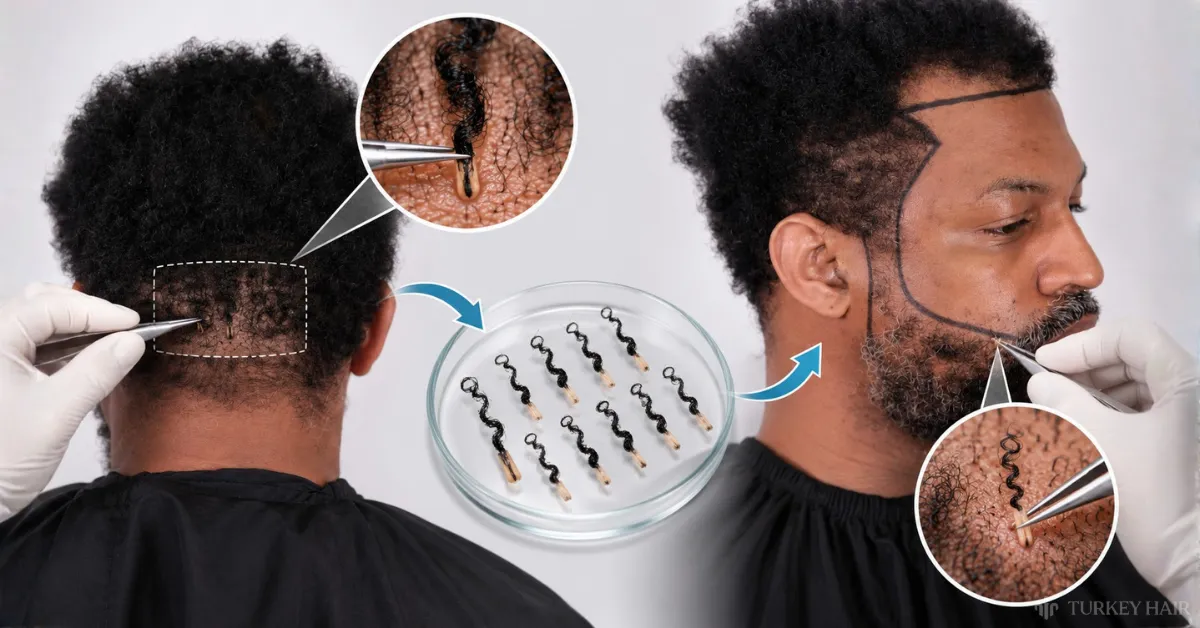
With FUE hair transplant, the medical team removes individual hair follicles from the donor area one at a time. Because Afro-textured hair curls beneath the surface, surgeons generally need specialized or slightly modified punches. This helps them navigate the curve and pull the graft out safely.
DHI hair transplant uses an implanter device that allows graft placement and recipient-site creation to occur as part of the same implantation step. It may provide the surgical team with direct control over placement angle and direction in selected cases. Technique selection should always be individualized to the patient.
Is a Beard Transplant More Difficult Than a Scalp Hair Transplant?
In many respects, beard transplantation can be technically more demanding than scalp transplantation. The facial recipient area is highly visible. It requires precise control of graft size, angle, direction, and spacing. Facial skin is also mobile, which can make graft placement delicate.
Graft Selection: Single vs. Multi-Hair Grafts
Beard transplantation requires a different aesthetic approach. Many visible beard areas: particularly the cheek line and areas where individual hairs are clearly distinguishable: benefit from carefully selected single-hair grafts to avoid an overly clustered appearance. When suitable donor follicular units contain multiple hairs, the surgical team may carefully separate them into smaller graft units when clinically appropriate.
Advantages of Afro Beard Transplant
Benefits of an African Beard Transplant
The new hairs are your own, so they keep your texture and can be trimmed and styled like the rest of your beard. It can fill patchy cheeks, a thin goatee or moustache, or a weak jawline.
Practical Advantages for Black Men
One session under local anesthesia and a fixed all-inclusive price. If you are also weighing a hairline transplant, black male patients can plan both with one donor budget.
Limitations You Should Know About
Donor hair may differ from native beard hair in growth rate, stiffness and thickness. Some patients need a touch-up, density is limited by the donor area, and darker skin needs extra care for pigmentation and keloids.
How Afro Beard Transplant Is Performed: Step by Step
Traveling internationally for surgery involves a structured clinical timeline.
What You Feel During the Operation
The procedure happens under local anesthesia. You are awake but numb. The surgical team extracts the grafts and meticulously implants them into the designed facial zones. Depending on the graft count, this takes several hours.
Anesthesia Sensitivity and Facial Nerves
Certain facial areas, particularly around the upper lip and mouth, may be more sensitive to local anesthetic injections than some scalp areas. The numbness can temporarily cause a feeling of asymmetry when eating or smiling. This typically resolves within a few hours.
Before the Operation
Send beard photos from the front and both sides for a free assessment. On arrival, blood tests confirm that surgery suits you. Pause smoking and alcohol and mention any blood thinners.
On the Day of Surgery
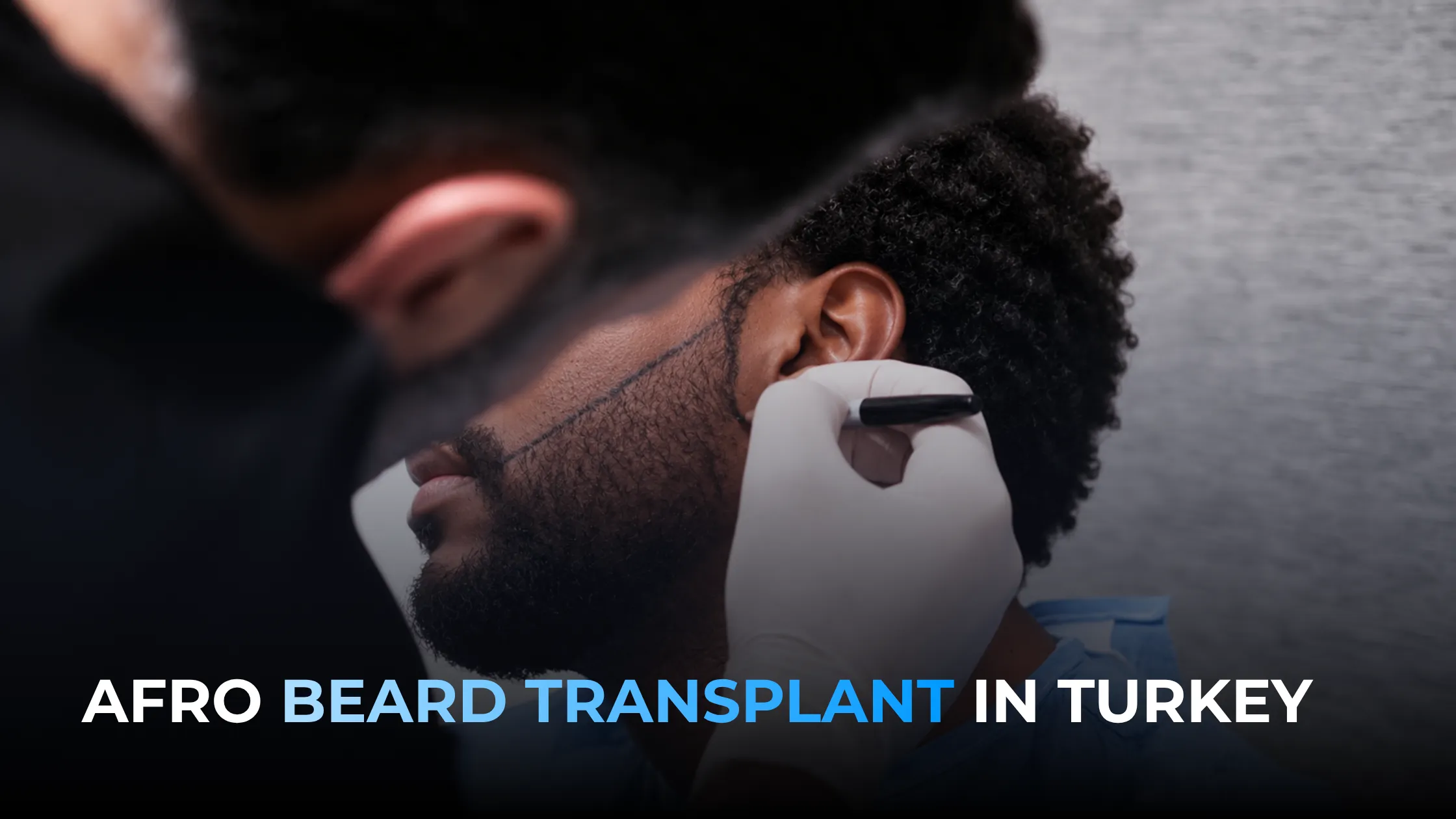
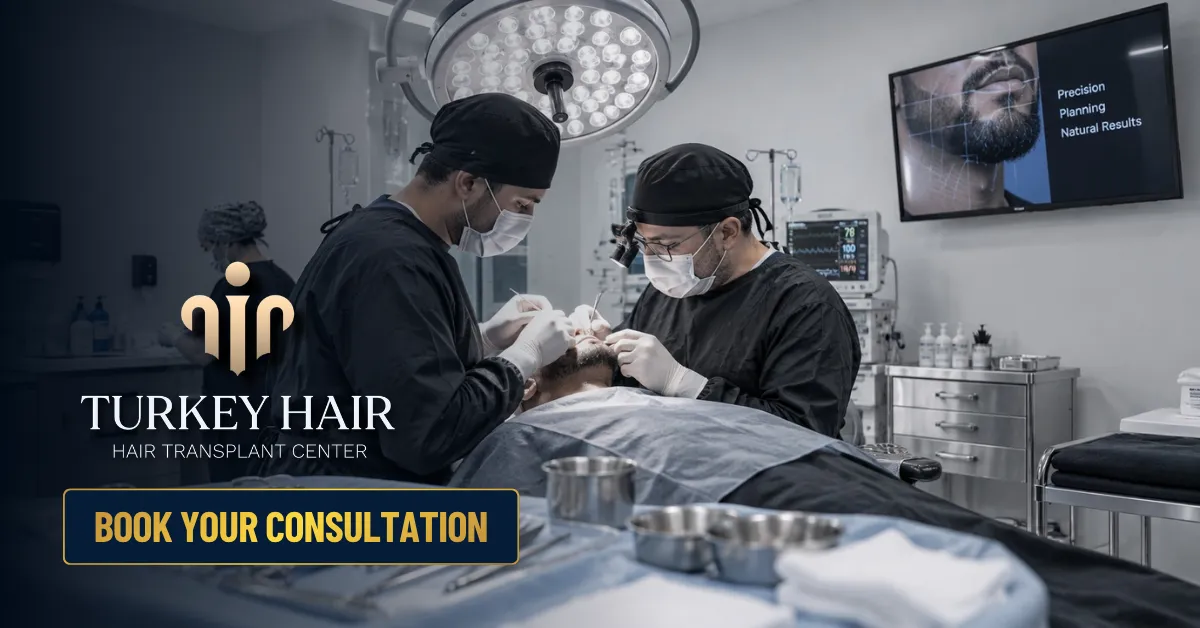
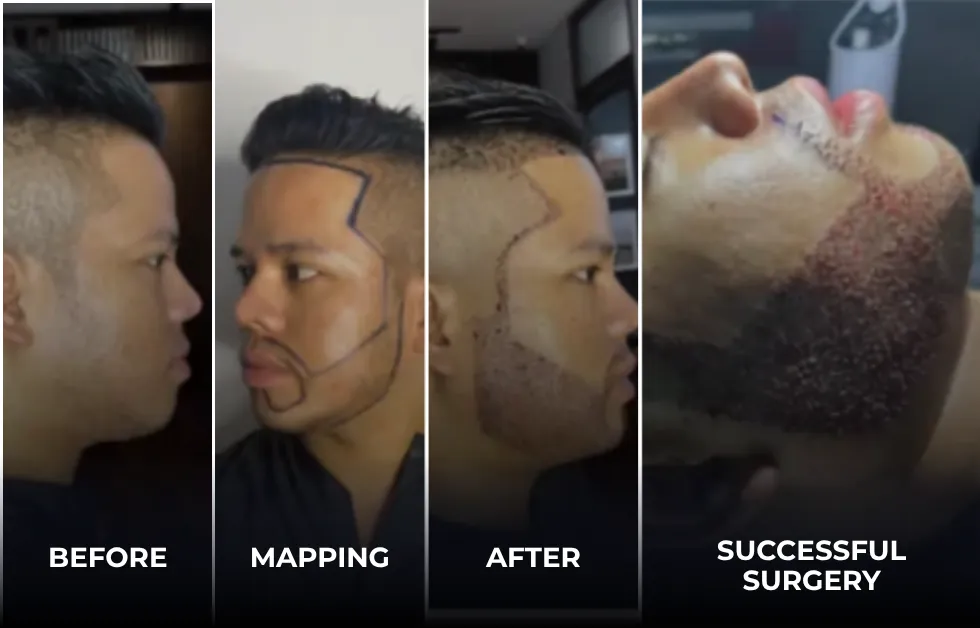
The beard line is drawn and approved with you. Under local anesthesia, with sedation support on request, grafts are taken one by one and placed at the low angle of beard hair. It usually takes about 6-8 hours.
How the Process Works for International Patients
The package covers airport pickup, 2 hotel nights, VIP transfers and an interpreter. Most patients stay 2-3 nights and fly home after the next-day check-up. See our hair transplant in Istanbul guide.
Afro Beard Transplant Grafts and Donor Area
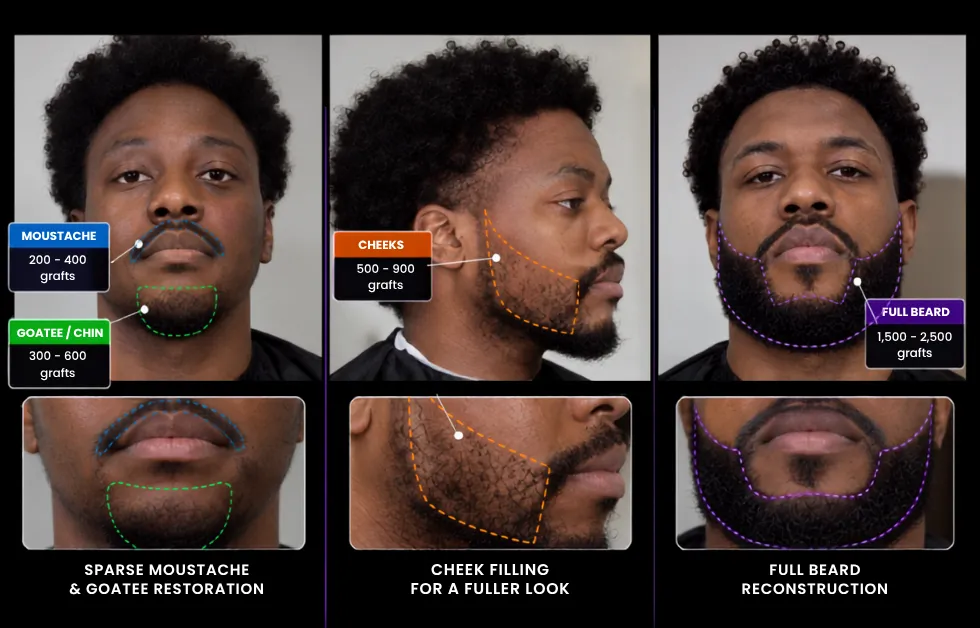
Graft estimation is a patient-specific clinical assessment. The required volume depends entirely on your existing facial hair, donor capacity, and aesthetic goals.
Estimated Graft Counts by Facial Zone
Treatment area
Estimated graft range
Primary focus
Cheek Gaps / Patchy Areas
500-1,000 Grafts
Filling localized sparse zones
Goatee & Moustache
1,000-1,500 Grafts
Enhancing frontal density
Jawline & Sideburns
1,200-2,000 Grafts
Creating structural definition
Full Beard Coverage
2,000-3,000+ Grafts
Comprehensive restoration
Choosing the Right Donor Area for Black Hair
The back of the head is the primary donor area. However, under-chin beard hair may provide a closer texture match to native facial hair than scalp hair in selected patients. In selected cases, body hair such as chest hair may be considered as an additional donor source. However, body hair differs in growth cycle, caliber, length, and survival characteristics, so it is not completely interchangeable with scalp or native beard hair.
Beard and scalp share one donor budget, so future scalp work is planned together. For cheek gaps, see what a 1,000-graft procedure involves.
Afro Beard Transplant Cost in Turkey and What the Package Includes
How Much Does a 2000 Graft Beard Transplant Cost?
With us, a 2,000-graft procedure is covered by an all-inclusive package from $2,550 to $4,500, the same packages used for scalp and beard work. Where you fall in that range depends on the package tier and technique, confirmed after the medical assessment.
Hair Transplant Cost for Black Men
There is no surcharge for afro-textured hair. Black men choose from the same packages: Sapphire Prime $2,550, Sapphire Advanced Regrowth $3,000, DHI Comfort $3,350 or Exosapphire Microflow Elite $4,500. Each covers the operation, 2 hotel nights, VIP transfers, an interpreter and the next-day check-up; flights are not included. Compare all packages or read our hair transplant cost guide.
Beard Transplant Before and After Black Man
Evaluating clinical results requires a discerning eye and a realistic understanding of hair growth cycles.
How to Evaluate Clinic Photos
When reviewing a clinic's portfolio, look for consistency. The lighting, patient angle, and facial expression should match in both the "before" and "after" images. Pay attention to the cheek lines. They should look natural and slightly irregular, not drawn on with a laser level.
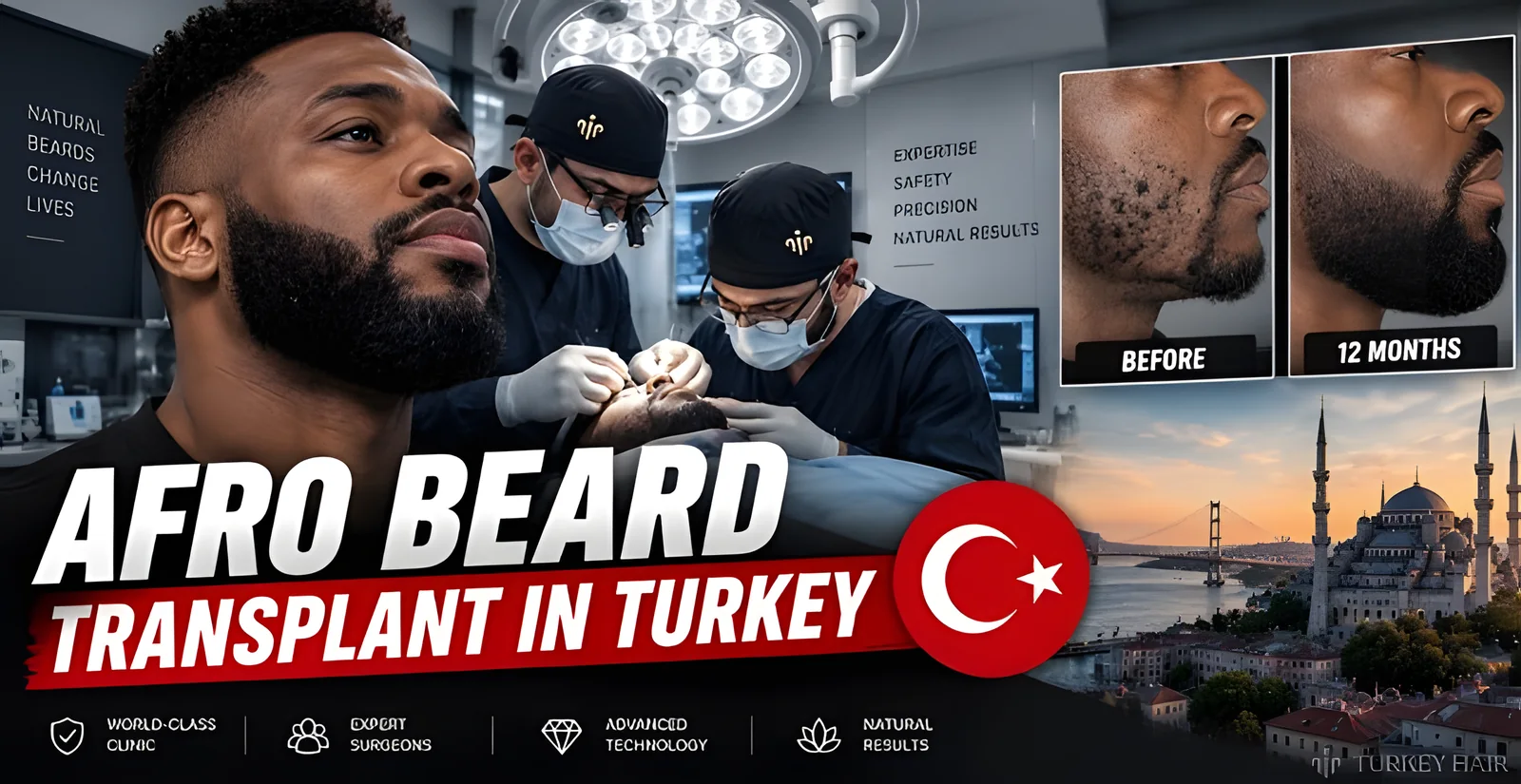
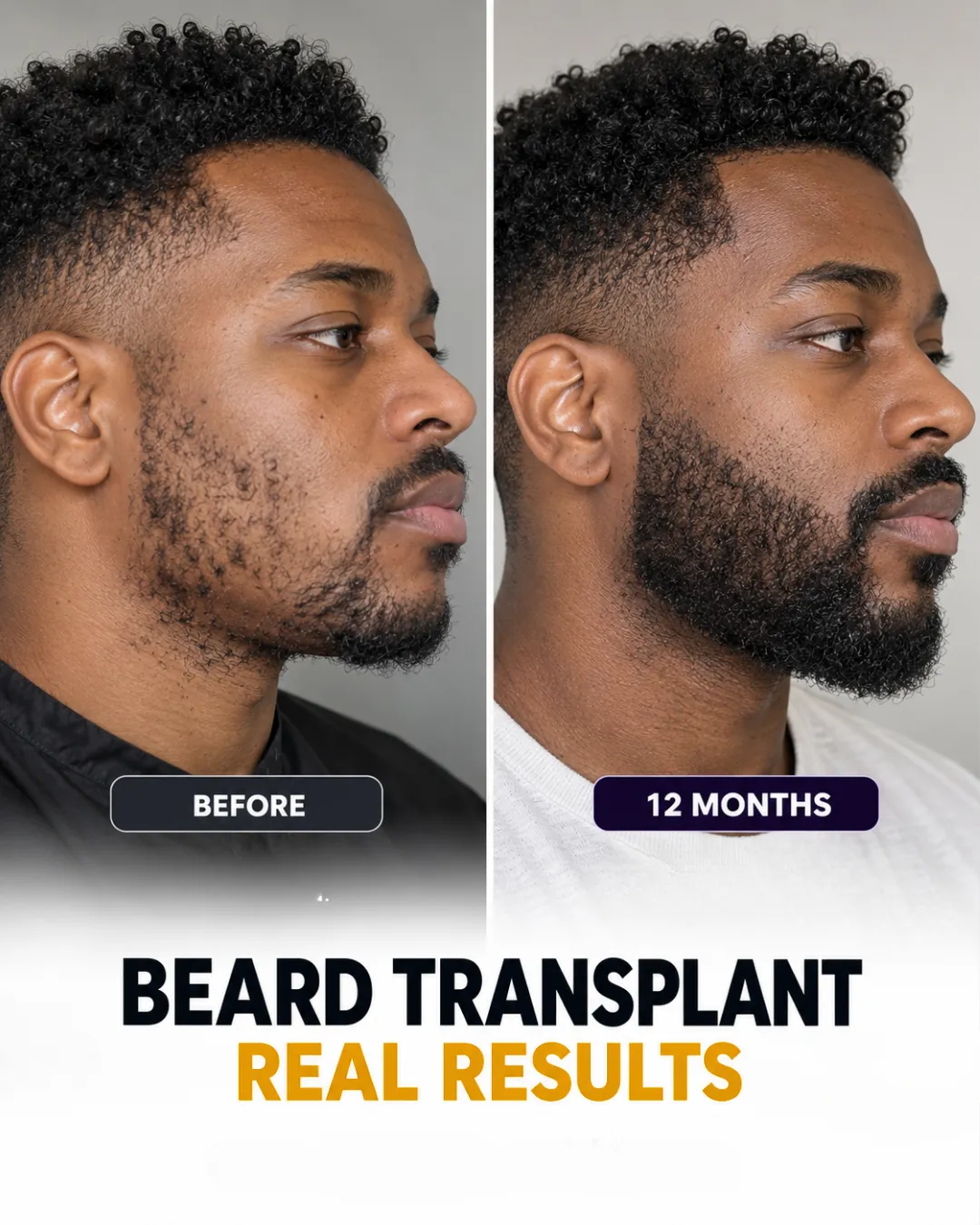
Beard transplant before and after black man photos are most useful at about 12 months, with the same lighting and angle. Check the cheek line and hair direction, not only density. See our afro hair transplant before and after gallery.
African American Beard Transplant Results: Before & After
Results change month by month: shedding in weeks 2-4, early growth from months 2-4, clearer density at months 6-9 and the final look at about 12 months. Compare photos from the same stage.
Recovery Timeline and Aftercare
The surgical phase sets the foundation. Because the face is highly visible, your aftercare routine is an important part of protecting the grafts during early hair transplant recovery timeline.
Facial Movement During Early Recovery
Because transplanted grafts are placed in a highly mobile facial area, patients are generally advised to avoid unnecessary rubbing, stretching, or direct mechanical trauma to the recipient area during the early healing period.
Social Visibility During Recovery
You can easily hide a scalp transplant under a loose hat. A beard transplant? Not so much. The treated area sits right in the middle of your face. Expect noticeable redness, swelling, and tiny crusts for at least a few days.
How to Sleep Safely
You cannot sleep face-down right after surgery. Putting direct pressure on your face can easily traumatize those fresh grafts. Try sleeping on your back with your head propped up. This keeps the pressure off your new beard and actually helps bring down the early swelling.
Recovery and Aftercare for African American Hair Replacement
Timeline
What usually happens
Days 1-5
Redness, swelling and small scabs
Days 7-10
Scabs fall away
Weeks 2-4
Shock loss of the new hairs
Months 2-4
Early beard growth
Months 6-9
Density improves
Month 12
Final result
Keep the beard area dry for the first 48 hours and do not shave or trim until your surgeon clears it. Contact the team if you notice yellow crusts, discharge or growing pain. See what normal hair transplant scabs look like.
Are Afro Beard Transplant Results Permanent and Natural?
Grafts come from the back of the head, an area usually resistant to pattern hair loss, so they tend to keep growing long term. A natural look depends on single-hair grafts, the right angle and a softly irregular beard line. No result can be promised in advance.
Afro Beard Transplant Reviews
TrustScore 4.1 out of 5 on Trustpilot, based on 5 reviews (checked 11.10.2026).
★★★★★
Turkey hair center was an amazing experience. They took care of me from the moment I landed all the way until my flight back home. They do top tier work and I would highly recommend them to anyone looking for this service!
★★★★★
I had my hair transplant about a month ago and so far the progress/recovery is going super well and ahead of schedule. The doctor and nurses from the clinic were super friendly and knowledgeable. They made me feel comfortable and confident i made the right decision to go with them. Also the food that they serve me half way through the procedure was amazinggggg.
★★★★★
This experience was great the Doctor and Staff were very professional and the BEST! Highly recommend if you want to goto the best hair transplant center to get your hair transplant! This is me after little before 3 months!
★★★★★
my experience at turkey hair transplant centre was really good and the doctors made me feel vert welcome, i am happy with my results at the moment and would definitely recommend it to others
Frequently Asked Questions
How soon can I return to work?
Most guys feel ready to jump back into remote or office work in about 5 to 7 days. Just remember you might still have some visible redness. If you do heavy physical labor, your doctor will likely tell you to hold off a bit longer.
How to Grow a Beard as an African American?
Start with a medical check, since thin facial hair has different causes. Where the beard stays sparse, a transplant moves your own follicles into those areas; correctly angled grafts and daily washing lower the chance of ingrown hairs.
Beard Transplant for Black Males: Is It Worth It?
It can be with stable patchy areas, enough donor hair and realistic expectations; the result is judged at about 12 months. Uncontrolled keloid scarring or a depleted donor area make it less suitable, which the free assessment checks.
Does Beard Hair Blend with Scalp Hair?
Usually, yes. Scalp donor hair keeps the traits of the donor area and may adapt slightly, but it does not become identical to native beard hair. Single-hair grafts and trimming help it blend; under-chin hair can be a closer match for some.
What Are the Risks of Beard Hair Transplants?
Like any beard surgery or hair restoration, it is a surgical procedure. Redness, crusts and shock loss are common and usually temporary. Darker skin can get temporary dark spots, wrongly angled grafts can cause ingrown hairs, and overharvesting thins the donor area. See hair transplant side effects.
Free Afro Beard Transplant Assessment
Choosing a Clinic
Turkey is often more affordable than private clinics in the US and UK. However, pricing varies substantially by clinic, physician involvement, graft requirements, and package inclusions.
Navigating Medical Tourism Risks
Affordability should not eclipse safety. Choosing an unverified clinic poses real medical risks, including damaged donor areas, incorrect beard angles, and severe skin pigmentation issues.
Vetting a Surgical Team
Look for demonstrable proof. Ask to see Afro-textured beard cases specifically. Verify the doctor’s credentials, inquire about their curl-safe extraction protocols, and ensure they provide transparent, written pricing before you travel.
1
Which area do you want to fill?Pick the closest; the photo review confirms it.
Typical graft range500 to 1,000grafts
An estimate from the ranges on this page, not a treatment plan. Your graft count is set after the medical team reviews your photos and donor area.
Send clear face photos from the front and both sides. The medical team will tell you whether an afro beard transplant suits you, your likely graft range and package, free and with no obligation: get your free analysis or ask us on WhatsApp.
About the Author
Nazmi G. holds extensive practical experience in clinical graft distribution, non-surgical trichological evaluation, and international patient consultation. He creates educational content focused on donor area management, curl-safe extraction planning, and ethical medical travel.
Medical Review Note
This article was medically reviewed for clinical accuracy in August 2026 by Dr. Tompi, M.D. The clinical review verified the accuracy of follicle transection risks, donor preservation guidelines, dermatology considerations, and patient safety compliance.
Medical disclaimer: This article is for informational purposes only and is not medical advice. Individual results vary from person to person. Always consult a qualified doctor before any hair transplant procedure.
Sources and medical review
The clinical statements on this page draw on the following published literature and professional body guidance:
Turkey Hair Center. Internal Pricing Data and Regional Market Estimates (2026). Available at: Internal Pricing Data and Regional Market Estimates (2026)
Send three photos: front, top and sides. You get a technique recommendation, a graft range and a straight answer about what is achievable, before anyone talks about price.
Your details are with the team
A patient coordinator will get back to you shortly. If you would like to send your photos now, WhatsApp is the fastest way to do it.
We respond quickly, day or night, in your language.
Multilingual team, no obligation
Data protectedKVKK and GDPR compliant, 100% confidential
Authorized Health Tourism Intermediary
Turkey Hair Center is the hair-restoration brand of Healthy Way Tourism, an authorized international health-tourism intermediary. All medical procedures are performed by licensed medical professionals at authorized healthcare facilities in Turkiye, in accordance with the regulations of the Ministry of Health.