Performed at authorized partner hospitals Turkey Hair Center is a Ministry of Health authorized health-tourism intermediary, not a clinic.
Quick Answer: Did Gordon Ramsay Get a Hair Transplant?
While the exact technique is not publicly confirmed, experts speculate he likely opted for Follicular Unit Extraction (FUE) due to its natural-looking results and minimal scarring, addressing his receding hairline and thinning areas.
Gordon Ramsay Hair Transplant: Before & After Photos Analyzed
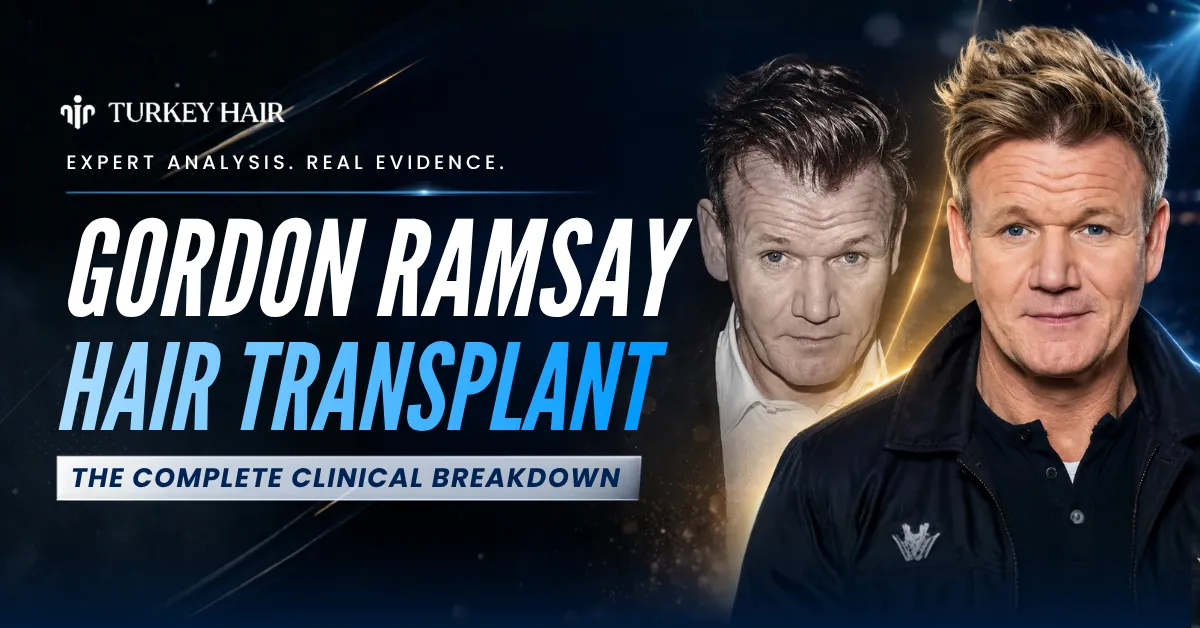
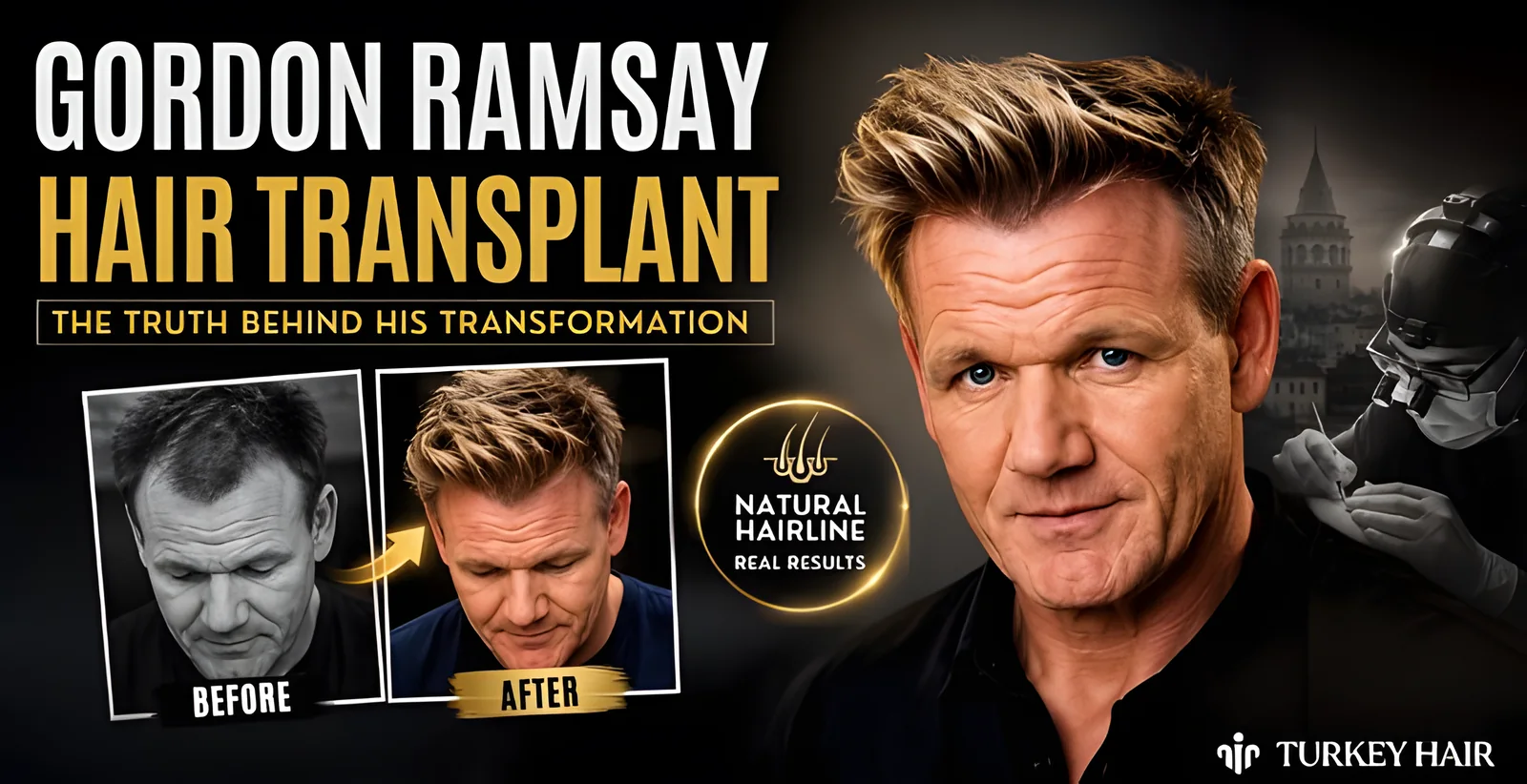
Although he has never officially confirmed the procedure, publicly available photographs and expert observations strongly suggest that Gordon Ramsay underwent a hair transplant around 2011. The dramatic shift from a naturally receding hairline to a dense, straight frontal edge is a classic hallmark of successful surgical restoration. If a surgical procedure was performed, the reconstructed temporal corners would be consistent with a conservative, age-appropriate hairline design.
Expert Clinical Analysis
When we examine high-definition footage of his scalp, a significant structural change is evident. The previously vacant temporal corners now show thick, terminal hair growth. Biologically, miniaturized follicles do not spontaneously regenerate to this level. The precision of the new hairline and the lack of visible linear scarring strongly suggest a highly refined FUE procedure.
From a trichologist's perspective, this type of transformation is one of the strongest indicators we look for when reviewing celebrity cases.
Hairlines naturally mature over time, but they rarely regain lost density without some form of medical or cosmetic intervention.
Turkey Hair Center hair transplant before and after result
Hair transplant cost in Türkiye
Check your Norwood stage
Compare FUE, DHI and Sapphire
Free hair analysis on WhatsApp
Gordon Ramsay's Hair Journey in Public Eye
We've been able to watch Gordon Ramsay on television for decades. That long public timeline gives us a rare opportunity to observe how his hair has changed over the years. Before understanding his structural hair changes, we have to look at the natural progression of follicular miniaturization that he suffers from. His highly dynamic on-screen persona has always been complemented by his signature blonde, textured hairstyle, making any shift in density immediately noticeable.
Early Hair Loss Signs Ramsay Faced
Recognizing male pattern baldness, also known as androgenetic alopecia, is the first step in trichological assessment.
If we go back to the early 2000s, the broadcast footage revealed classical signs of temporal recession. The lateral angles of his frontal boundary were steadily retreating, presenting the textbook M-shape formation indicative of initial follicular miniaturization.
Ramsay's Hair Thinning Timeline
Throughout his career progression from localized UK fame to global stardom, his hairline matured.
By the late 2000s, the thinning at the frontal third became more pronounced. However, his styling choice, maintaining a longer tousled fringe, acted as an effective cosmetic camouflage for years, obscuring the precise depth of his recession from casual viewers.
Hair Loss Impact on Public Image
For high-profile public figures, visual vitality directly correlates with marketability. Once you're under studio lights, every camera picks up details that most people would never notice.
Addressing structural thinning is rarely just about vanity. It is often a strategic choice to preserve a commanding, energetic personal brand on screen.
One lesson we frequently see in clinical practice is that successful hair restoration is rarely about creating the lowest possible hairline. The most natural outcomes usually come from respecting a patient's age, facial proportions, and expected pattern of future hair loss.
Decoding the Transformation: Ramsay's Hair Evolution Timeline
The sudden shift in Ramsay’s frontal density sparked widespread media attention and clinical debate. To determine the clinical analysis behind the rumors, evaluating his timeline, public appearances, and structural changes is necessary. Looking at the timeline makes the overall picture much easier to understand.
Analyzing Ramsay's Before and After Photos
When we compare Ramsay's archive photos versus recent appearances, there are many noticeable changes. That reveals a stark mathematical difference in follicle count.
The previously vacant temporal corners now display terminal hair growth. This level of regrowth cannot be attributed to styling tricks or topical treatments alone.
That's where the real clue lies.
Career Era
Hairline Pattern
Density at Temples
Suspected Intervention
Early 2000s UK Era
Maturing, visible M-shape
Thinning / Receding
None. Natural aging.
2010-2011 Transition
Redness, sudden structural shift
Healing phase
FUE surgery recovery
2012: Present
Straightened, closed corners
Maximum density
Successful FUE outcome
This is where the analysis becomes more interesting.
When comparing public photographs taken years apart, we focus less on hairstyles and more on structural changes.
Temporary styling can create the illusion of fullness, but consistent improvements in the same regions across multiple appearances often tell a different story.
Hair Transplants for Celebrities
Media Reports and Public Speculation
In late 2010 and early 2011, widespread media reports captured the chef leaving an experienced surgical facility with visible swelling and post-operative red dots around his hairline. While public relations teams often deflect, these physiological markers are the universal footprint of a freshly executed hair transplant procedure.
Experts Discuss Ramsay's Hair Transformation
Our partner hospital’s clinical team notes that the execution of his restoration is highly appropriate for his age and facial architecture. Trichological analysis suggests that the surgical team prioritized a conservative, mature hairline design rather than a juvenile straight line, which is the hallmark of reputable, undetectable medical artistry.
Turkey Hair Center was not involved in any procedure on Ramsay, so the observations below are read from public photographs rather than from a medical record. Trichological analysis suggests that the surgical team prioritized a conservative, mature hairline design rather than a juvenile straight line, which is the hallmark of reputable, undetectable medical artistry.
Likely Techniques for Ramsay's Hair
If we determine the specific surgical intervention, we have to analyze the post-operative recovery timeline in the observed media, as well as donor management.
Follicular Unit Extraction (FUE) involves harvesting individual grafts using micro-punches, leaving diffuse, microscopic dot scars.
On the contrary, Follicular Unit Transplantation (FUT) removes a linear segment of tissue, yielding high graft numbers but leaving a permanent scar.
Why FUE Suited Ramsay's Case
Given his active lifestyle and the requirement for rapid aesthetic recovery to resume television production, FUE was the logical protocol.
Moreover, subsequent short haircuts on the back and sides of his head have never revealed a linear FUT scar, heavily supporting the micro-FUE hypothesis.
In similar clinical cases, patients who need only frontal reinforcement often benefit from conservative FUE planning. Preserving donor reserves while restoring the hairline usually produces the most natural long-term outcome.
Graft Count and Density Expectations
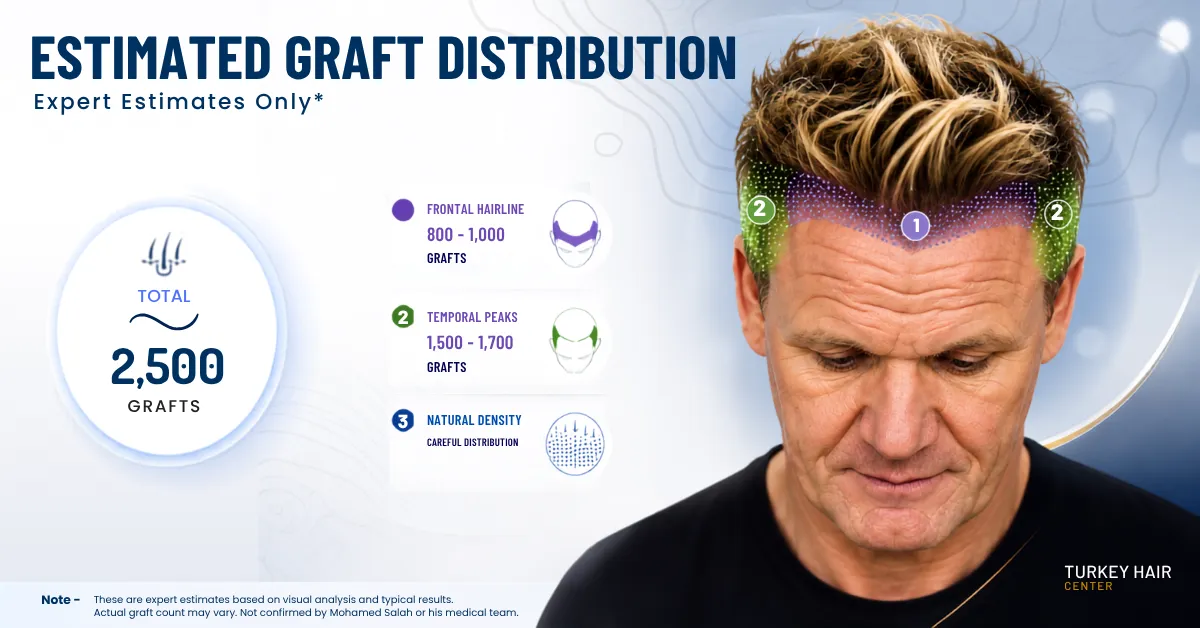
One of the most common questions patients ask is, " How many grafts would someone like Gordon Ramsay actually need?" While there is no exact answer without a clinical examination, public photographs allow us to make a reasonable estimate.
Estimating Grafts for a New Hairline
Based on the visible recession around his temples, a restoration in the range of 2,000 to 2,500 grafts appears realistic. That number would usually be enough to rebuild the frontal corners while preserving donor hair for any future treatment that might become necessary.
Achieving Natural Hair Density
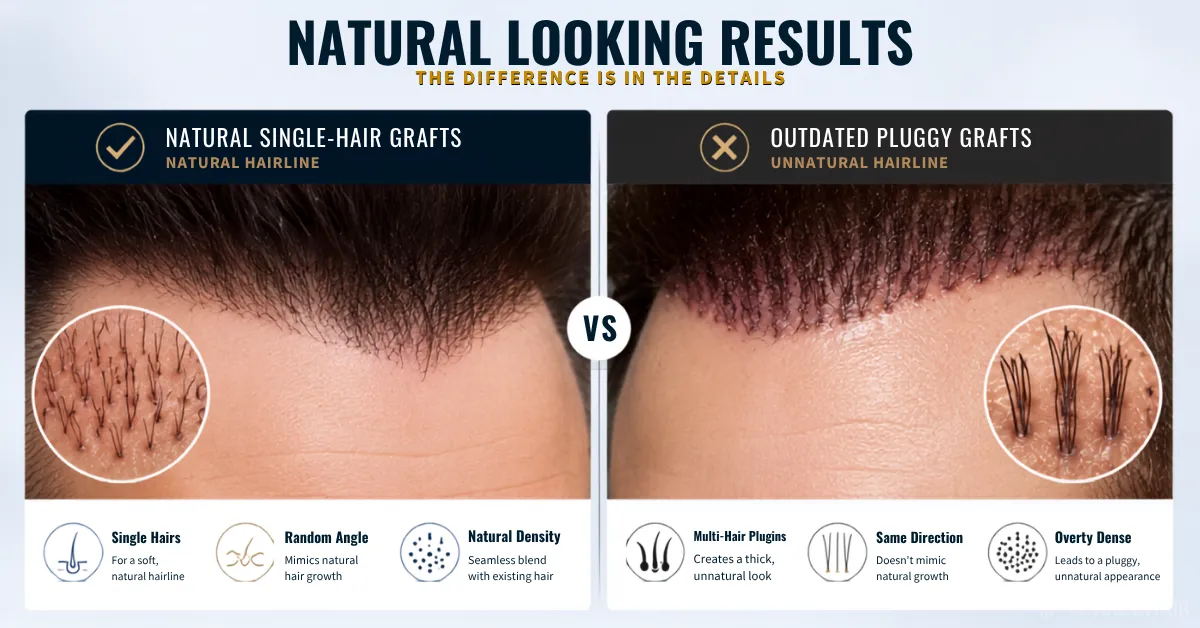
A natural-looking result is not simply about placing as many grafts as possible. In clinical practice, careful graft distribution usually matters far more than maximum density. The soft transition seen along Ramsay's hairline is consistent with the placement of finer single-hair grafts at the front, followed by higher-density grafts farther behind.
Donor Area Considerations
Based on publicly available photographs, Ramsay appears to have a healthy donor area with relatively thick hair and a slight natural wave. Those characteristics generally help create better visual coverage after transplantation.
At the same time, photographs have clear limitations. They can offer clues about hair texture, density, and coverage potential, but they cannot replace a proper clinical examination. Any estimate made from images alone should always be viewed as an informed observation rather than a confirmed medical finding.
Gordon Ramsay's Hair Transplant Cost
Evaluating the financial aspect of celebrity-grade aesthetic procedures requires breaking down the variables that dictate international clinical pricing. An established restoration is a highly customized medical endeavor.
No confirmed cost has been published for Gordon Ramsay, so we do not put a figure on it.
For a comparable plan through Turkey Hair Center, all-inclusive packages range from $2,550 to $4,500. We do not charge per graft: the technique (Sapphire FUE, DHI or Afro-textured FUE) and the graft plan set by the medical team decide where you fall in that range. Each package includes the procedure, hotel stay, VIP airport transfers, medication with an aftercare kit, and a dedicated patient coordinator.
Clinic prices in the UK and USA vary too widely for a single average to be meaningful, so we do not quote one. When you compare, ask every clinic for a written quote that states the graft count and what is included. See the full package breakdown.
Hair Transplant Pricing Factors
Several critical elements influence the final investment required for a high-performance hair restoration, including clinic reputation, the technique utilized, and the operational involvement of a globally recognized chief surgeon.
Why Turkey Offers Great Hair Transplant Value
Hair transplantation has become a global field, and many patients are now willing to travel for the right surgeon rather than simply choosing the closest clinic.
In many cases, the decision comes down to experience, consistent results, and overall value rather than geography alone.
Turkey Versus UK/USA Hair Transplant Costs
One reason Turkey attracts so many international patients is the difference in operating costs. Through Turkey Hair Center, all-inclusive packages range from $2,550 to $4,500. Lower pricing does not automatically mean lower quality. It often reflects lower clinic overheads and a highly competitive medical tourism market.
High Quality and Experienced Turkish Surgeons
Another advantage is surgical volume. Many experienced Turkish hair transplant surgeons perform FUE procedures every day, giving them extensive hands-on experience with different hair types, hairlines, and graft requirements. Repeating similar procedures at such a high volume allows techniques to become highly refined over time.
All-Inclusive Packages and Hidden Costs
Many clinics also simplify the process by offering all-inclusive packages. These commonly include airport transfers, hotel accommodation, interpreters, medications, and follow-up care. For international patients, having most of the logistics organized in advance can make the overall experience much less stressful.
Achieving Natural Results Like Ramsay's
Replicating a flawless, celebrity-grade outcome requires more than just extracting and planting follicles. It demands a holistic, engineered approach to structural hairline assessment and execution.
Keys to a Successful Hair Transplant
True clinical success is measured by undetectability. A veteran trichologist and surgical team are required to execute complex graft extraction mapping safely. Furthermore, utilizing advanced tools like sapphire hair transplant blades ensures precise angle control. Lastly, success requires understanding the boundaries of safe donor extraction and respecting the patient's specific aging timeline.
Post-Procedure Care and Maintenance
The surgical intervention is only the first phase. The final aesthetic outcome relies heavily on the patient's dedication to proper trichological aftercare during the subsequent twelve months.
Following Aftercare Instructions
Strict adherence to clinical protocols regarding sleeping positions, scalp washing techniques, and avoiding direct UV exposure during the first month is non-negotiable for ensuring maximum graft survival rates.
Managing Growth Timeline Expectations
Patience is a clinical necessity. The transplanted hairs will shed within the first month, a normal biological process known as shock loss. Noticeable structural density only begins to emerge between months four and six, culminating in a final result at the twelve to eighteen-month mark.
Protecting Transplanted Hair
Long-term preservation involves protecting the native hair surrounding the transplanted zones. Medical therapy is frequently recommended to halt ongoing miniaturization and secure aesthetic improvement.
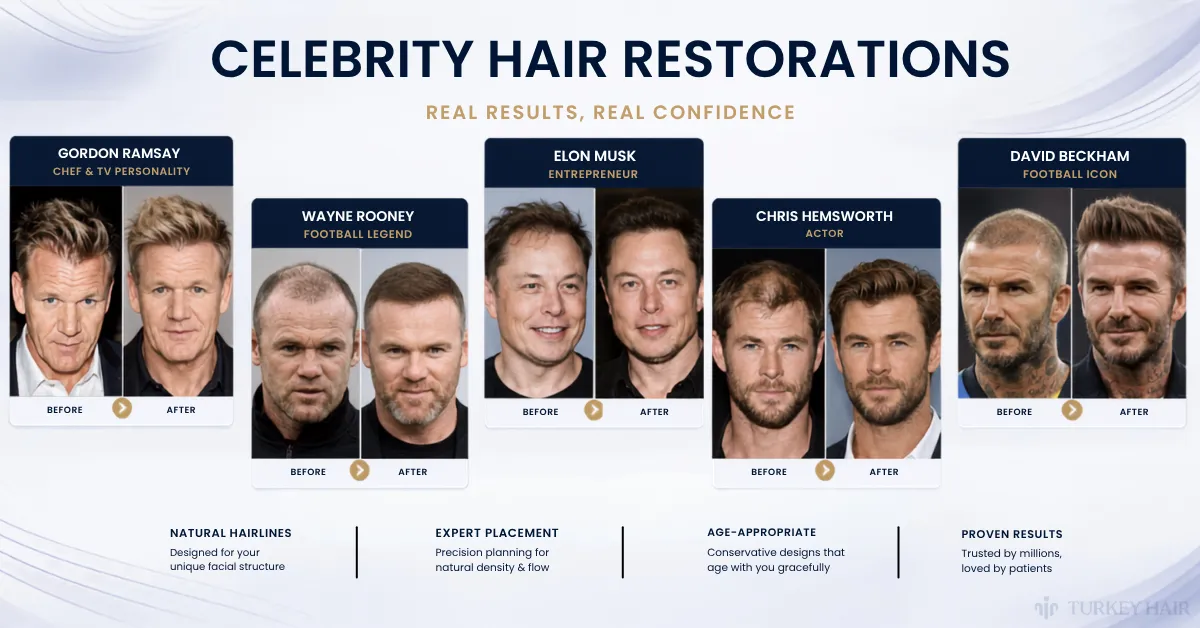
Gordon Ramsay and Other Celebrity Hair
The landscape of Hollywood and global television is filled with discreet structural enhancements. Ramsay's journey is part of a broader shift in how public figures manage their appearance.
Inspiring Hair Restoration Stories
Successful celebrity transplants, whether quietly suspected like Ramsay's or openly documented, serve as powerful case studies. They demonstrate that modern FUE, when executed by experienced medical teams, leaves zero unnatural trace.
Impact on Public Perception and Confidence
Hair restoration profoundly impacts self-assurance. For performers, regaining a solid aesthetic frame directly translates into enhanced on-camera confidence and renewed vitality in their professional roles.
Normalizing Hair Restoration
As advanced techniques yield increasingly flawless results, the stigma surrounding male aesthetic procedures evaporates. The visible success of figures like Ramsay heavily normalizes proactive, high-performance hair preservation strategies.
Taking the Next Step for Hair
If you are experiencing noticeable recession and desire a permanent, structural solution, moving forward requires strategic planning and clinical partnership.
Booking a Consultation
Initiating contact with a well-known hair restoration clinic for an extensive digital or in-person evaluation is the crucial first phase. This step transitions the process from speculation to actionable medical reality.
Preparing for Your Procedure
Once cleared for surgery, pre-operative protocols, such as adjusting specific medications and refraining from alcohol, ensure the scalp is physiologically primed for the FUE extraction.
Embarking on Your Hair Journey
Choosing a dedicated VIP experience transforms a medical procedure into a strategic move for your long-term confidence. With advanced density planning and experienced execution, achieving a high-quality restoration is highly accessible.
Final Verdict: The Clinical Reality Behind the Transformation
As with every celebrity hair analysis, our conclusions are based on publicly available photographs, video footage, and established hair restoration principles rather than access to personal medical records. That distinction is essential when evaluating public figures.
Gordon Ramsay's hair remains a benchmark for successful, age-appropriate cosmetic enhancement. While public relations teams may maintain silence, the clinical evidence is compelling. The meticulous restoration of his frontal band and temporal corners highlights the incredible precision of modern FUE hair transplant techniques. By prioritizing natural framing over excessive density, the medical team successfully executed a subtle, highly durable result. His transformation serves as a prime example that with experienced surgical artistry, addressing hair loss is a seamless, strategic choice for long-term confidence.
Frequently Asked Questions
Is a Hair Transplant Right for You?
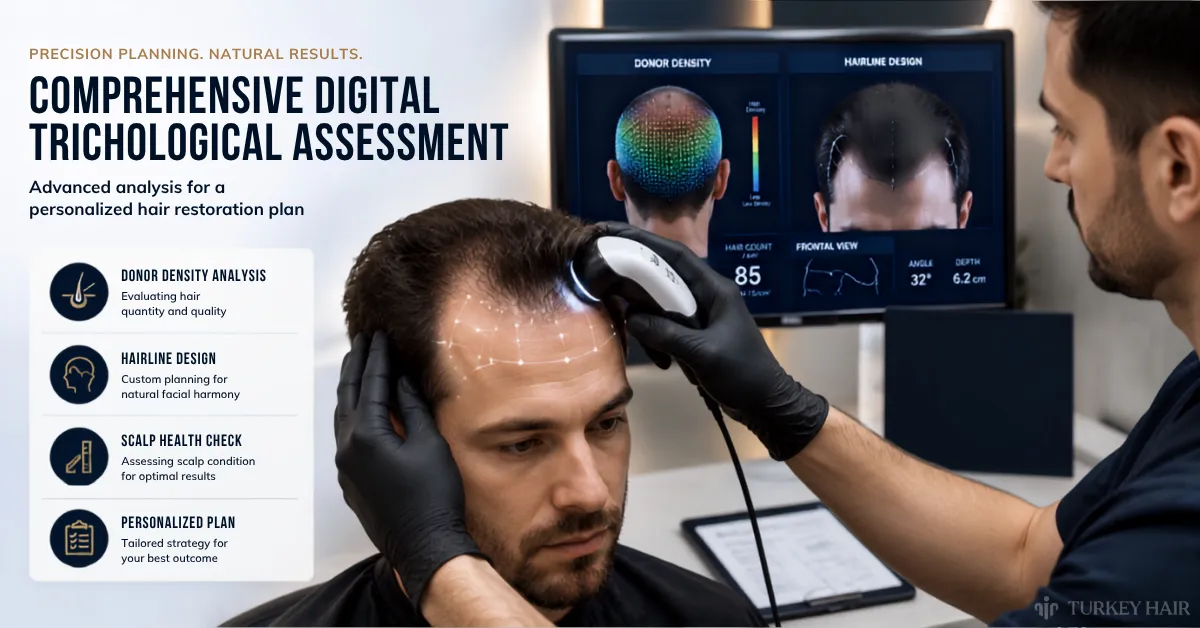
Transitioning from observing celebrity transformations to evaluating personal suitability requires an objective, clinical assessment of your unique physiological parameters. Every procedure must be customized. Understanding the trajectory of your specific hair loss is paramount. A structural hairline assessment by a certified professional will map your donor capacity and determine surgical viability to engineer natural, undetectable results.
Ready To Book Your Appointment?
Reach out to us or complete our simple online form and we’ll contact you to schedule a time that works perfectly for you.
Did Gordon Ramsay actually have a hair transplant?
No one outside his personal medical team can answer that with complete certainty. Gordon Ramsay has never publicly confirmed having a hair transplant. But when comparing photographs taken over many years, there are noticeable improvements. His temple areas and frontal density is consistent with what we commonly see after a well-executed FUE procedure.
What technique was Gordon Ramsay most likely to have?
If he did undergo surgery, FUE (Follicular Unit Extraction) appears to be the strongest possibility. His later hairstyles don't reveal the linear scar typically associated with FUT, and the restored hairline looks natural enough to fit modern FUE planning.
How much might Gordon Ramsay's hair transplant have cost?
Celebrity procedures are impossible to price accurately because every case is different. Comparable procedures in Turkey are often available at significantly lower prices. In Turkey, clinic operating costs are much lower.
How long do hair transplant results usually last?
The transplanted follicles are generally resistant to DHT, which means they are expected to last for many years. That said, the surrounding native hair can continue to thin over time, which is why many patients also follow a long-term hair preservation plan.
Can I achieve a similar result?
Possibly. But it depends on your own hair rather than Gordon Ramsay's. Your donor density, hair characteristics, facial proportions, and pattern of hair loss all influence what can realistically be achieved. A consultation is always the best place to start.
Why do so many people travel to Turkey for hair transplantation?
Experience plays a major role. Many Turkish clinics perform a high volume of FUE and DHI procedures every year. So that allows surgeons to build extensive practical experience while offering treatment at lower costs than many UK or US clinics.
When was Gordon Ramsay's procedure believed to have taken place?
Based on publicly available photographs and media reports, most speculation centers on late 2010 or early 2011. There has never been an official confirmation, so any timeline should be viewed as an informed estimate rather than an established fact.
What caused Gordon Ramsay's hair loss?
His earlier photographs are consistent with androgenetic alopecia, commonly known as male pattern baldness. The gradual recession around the temples follows a pattern frequently seen in adult men.
Are celebrity hair transplants different from everyone else's?
Not really. The surgical principles are exactly the same. The biggest difference is that public figures usually have access to highly experienced surgeons, long-term maintenance plans, and professional grooming teams that help preserve the final appearance.
What are the potential risks of a hair transplant?
Like any medical procedure, hair transplantation carries some risks. Temporary swelling, redness, and shock loss are fairly common during recovery. More serious complications are uncommon when the procedure is performed by experienced professionals.
About Turkey Hair Center
Operating across multiple premium international locations, Turkey Hair Center is a worldwide authority specializing in state-of-the-art hair restoration procedures. Our partner medical teams perform customized FUE, DHI, and advanced density planning for patients from all over the globe.
Our medical philosophy strictly rejects the one-size-fits-all approach to hair design. We are highly specialized in complex cases, including afro-textured and curly hair restorations. By meticulously engineering natural, undetectable results that respect your specific hair texture and facial dimensions, we ensure an outcome that looks incredibly appropriate for decades to come, no matter which of our global clinics you visit.
About the Author
Nazmi G. is a veteran Trichologist and Hair Restoration Consultant with extensive experience in structural hairline assessment, complex graft extraction mapping, and patient education. His expertise heavily involves macro-graft planning and guiding patients through long-term, high-performance hair preservation strategies on an international scale.
Editorial Policy & Trust
Turkey Hair Center’s celebrity hair analysis series is intended strictly for educational and informational purposes. While internet rumors frequently discuss surgical interventions, Gordon Ramsay has not publicly verified a surgical procedure.
Therefore, mathematical estimates, technique theories, and density projections in this article represent professional trichological observations rather than official medical records. This analysis combines objective photo review, anatomical expertise, and patient education principles to help readers separate internet hype from real-world scientific facts.
Sources and medical review
The clinical statements on this page draw on the following published literature and professional body guidance:
American Academy of Dermatology (AAD): Male pattern hair loss diagnosis and treatment guidelines
Written by Nazmi Güldeş— Certified Trichologist·Last reviewed:
This page is informational and does not replace an in-person medical assessment.
Medical disclaimer: This article is for informational purposes only and is not medical advice. Individual results vary from person to person. Always consult a qualified doctor before any hair transplant procedure.
Send three photos: front, top and sides. You get a technique recommendation, a graft range and a straight answer about what is achievable, before anyone talks about price.
Your details are with the team
A patient coordinator will get back to you shortly. If you would like to send your photos now, WhatsApp is the fastest way to do it.
We respond quickly, day or night, in your language.
Multilingual team, no obligation
Data protectedKVKK and GDPR compliant, 100% confidential
Authorized Health Tourism Intermediary
Turkey Hair Center is the hair-restoration brand of Healthy Way Tourism, an authorized international health-tourism intermediary. All medical procedures are performed by licensed medical professionals at authorized healthcare facilities in Turkiye, in accordance with the regulations of the Ministry of Health.