Performed at authorized partner hospitals Turkey Hair Center is a Ministry of Health authorized health-tourism intermediary, not a clinic.
Swelling after a hair transplant is normal, it usually shows up on day two or three, and it sits on the forehead rather than on the grafts. For most people it drains down towards the eyes, peaks, and is gone within about a week. It looks dramatic in the mirror, but it sits in the skin of the face, not in the grafts, and on its own it is not a sign that anything has gone wrong.
What follows is how it happens, what each day tends to look like, which measures actually have evidence behind them, and the few signs that mean you should call your clinic rather than wait.
Why the forehead swells after a hair transplant
During the operation the scalp is numbed with local anaesthetic and then filled with a saline solution, often called tumescent fluid. It firms up the skin, makes extraction and channel opening more precise and reduces bleeding. Your body then has to absorb that fluid over the following days.
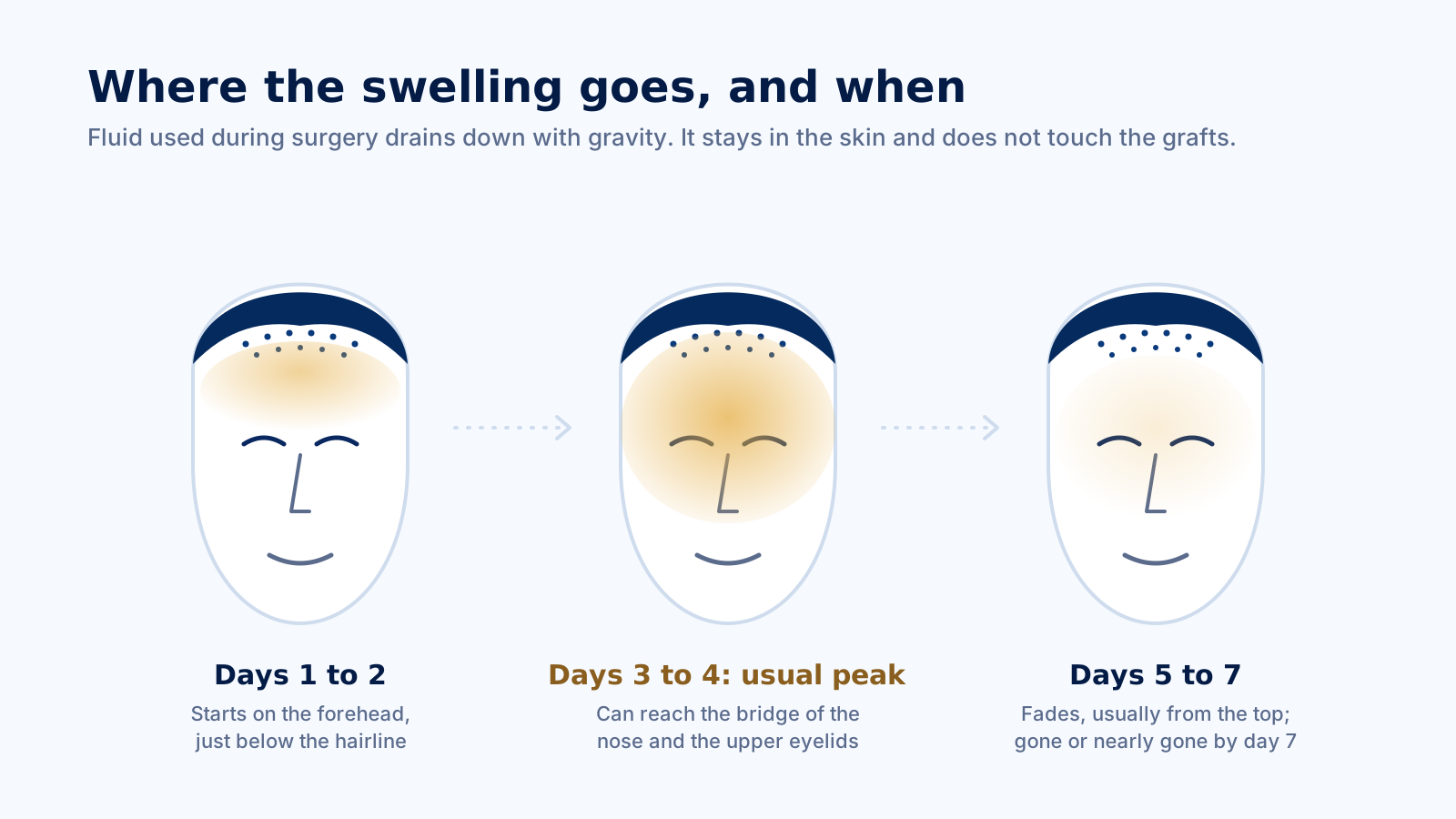
Gravity decides where it goes. The scalp has no firm barrier at the front, so fluid slowly settles downwards: first into the forehead, then the bridge of the nose and the upper eyelids. That is why people who had work only at the crown can still wake up with puffy eyes on day three.
Fluid volume is the main driver. Larger sessions use more solution, so they tend to swell more.
Hairline work brings the fluid closer to the forehead, which is why frontal sessions swell more visibly than crown sessions.
Lying flat in the first nights lets fluid pool in the face sooner.
Individual tissue response varies. Two people with the same graft count can look completely different on day three.
A day-by-day swelling timeline
Day
What you usually see
What to do
Day 0 to 1
Little or no swelling; the scalp may feel tight
Rest, keep your head raised, follow your medication plan
Day 2 to 3
Puffiness appears on the forehead and moves down
Keep sleeping raised; avoid pressing on the area
Day 3 to 4
The usual peak; it can reach the eyelids
Do not panic; this is the expected high point
Day 5 to 6
Clearly going down, often from the top first
Normal light walking is fine; no heavy exercise
Day 7 and after
Gone or nearly gone for most people
If it is still increasing, call your clinic
This matches what our hair transplant recovery timeline describes for the first week, and it is the window in which most patients fly home. If you have a flight planned for day two or three, expect to travel with some swelling: it is uncomfortable to look at, not dangerous.
Swelling stays in the skin of the forehead and face. It does not travel into the grafts and it is not a sign that grafts have failed. Graft survival depends on how they were handled and how you protect them in the first days, which is covered in our aftercare guideline.
What actually reduces swelling, according to the evidence
The most useful study we know of on this comes from a clinic that followed 340 hair transplant patients, of whom 308 completed follow-up, and split them into eight groups. Each group got a different preventive method, and the team graded swelling every day up to day six, from no swelling up to bruised "black eyes" (Abbasi and colleagues, Journal of Cutaneous and Aesthetic Surgery, 2010).
Two findings are worth knowing before your operation:
Physical measures alone were disappointing. Sleeping half sitting up, sleeping upright, wearing a headband and using ice packs were all tested. The authors concluded that these physical methods do not control swelling in a satisfactory way.
A steroid added to the numbing solution worked best. In the group that received triamcinolone mixed into the tumescent fluid, 114 of 117 patients had no swelling at all. Oral steroids and steroid injections into the muscle helped, but much less.
That does not make physical measures useless. They are free, they make you more comfortable, and they can soften how far the fluid travels. It means you should not blame yourself if you did everything right and still looked swollen on day three. The bigger lever is what goes into the solution during the operation, and that is a medical decision your surgical team makes with your history in front of them.
Ask at your consultation how swelling is managed during the operation itself. A clear answer is a good sign; so is a written aftercare plan you can take home.
Simple things that help at home
Sleep raised for the first three to five nights. Two pillows or a travel pillow keep your head above your heart and slow the slide of fluid into the face.
Cool the forehead, never the grafts. A wrapped cold pack on the forehead and around the eyes can ease puffiness. Keep anything cold and anything with pressure away from the recipient area.
Do not massage the forehead upwards. Pushing fluid back towards the grafts is the one well-meant habit that can do harm.
Drink water and avoid alcohol in the first days, as your aftercare plan asks. Alcohol also thins the blood, which you do not want around fresh grafts.
Skip bending, lifting and the gym for the first days. Raising your blood pressure and lowering your head both make swelling worse.
Take medicines only as prescribed. If you were given an anti-inflammatory or steroid, take it on schedule rather than when the swelling looks bad.
Washing starts on its own schedule; our first wash guide explains how to do it without pressure on the grafts.
When swelling is not normal
Expected swelling is soft, painless or mildly tender, the same on both sides, and it improves after day four. Contact your clinic promptly if you notice any of the following:
Swelling that keeps getting worse after day five instead of settling
Redness that spreads, skin that feels hot, or swelling on one side only
Fever, yellow discharge or a bad smell from the scalp
Severe or increasing pain that your prescribed medicine does not control
Swelling of the lips or tongue, a rash, or any difficulty breathing: treat this as an emergency and get immediate medical help
Most of these are uncommon, and they are covered in more detail in our page on hair transplant side effects. The rule of thumb is simple: swelling that follows the normal pattern can be watched; anything that breaks the pattern should be checked by a doctor.
Swelling in sedated and large sessions
Patients who have sedation are often more relaxed and lie still for longer, but sedation does not prevent swelling: it is the fluid in the scalp, not anxiety, that causes it. If you are considering a sedated hair transplant, plan your first week exactly as you would otherwise.
Large sessions cover a wider area and use more solution. Expect swelling to be more visible and possibly slower to clear, and give yourself a buffer before photos, meetings or a return to work.
Frequently asked questions
How long does swelling last after a hair transplant?
For most people it appears on day two or three, peaks around day three or four and is gone or nearly gone by day seven. Swelling that is still increasing after day five should be checked.
Is it normal to have swollen eyes after a hair transplant?
Yes. Fluid from the scalp drains down with gravity and can reach the upper eyelids, even if no grafts were placed near the front. It fades in the same way as forehead swelling.
Can I fly with swelling after a hair transplant?
Swelling itself is not a reason to cancel a flight. Keep your head raised where you can, wear a loose cap, drink water and follow the travel advice in your aftercare plan.
Planning around the swelling
The practical advice is to plan your week so that day three and day four do not land on anything important. A typical stay in Istanbul is two to three nights, so most patients fly home just as the swelling peaks: keep a loose cap and sunglasses in your hand luggage. For photos and social events, many patients allow 10 to 14 days. Remote work is often possible much sooner; our page on going back to work after a hair transplant goes through it by job type.
If you are still deciding on a date, the free photo assessment is a good place to raise it. Send front, top and side photos with the form below or through our contact page, and the medical team will tell you the likely graft range and what your recovery week should look like, before anyone talks about price.
Medical disclaimer: This article is for informational purposes only and is not medical advice. Individual results and recovery vary from person to person. Always follow the written aftercare plan from your own medical team.
Sources and medical review
Abbasi G, Pojhan S, Emami S. Hair transplantation: preventing post-operative oedema. Journal of Cutaneous and Aesthetic Surgery, 2010;3(2):87-89
Send three photos: front, top and sides. You get a technique recommendation, a graft range and a straight answer about what is achievable, before anyone talks about price.
Your details are with the team
A patient coordinator will get back to you shortly. If you would like to send your photos now, WhatsApp is the fastest way to do it.
We respond quickly, day or night, in your language.
Multilingual team, no obligation
Data protectedKVKK and GDPR compliant, 100% confidential
Authorized Health Tourism Intermediary
Turkey Hair Center is the hair-restoration brand of Healthy Way Tourism, an authorized international health-tourism intermediary. All medical procedures are performed by licensed medical professionals at authorized healthcare facilities in Turkiye, in accordance with the regulations of the Ministry of Health.