

Scar Hair Transplant in Turkey: Cost – Before and After

Scar hair transplant restores hair in scarred areas with natural-looking results and improved appearance.

Homapage

Scar Hair Transplant

Tratments

Scar Hair Transplant

Scar Hair Transplant

Table of content Scar Hair Transplant

    Let’s Call You!

    This field is required.
    This field is required.
    Scar Hair Transplant
    All your photos and personal information are kept confidential.

    Scar Hair Transplant

    A Path to Confidence and Renewal

    Scar Hair Transplant

    Are you afraid of scar hair transplants?  You are not alone!  

    Many people are scared of scar hair transplant because it is harder than standard hair transplant. Scar tissue has altered blood supply and reduced elasticity so it is technically more demanding. For this reason, it is essential to choose the right technique and experienced medical team. 

    Turkey is one of the leading destinations for scar hair transplants thanks to experienced surgeons, affordable prices and advanced FUE techniques.FUE is the most commonly preferred method for scar correction compared to FUE and DHI. It enables the surgeon to carefully implant into fibrotic tissue by small punch diameters without making new linear scars. 

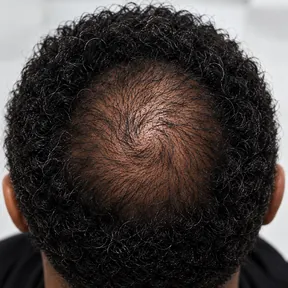
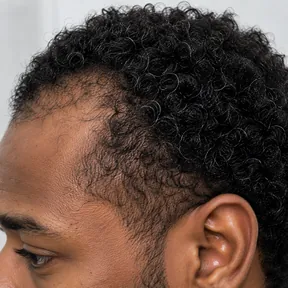
    Scar Hair Transplant Before and After Results

    The main goal of scar hair transplantation is often to hide the scars instead of full density restoration. This method allows for a natural-looking coverage, and prioritizes the health of the delicate scar tissue. Let’s see the transformative impact of specific graft placement on different types of scar tissue based on real patients before and after!  

    Who Is a Good Candidate for Scar Hair Transplant?

    If you experience hair loss due to surgery, injuries, burns, trauma or acne, scar hair transplant will be the best option for you. However, its success depends on some clinical criteria: Ideal candidates need to meet the following requirements:

    • Good general health
    • Stable scars
    • Healthy donor area
    Scar Hair Transplant

    Specialized Technique & Expertise

    Scar Hair Transplant

    Specialized Technique & Expertise

    Scar Hair Transplant

    Specialized Technique & Expertise

    Scar Hair Transplant

    Specialized Technique & Expertise

    Scar Hair Transplant

    Hair Transplant Package Prices

    Happy Afro Patient Testimonial Videos

    See real Afro hair transplant results at Turkey Hair Center.
    Our patient testimonials demonstrate natural hairlines, high graft sessions, and expert techniques developed specifically for Afro-textured hair.

    Ready To
    Book Your Appointment?

    Reach out to us or complete our simple online form
    and we’ll contact you to schedule a time that works perfectly for you.

    Scar Hair Transplant
    Scar Hair Transplant

    Why Choose Turkey Hair Center: 5 Compelling Reasons

    Learn what makes Turkey Hair Center a trusted choice for patients worldwide. Our commitment to medical excellence,
    safety, and refined results defines every treatment we provide.

    International Standards of Hair Transplantation

    We perform hair transplant procedures in line with international medical standards, using modern facilities, advanced techniques, and strict safety protocols.

    Patient-Centered Medical Experience

    From consultation to recovery, every step is designed around your comfort, expectations, and well-being, ensuring a smooth and reassuring treatment journey.

    Expert Medical Team & Clinical Excellence

    Our experienced doctors and medical staff apply proven expertise and ethical practices to deliver consistent, high-quality hair transplant results.

    Advanced Technology & Hygienic Environment

    We utilize the latest medical technologies in a fully hygienic clinical setting, prioritizing patient safety, precision, and procedural excellence.

    Natural Results & Long-Term Satisfaction

    Our approach focuses on natural-looking, balanced results that align with your facial features and provide lasting confidence over time.

    International Standards of Hair Transplantation

    Scar Hair Transplant FAQ

    Scar Hair Transplant

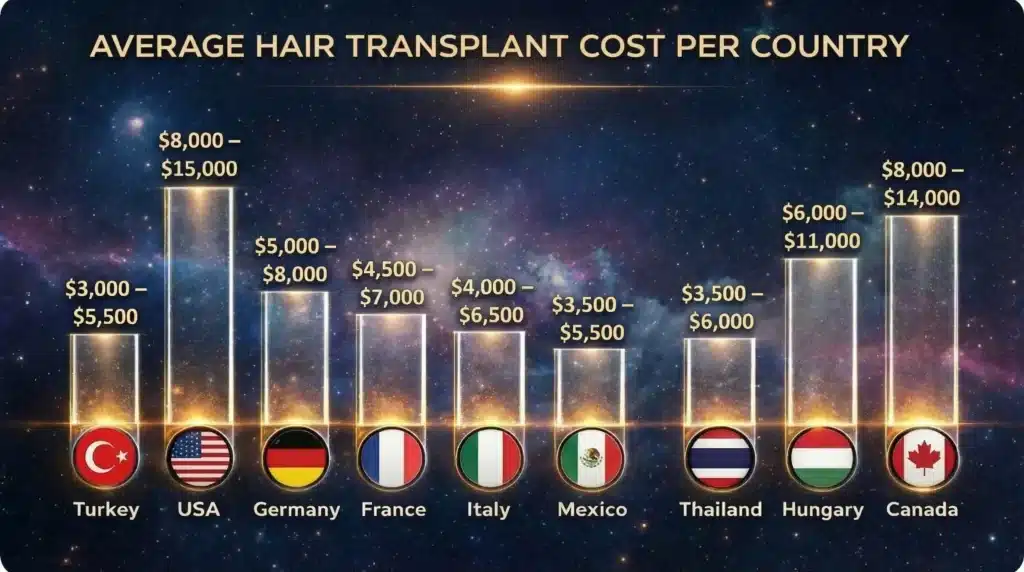
    Cost of Scar Hair Transplant in Turkey

    The total cost of scar hair transplant depends on factors below: 

    • The number of grafts
    • Scar tissue quality 
    • Blood supply 
    • The complexity of the scar area

    Moreover, graft survival rates in scar tissue might change according to tissue quality, scar thickness and vascularity. 

    In Turkey, the price of a scar hair transplant may vary depending on scar size, tissue condition, and clinic expertise. 

    Therefore, while 500 grafts approximately change between $1,500 and $2,000, for more extensive scars requiring like 1000 grafts generally cost $2,000 and $3,500. 

    Cost of Scar Hair Transplant in USA vs Turkey

    Prices in USA are significantly higher because of some factors:

    • Elevated labor cost
    • Strict regulatory expenses
    • Lower procedural quantities

    In contrast, Turkey offers affordable prices with high medical standards. 

    GraftsUSA Estimated CostTurkey Estimated Cost
    500 grafts$4,000 – $7,000$1,500 – $2,000
    1,000 grafts$7,000 – $12,000$2,000 – $3,500

    Cost of Scar Hair Transplant in UK vs Turkey

    In the UK, scar hair transplantation costs higher due to regulatory restrictions, fewer treatment numbers and labor expenses. 

    However, Turkey provides high-quality and optimized clinical operations with affordable cost. 

    GraftsUK Estimated CostTurkey Estimated Cost
    500 grafts£3,500 – £6,000$1,500 – $2,000
    1,000 grafts£6,000 – £10,000$2,000 – $3,500

    Cost of Scar Hair Transplant in Europe vs Turkey

    Across many European countries, some factors such as labor expenses, relatively lower procedure number and strict regulatory frameworks increase overall pricing of scar hair transplant.  

    Yet, patients can reach cost-effective treatment options with high medical standards. 

    GraftsEurope Estimated CostTurkey Estimated Cost
    500 grafts€4,000 – €7,000$1,500 – $2,000
    1,000 grafts€7,000 – €12,000$2,000 – $3,500
    Fix Scar Hair Transplant
    Fix Scar Hair Transplant

    Critical Considerations: Every scar isn’t ready! 

    Any scar that can be immediately covered is a common misconception. For safety and dermatological integrity, please not: 

    Maturation is a key factor: Only mature and stable scars are suitable for scar transplantation. The risk of complications can increase due to active inflammation or a keloid tendency. 

    Exclusions: If a patient has unstable scars, active skin infections or inflammatory scalp conditions, he cannot be eligible until these problems are resolved. 

    The importance of testing: Scar tissue behaves differently. So, a cautious approach is critical for long term success. 

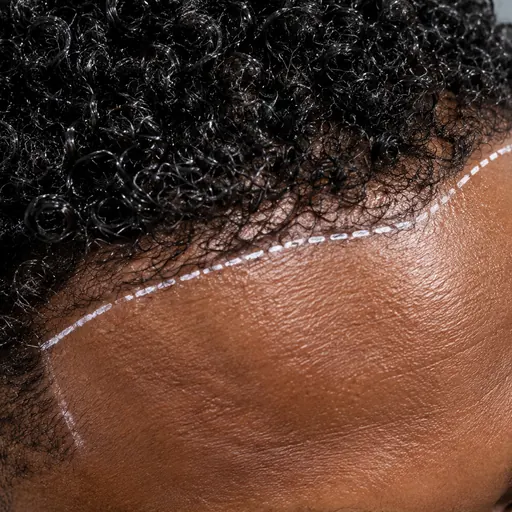
    Pro Tip: A small test graft session might be performed first to evaluate scar tissue response and guarantee graft viability in complex cases.

    Scar Hair Transplant
    Scar Hair Transplant

    What Is a Scar Hair Transplant and How Does It Work?

    Hair transplant on scar tissue is technically more demanding than a standard hair transplant. 

    The recipient site is less receptive than healthy skin owing to fibrotic tissue and reduced blood circulation. 

    Therefore, success in these cases depends on a careful approach: scar tissue needs slower implantation, precise graft handling, and a professional surgical evaluation for long-term viability. 

    Step 1 – Scar Assessment and Surgical Planning

    The surgeon determines graft density and survival rate by evaluating scar thickness, flexibility, blood supply and surrounding hair direction.  

    Step 2 – Donor Hair Extraction with FUE

    FUE is used to extract individual follicles without making new linear scars and protecting donor aesthetics. 

    Step 3 – Graft Selection and Preparation

    Finer grafts are chosen and cut to maximize survival in low-vascular scar tissue. 

    Step 4 – Implantation into Scar Tissue

    To guarantee integration and natural blending, grafts are carefully implanted with specified  depths and angles. 

    This precision is directly shaped by a detailed assessment of scar vascularity, thickness, mobility and color. 

    Moreover, there are two important indicators of tissue health and graft survival potential: scar flexibility and mobility. These factors influence how effectively the recipient site can tolerate new follicles and allow for long-term growth. 

    Scar Hair Transplant
    Scar Hair Transplant

    Scar Hair Transplant Methods and Recommended Use Levels

    3 significant methods are chosen to meet the specific tissue requirement and coverage goals based on the scar’s complexity. 

    MethodRecommendationExplanation
    FUEHighly RecommendedIt is perfect for scar tissue. FUE enables precisely controlled depth and angle placement without the creation of new scars.
    DHIConditionally RecommendedIt might be effective for minor scars but has limited depth control in fibrotic tissue.For this reason, the FUE method is often preferred for fibrotic tissue compared to DHI. 
    FUTNot RecommendedIt may cause further scarring and has poor graft adaptation for scarred spots.

    How Many Grafts Are Needed for Scar Hair Transplant?

    The scar’s size determines how many grafts are needed for a hair transplant- bigger scars need more coverage. 

    Scar tissue makes blood flow slower, that is why grafts are placed at a lower density than healthy scalp for better survival rates. 

    So, each case is meticulously prepared based on scar condition, size and intended results. 

    Most of the scar hair transplant requires 200 to 1,000 grafts according to scar size, depth and location. 

    Short table:

    Scar SizeEstimated GraftsBest For
    Small200 – 400Minor surgical or acne scars
    Medium400 – 700Visible trauma or strip scars
    Large700 – 1,000+Burns or extensive surgical scars

    Success Rate of Hair Transplant in Scar Tissue

    Success rate is one of the biggest concerns in scar hair transplantation. 

    Scar tissue has limited blood supply compared to healthy scalp, directly affecting graft survival. For this reason, success rate in scar transplantation can change based on scar type, vascularity, and surgical technique. Also, it might be lower than healthy scalp tissue. 

    In fact, each case is unique, and some factors like proper planning, skilled surgeons, and multiple sessions can improve the results.

    Hair Transplant Scar​
    Hair Transplant Scar​

    Scar Hair Transplant Recovery, Healing & Growth Timeline

    The healing and growth process generally starts with scab formation and shedding within the first 7 to 10 days after a scar hair transplant. 

    Then, temporary hair shedding and new growth starts around months 3-4. Full results usually appear in 9-12 months. 

    In contrast to normal scalp, healing in scar tissue might take a bit longer because of reduced vascularity. 

    Days 1–5

    Within the first 1-5 days, mild redness and scabbing can be seen as grafts anchor into scar tissue.

    Weeks 2–4

    Temporary shedding might be experienced which is completely normal.

    Months 3–4

    Early hair growth is seen, and it is usually thinner at first.

    Months 6–9

    An obvious improvement can be observed in density and texture. 

    Month 12

    Final results become visible with permanent hair growth.

    Surgeon-Level Realities Not Explained to Patients

    Recovery and growth after a scar hair transplant generally follow a gradual timeline: the initial healing starts in the first 7–10 days and visible regrowth begins around months 3–4. 

    The overall outcome can vary depending on the characteristics of the scar, as older scars tend to support better graft survival and density compared to newer ones. 

    It is also important to note that, in some cases, achieving full coverage in scar tissue may require more than one session, with staged procedures planned for optimal results.

    Scar blood supply limits graft density

    Scar tissue is unable to handle the same density as healthy scalp.

    Implantation depth is critical

    Graft failure can be seen because of two reasons: too shallow or too deep placement. 

    Growth direction must blend with surrounding hair

    Scars will be more visible due to incorrect angles.

    Scar maturation affects timing

    The survival rates of Immature scars are lower.

    5 Important Things You Must Do After a Scar Hair Transplant

    Here are some important factors about scar hair transplant 

    Keep the Area Dry for 48 Hours

    Keeping the treated area dry helps protect newly implanted grafts and reduces the risk of infection during the critical initial healing phase.

    Avoid Pressure on the Scar Area

    Any pressure or friction can dislodge grafts and negatively affect their survival, so extra care should be taken while sleeping or resting.

    Follow Aftercare Instructions Precisely

    Adhering closely to your surgeon’s instructions ensures proper healing and maximizes the success rate of the transplanted grafts.

    Avoid Smoking and Alcohol

    Both smoking and alcohol can impair blood circulation, which is essential for graft survival. Especially in scar tissue with already limited vascularity.

    Do Not Scratch or Pick Scabs

    Picking scabs can remove grafts and lead to poor results or additional scarring, so it’s important to let them fall off naturally.

    Why Hair Transplant in Scar Tissue Is More Challenging Than Standard Hair Transplant

    It is more challenging due to reduced blood supply, fibrosis, and reduced elasticity in the scar tissue.

    Hair can grow in scar tissue when there is adequate blood supply and the procedure is performed with the right surgical technique. Yet, the outcomes are not always comparable to those in healthy scalp skin. 

    Hair can grow in scar tissue when sufficient blood supply and proper surgical technique are present, but growth rates may be lower than in normal scalp skin. 

    Because scar tissue is often denser, less elastic, and less vascularized, achieving natural density may require a more strategic approach or multiple sessions.

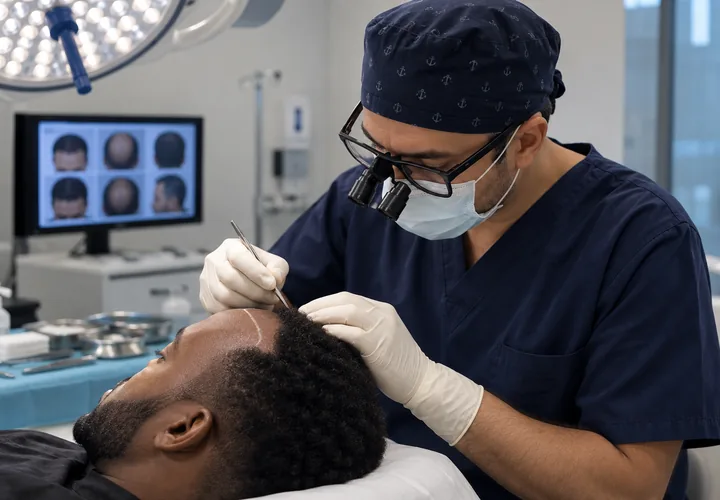
    How Doctors Test a Scar Before Hair Transplant 

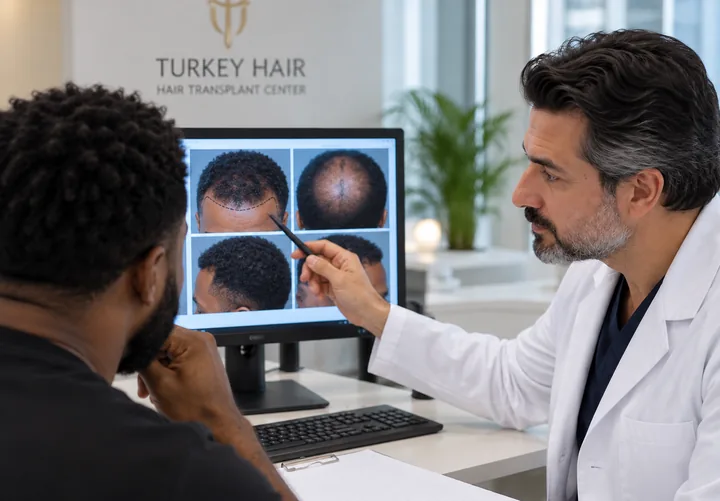
    Before planning a scar hair transplant, doctors carefully evaluate whether the tissue can support healthy graft growth. 

    Surgeons assess key factors such as:

    • the flexibility of the scar: to understand how easily grafts can be placed
    • its color which can indicate blood circulation
    • Thickness which affects graft survival
    • the bleeding response during minor testing, a direct sign of vascularity

    Surgeons evaluate scar tissue by assessing flexibility, vascularity, and bleeding response before planning transplantation, ensuring that the area is suitable and increasing the chances of a successful outcome.

    What Factors Affect Hair Growth in Scar Tissue? 

    Several factors influence hair growth in scar tissue below: 

    • scar age
    • blood supply
    • thickness
    • surgical technique

    Can Hair Really Grow in Scar Tissue? (çok yüksek trafik)

    Yes! However, it is with important limitations. 

    Older scars are typically more stable, while better vascularity improves graft survival. 

    Thinner scars and favorable locations tend to yield better outcomes, and the surgeon’s technique plays a critical role in maximizing density and natural-looking results.

    Let’s disscuse make

    something unique together