
6000 grafts hair transplant in Turkey is one of the largest graft counts requested by international patients. Read about cost, donor limits, recovery and procedure tips before you start your journey.
Performed at authorized partner hospitals Turkey Hair Center is a Ministry of Health authorized health-tourism intermediary, not a clinic.
6000 grafts hair transplant in Turkey is one of the largest graft counts requested by international patients. Read about cost, donor limits, recovery and procedure tips before you start your journey.
A 6000 graft hair transplant typically contains between 12,000 and 15,000 hairs and is suitable for patients with advanced hair loss. In Turkey, the average cost ranges from $2,550 to $4,500 depending on donor capacity, clinic experience, and surgical planning.
| Country | Cost | Pricing model | Source |
|---|---|---|---|
| Turkey | $2,550 - $4,500 | Fixed package (surgery, hotel, transfers, meds) | Turkey Hair Center 2026 packages |
| United States | $10,000 - $15,000+ for 3,000–4,500+ grafts; larger sessions quoted individually | Per graft | Bosley’s 2026 cost guide |
| United Kingdom | about £19,500 (6,000 × £3.25 average per graft) | Per graft | a Wimpole Clinic survey of 58 UK clinics |
In Turkey, a 6,000-graft hair transplant is still pretty cheap, between $2,550 to $4,500, compared to many other countries, even though it’s a big surgery. Clinics in Turkey have mastered the right way to give long treatments, which is why they are experts at big graft sessions. The final cost depends on a number of things, such as the number of grafts used, the clinic’s level of skill, and the surgical plan. Medical tourism services that are planned and have set prices are good for patients.
A 6000 graft hair transplant usually contains between 12,000 and 15,000 individual hairs. The exact number depends on the patient’s follicular unit composition and donor hair characteristics.
Coverage depends on donor quality, hair thickness, and density planning.
A 6000 graft hair transplant can cover a large portion of the scalp, depending on the stage of hair loss and the desired density.
| Norwood Stage | Coverage Potential |
|---|---|
| Norwood 4 | Near-complete coverage |
| Norwood 5 | Extensive frontal and mid-scalp coverage |
| Norwood 6 | Frontal and mid-scalp restoration |
| Norwood 7 | Strategic cosmetic improvement |
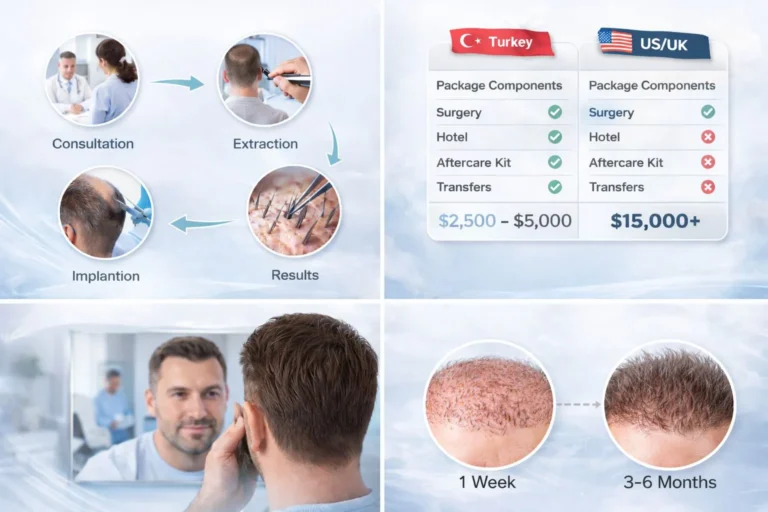
Even though Turkey has more grafts, its prices are still fair because the country has a lot of patients and runs its hospitals efficiently. A lot of surgery center packages include transfers to and from the airport and hotel stays. To save money without lowering the level of care, This bundled pricing structure provides transparency and helps international patients plan their treatment expenses more effectively. In Turkey, you can find a reliable and affordable option for people who need comprehensive coverage.
The cost of a 6000 grafts hair transplant in Turkey usually ranges between $2,550 and $4,500. In the United States, Bosley’s 2026 cost guide lists $10,000 to $15,000 or more for 3,000 to 4,500+ grafts, and a 6,000-graft session is above that bracket. The difference comes mainly from the pricing model: per graft in the US, a fixed package in Turkey.
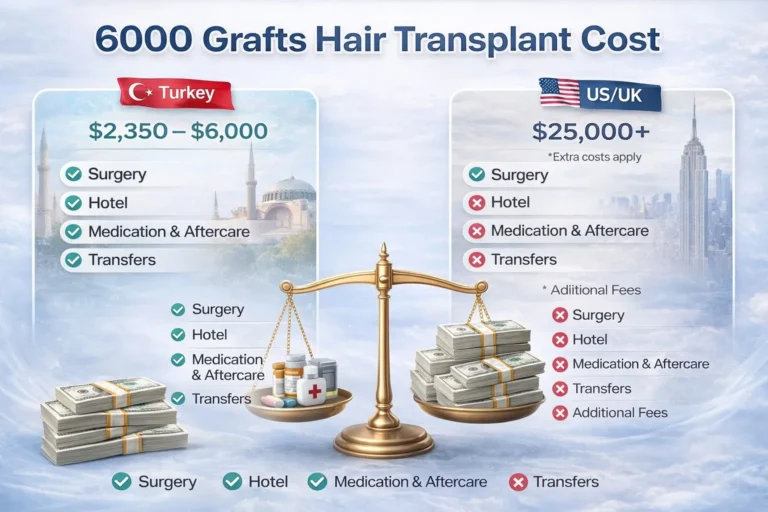
In the United States, hair transplant clinics often charge per graft, and additional costs may apply for consultation, medication, follow-up visits, or accommodation. In Turkey, many clinics offer package-based pricing that includes surgery, hotel accommodation, airport transfers, medication, and aftercare support.
For patients who need extensive hair restoration, Turkey provides a more cost-effective option without requiring them to separate every part of the treatment journey into different expenses.
a Wimpole Clinic survey of 58 UK clinics found an average of £3.25 per graft; at that rate, 6,000 grafts would come to about £19,500. In Turkey, the same graft range is offered as a fixed package.
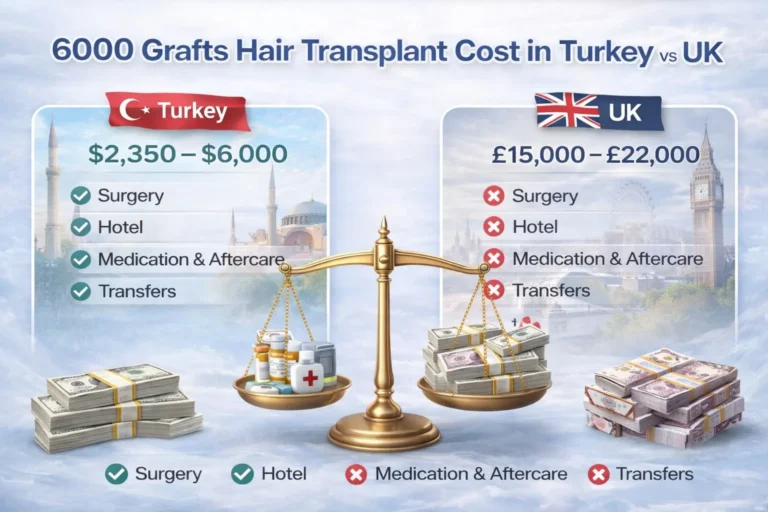
Another major difference is package structure. UK clinics usually price the surgery itself, while travel, accommodation, medication, and aftercare may require separate planning. In Turkey, many international patient packages include these services in one treatment plan.
This makes Turkey a practical choice for patients from the UK who are looking for high graft numbers, organized treatment logistics, and more transparent cost planning.
For transplanting a lot of grafts, the best place is a center in Turkey, especially Turkey Hair Center, that specializes in this kind of work. Skilled medical teams make it easy to take out and put in transplants. This specialization cuts down on the time needed for the process without lowering the survival rate of transplants. For safely running large sessions, you need to have a lot of knowledge.
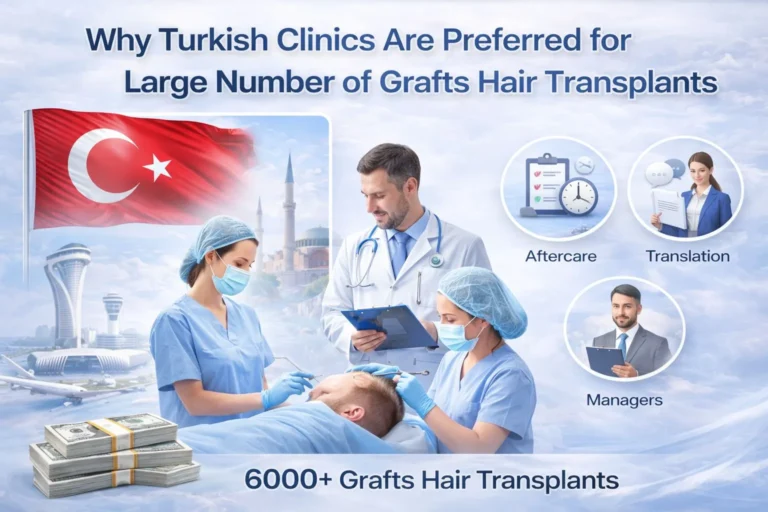
One important goal of medical tourism centers is to make sure that patients get better care. Clinics offer care after surgery, help with translation, and managers. With this all-around method, effectiveness and dependability are fostered. Turkey is the most useful and safest option for people who need 6,000 grafts.
What a 6000 graft session can achieve depends on donor quality, scalp characteristics, hair calibre and surgical planning. The timeline below shows the usual stages.
| Time Period | Expected Changes |
|---|---|
| 0-2 Weeks | Scabbing, redness, healing phase |
| 1-3 Months | Shock loss, dormant follicles |
| 4-6 Months | New hair growth begins |
| 9-12 Months | Final density & natural texture |
Patients undergoing a 6000 grafts FUE hair transplant often experience substantial improvements in hairline definition, frontal density, and scalp coverage. Final results typically become visible between 9 and 12 months after the procedure.
A 6,000-graft plan can cover the front, the mid-scalp and the crown in one or two sessions when the donor area allows it. The outcome depends on donor quality, scalp condition and the surgical plan, so expectations should be set with the medical team.
That’s how fast hair grows over the course of a year. Loss of hair in the early stages could make them look scarce. As time goes on, hair gets thicker and smoother. You need to be patient and follow all the treatment instructions to the letter if you want your huge graft to look natural and last.
Prior to making a selection about a hair transplant consisting of 6,000 grafts, the individual who is experiencing hair loss ought to go through a consultation that is complete in nature. When making a decision about what to do, surgeons take into account a broad variety of data. These parameters include the condition of the patient’s scalp, the density and wave pattern of the donor area, the strength of the donor area, and many other factors. A decision is made regarding the sequence in which the grafts will be coated and positioned at this stage of the preparation process. The long-term viability of the donor region and the maintenance of realistic expectations are both maintained through the completion of careful assessments.
In addition, the plans include determining the appearance of a hairline and determining the total amount of bald patches that are present. A person’s age, their medical history, and the rate at which they are losing their hair are the most significant factors to consider. Those who are planning to have surgery are provided with detailed advice on how to make adjustments to their way of life and get themselves ready for the procedure. It is vital to carefully prepare for surgery in order to help ensure a successful outcome and a regular appearance after the procedure. At this point, it is necessary to make the necessary steps in order to help ensure that the results will be fair and long-lasting.
Mild swelling, redness, and scab formation are common during the first week after surgery. Most symptoms improve within several days. Following the post-operative care instructions carefully helps protect newly implanted grafts and supports healthy healing.
Loss of shock often happens in the weeks following surgery. It is normal for transferred hair to thin out for a short time while the follicles get used to their new home. This stage can still be stressful, even if it’s what you expect. The hair cells are still there and getting ready to grow out from under the skin. Right now, you need to be patient. Every day, clinics treat a lot of people without breaking any medical rules. The cost of care goes down right away because of this efficiency.
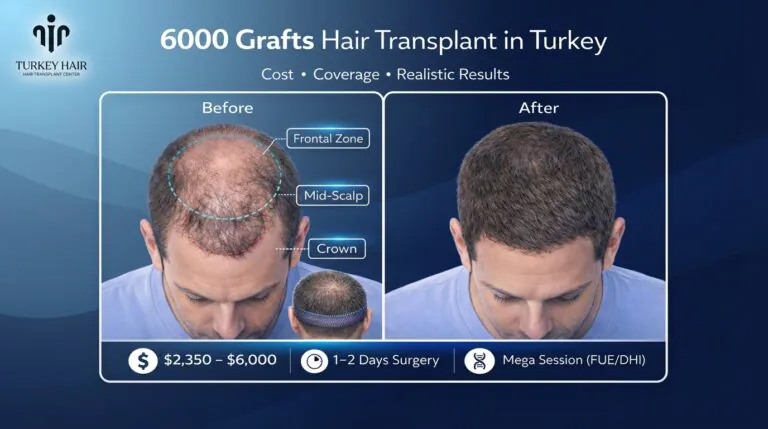
Patients will be able to see new hair growth in all the places that were treated after six months. At first, the hair looks thinner, but as density goes up, it gets thicker. As hair follicles go through their active development stages, covering gets better over time. We may not have all the answers yet, but we are starting to see some patterns that are good.
The outcomes of a 6,000-graft hair transplant are typically fully realized within twelve months. The hair that emerges is denser, more robust, and possesses a more refined structure. The density is optimal, and you can customize it in further ways. As your hair develops, you will observe subtler changes.
In selected patients, 6000 grafts crown restoration can also be performed alongside frontal and mid-scalp reconstruction, depending on donor availability and density goals.
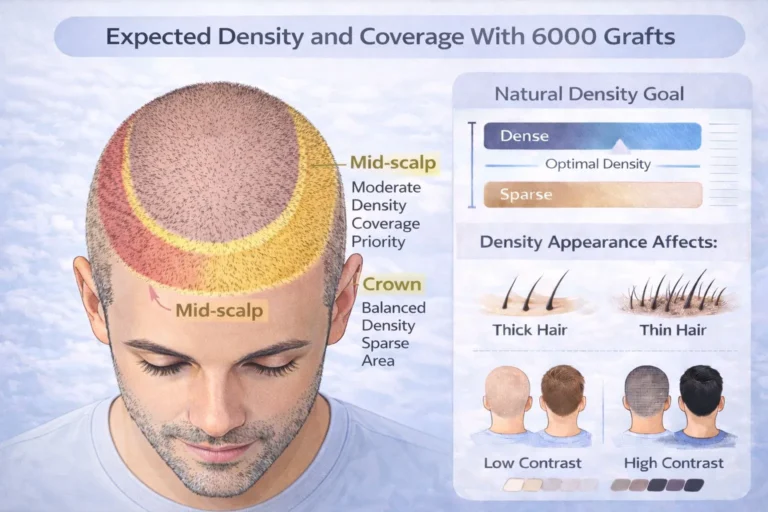
Even though 6,000 grafts cover a lot of hair, the goal was for the results to look realistic and not too dense. Surgeons’ main goals are to get the density to be natural and make sure that the changes are smooth. A big part of the final style is determined by the hair’s traits. Get ready ahead of time to make sure that your face shape and makeup will work with the coverage.
A 6,000-graft hair transplant is a big surgery that may be the only option for people who are losing a lot of hair. To cover all the different parts of the head, a lot of grafts need to be taken out and put back in. This method is often called a “mega session” because it covers so much ground. There must be skilled medical teams, careful care for the donor area, and careful planning before the surgery.
People with serious hair loss are more likely to need this type of transplant than people with moderate thinning. The goal of the procedure is to get a natural-looking density while keeping the donor site as safe as possible in the long run. Because the graft is so big, it is very important that the patient and doctor carefully evaluate and choose them. When a 6,000-graft replacement is done correctly, it can lead to amazing and long-lasting results.
In most cases, a 6000 grafts FUE procedure is preferred because it allows the extraction of a large number of grafts while minimizing visible scarring. FUE remains the most commonly used technique for mega-session hair restoration procedures.
These out-of-the-ordinary meetings need clinics that understand them well. The donor spot shouldn’t show any signs of being low on grafts, and there should be plenty for everyone. Careful attention is paid to the surgical pace, hydration, and implantation method. There are plans for mega sessions to build density and keep head hair healthy over time.
A 6,000-graft hair transplant is usually a good choice for people who have lost a lot of hair. Most people will probably feel better if they have forehead recession and central or crown thinning. It is possible to cover more area with this number of grafts than with smaller treatments. It is a common option to think about when there aren’t enough grafts.
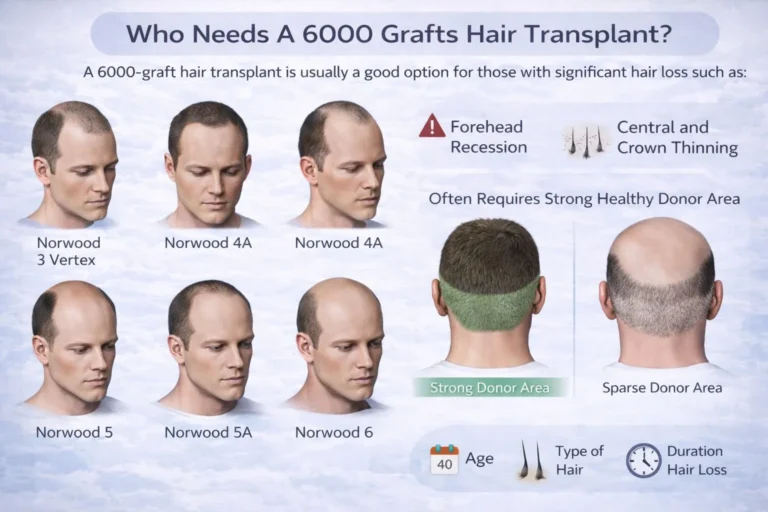
People who want to have such a big extraction need to have a donor area that is strong and healthy. A person’s age, the type of hair they have, and how long their hair loss has been going on are all things that are taken into account. It’s possible that some people will not be good candidates for the 6,000 replacements. An exam by a doctor makes sure that the process works well and is safe.
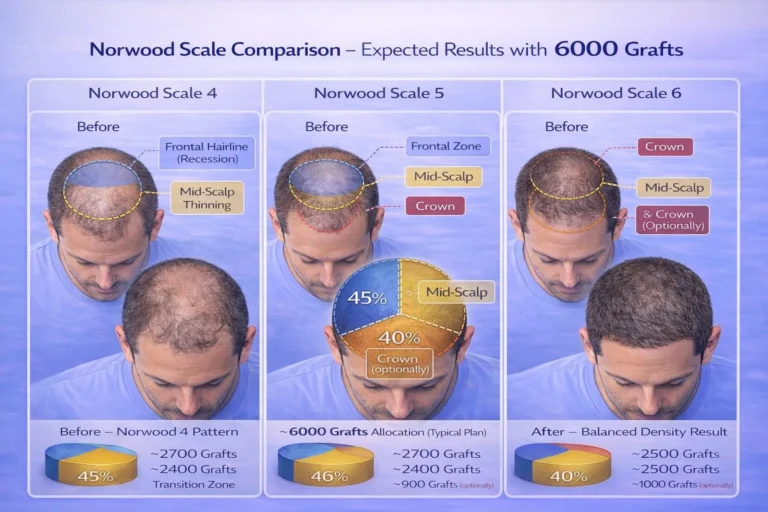
| Norwood | Hair Loss Level | Is 6000 Grafts Enough? | Coverage Expectation |
|---|---|---|---|
| Norwood 4 | Moderate | ✅ Yes | High frontal & mid-scalp density |
| Norwood 5 | Advanced | ⚠️ Mostly | Strong frontal, partial crown |
| Norwood 6 | Severe | ❌ Limited | Frontal focus, aesthetic balance |
This graft count is often sufficient to create a natural-looking 6000 grafts frontal hairline while also increasing density throughout the frontal and mid-scalp regions.
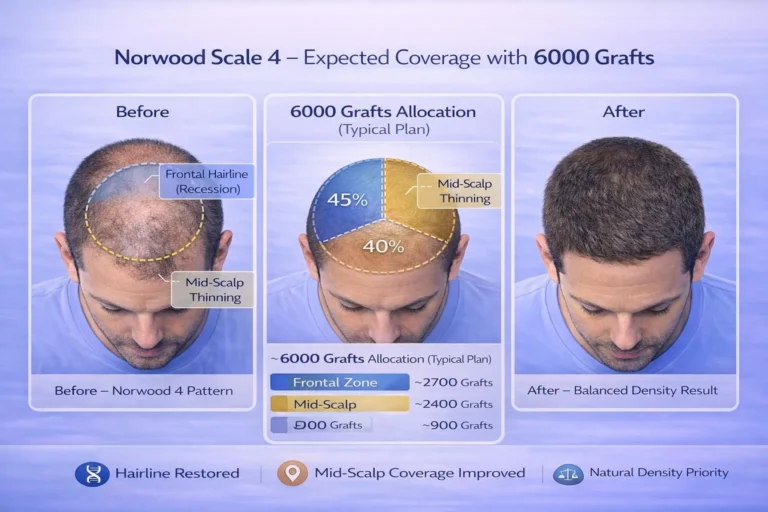
With 6,000 grafts, there is a lot of freedom in how the mass is distributed at this point. The front and middle of the scalp are easy for doctors to strengthen. The result is often a fuller, younger look. With this size, it is often possible to keep donors for a long time.
Norwood Scale 5 patients have more widespread hair loss in the forehead, mid-scalp, and crown areas. The front and middle of the head may need about 6,000 grafts to cover a lot of ground. How dense the crown depends on how much the giver can give. Setting up a strategic place is getting more important.
Frontal repair is often the surgeon’s priority because of how it looks. You can either do some work on the cap or keep it for another time. It’s important not to set too high of goals, even though 6,000 grafts can produce amazing effects. The end density is based on the type of hair and how well the grafts are doing.
For patients classified as 6000 grafts Norwood 6 cases, achieving complete scalp coverage may not always be possible. However, 6000 grafts can significantly improve frontal density, mid-scalp coverage, and overall facial framing when planned correctly.
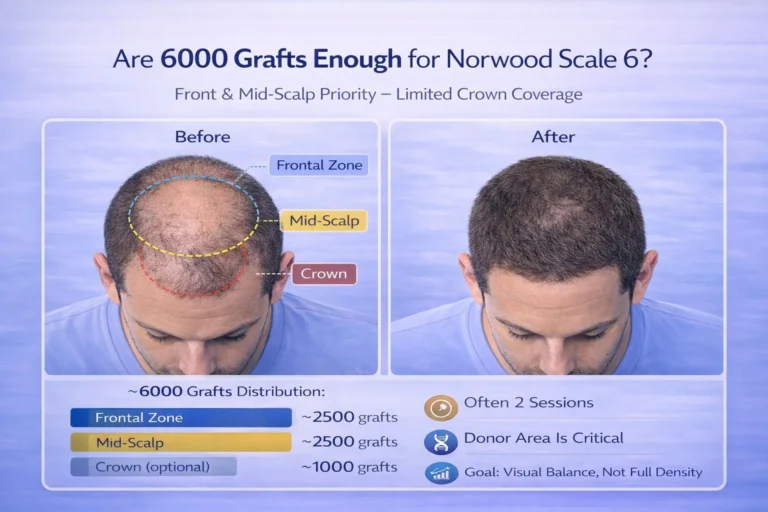
The goal is not total density but rather balance in the way things look. The limits on the source area are very important. To get the best results, some people may need to have surgery in more than one step. With the right planning, you can avoid overharvesting the donor area and get natural results.
In selected patients with strong donor reserves and good scalp characteristics, 6000 grafts may be transplanted in a single session. However, many clinics prefer dividing the procedure into two consecutive surgical days to improve graft management, patient comfort, and overall safety.
Clinics that have done a lot of big graft surgeries carefully look at how long the sessions will last and if there are any physical limitations. It hurts more on the scalp because you can see effects faster after just one session. To make sure the patient is comfortable, has enough blood flow, and recovers quickly, a lot of planning is needed. It is important to do a personal evaluation before deciding on this method.
The maximum safe graft count varies between patients. Factors such as donor density, scalp laxity, blood supply, and surgical duration must be evaluated individually. While some patients may safely undergo a 6000 graft procedure, others may benefit from a staged approach.
Clinics with a lot of experience can only safely do 6,000 grafts in one sitting in very rare cases. A thick network of donors and an elastic scalp are the only ways to make this happen. During surgery, there must be constant tracking. Safety rules are not set in stone; instead, they are flexible and depend on the person. In some situations, splitting the process can help the body heal and keep the grafts in place. Patients can make better decisions when they know everything there is to know about making a session. A customized method is better than a one-size-fits-all one.
Spreading out the graft implantation over several sessions gives the head time to heal between surgeries. This method might help make the donor spot less painful and strained. It’s worth the extra There are places that often split 6,000 grafts into two days. This method saves time and effort for both the medical team and the scalp. Cutting down on the time spent on each treatment every day improves both accuracy and the chance of a donor living. After this surgery, most people say they feel better during their healing.
Surgeons can check on the state of the scalp again between each two-day session. This makes it easier to place the graft correctly, but it also makes it more likely that the surgeon will get tired. Often, it’s easier to guess how a healing process will turn out. Many experts say that doing the process in stages is the safest way to handle large numbers of grafts. The choice is based on clinical opinion and the person’s anatomy.
Due to the length of time needed, it is very important to stick to a strict schedule for a 6,000-graft hair transplant. How long a process takes, how many people are on the team, and how each day is organized all effect how long it takes all together. In mega graft transplanting, accuracy is more important than speed. Patients may be better ready when they know exactly how long they will need.
It is also thought about how long it takes to heal after surgery. In contrast to the few days or weeks needed for implantation, it can take months for the body to heal and grow. Fears go away when the whole process is known. The work you do today will pay off in the end.
Sometimes, it takes eight to twelve hours to put in all 6,000 grafts at once on the day of the surgery. If the sessions are spread out over two days, they last between five and seven hours each. So, it can be said that patients stay relaxed and on task better when breaks are part of their treatment plan as working together is the main key to success.
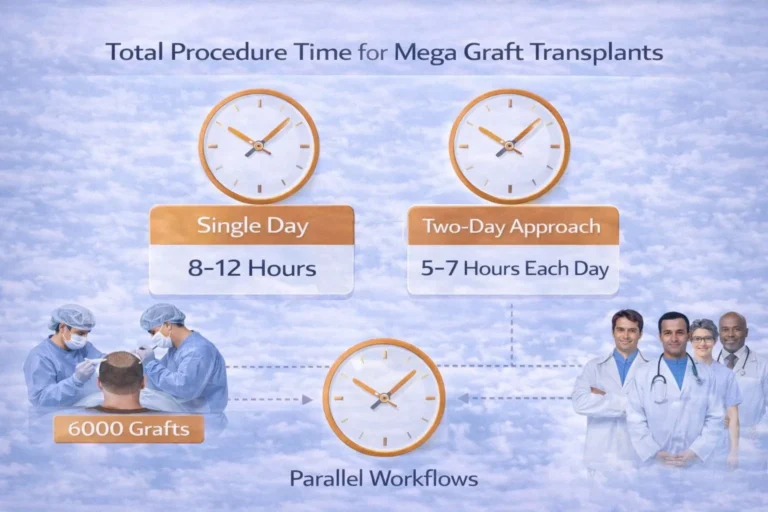
Medical facilities today can cut down on total time because they can use parallel workflows. In some cases, graft extraction and insertion can be done at the same time. The standard has not gone down, but productivity has gone up. Because the goal is to keep the patient safe, the length of treatments is always changing.
It takes around one week for the patient to begin to feel better following a 6,000-graft hair transplant. Swelling, redness, and scabs will gradually fade away throughout this period. Most patients are able to begin progressively challenging their recovery within a few days. To aid in recovery, it is important to follow therapy protocols precisely.
In the first month, hair naturally sheds as a part of the growth cycle. After three to four months, new hair starts to grow. At least one year must pass before the full effect shows up. While you’re getting better, be kind to yourself and get lots of rest.
| Risk | Cause | Prevention |
|---|---|---|
| Donor overharvesting | Poor planning | Proper donor mapping |
| Low graft survival | Long procedure time | Experienced surgical teams |
| Uneven density | Incorrect implantation | Strategic graft distribution |
Even though a 6,000-graft hair transplant covers a lot of hair, it does have some medical limits. During large graft sessions, the donor area, blood flow to the head, and ability to heal are all checked. Ignoring these limits could have very little of an effect. It is better for patients to make choices when they know about the possible risks.
A lot of people might not be good options for so many transplants. The process works better or worse depending on the donor’s health, hair type, and amount of hair. Clinics should stop focusing on high graft counts and start focusing on long-term success. Getting ready protects future choices about hair restoration and lowers risks.
The donor spot doesn’t have many healthy follicles to choose from. It is very important to have accurate mapping after a 6,000-graft treatment so that there is no noticeable thinning. When volunteers are taken too often, they risk damage to their looks that can’t be fixed. This kind of risk goes up if methods are rushed or not well thought out.
Skilled doctors think about how dense and flexible the scalp is when deciding on the maximum depth of an extraction. Graft removal is done evenly when picking is planned ahead of time. You should be careful not to hurt the donor if you want the end result to look realistic. It is not possible to get back the follicles that were taken from donation sites through any method of harvesting.
When doing large-scale hair transplants, it is very important to keep the donors alive. The follicles are put under more stress when treatments take longer, and a lot of grafts are used. Survival rates are directly affected by using the right handling methods, keeping the temperature stable, and drinking enough water. When there are thousands of grafts to do, even a small mistake can have a big effect.
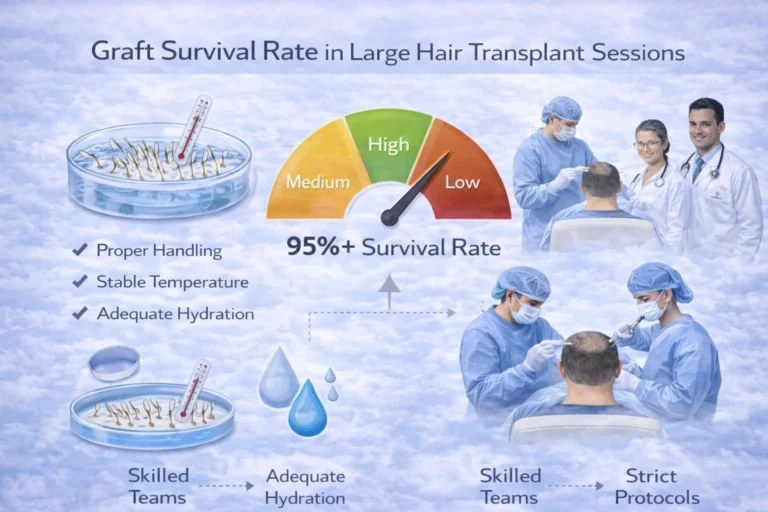
Good medical centers keep a good survival rate even when they have a lot of patients. To do this, you need skilled teams and strict rules. Patients are also expected to carefully follow the guidelines for care afterward. The chances of life depend on how well the surgery was done and how well the patient was cared for afterward.
People in Turkey usually think that a 6,000-graft hair transplant is a good idea because it is cheap and the doctors are very good at what they do. A lot of big graft surgeries happen in Turkish hospitals. This level of specialty makes both security and consistency better. Turkey is a tempting option for people who are having a hard time with extreme hair loss.
Prices don’t always show what something is worth. It is very important to have supervision by a skilled surgeon and help with care after surgery. The well-developed infrastructure of Turkey makes medical tourism there more appealing. If you pick a clinic carefully, you can get good benefits that last.
Long-term satisfaction after a 6000 grafts hair transplant depends on realistic planning, donor area strength, graft survival, and the patient’s natural hair characteristics. When the procedure is planned correctly, patients can achieve a fuller hairline, improved mid-scalp density, and better overall facial framing.
Final results usually become visible between 9 and 12 months after surgery. During this period, transplanted hair gradually becomes thicker, stronger, and more natural in appearance. Patients with good donor density and proper aftercare generally experience higher satisfaction.
However, long-term success does not depend only on graft number. A natural result requires balanced density distribution, careful hairline design, and protection of the donor area for possible future hair loss progression.
A 6000 grafts procedure offers a strong cost-to-coverage advantage for patients with advanced hair loss. Because this graft number can treat multiple areas such as the frontal hairline, mid-scalp, and in selected cases the crown, it may reduce the need for several smaller procedures.
In Turkey, the price range of $2,550 - $4,500 makes large graft sessions more accessible compared to the United States, the UK, and many European countries. This is one of the main reasons international patients consider Turkey for mega-session hair restoration.
The main value of a 6000 grafts hair transplant is not only the price, but the amount of visible coverage it can provide when donor planning is done correctly. For the best outcome, the grafts should be distributed strategically rather than placed only to create maximum density in one area.
| Timeline | Expected Progress |
|---|---|
| Week 1 | Healing and scab formation |
| Month 1 | Shock loss phase |
| Month 3 | Early regrowth begins |
| Month 6 | Visible improvement |
| Month 12 | Final result develops |
Medical disclaimer: This article is for informational purposes only and is not medical advice. Individual results vary from person to person. Always consult a qualified doctor before any hair transplant procedure.
Written by Nazmi Güldeş — Certified Trichologist·Medically reviewed by Dr. Teuku Adifitrian, Sp.BP-RE (Dr. Tompi) — Plastic, Reconstructive and Aesthetic Surgeon·Last reviewed:
This page is informational and does not replace an in-person medical assessment.
Send three photos: front, top and sides. You get a technique recommendation, a graft range and a straight answer about what is achievable, before anyone talks about price.
A patient coordinator will get back to you shortly. If you would like to send your photos now, WhatsApp is the fastest way to do it.
 Real People
Front, top and both sides, reviewed by the medical team.
Chat nowSpeak to a patient coordinator on the phone.
+90 545 249 91 04We respond quickly, day or night, in your language.
Multilingual team, no obligationTurkey Hair Center is the hair-restoration brand of Healthy Way Tourism, an authorized international health-tourism intermediary.
All medical procedures are performed by licensed medical professionals at authorized healthcare facilities in Turkiye, in accordance with the regulations of the Ministry of Health.