No Shave Hair Transplant in Turkey: Who It Suits, Cost & Results
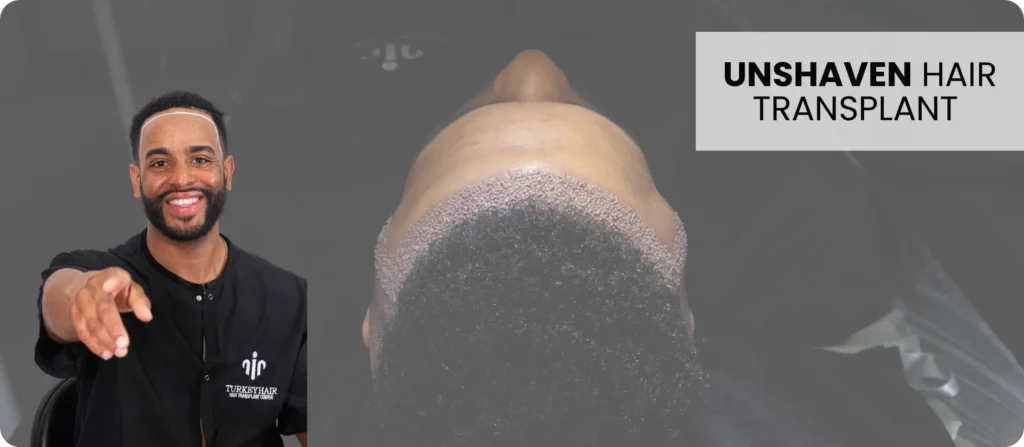
Unshaven hair transplant in Turkey offers a discreet solution with no visible shaving, affordable cost, and natural-looking results.
Performed at authorized partner hospitals Turkey Hair Center is a Ministry of Health authorized health-tourism intermediary, not a clinic.
Unshaven hair transplant, often referred to as U-FUE, is a particular hair transplantation procedure. During this procedure neither the donor area nor the recipient area is completely shaved before the surgery. Clinics in Turkey specialize in advanced unshaven hair transplant techniques. This expertise is a combination of years of surgical experience with methods like long-hair FUE, partial FUE and U-FUE that are suited to different case types and hair structure. However, non-shaving is not possible in every case! It depends on hair density, donor area quality and case type. Also, DHI is barely chosen for fully unshaven cases because of limited surgical visibility and a higher risk of damaging surrounding native hair.
Short answer
A no shave hair transplant is FUE in which the recipient area is not shaved and the donor area is only trimmed in a small hidden window. It usually suits limited hair loss with a good donor area, typically 1,500-3,500 grafts. With us it is an all-inclusive package from $2,550 to $4,500, done in a single 6-8 hour session under local anesthesia.
Single session, about 6-8 hours, local anesthesia, sedation support on request
Typical graft range
About 1,500-3,500 grafts
Included stay
2 hotel nights, VIP transfers, next-day check-up
Back to desk work
Usually 3-5 days
Growth and final result
Growth from about month 3, final result at about 12 months
Often chosen for
Limited thinning, patients who want to keep their hairstyle
No Shave Hair Transplant Results Timeline
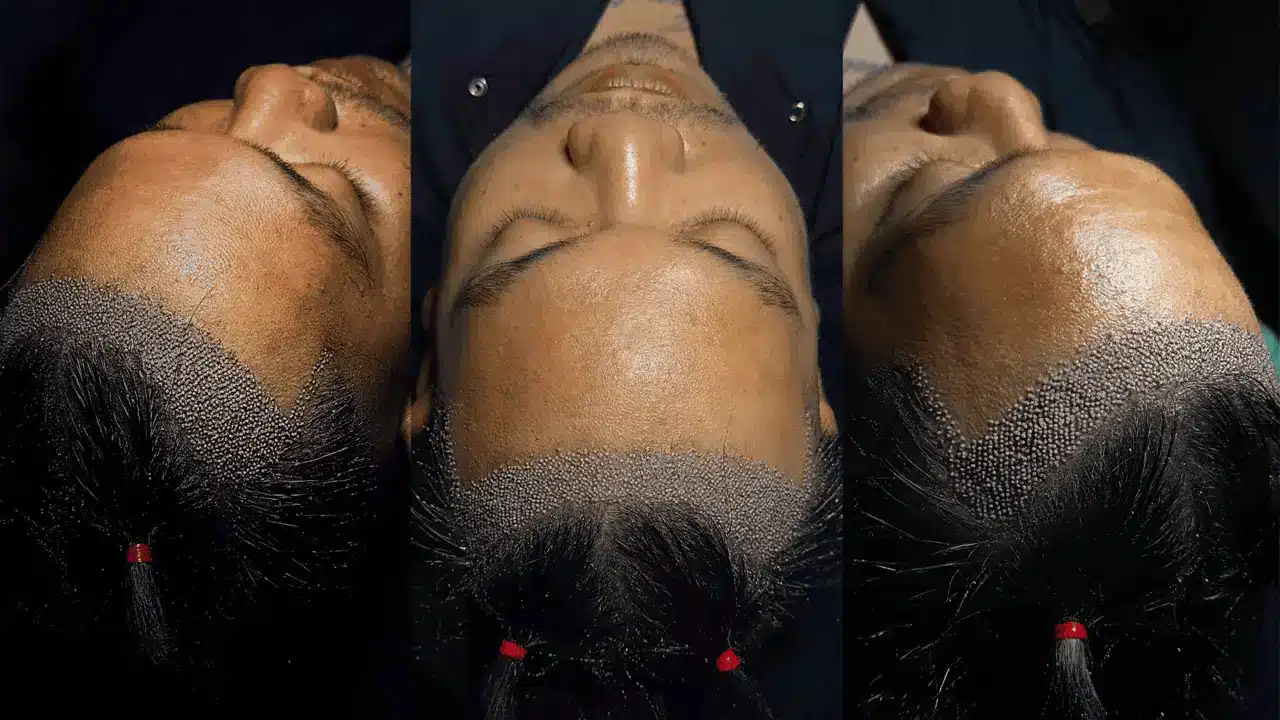
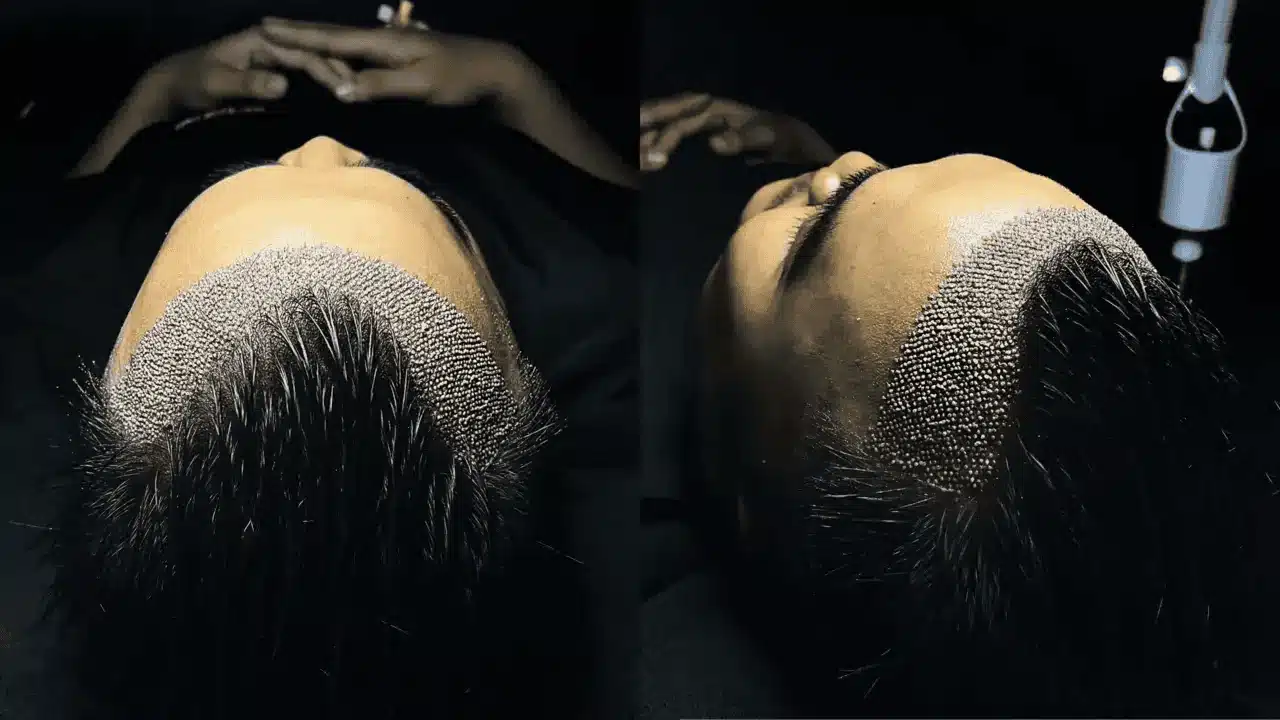
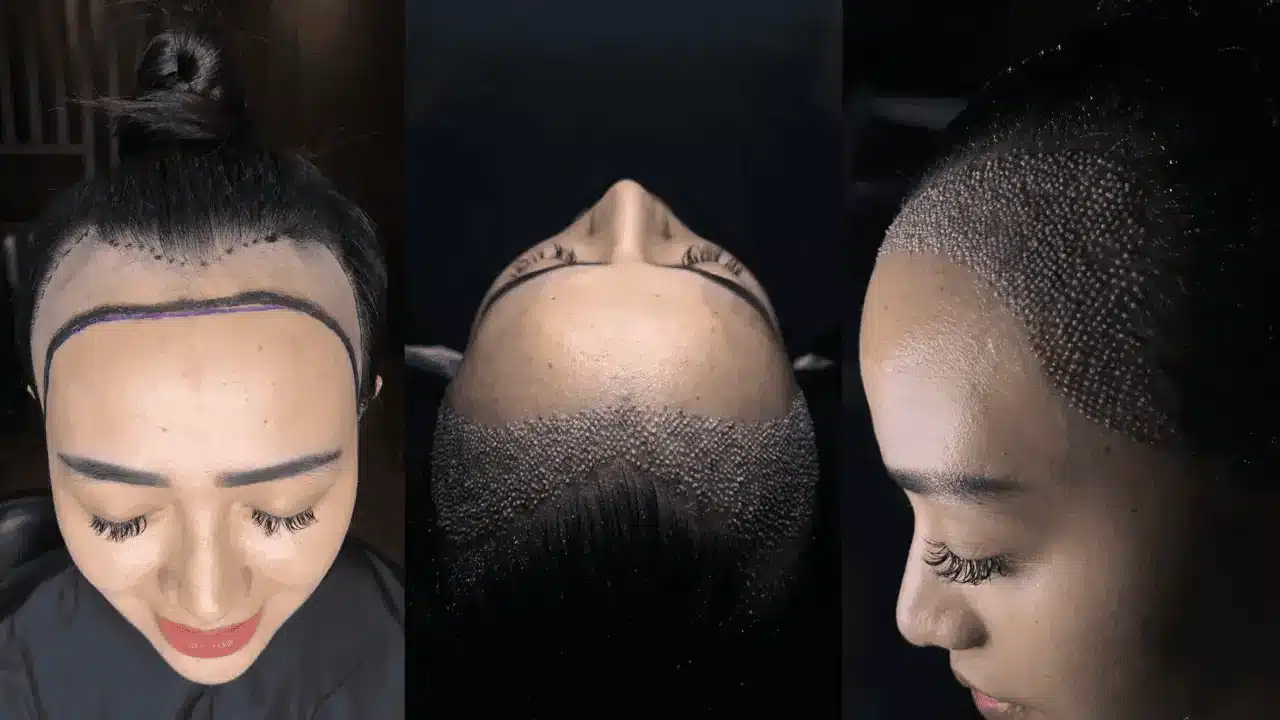
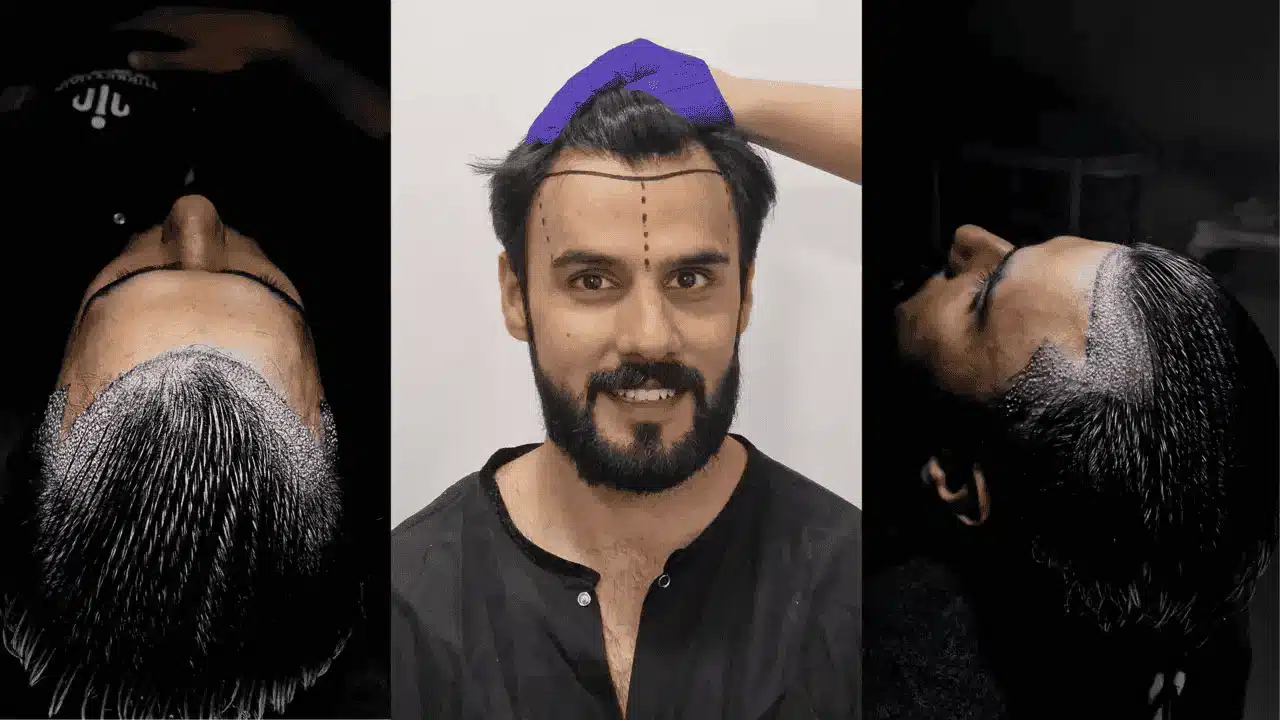
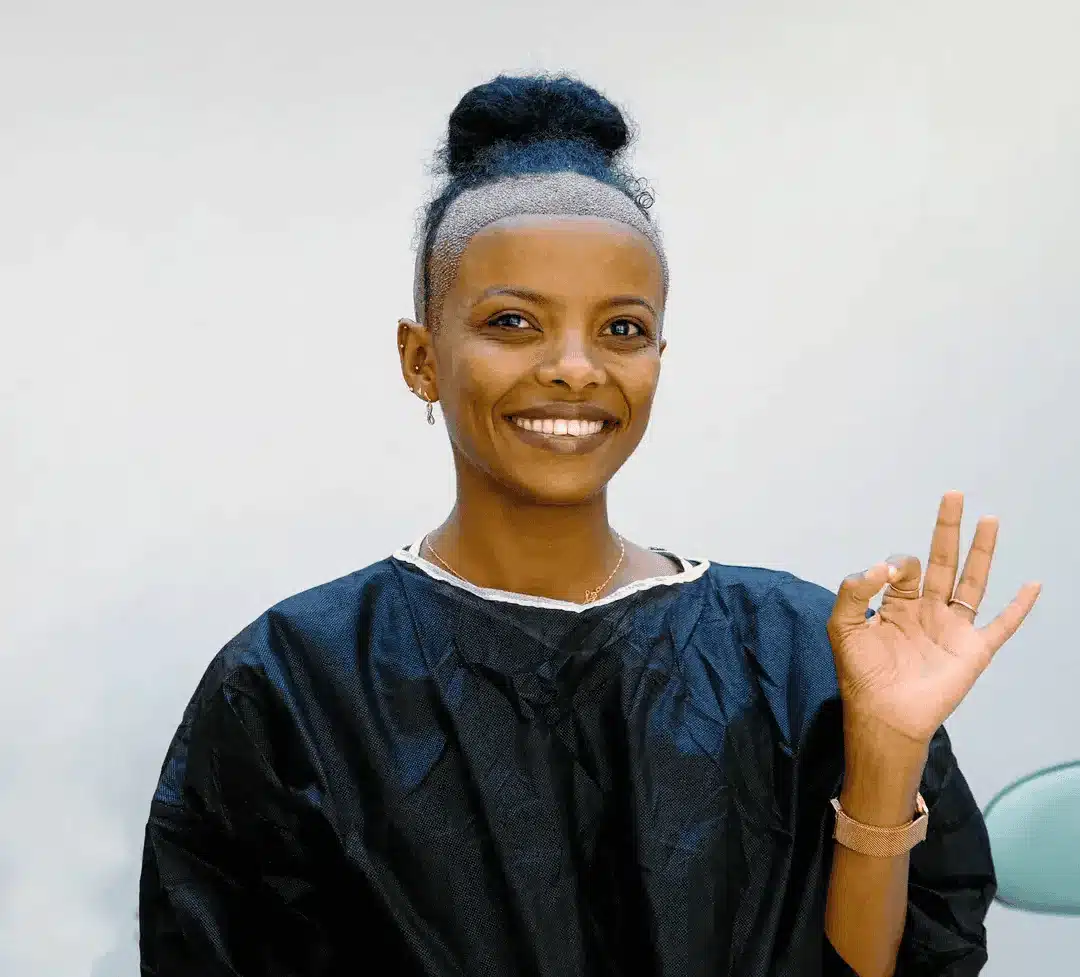
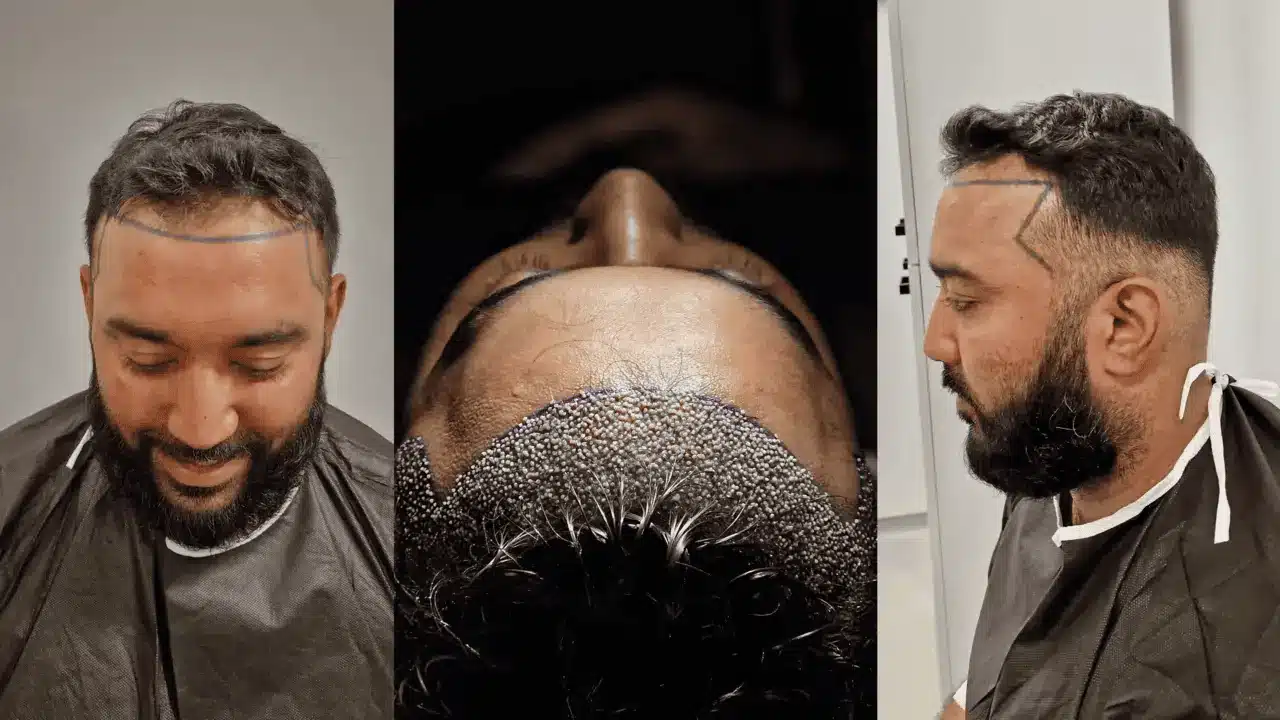
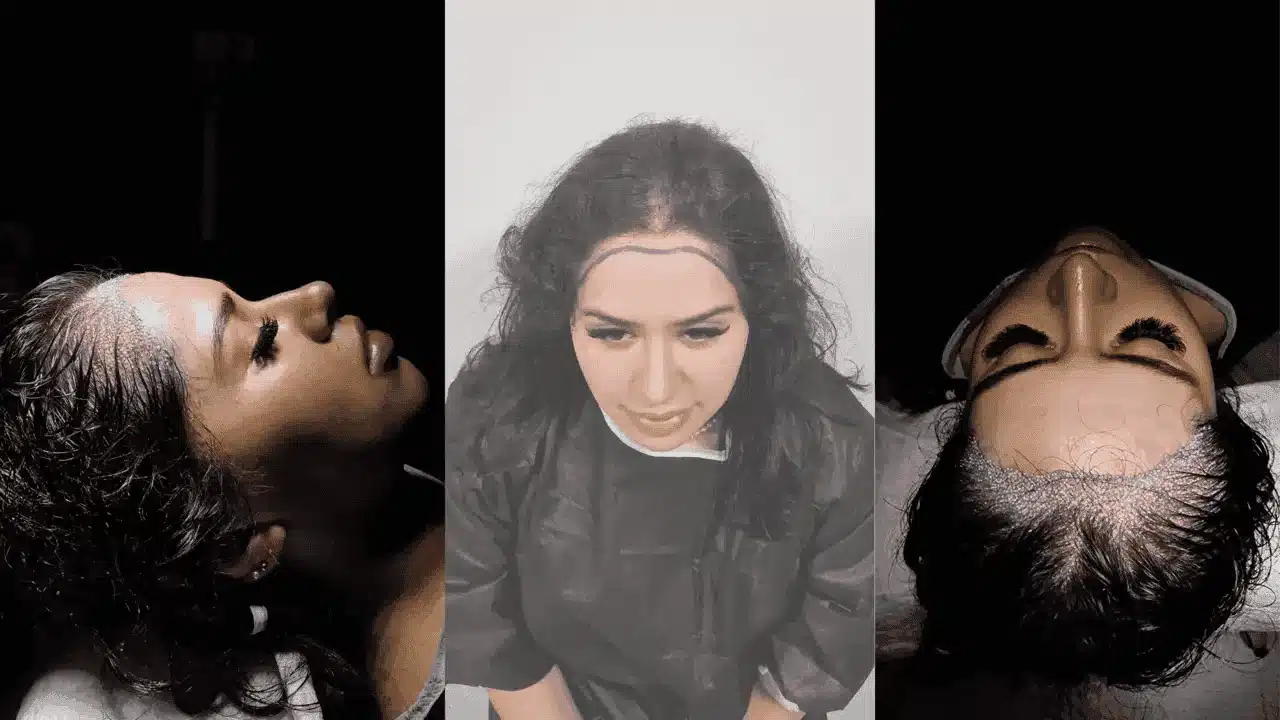
The before & after photos show graft placement and donor area recovery.
No shave hair transplant before and after photos need a date. Unshaven hair transplant before and after pictures from the first week show how well long hair after transplant hides the work; judge no shave FUE hair transplant results and unshaven hair transplant results at about 12 months. In no shave FUE hair transplant before and after cases, check that the patient was really unshaven (see the no-shave FUE timeline).
Will Results Differ from Regular (Shaven) FUE?
Usually not in the long run. Grafts are extracted and implanted the same way and grow on the same timeline, and with an experienced team graft survival is similar to shaved procedures. Because existing hair limits visibility, achievable density per session can be slightly lower.
Natural Results
A natural result comes from the hairline design and the angle of each graft, not from whether you were shaved. Placing grafts between existing hairs lets the surgeon follow your natural growth direction, which matters most at the frontal hairline and the temples.
What Is Unshaven Hair Transplant?
An unshaven (no-shave) hair transplant is a specialized technique. Hair follicles are extracted and implanted without shaving the recipient area.
So, it requires high-level surgical skill to protect surrounding hair and reach natural appearance.
So, what is no shave hair transplant in practice? It is FUE planned around your hairstyle, also called unshaven FUE, U-FUE or long hair FUE: the recipient area keeps its length and the donor area is trimmed only where the hair above can cover it. It suits patients who want to protect their hairstyle and keep the procedure private.
Types of No-Shave Hair Transplants
Unshaven FUE (No Shave Hair Transplant)
No shaving of the recipient area; minimal trimming in the donor area
Ideal for patients who want a discreet procedure
Requires more precision and longer operation time
Limited number of grafts can be transplanted in one session
Often priced higher at other clinics due to technical difficulty
Partial Shave FUE
Only a specific area is shaved (usually donor or small recipient zones)
Balances natural appearance and surgical efficiency
Allows moderate number of grafts
Shorter procedure time compared to unshaven FUE
Suitable for patients who want less visible change but better density
Fully Shaved FUE
Entire scalp (or large areas) is shaved
Allows maximum number of grafts in a single session
Faster procedure with full surgical visibility
Usual choice for advanced hair loss
Often the lowest-priced option at other clinics
Longer Surgical Duration
More time is required for unshaven procedure. Also, if the medical team isn’t well-coordinated, graft hydration can negatively be affected by prolonged surgery.
Hair Transplants No Shave
The team has to part the hair and follow the angle of each existing hair, which is one reason grafts per session are limited. With us it is still one day of about 6-8 hours, with sedation support on request.
Can You Get a Hair Transplant Without Shaving Your Head?
Often, yes. A hair transplant without shaving head hair works when hair loss is limited and the donor area is dense enough to hide a small extraction area. It is not possible in every case; the medical team decides from your photos and graft count.
Who's a Good Candidate for No-Shave FUE?
Men and women with early or localized thinning and good donor density. See who no-shave FUE is for.
Donor Area Preparation (The Hidden Window)
Grafts still come from the back of the head, but only a small window is trimmed, and the hair above falls over it.
Channel Opening (The Sapphire Touch)
Recipient channels are opened with sapphire blades between your existing hairs, at the angle of natural growth.
Implantation (DHI or Forceps)
Grafts go into the channels with fine forceps, or directly with a DHI implanter pen.
Immediate Post-Op Look
The recipient area is red with tiny crusts, but longer hair covers much of it. Redness and small scabs usually fade within 7-10 days.
Unshaven Hair Transplant vs Shaven
Shave vs no shave hair transplant is a trade-off between discretion and graft numbers. The method is the same FUE.
Why Does Shaving Make the Difference?
Short hair shows the exit angle of every follicle. With long hair in the way, each graft takes more care to avoid cutting existing follicles.
Traditional Shaved Procedures Usually Allow More Grafts per Session
A shaved plan allows the most grafts in one session and suits advanced hair loss. Unshaven sessions usually stay within about 1,500-3,500 grafts.
The Implantation Stage Largely Determines the Result
Placement is where unshaven work gets harder: angle, depth and spacing must match the native hair, and density per cm² may be slightly lower.
Comparison Table: Unshaven vs Shaven FUE
Unshaven FUE
Shaven FUE
Shaving
Recipient area kept long, small donor window
Donor and recipient areas shaved
Grafts per session
Lower, usually 1,500-3,500
Highest
Procedure time
Longer
Shorter
Visibility after surgery
Very low
High
Often chosen for
Limited thinning, privacy
Advanced hair loss, large areas
How Is It Different from FUT or Strip Surgery?
FUT, the older strip method, removes a strip of scalp and leaves a linear scar. Unshaven FUE takes grafts one by one with a 0.6-1 mm micro-punch, leaving tiny dots.
Advantages of No Shave Hair Transplant
The main reason to choose no shave FUE is privacy: you keep your hairstyle while the grafts settle and grow.
Main Benefits
No visible shaving of the recipient area; the donor window is covered by your own hair
A quicker return to social and work life, as existing hair partly hides redness and scabs
Your current hair length is kept, so the new hairline is designed around your real hairstyle
Fine placement between existing hairs for patients who are thinning rather than bald
How Does No Shave Hair Transplant Work?
No shave FUE follows the same stages as any FUE hair transplant; the difference is the extra care for the hair that stays long.
Before Surgery, Specialists Evaluate Your Hair and Donor Area
Blood tests come first. The team checks donor density, hair caliber, curl pattern and scalp laxity; nicotine and alcohol are paused.
The Consultation Also Determines How Much Is Shaved
It sets your graft count and chooses between fully unshaven, a hidden donor window or a partly shaved plan.
Design and Numbing
The hairline is drawn with you seated upright and you approve it. Then local anesthesia is given.
Clipping and Extraction
Only the donor window is clipped. Grafts are taken with a 0.6-1 mm micro-punch and kept in a cooled solution.
Placement
Grafts go between existing hairs at their natural angle and depth, section by section, so native follicles are protected.
The Procedure Combines Precision with a Single Day
It is one session of about 6-8 hours, with a next-day check-up and dressing.
Unshaven Hair Transplant Donor Area
The no shave hair transplant donor area is the same as in any FUE: the back and sides of the scalp, where hair is usually resistant to pattern hair loss. What differs is that only a hidden part of it is trimmed.
FUE Graft Extraction Process Close-Up
Each follicular unit is freed with a fine punch, leaving a tiny opening that heals as a small dot. The trimmed window shows every exit angle.
The Surgical Team Must Spread Extractions Evenly
Grafts are taken across the whole donor area, not one patch. A 1500 grafts no shave FUE hair transplant sits at the lower end of the unshaven range; more grafts need a larger trimmed area.
Poor Extraction Planning in Unshaven Procedures May Lead to Overharvesting
Long hair can hide over-harvesting until later, leaving the donor area thin and fewer grafts for a future session.
Is No Shave Hair Transplant Painful? Anesthesia and Comfort
The operation is done under local anesthesia, so the scalp is numb while grafts are taken and placed. Most discomfort comes from the anesthetic injections at the start; mild soreness, swelling and itching in the first days are common and usually settle on their own.
Because an unshaven session lasts longer, the anesthetic may need extra doses and careful monitoring to keep you comfortable throughout. Sedation support is available on request.
No Shave Hair Transplant Cost
With us, the no shave hair transplant cost Turkey patients pay is an all-inclusive package from $2,550 to $4,500, set by the package rather than by a per-graft bill. Compared with clinics abroad, the no shave FUE hair transplant cost Turkey patients see is usually much lower:
Region
About 1,500 grafts
About 3,500 grafts
USA
$4,800 - $7,500
$11,000 - $18,500
United Kingdom
£3,500 - £6,000
£8,500 - £14,000
Europe (EU)
€3,500 - €6,000
€7,500 - €12,500
Turkey, our all-inclusive packages
$2,550 - $4,500
$2,550 - $4,500
These costs are a reflection of surgical time, graft number and the added precision required for unshaven hair transplant.
Higher Cost: What Drives the Price of Unshaven Work
the number of graft
existing hair length
total length of the treatment
Besides, unshaven techniques might sometimes cost more due to longer operating time, more precise micro surgery.
Unshaven Hair Transplant Turkey
Is No-Shave FUE More Expensive? Often Yes
Is no shave hair transplant more expensive? Across Turkey, often yes, because it takes longer. With us the no-shave FUE cost stays within the same package range, confirmed after the medical assessment.
Unshaven Hair Transplant Cost: What the Package Includes
Every package covers the operation, blood tests, PRP, 2 hotel nights, VIP transfers, an assistant and interpreter, the next-day check-up and 2 years of aftercare consultation, so the unshaven hair transplant cost Turkey quote is one figure. Compare all treatments and packages.
Determine the Cost of Your Hair Transplant in Turkey
No shave hair transplant recovery follows the same biology as any FUE, but the visible part is shorter because your own hair covers much of it. Unshaven hair transplant recovery is usually measured in days for daily life and in months for growth, with the final result at about 12 months.
Female Hair Transplants No Shave
First 72 Hours After Surgery
The first 72 hours are very important for graft survival.
You need to avoid sweating, touching and exposing to any pressure on scalp so that newly implanted follicles can be protected
Scab Formation and Healing Stages
Within a few days, small scabs occur around the scalp. And, as the scalp heals naturally, they shed within 7-10 days.
When Can You Return to Work?
Many patients can return to non-physical work in 3 or 5 days. Yet, it depends on swelling and the visibility of the recipient area.
Post-Operative Care: Hair Washing After Unshaven FUE
After 48 or 72 hours, gentle washing typically begins by using a clinic recommended method. So, it makes the scalp soft without dislodging grafts.
Shock Loss Risk in Unshaven Procedures
Temporary shock loss might be seen in transplanted and existing hair. However, it can be reversible within a few months.
Dhi Hair Transplant
How Long Is the Recovery for a No-Shave Hair Transplant?
Scarring is the same as with any FUE: tiny dots in the donor area, hidden under your hair and usually visible only on a head shaved with a razor. Shock loss can also affect existing hair next to the grafts and is usually temporary; read more about shock loss after a hair transplant.
No Shave Hair Transplant Reviews
No shave FUE hair transplant reviews are most useful on platforms the clinic does not control. Our patients review us on Google, Trustpilot, Bookimed and ProvenExpert (links on our review page), and we do not pay for reviews: there is no discount, gift or incentive for leaving one. When you read a review, check whether the patient was unshaven and whether the photos were taken around 12 months after surgery.
TrustScore 4.1 out of 5 on Trustpilot, based on 5 reviews (checked 11.10.2026).
★★★★★
Turkey hair center was an amazing experience. They took care of me from the moment I landed all the way until my flight back home. They do top tier work and I would highly recommend them to anyone looking for this service!
★★★★★
I had my hair transplant about a month ago and so far the progress/recovery is going super well and ahead of schedule. The doctor and nurses from the clinic were super friendly and knowledgeable. They made me feel comfortable and confident i made the right decision to go with them. Also the food that they serve me half way through the procedure was amazinggggg.
★★★★★
This experience was great the Doctor and Staff were very professional and the BEST! Highly recommend if you want to goto the best hair transplant center to get your hair transplant! This is me after little before 3 months!
★★★★★
my experience at turkey hair transplant centre was really good and the doctors made me feel vert welcome, i am happy with my results at the moment and would definitely recommend it to others
Having No Shave Hair Transplant in Turkey: Your Trip
A no shave hair transplant in Turkey with us usually takes 2-3 nights in Istanbul. On a typical unshaven hair transplant Turkey trip, airport, hotel and clinic transfers are part of the package, the operation takes one day and you fly home after the next-day check-up. Our hair transplant in Istanbul guide covers the trip in detail.
Hidden Shave or Micro Strip
If you must look the same at the airport and back at work, ask for a hidden shave: a small window at the back, sometimes called a micro strip, is trimmed and covered by the hair above. That keeps no-shave FUE Turkey trips private.
Who No-Shave FUE Is For
No-shave FUE is meant for people who want to keep their hairstyle during recovery and whose hair loss is still limited. Unshaven hair transplant is suitable for patients with:
Localized thinning areas instead of extensive baldness
Good donor area density and enough hair length to hide the surgery
However, if you have advanced-stage hair loss, unshaven hair transplant won’t be suitable.
Additionally, it is required to have a dermatological and clinical evaluation before treatment.
Hair Transplant For Women
Importance of Unshaven Hair Transplant for Women
Diffuse thinning is a general decrease in hair density without a defined bald area. It is commonly experienced by women.
For such a thinning, an unshaven hair transplant will help women to preserve their current hairstyle without unexpected changes in social appearance. Therefore, women also feel less psychological stress and improve confidence during procedures and recovery.
The Hybrid No-Shave FUE Option
A hybrid plan, or partial shave FUE, trims small hidden donor sections and keeps the rest long. It allows more grafts than a fully unshaven session.
Is No-Shave FUE Different from a Regular FUE Hair Transplant?
The technique is the same FUE hair transplant; only the shaving, session length and graft limit differ.
What Does No-Shave FUE Actually Mean? Is It Legit?
Yes. Unshaven FUE hair transplant, also called U-FUE or long hair FUE, is a variation of FUE described in peer-reviewed journals (see the sources below).
Why Is Head Shaving Necessary for a Hair Transplant?
Shaving is not a medical requirement, but it makes the operation faster and gives the surgeon a full view. That is why the donor area is usually shaved, and often the recipient area too, for the best view and graft numbers.
Why or Why Not Have a Hair Transplant Without Shaving?
Choose it when privacy matters and your thinning is limited. Avoid it when you need a large number of grafts or broad coverage, or when the donor area is weak; then a shaved plan protects the result.
What Does 'Hair Transplant Without Shaving' Actually Mean?
It rarely means zero clipping. In most no-shave plans the recipient area keeps its length while a small donor window is trimmed; a fully unshaven extraction is possible only in some cases.
Why Many Patients Prefer a Hair Transplant Without Shaving
Many patients cannot take weeks off or do not want colleagues to notice. Keeping their length lets them go back to desk work within days, and the long hair transplant approach is also chosen by women who want to keep their hairstyle.
Why We Sometimes Advise Against No Shave Hair Transplants
Because a no-shave plan is not right for everyone, the medical team sometimes recommends a shaved or partly shaved plan instead. It is usually not suitable for advanced hair loss (Norwood 5-7), where extensive graft numbers and broad coverage need full shaving.
No Shave Hair Transplant Turkey
Are There Limits on Graft Numbers with No-Shave?
In the unshaven hair transplant visibility is reduced, for this reason, it generally allows fewer grafts, in contrast to fully shaved FUE.
So, proper case selection is critical for this procedure.
The ideal range is generally 1,500-3,500 grafts. This range is planned based on the patient’s needs and the condition of their existing hair.
The Experience and Meticulousness Required for No Shave Hair Transplants
Precise angle and depth control are the first two key steps for graft implantation.
So, the surgeon's experience is very important to reduce the risk of damaging native follicles.
Not every scalp type is suitable for unshaven transplantation
FUE can be performed safely and effectively based on some factors:
Curl pattern
Donor density
Hair caliber
Scalp laxity
Female Hair Transplants No Shave
Long-term planning is more important than short-term appearance
Unshaven hair transplant has aesthetic advantages. However, if hair loss progresses, poor donor planning unfortunately can limit future treatment choices.
No Shave FUE Hair Transplant FAQ
Can you get a hair transplant without shaving your head?
Often, yes. If your hair loss is limited and your donor area is dense, the recipient area can stay unshaven and only a small donor window is trimmed and hidden under your hair. It is not possible in every case; the medical team decides from your photos and graft count.
What is the difference between No-Shave FUE and standard FUE?
The extraction and implantation are the same FUE technique. In no-shave FUE the hair stays long, so the team works between existing hairs: the session takes longer, fewer grafts fit into one day (usually about 1,500-3,500), and the procedure is much harder to notice afterwards.
Is No-Shave FUE a one-day procedure?
Yes. The operation is a single session of about 6-8 hours under local anesthesia, and you go back to the hotel the same day. You return the next day for the check-up and dressing, so a typical trip to Istanbul is 2-3 nights.
How much does No-Shave FUE cost?
With us, no-shave FUE is part of an all-inclusive package from $2,550 to $4,500, covering the operation, tests, hotel, transfers and aftercare. We do not charge per graft; the package that fits you is confirmed after the medical team reviews your photos.
What is Hybrid No-Shave FUE?
A hybrid plan shaves only a specific area, usually the donor area or a small recipient zone, while the rest of the hair stays long. It allows more grafts than a fully unshaven session and suits patients who want little visible change but better density.
Is No-Shave FUE an option for women?
Yes, and many women prefer it. Female thinning is often diffuse, without a bald area, so grafts are placed between existing hairs and only a small window at the back is trimmed and covered. Read more in our hair transplant for women guide.
How much does an unshaven hair transplant cost in Turkey?
Across Turkey, prices vary with graft count, hair length and operating time, and unshaven cases are often priced higher than shaved ones. With us it stays within the all-inclusive package range of $2,550 to $4,500, compared with about $4,800 to $18,500 in the USA for 1,500 to 3,500 grafts.
Is an Unshaven FUE hair transplant good?
It is a good option for the right case: limited thinning, a strong donor area and a wish to stay discreet. For advanced hair loss or a very large graft count, a shaved plan is usually the better choice. Graft survival depends mostly on the team's skill and planning.
Free No-Shave FUE Assessment
Send three photos of your front, top and sides. The medical team will tell you whether a no shave hair transplant Turkey plan suits your case, your likely graft range and which package applies. The analysis is free and there is no obligation: get your free hair analysis or ask us on WhatsApp.
Sources and medical review
The clinical statements on this page draw on the following published literature and professional body guidance:
Send three photos: front, top and sides. You get a technique recommendation, a graft range and a straight answer about what is achievable, before anyone talks about price.
Your details are with the team
A patient coordinator will get back to you shortly. If you would like to send your photos now, WhatsApp is the fastest way to do it.
We respond quickly, day or night, in your language.
Multilingual team, no obligation
Data protectedKVKK and GDPR compliant, 100% confidential
Authorized Health Tourism Intermediary
Turkey Hair Center is the hair-restoration brand of Healthy Way Tourism, an authorized international health-tourism intermediary. All medical procedures are performed by licensed medical professionals at authorized healthcare facilities in Turkiye, in accordance with the regulations of the Ministry of Health.