DHI Hair Transplant in Turkey: Cost, Results & Recovery
DHI hair transplant in Turkey offers precise implantation, affordable cost, and natural-looking before and after results.
Performed at authorized partner hospitals Turkey Hair Center is a Ministry of Health authorized health-tourism intermediary, not a clinic.
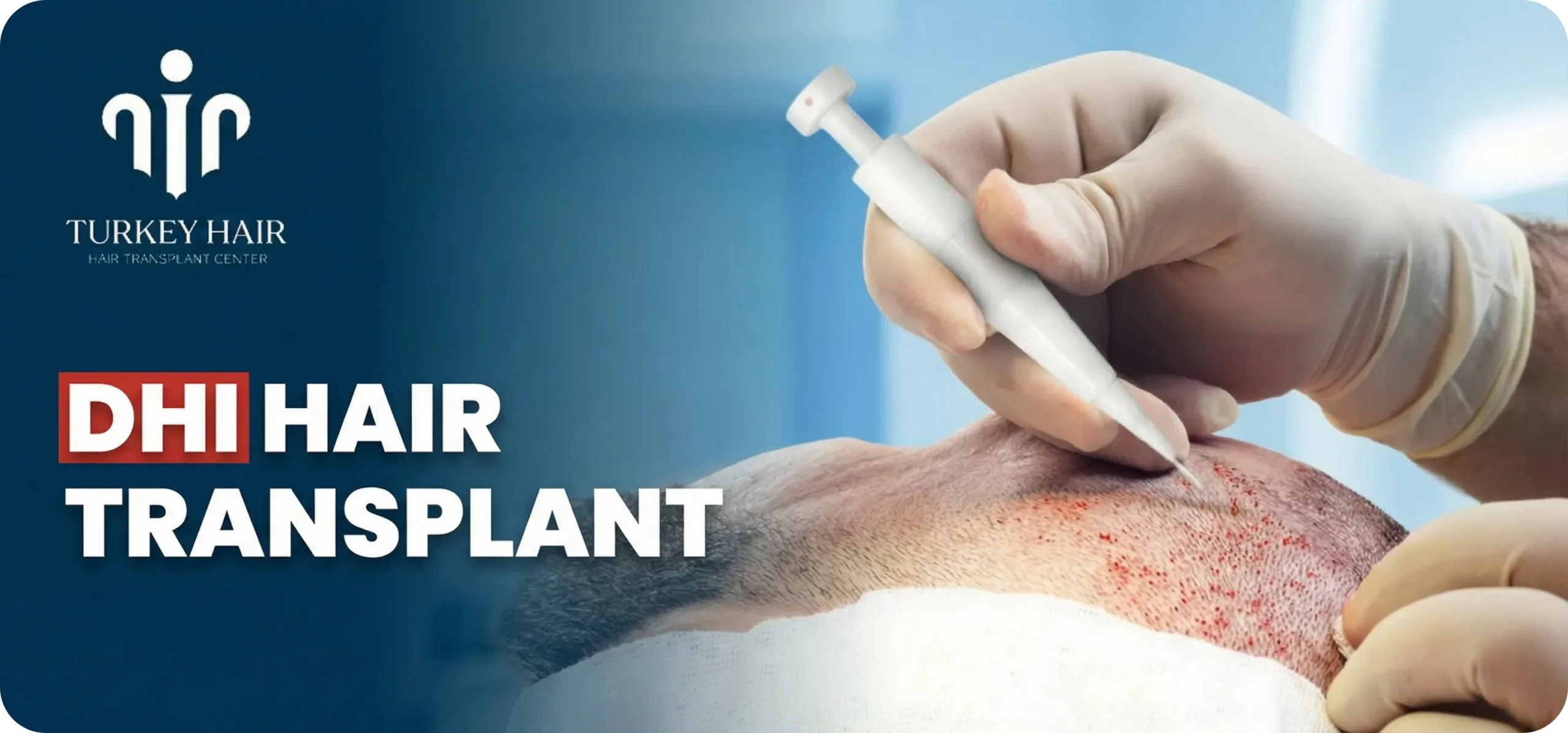
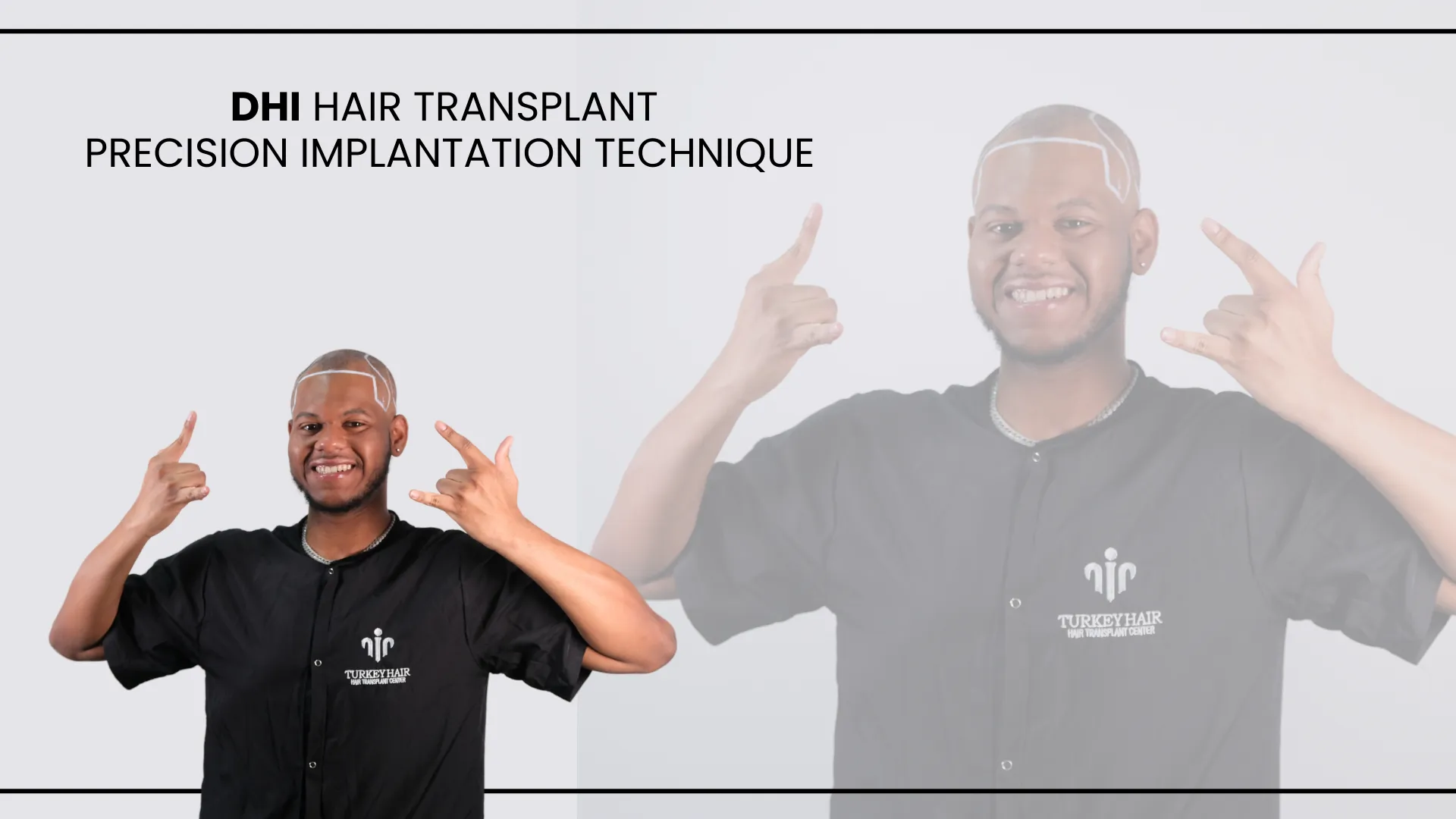
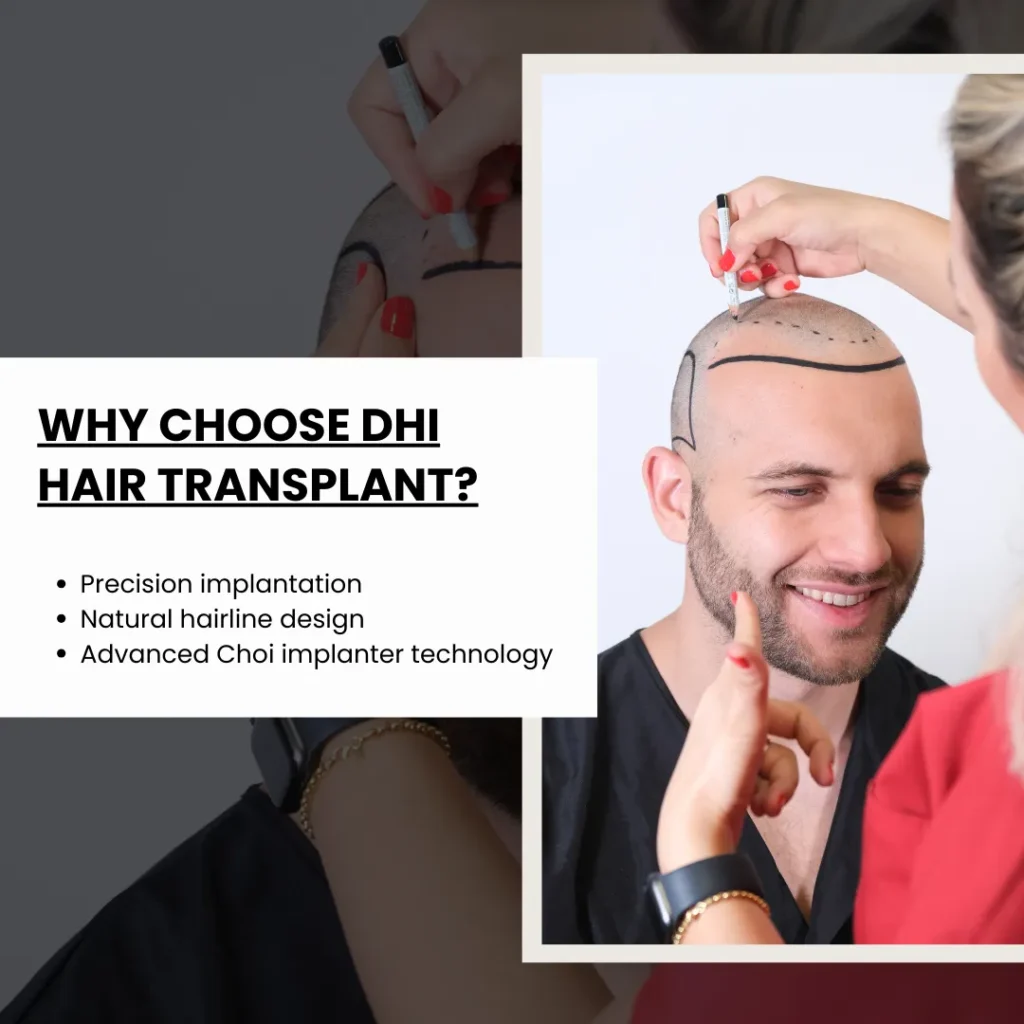
With the help of a trained surgeon and the latest insertion technology, Turkey’s DHI hair transplant gives the surgeon fine control over how thick and where your hair grows. With the Choi implanter pen devices, you can change the spacing, depth, and angle of the graft. At Turkey Hair Center, DHI is performed by licensed medical teams at authorized partner hospitals, and the plan for your case is set after a medical assessment.
Short answer
DHI (Direct Hair Implantation) is a hair transplant in which each graft, extracted with the FUE method, is loaded into a Choi implanter pen and placed directly into the scalp without pre-opened channels. It is often chosen for a dense hairline or treatment without full shaving. With us it is the all-inclusive DHI Comfort Package at $3,350, done in a single 6-8 hour session under local anesthesia.
Judge DHI hair transplant before and after pictures at about 12 months, not in the first weeks, and ask for cases at your hair loss stage. Our DHI is done by hand, so these are not robotic DHI hair transplant before and after photos. More cases are in our before and after gallery. Photos of famous hairlines call for the same caution; see our Henry Cavill hairline analysis.
DHI vs FUE Results
In DHI vs FUE hair transplant results, the final look depends mostly on hairline design and graft placement, not on the tool.
How Long Do Results Take?
The mature result usually shows at about 12 months; the crown can keep improving until month 15-18.
How DHI Hair Grows Over Time
DHI hair transplant results month by month: shock loss around month 1, early growth from month 3 and noticeable density around month 6 (see our month-by-month growth guide).
Can DHI Help with Receding Hairlines?
Often, yes. The hairline and temples are where control over angle and direction matters most; our hairline transplant cost guide gives typical graft ranges.
What Is DHI Hair Transplant?
DHI (Direct Hair Implantation) is an advanced implantation technique, not a separate extraction method.
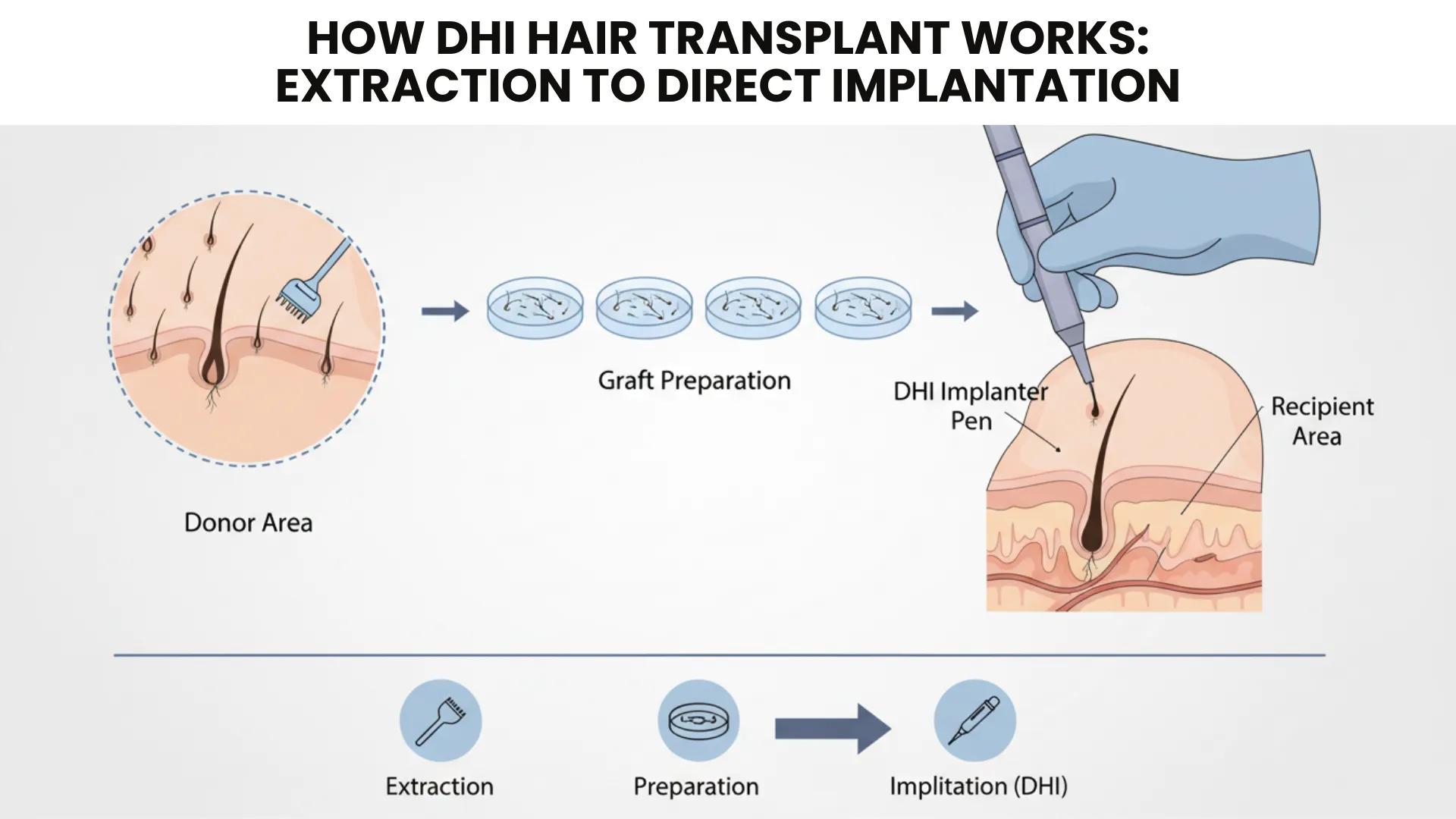
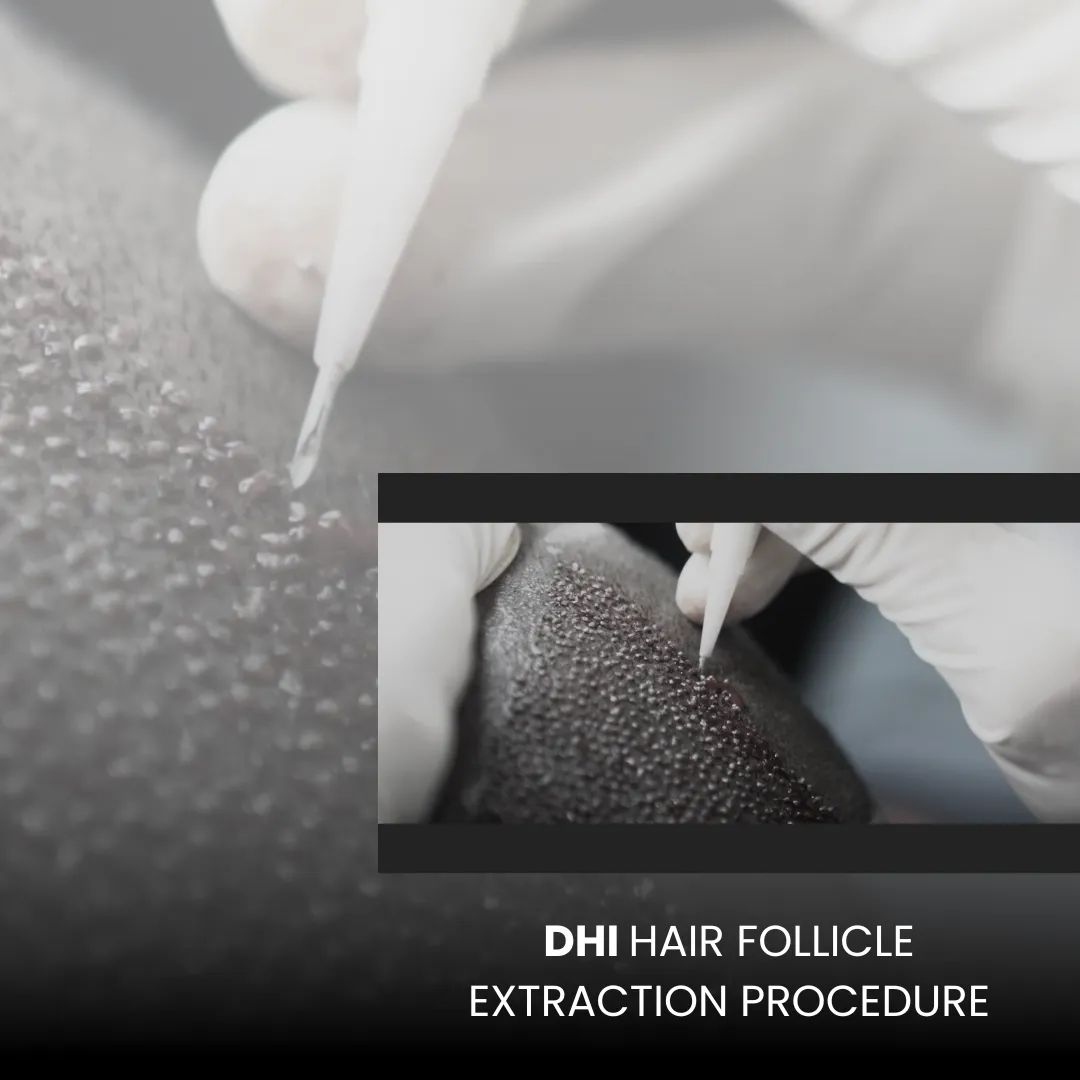
In most cases, hair follicles are first extracted using the FUE method, and then implanted directly into the scalp with a specialized implanter pen.
Direct Hair Implantation
What is robotic DHI hair transplant? A machine-assisted version; at Turkey Hair Center DHI is done by hand. What is long DHI hair transplant? DHI without cutting the existing hair short, which is possible only in some cases (see no-shave hair transplant).
Who Is a Good Candidate for DHI Hair Transplant?
DHI hair transplant is an advanced technique and an alternative to traditional FUE methods, often preferred in specific cases requiring higher precision and density.
Who Can Get a DHI Hair Transplant?
Men and women who want little or no shaving of the recipient area
Moderate hair loss or hairline refinement: hairline, temples or crown
Very large bald areas are often better planned with FUE. Suitability is confirmed in the medical assessment; unsure of your stage? Take the free Norwood test.
FUE vs DHI Hair Transplant: Which Is Better?
DHI hair transplant vs FUE: both extract grafts one by one from the donor area; the difference is implantation. FUE hair transplant opens all recipient channels first, while DHI places each graft directly with an implanter pen.
FUE
DHI
Channels
Opened before implantation
Pen places the graft directly
Shaving
Usually shaved
Partial or no shaving in some cases
Session speed
Faster for large graft counts
Slower, more time per graft
Choi Pen Hair Transplant
A Choi pen hair transplant is DHI done with the Choi implanter pen, a hollow needle that places each graft at the planned angle, depth and direction. The pen is the tool and DHI the method; the surgeon matters more than the pen brand.
DHI Method Hair Transplant
In the DHI method hair transplant, extraction is the same as in FUE. The pen then opens the site and places the graft in one move, with no pre-opened channels, so each graft takes longer.
Is DHI Better Than FUE?
Not in every case. DHI gives more control at the hairline and needs less shaving, but it is slower and usually costs more. For large bald areas FUE is often more efficient.
DHI Technique
The DHI technique is teamwork: assistants load the pens while the surgeon sets the angle and direction of every graft by hand, so experience shows in density and naturalness.
DHI hair transplant vs Sapphire FUE: Sapphire FUE opens channels with sapphire blades and is sometimes combined with DHI at the hairline (see Sapphire FUE vs DHI). DHI hair transplant vs FUT: FUT removes a strip of scalp and leaves a linear scar. Robotic DHI hair transplant vs FUE: machines add cost, often without a better-looking result than a skilled hand.
How Does DHI Hair Transplant Work?
What Is DHI and How It Works
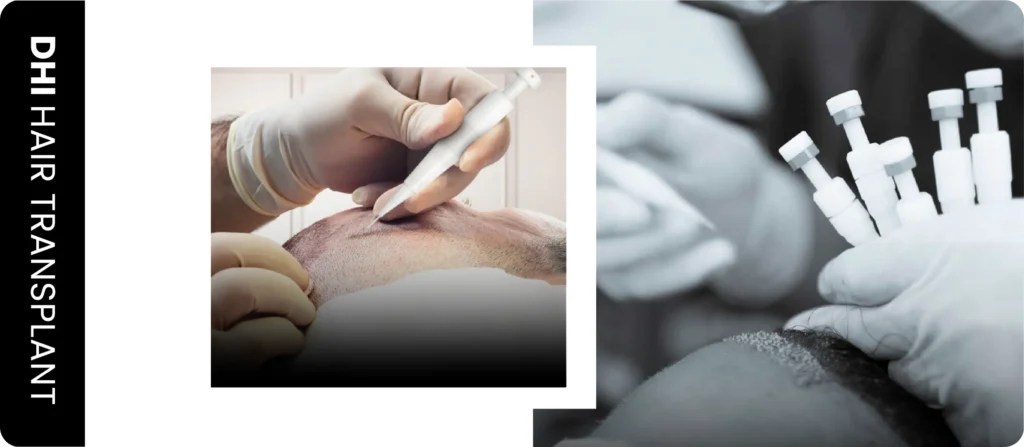
Direct Hair Implantation (DHI) is a technique where extracted hair follicles are implanted directly into the scalp using a specialized implant pen, without creating prior incisions or channels.
What to Expect on Treatment Day
For a DHI hair transplant, Istanbul is where you stay for 2-3 nights, with VIP transfers between the hotel and the partner hospital. On the day: blood tests, hairline design with the surgeon, then local anesthesia with sedation support. The next day the team checks the grafts and removes the dressing.
Dhi Hair Transplant Procedure
How Long Does the Process Take?
How long does DHI hair transplant take? Usually one session of about 6-8 hours, often longer than FUE for the same graft count, because each graft is loaded and placed one by one.
DHI Hair Transplant Donor Area
DHI grafts come from the donor area at the back and sides of the scalp, which is usually resistant to pattern hair loss. Your donor density sets how many grafts can be taken safely.
Dhi Hair Transplant Why Choose
There is no fixed figure for DHI hair transplant maximum grafts: donor capacity and session time set the limit. For a DHI hair transplant, 4000 grafts is possible but long, so for large areas the team may plan a combined Sapphire FUE + DHI hair transplant (see our 4000 grafts cost guide).
DHI Hair Transplant Cost in Turkey
Our all-inclusive DHI Comfort Package is $3,350, a fixed package price rather than a per-graft bill.
DHI Prices: Turkey vs the USA, UK and Europe
Country
3,000 grafts (approx.)
5,000 grafts (approx.)
USA
$8,000 - $15,000+
$12,000 - $22,000+
United Kingdom
£6,000 - £12,000+
£9,000 - £18,000+
Western / Central Europe
€6,500 - €12,000
€9,000 - €18,000
Turkey (DHI Comfort Package)
$3,350 fixed package
Planned after assessment
How DHI Compares in Cost to Other Methods
DHI is frequently more expensive than FUE, despite the fact that it does not always produce better outcomes in cases of extensive or advanced hair loss.
Robotic DHI hair transplant cost is higher again, because the machine overhead is passed on to the patient (see our hair transplant cost guide).
What Does “1 DHI” Mean in Pricing?
“1 DHI” is not a standard unit. Ask whether a quote means one session, one graft or a full package, and how many grafts are planned.
Our DHI hair transplant Turkey packages come down to one, so the DHI hair transplant Turkey cost is known in advance. The DHI Comfort Package includes sedation-supported DHI, blood tests, PRP and exosome therapy, 2 hotel nights, VIP transfers, an interpreter, the next-day check-up and 2 years of aftercare consultation; flights are not included (see treatments and packages).
DHI Hair Transplant Recovery
Most patients recover physically within 10-14 days and return to desk work in 2-5 days. Does DHI hair transplant heal faster? Slightly: redness and scabbing usually settle in 5-10 days, compared with 7-14 days after FUE.
How Long Is Recovery?
How long does DHI hair transplant take to heal? The recipient area usually settles within 10-14 days. DHI hair transplant donor area recovery is the same as after FUE: red on day 1, much calmer by week 2.
Sleep with your head raised in the first nights to limit swelling
Do not touch or scratch the grafts; let scabs fall away on their own
Gym usually from week 2-4, weight lifting from week 3-4, swimming and sauna around month 1
Is DHI Hair Transplant Permanent?
How long does DHI hair transplant last? The transplanted hair is usually long-lasting, because the grafts come from the donor area, which is usually resistant to pattern hair loss. Your non-transplanted hair can still thin over time, which is why some patients use medication to protect it.
DHI Hair Transplant Risks
DHI is minimally invasive, but it is still surgery. Most DHI hair transplant side effects are mild and temporary.
Negative Reaction to Anesthesia (Very Rare)
Allergy to the local anesthetic (lidocaine) is rare. A medical history and allergy review before surgery lowers the risk.
Infection (Rare)
Infection is rare with sterile technique and correct hygiene. Report redness, persistent pain, pus or fever to the medical team at once.
Shock Loss (Telogen Effluvium)
Temporary shedding of transplanted and native hair in weeks 2-6 is a normal reaction to surgery. Regrowth usually begins around month 3-4.
Undesired Appearance
Unnatural-looking DHI results are usually not related to the technique itself, but to errors in planning and surgical execution.
Other Complications
Mild numbness in the donor or recipient area is common for the first 2-6 weeks and usually fades on its own. Small pimple-like bumps (folliculitis) can appear during regrowth and are usually treated with topical antiseptics.
Medical note This list does not replace personal medical advice. The partner hospital's medical team reviews your health history before surgery; patients with bleeding disorders, uncontrolled diabetes, severe heart conditions or an active scalp infection may not be suitable.
Is DHI Hair Transplant Safe?
Is DHI hair transplant safe? It is minimally invasive, but safety depends on the medical assessment, sterile technique and aftercare. Can DHI hair transplant fail? Grafts can be damaged by poor loading or overly dense placement, so planning matters (see our hair transplant side effects guide).
DHI Hair Transplant Reviews
DHI hair transplant Turkey reviews are most useful on independent platforms, ideally with photos taken about 12 months after surgery. Our patients review us on Google, Trustpilot, Bookimed and ProvenExpert (links on our review page), and we do not pay for reviews. Long DHI hair transplant reviews describe unshaven cases; robotic DHI hair transplant reviews describe machine-assisted clinics.
What to Look for in a Surgeon
There is no single best DHI hair transplant in Turkey for everyone. At any DHI clinic, ask who performs each step, how the hairline is designed and how many DHI cases the team has done. In a DHI hair transplant clinic in Turkey, the surgeon's hand matters more than the pen.
TrustScore 4.1 out of 5 on Trustpilot, based on 5 reviews (checked 11.10.2026).
★★★★★
Turkey hair center was an amazing experience. They took care of me from the moment I landed all the way until my flight back home. They do top tier work and I would highly recommend them to anyone looking for this service!
★★★★★
I had my hair transplant about a month ago and so far the progress/recovery is going super well and ahead of schedule. The doctor and nurses from the clinic were super friendly and knowledgeable. They made me feel comfortable and confident i made the right decision to go with them. Also the food that they serve me half way through the procedure was amazinggggg.
★★★★★
This experience was great the Doctor and Staff were very professional and the BEST! Highly recommend if you want to goto the best hair transplant center to get your hair transplant! This is me after little before 3 months!
★★★★★
my experience at turkey hair transplant centre was really good and the doctors made me feel vert welcome, i am happy with my results at the moment and would definitely recommend it to others
DHI Hair Transplant FAQ
Is DHI Hair Transplant Painful?
DHI is done under local anesthesia, so most patients mainly feel the anesthetic injections at the start; the discomfort is comparable to FUE. Sedation support is included in the DHI Comfort Package. Mild soreness, swelling and itching in the first days are common and usually settle on their own.
Is DHI Hair Transplant Good?
For the right case, yes. DHI suits the hairline, the temples, thinning between existing hair and cases with little or no shaving. It is slower and usually costs more than FUE, so it is rarely the first choice for large bald areas. The medical team confirms suitability from your photos.
How Long After DHI Hair Transplant Can I Workout?
Light walking is usually fine after a few days. Gym workouts usually resume from week 2-4 and weight lifting from week 3-4, with swimming and sauna around month 1. Heavy exercise raises blood pressure and sweating, which can irritate healing grafts, so wait for your team's clearance.
How Much Is DHI Hair Transplant in Turkey?
With us, DHI is the all-inclusive DHI Comfort Package at $3,350. It covers the operation with sedation support, blood tests, PRP and exosome therapy, 2 hotel nights, VIP transfers, an interpreter, the next-day check-up and 2 years of aftercare consultation. Flights are not included.
Does DHI Hair Transplant Leave Scars?
DHI does not leave a linear scar, because the grafts are extracted one by one with the FUE method. Like any FUE extraction, it leaves tiny dots in the donor area, which are usually hard to see once the hair grows a little and the extractions are well spaced.
Does DHI Hair Transplant Require Shaving?
Not always. The recipient area can often stay unshaven or be partly shaved, which is why DHI is chosen for discreet treatment. Fully unshaven surgery is not possible in every case: it depends on hair density, donor quality and graft count, as the medical team will explain.
Who Does DHI Hair Transplant?
DHI is performed by licensed medical teams at authorized partner hospitals in Istanbul. Turkey Hair Center is a Ministry of Health authorized health-tourism intermediary, not a clinic: we plan your case with the medical team, arrange the hospital, hotel and transfers, and stay in touch through 2 years of aftercare.
Is DHI Hair Transplant Worth It?
It can be, if your goal is a dense hairline or treatment with little shaving. The DHI Comfort Package is $3,350 all-inclusive, against the $8,000-15,000+ USA range for about 3,000 grafts shown above. For large bald areas, FUE often covers more ground for the price.
Is DHI Hair Transplant Better?
Better than FUE only in certain cases. DHI gives finer control over angle and direction at the hairline and between existing hair, while FUE is faster for large graft counts. The result depends more on planning and the team's skill than on the method.
When Did DHI Hair Transplant Start?
There is no single agreed start date. Hair transplant implanters were already being studied in Korea in 2006 (Lee W, Dermatologic Surgery), and DHI was described as a modified FUE technique in a 2013 journal article (Sethi P, listed in the sources below).
Free DHI Hair Transplant Assessment
Planning DHI? Turkey Hair Center's medical team reviews your photos for free. Send three photos of your front, top and sides, and you will hear whether a DHI transplant suits you and your likely graft range, with no obligation: get your free hair analysis or ask us on WhatsApp.
Sources and medical review
The clinical statements on this page draw on the following published literature and professional body guidance:
Send three photos: front, top and sides. You get a technique recommendation, a graft range and a straight answer about what is achievable, before anyone talks about price.
Your details are with the team
A patient coordinator will get back to you shortly. If you would like to send your photos now, WhatsApp is the fastest way to do it.
We respond quickly, day or night, in your language.
Multilingual team, no obligation
Data protectedKVKK and GDPR compliant, 100% confidential
Authorized Health Tourism Intermediary
Turkey Hair Center is the hair-restoration brand of Healthy Way Tourism, an authorized international health-tourism intermediary. All medical procedures are performed by licensed medical professionals at authorized healthcare facilities in Turkiye, in accordance with the regulations of the Ministry of Health.