Performed at authorized partner hospitals Turkey Hair Center is a Ministry of Health authorized health-tourism intermediary, not a clinic.
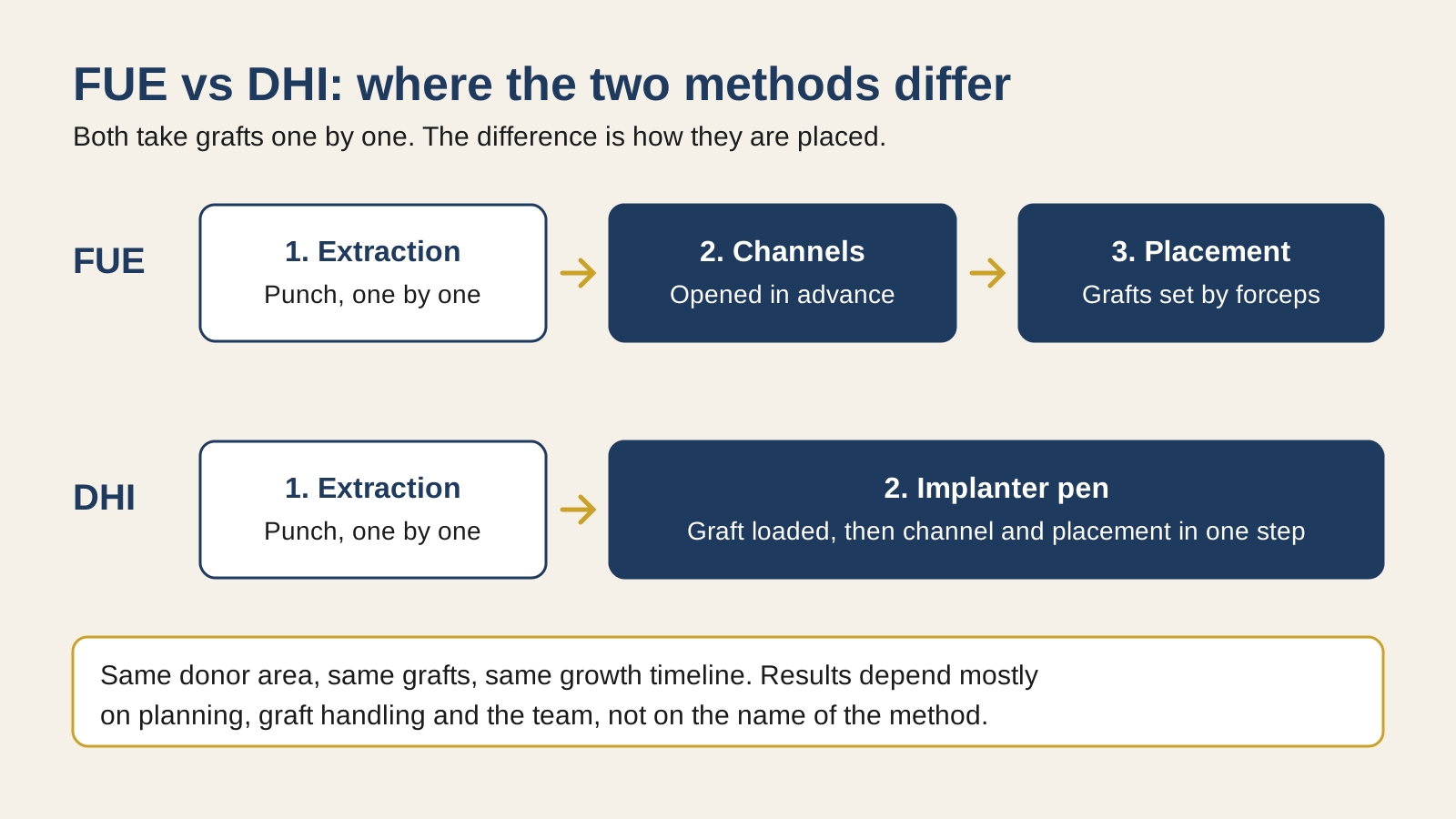
FUE and DHI are two ways of doing the same kind of hair transplant. In both, grafts are taken one by one from the back of the head. The difference is in how they are put into the thinning area: FUE places them into small channels opened beforehand, while DHI loads each graft into an implanter pen that opens the channel and places the graft in one step.
So the real FUE vs DHI question is not which method grows more hair, but which placement suits your hair, your plan and the team doing the work. This guide compares the two side by side, covers results and recovery, and explains what the evidence can and cannot tell you.
What Is FUE and DHI Hair Transplant?
FUE stands for follicular unit excision, previously called extraction. The International Society of Hair Restoration Surgery describes it as removing individual follicular units, natural groups of 1 to 4 hairs, with micro punches of about 0.7 to 1.2 mm. The grafts are then placed into small channels in the area that needs hair, usually with fine forceps. Our FUE hair transplant page explains the full process.
DHI stands for direct hair implantation. The grafts are taken with the same FUE method, then loaded into an implanter pen, most often the Choi implanter. The surgeon presses the pen into the skin at the chosen angle and depth, and a plunger pushes the graft in. Our DHI hair transplant page describes how it is done.
Difference Between DHI and FUE
According to a review of recipient area techniques, implanters were invented in the 1990s to reduce handling of the graft and contact with the scalp. The main differences come from that design:
Channel opening: FUE channels are usually made in advance; with DHI each channel is made as the graft goes in.
Graft handling: an implanter means less handling of the graft, while forceps placement needs more direct handling.
Working between existing hairs: the same review notes that implanters are easy to use between existing hairs, which is why DHI is often chosen when the area is not fully bald.
Team and time: implanters must be loaded by trained staff, and only one surgeon implants at a time.
Cost of tools: implanters are disposable, which adds cost.
At a Glance
FUE
DHI
How grafts are taken
One by one with a micro punch
One by one with a micro punch
How grafts are placed
Into channels opened beforehand, with forceps
With an implanter pen, channel and placement in one step
Angle and depth
Set when channels are made
Set with each graft
Shaving
Donor area usually shaved
Donor area usually shaved; recipient area can sometimes stay longer
Practical strength
Team can share placement
Easy to use between existing hairs
Growth timeline
Results seen at 6 to 9 months, sometimes 12
Same
What Is Better DHI or FUE?
Neither is better for everyone. Our search of the medical literature found no randomized trial that compares the final results of DHI and FUE head to head, so claims that one gives more density or better graft survival are not backed by direct comparison.
What decides the outcome is the same in both methods. The American Academy of Dermatology states that results depend largely on the surgeon you select. A good plan also needs two things according to the AAD: enough healthy donor hair, and the ability to grow hair in the thinning area.
When the medical team suggests one method over the other, it usually comes down to:
The area: a hairline or a thinning area between existing hairs often suits an implanter.
The size of the session: the review notes that opening channels first reduces the surgeon's share of the placement work, which helps in large sessions.
The hair: hair type, density and the angle of the native hair affect the choice.
Your preference: for example, how much of the recipient area can be shaved.
FUE vs DHI Results
Both methods follow the same growth pattern, because the hair grows from the same follicles. The AAD describes it as follows:
Weeks 2 to 8: the transplanted hairs fall out. This is normal.
Around month 3: the area may look thinner than before the surgery.
Months 6 to 9: most patients see the results.
Month 12: some patients need a full year.
FUE vs DHI results therefore look alike on the calendar. Differences in the final look come from hairline design, graft placement, angle and density, and from whether hair loss keeps progressing around the grafts. The AAD notes that medicine can help, because hair loss can continue after a transplant.
Hair transplant is surgery, whatever the method is called. A 2026 review of FUE complications lists pain, swelling, bleeding and infection, as well as donor area problems such as scarring and over-harvesting. Careful patient selection and technique reduce these risks; a method name alone does not.
DHI vs FUE for Fast Results
Neither method makes hair grow faster. The growth timeline above applies to both, because it depends on the hair cycle, not on the tool used to place the graft.
What can differ is the day of surgery. The AAD says a transplant usually takes 4 to 8 hours. With DHI, only one surgeon implants at a time, which the recipient area review notes can make it slower until the surgeon has experience. With FUE, channels can be opened first and grafts placed by the team afterwards.
Frequently Asked Questions
Is DHI the Same as FUE?
Not exactly. DHI uses FUE to take the grafts, so the donor side is the same. The difference is the placement: DHI uses an implanter pen, while classic FUE places grafts into channels opened in advance.
Which Is Less Painful, FUE or DHI?
Both are done under local anaesthesia, and the AAD notes that most patients stay awake with a numbed scalp. We found no reliable comparison showing that one hurts less, and the donor side is the same in both.
Does DHI Need Shaving?
The donor area is usually trimmed for extraction in both methods. Because an implanter can place grafts between existing hairs, the recipient area can sometimes stay longer with DHI. Whether that is possible depends on density and graft count.
Is DHI Better for the Hairline?
DHI is often chosen for hairlines because the implanter sets the angle and depth of each graft. Good hairlines are also made with FUE. The design of the line matters more than the tool; see our guide to hairline transplant cost for planning.
How Much Does 3,000 Grafts Cost With FUE or DHI?
At Turkey Hair Center, all-inclusive packages range from $2,550 to $4,500, and each package lists what it includes. The 3,000 grafts page explains what that graft count usually covers, and the hair transplant cost page compares the packages. Turkey Hair Center is a Ministry of Health authorized health-tourism intermediary; procedures take place at authorized partner hospitals.
What About Sapphire FUE?
Sapphire FUE is a type of FUE in which the channels are opened with sapphire blades instead of steel. The grafts are still taken one by one, and the growth timeline is the same. Our sapphire hair transplant page explains it in more detail.
Not Sure Which Method Fits?
The right method depends on your donor area, the size of the thinning area and your hairline. Send front, top and back photos for a free hair analysis, and the medical team will explain whether FUE or DHI suits your plan and how many grafts it would need.
Medical disclaimer: This article is for informational purposes only and is not medical advice. Individual results and recovery vary from person to person. Always follow the written aftercare plan from your own medical team.
Marwah MK, Mysore V. Recipient area. Journal of Cutaneous and Aesthetic Surgery, 2018;11(4):202-210
Park JH, Ho YH, Manonukul K. A practical guide to hair graft placement using the sharp implanter method. Clinical, Cosmetic and Investigational Dermatology, 2023;16:1777-1785
Send three photos: front, top and sides. You get a technique recommendation, a graft range and a straight answer about what is achievable, before anyone talks about price.
Your details are with the team
A patient coordinator will get back to you shortly. If you would like to send your photos now, WhatsApp is the fastest way to do it.
We respond quickly, day or night, in your language.
Multilingual team, no obligation
Data protectedKVKK and GDPR compliant, 100% confidential
Authorized Health Tourism Intermediary
Turkey Hair Center is the hair-restoration brand of Healthy Way Tourism, an authorized international health-tourism intermediary. All medical procedures are performed by licensed medical professionals at authorized healthcare facilities in Turkiye, in accordance with the regulations of the Ministry of Health.