Performed at authorized partner hospitals Turkey Hair Center is a Ministry of Health authorized health-tourism intermediary, not a clinic.
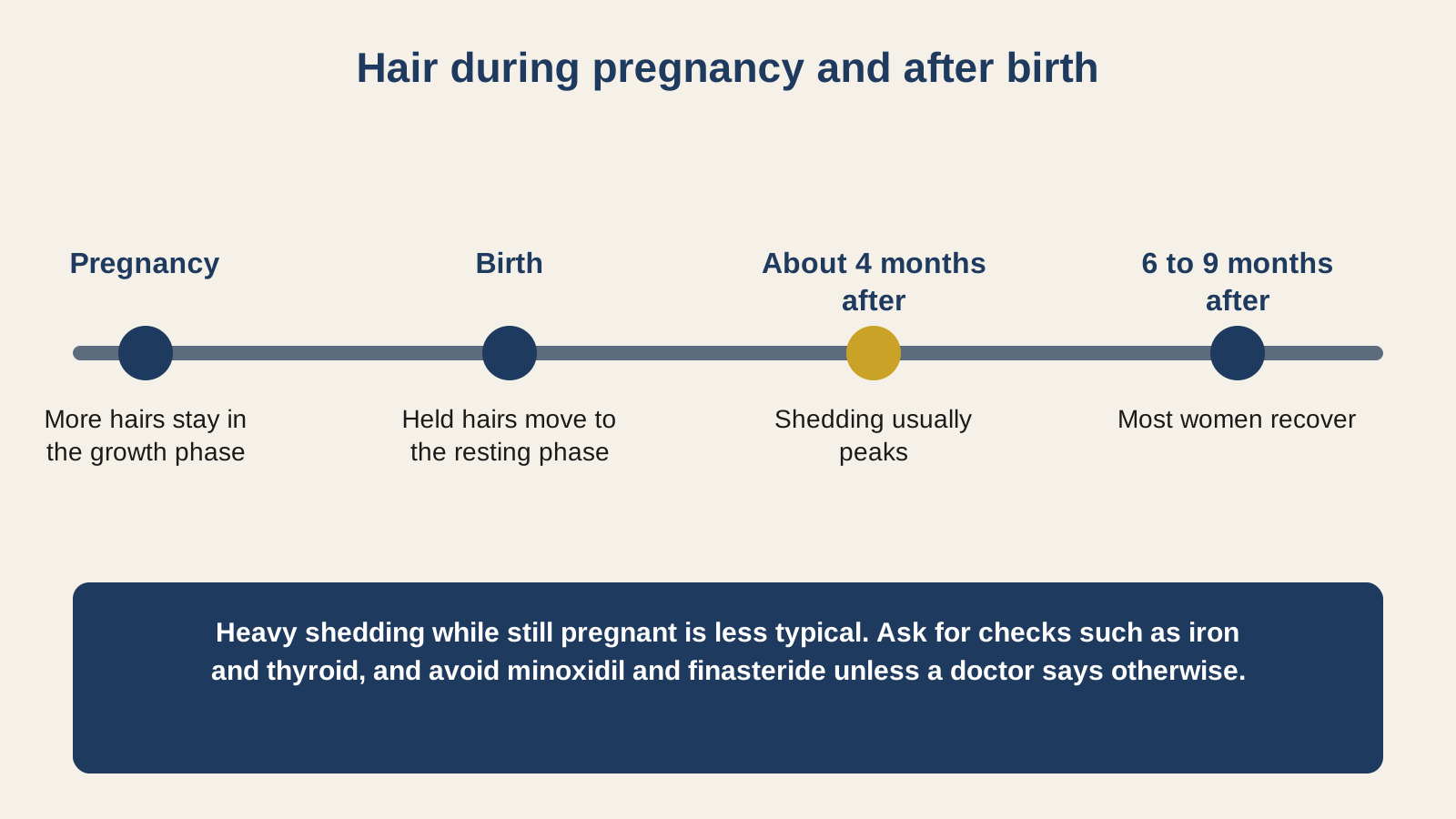
Hair loss during pregnancy is less common than hair loss after it. Pregnancy usually keeps more hairs in the growth phase, so many women notice thicker hair; heavy shedding while still pregnant points to another cause, such as low iron, a thyroid problem or a recent illness, and is worth checking.
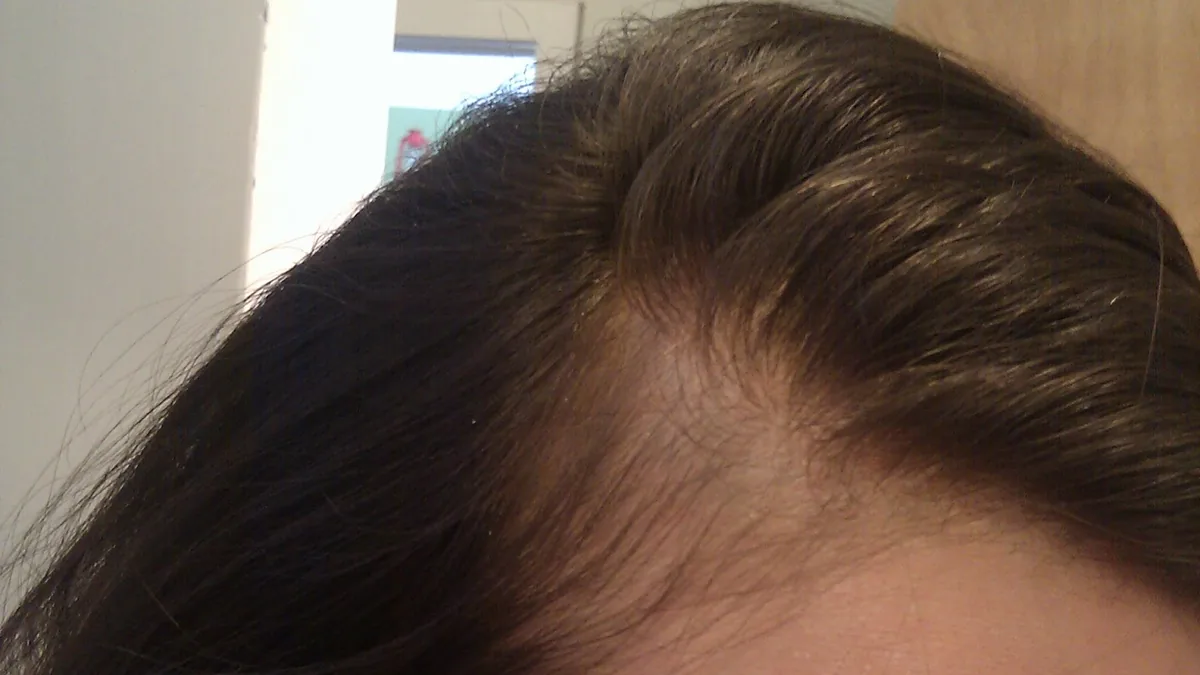
Postpartum telogen effluvium, the shedding that follows a birth, showing as thinning at the temple. Photo: Mvolz, CC0, via Wikimedia Commons, cropped.
This guide covers what causes hair loss during pregnancy, which treatments are considered safe and which to avoid, and how long it lasts. It focuses on the months before birth. The shedding that peaks a few months after delivery is covered in our postpartum hair loss guide.
This photo was taken after a birth, when shedding is at its most common. A milder recession at the temples can also appear in late pregnancy, as the review cited below describes.
What Deficiency Causes Hair Loss During Pregnancy?
Iron deficiency is the main one to rule out. The NHS lists pregnancy among the common causes of iron deficiency anaemia, and hair loss among its less common symptoms. Tiredness, shortness of breath and a pale look are more typical signs.
Thyroid problems are the other key check. The NHS lists dry hair or hair loss among the symptoms of an underactive thyroid and advises telling your GP if you have the condition and are pregnant or planning a pregnancy. Both causes of hair loss during pregnancy can be found with routine blood tests through your maternity team.
What Causes Hair Loss During Pregnancy Boy or Girl?
We found no study showing that the baby's sex affects the mother's hair. Hair changes in pregnancy are explained by the growth cycle, nutrition and health conditions, and they happen with boys and girls alike.
What Hormone Causes Hair Loss During Pregnancy?
Pregnancy hormones usually do the opposite: a 2022 review in the Journal of Clinical and Aesthetic Dermatology describes elongation of the growth (anagen) phase during pregnancy. The shedding tends to come later: the AAD says a new mother can see excessive shedding about two months after giving birth. Some women do notice mild recession at the temples or even thinning in late pregnancy, which the same review describes.
Is Hair Loss a Sign of Early Pregnancy?
No. The NHS list of early pregnancy signs includes a missed period, nausea, tiredness, sore breasts and needing to pee more often, but not hair loss. So hair loss early pregnancy symptoms are not a recognised way to tell whether you are pregnant. If you notice hair loss as one of your first pregnancy symptoms, it is more likely to come from something that happened a few months earlier, such as an illness, a stressful event or stopping the contraceptive pill.
Treatment for Hair Loss During Pregnancy
Hair loss during pregnancy treatment starts with finding the cause. If blood tests show low iron or a thyroid problem, your maternity team will treat it, and the shedding usually improves once the cause is corrected.
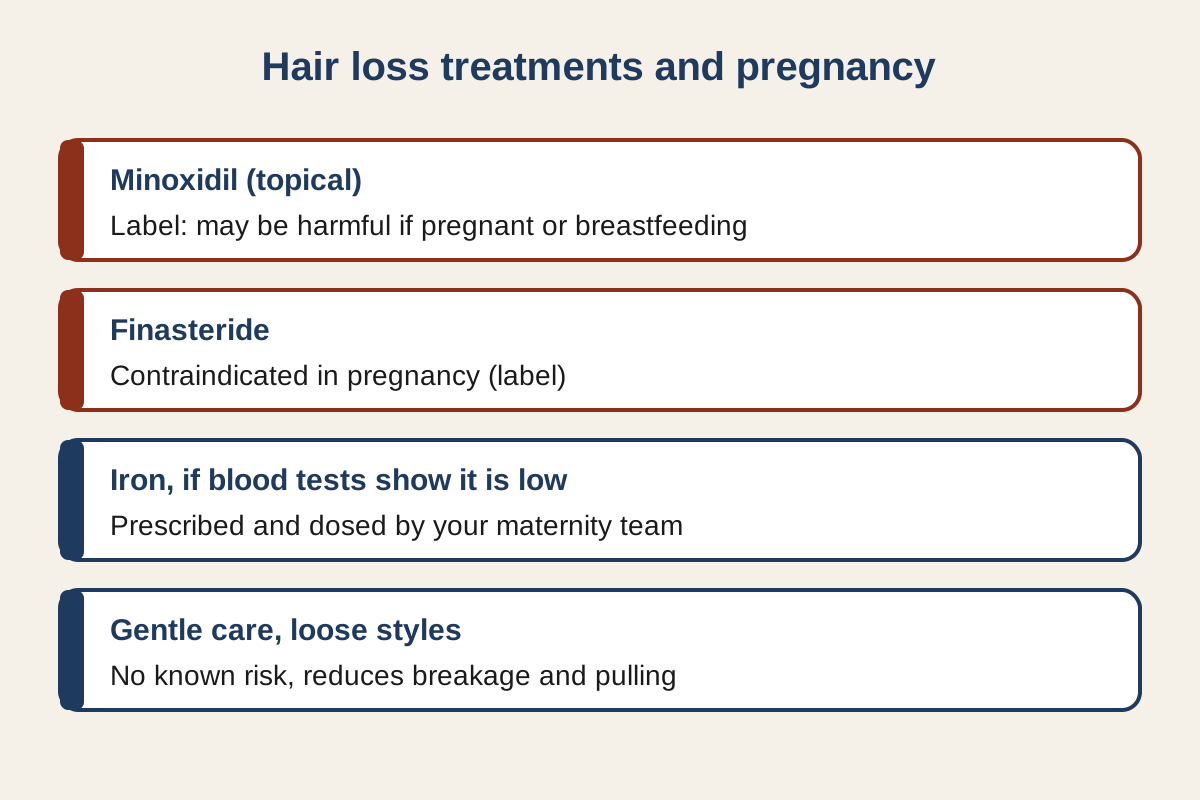
Most hair loss medicines are not used in pregnancy:
Minoxidil: the women's Rogaine label says it may be harmful if used when pregnant or breast-feeding, and the 2022 review advises avoiding it.
Finasteride: the Propecia label contraindicates it in women who are or may become pregnant, and says they should not handle crushed or broken tablets.
Supplements: take iron or other supplements only as advised by your midwife or doctor, at the amount they set.
Do not start any hair loss medicine, serum or supplement during pregnancy without asking your midwife or doctor first. If you already use one and find out you are pregnant, tell them straight away rather than deciding alone.
Home Remedies for Hair Loss During Pregnancy
Searches for hair fall during pregnancy home remedies often mix in advice meant for after the birth. During pregnancy, the safest home care is gentle. The American Academy of Dermatology (AAD) recommends:
using conditioner after washing your hair;
detangling wet hair with a wide-tooth comb instead of a brush;
wearing loose styles, because hair pulled tightly back over time can cause permanent loss.
Not usually during the pregnancy itself. The AAD describes shedding after giving birth as normal and temporary; heavy shedding before the birth is not typical and has other causes to rule out.
When looking for a hair loss treatment safe during pregnancy, check the ingredients of any serum or "growth" product, not just its marketing. Products with minoxidil carry the pregnancy warning above. For other ingredients, there is often little safety data in pregnancy, so the 2022 review advises choosing hair products carefully. Show the label to your midwife or pharmacist before using it.
Option
Pregnancy status
Source
Topical minoxidil
Label: may be harmful if pregnant or breast-feeding
Women's Rogaine label
Finasteride
Contraindicated in women who are or may become pregnant
Propecia label
Iron
Only if blood tests show a deficiency, as prescribed
NHS
Conditioner, loose styles
Gentle care with no known risk
AAD
How Long Does Pregnancy Hair Loss Last?
It depends on the cause. Shedding from a trigger such as an illness, known as telogen effluvium, typically lasts less than six months, according to a 2020 review in Cureus. Shedding from iron deficiency or a thyroid problem improves after treatment.
People also ask about hair loss after pregnancy and how long it lasts. The AAD says postpartum shedding usually peaks about four months after giving birth, and that hair tends to regain its normal fullness within six to nine months.
Does Hair Loss During Pregnancy Grow Back?
Usually, yes, because most shedding does not damage the follicle. The 2022 review notes one exception: mild recession at the temples that starts during pregnancy may not grow back fully after delivery.
Does Hair Loss Stop During Pregnancy?
For many women, normal daily shedding drops during pregnancy because more hairs stay in the growth phase. The AAD says shedding 50 to 100 hairs a day is normal. If you shed clearly more than that for weeks while pregnant, ask your maternity team for blood tests.
Hair Loss Early Pregnancy
Early pregnancy hair loss usually reflects something that happened before conception. Telogen effluvium shows two to three months after a trigger, so hair loss in early pregnancy can follow an illness, stress, weight loss or stopping the pill. The AAD lists stopping birth control pills among triggers of shedding; our guide on birth control and hair loss explains that link.
Frequently Asked Questions
Is Hair Loss Normal While Pregnant?
Some daily shedding is always normal, around 50 to 100 hairs according to the AAD. Heavy hair loss while pregnant is less typical, because pregnancy usually keeps hair in the growth phase. If shedding is clearly increased, ask your midwife or doctor to check iron and thyroid levels.
Why Is My Hair Falling Out So Much During Pregnancy?
Common reasons include low iron, a thyroid problem, a recent illness or fever, or a stressful event two to three months earlier. Tight hairstyles can add breakage. Blood tests through your maternity team can find treatable causes, so mention it at your next appointment.
Why Is My Hair Falling Out in Early Pregnancy?
In early pregnancy, shedding usually reflects a trigger from the previous two to three months, such as stopping the pill, an illness or weight change. Hair loss is not on the NHS list of early pregnancy signs, so it is not caused by conception itself.
Is Hair Loss During Pregnancy Permanent?
Usually not. Shedding from illness, stress or a deficiency normally recovers once the cause is dealt with. The 2022 review notes that mild recession at the temples during pregnancy may not fully grow back, and pattern hair loss can become visible at the same time, so persistent thinning is worth a dermatology review.
Is Hair Loss During First Trimester Normal?
Increased shedding in the first trimester is not a typical pregnancy change. It is often the delayed result of an earlier trigger. Mention it to your midwife or doctor, who may check iron and thyroid function, and avoid starting hair loss products without their advice.
Can Hair Fall Out During Pregnancy?
Yes. Although many women notice thicker hair, hair can still fall out during pregnancy because of deficiencies, thyroid problems, illness, stress or tight styles. The 2022 review also describes thinning in late pregnancy in some women. Most of these causes are temporary or treatable.
Can You Experience Hair Loss During Pregnancy?
You can, though it is less common than after the birth. When it happens, the cause is usually something other than the pregnancy hormones, such as low iron or a thyroid problem. A blood test is the simplest first step.
Does Hair Growth Increase During Pregnancy?
In a sense, yes. Pregnancy lengthens the growth phase, so fewer hairs fall out and hair often feels thicker. The 2022 review also notes increased hair growth on the face and body in some pregnant women. These changes reverse after delivery.
Can Hair Loss Be Related to Other Reproductive Health Issues?
Yes. The NHS lists hair loss among the main symptoms of polyendocrine metabolic ovarian syndrome (PMOS), the condition that used to be called polycystic ovary syndrome (PCOS), alongside irregular periods, excess hair growth and difficulty getting pregnant. Stopping the contraceptive pill can also trigger shedding, according to the AAD. Talk to your GP, midwife or obstetrician if thinning comes with these signs.
Is It Safe to Dye Your Hair During Pregnancy?
The NHS says most research shows it is safe, because you are exposed to only very low amounts of the chemicals and the scalp absorbs little dye. You might decide to wait until after the first 12 weeks. Always do a strand test, wear gloves, leave the dye on for the minimum time and work in a well-ventilated room. Talk to your midwife or obstetrician if you are unsure.
Questions About Your Hair After Pregnancy?
If thinning continues long after your baby's first year, it may be a pattern that needs its own assessment. Send clear photos of your parting and hairline for a free hair analysis, and the medical team will tell you whether it looks like shedding or long-term thinning. Women's options are explained in our guide to hair transplant for women. Turkey Hair Center is a Ministry of Health authorized health-tourism intermediary; procedures take place at authorized partner hospitals.
Medical disclaimer: This article is for informational purposes only and is not medical advice. Individual results and recovery vary from person to person. Always follow the written aftercare plan from your own medical team.
Sources and medical review
Putra IB, Jusuf NK, Dewi NK. Skin changes and safety profile of topical products during pregnancy. Journal of Clinical and Aesthetic Dermatology, 2022;15(2):49-57
Send three photos: front, top and sides. You get a technique recommendation, a graft range and a straight answer about what is achievable, before anyone talks about price.
Your details are with the team
A patient coordinator will get back to you shortly. If you would like to send your photos now, WhatsApp is the fastest way to do it.
We respond quickly, day or night, in your language.
Multilingual team, no obligation
Data protectedKVKK and GDPR compliant, 100% confidential
Authorized Health Tourism Intermediary
Turkey Hair Center is the hair-restoration brand of Healthy Way Tourism, an authorized international health-tourism intermediary. All medical procedures are performed by licensed medical professionals at authorized healthcare facilities in Turkiye, in accordance with the regulations of the Ministry of Health.