Performed at authorized partner hospitals Turkey Hair Center is a Ministry of Health authorized health-tourism intermediary, not a clinic.
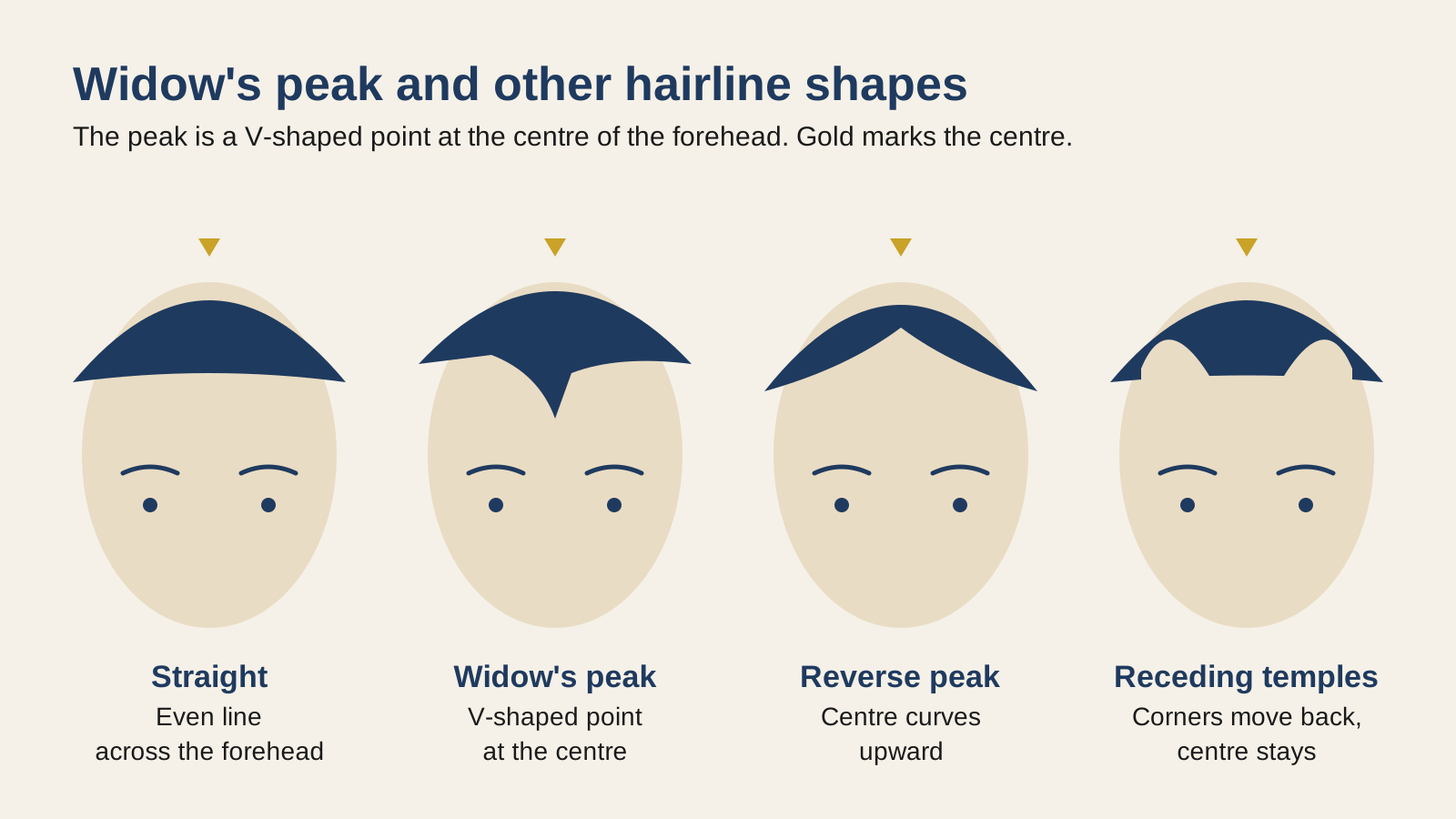
A widow's peak is a V-shaped point of hair at the centre of the forehead, where the hairline dips down instead of running straight across. It is a natural hairline shape, not a disease and not a sign of hair loss on its own.
This guide covers the widow's peak meaning, where the name comes from, what genetics can and cannot tell us, how it differs from a receding hairline, and what you can do if you dislike it. If you are looking for surgery to soften or create a peak, our widow's peak hair transplant page covers that separately.
What Is Widow Peak?
A widow peak hairline has a point in the middle of the forehead, with the hairline rising on both sides of it. The point can be sharp and obvious or so slight that it only shows when the hair is pulled back.
There is no agreed measurement for how pointed a hairline must be to count. That is why estimates of how common it is vary so widely, as the section on rarity below shows.
Widow's Peak on a Man
On a man, a widow's peak can be lifelong or can appear to grow over time. The second case is usually not a new peak at all. When the temples recede with male pattern hair loss, the middle of the hairline is often left further forward, so the centre looks more pointed than before. A geneticist who reviewed the evidence noted that this makes it hard to tell a receding hairline from a true widow's peak in adult men.
Why Is It Called a Widow's Peak?
The name comes from mourning dress. Widows in earlier centuries wore a hood or cap with a pointed piece over the middle of the forehead, and a hairline with the same point was said to resemble it. A folk belief linked the shape with early widowhood, which gave the hairline its name. The expression widow's peak is recorded from 1849.
The name carries no medical meaning. It does not predict anything about a person's health, relationships or future.
Widow's Peak Female
Women can have a widow's peak too, and in one study it was very common. When researchers examined the hairlines of 360 women in a salon setting, they recorded a widow's peak in 81% of them. The same study measured the rest of the female hairline too, and it was written to guide hairline design in women.
Widow's Peak Genetics
School textbooks often use the widow's peak as an example of a single dominant gene. There is no evidence for this. A University of Delaware geneticist who searched the literature found no family or twin studies of widow's peak in the general population, and concluded that its genetic basis is unknown.
What is documented is a link with some rare genetic conditions. MedlinePlus Genetics lists a widow's peak hairline among the features of:
Aarskog-Scott syndrome, together with widely spaced eyes and a small nose.
Frontonasal dysplasia, a condition affecting how the face develops before birth.
Opitz G/BBB syndrome, alongside a prominent forehead and a flat nasal bridge.
In these conditions the widow's peak is one feature among many. A widow's peak on its own, in an otherwise healthy person, is simply a hairline shape.
Widow's Peak: How It Compares
People often confuse a widow's peak with a receding hairline, a cowlick or an M-shaped hairline. The table shows the main differences.
Pattern
What you see
Changes over time?
Linked to hair loss?
Widow's peak
V-shaped point at the centre
Usually stable
No
Straight hairline
Even line across the forehead
Usually stable
No
Receding hairline
Temples move back, centre may stay
Yes, gradually
Yes, often pattern hair loss
Cowlick at the front
Hairs grow in a different direction
No
No
A cowlick is about the direction hair grows, not the shape of the hairline. Two signs suggest recession rather than a natural peak: the corners at your temples are moving back compared with older photos, and the hairs at the edge are getting finer.
Widow Peak Meaning
In everyday language, widow peak meaning is simple: a hairline that comes to a point in the middle. Some people use widow peak meaning in a wider sense, as if the shape said something about personality or fate. Those ideas come from folklore, not evidence.
In medicine the term is purely descriptive. Doctors use it to describe the shape of the hairline, for example when planning a hairline transplant or when describing the features of a genetic syndrome.
Reverse Widow's Peak
A reverse widow's peak is an informal name for the opposite shape: the hairline curves upward in the middle instead of pointing down. It is not a medical term, and our search of the medical literature found no study measuring how common it is.
In men, a gap or upward curve that appears in the middle of a previously even hairline deserves a closer look, especially if the hairs there are thinner. The Norwood scale shows how male pattern hair loss usually moves, and it helps you see where your hairline fits.
Bad Widow's Peak
People who search for a bad widow's peak usually mean one of three things:
A very sharp, deep peak they dislike for cosmetic reasons.
A peak that has become more pointed because the temples are receding.
An uneven peak that sits off-centre or has a gap beside it.
Only the second is related to hair loss. A dermatologist can confirm whether the temples are receding, and dated photos taken in the same light every few months show whether anything is changing.
Is Widow's Peak Rare?
It depends on who is counting. In the study of 360 women, 81% had a widow's peak. In an older study of more than 1,000 male medical students, as summarised by the University of Delaware review, only about 3% had a noticeable one.
The two studies did not define the peak in the same way, which explains much of the gap. The fair answer is that a slight central point is common, while a sharp, deep widow's peak is less so.
What to Do If You Don't Like Your Widow's Peak
A widow's peak is healthy hair, so any change is a personal choice. The options range from simple styling to surgery:
Styling: a fringe, a side part or a textured style softens the point. Pulling hair straight back shows it most.
Barber shaping: a barber can blend the edges so the point is less sharp.
Hair transplant: grafts can soften a deep peak by building up the hairline on each side of it, or create a peak where there is none.
If the peak looks sharper because your temples are thinning, the cause is the recession, not the peak. Treating or planning around pattern hair loss comes first, and a doctor can advise on medical options before any surgery is considered.
Turkey Hair Center is a Ministry of Health authorized health-tourism intermediary; procedures take place at authorized partner hospitals. All-inclusive packages range from $2,550 to $4,500, and our guide to hairline transplant cost explains how graft numbers affect the plan.
Can I Shave It Off?
You can shave or trim the hairs at the point, but shaving cuts the hair at the skin and leaves the follicle in place, so the hairs grow back and the result needs regular upkeep. If you want a lasting change, ask a doctor about permanent options rather than shaving repeatedly.
Check Your Hairline
Not sure whether you have a natural widow's peak or early recession at the temples? Send front and side photos of your hairline, with the hair pulled back, for a free hair analysis, and the medical team will tell you what they see.
Medical disclaimer: This article is for informational purposes only and is not medical advice. Individual results and recovery vary from person to person. Always follow the written aftercare plan from your own medical team.
Send three photos: front, top and sides. You get a technique recommendation, a graft range and a straight answer about what is achievable, before anyone talks about price.
Your details are with the team
A patient coordinator will get back to you shortly. If you would like to send your photos now, WhatsApp is the fastest way to do it.
We respond quickly, day or night, in your language.
Multilingual team, no obligation
Data protectedKVKK and GDPR compliant, 100% confidential
Authorized Health Tourism Intermediary
Turkey Hair Center is the hair-restoration brand of Healthy Way Tourism, an authorized international health-tourism intermediary. All medical procedures are performed by licensed medical professionals at authorized healthcare facilities in Turkiye, in accordance with the regulations of the Ministry of Health.