Performed at authorized partner hospitals Turkey Hair Center is a Ministry of Health authorized health-tourism intermediary, not a clinic.
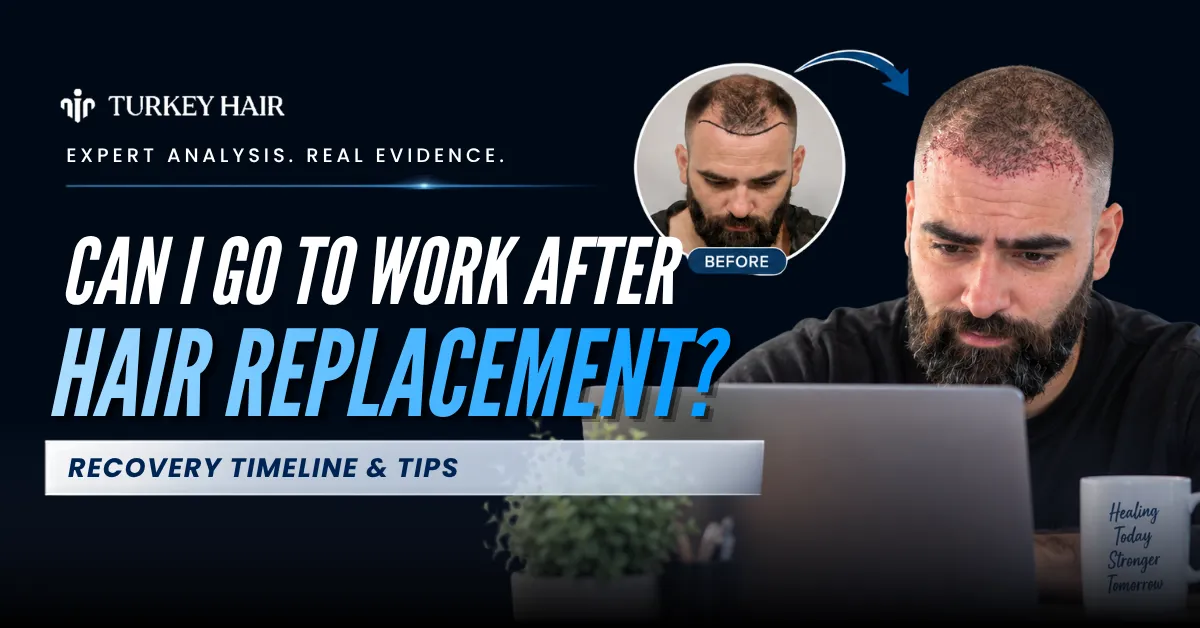
Many patients can return to some types of work within a few days, but the appropriate timing depends on their job, physical activity, visible healing, and their surgeon's instructions. Returning to a desk or remote job often takes a few days. Customer-facing roles might require around 7 to 10 days if appearance is a primary concern. Physical or outdoor work generally requires 7 to 14 days or longer to ensure safety. Jobs mandating helmets or hard hats mean you should only return after receiving explicit clinic clearance.
Quick Answer: Can I Go To Work After a Hair Transplant?
The short answer is yes. However, your exact timeline depends heavily on your daily environment. Many patients find they can log back into a remote job within 48 hours, while those in physically demanding roles must wait much longer to ensure their grafts remain safe and undisturbed. Let's break down the different scenarios.
Desk Jobs vs Physical Jobs
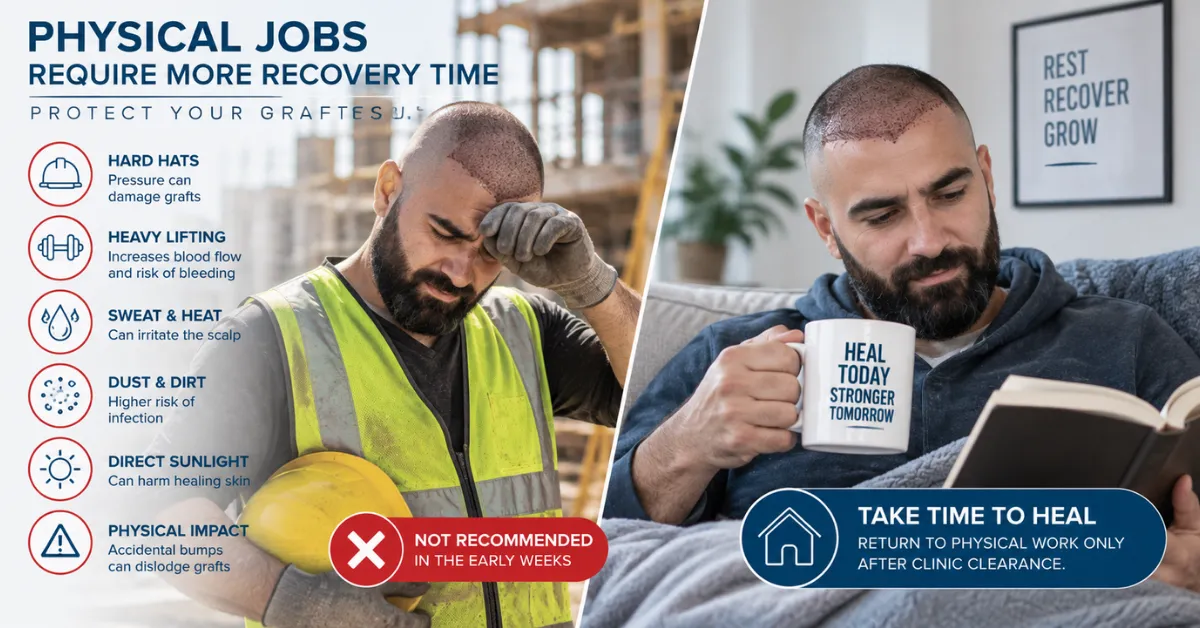
Returning to a standard office environment is usually a straightforward process. Sitting at a computer or taking calls from a home office requires minimal exertion, allowing many people to log back in shortly after their procedure. Physical jobs require a cautious approach. Tasks involving heavy lifting, continuous bending, or significant sweating can increase scalp blood flow or risk physical trauma to the newly placed grafts.
Why the First Week Matters
Your newly transplanted grafts are highly vulnerable during those initial seven days. Scabs begin forming over the incisions. The entire recipient zone essentially needs to be left alone so the roots can anchor securely into the tissue.
When to Ask Your Clinic Before Returning
Every patient heals at a different pace. Because of this, surgeons map out individualized clearance timelines. Working in a dusty environment, standing under direct sun, or wearing heavy headgear? Do not clock in without explicit permission from your medical team.
Hair Transplant Recovery Timeline Before Returning to Work
Knowing how your scalp changes day by day takes the guesswork out of requesting time off.
Recovery Phase
Scalp Condition
Work Readiness
Day 1-2
Swelling, tender, obvious grafts
Total rest; stay home.
Day 3-7
Redness, scabs forming
Remote work possible.
Day 7-10
Scabs drying and flaking off
Office return comfortable.
Day 14+
Scabs mostly gone, slight redness
Customer-facing work safe.
Month 1-3
"Shock loss" shedding phase
Normal routine; grafts secure.
Day 1-2: Immediate Post-Surgery Period
Rest is your only priority here. Your scalp will likely feel tender. Swelling happens. The transplanted areas will be extremely obvious, so staying home with your head elevated is the standard protocol to keep fluid buildup down.
Day 3-7: Early Healing Phase
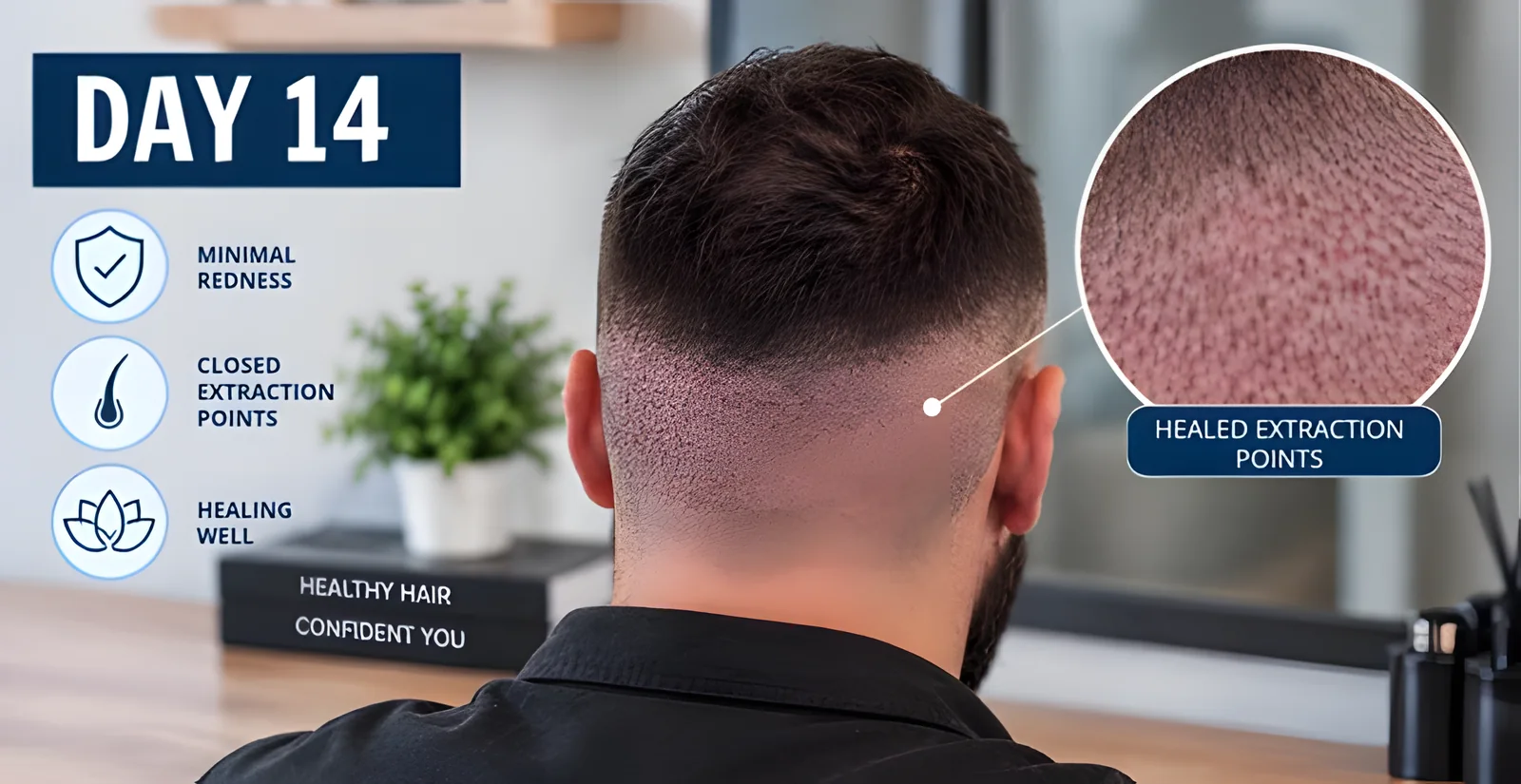
You will likely notice some redness setting in as small scabs begin to form around the newly placed grafts. The extraction points in the donor area also begin their initial healing process during this time.
Days 7-10: Scabs and Redness Start Improving
Those small crusts gradually dry up and start flaking away during your daily gentle washing routines. As the scalp clears up, many people feel much more comfortable stepping back into an office or a busy social environment.
After 14 Days: More Comfortable Public Appearance
By around two weeks, many patients have fewer visible signs of the procedure, although some slight redness may remain depending on their skin tone. Managing your appearance at work becomes significantly easier.
Month 1-3: Shedding and Long-Term Recovery
A phase commonly known as shock loss happens around this time. The transplanted hair shafts temporarily shed. This is a completely expected part of the normal hair growth cycle while the roots rest securely beneath the skin.
What Factors Influence Your Return to Work After a Hair Transplant?
No two recoveries are exactly alike. Several distinct variables influence when you can confidently punch back in.
Type of Job
An accountant working remotely has vastly different recovery needs than a warehouse worker carrying heavy materials. The physical demand of your daily tasks is a primary deciding factor for your schedule.
Procedure Type: FUE, DHI or FUT
Hair transplants performed with FUE extraction generally leave tiny extraction marks, while FUT involves a linear incision at the back of the head. DHI refers to the implantation method and may also use FUE for graft extraction. Understanding how your specific surgical method heals helps you plan your return to the office properly.
Recovery Appearance: Redness, Scabs and Shaved Donor Area
How comfortable are you answering questions from coworkers? A shaved scalp covered in healing scabs draws attention. If privacy matters to you, plan for extra days at home.
Diet, Lifestyle and Healing Speed
Tissue repair slows down if you smoke, drink alcohol, or sleep poorly. Eating well and sticking strictly to your clinic's aftercare guidelines actually speeds up your physical readiness to return.
Mental Comfort and Privacy
Some individuals prefer to wait until the scabs are completely gone before seeing coworkers. Opting for extra time off to ensure your privacy is a completely valid choice.
Office Job vs Physical Job: When Should You Return?
Workplace demands vary wildly. Grouping jobs by physical intensity makes planning much easier.
Job Type
Estimated Return Time
Key Considerations
Desk / Remote Work
2 - 5 Days
Minimal physical exertion; easy to control privacy.
Customer-Facing
7 - 10 Days
Wait for scabs to clear for a better social appearance.
Manual Labor / Outdoors
7 - 14+ Days
Must avoid heavy lifting, sweating, and dirty environments.
Helmet / Hard Hat Required
Varies (Clearance Needed)
Friction can destroy grafts; strict doctor approval is required.
Desk Job or Remote Work
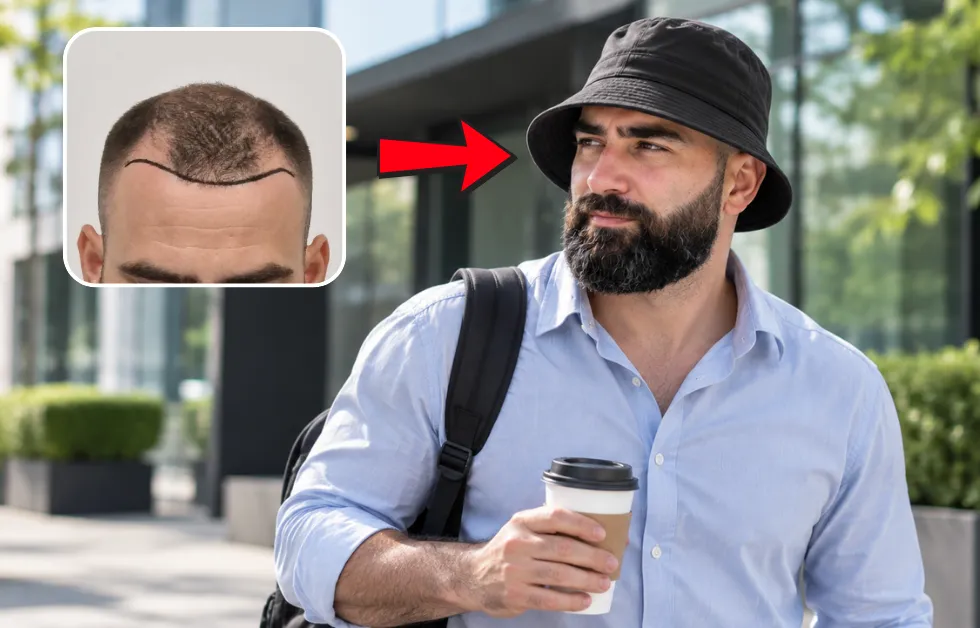
Remote workers have it easy. You can usually jump back into emails within a few days. Plus, you control your privacy simply by turning off your camera.
Customer-Facing Work
Sales, retail, and hospitality demand face-to-face interaction. Taking 7 to 10 days off allows the worst of the scabbing to clear up before you deal with the public.
Manual Labor, Outdoor Work and Sweating
Physical jobs demand caution. Heavy lifting, constant bending, and sweating in a dusty warehouse actively threaten graft survival.
Jobs That Require Hats, Helmets or Hard Hats
Friction damages fresh grafts. You cannot wear tight safety helmets until your doctor clears you. If your job strictly requires a hard hat, expect a longer mandatory absence.
When Do Hair Transplant Grafts Become Secure?
Freshly implanted follicles are fragile. They require uninterrupted time to lock into the surrounding tissue.
Why Graft Protection Matters
Dislodging a graft early in the recovery process can affect the final density in that specific spot. Careful handling during the initial phase supports the overall success of the procedure.
What Can Dislodge Grafts Early? (H3)
Accidental bumps against doors, cabinets, or car roofs.
Aggressive or unconscious scratching of the scalp during sleep.
Pulling tight clothing (like T-shirts or turtlenecks) over your head.
Wearing unapproved tight hats, helmets, or hard hats too early.
When Normal Activities Become Safer
Grafts become progressively more secure during the first days and weeks, but the exact timeline varies among patients. It is always best to rely on your specific post-operative clearance before hitting the gym or playing sports.
How to Hide a Hair Transplant at Work
Not everyone wants to discuss their medical procedures at the water cooler. You have options to keep it quiet.
Plan Your Return Strategically
Many patients schedule their procedure right before a weekend. Adding a few vacation days on top of that effectively covers the most noticeable stages of early healing.
Choose Clothing Carefully
Button-down shirts or zippered jackets prevent clothing from brushing against your scalp when you get dressed for work.
Communicate with Your Employer
You do not owe anyone an overly detailed explanation. Framing your absence as a minor medical procedure requiring a short recovery is generally sufficient for HR.
Prepare for Questions
If colleagues notice your altered hairline, having a brief, casual response ready helps minimize extended conversations.
Consider Remote Work or Vacation Days
Leveraging your paid time off or negotiating a temporary work-from-home arrangement offers the easiest path to personal privacy.
Can I Wear a Hat at Work After a Hair Transplant?
Headwear is a massive concern for patients trying to conceal their healing scalp. You have to follow the rules closely.
Loose Hat vs Tight Hat
Tight hats are generally avoided during the early healing period. Once approved by your surgical team, a loose-fitting, clean hat that sits gently on the head might be an option for quick outings.
When Hats May Be Risky
Covering your scalp too soon can trap heat or introduce friction, especially if the material rests directly against the fragile recipient area.
Helmets and Hard Hats
Protective workplace gear applies direct, heavy pressure. Delaying their use until full medical clearance is granted ensures you do not inadvertently damage your results.
Common Work-Related Recovery Concerns: Pain, Itching, Pimples and Donor Area Healing
Stepping back into work brings up physical worries. Here is what is actually happening to your scalp when you think about going back to the office.
Is Recovery from a Hair Transplant Painful?
When the anesthesia effect is gone, the most common feeling is tightness rather than sharp pain. This tightness and soreness come from normal tissue inflammation. When you are back at work, basic over-the-counter analgesic medication handles this easily.
Is It Normal to Feel Itchy After a Hair Transplant?
Yes. Your healing skin releases histamines, and that triggers the itchy feeling. Itching is the most uncomfortable part of healing. But you must not scratch or rub your head against the pillow.
Is It Normal to Get Pimples After a Hair Transplant?
They can sometimes be seen. A few weeks later, you may notice some. When your new hair shafts push through the surface, they may cause folliculitis. Think of them like minor ingrown hairs. It's important that you don't touch, squeeze, or scratch these pimples.
How Long Does the Donor Area Take to Heal?
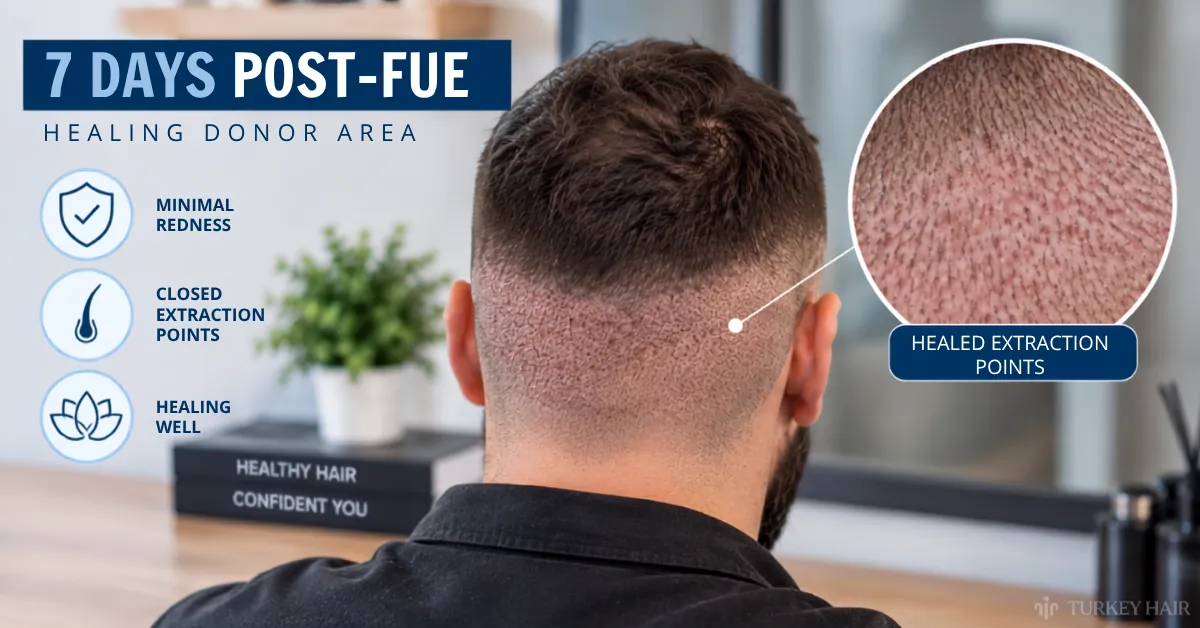
FUE and DHI methods leave tiny micro-scars. They do not leave large cuts. Because of this, your donor area (which is at the back of your head) heals surprisingly fast. It usually looks closed within 7 to 10 days.
Can Women Go to Work After a Hair Transplant?
Female hair restoration requires a little bit different approach than men's. Below we examine this situation.
Female Hair Transplant Visibility
Women seeking treatment for diffuse thinning or hairline lowering often navigate recovery a bit differently, particularly regarding how much hair needs to be trimmed.
Unshaven or Partially Shaven Options
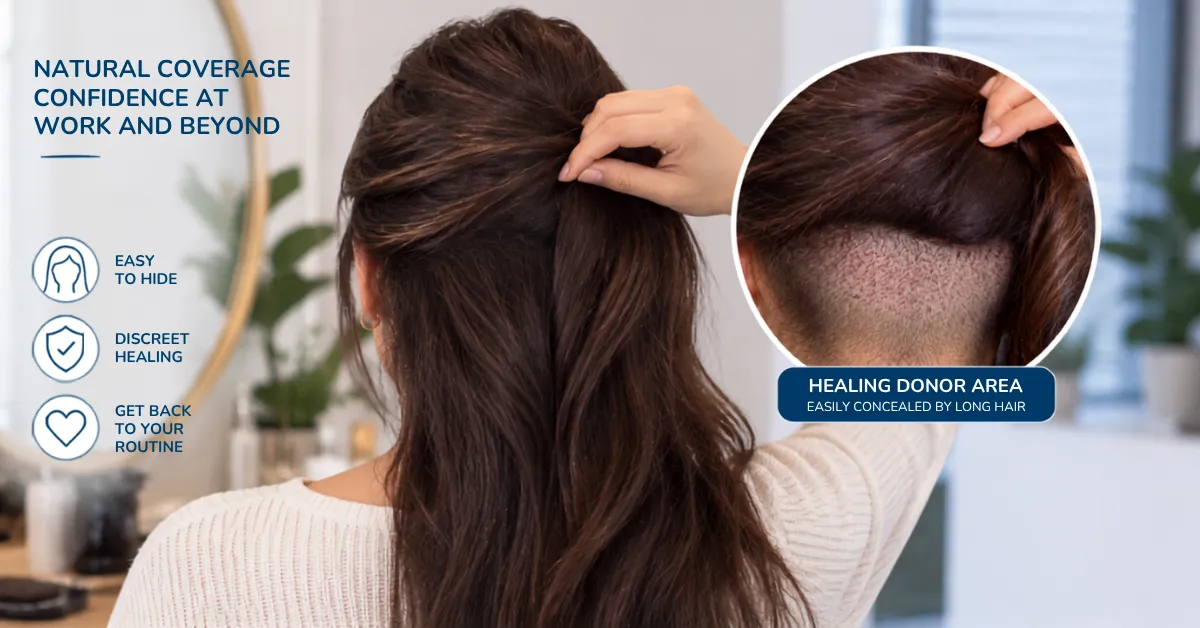
Some surgical approaches allow the donor area to be partially shaved rather than fully buzzed. This maintains the overall length of the native hair.
Privacy and Styling Concerns
This can make the donor area less noticeable when existing hair provides enough coverage. However, styling must remain gentle, avoiding tight hairbands or harsh products that might irritate the scalp.
Special Notes for Beard Transplants and Small Procedures
Smaller graft counts do not automatically equal an invisible recovery.
Beard Transplant Return to Work
Facial procedures are practically impossible to hide. Scabbing and redness on the cheeks or chin usually prompt patients to take at least a full week off for social comfort.
Hairline-Only Transplants
Even small adjustments to the frontal hairline remain highly visible. Planning time away from the office is still recommended despite the smaller graft count.
Crown Transplants
Work focused exclusively on the back of the head can sometimes be concealed slightly better, provided there is sufficient native hair in the front to mask the area.
Practical Tips for Going Back to Work After Hair Transplant
Don't ruin your results just because you are back on the clock.
Limit Physical Exertion: Avoid heavy lifting and continuous bending at the waist.
Protect from the Elements: Keep your scalp away from direct UV rays, sweat, and dusty environments.
Follow Washing Protocols: Stick strictly to your clinic's recommended daily washing routine.
Maintain Hygiene: Keep your hands clean, sanitize your desk, and stop touching your head.
Prioritize Rest: Hydrate well and get plenty of sleep to support tissue repair.
Travelling from Nigeria
Flights: Turkish Airlines flies non-stop to Istanbul from Lagos (about 7 hours) and Abuja (about 6 hours 40 minutes).
Visa: Nigerian passport holders need a visa for Türkiye. Check the requirements for your situation on the official portals visa.gov.tr and evisa.gov.tr before you book flights.
Time difference: Istanbul is 2 hours ahead of Nigeria all year.
Frequently Asked Questions
Can I Go To Work After a Hair Transplant?
Yes. But it depends on your job type and clinical clearance. Most patients can go back to work within a few days.
How soon can I go to work after a hair transplant?
It depends on your job type. Generally, for a desk job, you can return in 2 to 5 days. But for physical labor? You must be patient and give it one or two weeks to heal.
Can I go to work the next day after a hair transplant?
Not recommended. You need a few days of total rest to manage swelling and protect the new follicles.
How many days off work do I need after FUE?
Office workers usually take about a week, while those in manual labor may need up to two weeks.
How many days off work do I need after DHI?
DHI and FUE timelines are similar. So desk workers often need 3 to 7 days off.
How many days off work do I need after FUT?
FUT involves a linear incision. So patients might prefer 7 to 10 days of rest before resuming office duties.
Can I go to work after a hair transplant as a female patient?
Yes, and for female patients, this process may entail less social anxiety. Covering a partially shaven donor area with existing hair can make returning to work easier.
Can I wear a hat after hair transplant?
Only if your surgeon approves it. If you have medical clearance, you must choose a hat that is loose, clean, and sits well above the grafts.
Can I wear a hard hat after hair transplant?
Definitely no. You must wait until your clinic approves it. When your new roots can handle that level of friction, you can wear one.
How do I hide hair transplant scabs at work?
If it's possible, try to work from home. Otherwise, you can wear a loose hat or use careful styling of your native hair. Only with medical clearance.
Is recovery from a hair transplant painful?
Mostly no. You might feel some soreness or tightness. With standard painkillers, you can easily handle this.
Is it normal to feel itchy after a hair transplant?
Yes. It just means your scalp is healing.
Is it normal to get pimples after a hair transplant?
Yes. When the thick new hairs break through the surface, it can create mild folliculitis.
When Should You Delay Returning to Work?
Sometimes stepping back into your job is simply not safe yet. Listen to your body and your doctor.
Heavy Physical Labor
Occupations that demand intense physical exertion should be paused until you are physically ready and medically cleared.
Signs of Infection or Folliculitis
If you notice unusual heat, spreading redness, pus, or a foul odor, stop working and contact your medical provider for an evaluation.
Severe Swelling, Pain or Bleeding
While minor swelling is common, excessive swelling that impairs vision or unexpected bleeding warrants a delay in returning to your duties.
Employer Safety Requirements
If stepping onto a job site requires a hard hat or exposes you to extreme temperatures, waiting is the only appropriate course of action.
Final Verdict: When Is It Safe to Go Back to Work?
Listen to your surgeon. If your paycheck involves sweat, dust, hard hats, or heavy lifting, give your scalp the extra time it demands. Remote or office jobs? You can transition back much faster. Plan your days off realistically, protect the recipient area, and focus on healing properly over rushing back to the desk.
Nazmi G. focuses on guiding patients through hair transplant recovery processes, FUE/DHI/FUT aftercare protocols, and international patient consulting. His clinical expertise helps individuals strategically plan a safe and comfortable return to their social and professional lives.
Medical Review Note
Medically reviewed by Dr. Tompi, M.D., Plastic & Aesthetic Surgeon
This guide offers general information, not a substitute for direct medical advice. Only your clinic can determine your exact return-to-work timeline based on your specific procedure, healing rate, and daily job demands.
Editorial Policy & Trust
Healing is unpredictable. Rather than guaranteeing absolute recovery speeds, our editorial focus prioritizes realistic expectations, graft safety, and a healthy transition back into the workplace.
Medical disclaimer: This article is for informational purposes only and is not medical advice. Individual results vary from person to person. Always consult a qualified doctor before any hair transplant procedure.
Sources and medical review
The clinical statements on this page draw on the following published literature and professional body guidance:
This page is informational and does not replace an in-person medical assessment.
Explore other hair restoration treatments
Can I Go To Work After a Hair Transplant? Recovery Timeline & Tips is one route. Depending on your pattern, donor supply and goals, another technique may suit you better.
Send three photos: front, top and sides. You get a technique recommendation, a graft range and a straight answer about what is achievable, before anyone talks about price.
Your details are with the team
A patient coordinator will get back to you shortly. If you would like to send your photos now, WhatsApp is the fastest way to do it.
We respond quickly, day or night, in your language.
Multilingual team, no obligation
Data protectedKVKK and GDPR compliant, 100% confidential
Authorized Health Tourism Intermediary
Turkey Hair Center is the hair-restoration brand of Healthy Way Tourism, an authorized international health-tourism intermediary. All medical procedures are performed by licensed medical professionals at authorized healthcare facilities in Turkiye, in accordance with the regulations of the Ministry of Health.