
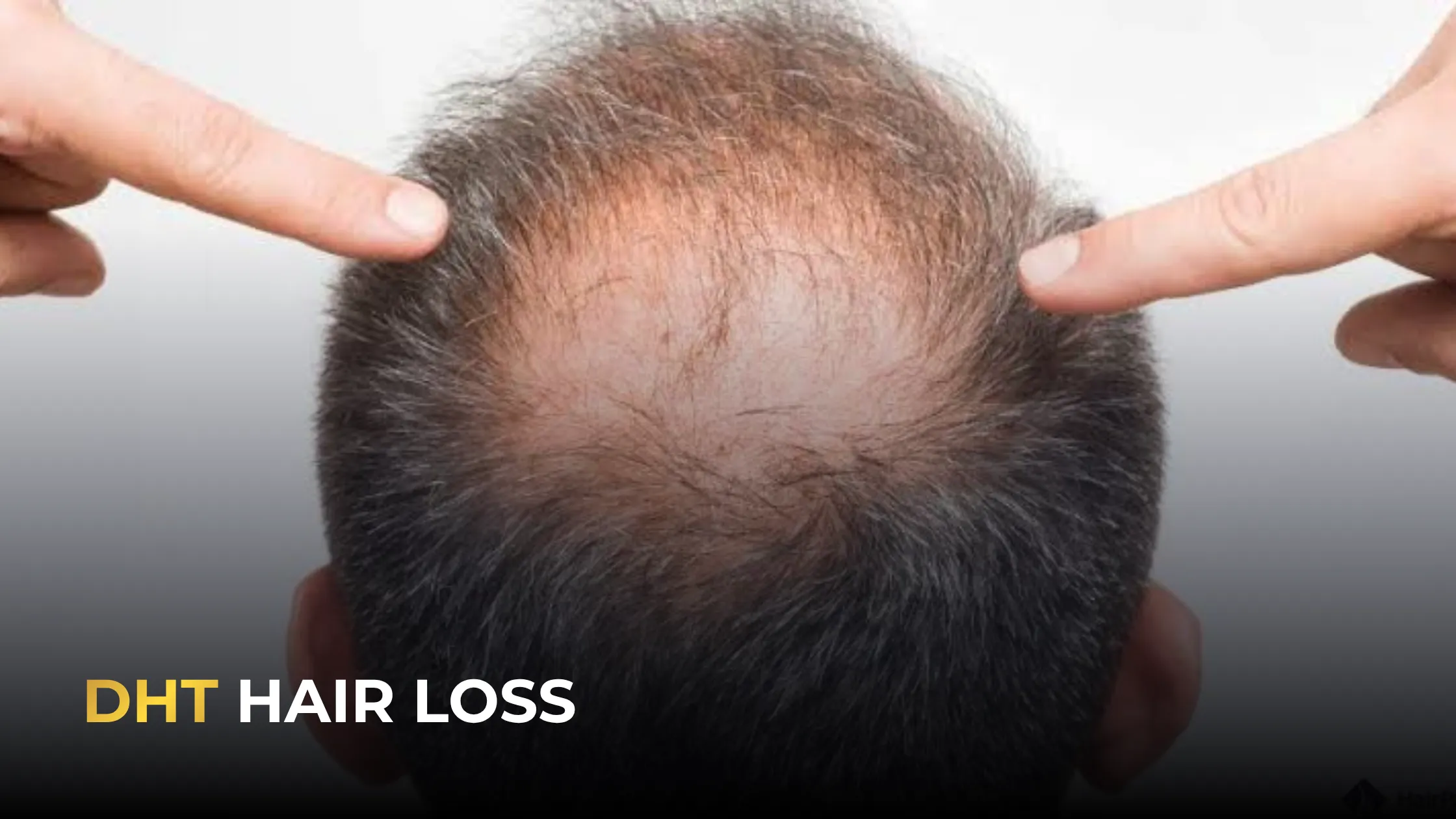
DHT hair loss, clinically called androgenetic alopecia, happens when your hair follicles shrink because they're overly sensitive to hormones. As time goes on, these hairs grow back thinner and shorter until they eventually stop growing altogether. Catching it early can slow this down, but once the hair is permanently gone, surgery is often the only fix.
Hair Library · Hair Loss
DHT Hair Loss: Causes, Symptoms, Treatments & Blockers
What DHT is, why it thins some scalps and spares others, and what each treatment, from finasteride to saw palmetto, has actually shown in clinical trials.
35sources
34in PubMed
24min read
Written by Nazmi Güldeş, Certified Trichologist · Last updated 29 October 2026
Reading level1Quick answerThe short answer, in a few sentences
Quick Answer: What Is DHT Hair Loss?
DHT hair loss is the slow shrinking of scalp hair follicles caused by dihydrotestosterone (DHT), a hormone the body makes from testosterone.[1] In people whose follicles are genetically sensitive to it, each new growth cycle produces a shorter, finer hair, until the scalp starts to show through.[2]
Interestingly, having high DHT levels in your blood doesn't automatically mean you'll go bald. It all comes down to how sensitive your specific hair follicles are.[3] Knowing this helps you understand what treatments can and can't do.
Patients usually say "DHT hair loss." Doctors call it androgenetic alopecia. They mean the exact same thing.
Two men can share identical hormone panels. One may develop substantial hair loss, while the other retains much of his hair for decades. Genetics play a major role in that difference. Your genetics decide if your hair follicles overreact to normal circulating androgens. Early recognition can make a meaningful difference in treatment options. Medical treatments protect the hair you still have and can thicken weakening strands. But biology has limits. Once a follicle completely dies, pills will not bring it back.
2Complete guideFrom the hormone to every treatment option
What Is DHT?
Before trying to block something, you need to understand its purpose. This hormone actually handles heavy lifting for your body.
DHT vs Testosterone
Dihydrotestosterone (DHT) is an exceptionally potent androgen. Your body creates it directly from testosterone using an enzyme known as 5-alpha reductase.[1] The enzyme has two main forms, type 1 and type 2: finasterideGlossaryFinasteride blocks the enzyme that turns testosterone into DHT, the hormone that shrinks follicles in male pattern hair loss. It is a prescription medicine with possible side effects, so it should be started and followed by a doctor.
Open in the glossary → blocks type 2, and dutasteride blocks both.[4]
What Does DHT Do in the Body?
Before birth, DHT shapes the development of the male genitals.[5] From puberty, androgens stimulate beard, underarm and pubic hair.[3] DHT also acts on the prostate, which is why finasteride at a higher dose (5 mg) is used for an enlarged prostate.[6]
The hormone itself isn't toxic. It manages vital daily functions. The baldness issue is strictly a localized problem with how your scalp processes it.
Having Too Little DHT
The clearest picture of too little DHT comes from a rare inherited condition. Babies with male (XY) chromosomes who inherit a shortage of 5-alpha reductase have very low DHT: their external genitals do not fully masculinize in the womb, yet the body still masculinizes strongly at puberty.[5] Lowering DHT with medicines in adult men is a different situation, and its side effects are covered under DHT blocker side effects.
Why Does DHT Affect Some Hair Follicles More Than Others?
Genetics are highly localized. Follicles on the front, temples, and crown are generally more sensitive to androgen signaling, while those on the back and sides of the scalp tend to be more resistant. This creates the classic horseshoe pattern of baldness.
There is a biological irony here. The exact same hormone that shrinks scalp follicles actively stimulates beard and body hair. Your body reacts to one androgen in completely opposite ways based solely on where the hair lives.[3]

At What Age Does DHT Hair Loss Usually Start?
There is no universal timeline. The first signs usually appear in the teenage years, and pattern hair loss becomes more common with age, affecting up to 80% of white men and 42% of women.[7] Some men notice temple recession in their late teens or early twenties; others see no change until their forties. In a study of 1,006 white women, female pattern hair loss was already common from the late 20s and peaked after age 50, the years around menopause.[8]
How Does DHT Cause Hair Loss?
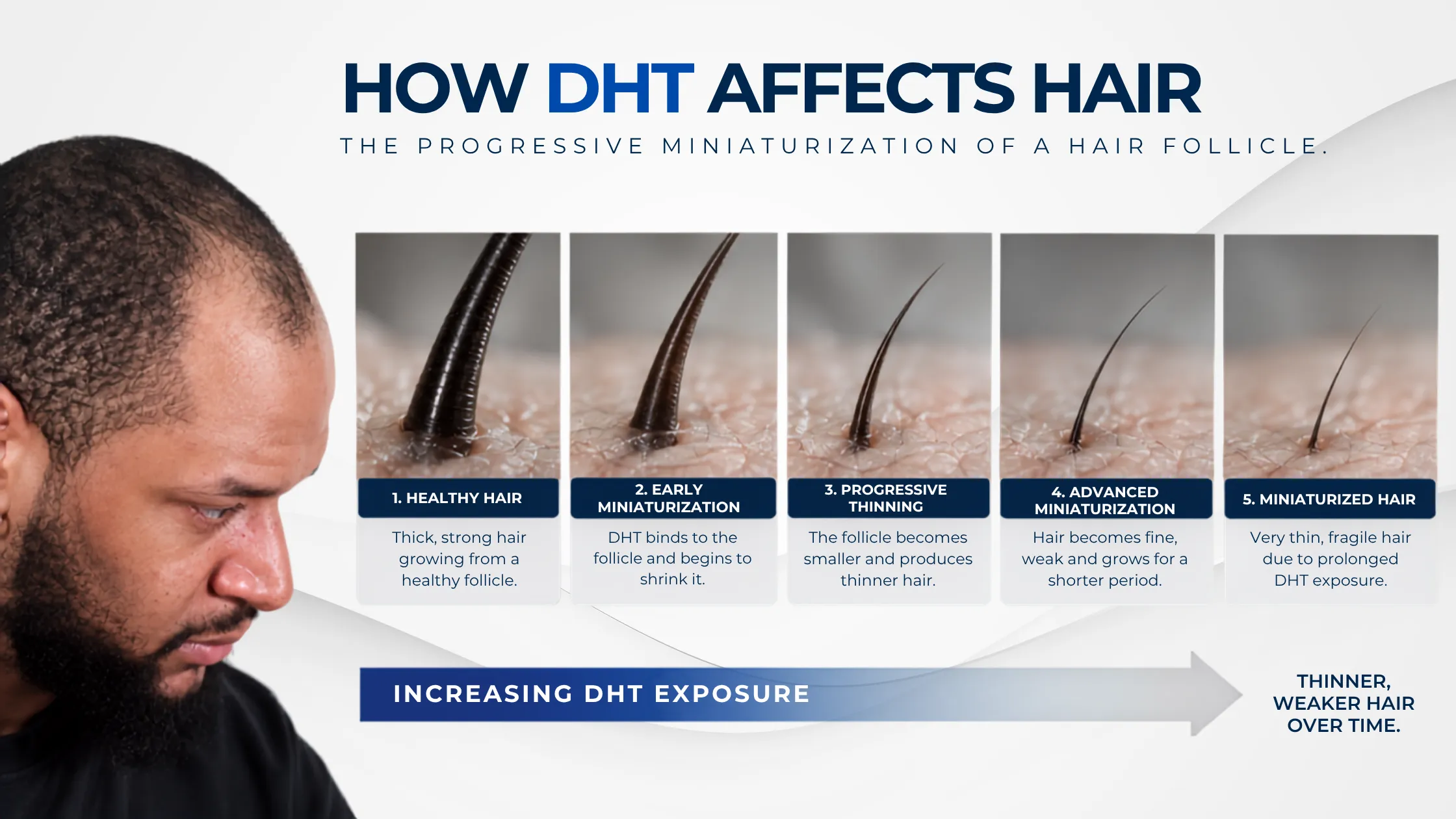
Androgenetic alopecia typically develops gradually as susceptible follicles undergo progressive miniaturization over successive growth cycles.
Hair Follicle Miniaturization
Androgens influence susceptible scalp areas through specific receptor signaling. In genetically predisposed skin, this triggers progressive miniaturization. The hairs become shorter and finer with every cycle.[2] For the structure of the follicle itself, see our guide to the hair bulb and dermal papilla.
Clinical detail: how fast miniaturization happens
Miniaturization is usually described as a gradual process over many hair cycles. Whiting argued that shorter anagen phases alone would take too long to explain it, given the lag between losing a telogen hair and the appearance of a new anagen hair, and proposed an abrupt, large-step change linked to fewer dermal papilla cells. The same review describes miniaturization reversing within one hair cycle in patients responding to finasteride, with histologic confirmation.[2]
Shorter Growth Phase
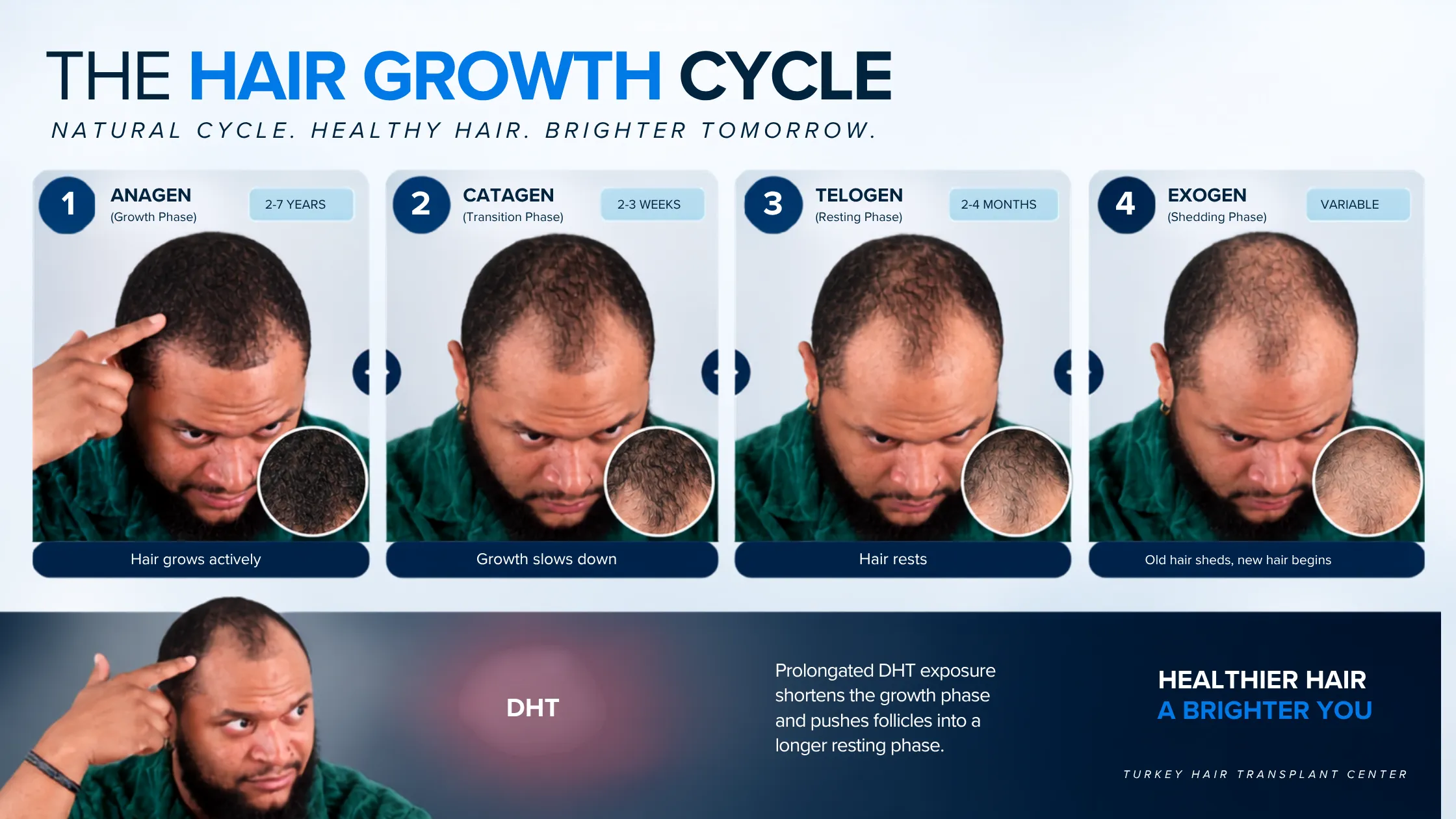
With each cycle the growth phase (anagenGlossaryAnagen is the growing phase of the hair cycle. For scalp hair it lasts 2 to 6 years according to a Deutsches Ärzteblatt review, and 2 to 7 years according to Cleveland Clinic.
Open in the glossary →) gets shorter and the follicle makes a finer hair, until thick terminal hairs are replaced by soft, short vellus-like hairsGlossaryVellus hair is the fine, short, pale hair that covers most of the body. It is under 30 micrometres wide and under 2 millimetres long.
Open in the glossary →.[9][2] Hairs fall out sooner, and the replacements look thinner.
DHT Sensitivity and Genetics: Why Some People Lose Hair Faster
Family history can provide an important indication of a person's susceptibility to androgenetic alopeciaGlossaryAndrogenetic alopecia, or pattern baldness, is the pattern hair loss behind most male and female thinning. It is primarily driven by genetic predisposition and sensitivity to androgen hormones.
Open in the glossary →. Doctors rarely diagnose hair loss just by checking hormone levels.[10] Follicles simply inherit a hyperactive response to completely normal androgens.
Signs of High Androgen Activity vs. DHT-Related Hair Loss
People see their hair falling out and immediately blame a massive hormone imbalance. That isn't always the case.
Yes, high androgens leave visible clues. Severe adult acne. Highly oily skin. Sudden increases in body hair. But here is the reality: you can have aggressive hair loss while your blood panels look completely normal. The issue usually lies in your scalp's genetic receptors rather than an actual overproduction of testosterone. In women, pattern hair loss with normal androgen levels is not considered a sign of androgen excess.[10]
For women with scalp thinning alongside irregular periods or excess facial hair, doctors check for polycystic ovary syndrome (PCOS), following the 2023 international evidence-based guideline.[11] An expert panel recommends assessing every woman with pattern hair loss for possible androgen excess.[10] Treating the hormonal cause comes first.
Can a Blood Test Diagnose DHT Hair Loss?
A blood test accurately measures what is circulating in your system. It cannot measure your follicle's genetic sensitivity. High or low blood levels alone will never confirm androgenetic alopecia without a physical scalp check.[10]
How Hair Specialists Distinguish DHT Hair Loss From Other Causes
Proper diagnosis requires looking closer than the naked eye allows. Specialists use specific clinical markers to rule out other problems.
Dermoscopy and Miniaturization
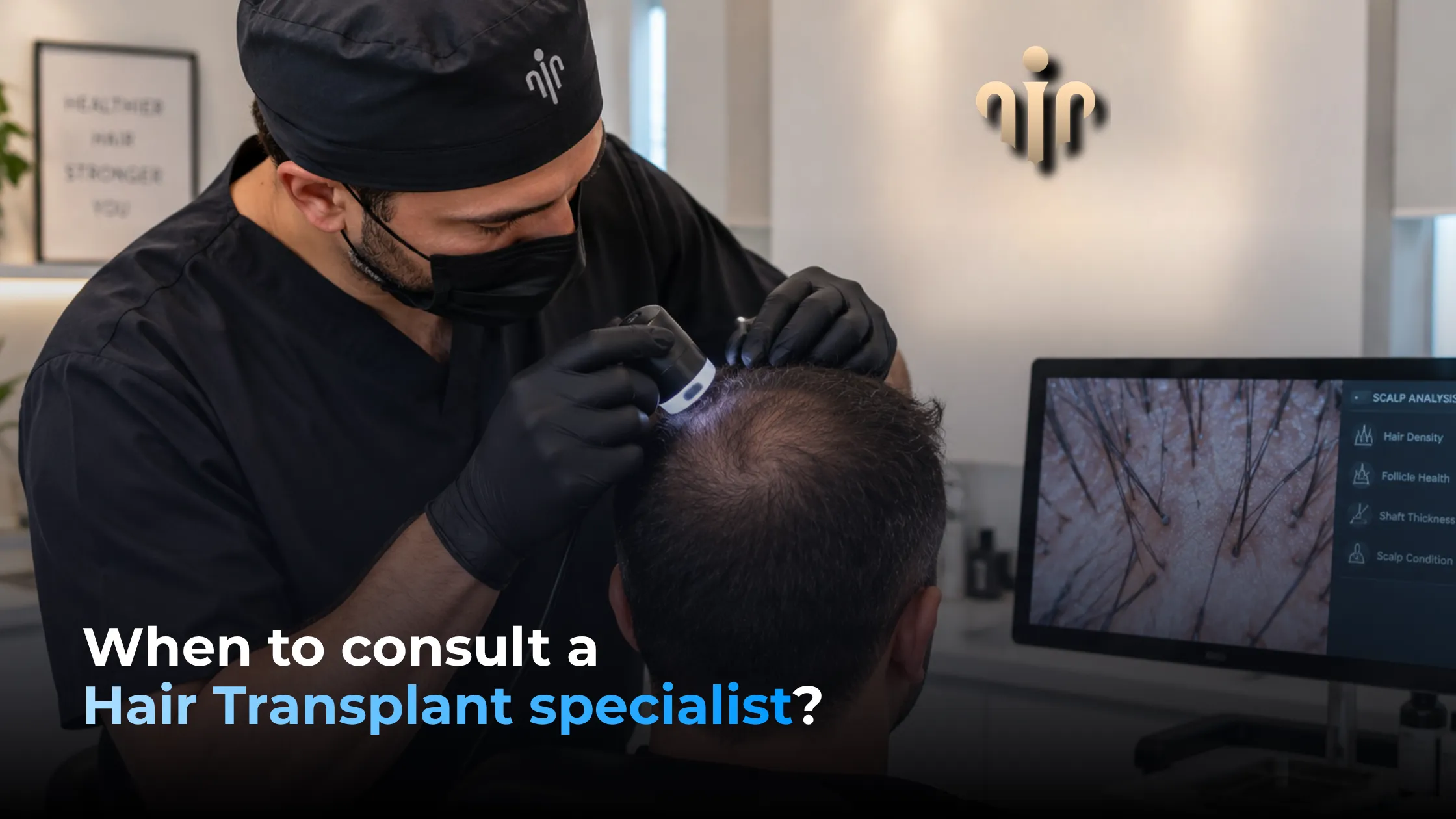
Doctors use a dermatoscope to magnify the scalp. They search for distinct variations in hair shaft thickness. A mix of thick, healthy hairs sitting right next to tiny, miniaturized hairs is a classic sign of androgenetic alopecia. In women, a 2009 study set dermoscopy criteria for pattern hair loss, including thinner hairs at the front of the scalp than at the back and more than 10% very thin hairs at the front.[12]
Clinical detail: trichoscopy criteria in women
131 women: 59 with androgenic alopecia confirmed by histopathology, 33 with chronic telogen effluvium and 39 controls. Thin hairs (under 0.03 mm) made up 20.9% ± 12% of hairs in androgenic alopecia, against 6.15% in controls and 10.4% in chronic telogen effluvium (both P < .001). Major criteria: more than four yellow dots in four frontal images at 70×, lower average hair thickness in the frontal area than the occiput, and more than 10% thin hairs in the frontal area. Two major criteria, or one major and two minor, gave 98% specificity.[12]
Patterned vs. Diffuse Shedding
Sudden, diffuse shedding can be telogen effluviumGlossaryTelogen effluvium is sudden diffuse shedding that follows illness, childbirth or stress. Shedding usually starts two to three months after the trigger, and it is usually self-limiting once the trigger is removed.
Open in the glossary →, which can follow medicines, physical trauma or illness, and emotional or physical stress.[13] It thins hair across the scalp instead of following the pattern of DHT-related loss.
DHT Hair Loss in Men
Male pattern hair loss often follows a recognizable pattern.
Receding Hairline and Temple Loss
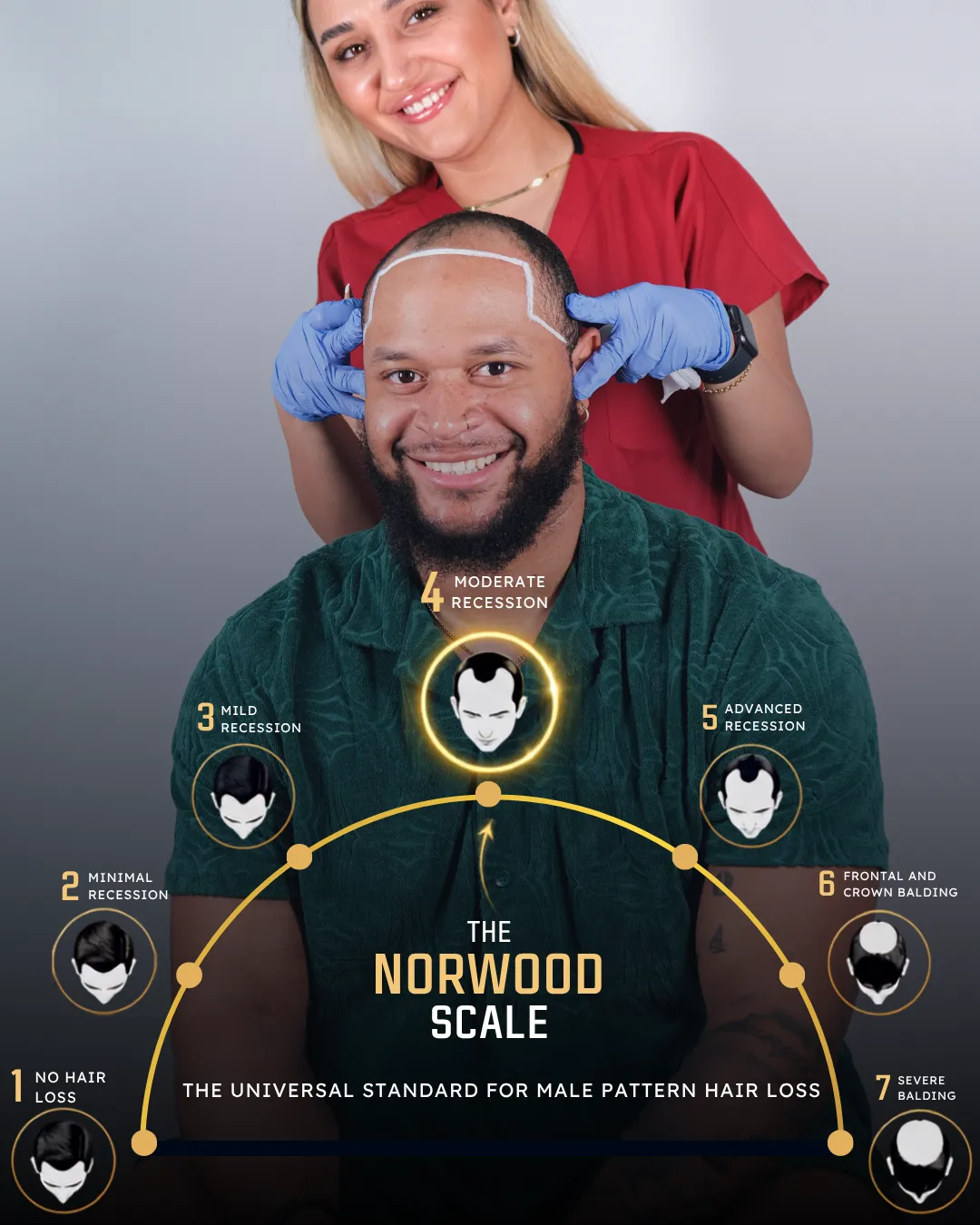
Early male pattern hair loss often appears as gradual recession at the temples and frontal hairline.
Crown Thinning
The crown (vertex) often thins as well. In late stages, the receding front meets the balding crown, leaving a large exposed area.
DHT Hair Loss in Women
Female pattern hair loss rarely looks like male recession. The diagnostic approach has to change.
Women usually notice thinning across the middle of the scalp, so the parting widens, sometimes in a Christmas-tree pattern toward the front, while the frontal hairline is generally kept.[10] Complete baldness at the crown is rare.
Hormonal shifts during and immediately after menopause significantly change hair density and shedding rates.
If a widening part happens alongside hirsutism, cystic acne, or skipped periods, doctors immediately investigate PCOS or other androgen excess conditions.[10]
Treatment Options for Women
Finasteride is approved for men only, and women who are or may become pregnant must not use it, because it can affect the development of a male fetus.[6] For women, an expert panel recommends starting with minoxidil 5%, and adding a 5-alpha reductase inhibitor or an antiandrogen such as spironolactone only for severe hair loss or signs of androgen excess.[10] A Cochrane review found that minoxidil roughly doubled the share of women reporting noticeable regrowth compared with placebo.[9] Antiandrogens are prescribed off-label and need specialist oversight, especially because of pregnancy risks.
Clinical detail: the Cochrane numbers
47 trials, 5,290 women. Pooled data from six studies: 157 of 593 women on minoxidil (2%, and 1% in one study) reported moderate to marked regrowth, against 77 of 555 on placebo (risk ratio 1.93, 95% CI 1.51 to 2.47; moderate-quality evidence). Total hair count rose by 13.18 hairs/cm² more than with placebo (95% CI 10.92 to 15.44; eight studies, 1,242 women; low-quality evidence). Minoxidil 2% and 5% did not differ clearly in four trials (1,006 women).[9]
Is DHT Hair Loss Reversible?
Starting medical treatment early often stabilizes the thinning process and can even thicken hairs that recently started shrinking.[2] But reversing years of advanced depletion? Pills and serums rarely achieve that. Once a follicle completely miniaturizes and dies, surgery remains the only viable way to physically restore coverage.
How Long Does DHT Hair Loss Treatment Take to Work?
Patience is a medical necessity. Modifying a biological cycle takes months.
- 0-3 Months: You will likely not see new growth. Initiating minoxidil often causes temporary shedding as old hairs push out.[14]
- 3-6 Months: Shedding stabilizes. Early, fine hairs begin to emerge.
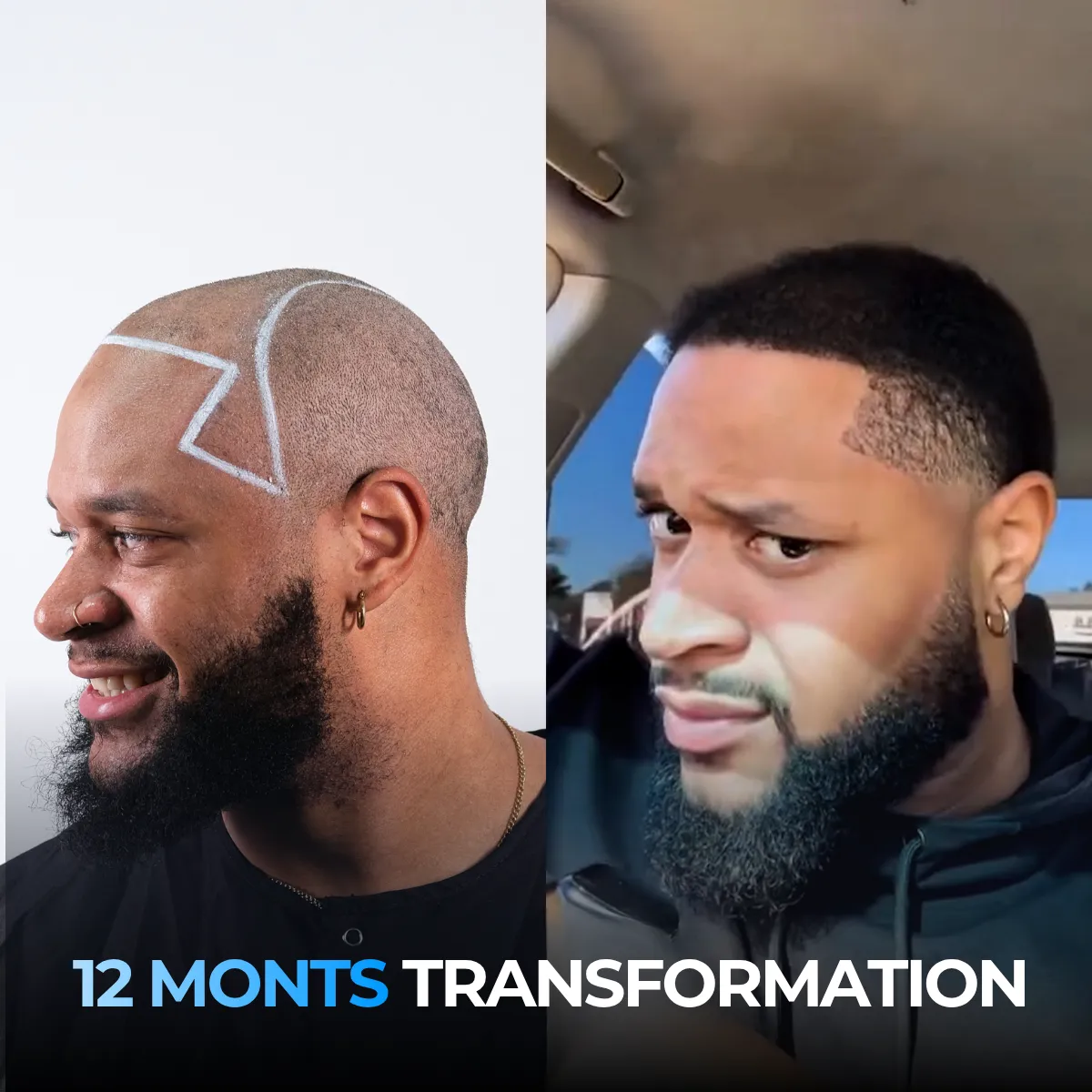
- 6-12 Months: True cosmetic differences become measurable. The hair shafts begin to thicken.
Quitting at month three is a common mistake. A 6-12 month period is commonly used to assess whether a treatment is producing a meaningful response. The finasteride label says daily use for three months or more is usually needed before any benefit shows, and that stopping reverses the effect within 12 months.[6]
DHT Hair Loss Treatment Options
Modern medicine provides proven, heavily researched options to manage progression.
Finasteride
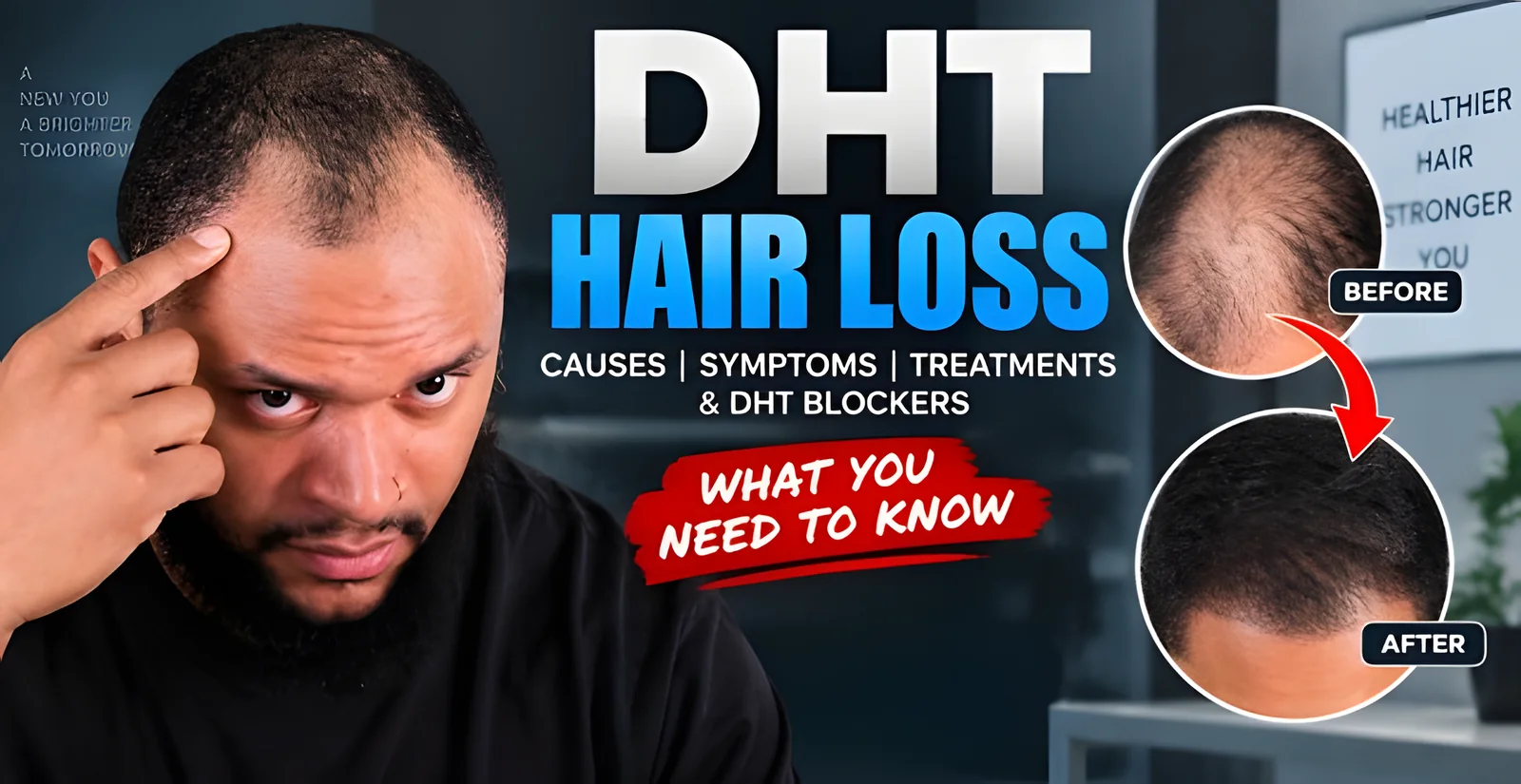
Finasteride blocks type 2 5-alpha reductase and lowers DHT in both the blood and the scalp.[1] It is a prescription tablet, approved by the FDA at 1 mg a day for male pattern hair loss in men only.[6] In two 1-year trials of 1,553 men aged 18 to 41, finasteride improved hair on every measure, while men on placebo kept losing hair.[1] Men who continued in the extension studies kept the improvement over five years.[15]
Clinical detail: the finasteride trial numbers
Hair counts in a 1-inch (5.1 cm²) circle of balding vertex scalp, baseline 876 hairs: 107 more hairs than placebo at 1 year and 138 more at 2 years (P < .001); 1,215 men continued blinded into year 2.[1] Over five years, finasteride gave durable improvement versus placebo on all endpoints (P ≤ .001), with no new safety concerns.[15] A network meta-analysis of 23 studies found the largest gain in terminal hair count at 48 weeks with finasteride 1 mg, significantly ahead of topical minoxidil 2% and 5%.[16]
Dutasteride
Dutasteride blocks both type 1 and type 2 5-alpha reductase, so it suppresses DHT production more broadly than finasteride.[4] In a 24-week trial of 917 men aged 20 to 50, dutasteride 0.5 mg a day increased hair count and hair thickness more than finasteride 1 mg and placebo, with a similar number of side effects.[4] An earlier trial of 416 men found the same dose-dependent pattern.[17] Its use for hair loss remains off-label in many countries.
Clinical detail: dutasteride against finasteride
Dutasteride 0.5 mg against finasteride 1 mg at week 24: hair count in a 2.54 cm circle (P = .003), hair width (P = .004) and frontal photographic assessment (P = .002), all in favour of dutasteride, and all P < .001 against placebo.[4] In the earlier 24-week trial, dutasteride 2.5 mg beat finasteride 5 mg at 12 and 24 weeks, and scalp and serum DHT fell in a dose-dependent way.[17] In a network meta-analysis, dutasteride 0.5 mg gave the largest total hair count gain at 24 weeks, 7.1 hairs/cm² more than finasteride 1 mg (95% CI 5.1 to 9.3).[16]
Minoxidil
In animal studies, minoxidil shortens the resting phase and pushes resting follicles into a new growth phase early, and it probably works the same way in people; it may also lengthen the growth phase and enlarge the follicle.[14] It acts through several pathways, so the old "it just increases blood flow" explanation is too simple.[18] Topical minoxidil 2% and 5% is FDA-approved for pattern hair loss in men and women.[18] In a 48-week trial of 393 men, the 5% solution worked better and sooner than the 2% solution and placebo.[19] Low-dose minoxidil tablets are also prescribed, off-label; their most common side effects are unwanted hair growth and effects on the heart and circulation, so they need a doctor.[20]
Clinical detail: minoxidil 5% against 2%
393 men aged 18 to 49 applied 5% (n = 157), 2% (n = 158) or placebo (n = 78) twice daily for 48 weeks. The 5% solution was significantly superior to 2% and placebo for change in non-vellus hair count, patient-rated scalp coverage and benefit, and investigator-rated coverage, and the response came earlier with 5%.[19] In a network meta-analysis, oral minoxidil 5 mg a day gave the largest gain in terminal hair count at 24 weeks, ahead of topical minoxidil 2% and 5% and of finasteride 1 mg.[16]
Treatment Comparison Matrix
The table compares the main options, from the strongest evidence to the weakest.
| Treatment | How it works | Best evidence | Lowers DHT? | Medical supervision |
|---|---|---|---|---|
| Finasteride 1 mg tablet | Blocks type 2 5-alpha reductase | Placebo-controlled trials over 5 years; FDA-approved for men | Yes | Required |
| Dutasteride 0.5 mg capsule | Blocks type 1 and type 2 | Trial against finasteride, 917 men, 24 weeks | Yes | Required, off-label |
| Topical finasteride spray | Same enzyme, applied to the scalp | Placebo-controlled trial, 458 men, 24 weeks | Yes, less in the blood | Required |
| Minoxidil 2–5% (topical) | Pushes follicles into the growth phase | Placebo-controlled trials in men and women | No | Recommended |
| Low-dose oral minoxidil | Same drug, as a tablet | Network meta-analysis; not FDA-approved | No | Required, off-label |
| Microneedling with minoxidil | Controlled micro-injuries plus minoxidil | Meta-analysis of 8 randomized trials | No | Recommended |
| Ketoconazole shampoo | Antifungal, possible anti-androgen effect | Systematic review of 5 small human studies | Not shown | Recommended |
| PRP, low-level laser | Growth factors, light | Very low-quality evidence against placebo or sham | No | Given or advised by a clinic |
The Role of Microneedling
Microneedling rolls fine needles across the scalp to create controlled micro-injuries. In a 2013 trial of 100 men, weekly microneedling with 1.5 mm needles plus minoxidil 5% raised hair counts far more at 12 weeks than minoxidil alone (an average of 91.4 against 22.2 more hairs in a 1 cm² area).[21] Note how it was done: patients did not apply minoxidil on the day of the procedure and restarted it only 24 hours later.[21] A 2023 meta-analysis of 8 randomized trials confirmed a higher total hair count with the combination, but not a clear gain in hair thickness.[22] Treat it as an add-on to minoxidil, not a standalone cure.
Clinical Note: Treatment-Induced Shedding
Some people see more hair fall in the first weeks of treatment, especially with minoxidil, because resting follicles are pushed into a new growth phase and let go of their old hairs.[14] This early shedding can be alarming, but it may be temporary; if heavy shedding continues for months, ask your doctor.
Topical Treatments and Combination Therapy
Topical finasteride is a scalp spray for men who prefer to avoid tablets. In a phase III trial of 458 men, it raised hair counts more than placebo at 24 weeks (20.2 against 6.7 hairs), about as much as oral finasteride, with side effects similar to placebo.[23] It is still absorbed: blood DHT fell by 34.5%, against 55.6% with the tablet,[23] so it still needs a prescription and medical guidance.
PRP, Laser Therapy and Hair Transplant
PRP (platelet-rich plasma) injections and low-level laser or light caps are add-ons. A 2018 network meta-analysis ranked low-level laser therapy highly and found PRP roughly level with the drugs on hair count, but it rated the evidence for laser against sham and for PRP against placebo as very low quality.[24] Neither can revive follicles that are gone. If a section of your scalp is completely smooth, moving healthy donor hair with a transplant is the only realistic way to restore coverage.
Ketoconazole Shampoos
Doctors sometimes add ketoconazole shampoo to a hair loss routine, off-label. A 2020 systematic review found five small human studies (318 people) reporting thicker hair shafts and some photographic improvement, plus two animal studies, and called it a promising add-on or alternative.[25] Use it alongside your core treatment, never instead of it.
DHT Blockers: How They Work
Pharmaceutical interventions do not just mask the problem. They directly target the specific enzymes manufacturing the hormone.
How 5-Alpha Reductase Inhibitors Work
Prescription medicines like finasteride block the enzyme that converts testosterone into DHT, lowering DHT in the blood and the scalp.[1] In the long-term trials this slowed hair loss, while men on placebo continued to lose hair.[15]


DHT Blocker Side Effects
Medicines that lower DHT can cause side effects, most often sexual ones. What the trials and the label show:
- In the 1-year trials behind the finasteride label, 3.8% of men on finasteride 1 mg reported reduced libido, erectile dysfunction or ejaculation problems, against 2.1% on placebo. These effects went away in men who stopped the drug and in most who continued.[6]
- A 2019 meta-analysis of 15 placebo-controlled trials (4,495 men) put the risk of sexual side effects at about 1.6 times placebo for finasteride; for dutasteride the increase was not statistically significant.[26]
- Since approval, sexual problems that continued after stopping the drug, and depression, have also been reported and added to the label.[6]
- When symptoms are reported to persist after stopping, the term used is post-finasteride syndrome.
Clinical detail: side effects in the label trials
Drug-related adverse experiences in year 1 (finasteride 1 mg, n = 945, against placebo, n = 934): decreased libido 1.8% vs 1.3%, erectile dysfunction 1.3% vs 0.7%, ejaculation disorder 1.2% vs 0.7%; stopping because of sexual adverse experiences 1.2% vs 0.9%. The incidence of each fell to 0.3% or less by the fifth year of treatment.[6] Meta-analysis: relative risk of sexual dysfunction 1.66 (95% CI 1.20 to 2.30) for finasteride 1 mg and 1.37 (95% CI 0.81 to 2.32) for dutasteride 0.5 mg.[26]
Natural DHT Blockers: What May Help and What Is Overhyped
The supplement industry makes massive claims about hair regrowth. The clinical data rarely backs them up.
Saw palmetto is the most popular natural 5-alpha reductase inhibitor. A 2020 systematic review found five randomized trials and two cohort studies reporting benefits from saw palmetto supplements and lotions (100 to 320 mg) in pattern hair loss and shedding, but noted that robust, high-quality data are lacking.[27] There is no good evidence that any of these products works as well as the medicines above.
| Remedy | What was tested | What the evidence shows |
|---|---|---|
| Saw palmetto | Supplements and lotions, 100–320 mg | Small trials; a systematic review found high-quality data lacking[27] |
| Pumpkin seed oil | 400 mg capsules a day for 24 weeks, 76 men | Hair count rose 40%, against 10% with placebo[28] |
| Caffeine (scalp liquid) | 0.2% liquid against minoxidil 5%, 210 men, 6 months | Open-label trial: not worse than minoxidil on the share of growing hairs[29] |
| Green tea (EGCG) | Human hair follicles and cells in the lab | Promoted growth in the lab; we found no human trial of green tea on its own[30] |
| Biotin | Supplements | No clinical trial for hair loss, according to a 2017 review[31] |
A poor diet does not directly cause androgenetic alopecia. Vitamins and minerals such as iron, zinc and vitamin D play a part in the hair cycle, but their exact role in hair loss is not entirely clear.[32] A real deficiency should be found and corrected, because the extra shedding it can bring makes genetic thinning look worse.
Lifestyle Factors That Influence Hair Shedding
Your daily habits aren't going to rewrite your genetics. However, living unhealthily will absolutely make your shedding look and feel a lot worse.
Diet and Nutrient Deficiencies
Lifestyle does not cause male or female pattern baldness. But crash dieting, or running low on iron, B12 or vitamin D, can contribute to a stress-shedding condition called telogen effluvium, which makes genetic thinning look worse than it is.[13][32]
Stress, Sleep and Exercise
Living in a state of constant stress takes a physical toll on your hair cycle. Prolonged stress can contribute to telogen effluvium by disrupting the normal hair-growth cycle.[13]
GLP-1, Weight Loss and Hair Shedding
With the rise of GLP-1 weight loss drugs, many people notice hair thinning. Two 2026 systematic reviews found a higher risk of hair loss with these drugs, highest with semaglutide and tirzepatide. The types reported most were telogen effluvium and pattern hair loss, and rapid weight loss stood out as a likely contributor, especially to shedding.[33][34] The authors point to weight loss and nutrition rather than to DHT.[34]
Clinical detail: the GLP-1 numbers
Meta-analysis of 17 studies (1,091,743 patient-exposures): pooled odds ratio for any non-scarring alopecia 1.40 (95% CI 1.33 to 1.48); telogen effluvium aOR 1.76 (1.34 to 2.32) and androgenetic alopecia aOR 1.64 (1.35 to 1.99) at 12 months; alopecia areata not significant (aOR 1.08).[34] In the other review (24 studies), semaglutide-related hair loss appeared dose-dependent, rarely reported below 2 mg a week, and women appeared disproportionately affected.[33]
Why Transplanted Hair Is More Resistant to DHT
When medical treatments are no longer enough, hair transplantation is evaluated. The success of this surgery relies entirely on a biological concept called "donor dominance."[35]
Hair follicles from the donor areaGlossaryThe donor area is the back and sides of the head, where follicles resist DHT. An extracted follicle does not grow back in that spot, so extractions are spread out, and the donor supply is the limit of every plan.
Open in the glossary → at the back and sides of the scalp are generally more resistant to androgen-related miniaturization. When a surgeon extracts these healthy follicles and implants them into a bald area on the front or crown, the follicles retain their original genetic resistance. They do not suddenly become sensitive just because they changed locations.[35]
However, a transplant does not cure your scalp of DHT. While the newly implanted hairs are generally more resistant, your surrounding native hair remains vulnerable. Continuing medical therapies after surgery protects the native hair sitting behind the transplant.
When Should You See a Doctor?
Getting professional advice early on gives you actual treatment choices while you still have enough hair to save.
Rapid Shedding or Patchy Hair Loss
Notice your hair falling out in massive handfuls? Finding perfectly smooth, circular bald patches? Get to a dermatologist quickly. Autoimmune conditions like alopecia areata look entirely different from genetic thinning and require completely different treatments. An itchy, flaky scalp can have other causes as well, such as a scalp yeast infection.
Women With Hormonal Symptoms
Adult acne. Skipped periods. Unwanted facial hair. When these symptoms occur alongside hair loss, female patients must undergo a thorough endocrine evaluation.[10] Getting this checked becomes especially critical if pregnancy is in your near future.
Before Starting DHT Blockers
Please don't try to self-medicate by ordering pills online. A doctor needs to look at your baseline health and blood work before handing over a prescription for things like finasteride or dutasteride. If you are weighing an online prescription service, our review of Hims for hair loss explains what it prescribes.
Creating a DHT Hair Loss Action Plan
Having a clear, step-by-step strategy is the best way to stop yourself from wasting money on miracle serums that don't work
- Step 1 - Confirm the Diagnosis: First things first, have a professional look at your scalp to make sure it's actually androgenetic alopecia and not just stress shedding.
- Step 2 - Stop Progression Early: If the doctor gives you the green light, start your targeted medical therapies as soon as possible. The goal here is to protect the density you still have.
- Step 3 - Support Growth: Once the shedding is under control, bring in growth stimulants like minoxidil. Also, make sure to fix any vitamin or iron deficiencies showing up in your blood tests.
- Step 4 - Consider Hair Transplant for Permanent Loss: If an area has experienced advanced, permanent hair loss, a hair transplant may be considered for restoring coverage.
Frequently Asked Questions
Can you regrow hair loss from DHT?
Sometimes. If caught early, medical treatments can stabilize the shedding and thicken hairs that have just begun to miniaturize. However, once a follicle is completely depleted and the skin becomes smooth, medication cannot revive it.
How do I fix my DHT levels?
Systemic DHT can be actively reduced with prescription 5-alpha reductase inhibitors like finasteride. You cannot guess your dosage. A qualified physician must evaluate your medical history to determine if this therapy is safe for you.
How do I tell if my DHT is high?
A blood test measures the actual circulating hormone levels in your system. But there is a catch. A blood test cannot measure your follicle's genetic sensitivity. You can have completely normal blood DHT levels and still experience severe genetic balding.
Does high DHT mean high testosterone?
What happens if I stop taking DHT blockers?
Medications act as a shield. They do not cure the underlying genetic sensitivity. If you stop treatment, your hormone levels return to baseline. Hair loss may gradually resume after treatment is stopped. For finasteride, the label states that the effect reverses within 12 months of stopping.[6]
Is blocking DHT a good thing?
For adults experiencing aggressive hair loss or prostate issues, reducing DHT under medical supervision is standard clinical practice. Altering hormones always carries potential risks, which is why physician oversight is strictly required.
Final Verdict: Can DHT Hair Loss Be Controlled?
If you recognize what's happening early on, androgenetic alopecia is highly manageable. The core issue usually isn't just having "high hormones"; it's that your follicles are genetically sensitive to them.
Medications like finasteride and minoxidil do the heavy lifting by protecting the hair you still have. Natural supplements may provide limited support, but they should not be considered a substitute for evidence-based treatment.
If a part of your scalp is already totally bald, a hair transplant before-after is the only real way to get that coverage back. Whatever route you choose, setting up a safe plan always starts with a direct evaluation from a specialized hair restoration physician or dermatologist.
About the Author
Written by: Nazmi Güldeş, Certified Trichologist. Nazmi Güldeş focuses on patient education around androgenetic alopecia, evaluating miniaturization through dermoscopy, and assessing candidates for medical treatments and hair transplants.
Medical Note
Truly diagnosing androgenetic alopecia requires a physical exam, a dermoscopy, and a thorough review of your medical history by a doctor.
Editorial Policy & Trust
We strictly prioritize evidence-based medical reporting. DHT is a crucial hormone for your body's daily functions, and remember that not all hair loss is caused by hormones. Using any 5-alpha reductase inhibitor or hormone-altering drug comes with risks and always requires proper doctor supervision.
3 questions
Test yourself
Check what you remember from this entry. Each answer links back to the section that explains it.
- Can a blood test confirm DHT hair loss?
Blood levels do not show follicle sensitivity; diagnosis needs a scalp examination. Read the section
- Which forms of 5-alpha reductase does dutasteride block?
Dutasteride blocks types 1 and 2; finasteride blocks type 2. Read the section
- In the best-known microneedling trial, when did patients restart minoxidil?
They skipped minoxidil on the day of the procedure and restarted it 24 hours later. Read the section
3Scientific evidenceStudy types, references and how to cite this entry
35sources
Evidence behind this entry: 34 publications indexed in PubMed (1974–2026): 9 randomized trials, 9 reviews, 9 systematic reviews, 3 clinical studies, 3 guidelines and 1 lab study. Plus the FDA prescribing information for finasteride. 14 sources have free full text. 1 article has a published correction, shown in the references.
- Randomized trialpeople assigned to treatments by chance
- Reviewsummarises many studies
- Clinical studya study in people without random groups
- Lab studytested on cells or hair follicles in the lab
- Guideline or labela professional body, or the official drug label
Every source checked against PubMed on 29 October 2026, including corrections and retractions. See the newest studies on PubMed →
References
- Kaufman KD, Olsen EA, Whiting D, et al. Finasteride in the treatment of men with androgenetic alopecia. Finasteride Male Pattern Hair Loss Study Group. Journal of the American Academy of Dermatology. 1998;39(4 Pt 1):578-589.Randomized trialPubMedDOI
- Whiting DA. Possible mechanisms of miniaturization during androgenetic alopecia or pattern hair loss. Journal of the American Academy of Dermatology. 2001;45(3 Suppl):S81-S86.ReviewPubMedDOI
- Randall VA. Androgens and hair growth. Dermatologic Therapy. 2008;21(5):314-328.ReviewPubMedDOI
- Gubelin Harcha W, Barboza Martínez J, Tsai TF, et al. A randomized, active- and placebo-controlled study of the efficacy and safety of different doses of dutasteride versus placebo and finasteride in the treatment of male subjects with androgenetic alopecia. Journal of the American Academy of Dermatology. 2014;70(3):489-498.e3.Randomized trialPubMedDOIEarlier versions of this page listed this study under "Olsen EA"; its first author is Gubelin Harcha W.
- Imperato-McGinley J, Guerrero L, Gautier T, et al. Steroid 5alpha-reductase deficiency in man: an inherited form of male pseudohermaphroditism. Science. 1974;186(4170):1213-1215.Clinical studyPubMedDOI
- U.S. Food and Drug Administration. PROPECIA (finasteride) tablets: prescribing information. Revised June 2021.Drug labelSource page
- Kanti V, Messenger A, Dobos G, et al. Evidence-based (S3) guideline for the treatment of androgenetic alopecia in women and in men - short version. Journal of the European Academy of Dermatology and Venereology. 2018;32(1):11-22.GuidelinePubMedDOI
- Norwood OT. Incidence of female androgenetic alopecia (female pattern alopecia). Dermatologic Surgery. 2001;27(1):53-54.Clinical studyPubMed
- van Zuuren EJ, Fedorowicz Z, Schoones J. Interventions for female pattern hair loss. Cochrane Database of Systematic Reviews. 2016;2016(5):CD007628.Systematic reviewPubMedDOIFree full text
- Carmina E, Azziz R, Bergfeld W, et al. Female Pattern Hair Loss and Androgen Excess: A Report From the Multidisciplinary Androgen Excess and PCOS Committee. Journal of Clinical Endocrinology & Metabolism. 2019;104(7):2875-2891.GuidelinePubMedDOI
- Teede HJ, Tay CT, Laven JJE, et al. Recommendations From the 2023 International Evidence-based Guideline for the Assessment and Management of Polycystic Ovary Syndrome. Journal of Clinical Endocrinology & Metabolism. 2023;108(10):2447-2469.GuidelinePubMedDOIFree full text
- Rakowska A, Slowinska M, Kowalska-Oledzka E, et al. Dermoscopy in female androgenic alopecia: method standardization and diagnostic criteria. International Journal of Trichology. 2009;1(2):123-130.Clinical studyPubMedDOIFree full text
- Asghar F, Shamim N, Farooque U, et al. Telogen Effluvium: A Review of the Literature. Cureus. 2020;12(5):e8320.ReviewPubMedDOIFree full text
- Messenger AG, Rundegren J. Minoxidil: mechanisms of action on hair growth. British Journal of Dermatology. 2004;150(2):186-194.ReviewPubMedDOI
- Finasteride Male Pattern Hair Loss Study Group. Long-term (5-year) multinational experience with finasteride 1 mg in the treatment of men with androgenetic alopecia. European Journal of Dermatology. 2002;12(1):38-49.Randomized trialPubMed
- Gupta AK, Venkataraman M, Talukder M, et al. Relative Efficacy of Minoxidil and the 5-α Reductase Inhibitors in Androgenetic Alopecia Treatment of Male Patients: A Network Meta-analysis. JAMA Dermatology. 2022;158(3):266-274.Systematic reviewPubMedDOIFree full text
- Olsen EA, Hordinsky M, Whiting D, et al. The importance of dual 5alpha-reductase inhibition in the treatment of male pattern hair loss: results of a randomized placebo-controlled study of dutasteride versus finasteride. Journal of the American Academy of Dermatology. 2006;55(6):1014-1023.Randomized trialPubMedDOI
- Gupta AK, Talukder M, Venkataraman M, et al. Minoxidil: a comprehensive review. Journal of Dermatological Treatment. 2022;33(4):1896-1906.ReviewPubMedDOI
- Olsen EA, Dunlap FE, Funicella T, et al. A randomized clinical trial of 5% topical minoxidil versus 2% topical minoxidil and placebo in the treatment of androgenetic alopecia in men. Journal of the American Academy of Dermatology. 2002;47(3):377-385.Randomized trialPubMedDOI
- Gupta AK, Talukder M, Shemer A, et al. Low-Dose Oral Minoxidil for Alopecia: A Comprehensive Review. Skin Appendage Disorders. 2023;9(6):423-437.ReviewPubMedDOIFree full text
- Dhurat R, Sukesh M, Avhad G, et al. A randomized evaluator blinded study of effect of microneedling in androgenetic alopecia: a pilot study. International Journal of Trichology. 2013;5(1):6-11.Randomized trialPubMedDOIFree full text
- Abdi P, Awad C, Anthony MR, et al. Efficacy and safety of combinational therapy using topical minoxidil and microneedling for the treatment of androgenetic alopecia: a systematic review and meta-analysis. Archives of Dermatological Research. 2023;315(10):2775-2785.Systematic reviewPubMedDOI
- Piraccini BM, Blume-Peytavi U, Scarci F, et al. Efficacy and safety of topical finasteride spray solution for male androgenetic alopecia: a phase III, randomized, controlled clinical trial. Journal of the European Academy of Dermatology and Venereology. 2022;36(2):286-294.Randomized trialPubMedDOIFree full textA correction to this article was published: J Eur Acad Dermatol Venereol. 2023;37(2):452 (PubMed).
- Gupta AK, Mays RR, Dotzert MS, et al. Efficacy of non-surgical treatments for androgenetic alopecia: a systematic review and network meta-analysis. Journal of the European Academy of Dermatology and Venereology. 2018;32(12):2112-2125.Systematic reviewPubMedDOI
- Fields JR, Vonu PM, Monir RL, et al. Topical ketoconazole for the treatment of androgenetic alopecia: A systematic review. Dermatologic Therapy. 2020;33(1):e13202.Systematic reviewPubMedDOI
- Lee S, Lee YB, Choe SJ, et al. Adverse Sexual Effects of Treatment with Finasteride or Dutasteride for Male Androgenetic Alopecia: A Systematic Review and Meta-analysis. Acta Dermato-Venereologica. 2019;99(1):12-17.Systematic reviewPubMedDOI
- Evron E, Juhasz M, Babadjouni A, et al. Natural Hair Supplement: Friend or Foe? Saw Palmetto, a Systematic Review in Alopecia. Skin Appendage Disorders. 2020;6(6):329-337.Systematic reviewPubMedDOIFree full text
- Cho YH, Lee SY, Jeong DW, et al. Effect of pumpkin seed oil on hair growth in men with androgenetic alopecia: a randomized, double-blind, placebo-controlled trial. Evidence-Based Complementary and Alternative Medicine. 2014;2014:549721.Randomized trialPubMedDOIFree full text
- Dhurat R, Chitallia J, May TW, et al. An Open-Label Randomized Multicenter Study Assessing the Noninferiority of a Caffeine-Based Topical Liquid 0.2% versus Minoxidil 5% Solution in Male Androgenetic Alopecia. Skin Pharmacology and Physiology. 2017;30(6):298-305.Randomized trialPubMedDOIFree full text
- Kwon OS, Han JH, Yoo HG, et al. Human hair growth enhancement in vitro by green tea epigallocatechin-3-gallate (EGCG). Phytomedicine. 2007;14(7-8):551-555.Lab studyPubMedDOI
- Soleymani T, Lo Sicco K, Shapiro J. The Infatuation With Biotin Supplementation: Is There Truth Behind Its Rising Popularity? A Comparative Analysis of Clinical Efficacy versus Social Popularity. Journal of Drugs in Dermatology. 2017;16(5):496-500.ReviewPubMed
- Almohanna HM, Ahmed AA, Tsatalis JP, et al. The Role of Vitamins and Minerals in Hair Loss: A Review. Dermatology and Therapy. 2019;9(1):51-70.ReviewPubMedDOIFree full text
- Gupta AK, Teasell EM, Economopoulos V, et al. GLP-1 therapies and hair loss: A systematic review of current evidence and implications for counseling. Science Progress. 2026;109(2):368504261444578.Systematic reviewPubMedDOIFree full text
- Viquez Burboa GU, Flores Guillén MÁR, Duardo González VS. GLP-1 Receptor Agonists and Alopecia: A Systematic Review and Meta-Analysis of Incidence, Risk, Subtypes, and Mechanisms. Skin Appendage Disorders. 2026;online ahead of print.Systematic reviewPubMedDOIFree full text
- Queen D, Avram MR. Hair Transplantation: State of the Art. Dermatologic Surgery. 2025;51(9):874-881.ReviewPubMedDOI
Written byNazmi Güldeş, Certified Trichologist
Sources35 references
Last updated29 October 2026
Cite this entry
Güldeş, N. (2026, September 14). DHT hair loss: Causes, symptoms, treatments and blockers. Turkey Hair Center Hair Library. https://turkeyhaircenter.com/dht-hair-loss/
@misc{guldes2026dht,
  author       = {Güldeş, Nazmi},
  title        = {DHT hair loss: Causes, symptoms, treatments and blockers},
  howpublished = {Turkey Hair Center Hair Library},
  year         = {2026},
  month        = sep,
  url          = {https://turkeyhaircenter.com/dht-hair-loss/},
  note         = {Last updated 29 October 2026}
}
TY - ELEC AU - Güldeş, Nazmi TI - DHT hair loss: Causes, symptoms, treatments and blockers T2 - Turkey Hair Center Hair Library PY - 2026 DA - 2026/09/14 UR - https://turkeyhaircenter.com/dht-hair-loss/ N1 - Last updated 29 October 2026 ER -
Spotted an error? See our corrections policy · How we use sources
Keep exploring Hair Loss
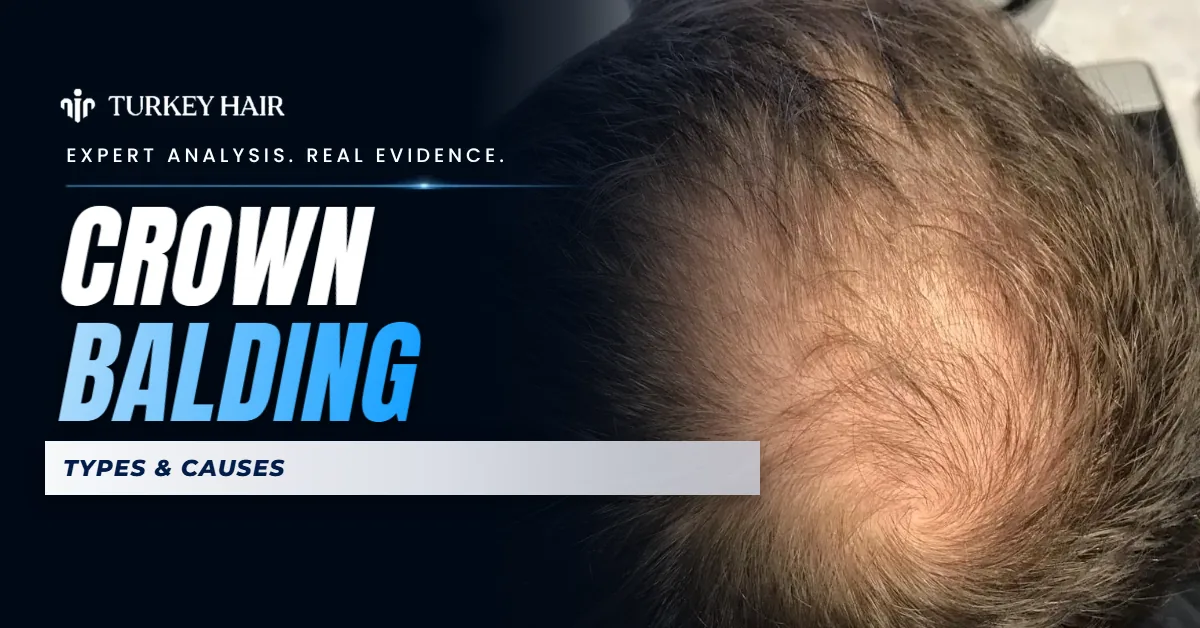 Crown Balding
Crown balding explained: a normal crown vs a thinning one, the stages of crown hair loss, its causes, and the treatments and transplant options.
Read more Spironolactone for Hair Loss
Does spironolactone work for hair loss in women? What studies found, how long it takes, side effects, potassium tests, pregnancy risks.
Read more Ketoconazole Shampoo
How to use ketoconazole shampoo as the NHS and US labels describe: steps, how often for dandruff and seborrheic dermatitis, side effects.
Read more Mounjaro and Hair Loss
Does Mounjaro cause hair loss? Label rates for Mounjaro, Zepbound, Wegovy and Ozempic vs placebo, why shedding starts, how long it lasts.
Read more
Get free consultation
Takes less than 10 seconds
Get Your Free Hair Analysis
Talk to our hair team on a free video call, in your language. You receive a written plan with your technique, estimated grafts and all-inclusive price. If a hair transplant isn't right for you, we tell you honestly.
Your information is 100% confidential.
 Real People
Real Support
- Send your photos on WhatsApp
Front, top and both sides, reviewed by the medical team.
Chat now - Call us directly
Speak to a patient coordinator on the phone.
+90 530 052 46 56 - 24/7 patient support
We respond quickly, day or night, in your language.
Multilingual team, no obligation
Data protectedKVKK and GDPR compliant, 100% confidential
Explore the Hair Library
109 entries, 46 glossary terms and every source linked to PubMed. Pick a topic and keep reading.