Performed at authorized partner hospitals Turkey Hair Center is a Ministry of Health authorized health-tourism intermediary, not a clinic.
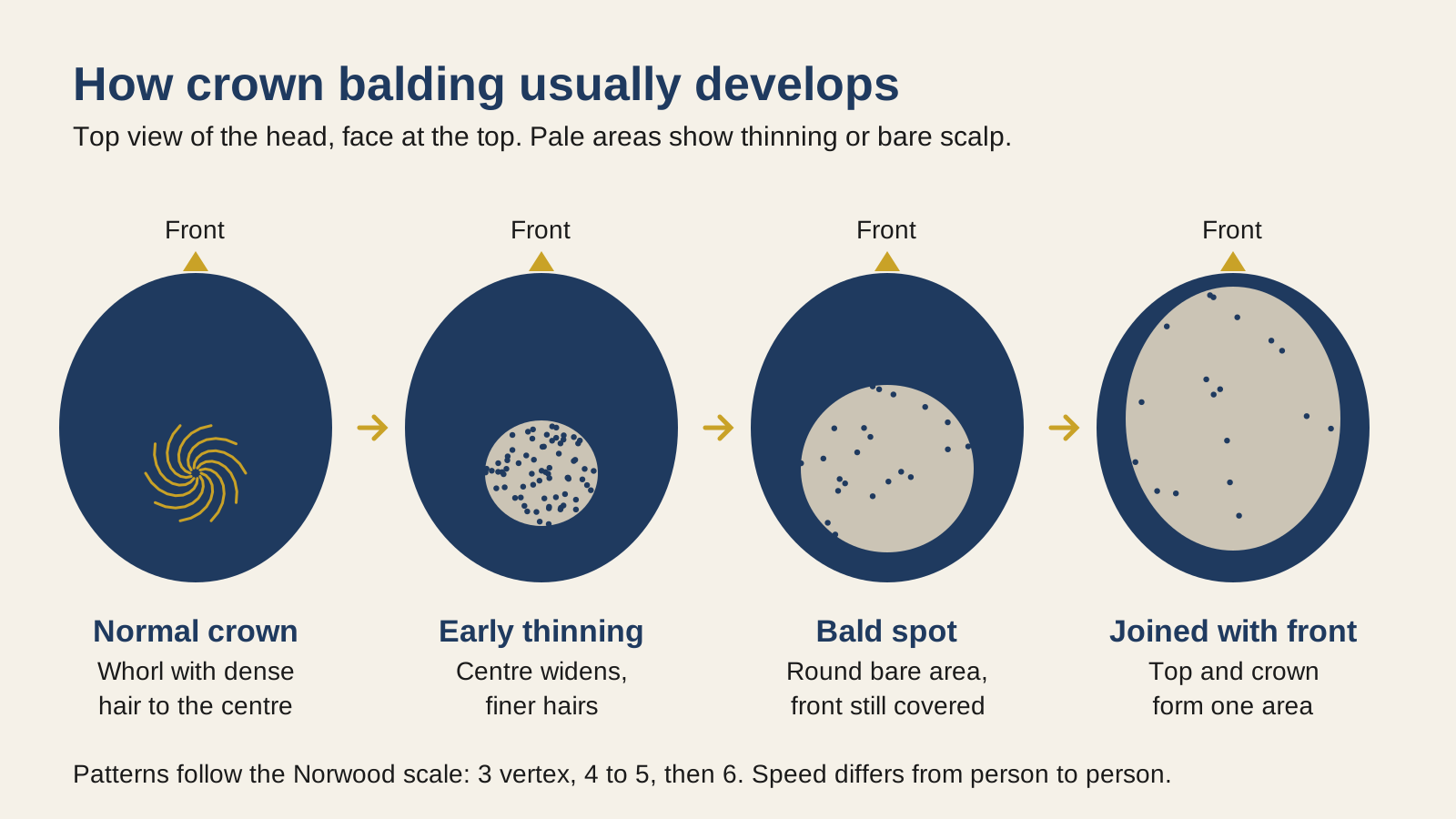
Crown balding is hair loss that starts at the crown, the top back part of the head where hair grows out in a spiral. It usually begins as a widening centre to that spiral, then becomes a round thin or bare patch that can slowly spread forward.
In men it is most often male pattern hair loss, and the American Academy of Dermatology names a bald spot at the top of the head as one of its first signs. Crowning hair loss is hard to see in a mirror, so many people notice it in a photo or at the barber first. This guide covers what a normal crown looks like, the stages of crown balding, its causes, and the treatments with real evidence behind them.
What Is Crown Balding?
The crown, also called the vertex, is the highest point at the back of the head. Crown balding meaning in plain terms: the hair there becomes thinner, shorter and finer until the scalp shows through. Crown thinning meaning is the earlier version of the same process, before any skin is fully bare.
On the Norwood scale, loss that starts here has its own stage, Norwood 3 vertex: the crown thins while the front recedes no further than stage 3.
What Is Crown Hair Loss?
Crown hair loss meaning covers any loss in this area, not only the hereditary kind. Pattern hair loss is the most common cause, but shedding after illness or stress and patchy conditions such as alopecia areata can also show at the crown.
Normal Crown vs Thinning Crown
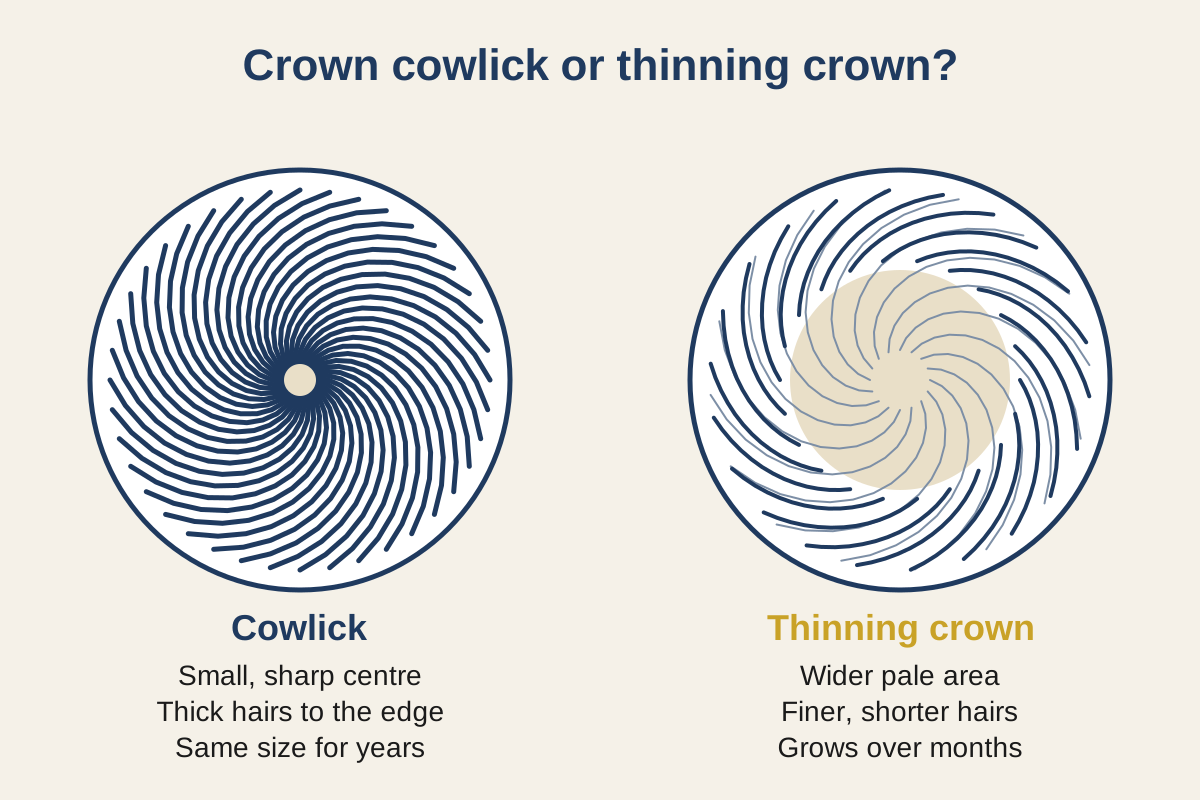
Normal crown hair grows out from a whorl, a spiral with a small point at its centre. Under bright light, or when hair is wet, that point can show a little skin. This worries a lot of people, but on its own it is normal.
The difference is in the hairs next to the centre. With a normal crown they are as thick as the rest of your hair, and the visible spot stays the same size year after year. With thinning, the hairs close to the centre become finer and shorter, and the pale area grows over months. Our guide to the cowlick explains the whorl pattern in more detail.
Types of Crown Balding
The Norwood classification describes how crown loss moves, and the crown balding stages men go through usually follow it:
Norwood 3 vertex: the early stages of crown balding. The loss is mainly at the crown, and the hairline has receded no further than stage 3.
Norwood 4: the crown has sparse hair or none, the front recession is deeper, and a band of moderately dense hair still separates the two areas.
Norwood 5: the band across the top becomes narrower and sparser, and both bald areas grow.
Norwood 6: the band is gone and the crown joins the front in one bald zone.
Norwood 7: only a horseshoe of hair remains at the sides and the back.
Crown balding early stages are easy to miss because the front can still look normal. That is why stage 3 vertex is often found from above, by a partner or in a photo.
Not everyone follows this route. Some men lose the front first and the crown later. In a community study of men aged 18 to 49, 12% had a predominantly frontal "type A" pattern with no separate crown patch.
Women follow a different pattern. Female pattern hair loss usually starts as a widening part and overall thinning on top, while the front hairline stays in place. It rarely forms the round crown patch seen in men.
What Causes Crown Balding?
The main crown balding cause in men is hereditary hair loss. The American Academy of Dermatology describes it as inherited genes that make hair follicles shrink and eventually stop growing hair. The shrinking can start as early as the teens but usually begins later. The hormone DHT drives this process in sensitive follicles; our guide on DHT and hair loss covers why. Tristan Tate named family history when he said in 2023 that he is balding (Tristan Tate hair).
Other crown thinning causes and crown hair loss causes are worth ruling out:
Shedding (telogen effluvium): more hairs fall after a high fever, surgery, major stress, childbirth or rapid weight loss. It is spread across the scalp and often stops on its own.
Alopecia areata: smooth, round patches that can appear anywhere, including the crown.
Ageing: with age most people notice some loss because hair growth slows.
Why Am I Balding at the Crown?
If the crown is thinning slowly and relatives lost hair the same way, pattern hair loss is the most likely reason. Sudden loss, patches, itching, pain or scaling point to something else and need a dermatologist.
What Does Crown Balding Look Like?
Crown balding symptoms build up slowly. Crown thinning symptoms you can check at home include:
A larger, paler centre to the crown spiral than in older photos.
Hairs around that centre that look finer, shorter or lighter.
Scalp shine under overhead lights, in a lift or in a car.
Styling that no longer covers the area, or hair that parts around it on its own.
Crown loss itself does not hurt or itch. If the area is red, scaly, sore or bumpy, have the skin checked rather than assume pattern loss.
How to Fix Crown Balding?
Crown balding treatment depends on the cause and on how far the loss has gone. For pattern loss, the treatments with the strongest evidence slow loss and can regrow some hair while follicles are still alive. Once the area is bare, they cannot rebuild it, and a transplant becomes the option. There is no single crown balding cure.
Medication: The Two Pillars
Minoxidil: an over-the-counter treatment applied to the scalp. The Drug Facts label of a 5% men's foam states it is for regrowing hair on the top of the scalp (vertex only), not for a receding hairline. In a 48-week trial with 393 men, 5% minoxidil produced 45% more regrowth than the 2% strength.
Finasteride 1 mg: a prescription tablet approved for male pattern hair loss. In two five-year trials with 1,553 men, it cut the likelihood of further visible loss by 93% compared with placebo. Side effects are possible, so it is started and followed by a doctor.
Male crown balding treatment often combines both, and both only work while you keep using them. Ask your doctor before starting either, and follow the product label.
Hair Transplant for the Crown
A transplant moves follicles from the back and sides of the head to the bald crown. The crown is a spiral and can keep expanding, so planning is careful. Our medical team starts crown planning from about 1,200 to 2,500 grafts, depending on donor density and the size of the area, and usually treats the hairline first if both are thinning.
Turkey Hair Center is a Ministry of Health authorized health-tourism intermediary; procedures take place at authorized partner hospitals. All-inclusive packages range from $2,550 to $4,500, and our hair transplant cost page explains what each includes. The FUE hair transplant page describes the technique most often used.
How Long Does Crown Balding Take?
There is no fixed timeline. Pattern loss tends to keep moving without treatment. In five years of placebo data from men with mostly crown-pattern loss, the measured area lost 239 hairs, a 26.3% fall in density, and 75% of the men were rated visibly worse. The other quarter were not, which shows how much the pace varies.
The share of men with at least moderate loss rises with age: 16% at 18 to 29 and 53% at 40 to 49 in a community study. Loss that starts early often moves faster.
Can a Balding Crown Grow Back?
Thinning hairs can thicken with treatment while the follicles are still active. The label of a 5% minoxidil foam notes that some men need at least 4 months to see results. Areas that have been smooth and bare for years usually need a transplant.
Can You Stop Crown Balding?
Crown thinning how to stop: start early, while the area is thinning rather than bare. The AAD notes that treatment for hereditary hair loss works better the earlier it starts, and that without treatment the loss continues.
See a dermatologist before treating the crown if the loss is sudden or patchy, if the scalp is red, scaly, itchy or painful, if you are a woman with thinning plus irregular periods, acne or new facial hair, or if you do not know why the hair is falling. These signs point to causes that pattern hair loss treatments do not address.
Dated photos taken from above every few months are the most useful way to see whether a treatment is working.
Crown Balding: How It Compares
People search crown balding vs cowlick, crown balding vs normal and balding crown vs receding hairline because the patterns get mixed up.
Pattern
Where
Hairs at the centre or edge
Changes over time?
Normal crown / whorl
Spiral at the top back
Full thickness
No
Cowlick
Crown, hairline or nape
Full thickness, different direction
No
Crown balding
Crown, spreading outward
Finer, shorter hairs
Yes, slowly widens
Receding hairline
Temples and front
Finer hairs at the edge
Yes, moves back
Crown balding vs whorl is mostly about time: a whorl stays the same, while a balding crown grows.
Hair Thinning Crown
Hair thinning at the crown in women usually belongs to female pattern hair loss, which most often starts in the 40s, 50s or 60s as a widening part. Treatment starts with a dermatologist, because other causes can look the same. Our page on hair transplant for women explains when surgery is considered.
Frequently Asked Questions
Where Does Crown Balding Start?
It usually starts at the centre of the crown spiral, at the top back of the head. The pale point there slowly widens and the hairs around it become finer. From there the thin area spreads outward and, in some men, eventually meets a receding hairline.
How to Hide Crown Balding Female?
Women can soften crown thinning with volume products, a changed parting, root-coloured powders or hair fibres, and clip-in toppers. These hide the scalp but do not treat the cause. Because female thinning has several possible causes, a dermatologist should check it before choosing a treatment.
How to Reverse Crown Balding?
Thinning areas can partly recover with minoxidil or finasteride if follicles are still alive, but results vary and stop when treatment stops. Bare areas need a transplant to restore hair. A doctor should confirm the cause first, because shedding and alopecia areata are treated differently.
Can Crown Balding Be Reversed?
Partly, in the early stages. Medicines can thicken miniaturised hairs and slow further loss, and the AAD notes that early treatment works best. A crown that has been bare for years rarely grows back with medicine alone, so surgery becomes the realistic option.
Can Crown Thinning Be Temporary?
Yes, if the cause is shedding. Telogen effluvium follows triggers such as a high fever, surgery, childbirth or major stress, and the hair often recovers on its own. Thinning that keeps widening slowly over months, without a trigger, is more likely to be pattern hair loss.
Can a Dermatologist Fix Crown Balding?
A dermatologist can diagnose the cause, prescribe treatment such as finasteride and follow your progress. For pattern loss that is already bare, they may suggest a hair transplant. The aim is to stop further loss and thicken what remains.
Is Crown Balding Reversible?
It depends on the stage. Early crown thinning often improves with treatment. Advanced crown balding, where follicles have stopped producing hair, is not reversible with medicine; restoration then means moving follicles from the donor area.
Why Does Crown Balding Happen?
In most men it is hereditary: inherited sensitivity makes crown follicles shrink under the hormone DHT. The crown and the temples are the areas most affected, while the back and sides usually keep their hair, which is why they serve as the donor area.
Check Your Crown
A clear photo taken from above in daylight usually shows whether your crown is normal, thinning or bald. Send it with front and side photos for a free hair analysis, and the medical team will tell you the stage, the likely cause to discuss with your doctor and the options that fit.
Medical disclaimer: This article is for informational purposes only and is not medical advice. Individual results and recovery vary from person to person. Always follow the written aftercare plan from your own medical team.
Kaufman KD, Girman CJ, Round EM, et al. Progression of hair loss in men with androgenetic alopecia (male pattern hair loss): long-term (5-year) controlled observational data in placebo-treated patients. European Journal of Dermatology, 2008;18(4):407-411
Kaufman KD, Rotonda J, Shah AK, Meehan AG. Long-term treatment with finasteride 1 mg decreases the likelihood of developing further visible hair loss in men with androgenetic alopecia (male pattern hair loss). European Journal of Dermatology, 2008;18(4):400-406
Olsen EA, Dunlap FE, Funicella T, et al. A randomized clinical trial of 5% topical minoxidil versus 2% topical minoxidil and placebo in the treatment of androgenetic alopecia in men. Journal of the American Academy of Dermatology, 2002;47(3):377-385
Send three photos: front, top and sides. You get a technique recommendation, a graft range and a straight answer about what is achievable, before anyone talks about price.
Your details are with the team
A patient coordinator will get back to you shortly. If you would like to send your photos now, WhatsApp is the fastest way to do it.
We respond quickly, day or night, in your language.
Multilingual team, no obligation
Data protectedKVKK and GDPR compliant, 100% confidential
Authorized Health Tourism Intermediary
Turkey Hair Center is the hair-restoration brand of Healthy Way Tourism, an authorized international health-tourism intermediary. All medical procedures are performed by licensed medical professionals at authorized healthcare facilities in Turkiye, in accordance with the regulations of the Ministry of Health.