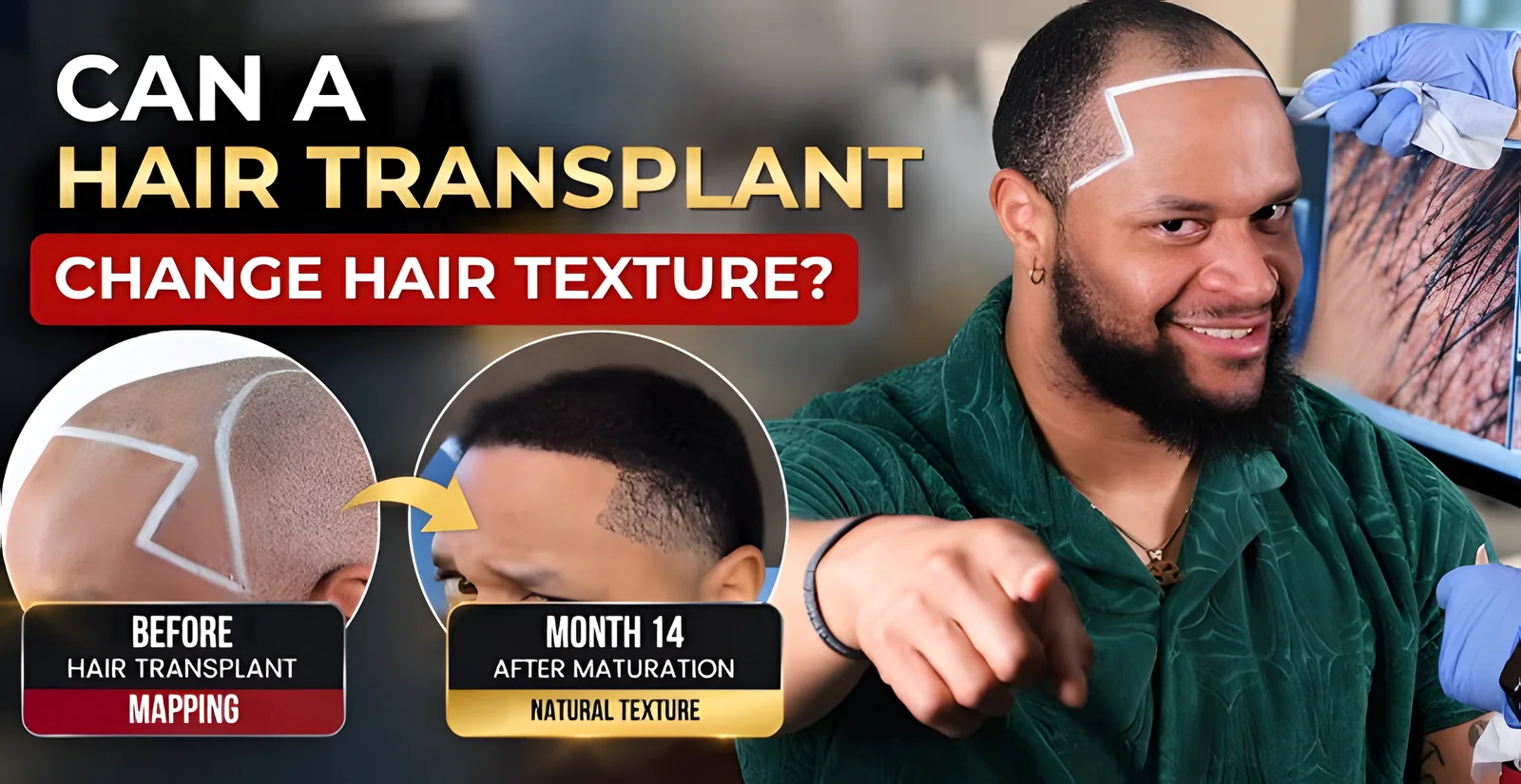
Can a Hair Transplant Change Hair Texture? What to Expect
Wondering if a hair transplant will change your hair texture? Learn why transplanted hair can seem coarse at first and when it returns to its natural state.
Performed at authorized partner hospitals Turkey Hair Center is a Ministry of Health authorized health-tourism intermediary, not a clinic.
A hair transplant rarely causes a permanent shift in your original hair texture.
Your new growth takes its cues from the donor hair extracted from the back of your scalp.
Early on, the emerging hair might look a bit wiry, coarse, or just different.
With time-usually 12 to 18 months-the transplanted hair softens and settles back into its original state.
What Happens to Hair Texture After a Hair Transplant?
Will the new hair match the rest of your head? It is one of the most common questions patients ask.
In most cases, the answer starts with the donor area. When follicles are moved from the back or sides of the scalp, they generally retain the characteristics they had in their original location. This principle, known as donor dominance, is one of the foundations of modern hair transplantation.
Got curly hair? Or pin-straight hair? Your transplanted hair will usually follow the characteristics of those donor follicles. Hair caliber, curl pattern, and other donor-site characteristics can remain evident after transplantation.
But the first few months can be different. Newly growing hair may look finer, feel rougher, or simply behave differently while the follicles recover and the hair matures. That early stage can be confusing. What you see at month three or four is not necessarily what the finished result will look like.
Here is what happens to hair texture during recovery, why donor hair matters, and when you can expect the transplanted hair to settle into its more natural appearance.
Can a hair transplant change hair texture?
While the hair keeps its genetic traits, those early growth stages often feel a bit strange.
Does Transplanted Hair Keep the Same Texture as Donor Hair?
eIn most cases, follicles taken from the back of your head keep their original programming. So if the donor area has a specific wave, expect the transplanted hair to grow the same way.
Why Transplanted Hair May Look Different at First
The extraction and implantation process causes temporary stress to the follicles. The initial hairs they produce are often weaker. They lack moisture. That's why the new growth can temporarily look dry or feel wiry.
Can Transplanted Hair Become Softer Over Time?
Yes. The flexibility returns as the scalp heals.
Does Hair Texture Stabilize After Transplantation?
Will it blend in? That's what everyone wants to know. Look at the back of your head. This area provides a strong preview of your results. Hair follicles keep their original traits even after they are moved. Doctors call this "donor dominance," and this principle allows hair transplants to be effective.
What Determines Hair Texture?
So why does hair have a particular texture in the first place?
Hair Follicle Shape and Hair Texture
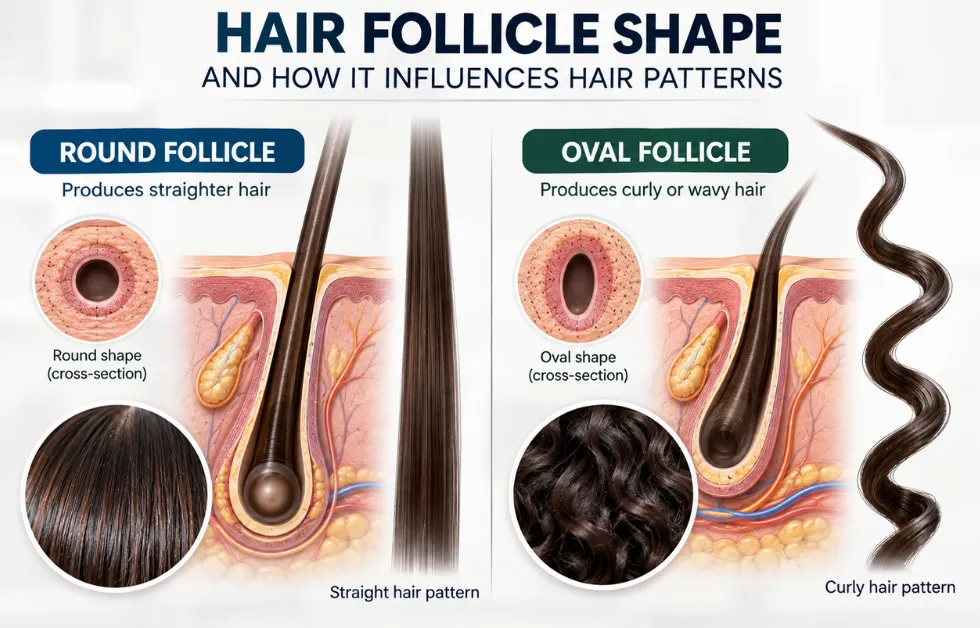
The shape of the follicle plays a major role. Rounder follicles push out straight hair. Oval or asymmetrical shapes give you a curl or coil.
Hair Shaft Thickness
Fine hair has a smaller diameter. Coarse hair is thicker, so each strand tends to provide more visual coverage.
Curl Pattern and Hair Growth Direction
The angle where the follicle sits in your scalp changes how the hair falls. That angle is a big part of your overall curl pattern.
Genetics and Natural Hair Characteristics
Genetics play a major role here. Moving the follicle does not normally change the characteristics it was programmed to produce.
Does Donor Hair Determine Transplanted Hair Texture?
Think of the donor area as the blueprint for your results.
Why the Donor Area Matters
Hair on the back and sides of the head resists the hormones that cause balding. Because surgeons relocate these specific follicles, their native characteristics drive your final look.
Donor Hair Characteristics After Transplantation
Transplanted hair usually retains the original traits of the donor follicle, though its appearance definitely fluctuates during healing.
Can Donor Hair Texture Be Changed During Transplantation?
The steps of a hair transplant procedure are not meant to modify the patient's native follicle texture. Extraction and implantation phases are only performed for hair loss.
What Happens When Donor and Recipient Hair Look Different?
A patient's native hair follicles can be slightly different from the back of the head to the crown area. Sometimes, donor follicles can be thicker than the crown ones. An experienced surgeon easily notices that and blends follicles of varying thicknesses to create a smooth visual transition.
Can Different Hair Types Be Transplanted?
Hair transplant techniques can be applied to various types of hair. However, the surgical approach varies for these procedures.
Straight Hair
Straight hair gives predictable growth angles. However, it often provides less visual coverage compared to curly hair, meaning you might need more grafts for a full look.
Wavy Hair
Wavy hair works beautifully in transplantation. The slight curve provides great scalp coverage and a nice, textured finish.
Curly Hair
Curly hair can create the appearance of greater density. However, its follicle shape can also make extraction technically more demanding, particularly during FUE procedures.
Coily or Kinky Hair
This texture takes specialized surgical skill since the follicle curves underneath the skin. The right extraction techniques are crucial to avoid damaging the graft.
Afro-Textured Hair
Afro-textured hair offers dense visual coverage. Surgeons frequently use modified punch tools to safely extract these unique, curved follicles.
Can a Hair Transplant Make Curly Hair Straight?
It is a common concern among patients. But biologically, a permanent change in the core structure is very uncommon.
Does Curly Donor Hair Stay Curly?: Yes. The follicles retain their natural genetic traits even after relocation.
Why Curly Hair May Look Different During Early Growth: It takes time for the structure to rebuild. Those first new hairs are weak. They simply lack the length and strength to coil properly right away.
Can Straight Hair Become Curly After Transplantation?: No.
What Happens to Curl Pattern as Hair Matures?: Once the shock wears off, normal growth resumes. Your curls will slowly return.
Hair Texture After a Hair Transplant: What to Expect
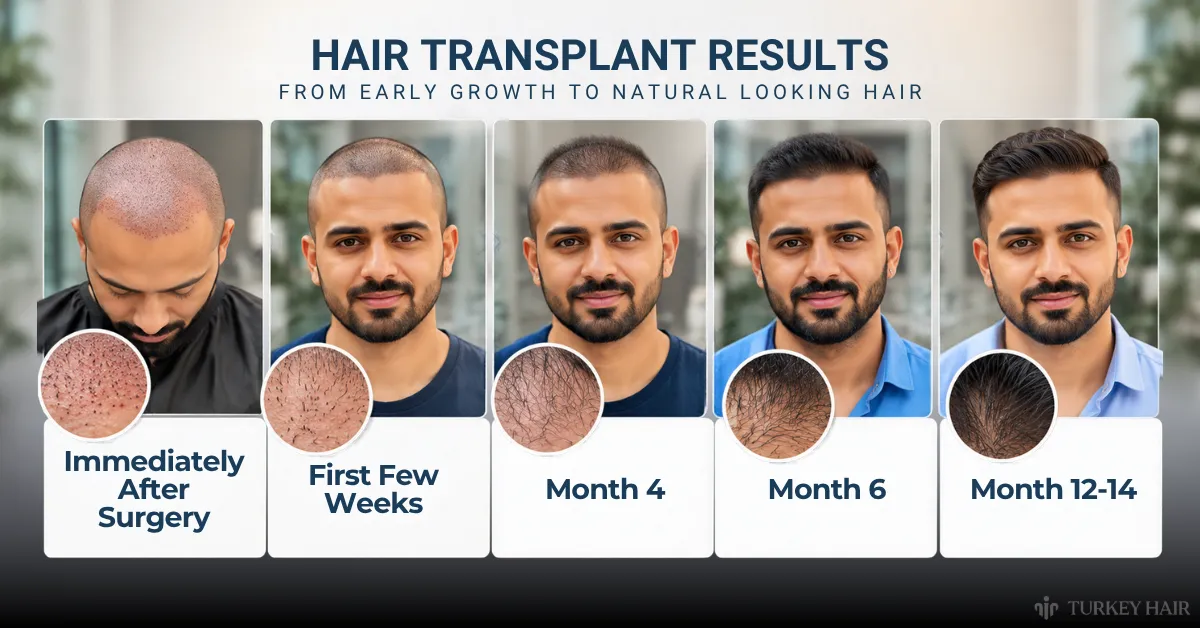
If your transplanted hair looks different after the procedure, give it time before judging the final texture. Hair can't fully grow within a couple of weeks.
Recovery Phase
What to Expect
Immediately After Surgery
You will see tiny, stubbly hairs surrounded by surgical crusts.
During the First Few Weeks
Those initial stubbly hairs usually shed. Welcome to the shock loss phase.
During Early Hair Growth
Around month 3 or 4, new hair starts sprouting. Expect this early growth to be thin, fine, and occasionally wiry.
Around 6 Months
Growth gets more noticeable. The hair might still feel a bit coarse as the area continues to heal.
Around 12 Months
Hair usually looks thicker, softer, and much closer to its mature texture.
After Full Hair Maturation
By 12 to 18 months, the transplanted hair has usually undergone substantial maturation, and its true characteristics become easier to assess.
Why Does Newly Transplanted Hair Sometimes Look Coarse or Wiry?
Early transplanted hair can feel surprisingly coarse or wiry.
Temporary Coarseness During Early Growth
Surgical trauma briefly disrupts the growth cycle. The very first hairs pushed out by recovering follicles are sometimes imperfect, making them feel surprisingly coarse.
Changes in Hair Shaft Appearance
The surrounding environment, including oil gland activity, goes through a recovery phase too. That temporary dryness can make things look wiry.
When Does Transplanted Hair Become Softer?
With maturation, the hair usually becomes softer and easier to manage.
When Should Unusual Texture Be Discussed With a Doctor?
Wait until the 18-month mark. If the texture still feels unusual, make an appointment.
Can a hair transplant change hair texture?
Surgery isn't the only factor. Various lifestyle and biological factors also play a role.
Aging and Hair Texture
Aging naturally changes your hair texture. As you get older, your hair might become finer, drier, or even coarser because of pigment shifts and less oil production.
Hormonal Changes and Hair Texture
Hormonal shifts easily affect your hair. Due to issues like thyroid conditions, hair can alter in diameter and feel over time.
Chemical Treatments and Hair Texture
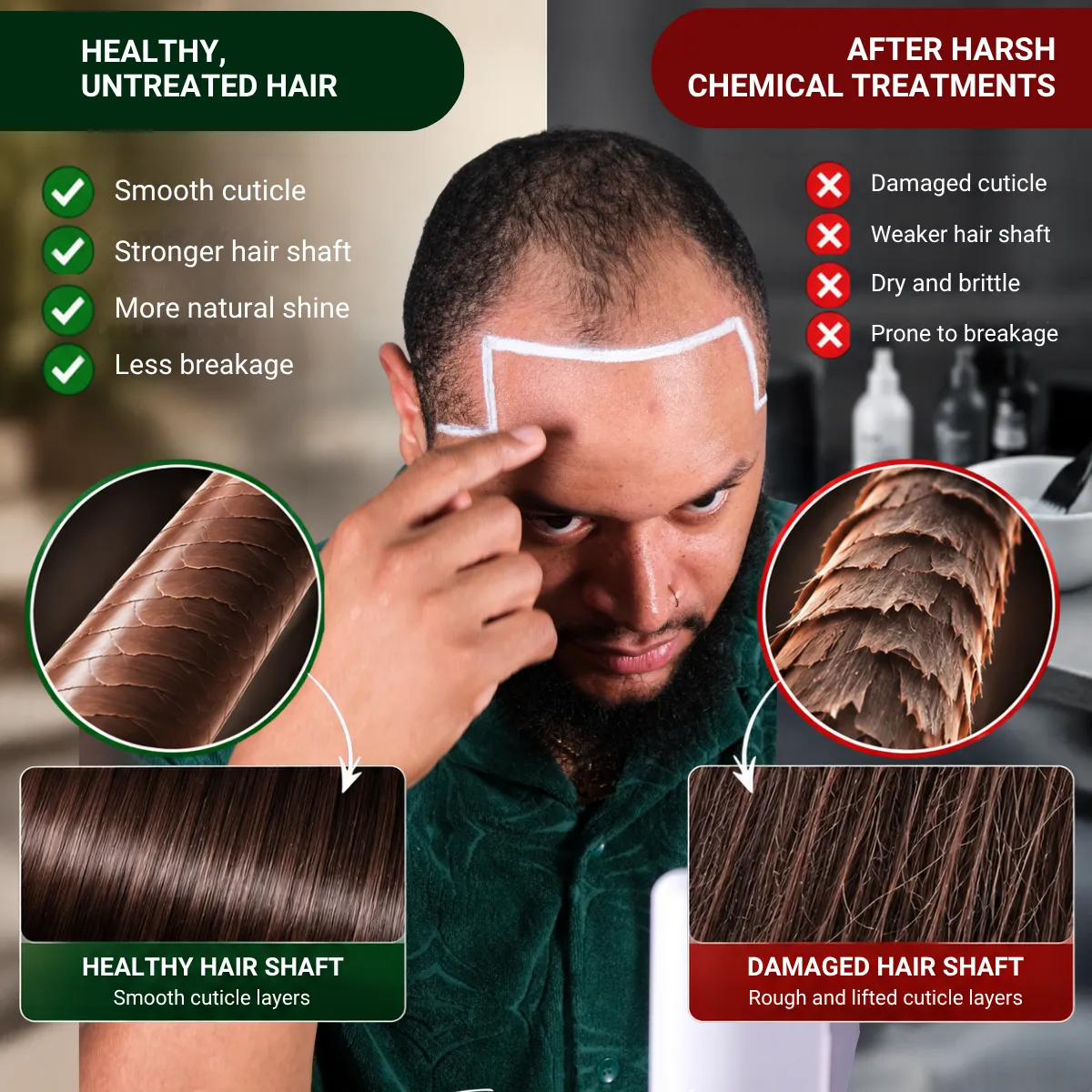
Dyes, relaxers, and perms alter the protein structure of the hair. These chemical treatments alter the hair's texture; this applies regardless of whether the hair has been transplanted.
Medications and Changes in Hair Characteristics
Certain prescription meds influence hair growth cycles and texture as a side effect.
Natural Changes in Hair Over Time
Gradual changes over a decade are normal. Don't automatically blame a past transplant.
Is Hair Texture Important When Planning a Hair Transplant?
Texture also matters when planning the transplant.
Hair Texture and Visual Density
Thicker or curlier hair blocks more light from hitting the scalp. You get the illusion of greater density with fewer grafts.
Fine Hair vs. Coarse Hair
Fine hair can provide less visual coverage per graft, so graft planning also needs to account for hair caliber, density and the desired level of coverage. Coarse hair simply covers more ground.
Curly Hair and Perceived Density
The interlocking nature of curly hair provides strong perceived density. This can improve the appearance of density during surgical planning.
Hairline Design and Natural Appearance
Surgeons pick the finest hairs for the very front of the hairline for a soft transition, saving the coarser hairs for the mid-scalp.
Donor Density and Available Grafts
Your native texture is one of the factors that helps determine how many grafts the surgeon may need to achieve your coverage goals.
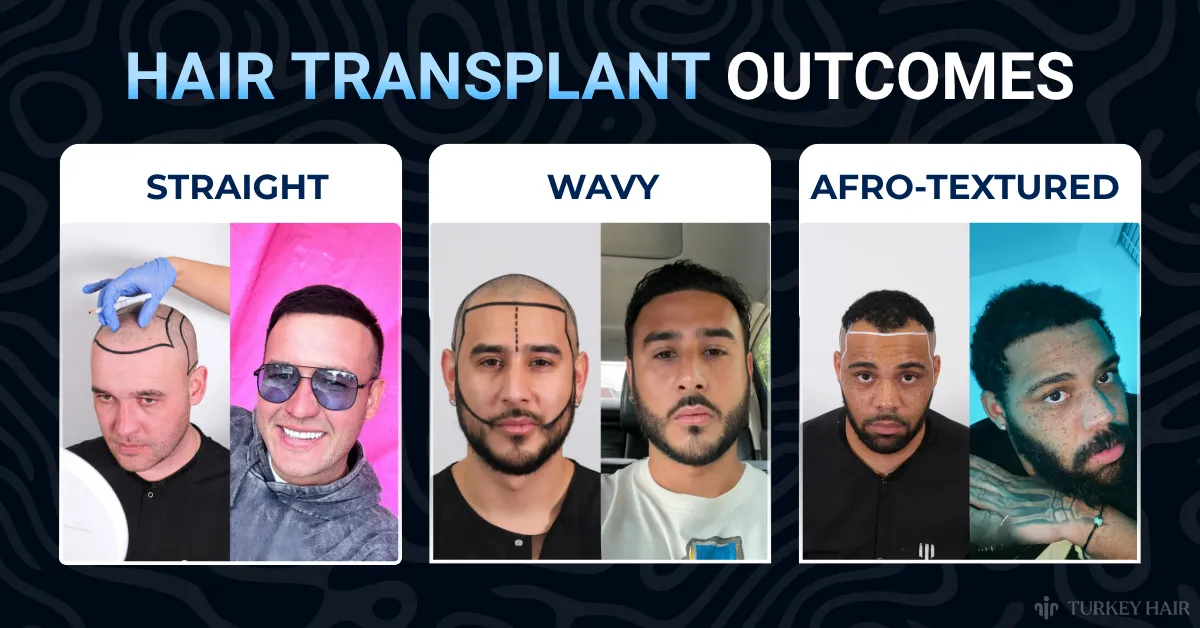
Hair Transplant Results for Different Hair Textures
One approach does not fit everyone.
Results for Straight Hair
Straight hair demands precise angulation during implantation so it lays naturally against the scalp.
Results for Wavy Hair
Wavy hair can provide a natural-looking result because its texture adds volume and movement.
Results for Curly Hair
You get substantial visual density, but the extraction must be careful to avoid cutting the curved follicle beneath the skin.
Results for Afro-Textured Hair
Surgeons frequently use specialized techniques and modified punch tools to safely harvest these tightly coiled follicles.
Why Results Vary Between Patients
Your hair caliber, curl pattern, and scalp laxity are completely unique. Because of that, individual timelines and results always vary.
Does Hair Transplant Technique Affect Hair Texture?
The technique moves the graft. It does not normally change the characteristics the graft already has.
FUE and Hair Texture
FUE involves punching out individual grafts. This doesn't alter the genetic texture of the hair.
DHI and Hair Texture
DHI uses an implanter pen for better control over the angle of growth, but it does not rewrite the hair's inherent texture.
FUT and Hair Texture
FUT removes a strip of tissue, and follicles are separated under a microscope. The process does not impact the natural curl.
Can a hair transplant change hair texture?
While a hair transplant primarily aims to restore hair density, it can sometimes lead to temporary or, in rare cases, permanent changes in hair texture. The transplanted hair follicles, which are taken from a donor area (usually the back or sides of the head), retain their genetic characteristics. Therefore, the new hair will generally grow with the same texture, color, and growth rate as the hair from the donor area.
However, during the initial healing phase and the subsequent growth cycle, patients might observe differences. Newly transplanted hair can sometimes appear:
Thicker or coarser: This is a common temporary phenomenon as the follicles recover from the trauma of transplantation.
Finer or thinner: Less commonly, some patients might notice finer hair initially, which typically thickens over time.
Different curl pattern: The stress of transplantation can sometimes temporarily alter the curl or wave pattern of the hair.
These changes are usually transient and resolve as the hair follicles fully mature and settle into their new location, which can take 12 to 18 months. The final texture of the transplanted hair will largely mirror the texture of the hair in the donor area.
Why Technique and Hair Characteristics Are Different Questions
Technique determines how grafts are harvested and placed. Genetics determine how those grafts grow, feel, and curl over time.
What Can You Do If Transplanted Hair Looks Different?
The early months can be confusing. What you see then is not necessarily what the finished result will look like.
Allow Time for Hair Maturation: Don't judge your final texture until at least 12 to 18 months have passed. The follicles need that time to fully recover.
Follow Post-Transplant Hair Care: Keep your scalp clean and hydrated according to your clinic's guidelines.
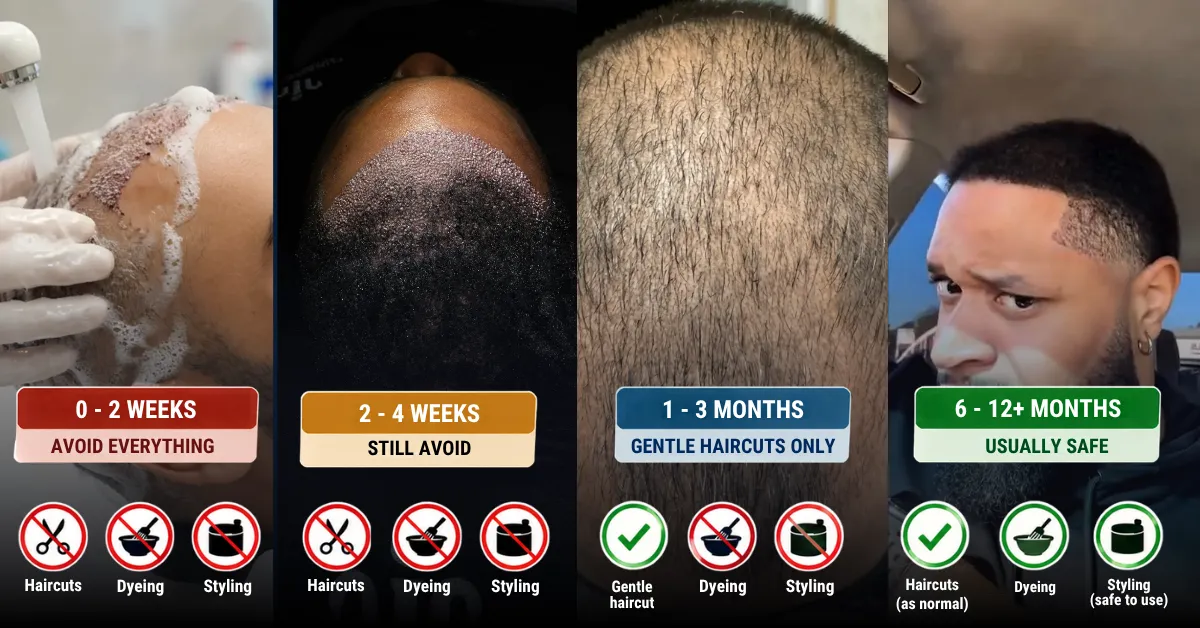
Avoid Aggressive Chemical Treatments During Recovery: Stay away from harsh dyes, bleaches, or relaxers on newly transplanted hair. They damage the fragile shafts.
Discuss Persistent Changes With Your Hair Restoration Doctor: If the texture remains highly irregular after maturation, schedule a follow-up assessment.
How to Maintain Your Natural Hair Texture After a Hair Transplant
Protecting your hair supports long-lasting results.
Gentle Hair Care
Use soft brushes. Avoid aggressive towel-drying to help prevent breakage.
Shampoo and Scalp Care
Use a gentle shampoo according to your surgeon's post-transplant instructions.
Heat and Chemical Treatments
Minimize flat irons and harsh chemical styling products. This protects the integrity of the hair shaft.
Hair Styling After Recovery
Once fully healed and cleared by your doctor, style your transplanted hair just like your native hair.
Protecting the Scalp and Hair From Environmental Damage
Direct sun exposure can damage healing skin. After your doctor appoves always wear a hat outside. Also, wash out chlorine immediately after swimming so your new hair doesn't dry out.
When Should You Talk to a Hair Restoration Specialist?
Never hesitate to call your doctor.
Persistent Unusual Texture Changes: Still dealing with wiry, brittle hair a year and a half later? Have your surgeon take a look.
Poor Growth or Significant Patchiness: A few thin spots early on are fine. However, significant bare patches at month 12 warrant a medical evaluation.
Scalp Symptoms Along With Hair Changes: Pain and severe redness shouldn't linger. If they do, get checked out.
When the Result Does Not Match the Treatment Plan: Sometimes things don't go as planned. Schedule a follow-up if your results look completely different from your initial consultation.
Frequently Asked Questions
Can a Hair Transplant Change Hair Texture?
Not in the long run. Any weird changes early on are just part of the healing journey.
Does a Hair Transplant Change Your Hair Type?
No. A straight-haired person won't suddenly grow curls. The follicles act exactly like they did on the back of your head.
Does Transplanted Hair Keep Its Original Texture?
Yes. By the time it fully grows out, it should look identical to the hair in your donor area.
Can a Hair Transplant Make Curly Hair Straight?
Your curls will return. The new hairs might look a bit flat or straight at first because they are weak. Give them time to regain their shape.
Can Straight Hair Become Curly After a Hair Transplant?
It is highly unlikely. Surgery moves hair; it doesn't change your fundamental genetics.
Does Donor Hair Determine Hair Texture?
Yes, primarily. The back of your head serves as the biological blueprint for your new hairline.
Final Takeaway: Hair Texture and Hair Transplantation
The early months can look very different from the final result. That is why texture is usually judged after the hair has had time to mature.
While new growth often feels coarse or wiry at first due to surgical trauma, the follicles eventually settle. Over 12 to 18 months, the hair regains its expected flexibility and curl pattern. The final look and feel rely heavily on the donor hair's original characteristics, making patience and realistic expectations your best tools during recovery.
About the Author
Nazmi G. is a Senior Trichologist and Hair Restoration Consultant. With extensive experience in the hair transplant industry, he focuses on patient education, graft characteristics, and guiding individuals through post-operative recovery based on a research-driven editorial approach.
Medical Review Note
Dr. Tompi, M.D., reviewed this article for clinical accuracy. As a board-certified plastic and aesthetic surgeon, his daily practice revolves around facial reconstruction and advanced FUE/DHI protocols. He checked this guide to ensure our explanations of follicle behavior, extraction rules, and recovery timelines align with actual operating room standards.
Medical Disclaimer: This guide is only for educational purposes. Reading online articles never replaces a formal, in-person medical diagnosis or a personalized surgical plan.
Editorial Policy & Trust
We believe in straight talk and medical clarity. Because the topic of hair texture and curl patterns can be confusing, we make sure to separate the biological facts clearly. Our recovery expectations reflect actual clinical data, not promotional bait. We actively stand against deceptive clinic marketing-like promising a "perfectly straight hairline" or guaranteeing flawless results over the phone. Patient safety, strict donor preservation, and genuine informed consent always dictate what we publish.
References and Medical Sources
International Society of Hair Restoration Surgery (ISHRS). Post-Operative Care and Expectations. (ishrs.org)
American Academy of Dermatology (AAD). Hair Loss Diagnosis and Treatment. (aad.org)
Zito PM, et al. StatPearls. Hair Transplantation overview, surgical techniques, and anatomical healing processes. (NCBI Bookshelf)
Azar, R. P., Thomas, A. H., Maurer, M., & Lindner, G. (2016). Alterations in Hair Follicle Morphology and Hair Shaft Production After Follicular Unit Transplantation. The American Journal of Dermatopathology. (ovid.com)
Taylor A. Jamerson, Achiamah Osei-Tutu, Crystal Aguh, Hair disorders: Aesthetic approaches for patients of African ancestry, In Procedures in Cosmetic Dermatology, Cosmetic Procedures in Skin of Color, Elsevier. (sciencedirect.com)
Francisco Jimenez, Majid Alam, James E. Vogel, Marc Avram, Hair transplantation: Basic overview, Journal of the American Academy of Dermatology. (sciencedirect.com)
Cleveland Clinic. Hair Loss: Causes, Treatments, and Prevention. (Cleveland Clinic)
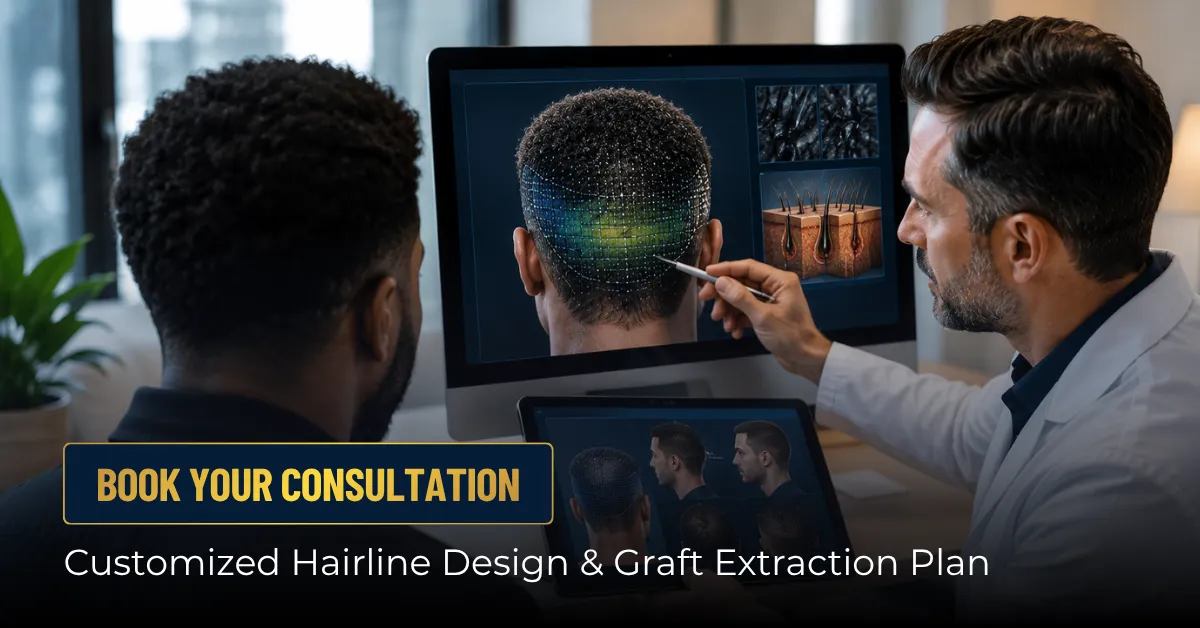
Send three photos: front, top and sides. You get a technique recommendation, a graft range and a straight answer about what is achievable, before anyone talks about price.
Your details are with the team
A patient coordinator will get back to you shortly. If you would like to send your photos now, WhatsApp is the fastest way to do it.
We respond quickly, day or night, in your language.
Multilingual team, no obligation
Data protectedKVKK and GDPR compliant, 100% confidential
Authorized Health Tourism Intermediary
Turkey Hair Center is the hair-restoration brand of Healthy Way Tourism, an authorized international health-tourism intermediary. All medical procedures are performed by licensed medical professionals at authorized healthcare facilities in Turkiye, in accordance with the regulations of the Ministry of Health.