How Long Do Hair Transplants Last: Are the Results Permanent
Transplanted hair usually keeps growing for many years, because it is taken from the back and sides of the scalp, where hair resists pattern hair loss. It is not always permanent, though: some grafts thin with age, and the native hair around them can keep falling out, which changes how the result looks.
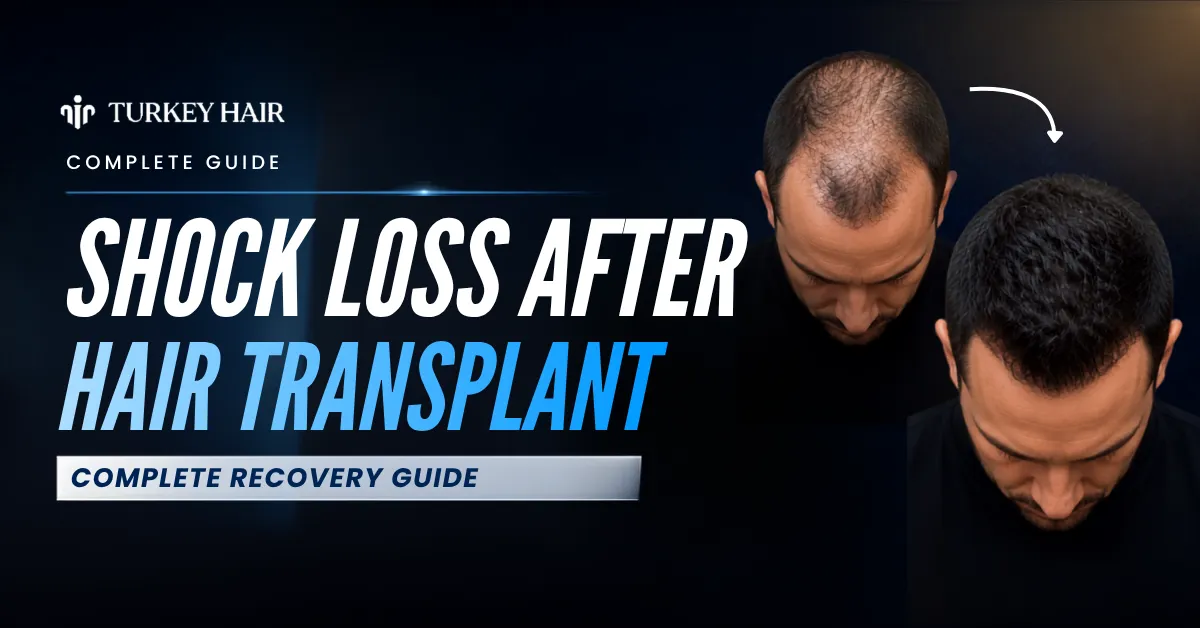
Cover built on a photo of the back of a man's head with pattern hair loss. Photo: Beyond My Ken, CC BY-SA 3.0, via Wikimedia Commons, cropped, text and logo added.
So how long do hair transplants last? For most people the moved hair outlasts the hair it was placed among, but long-term studies show a range of outcomes rather than one fixed answer. This guide covers why transplanted hair survives, what follow-up studies measured, why many people later consider a second session, how medication fits in, how age changes the plan, and what can shorten a result.
This photo does not show a hair transplant. It shows the pattern every transplant depends on: the hair on top has thinned, while the band across the back and sides has stayed dense. That band is the donor area, and its staying power is the reason transplanted hair can last.
Are Hair Transplants Permanent?
Hair transplants are designed to be long-lasting, and the transplanted hair is often described as permanent. The reason goes back to 1959, when dermatologist Norman Orentreich reported that small grafts of hair-bearing scalp moved into bald areas kept growing hair. The grafts behaved like the place they came from, not the place they were moved to, an idea that became known as donor dominance.
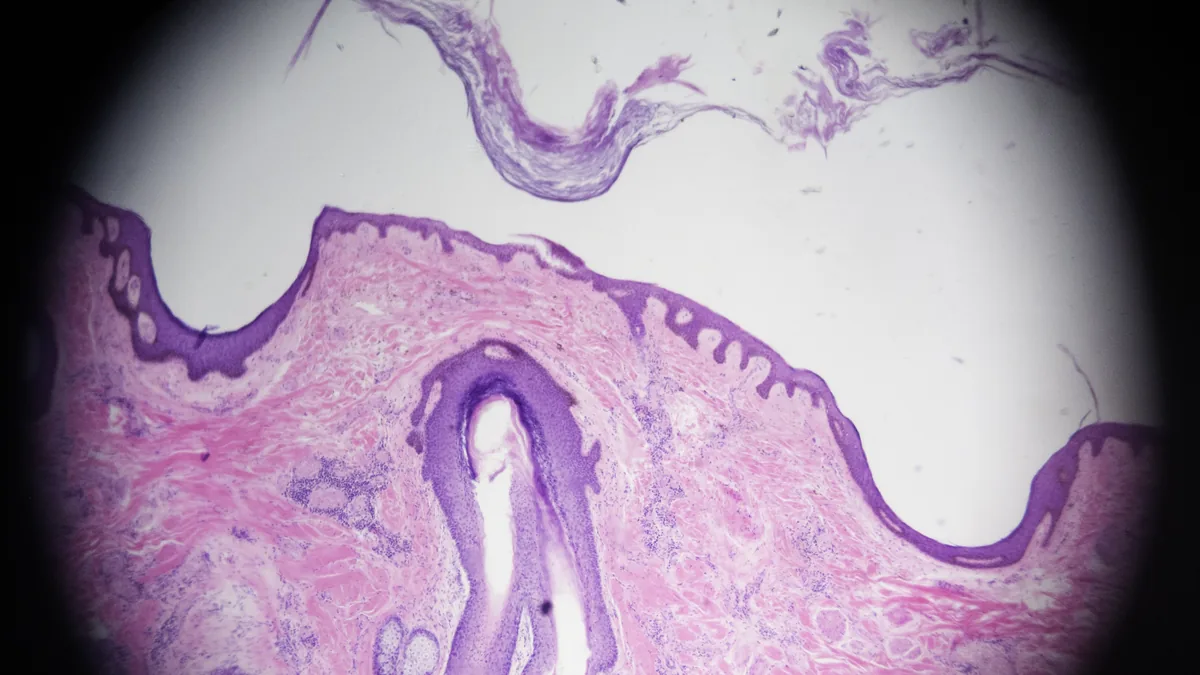
A stained microscope section of scalp skin, with a hair follicle visible below the surface layer. Photo: Lazar.zenit, CC BY-SA 4.0, via Wikimedia Commons, cropped.
A 2024 paper in the Indian Journal of Plastic Surgery describes donor dominance and the safe donor area as the foundation of hair restoration surgery. In the safe donor area, the authors write, hair loss does not progress. The same paper reports that more than 90% of their patients had no significant reduction in the density of the transplanted hair.
The NHS lists a hair transplant as an option for permanent baldness that runs in families. It also warns that there is a small risk the transplant will not take, and that your hair may keep thinning around the transplanted area.
Is a Hair Transplant Permanent for Life?
The grafts often are, but your overall look is not frozen in time. Three things decide how a result ages:
Where the grafts came from: hair from the stable band at the back and sides tends to keep growing.
How your native hair behaves: the hair you were born with on top can keep thinning after surgery.
How the surgery was done: graft handling, healing and donor planning all affect what survives.
How Many Years Do Hair Transplants Last?
Hair transplants are not measured in a fixed number of years. The grafts come from the donor band at the back of the scalp, which resists the hormone behind pattern baldness, so they are expected to keep growing for the rest of your life. Published follow-up, however, rarely runs past four years.
Fixed years are the wrong frame anyway. A transplant lasts as long as two things hold true: the donor hair stays stable, and the native hair around it is protected. When untreated native loss advances, the overall look can fade long before any single graft stops growing.
This is why the same operation ages so differently between people. Two patients given an identical graft count can look worlds apart a decade later, decided less by the surgery than by how far each person's own hair loss travels and whether medication is used to slow it. Good planning accounts for that future loss from the start, rather than treating the transplant as a one-time fix.
What Long-Term Studies Show About Graft Survival
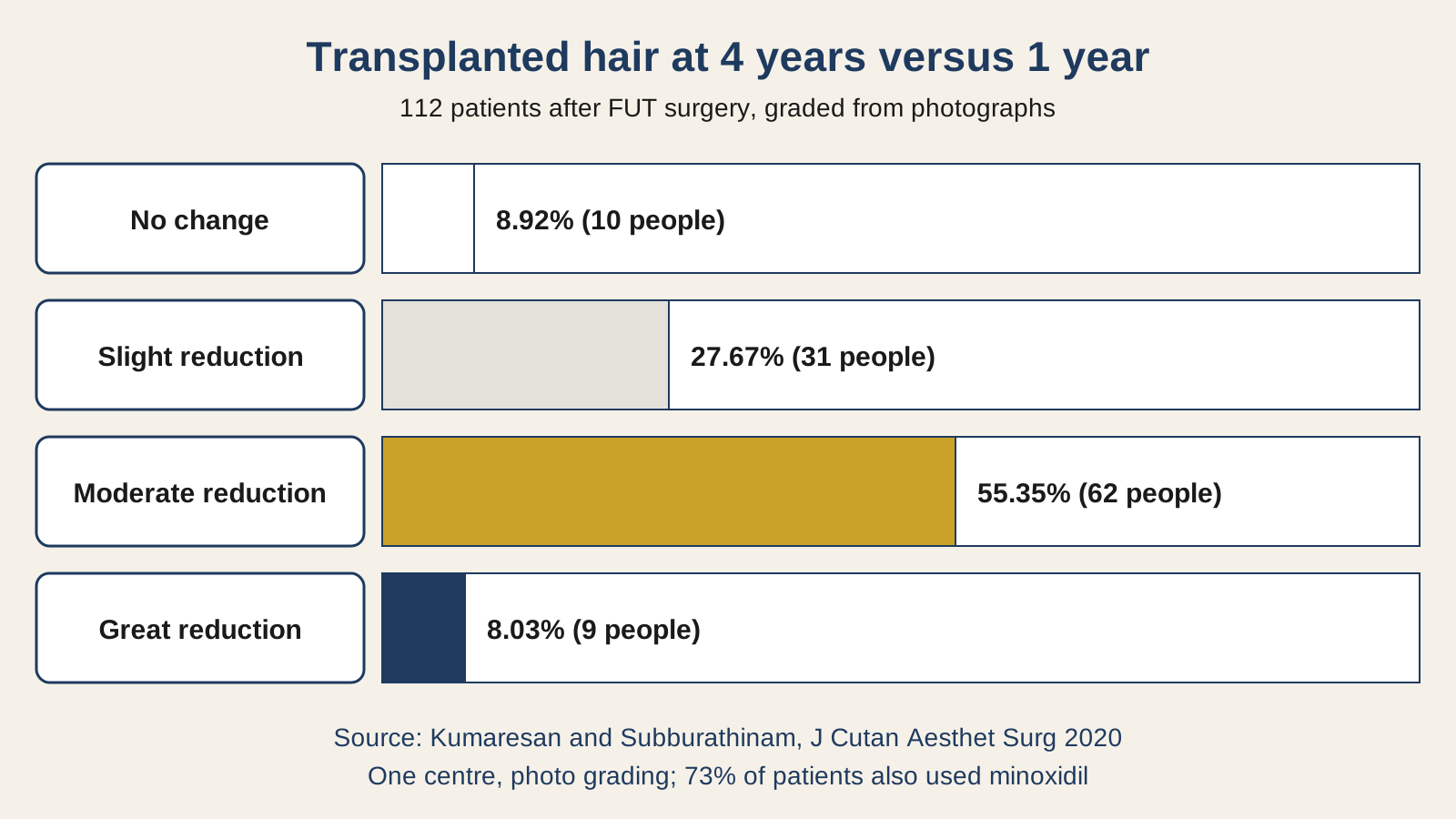
Few studies follow transplanted hair for many years, which is why honest answers about longevity are cautious. One of the clearest follow-ups comes from a 2020 study in the Journal of Cutaneous and Aesthetic Surgery. Researchers compared photographs of 112 patients, aged 25 to 58, taken one year and four years after FUT surgery, a technique that removes a strip of scalp from the donor area.
At four years, most patients had less transplanted hair than at one year. The authors graded 55.35% as moderately reduced, 27.67% as slightly reduced, 8.03% as greatly reduced and 8.92% as unchanged. Their conclusion was direct: grafts may not last permanently for all patients, and miniaturization can also reach hair in the back of the head that was assumed to be safe.
These two studies point in different directions, and that is useful to know. Here they are side by side, with a finasteride trial added:
Study
Who was followed
What was measured
Main finding
Kumaresan and Subburathinam, 2020
Who was followed
112 patients after FUT surgery
What was measured
Photos at 4 years compared with 1 year
Main finding
Most showed some reduction in transplanted hair
Punia, Goel and Gupta, 2024
Who was followed
Patients whose donor area was measured with a ratio method
What was measured
Density of the transplanted hair
Main finding
More than 90% had no significant reduction
Leavitt and colleagues, 2005
Who was followed
79 men aged 20 to 45, with or without finasteride
What was measured
Hair around the transplant at 48 weeks
Main finding
Finasteride improved hair surrounding the grafts
Neither study can tell you exactly what will happen to your own scalp. What they do suggest:
Graft survival is likely, not certain: results vary from person to person.
The donor area matters: hair taken from the most stable zone is the best long-term bet.
Follow-up is short: the studies cited here cover years, not decades.
Methods differ: photo grading and density counts are not the same measurement.
Why Native Hair Loss Can Lead to a Second Session
A transplant moves hair; it does not switch off pattern hair loss. MedlinePlus Genetics notes that in men with androgenetic alopecia, thinning at the crown often progresses to partial or complete baldness. If the native hair between and behind the grafts keeps falling out, an island of transplanted hair can be left standing in front of a thinning area.
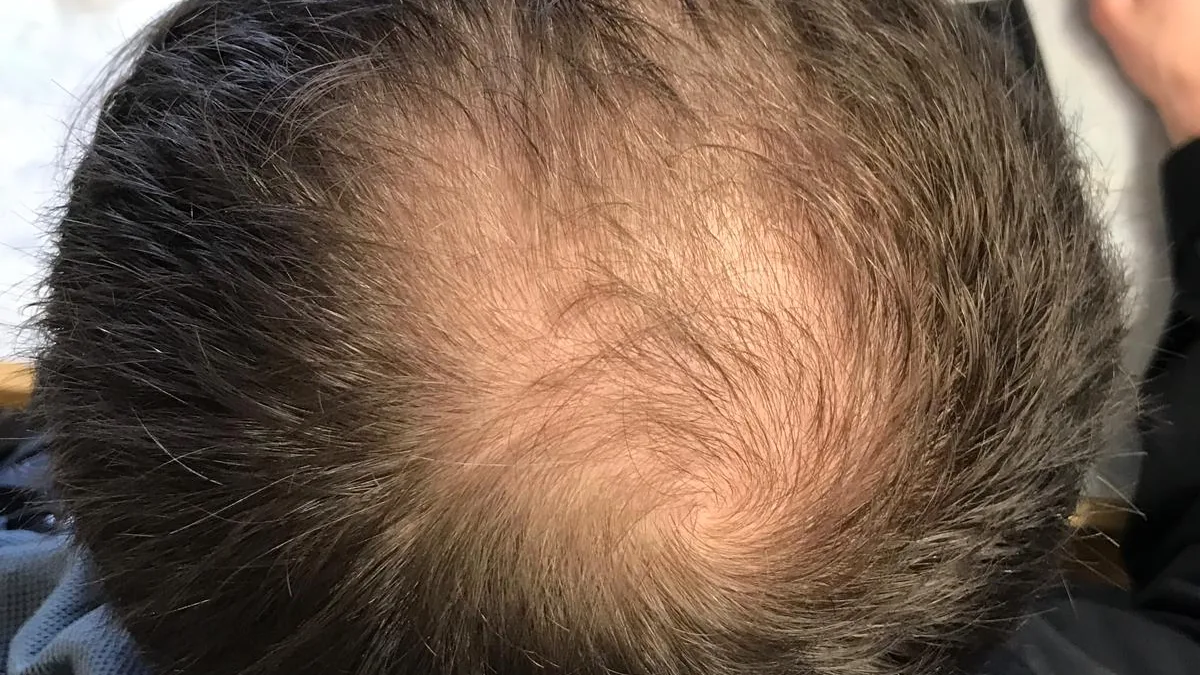
The crown of a man with male-pattern hair loss, seen from above, with thinner hair in a rounded patch. Photo: BlaiserPascal, CC BY-SA 4.0, via Wikimedia Commons, cropped.
The NHS says large areas may need two or more sessions, and that your hair might continue to thin around the transplant. This is why a surgeon plans the hairline and graft use with future loss in mind, not just the gap you see today. The stages of the Norwood scale show how loss usually spreads from the temples and crown.
Signs that a second session might come up later include:
Loss that is still active, with recent shedding or fast change.
Thinning at the crown as well as the front, as described in the guide to crown balding.
A family pattern of extensive baldness.
A first session that covered only part of the thinning area.
A second procedure is planned around the donor reserve that is left, so it is usually smaller and more targeted. To see what a smaller graft count can cover, read our page on a 2000 grafts hair transplant.
The Role of Medical Therapy After a Transplant
Medication cannot make transplanted hair more permanent, but it can protect the native hair around it. A randomized, double-blind trial published in Dermatologic Surgery in 2005 gave 79 men either finasteride 1 mg or a placebo from four weeks before until 48 weeks after their transplant. Visible increases in hair on the top and front of the scalp were recorded in 94% of the finasteride group and 67% of the placebo group.
Round white tablets of generic finasteride, the medicine discussed in the trial above. Photo: Kristoferb, CC BY-SA 3.0, via Wikimedia Commons, cropped.
The authors concluded that finasteride improved scalp hair surrounding the transplant and increased hair density. A 2002 roundtable of 11 hair loss experts reached a similar view on topical minoxidil: in their experience it can complement surgery by slowing further loss. The hormone behind this kind of loss is explained in our page on DHT and hair loss.
The evidence is not one-sided. In the four-year FUT study, 73% of patients continued minoxidil, yet the researchers found no statistically significant effect of minoxidil or finasteride on how the grafts held up. Points to discuss with your doctor:
Finasteride: a prescription tablet for men, aimed at slowing hair loss driven by DHT.
Minoxidil: a topical treatment that may help the hair around the grafts.
Timing: when to start, pause or restart a medicine around surgery is a medical decision.
Side effects: these should be weighed with a doctor before any long-term plan.
A 2021 review by surgeon Robert True goes further for people losing hair quickly. Where loss is rapid and more than 15% of hairs are miniaturized, he advises six to twelve months of medical therapy before surgery. Without it, he warns, patients may end up chasing their progressing baldness with a series of surgeries.
Planning a Hair Transplant by Age
Age matters because it changes how much is still unknown about your pattern of loss. True's review lists very young patients and those with unstable hair loss among the groups who may not be good candidates yet. His advice is blunt: beware the young patient, especially in the late teens and early twenties.
Age group
What is still uncertain
Planning focus
Late teens to early 20s
What is still uncertain
The final pattern of loss
Planning focus
Caution, medical therapy and waiting before surgery
Mid 20s to 30s
What is still uncertain
How far loss will progress
Planning focus
A conservative hairline and grafts kept in reserve
40s and older
What is still uncertain
Less, as the pattern is often clearer
Planning focus
Covering the current pattern with the donor supply available
The table describes planning questions, not age limits. A stable pattern in a younger patient and fast loss in an older one can both change the plan. To understand how technique choices fit into this, see our comparison of FUE vs DHI.
What Can Shorten Hair Transplant Results?
Most of the factors that shorten a result are about graft survival in the first months or the donor area over the years. A 2026 review of complications in follicular unit excision, published in Frontiers in Medicine, lists smoking, diabetes, high blood pressure and abnormal scarring among the patient risk factors.
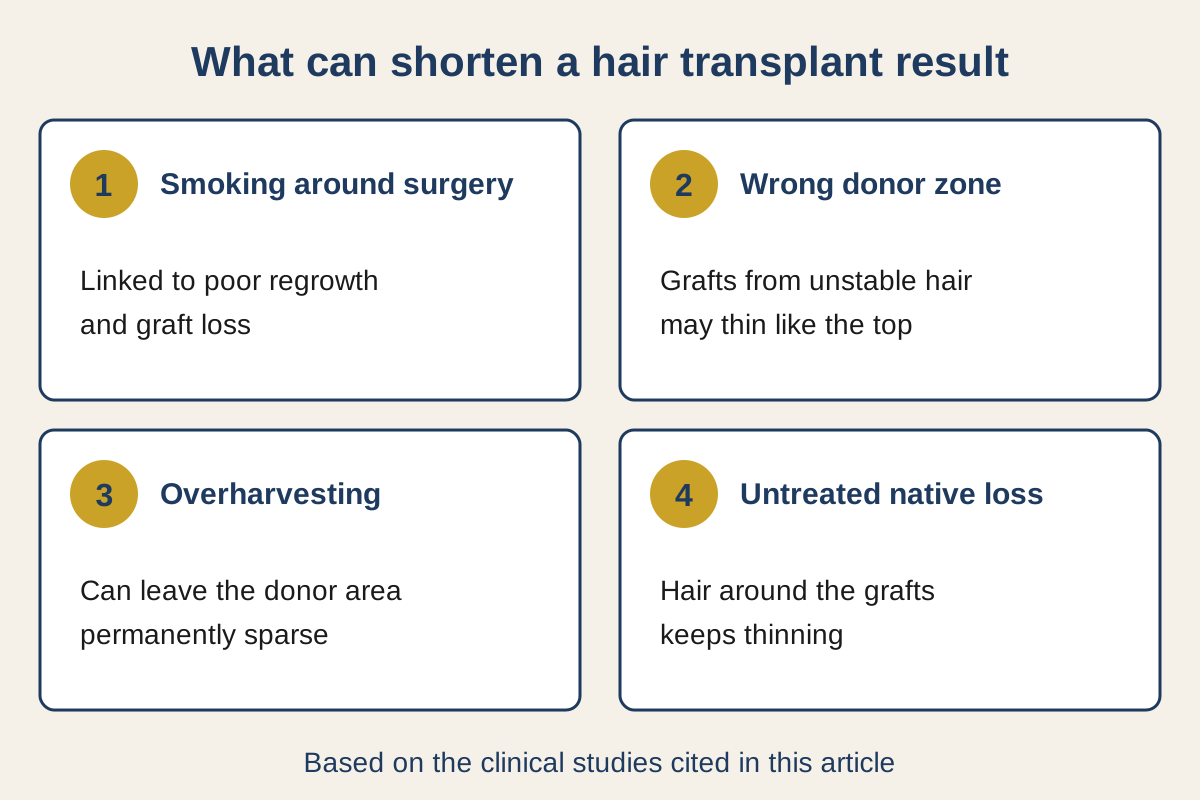
The four factors in the graphic each act in a different way:
Smoking: the 2026 review links sparse regrowth to smoking and vascular disease and advises stopping. In a 2024 series of 18 patients with tissue death at the recipient site, smoking was the most common risk factor, and all 18 ended up with scarring and graft failure.
Scarring: scar tissue at the recipient site can reduce how many grafts take and grow.
The wrong donor zone: the same review describes the back and upper sides of the head as the safe donor area, with greater long-term stability. Hair taken from outside it may thin like the hair on top.
Overharvesting: taking too many grafts can leave the donor area permanently depleted, with a patchy, moth-eaten look.
How the grafts are taken matters too. The FUE hair transplant page explains how grafts are taken one by one from the donor area, and the DHI hair transplant page covers placement with an implanter pen.
Hair Transplant Results Timeline
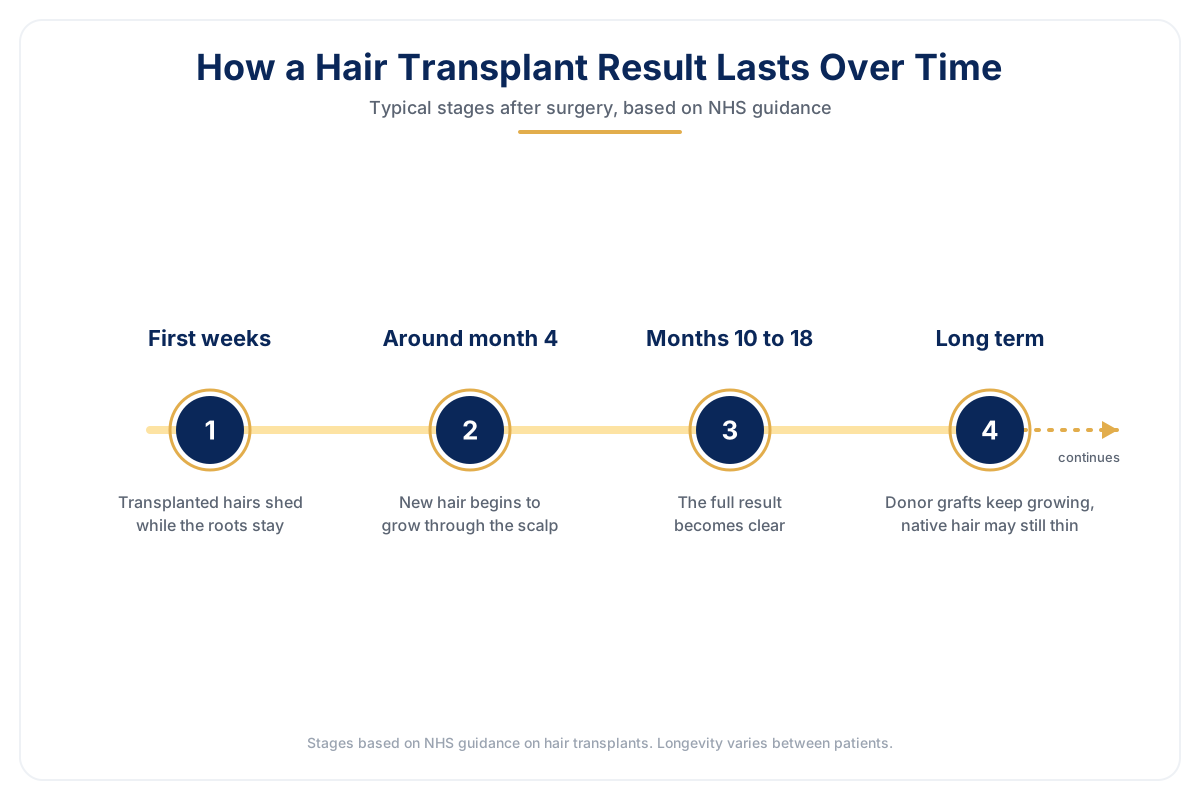
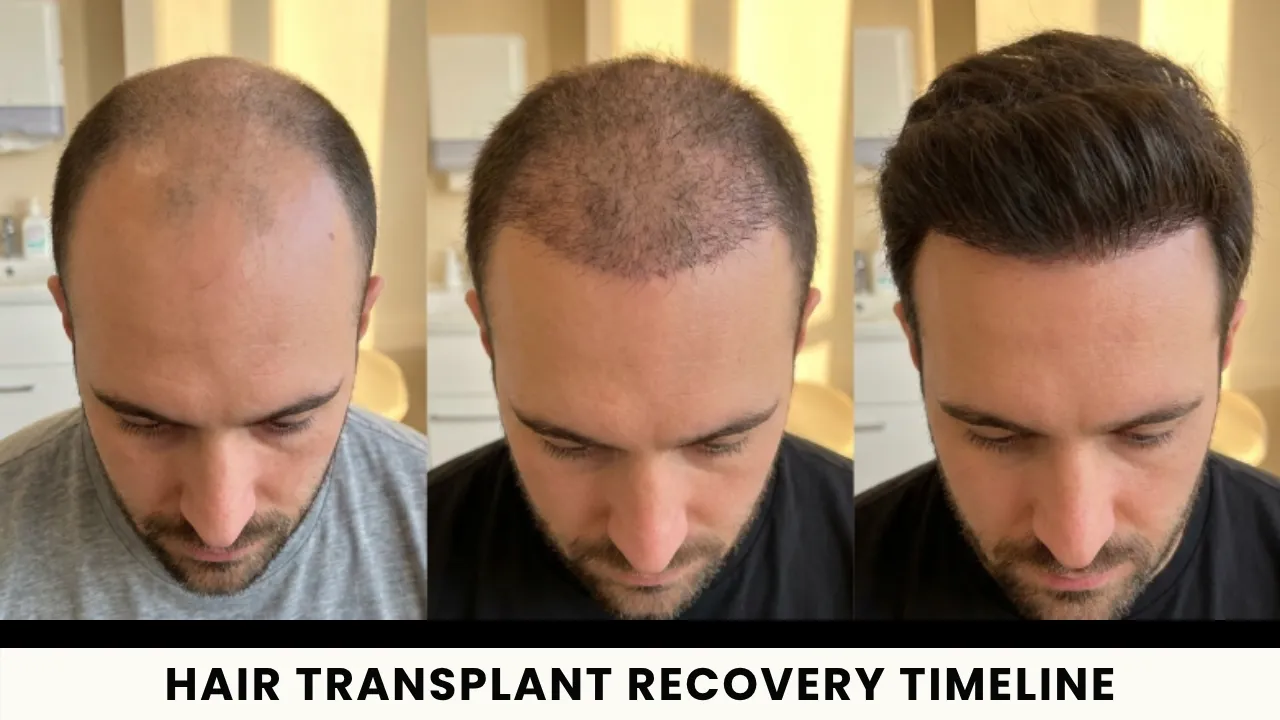
Before you can judge how long a transplant lasts, you need to see the final result, and that takes time. The NHS explains that transplanted hair often falls out a few weeks after surgery. New growth usually starts from about four months, and the full result can take 10 to 18 months.
The main stages look like this:
First weeks: the transplanted hairs shed, while the roots stay in place.
Around four months: new hair starts to grow through.
Months six to twelve: density builds and texture settles.
How a hair transplant result develops over time, based on NHS guidance.
Is a Long-Lasting Result Worth the Cost?
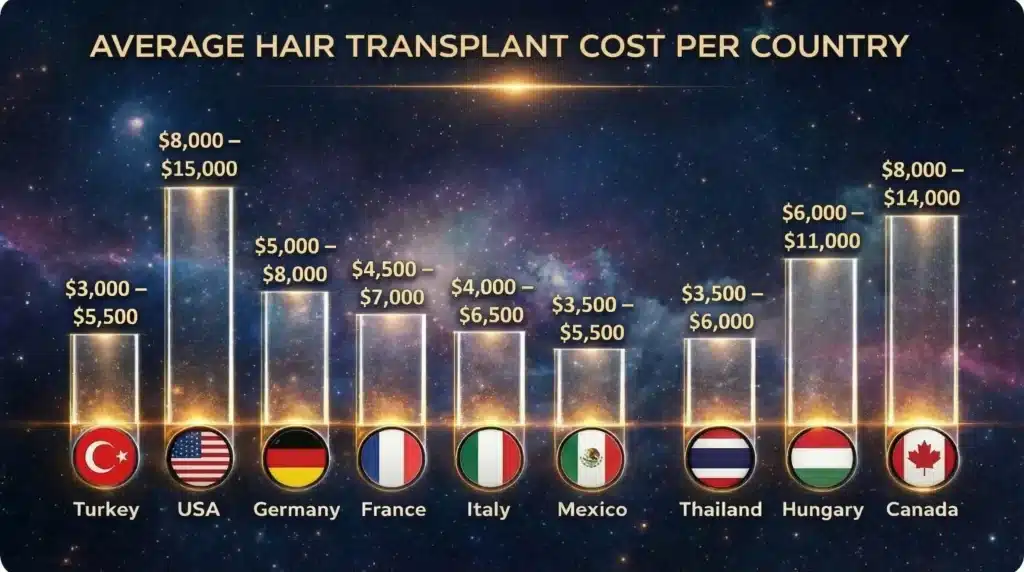
A transplant that lasts many years spreads its cost over a long time, but only if it is planned with future loss in mind. At Turkey Hair Center, procedures are carried out by our own medical team in contracted hospitals in Istanbul. Packages range from $2,550 to $4,500.
What changes the value of a result over time:
Donor planning: grafts kept in reserve leave room for a later session.
Medical therapy: protecting native hair can keep the result looking balanced.
Realistic coverage: a design that suits you at 50 as well as at 30.
For what is included in each package and how prices compare, see the full guide to hair transplant cost.
Talk to a doctor before starting, stopping or changing finasteride, minoxidil or any other hair loss medicine, and see a dermatologist if hair loss is sudden, patchy or comes with a sore or scaly scalp.
Frequently Asked Questions
Do Hair Transplants Last Forever?
Not always. Hair from the stable donor area often keeps growing for many years, but a four-year follow-up of 112 patients found that most had some reduction in transplanted hair. Native hair around the grafts can also keep thinning.
Will I Go Bald Again After a Hair Transplant?
The transplanted hair usually stays, but the hair you were born with can keep thinning if pattern hair loss continues. That can leave gaps around or behind the grafts, which is why some people use medication or later have a second session.
What Does a Hair Transplant Look Like After 20 Years?
There is no reliable data on how most transplants look after 20 years. The studies cited here follow patients for about one to four years. Over longer periods, the look depends mostly on how much native hair is lost and how much donor reserve was kept.
What Is the Best Age for a Hair Transplant?
There is no single best age. Surgeons are more cautious with patients in their late teens and early twenties because the final pattern is still unknown. A stable pattern of loss matters more than a birthday.
Can Transplanted Hair Fall Out?
Yes, in two ways. It sheds in the first weeks after surgery and then regrows, which is expected. Over the long term, some grafts can thin, especially if they came from outside the safe donor zone.
Do I Need to Take Finasteride for Life After a Transplant?
Not to keep the grafts, which come from DHT-resistant hair. Finasteride is aimed at the native hair around them. Whether to take it, and for how long, is a decision to make with your doctor.
Is FUE or FUT More Permanent?
The sources cited here do not compare long-term survival between FUE and FUT. The four-year study only followed FUT patients. In both techniques, where the grafts are taken from matters more than the name of the method.
How Many Hair Transplants Can You Have?
The limit is the donor area, not a fixed number. The NHS notes that large areas may need two or more sessions, and overharvesting can leave the donor area permanently thin.
Does a hair transplant from Turkey last as long as one done elsewhere?
It can. How long a transplant lasts depends on how carefully the grafts are chosen from the stable donor band and on the surgical technique, not on the country where the work is done. A transplant planned and carried out to a high standard in Istanbul follows the same biology as one performed anywhere else. What really varies between patients is their own ongoing hair loss, which is why a maintenance plan matters more than the location.
How many years does a hair transplant last on average?
There is no reliable average in years, because published studies rarely follow transplanted hair beyond about four years. In the largest long term FUT series, most patients still had growing transplanted hair at four years, although many showed some drop in density. The grafts themselves are expected to persist into later life, and it is usually the surrounding native hair that changes the overall picture first.
How long can a hair transplant last at most?
There is no fixed ceiling. Because the moved follicles come from the zone that resists the hormone driving pattern baldness, they are expected to keep producing hair for the rest of your life rather than switching off at a set age. The limit on the visible result is almost always the native hair thinning around the graft, not the graft itself running out, which is why protecting the surrounding hair extends the look.
Is Your Hair Still Thinning Around a Transplant?
If you had a transplant years ago and the hair around it is thinning, or you are planning a first session and want it to last, the pattern of your loss and your donor density are the place to start. Send clear photos for a free hair analysis, and the medical team will tell you what they see. You can also check the FAQ for common questions about travelling to Istanbul for treatment.
Sources and medical review
Orentreich N. Autografts in alopecias and other selected dermatological conditions. Annals of the New York Academy of Sciences, 1959;83:463-479
Kumaresan M, Subburathinam DM. Longevity of hair follicles after follicular unit transplant surgery. Journal of Cutaneous and Aesthetic Surgery, 2020;13(4):292-297
Punia S, Goel A, Gupta A. Patient-based ratio method for permanent zone donor area calculation in hair transplant. Indian Journal of Plastic Surgery, 2024;57(6):474-478
True RH. Is every patient of hair loss a candidate for hair transplant? Deciding surgical candidacy in pattern hair loss. Indian Journal of Plastic Surgery, 2021;54(4):435-440
Ceran F. Recipient site necrosis after follicular unit excision technique for hair transplantation: evaluation of 18 patients. Aesthetic Plastic Surgery, 2024;48(19):3735-3740
Talk to our hair team on a free video call, in your language. You receive a written plan with your technique, estimated grafts and all-inclusive price. If a hair transplant isn't right for you, we tell you honestly.
Your information is 100% confidential.
Real People Real Support
Send your photos on WhatsApp
Front, top and both sides, reviewed by the medical team.