Performed at authorized partner hospitals Turkey Hair Center is a Ministry of Health authorized health-tourism intermediary, not a clinic.
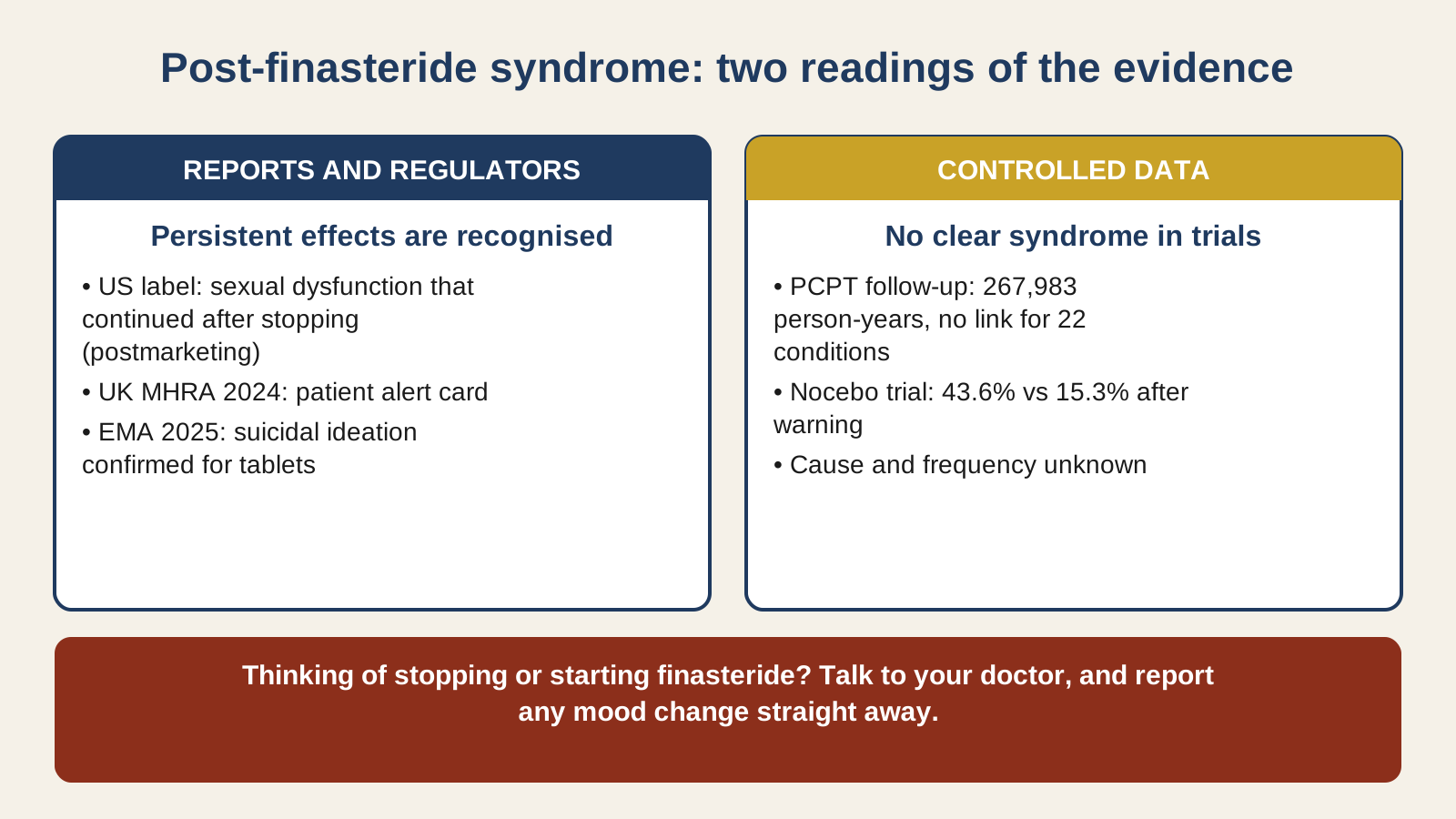
PFS, or post-finasteride syndrome, is a term for sexual, mental and physical symptoms that some men report lasting after they stop finasteride, a hair loss tablet. Regulators in the UK and Europe now warn about persistent effects, while a large randomised trial follow-up found no sign of the syndrome, so its cause and frequency remain unknown.
For anyone searching "PFS hair", the questions are practical: what the condition is, what the evidence on both sides says, whether it can be treated or prevented, and what happens to your hair if you stop. This guide answers those questions with the drug label, regulator warnings and peer-reviewed studies.
What Is PFS for Hair?
Finasteride blocks the enzyme that turns testosterone into dihydrotestosterone (DHT), the hormone that shrinks follicles in male pattern hair loss. The 1 mg tablet, sold as Propecia and as generics, is approved for men with this condition. You can read how DHT drives thinning in our guide to DHT hair loss.
A 2020 review in Anais Brasileiros de Dermatologia describes PFS as sexual, neuropsychiatric and physical symptoms that persist for at least three months after finasteride is stopped. The same review concluded that studies so far cannot refute or confirm the syndrome as a distinct disease. If it exists, it seems to affect susceptible people, even after small doses or short courses.
The term "PFS hair condition" is sometimes used as if PFS were a hair disease. It is not. Hair is the reason most young men take finasteride, but the reported symptoms concern sexual function, mood and thinking, not the hair itself.
Is There a Cure for PFS?
No treatment has been proven to cure PFS, because there is no agreed diagnosis or test for it. A 2026 survey of 54 dermatologists in the Spanish Hair and Nail Disorders Group found that 90.7% agreed the current evidence is poor, and the authors called for high-quality studies to set guidelines for diagnosis and management.
A 2025 review in the International Journal of Impotence Research recommended a multidisciplinary approach. In practice, that means each symptom is assessed and treated on its own terms: a urologist or andrologist for sexual symptoms, and a GP or mental health professional for mood changes.
The UK Medicines and Healthcare products Regulatory Agency (MHRA) is clear on one point. If you develop depression or suicidal thoughts while taking finasteride 1 mg, stop it immediately and contact your doctor. Any thought of self-harm needs urgent help the same day.
Preventing PFS: What You Need to Know
Because the cause is not known, there is no proven way to prevent PFS. What the evidence does support is an informed decision before starting, and close attention to symptoms once you do.
Here is what the main sources say, side by side:
Source
What it found or says
Strength
Propecia label, year 1 trials
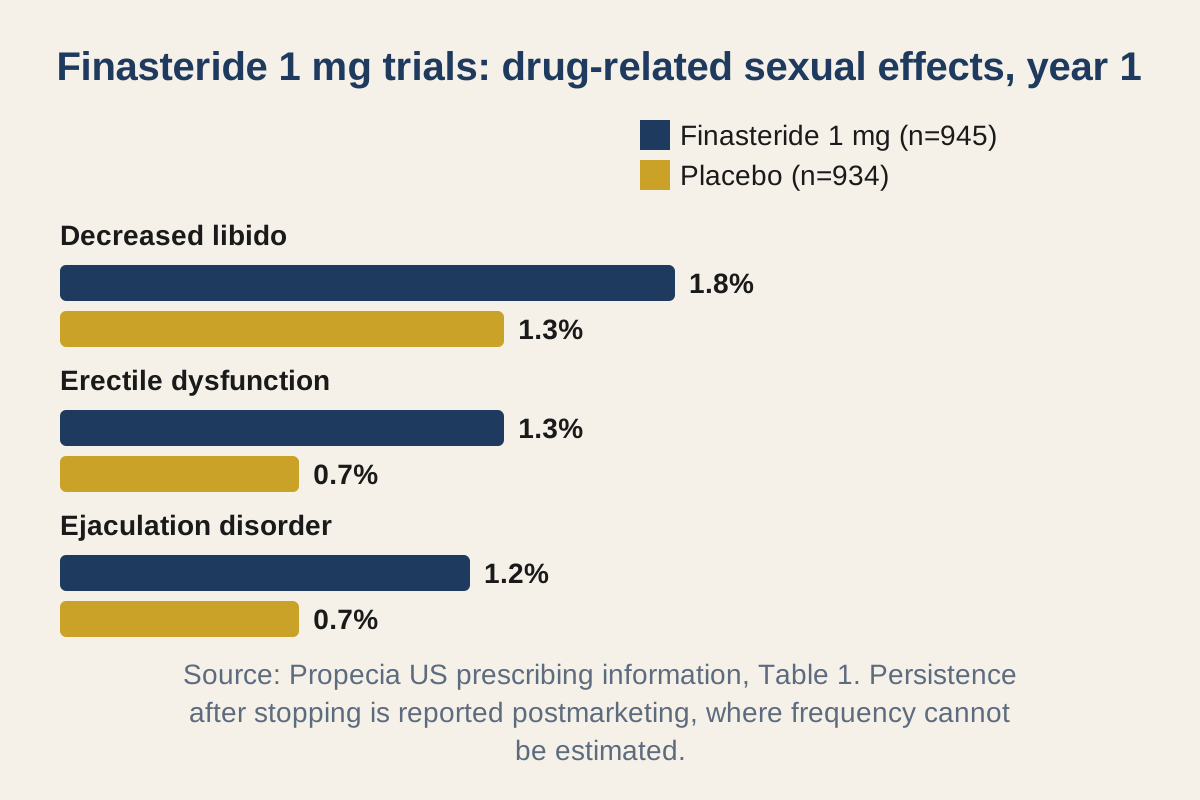
Decreased libido 1.8% vs 1.3% on placebo; erectile dysfunction 1.3% vs 0.7%; ejaculation disorder 1.2% vs 0.7%
Randomised trials, 1,879 men
Propecia label, postmarketing
Sexual dysfunction that continued after stopping; depression; suicidal ideation
Voluntary reports, frequency unknown
MHRA, April 2024
Patient alert card; sexual effects may persist after stopping
UK regulator
EMA PRAC, May 2025
Suicidal ideation confirmed as a side effect of finasteride tablets; frequency unknown; benefits still outweigh risks
EU regulator
Kiguradze 2017
34 of 4,284 men aged 16 to 42 on finasteride 1.25 mg or less had erectile dysfunction lasting 90 days or more after stopping
Medical record study
Till 2026, PCPT follow-up
No significant link with any of 22 PFS-type conditions over 267,983 person-years
Randomised trial follow-up, 5 mg in older men
The table shows why the debate continues. The trial data cover men taking the drug, not what happens after stopping. The Prostate Cancer Prevention Trial used 5 mg in older men, so it does not fully answer the question for young men on 1 mg. Yet the postmarketing reports cannot show how often persistent effects occur, and the label says they cannot establish that the drug caused them.
Expectations also matter. In a 2007 study, men taking finasteride 5 mg who were told it may cause sexual side effects reported them far more often than men who were not told: 43.6% vs 15.3%. That nocebo effect does not explain away every report, but it is one reason symptoms are hard to measure.
The European review in 2025 drew a line between forms of the drug. The PRAC confirmed suicidal ideation as a side effect of finasteride tablets, with frequency unknown, but found no evidence linking it to finasteride skin sprays. That finding concerns the authorised spray in the EU and says nothing about the safety of compounded products sold elsewhere.
Practical steps before and during treatment:
Talk about your history first: the 2020 review advises careful individual assessment for men with past depression, sexual dysfunction or infertility.
Read the patient information: in the UK, the MHRA introduced a patient alert card for all finasteride packs.
Watch for mood changes: the MHRA advises telling friends and family that you take finasteride, because others may notice changes in mood before you do.
Avoid unapproved products: in April 2025 the FDA warned about compounded topical finasteride, noting that no topical finasteride is FDA-approved and that many reported effects persisted after stopping.
Consider other options: topical minoxidil works by a different route and does not act on DHT.
Do not start, stop or change finasteride on your own. The American Academy of Dermatology advises talking with your doctor before stopping any medicine, and the MHRA says to stop finasteride 1 mg and contact your doctor straight away if you develop depression or suicidal thoughts.
PFS Syndrome Hair
What happens to hair after stopping finasteride is better documented than PFS itself. The Propecia label states that withdrawal of treatment leads to reversal of the effect within 12 months. In other words, hair gained or kept on the drug is gradually lost again, and pattern hair loss resumes its course.
That trade-off is the core of the decision. In the original two-year trials published in 1998, men on finasteride 1 mg kept a clear advantage in hair count over placebo: 107 more hairs at one year and 138 more at two years in a 1-inch circle of the balding crown. Stopping because of side effects means giving up that difference over the following year, which is why the choice is best made with a doctor rather than abruptly.
Some men also ask about "PFS syndrome hair color" and other changes in hair quality. The Propecia label reports that, in one of the vertex trials, finasteride did not appear to affect body hair outside the scalp. We found no study or label that links PFS to a change in hair colour.
If you stopped finasteride because of side effects, the hair loss itself still has options. The Rogaine label notes that some people experience changes in hair colour or texture with topical minoxidil, which is worth knowing if you switch. A dermatologist can stage the loss, for example with the Norwood scale, and discuss what fits. For stable pattern loss, our FUE hair transplant guide explains how surgery relocates follicles from the back of the scalp.
A wider look at causes, including those unrelated to DHT, is in our reasons for hair loss guide.
PFS Hair Condition Pink Hair
Searches for "PFS hair condition pink hair" do not match any medical condition we could find. No drug label, regulator notice or peer-reviewed study we reviewed describes finasteride or PFS turning hair pink.
There are a few known reasons hair colour can change, and they are worth ruling out before connecting it to a medicine:
Hair dye and toners: fading or reaction with other products is the most common cause of unexpected pink or red tones.
Topical minoxidil: its label says some people notice changes in hair colour or texture.
Normal ageing: greying happens independently of hair loss treatment.
If a colour change comes with skin changes, patches of hair loss or other new symptoms, see a dermatologist rather than relying on forum explanations.
Frequently Asked Questions
Can You Just Shampoo Your Hair and Not Condition It?
You can, but the American Academy of Dermatology recommends using conditioner after washing your hair. Conditioner moisturizes and detangles hair. The AAD suggests applying it to the ends if your hair is fine or straight, and along the whole length if it is dry or curly. Skipping conditioner does not cause or prevent hair loss, and it has no link to finasteride or PFS.
Unsure Which Hair Loss Treatment Fits You?
If you have stopped finasteride or prefer not to take it, the next step is knowing how far the pattern has progressed. Send clear photos of your hairline and crown for a free hair analysis, and the medical team will describe the stage of your hair loss and the options worth discussing with your doctor. Turkey Hair Center is a Ministry of Health authorized health-tourism intermediary; procedures take place at authorized partner hospitals.
Medical disclaimer: This article is for informational purposes only and is not medical advice. Individual results and recovery vary from person to person. Always follow the written aftercare plan from your own medical team.
Kaufman KD, Olsen EA, Whiting D, et al. Finasteride in the treatment of men with androgenetic alopecia. Journal of the American Academy of Dermatology, 1998;39(4 Pt 1):578-589
European Medicines Agency. Meeting highlights from the Pharmacovigilance Risk Assessment Committee (PRAC), 5 to 8 May 2025. EMA news
US Food and Drug Administration. FDA alerts health care providers, compounders and consumers of potential risks associated with compounded topical finasteride products. FDA, 22.04.2025
Kiguradze T, Temps WH, Yarnold PR, et al. Persistent erectile dysfunction in men exposed to the 5α-reductase inhibitors, finasteride, or dutasteride. PeerJ, 2017;5:e3020
Mondaini N, Gontero P, Giubilei G, et al. Finasteride 5 mg and sexual side effects: how many of these are related to a nocebo phenomenon? Journal of Sexual Medicine, 2007;4(6):1708-1712
Send three photos: front, top and sides. You get a technique recommendation, a graft range and a straight answer about what is achievable, before anyone talks about price.
Your details are with the team
A patient coordinator will get back to you shortly. If you would like to send your photos now, WhatsApp is the fastest way to do it.
We respond quickly, day or night, in your language.
Multilingual team, no obligation
Data protectedKVKK and GDPR compliant, 100% confidential
Authorized Health Tourism Intermediary
Turkey Hair Center is the hair-restoration brand of Healthy Way Tourism, an authorized international health-tourism intermediary. All medical procedures are performed by licensed medical professionals at authorized healthcare facilities in Turkiye, in accordance with the regulations of the Ministry of Health.