Performed at authorized partner hospitals Turkey Hair Center is a Ministry of Health authorized health-tourism intermediary, not a clinic.
A bump on the scalp is usually a harmless lump such as a pilar cyst, an inflamed hair follicle, a lipoma or swelling after a knock. Most are not dangerous, but a lump that grows, feels hard and fixed, bleeds, or is still there after 2 weeks should be checked by a doctor.
Bumps on scalp skin are easy to find with a comb and hard to see in a mirror, which makes them worrying. This guide explains the common types, what causes them, how a doctor tells them apart, what treatment involves, and the warning signs listed by the NHS. It does not diagnose your lump; only an examination can do that.
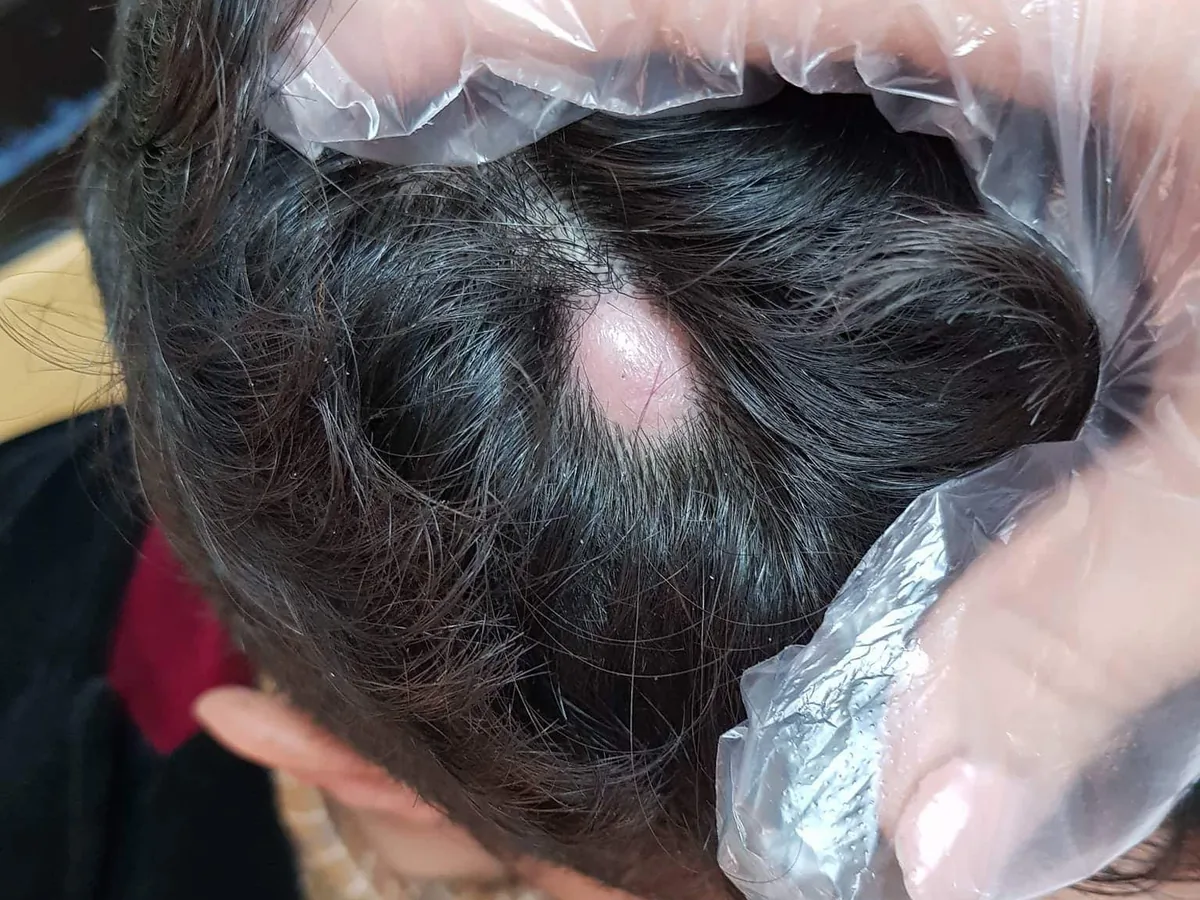
The photo shows a typical scalp cyst: a smooth, rounded, skin-coloured lump that lifts the skin and pushes the hair aside. The uploader labelled it a sebaceous cyst, an old name that, as explained below, is used for both pilar and epidermoid cysts. Appearance alone is not a diagnosis.
What Is Bump on Scalp?
"Bump on scalp" covers anything raised on or under the skin of the head. The NHS says it is common for people to get lumps and growths on their skin, that they can be soft or hard, may move around, and range from very small to the size of a golf ball. Most lumps are harmless.
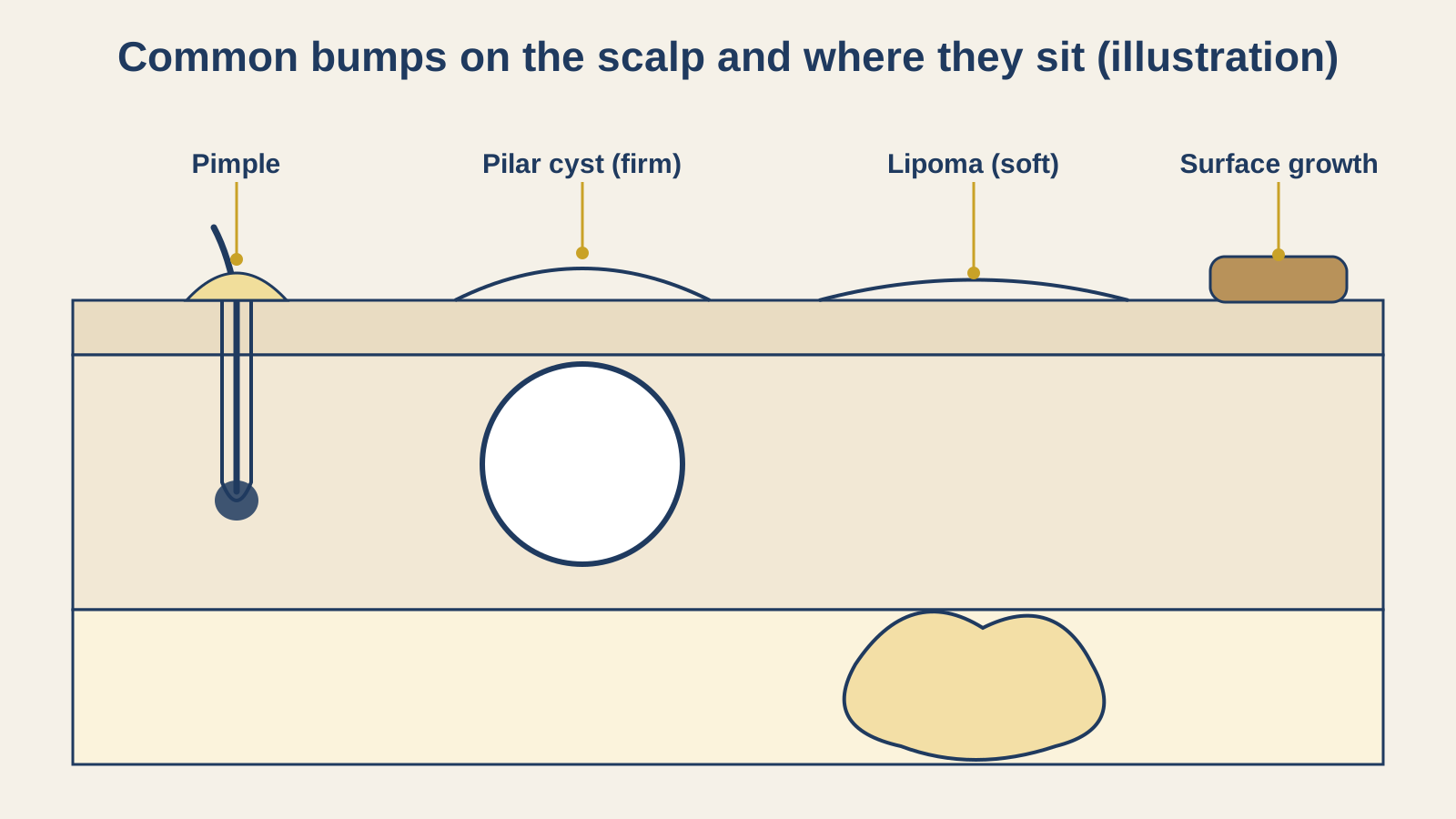
The usual scalp bumps fall into four groups: inflamed follicles (pimples, folliculitis, boils), cysts, fatty lumps (lipomas) and growths on the skin surface. Swelling after a head injury is a fifth, separate case.
The diagram shows how deep each type usually sits. That depth is one of the first things a doctor feels for, because a spot sits in the follicle near the surface while a cyst or lipoma lies further down.
What Does It Mean When You Get a Bump on Your Scalp?
It usually means a follicle has become blocked or inflamed, a small cyst has formed, or the skin has reacted to a knock. The NHS advises not to self-diagnose and to see a GP if you are worried or the lump is still there after 2 weeks.
What Is a Pilar Cyst?
A pilar cyst, also called a trichilemmal cyst, is a keratin-filled cyst that starts in the outer root sheath of a hair follicle. DermNet says about 90% are found on the scalp, and they are usually diagnosed in middle-aged women. They often run in families, and each child of an affected parent has a 1 in 2 chance of inheriting the tendency.
Can Trichilemmal Cysts Become Cancerous?
Very rarely. DermNet says trichilemmal cysts occur in 5 to 10% of the population and about 2% of these develop into a proliferating trichilemmal cyst, which is usually benign but in rare cases becomes malignant. Rapid growth is unusual and may be a sign of infection or malignancy, so a cyst that suddenly grows needs a doctor.
What Causes Bumps on Scalp?
The main bump on scalp causes are:
Inflamed follicles: acne spots, folliculitis and boils; see our guide to pimples on the scalp.
Cysts: pilar cysts and epidermoid cysts, which the NHS says are more likely if a family member has them, if you are middle-aged or if you have acne.
Lipomas: soft, fatty lumps under the skin that grow slowly.
Injury: swelling or a bruise after hitting your head.
Skin growths: growths on sun-exposed skin; the NHS lists the head among the most common sites for non-melanoma skin cancer.
Cyst on scalp causes are often unknown. The NHS says anyone can get a skin cyst and it is not always known why. Lumps on scalp causes linked to infection, such as a boil, are covered in our guide to folliculitis pictures.
Why Is There a Little Bump on My Scalp?
A little bump is most often a spot, an inflamed follicle or a small cyst. Itchy bumps along the hairline can be scalp folliculitis, which DermNet describes as small, very itchy pustules. Watch it for 2 weeks; if it stays the same or grows, have it checked.
Why Do I Have a Big Bump on My Scalp?
A larger, smooth, firm bump is often a pilar cyst; DermNet says these measure 0.5 to 5 cm. A soft, squashy lump that moves may be a lipoma. A swollen, painful lump with a high temperature can be an abscess, which the NHS says needs medical help.
Bump on the Scalp: Signs and Symptoms
Bumps on scalp symptoms depend on the type:
Cyst: round, smooth lump under the skin that grows slowly and can catch on a brush.
Lipoma: soft and squishy, may move slightly when pressed, usually painless.
Inflamed follicle or boil: red, tender, sometimes with pus.
Injury: swelling and bruising that appear soon after a knock.
Cancerous cyst on scalp symptoms and cancer lump on scalp symptoms are less common. The NHS lists a growth that gets bigger or changes colour or texture, or one that hurts, itches, bleeds, crusts or scabs for more than 4 weeks.
How Bump on the Scalp Is Diagnosed
The NHS says a GP will look at the lump and may be able to tell what is causing it. If they are unsure, they may refer you for a biopsy, where a small sample is removed and tested, or an ultrasound scan. For lipomas, the NHS adds that a scan may be used if there is doubt.
What's the Difference Between a Pilar Cyst and a Sebaceous Cyst?
"Sebaceous cyst" is an old name. DermNet calls it a misnomer, because these cysts do not involve sebaceous glands or contain sebum. The NHS notes that both epidermoid cysts and pilar cysts are sometimes called sebaceous cysts.
Feature
Pilar (trichilemmal) cyst
Epidermoid cyst
Usual site
Scalp (about 90%)
Face, neck and trunk
Central dark dot (punctum)
Absent
Present
Origin
Outer root sheath of the follicle
Follicle infundibulum (upper part)
Cyst wall
Thick, not prone to rupture
Delicate, prone to rupture
Typical size
0.5 to 5 cm
1 to 3 cm
How Do Healthcare Providers Diagnose Trichilemmal Cysts?
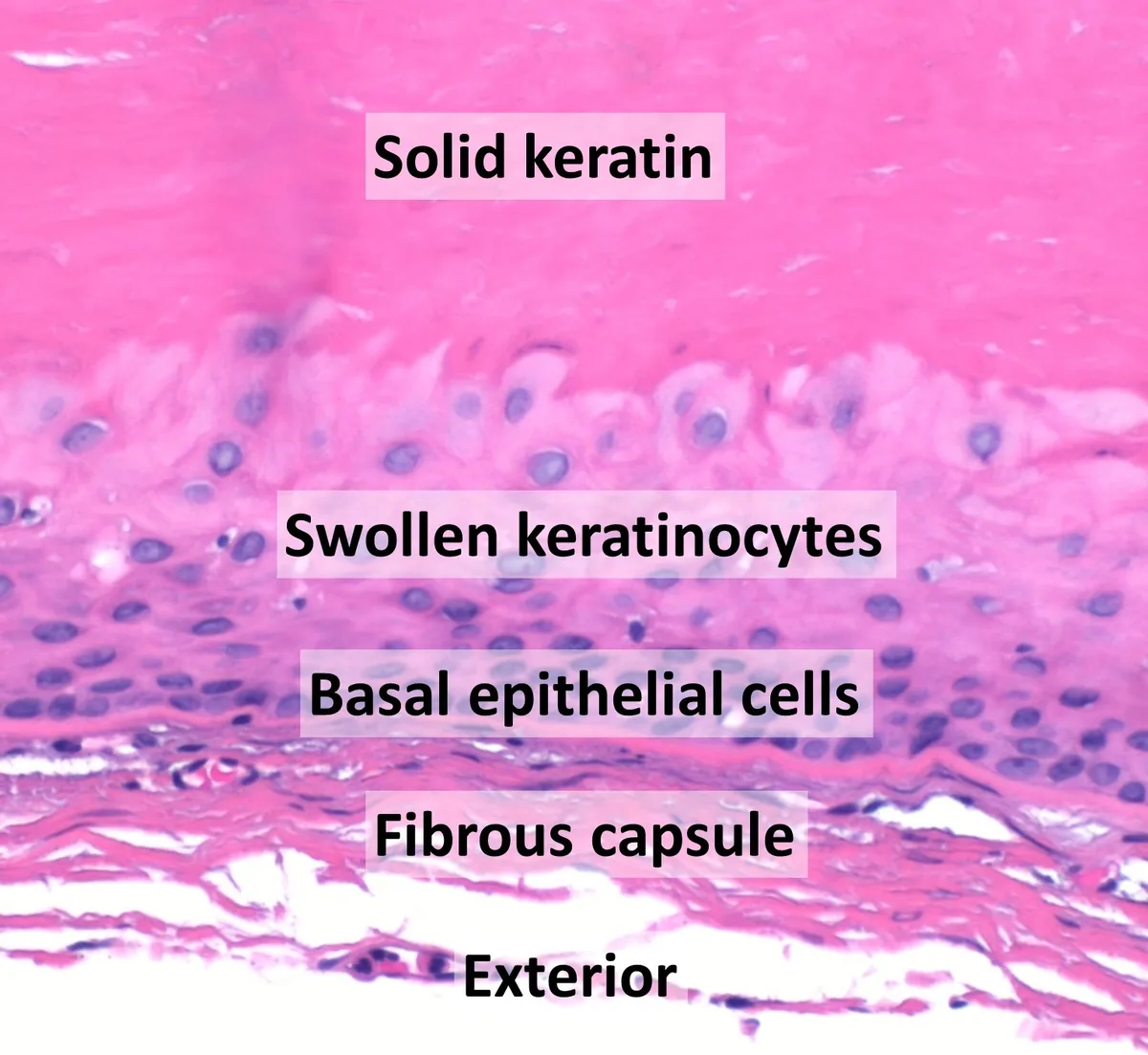
Most are recognised by touch and appearance: a firm, mobile lump under the skin without a central punctum. DermNet says the tissue under a microscope is characteristic, so a removed cyst can be sent to a laboratory to confirm the type.
Trichilemmal (pilar) cyst wall under the microscope, with labelled layers. Photo: Mikael Häggström, M.D., CC0, via Wikimedia Commons.
This is what the laboratory sees after a pilar cyst is removed: solid keratin filling the cyst, swollen keratinocytes lining it, and a fibrous capsule around the outside. This lining pattern is what lets a pathologist confirm the cyst type.
How to Treat Bumps on Scalp?
Bump on scalp treatment depends on the cause. The NHS says skin cysts do not need treatment if they are not causing problems. Lipomas are harmless and do not usually need removal. Inflamed follicles often settle with washing and warm compresses. A painful bump on scalp treatment plan, such as draining a boil or giving antibiotics, comes from a doctor.
What Is the Treatment for Pilar Cysts?
DermNet says pilar cysts do not need removal if they cause no symptoms. When they do, they can be removed under local anaesthetic, either whole or through a small incision. The NHS notes that removal leaves a small scar once the wound heals.
Home and Natural Remedies for Bump on the Scalp
Bumps on scalp home remedies are limited to comfort and avoiding harm:
For a red, painful spot, hold a warm, wet cloth against it for 10 minutes, 4 times a day, as the NHS advises for boils.
For swelling after a knock, the NHS suggests an ice pack wrapped in a tea towel for short periods in the first few days.
Use a wide-toothed comb and avoid catching the lump.
Do not squeeze, cut or pierce a bump. The NHS warns that a burst cyst could become infected.
For itchy bumps on scalp, home remedies start with gentle washing and a medicated shampoo; our page on scalp yeast infection covers which ones have evidence.
How Long Does It Take for a Bump on the Head to Disappear?
After a minor head injury, the NHS says symptoms can last up to 2 weeks, and you should see a GP if they last longer. For bump on head how long to ice, the NHS advice is short, regular sessions in the first few days. A cyst or lipoma does not go away on its own and may slowly grow.
How to Prevent Bump on the Scalp
You cannot prevent every scalp bump. To lower the risk of inflamed follicles, wash sweat and products out of the scalp, avoid sharing towels and combs, and treat dandruff early. Protect your scalp from sun with a hat, since the NHS lists the head among the sites most affected by non-melanoma skin cancer.
How Can I Prevent Trichilemmal Cysts?
There is no known way to prevent them. DermNet notes they often run in families, and the NHS says it is not always known why cysts form. What you can do is leave them alone: the NHS warns that a squeezed cyst can burst and become infected, and DermNet notes that removing a troublesome cyst before it ruptures prevents scarring.
When to See a Doctor About Bump on the Scalp
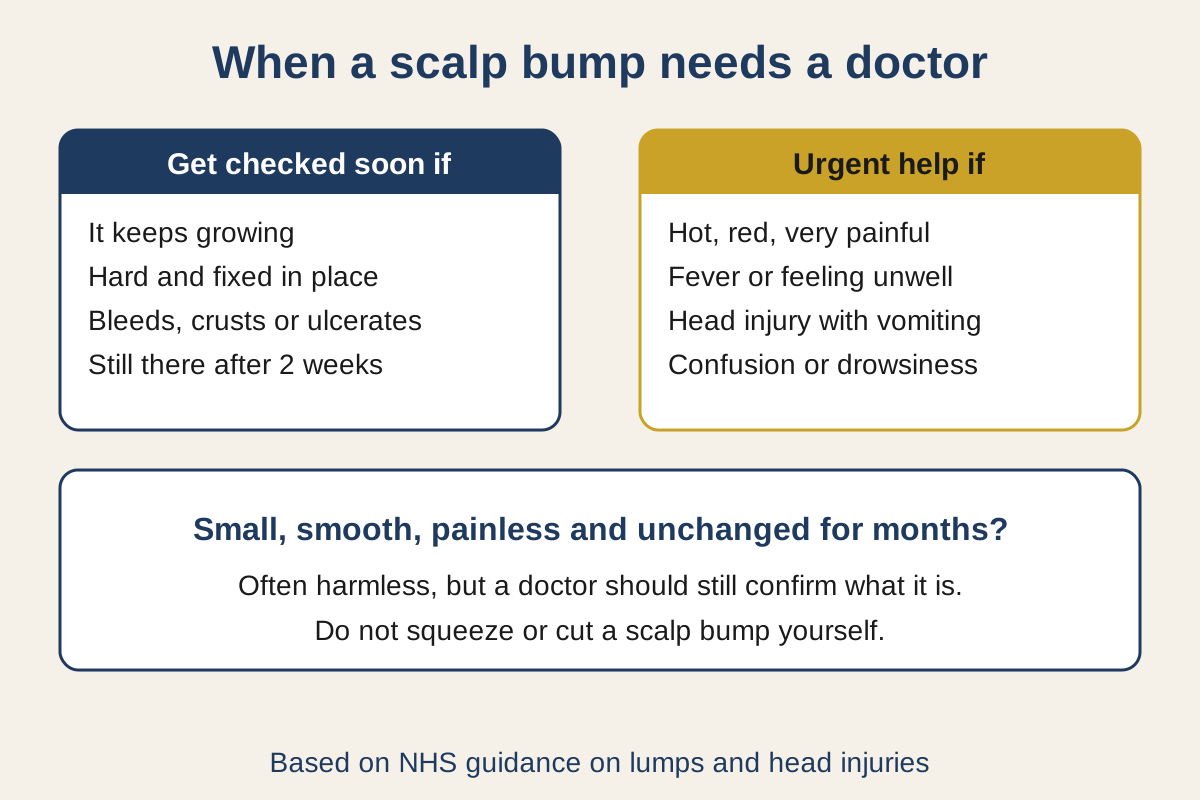
The NHS lists these signs as reasons to see a GP about any lump. For bump on head when to see a doctor after an injury, use the urgent list in the box below.
It gets bigger, or grows back after removal.
It is painful, red or hot.
It is hard and does not move.
It lasts more than 2 weeks.
It bleeds, crusts or scabs for more than 4 weeks.
After a head injury, call emergency services if the person was knocked out and has not woken, cannot stay awake, has a seizure, has clear fluid from the ears or nose, new weakness, or problems with vision, speech or balance. Get urgent advice if they are vomiting, dizzy, or take blood-thinning medicine, according to the NHS.
Raised Bump on Scalp
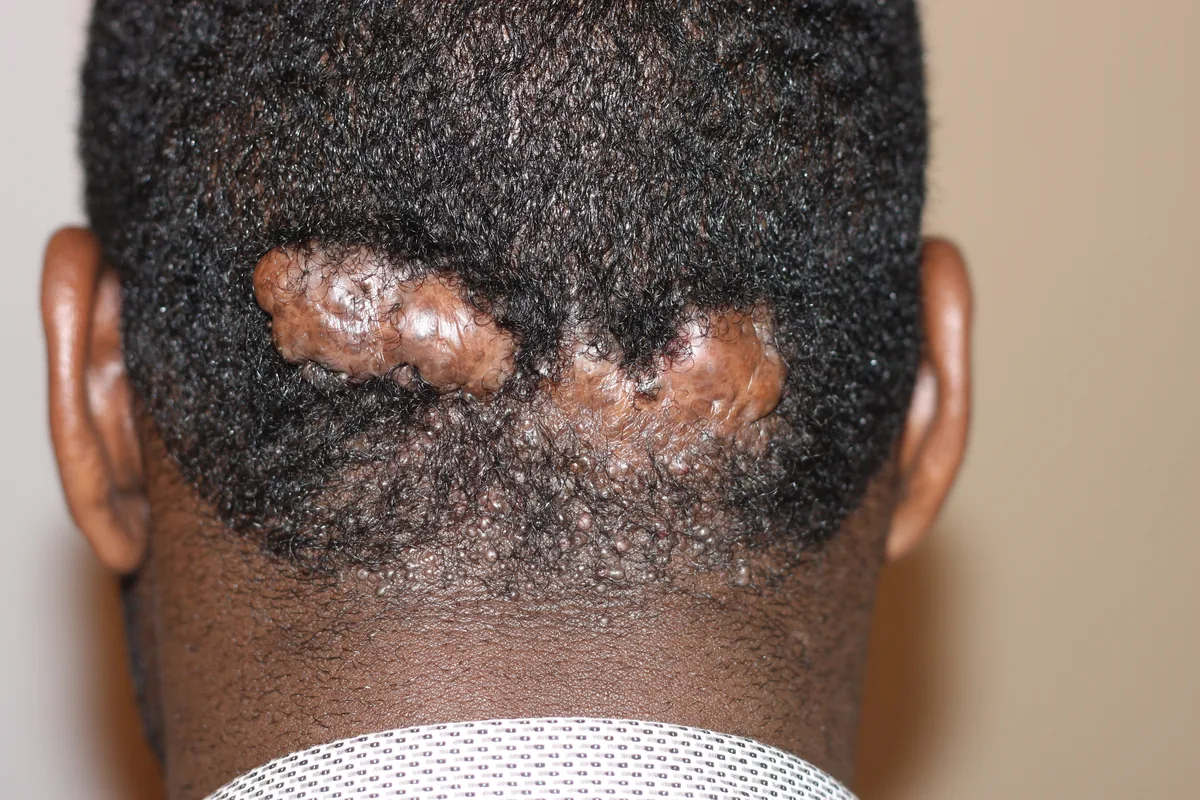
A raised bump on scalp skin that sits on the surface, rather than under it, is often a spot or a skin growth. Smooth, dome-shaped bumps under the skin are more likely cysts. If you have had a hair transplant, the 2026 review in Frontiers in Medicine lists epidermal inclusion cysts among known complications of FUE, so mention any new bump in the grafted or donor area to your medical team. See our page on hair transplant side effects.
Raised scar tissue on the back of the scalp, labelled by the uploader as an occipital keloid. Photo: Htirgan, CC BY-SA 3.0, via Wikimedia Commons, cropped.
Not every raised bump on the scalp is a cyst or a spot. Here the lumps are firm, shiny scar tissue sitting on the surface at the back of the head, with no hair growing through them. Raised scars like these need a doctor's assessment, and appearance alone is not a diagnosis.
Frequently Asked Questions
Can a Bump on the Head Be Permanent?
Swelling from a knock usually goes down within days to 2 weeks. Cysts and lipomas tend to stay until they are removed, although they are usually harmless. Any lump that stays or grows should be checked.
When to Get Lump on Head Checked?
The NHS advises seeing a GP if a lump gets bigger, is painful, red or hot, is hard and fixed, or lasts more than 2 weeks. Get urgent help for a head injury with vomiting, being unable to stay awake, or clear fluid from the ears or nose.
What Is Small Bump on Scalp?
A small bump is often a spot, an inflamed follicle or a small cyst. It is usually harmless and settles or stays the same. Keep an eye on it and have it checked if it grows, bleeds or does not change after 2 weeks.
What Are Lumps on Scalp?
Lumps on the scalp are raised areas under or on the skin: cysts, lipomas, swollen follicles or growths. The NHS says most lumps are harmless but advises not to self-diagnose and to see a GP if you are unsure.
Can Bump on Head Cause Brain Bleed?
A bump itself does not cause bleeding, but the injury behind it can. That is why the NHS lists symptoms that need emergency care after a head injury, including loss of consciousness, seizures, vision problems, weakness and a fall from more than 1 metre.
Can Bump on Head Cause Fever?
A plain bump does not. A swollen, painful lump with a high temperature can be an abscess, according to the NHS, which also advises seeing a GP if you have a boil and feel hot, cold or shivery. Seek medical advice promptly if a scalp lump comes with fever or shivering.
Can Lice Cause Bumps on Scalp?
Head lice mainly cause itching, according to the NHS, which confirms them by finding live lice with a fine-toothed comb. If you find bumps or sores along with lice, a pharmacist or GP can check whether scratching has irritated the skin.
Can Dandruff Cause Bumps on Scalp?
Dandruff causes flakes, not lumps. Malassezia yeast linked to dandruff can, however, inflame follicles and cause small itchy bumps, which DermNet calls Malassezia folliculitis. Antifungal shampoos can help both.
What Does a Pilar Cyst Feel Like?
A pilar cyst usually feels like a smooth, firm, rounded lump under the skin that moves slightly when pushed. Cleveland Clinic says many people first notice it as a flesh-coloured lump while washing or combing their hair. DermNet describes these cysts as firm and mobile, 0.5 to 5 cm across, with no central dark dot. They can become painful if inflamed.
Can Pilar Cysts Go Away on Their Own?
None of the sources we checked says pilar cysts usually disappear without treatment; they tend to stay and may slowly grow. The NHS says a skin cyst that causes no problems does not need treatment. Do not squeeze one to make it go away: the NHS warns that a burst cyst could become infected.
Will Pilar Cysts Grow Back After Removal?
They can. Cleveland Clinic says pilar cysts can come back, so you may need to watch for new ones, and the NHS notes that you may get new skin cysts in the future. Because the tendency often runs in families, a new cyst can also appear elsewhere on the scalp. Tell your doctor about any lump that returns.
When Should I Go to the Emergency Room With a Scalp Cyst?
Cleveland Clinic advises going to the emergency room if a cyst has ruptured or you think the site of cyst surgery is infected. For a cyst that is new, growing or bothering you, contact your GP or a dermatologist instead. After a head injury with drowsiness, vomiting or a seizure, follow the urgent NHS advice in the box above.
Bumps, Scars and Hair Restoration
A scalp lump should be checked by a doctor before any hair restoration is planned. If thinning is your main concern, send clear photos for a free hair analysis. Turkey Hair Center is a Ministry of Health authorized health-tourism intermediary, and procedures take place at authorized partner hospitals. You can also use the contact page.
Medical disclaimer: This article is for informational purposes only and is not medical advice. Individual results and recovery vary from person to person. Always follow the written aftercare plan from your own medical team.
Send three photos: front, top and sides. You get a technique recommendation, a graft range and a straight answer about what is achievable, before anyone talks about price.
Your details are with the team
A patient coordinator will get back to you shortly. If you would like to send your photos now, WhatsApp is the fastest way to do it.
We respond quickly, day or night, in your language.
Multilingual team, no obligation
Data protectedKVKK and GDPR compliant, 100% confidential
Authorized Health Tourism Intermediary
Turkey Hair Center is the hair-restoration brand of Healthy Way Tourism, an authorized international health-tourism intermediary. All medical procedures are performed by licensed medical professionals at authorized healthcare facilities in Turkiye, in accordance with the regulations of the Ministry of Health.