Performed at authorized partner hospitals Turkey Hair Center is a Ministry of Health authorized health-tourism intermediary, not a clinic.
Pimples on the scalp are small red or pus-filled spots that form when hair follicles on the head become blocked with oil and dead skin, or inflamed by bacteria or yeast. Most scalp pimples clear with regular washing and an over-the-counter shampoo, but painful, spreading or repeated spots need a doctor.
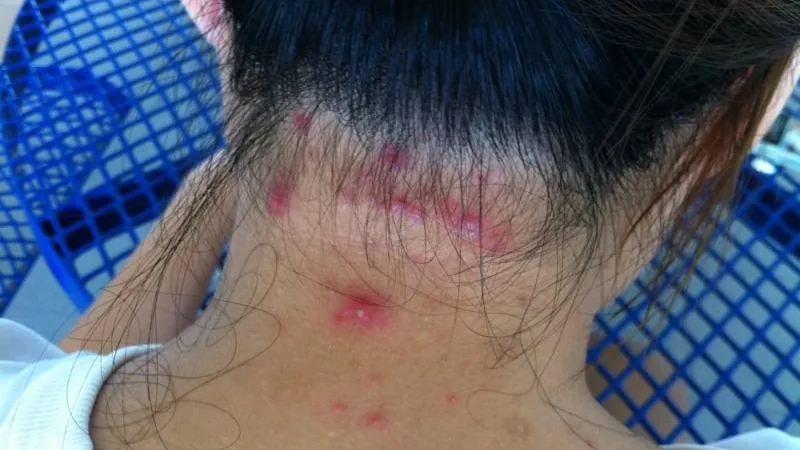
Spots at the back of the scalp that spread onto the neck, identified by the uploader as folliculitis. Photo: Lforlav, CC BY-SA 3.0, via Wikimedia Commons, cropped.
A pimple on scalp skin is easy to miss under hair until it hurts or catches on a comb. This guide explains what scalp pimples are, what usually causes them, which shampoos and home steps have evidence behind them, and the warning signs that mean a dermatologist should look at your scalp. It does not diagnose your spots; only an examination can do that.
With the hair lifted, the spots become easy to see: red bumps, some with a pus head, along the lower hairline and onto the neck. Many spots people call scalp pimples are folliculitis like this, which is why the cause matters for treatment. Appearance alone is not a diagnosis.
What Are Pimples on Scalp?
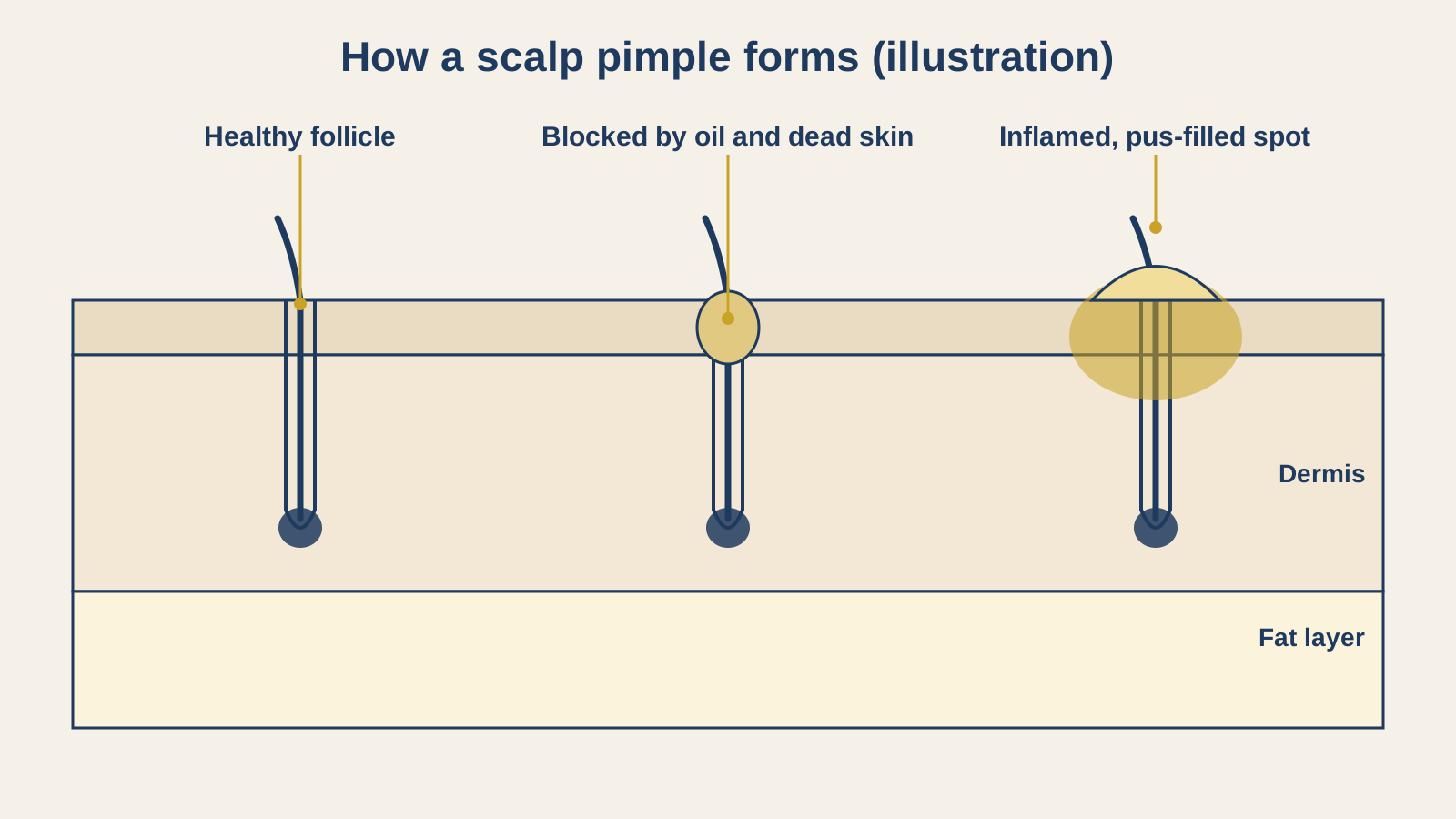
The plain pimples on scalp meaning is acne-type spots in the skin under your hair. The NHS explains that acne starts when hair follicles become blocked with excess oil and dead skin cells, and bacteria then grow in the blocked follicle and cause inflammation and pus. The scalp has a hair follicle almost everywhere, so it has plenty of places for this to happen.
The drawing follows that sequence from left to right: a healthy follicle, a follicle plugged with oil and dead skin, and an inflamed spot filled with pus. Each step happens under the hair, which is why scalp spots are often felt before they are seen.
Doctors also use the word folliculitis, which DermNet defines as an inflamed hair follicle due to any cause. A pimple on scalp meaning in daily speech can therefore cover true acne, folliculitis, a boil or something else that only looks like a spot.
What Are Small Pimples on Scalp?
Small, itchy pustules along the front hairline are typical of scalp folliculitis. DermNet describes them as hard to leave alone because of the itch, and they often become sore and crusted. Uniform tiny bumps can also come from yeast (see the folliculitis types later in this guide).
How Common Is Scalp Acne?
No reliable figure exists for scalp acne on its own; studies usually count acne as a whole. The NHS calls acne a common skin condition that can range from a few spots to deep, painful lumps, and the scalp is one of the hair-bearing areas it can reach.
Who Is at Risk of Getting Pimples on Their Scalp?
The NHS lists hormone changes (puberty, periods, pregnancy, menopause), some medicines and greasy hair or skin products as acne triggers. For boils, its list adds diabetes, eczema, steroid treatment, close contact with someone who has boils, and being male.
What Causes Pimples on Scalp?
The causes of pimples on scalp skin fall into a few groups. Knowing which one fits helps you choose the right shampoo, but the label belongs to the doctor who examines you.
Blocked follicles: oil and dead skin plug the follicle opening, as in acne.
Bacteria: DermNet names Staphylococcus aureus as the common cause of bacterial folliculitis, and Cutibacterium acnes in scalp folliculitis.
Yeast: Malassezia, a yeast that lives on every scalp, can inflame follicles.
Mites: Demodex mites are linked to scalp folliculitis in some people.
Products: heavy oils, pomades and dry shampoo left on the scalp can clog follicles. DermNet also lists coal tar and paraffin-based ointments as causes of irritant folliculitis.
Medicines: corticosteroids, androgens and lithium are among the drugs DermNet links to folliculitis.
Scalp pimples causes can overlap. Sweat under a helmet or cap, infrequent washing and friction can all add to a follicle that is already blocked.
Why Do I Suddenly Have Pimples on My Scalp?
A sudden crop of spots often follows a change: a new hair product, a hot week with a cap on, a course of steroids or other medicine, or hormonal shifts. Scalp spots that appear 1 to 4 weeks after a hair transplant are a known complication; a 2026 review in Frontiers in Medicine reported folliculitis in 12.1% of patients after FUE in one series. If you have had surgery, follow your team's aftercare guideline and send them a photo.
What Does Acne on Scalp Look Like?
Acne on the scalp looks like it does elsewhere: small bumps the colour of your skin (whiteheads), dark spots (blackheads), raised pink, red, brown or purple bumps (papules) and bumps filled with pus (pustules). The NHS notes that redness is harder to see on brown and black skin. Larger lumps under the skin are nodules or cysts.
What Are the Symptoms of Scalp Acne?
Pimples on scalp symptoms usually include tenderness when you brush or wash, itching, and small scabs where spots have broken. The acne on scalp symptoms list from the NHS also includes oily skin, skin that feels hot or painful to touch, and colour changes or scars where spots have been.
Fungal acne on scalp symptoms (Malassezia folliculitis) tend to be very itchy, uniform small bumps. Cancer pimples on head symptoms are different: the NHS describes skin cancer as a growth or patch that keeps growing, bleeds, crusts or scabs for more than 4 weeks, often on sun-exposed skin.
How to Treat Pimples on Scalp?
To treat pimples on scalp skin, start with the gentlest step and give each one time. The NHS advises washing twice a day with a gentle cleanser, choosing non-comedogenic products, and trying salicylic acid or benzoyl peroxide, with a pharmacist's advice. The AAD adds that if you have oily hair, you should shampoo more often.
How Do I Get Rid of Scalp Acne?
Wash your hair regularly, rinse out styling products, and wash bedding and towels at least once a week, as the NHS advises for boils. If spots persist, a GP or dermatologist can prescribe topical retinoids or antibiotics, or tablets such as doxycycline or isotretinoin, according to the NHS. Scalp zits treatment with prescription medicine is a decision for the prescriber, not something to start on your own.
What Types of Shampoo Should I Use for Scalp Acne?
DermNet says a mild normal shampoo can be used as often as you like, and antidandruff shampoos with antifungal agents such as ketoconazole or ciclopirox are sometimes helpful. The AAD lists zinc pyrithione, salicylic acid, sulfur, selenium sulfide, ketoconazole and coal tar as dandruff shampoo ingredients. Follow the label of the product you buy for how long to leave it on and how often to use it.
Can I Pop Pimples on My Scalp?
No. The NHS says not to pick or squeeze spots because this can cause scars, and not to pick, squeeze or pierce a boil. The AAD adds that popping makes acne take longer to clear and raises the risk of dark spots.
How Soon After Treatment Will I Feel Better?
The AAD says acne treatment can take several weeks to a few months to show a difference. MedlinePlus advises contacting a provider if folliculitis lasts longer than 2 or 3 days despite home care, comes back often or gets worse.
Scalp Acne Shampoo
Pimples on scalp treatment shampoo choices usually start with one active ingredient used as the label directs. If one shampoo does not help after a few weeks, the AAD suggests alternating between dandruff shampoos with different active ingredients.
Ingredient
What it targets
Where it is mentioned
Salicylic acid
Scale and blocked follicles
NHS acne and dandruff pages, AAD
Ketoconazole
Malassezia yeast
NHS, AAD, DermNet
Ciclopirox
Yeast
DermNet scalp folliculitis
Zinc pyrithione
Yeast and scale
AAD dandruff page
Selenium sulfide
Yeast and scale
AAD dandruff page
Coal tar
Scale; can irritate follicles
NHS, AAD; DermNet on irritation
Home and Natural Remedies for Pimples on the Scalp
Pimples on scalp treatment at home works best for a few mild spots. These steps come from NHS and AAD advice:
Wash with a gentle shampoo as often as your scalp is oily, and after heavy sweating.
Rinse out gels, waxes and oils fully, or use oil-free products.
Keep hands, combs and nails off the spots.
Wash pillowcases, hats and towels often, and do not share them.
Protect the scalp from sunburn, which the AAD links to more flaking.
Tea tree oil is the natural option with the most data, mainly for dandruff. A trial of 126 people in the Journal of the American Academy of Dermatology found a 5% tea tree oil shampoo improved dandruff in 41% after 4 weeks, against 11% with placebo. A review in Clinical Microbiology Reviews notes the oil can cause irritation and allergic reactions and is toxic if swallowed. Use only ready-made products, never neat oil.
Home Remedy for Pimple-Like Bumps on the Scalp That Hurt
For a sore, deep spot, the NHS advice for boils is to hold a clean cloth soaked in warm water against it for 10 minutes, 4 times a day. MedlinePlus says warm, moist compresses may help folliculitis drain. Paracetamol or ibuprofen can ease pain. Do not pierce the bump, and see a doctor if it is still there after 2 weeks.
How to Stop Pimples on Scalp?
Prevention is mostly about removing what clogs or rubs the follicle: oil, sweat, product build-up and friction. MedlinePlus lists reducing friction, keeping the area clean and avoiding contaminated clothing and washcloths.
How Can I Prevent Scalp Acne?
Shampoo on a schedule that matches your scalp, wash after workouts, clean helmets and caps, and pick non-comedogenic hair products. If spots return each time you stop a medicated shampoo, ask a dermatologist about a longer plan.
Itchy Scalp with Pimples
An itchy scalp with pimples points to inflammation at the follicles. DermNet links very itchy pustules at the hairline to scalp folliculitis, and itchy uniform bumps to Malassezia folliculitis. Itching with lice or eggs near the roots is a different problem: the NHS describes wet combing with a fine-toothed detection comb on days 1, 5, 9 and 13. Persistent itch with scale or redness also deserves a check for a scalp yeast problem or psoriasis.
Scalp Zits
Scalp zits are the same spots by another name: whiteheads, papules or pustules in hair-bearing skin. They respond to the same steps above. Scalp zits that leave black crusts and small pitted scars may be acne necrotica, a more severe form DermNet says can leave permanent pox-like scars, so they should be seen early.
Breakouts on Scalp
Breakouts on scalp skin tend to follow triggers: hormone shifts, a new product, heat and sweat, or a medicine change. Keep a short note of what changed in the week before a flare. That record is useful to a dermatologist, who can then separate acne from folliculitis, seborrheic dermatitis or a reaction to a product.
Pimple on Head Under Hair
A single pimple on head under hair is usually a blocked or inflamed follicle and settles within days. If it is firm, smooth, painless and slowly growing, it may be a cyst rather than a spot (see our guide to a bump on the scalp); the NHS notes that pilar cysts often form on the scalp and should not be squeezed. A spot that bleeds, crusts or keeps growing for more than 4 weeks should be checked.
Pimples on Scalp Hurt
When pimples on scalp hurt, the inflammation usually sits deeper in the follicle. A hard, painful lump that fills with pus is what the NHS calls a boil, and a group of boils is a carbuncle. Warm compresses and pain relief help; squeezing pushes the infection deeper.
Painful Pimples on Scalp
Painful pimples on scalp skin with heat, swelling and redness around them can mean the infection is spreading. The NHS asks people to get an urgent GP appointment or contact 111 when a boil comes with hot, swollen skin, fever or shivering, or a weakened immune system.
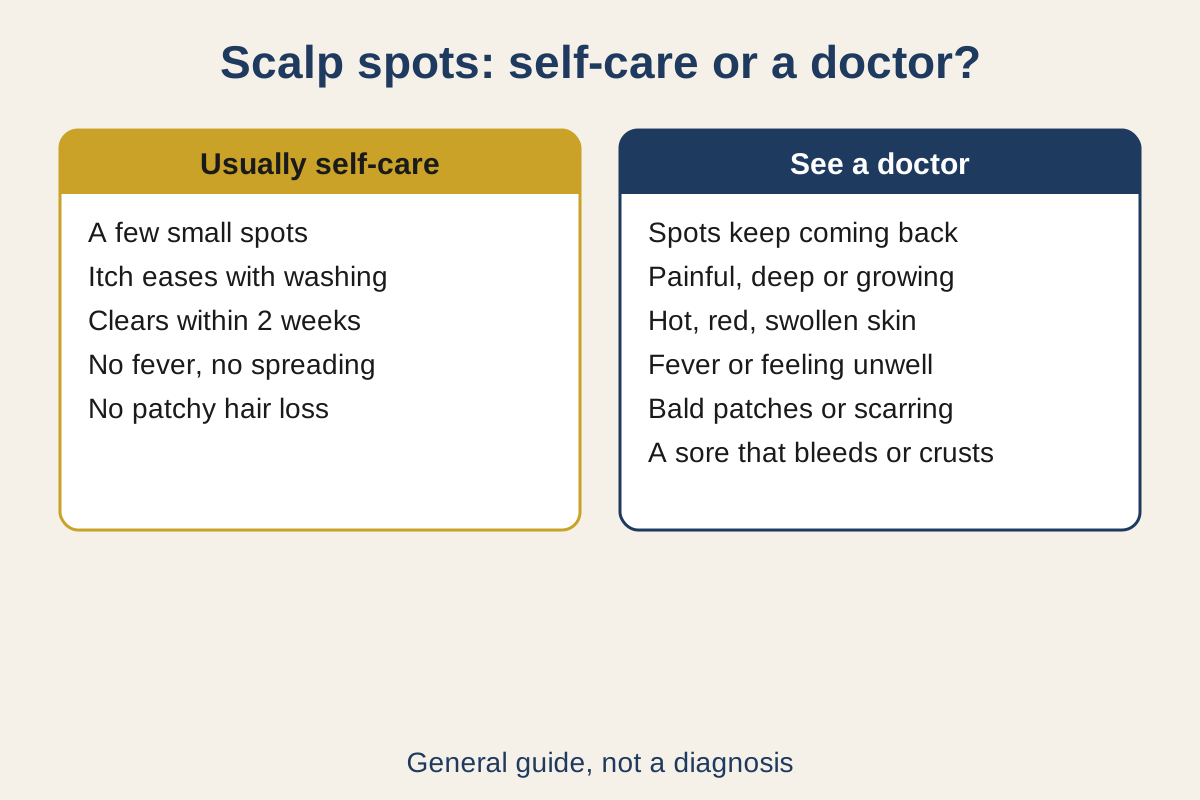
See a doctor or dermatologist if your scalp spots: - keep coming back or have not improved after 2 weeks of self-care - are deep, painful, growing or leaving scars - come with hot, red, swollen skin, fever or shivering - sit in patches of hair loss or scarring - include a sore that bleeds, crusts or scabs for more than 4 weeks
Frequently Asked Questions
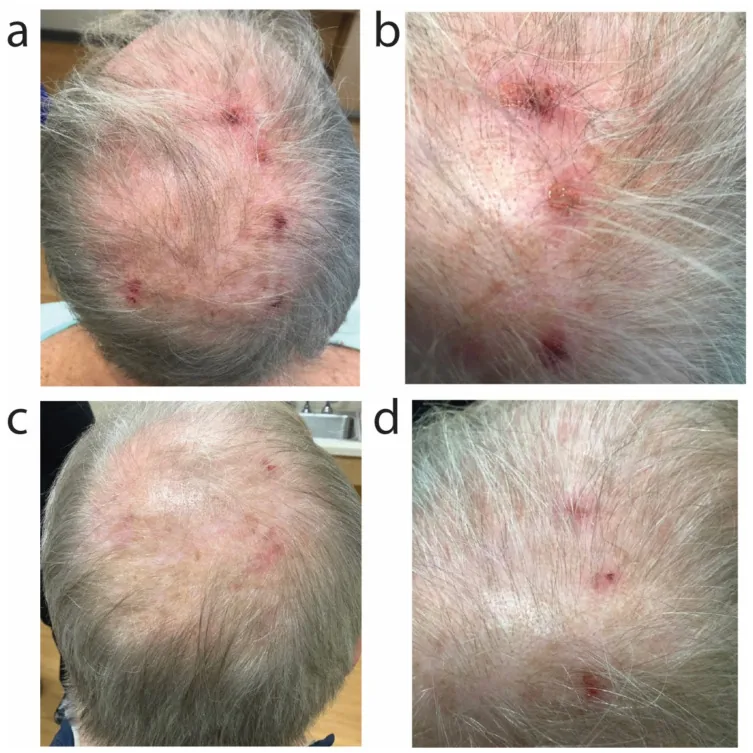
Scalp folliculitis caused by Staphylococcus aureus, four views (a to d) from a published case figure. Photo: Ayman Grada, Mahmoud A. Ghannoum, Christopher G. Bunick, CC BY 4.0, via Wikimedia Commons.
The spots in these photos are red, some with a yellow crust, and sit between the hairs on the crown. The authors documented scalp folliculitis due to methicillin-sensitive Staphylococcus aureus that improved with an oral antibiotic; it is shown here as an example of how pus spots can look, not as a treatment recommendation.
Is It Bad to Have Pimples on Your Scalp?
A few scalp pimples are common and usually harmless. They matter when they are frequent, painful, scarring, or linked to hair loss, because some forms of folliculitis can damage follicles. In those cases a dermatologist should examine the scalp.
How Does Scalp Folliculitis Spread?
Bacterial folliculitis can spread on your own skin by scratching and shaving, and MedlinePlus notes it may spread to other areas. The NHS advises not sharing towels while a boil is present and avoiding pools and gyms until it heals, because the infection can pass to others.
How to Reduce Pimples on Scalp?
Wash regularly with a gentle or medicated shampoo, rinse out products, keep hands off, and wash pillowcases and hats. If you see no change after 4 weeks of consistent care, ask a pharmacist or GP about the next step.
How to Remove Pimples on Scalp?
Let them heal rather than removing them. Squeezing or picking raises the risk of scars and dark marks. A deep boil that does not drain on its own may need a doctor to drain it in a small procedure, according to the NHS.
What Causes Pus Pimples on Scalp?
Pus forms when bacteria grow in a blocked follicle and cause inflammation, as the NHS explains for acne. DermNet names Staphylococcus aureus as a common cause of bacterial folliculitis, and Cutibacterium acnes in scalp folliculitis.
Can Pimples on Scalp Cause Headaches?
We found no reliable source that links ordinary scalp pimples to headaches. A tender spot can hurt when you lie on it or brush over it. A headache with fever, spreading redness or feeling unwell is a reason to seek urgent medical advice.
Can Dandruff Cause Pimples on Scalp?
Dandruff and scalp pimples often share a cause: Malassezia yeast and an oily scalp. The NHS lists ketoconazole, coal tar and salicylic acid shampoos for dandruff, and DermNet notes antifungal shampoos are sometimes helpful for scalp folliculitis too.
What Is the Difference Between a Pimple and Scalp Acne?
A pimple is a single spot; acne is the condition behind repeated spots. Cleveland Clinic describes pimples as small bumps on the skin and acne as a condition that can be short-term or long-term. So one pimple under your hair is not necessarily scalp acne, while crops of spots that keep returning may be.
Are Pimples on My Scalp a Sign of Another Condition?
Sometimes. Cleveland Clinic lists conditions that can look like scalp pimples, including pilar cysts, scalp folliculitis, seborrheic dermatitis and squamous cell carcinoma, a type of skin cancer. Most scalp spots are ordinary, but one that grows, bleeds, crusts or does not heal should be checked so a doctor can find the cause.
How Is Scalp Acne Diagnosed?
A doctor usually diagnoses it by examining the scalp and asking questions. Cleveland Clinic says a provider will ask about your medical and family history, stress and the hair and skin products you use. If spots erupt suddenly, blood tests may be offered. A swab can help when an infection such as folliculitis is suspected.
When Should I See a Doctor About Scalp Pimples?
Contact a doctor if your spots get worse, have not improved after six weeks of treatment, cause severe pain or swelling, or come with a fever, as Cleveland Clinic advises. Cleveland Clinic also notes it can take up to six weeks for spots to clear once the right treatment starts, so give each step time.
Worried About Spots and Hair Loss?
Scalp spots on their own rarely affect hair, but spots in areas of thinning or scarring need medical attention first. If you are also thinking about hair restoration, send clear photos for a free hair analysis. Turkey Hair Center is a Ministry of Health authorized health-tourism intermediary, and procedures take place at authorized partner hospitals. You can also use the contact page, or read about hair transplant side effects first.
Medical disclaimer: This article is for informational purposes only and is not medical advice. Individual results and recovery vary from person to person. Always follow the written aftercare plan from your own medical team.
Carson CF, Hammer KA, Riley TV. Melaleuca alternifolia (tea tree) oil: a review of antimicrobial and other medicinal properties. Clinical Microbiology Reviews, 2006;19(1):50-62
Send three photos: front, top and sides. You get a technique recommendation, a graft range and a straight answer about what is achievable, before anyone talks about price.
Your details are with the team
A patient coordinator will get back to you shortly. If you would like to send your photos now, WhatsApp is the fastest way to do it.
We respond quickly, day or night, in your language.
Multilingual team, no obligation
Data protectedKVKK and GDPR compliant, 100% confidential
Authorized Health Tourism Intermediary
Turkey Hair Center is the hair-restoration brand of Healthy Way Tourism, an authorized international health-tourism intermediary. All medical procedures are performed by licensed medical professionals at authorized healthcare facilities in Turkiye, in accordance with the regulations of the Ministry of Health.